Seeding Rate Effects on Ethanol Production in Corn and Sorghum Todd Ballard IGERT fellow Kansas State University Department of Agronomy Sunil Bansal GRA K-State Department of Grain Science and Industry Shirley Agrupis Borlaug fellow Mariano
"Seeding Rate Effects on Ethanol Production in Corn" is the property of its rightful owner. Permission is granted to
download and print the materials on this website for personal, non-commercial use only, and to display it
on your personal computer provided you do not modify the materials and that you retain all copyright
notices contained in the materials. By downloading content from our website, you accept the terms of this
agreement.
Presentation Transcript
01
Seeding Rate Effects on Ethanol Production in Corn and Sorghum Todd Ballard IGERT fellow Kansas State University Department of Agronomy
Sunil Bansal GRA K-State Department of Grain Science and Industry
Shirley Agrupis Borlaug fellow Mariano Marcos State University
Lucas Haag Assistant Scientist K-State Research and Extension
Praveen Vadlani Assistant Professor K-State Department of Grain Science and Industry
Scott Staggenborg Professor K-State Department of Agronomy
International Symposium on Renewable Feedstock for Biofuel and Bio-based Products 11/8 – 13/8 2010 1<br>
02
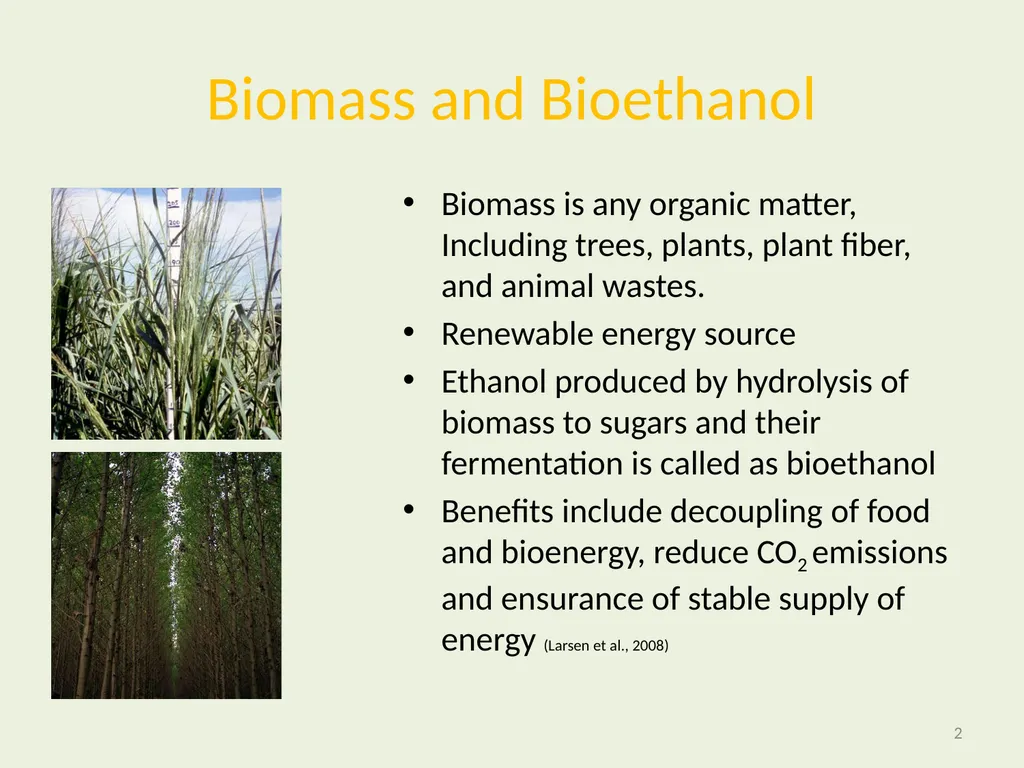
Biomass and Bioethanol Biomass is any organic matter, Including trees, plants, plant fiber, and animal wastes.
Renewable energy source
Ethanol produced by hydrolysis of biomass to sugars and their fermentation is called as bioethanol
Benefits include decoupling of food and bioenergy, reduce CO2 emissions and ensurance of stable supply of energy (Larsen et al., 2008) 2<br>
03
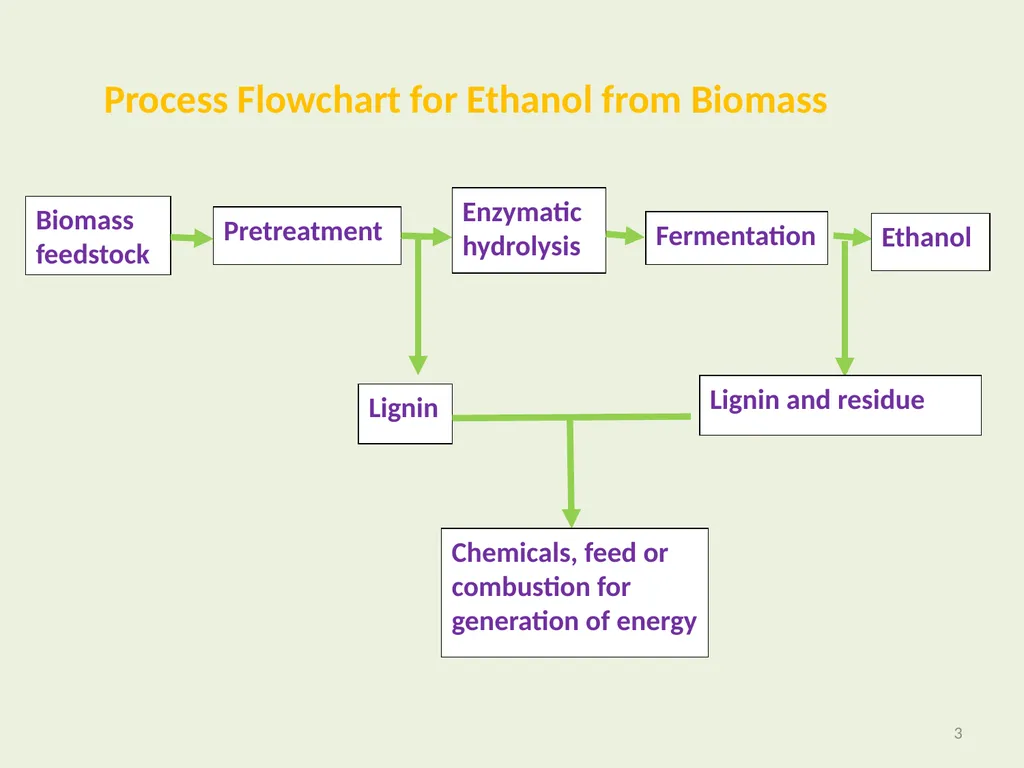
Process Flowchart for Ethanol from Biomass 3<br>
04
Goals To produce ethanol from corn (Zea mays L.) stover and sweet sorghum (Sorghum bicolor L. cultivar “sweet) begasse
To find a relationship between plant population densities and ethanol yield/ha
To minimize the impact of ethanol production of food supply from both crops 4<br>
05
Background Population Relationships Used Duncan grain yield model (Duncan, W.G. 1958)
Shinozaki and Kira biomass model (Shinozaki, K. and T. Kira 1956)
Russell biomass model (Russell, M.W. 1979 and Ballard 2008) 5<br>
06
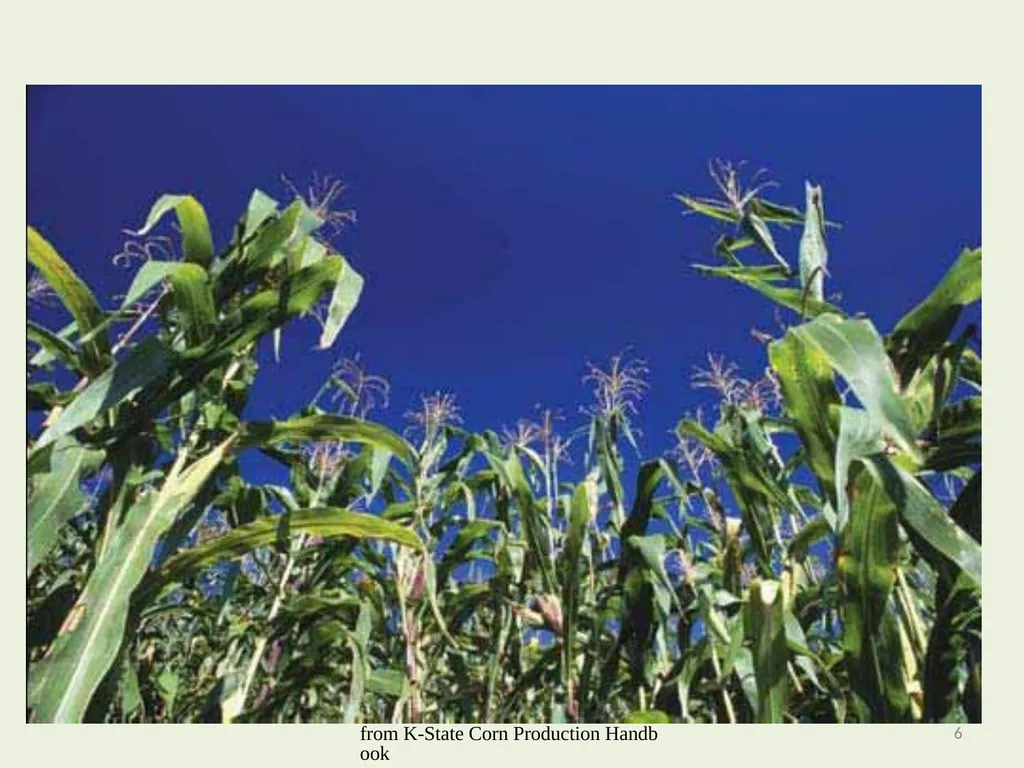
6 from K-State Corn Production Handbook<br>
07
Locations Manhattan, KS
39.19 0 N
89 cm rain/yr
Tribune, KS
38.28 0 N
44 cm rain/yr
Garden City, KS
37.99 0 N
48 cm rain/yr 7<br>
08
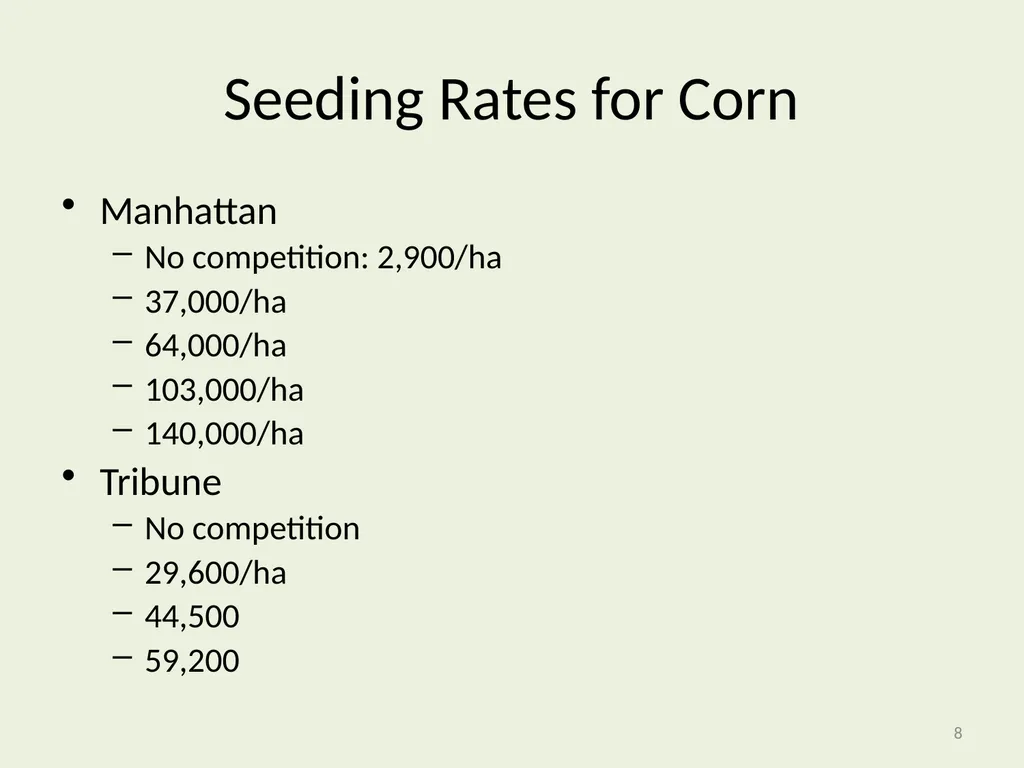
Seeding Rates for Corn Manhattan
No competition: 2,900/ha
37,000/ha
64,000/ha
103,000/ha
140,000/ha
Tribune
No competition
29,600/ha
44,500
59,200 8<br>
09
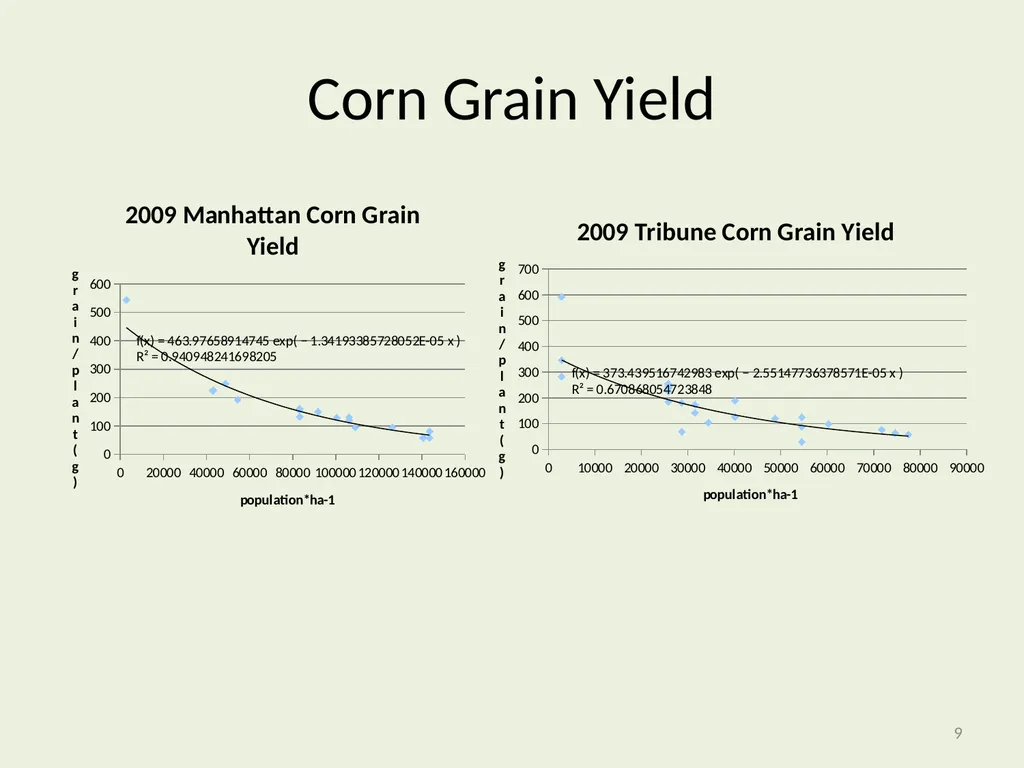
Corn Grain Yield 9<br>
10
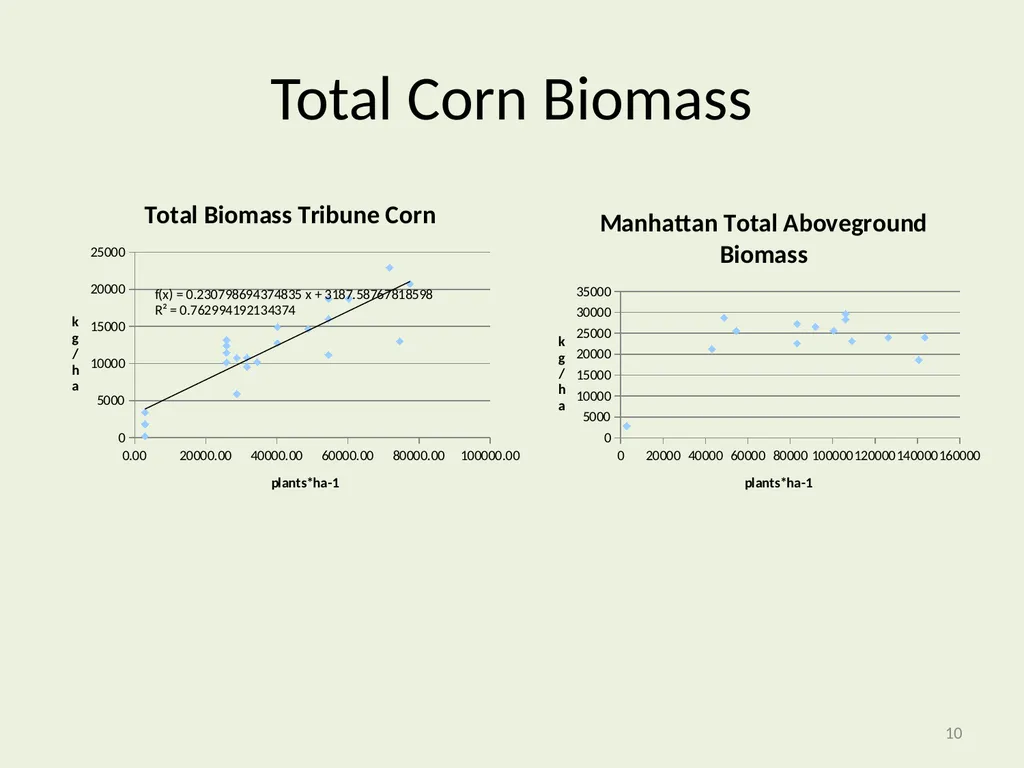
Total Corn Biomass 10<br>
11
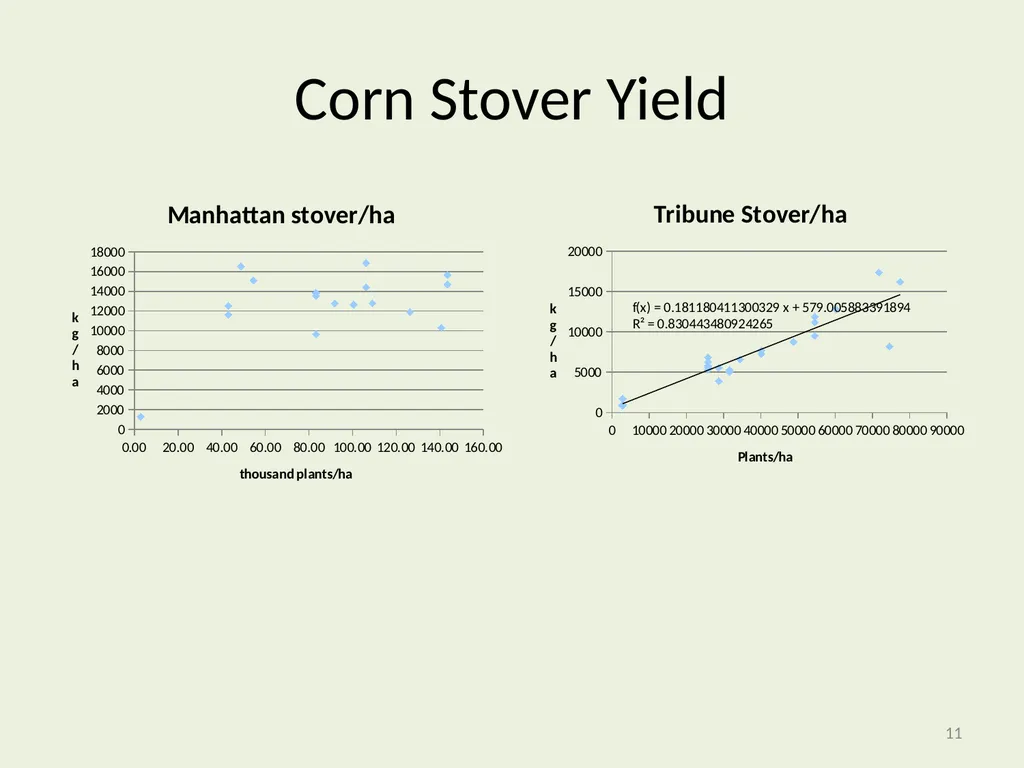
Corn Stover Yield 11<br>
12
12<br>
13
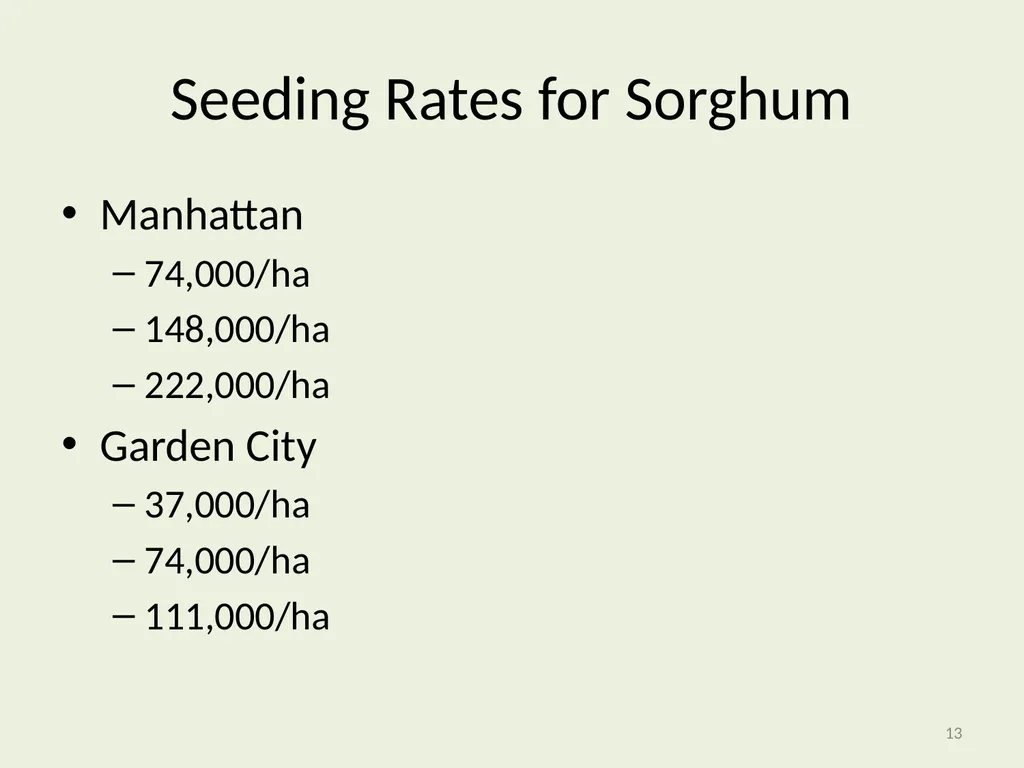
Seeding Rates for Sorghum Manhattan
74,000/ha
148,000/ha
222,000/ha
Garden City
37,000/ha
74,000/ha
111,000/ha 13<br>
14
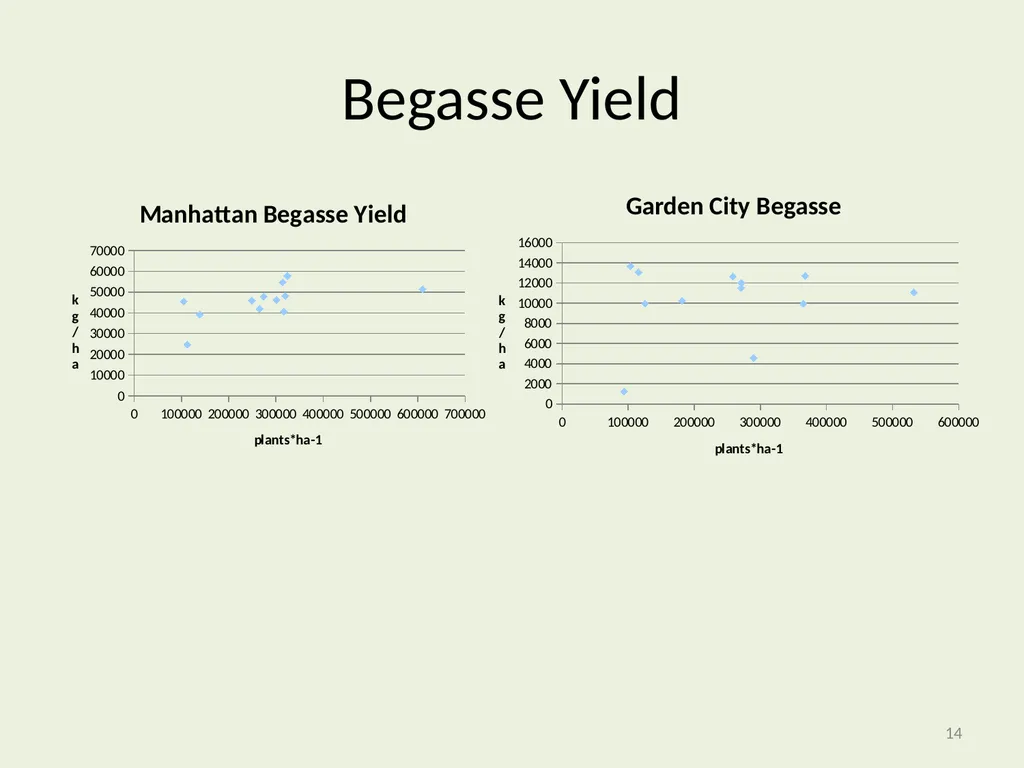
Begasse Yield 14<br>
15
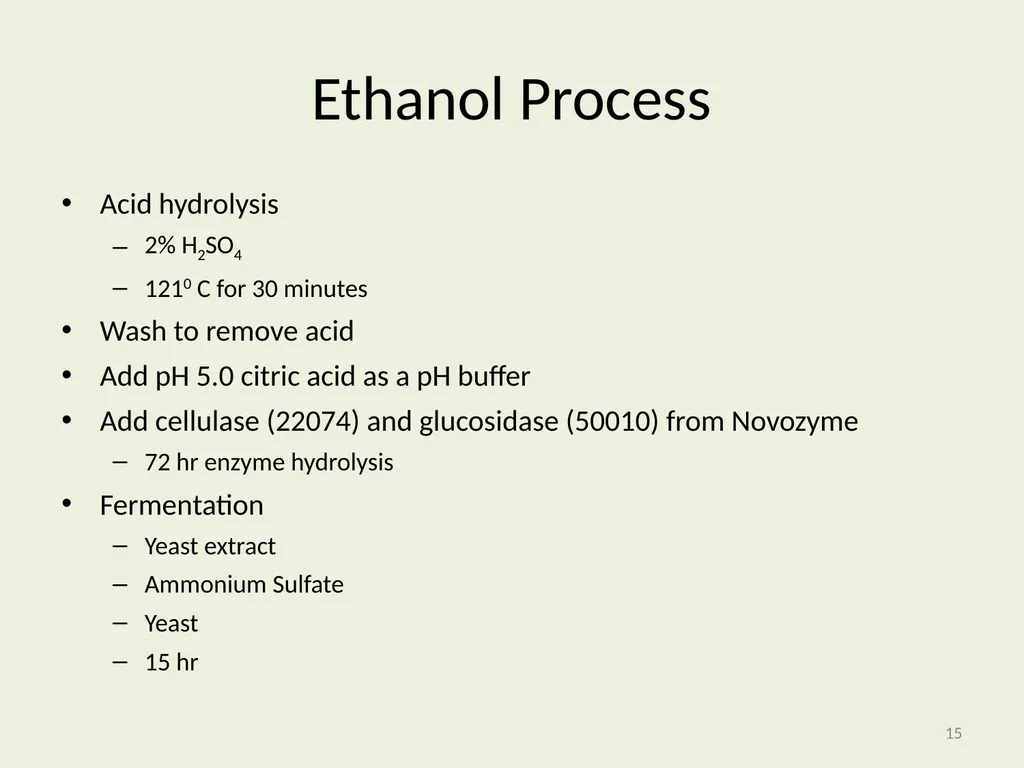
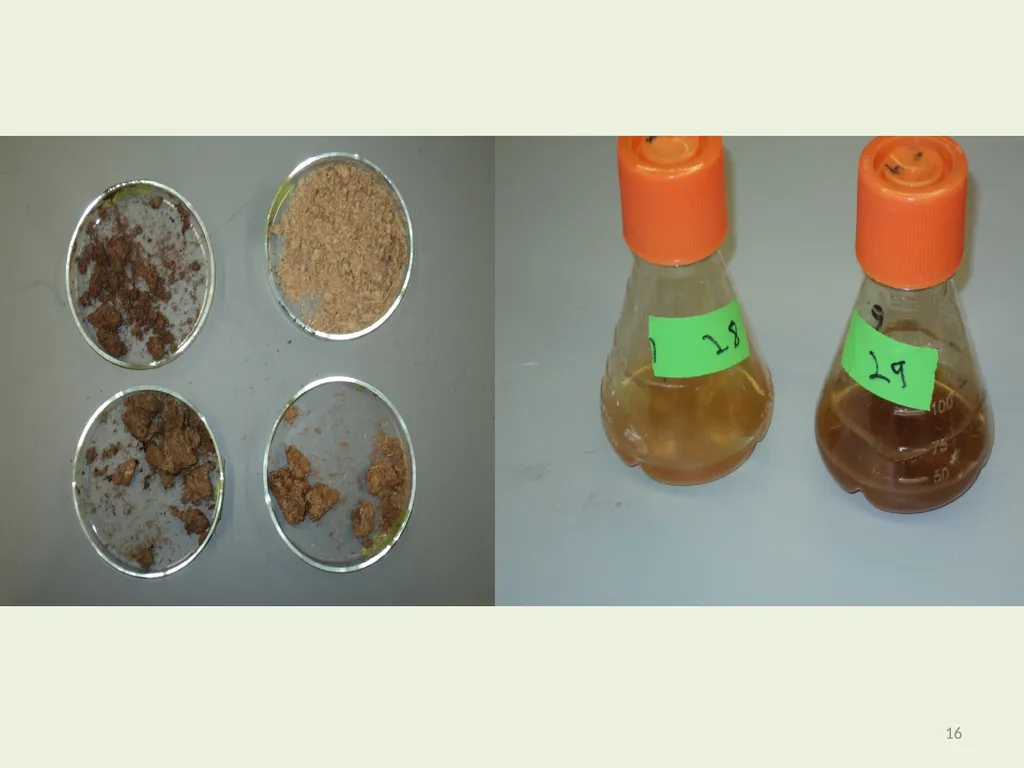
Ethanol Process Acid hydrolysis
2% H2SO4
1210 C for 30 minutes
Wash to remove acid
Add pH 5.0 citric acid as a pH buffer
Add cellulase (22074) and glucosidase (50010) from Novozyme
72 hr enzyme hydrolysis
Fermentation
Yeast extract
Ammonium Sulfate
Yeast
15 hr 15<br>
16
16<br>
17
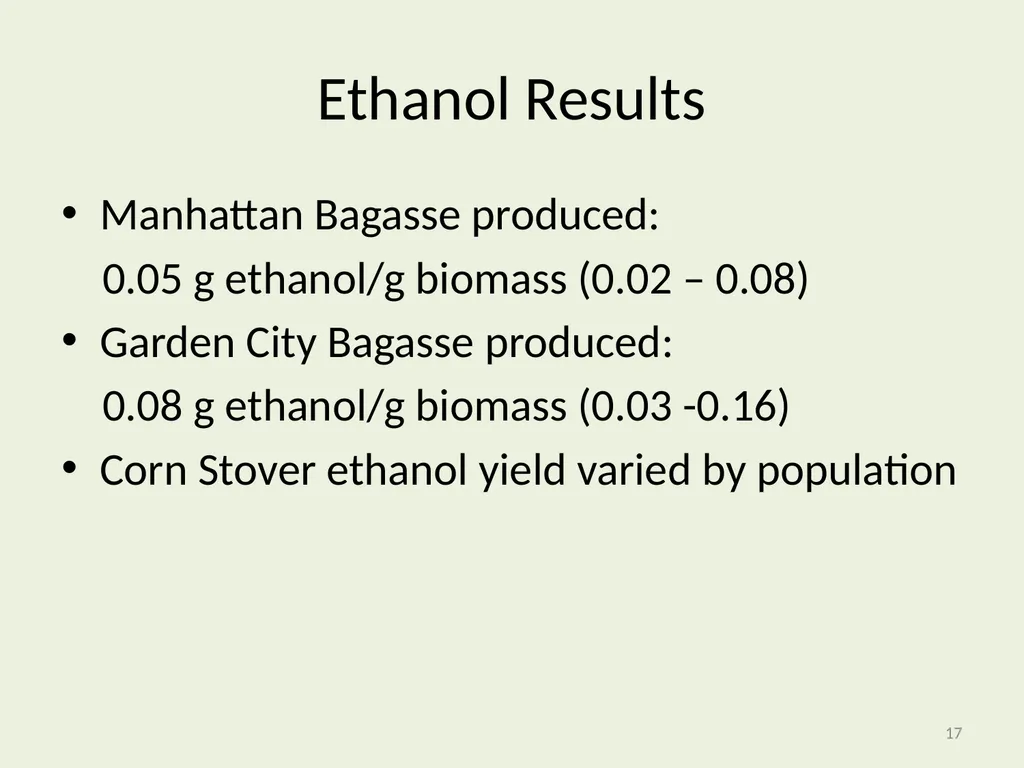
Ethanol Results Manhattan Bagasse produced:
0.05 g ethanol/g biomass (0.02 – 0.08)
Garden City Bagasse produced:
0.08 g ethanol/g biomass (0.03 -0.16)
Corn Stover ethanol yield varied by population 17<br>
18
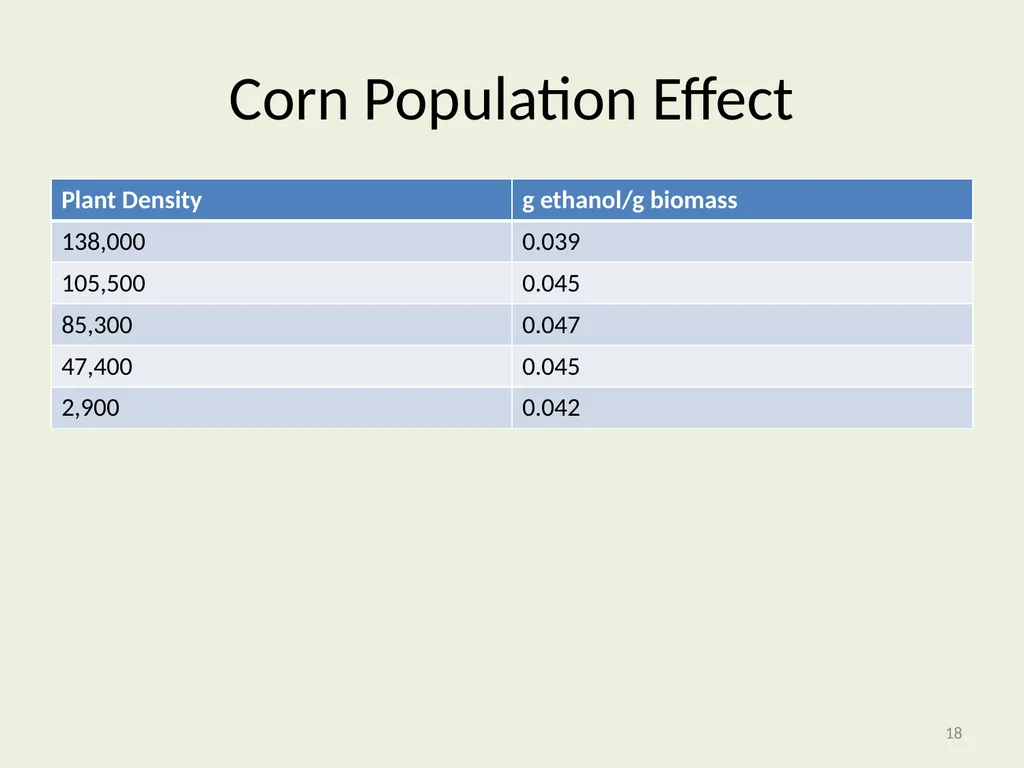
Corn Population Effect 18<br>
19
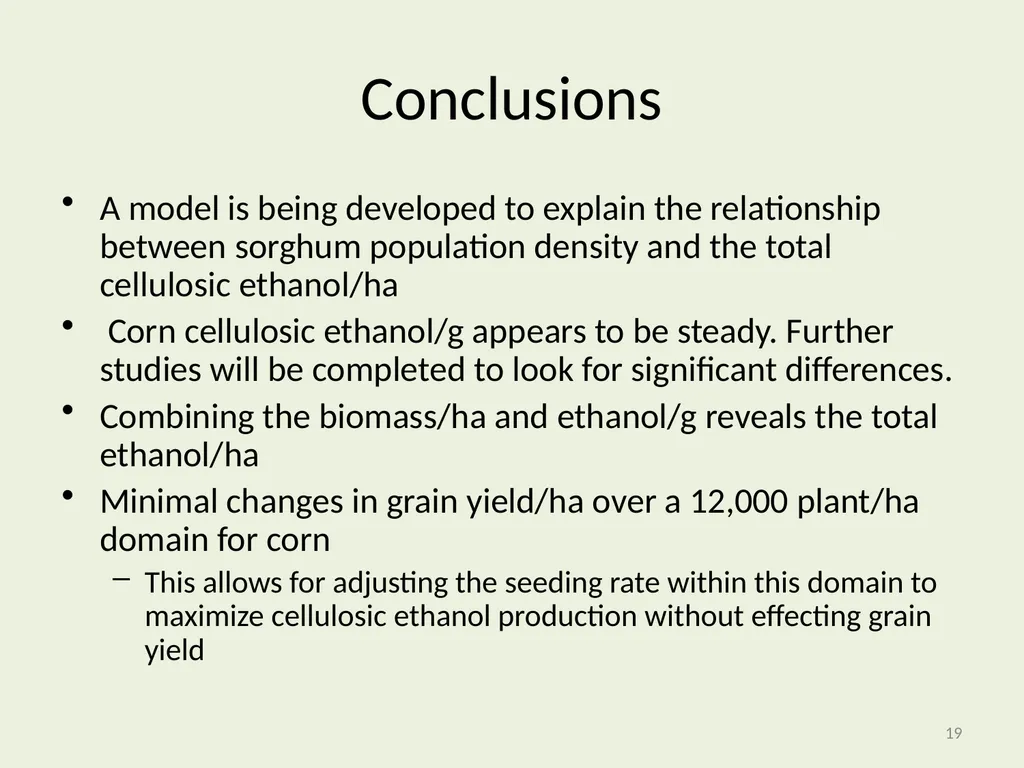
Conclusions A model is being developed to explain the relationship between sorghum population density and the total cellulosic ethanol/ha
Corn cellulosic ethanol/g appears to be steady. Further studies will be completed to look for significant differences.
Combining the biomass/ha and ethanol/g reveals the total ethanol/ha
Minimal changes in grain yield/ha over a 12,000 plant/ha domain for corn
This allows for adjusting the seeding rate within this domain to maximize cellulosic ethanol production without effecting grain yield 19<br>