Seeing Beyond Our Own World: Using Character Point-of-View Activities to Introduce Students to Critical Theory NCTE 2015 Kristin Sovis Saginaw Valley State University Amanda Stearns-Pfeiffer Oakland University Miriams Reflection
"“Seeing Beyond Our Own World: Using Character" is the property of its rightful owner. Permission is granted to
download and print the materials on this website for personal, non-commercial use only, and to display it
on your personal computer provided you do not modify the materials and that you retain all copyright
notices contained in the materials. By downloading content from our website, you accept the terms of this
agreement.
Presentation Transcript
01
“Seeing Beyond Our Own World: Using Character Point-of-View Activities to Introduce Students to Critical Theory” NCTE 2015
Kristin Sovis – Saginaw Valley State University
Amanda Stearns-Pfeiffer – Oakland University<br>
02
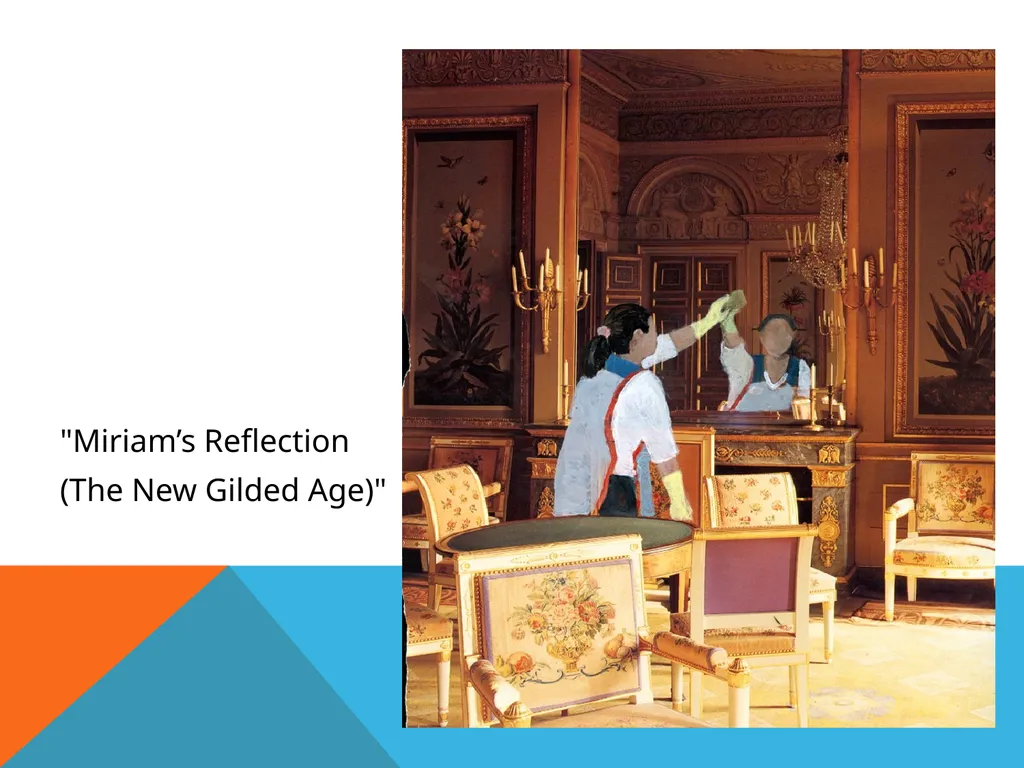
"Miriam’s Reflection
(The New Gilded Age)"<br>
03
Why Critical Theory, Literary Criticism? Critical Theory: theories about the ways we see the world. Tries to explain the values and assumptions that underlie the ways we see the world (and therefore the ways we read and interpret literature).
“Critical theory can help us learn to see ourselves and our world in valuable new ways, ways that can influence how we educate our children, both as parents and teachers; how we view television, from the nightly news to situational comedies; how we behave as voters and consumers; how we react to others with whom we do not agree on social, religious, and political issues; and how we recognize and deal with our own motives, fears, and desires” (p. 2).
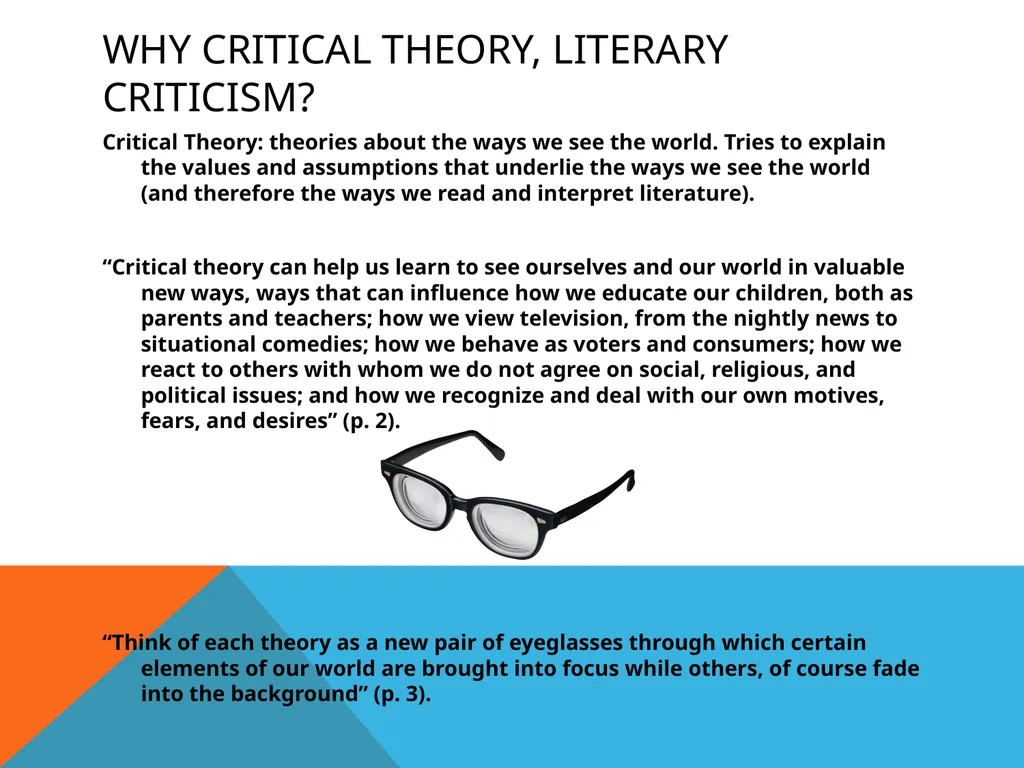
“Think of each theory as a new pair of eyeglasses through which certain elements of our world are brought into focus while others, of course fade into the background” (p. 3).<br>
04
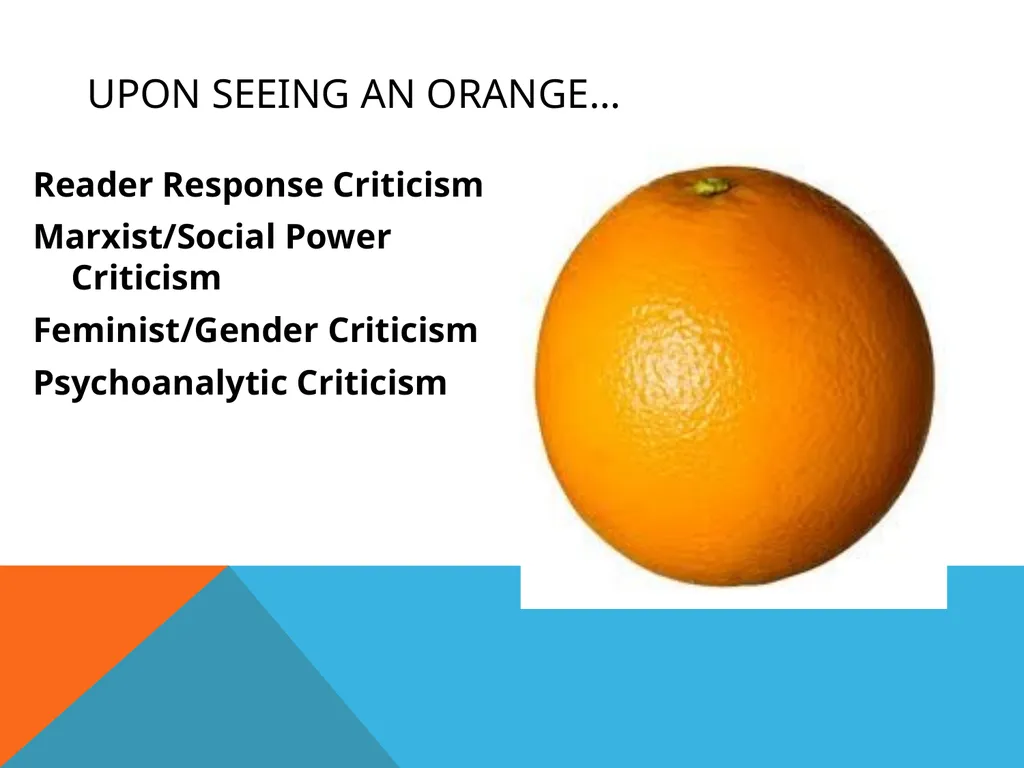
Upon Seeing an Orange… Reader Response Criticism
Marxist/Social Power Criticism
Feminist/Gender Criticism
Psychoanalytic Criticism<br>
05
Upon Seeing an orange... *Reader-Response asks… ‘What does the orange taste like?’
*Feminist theory asks… ‘What possibilities are available to a woman who eats this orange?’ Focuses on the oppressive powers (both economic and social) against women.
*Marxist/Social Power theory asks… ‘Who owns the orange?’ Focuses on socioeconomic considerations; who has the monetary power in the situation?
*Psychoanalysis (Psychological Criticism) asks… ‘What does the orange remind us of?’<br>
06
“Two Graveyards” by susan Tepper The two small graveyards lay side by side like the bodies they covered. One had fancier tombstones engraved upon that told names and dates, a floral motif, or perhaps a Grecian style urn in bas relief on its façade. Some had sweet poetic verse about the dead person. The other graveyard was the slave graveyard with its decrepit unmarked slabs, many about to fall over or already down in the unkempt grass. We went to the graveyards each time we visited the island. This place of the dead— it called to us. It took an hour to get there by public bus. The first time we went was shortly after my dad died and both our families were decomposing. We rode the bus in silence aware of each other in a way that was different. Already, too soon, we knew time was thin. That first visit I found a tombstone with my birth date, and the person had my first name. She died from yellow fever. I thought about dying from fever in a hot tropical place without air conditioning, and what that would be like. Then my husband wanted to go get ice cream cones. So we left.<br>
07
“Two Graveyards” Today’s First goal: Recognize multiple perspectives in this story. (i.e. read this story through different eyeglasses...)
Directions:
With a partner, choose one of the lenses (Marxism/Social power, feminism/Gender Theory, or psychoanalysis/psychological criticism) and write two questions/responses based upon that lens.<br>
08
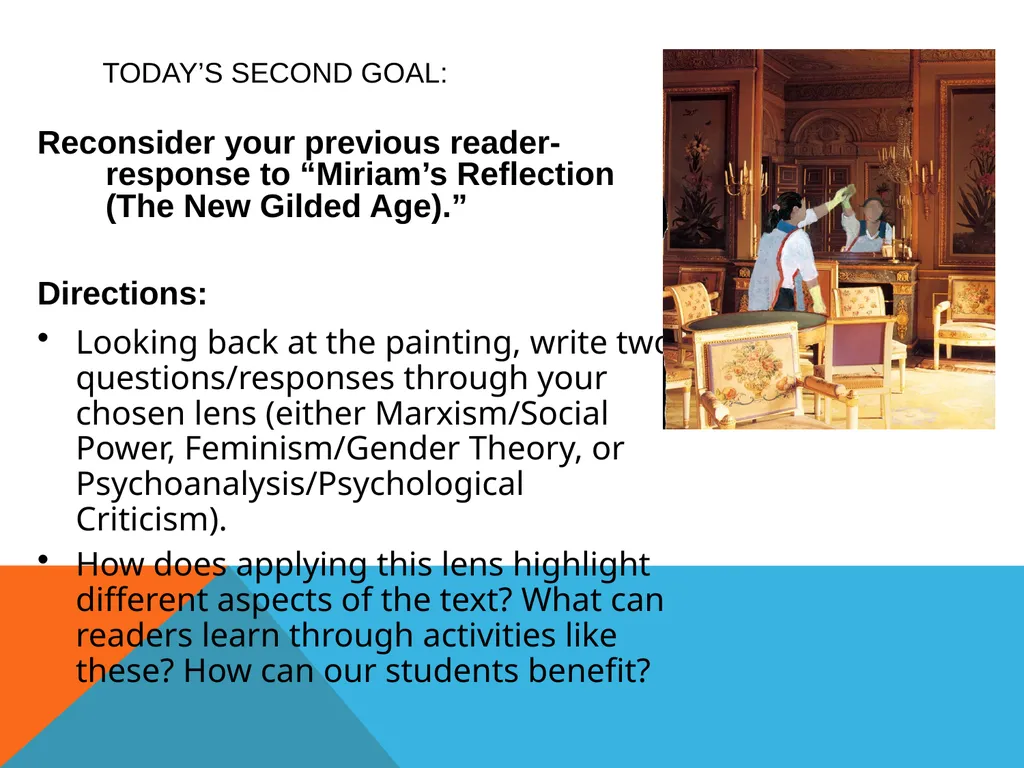
Today’s Second Goal: Reconsider your previous reader-response to “Miriam’s Reflection (The New Gilded Age).”
Directions:
Looking back at the painting, write two questions/responses through your chosen lens (either Marxism/Social Power, Feminism/Gender Theory, or Psychoanalysis/Psychological Criticism).
How does applying this lens highlight different aspects of the text? What can readers learn through activities like these? How can our students benefit?<br>
09
“Natural” interpretation vs. Critical theory “Even our ‘personal,’ ‘natural’ interpretations of literature and the world we live in – ‘unsullied’ by theory – are based on assumptions, on ways of seeing the world, that are themselves theoretical and that we don’t realize we’ve internalized” (p. 4).<br>