
Selecting an Initial ART Regimen
OM
Published · 34 slides · 0 views
1 / 1



Description
Selecting an Initial ART Regimen www.hivguidelines.org JANUARY 2026 NYSDOH AIDS Institute Clinical Guidelines Program Purpose of This Guideline Provide a clear and concise roadmap for clinicians to follow in choosing from among several
Related Topics
Share
Embed code
Download this presentation From Below
"Selecting an Initial ART Regimen" is the property of its rightful owner. Permission is granted to download and print the materials on this website for personal, non-commercial use only, and to display it on your personal computer provided you do not modify the materials and that you retain all copyright notices contained in the materials. By downloading content from our website, you accept the terms of this agreement.
Presentation Transcript
01
Selecting an Initial ART Regimen
www.hivguidelines.org JANUARY 2026 NYSDOH AIDS Institute Clinical Guidelines Program<br>
www.hivguidelines.org JANUARY 2026 NYSDOH AIDS Institute Clinical Guidelines Program<br>
02
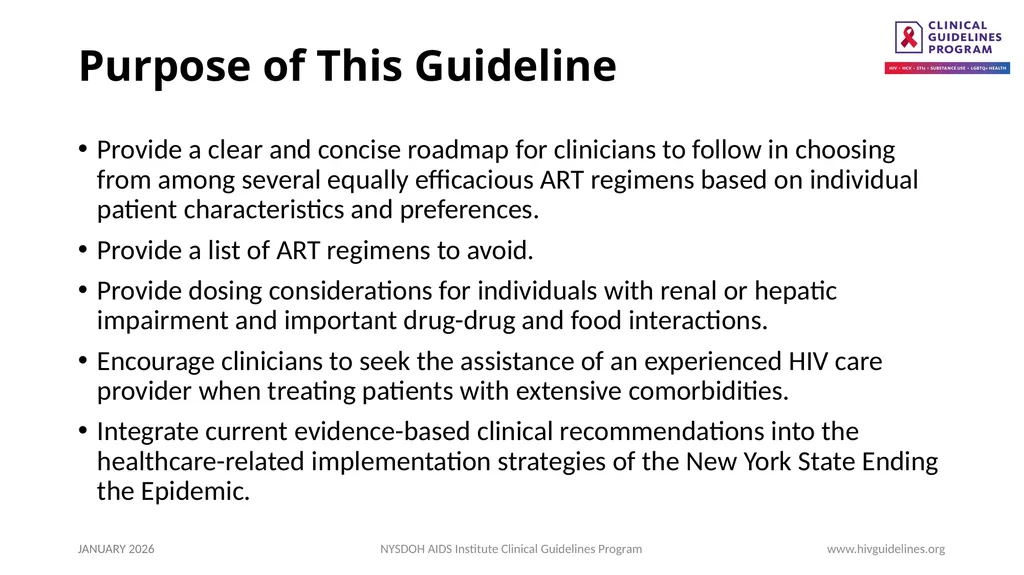
Purpose of This Guideline Provide a clear and concise roadmap for clinicians to follow in choosing from among several equally efficacious ART regimens based on individual patient characteristics and preferences.
Provide a list of ART regimens to avoid.
Provide dosing considerations for individuals with renal or hepatic impairment and important drug-drug and food interactions.
Encourage clinicians to seek the assistance of an experienced HIV care provider when treating patients with extensive comorbidities.
Integrate current evidence-based clinical recommendations into the healthcare-related implementation strategies of the New York State Ending the Epidemic. NYSDOH AIDS Institute Clinical Guidelines Program www.hivguidelines.org JANUARY 2026<br>
Provide a list of ART regimens to avoid.
Provide dosing considerations for individuals with renal or hepatic impairment and important drug-drug and food interactions.
Encourage clinicians to seek the assistance of an experienced HIV care provider when treating patients with extensive comorbidities.
Integrate current evidence-based clinical recommendations into the healthcare-related implementation strategies of the New York State Ending the Epidemic. NYSDOH AIDS Institute Clinical Guidelines Program www.hivguidelines.org JANUARY 2026<br>
03
Recommendations:
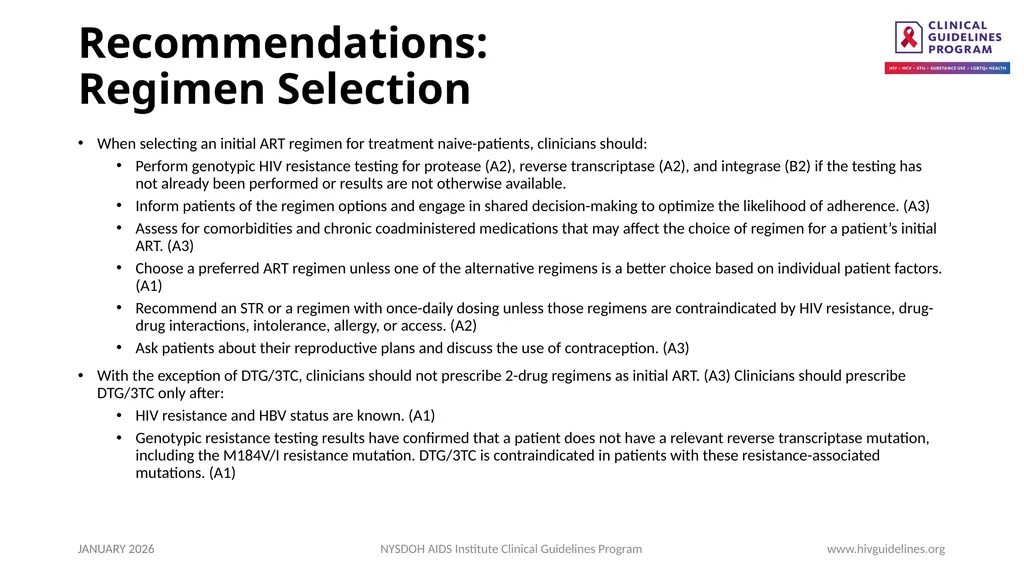
Regimen Selection When selecting an initial ART regimen for treatment naive-patients, clinicians should:
Perform genotypic HIV resistance testing for protease (A2), reverse transcriptase (A2), and integrase (B2) if the testing has not already been performed or results are not otherwise available.
Inform patients of the regimen options and engage in shared decision-making to optimize the likelihood of adherence. (A3)
Assess for comorbidities and chronic coadministered medications that may affect the choice of regimen for a patient’s initial ART. (A3)
Choose a preferred ART regimen unless one of the alternative regimens is a better choice based on individual patient factors. (A1)
Recommend an STR or a regimen with once-daily dosing unless those regimens are contraindicated by HIV resistance, drug-drug interactions, intolerance, allergy, or access. (A2)
Ask patients about their reproductive plans and discuss the use of contraception. (A3)
With the exception of DTG/3TC, clinicians should not prescribe 2-drug regimens as initial ART. (A3) Clinicians should prescribe DTG/3TC only after:
HIV resistance and HBV status are known. (A1)
Genotypic resistance testing results have confirmed that a patient does not have a relevant reverse transcriptase mutation, including the M184V/I resistance mutation. DTG/3TC is contraindicated in patients with these resistance-associated mutations. (A1) NYSDOH AIDS Institute Clinical Guidelines Program www.hivguidelines.org JANUARY 2026<br>
Perform genotypic HIV resistance testing for protease (A2), reverse transcriptase (A2), and integrase (B2) if the testing has not already been performed or results are not otherwise available.
Inform patients of the regimen options and engage in shared decision-making to optimize the likelihood of adherence. (A3)
Assess for comorbidities and chronic coadministered medications that may affect the choice of regimen for a patient’s initial ART. (A3)
Choose a preferred ART regimen unless one of the alternative regimens is a better choice based on individual patient factors. (A1)
Recommend an STR or a regimen with once-daily dosing unless those regimens are contraindicated by HIV resistance, drug-drug interactions, intolerance, allergy, or access. (A2)
Ask patients about their reproductive plans and discuss the use of contraception. (A3)
With the exception of DTG/3TC, clinicians should not prescribe 2-drug regimens as initial ART. (A3) Clinicians should prescribe DTG/3TC only after:
HIV resistance and HBV status are known. (A1)
Genotypic resistance testing results have confirmed that a patient does not have a relevant reverse transcriptase mutation, including the M184V/I resistance mutation. DTG/3TC is contraindicated in patients with these resistance-associated mutations. (A1) NYSDOH AIDS Institute Clinical Guidelines Program www.hivguidelines.org JANUARY 2026<br>
04
Recommendations:
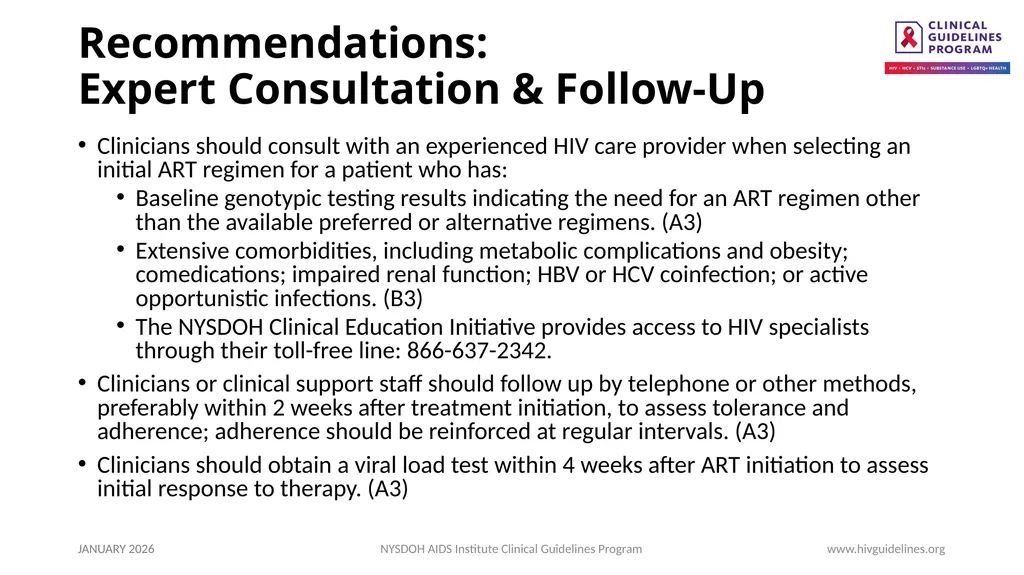
Expert Consultation & Follow-Up Clinicians should consult with an experienced HIV care provider when selecting an initial ART regimen for a patient who has:
Baseline genotypic testing results indicating the need for an ART regimen other than the available preferred or alternative regimens. (A3)
Extensive comorbidities, including metabolic complications and obesity; comedications; impaired renal function; HBV or HCV coinfection; or active opportunistic infections. (B3)
The NYSDOH Clinical Education Initiative provides access to HIV specialists through their toll-free line: 866-637-2342.
Clinicians or clinical support staff should follow up by telephone or other methods, preferably within 2 weeks after treatment initiation, to assess tolerance and adherence; adherence should be reinforced at regular intervals. (A3)
Clinicians should obtain a viral load test within 4 weeks after ART initiation to assess initial response to therapy. (A3) NYSDOH AIDS Institute Clinical Guidelines Program www.hivguidelines.org JANUARY 2026<br>
Baseline genotypic testing results indicating the need for an ART regimen other than the available preferred or alternative regimens. (A3)
Extensive comorbidities, including metabolic complications and obesity; comedications; impaired renal function; HBV or HCV coinfection; or active opportunistic infections. (B3)
The NYSDOH Clinical Education Initiative provides access to HIV specialists through their toll-free line: 866-637-2342.
Clinicians or clinical support staff should follow up by telephone or other methods, preferably within 2 weeks after treatment initiation, to assess tolerance and adherence; adherence should be reinforced at regular intervals. (A3)
Clinicians should obtain a viral load test within 4 weeks after ART initiation to assess initial response to therapy. (A3) NYSDOH AIDS Institute Clinical Guidelines Program www.hivguidelines.org JANUARY 2026<br>
05
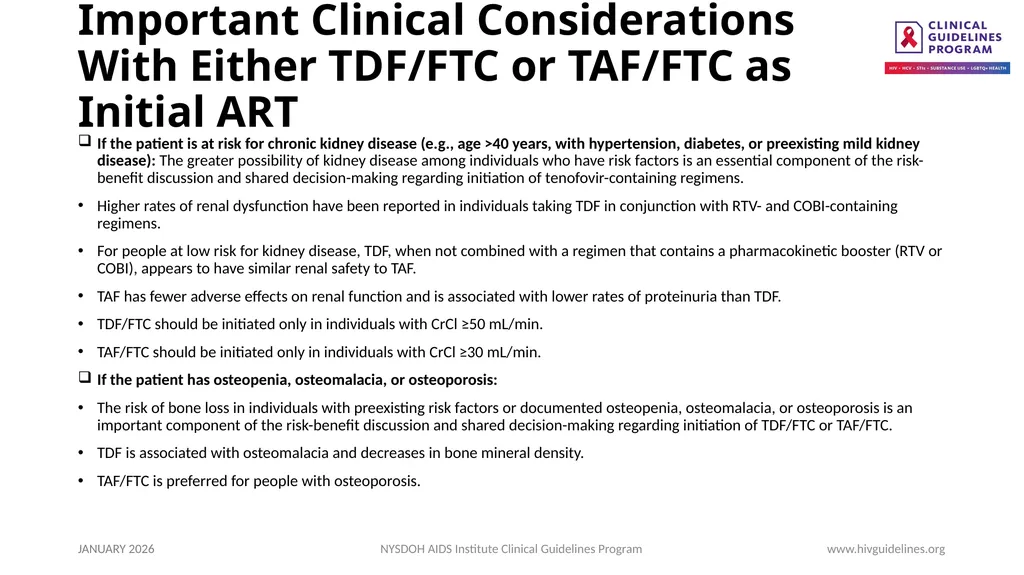
Important Clinical Considerations With Either TDF/FTC or TAF/FTC as Initial ART If the patient is at risk for chronic kidney disease (e.g., age >40 years, with hypertension, diabetes, or preexisting mild kidney disease): The greater possibility of kidney disease among individuals who have risk factors is an essential component of the risk-benefit discussion and shared decision-making regarding initiation of tenofovir-containing regimens.
Higher rates of renal dysfunction have been reported in individuals taking TDF in conjunction with RTV- and COBI-containing regimens.
For people at low risk for kidney disease, TDF, when not combined with a regimen that contains a pharmacokinetic booster (RTV or COBI), appears to have similar renal safety to TAF.
TAF has fewer adverse effects on renal function and is associated with lower rates of proteinuria than TDF.
TDF/FTC should be initiated only in individuals with CrCl ≥50 mL/min.
TAF/FTC should be initiated only in individuals with CrCl ≥30 mL/min.
If the patient has osteopenia, osteomalacia, or osteoporosis:
The risk of bone loss in individuals with preexisting risk factors or documented osteopenia, osteomalacia, or osteoporosis is an important component of the risk-benefit discussion and shared decision-making regarding initiation of TDF/FTC or TAF/FTC.
TDF is associated with osteomalacia and decreases in bone mineral density.
TAF/FTC is preferred for people with osteoporosis. NYSDOH AIDS Institute Clinical Guidelines Program www.hivguidelines.org JANUARY 2026<br>
Higher rates of renal dysfunction have been reported in individuals taking TDF in conjunction with RTV- and COBI-containing regimens.
For people at low risk for kidney disease, TDF, when not combined with a regimen that contains a pharmacokinetic booster (RTV or COBI), appears to have similar renal safety to TAF.
TAF has fewer adverse effects on renal function and is associated with lower rates of proteinuria than TDF.
TDF/FTC should be initiated only in individuals with CrCl ≥50 mL/min.
TAF/FTC should be initiated only in individuals with CrCl ≥30 mL/min.
If the patient has osteopenia, osteomalacia, or osteoporosis:
The risk of bone loss in individuals with preexisting risk factors or documented osteopenia, osteomalacia, or osteoporosis is an important component of the risk-benefit discussion and shared decision-making regarding initiation of TDF/FTC or TAF/FTC.
TDF is associated with osteomalacia and decreases in bone mineral density.
TAF/FTC is preferred for people with osteoporosis. NYSDOH AIDS Institute Clinical Guidelines Program www.hivguidelines.org JANUARY 2026<br>
06
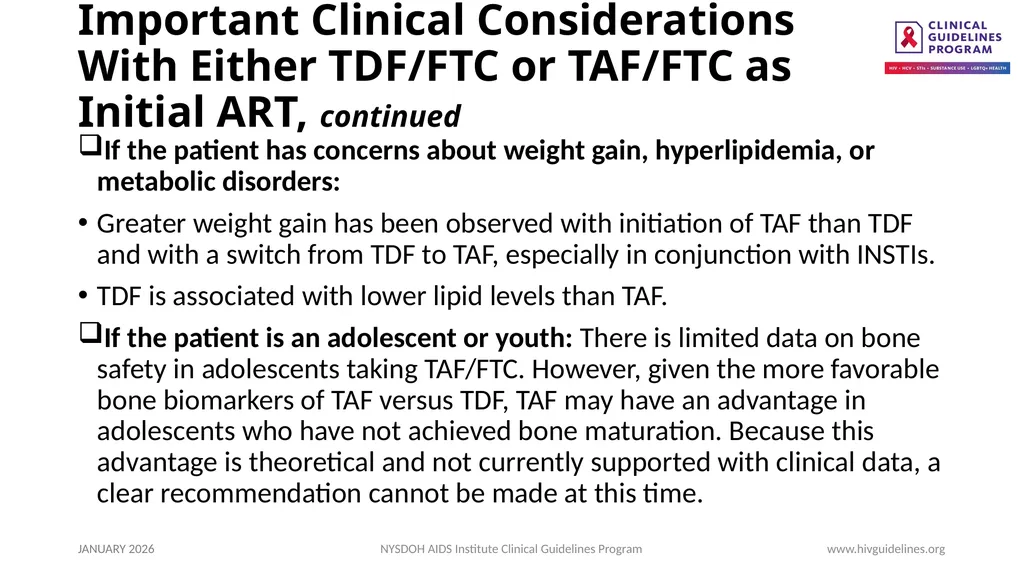
Important Clinical Considerations With Either TDF/FTC or TAF/FTC as Initial ART, continued If the patient has concerns about weight gain, hyperlipidemia, or metabolic disorders:
Greater weight gain has been observed with initiation of TAF than TDF and with a switch from TDF to TAF, especially in conjunction with INSTIs.
TDF is associated with lower lipid levels than TAF.
If the patient is an adolescent or youth: There is limited data on bone safety in adolescents taking TAF/FTC. However, given the more favorable bone biomarkers of TAF versus TDF, TAF may have an advantage in adolescents who have not achieved bone maturation. Because this advantage is theoretical and not currently supported with clinical data, a clear recommendation cannot be made at this time. NYSDOH AIDS Institute Clinical Guidelines Program www.hivguidelines.org JANUARY 2026<br>
Greater weight gain has been observed with initiation of TAF than TDF and with a switch from TDF to TAF, especially in conjunction with INSTIs.
TDF is associated with lower lipid levels than TAF.
If the patient is an adolescent or youth: There is limited data on bone safety in adolescents taking TAF/FTC. However, given the more favorable bone biomarkers of TAF versus TDF, TAF may have an advantage in adolescents who have not achieved bone maturation. Because this advantage is theoretical and not currently supported with clinical data, a clear recommendation cannot be made at this time. NYSDOH AIDS Institute Clinical Guidelines Program www.hivguidelines.org JANUARY 2026<br>
07
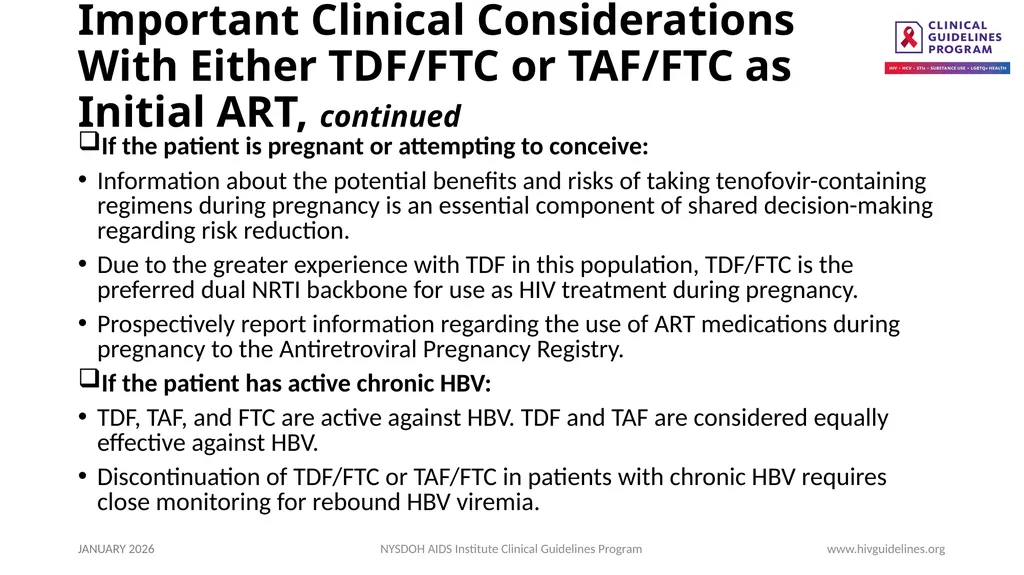
Important Clinical Considerations With Either TDF/FTC or TAF/FTC as Initial ART, continued If the patient is pregnant or attempting to conceive:
Information about the potential benefits and risks of taking tenofovir-containing regimens during pregnancy is an essential component of shared decision-making regarding risk reduction.
Due to the greater experience with TDF in this population, TDF/FTC is the preferred dual NRTI backbone for use as HIV treatment during pregnancy.
Prospectively report information regarding the use of ART medications during pregnancy to the Antiretroviral Pregnancy Registry.
If the patient has active chronic HBV:
TDF, TAF, and FTC are active against HBV. TDF and TAF are considered equally effective against HBV.
Discontinuation of TDF/FTC or TAF/FTC in patients with chronic HBV requires close monitoring for rebound HBV viremia. NYSDOH AIDS Institute Clinical Guidelines Program www.hivguidelines.org JANUARY 2026<br>
Information about the potential benefits and risks of taking tenofovir-containing regimens during pregnancy is an essential component of shared decision-making regarding risk reduction.
Due to the greater experience with TDF in this population, TDF/FTC is the preferred dual NRTI backbone for use as HIV treatment during pregnancy.
Prospectively report information regarding the use of ART medications during pregnancy to the Antiretroviral Pregnancy Registry.
If the patient has active chronic HBV:
TDF, TAF, and FTC are active against HBV. TDF and TAF are considered equally effective against HBV.
Discontinuation of TDF/FTC or TAF/FTC in patients with chronic HBV requires close monitoring for rebound HBV viremia. NYSDOH AIDS Institute Clinical Guidelines Program www.hivguidelines.org JANUARY 2026<br>
08
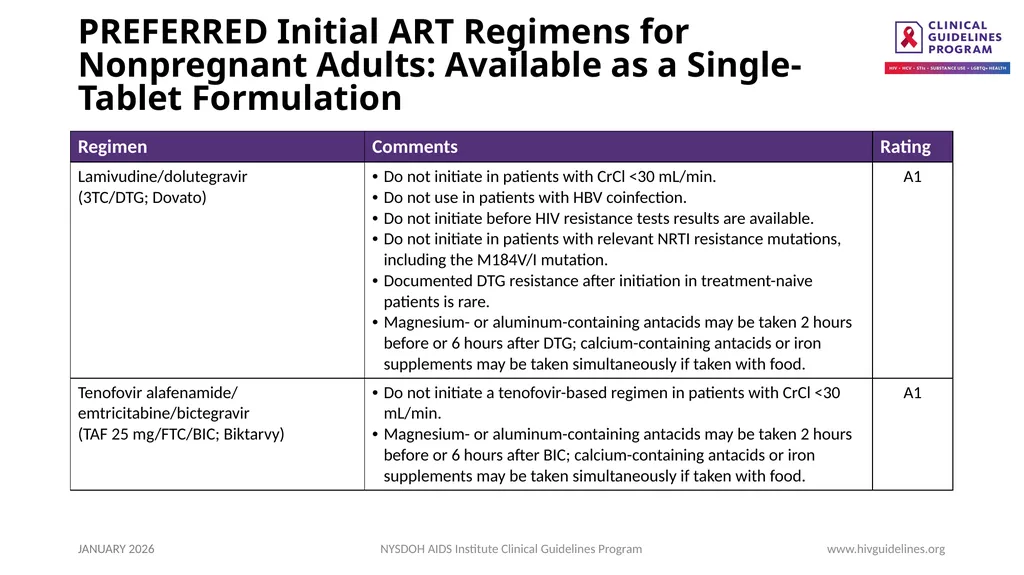
PREFERRED Initial ART Regimens for Nonpregnant Adults: Available as a Single-Tablet Formulation NYSDOH AIDS Institute Clinical Guidelines Program www.hivguidelines.org JANUARY 2026<br>
09
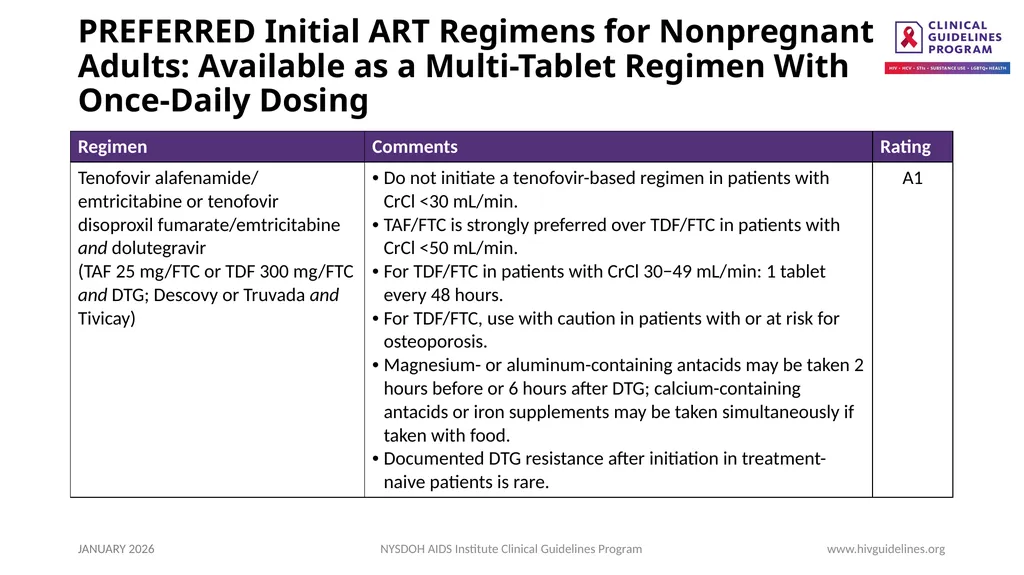
PREFERRED Initial ART Regimens for Nonpregnant Adults: Available as a Multi-Tablet Regimen With Once-Daily Dosing NYSDOH AIDS Institute Clinical Guidelines Program www.hivguidelines.org JANUARY 2026<br>
10
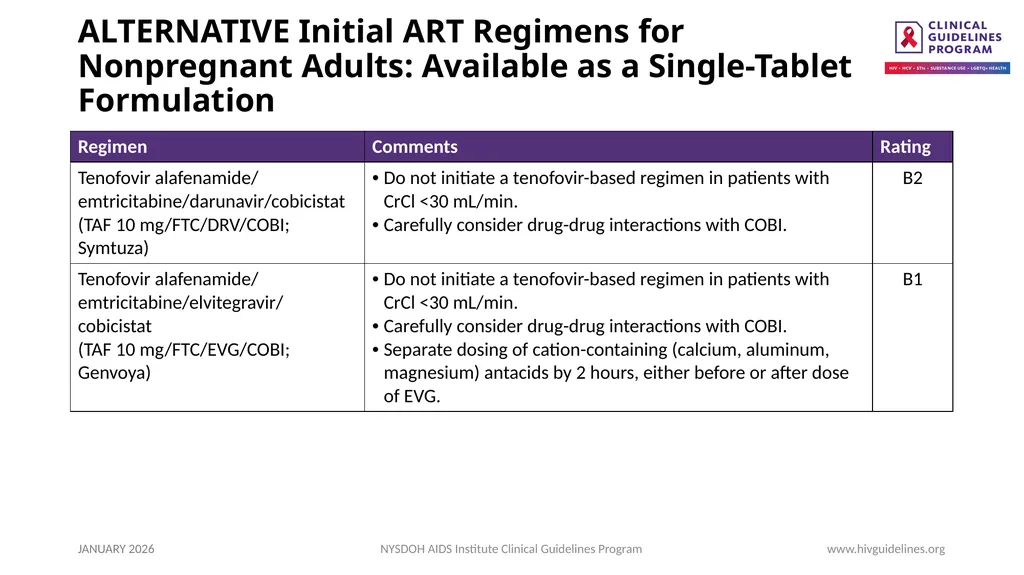
ALTERNATIVE Initial ART Regimens for Nonpregnant Adults: Available as a Single-Tablet Formulation NYSDOH AIDS Institute Clinical Guidelines Program www.hivguidelines.org JANUARY 2026<br>
11
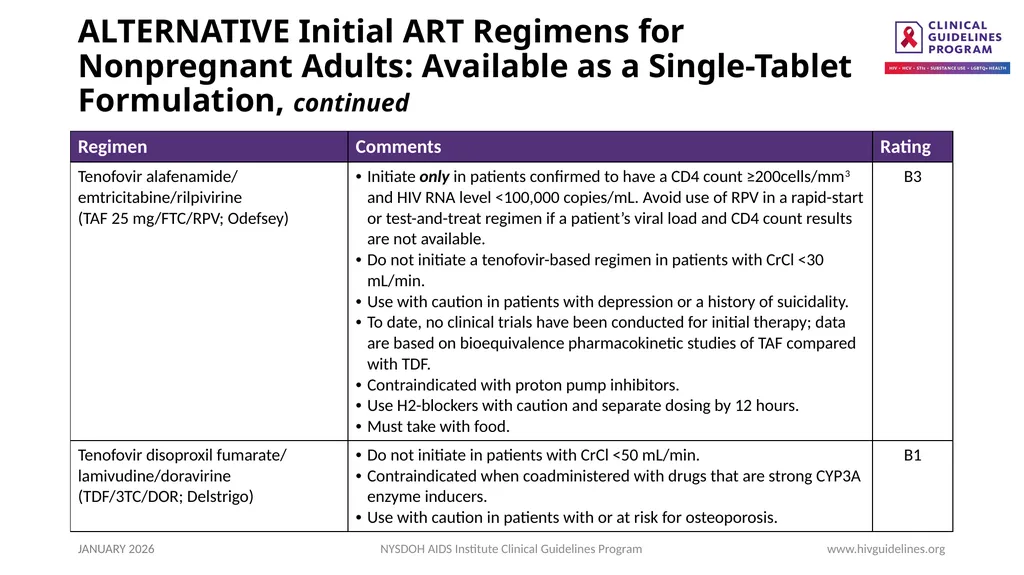
ALTERNATIVE Initial ART Regimens for Nonpregnant Adults: Available as a Single-Tablet Formulation, continued NYSDOH AIDS Institute Clinical Guidelines Program www.hivguidelines.org JANUARY 2026<br>
12
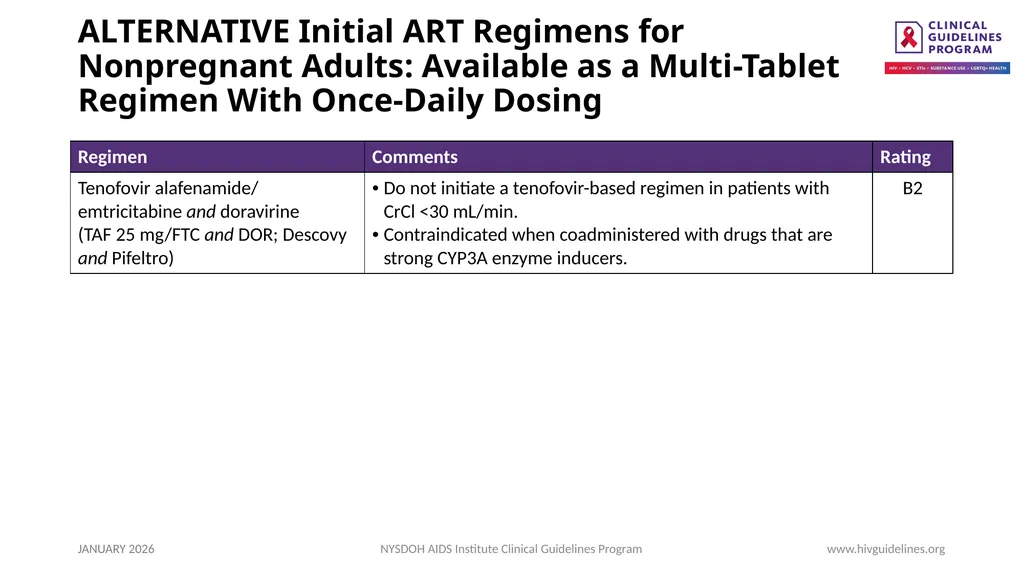
ALTERNATIVE Initial ART Regimens for Nonpregnant Adults: Available as a Multi-Tablet Regimen With Once-Daily Dosing NYSDOH AIDS Institute Clinical Guidelines Program www.hivguidelines.org JANUARY 2026<br>
13
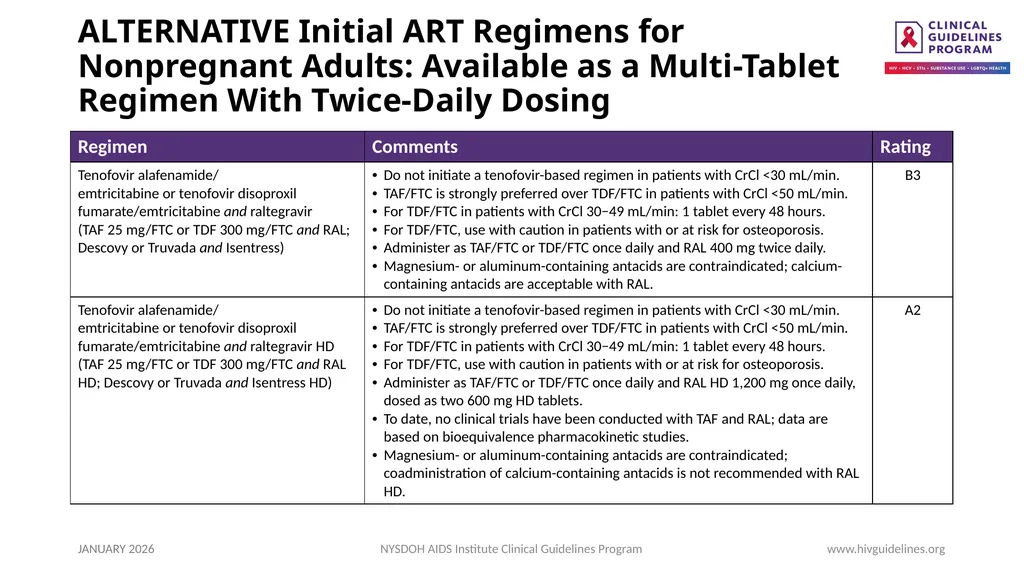
ALTERNATIVE Initial ART Regimens for Nonpregnant Adults: Available as a Multi-Tablet Regimen With Twice-Daily Dosing NYSDOH AIDS Institute Clinical Guidelines Program www.hivguidelines.org JANUARY 2026<br>
14
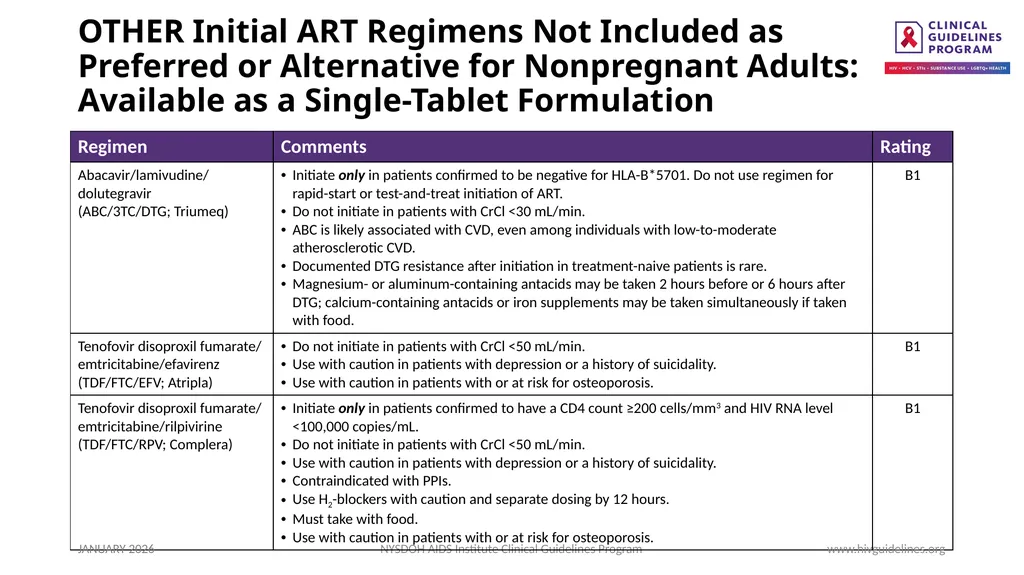
OTHER Initial ART Regimens Not Included as Preferred or Alternative for Nonpregnant Adults: Available as a Single-Tablet Formulation NYSDOH AIDS Institute Clinical Guidelines Program www.hivguidelines.org JANUARY 2026<br>
15
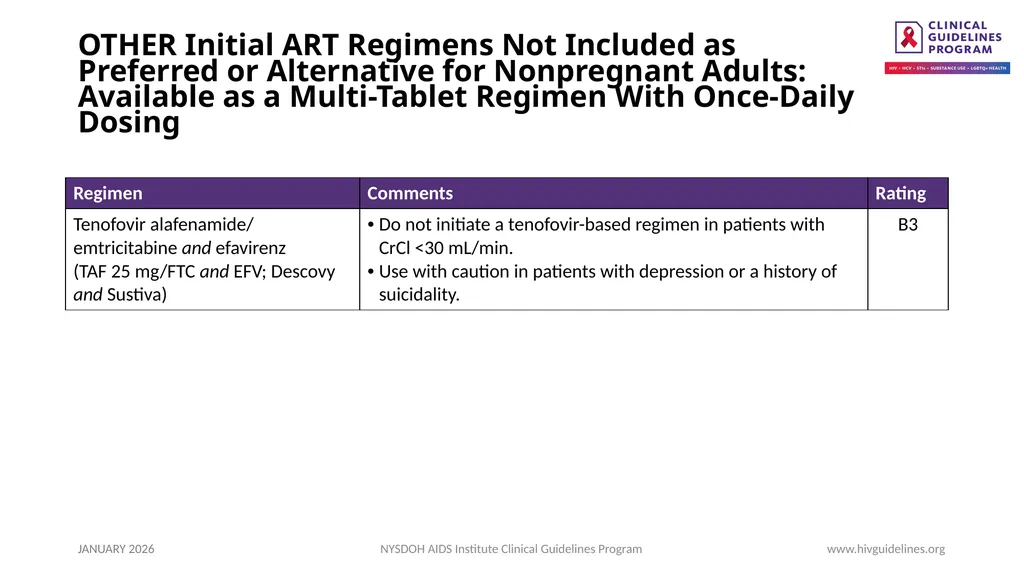
OTHER Initial ART Regimens Not Included as Preferred or Alternative for Nonpregnant Adults: Available as a Multi-Tablet Regimen With Once-Daily Dosing NYSDOH AIDS Institute Clinical Guidelines Program www.hivguidelines.org JANUARY 2026<br>
16
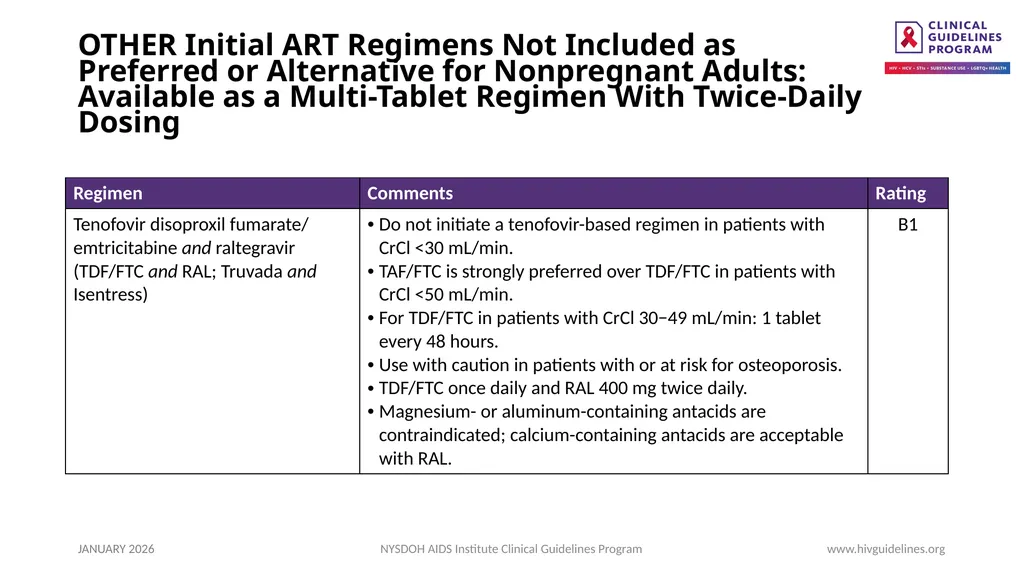
OTHER Initial ART Regimens Not Included as Preferred or Alternative for Nonpregnant Adults: Available as a Multi-Tablet Regimen With Twice-Daily Dosing NYSDOH AIDS Institute Clinical Guidelines Program www.hivguidelines.org JANUARY 2026<br>
17
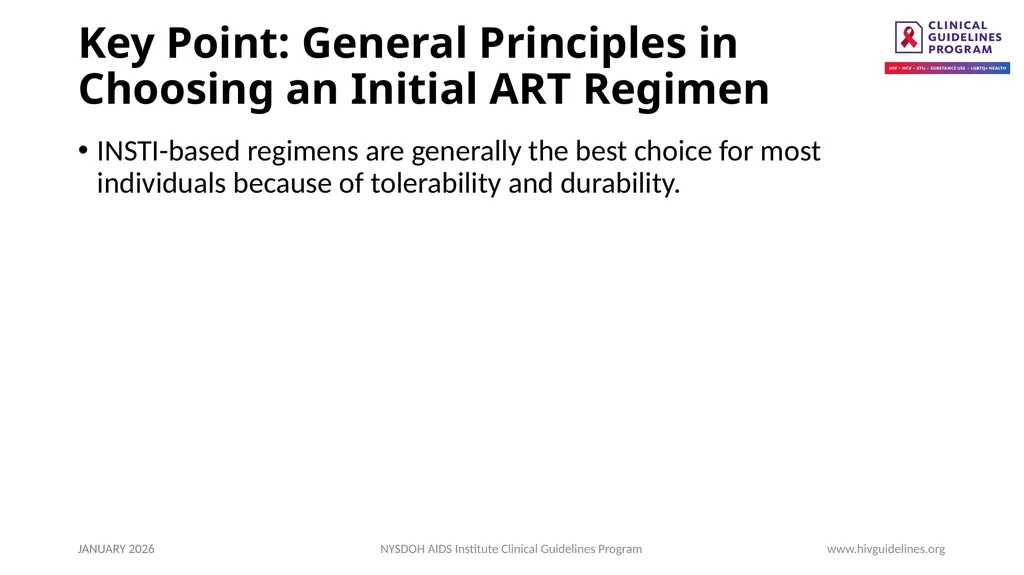
Key Point: General Principles in Choosing an Initial ART Regimen INSTI-based regimens are generally the best choice for most individuals because of tolerability and durability. NYSDOH AIDS Institute Clinical Guidelines Program www.hivguidelines.org JANUARY 2026<br>
18
Individual Antiretroviral Medications or Combinations to Avoid in Initial Therapy for Nonpregnant Adults NYSDOH AIDS Institute Clinical Guidelines Program www.hivguidelines.org JANUARY 2026<br>
19
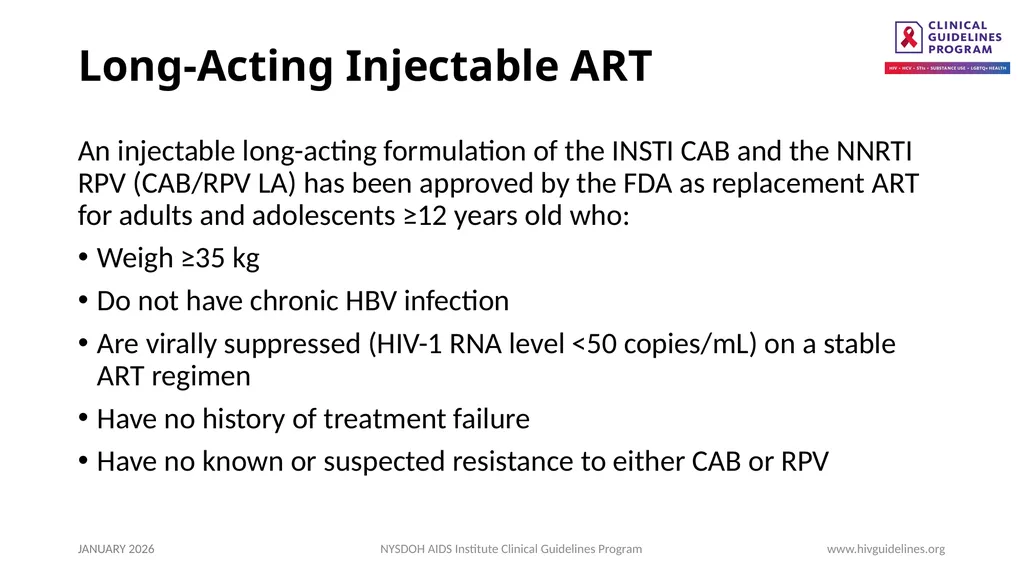
Long-Acting Injectable ART An injectable long-acting formulation of the INSTI CAB and the NNRTI RPV (CAB/RPV LA) has been approved by the FDA as replacement ART for adults and adolescents ≥12 years old who:
Weigh ≥35 kg
Do not have chronic HBV infection
Are virally suppressed (HIV-1 RNA level <50 copies/mL) on a stable ART regimen
Have no history of treatment failure
Have no known or suspected resistance to either CAB or RPV NYSDOH AIDS Institute Clinical Guidelines Program www.hivguidelines.org JANUARY 2026<br>
Weigh ≥35 kg
Do not have chronic HBV infection
Are virally suppressed (HIV-1 RNA level <50 copies/mL) on a stable ART regimen
Have no history of treatment failure
Have no known or suspected resistance to either CAB or RPV NYSDOH AIDS Institute Clinical Guidelines Program www.hivguidelines.org JANUARY 2026<br>
20
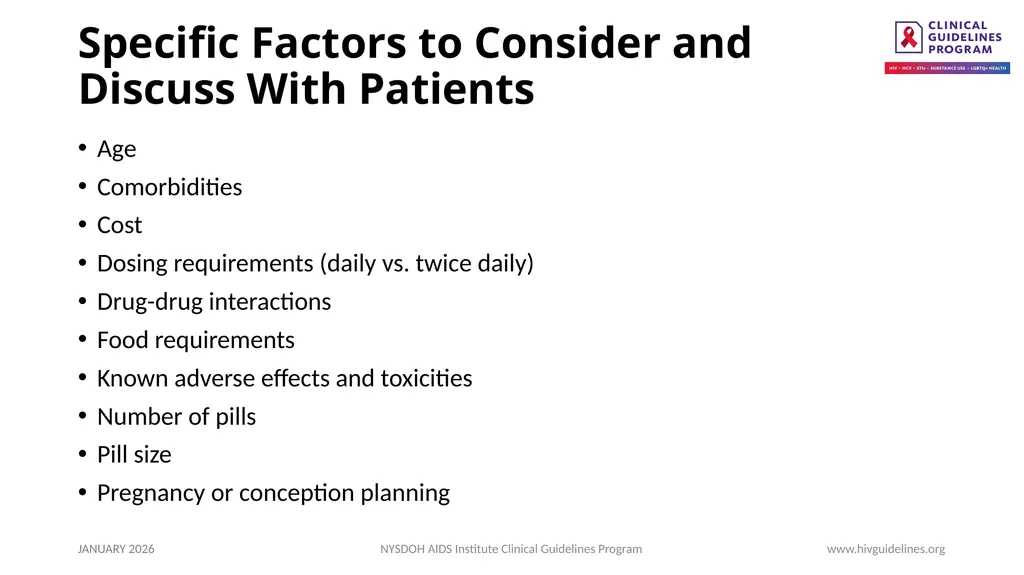
Specific Factors to Consider and Discuss With Patients Age
Comorbidities
Cost
Dosing requirements (daily vs. twice daily)
Drug-drug interactions
Food requirements
Known adverse effects and toxicities
Number of pills
Pill size
Pregnancy or conception planning NYSDOH AIDS Institute Clinical Guidelines Program www.hivguidelines.org JANUARY 2026<br>
Comorbidities
Cost
Dosing requirements (daily vs. twice daily)
Drug-drug interactions
Food requirements
Known adverse effects and toxicities
Number of pills
Pill size
Pregnancy or conception planning NYSDOH AIDS Institute Clinical Guidelines Program www.hivguidelines.org JANUARY 2026<br>
21
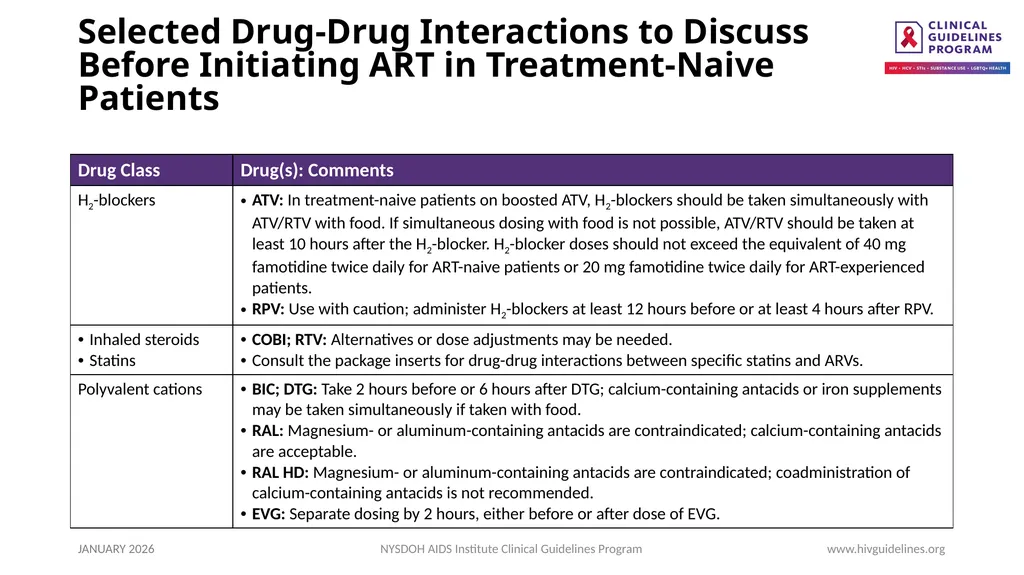
Selected Drug-Drug Interactions to Discuss Before Initiating ART in Treatment-Naive Patients NYSDOH AIDS Institute Clinical Guidelines Program www.hivguidelines.org JANUARY 2026<br>
22
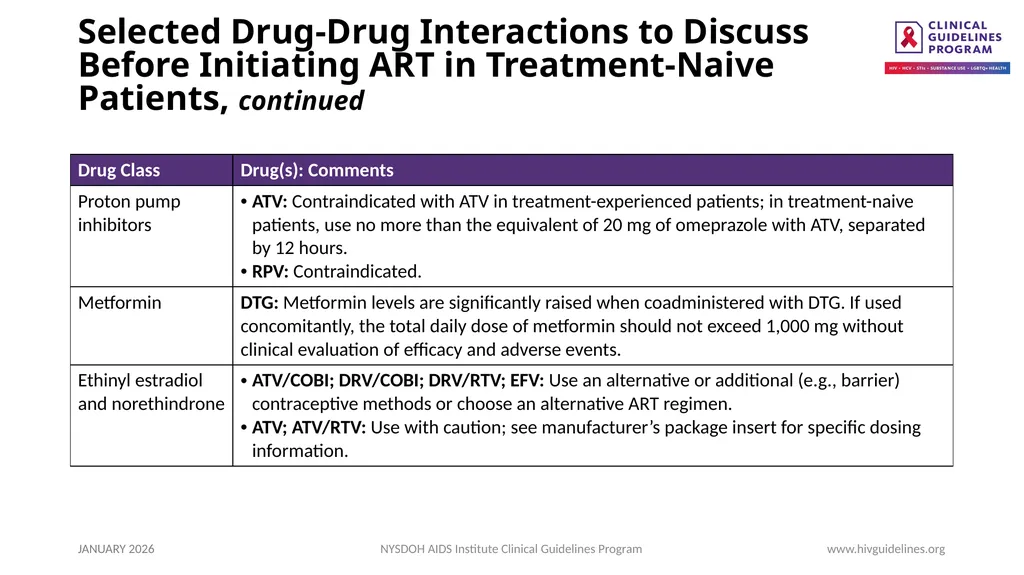
Selected Drug-Drug Interactions to Discuss Before Initiating ART in Treatment-Naive Patients, continued NYSDOH AIDS Institute Clinical Guidelines Program www.hivguidelines.org JANUARY 2026<br>
23
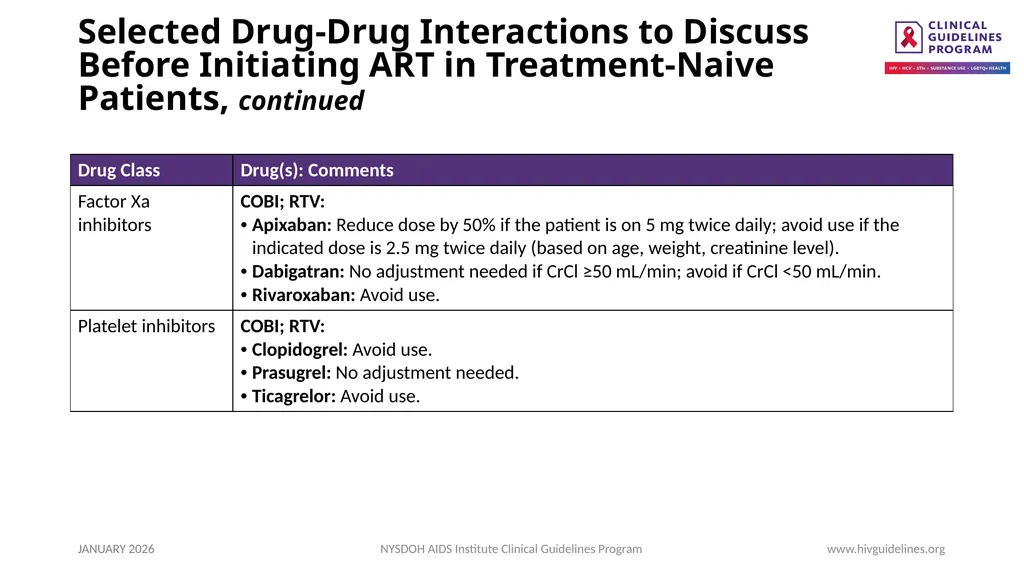
Selected Drug-Drug Interactions to Discuss Before Initiating ART in Treatment-Naive Patients, continued NYSDOH AIDS Institute Clinical Guidelines Program www.hivguidelines.org JANUARY 2026<br>
24
Antiretroviral Medications That Can Be Taken With or Without Food, Must Be Taken With Food, or Must Be Taken on an Empty Stomach NYSDOH AIDS Institute Clinical Guidelines Program www.hivguidelines.org JANUARY 2026<br>
25
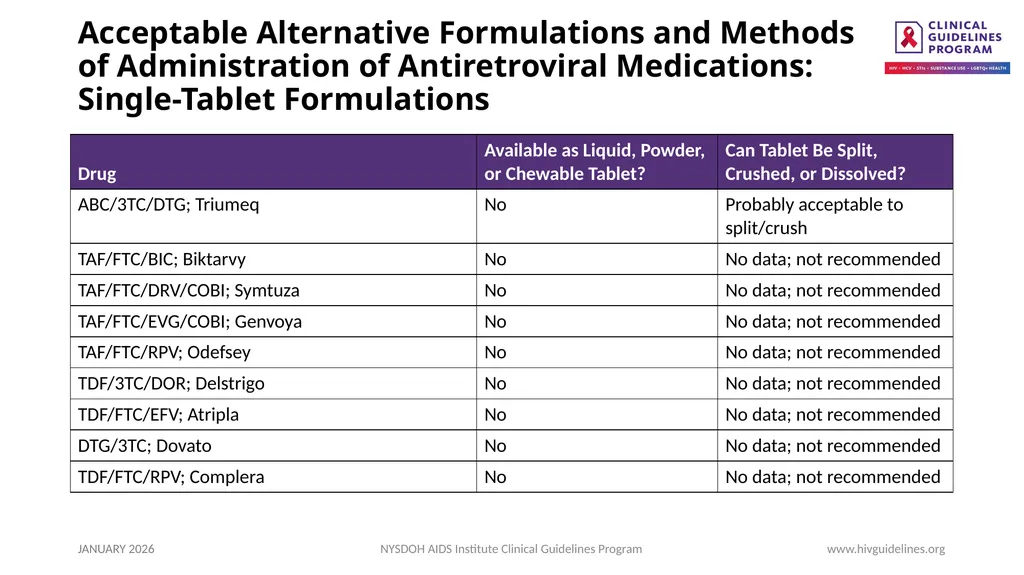
Acceptable Alternative Formulations and Methods of Administration of Antiretroviral Medications:
Single-Tablet Formulations NYSDOH AIDS Institute Clinical Guidelines Program www.hivguidelines.org JANUARY 2026<br>
26
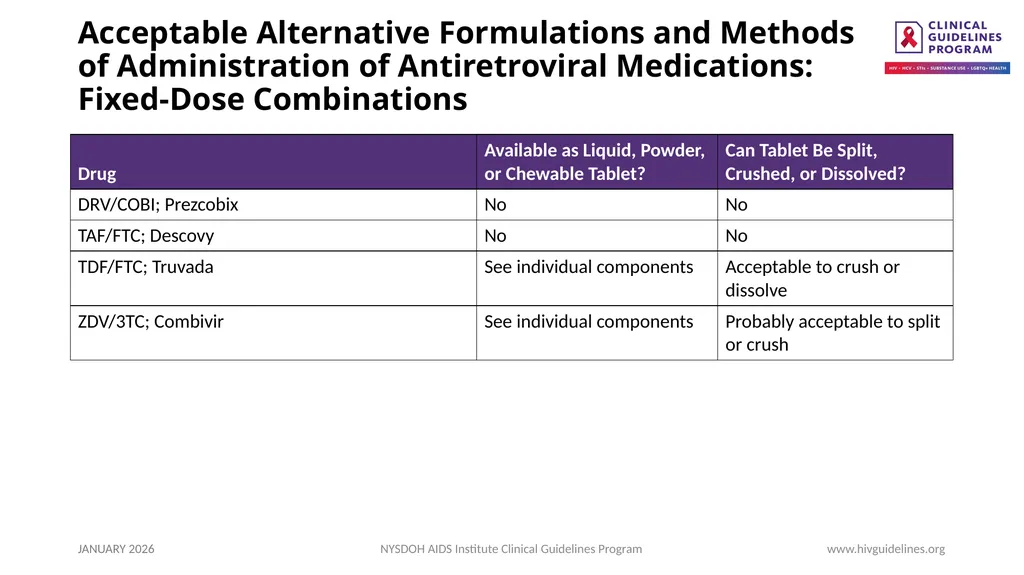
Acceptable Alternative Formulations and Methods of Administration of Antiretroviral Medications:
Fixed-Dose Combinations NYSDOH AIDS Institute Clinical Guidelines Program www.hivguidelines.org JANUARY 2026<br>
27
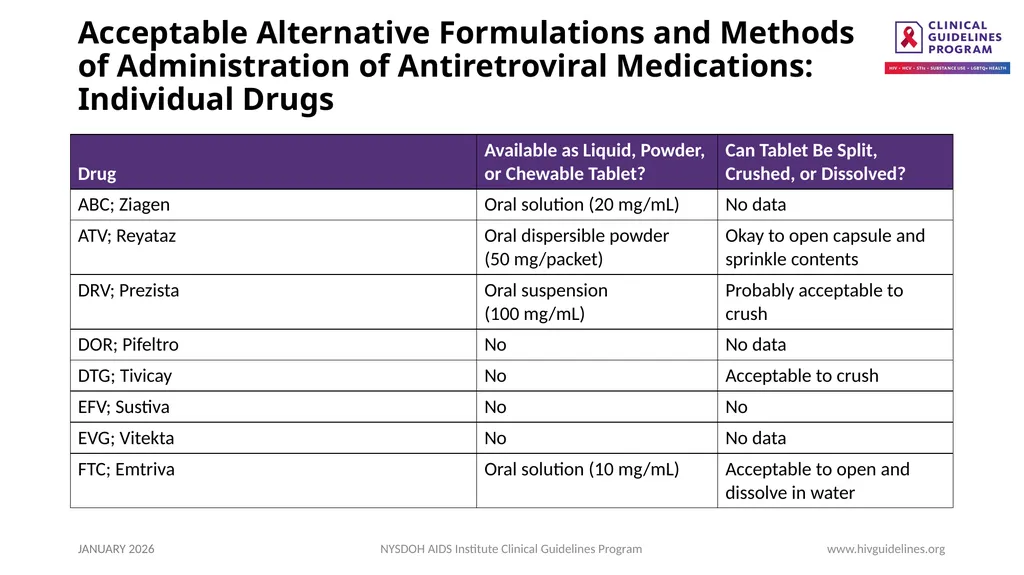
Acceptable Alternative Formulations and Methods of Administration of Antiretroviral Medications:
Individual Drugs NYSDOH AIDS Institute Clinical Guidelines Program www.hivguidelines.org JANUARY 2026<br>
28
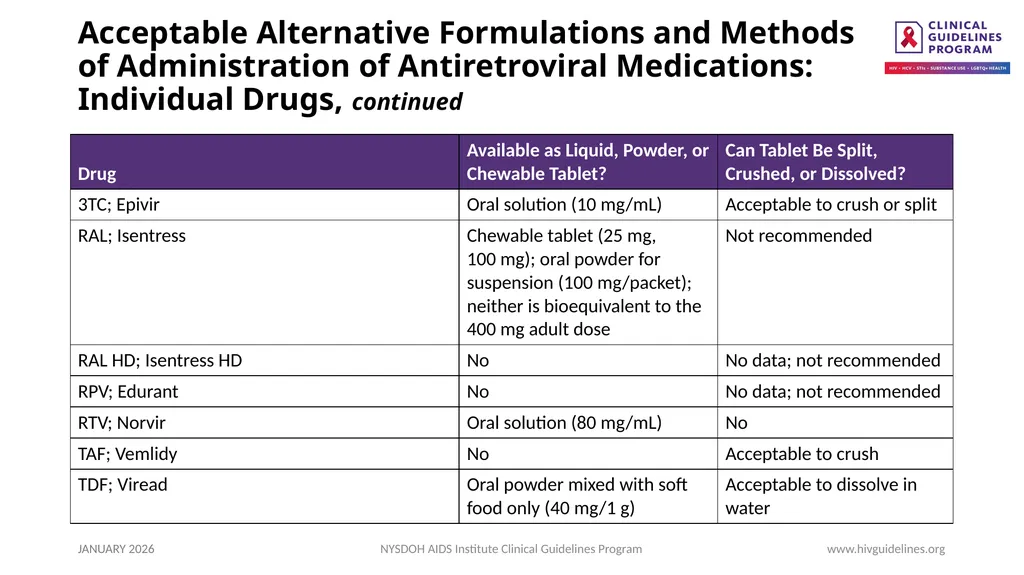
Acceptable Alternative Formulations and Methods of Administration of Antiretroviral Medications:
Individual Drugs, continued NYSDOH AIDS Institute Clinical Guidelines Program www.hivguidelines.org JANUARY 2026<br>
29
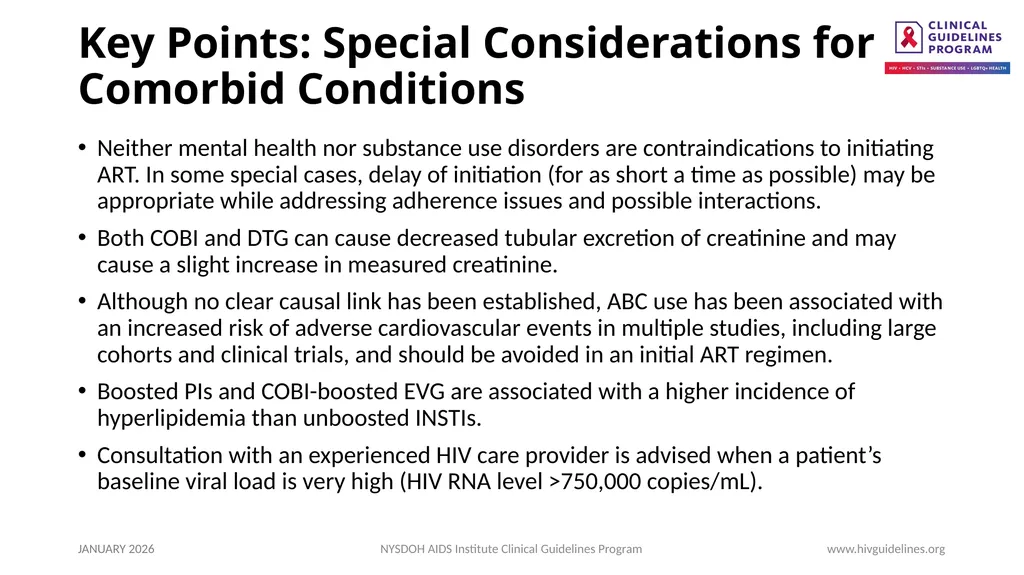
Key Points: Special Considerations for Comorbid Conditions Neither mental health nor substance use disorders are contraindications to initiating ART. In some special cases, delay of initiation (for as short a time as possible) may be appropriate while addressing adherence issues and possible interactions.
Both COBI and DTG can cause decreased tubular excretion of creatinine and may cause a slight increase in measured creatinine.
Although no clear causal link has been established, ABC use has been associated with an increased risk of adverse cardiovascular events in multiple studies, including large cohorts and clinical trials, and should be avoided in an initial ART regimen.
Boosted PIs and COBI-boosted EVG are associated with a higher incidence of hyperlipidemia than unboosted INSTIs.
Consultation with an experienced HIV care provider is advised when a patient’s baseline viral load is very high (HIV RNA level >750,000 copies/mL). NYSDOH AIDS Institute Clinical Guidelines Program www.hivguidelines.org JANUARY 2026<br>
Both COBI and DTG can cause decreased tubular excretion of creatinine and may cause a slight increase in measured creatinine.
Although no clear causal link has been established, ABC use has been associated with an increased risk of adverse cardiovascular events in multiple studies, including large cohorts and clinical trials, and should be avoided in an initial ART regimen.
Boosted PIs and COBI-boosted EVG are associated with a higher incidence of hyperlipidemia than unboosted INSTIs.
Consultation with an experienced HIV care provider is advised when a patient’s baseline viral load is very high (HIV RNA level >750,000 copies/mL). NYSDOH AIDS Institute Clinical Guidelines Program www.hivguidelines.org JANUARY 2026<br>
30
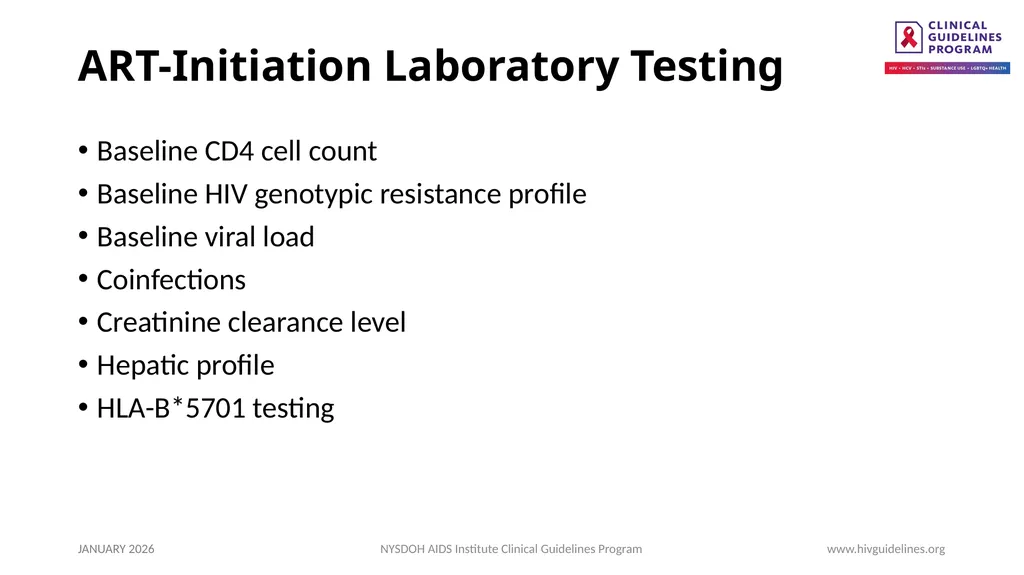
ART-Initiation Laboratory Testing Baseline CD4 cell count
Baseline HIV genotypic resistance profile
Baseline viral load
Coinfections
Creatinine clearance level
Hepatic profile
HLA-B*5701 testing NYSDOH AIDS Institute Clinical Guidelines Program www.hivguidelines.org JANUARY 2026<br>
Baseline HIV genotypic resistance profile
Baseline viral load
Coinfections
Creatinine clearance level
Hepatic profile
HLA-B*5701 testing NYSDOH AIDS Institute Clinical Guidelines Program www.hivguidelines.org JANUARY 2026<br>
31
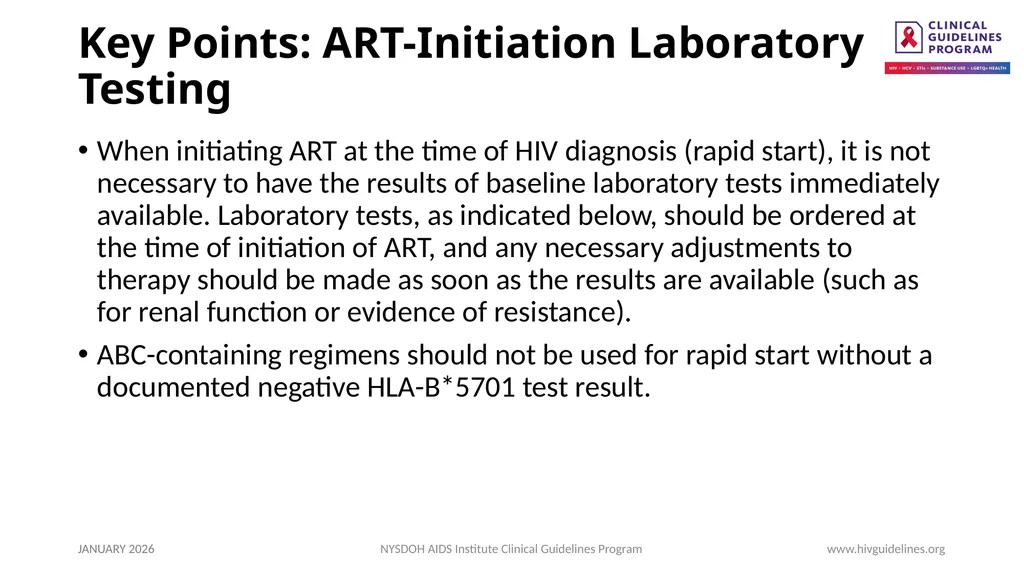
Key Points: ART-Initiation Laboratory Testing When initiating ART at the time of HIV diagnosis (rapid start), it is not necessary to have the results of baseline laboratory tests immediately available. Laboratory tests, as indicated below, should be ordered at the time of initiation of ART, and any necessary adjustments to therapy should be made as soon as the results are available (such as for renal function or evidence of resistance).
ABC-containing regimens should not be used for rapid start without a documented negative HLA-B*5701 test result. NYSDOH AIDS Institute Clinical Guidelines Program www.hivguidelines.org JANUARY 2026<br>
ABC-containing regimens should not be used for rapid start without a documented negative HLA-B*5701 test result. NYSDOH AIDS Institute Clinical Guidelines Program www.hivguidelines.org JANUARY 2026<br>
32
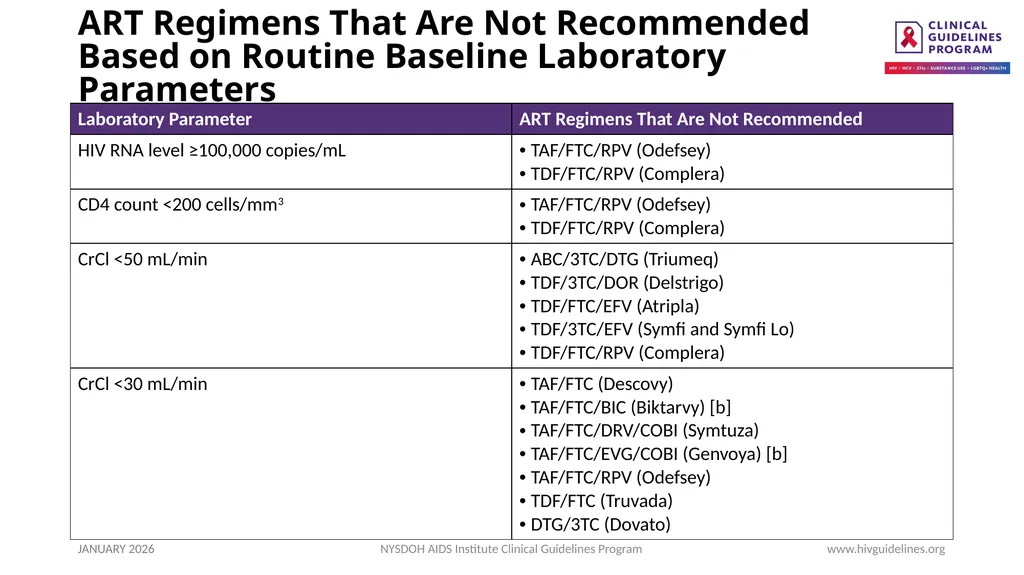
ART Regimens That Are Not Recommended Based on Routine Baseline Laboratory Parameters NYSDOH AIDS Institute Clinical Guidelines Program www.hivguidelines.org JANUARY 2026<br>
33
NYSDOH AIDS Institute Clinical Guidelines Program www.hivguidelines.org Need Help?<br>
34
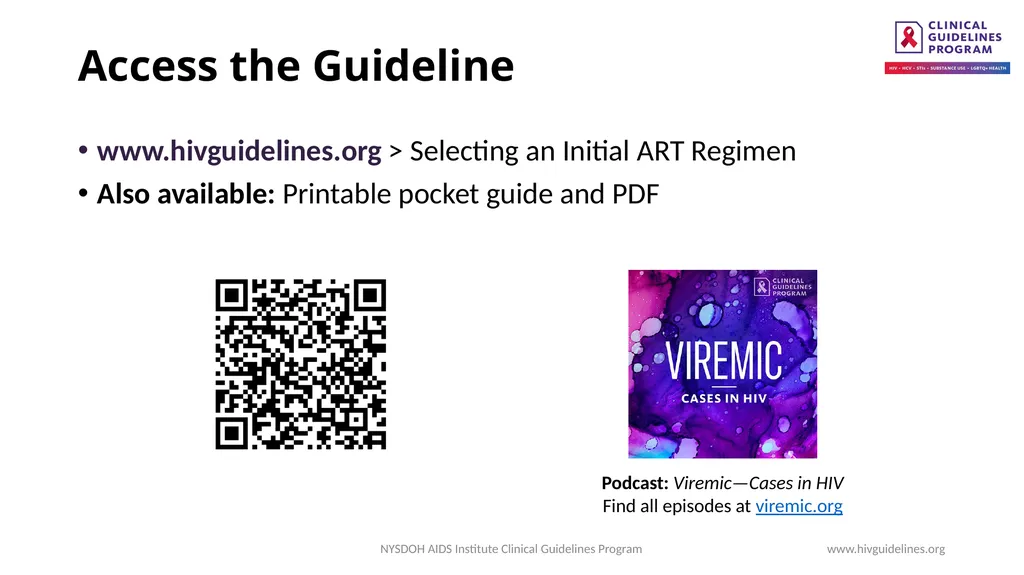
NYSDOH AIDS Institute Clinical Guidelines Program www.hivguidelines.org Access the Guideline www.hivguidelines.org > Selecting an Initial ART Regimen
Also available: Printable pocket guide and PDF Podcast: Viremic—Cases in HIV
Find all episodes at viremic.org<br>
Also available: Printable pocket guide and PDF Podcast: Viremic—Cases in HIV
Find all episodes at viremic.org<br>