Semester 6 2019-20 Dr. Lakshmi Muthukumar, Head, Department of English, SIES College of Arts, Science and Commerce, Sion West AESTHETICISM INDEX Introduction to Aestheticism Beginnings of the Movement Characteristics of this Movement Walter
"Semester 6 2019-20 Dr. Lakshmi Muthukumar, Head," is the property of its rightful owner. Permission is granted to
download and print the materials on this website for personal, non-commercial use only, and to display it
on your personal computer provided you do not modify the materials and that you retain all copyright
notices contained in the materials. By downloading content from our website, you accept the terms of this
agreement.
Presentation Transcript
01
Semester 6
2019-20
Dr. Lakshmi Muthukumar, Head, Department of English, SIES College of Arts, Science and Commerce, Sion West AESTHETICISM<br>
02
INDEX Introduction to Aestheticism
Beginnings of the Movement
Characteristics of this Movement
Walter Pater
Oscar Wilde<br>
03
Introduction to Aestheticism Aestheticism emphasized aesthetic values as the purpose of art rather than burdening it with social- political goals.
Proponents of aestheticism held that art does not have any didactic purpose.
Life should copy art and not vice versa
Main characteristics of the movement :
Suggestion rather than statement
Sensuality
Correspondence between words, colours and music
Extensive use of symbols<br>
04
Introduction to Aestheticism As a philosophy, aesthetics refers to the study of sensory principles – in other words judgment or evaluation by the senses.
As a literary movement, it adopted an approach to life that emphasized the importance of art above all else, and the pleasure which could be found in beautiful things.<br>
05
Beginnings of the Movement Reaction to Victorian attitude towards Art and Literature
Opposition to Victorian Morality and Orthodoxy
Dissatisfaction with the Utilitarian and Materialistic creed
Stimulus towards Hedonism
Influence of the French doctrine of art for art's sake<br>
06
Characteristics of this Movement Relationship with other art forms and movements
Painting
Hellenism
Synaesthesia
Sensuality over Didacticism, suggestion over statement
Beauty as the only criterion of art
Heightened language meets ‘vulgar’ subject matter
Use of symbols<br>
07
Characteristics of this Movement Escapist nature
Belief that Life should imitate Art
Focus on the individual self
Denial of morality, utility and social roles<br>
08
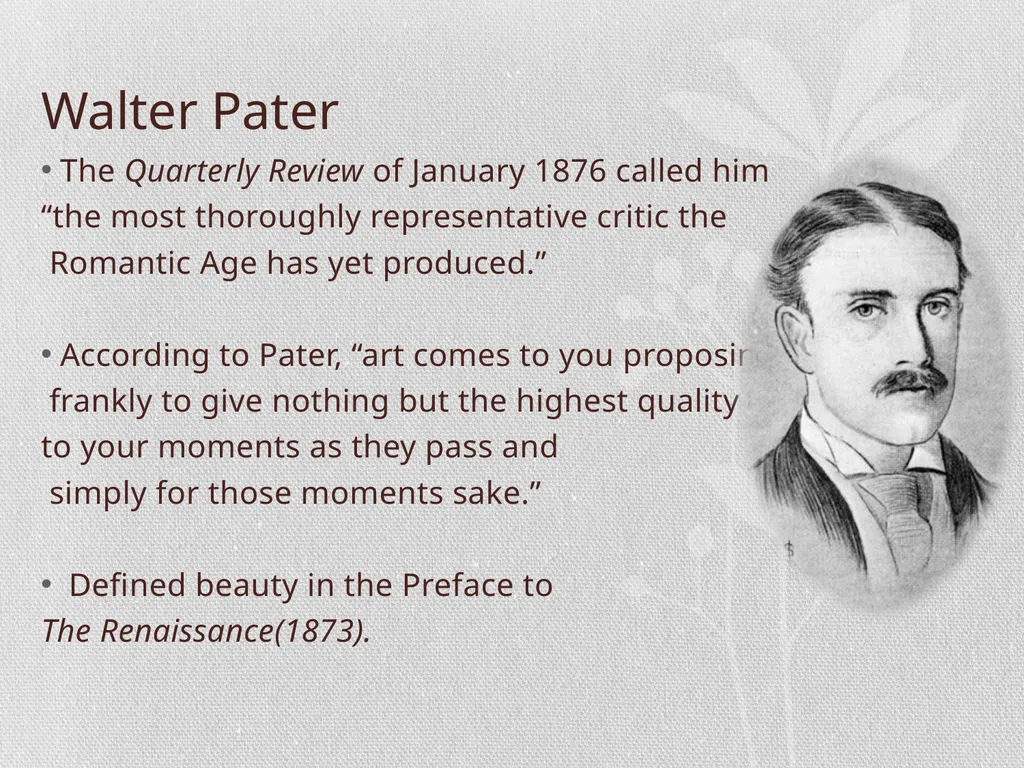
Walter Pater The Quarterly Review of January 1876 called him
“the most thoroughly representative critic the
Romantic Age has yet produced.”
According to Pater, “art comes to you proposing
frankly to give nothing but the highest quality
to your moments as they pass and
simply for those moments sake.”
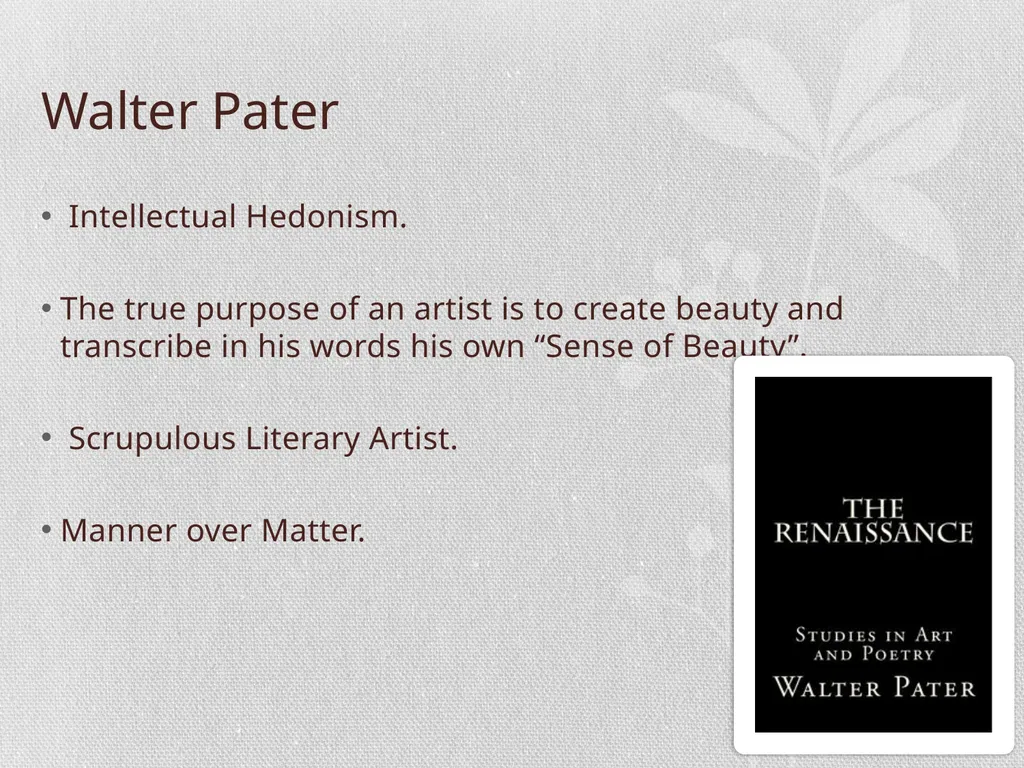
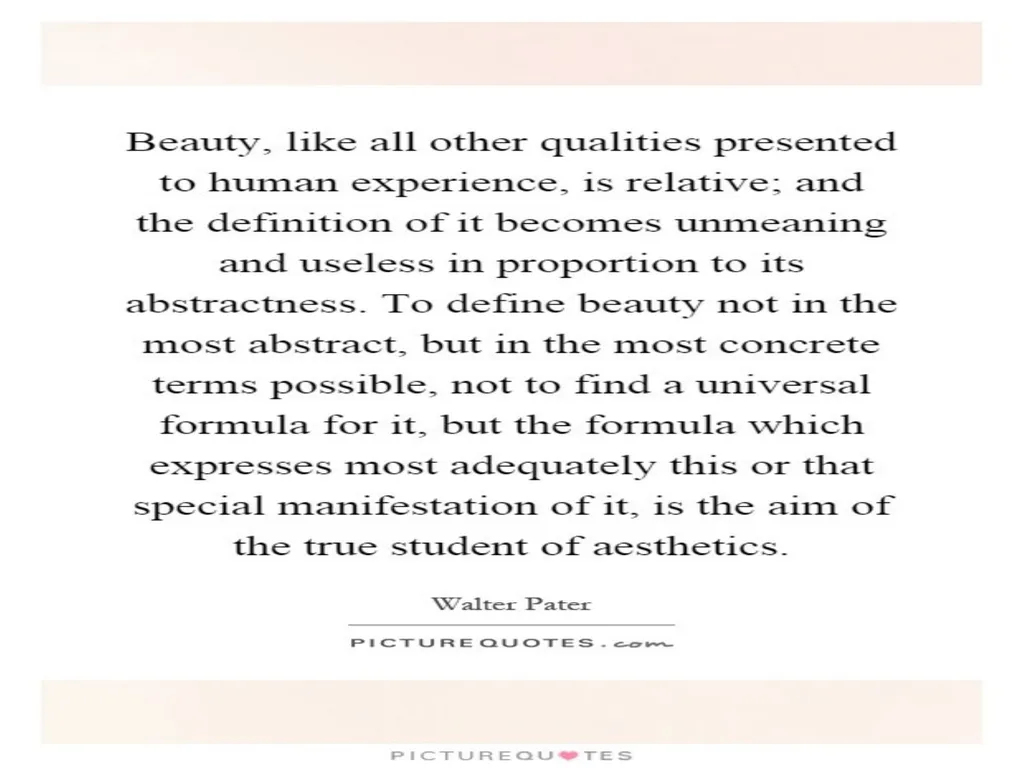
Defined beauty in the Preface to
The Renaissance(1873).<br>
09
Walter Pater Intellectual Hedonism.
The true purpose of an artist is to create beauty and transcribe in his words his own “Sense of Beauty”.
Scrupulous Literary Artist.
Manner over Matter.<br>
10
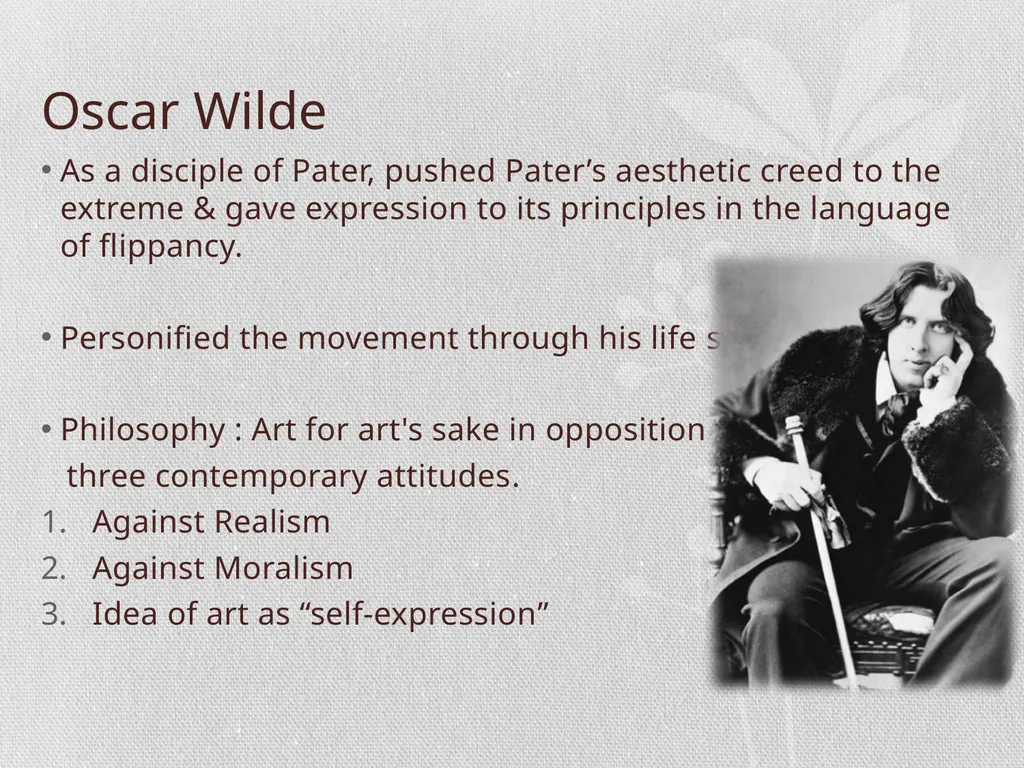
Oscar Wilde As a disciple of Pater, pushed Pater’s aesthetic creed to the extreme & gave expression to its principles in the language of flippancy.
Personified the movement through his life style.
Philosophy : Art for art's sake in opposition to
three contemporary attitudes.
Against Realism
Against Moralism
Idea of art as “self-expression”<br>
11
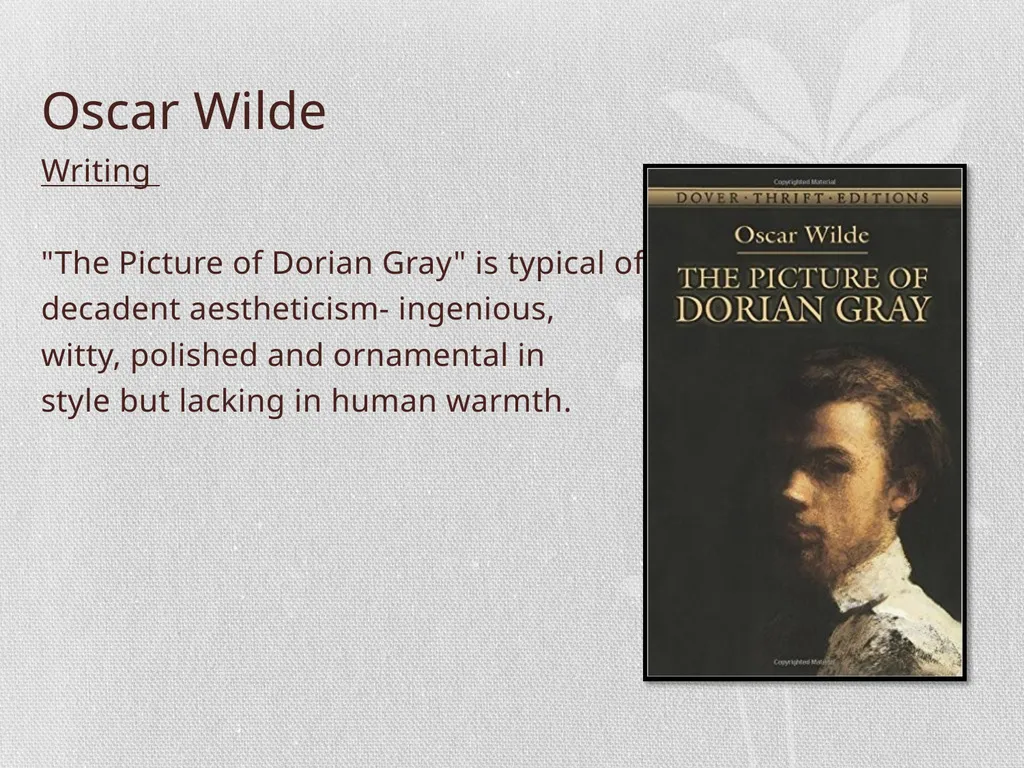
Oscar Wilde Writing
"The Picture of Dorian Gray" is typical of
decadent aestheticism- ingenious,
witty, polished and ornamental in
style but lacking in human warmth.<br>