Semi-magic seniority isomers and the effective
Description: Semi-magic seniority isomers and the effective interactions Ashok Kumar Jain Department of Physics Indian Institute of Technology, Roorkee Outline Atlas of Nuclear Isomers 2450 Isomers Seniority isomers: Where and why?? Semi-magic
Related Topics
Download Presentation
"Semi-magic seniority isomers and the effective" is the property of its rightful owner. Permission is granted to download and print the materials on this website for personal, non-commercial use only, and to display it on your personal computer provided you do not modify the materials and that you retain all copyright notices contained in the materials. By downloading content from our website, you accept the terms of this agreement.
Presentation Transcript
slide1. Semi-magic seniority isomers and the effective interactions Ashok Kumar Jain
Department of Physics
Indian Institute of Technology, Roorkee<br>
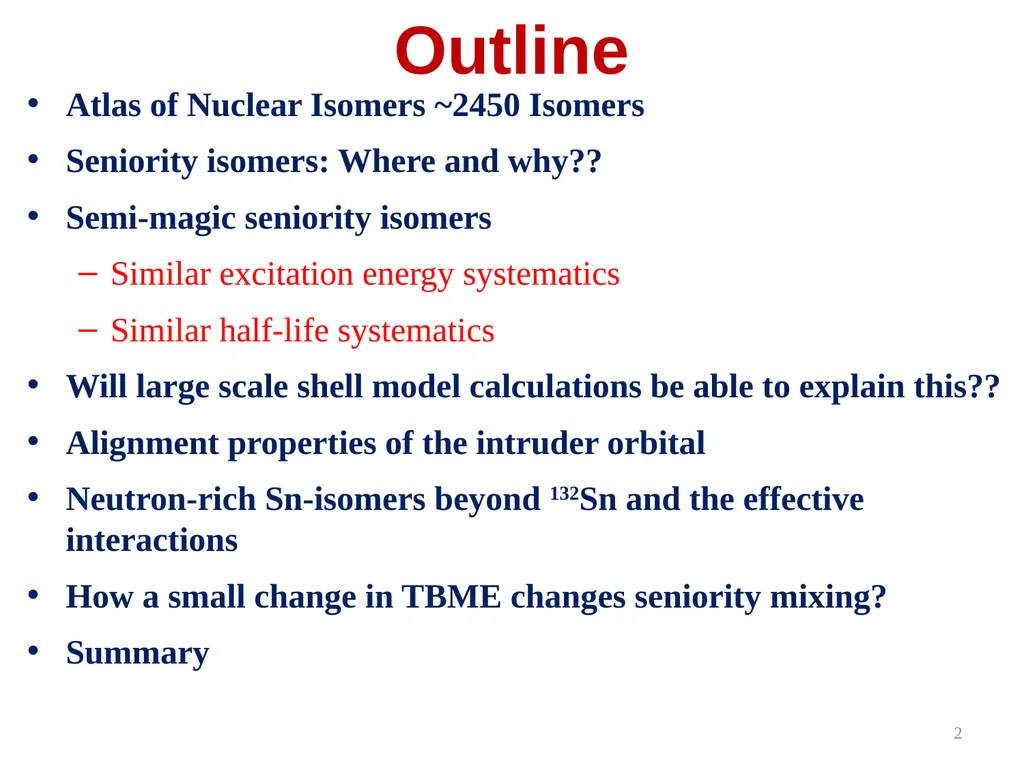
slide2. Outline Atlas of Nuclear Isomers ~2450 Isomers
Seniority isomers: Where and why??
Semi-magic seniority isomers
Similar excitation energy systematics
Similar half-life systematics
Will large scale shell model calculations be able to explain this??
Alignment properties of the intruder orbital
Neutron-rich Sn-isomers beyond 132Sn and the effective interactions
How a small change in TBME changes seniority mixing?
Summary 2<br>
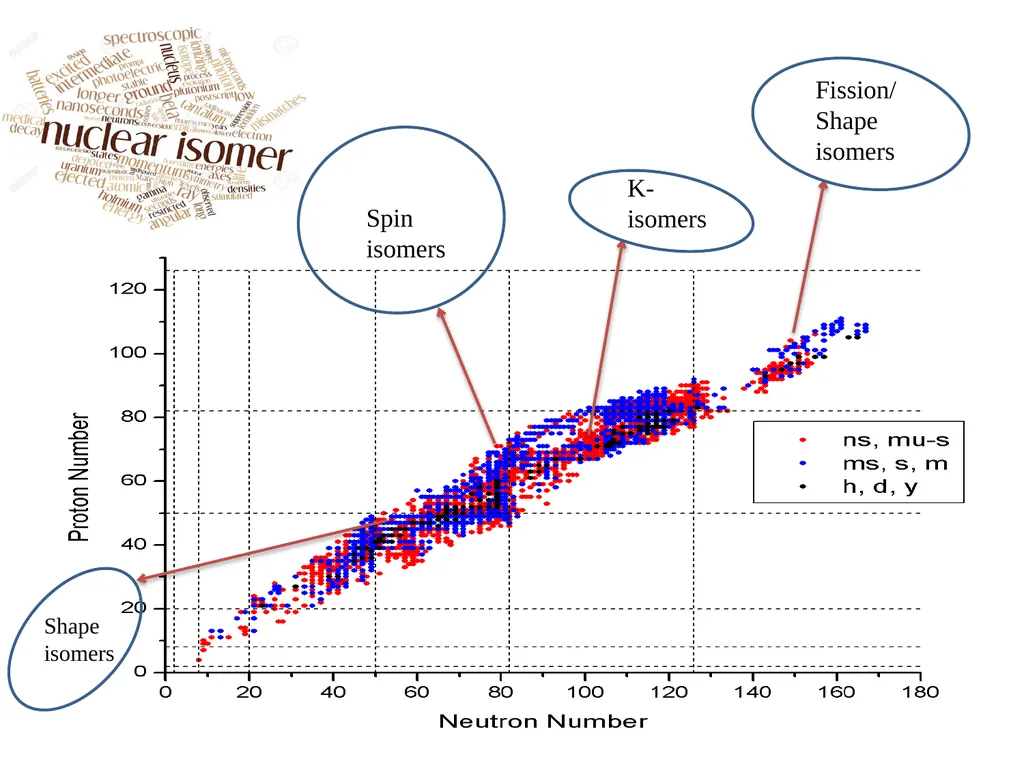
slide3. 3<br>
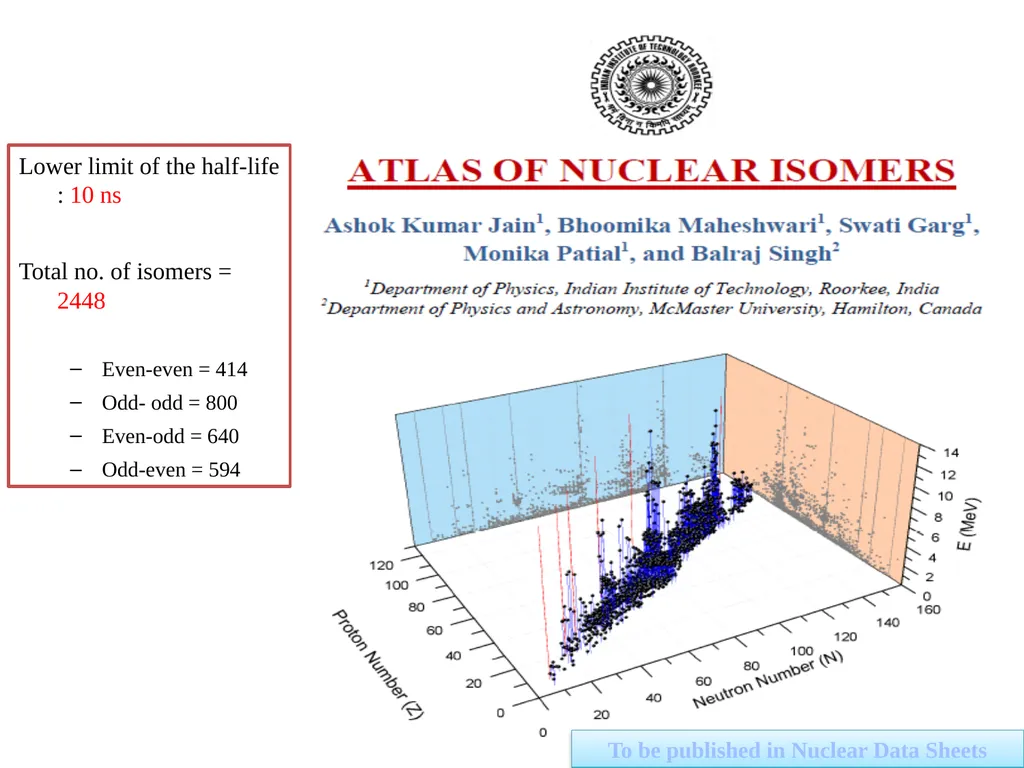
slide4. Lower limit of the half-life : 10 ns
Total no. of isomers = 2448
Even-even = 414
Odd- odd = 800
Even-odd = 640
Odd-even = 594 To be published in Nuclear Data Sheets 4<br>
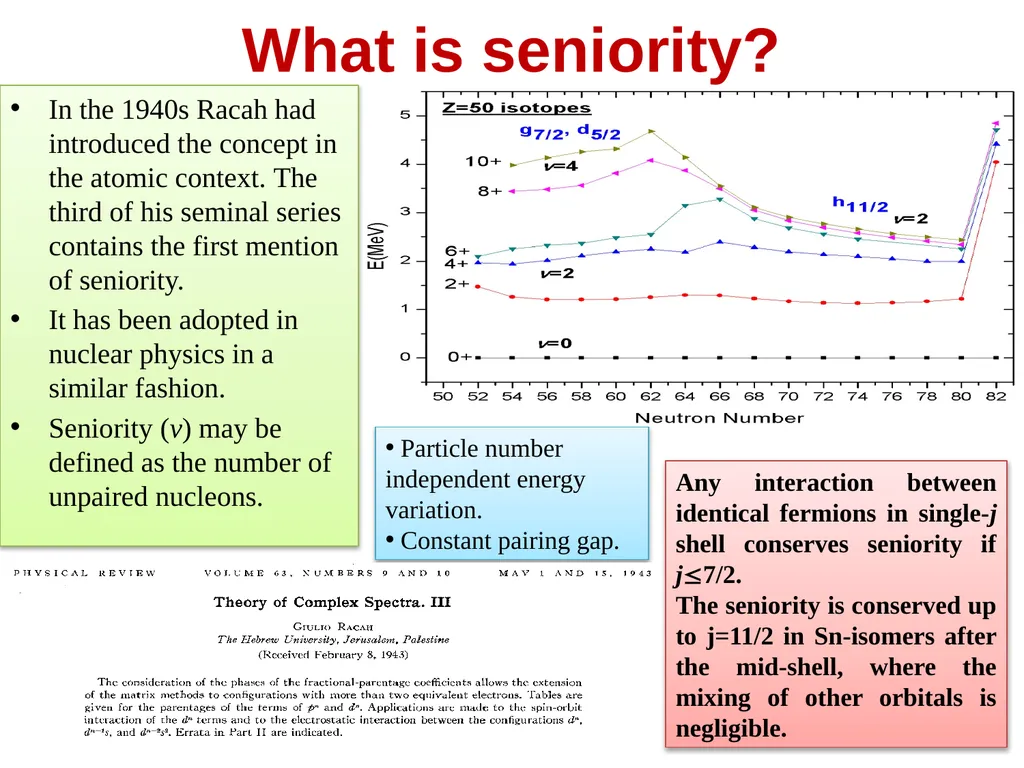
slide5. What is seniority? Any interaction between identical fermions in single-j shell conserves seniority if jï‚£7/2.
The seniority is conserved up to j=11/2 in Sn-isomers after the mid-shell, where the mixing of other orbitals is negligible. Particle number independent energy variation.
Constant pairing gap. 5 In the 1940s Racah had introduced the concept in the atomic context. The third of his seminal series contains the first mention of seniority.
It has been adopted in nuclear physics in a similar fashion.
Seniority (v) may be defined as the number of unpaired nucleons.<br>
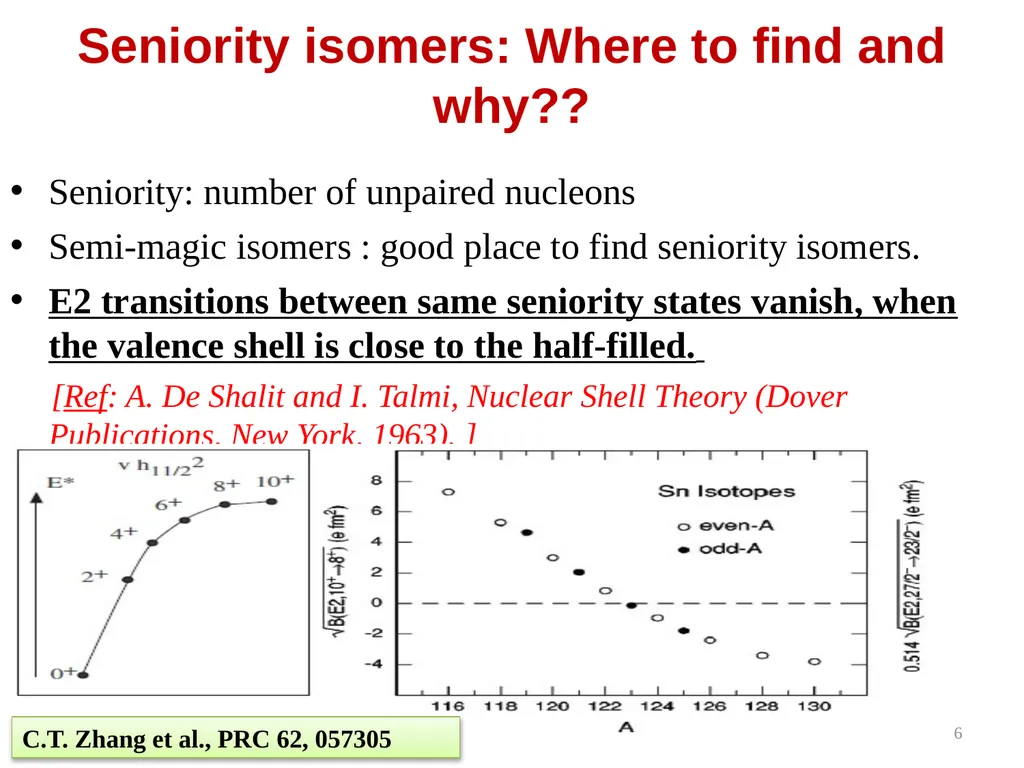
slide6. Seniority isomers: Where to find and why?? Seniority: number of unpaired nucleons
Semi-magic isomers : good place to find seniority isomers.
E2 transitions between same seniority states vanish, when the valence shell is close to the half-filled.
[Ref: A. De Shalit and I. Talmi, Nuclear Shell Theory (Dover Publications, New York, 1963). ] 6<br>
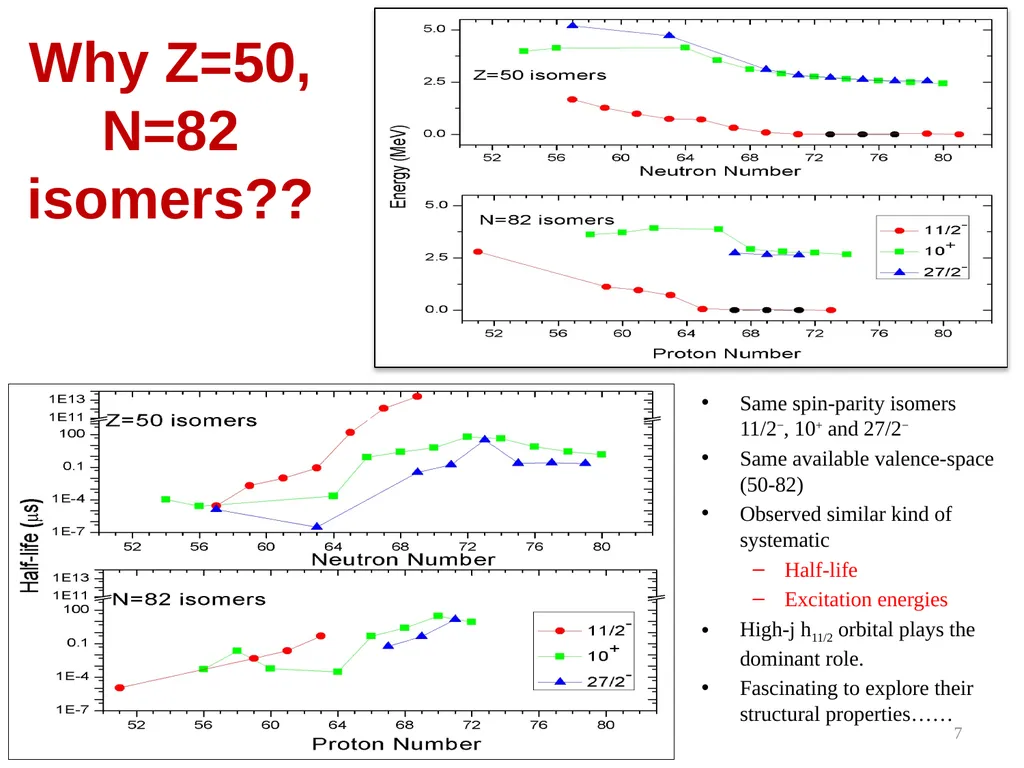
slide7. 7 Same spin-parity isomers 11/2−, 10+ and 27/2−
Same available valence-space (50-82)
Observed similar kind of systematic
Half-life
Excitation energies
High-j h11/2 orbital plays the dominant role.
Fascinating to explore their structural properties…… Why Z=50, N=82 isomers??<br>
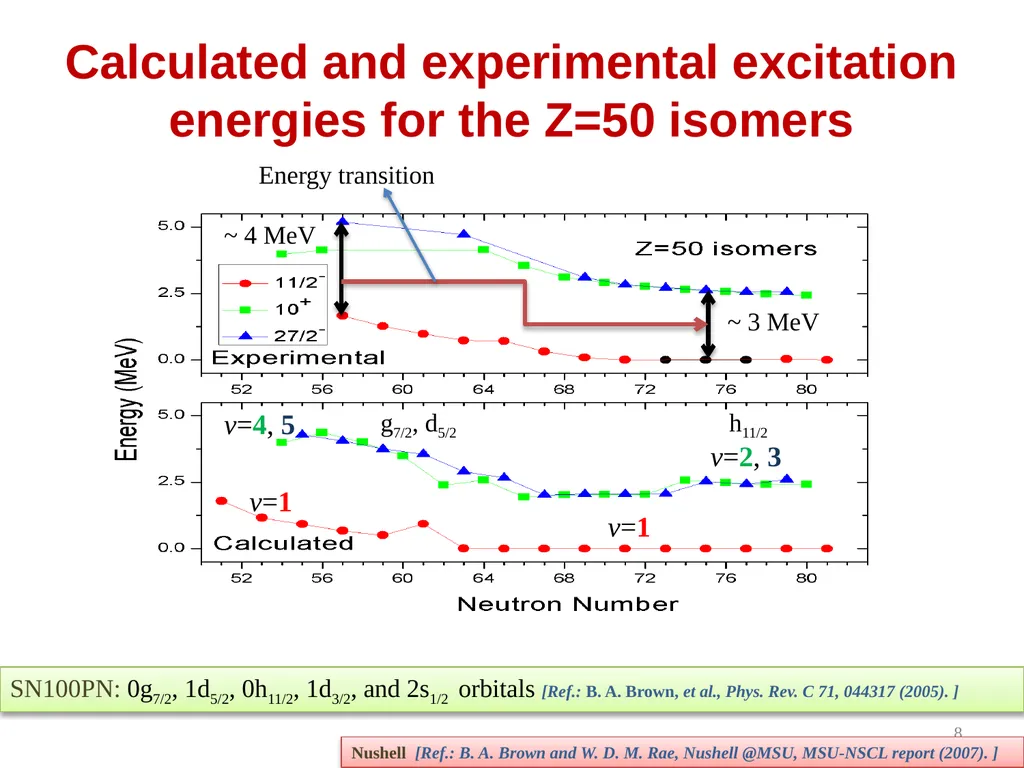
slide8. Calculated and experimental excitation energies for the Z=50 isomers Nushell [Ref.: B. A. Brown and W. D. M. Rae, Nushell @MSU, MSU-NSCL report (2007). ] SN100PN: 0g7/2, 1d5/2, 0h11/2, 1d3/2, and 2s1/2 orbitals [Ref.: B. A. Brown, et al., Phys. Rev. C 71, 044317 (2005). ] 8<br>
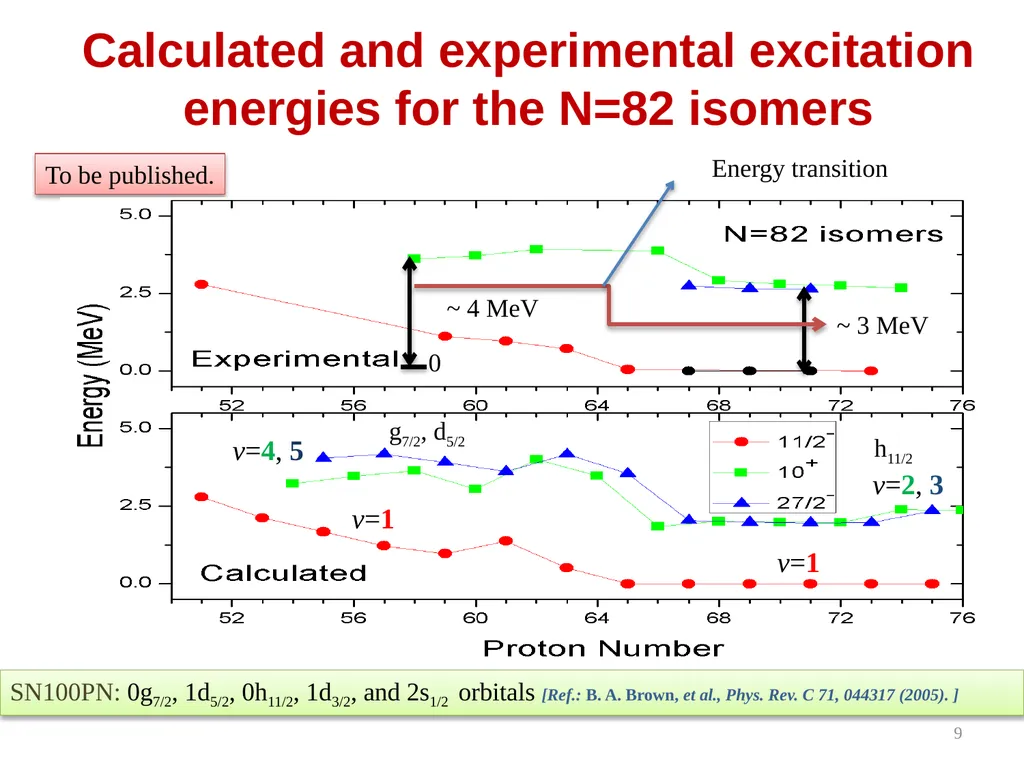
slide9. Calculated and experimental excitation energies for the N=82 isomers To be published. g7/2, d5/2 h11/2 v=1 v=4, 5 v=2, 3 v=1 SN100PN: 0g7/2, 1d5/2, 0h11/2, 1d3/2, and 2s1/2 orbitals [Ref.: B. A. Brown, et al., Phys. Rev. C 71, 044317 (2005). ] 9 0<br>
slide10. Z=50 and N=82 seniority isomersthe configuration lists the unpaired neutrons in the respective orbitals. 10<br>
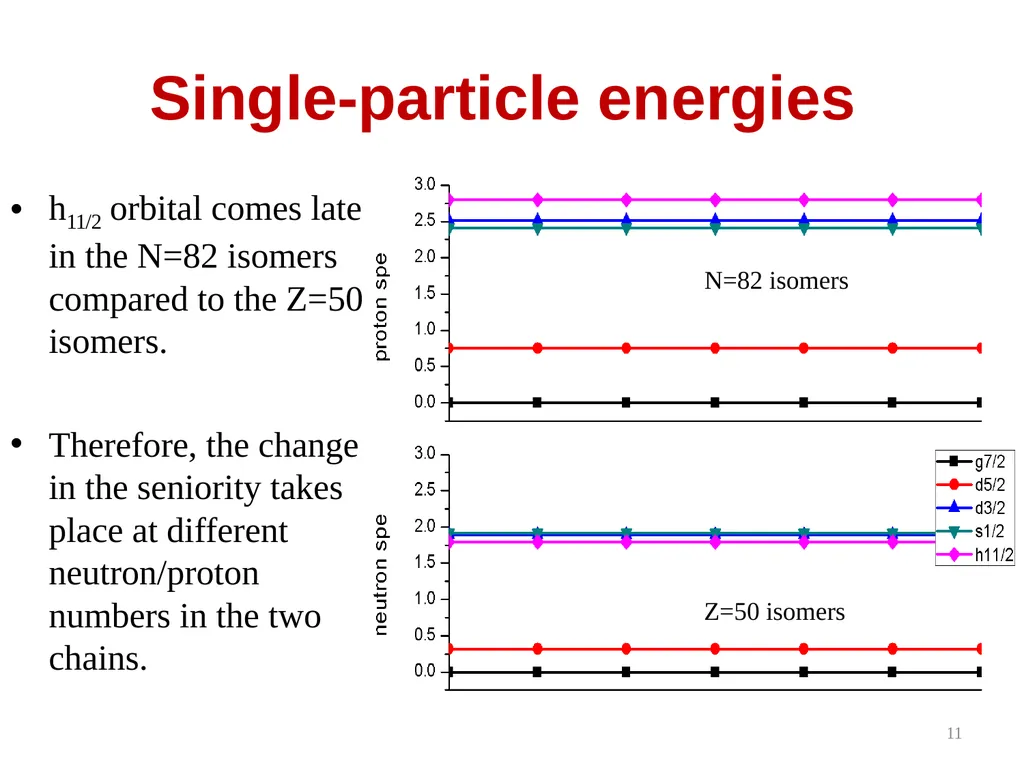
slide11. Single-particle energies h11/2 orbital comes late in the N=82 isomers compared to the Z=50 isomers.
Therefore, the change in the seniority takes place at different neutron/proton numbers in the two chains. 11<br>
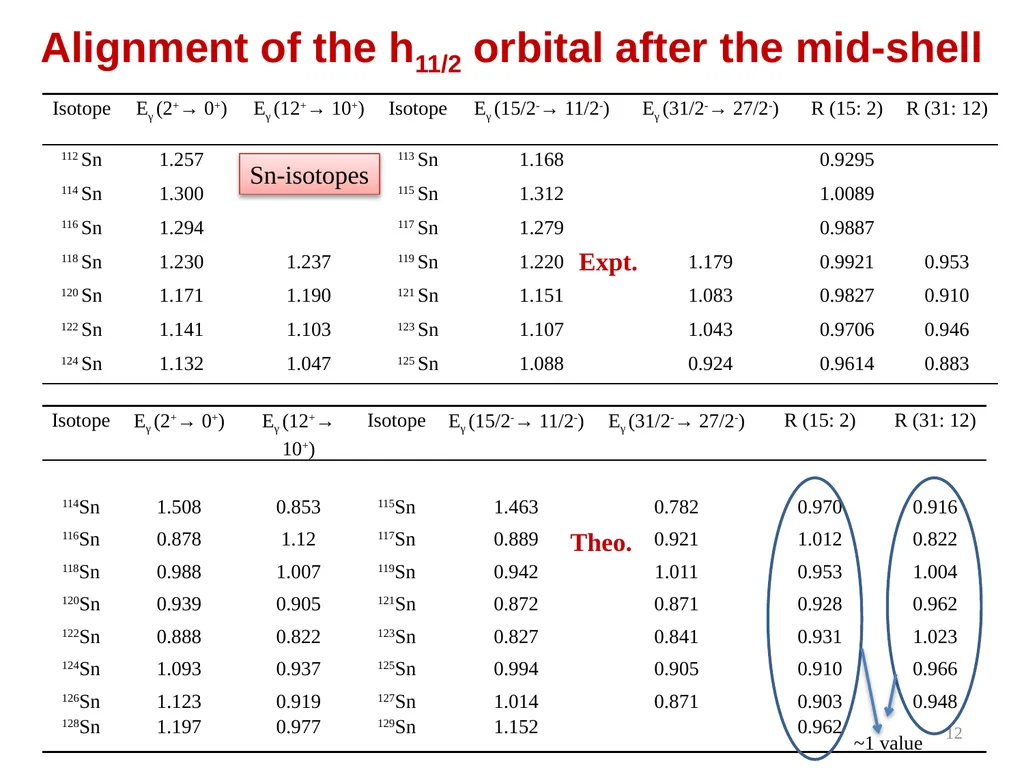
slide12. Alignment of the h11/2 orbital after the mid-shell 12 Expt. Theo. Sn-isotopes<br>
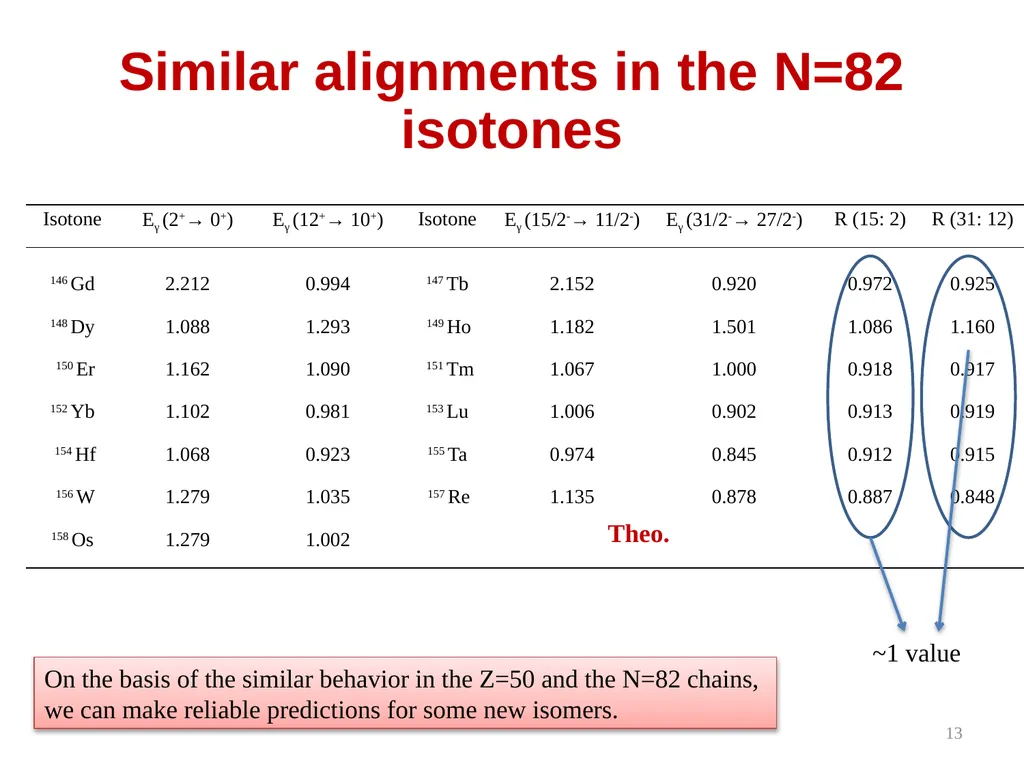
slide13. Similar alignments in the N=82 isotones 13 Theo. On the basis of the similar behavior in the Z=50 and the N=82 chains,
we can make reliable predictions for some new isomers.<br>
slide14. Z=50 and Z=82 seniority isomers
coming from their respective intruder orbitals i13/2 orbital h11/2 orbital 14 High seniority High seniority low seniority low seniority f5/2, p3/2, p1/2 and i13/2 g7/2, d5/2 and h11/2 Different intruder orbitals
Mirror experimental energy systematics
Will large scale scale shell model calculations be able to explain this?<br>
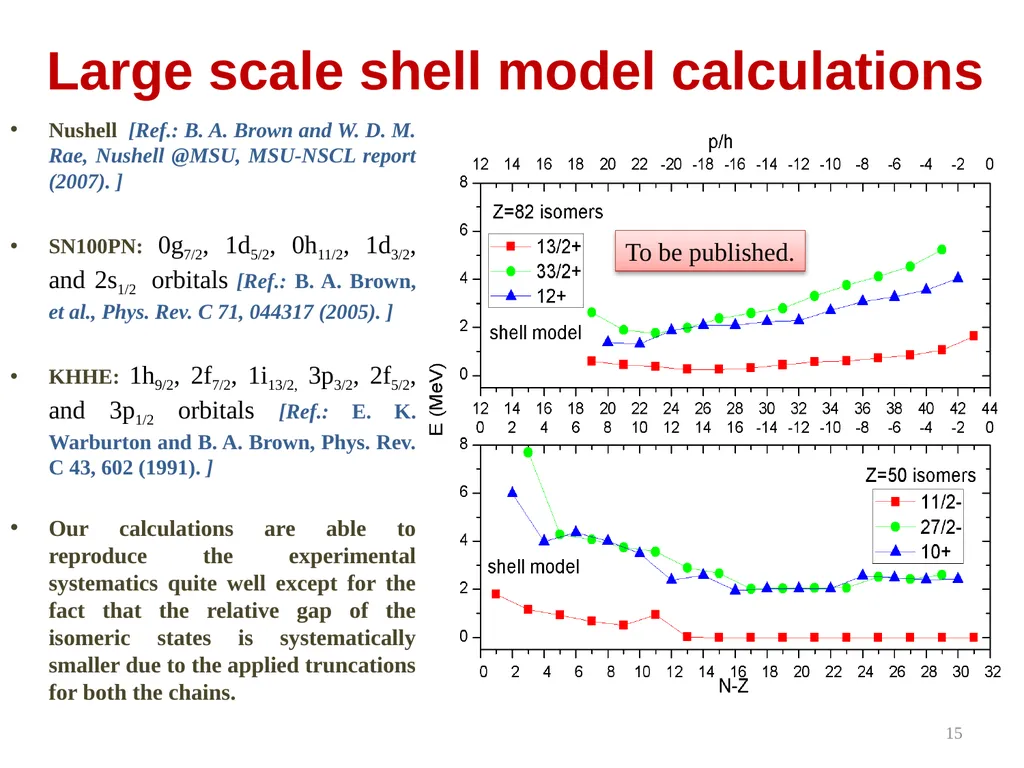
slide15. Nushell [Ref.: B. A. Brown and W. D. M. Rae, Nushell @MSU, MSU-NSCL report (2007). ]
SN100PN: 0g7/2, 1d5/2, 0h11/2, 1d3/2, and 2s1/2 orbitals [Ref.: B. A. Brown, et al., Phys. Rev. C 71, 044317 (2005). ]
KHHE: 1h9/2, 2f7/2, 1i13/2, 3p3/2, 2f5/2, and 3p1/2 orbitals [Ref.: E. K. Warburton and B. A. Brown, Phys. Rev. C 43, 602 (1991). ]
Our calculations are able to reproduce the experimental systematics quite well except for the fact that the relative gap of the isomeric states is systematically smaller due to the applied truncations for both the chains. Large scale shell model calculations To be published. 15<br>
slide16. Neutron-rich seniority isomers beyond 132Sn and the effective interactions 136,138Sn measured for the first time.
Interpretation in terms of v=2 and v=4 seniority mixing.
6+ isomer has been assigned as v=2 isomer. 16 Simpson et al. PRL 113, 132502 (2014)<br>
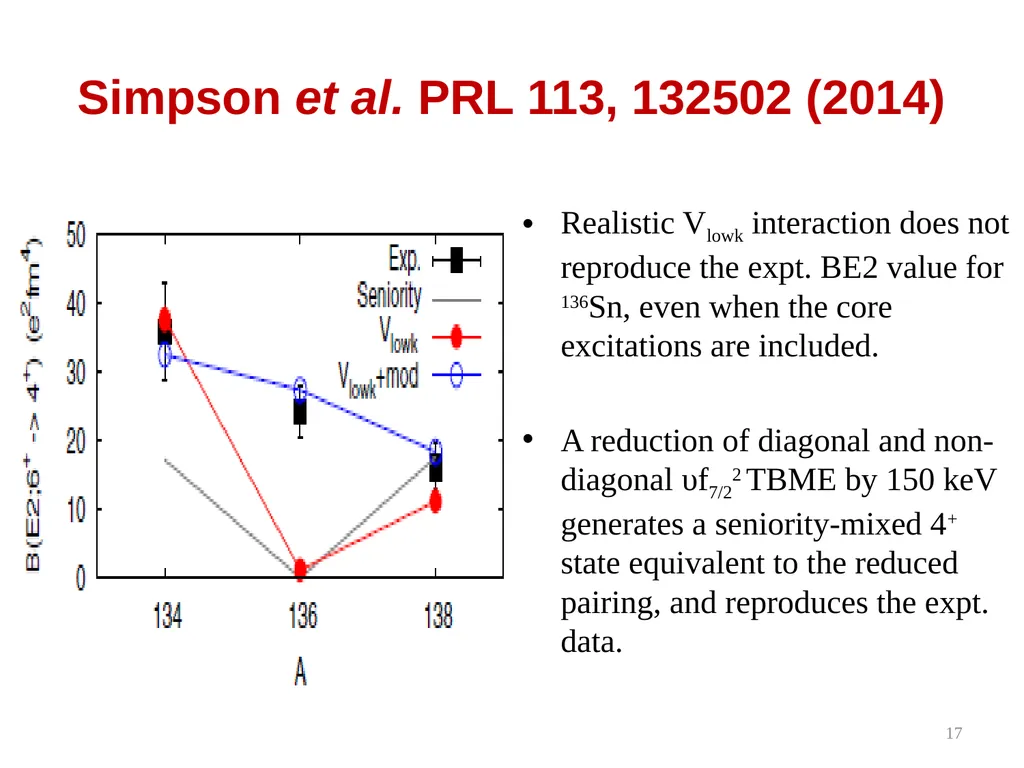
slide17. Realistic Vlowk interaction does not reproduce the expt. BE2 value for 136Sn, even when the core excitations are included.
A reduction of diagonal and non-diagonal Ï…f7/22 TBME by 150 keV generates a seniority-mixed 4+ state equivalent to the reduced pairing, and reproduces the expt. data. 17 Simpson et al. PRL 113, 132502 (2014)<br>
slide18. 6+ isomers in 134-138Sn 18 B. Maheshwari, A. K. Jain and P. C. Srivastava, Phys. Rev. C 91, 024321 (2015)<br>
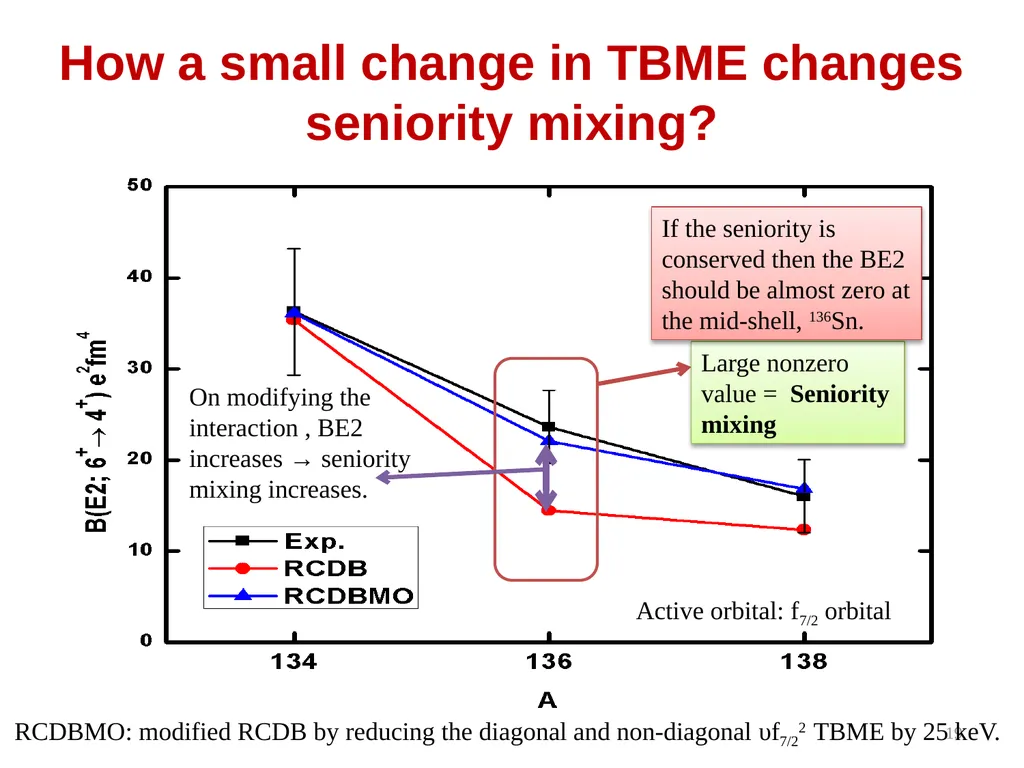
slide19. How a small change in TBME changes seniority mixing? Large nonzero value = Seniority mixing If the seniority is conserved then the BE2 should be almost zero at the mid-shell, 136Sn. On modifying the interaction , BE2 increases → seniority mixing increases. Active orbital: f7/2 orbital 19 RCDBMO: modified RCDB by reducing the diagonal and non-diagonal υf7/22 TBME by 25 keV.<br>
slide20. Summary Data of about 2450 isomers with lower limit as 10 ns have been collected and systematized in different ways.
This helps us in understanding many universal and novel features of nuclear isomers.
It is interesting to observe that the semi-magic seniority isomers show identical energy and half-life systematics.
Large scale shell model calculations are able to reproduce the systematics quite well.
Their systematic studies provide a global understanding of the known isomers and predictions of unknown isomers.
The systematic studies in long chain of isomers are also able to shed light on the nature of the effective interactions, particularly in neutron/proton-rich regions. 20<br>

slide21. T h a n k s 21<br>
Department of Physics
Indian Institute of Technology, Roorkee<br>
slide2. Outline Atlas of Nuclear Isomers ~2450 Isomers
Seniority isomers: Where and why??
Semi-magic seniority isomers
Similar excitation energy systematics
Similar half-life systematics
Will large scale shell model calculations be able to explain this??
Alignment properties of the intruder orbital
Neutron-rich Sn-isomers beyond 132Sn and the effective interactions
How a small change in TBME changes seniority mixing?
Summary 2<br>
slide3. 3<br>
slide4. Lower limit of the half-life : 10 ns
Total no. of isomers = 2448
Even-even = 414
Odd- odd = 800
Even-odd = 640
Odd-even = 594 To be published in Nuclear Data Sheets 4<br>
slide5. What is seniority? Any interaction between identical fermions in single-j shell conserves seniority if jï‚£7/2.
The seniority is conserved up to j=11/2 in Sn-isomers after the mid-shell, where the mixing of other orbitals is negligible. Particle number independent energy variation.
Constant pairing gap. 5 In the 1940s Racah had introduced the concept in the atomic context. The third of his seminal series contains the first mention of seniority.
It has been adopted in nuclear physics in a similar fashion.
Seniority (v) may be defined as the number of unpaired nucleons.<br>
slide6. Seniority isomers: Where to find and why?? Seniority: number of unpaired nucleons
Semi-magic isomers : good place to find seniority isomers.
E2 transitions between same seniority states vanish, when the valence shell is close to the half-filled.
[Ref: A. De Shalit and I. Talmi, Nuclear Shell Theory (Dover Publications, New York, 1963). ] 6<br>
slide7. 7 Same spin-parity isomers 11/2−, 10+ and 27/2−
Same available valence-space (50-82)
Observed similar kind of systematic
Half-life
Excitation energies
High-j h11/2 orbital plays the dominant role.
Fascinating to explore their structural properties…… Why Z=50, N=82 isomers??<br>
slide8. Calculated and experimental excitation energies for the Z=50 isomers Nushell [Ref.: B. A. Brown and W. D. M. Rae, Nushell @MSU, MSU-NSCL report (2007). ] SN100PN: 0g7/2, 1d5/2, 0h11/2, 1d3/2, and 2s1/2 orbitals [Ref.: B. A. Brown, et al., Phys. Rev. C 71, 044317 (2005). ] 8<br>
slide9. Calculated and experimental excitation energies for the N=82 isomers To be published. g7/2, d5/2 h11/2 v=1 v=4, 5 v=2, 3 v=1 SN100PN: 0g7/2, 1d5/2, 0h11/2, 1d3/2, and 2s1/2 orbitals [Ref.: B. A. Brown, et al., Phys. Rev. C 71, 044317 (2005). ] 9 0<br>
slide10. Z=50 and N=82 seniority isomersthe configuration lists the unpaired neutrons in the respective orbitals. 10<br>
slide11. Single-particle energies h11/2 orbital comes late in the N=82 isomers compared to the Z=50 isomers.
Therefore, the change in the seniority takes place at different neutron/proton numbers in the two chains. 11<br>
slide12. Alignment of the h11/2 orbital after the mid-shell 12 Expt. Theo. Sn-isotopes<br>
slide13. Similar alignments in the N=82 isotones 13 Theo. On the basis of the similar behavior in the Z=50 and the N=82 chains,
we can make reliable predictions for some new isomers.<br>
slide14. Z=50 and Z=82 seniority isomers
coming from their respective intruder orbitals i13/2 orbital h11/2 orbital 14 High seniority High seniority low seniority low seniority f5/2, p3/2, p1/2 and i13/2 g7/2, d5/2 and h11/2 Different intruder orbitals
Mirror experimental energy systematics
Will large scale scale shell model calculations be able to explain this?<br>
slide15. Nushell [Ref.: B. A. Brown and W. D. M. Rae, Nushell @MSU, MSU-NSCL report (2007). ]
SN100PN: 0g7/2, 1d5/2, 0h11/2, 1d3/2, and 2s1/2 orbitals [Ref.: B. A. Brown, et al., Phys. Rev. C 71, 044317 (2005). ]
KHHE: 1h9/2, 2f7/2, 1i13/2, 3p3/2, 2f5/2, and 3p1/2 orbitals [Ref.: E. K. Warburton and B. A. Brown, Phys. Rev. C 43, 602 (1991). ]
Our calculations are able to reproduce the experimental systematics quite well except for the fact that the relative gap of the isomeric states is systematically smaller due to the applied truncations for both the chains. Large scale shell model calculations To be published. 15<br>
slide16. Neutron-rich seniority isomers beyond 132Sn and the effective interactions 136,138Sn measured for the first time.
Interpretation in terms of v=2 and v=4 seniority mixing.
6+ isomer has been assigned as v=2 isomer. 16 Simpson et al. PRL 113, 132502 (2014)<br>
slide17. Realistic Vlowk interaction does not reproduce the expt. BE2 value for 136Sn, even when the core excitations are included.
A reduction of diagonal and non-diagonal Ï…f7/22 TBME by 150 keV generates a seniority-mixed 4+ state equivalent to the reduced pairing, and reproduces the expt. data. 17 Simpson et al. PRL 113, 132502 (2014)<br>
slide18. 6+ isomers in 134-138Sn 18 B. Maheshwari, A. K. Jain and P. C. Srivastava, Phys. Rev. C 91, 024321 (2015)<br>
slide19. How a small change in TBME changes seniority mixing? Large nonzero value = Seniority mixing If the seniority is conserved then the BE2 should be almost zero at the mid-shell, 136Sn. On modifying the interaction , BE2 increases → seniority mixing increases. Active orbital: f7/2 orbital 19 RCDBMO: modified RCDB by reducing the diagonal and non-diagonal υf7/22 TBME by 25 keV.<br>
slide20. Summary Data of about 2450 isomers with lower limit as 10 ns have been collected and systematized in different ways.
This helps us in understanding many universal and novel features of nuclear isomers.
It is interesting to observe that the semi-magic seniority isomers show identical energy and half-life systematics.
Large scale shell model calculations are able to reproduce the systematics quite well.
Their systematic studies provide a global understanding of the known isomers and predictions of unknown isomers.
The systematic studies in long chain of isomers are also able to shed light on the nature of the effective interactions, particularly in neutron/proton-rich regions. 20<br>
slide21. T h a n k s 21<br>