Senior Leadership Toolkit Establishing a Safeguarding Culture at Your Organization CEO Pledge Commitment Commit to sharing the learning which emerges, including uncomfortable insights, within a confidential learning space, so we can all
"Senior Leadership Toolkit Establishing a" is the property of its rightful owner. Permission is granted to
download and print the materials on this website for personal, non-commercial use only, and to display it
on your personal computer provided you do not modify the materials and that you retain all copyright
notices contained in the materials. By downloading content from our website, you accept the terms of this
agreement.
Presentation Transcript
01
Senior Leadership Toolkit Establishing a Safeguarding Culture at Your Organization<br>
02
CEO Pledge Commitment “Commit to sharing the learning which emerges, including uncomfortable insights, within a confidential learning space, so we can all benefit from each other’s experiences and identify how to tackle this issue together” – InterAction’s CEO Pledge<br>
03
Safeguarding Journey Perception Poll<br>
04
Where are we as a sector? “As opposed to 10 years ago, pilots have been conducted, lessons have been collected, risks are understood, and implementation is now what is required. However, the sector is hesitating and will require to be pushed” – IASC 2021 PSEAH Global Review
“Right at the epicenter of this tug for compliance and the need for systemic change.” Carolina Echegaray, IRC<br>
05
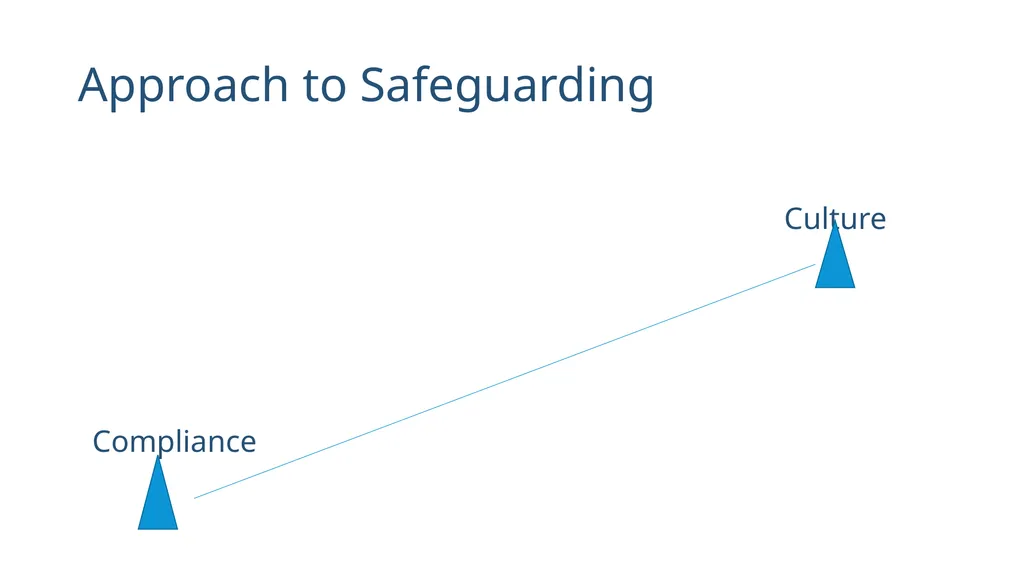
Approach to Safeguarding Culture Compliance<br>
06
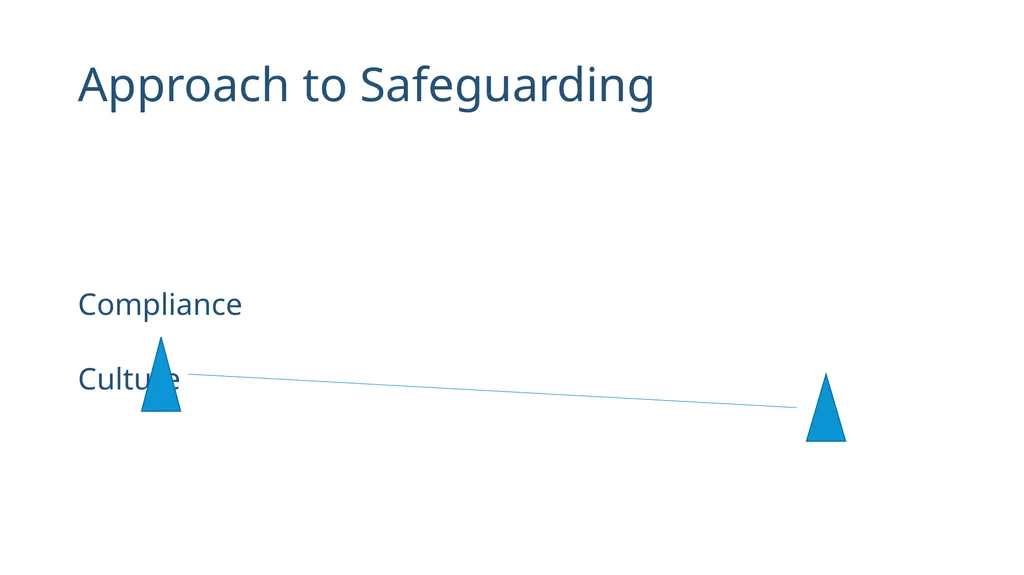
Approach to Safeguarding Compliance
Culture<br>
07
What is first thing that comes to your mind when you hear there has been a safeguarding incident?<br>
08
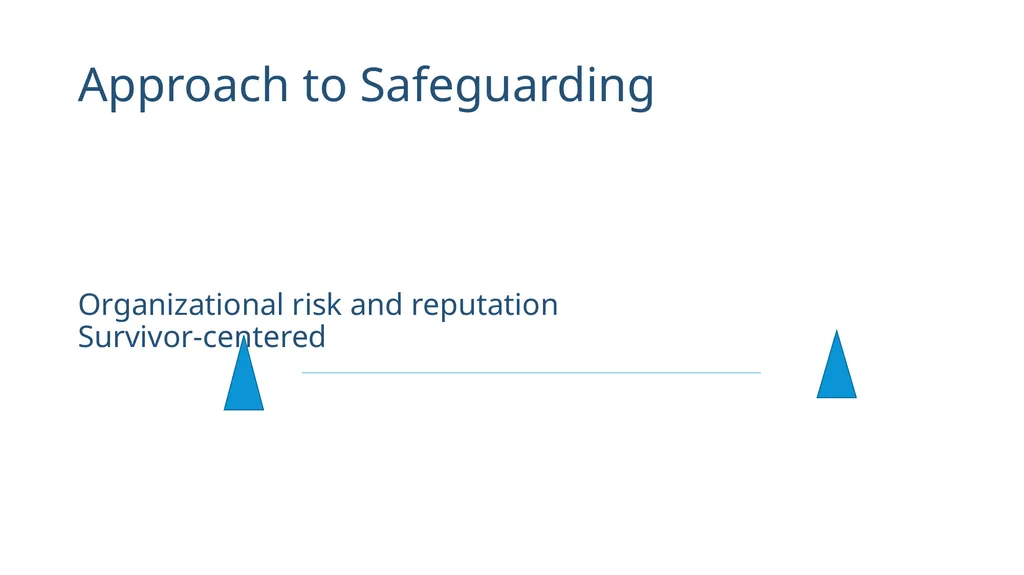
Approach to Safeguarding Organizational risk and reputation Survivor-centered<br>
09
Why does culture matter? “Sexual misconduct is rooted in imbalances of power. We need to reflect on how we use power and privilege and ensure that we create workplaces of respect and accountability, where misconduct is not tolerated, and where senior management communicates, embodies, and enforces ethical standards”. UNHCR
“An ounce of prevention is worth a pound of cure.” Benjamin Franklin<br>
10
Brainstorm What does a “culture of safeguarding” look like?<br>
11
Getting Real About Your Safeguarding Culture<br>
12
What was your initial reaction to the video?<br>
13
IASC Global Review “We are not ahead of the [PSEAH] problem. We are still just reacting. There is an obvious mismatch between Leaders who believe that we are addressing the issue and survivors and safeguarding staff who are clear that we are not [sectorally] doing ok.” -Senior Agency Leader at Global Level, IASC Global Review<br>
14
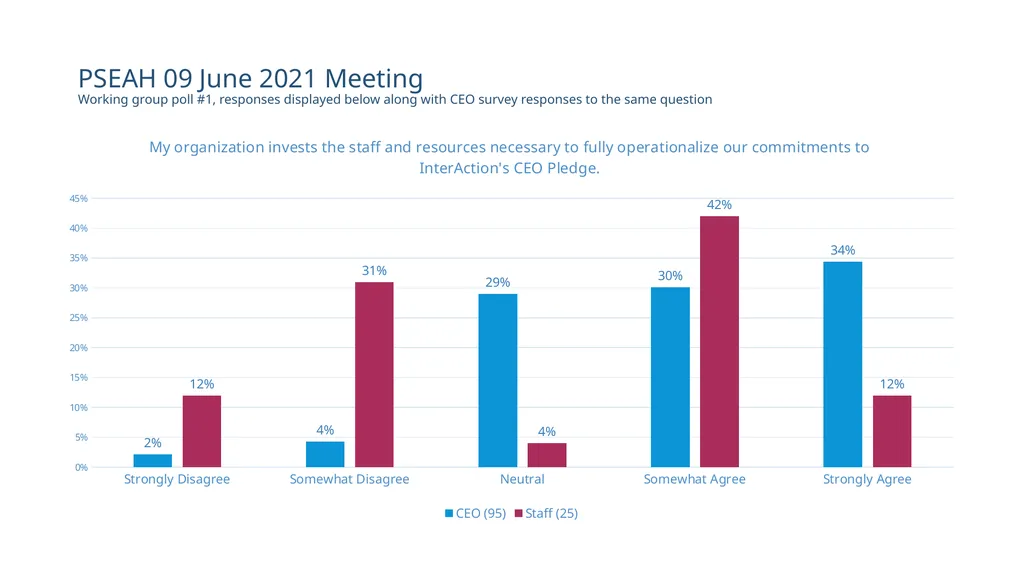
PSEAH 09 June 2021 Meeting Working group poll #1, responses displayed below along with CEO survey responses to the same question<br>
15
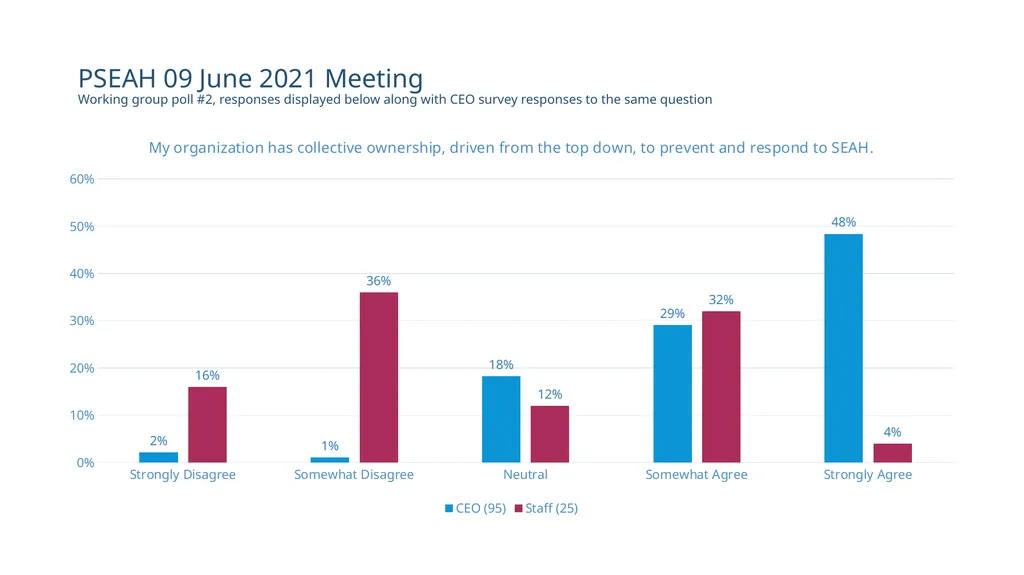
PSEAH 09 June 2021 Meeting Working group poll #2, responses displayed below along with CEO survey responses to the same question<br>
16
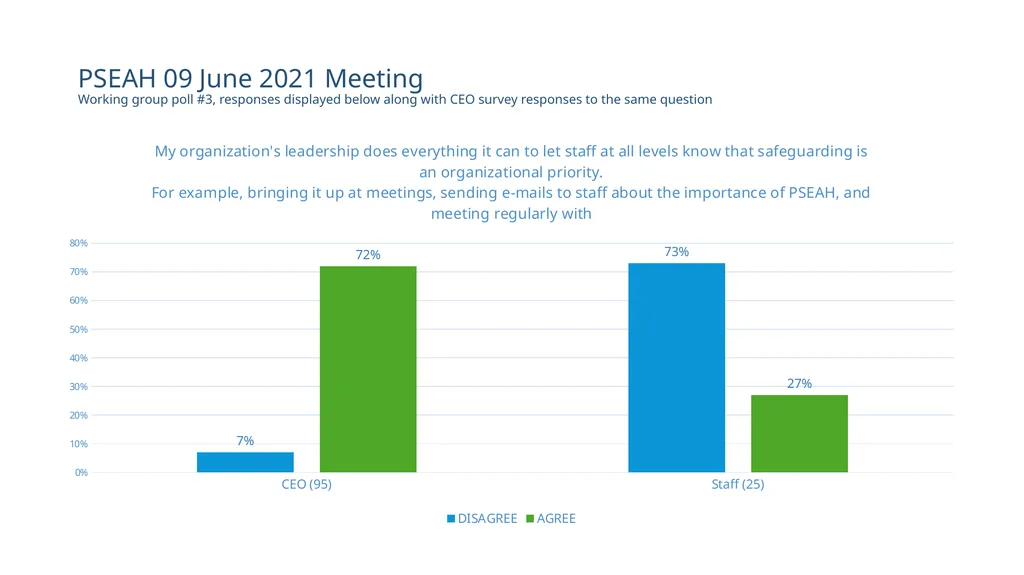
PSEAH 09 June 2021 Meeting Working group poll #3, responses displayed below along with CEO survey responses to the same question<br>
17
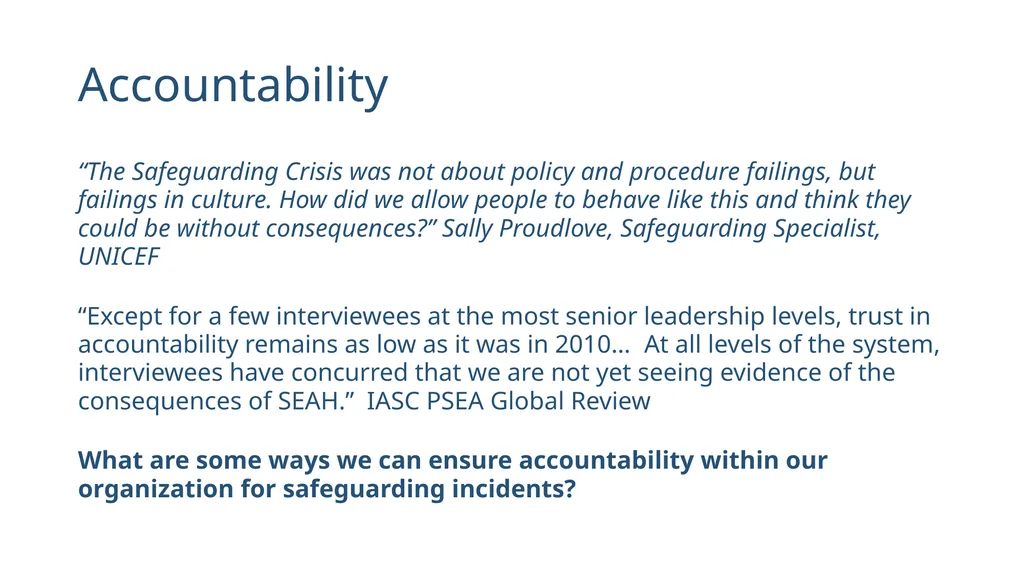
Accountability “The Safeguarding Crisis was not about policy and procedure failings, but failings in culture. How did we allow people to behave like this and think they could be without consequences?” Sally Proudlove, Safeguarding Specialist, UNICEF
“Except for a few interviewees at the most senior leadership levels, trust in accountability remains as low as it was in 2010… At all levels of the system, interviewees have concurred that we are not yet seeing evidence of the consequences of SEAH.” IASC PSEA Global Review
What are some ways we can ensure accountability within our organization for safeguarding incidents?<br>
18
Transparency “In addressing the Mercy Corps Board of Directors on Monday, I challenged them—all highly respected leaders and innovators in their fields—to continue to lead bravely and to take the lessons learned from the repeated failures of the past back to their own organizations. I urged them to always remember what their board predecessors referred to as a ‘PR disaster’ grew greater and more fearsome in the dark and could only be addressed through radical transparency and courage.” Tania Culver Humphrey
How can our organization be more transparent about safeguarding?<br>
19
Safety/Trust “If people can feel safe enough to talk about what’s happened to them and we can bring this out, it’s hard and it’s awful and it’s terrible, but that’s how things will eventually get better. It’s going to save people’s lives.” – Tania Culver Humphrey<br>
20
Responsibility/Ownership Making your commitment visible
Consistency
Long-term commitment<br>
21
Looking Back After talking through all of this, where has our organization done well in the last three years on safeguarding?
What are we particularly proud of?<br>
22
Looking Forward Where can we improve?
How will we make those improvements?
What will it take?<br>