Session 2 Economic Systems Disclaimer: The views expressed are those of the presenters and do not necessarily reflect those of the Federal Reserve Bank of Dallas or the Federal Reserve System. TEKS Economics. The student understands the
"Session 2 Economic Systems Disclaimer: The views" is the property of its rightful owner. Permission is granted to
download and print the materials on this website for personal, non-commercial use only, and to display it
on your personal computer provided you do not modify the materials and that you retain all copyright
notices contained in the materials. By downloading content from our website, you accept the terms of this
agreement.
Presentation Transcript
01
Session 2 Economic Systems Disclaimer: The views expressed are those of the presenters and do not necessarily reflect those of the Federal Reserve Bank of Dallas or the Federal Reserve System.<br>
02
TEKS Economics. The student understands the concepts of scarcity and opportunity costs. The student is expected to:
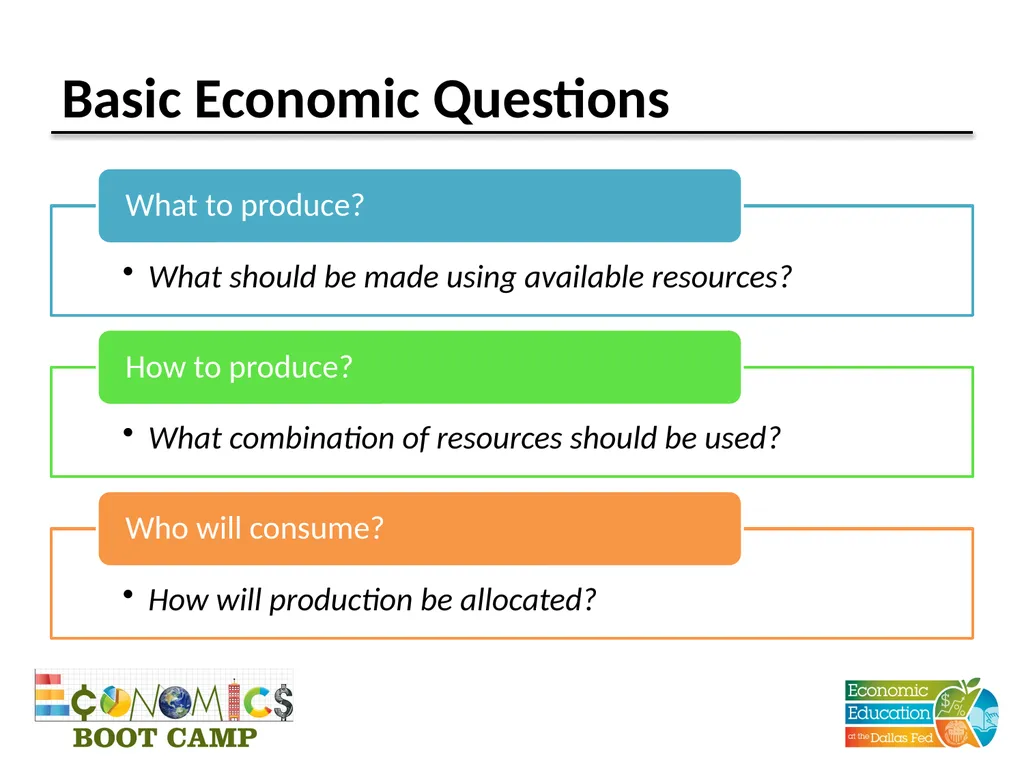
(B) describe how societies answer the basic economic questions;<br>
03
TEKS (5) Economics. The student understands free enterprise, socialist, and communist economic systems. The student is expected to:
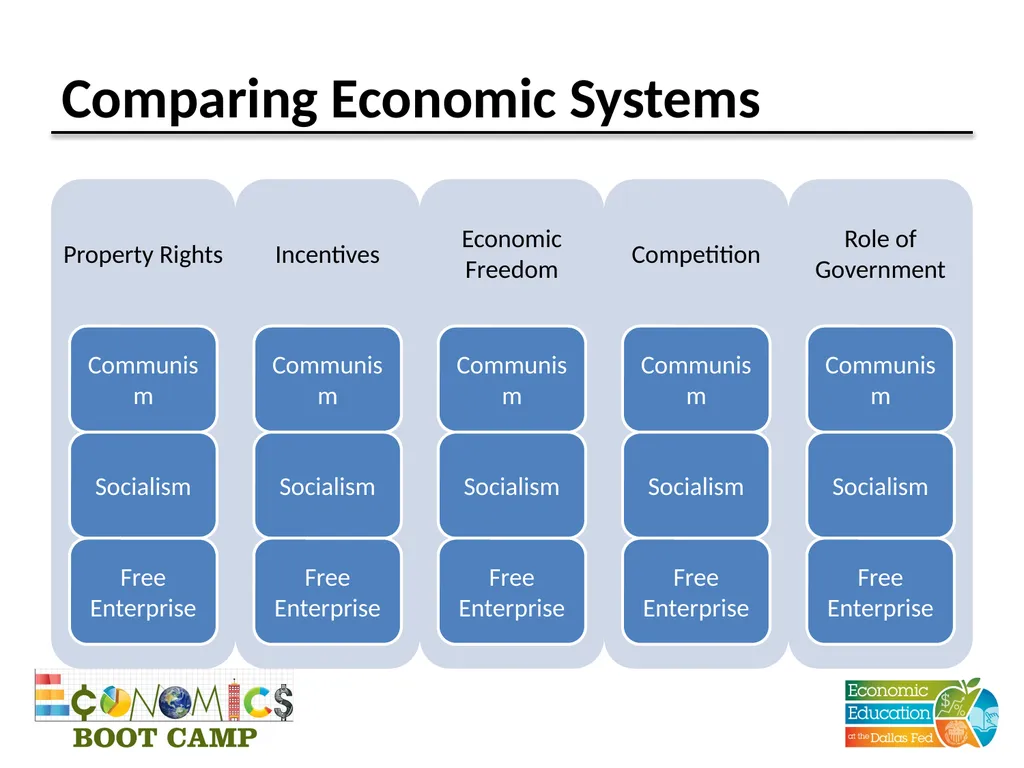
(A) describe the basic characteristics of economic systems, including property rights, incentives, economic freedom, competition, and the role of government;
(B) compare the free enterprise system, socialism, and communism using the basic characteristics of economic systems;
(C) examine current examples of free enterprise, socialist, and communist economic systems;
(D) understand that the terms free enterprise, free market, and capitalism are synonymous terms to describe the U.S. economic system<br>
04
TEKS (6) Economics. The student understands the basic characteristics and benefits of a free enterprise system. The student is expected to:
(A) explain the basic characteristics of the U.S. free enterprise system, including private property, incentives, economic freedom, competition, and the limited role of government;
(B) explain the benefits of the U.S. free enterprise system, including individual freedom of consumers and producers, variety of goods, responsive prices, investment opportunities, and the creation of wealth
(D) analyze the costs and benefits of U.S. economic policies related to the economic goals of economic growth, stability, full employment, freedom, security, equity (equal opportunity versus equal outcome), and efficiency.<br>
05
Teaching the Terms Free enterprise
Communism
Socialism
Incentives
Property rights
Competition
Prices
Consumers
Producers
Resource allocation
Economic freedom
Role of government<br>
06
Basic Economic Questions<br>
07
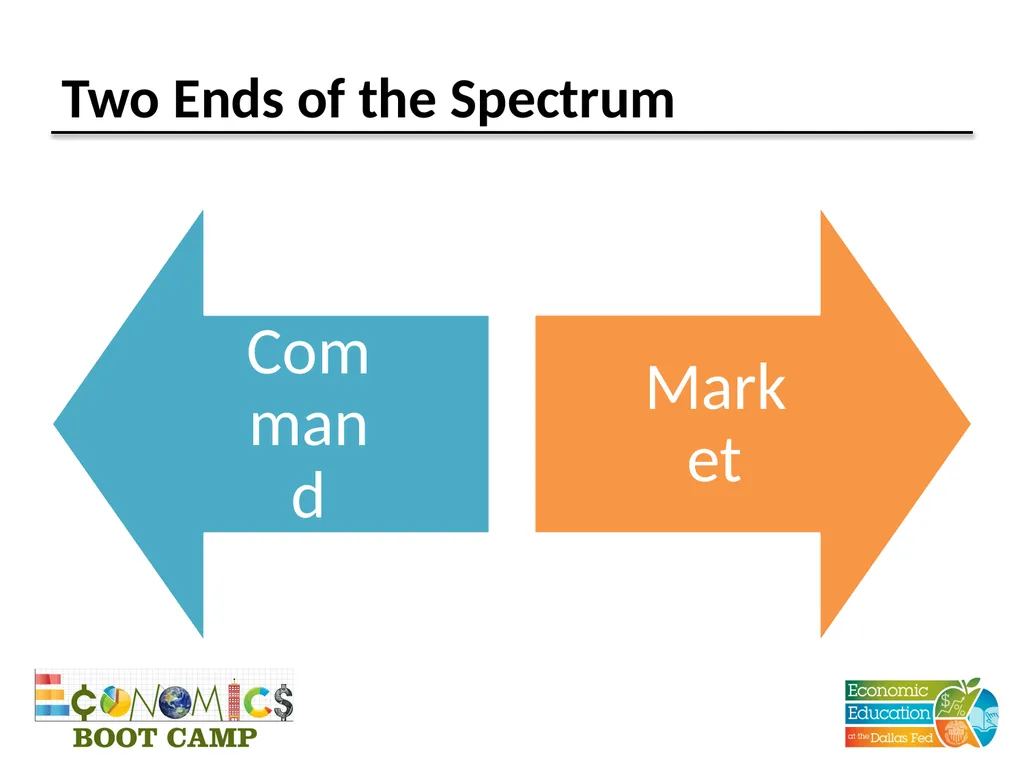
Two Ends of the Spectrum<br>
08
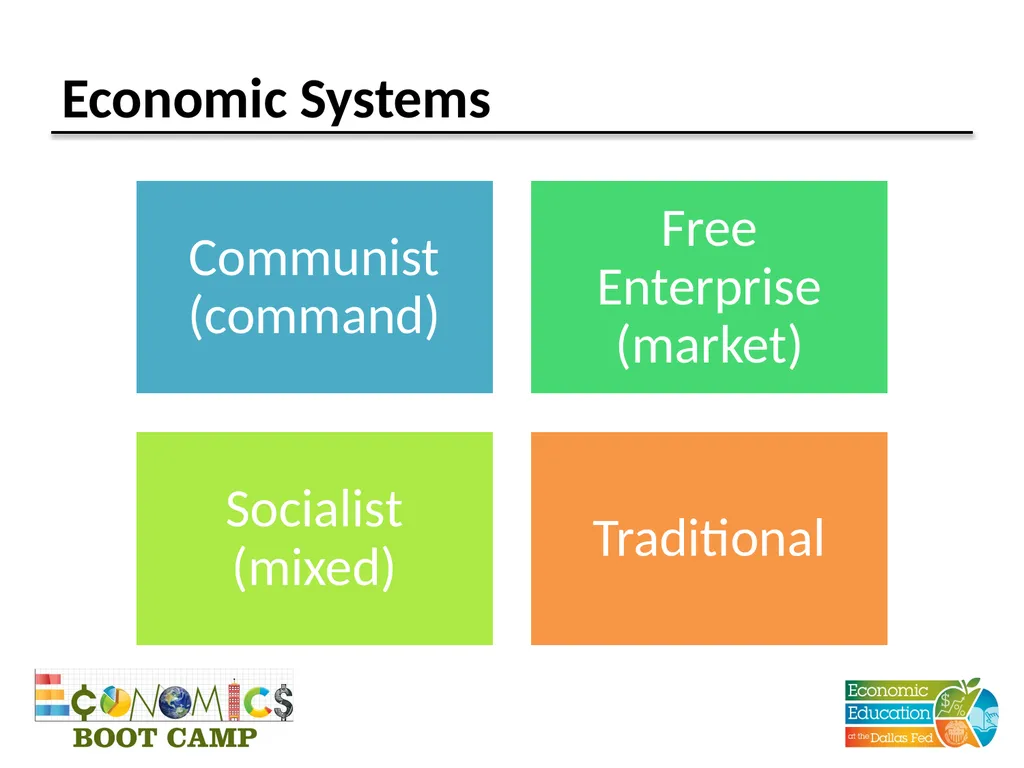
Economic Systems<br>
09
Comparing Economic Systems<br>
10
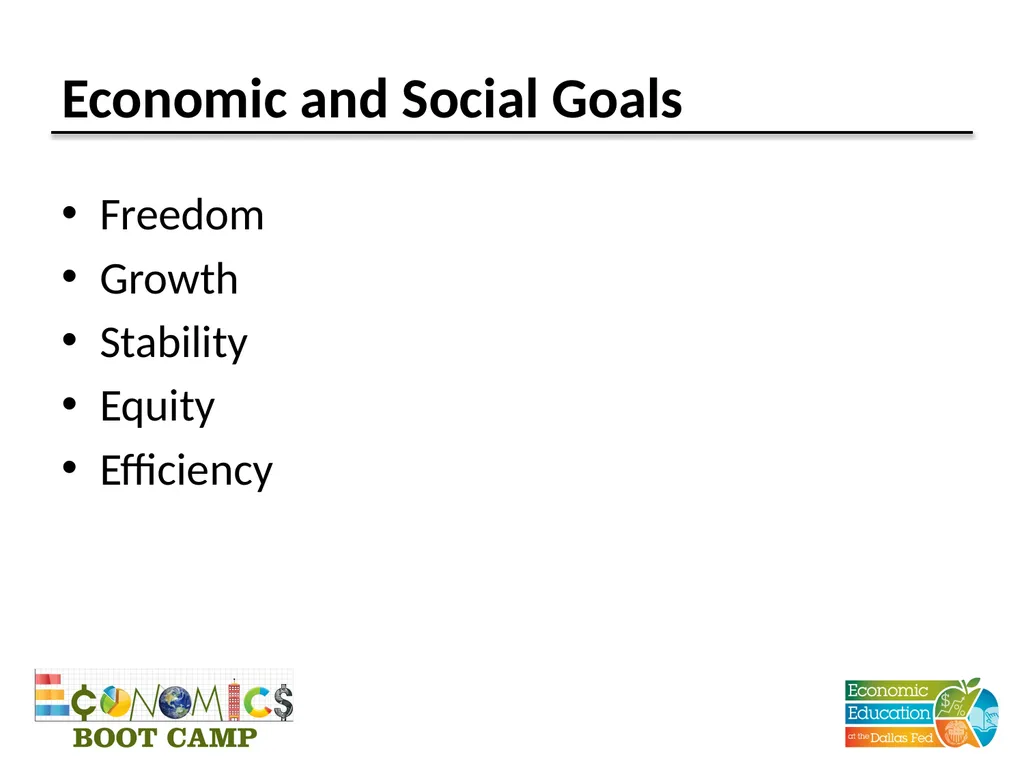
Economic and Social Goals Freedom
Growth
Stability
Equity
Efficiency<br>
11
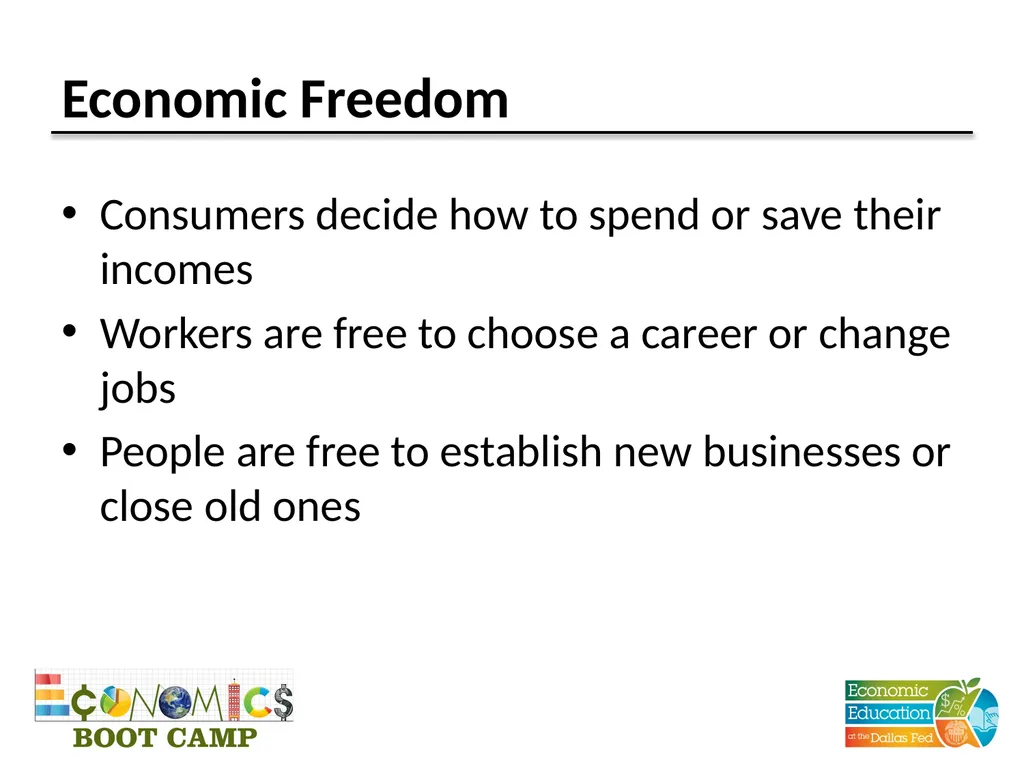
Economic Freedom Consumers decide how to spend or save their incomes
Workers are free to choose a career or change jobs
People are free to establish new businesses or close old ones<br>
12
Economic Growth An increase in the production of goods and services over time
Affects the standard of living in a society<br>
13
Economic Stability Price stability
Avoiding inflation, a rise in the average price level
Avoiding deflation, a fall in the average price level
Full employment – using all of an economy's scarce resources (e.g. labor)<br>
14
Economic Equity Fairness in economic dealings
Evaluating transactions in the marketplace
Overall distribution of income
Criteria for judging equity
Equal opportunity
Equal outcomes<br>
15
Economic Efficiency Not wasting scarce resources
Two goals
Produce the goods and services people want most
Economize resources in the production of goods and services to minimize the real costs of production<br>
16
Activity Rank the economic and social goals from least important to most important.
As an individual
As a group
As a class
Discuss how command and market economies would address each goal.<br>
17
Benefits of the Free Enterprise System Individual freedom of consumers and producers
Variety of goods
Responsive prices
Investment opportunities
Creation of wealth<br>