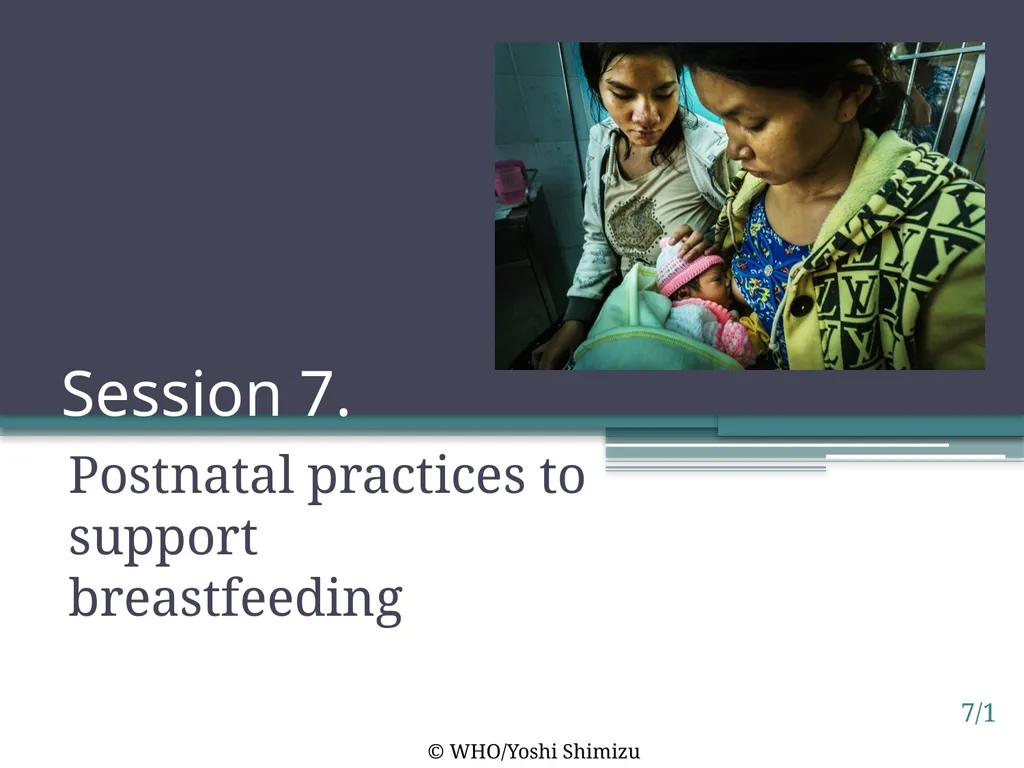
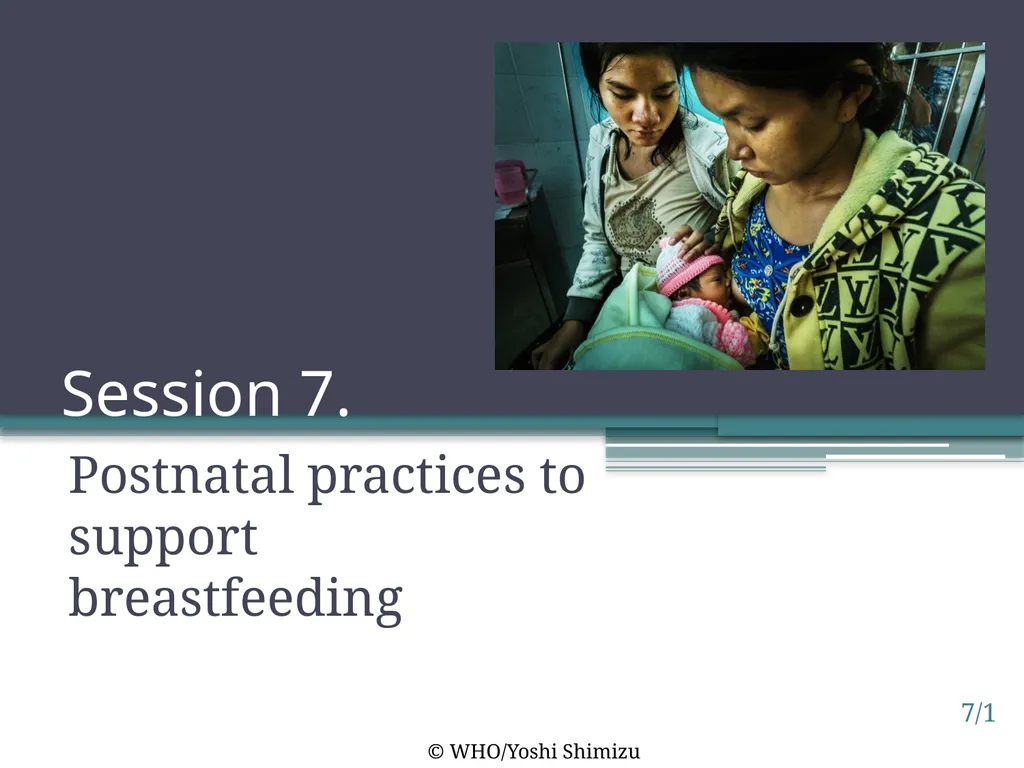
Session 7. Postnatal practices to support breastfeeding 71 WHOYoshi Shimizu Session 7. Objectives Postnatal practices to support breastfeeding After completing this session, participants will be able to: describe the importance of
"Session 7. Postnatal practices to support" is the property of its rightful owner. Permission is granted to
download and print the materials on this website for personal, non-commercial use only, and to display it
on your personal computer provided you do not modify the materials and that you retain all copyright
notices contained in the materials. By downloading content from our website, you accept the terms of this
agreement.
Session 7. Objectives Postnatal practices to support breastfeeding After completing this session, participants will be able to:
describe the importance of avoiding prelacteal feeds and unnecessary supplementation
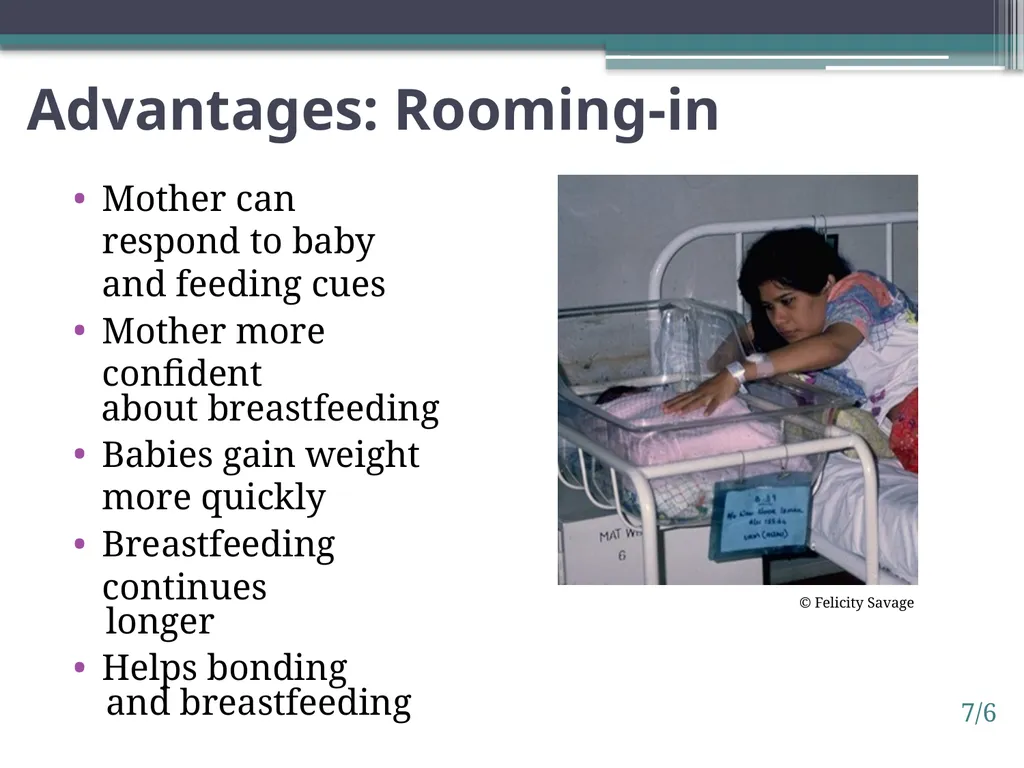
outline advantages of rooming-in
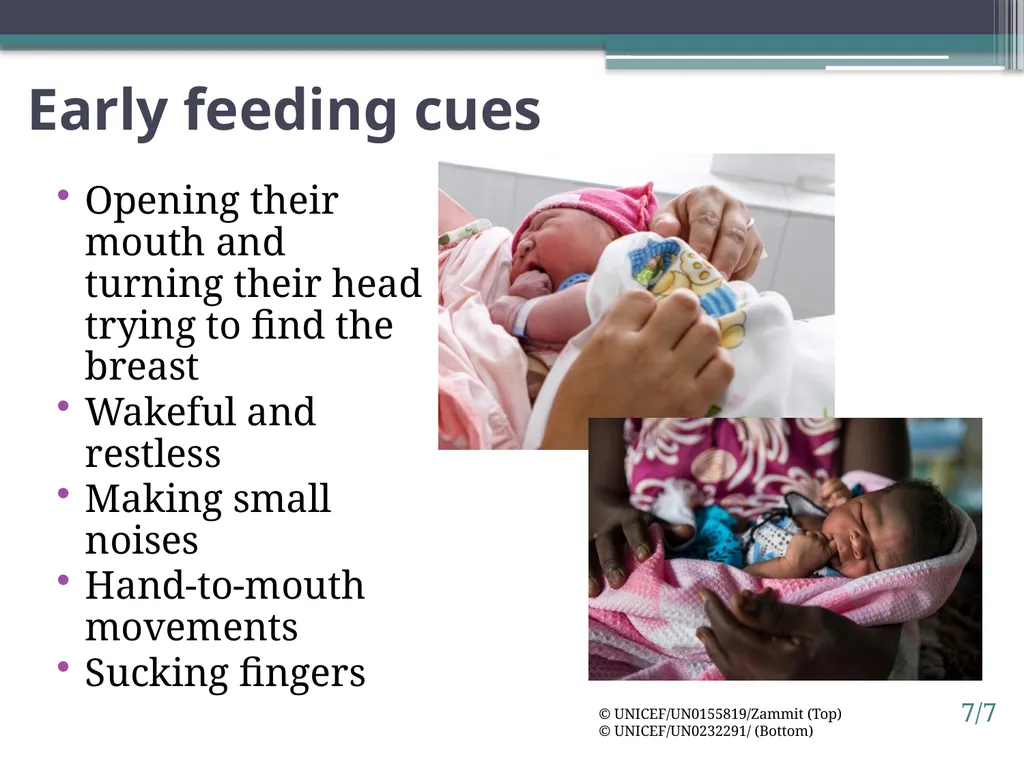
describe responsive feeding and why it is important
answer common postnatal questions. 7/2<br>
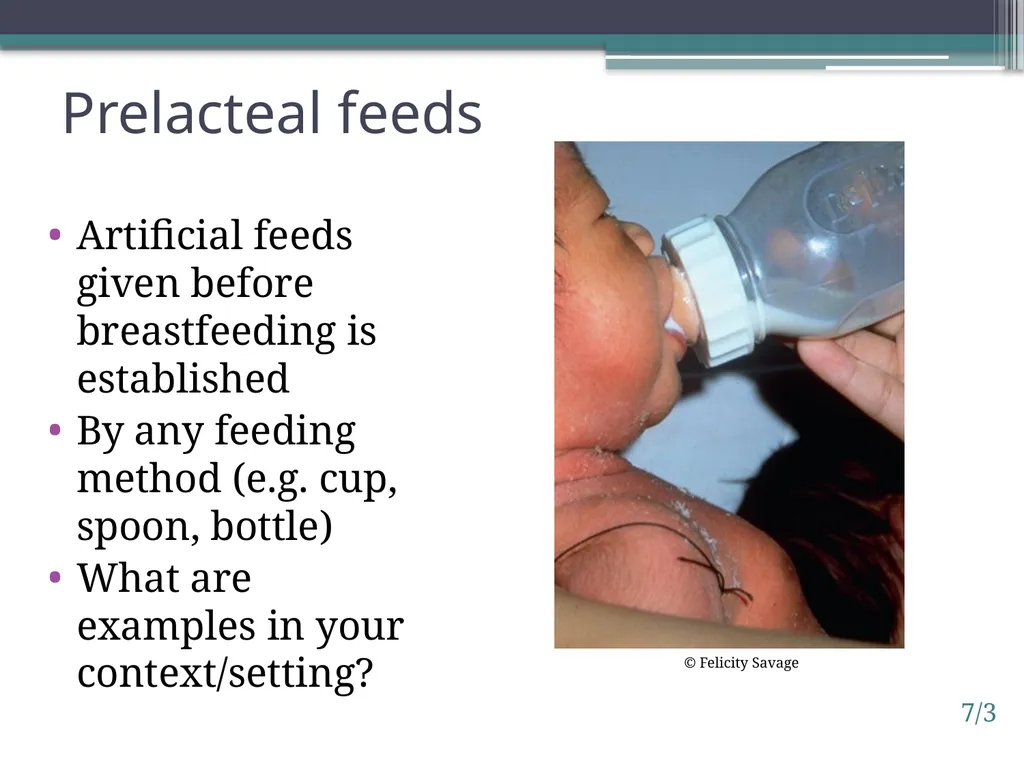
Dangers of prelacteal feeds 7/4 Replace colostrum:
greater risk of infection
risk of intolerance or allergy.
Interfere with suckling
satisfy baby’s hunger so they suckle less
less breast stimulation
if bottle fed can interfere with attachment
more difficult to establish breastfeeding.<br>
Pacifier (dummy) usage Remember: Step 9
“Counsel mother on the use and risks of feeding bottles, teats and pacifiers.”
Pacifiers undermine breastfeeding for the first 6 months
Infants who use pacifiers breastfeed less in 24 hours
Pacifiers should not be used at least until breastfeeding is well established and after 4 weeks of age, and caution is advised about their use regarding hygiene, oral formation, and recognition cues. 7/8 Wambach K, Spencer B. Breastfeeding and human lactation, 6th ed. 〔e-book〕. Burlington (MA): Jones & Bartlett;2019:262–3.<br>