
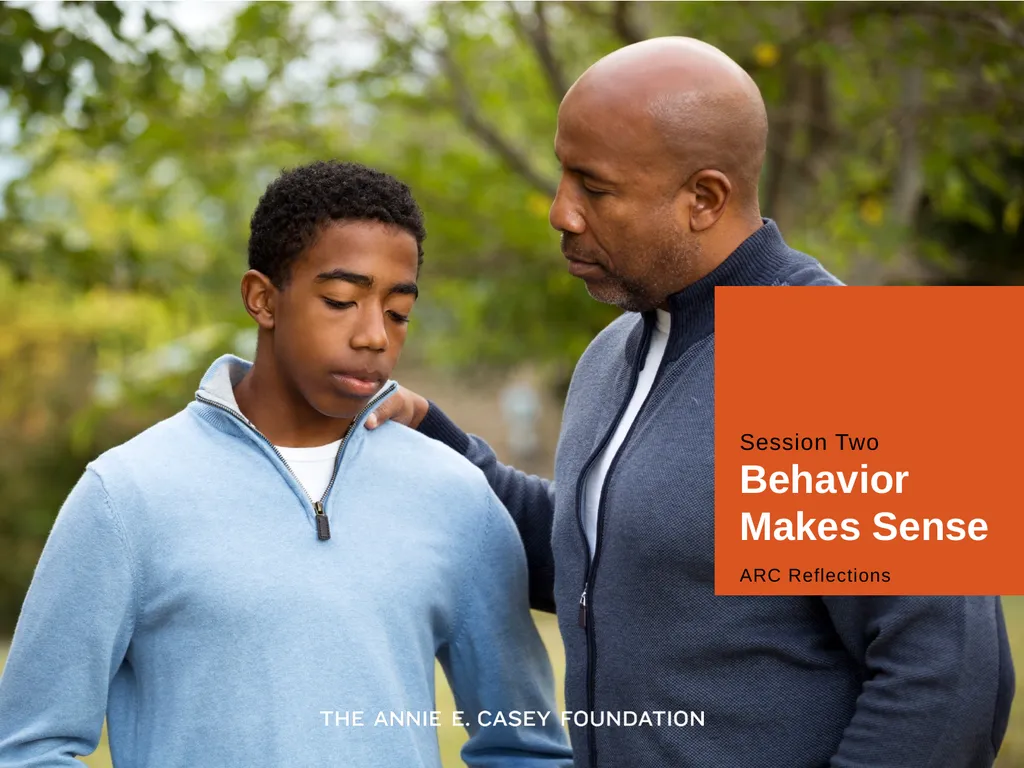
Session Two Behavior Makes Sense ARC Reflections 1
TD
Published · 52 slides · 0 views
1 / 1




Description
Session Two Behavior Makes Sense ARC Reflections 1 ARC, or Attachment, Regulation and Competency, is a framework for working with children and teens who have experienced trauma. Developed by Margaret Blaustein and Kristine Kinniburgh of the
Related Topics
Share
Embed code
Download this presentation From Below
"Session Two Behavior Makes Sense ARC Reflections 1" is the property of its rightful owner. Permission is granted to download and print the materials on this website for personal, non-commercial use only, and to display it on your personal computer provided you do not modify the materials and that you retain all copyright notices contained in the materials. By downloading content from our website, you accept the terms of this agreement.
Presentation Transcript
01
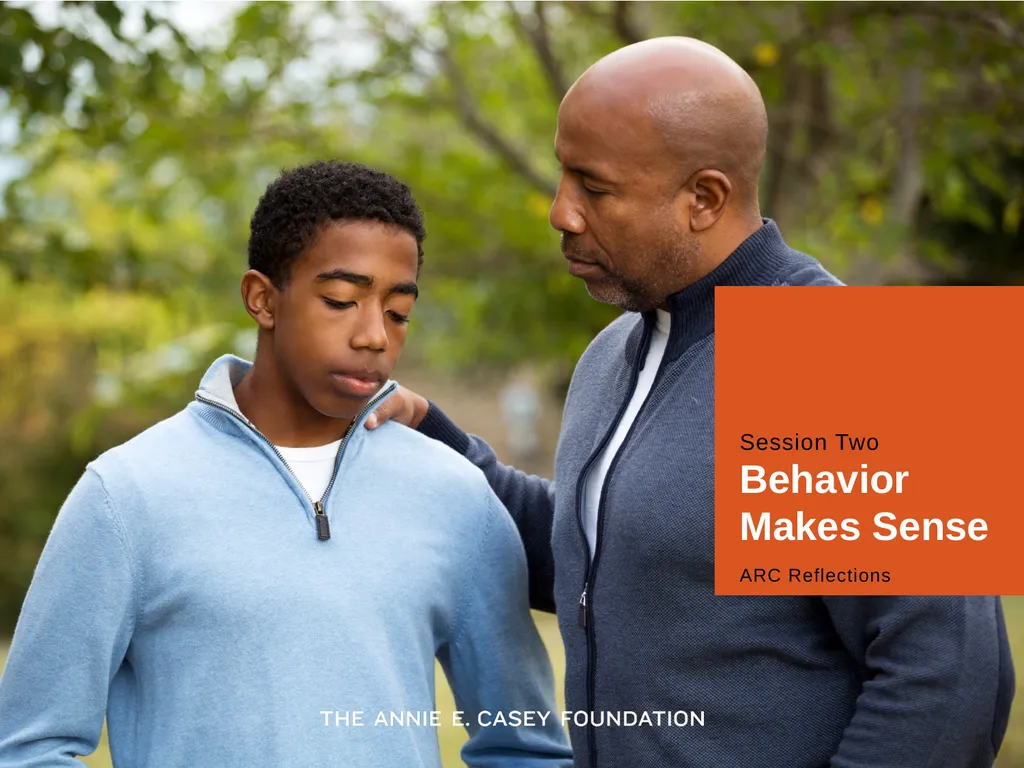
Session Two
Behavior Makes Sense
ARC Reflections<br>
Behavior Makes Sense
ARC Reflections<br>
02
1<br>
03
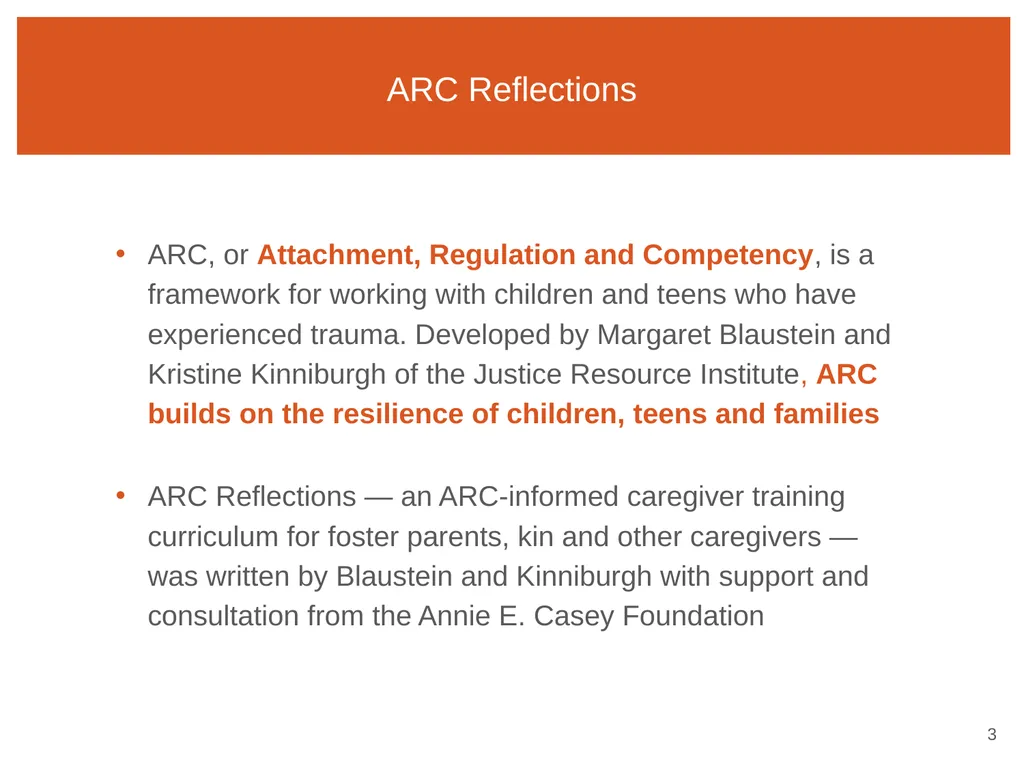
ARC, or Attachment, Regulation and Competency, is a framework for working with children and teens who have experienced trauma. Developed by Margaret Blaustein and Kristine Kinniburgh of the Justice Resource Institute, ARC builds on the resilience of children, teens and families
ARC Reflections — an ARC-informed caregiver training curriculum for foster parents, kin and other caregivers — was written by Blaustein and Kinniburgh with support and consultation from the Annie E. Casey Foundation 2 ARC Reflections<br>
ARC Reflections — an ARC-informed caregiver training curriculum for foster parents, kin and other caregivers — was written by Blaustein and Kinniburgh with support and consultation from the Annie E. Casey Foundation 2 ARC Reflections<br>
04
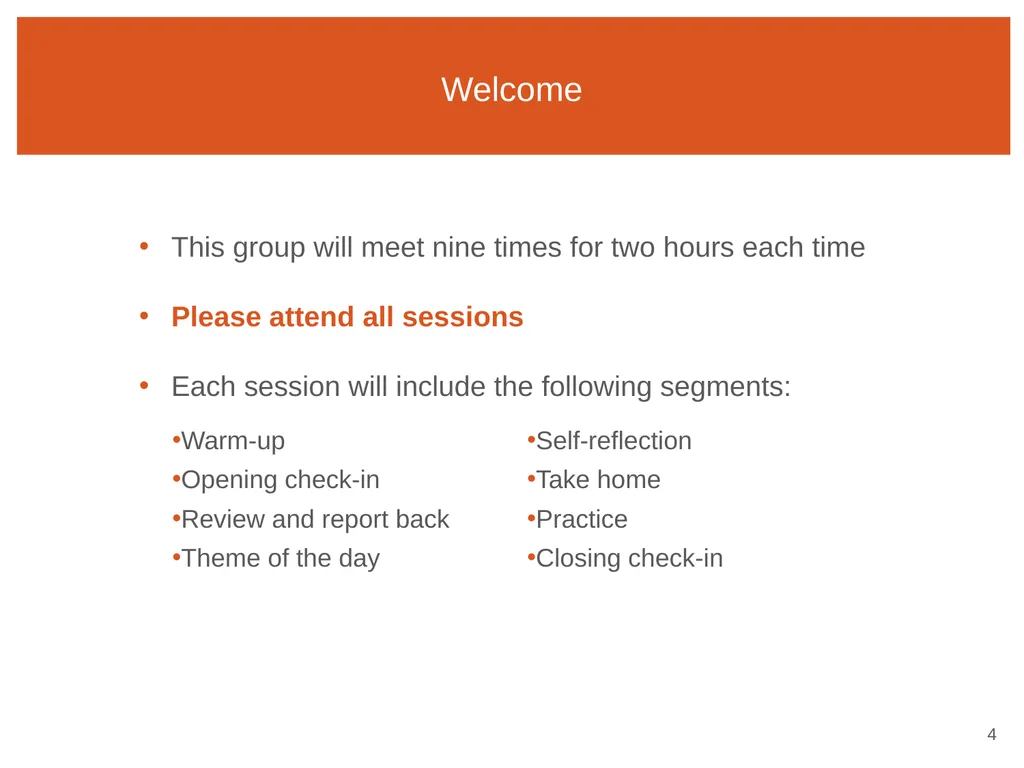
3 Welcome This group will meet nine times for two hours each time
Please attend all sessions
Each session will include the following segments: Warm-up
Opening check-in
Review and report back
Theme of the day Self-reflection
Take home
Practice
Closing check-in<br>
Please attend all sessions
Each session will include the following segments: Warm-up
Opening check-in
Review and report back
Theme of the day Self-reflection
Take home
Practice
Closing check-in<br>
05
WARM-UP<br>
06
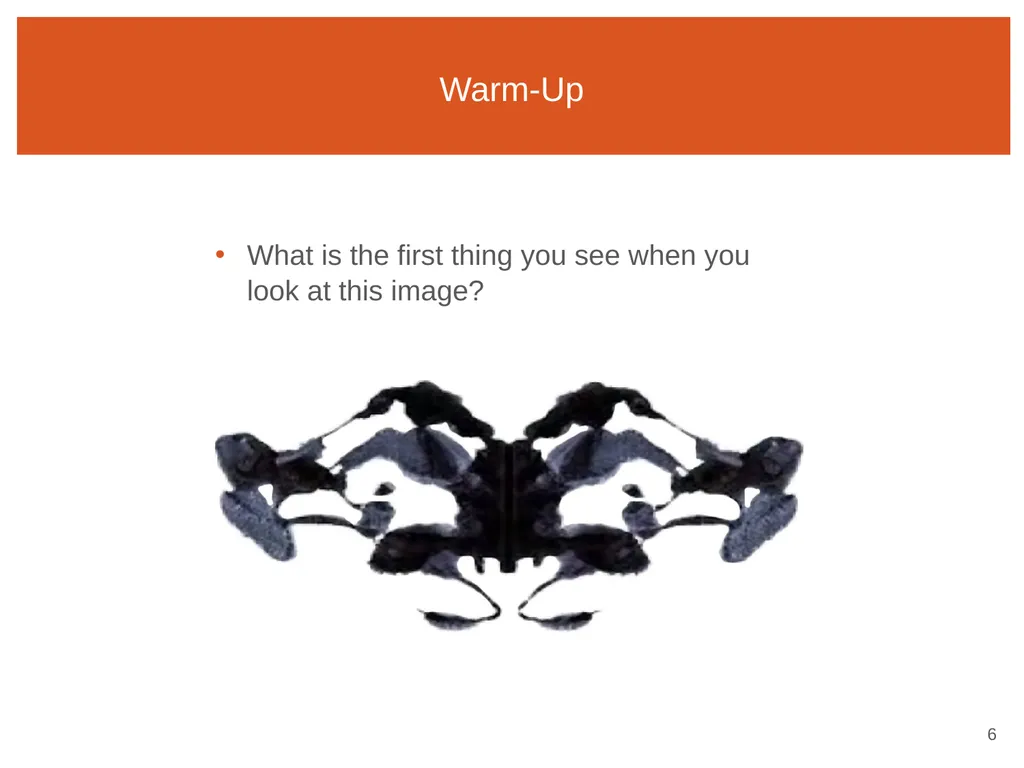
5 What is the first thing you see when you look at this image? Warm-Up<br>
07
OPENING CHECK-IN<br>
08
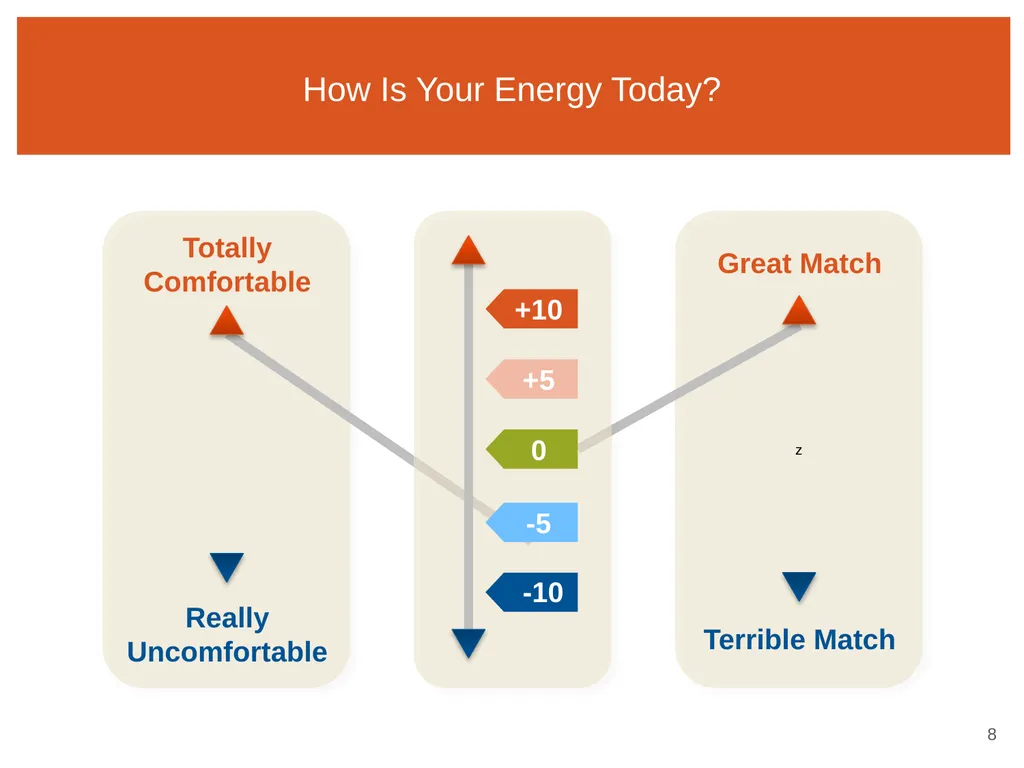
7 How Is Your Energy Today? Totally Comfortable Really Uncomfortable z Great Match Terrible Match<br>
09
8 If your energy is comfortable and a good match, great!
If not, what can you do to get it there? Getting Comfortable<br>
If not, what can you do to get it there? Getting Comfortable<br>
10
REVIEW AND REPORT BACK<br>
11
10 Many different things may be experienced as traumatic
Trauma can profoundly influence children’s and teens’ development
Trauma shapes the child’s or teen’s lens for self, for relationships and for danger
Trauma responses are designed to help the child or teen protect him- or herself and survive Review<br>
Trauma can profoundly influence children’s and teens’ development
Trauma shapes the child’s or teen’s lens for self, for relationships and for danger
Trauma responses are designed to help the child or teen protect him- or herself and survive Review<br>
12
11 In small groups, discuss your practice from last week
What went well?
What was challenging?
What was something you noticed? Report Back<br>
What went well?
What was challenging?
What was something you noticed? Report Back<br>
13
BEHAVIOR MAKES SENSE<br>
14
13 What behavior do you see in the children and teens in your home that has been challenging? What behavior pushes your buttons? What Behavior Challenges You?<br>
15
14 Most children and teens who have experienced trauma have many behaviors that can push the buttons of those around them
These behaviors can feel very confusing: What we see may not be what we expected
Often, we react to these behaviors without understanding what drives them
The more we understand where behaviors come from, the more effective our response will be The Challenge of Behavior<br>
These behaviors can feel very confusing: What we see may not be what we expected
Often, we react to these behaviors without understanding what drives them
The more we understand where behaviors come from, the more effective our response will be The Challenge of Behavior<br>
16
15 Think of one thing you feel like you could do in your sleep. Why does it feel so easy?
All of us develop strategies for managing the world (behavioral patterns) guided in part by our previous experiences (what we’ve used in the past that has been successful) Where Does Behavior Come From?<br>
All of us develop strategies for managing the world (behavioral patterns) guided in part by our previous experiences (what we’ve used in the past that has been successful) Where Does Behavior Come From?<br>
17
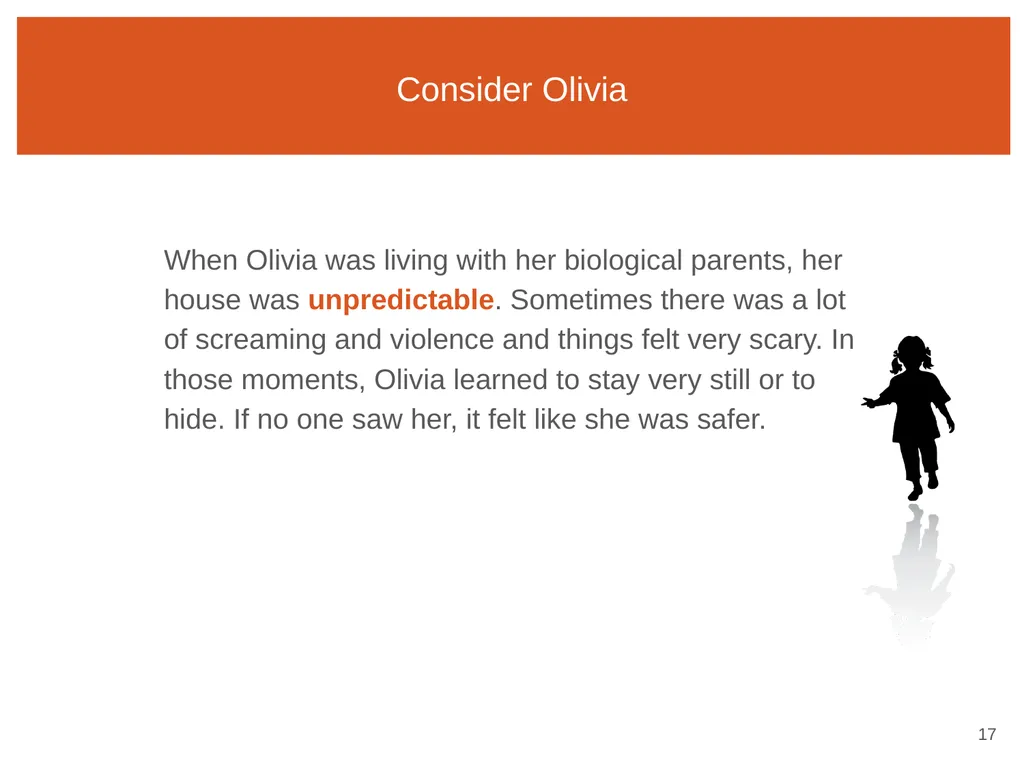
16 When Olivia was living with her biological parents, her house was unpredictable. Sometimes there was a lot of screaming and violence and things felt very scary. In those moments, Olivia learned to stay very still or to hide. If no one saw her, it felt like she was safer. Consider Olivia<br>
18
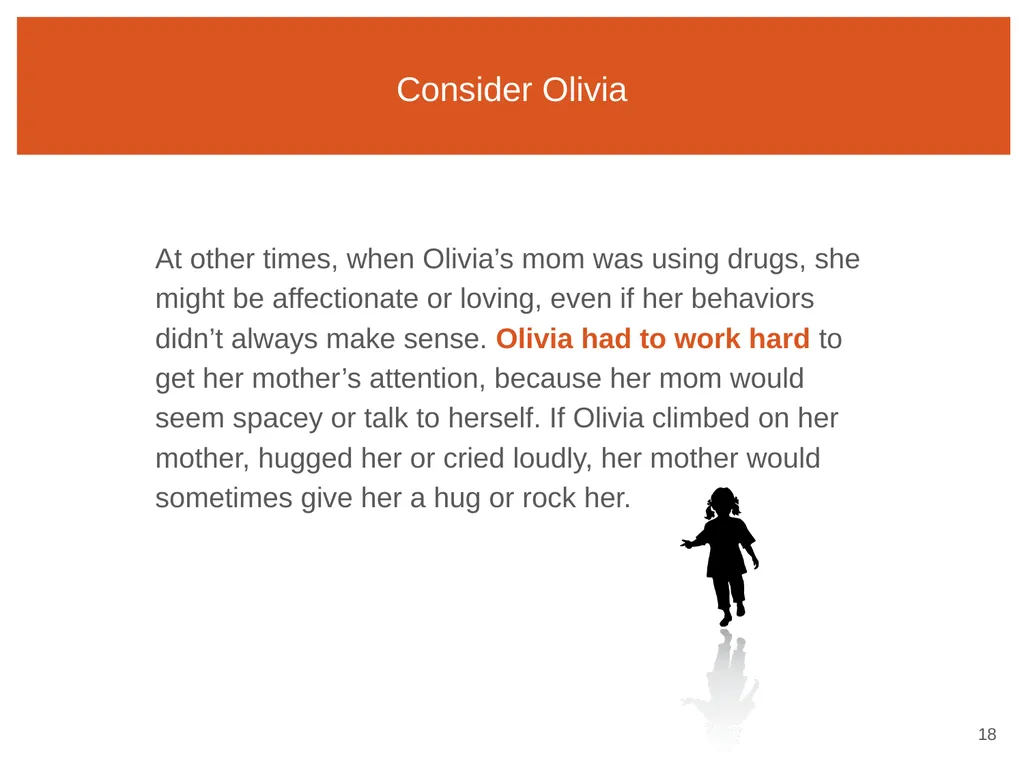
17 At other times, when Olivia’s mom was using drugs, she might be affectionate or loving, even if her behaviors didn’t always make sense. Olivia had to work hard to get her mother’s attention, because her mom would seem spacey or talk to herself. If Olivia climbed on her mother, hugged her or cried loudly, her mother would sometimes give her a hug or rock her. Consider Olivia<br>
19
18 To understand Olivia, use this three-part sequence:
Remember the lens: Perception is reality
Behavior addresses a need: Survival trumps everything else
Ability to recover: Where are the resources? Understanding Olivia<br>
Remember the lens: Perception is reality
Behavior addresses a need: Survival trumps everything else
Ability to recover: Where are the resources? Understanding Olivia<br>
20
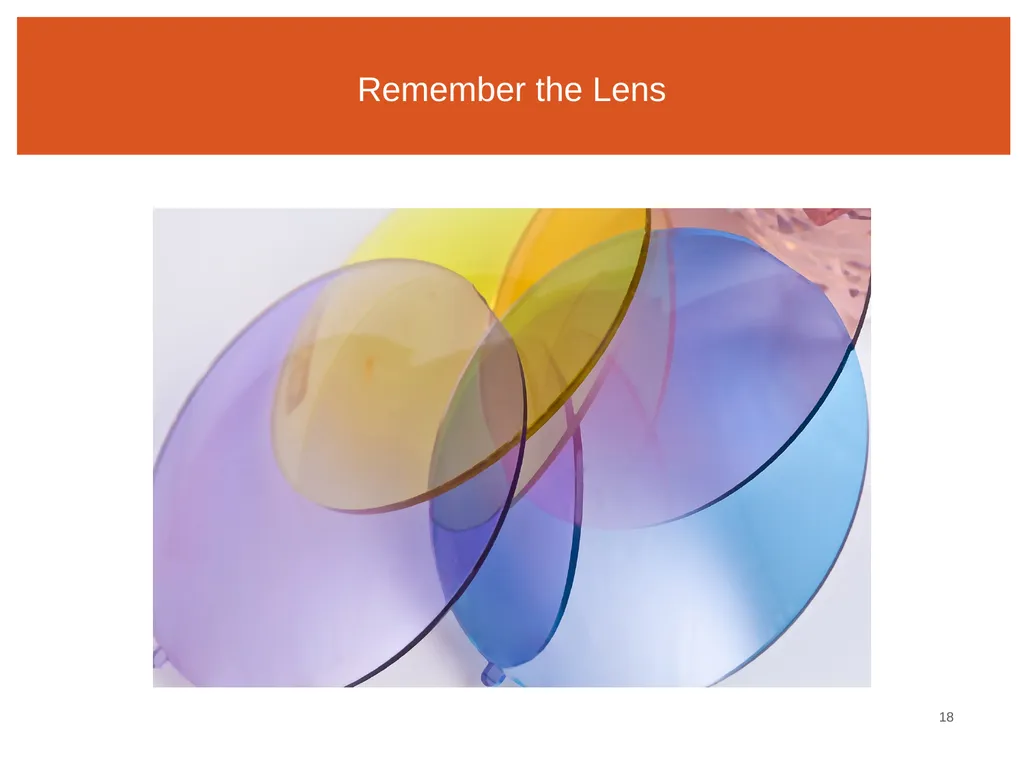
18 Remember the Lens<br>
21
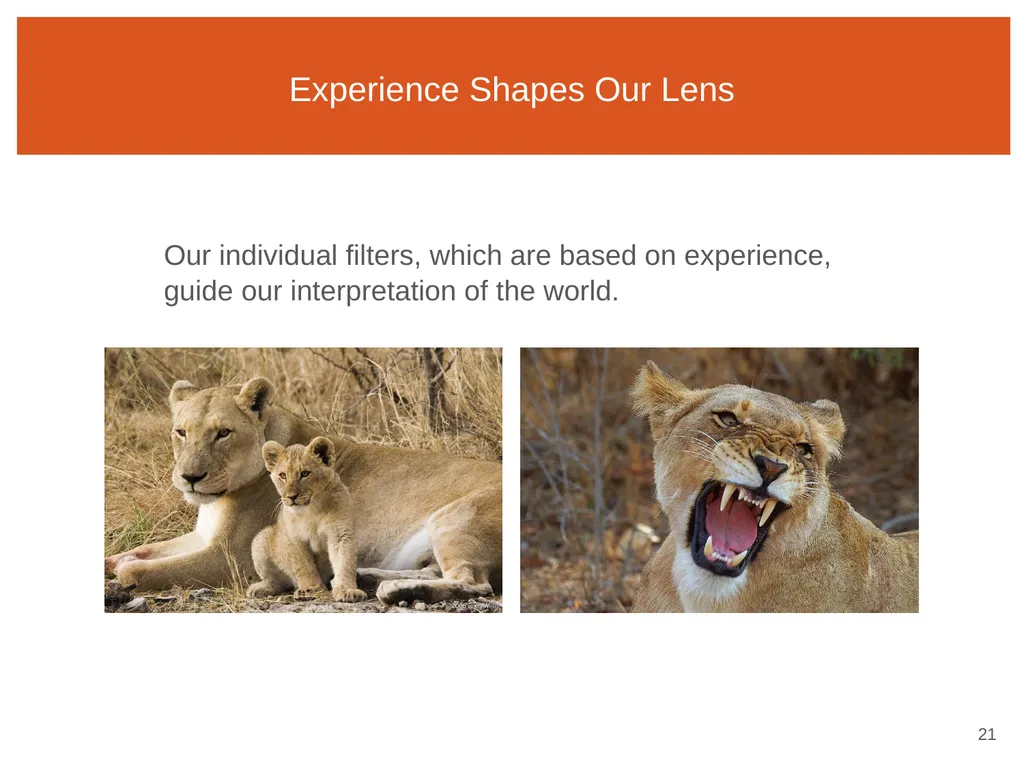
20 Our individual filters, which are based on experience, guide our interpretation of the world. Experience Shapes Our Lens<br>
22
21 All of us are influenced by our experiences. Over time, our experiences affect how we see and understand everything around us and shape our filter or lens for understanding what is safe and what is dangerous.
“Experience is not always the kindest of teachers, but it is surely the best.”
– Spanish proverb Remember the Lens<br>
“Experience is not always the kindest of teachers, but it is surely the best.”
– Spanish proverb Remember the Lens<br>
23
22 Think of the meaning you make of:
Raised voices
Someone not looking you in the eye
Someone who is quiet
The smell of fire
A hand on your shoulder
The sound of crying
People in authority
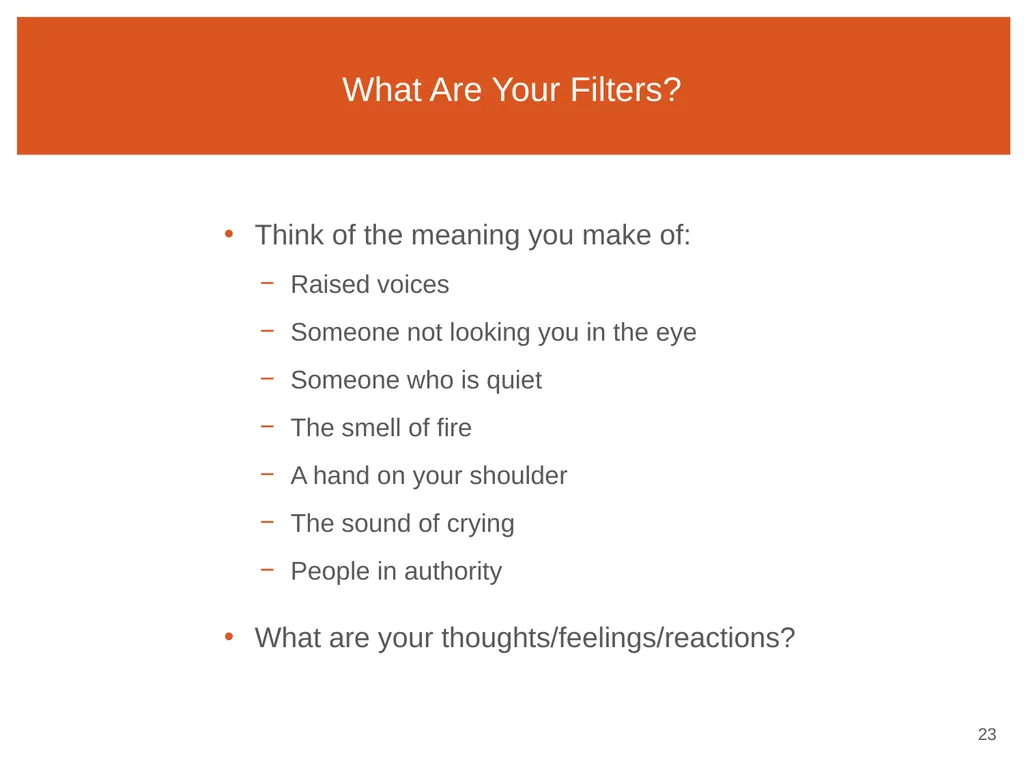
What are your thoughts/feelings/reactions? What Are Your Filters?<br>
Raised voices
Someone not looking you in the eye
Someone who is quiet
The smell of fire
A hand on your shoulder
The sound of crying
People in authority
What are your thoughts/feelings/reactions? What Are Your Filters?<br>
24
23 A trigger:
Is a signal that there is something dangerous in the environment right now, based on an individual’s past experience with danger. It may or may not:
Mean there is actual danger present
Be associated with specific memories of an event
Shifts us into danger (self-protection) mode
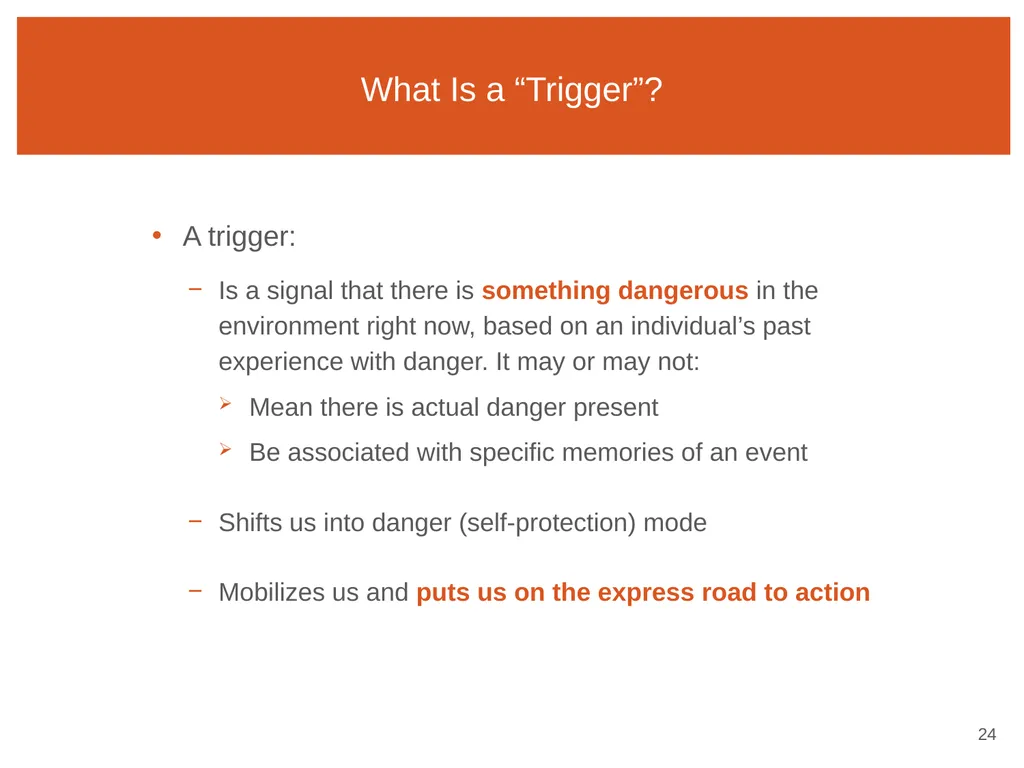
Mobilizes us and puts us on the express road to action What Is a “Trigger”?<br>
Is a signal that there is something dangerous in the environment right now, based on an individual’s past experience with danger. It may or may not:
Mean there is actual danger present
Be associated with specific memories of an event
Shifts us into danger (self-protection) mode
Mobilizes us and puts us on the express road to action What Is a “Trigger”?<br>
25
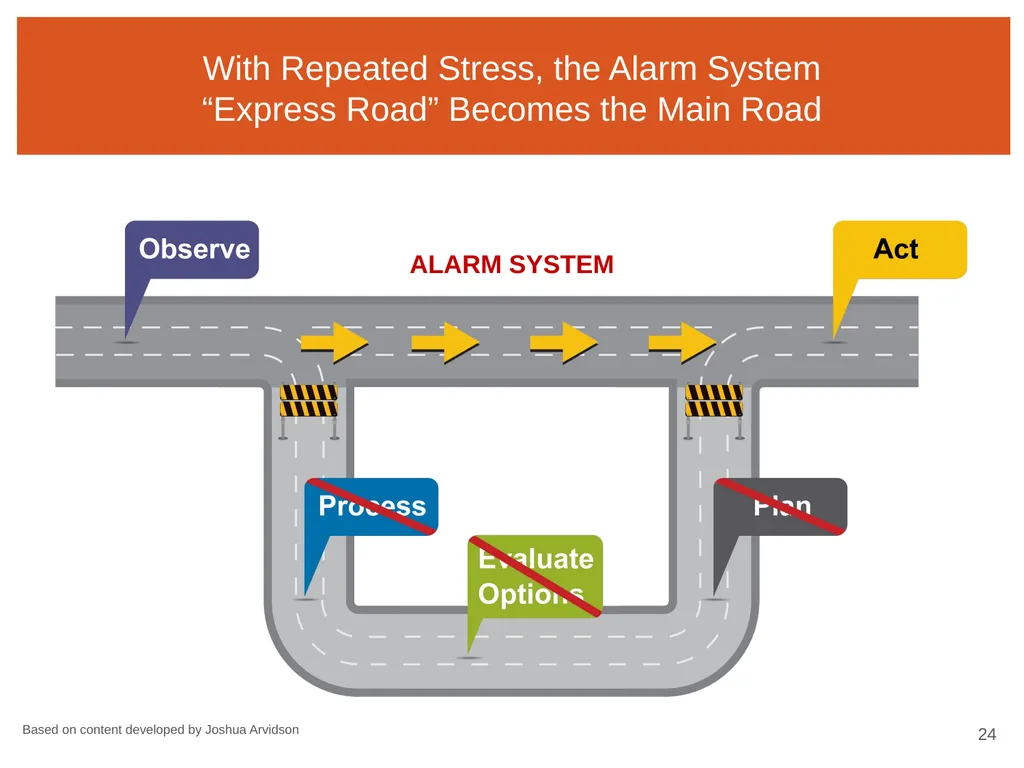
With Repeated Stress, the Alarm System “Express Road” Becomes the Main Road ALARM SYSTEM 24 Based on content developed by Joshua Arvidson<br>
26
25 Lack of power or control; feeling helpless
Unexpected change
Physical closeness or contact (too little, too much)
Sensory input (too little, too much)
Feeling shame
Positive attention or connection
Need/deprivation
Felt rejection or abandonment
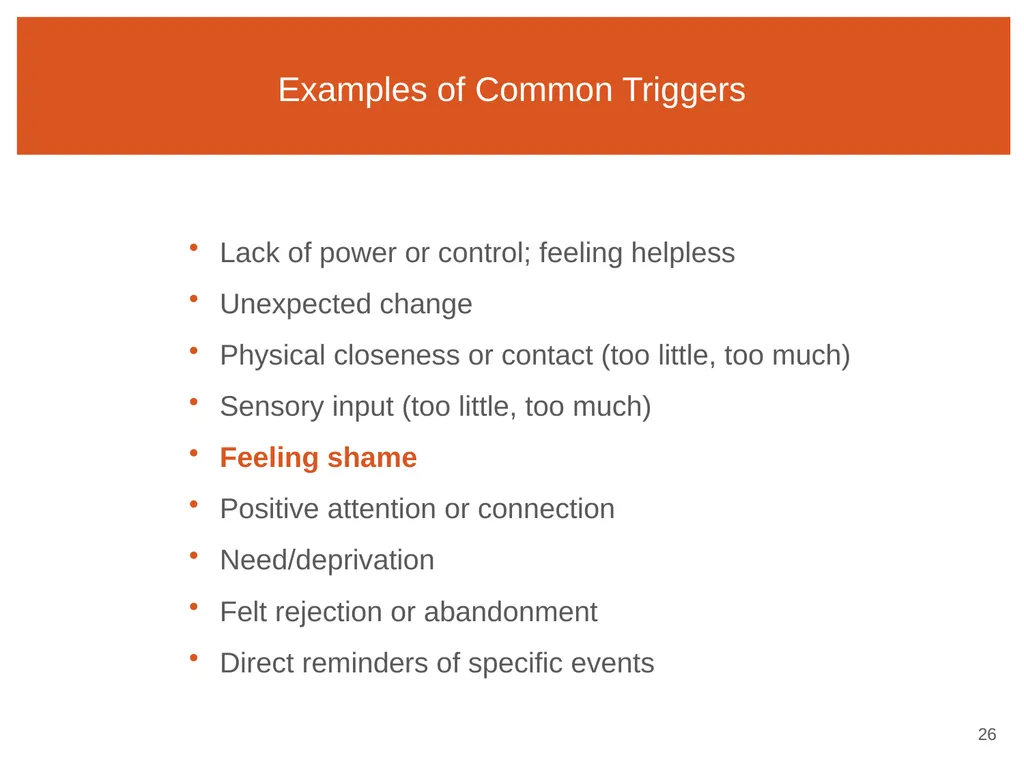
Direct reminders of specific events Examples of Common Triggers<br>
Unexpected change
Physical closeness or contact (too little, too much)
Sensory input (too little, too much)
Feeling shame
Positive attention or connection
Need/deprivation
Felt rejection or abandonment
Direct reminders of specific events Examples of Common Triggers<br>
27
What might trigger Olivia?<br>
28
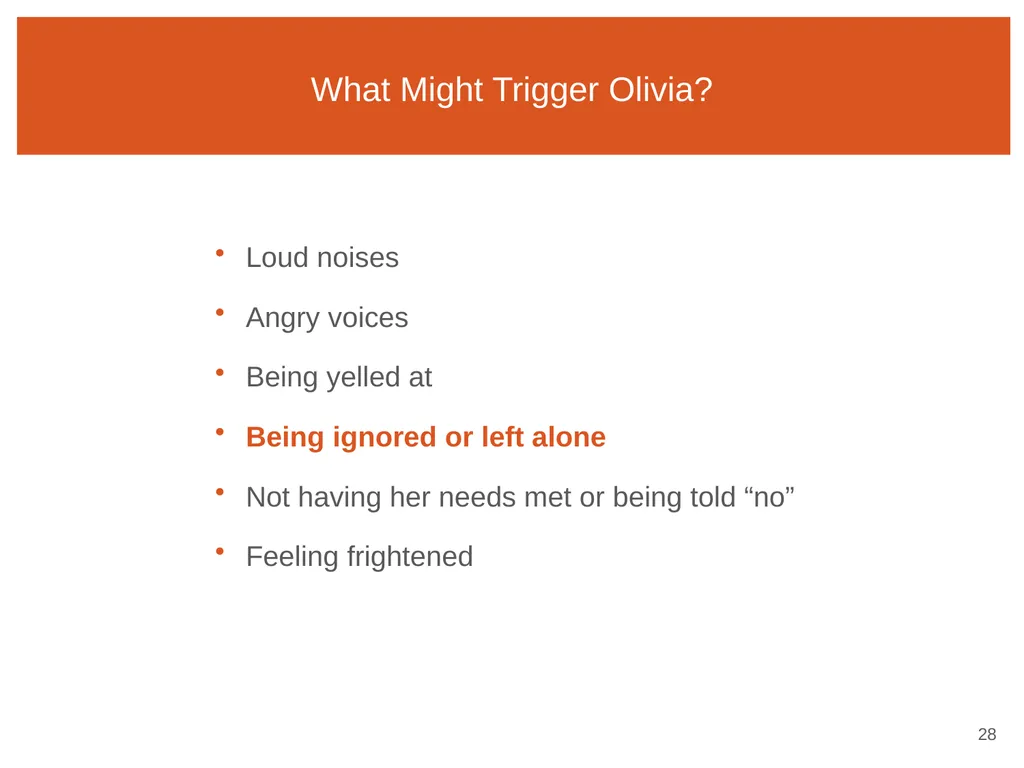
27 Loud noises
Angry voices
Being yelled at
Being ignored or left alone
Not having her needs met or being told “no”
Feeling frightened What Might Trigger Olivia?<br>
Angry voices
Being yelled at
Being ignored or left alone
Not having her needs met or being told “no”
Feeling frightened What Might Trigger Olivia?<br>
29
Behavior addresses a need<br>
30
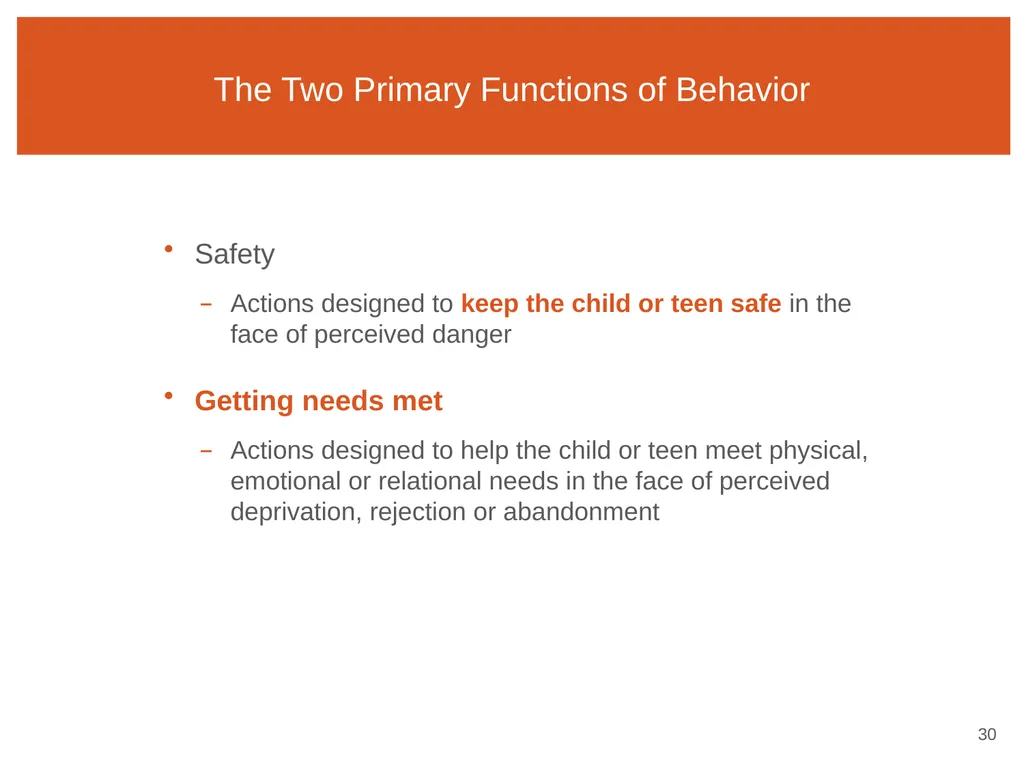
29 Safety
Actions designed to keep the child or teen safe in the face of perceived danger
Getting needs met
Actions designed to help the child or teen meet physical, emotional or relational needs in the face of perceived deprivation, rejection or abandonment The Two Primary Functions of Behavior<br>
Actions designed to keep the child or teen safe in the face of perceived danger
Getting needs met
Actions designed to help the child or teen meet physical, emotional or relational needs in the face of perceived deprivation, rejection or abandonment The Two Primary Functions of Behavior<br>
31
30 “[W]hile there are an infinite number of stressors that can cause a subjective sense of overwhelming stress and distress in a child, there are finite ways that the brain and the body…can respond to those stressors.”
– Michael DeBellis, 2001 Responding to Stress<br>
– Michael DeBellis, 2001 Responding to Stress<br>
32
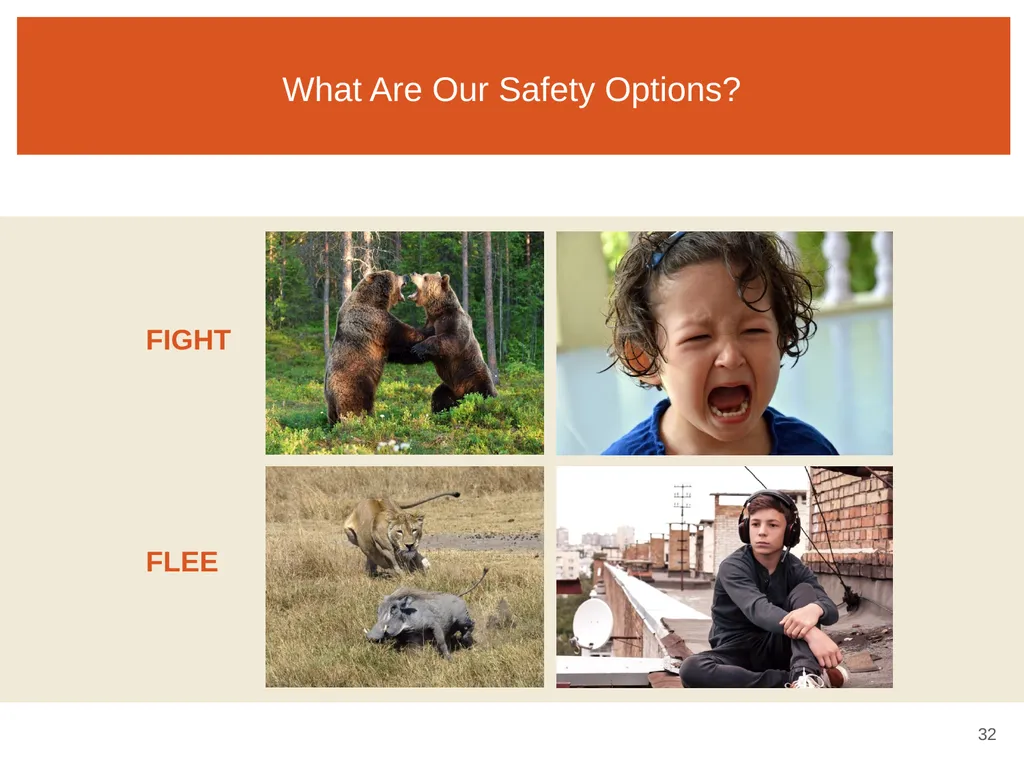
31 FIGHT
FLEE What Are Our Safety Options?<br>
FLEE What Are Our Safety Options?<br>
33
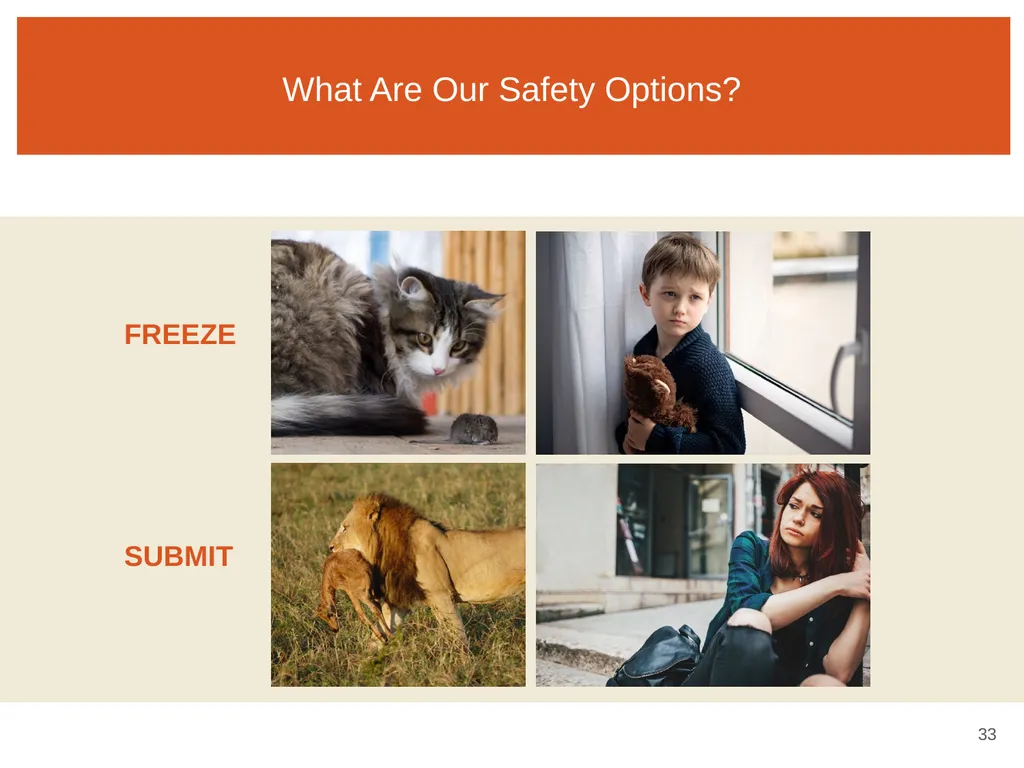
32 FREEZE
SUBMIT What Are Our Safety Options?<br>
SUBMIT What Are Our Safety Options?<br>
34
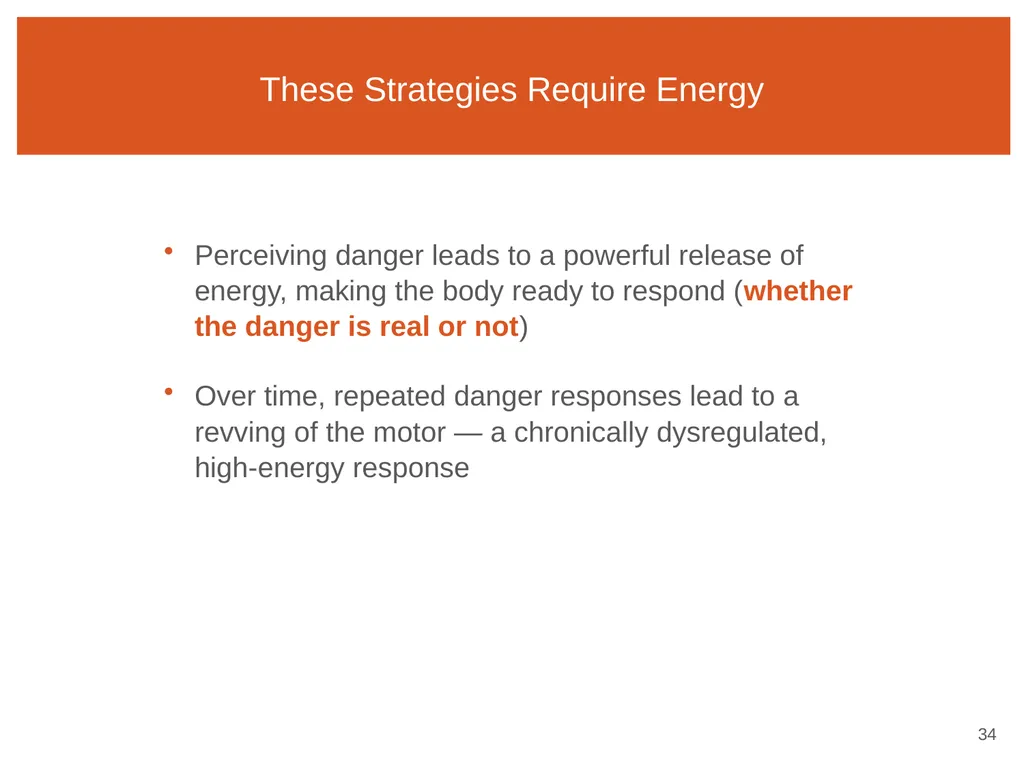
33 Perceiving danger leads to a powerful release of energy, making the body ready to respond (whether the danger is real or not)
Over time, repeated danger responses lead to a revving of the motor — a chronically dysregulated, high-energy response These Strategies Require Energy<br>
Over time, repeated danger responses lead to a revving of the motor — a chronically dysregulated, high-energy response These Strategies Require Energy<br>
35
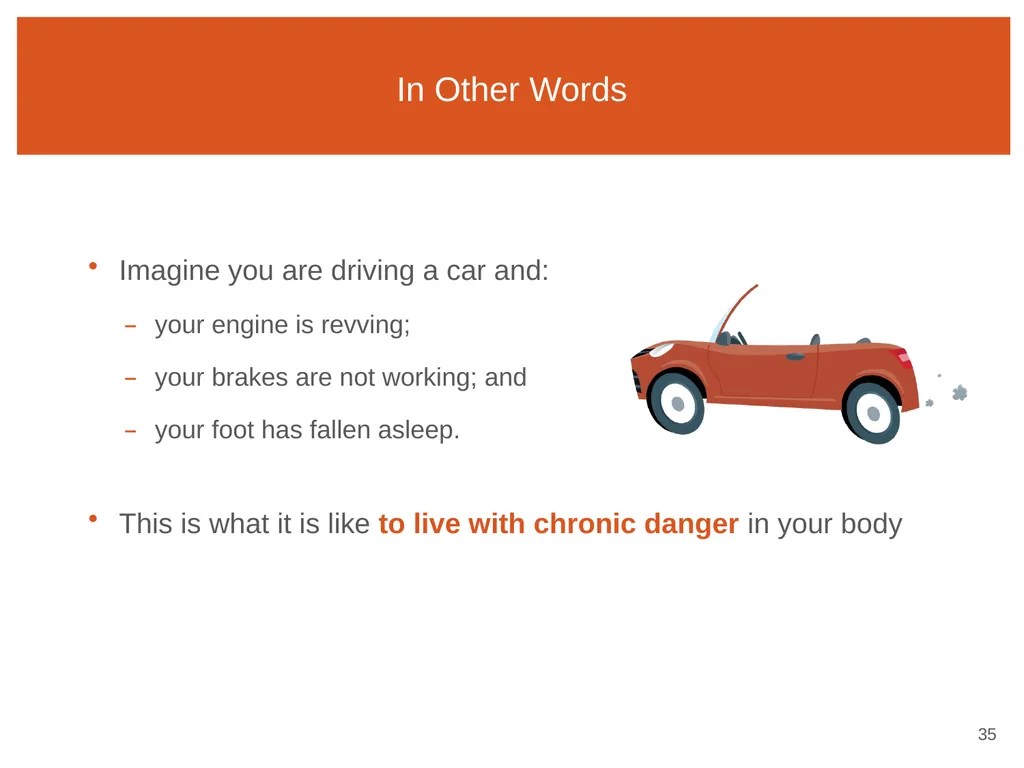
34 Imagine you are driving a car and:
your engine is revving;
your brakes are not working; and
your foot has fallen asleep.
This is what it is like to live with chronic danger in your body In Other Words<br>
your engine is revving;
your brakes are not working; and
your foot has fallen asleep.
This is what it is like to live with chronic danger in your body In Other Words<br>
36
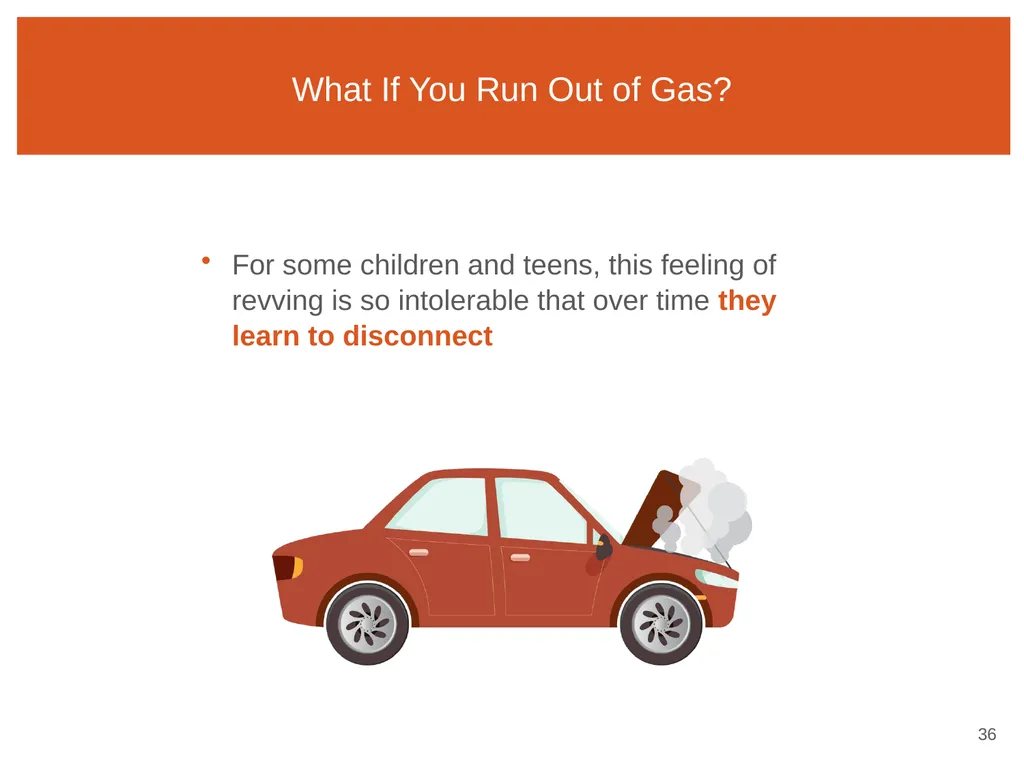
35 For some children and teens, this feeling of revving is so intolerable that over time they learn to disconnect What If You Run Out of Gas?<br>
37
36 Think about what children and teens need for healthy development
The basics: Food, shelter, sleep
Relationships: Connection, love
Emotional support: Comfort, responsiveness
When their needs are not consistently met, children and teens have to find ways to fill these needs on their own What Children and Teens Need Beyond Physical Safety<br>
The basics: Food, shelter, sleep
Relationships: Connection, love
Emotional support: Comfort, responsiveness
When their needs are not consistently met, children and teens have to find ways to fill these needs on their own What Children and Teens Need Beyond Physical Safety<br>
38
37 Manipulates
Hoards
Steals
Clingy Who Has Heard or Used These Words? Lies
Needy
Dependent<br>
Hoards
Steals
Clingy Who Has Heard or Used These Words? Lies
Needy
Dependent<br>
39
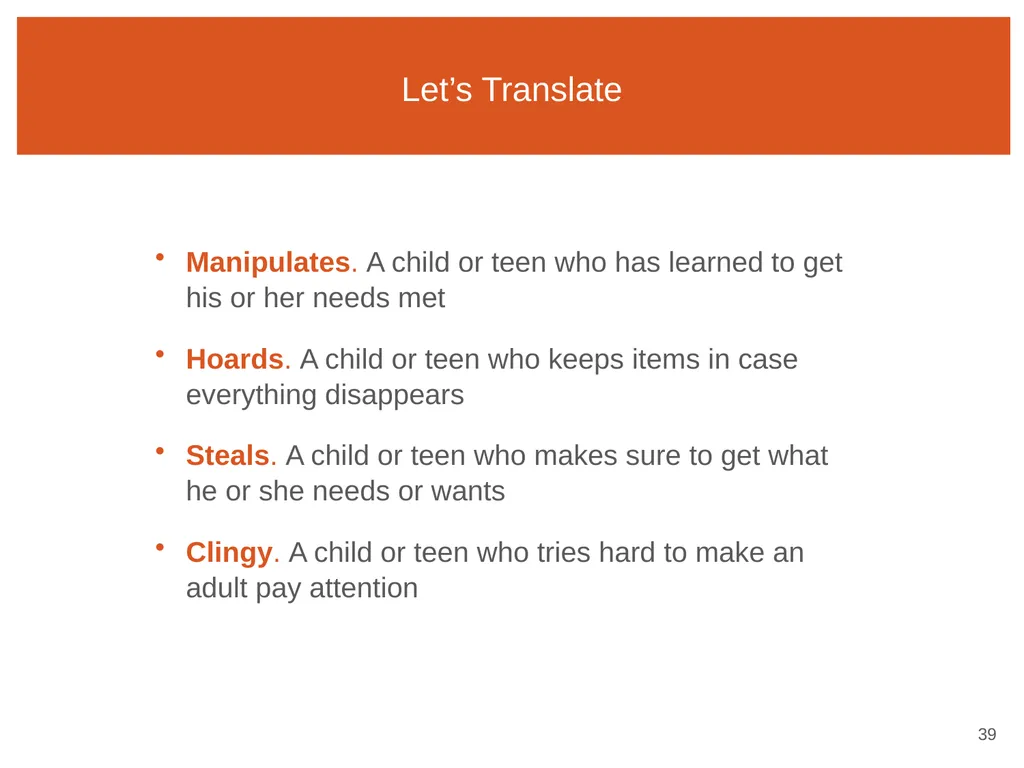
38 Manipulates. A child or teen who has learned to get his or her needs met
Hoards. A child or teen who keeps items in case everything disappears
Steals. A child or teen who makes sure to get what he or she needs or wants
Clingy. A child or teen who tries hard to make an adult pay attention Let’s Translate<br>
Hoards. A child or teen who keeps items in case everything disappears
Steals. A child or teen who makes sure to get what he or she needs or wants
Clingy. A child or teen who tries hard to make an adult pay attention Let’s Translate<br>
40
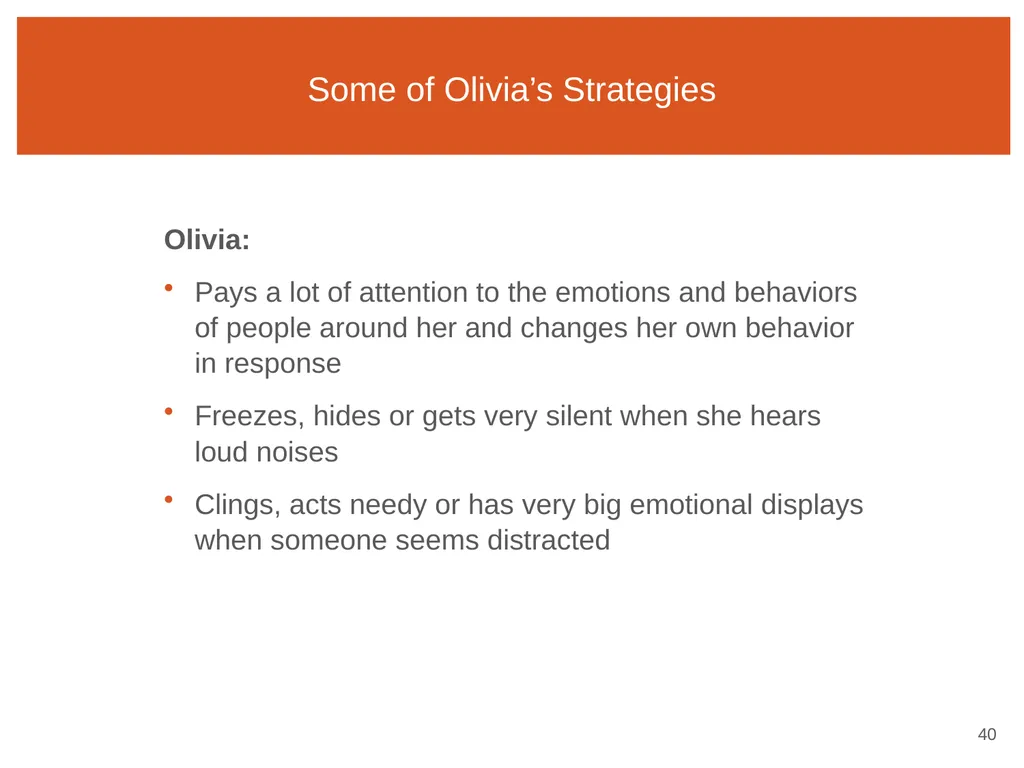
39 Olivia:
Pays a lot of attention to the emotions and behaviors of people around her and changes her own behavior in response
Freezes, hides or gets very silent when she hears loud noises
Clings, acts needy or has very big emotional displays when someone seems distracted Some of Olivia’s Strategies<br>
Pays a lot of attention to the emotions and behaviors of people around her and changes her own behavior in response
Freezes, hides or gets very silent when she hears loud noises
Clings, acts needy or has very big emotional displays when someone seems distracted Some of Olivia’s Strategies<br>
41
Ability to recover<br>
42
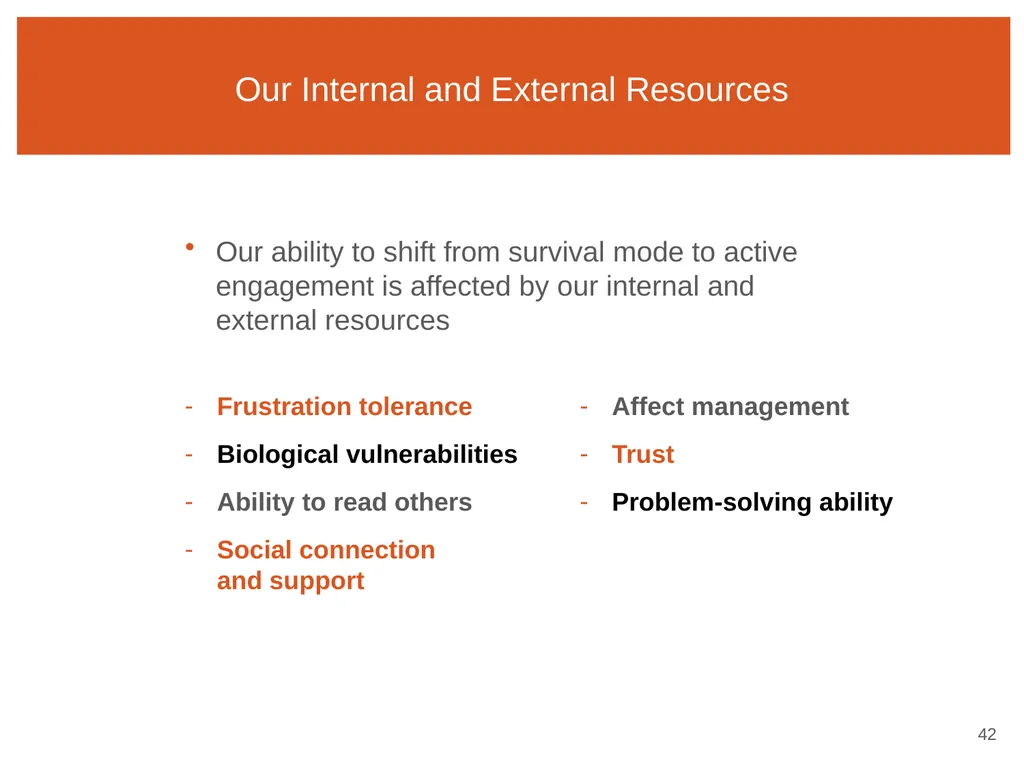
41 Our ability to shift from survival mode to active engagement is affected by our internal and external resources Our Internal and External Resources Affect management
Trust
Problem-solving ability Frustration tolerance
Biological vulnerabilities
Ability to read others
Social connection and support<br>
Trust
Problem-solving ability Frustration tolerance
Biological vulnerabilities
Ability to read others
Social connection and support<br>
43
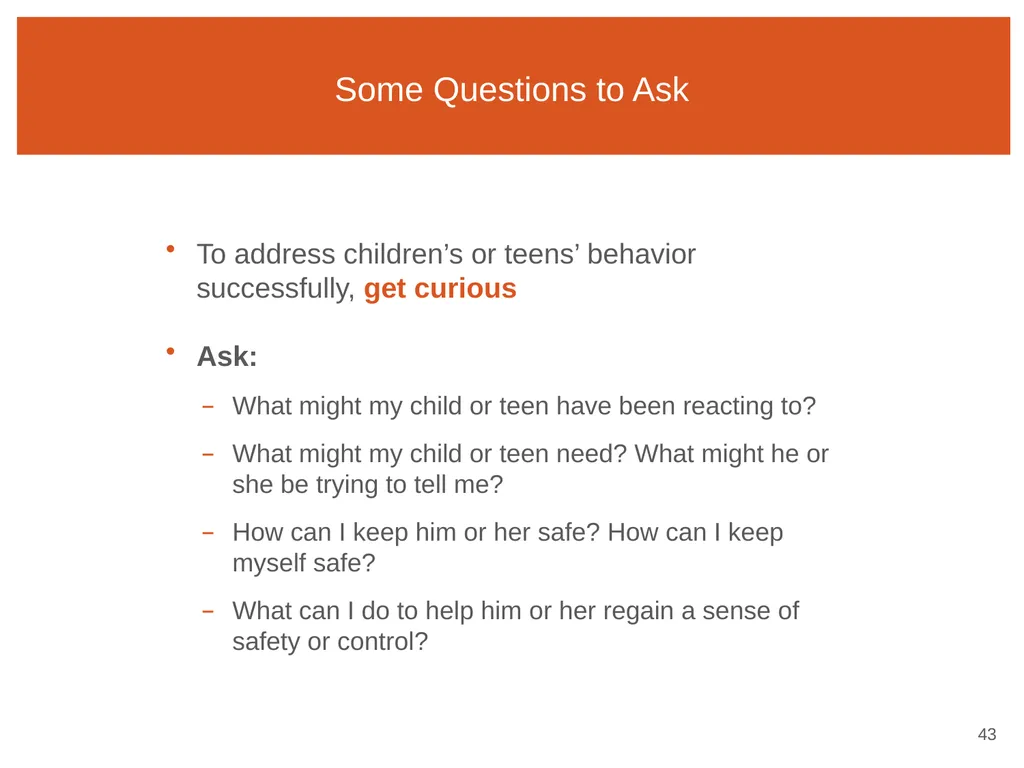
42 To address children’s or teens’ behavior successfully, get curious
Ask:
What might my child or teen have been reacting to?
What might my child or teen need? What might he or she be trying to tell me?
How can I keep him or her safe? How can I keep myself safe?
What can I do to help him or her regain a sense of safety or control? Some Questions to Ask<br>
Ask:
What might my child or teen have been reacting to?
What might my child or teen need? What might he or she be trying to tell me?
How can I keep him or her safe? How can I keep myself safe?
What can I do to help him or her regain a sense of safety or control? Some Questions to Ask<br>
44
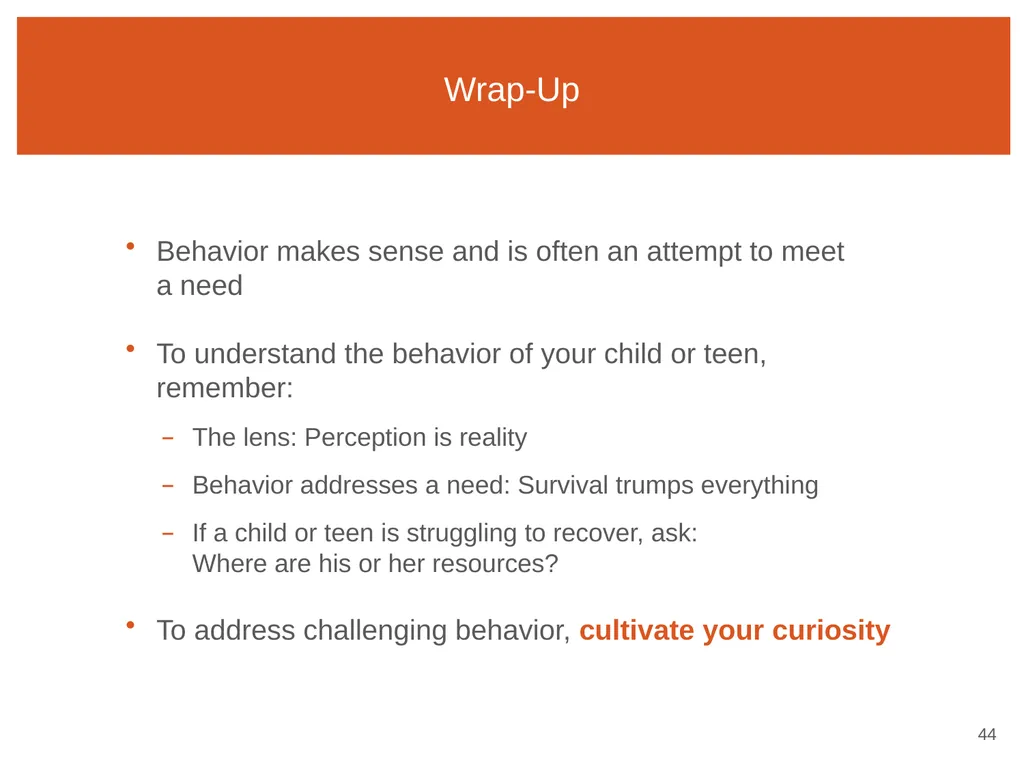
43 Behavior makes sense and is often an attempt to meet
a need
To understand the behavior of your child or teen, remember:
The lens: Perception is reality
Behavior addresses a need: Survival trumps everything
If a child or teen is struggling to recover, ask: Where are his or her resources?
To address challenging behavior, cultivate your curiosity Wrap-Up<br>
To understand the behavior of your child or teen, remember:
The lens: Perception is reality
Behavior addresses a need: Survival trumps everything
If a child or teen is struggling to recover, ask: Where are his or her resources?
To address challenging behavior, cultivate your curiosity Wrap-Up<br>
45
44 SELF-REFLECTION<br>
46
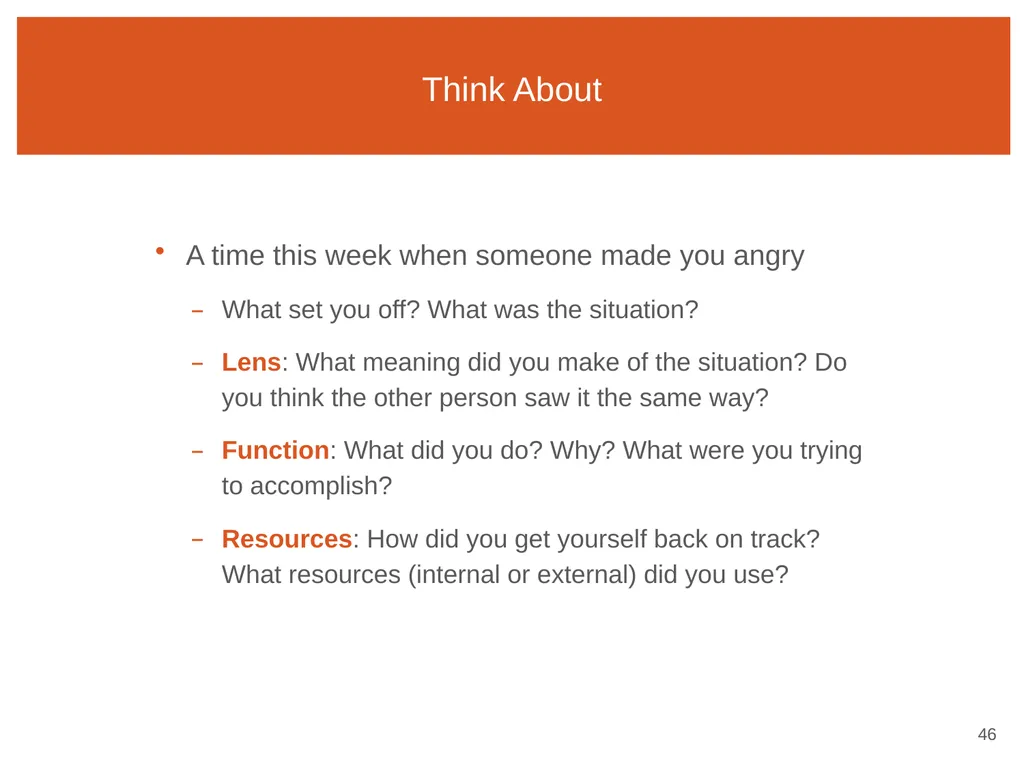
45 A time this week when someone made you angry
What set you off? What was the situation?
Lens: What meaning did you make of the situation? Do you think the other person saw it the same way?
Function: What did you do? Why? What were you trying to accomplish?
Resources: How did you get yourself back on track? What resources (internal or external) did you use? Think About<br>
What set you off? What was the situation?
Lens: What meaning did you make of the situation? Do you think the other person saw it the same way?
Function: What did you do? Why? What were you trying to accomplish?
Resources: How did you get yourself back on track? What resources (internal or external) did you use? Think About<br>
47
TAKE HOME
What is one sentence (idea, concept or something you have learned) that you can take away from today? Write it in your log.<br>
What is one sentence (idea, concept or something you have learned) that you can take away from today? Write it in your log.<br>
48
PRACTICE<br>
49
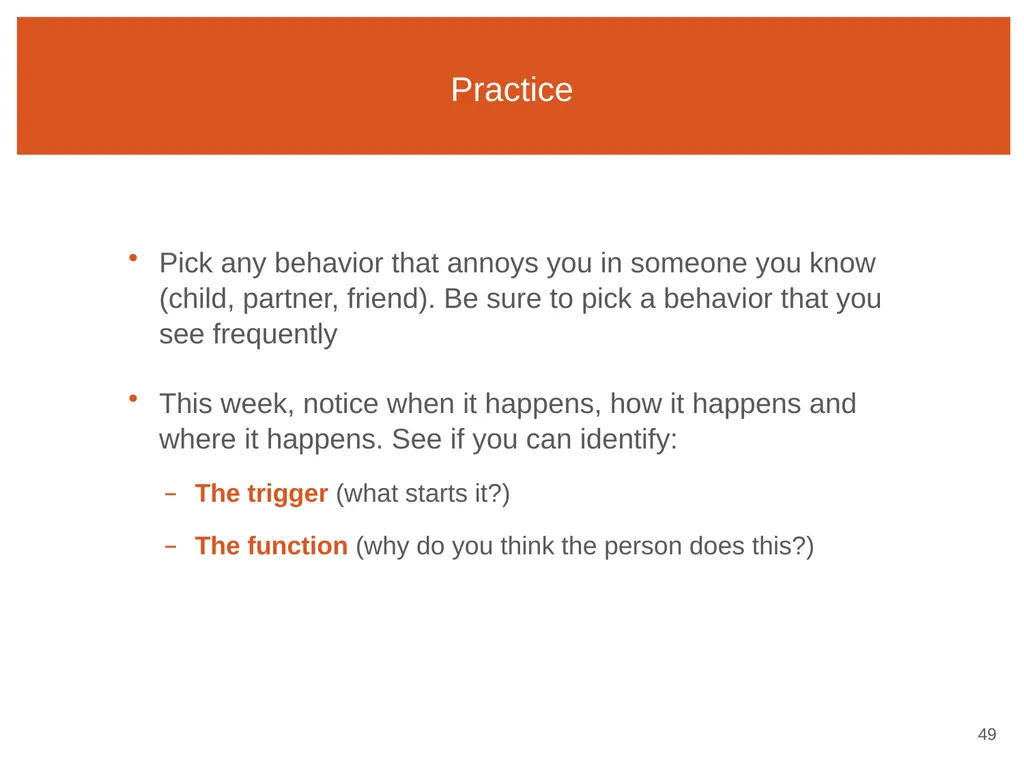
48 Pick any behavior that annoys you in someone you know (child, partner, friend). Be sure to pick a behavior that you see frequently
This week, notice when it happens, how it happens and where it happens. See if you can identify:
The trigger (what starts it?)
The function (why do you think the person does this?) Practice<br>
This week, notice when it happens, how it happens and where it happens. See if you can identify:
The trigger (what starts it?)
The function (why do you think the person does this?) Practice<br>
50
CLOSING CHECK-IN<br>
51
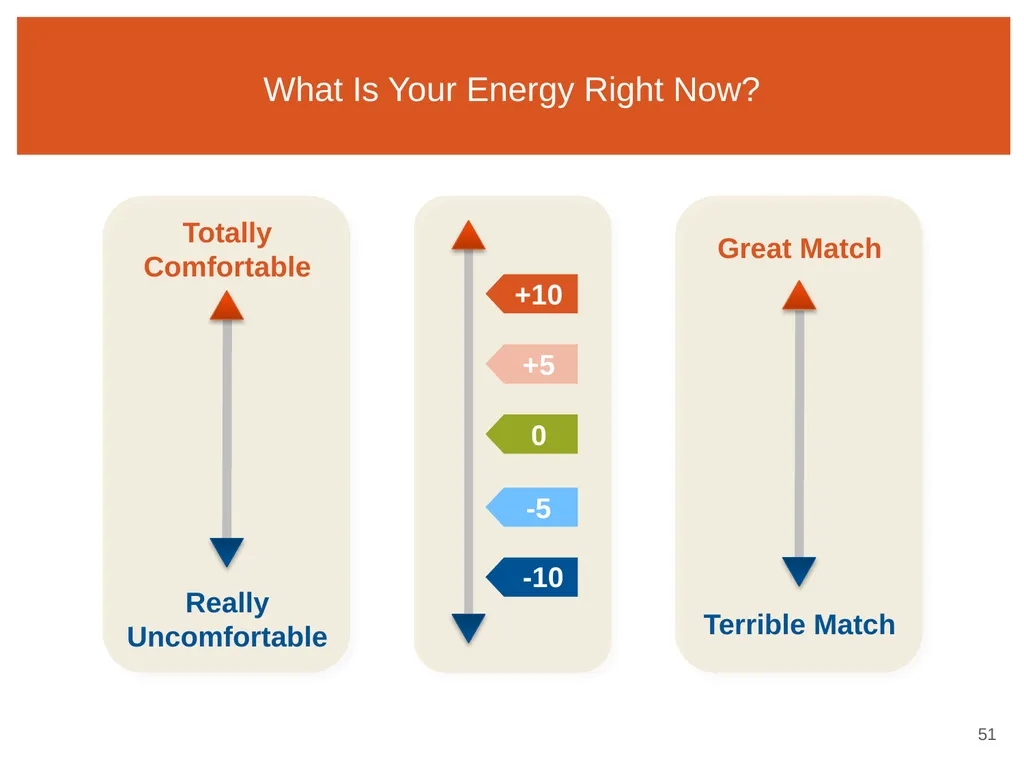
50 What Is Your Energy Right Now? Totally Comfortable Really Uncomfortable z Great Match Terrible Match<br>
52
See you next time!<br>