SEXUALLY TRANSMITTED INFECTIONS (STIs) PREVENTION CARE Geneva 2019 Dr Venkatraman Chandra-Mouli DEFINITION Sexually transmitted infections (STIs) are infections caused by bacteria, viruses parasites transmitted through sexual contract,
"SEXUALLY TRANSMITTED INFECTIONS (STIs) PREVENTION" is the property of its rightful owner. Permission is granted to
download and print the materials on this website for personal, non-commercial use only, and to display it
on your personal computer provided you do not modify the materials and that you retain all copyright
notices contained in the materials. By downloading content from our website, you accept the terms of this
agreement.
Presentation Transcript
01
SEXUALLY TRANSMITTED INFECTIONS (STIs) PREVENTION & CARE Geneva 2019 Dr Venkatraman Chandra-Mouli<br>
02
DEFINITION Sexually transmitted infections (STIs) are infections caused by bacteria, viruses & parasites transmitted through sexual contract, including vaginal, anal & oral sex. Some STIs are transmitted through skin-to-skin sexual contact or through non-sexual means e.g. from mother to child during pregnancy & childbirth.
There are more than 30 known bacteria, viruses & parasites that cause STIs.<br>
03
RATIONALE - 1/2 STIs among adolescents are an important problem: In Although there is a lack of data on the incidence or prevalence of STIs in adolescents at the global level, where age-disaggregated surveillance systems exist, a substantial proportion of STI incidence occurs in adolescents.
Adolescent girls have greater biological susceptibility than adult women to some STIs due to the immaturity of the cervical mucosa & increased cervical ectopy: Adolescent girls have a greater biological susceptibility. They are also at greater susceptibility because social norms prevent them from being well prepared to have safe sex & to refuse unsafe (or unwanted) sex. Adolescent boys on the other hand susceptible because they are under pressure to have multiple partners because of stereotypical masculinity norms. Among both boys & girls, specific groups are more susceptible because of their sexual practices.<br>
04
RATIONALE - 2/2 STIs among adolescents have major health consequences: STIs can immediate effects such as discomfort and pain. They can also have serious consequences beyond the immediate ones.
Prevention & management services for STIs have been shown to be effective: Proven approaches to prevent STIs, to accurately diagnose them and to cure some STIs and effectively treat others are available.
Design & implementation of prevention strategies & access to & provision of good-quality services need attention: Effective STI prevention & management services are an urgent need for adolescents including scale-up of STI case management and provision of HPV vaccination.<br>
05
HUMAN RIGHTS OBLIGATIONS States have obligations to ensure care & treatment of STIs to adolescents, as part of a package of SRH services.
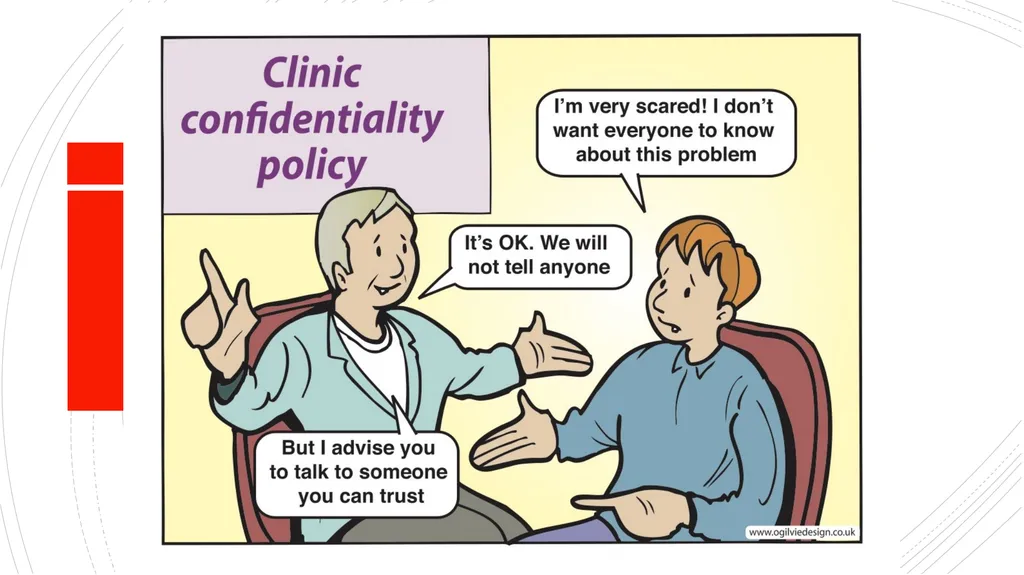
States are obliged to ensure that STI services are accessible to adolescents, & are free, confidential & nondiscriminatory.
States are also obliged to remove barriers such as third-party consent requirements.<br>
06
KEY CONCEPTS TO CONSIDER Adolescents lack knowledge & understanding about STIs & STI prevention & management services: Adolescents should be informed about STIS when they interact with the health system & through educational outreach. Also HPV vaccination strategies offer opportunity for educational outreach.
STI prevention & management services often do not reach adolescents. If they do, they are often not adolescent friendly: STI prevention strategies need to be tailored to reach & meet the needs of adolescents. Further, efforts are needed to ensure that adolescents know where and how to seek care for STIs, if & when needed. Finally, STI management services must be adolescent friendly.<br>
07
WHO GUIDELINES WHO guidelines for the treatment of Treponema pallidum (syphilis) (2016).
WHO guideline on syphilis screening and treatment for pregnant women (2017).
WHO guidelines for the treatment of genital herpes simplex virus (2016).
WHO guidelines for the treatment of Chlamydia trachomatis (2016).
WHO guidelines for the treatment of Neisseria gonorrhoeae (2016).
Guidelines on hepatitis B and C testing (2016).
Guidelines for the prevention, care and treatment of persons with chronic hepatitis B infection (2015).
Guidelines for the screening, care and treatment of persons with chronic hepatitis C infection: updated version (2016).
Consolidated guidelines on HIV prevention, diagnosis, treatment and care for key populations: updated version (2016).
Prevention and treatment of HIV and other sexually transmitted infections among men who have sex with men and transgender people: recommendations for a public health approach (2011).
Prevention and treatment of HIV and other sexually transmitted infections for sex workers in low- and-middle- income countries: recommendations for a public health approach (2012).
Consolidated guideline on sexual and reproductive health and rights of women living with HIV (2017).
Comprehensive cervical cancer control: a guideline to essential practice, 2nd edition (2014).
Responding to children and adolescents who have been sexually abused (2017).
Brief sexuality-related communication: recommendations for a public health approach (2015).<br>
08
COMPLEMENTARY DOCUMENTS TO WHO’s GUIDELINES Global health sector strategy on sexually transmitted infections 2016-2021 (WHO, 2016).
World Health Organization. Human papillomavirus vaccines: WHO position paper, May 2017- recommendations. Vaccine. 2017; 35(43):5753-5755.
Guide to introducing HPV vaccine into national immunization programmes. Geneva: World Health Organization; 2016 (142).
Scaling-up HPV vaccine introduction. Geneva: World Health Organization; 2016 (143).
Sexually transmitted diseases: treatment guidelines, 2015. Atlanta, GA: Centers for Disease Control and Prevention; 2015 (144).
HPV vaccine lessons learnt project overview. Seattle, WA: PATH; 2015 (145).<br>