Simultaneous Stroke and first presentation of Multiple Sclerosis Dr A OConnor, Dr P OBrien Medical Department, Naas General Hospital 21-IMRIM-30 Introduction Multiple sclerosis (MS), an autoimmune disease of the central nervous system
"Simultaneous Stroke and first presentation of" is the property of its rightful owner. Permission is granted to
download and print the materials on this website for personal, non-commercial use only, and to display it
on your personal computer provided you do not modify the materials and that you retain all copyright
notices contained in the materials. By downloading content from our website, you accept the terms of this
agreement.
Presentation Transcript
01
Simultaneous Stroke and first presentation of Multiple Sclerosis Dr A O’Connor, Dr P O’Brien Medical Department, Naas General Hospital 21-IMRIM-30<br>
02
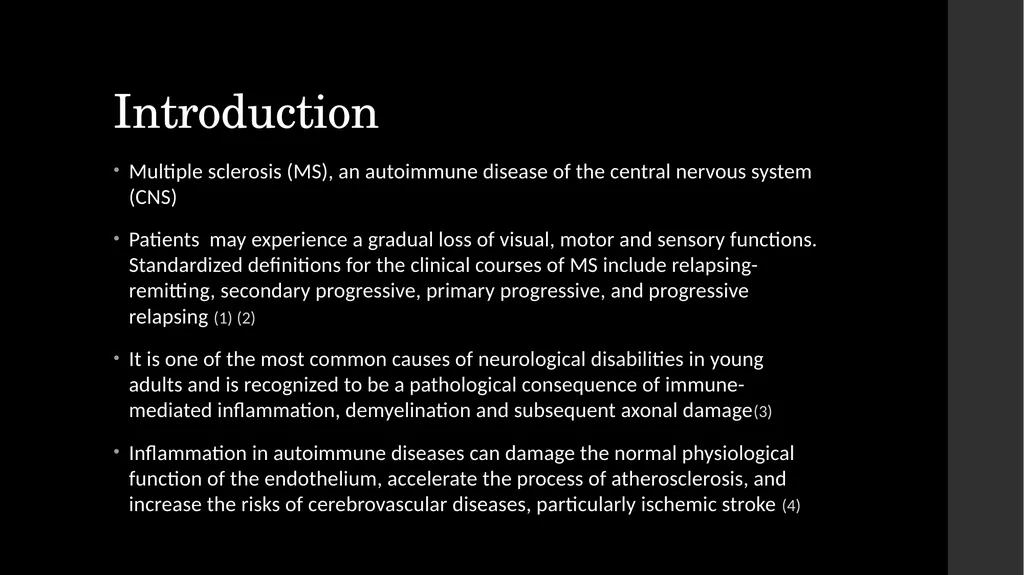
Introduction Multiple sclerosis (MS), an autoimmune disease of the central nervous system (CNS)
Patients may experience a gradual loss of visual, motor and sensory functions. Standardized definitions for the clinical courses of MS include relapsing-remitting, secondary progressive, primary progressive, and progressive relapsing (1) (2)
It is one of the most common causes of neurological disabilities in young adults and is recognized to be a pathological consequence of immune-mediated inflammation, demyelination and subsequent axonal damage(3)
Inflammation in autoimmune diseases can damage the normal physiological function of the endothelium, accelerate the process of atherosclerosis, and increase the risks of cerebrovascular diseases, particularly ischemic stroke (4)<br>
03
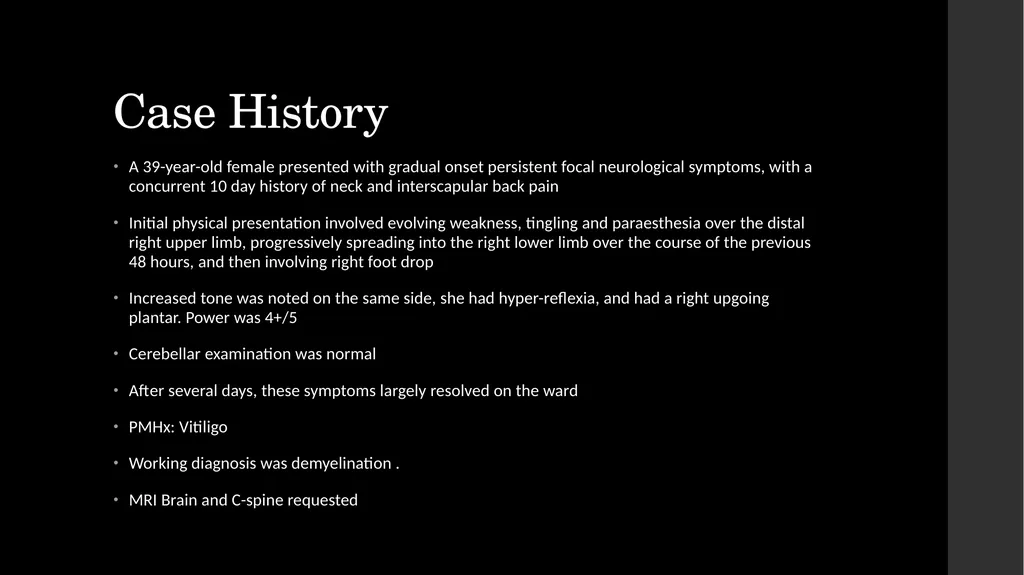
Case History A 39-year-old female presented with gradual onset persistent focal neurological symptoms, with a concurrent 10 day history of neck and interscapular back pain
Initial physical presentation involved evolving weakness, tingling and paraesthesia over the distal right upper limb, progressively spreading into the right lower limb over the course of the previous 48 hours, and then involving right foot drop
Increased tone was noted on the same side, she had hyper-reflexia, and had a right upgoing plantar. Power was 4+/5
Cerebellar examination was normal
After several days, these symptoms largely resolved on the ward
PMHx: Vitiligo
Working diagnosis was demyelination .
MRI Brain and C-spine requested<br>
04
Investigations FBC, UEC, glucose, CK normal
CRP <1
Transoesophageal echo : No cardioembolic source identified
Negative anti-MOG/anti-aquaporin 4 antibodies/HIV/ VDRL/Lyme serology
Serology tests showed elevated IgG levels in the CSF, along with positive oligoclonal bands<br>
05
Imaging Initial CT Brain showed no acute bleed
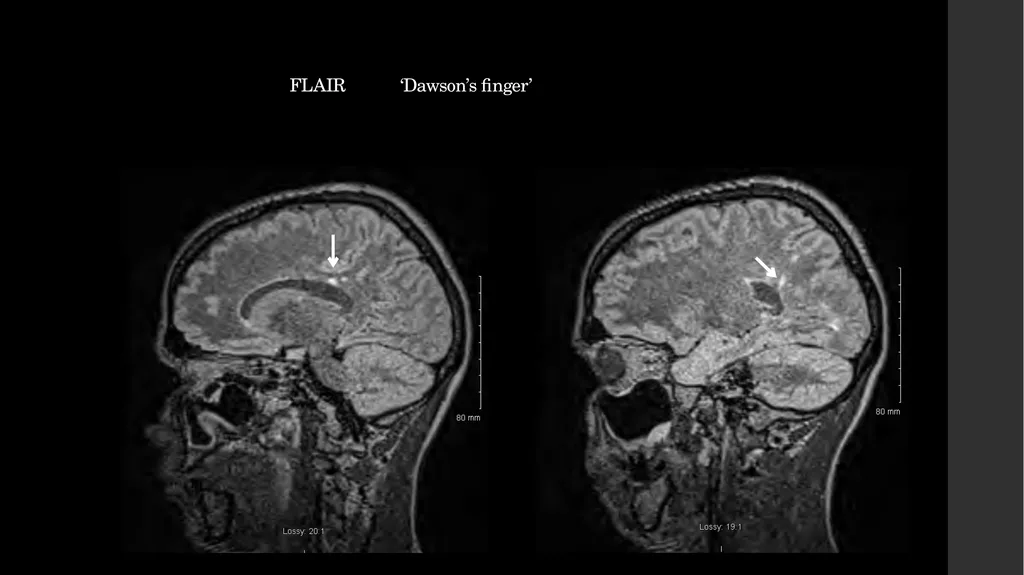
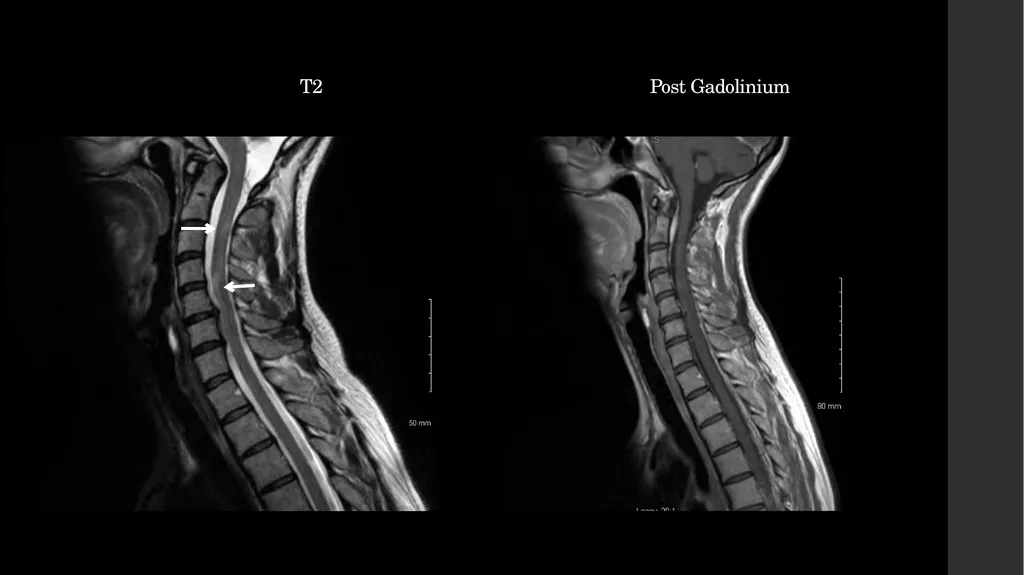
Magnetic resonance imaging brain demonstrated non-enhancing deep white matter changes, including the corpus callosum. MR C-Spine demonstrated patchy T2 signal abnormality.
Together these findings favoured MS as likely diagnosis
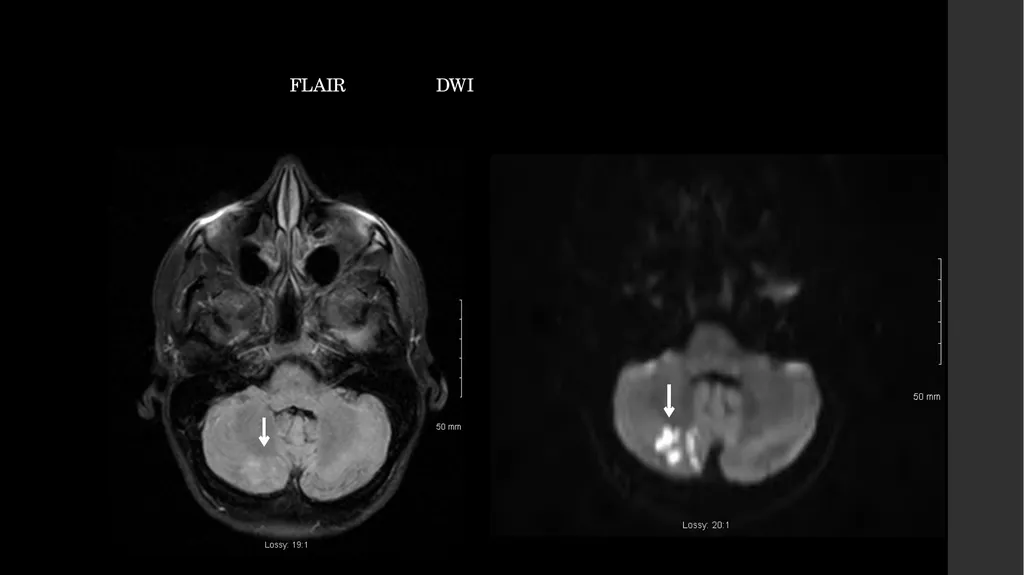
In addition an acute right sided PICA infarction was identified on FLAIR. This was confirmed to have restricted diffusion on DWI
A subsequent CT Angiogram showed a non dominant right vertebral artery, but no evidence of dissection or filling defect<br>
06
FLAIR ‘Dawson’s finger’<br>
07
T2 Post Gadolinium<br>
08
FLAIR DWI<br>
09
Discussion This case was convincing for first presentation relapsing remitting MS, given the positive serology and resolving neurological symptoms, despite there being no Gadolinium enhancement on imaging
Unusually, an asymptomatic acute PICA infarct was also noted, uncommon at her age. With a negative TOE and relevant investigations, this remains cryptogenic
This case report highlights that the clinical and radiological presentation of MS. Though known to be at increased risk it is unusual to see stroke presenting simultaneously and needs to be identified and investigated separately (2)<br>
10
References Fred D. Lublin, Stephen C. Reingold, National Multiple Sclerosis Society (USA) Advisory Committee on Clinical Trials of New Agents in Multiple Sclerosis. Neurology Apr 1996, 46 (4) 907-911; DOI: 10.1212/WNL.46.4.907
Hong Y, Tang HR, Ma M, Chen N, Xie X, He L. Multiple sclerosis and stroke: a systematic review and meta-analysis. BMC Neurology. 2019;19(1):139.
Karussis D. The diagnosis of multiple sclerosis and the various related demyelinating syndromes: a critical review. J Autoimmun. 2014 Feb-Mar;48-49:134-42. doi: 10.1016/j.jaut.2014.01.022. Epub 2014 Feb 10. PMID: 24524923.
Popescu BF, Lucchinetti CF. Pathology of demyelinating diseases. Annu Rev Pathol. 2012;7:185-217. doi: 10.1146/annurev-pathol-011811-132443. PMID: 22313379.<br>