SKB SFC strategy and some results Fredrik Johansson IAEA Technical Meeting on SFC Vienna 1-4 Sep 2026 The aim of SKBs strategy on Spent Fuel Measurements before and at the encapsulation for the final storage. The importance of high quality
"SKB SFC strategy and some results Fredrik" is the property of its rightful owner. Permission is granted to
download and print the materials on this website for personal, non-commercial use only, and to display it
on your personal computer provided you do not modify the materials and that you retain all copyright
notices contained in the materials. By downloading content from our website, you accept the terms of this
agreement.
Presentation Transcript
01
SKB SFC strategy and some results Fredrik Johansson IAEA Technical Meeting on SFC
Vienna 1-4 Sep 2026<br>
02
The aim of SKBs strategy on Spent Fuel Measurements before and at the encapsulation for the final storage.
The importance of high quality Data Records
Ongoing SFC-projects at SKB
Some results
Summary Outline<br>
03
We should be able to predict the important parameters in the safety analysis, (incl. transportation, interim storage and final storage) with good precision for all FA in the Swedish Back End system. (Mainly DH and BU).
Before encapsulation we should be able to verify these predictions for the final storage, and the safeguard requirement put on us by IAEA, Euroatom and SSM. Overall Goal – SKB Measurement Strategy<br>
04
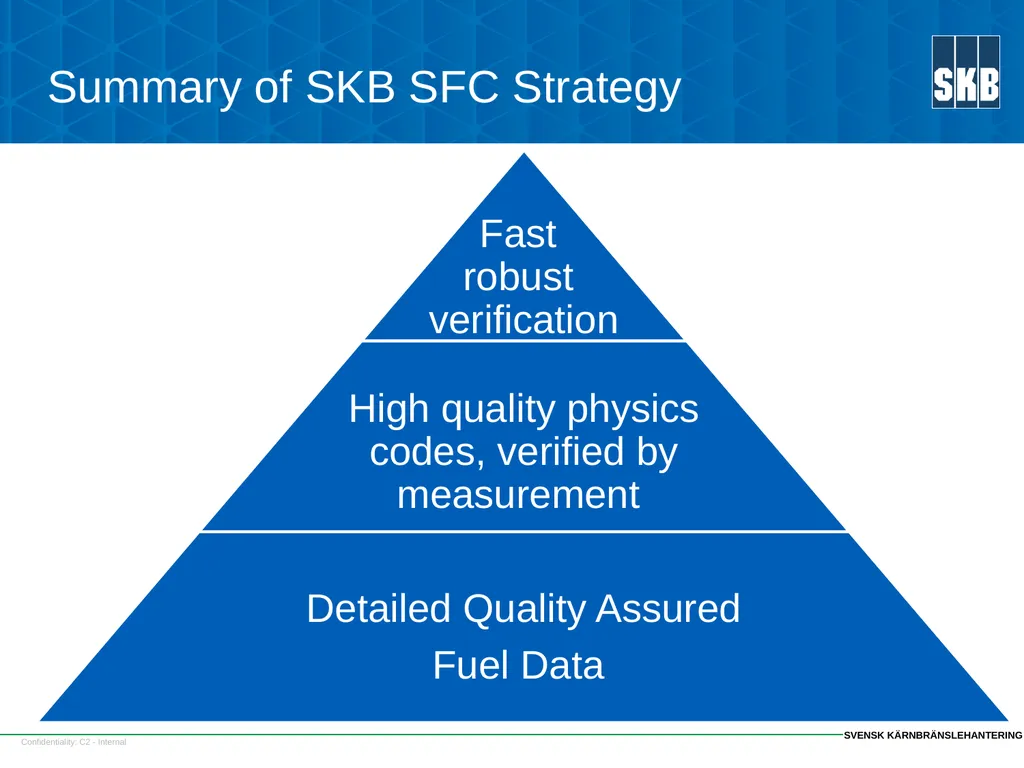
The foundation for a well-functioning system to verify fuel characteristics before encapsulations at the final storage is a solid basis of calculations and reliable fuel data. When these are available, measurements primarily serve to confirm the predicted values. This enables planning of which Fuel Assemblies (FA) are to be encapsulated well in advance of the encapsulation process, while keeping unexpected issues to a minimum.
SKB has well-established tools for calculating the most important properties of the Spent Nuclear Fuel (SNF) and for most of the FAs detailed information of its operational history. However, reliable calculations cannot be achieved through theoretical analyses alone; measurements are required to verify that theoretical predictions are consistent with reality.
Consequently, SKB's strategy for spent fuel characterization prior to encapsulation extends far beyond the development of a well-functioning measurement station for the encapsulation facility. It also includes the measurement programs that must be carried out well in advance to establish uncertainty margins for all parameters that are important to the safety assessments. The Foundation<br>
05
In the world outside the nuclear business, it is beyond doubt that ownership of information provides a decisive competitive advantage, enabling organizations to make well-informed decisions and guide development in the right direction. The same principle applies to the management of SNF. The more data we can collect about the fuel, the greater our ability to optimize its management.
This is particularly true with the increasing use of artificial intelligence (AI), whose potential we have only begun to explore. However, a fundamental prerequisite for the successful application of AI-technologies is the availability of high-quality underlying data. For SNF these data are scarce, and it is an integral part of SKBs strategy to increase the amount of reliable SNF data. Data driven development<br>
06
KBP6004 – Measurement project using DDSI and gamma-spectroscopy. Evaluation of measurement techniques for encapsulation and nuclear safeguards.
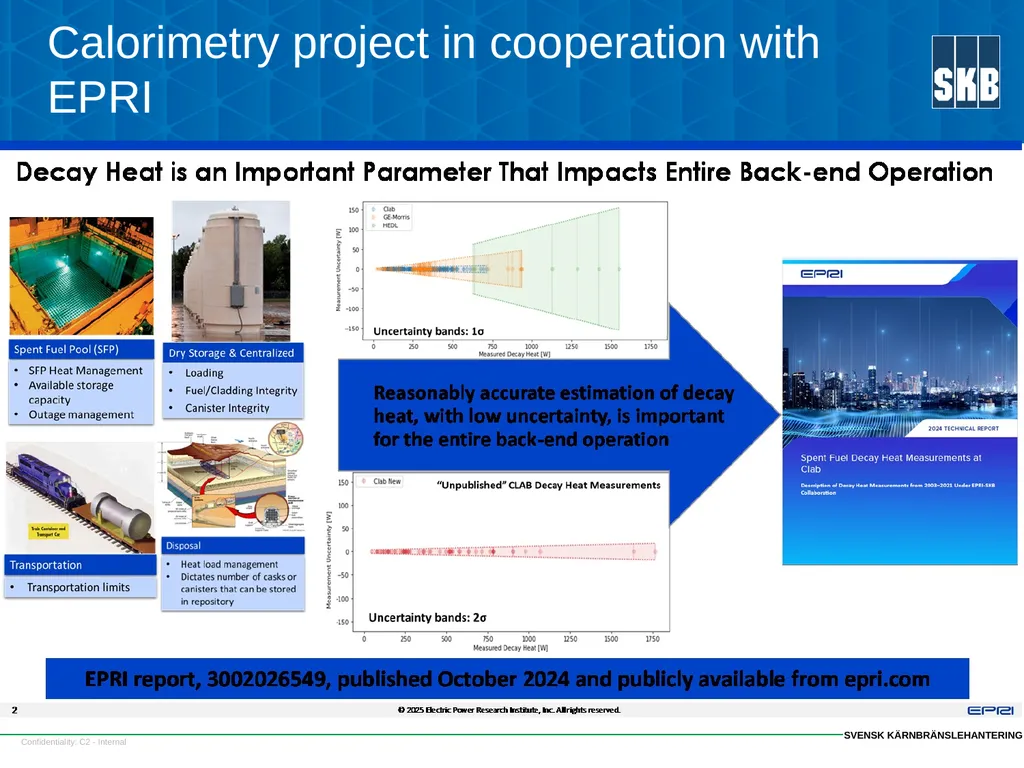
Calorimeter Project – Upgrading the existing calorimeter to accommodate higher decay heat levels.
SABIS Project - Improve the quality of historical data and establish a framework for data collection.
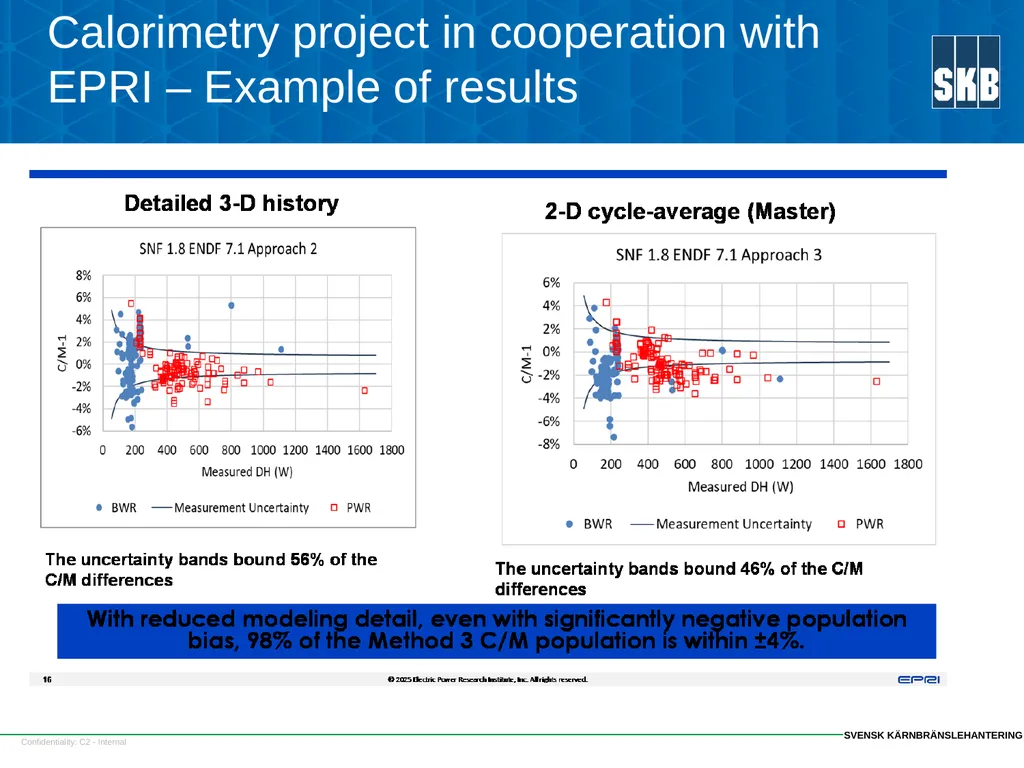
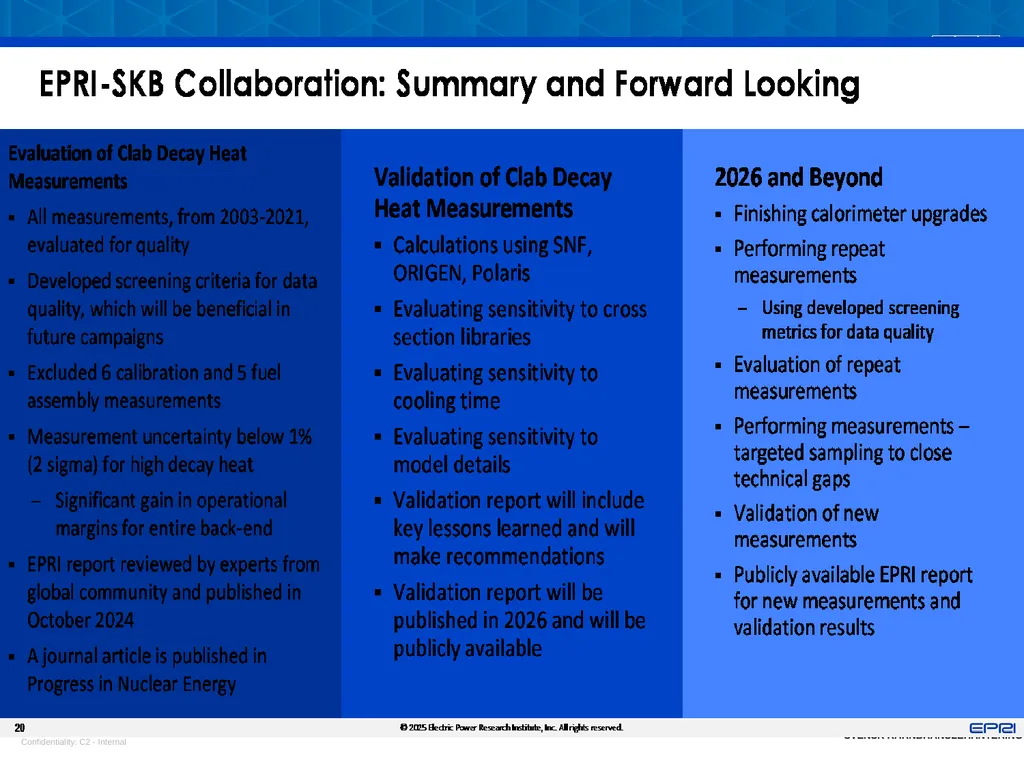
EPRI - Collaboration on validation of Decay Heat calculations
The Degradation Effects Project, Collection of mechanical property data. Ongoing projects<br>
07
99 FA measured during January and February 2026. They cover a range of fuel geometries, initial enrichments, burnups and cooling times, variations in irradiation history, presence of burnable absorbers and presence of control rods in some of the measured PWR assemblies.
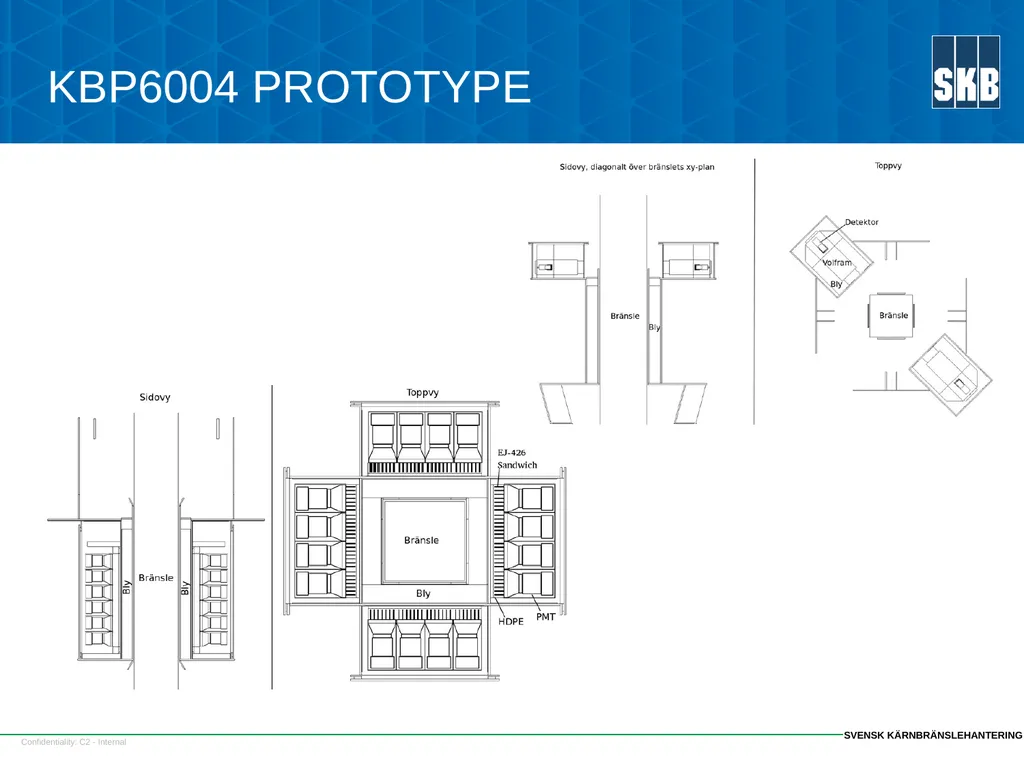
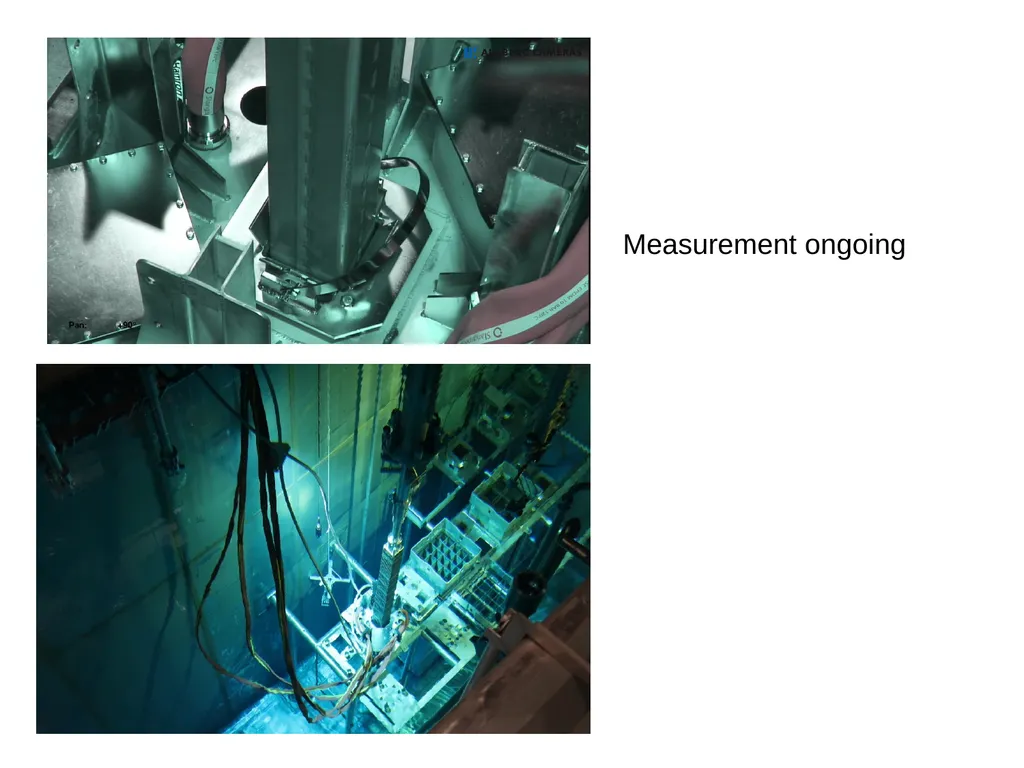
The measurement station contains lanthanum bromide gamma-ray detectors and lithium fluoride neutron detectors.
For each assembly:
Measurement time: One position 15-20 minutes + axial scan (total 20-30 minutes) (second measurement rotated 90° for some selected assemblies)
Measured values were compared to predicted values calculated by Studsvik tool SNF with detailed operational history. KBP6004<br>
08
KBP6004 PROTOTYPE<br>
09
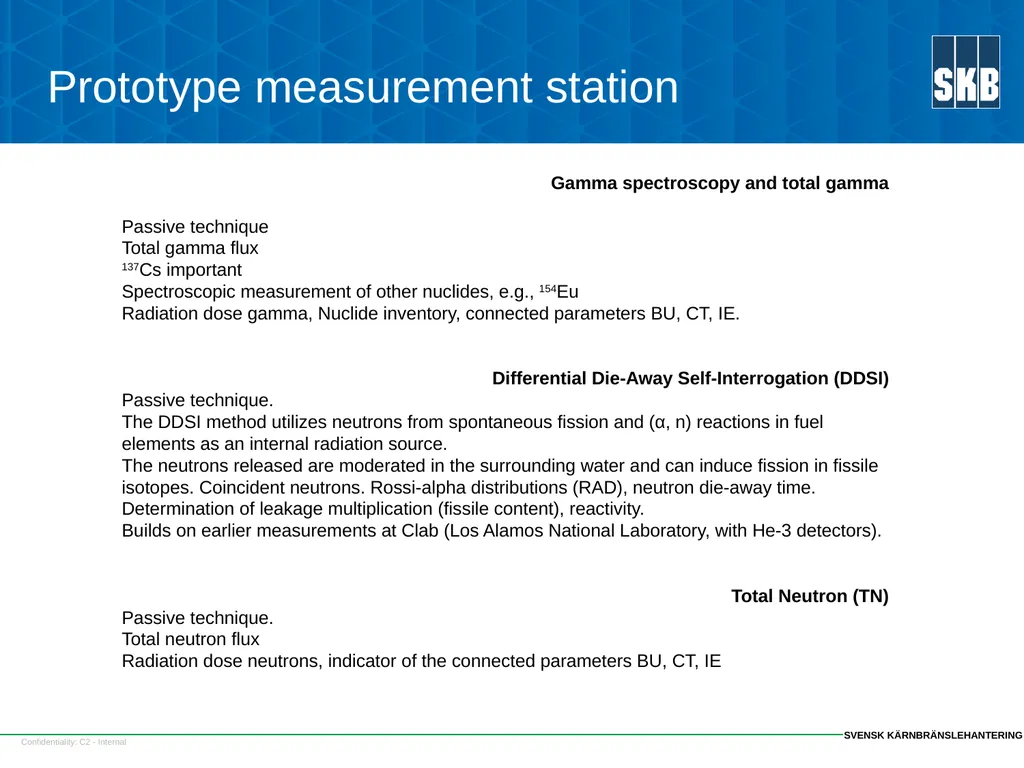
Prototype measurement station Gamma spectroscopy and total gamma
Passive technique
Total gamma flux
137Cs important
Spectroscopic measurement of other nuclides, e.g., 154Eu
Radiation dose gamma, Nuclide inventory, connected parameters BU, CT, IE.
Differential Die-Away Self-Interrogation (DDSI)
Passive technique.
The DDSI method utilizes neutrons from spontaneous fission and (α, n) reactions in fuel elements as an internal radiation source.
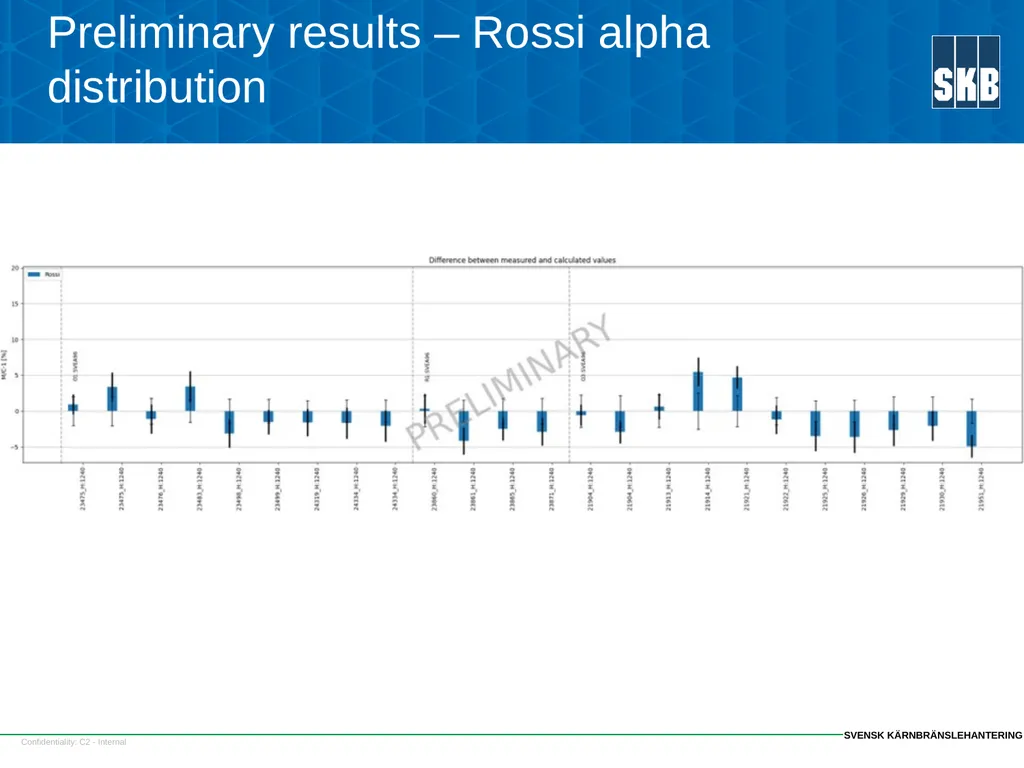
The neutrons released are moderated in the surrounding water and can induce fission in fissile isotopes. Coincident neutrons. Rossi-alpha distributions (RAD), neutron die-away time.
Determination of leakage multiplication (fissile content), reactivity.
Builds on earlier measurements at Clab (Los Alamos National Laboratory, with He-3 detectors).
Total Neutron (TN)
Passive technique.
Total neutron flux
Radiation dose neutrons, indicator of the connected parameters BU, CT, IE<br>
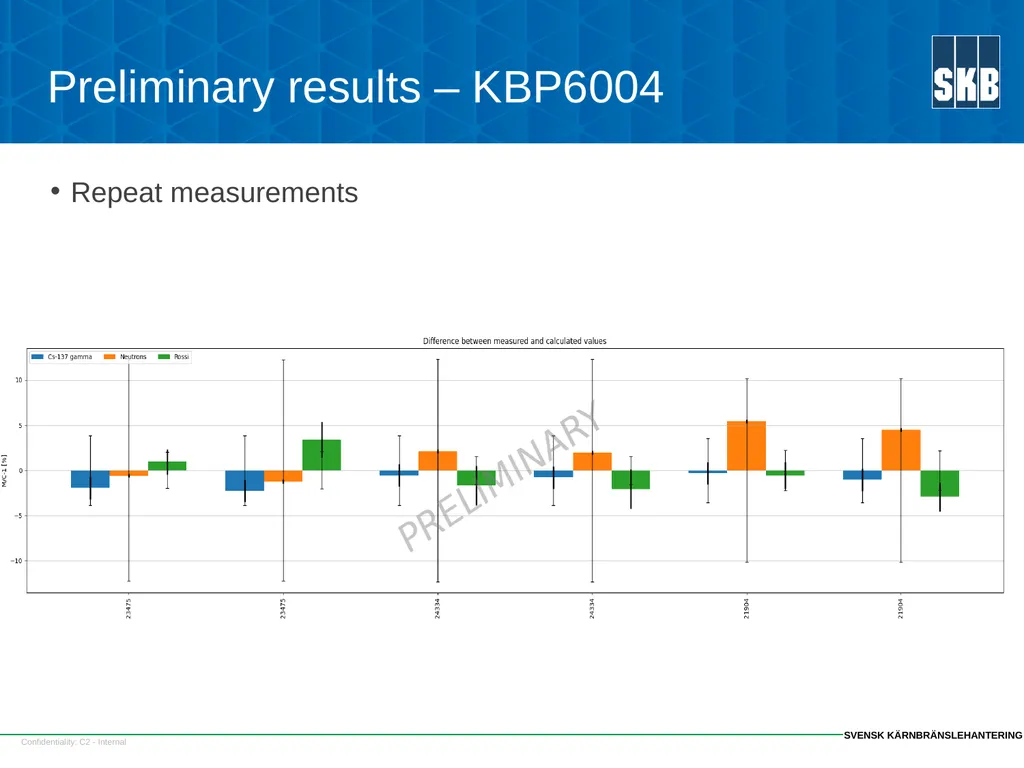
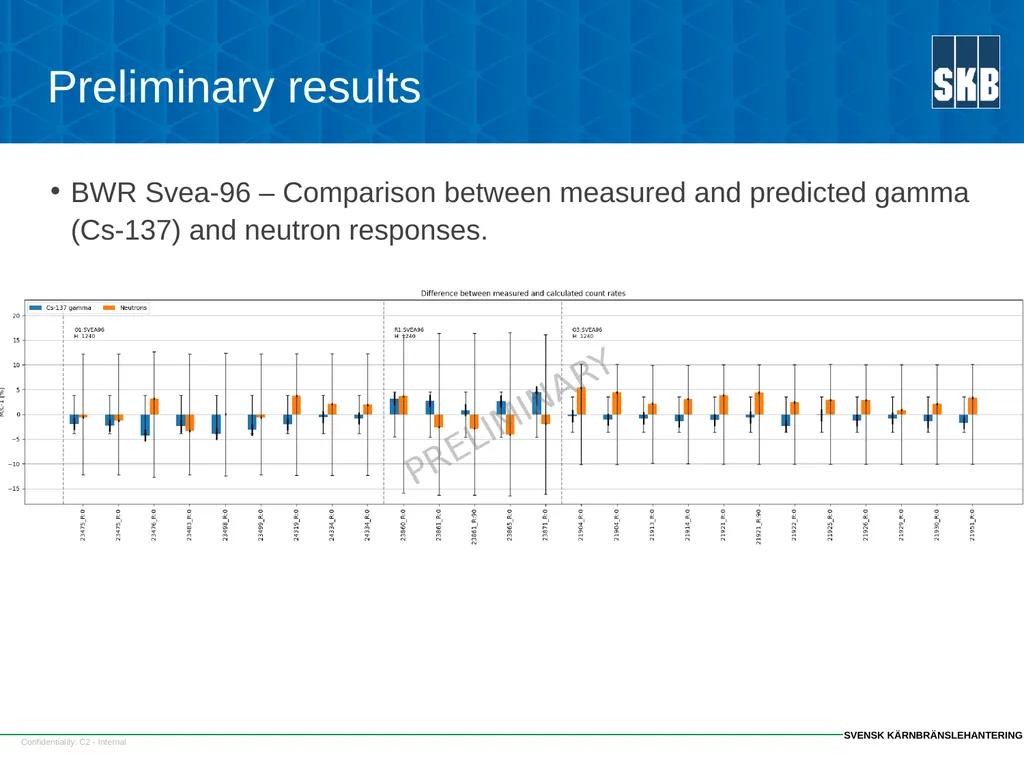
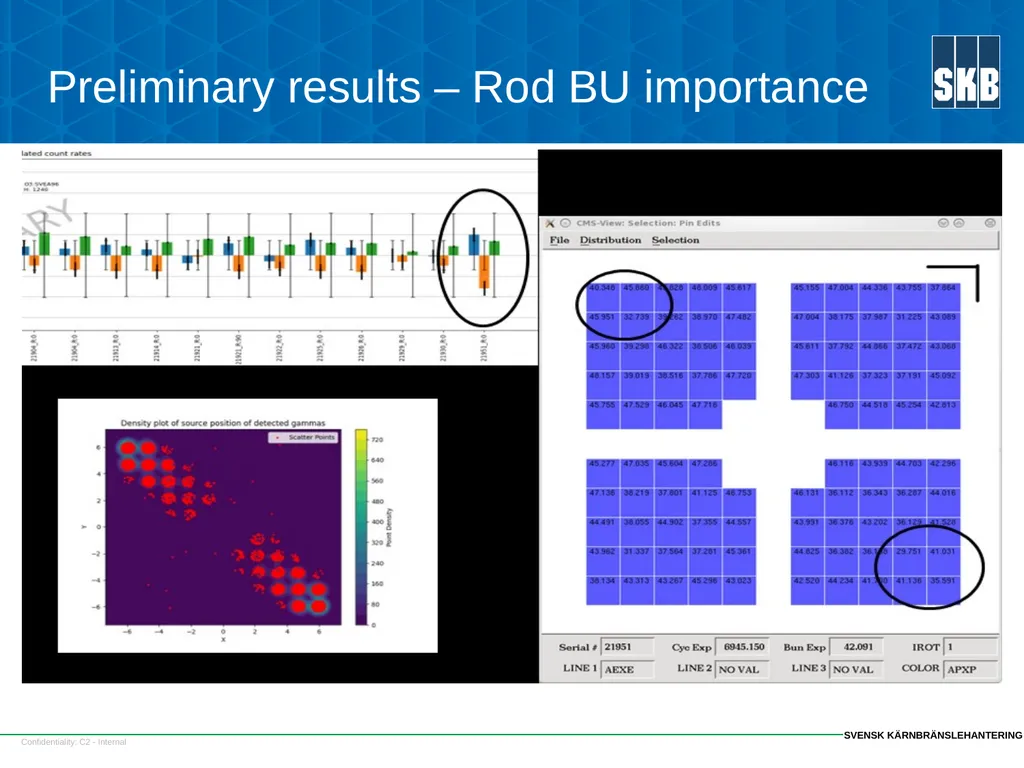
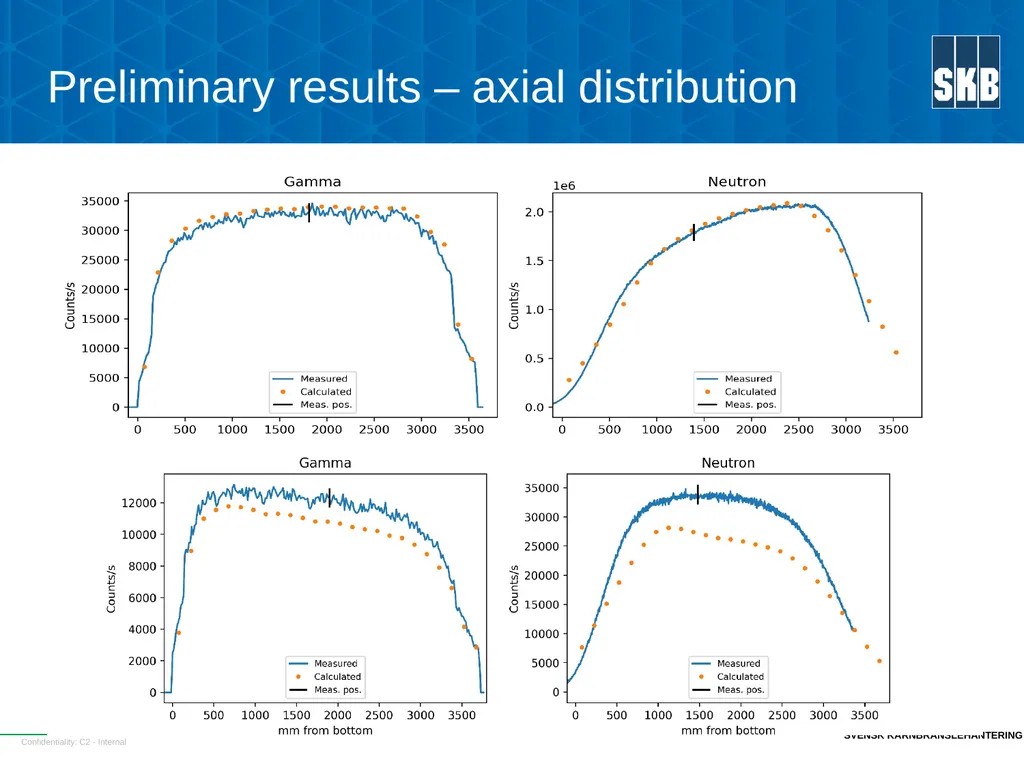
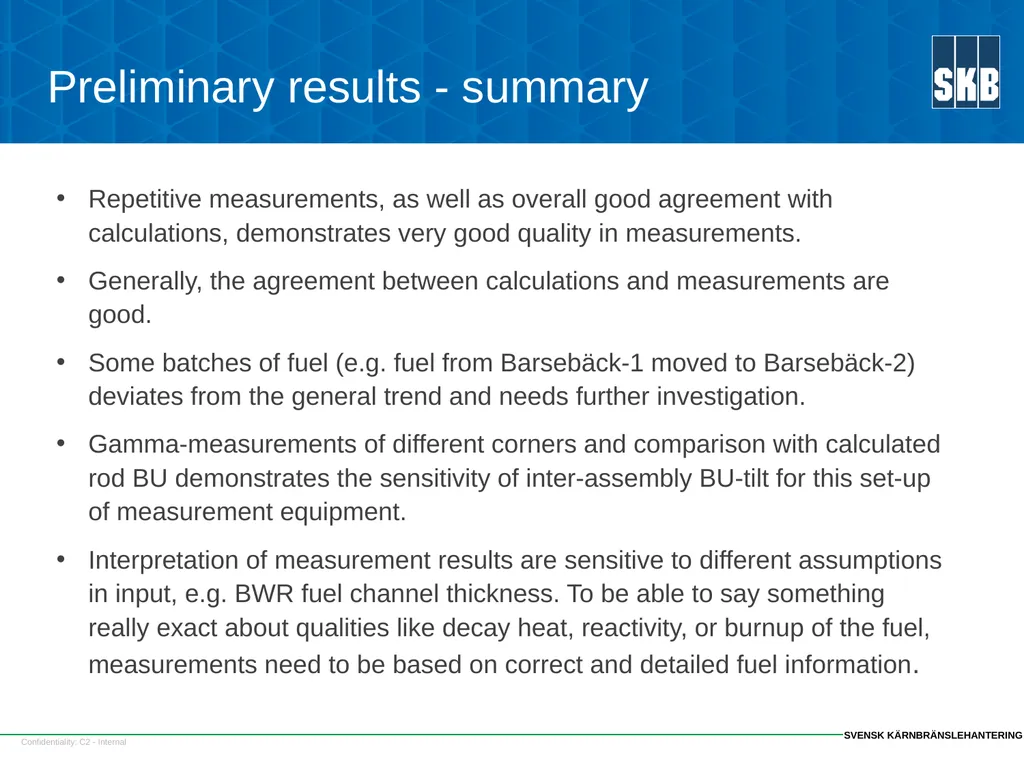
Preliminary results - summary Repetitive measurements, as well as overall good agreement with calculations, demonstrates very good quality in measurements.
Generally, the agreement between calculations and measurements are good.
Some batches of fuel (e.g. fuel from Barsebäck-1 moved to Barsebäck-2) deviates from the general trend and needs further investigation.
Gamma-measurements of different corners and comparison with calculated rod BU demonstrates the sensitivity of inter-assembly BU-tilt for this set-up of measurement equipment.
Interpretation of measurement results are sensitive to different assumptions in input, e.g. BWR fuel channel thickness. To be able to say something really exact about qualities like decay heat, reactivity, or burnup of the fuel, measurements need to be based on correct and detailed fuel information.<br>
18
Calorimetry project in cooperation with EPRI<br>
19
Calorimetry project in cooperation with EPRI – Example of results<br>
20
More than 40 000 FA from 12+1 NPPs, including for the majority of FA
Detailed operational history from the power plants core follow
Decay Heat Calculations with SNF based on core follow
Detailed geometry and material specification for each reload
Lot of efforts put into QA to enhance the data quality
QA-processes in place to secure high quality of all data put into the database
Good quality of data records necessary to evaluate SFC-methods Sabis project - SKB Database - Plutoweb<br>