04
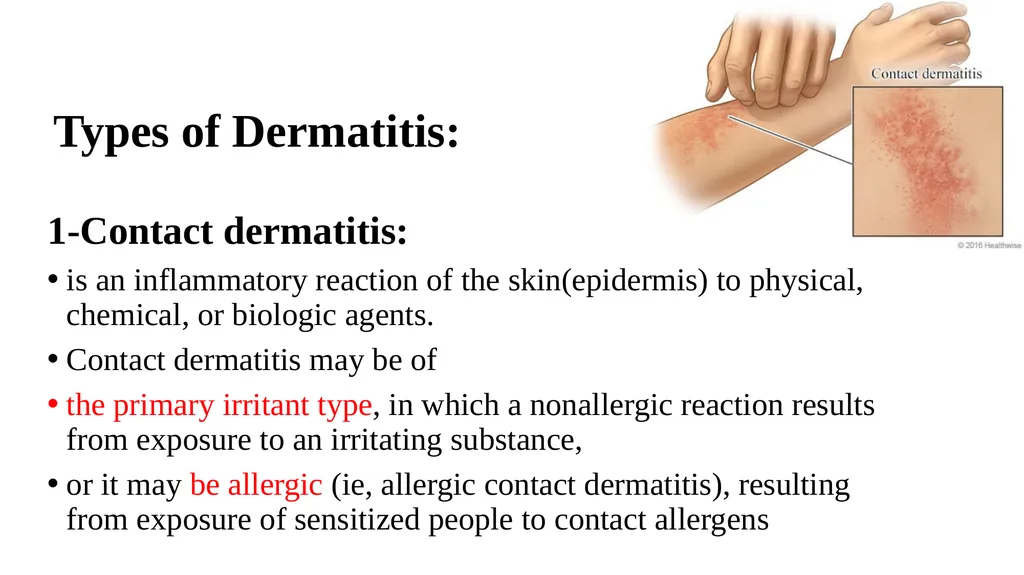
Types of Dermatitis: 1-Contact dermatitis:
is an inflammatory reaction of the skin(epidermis) to physical, chemical, or biologic agents.
Contact dermatitis may be of
the primary irritant type, in which a nonallergic reaction results from exposure to an irritating substance,
or it may be allergic (ie, allergic contact dermatitis), resulting from exposure of sensitized people to contact allergens<br>
05
Clinical Manifestations ACUTE PHASE
Erythema
Itching
Burning sensation over the
affected area
Edema
Formation of vesicles
Oozing from the wound SUB ACUTE PHASE
Crusting
Drying
Fissuring ( formation of fissures)
Skin peeling CHRONIC PHASE
Hyper/hypo pigmentation
Skin become thick
Secondary infection will occur<br>
06
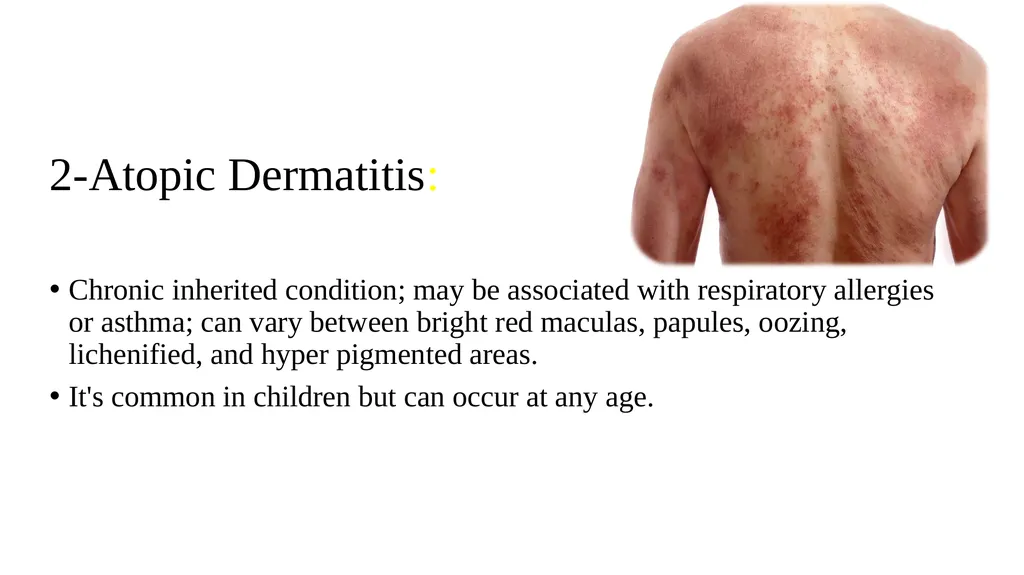
2-Atopic Dermatitis: Chronic inherited condition; may be associated with respiratory allergies or asthma; can vary between bright red maculas, papules, oozing, lichenified, and hyper pigmented areas.
It's common in children but can occur at any age.<br>
07
Clinical Manifestations Dry skin
Itching, which may be severe, especially at night
Red to brownish-gray patches, especially on the hands, feet, ankles, wrists, neck, upper chest, eyelids, inside the bend of the elbows and knees, and in infants, the face and scalp
Small, raised bumps, which may leak fluid and crust over when scratched
Thickened, cracked, scaly skin
Raw, sensitive, swollen skin from scratching<br>
08
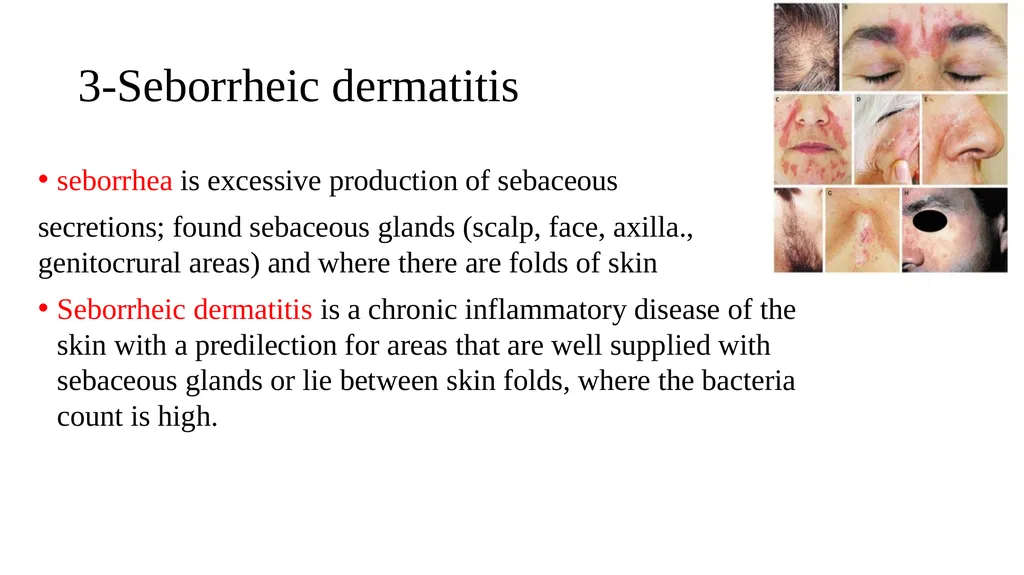
3-Seborrheic dermatitis seborrhea is excessive production of sebaceous
secretions; found sebaceous glands (scalp, face, axilla., genitocrural areas) and where there are folds of skin
Seborrheic dermatitis is a chronic inflammatory disease of the skin with a predilection for areas that are well supplied with sebaceous glands or lie between skin folds, where the bacteria count is high.<br>
09
Clinical Manifestations Two forms of seborrheic dermatoses can occur,
The oily form appears moist or greasy.
There may be patches of sallow, greasy skin, with or without scaling, and slight erythema (ie, redness),
The dry form, consisting of flaky desquamation of the scalp with a profuse amount of fine, powdery scales, is commonly called dandruff.<br>
10
4-Exfoliative Dermatitis is a serious condition characterized by progressive inflammation in which erythema and scaling occur in a more or less generalized distribution.
There is a profound loss of stratum corneum (ie, outermost layer of the skin), which causes capillary leakage, hypoproteinemia, and negative nitrogen balance.
Because of widespread dilation of cutaneous vessels, large amounts of body heat are lost,
exfoliative dermatitis has a marked effect on the entire body.<br>
11
Clinical Manifestations generalized erythematous eruption accompanied by fever, malaise, and occasionally gastrointestinal symptoms.
The skin color changes from pink to dark red.
the characteristic exfoliation (ie, scaling) begins, usually in the form of thin flakes
Hair loss may accompany this disorder.
The systemic effects include high-output heart failure, intestinal disturbances, breast enlargement, and temperature disturbances.<br>
12
Causes and Risk factors soaps, detergents, scouring compounds, and industrial chemicals.
genetic predisposition.
Hormones,
nutritional status,
infection
reaction to many medications, including penicillin
emotional stress influence its course.
extremes of heat and cold and a preexisting skin disease<br>
13
Medical Management The patient may be hospitalized and placed on bed rest.
All medications that may be implicated are discontinued.
A comfortable room temperature should be maintained
Fluid and electrolyte balance must be maintained because there is considerable water and protein loss from the skin surface.
Plasma volume expanders may be indicated.
Medicated prescribed (systemic corticosteroids may be prescribed)
dandruff treatment by frequent shampooing with medicated<br>
14
Nursing Management A detailed history is obtained
advised the patient to avoid external irritants, excessive heat, and perspiration; rubbing and scratching prolong the disorder.
air the skin and keep skin folds clean and dry.
Instructions for using medicated shampoos are reinforced
Cool, wet dressings also are applied over small areas of vesicular dermatitis
A thin layer of cream or ointment containing a corticosteroid then may be used.<br>
15
NSG.1�impaired skin integrity related contact with irritants or allergens Assess skin, noting color, moisture, texture, temperature; note erythema, edema, tenderness.
Assess skin for lesions.
Inquire about recent changes in use of products such as soaps, laundry products, cosmetics.
Bathe or shower using lukewarm water and mild soap or non soap cleansers.
After bathing, allow the skin to air dry or gently pat the skin dry. Avoid rubbing or brisk drying.
Apply topical lubricants immediately after bathing.
Apply topical steroid creams or ointments.
Encourage the patient to avoid aggravating factors.<br>
16
NSG.2�disturbed body image related visible skin lesions Assess the patient’s perception of changed appearance.
Assess the patient’s behavior related to appearance.
Allow patients to verbalize feelings regarding their skin condition.
Assist patients in identifying ways to enhance their appearance.<br>