Slides by Kevin Pusich and Cody Kesting with
Description: Slides by Kevin Pusich and Cody Kesting with material from Erin Peach and Nick Carney, Vinod Rathnam, Alex Mariakakis, Krysta Yousoufian, Mike Ernst, Kellen Donohue Section 4: Graphs and Testing Graphs (HW 5) JUnit Testing Test Script
Related Topics
Download Presentation
"Slides by Kevin Pusich and Cody Kesting with" is the property of its rightful owner. Permission is granted to download and print the materials on this website for personal, non-commercial use only, and to display it on your personal computer provided you do not modify the materials and that you retain all copyright notices contained in the materials. By downloading content from our website, you accept the terms of this agreement.
Presentation Transcript
slide1. Slides by Kevin Pusich and Cody Kesting
with material from Erin Peach and Nick Carney, Vinod Rathnam, Alex Mariakakis, Krysta Yousoufian, Mike Ernst, Kellen Donohue Section 4:Graphs and Testing<br>
slide2. Graphs (HW 5)
JUnit Testing
Test Script Language
JavaDoc Agenda<br>
slide3. Graphs Node
Edge<br>
slide4. Graphs Node
data item in a graph
Edge
connection between two nodes<br>
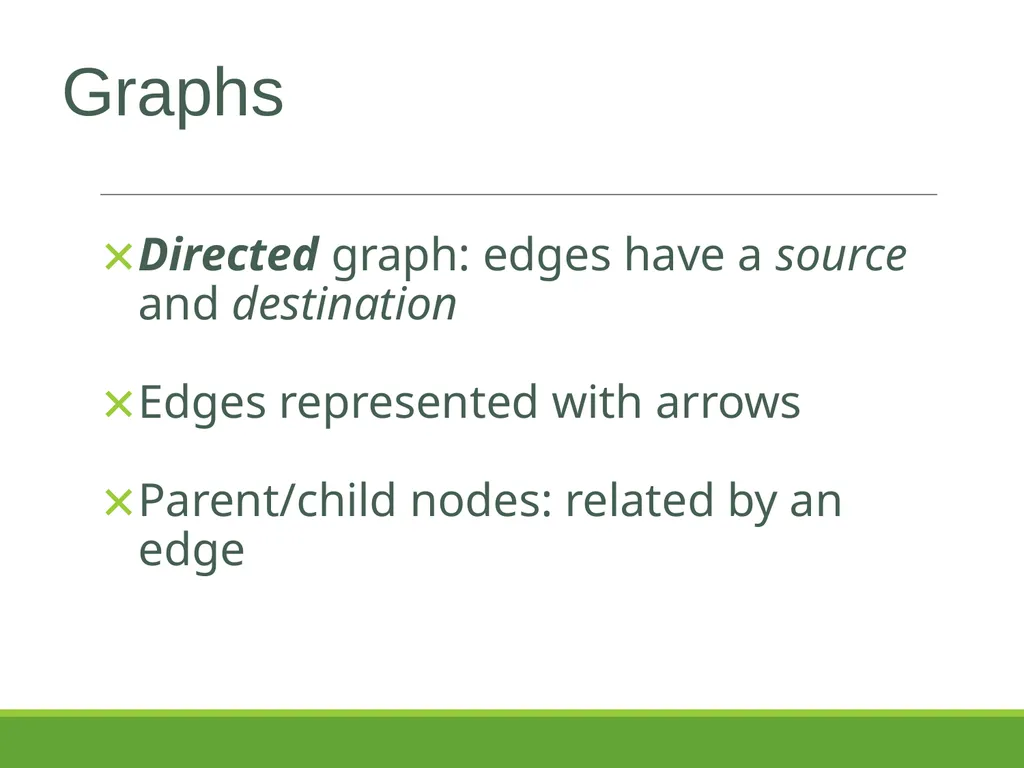
slide5. Graphs Directed graph: edges have a source and destination
Edges represented with arrows
Parent/child nodes: related by an edge<br>
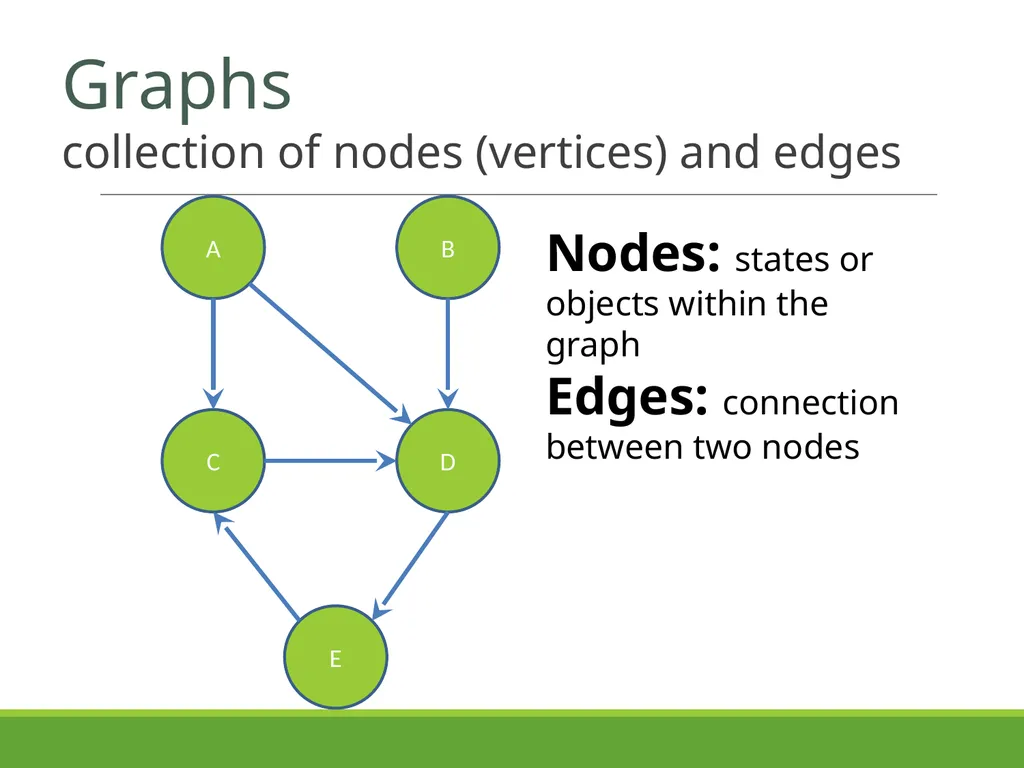
slide6. Graphscollection of nodes (vertices) and edges A B C D E Nodes: states or objects within the graph
Edges: connection between two nodes<br>
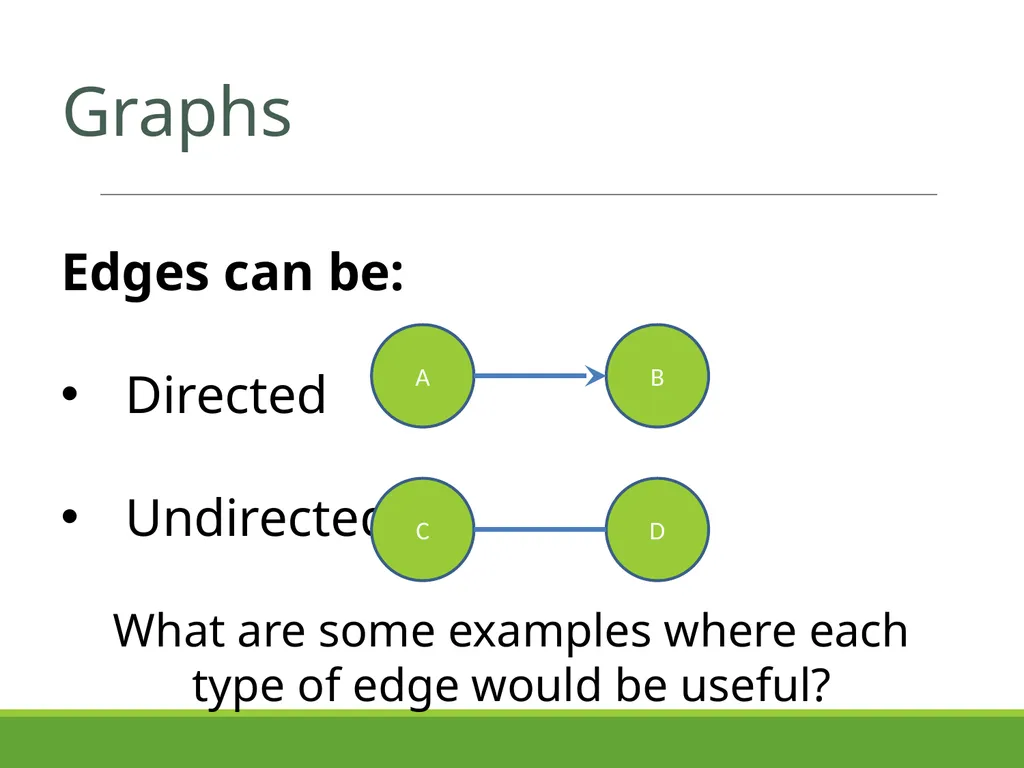
slide7. Edges can be:
Directed
Undirected
What are some examples where each type of edge would be useful? Graphs A B C D<br>
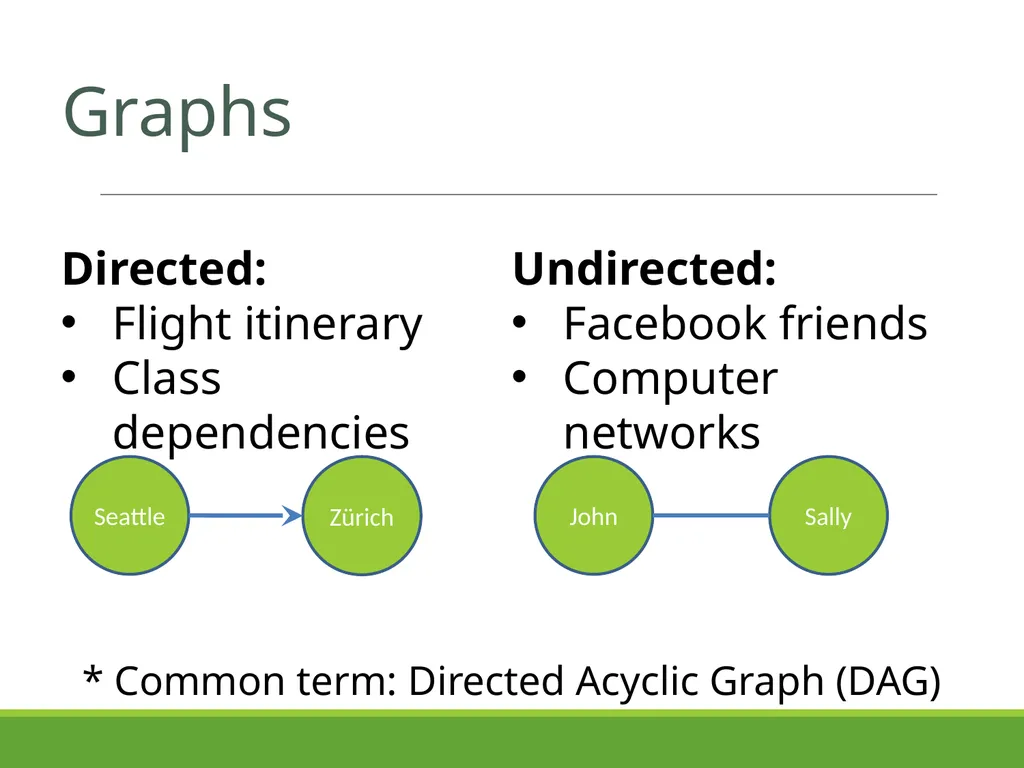
slide8. Directed:
Flight itinerary
Class dependencies
Undirected:
Facebook friends
Computer networks Graphs Seattle Zürich John Sally * Common term: Directed Acyclic Graph (DAG)<br>
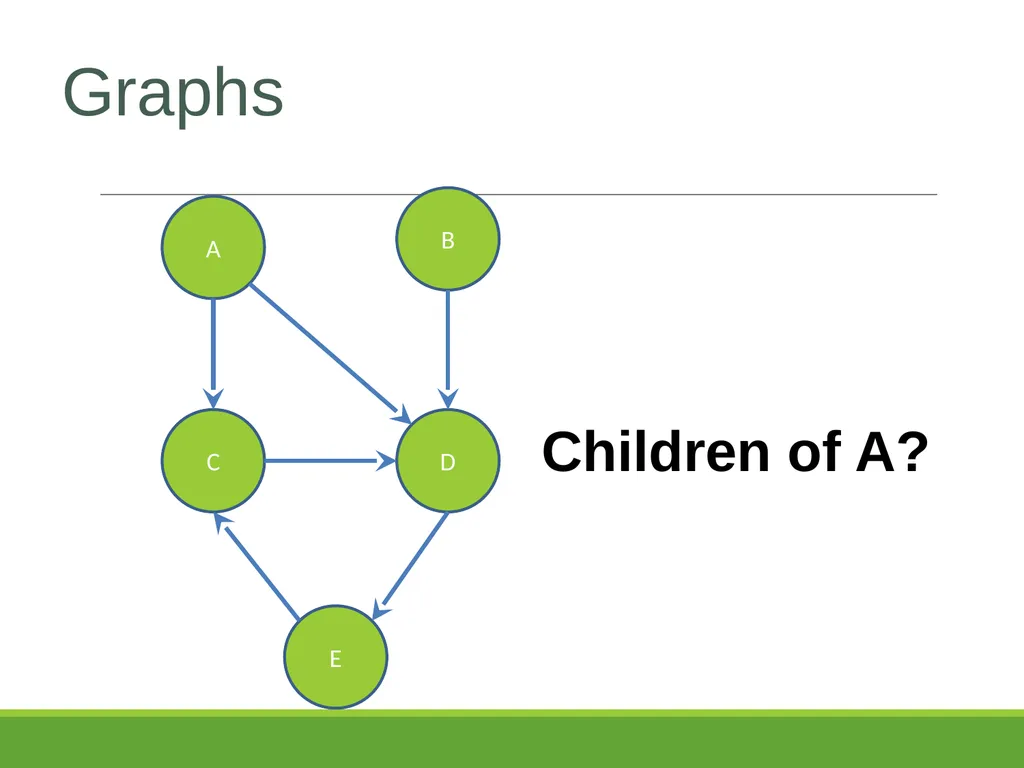
slide9. Graphs A B C D E Children of A?<br>
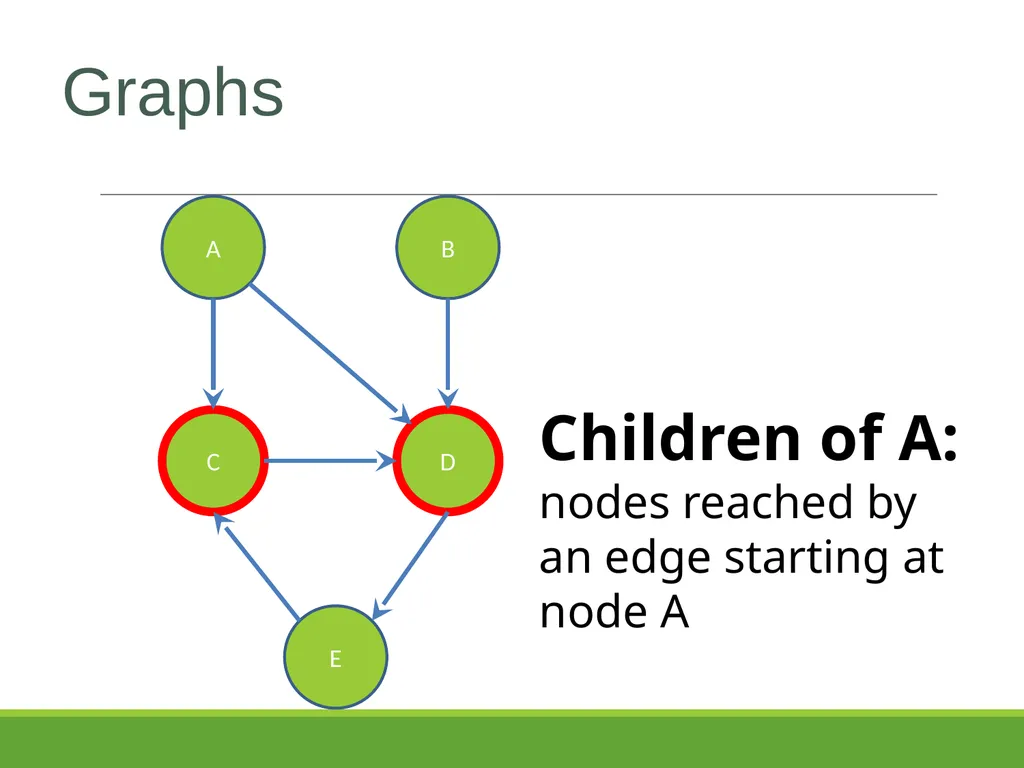
slide10. Graphs A B C D E Children of A:
nodes reached by an edge starting at node A<br>
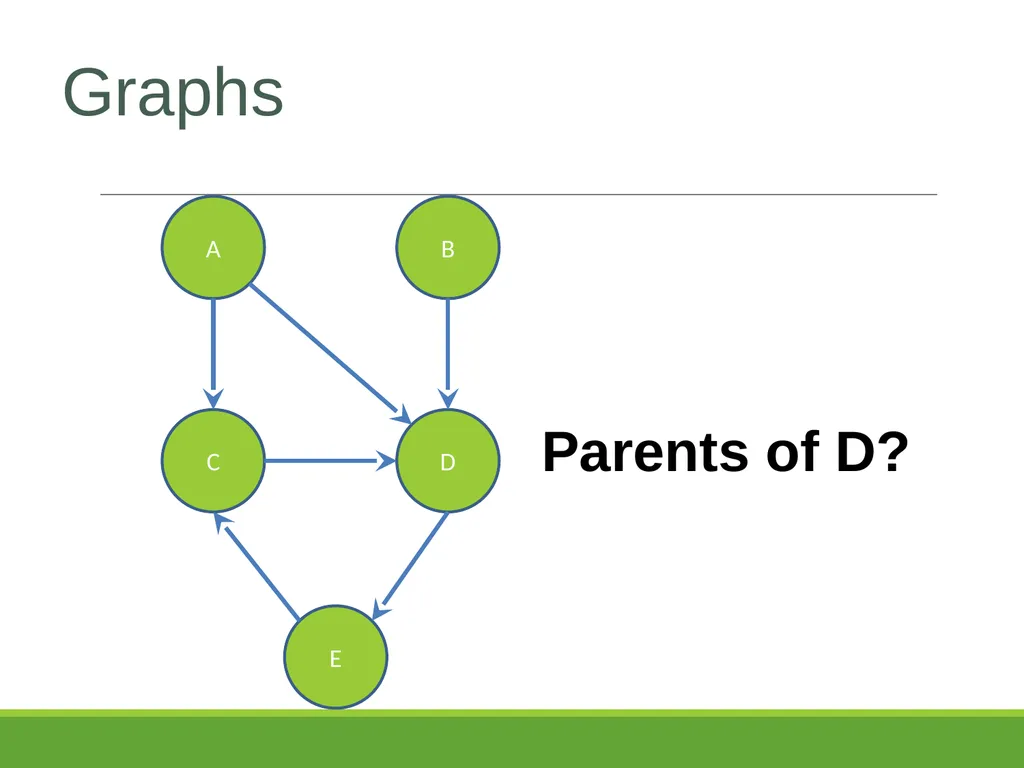
slide11. Graphs A B C D E Parents of D?<br>
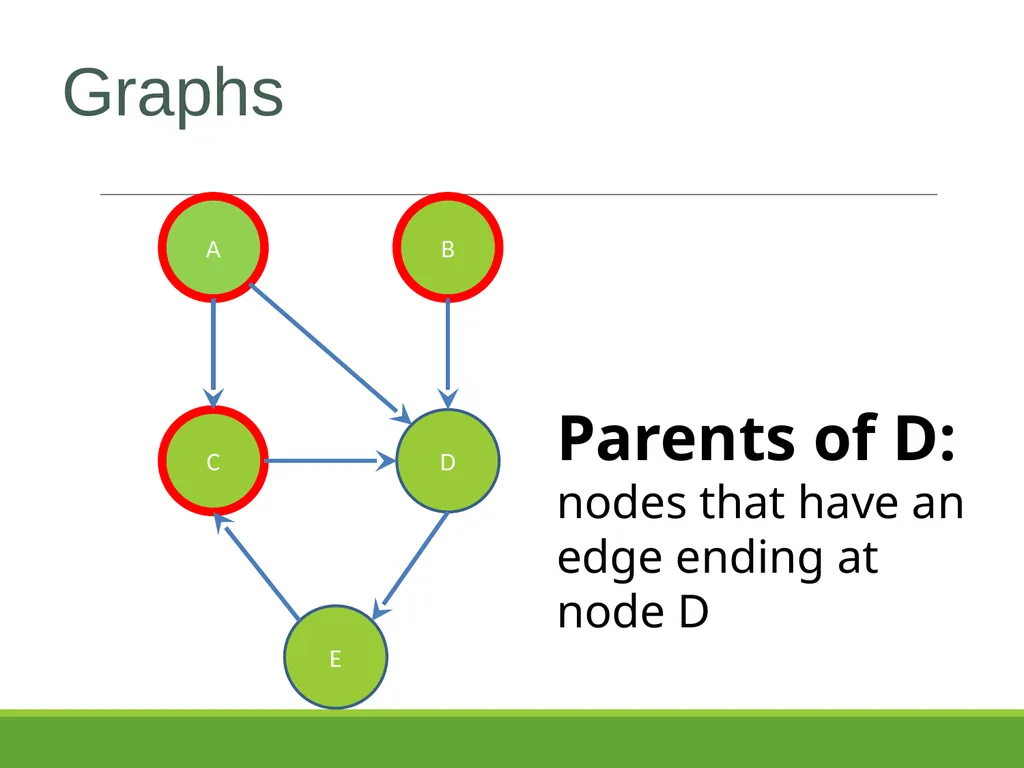
slide12. Graphs A B C D E Parents of D:
nodes that have an edge ending at node D<br>
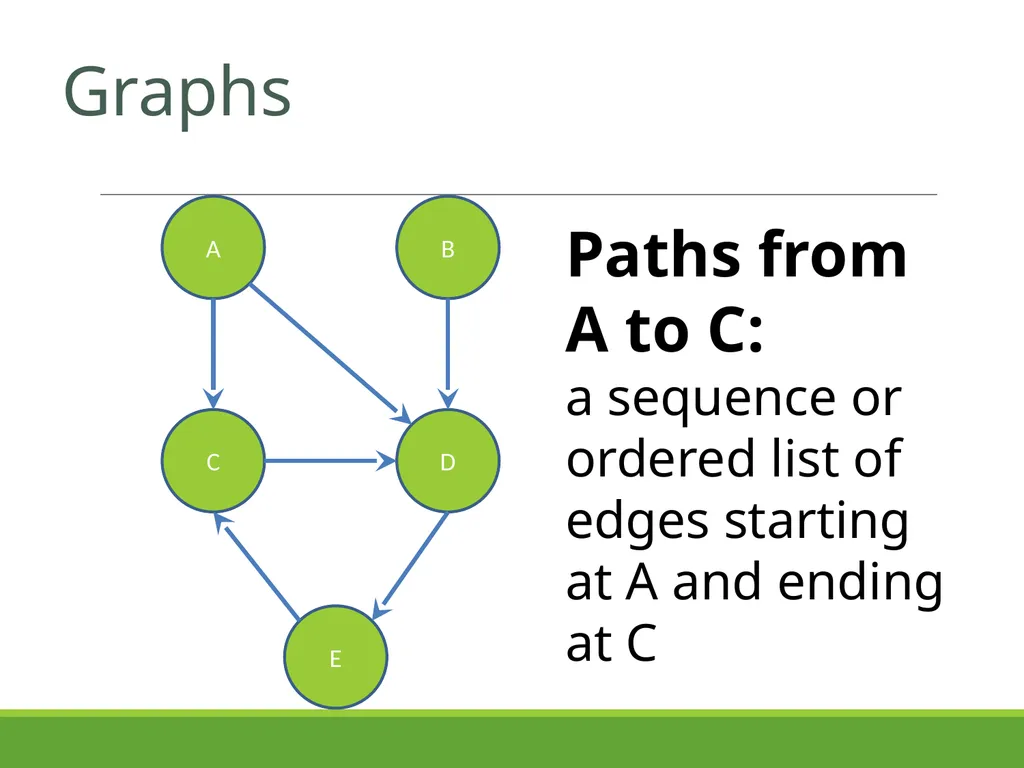
slide13. Graphs A B C D E Paths from
A to C:
a sequence or ordered list of edges starting at A and ending at C<br>
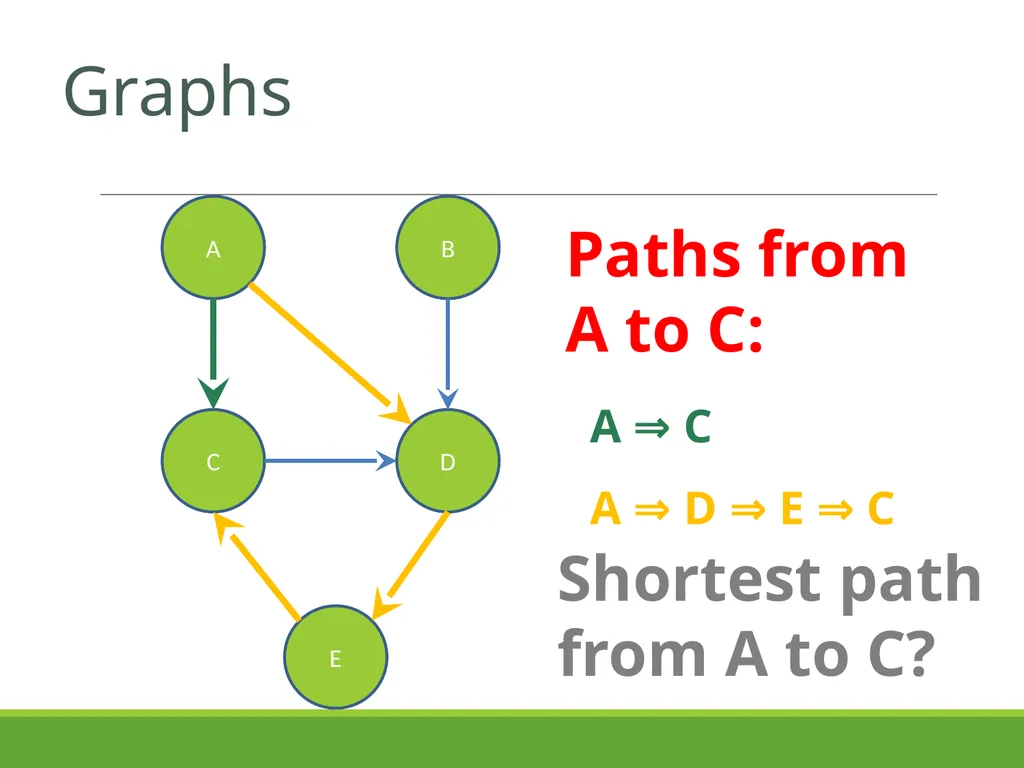
slide14. Graphs A B C D E Paths from
A to C: A ⇒ C
A ⇒ D ⇒ E ⇒ C Shortest path
from A to C?<br>
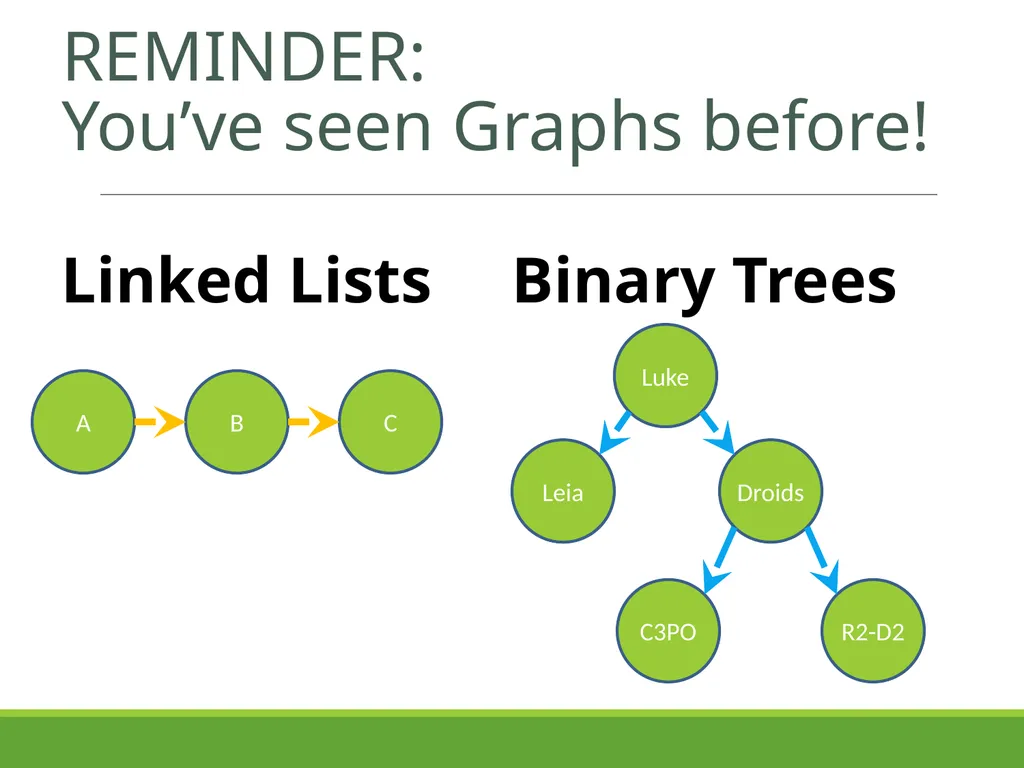
slide15. REMINDER:You’ve seen Graphs before! Luke Linked Lists
Binary Trees A B C Leia Droids C3PO R2-D2<br>
slide16. Before we move on... Read the wikipedia article in the spec!
(It has implementation hints!)<br>
slide17. Testing<br>
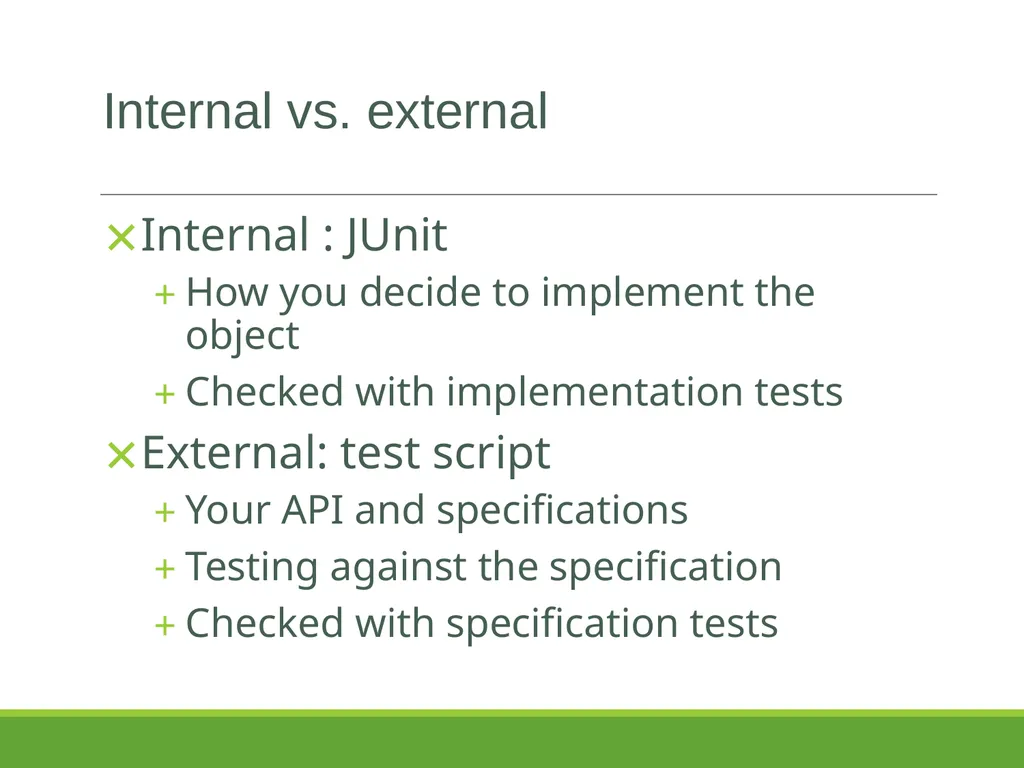
slide18. Internal vs. external Internal : JUnit
How you decide to implement the object
Checked with implementation tests
External: test script
Your API and specifications
Testing against the specification
Checked with specification tests<br>
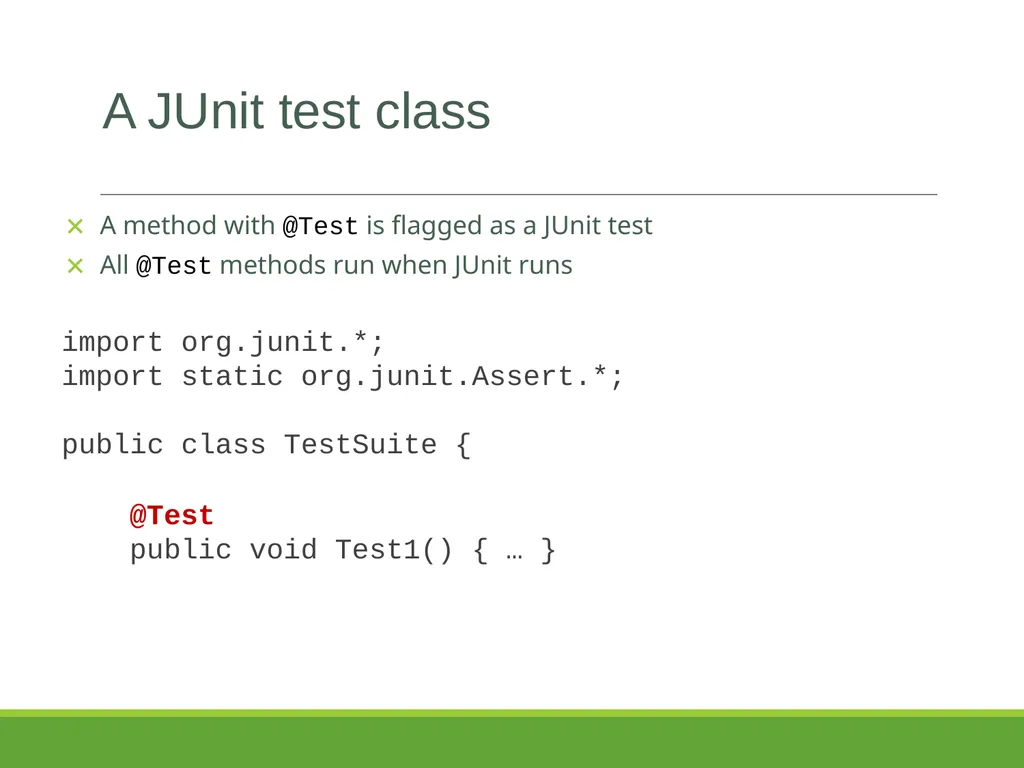
slide19. A JUnit test class A method with @Test is flagged as a JUnit test
All @Test methods run when JUnit runs
import org.junit.*;
import static org.junit.Assert.*;
public class TestSuite {
@Test
public void Test1() { … }<br>
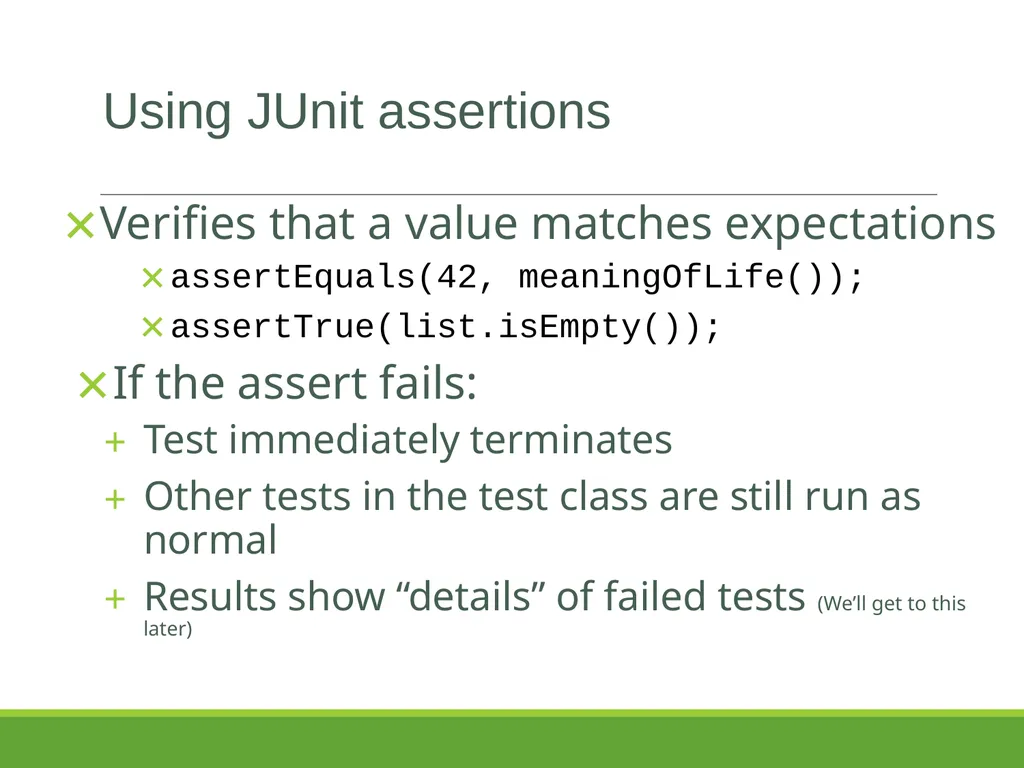
slide20. Using JUnit assertions Verifies that a value matches expectations
assertEquals(42, meaningOfLife());
assertTrue(list.isEmpty());
If the assert fails:
Test immediately terminates
Other tests in the test class are still run as normal
Results show “details” of failed tests (We’ll get to this later)<br>
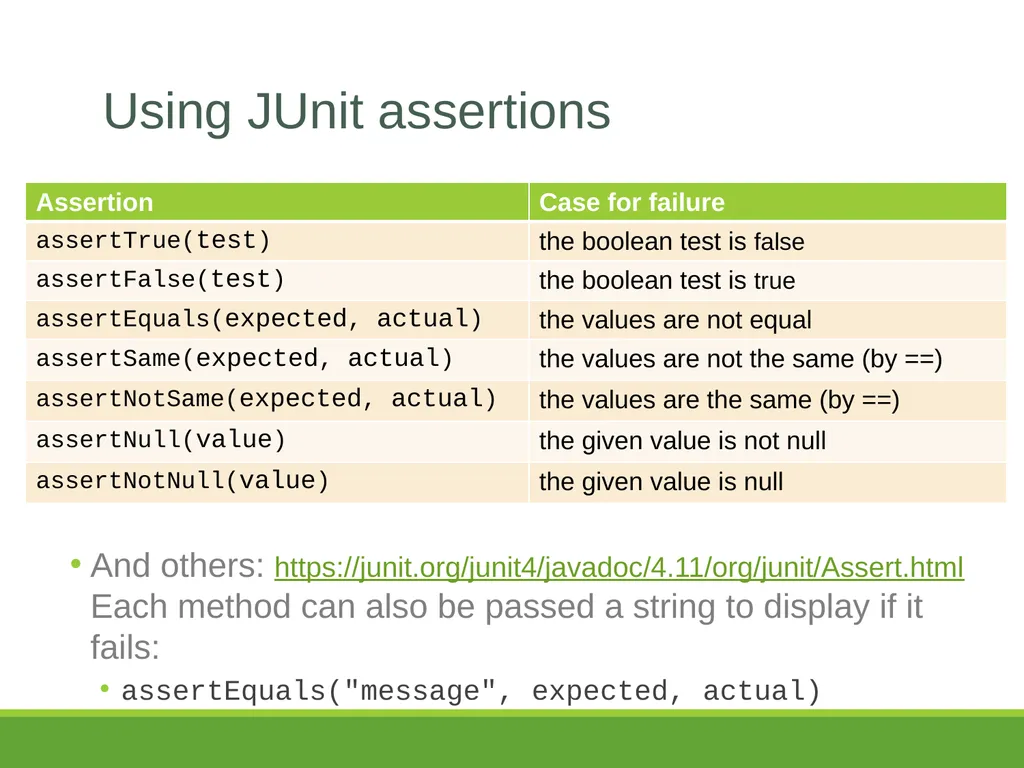
slide21. Using JUnit assertions And others: https://junit.org/junit4/javadoc/4.11/org/junit/Assert.html Each method can also be passed a string to display if it fails:
assertEquals("message", expected, actual)<br>
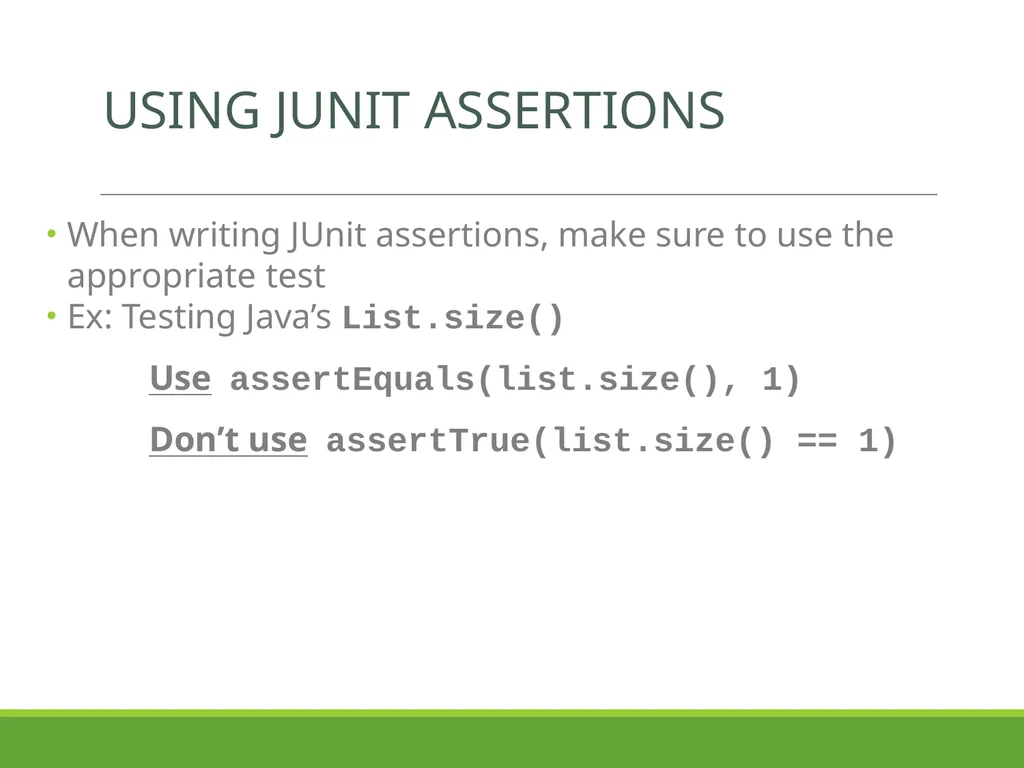
slide22. USING JUNIT ASSERTIONS When writing JUnit assertions, make sure to use the appropriate test
Ex: Testing Java’s List.size()
Use assertEquals(list.size(), 1)
Don’t use assertTrue(list.size() == 1)<br>
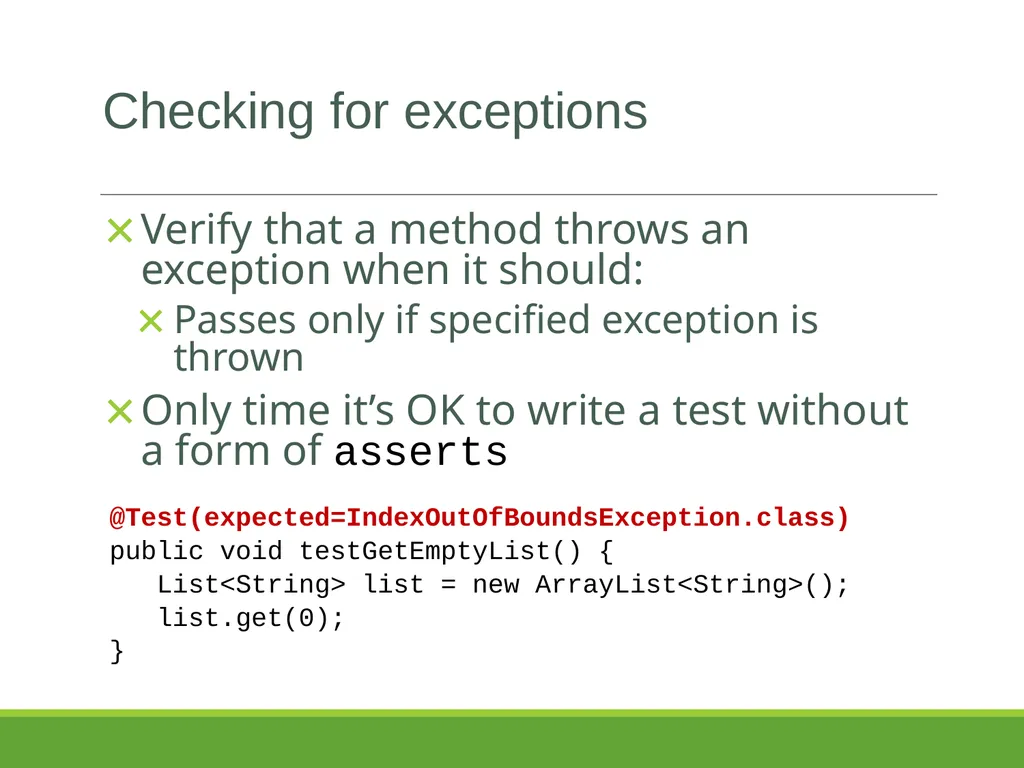
slide23. Checking for exceptions Verify that a method throws an exception when it should:
Passes only if specified exception is thrown
Only time it’s OK to write a test without a form of asserts
@Test(expected=IndexOutOfBoundsException.class)
public void testGetEmptyList() {
List<String> list = new ArrayList<String>();
list.get(0);
}<br>
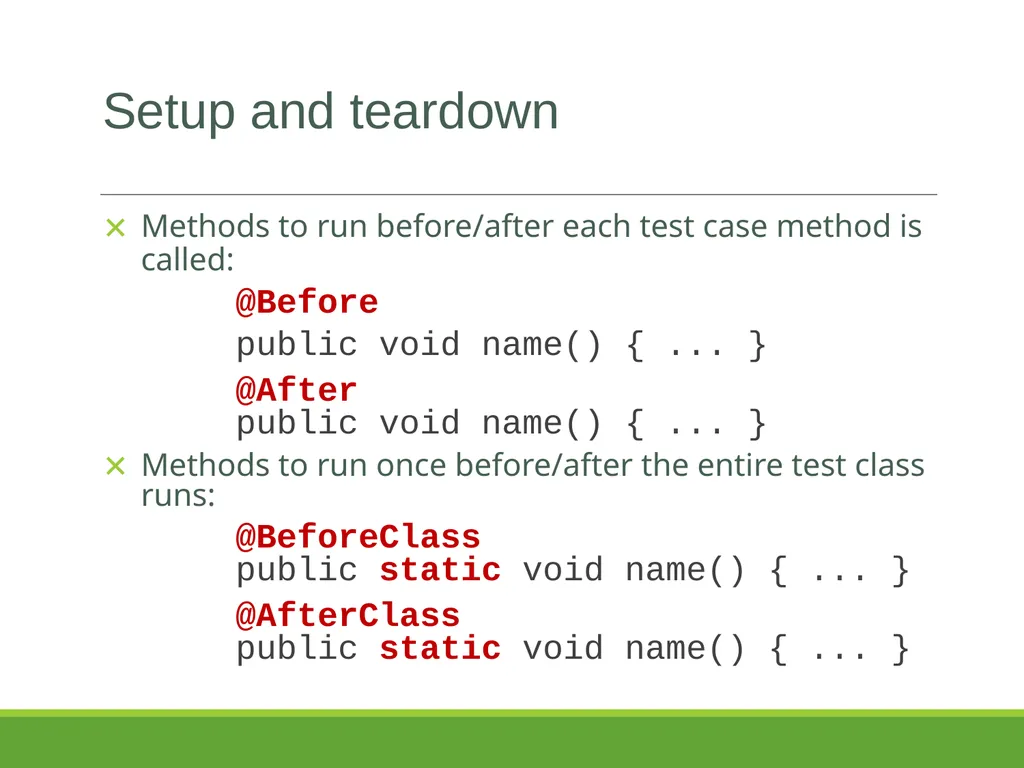
slide24. Setup and teardown Methods to run before/after each test case method is called:
@Before
public void name() { ... }
@After
public void name() { ... }
Methods to run once before/after the entire test class runs:
@BeforeClass
public static void name() { ... }
@AfterClass
public static void name() { ... }<br>
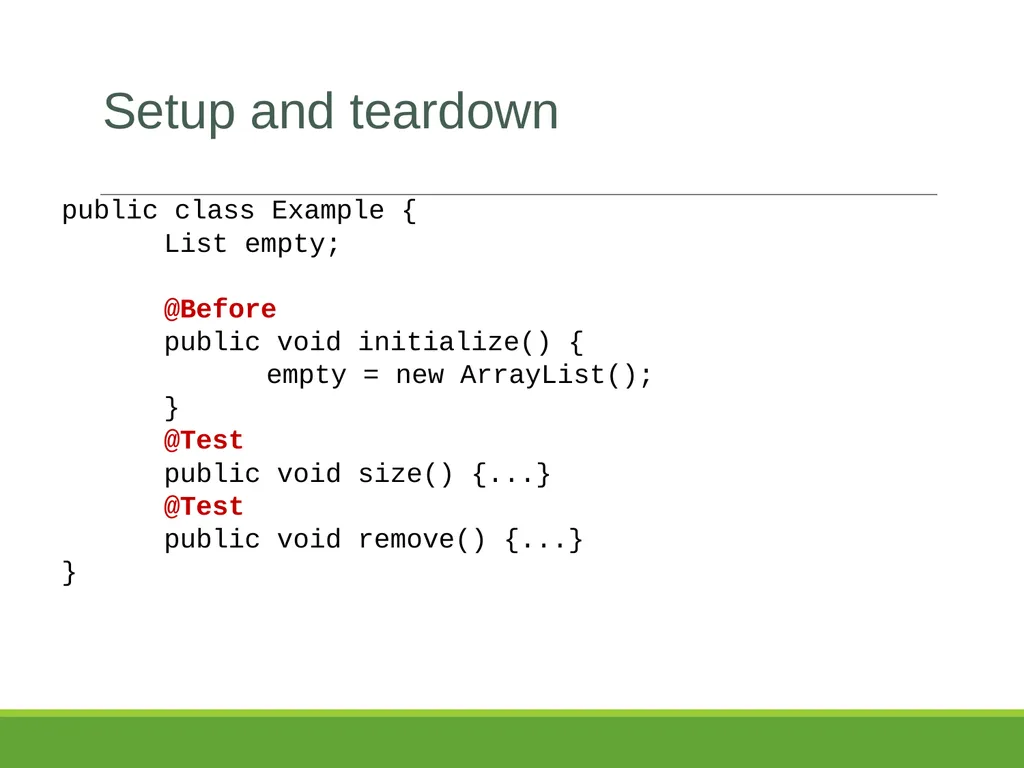
slide25. Setup and teardown public class Example {
List empty;
@Before
public void initialize() {
empty = new ArrayList();
}
@Test
public void size() {...}
@Test
public void remove() {...}
}<br>
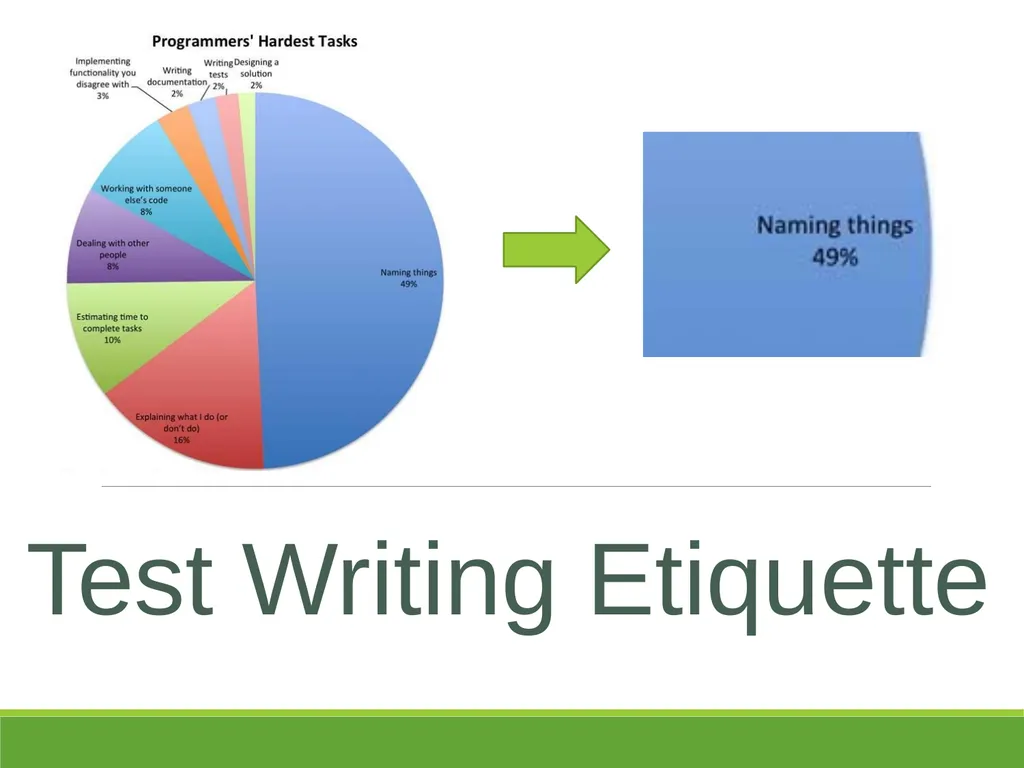
slide26. Test Writing Etiquette<br>
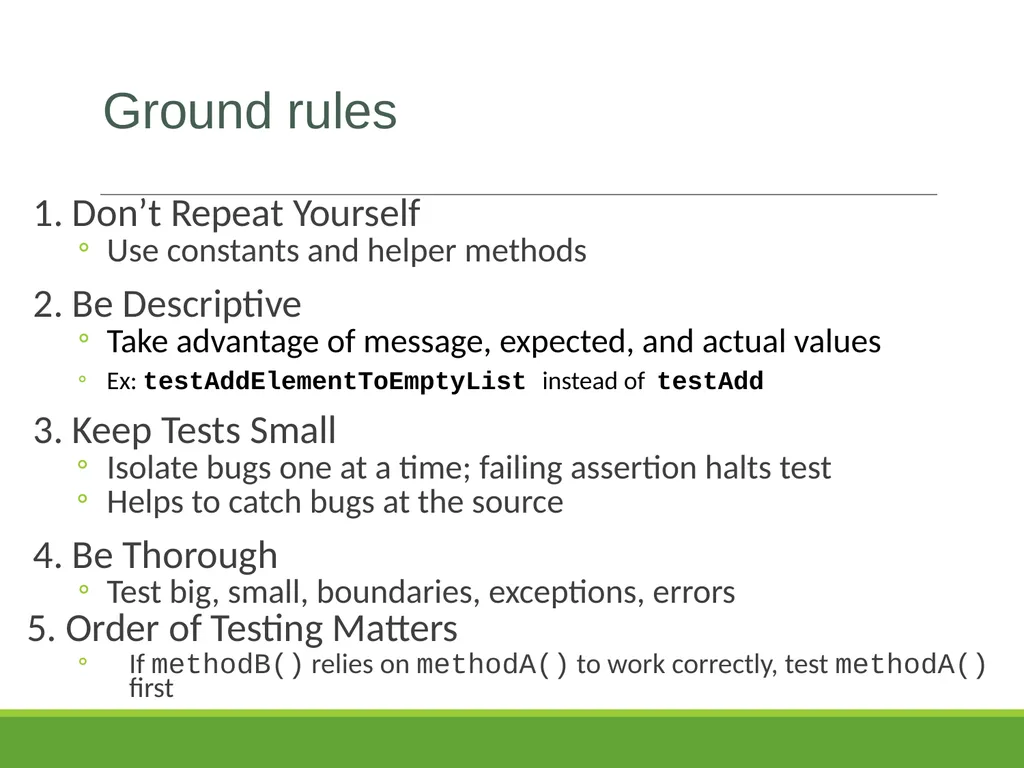
slide27. 1. Don’t Repeat Yourself
Use constants and helper methods
2. Be Descriptive
Take advantage of message, expected, and actual values
Ex: testAddElementToEmptyList instead of testAdd
3. Keep Tests Small
Isolate bugs one at a time; failing assertion halts test
Helps to catch bugs at the source
4. Be Thorough
Test big, small, boundaries, exceptions, errors
5. Order of Testing Matters
If methodB() relies on methodA() to work correctly, test methodA() first Ground rules<br>
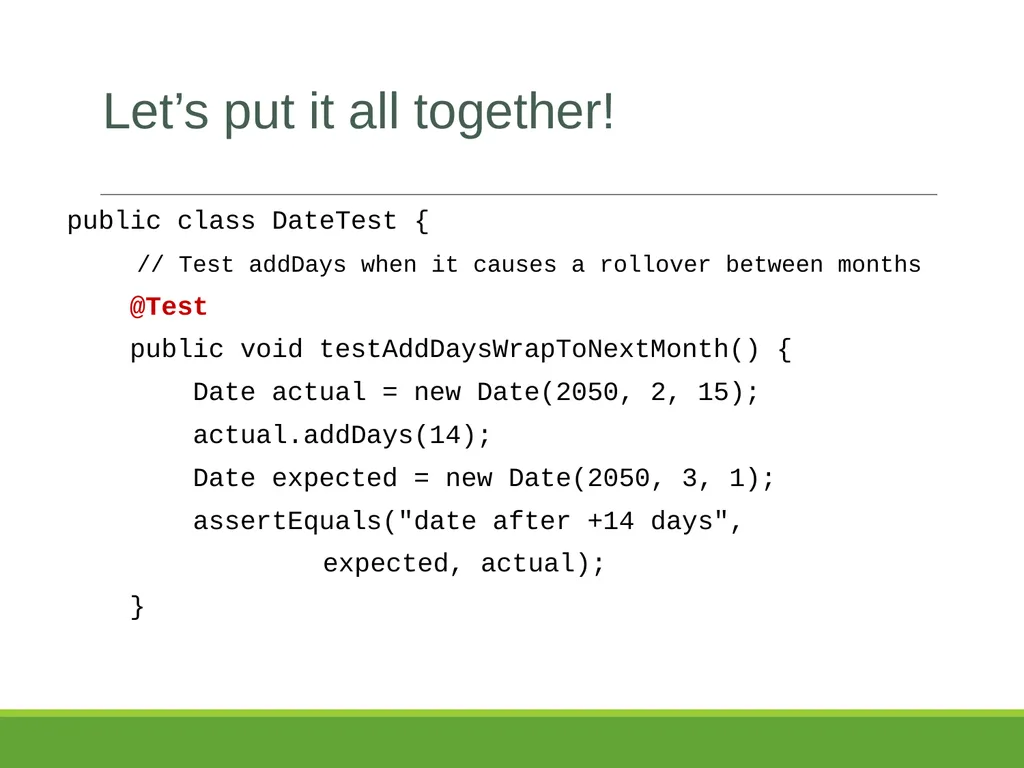
slide28. Let’s put it all together! public class DateTest {
// Test addDays when it causes a rollover between months
@Test
public void testAddDaysWrapToNextMonth() {
Date actual = new Date(2050, 2, 15);
actual.addDays(14);
Date expected = new Date(2050, 3, 1);
assertEquals("date after +14 days",
expected, actual);
}<br>
slide29. How to create JUnit test classes Right-click hw5.test -> New -> JUnit Test Case
Important: Follow naming guidelines we provide
Demo<br>
slide30. JUnit asserts vs. Java asserts We’ve just been discussing JUnit assertions so far
Tests for incorrect behavior
Java itself has assertions
Tests for invalid states public class LitterBox {
ArrayList<Kitten> kittens;
public Kitten getKitten(int n) {
assert(n >= 0);
return kittens(n);
}
}<br>
slide31. Reminder: Enabling asserts in Eclipse To enable asserts:
Go to Run -> Run Configurations… -> Arguments tab -> input -ea in VM arguments section<br>
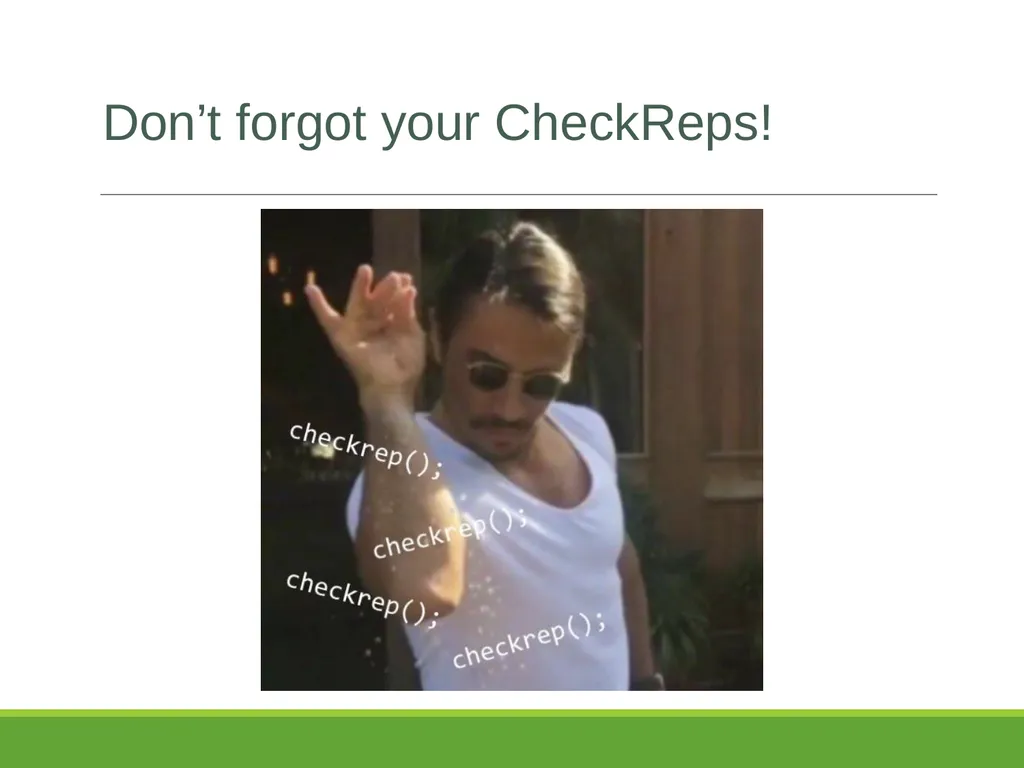
slide32. Don’t forgot your CheckReps!<br>
slide33. ant validate and staff grading will have assertions enabled
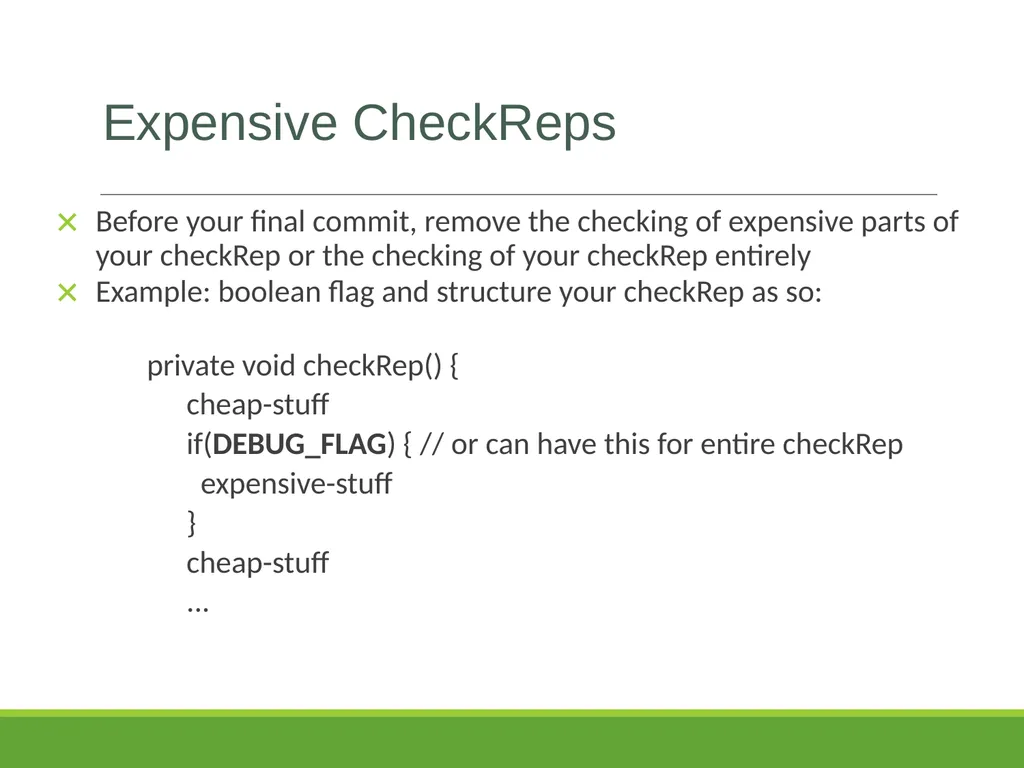
But sometimes a checkRep can be expensive
For example, looking at each node in a Graph with a large number of nodes
This could cause the grading scripts to timeout Expensive CheckReps<br>
slide34. Expensive CheckReps Before your final commit, remove the checking of expensive parts of your checkRep or the checking of your checkRep entirely
Example: boolean flag and structure your checkRep as so:
private void checkRep() {
cheap-stuff
if(DEBUG_FLAG) { // or can have this for entire checkRep
expensive-stuff
}
cheap-stuff
...<br>
slide35. External tests: Test script language<br>
slide36. Test script language Text file with one command listed per line
First word is always the command name
Remaining words are arguments
Commands will correspond to methods in your code<br>
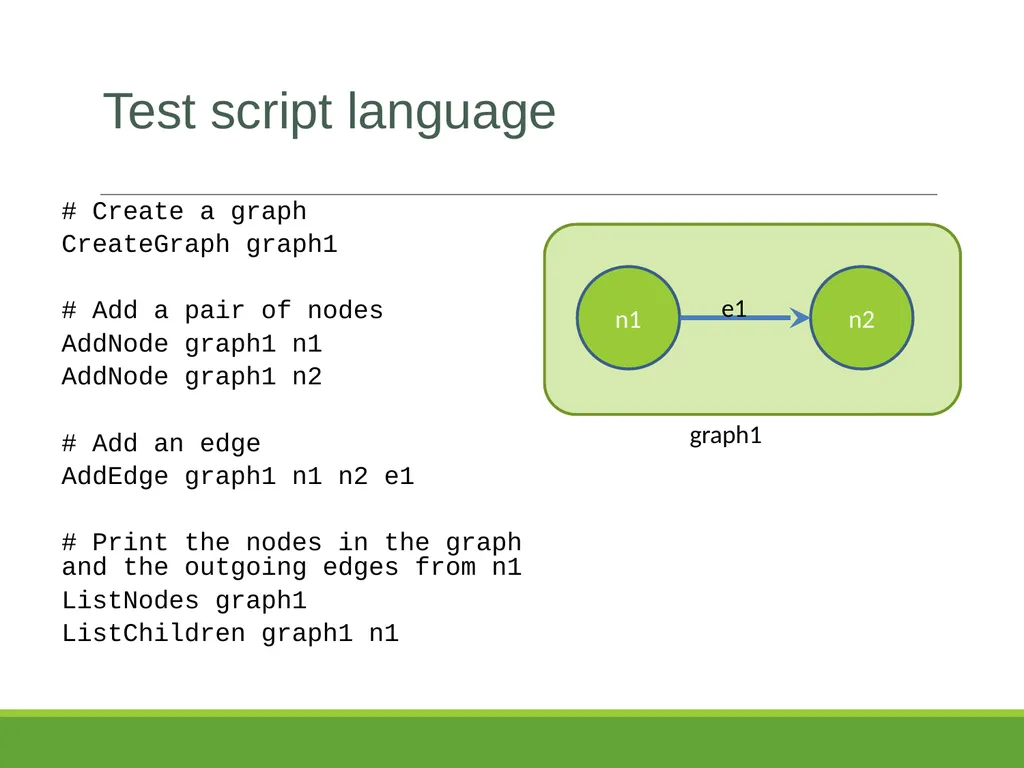
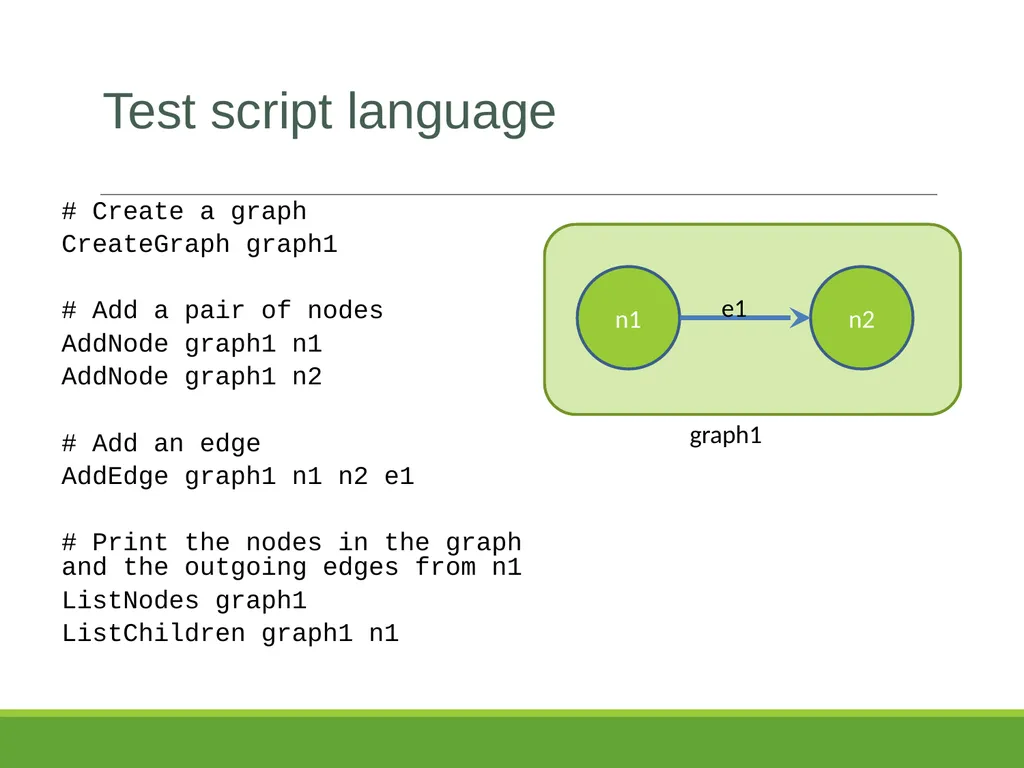
slide37. Test script language # Create a graph
CreateGraph graph1
# Add a pair of nodes
AddNode graph1 n1
AddNode graph1 n2
# Add an edge
AddEdge graph1 n1 n2 e1
# Print the nodes in the graph and the outgoing edges from n1
ListNodes graph1
ListChildren graph1 n1 n1 n2 e1 graph1<br>
slide38. Test script language # Create a graph
CreateGraph graph1
# Add a pair of nodes
AddNode graph1 n1
AddNode graph1 n2
# Add an edge
AddEdge graph1 n1 n2 e1
# Print the nodes in the graph and the outgoing edges from n1
ListNodes graph1
ListChildren graph1 n1 n1 n2 e1 graph1<br>
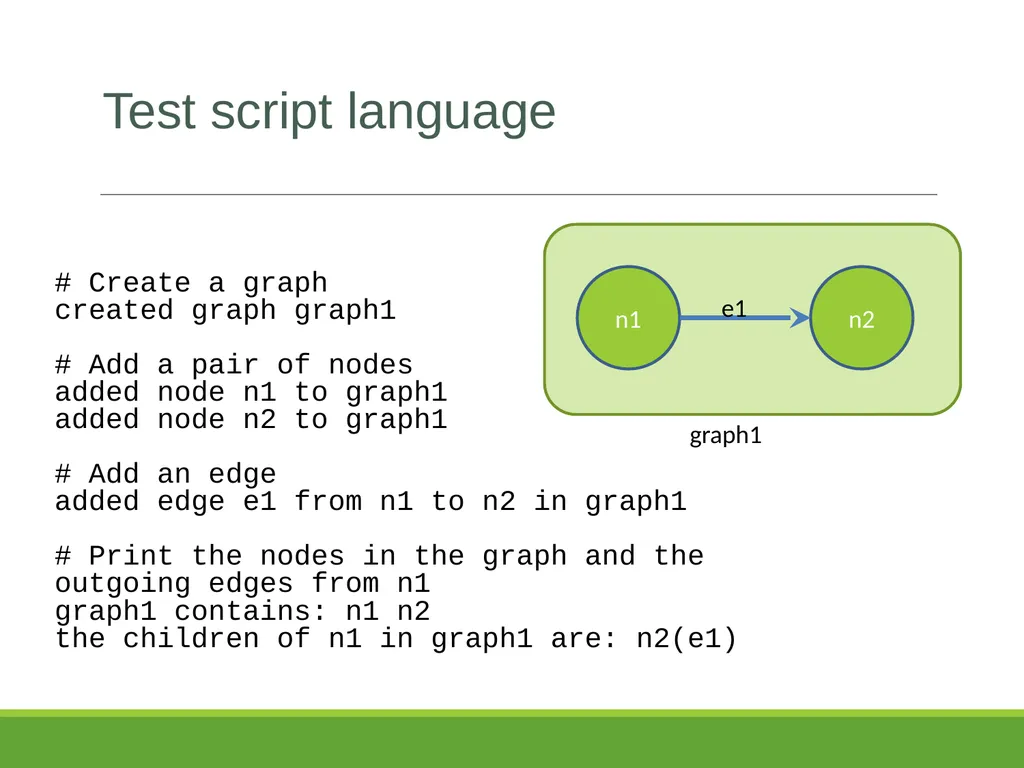
slide39. Test script language # Create a graph
created graph graph1
# Add a pair of nodes
added node n1 to graph1
added node n2 to graph1
# Add an edge
added edge e1 from n1 to n2 in graph1
# Print the nodes in the graph and the outgoing edges from n1
graph1 contains: n1 n2
the children of n1 in graph1 are: n2(e1) n1 n2 e1 graph1<br>
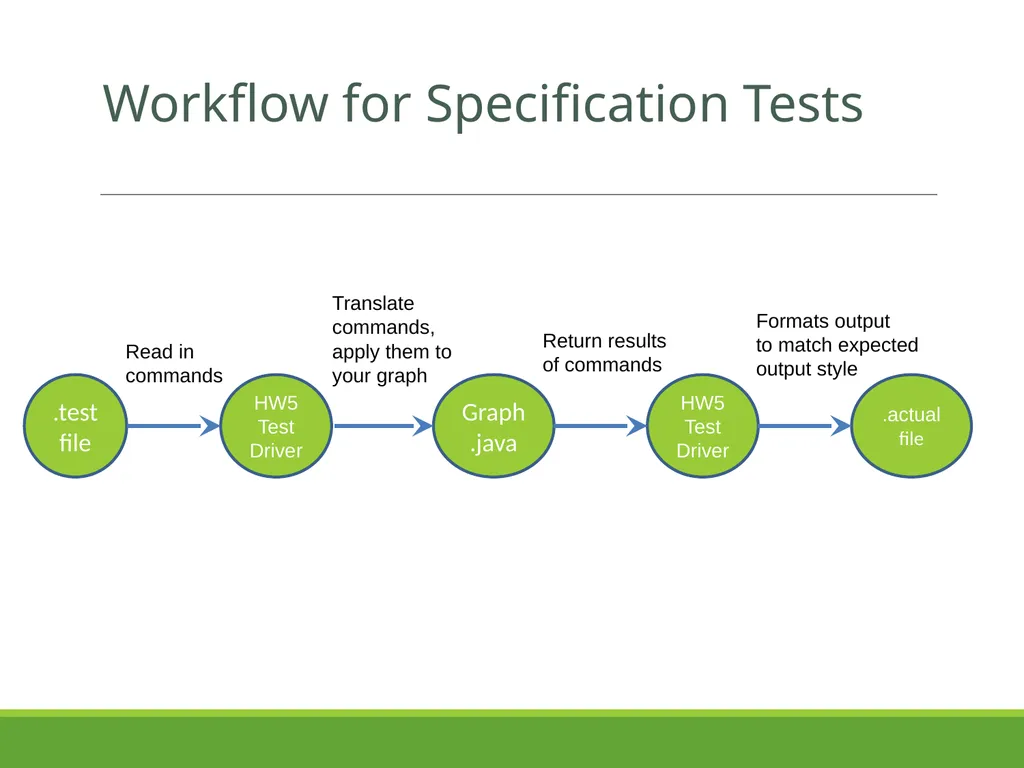
slide40. How to create specification tests Create .test and .expected file pairs under hw5.test
Implement parts of HW5TestDriver
driver connects commands from .test file to your Graph implementation to the output which is matched with .expected file
Run all tests by running SpecificationTests.java
Note: staff will have our own .test and .expected pairs to run with your code
Do not hardcode .test/.expected pairs to pass, but instead make sure the format in hw5 instructions is correctly followed<br>
slide41. Workflow for Specification Tests .test
file HW5
Test
Driver Graph
.java HW5
Test
Driver .actual
file Translate commands, apply them to your graph Read in
commands Return results
of commands Formats output
to match expected output style<br>
slide42. Demo: Test script language<br>
slide43. JavaDoc API Now you can generate the JavaDoc API for your code
Instructions in the Editing/Compiling Handout
Demo: Generate JavaDocs
Demo steps are in spec<br>

with material from Erin Peach and Nick Carney, Vinod Rathnam, Alex Mariakakis, Krysta Yousoufian, Mike Ernst, Kellen Donohue Section 4:Graphs and Testing<br>
slide2. Graphs (HW 5)
JUnit Testing
Test Script Language
JavaDoc Agenda<br>
slide3. Graphs Node
Edge<br>
slide4. Graphs Node
data item in a graph
Edge
connection between two nodes<br>
slide5. Graphs Directed graph: edges have a source and destination
Edges represented with arrows
Parent/child nodes: related by an edge<br>
slide6. Graphscollection of nodes (vertices) and edges A B C D E Nodes: states or objects within the graph
Edges: connection between two nodes<br>
slide7. Edges can be:
Directed
Undirected
What are some examples where each type of edge would be useful? Graphs A B C D<br>
slide8. Directed:
Flight itinerary
Class dependencies
Undirected:
Facebook friends
Computer networks Graphs Seattle Zürich John Sally * Common term: Directed Acyclic Graph (DAG)<br>
slide9. Graphs A B C D E Children of A?<br>
slide10. Graphs A B C D E Children of A:
nodes reached by an edge starting at node A<br>
slide11. Graphs A B C D E Parents of D?<br>
slide12. Graphs A B C D E Parents of D:
nodes that have an edge ending at node D<br>
slide13. Graphs A B C D E Paths from
A to C:
a sequence or ordered list of edges starting at A and ending at C<br>
slide14. Graphs A B C D E Paths from
A to C: A ⇒ C
A ⇒ D ⇒ E ⇒ C Shortest path
from A to C?<br>
slide15. REMINDER:You’ve seen Graphs before! Luke Linked Lists
Binary Trees A B C Leia Droids C3PO R2-D2<br>
slide16. Before we move on... Read the wikipedia article in the spec!
(It has implementation hints!)<br>
slide17. Testing<br>
slide18. Internal vs. external Internal : JUnit
How you decide to implement the object
Checked with implementation tests
External: test script
Your API and specifications
Testing against the specification
Checked with specification tests<br>
slide19. A JUnit test class A method with @Test is flagged as a JUnit test
All @Test methods run when JUnit runs
import org.junit.*;
import static org.junit.Assert.*;
public class TestSuite {
@Test
public void Test1() { … }<br>
slide20. Using JUnit assertions Verifies that a value matches expectations
assertEquals(42, meaningOfLife());
assertTrue(list.isEmpty());
If the assert fails:
Test immediately terminates
Other tests in the test class are still run as normal
Results show “details” of failed tests (We’ll get to this later)<br>
slide21. Using JUnit assertions And others: https://junit.org/junit4/javadoc/4.11/org/junit/Assert.html Each method can also be passed a string to display if it fails:
assertEquals("message", expected, actual)<br>
slide22. USING JUNIT ASSERTIONS When writing JUnit assertions, make sure to use the appropriate test
Ex: Testing Java’s List.size()
Use assertEquals(list.size(), 1)
Don’t use assertTrue(list.size() == 1)<br>
slide23. Checking for exceptions Verify that a method throws an exception when it should:
Passes only if specified exception is thrown
Only time it’s OK to write a test without a form of asserts
@Test(expected=IndexOutOfBoundsException.class)
public void testGetEmptyList() {
List<String> list = new ArrayList<String>();
list.get(0);
}<br>
slide24. Setup and teardown Methods to run before/after each test case method is called:
@Before
public void name() { ... }
@After
public void name() { ... }
Methods to run once before/after the entire test class runs:
@BeforeClass
public static void name() { ... }
@AfterClass
public static void name() { ... }<br>
slide25. Setup and teardown public class Example {
List empty;
@Before
public void initialize() {
empty = new ArrayList();
}
@Test
public void size() {...}
@Test
public void remove() {...}
}<br>
slide26. Test Writing Etiquette<br>
slide27. 1. Don’t Repeat Yourself
Use constants and helper methods
2. Be Descriptive
Take advantage of message, expected, and actual values
Ex: testAddElementToEmptyList instead of testAdd
3. Keep Tests Small
Isolate bugs one at a time; failing assertion halts test
Helps to catch bugs at the source
4. Be Thorough
Test big, small, boundaries, exceptions, errors
5. Order of Testing Matters
If methodB() relies on methodA() to work correctly, test methodA() first Ground rules<br>
slide28. Let’s put it all together! public class DateTest {
// Test addDays when it causes a rollover between months
@Test
public void testAddDaysWrapToNextMonth() {
Date actual = new Date(2050, 2, 15);
actual.addDays(14);
Date expected = new Date(2050, 3, 1);
assertEquals("date after +14 days",
expected, actual);
}<br>
slide29. How to create JUnit test classes Right-click hw5.test -> New -> JUnit Test Case
Important: Follow naming guidelines we provide
Demo<br>
slide30. JUnit asserts vs. Java asserts We’ve just been discussing JUnit assertions so far
Tests for incorrect behavior
Java itself has assertions
Tests for invalid states public class LitterBox {
ArrayList<Kitten> kittens;
public Kitten getKitten(int n) {
assert(n >= 0);
return kittens(n);
}
}<br>
slide31. Reminder: Enabling asserts in Eclipse To enable asserts:
Go to Run -> Run Configurations… -> Arguments tab -> input -ea in VM arguments section<br>
slide32. Don’t forgot your CheckReps!<br>
slide33. ant validate and staff grading will have assertions enabled
But sometimes a checkRep can be expensive
For example, looking at each node in a Graph with a large number of nodes
This could cause the grading scripts to timeout Expensive CheckReps<br>
slide34. Expensive CheckReps Before your final commit, remove the checking of expensive parts of your checkRep or the checking of your checkRep entirely
Example: boolean flag and structure your checkRep as so:
private void checkRep() {
cheap-stuff
if(DEBUG_FLAG) { // or can have this for entire checkRep
expensive-stuff
}
cheap-stuff
...<br>
slide35. External tests: Test script language<br>
slide36. Test script language Text file with one command listed per line
First word is always the command name
Remaining words are arguments
Commands will correspond to methods in your code<br>
slide37. Test script language # Create a graph
CreateGraph graph1
# Add a pair of nodes
AddNode graph1 n1
AddNode graph1 n2
# Add an edge
AddEdge graph1 n1 n2 e1
# Print the nodes in the graph and the outgoing edges from n1
ListNodes graph1
ListChildren graph1 n1 n1 n2 e1 graph1<br>
slide38. Test script language # Create a graph
CreateGraph graph1
# Add a pair of nodes
AddNode graph1 n1
AddNode graph1 n2
# Add an edge
AddEdge graph1 n1 n2 e1
# Print the nodes in the graph and the outgoing edges from n1
ListNodes graph1
ListChildren graph1 n1 n1 n2 e1 graph1<br>
slide39. Test script language # Create a graph
created graph graph1
# Add a pair of nodes
added node n1 to graph1
added node n2 to graph1
# Add an edge
added edge e1 from n1 to n2 in graph1
# Print the nodes in the graph and the outgoing edges from n1
graph1 contains: n1 n2
the children of n1 in graph1 are: n2(e1) n1 n2 e1 graph1<br>
slide40. How to create specification tests Create .test and .expected file pairs under hw5.test
Implement parts of HW5TestDriver
driver connects commands from .test file to your Graph implementation to the output which is matched with .expected file
Run all tests by running SpecificationTests.java
Note: staff will have our own .test and .expected pairs to run with your code
Do not hardcode .test/.expected pairs to pass, but instead make sure the format in hw5 instructions is correctly followed<br>
slide41. Workflow for Specification Tests .test
file HW5
Test
Driver Graph
.java HW5
Test
Driver .actual
file Translate commands, apply them to your graph Read in
commands Return results
of commands Formats output
to match expected output style<br>
slide42. Demo: Test script language<br>
slide43. JavaDoc API Now you can generate the JavaDoc API for your code
Instructions in the Editing/Compiling Handout
Demo: Generate JavaDocs
Demo steps are in spec<br>