04
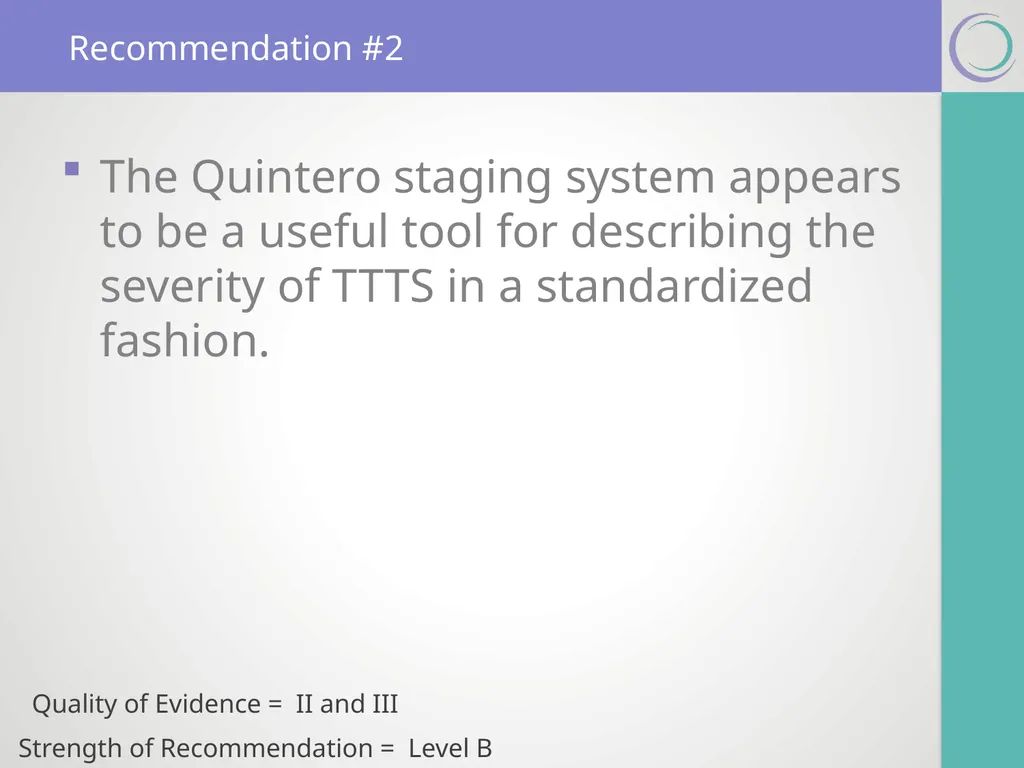
Recommendation #2 The Quintero staging system appears to be a useful tool for describing the severity of TTTS in a standardized fashion. Strength of Recommendation = Level B Quality of Evidence = II and III<br>
05
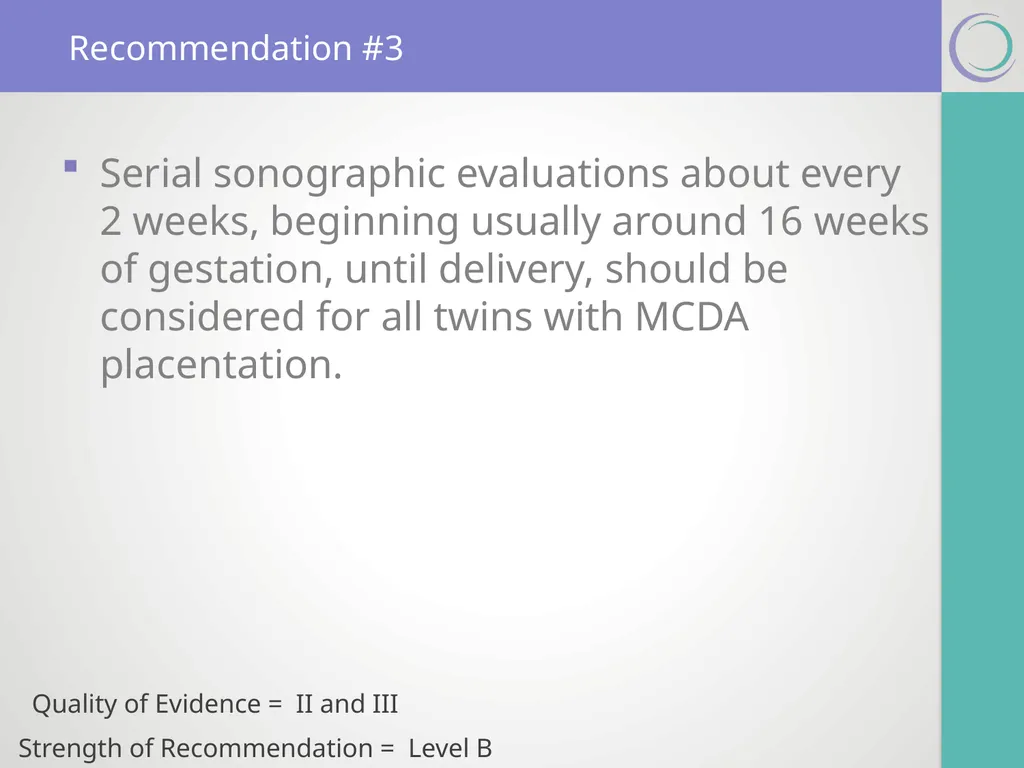
Recommendation #3 Serial sonographic evaluations about every 2 weeks, beginning usually around 16 weeks of gestation, until delivery, should be considered for all twins with MCDA placentation. Strength of Recommendation = Level B Quality of Evidence = II and III<br>
06
Recommendation #4 Screening for congenital heart disease is warranted in all monochorionic twins, in particular those complicated by TTTS. Strength of Recommendation = Level B Quality of Evidence = II and III<br>
07
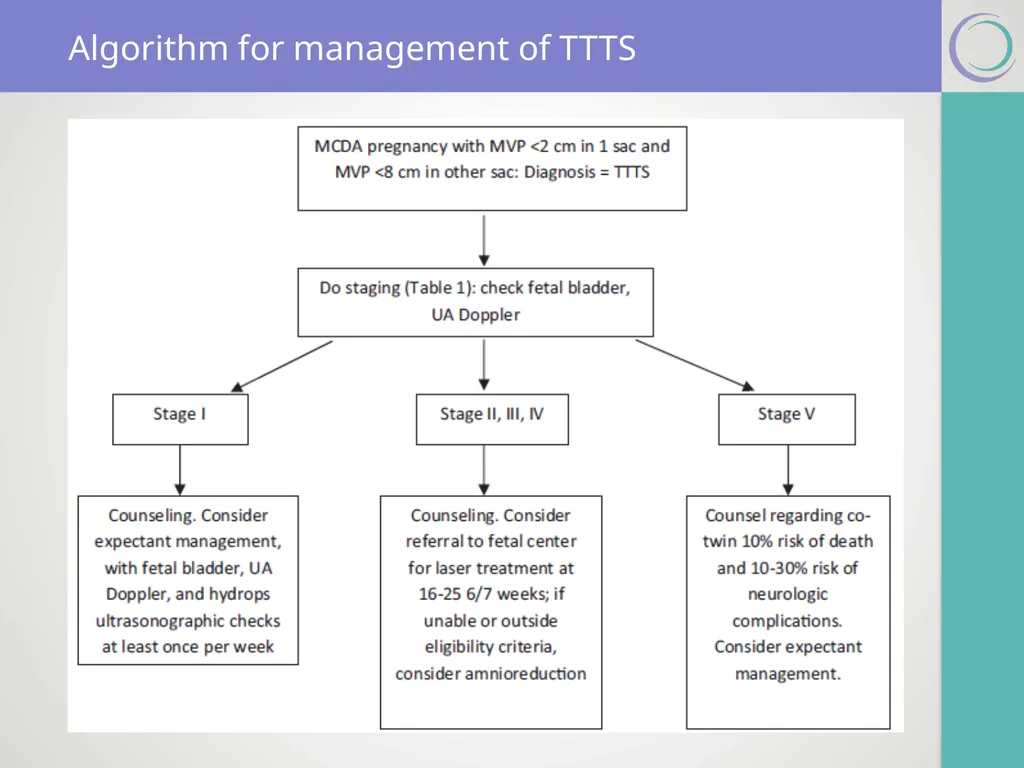
Recommendation #5 Extensive counseling should be provided to patients with pregnancies complicated by TTTS including natural history of the disease, as well as management options and their risks and benefits. Over three fourths of stage I TTTS cases remain stable or regress without invasive interventions. The natural history of advanced (e.g., stage III) TTTS is bleak, with a reported perinatal loss rate of 70- 100%, particularly when it presents 26 weeks. The management options available for TTTS include expectant management, amnioreduction, intentional septostomy of the intervening membrane, fetoscopic laser photocoagulation of placental anastomoses, selective reduction, and pregnancy termination. Strength of Recommendation = Level B Quality of Evidence = II and III<br>
08
Recommendation #6 Patients with stage I TTTS may often be managed expectantly, as the natural history perinatal survival rate is about 86%. Strength of Recommendation = Level B Quality of Evidence = II and III<br>
09
Recommendation #7 Fetoscopic laser photocoagulation of placental anastomoses is considered by most experts to be the best available approach for stages II, III, and IV TTTS in continuing pregnancies at26 weeks, but the meta analysis data show no significant survival benefit, and the long-term neurologic outcomes in the Eurofetus trial were not different than in non laser-treated controls. Laser treated TTTS is still associated with a 30-50% chance of overall perinatal death and a 5-20% chance of long-term neurologic handicap. Strength of Recommendation = Level B Quality of Evidence = I and II<br>
10
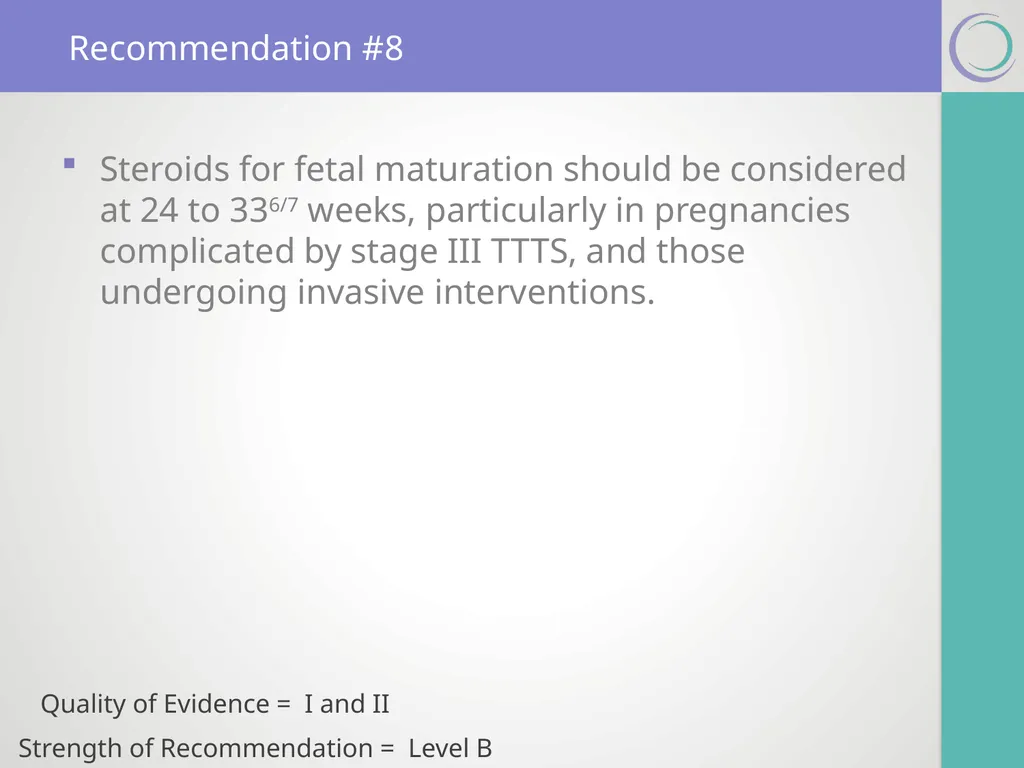
Recommendation #8 Steroids for fetal maturation should be considered at 24 to 336/7 weeks, particularly in pregnancies complicated by stage III TTTS, and those undergoing invasive interventions. Strength of Recommendation = Level B Quality of Evidence = I and II<br>
11
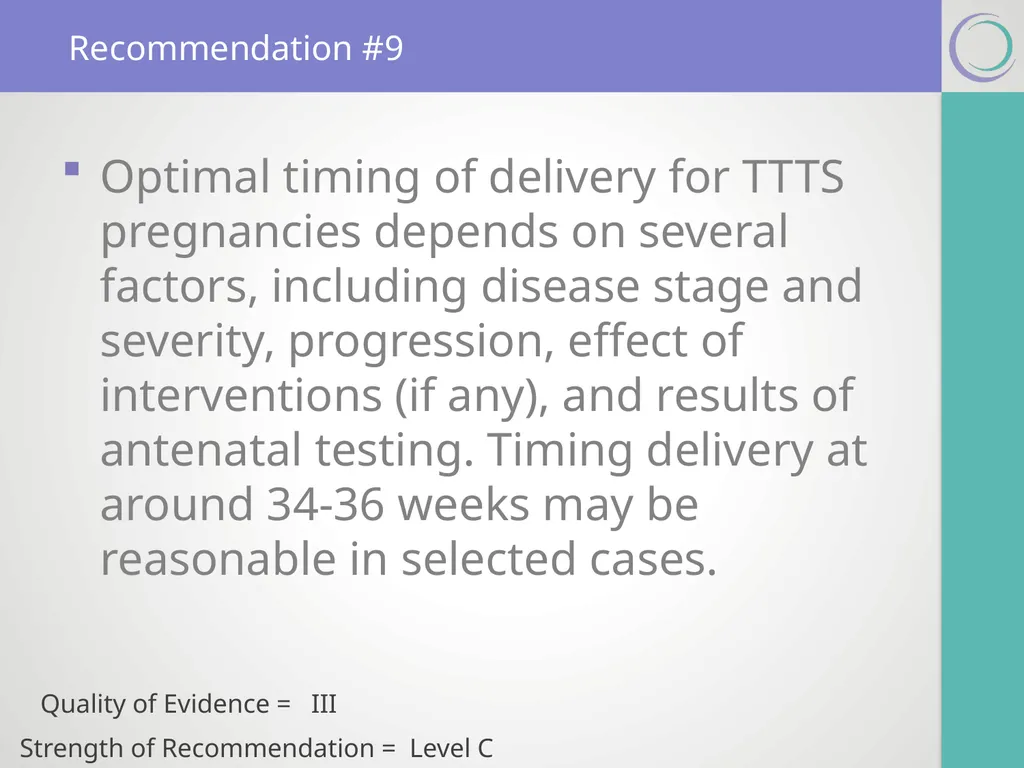
Recommendation #9 Optimal timing of delivery for TTTS pregnancies depends on several factors, including disease stage and severity, progression, effect of interventions (if any), and results of antenatal testing. Timing delivery at around 34-36 weeks may be reasonable in selected cases. Strength of Recommendation = Level C Quality of Evidence = III<br>
12
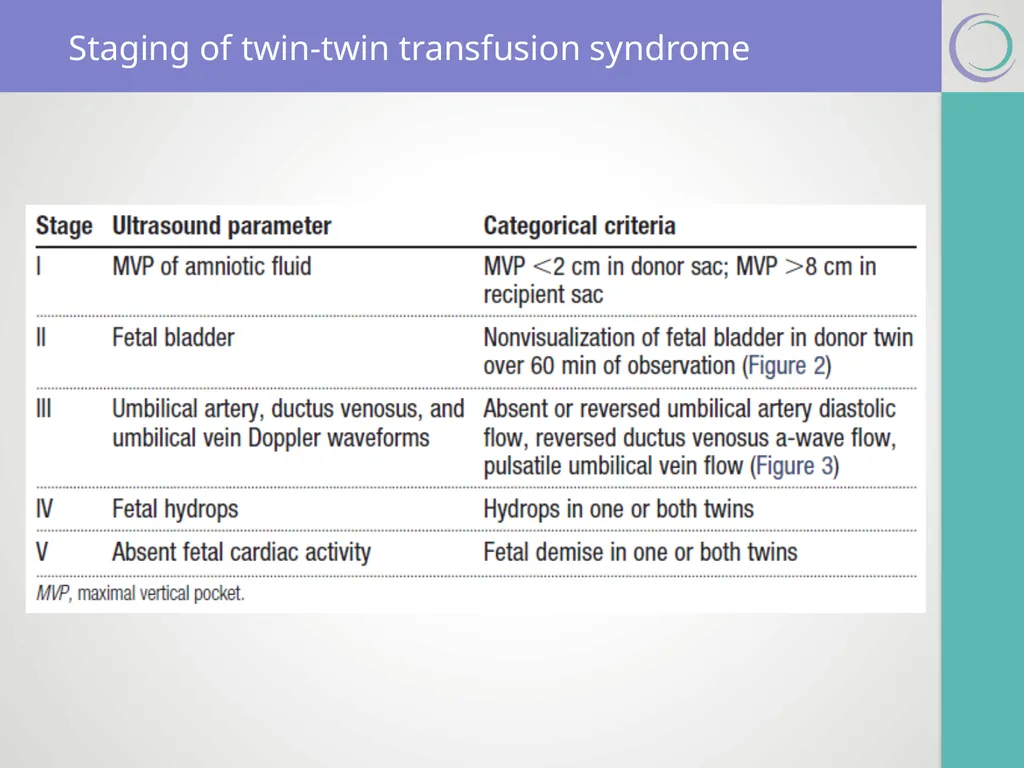
Staging of twin-twin transfusion syndrome<br>
13
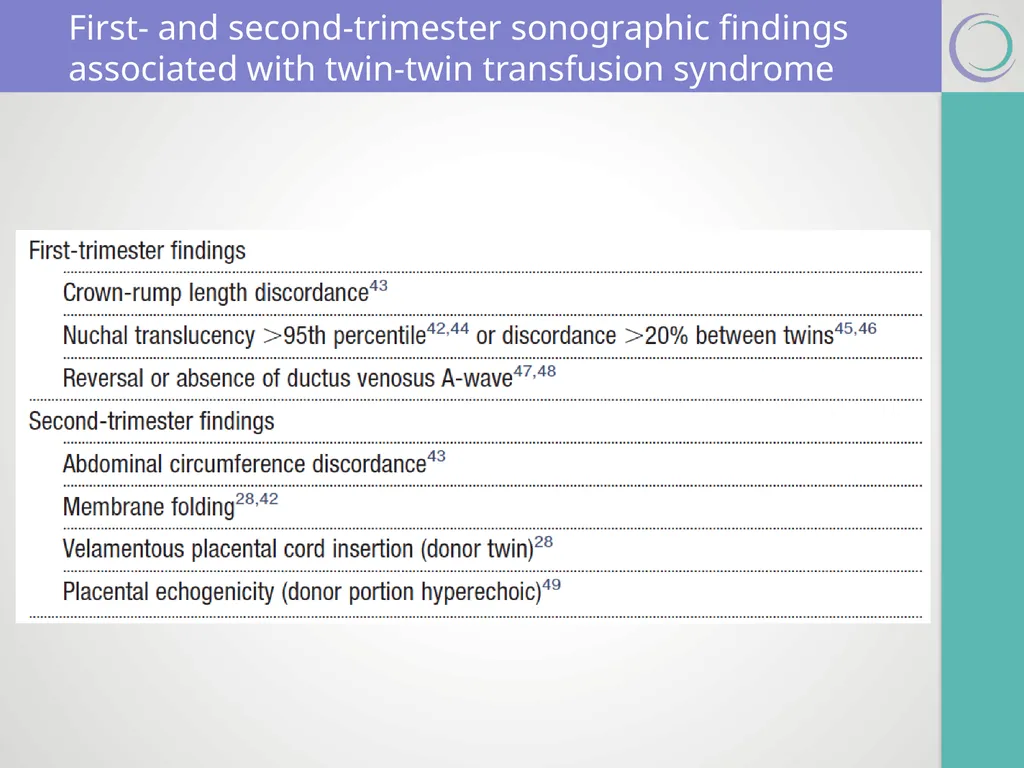
First- and second-trimester sonographic findings associated with twin-twin transfusion syndrome<br>
14
Algorithm for management of TTTS<br>
15
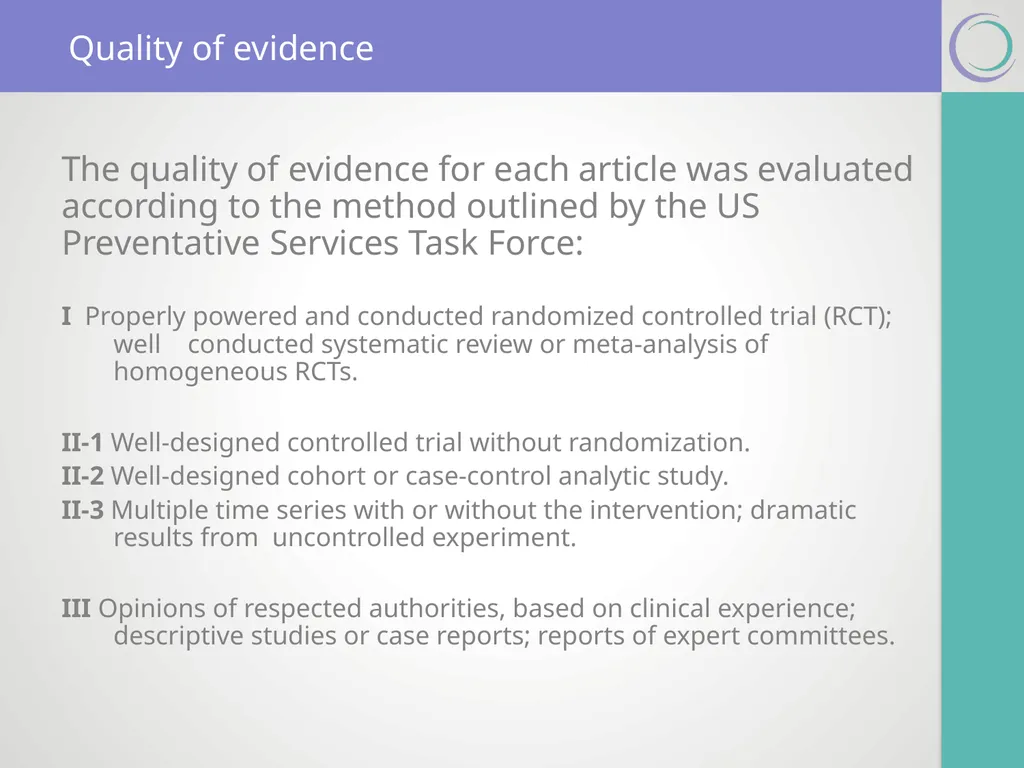
Quality of evidence The quality of evidence for each article was evaluated according to the method outlined by the US Preventative Services Task Force:�
I Properly powered and conducted randomized controlled trial (RCT); well conducted systematic review or meta-analysis of homogeneous RCTs.
II-1 Well-designed controlled trial without randomization.
II-2 Well-designed cohort or case-control analytic study.
II-3 Multiple time series with or without the intervention; dramatic results from uncontrolled experiment.
III Opinions of respected authorities, based on clinical experience; descriptive studies or case reports; reports of expert committees.<br>
16
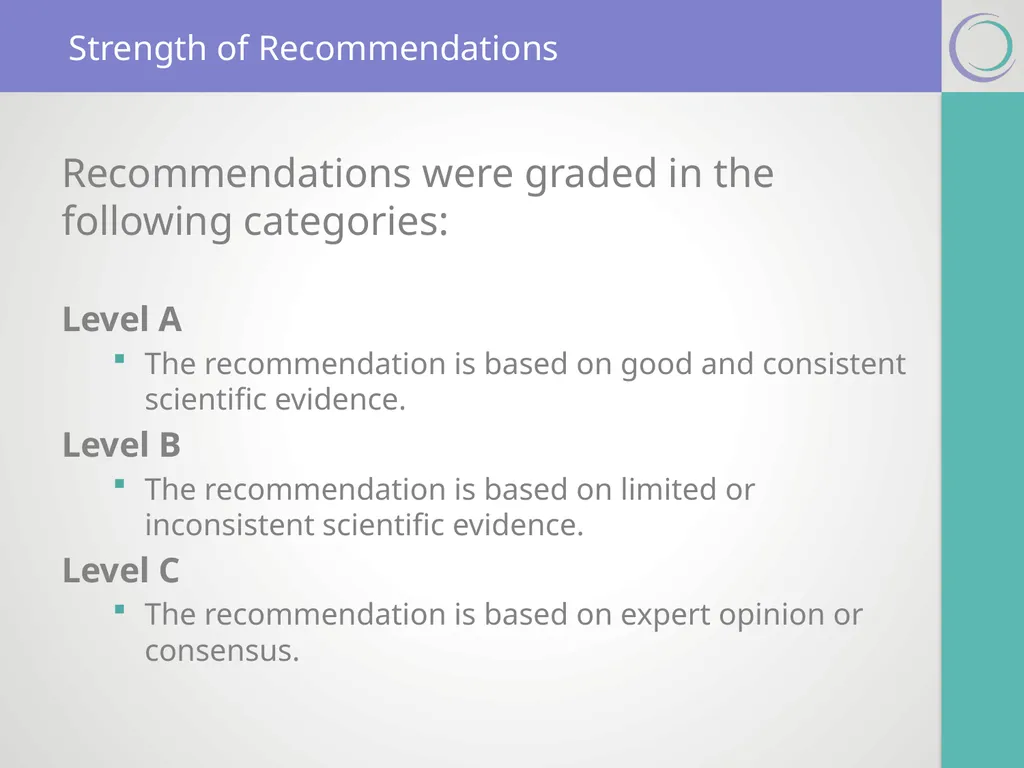
Strength of Recommendations Recommendations were graded in the following categories:
Level A
The recommendation is based on good and consistent scientific evidence.
Level B
The recommendation is based on limited or inconsistent scientific evidence.
Level C
The recommendation is based on expert opinion or consensus.<br>
17
The practice of medicine continues to evolve, and individual circumstances will vary. This opinion reflects information available at the time of its submission for publication and is neither designed nor intended to establish an exclusive standard of perinatal care. This presentation is not expected to reflect the opinions of all members of the Society for Maternal-Fetal Medicine.
These slides are for personal, non-commercial and educational use only Disclaimer<br>
18
Disclosures This opinion was developed by the Publications Committee of the Society for Maternal-Fetal Medicine with the assistance of Lynn L. Simpson, BSc, MSc,. MD, and was approved by the Executive Committee of the Society on September 20, 2012. Dr Simpson, and each member of the Publications Committee (Vincenzo Berghella, MD [Chair], Sean Blackwell, MD [Vice-Chair], Brenna Anderson, MD, Suneet P. Chauhan, MD, Joshua Copel, MD, Jodi Dashe, MD, Cynthia Gyamfi, MD, Donna Johnson, MD, Sara Little, MD, Kate Menard, MD, Mary Norton, MD, George Saade, MD, Neil Silverman, MD, Hyagriv Simhan, MD, Joanne Stone, MD, Alan Tita, MD, PhD, Michael Varner, MD, Ms Deborah Gardner) have submitted a conflict of interest disclosure delineating personal, professional, and/or business interests that might be perceived as a real or potential conflict of interest in relation to this publication.<br>