
Social Innovation Plus – Competence Centres (SI
Description: Social Innovation Plus Competence Centres (SI Plus) Social Innovation Ecosystem in Slovakia 9. March 2022 SOCIAL INNOVATION CONTEXT DRIVEN PHENOMENON Online survey - 113 respondents (approximately 11 of the contacts contacted) Out of
Related Topics
Download Presentation
"Social Innovation Plus – Competence Centres (SI" is the property of its rightful owner. Permission is granted to download and print the materials on this website for personal, non-commercial use only, and to display it on your personal computer provided you do not modify the materials and that you retain all copyright notices contained in the materials. By downloading content from our website, you accept the terms of this agreement.
Presentation Transcript
slide1. Social Innovation Plus – Competence Centres (SI Plus)
Social Innovation Ecosystem in Slovakia
9. March 2022<br>
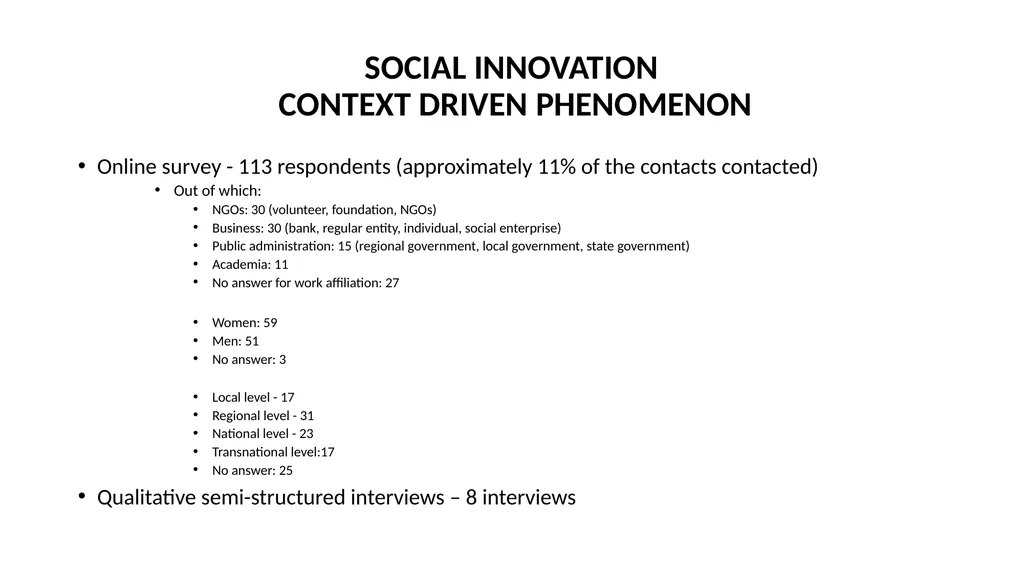
slide2. SOCIAL INNOVATION CONTEXT DRIVEN PHENOMENON Online survey - 113 respondents (approximately 11% of the contacts contacted)
Out of which:
NGOs: 30 (volunteer, foundation, NGOs)
Business: 30 (bank, regular entity, individual, social enterprise)
Public administration: 15 (regional government, local government, state government)
Academia: 11
No answer for work affiliation: 27
Women: 59
Men: 51
No answer: 3
Local level - 17
Regional level - 31
National level - 23
Transnational level:17
No answer: 25
Qualitative semi-structured interviews – 8 interviews<br>
slide3. NORMS<br>
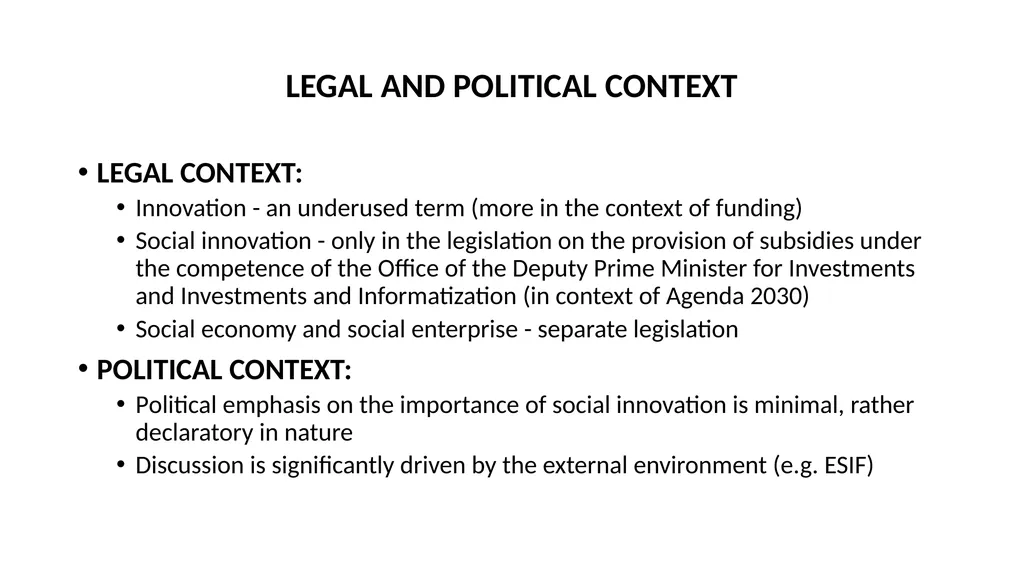
slide4. LEGAL AND POLITICAL CONTEXT LEGAL CONTEXT:
Innovation - an underused term (more in the context of funding)
Social innovation - only in the legislation on the provision of subsidies under the competence of the Office of the Deputy Prime Minister for Investments and Investments and Informatization (in context of Agenda 2030)
Social economy and social enterprise - separate legislation
POLITICAL CONTEXT:
Political emphasis on the importance of social innovation is minimal, rather declaratory in nature
Discussion is significantly driven by the external environment (e.g. ESIF)<br>
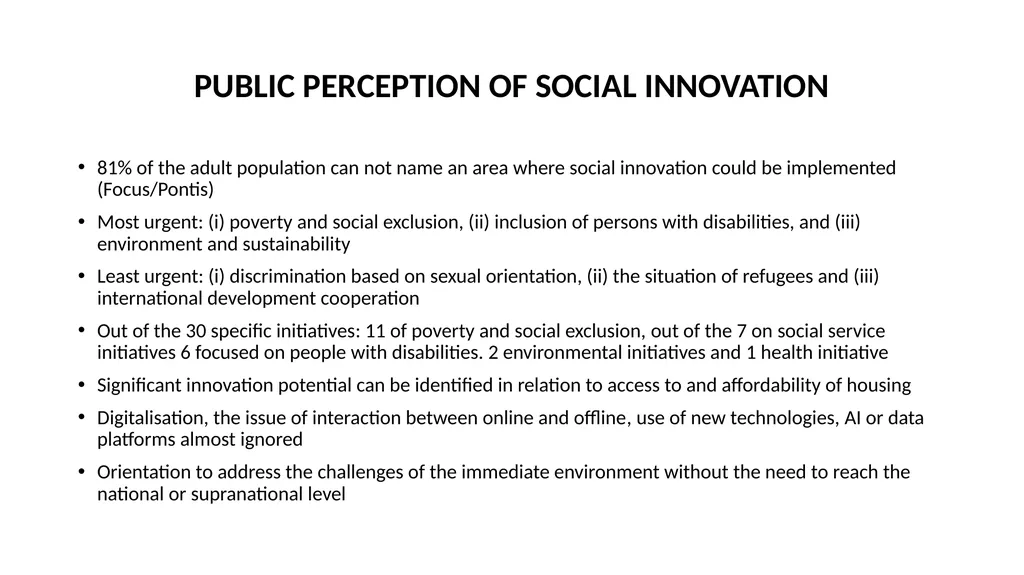
slide5. PUBLIC PERCEPTION OF SOCIAL INNOVATION 81% of the adult population can not name an area where social innovation could be implemented (Focus/Pontis)
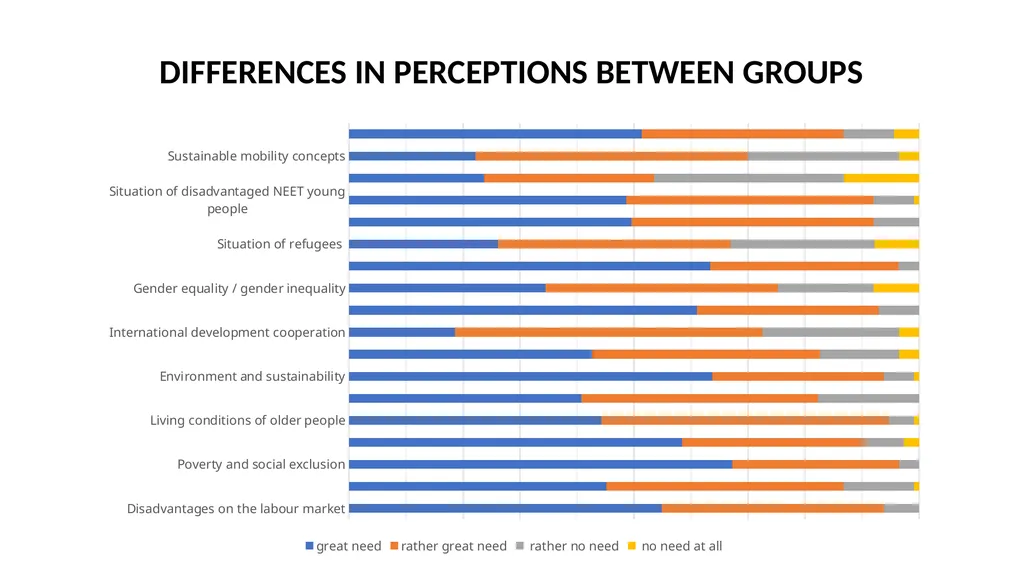
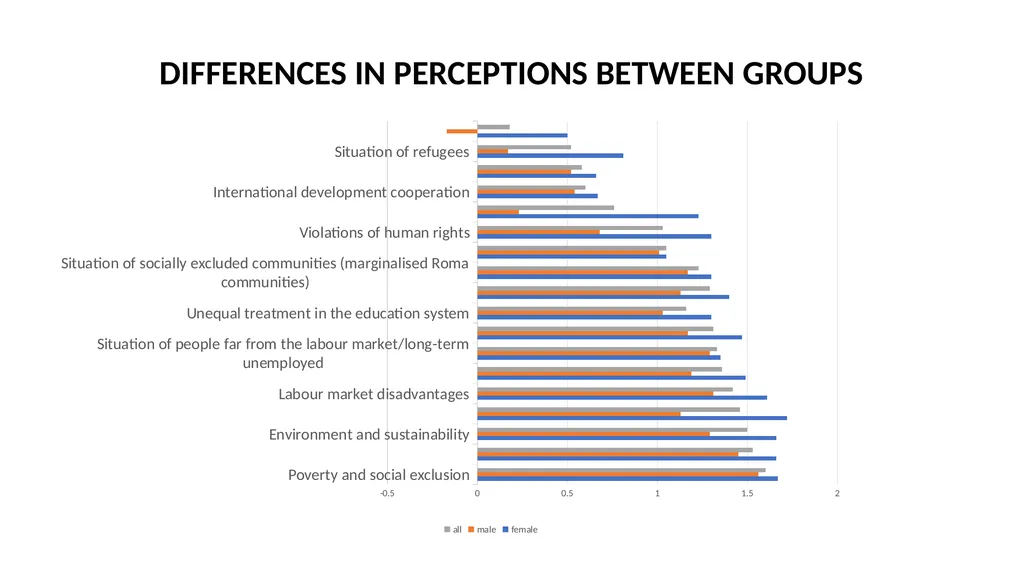
Most urgent: (i) poverty and social exclusion, (ii) inclusion of persons with disabilities, and (iii) environment and sustainability
Least urgent: (i) discrimination based on sexual orientation, (ii) the situation of refugees and (iii) international development cooperation
Out of the 30 specific initiatives: 11 of poverty and social exclusion, out of the 7 on social service initiatives 6 focused on people with disabilities. 2 environmental initiatives and 1 health initiative
Significant innovation potential can be identified in relation to access to and affordability of housing
Digitalisation, the issue of interaction between online and offline, use of new technologies, AI or data platforms almost ignored
Orientation to address the challenges of the immediate environment without the need to reach the national or supranational level<br>
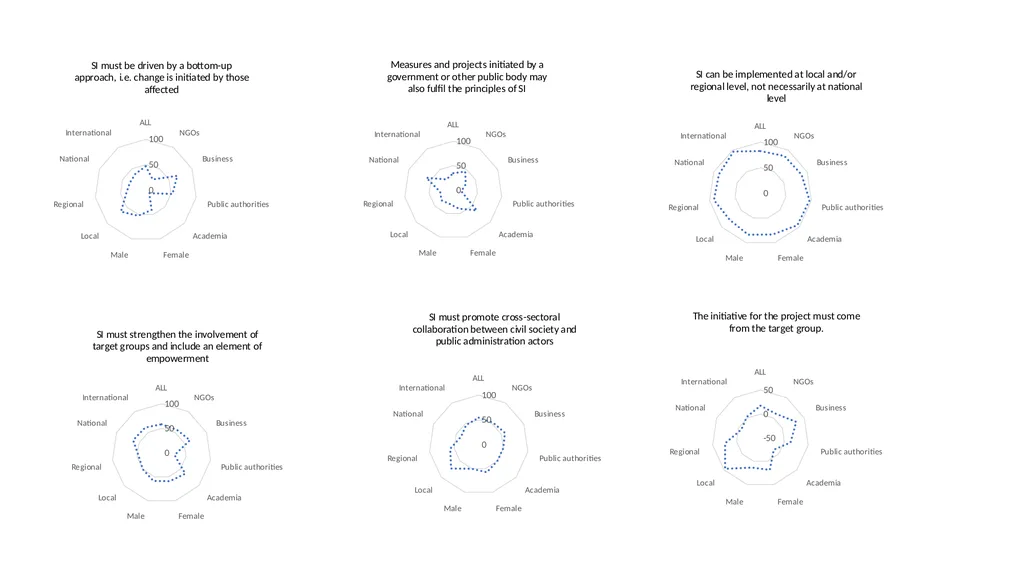
slide6. DIFFERENCES IN PERCEPTIONS BETWEEN GROUPS<br>
slide7. DIFFERENCES IN PERCEPTIONS BETWEEN GROUPS<br>
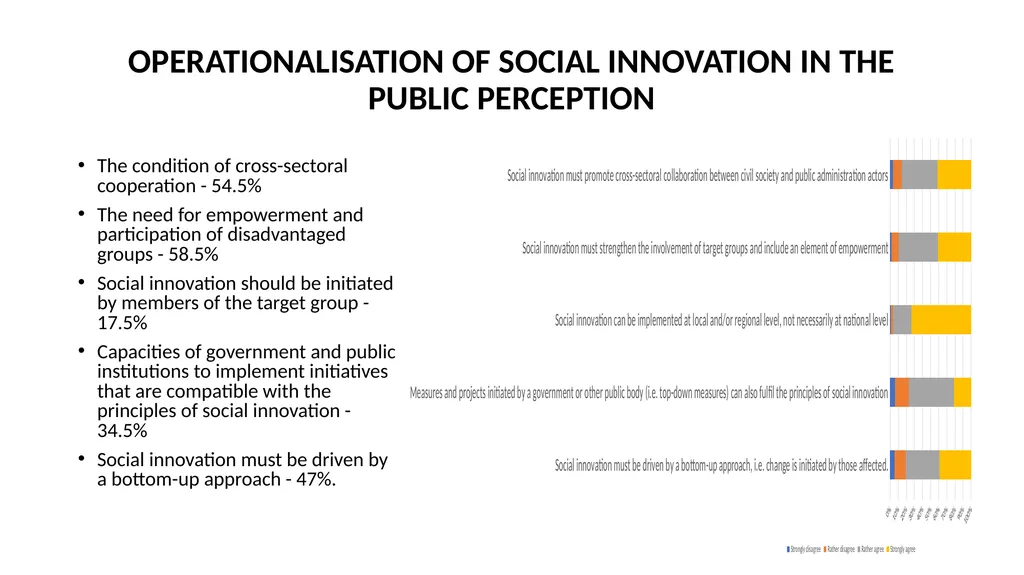
slide8. OPERATIONALISATION OF SOCIAL INNOVATION IN THE PUBLIC PERCEPTION The condition of cross-sectoral cooperation - 54.5%
The need for empowerment and participation of disadvantaged groups - 58.5%
Social innovation should be initiated by members of the target group - 17.5%
Capacities of government and public institutions to implement initiatives that are compatible with the principles of social innovation - 34.5%
Social innovation must be driven by a bottom-up approach - 47%.<br>
slide10. STRUCTURE<br>
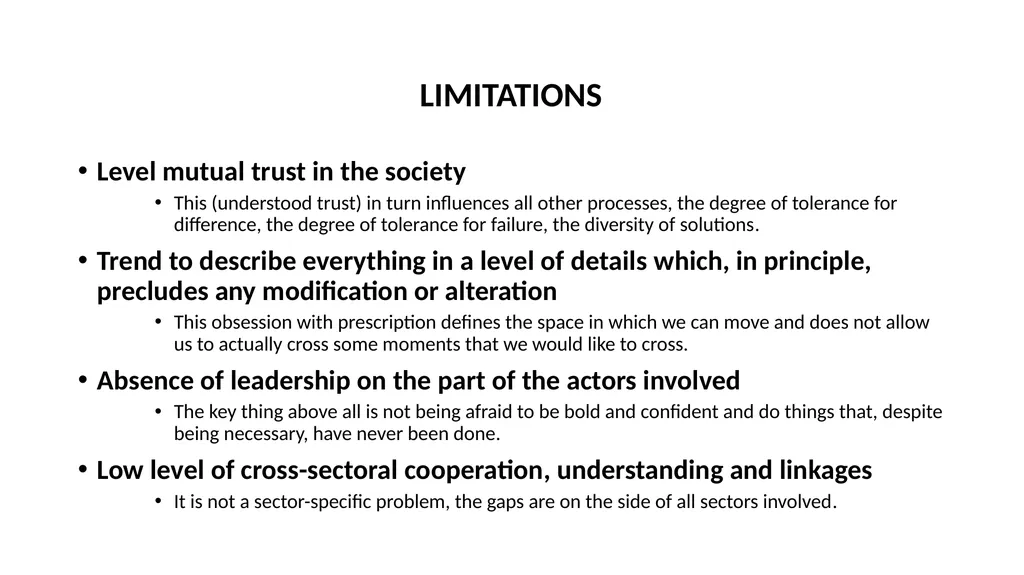
slide11. LIMITATIONS Level mutual trust in the society
This (understood trust) in turn influences all other processes, the degree of tolerance for difference, the degree of tolerance for failure, the diversity of solutions.
Trend to describe everything in a level of details which, in principle, precludes any modification or alteration
This obsession with prescription defines the space in which we can move and does not allow us to actually cross some moments that we would like to cross.
Absence of leadership on the part of the actors involved
The key thing above all is not being afraid to be bold and confident and do things that, despite being necessary, have never been done.
Low level of cross-sectoral cooperation, understanding and linkages
It is not a sector-specific problem, the gaps are on the side of all sectors involved.<br>
slide12. FINANCIAL SUPPORT - CHARACTERISTICS The absence of a personalised approach and any individualisation in selection processes
Emphasis on the number of social innovations, not on their impact
Unbalanced support for the different phases of SI
Weak emphasis on SI identification and incubation<br>
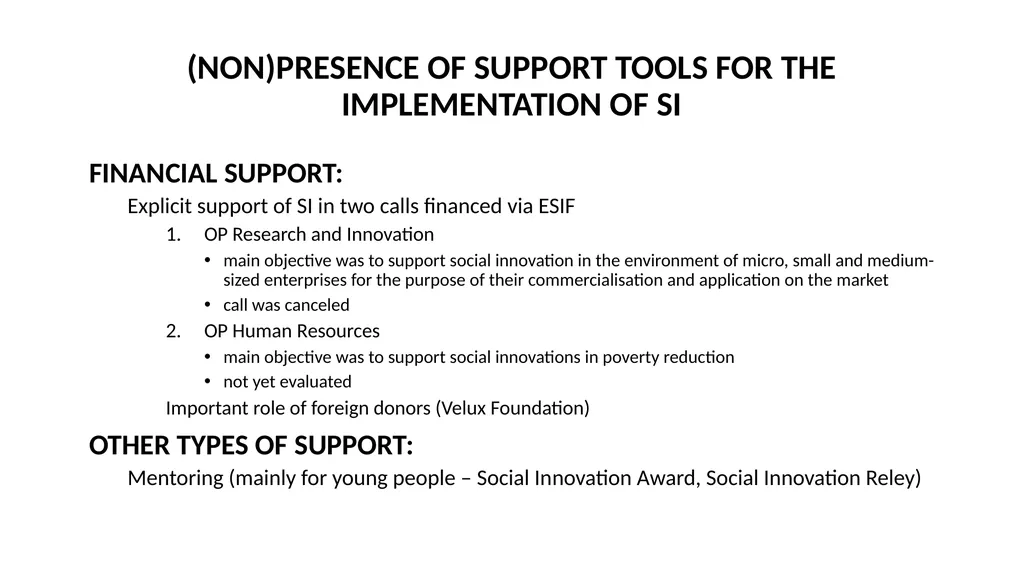
slide13. (NON)PRESENCE OF SUPPORT TOOLS FOR THE IMPLEMENTATION OF SI FINANCIAL SUPPORT:
Explicit support of SI in two calls financed via ESIF
OP Research and Innovation
main objective was to support social innovation in the environment of micro, small and medium-sized enterprises for the purpose of their commercialisation and application on the market
call was canceled
OP Human Resources
main objective was to support social innovations in poverty reduction
not yet evaluated
Important role of foreign donors (Velux Foundation)
OTHER TYPES OF SUPPORT:
Mentoring (mainly for young people – Social Innovation Award, Social Innovation Reley)<br>
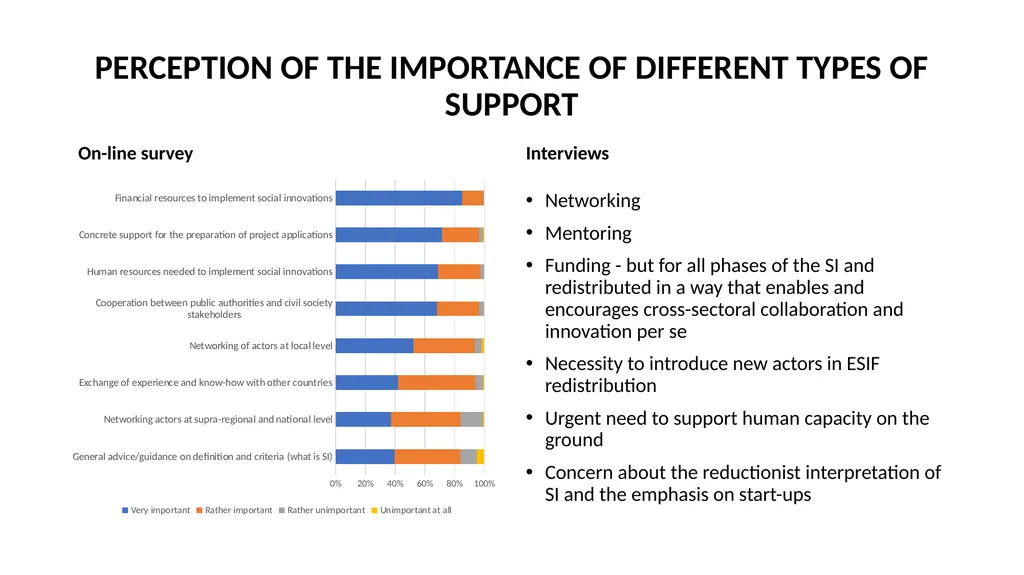
slide14. PERCEPTION OF THE IMPORTANCE OF DIFFERENT TYPES OF SUPPORT On-line survey Interviews Networking
Mentoring
Funding - but for all phases of the SI and redistributed in a way that enables and encourages cross-sectoral collaboration and innovation per se
Necessity to introduce new actors in ESIF redistribution
Urgent need to support human capacity on the ground
Concern about the reductionist interpretation of SI and the emphasis on start-ups<br>
slide15. FUNCTIONS<br>
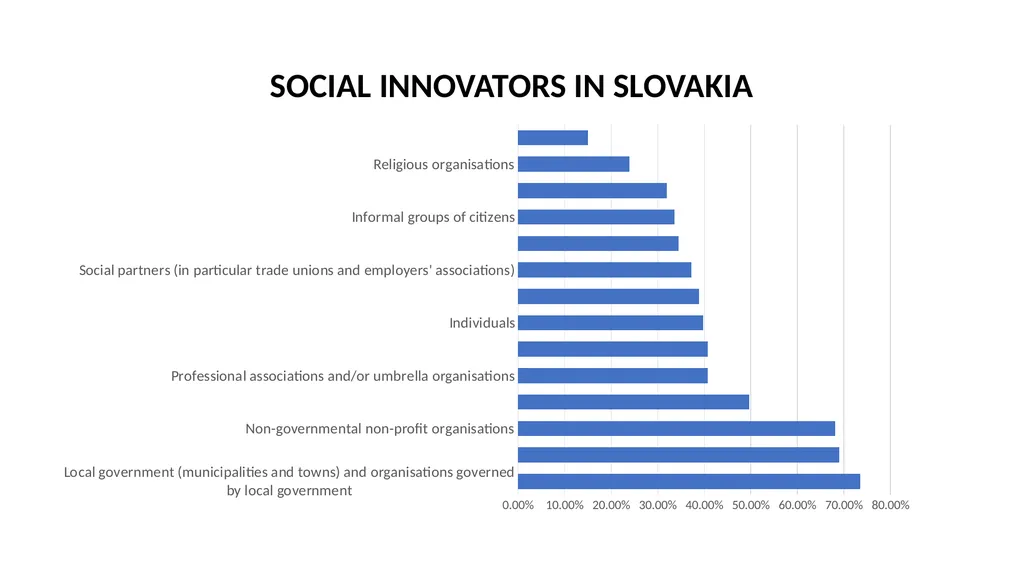
slide16. SOCIAL INNOVATORS IN SLOVAKIA<br>
slide17. EXAMPLES OF SI PROJECTS<br>
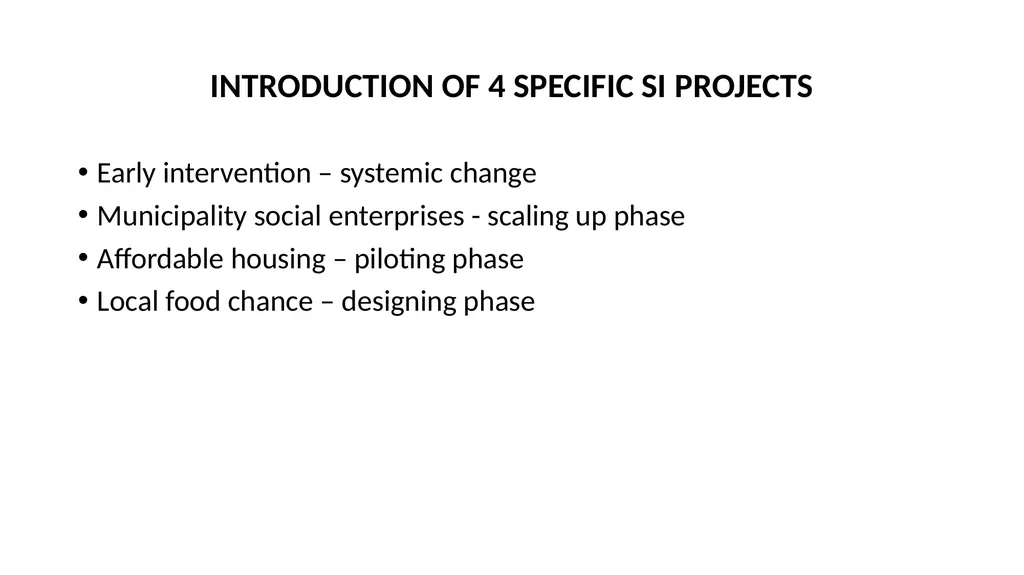
slide18. INTRODUCTION OF 4 SPECIFIC SI PROJECTS Early intervention – systemic change
Municipality social enterprises - scaling up phase
Affordable housing – piloting phase
Local food chance – designing phase<br>
Social Innovation Ecosystem in Slovakia
9. March 2022<br>
slide2. SOCIAL INNOVATION CONTEXT DRIVEN PHENOMENON Online survey - 113 respondents (approximately 11% of the contacts contacted)
Out of which:
NGOs: 30 (volunteer, foundation, NGOs)
Business: 30 (bank, regular entity, individual, social enterprise)
Public administration: 15 (regional government, local government, state government)
Academia: 11
No answer for work affiliation: 27
Women: 59
Men: 51
No answer: 3
Local level - 17
Regional level - 31
National level - 23
Transnational level:17
No answer: 25
Qualitative semi-structured interviews – 8 interviews<br>
slide3. NORMS<br>
slide4. LEGAL AND POLITICAL CONTEXT LEGAL CONTEXT:
Innovation - an underused term (more in the context of funding)
Social innovation - only in the legislation on the provision of subsidies under the competence of the Office of the Deputy Prime Minister for Investments and Investments and Informatization (in context of Agenda 2030)
Social economy and social enterprise - separate legislation
POLITICAL CONTEXT:
Political emphasis on the importance of social innovation is minimal, rather declaratory in nature
Discussion is significantly driven by the external environment (e.g. ESIF)<br>
slide5. PUBLIC PERCEPTION OF SOCIAL INNOVATION 81% of the adult population can not name an area where social innovation could be implemented (Focus/Pontis)
Most urgent: (i) poverty and social exclusion, (ii) inclusion of persons with disabilities, and (iii) environment and sustainability
Least urgent: (i) discrimination based on sexual orientation, (ii) the situation of refugees and (iii) international development cooperation
Out of the 30 specific initiatives: 11 of poverty and social exclusion, out of the 7 on social service initiatives 6 focused on people with disabilities. 2 environmental initiatives and 1 health initiative
Significant innovation potential can be identified in relation to access to and affordability of housing
Digitalisation, the issue of interaction between online and offline, use of new technologies, AI or data platforms almost ignored
Orientation to address the challenges of the immediate environment without the need to reach the national or supranational level<br>
slide6. DIFFERENCES IN PERCEPTIONS BETWEEN GROUPS<br>
slide7. DIFFERENCES IN PERCEPTIONS BETWEEN GROUPS<br>
slide8. OPERATIONALISATION OF SOCIAL INNOVATION IN THE PUBLIC PERCEPTION The condition of cross-sectoral cooperation - 54.5%
The need for empowerment and participation of disadvantaged groups - 58.5%
Social innovation should be initiated by members of the target group - 17.5%
Capacities of government and public institutions to implement initiatives that are compatible with the principles of social innovation - 34.5%
Social innovation must be driven by a bottom-up approach - 47%.<br>
slide10. STRUCTURE<br>
slide11. LIMITATIONS Level mutual trust in the society
This (understood trust) in turn influences all other processes, the degree of tolerance for difference, the degree of tolerance for failure, the diversity of solutions.
Trend to describe everything in a level of details which, in principle, precludes any modification or alteration
This obsession with prescription defines the space in which we can move and does not allow us to actually cross some moments that we would like to cross.
Absence of leadership on the part of the actors involved
The key thing above all is not being afraid to be bold and confident and do things that, despite being necessary, have never been done.
Low level of cross-sectoral cooperation, understanding and linkages
It is not a sector-specific problem, the gaps are on the side of all sectors involved.<br>
slide12. FINANCIAL SUPPORT - CHARACTERISTICS The absence of a personalised approach and any individualisation in selection processes
Emphasis on the number of social innovations, not on their impact
Unbalanced support for the different phases of SI
Weak emphasis on SI identification and incubation<br>
slide13. (NON)PRESENCE OF SUPPORT TOOLS FOR THE IMPLEMENTATION OF SI FINANCIAL SUPPORT:
Explicit support of SI in two calls financed via ESIF
OP Research and Innovation
main objective was to support social innovation in the environment of micro, small and medium-sized enterprises for the purpose of their commercialisation and application on the market
call was canceled
OP Human Resources
main objective was to support social innovations in poverty reduction
not yet evaluated
Important role of foreign donors (Velux Foundation)
OTHER TYPES OF SUPPORT:
Mentoring (mainly for young people – Social Innovation Award, Social Innovation Reley)<br>
slide14. PERCEPTION OF THE IMPORTANCE OF DIFFERENT TYPES OF SUPPORT On-line survey Interviews Networking
Mentoring
Funding - but for all phases of the SI and redistributed in a way that enables and encourages cross-sectoral collaboration and innovation per se
Necessity to introduce new actors in ESIF redistribution
Urgent need to support human capacity on the ground
Concern about the reductionist interpretation of SI and the emphasis on start-ups<br>
slide15. FUNCTIONS<br>
slide16. SOCIAL INNOVATORS IN SLOVAKIA<br>
slide17. EXAMPLES OF SI PROJECTS<br>
slide18. INTRODUCTION OF 4 SPECIFIC SI PROJECTS Early intervention – systemic change
Municipality social enterprises - scaling up phase
Affordable housing – piloting phase
Local food chance – designing phase<br>