04
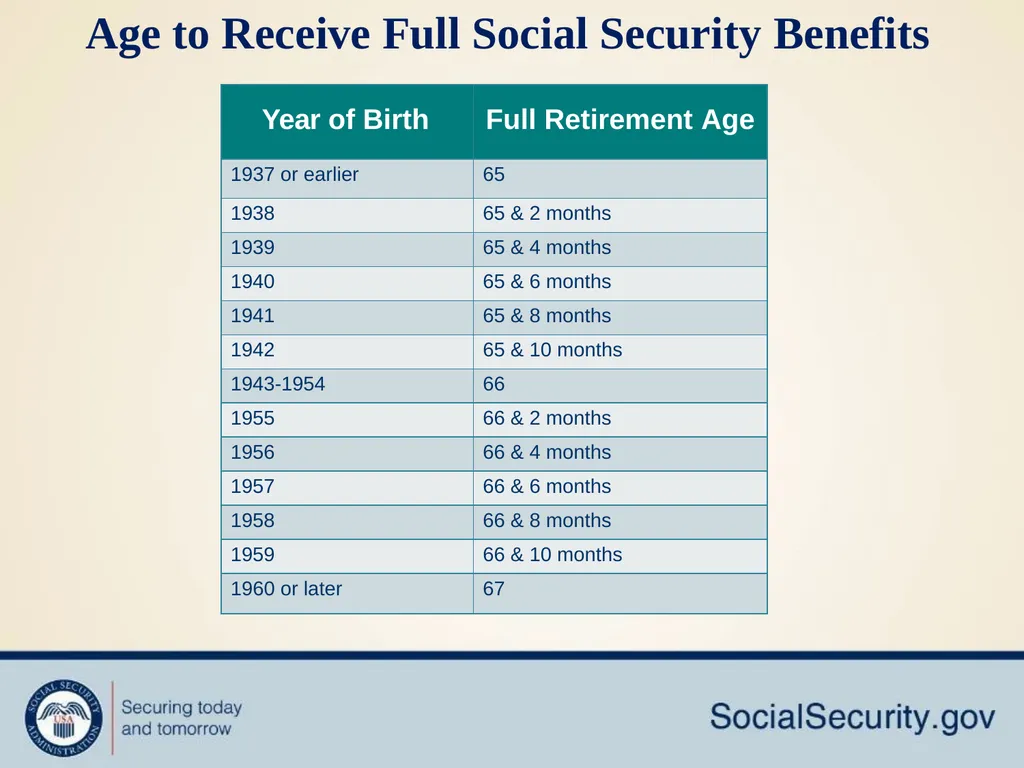
Age to Receive Full Social Security Benefits<br>
05
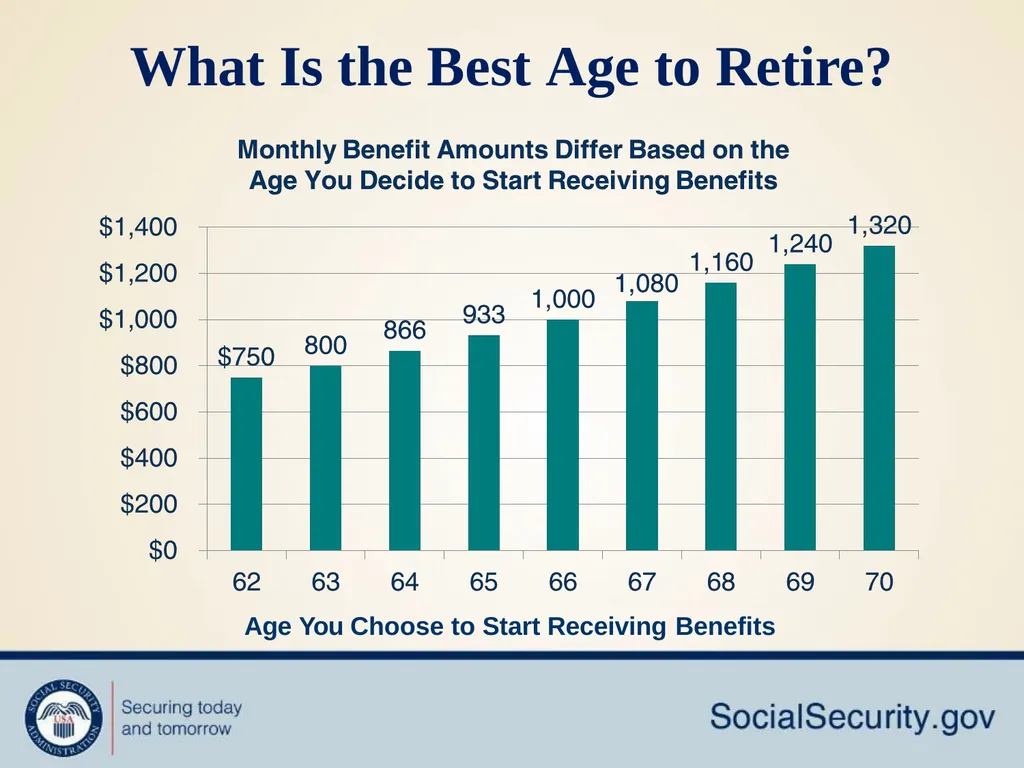
What Is the Best Age to Retire? Age You Choose to Start Receiving Benefits<br>
06
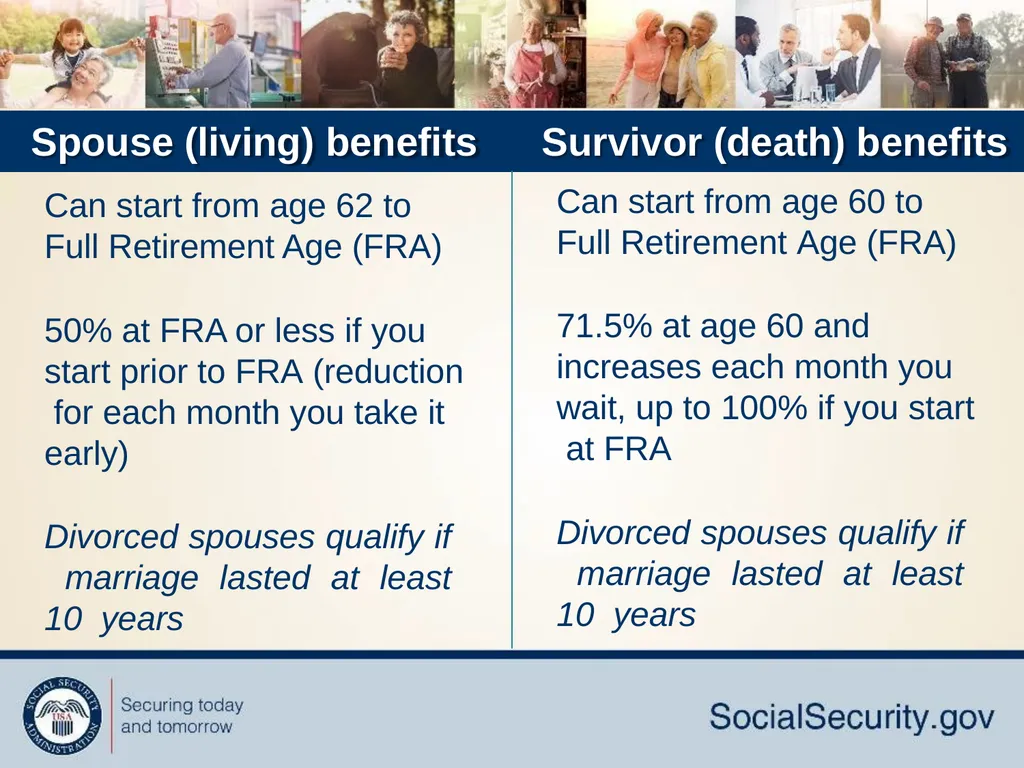
Can start from age 62 to
Full Retirement Age (FRA)
50% at FRA or less if you start prior to FRA (reduction for each month you take it early)
Divorced spouses qualify if marriage lasted at least 10 years Can start from age 60 to
Full Retirement Age (FRA)
71.5% at age 60 and increases each month you wait, up to 100% if you start at FRA
Divorced spouses qualify if marriage lasted at least 10 years Spouse (living) benefits Survivor (death) benefits<br>
07
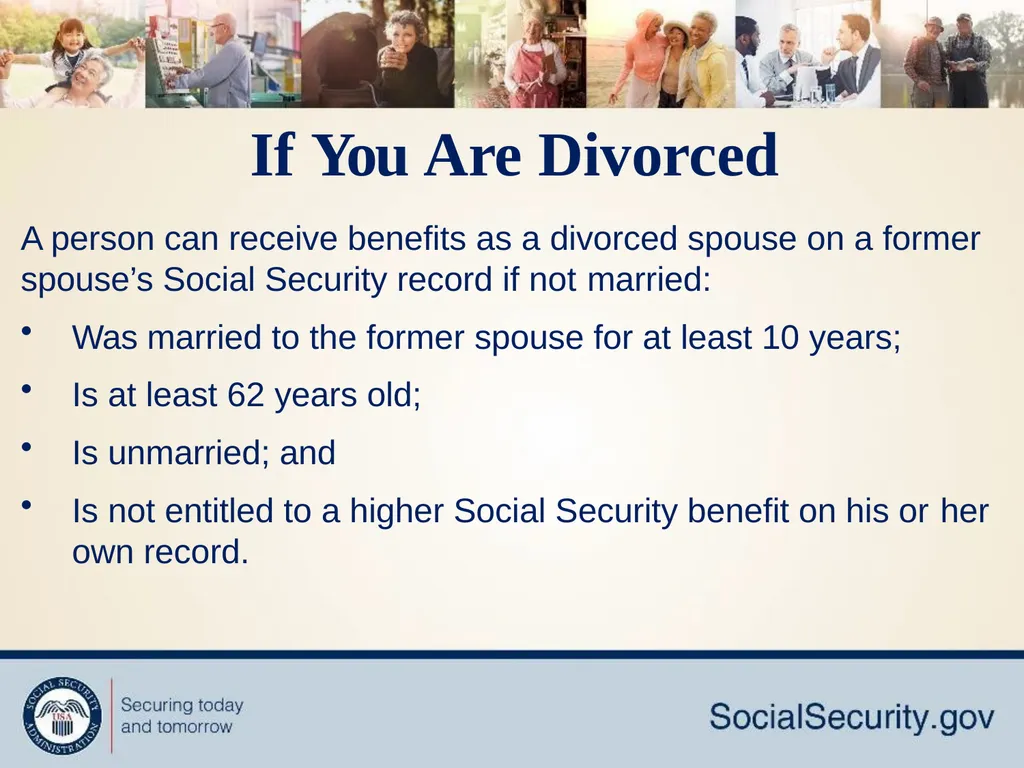
If You Are Divorced A person can receive benefits as a divorced spouse on a former
spouse’s Social Security record if not married:
Was married to the former spouse for at least 10 years;
Is at least 62 years old;
Is unmarried; and
Is not entitled to a higher Social Security benefit on his or her
own record.<br>
08
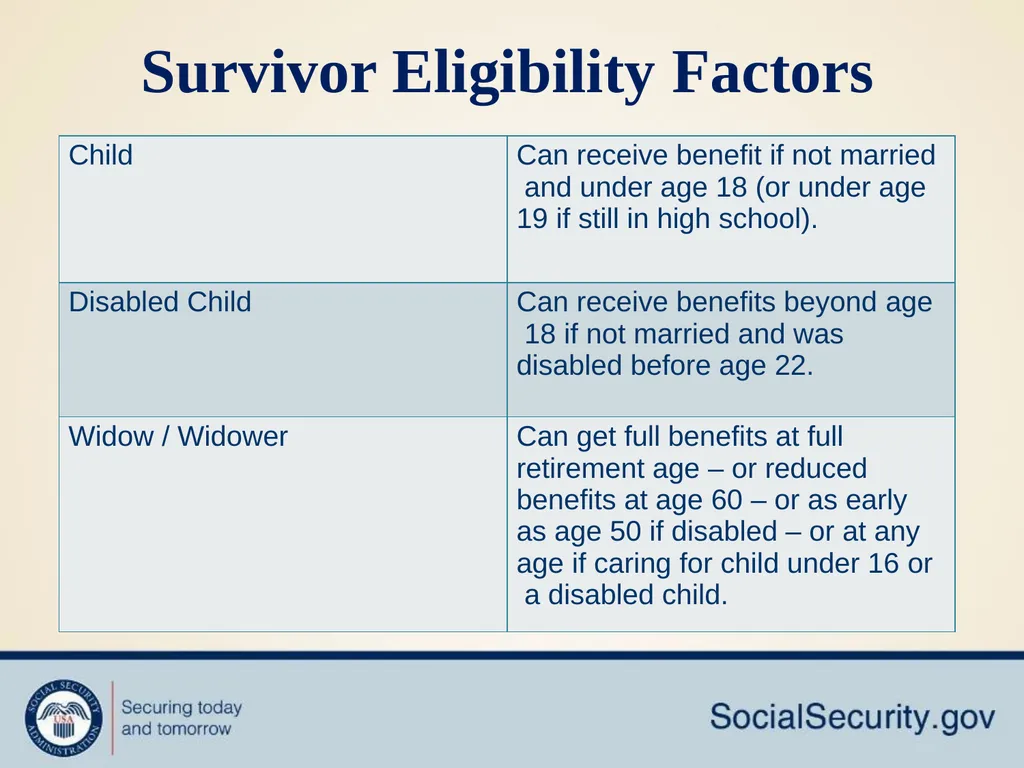
Survivor Eligibility Factors<br>
09
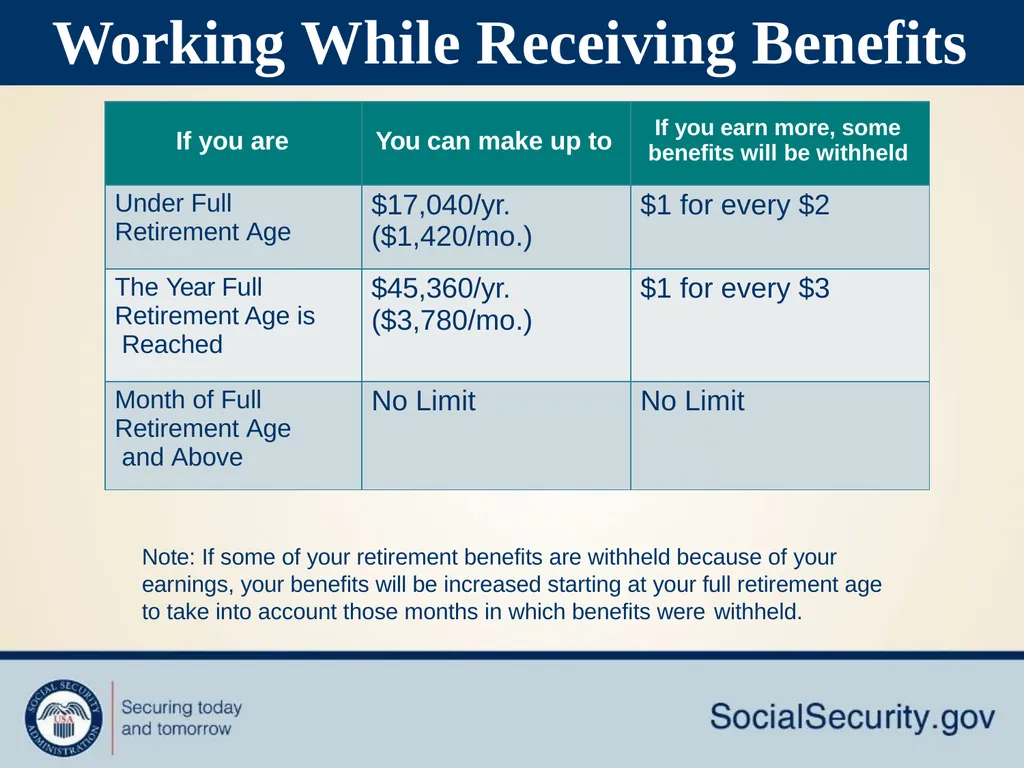
Working While Receiving Benefits Note: If some of your retirement benefits are withheld because of your earnings, your benefits will be increased starting at your full retirement age to take into account those months in which benefits were withheld.<br>
10
Gross wages from employment
Net earnings from self- employment Inheritance payments
Pensions
Income from investments Interest and dividends Capital gains
Other sources Income That Counts as Earnings Income That Does NOT Count as Earnings<br>
11
No one pays federal income tax on more than 85 percent of his or her Social Security benefits, based on Internal Revenue Service (IRS) rules Visit IRS.gov and search for Publication 554, Tax Guide for Seniors, and Publication 915,
Social Security And Equivalent Railroad Retirement Benefits Taxation of Social Security Benefits If you:
file a federal tax return as an "individual" and your combined income* is
between $25,000 and $34,000, you may have to pay income tax on up to 50 percent of your benefits.
more than $34,000, up to 85 percent of your benefits may be taxable.
file a joint return, and you and your spouse have a combined income* that is
between $32,000 and $44,000, you may have to pay income tax on up to 50 percent of your benefits
more than $44,000, up to 85 percent of your benefits may be taxable.
are married and file a separate tax return, you probably will pay taxes on your benefits. Your adjusted gross income
+ Nontaxable interest
+ ½ of your Social Security benefits
= Your "combined income“<br>
12
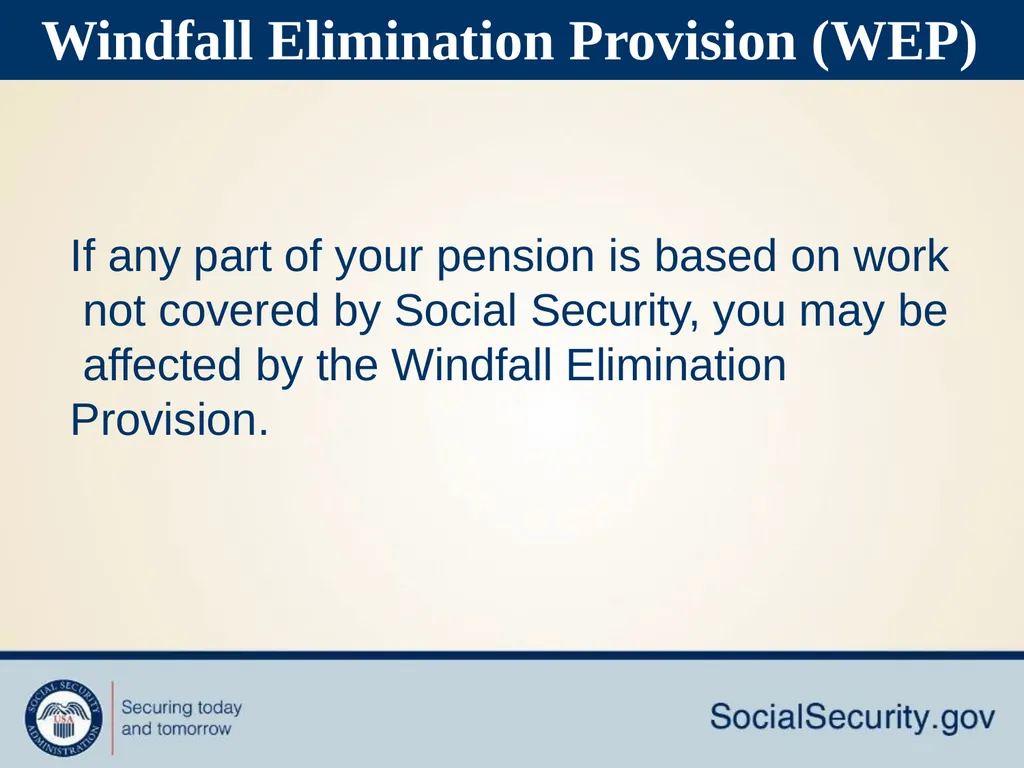
Windfall Elimination Provision (WEP) If any part of your pension is based on work not covered by Social Security, you may be affected by the Windfall Elimination Provision.<br>
13
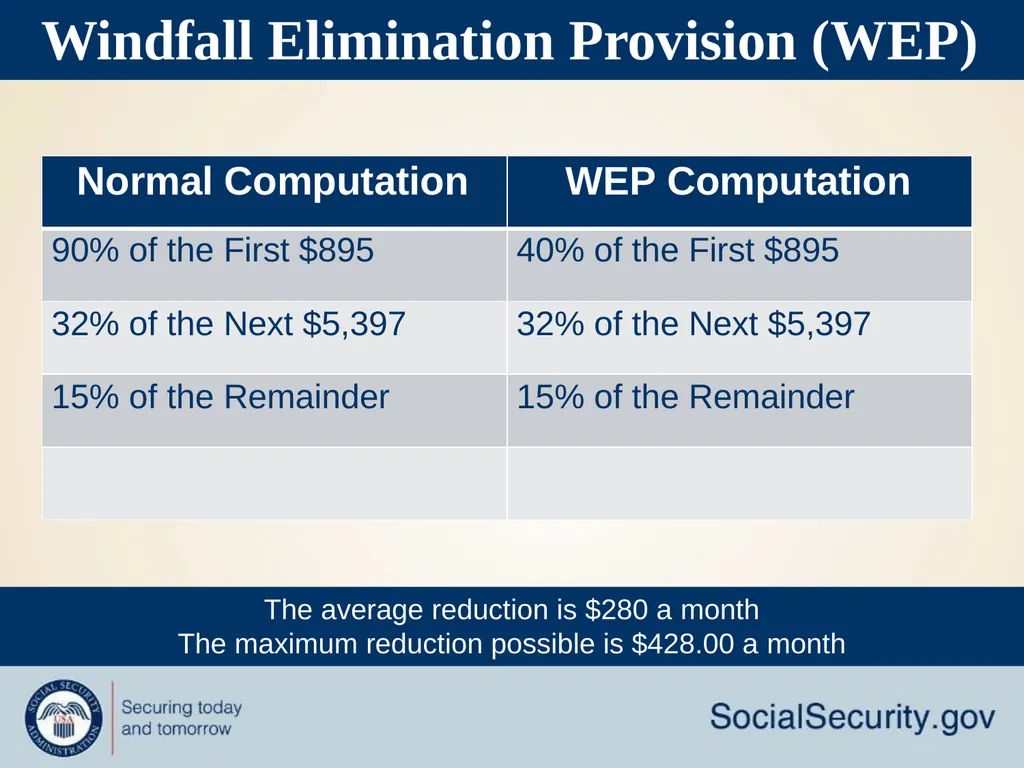
Windfall Elimination Provision (WEP) The average reduction is $280 a month
The maximum reduction possible is $428.00 a month<br>
14
Windfall Elimination Provision (WEP)<br>
15
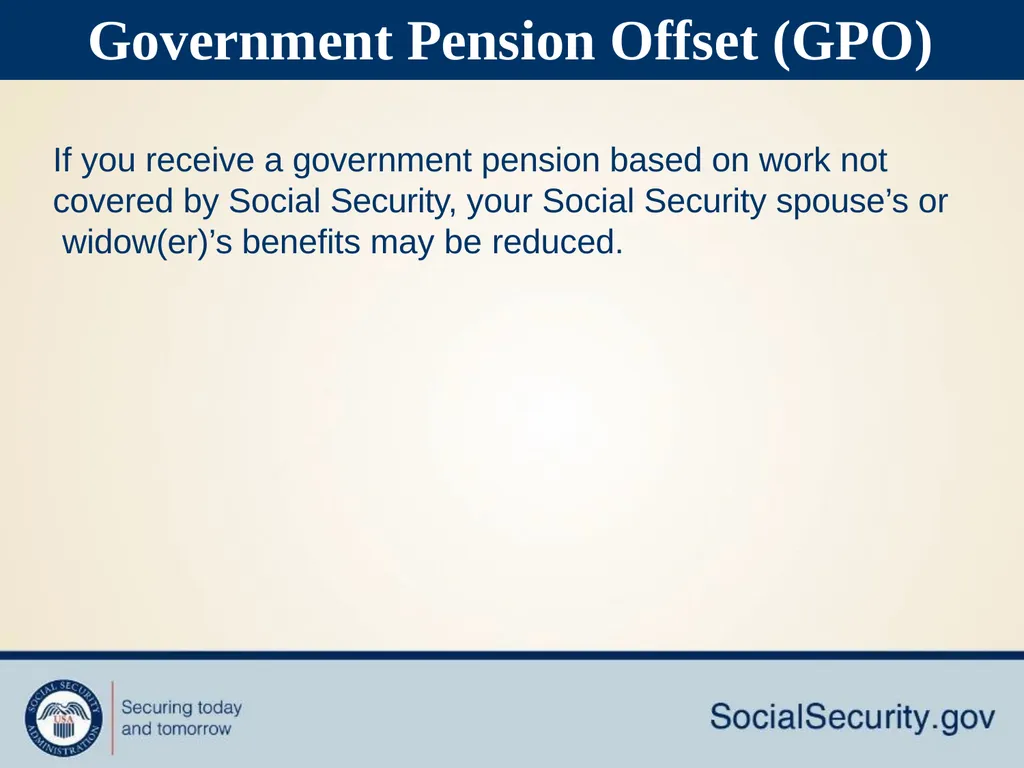
Government Pension Offset (GPO) If you receive a government pension based on work not covered by Social Security, your Social Security spouse’s or widow(er)’s benefits may be reduced.<br>
16
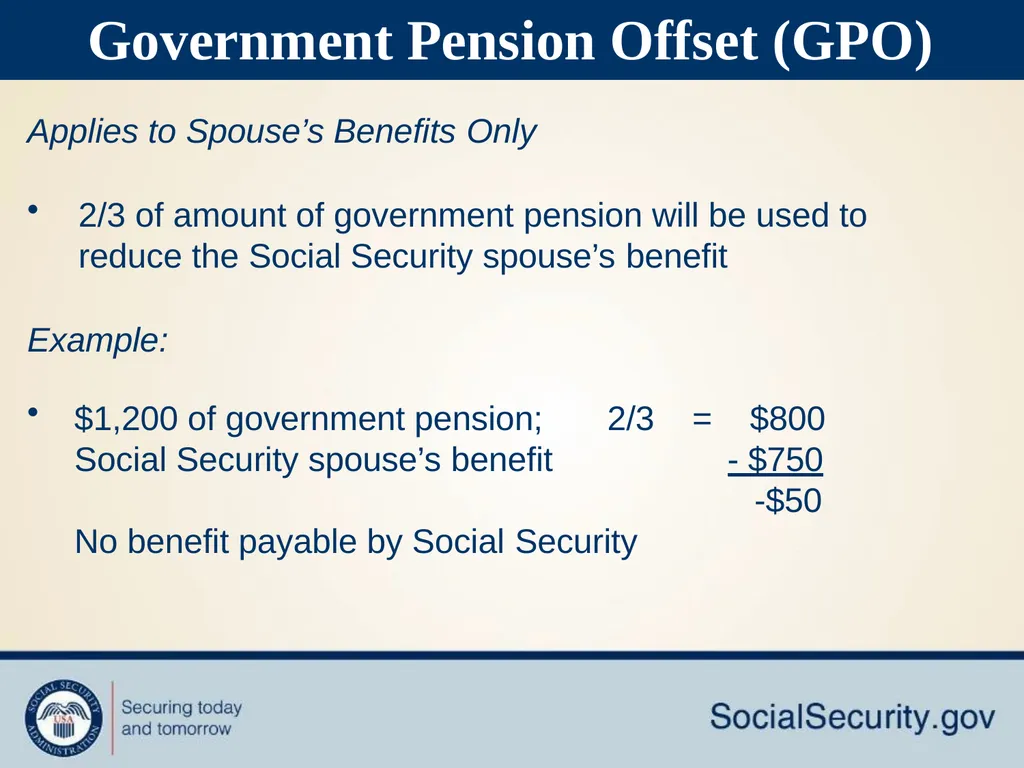
Government Pension Offset (GPO) Applies to Spouse’s Benefits Only
2/3 of amount of government pension will be used to
reduce the Social Security spouse’s benefit
Example: $1,200 of government pension; Social Security spouse’s benefit 2/3 = $800
- $750
-$50 No benefit payable by Social Security<br>
17
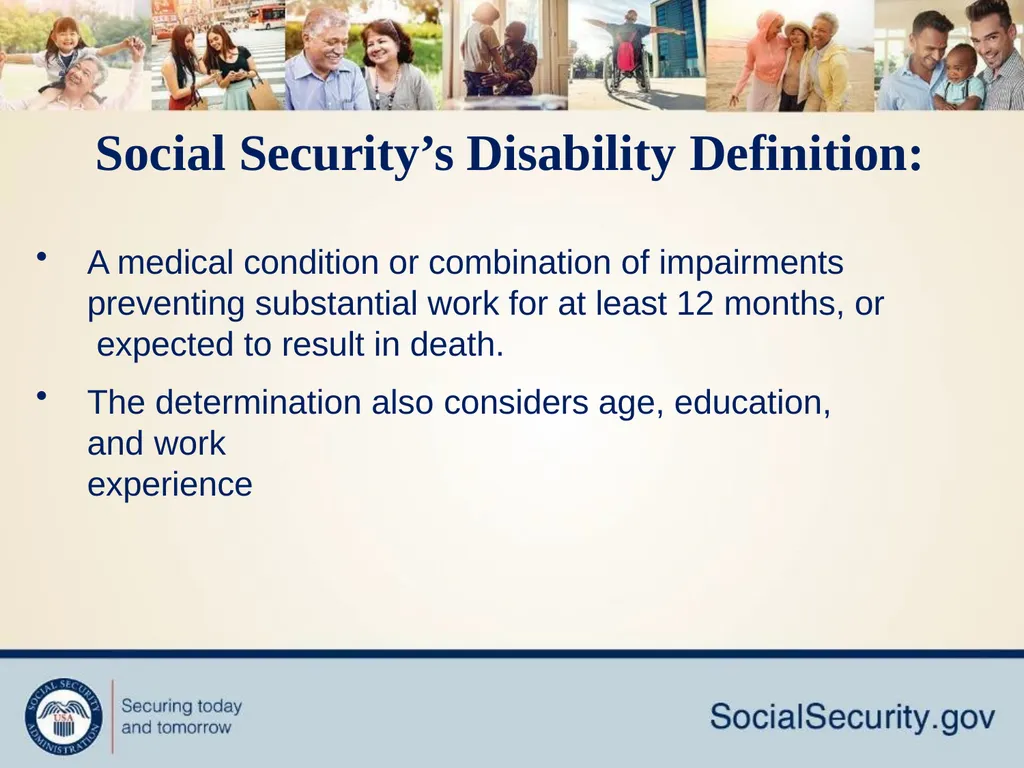
Social Security’s Disability Definition: A medical condition or combination of impairments preventing substantial work for at least 12 months, or expected to result in death.
The determination also considers age, education, and work
experience<br>
18
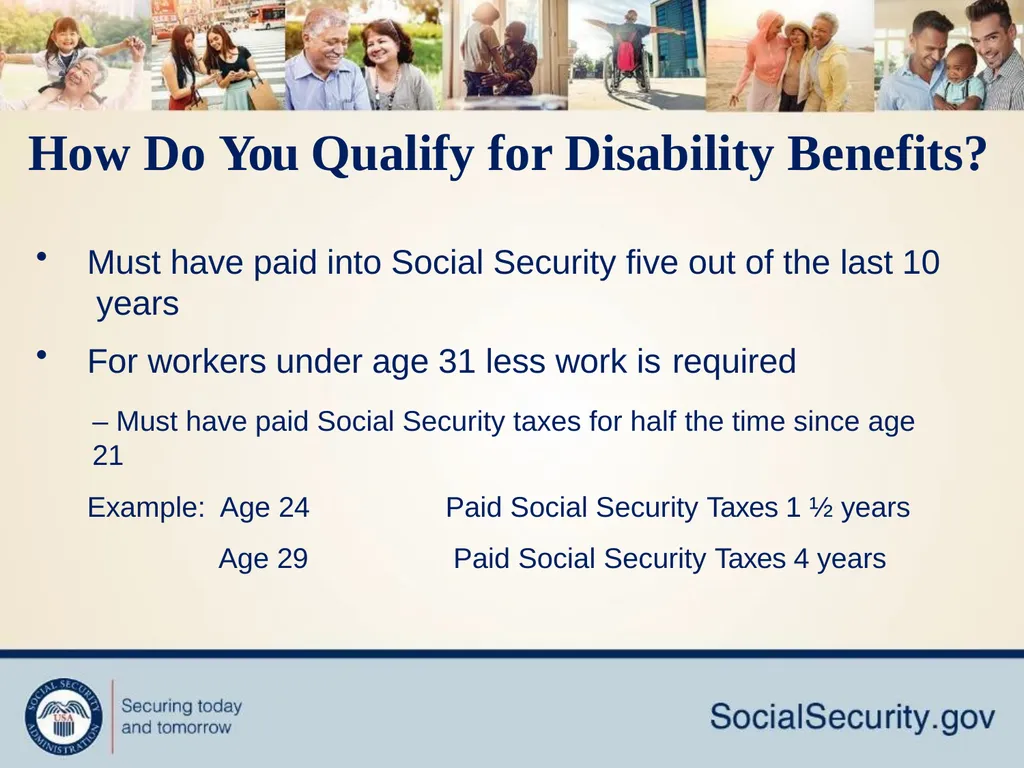
How Do You Qualify for Disability Benefits? Must have paid into Social Security five out of the last 10 years
For workers under age 31 less work is required
– Must have paid Social Security taxes for half the time since age 21 Example: Age 24
Age 29 Paid Social Security Taxes 1 ½ years Paid Social Security Taxes 4 years<br>
19
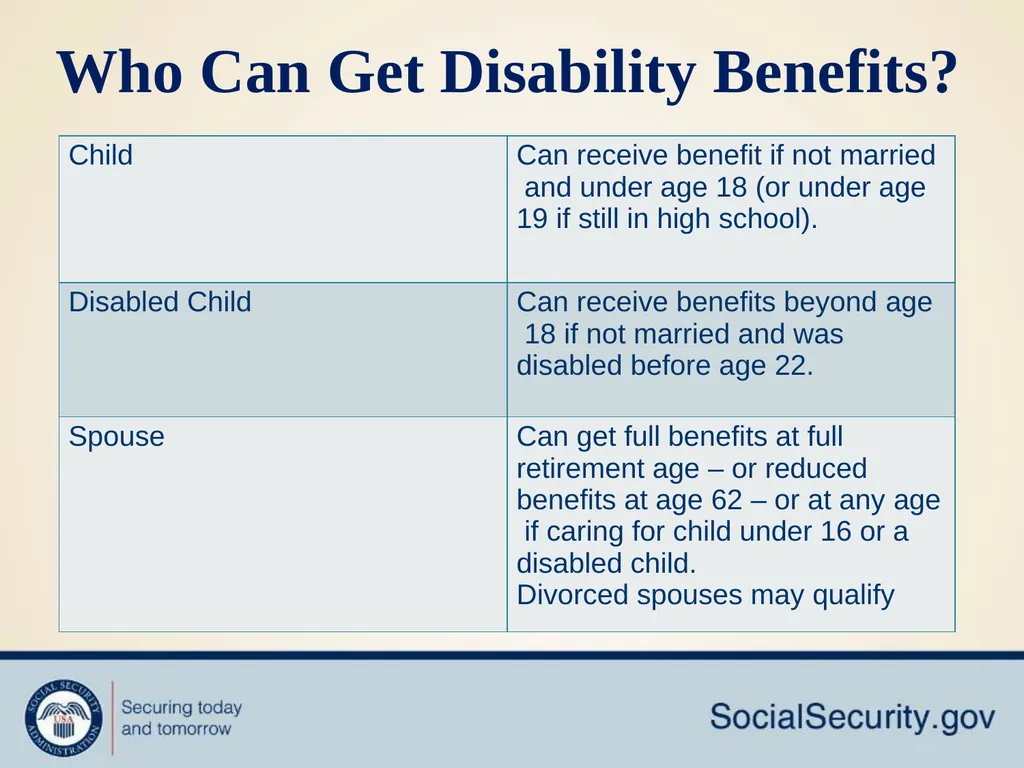
Who Can Get Disability Benefits?<br>
20
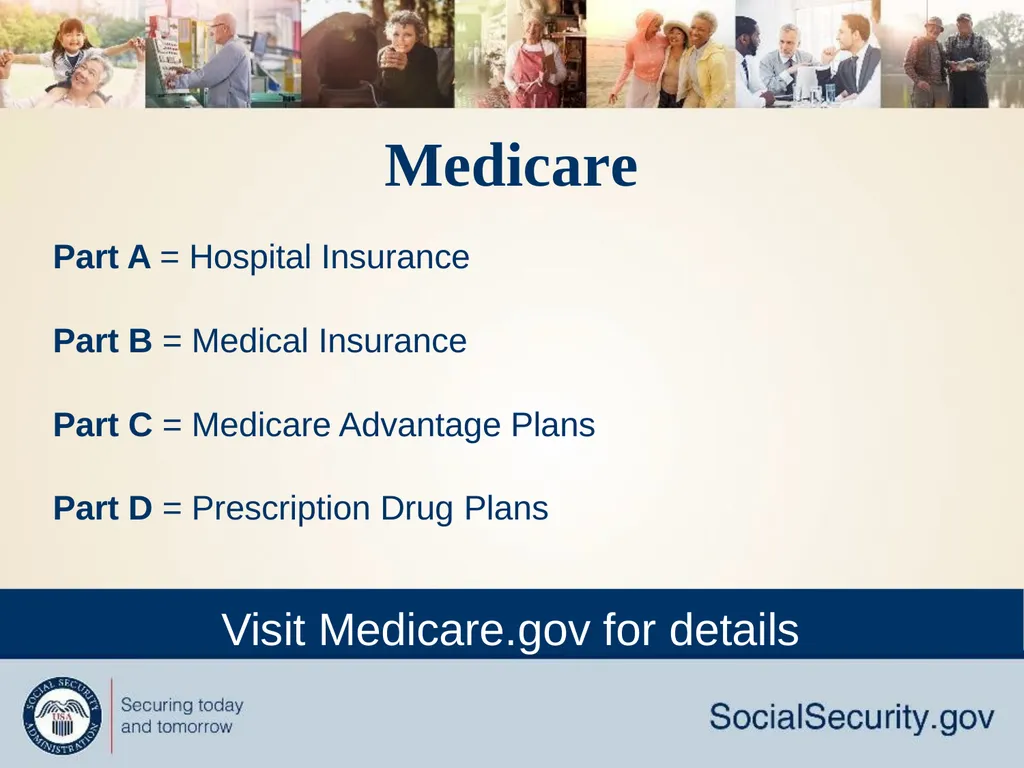
Part A = Hospital Insurance
Part B = Medical Insurance
Part C = Medicare Advantage Plans
Part D = Prescription Drug Plans
Visit Medicare.gov for details Medicare<br>
21
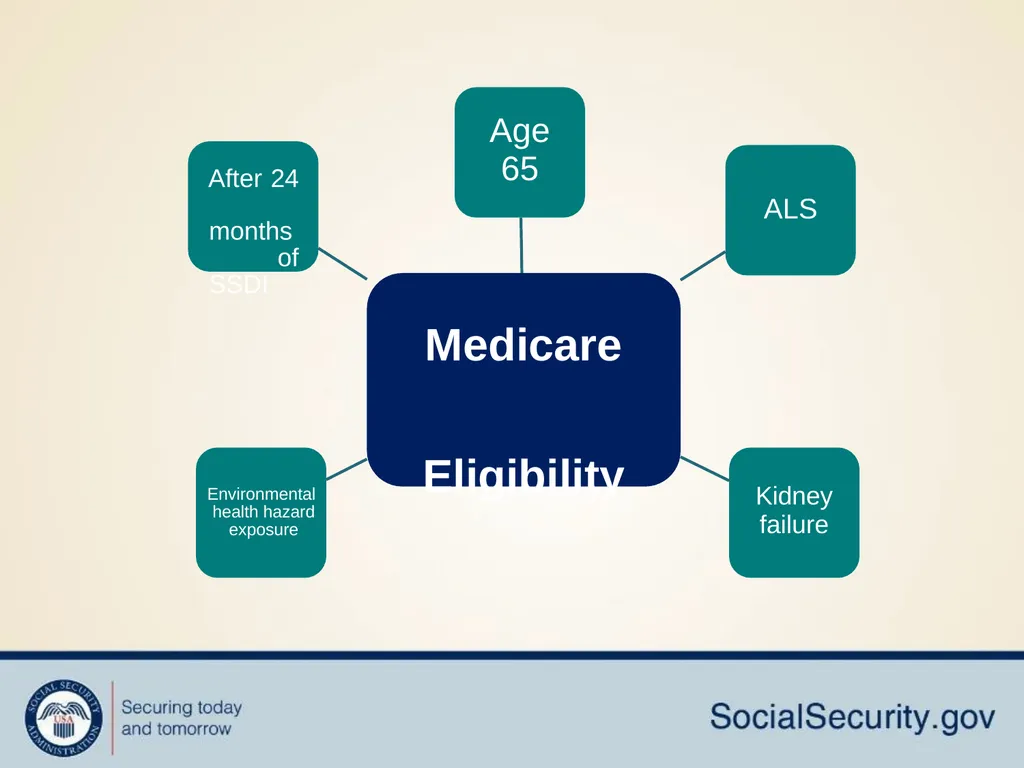
Medicare Eligibility Age
65 ALS Kidney
failure Environmental health hazard exposure After 24 months of SSDI<br>
22
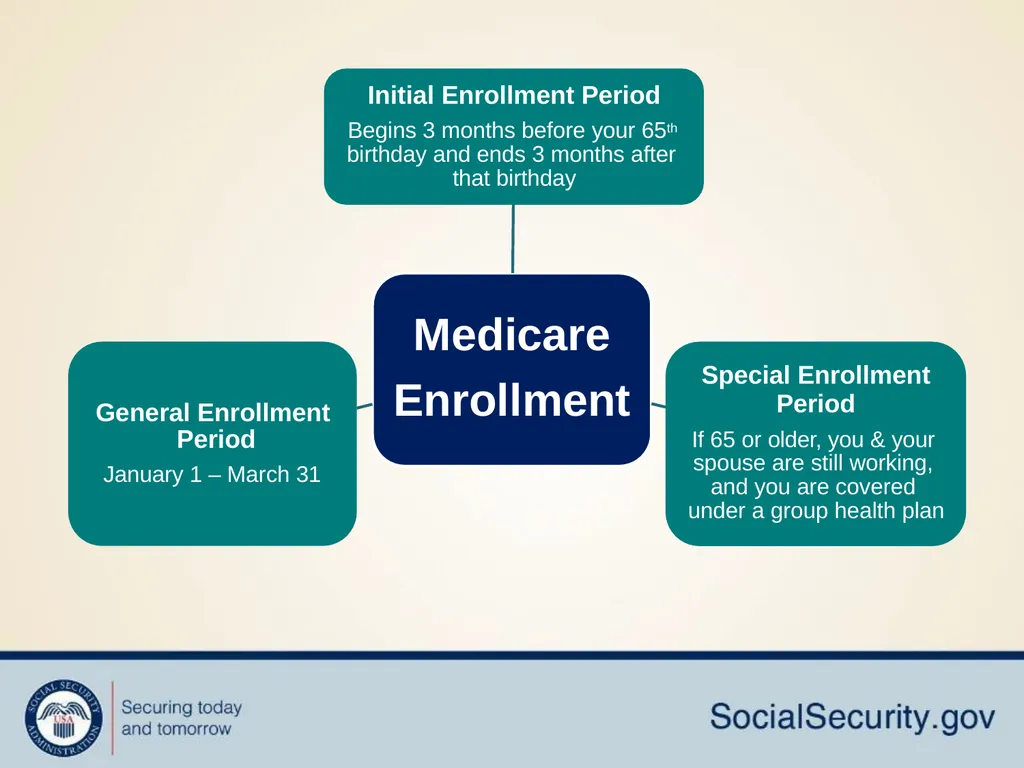
Medicare
Enrollment Initial Enrollment Period
Begins 3 months before your 65th birthday and ends 3 months after that birthday Special Enrollment
Period
If 65 or older, you & your spouse are still working, and you are covered under a group health plan General Enrollment Period
January 1 – March 31<br>
23
1-800-MEDICARE or Medicare.gov<br>
24
1-800-MEDICARE or Medicare.gov<br>
25
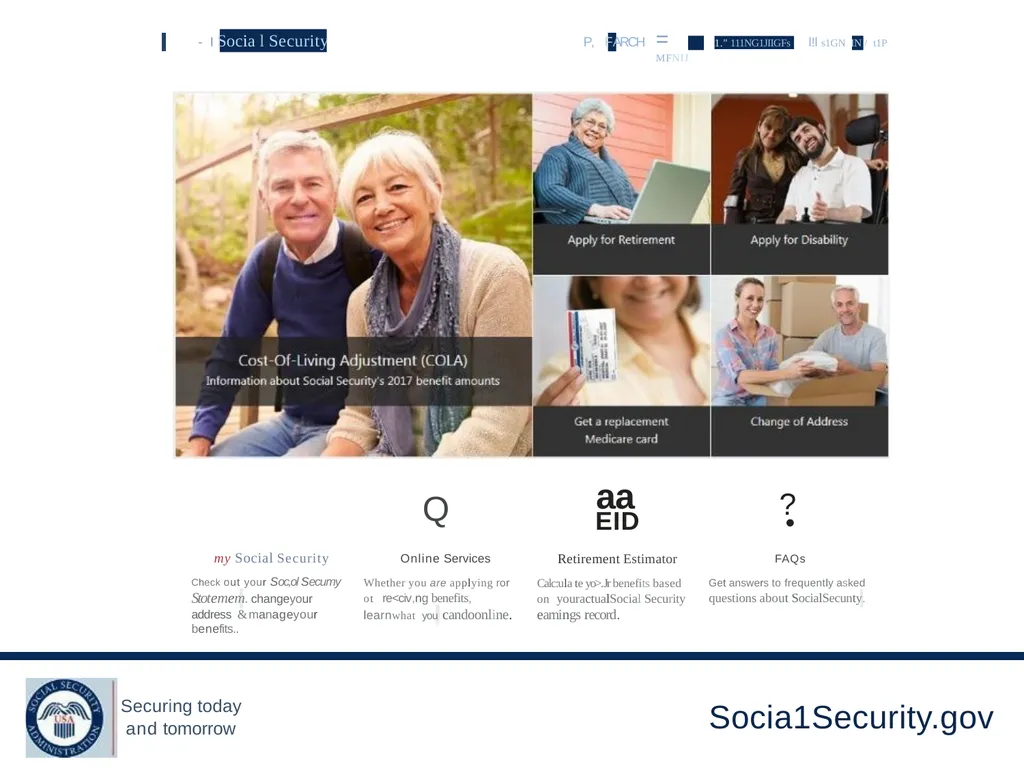
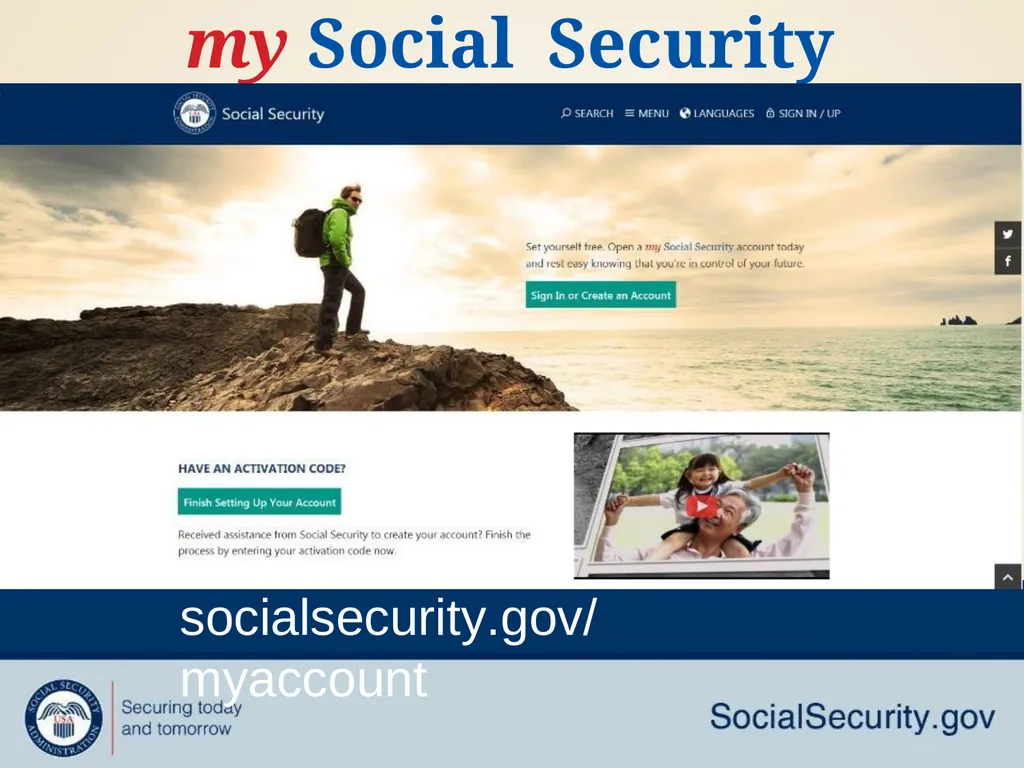
- I Socia l Security P, FARCH = MFNIJ 1." 111NG1JIIGFs l!l s1GN IN / t1P aa ? EID •
FAQs Get answers to frequently asked
questions about SocialSecunty. my Social Security
Check out your Soc,ol Secumy Stotemem. changeyour address &manageyour benefits.. Q
Online Services
Whether you are applying ror ot re<civ,ng benefits, learnwhat you candoonline. Retirement Estimator
Calc:ula te yo>.Jr benefits based on youractualSocial Security earnings record. Securing today and tomorrow Socia1Security.gov<br>
26
socialsecurity.gov/myaccount my Social Security<br>
27
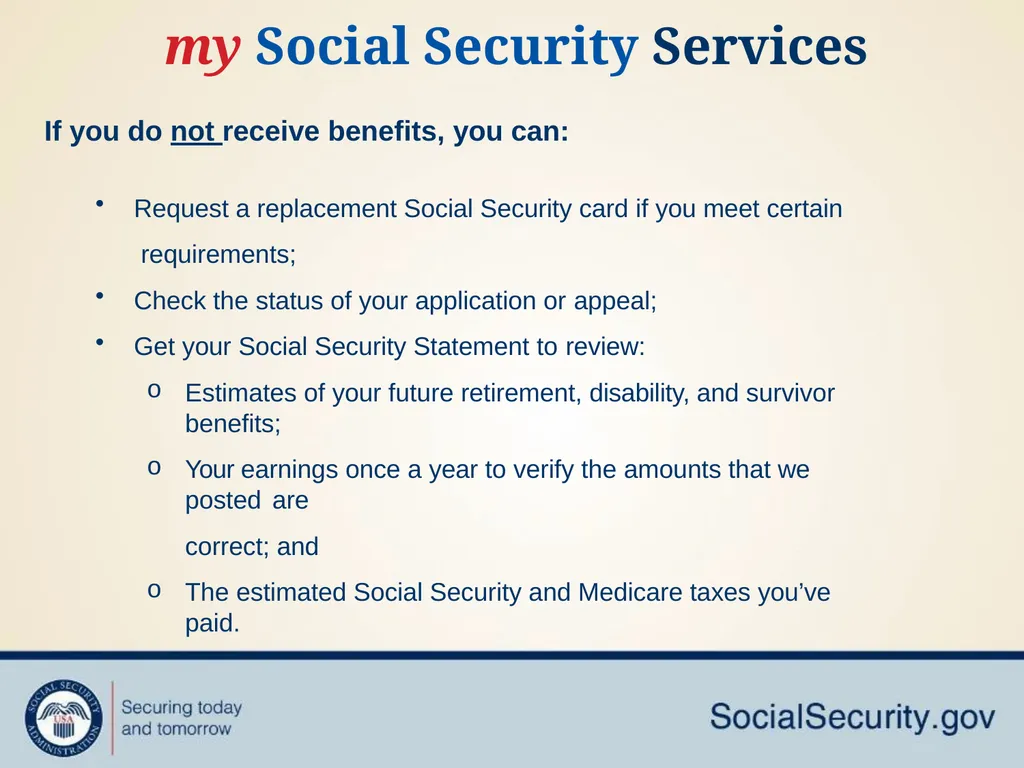
my Social Security Services If you do not receive benefits, you can:
Request a replacement Social Security card if you meet certain requirements;
Check the status of your application or appeal;
Get your Social Security Statement to review:
Estimates of your future retirement, disability, and survivor benefits;
Your earnings once a year to verify the amounts that we posted are
correct; and
The estimated Social Security and Medicare taxes you’ve paid.<br>
28
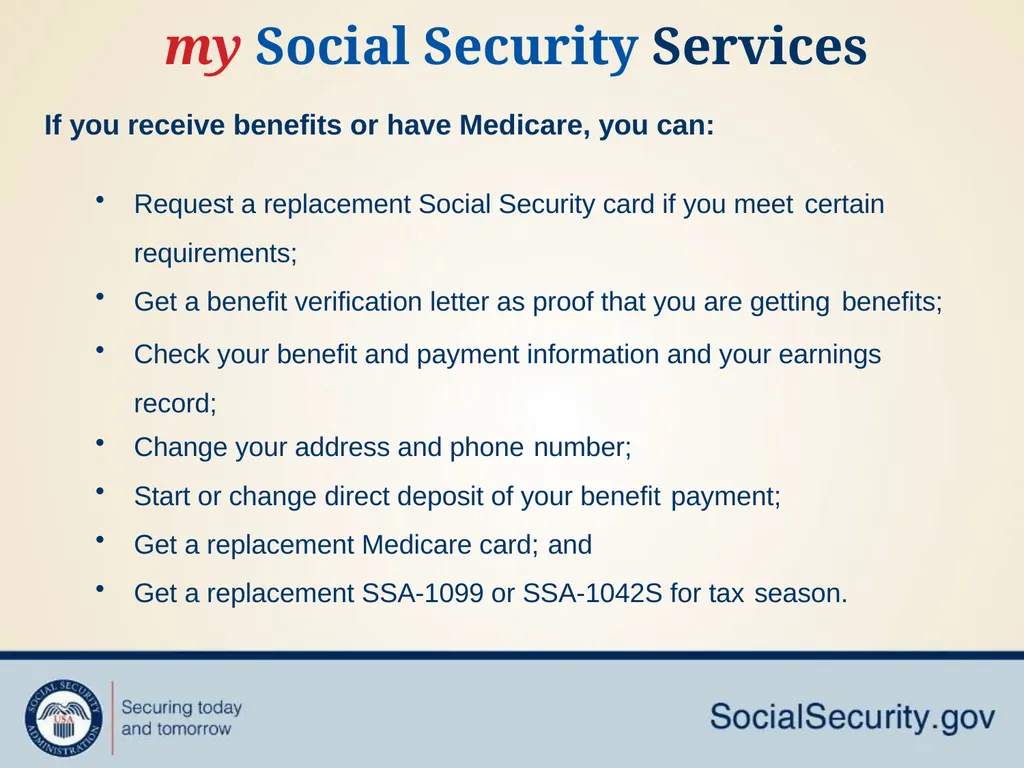
my Social Security Services If you receive benefits or have Medicare, you can:
Request a replacement Social Security card if you meet certain
requirements;
Get a benefit verification letter as proof that you are getting benefits;
Check your benefit and payment information and your earnings record;
Change your address and phone number;
Start or change direct deposit of your benefit payment;
Get a replacement Medicare card; and
Get a replacement SSA-1099 or SSA-1042S for tax season.<br>
29
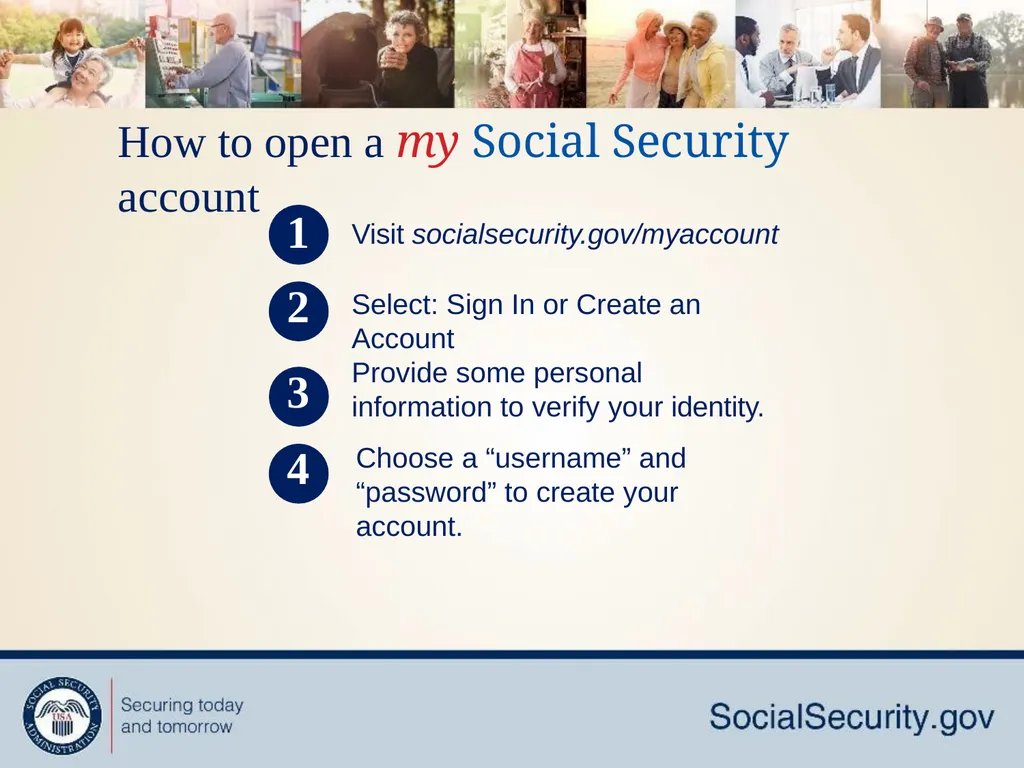
Visit socialsecurity.gov/myaccount How to open a my Social Security account Select: Sign In or Create an Account Provide some personal information to verify your identity.
Choose a “username” and “password” to create your account. 1
2
3
4<br>
30
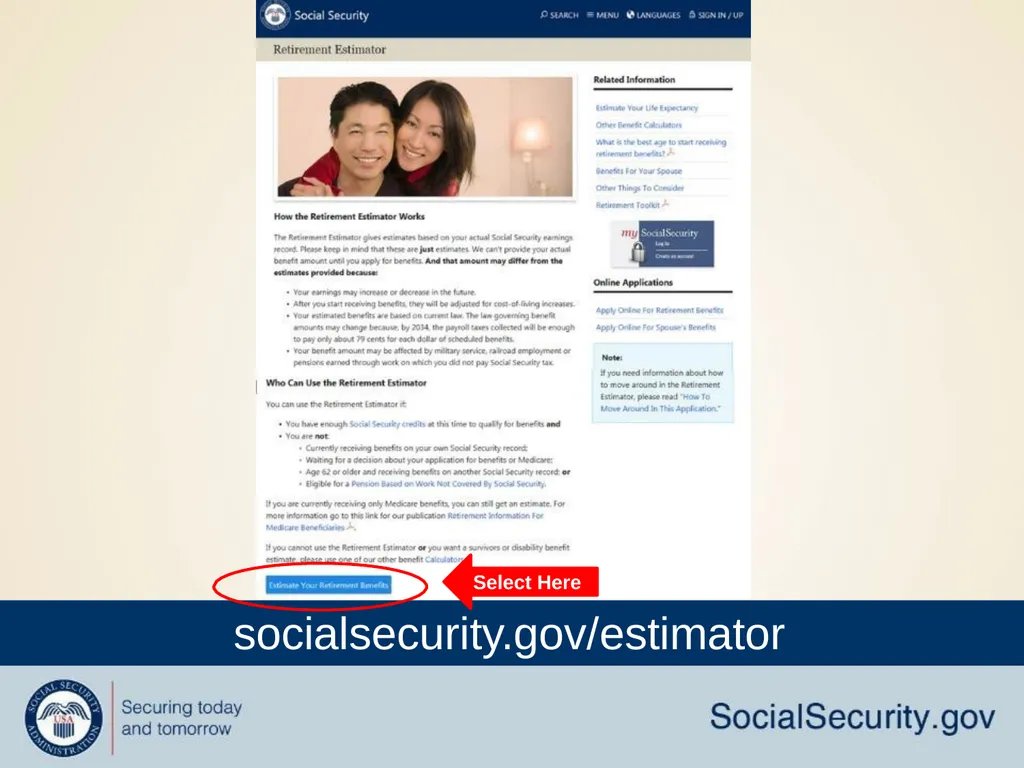
socialsecurity.gov/estimator Select Here<br>
31
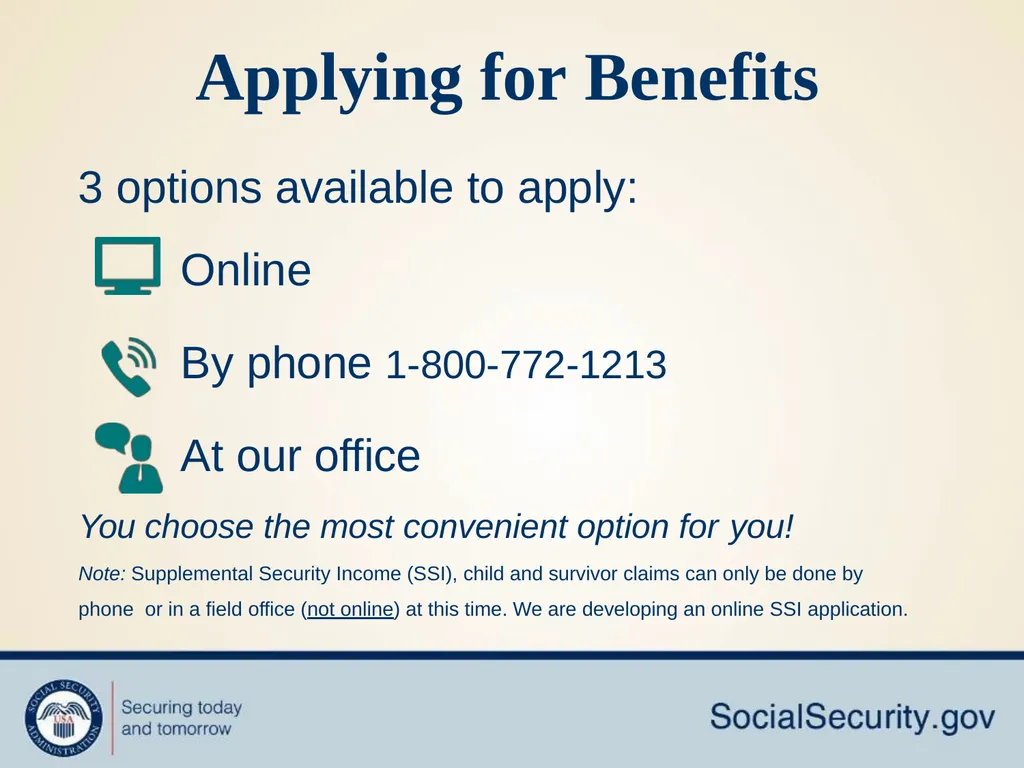
Applying for Benefits 3 options available to apply:
Online
By phone 1-800-772-1213 At our office
You choose the most convenient option for you!
Note: Supplemental Security Income (SSI), child and survivor claims can only be done by phone or in a field office (not online) at this time. We are developing an online SSI application.<br>
32
If you have questions,
a valuable resource on our website
is our “FAQs”
or
Call Social Security toll-free at
1-800-772-1213
TTY 1-800-325-0778
7 am – 7 pm Monday – Friday
Automated Phone Service 24/7<br>