Social Work: Putting Relationships First Doing Relationship Based Social Work Using a Restorative Approach Mary Henihan 10th May 2019 IASW National Conference Our vision For every young person at risk the right supports at the right time,
"Social Work: Putting Relationships First Doing" is the property of its rightful owner. Permission is granted to
download and print the materials on this website for personal, non-commercial use only, and to display it
on your personal computer provided you do not modify the materials and that you retain all copyright
notices contained in the materials. By downloading content from our website, you accept the terms of this
agreement.
Presentation Transcript
01
Social Work: Putting Relationships First Doing Relationship Based Social Work Using a Restorative Approach
Mary Henihan
10th May 2019
IASW National Conference<br>
02
Our vision For every young person at risk – the right supports at the right time, to make the most of their lives. Our mission Le Chéile is a community-based volunteer mentoring and family support service, which works with young people involved in or at risk of offending, as well as their families. Our values We listen – respect – empower. We are non-judgemental and believe in the potential of every young person. We work collaboratively with young people, families and other agencies. We use a restorative practice ethos. We deliver quality services.<br>
03
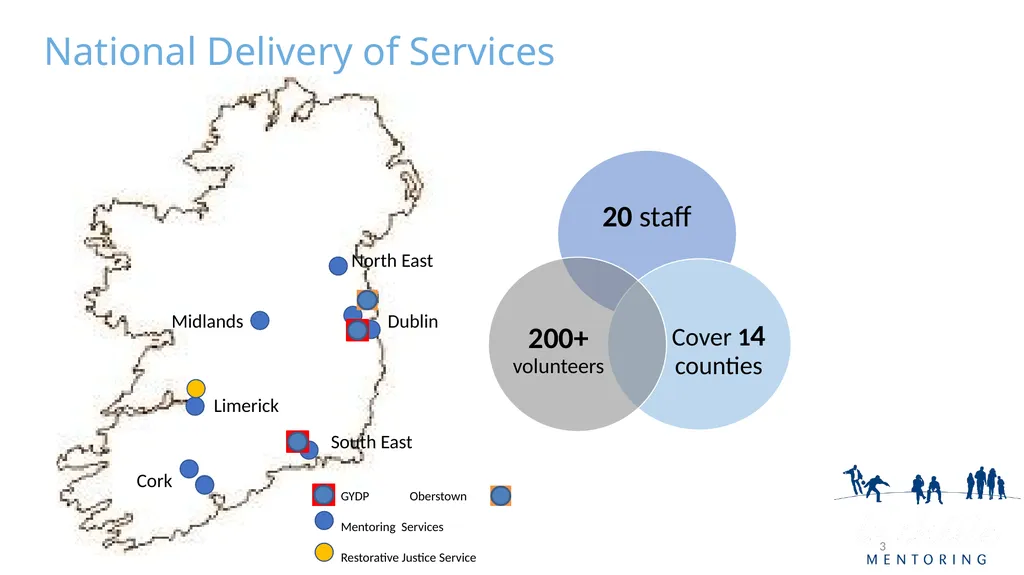
National Delivery of Services 3<br>
04
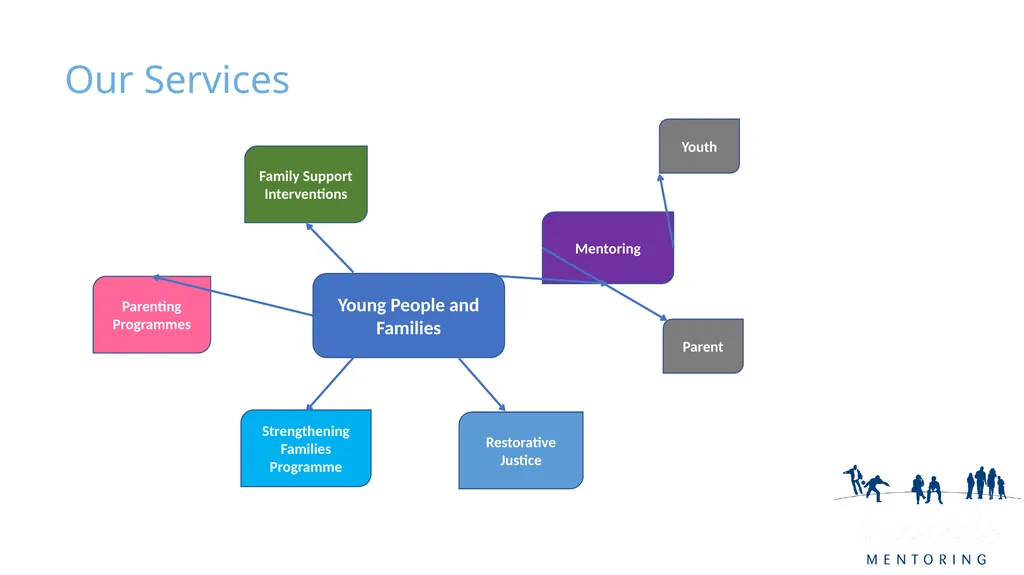
Our Services Parent<br>
05
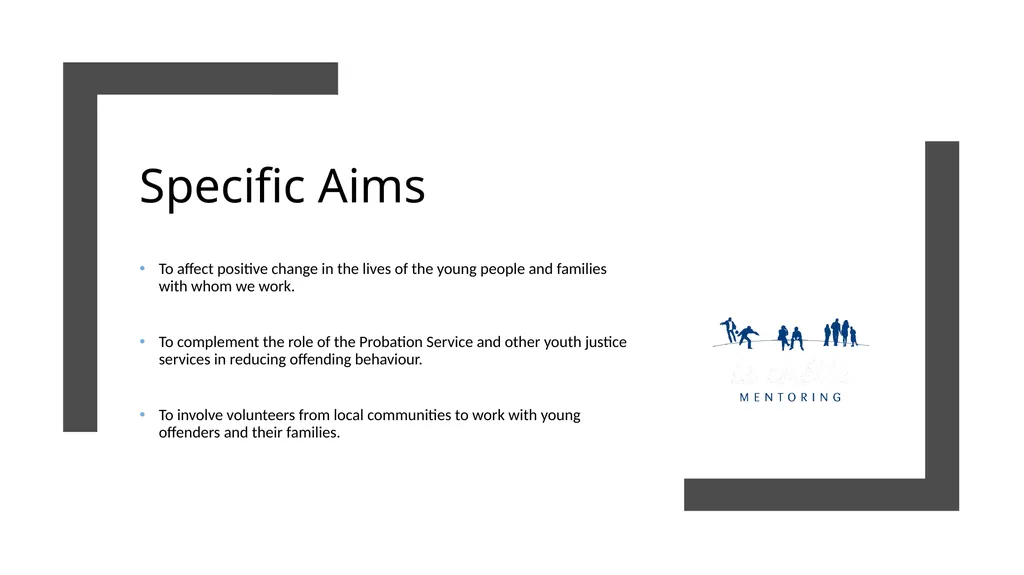
Specific Aims To affect positive change in the lives of the young people and families with whom we work.
To complement the role of the Probation Service and other youth justice services in reducing offending behaviour.
To involve volunteers from local communities to work with young offenders and their families.<br>
06
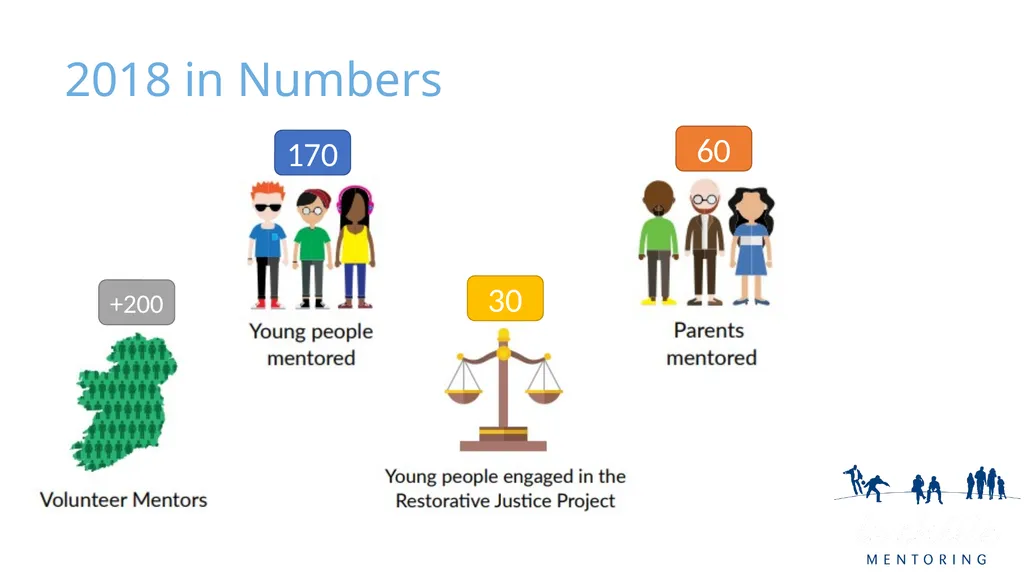
2018 in Numbers<br>
07
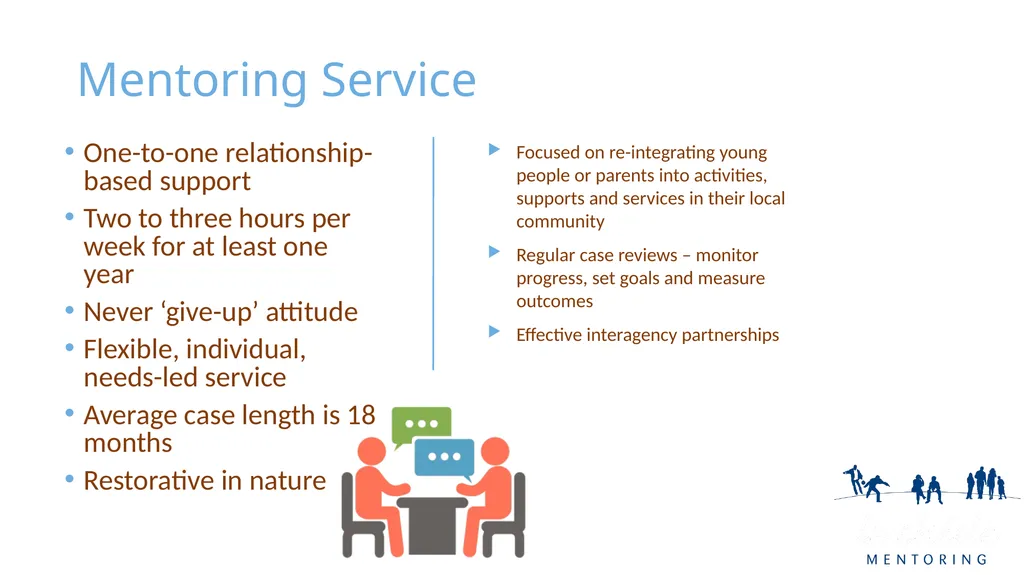
Mentoring Service One-to-one relationship-based support
Two to three hours per week for at least one year
Never ‘give-up’ attitude
Flexible, individual, needs-led service
Average case length is 18 months
Restorative in nature Focused on re-integrating young people or parents into activities, supports and services in their local community
Regular case reviews – monitor progress, set goals and measure outcomes
Effective interagency partnerships<br>
08
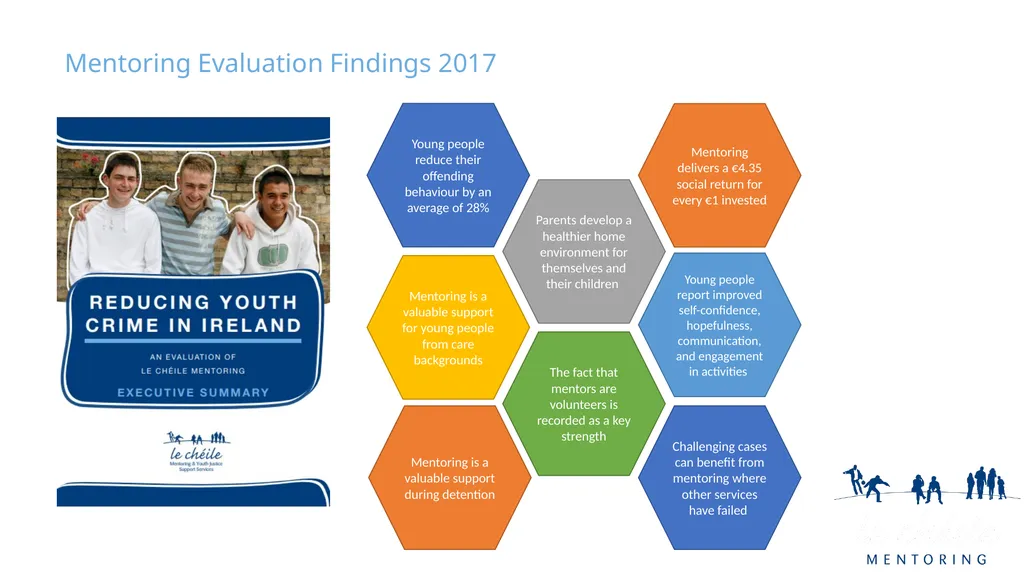
Mentoring Evaluation Findings 2017<br>
09
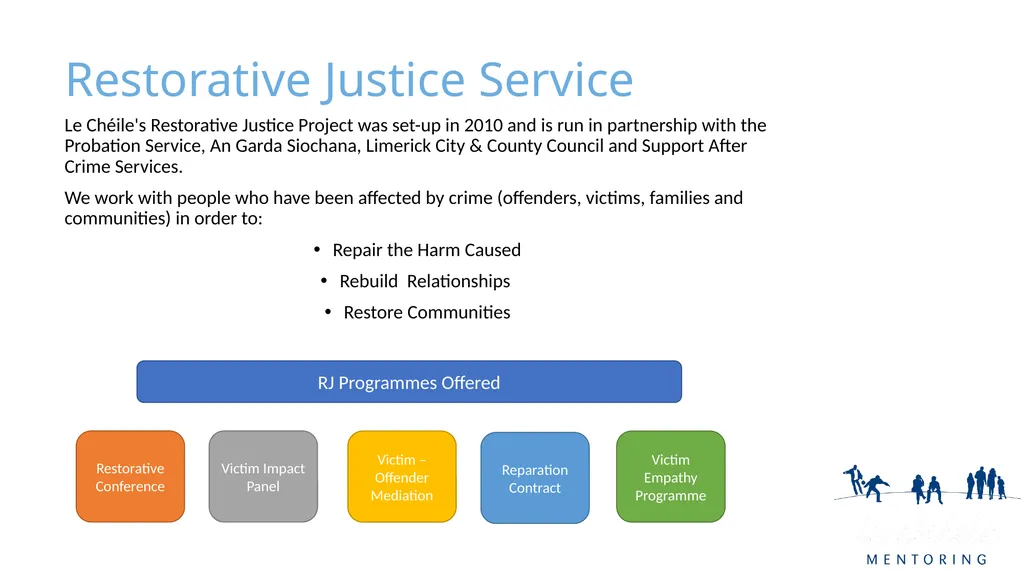
Restorative Justice Service Le Chéile's Restorative Justice Project was set-up in 2010 and is run in partnership with the Probation Service, An Garda Siochana, Limerick City & County Council and Support After Crime Services.
We work with people who have been affected by crime (offenders, victims, families and communities) in order to:
Repair the Harm Caused
Rebuild Relationships
Restore Communities<br>
10
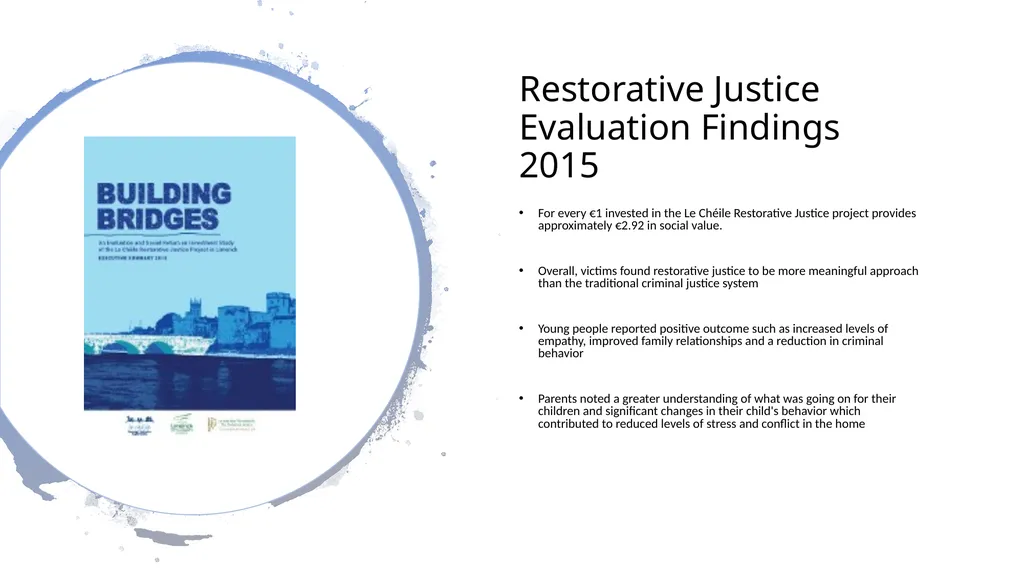
Restorative Justice Evaluation Findings 2015 For every €1 invested in the Le Chéile Restorative Justice project provides approximately €2.92 in social value.
Overall, victims found restorative justice to be more meaningful approach than the traditional criminal justice system
Young people reported positive outcome such as increased levels of empathy, improved family relationships and a reduction in criminal behavior
Parents noted a greater understanding of what was going on for their children and significant changes in their child's behavior which contributed to reduced levels of stress and conflict in the home<br>
11
Le Chéile Restorative Justice Project https://www.youtube.com/watch?v=OCfOmoFiBVw<br>
12
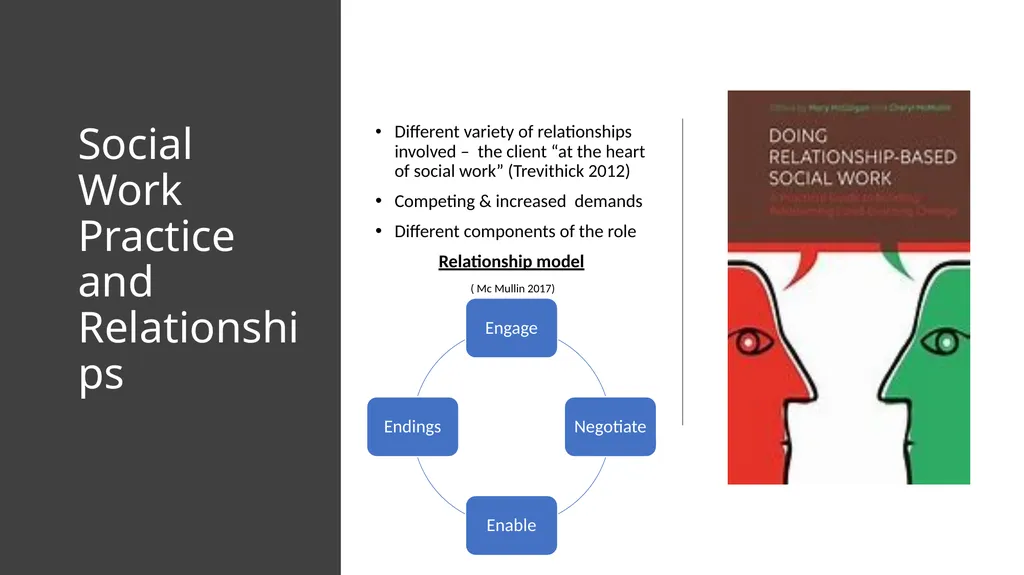
Social Work Practice and Relationships Different variety of relationships involved – the client “at the heart of social work” (Trevithick 2012)
Competing & increased demands
Different components of the role
Relationship model
( Mc Mullin 2017)<br>
13
Reflection Points<br>
14
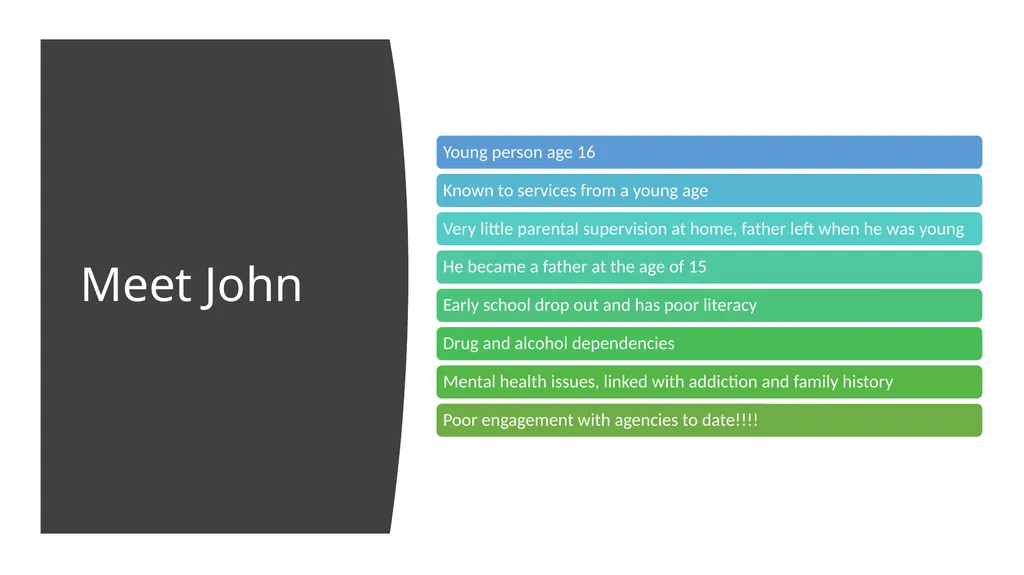
Meet John<br>
15
What did we do to build a strong, effective working relationship with John<br>
16
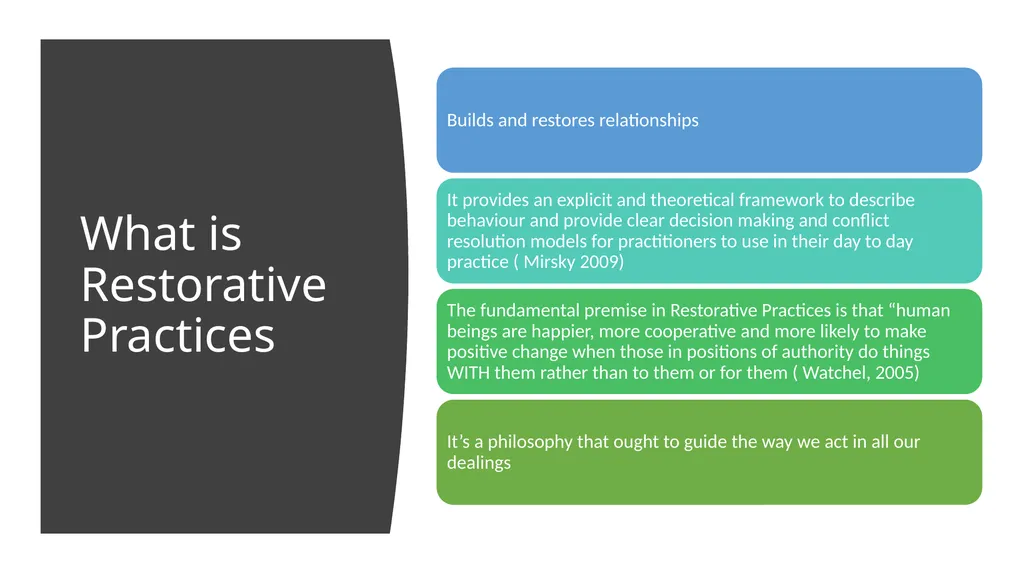
What is Restorative Practices<br>
17
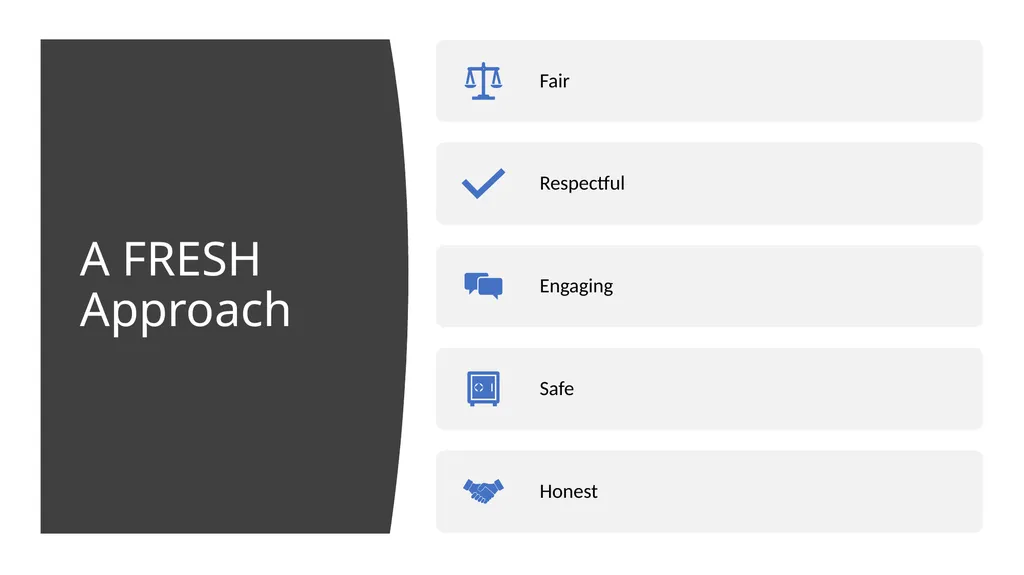
A FRESH Approach<br>
18
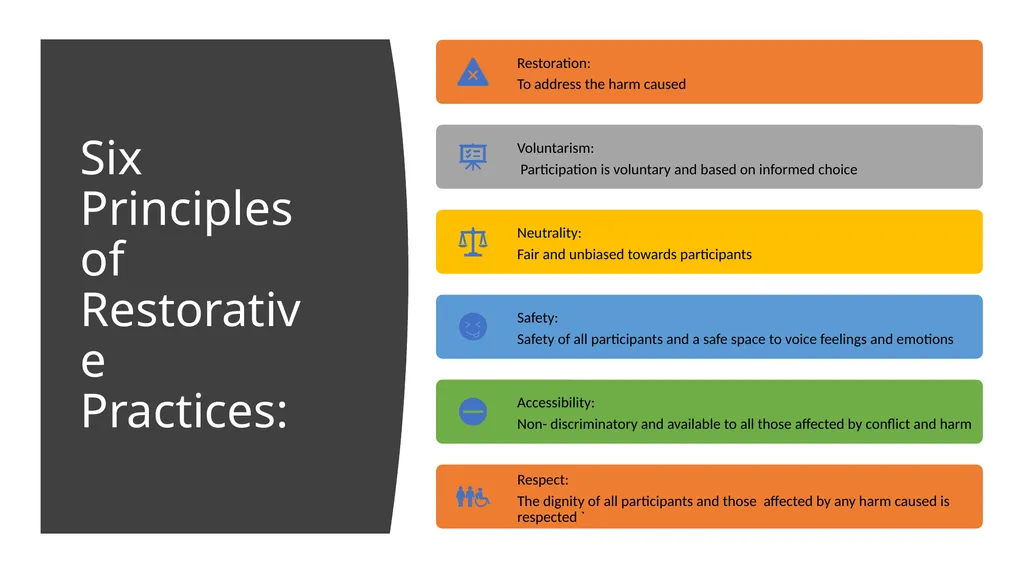
Six Principles of Restorative Practices:<br>
19
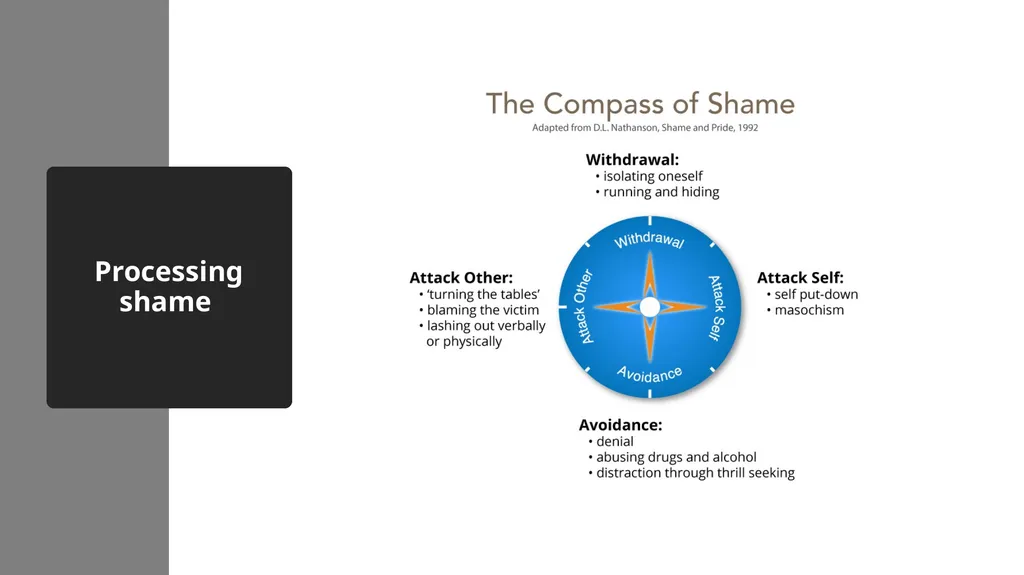
Processing shame<br>
20
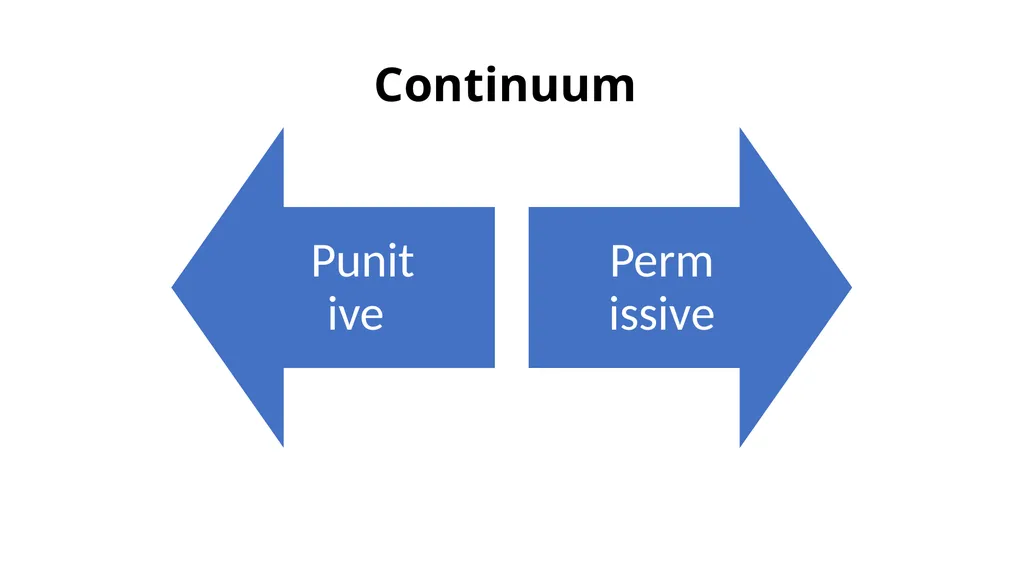
Continuum Permissive<br>
21
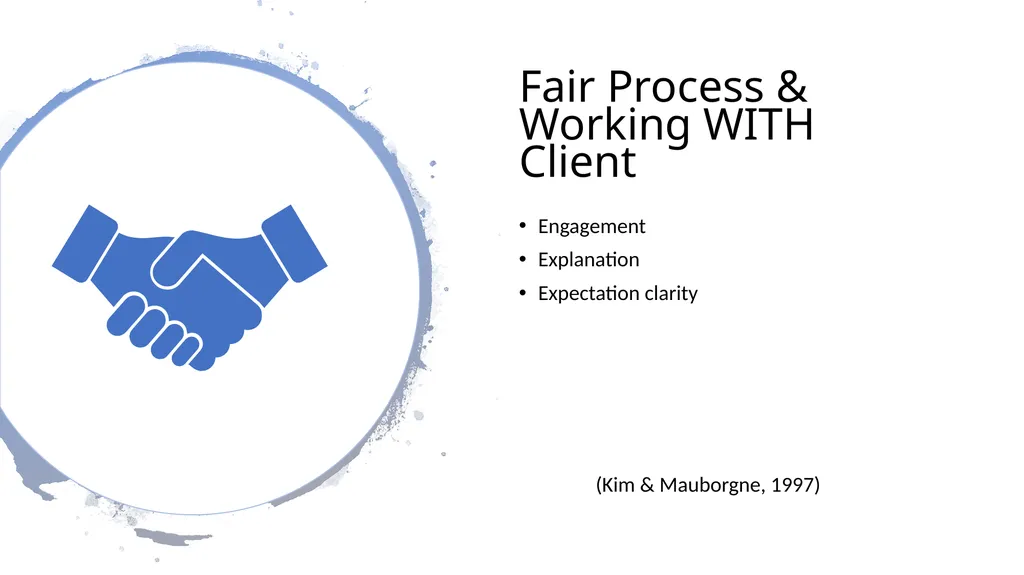
Fair Process & Working WITH Client Engagement
Explanation
Expectation clarity
(Kim & Mauborgne, 1997)<br>
22
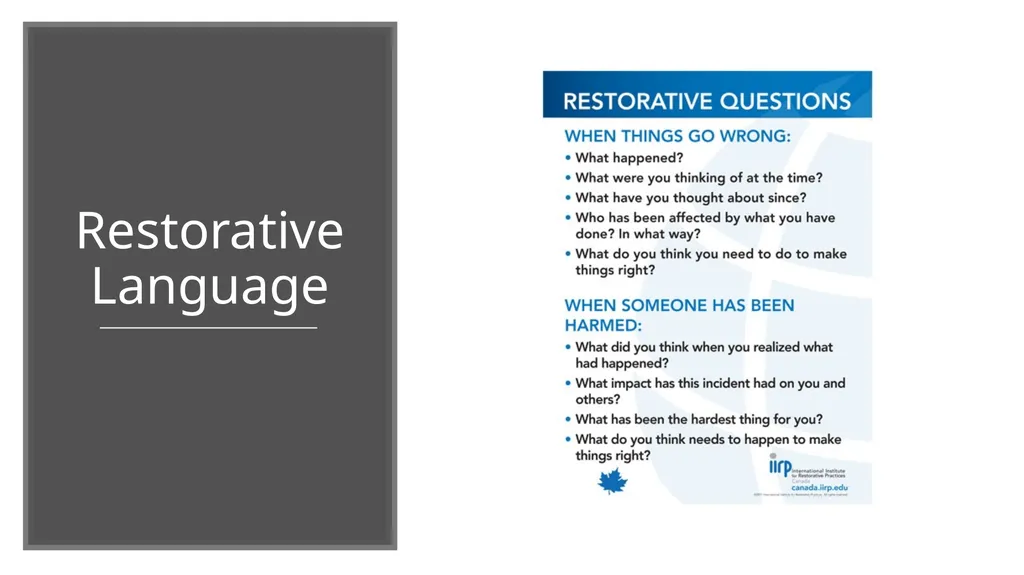
Restorative Language<br>
23
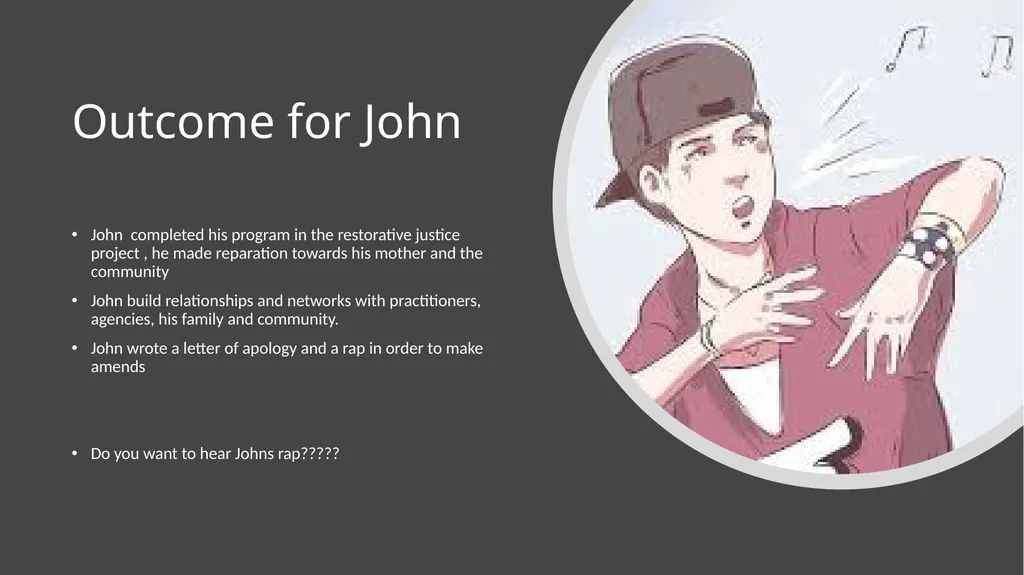
Outcome for John John completed his program in the restorative justice project , he made reparation towards his mother and the community
John build relationships and networks with practitioners, agencies, his family and community.
John wrote a letter of apology and a rap in order to make amends