Software Construction and Evolution CSSE 375:
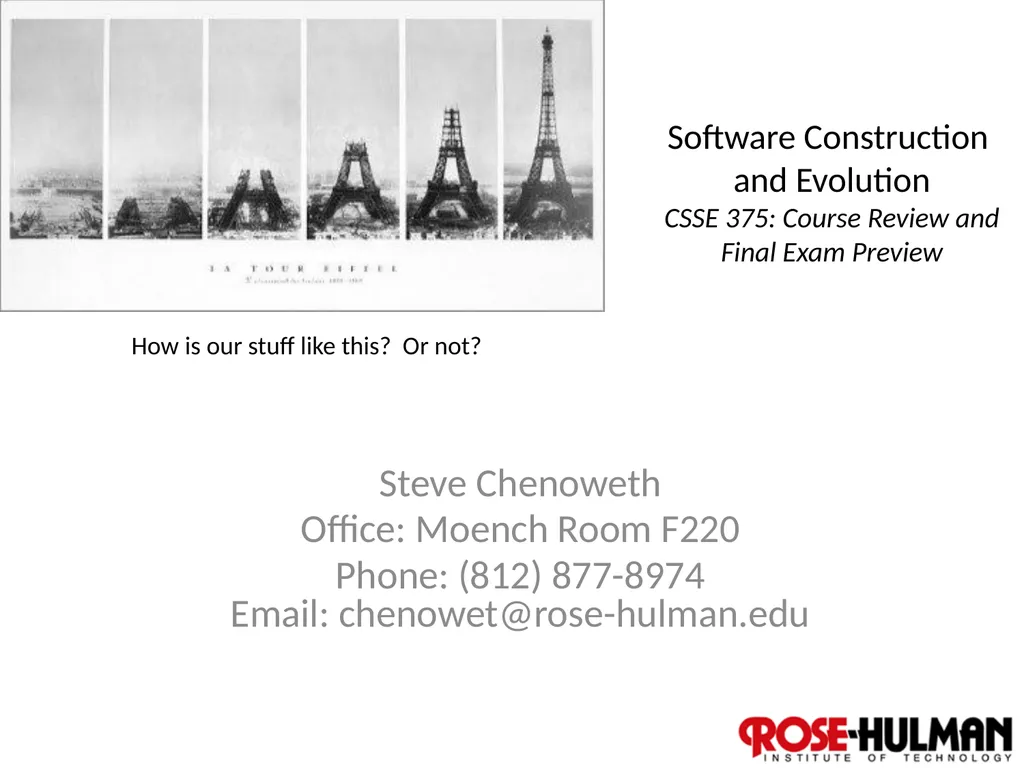
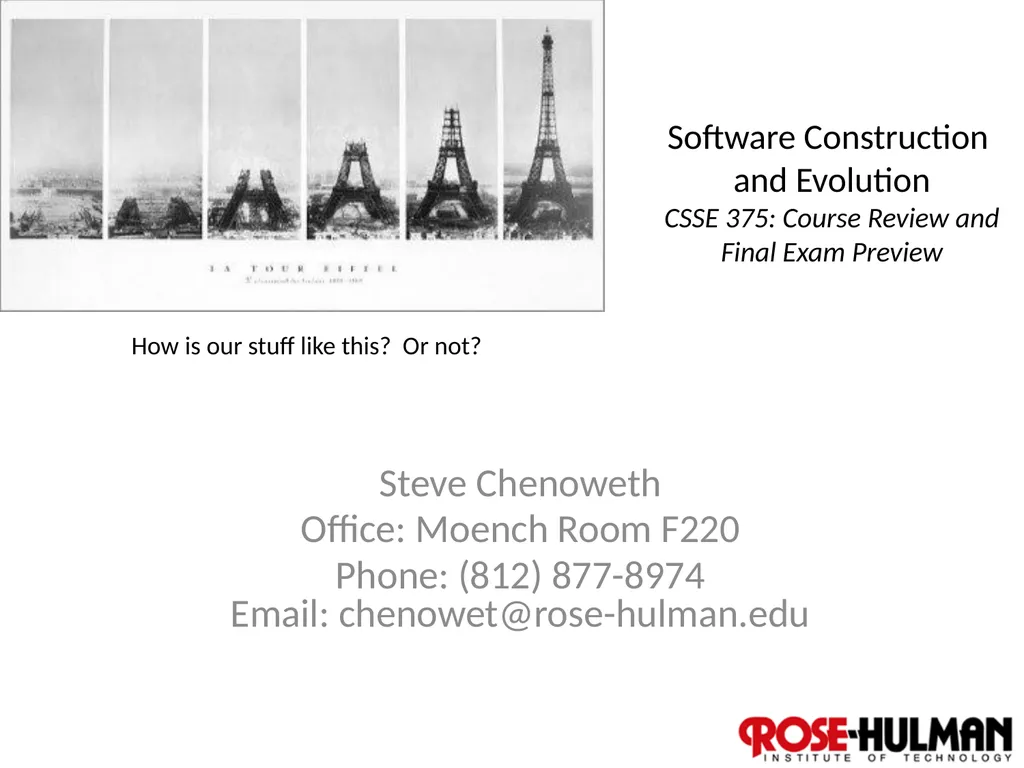
Description: Software Construction and Evolution CSSE 375: Course Review and Final Exam Preview Steve Chenoweth Office: Moench Room F220 Phone: (812) 877-8974 Email: chenowetrose-hulman.edu How is our stuff like this? Or not? Agenda Course Review And
Related Topics
Download Presentation
"Software Construction and Evolution CSSE 375:" is the property of its rightful owner. Permission is granted to download and print the materials on this website for personal, non-commercial use only, and to display it on your personal computer provided you do not modify the materials and that you retain all copyright notices contained in the materials. By downloading content from our website, you accept the terms of this agreement.
Presentation Transcript
slide1. Software Construction and EvolutionCSSE 375: Course Review and Final Exam Preview Steve Chenoweth
Office: Moench Room F220
Phone: (812) 877-8974Email: chenowet@rose-hulman.edu How is our stuff like this? Or not?<br>
slide2. Agenda Course Review
And “Last Day Survey”
Final Exam Preview
With sample questions<br>
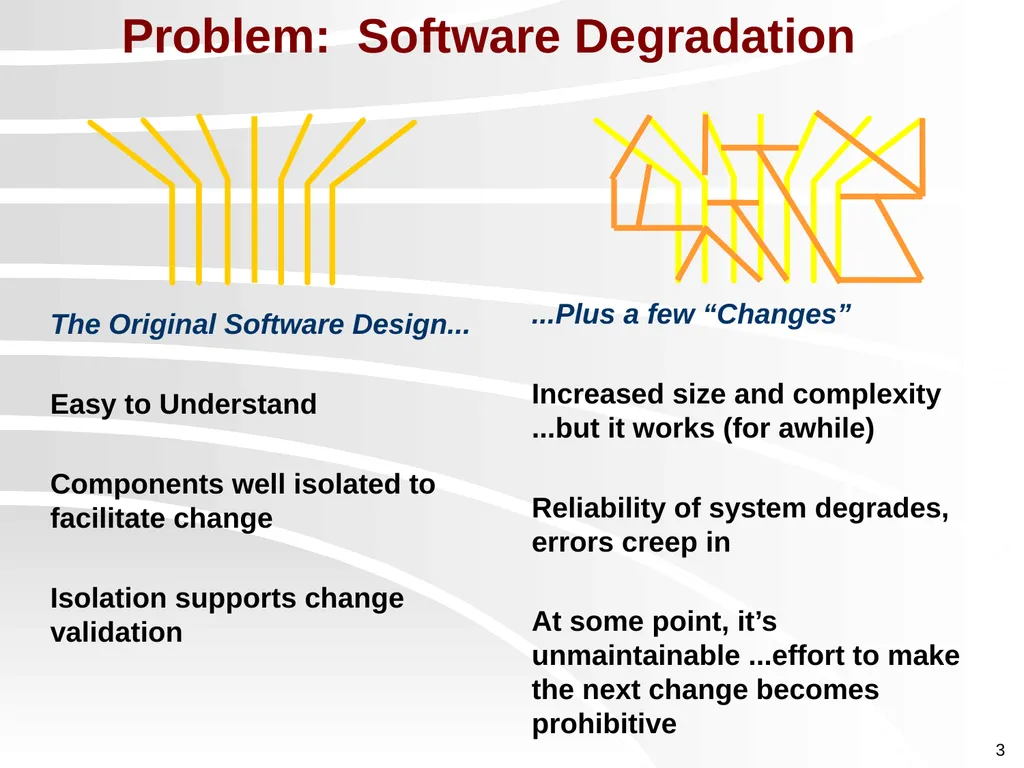
slide3. Problem: Software Degradation<br>
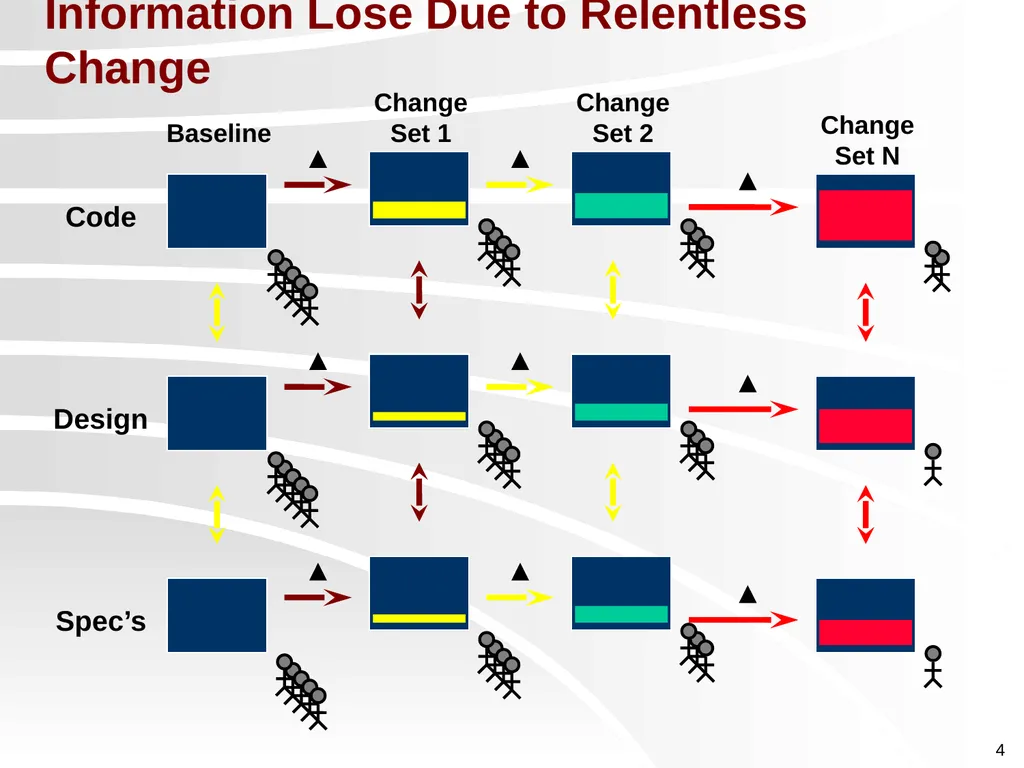
slide4. Information Lose Due to Relentless Change<br>
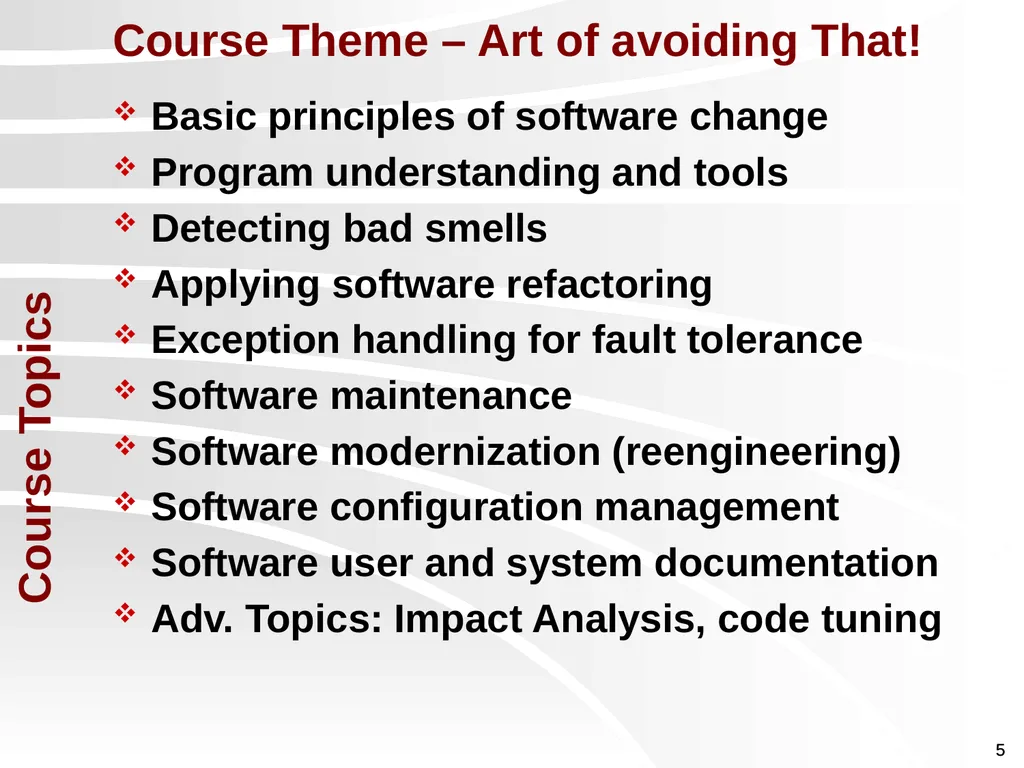
slide5. Course Theme – Art of avoiding That! Basic principles of software change
Program understanding and tools
Detecting bad smells
Applying software refactoring
Exception handling for fault tolerance
Software maintenance
Software modernization (reengineering)
Software configuration management
Software user and system documentation
Adv. Topics: Impact Analysis, code tuning 5 Course Topics<br>
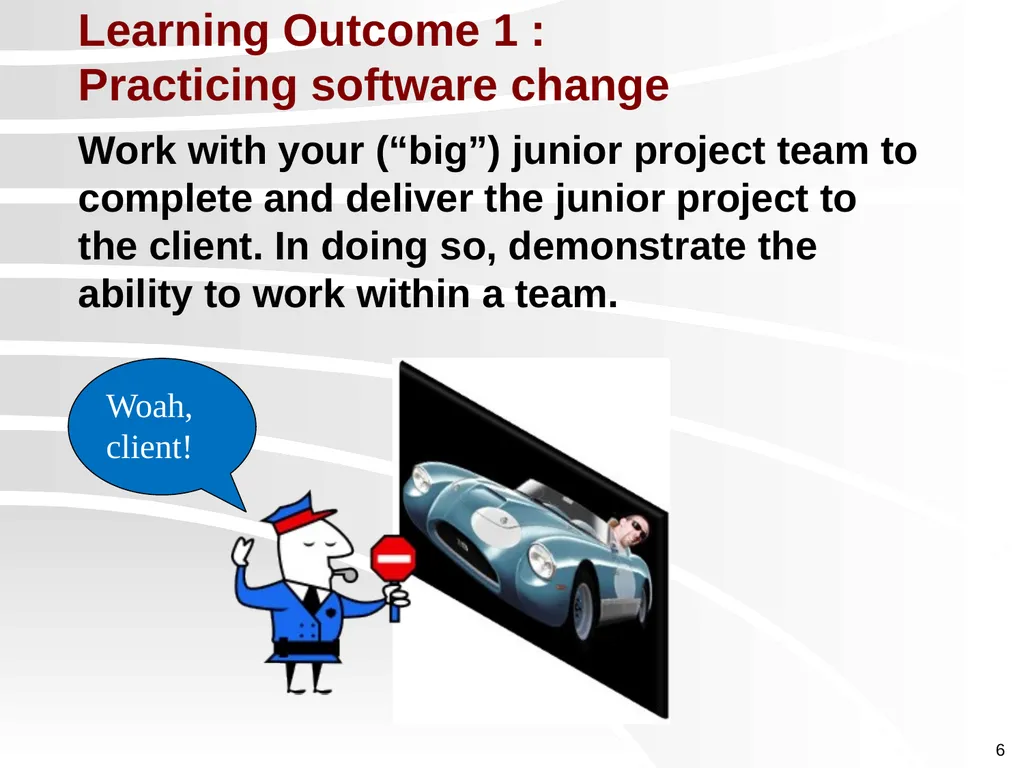
slide6. Learning Outcome 1 : Practicing software change Work with your (“big”) junior project team to complete and deliver the junior project to the client. In doing so, demonstrate the ability to work within a team. 6 Woah, client!<br>
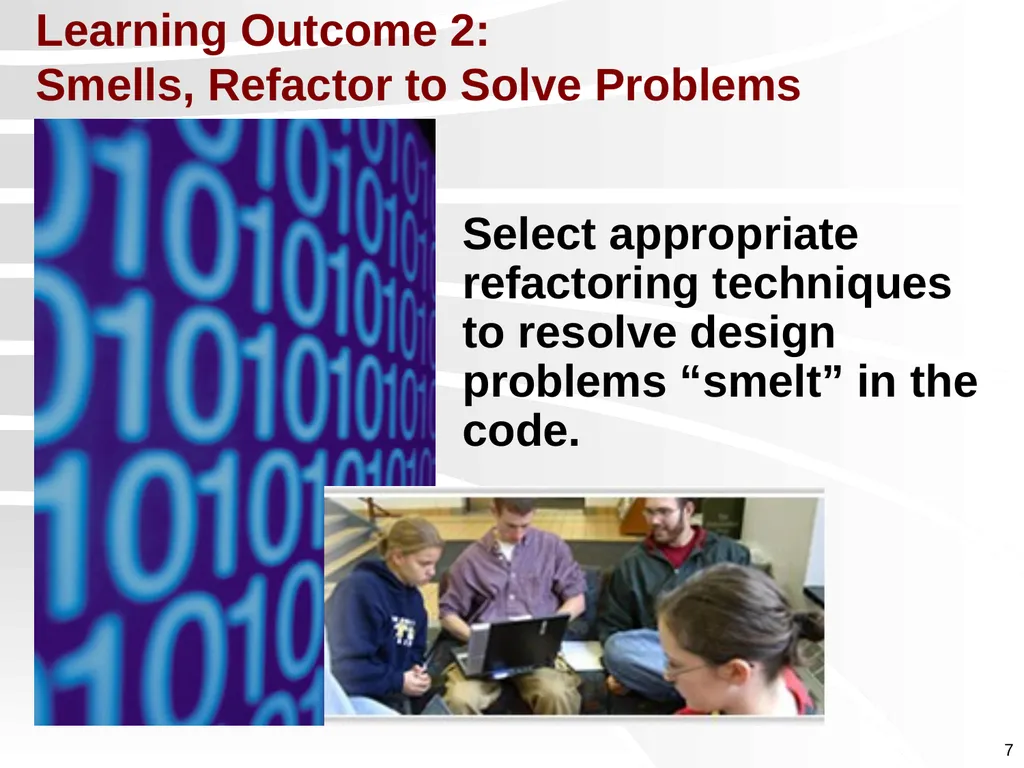
slide7. Learning Outcome 2: Smells, Refactor to Solve Problems Select appropriate refactoring techniques to resolve design problems “smelt” in the code.<br>
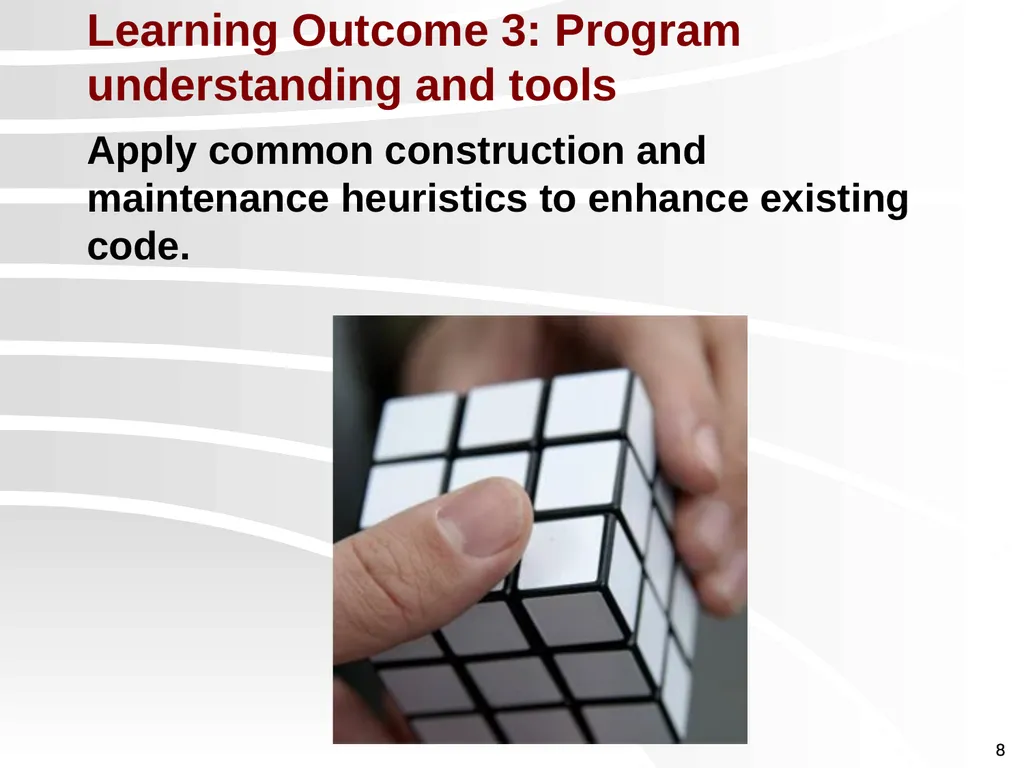
slide8. Learning Outcome 3: Program understanding and tools Apply common construction and maintenance heuristics to enhance existing code. 8<br>
slide9. Learning Outcome 4: Really Needed Documentation Organize and develop software stakeholder documentation. Who are these guys,
on your project, anyway?<br>
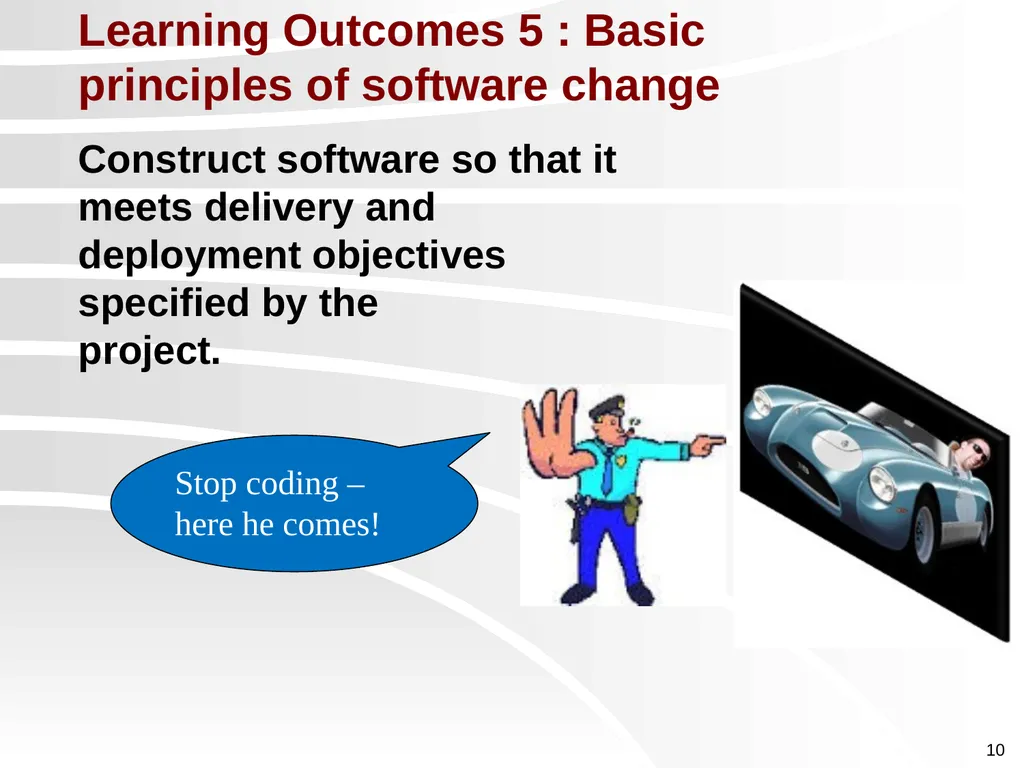
slide10. Learning Outcomes 5 : Basic principles of software change Construct software so that it meets delivery and deployment objectives specified by the project. 10 Stop coding – here he comes!<br>
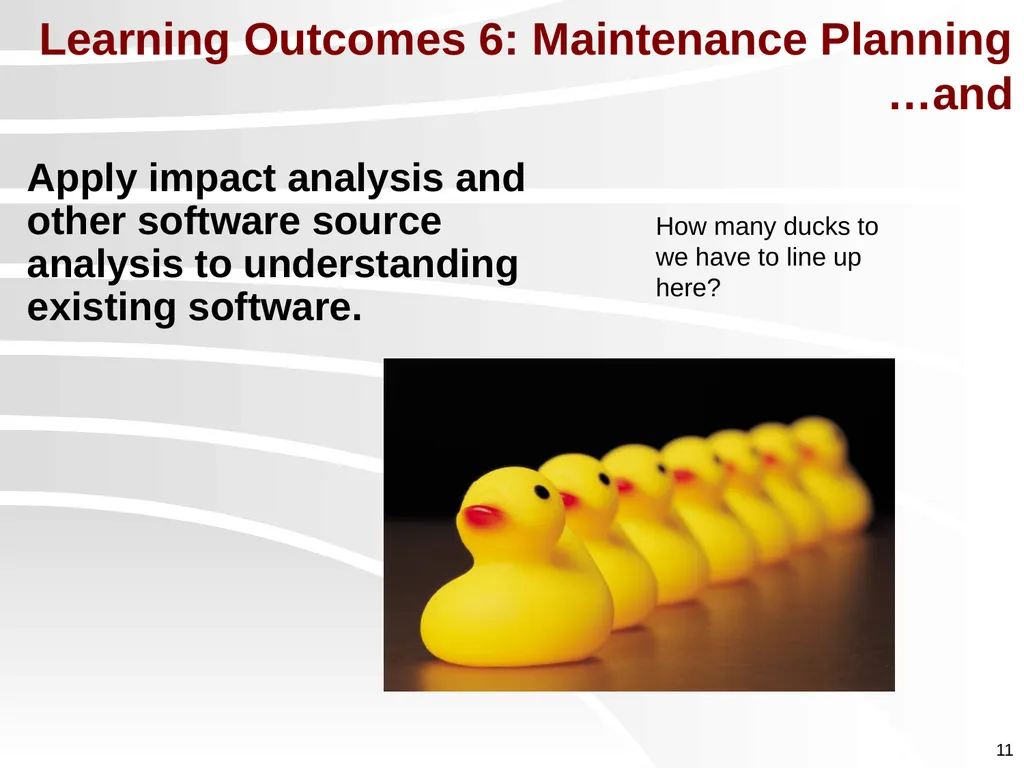
slide11. Learning Outcomes 6: Maintenance Planning…and Apply impact analysis and other software source analysis to understanding existing software. How many ducks to we have to line up here?<br>
slide12. Learning Outcomes 6: Maintenance Process Apply the corrective, perfective, adaptive and preventive types of software changes and maintenance types. Wait – Footprints are supposed to be depressions?<br>
slide13. Learning Outcome 7: Change Impacts Apply impact analysis and other software source analysis to understanding existing software.<br>
slide14. Learning Outcome 8: Exception handling for fault tolerance Use systematic exception handling and other techniques in promoting fault-tolerance. 14 Wait – what letter was I on?<br>
slide15. Learning Outcome 9: Reengineering Describe software modernization approaches such as reverse engineering, reengineering, salvaging, and restructuring. It says here to connect it to the building across the street…<br>
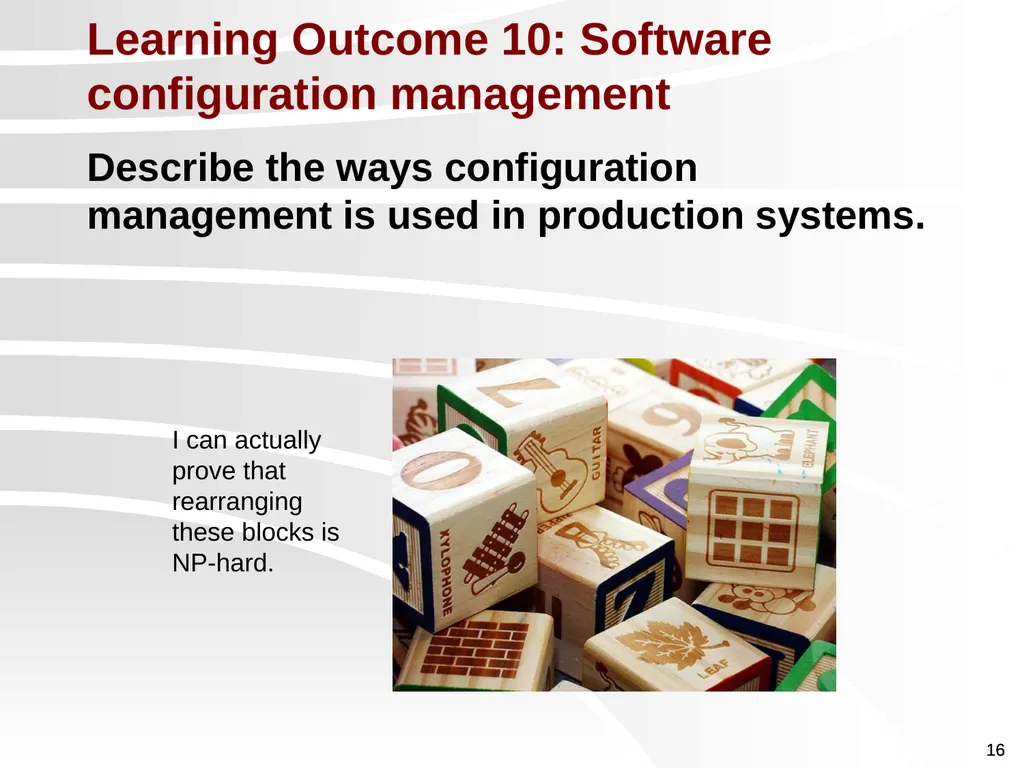
slide16. Learning Outcome 10: Software configuration management Describe the ways configuration management is used in production systems. 16 I can actually prove that rearranging these blocks is NP-hard.<br>
slide17. Take the “Last Day Survey” on Moodle Do it today!
It’s worth points.
Same questions as on the “First Day Survey” you took.
About these course objectives.<br>
slide18. Final Exam Preview It also will be about these course objectives
Open Book and Open Computer
But of course “closed to communicating with others in any way”
Including Twitter and ear twitching
It’s Wed, 5/28, 8 AM, in M111 (Sec 2) and M115 (Sec 3)
Not planned to last all 4 hours
But you can take all 4 hours if you like
Emphasis on material since Exam 1 18<br>
slide19. Final Exam Preview, cntd There will be some programs to analyze
The examples will be short, ones you can review at the time, before writing your answer.
Like on the last page
But also some short essay questions, like:
“Why is reengineering always more difficult than you think it will be? Give 3 reasons and explain each in a sentence.”
“Why did our guest speaker, Tom Harrison, believe that continuous delivery is only a part of how to make things happen fast on a project?”
“Suppose your boss wants you to write a lot of user documentation, but you don’t think it’s necessary. What is the best plan to resolve this issue, factually, and why?”
When a software item will interface with another software or hardware item, a change to either item can affect the other. How does the configuration management process deal with this issue?
Fowler’s “big refactorings” include “teasing apart inheritance.” When exactly would you take time to do this, and when would you not?
Which of Lehman’s Laws fits closest with the way maintenance projects usually are funded? 19<br>
slide20. Final Exam Preview, cntd More sample short essay questions:
Legacy code is defined by Feathers as code without unit tests. Explain a worst case scenario, when it would be more difficult to create unit tests than it would be to live with code that lacks these tests.
Sprouting and wrapping are both recommended by Feathers. What is the key factor that would make you choose one of these over the other?
Test harnesses are used not only for functional testing but also for stability (stress) testing. What would be different about the test setup for these two different kinds of testing?
Describe the key advantages and disadvantages of doing exception handling as Java does, with try…catch blocks.
Defensive programming can include adding assertions for conditions which should always be true. Why might you want to have these also active when your system is in production?
Code tuning has its greatest value when applied to what kind of code?
Fowler is all about removing local variables as a part of refactoring. Describe the most important situation you can think of, when you would not want to do this, and explain why. 20<br>
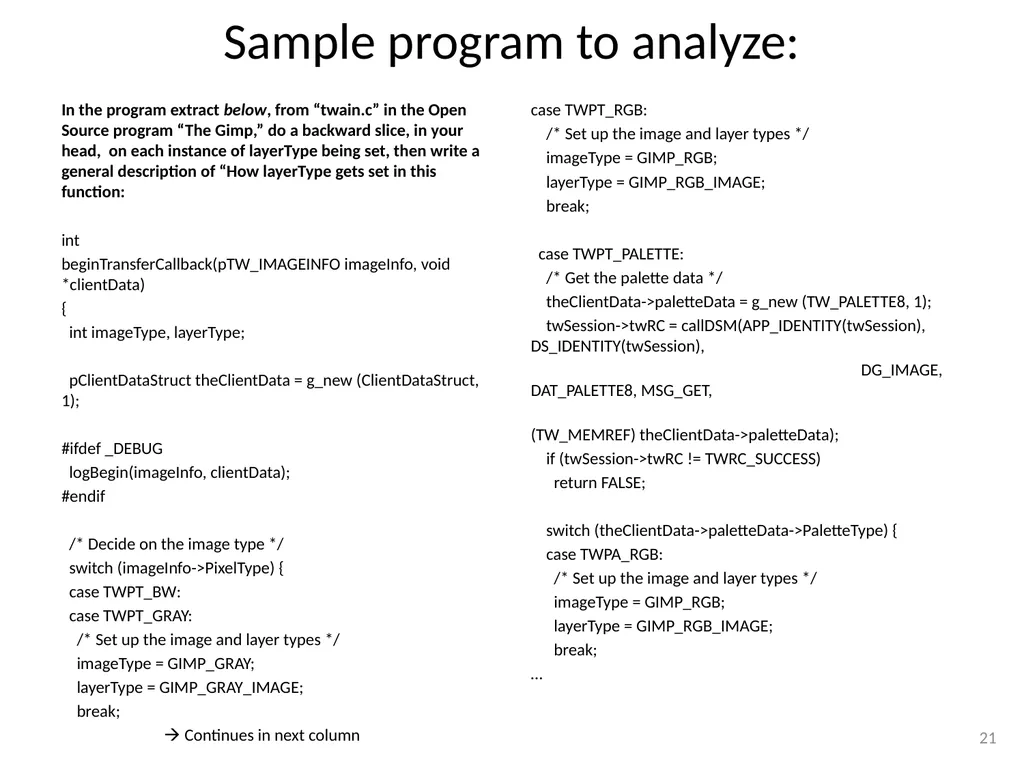
slide21. Sample program to analyze: In the program extract below, from “twain.c” in the Open Source program “The Gimp,” do a backward slice, in your head, on each instance of layerType being set, then write a general description of “How layerType gets set in this function:
int
beginTransferCallback(pTW_IMAGEINFO imageInfo, void *clientData)
{
int imageType, layerType;
pClientDataStruct theClientData = g_new (ClientDataStruct, 1);
#ifdef _DEBUG
logBegin(imageInfo, clientData);
#endif
/* Decide on the image type */
switch (imageInfo->PixelType) {
case TWPT_BW:
case TWPT_GRAY:
/* Set up the image and layer types */
imageType = GIMP_GRAY;
layerType = GIMP_GRAY_IMAGE;
break;
Continues in next column case TWPT_RGB:
/* Set up the image and layer types */
imageType = GIMP_RGB;
layerType = GIMP_RGB_IMAGE;
break;
case TWPT_PALETTE:
/* Get the palette data */
theClientData->paletteData = g_new (TW_PALETTE8, 1);
twSession->twRC = callDSM(APP_IDENTITY(twSession), DS_IDENTITY(twSession),
DG_IMAGE, DAT_PALETTE8, MSG_GET,
(TW_MEMREF) theClientData->paletteData);
if (twSession->twRC != TWRC_SUCCESS)
return FALSE;
switch (theClientData->paletteData->PaletteType) {
case TWPA_RGB:
/* Set up the image and layer types */
imageType = GIMP_RGB;
layerType = GIMP_RGB_IMAGE;
break;
…<br>

Office: Moench Room F220
Phone: (812) 877-8974Email: chenowet@rose-hulman.edu How is our stuff like this? Or not?<br>
slide2. Agenda Course Review
And “Last Day Survey”
Final Exam Preview
With sample questions<br>
slide3. Problem: Software Degradation<br>
slide4. Information Lose Due to Relentless Change<br>
slide5. Course Theme – Art of avoiding That! Basic principles of software change
Program understanding and tools
Detecting bad smells
Applying software refactoring
Exception handling for fault tolerance
Software maintenance
Software modernization (reengineering)
Software configuration management
Software user and system documentation
Adv. Topics: Impact Analysis, code tuning 5 Course Topics<br>
slide6. Learning Outcome 1 : Practicing software change Work with your (“big”) junior project team to complete and deliver the junior project to the client. In doing so, demonstrate the ability to work within a team. 6 Woah, client!<br>
slide7. Learning Outcome 2: Smells, Refactor to Solve Problems Select appropriate refactoring techniques to resolve design problems “smelt” in the code.<br>
slide8. Learning Outcome 3: Program understanding and tools Apply common construction and maintenance heuristics to enhance existing code. 8<br>
slide9. Learning Outcome 4: Really Needed Documentation Organize and develop software stakeholder documentation. Who are these guys,
on your project, anyway?<br>
slide10. Learning Outcomes 5 : Basic principles of software change Construct software so that it meets delivery and deployment objectives specified by the project. 10 Stop coding – here he comes!<br>
slide11. Learning Outcomes 6: Maintenance Planning…and Apply impact analysis and other software source analysis to understanding existing software. How many ducks to we have to line up here?<br>
slide12. Learning Outcomes 6: Maintenance Process Apply the corrective, perfective, adaptive and preventive types of software changes and maintenance types. Wait – Footprints are supposed to be depressions?<br>
slide13. Learning Outcome 7: Change Impacts Apply impact analysis and other software source analysis to understanding existing software.<br>
slide14. Learning Outcome 8: Exception handling for fault tolerance Use systematic exception handling and other techniques in promoting fault-tolerance. 14 Wait – what letter was I on?<br>
slide15. Learning Outcome 9: Reengineering Describe software modernization approaches such as reverse engineering, reengineering, salvaging, and restructuring. It says here to connect it to the building across the street…<br>
slide16. Learning Outcome 10: Software configuration management Describe the ways configuration management is used in production systems. 16 I can actually prove that rearranging these blocks is NP-hard.<br>
slide17. Take the “Last Day Survey” on Moodle Do it today!
It’s worth points.
Same questions as on the “First Day Survey” you took.
About these course objectives.<br>
slide18. Final Exam Preview It also will be about these course objectives
Open Book and Open Computer
But of course “closed to communicating with others in any way”
Including Twitter and ear twitching
It’s Wed, 5/28, 8 AM, in M111 (Sec 2) and M115 (Sec 3)
Not planned to last all 4 hours
But you can take all 4 hours if you like
Emphasis on material since Exam 1 18<br>
slide19. Final Exam Preview, cntd There will be some programs to analyze
The examples will be short, ones you can review at the time, before writing your answer.
Like on the last page
But also some short essay questions, like:
“Why is reengineering always more difficult than you think it will be? Give 3 reasons and explain each in a sentence.”
“Why did our guest speaker, Tom Harrison, believe that continuous delivery is only a part of how to make things happen fast on a project?”
“Suppose your boss wants you to write a lot of user documentation, but you don’t think it’s necessary. What is the best plan to resolve this issue, factually, and why?”
When a software item will interface with another software or hardware item, a change to either item can affect the other. How does the configuration management process deal with this issue?
Fowler’s “big refactorings” include “teasing apart inheritance.” When exactly would you take time to do this, and when would you not?
Which of Lehman’s Laws fits closest with the way maintenance projects usually are funded? 19<br>
slide20. Final Exam Preview, cntd More sample short essay questions:
Legacy code is defined by Feathers as code without unit tests. Explain a worst case scenario, when it would be more difficult to create unit tests than it would be to live with code that lacks these tests.
Sprouting and wrapping are both recommended by Feathers. What is the key factor that would make you choose one of these over the other?
Test harnesses are used not only for functional testing but also for stability (stress) testing. What would be different about the test setup for these two different kinds of testing?
Describe the key advantages and disadvantages of doing exception handling as Java does, with try…catch blocks.
Defensive programming can include adding assertions for conditions which should always be true. Why might you want to have these also active when your system is in production?
Code tuning has its greatest value when applied to what kind of code?
Fowler is all about removing local variables as a part of refactoring. Describe the most important situation you can think of, when you would not want to do this, and explain why. 20<br>
slide21. Sample program to analyze: In the program extract below, from “twain.c” in the Open Source program “The Gimp,” do a backward slice, in your head, on each instance of layerType being set, then write a general description of “How layerType gets set in this function:
int
beginTransferCallback(pTW_IMAGEINFO imageInfo, void *clientData)
{
int imageType, layerType;
pClientDataStruct theClientData = g_new (ClientDataStruct, 1);
#ifdef _DEBUG
logBegin(imageInfo, clientData);
#endif
/* Decide on the image type */
switch (imageInfo->PixelType) {
case TWPT_BW:
case TWPT_GRAY:
/* Set up the image and layer types */
imageType = GIMP_GRAY;
layerType = GIMP_GRAY_IMAGE;
break;
Continues in next column case TWPT_RGB:
/* Set up the image and layer types */
imageType = GIMP_RGB;
layerType = GIMP_RGB_IMAGE;
break;
case TWPT_PALETTE:
/* Get the palette data */
theClientData->paletteData = g_new (TW_PALETTE8, 1);
twSession->twRC = callDSM(APP_IDENTITY(twSession), DS_IDENTITY(twSession),
DG_IMAGE, DAT_PALETTE8, MSG_GET,
(TW_MEMREF) theClientData->paletteData);
if (twSession->twRC != TWRC_SUCCESS)
return FALSE;
switch (theClientData->paletteData->PaletteType) {
case TWPA_RGB:
/* Set up the image and layer types */
imageType = GIMP_RGB;
layerType = GIMP_RGB_IMAGE;
break;
…<br>