
Soil Respiration Unit: Soil Science Objectives


Description: Soil Respiration Unit: Soil Science Objectives Define: soil respiration and soil microbes Explain the role of soil respiration in determining soil health Diagram the role of soil respiration in the cycle of life on earth List and explain
Related Topics
Download Presentation
"Soil Respiration Unit: Soil Science Objectives" is the property of its rightful owner. Permission is granted to download and print the materials on this website for personal, non-commercial use only, and to display it on your personal computer provided you do not modify the materials and that you retain all copyright notices contained in the materials. By downloading content from our website, you accept the terms of this agreement.
Presentation Transcript
slide1. Soil Respiration Unit: Soil Science<br>
slide2. Objectives Define: soil respiration and soil microbes
Explain the role of soil respiration in determining soil health
Diagram the role of soil respiration in the cycle of life on earth
List and explain inherent factors that affect soil respiration
List and describe soil respiration management processes
Interpret management impacts on soil respiration and soil organic matter
Measure soil respiration and interpret data<br>
slide3. Soil Respiration Soil respiration is a measure of the carbon dioxide released from the soil by microbes decomposing soil organic matter and from the respiration of plant roots.
Soil respiration indicates soil health (soil organic matter content, soil organic matter decomposition and the level of microbial activity).<br>
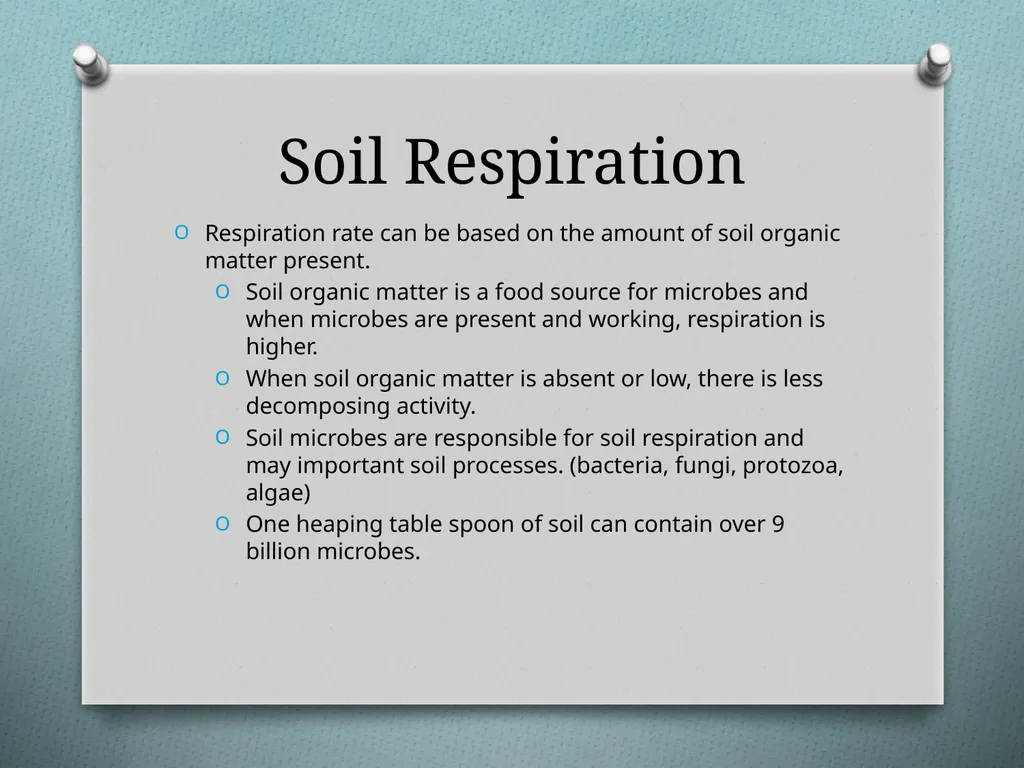
slide4. Soil Respiration Respiration rate can be based on the amount of soil organic matter present.
Soil organic matter is a food source for microbes and when microbes are present and working, respiration is higher.
When soil organic matter is absent or low, there is less decomposing activity.
Soil microbes are responsible for soil respiration and may important soil processes. (bacteria, fungi, protozoa, algae)
One heaping table spoon of soil can contain over 9 billion microbes.<br>
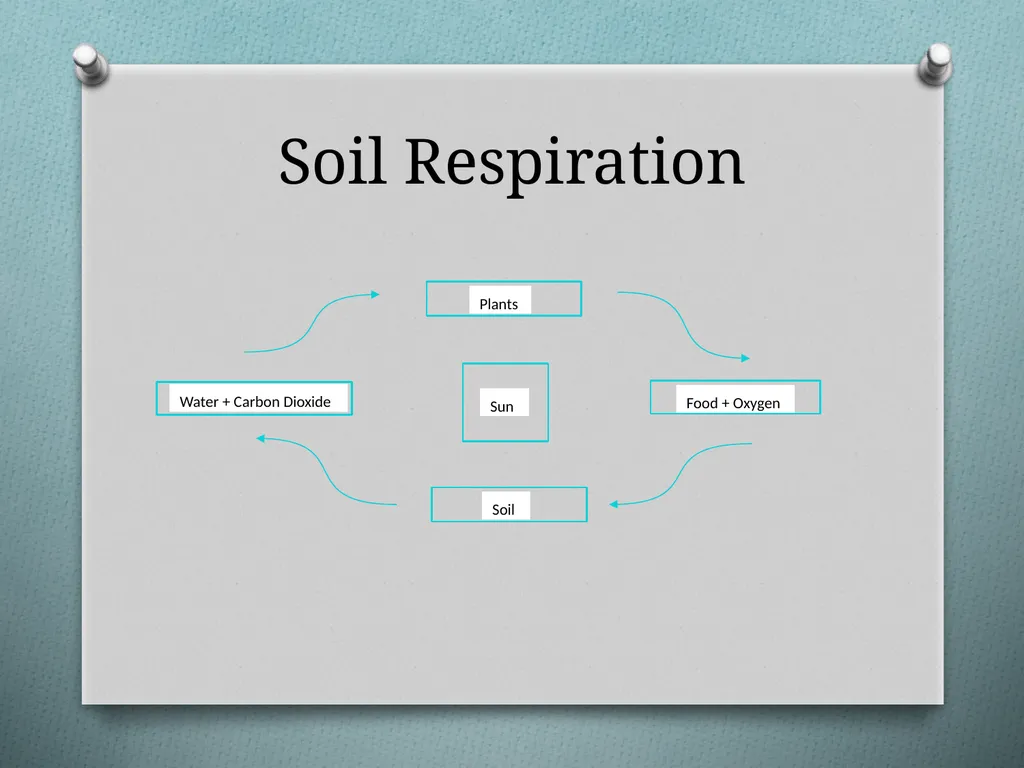
slide5. Soil Respiration Plants Food + Oxygen Soil Water + Carbon Dioxide Sun<br>
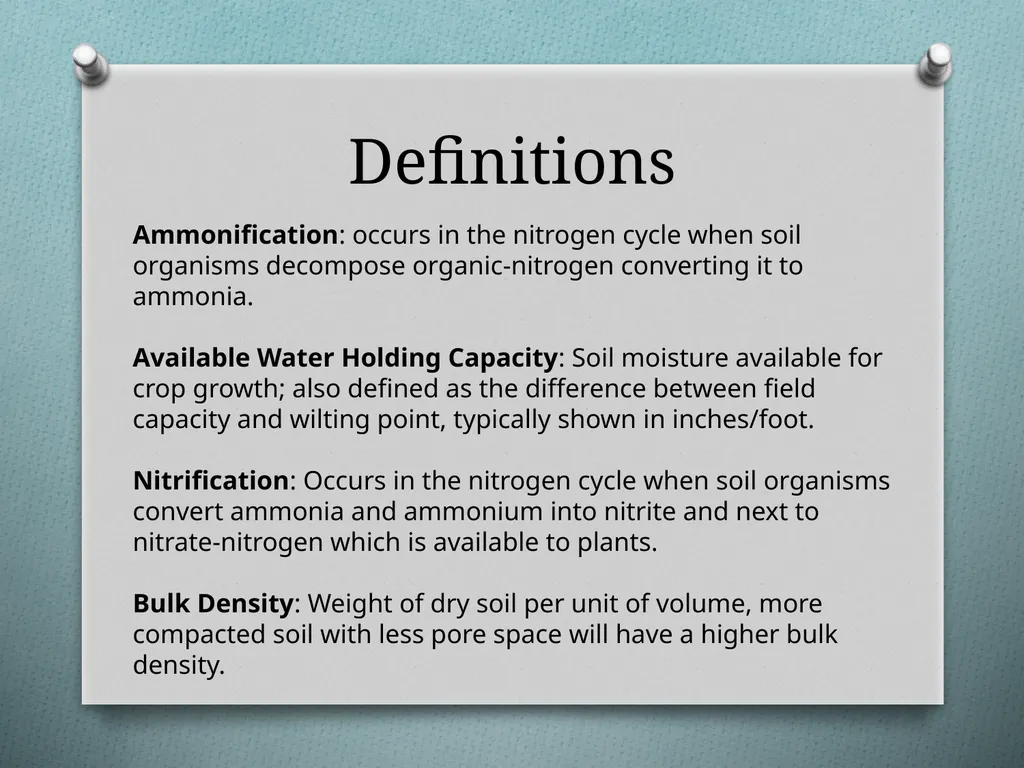
slide6. Definitions Ammonification: occurs in the nitrogen cycle when soil organisms decompose organic-nitrogen converting it to ammonia.
Available Water Holding Capacity: Soil moisture available for crop growth; also defined as the difference between field capacity and wilting point, typically shown in inches/foot.
Nitrification: Occurs in the nitrogen cycle when soil organisms convert ammonia and ammonium into nitrite and next to nitrate-nitrogen which is available to plants.
Bulk Density: Weight of dry soil per unit of volume, more compacted soil with less pore space will have a higher bulk density.<br>
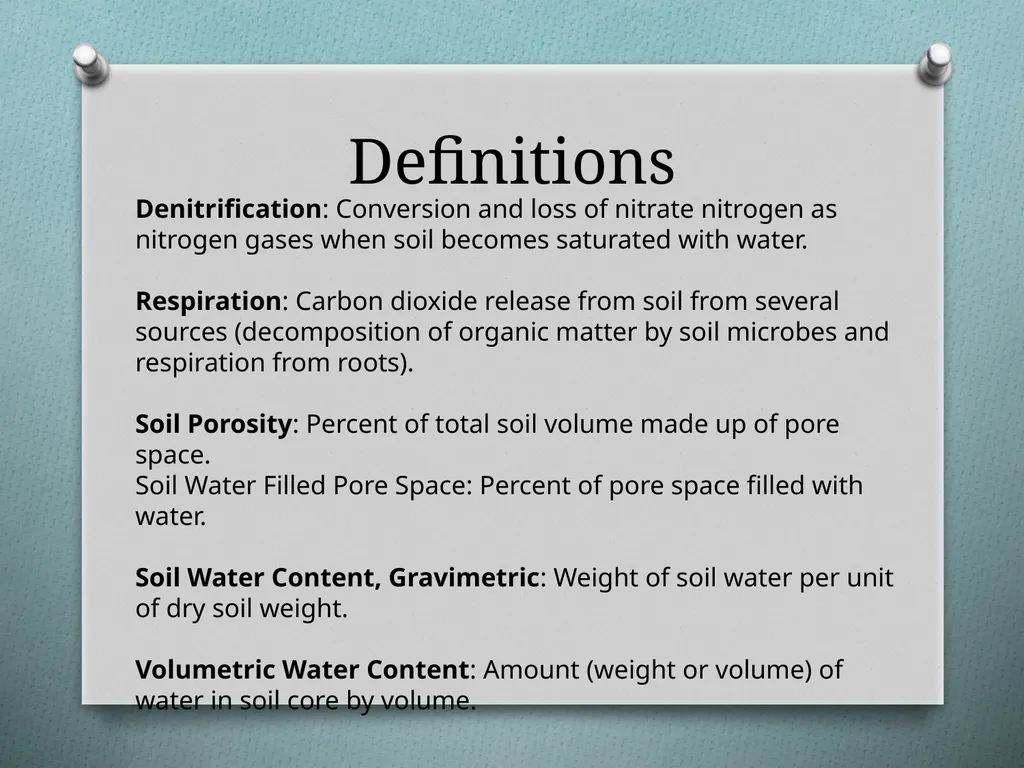
slide7. Definitions Denitrification: Conversion and loss of nitrate nitrogen as nitrogen gases when soil becomes saturated with water.
Respiration: Carbon dioxide release from soil from several sources (decomposition of organic matter by soil microbes and respiration from roots).
Soil Porosity: Percent of total soil volume made up of pore space.
Soil Water Filled Pore Space: Percent of pore space filled with water.
Soil Water Content, Gravimetric: Weight of soil water per unit of dry soil weight.
Volumetric Water Content: Amount (weight or volume) of water in soil core by volume.<br>
slide8. Factors Affecting Bulk Density: Climate Climate
Cannot be changed
Affects temperature, moisture and indirectly affects biological activity<br>
slide9. Factors Affecting Bulk Density: Biological Activity Biological activity
Varies with the seasons and times of day<br>
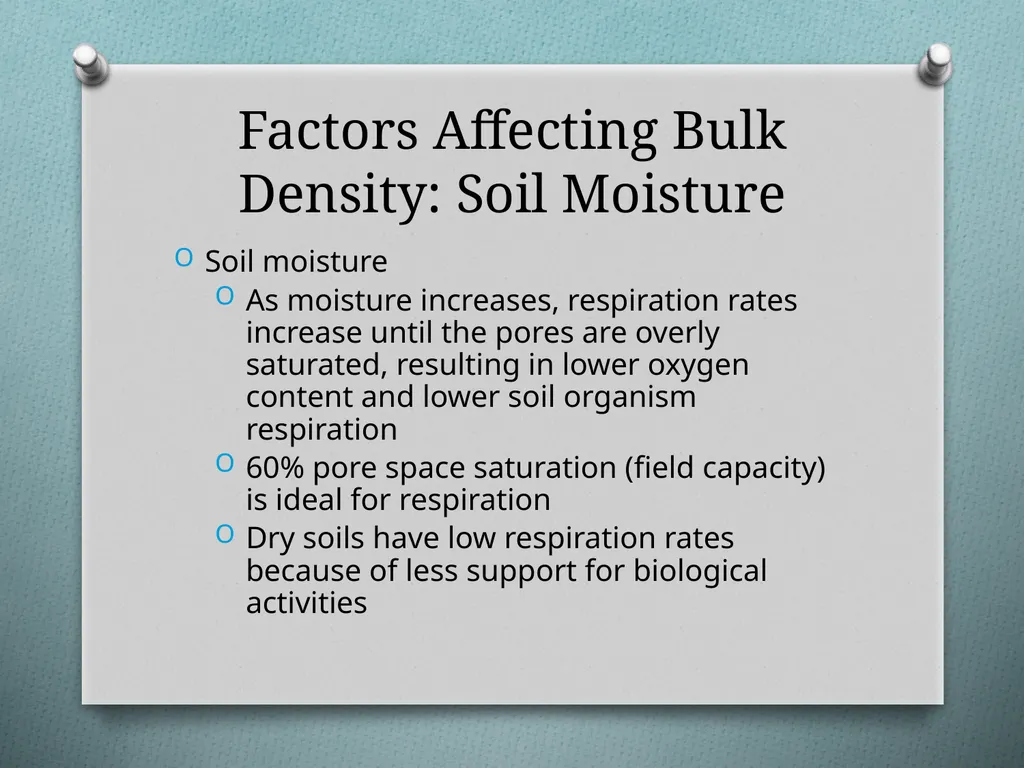
slide10. Factors Affecting Bulk Density: Soil Moisture Soil moisture
As moisture increases, respiration rates increase until the pores are overly saturated, resulting in lower oxygen content and lower soil organism respiration
60% pore space saturation (field capacity) is ideal for respiration
Dry soils have low respiration rates because of less support for biological activities<br>
slide11. Factors Affecting Bulk Density: Soil Organic Matter Amount and quality of soil organic matter
Affects microbe activity<br>
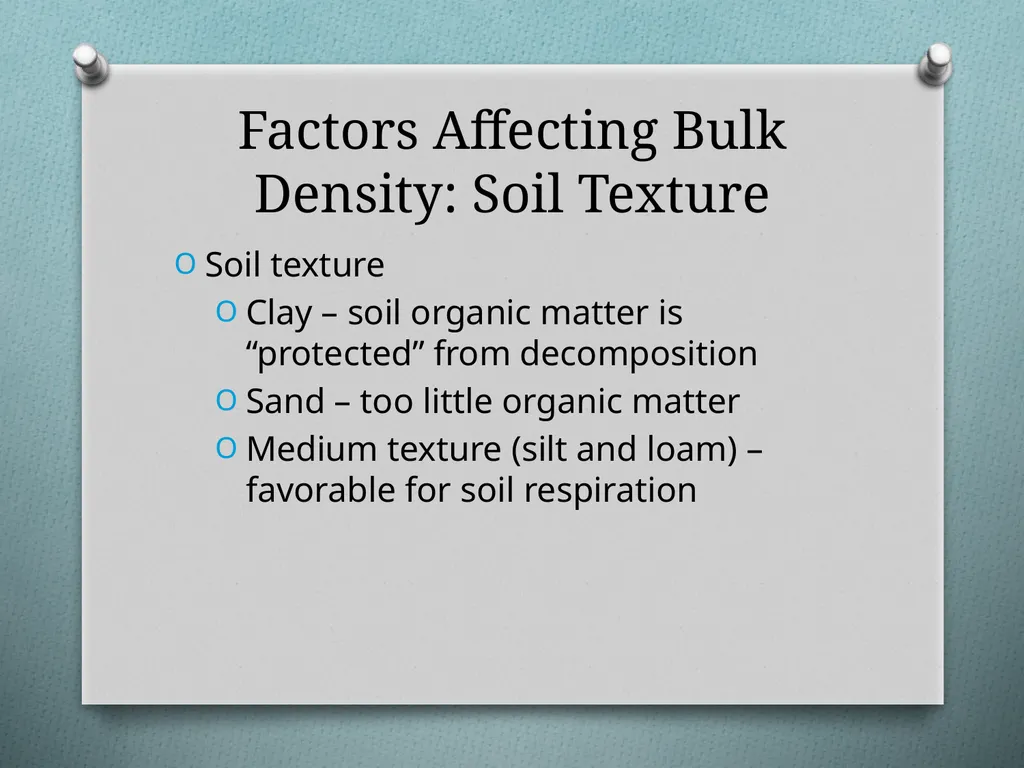
slide12. Factors Affecting Bulk Density: Soil Texture Soil texture
Clay – soil organic matter is “protected” from decomposition
Sand – too little organic matter
Medium texture (silt and loam) – favorable for soil respiration<br>
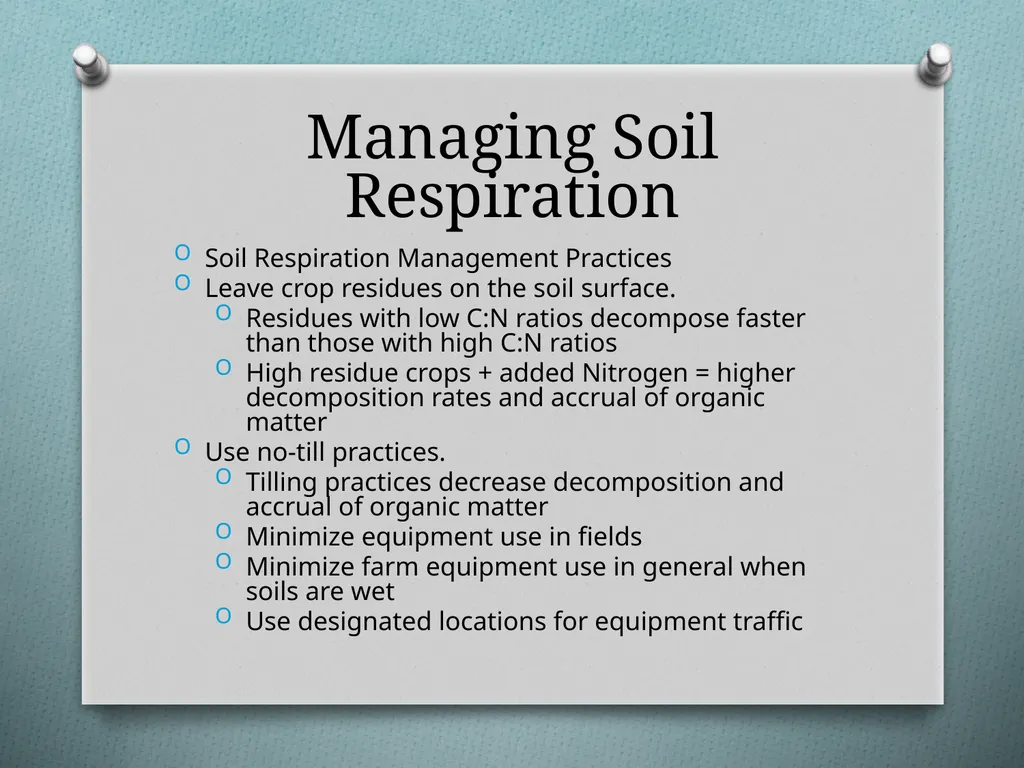
slide13. Managing Soil Respiration Soil Respiration Management Practices
Leave crop residues on the soil surface.
Residues with low C:N ratios decompose faster than those with high C:N ratios
High residue crops + added Nitrogen = higher decomposition rates and accrual of organic matter
Use no-till practices.
Tilling practices decrease decomposition and accrual of organic matter
Minimize equipment use in fields
Minimize farm equipment use in general when soils are wet
Use designated locations for equipment traffic<br>
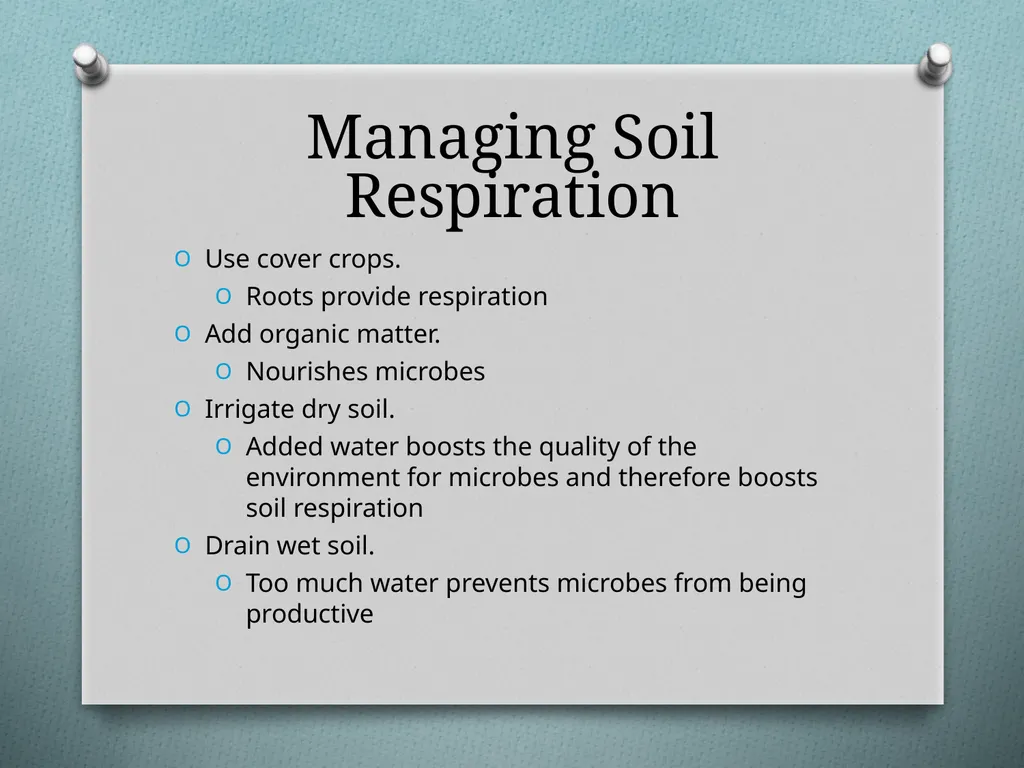
slide14. Managing Soil Respiration Use cover crops.
Roots provide respiration
Add organic matter.
Nourishes microbes
Irrigate dry soil.
Added water boosts the quality of the environment for microbes and therefore boosts soil respiration
Drain wet soil.
Too much water prevents microbes from being productive<br>
slide2. Objectives Define: soil respiration and soil microbes
Explain the role of soil respiration in determining soil health
Diagram the role of soil respiration in the cycle of life on earth
List and explain inherent factors that affect soil respiration
List and describe soil respiration management processes
Interpret management impacts on soil respiration and soil organic matter
Measure soil respiration and interpret data<br>
slide3. Soil Respiration Soil respiration is a measure of the carbon dioxide released from the soil by microbes decomposing soil organic matter and from the respiration of plant roots.
Soil respiration indicates soil health (soil organic matter content, soil organic matter decomposition and the level of microbial activity).<br>
slide4. Soil Respiration Respiration rate can be based on the amount of soil organic matter present.
Soil organic matter is a food source for microbes and when microbes are present and working, respiration is higher.
When soil organic matter is absent or low, there is less decomposing activity.
Soil microbes are responsible for soil respiration and may important soil processes. (bacteria, fungi, protozoa, algae)
One heaping table spoon of soil can contain over 9 billion microbes.<br>
slide5. Soil Respiration Plants Food + Oxygen Soil Water + Carbon Dioxide Sun<br>
slide6. Definitions Ammonification: occurs in the nitrogen cycle when soil organisms decompose organic-nitrogen converting it to ammonia.
Available Water Holding Capacity: Soil moisture available for crop growth; also defined as the difference between field capacity and wilting point, typically shown in inches/foot.
Nitrification: Occurs in the nitrogen cycle when soil organisms convert ammonia and ammonium into nitrite and next to nitrate-nitrogen which is available to plants.
Bulk Density: Weight of dry soil per unit of volume, more compacted soil with less pore space will have a higher bulk density.<br>
slide7. Definitions Denitrification: Conversion and loss of nitrate nitrogen as nitrogen gases when soil becomes saturated with water.
Respiration: Carbon dioxide release from soil from several sources (decomposition of organic matter by soil microbes and respiration from roots).
Soil Porosity: Percent of total soil volume made up of pore space.
Soil Water Filled Pore Space: Percent of pore space filled with water.
Soil Water Content, Gravimetric: Weight of soil water per unit of dry soil weight.
Volumetric Water Content: Amount (weight or volume) of water in soil core by volume.<br>
slide8. Factors Affecting Bulk Density: Climate Climate
Cannot be changed
Affects temperature, moisture and indirectly affects biological activity<br>
slide9. Factors Affecting Bulk Density: Biological Activity Biological activity
Varies with the seasons and times of day<br>
slide10. Factors Affecting Bulk Density: Soil Moisture Soil moisture
As moisture increases, respiration rates increase until the pores are overly saturated, resulting in lower oxygen content and lower soil organism respiration
60% pore space saturation (field capacity) is ideal for respiration
Dry soils have low respiration rates because of less support for biological activities<br>
slide11. Factors Affecting Bulk Density: Soil Organic Matter Amount and quality of soil organic matter
Affects microbe activity<br>
slide12. Factors Affecting Bulk Density: Soil Texture Soil texture
Clay – soil organic matter is “protected” from decomposition
Sand – too little organic matter
Medium texture (silt and loam) – favorable for soil respiration<br>
slide13. Managing Soil Respiration Soil Respiration Management Practices
Leave crop residues on the soil surface.
Residues with low C:N ratios decompose faster than those with high C:N ratios
High residue crops + added Nitrogen = higher decomposition rates and accrual of organic matter
Use no-till practices.
Tilling practices decrease decomposition and accrual of organic matter
Minimize equipment use in fields
Minimize farm equipment use in general when soils are wet
Use designated locations for equipment traffic<br>
slide14. Managing Soil Respiration Use cover crops.
Roots provide respiration
Add organic matter.
Nourishes microbes
Irrigate dry soil.
Added water boosts the quality of the environment for microbes and therefore boosts soil respiration
Drain wet soil.
Too much water prevents microbes from being productive<br>