
Some current educational issues Servaas van der






Description: Some current educational issues Servaas van der Berg Five important policy issues in South African education ECD Also discussed later in the conference Fiscal constraints Also discussed later in the conference Teacher demand and supply
Related Topics
Download Presentation
"Some current educational issues Servaas van der" is the property of its rightful owner. Permission is granted to download and print the materials on this website for personal, non-commercial use only, and to display it on your personal computer provided you do not modify the materials and that you retain all copyright notices contained in the materials. By downloading content from our website, you accept the terms of this agreement.
Presentation Transcript
slide1. Some current educational issues Servaas van der Berg<br>
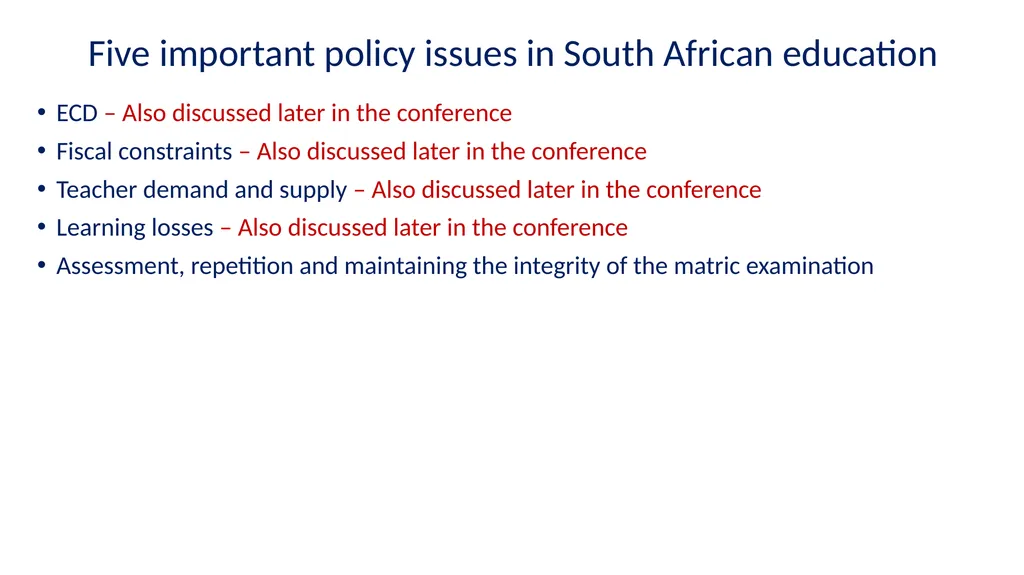
slide2. Five important policy issues in South African education ECD – Also discussed later in the conference
Fiscal constraints – Also discussed later in the conference
Teacher demand and supply – Also discussed later in the conference
Learning losses – Also discussed later in the conference
Assessment, repetition and maintaining the integrity of the matric examination<br>
slide3. ECD
World Bank team’s Public Expenditure and Institutional Review of ECD in SA soon to be released– Discussed tomorrow at 11:00 by Jesal Kika-Mistry & Elizabeth Ninan<br>
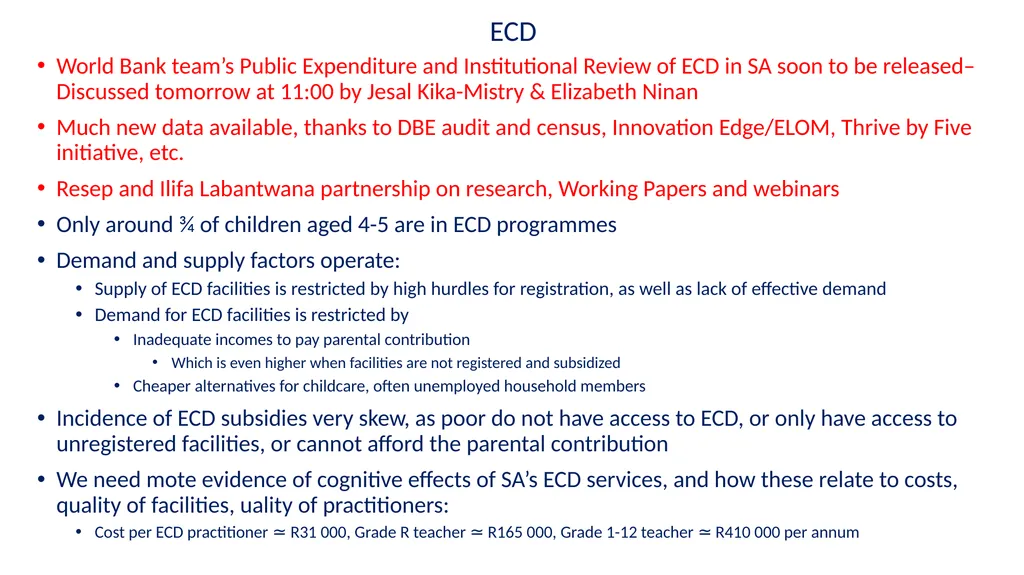
slide4. ECD World Bank team’s Public Expenditure and Institutional Review of ECD in SA soon to be released– Discussed tomorrow at 11:00 by Jesal Kika-Mistry & Elizabeth Ninan
Much new data available, thanks to DBE audit and census, Innovation Edge/ELOM, Thrive by Five initiative, etc.
Resep and Ilifa Labantwana partnership on research, Working Papers and webinars
Only around ¾ of children aged 4-5 are in ECD programmes
Demand and supply factors operate:
Supply of ECD facilities is restricted by high hurdles for registration, as well as lack of effective demand
Demand for ECD facilities is restricted by
Inadequate incomes to pay parental contribution
Which is even higher when facilities are not registered and subsidized
Cheaper alternatives for childcare, often unemployed household members
Incidence of ECD subsidies very skew, as poor do not have access to ECD, or only have access to unregistered facilities, or cannot afford the parental contribution
We need mote evidence of cognitive effects of SA’s ECD services, and how these relate to costs, quality of facilities, uality of practitioners:
Cost per ECD practitioner ≃ R31 000, Grade R teacher ≃ R165 000, Grade 1-12 teacher ≃ R410 000 per annum<br>
slide5. Fiscal constraints
To be discussed tomorrow at 12:20 by Spencer Janari, Albert Chanee and Helanya Fourie<br>
slide6. Older teachers are more expensive: Teacher wages by age, 2017 Source: Spaull, Lilenstein & Carel 2020: 37, Table 8, derived from Gustafsson<br>
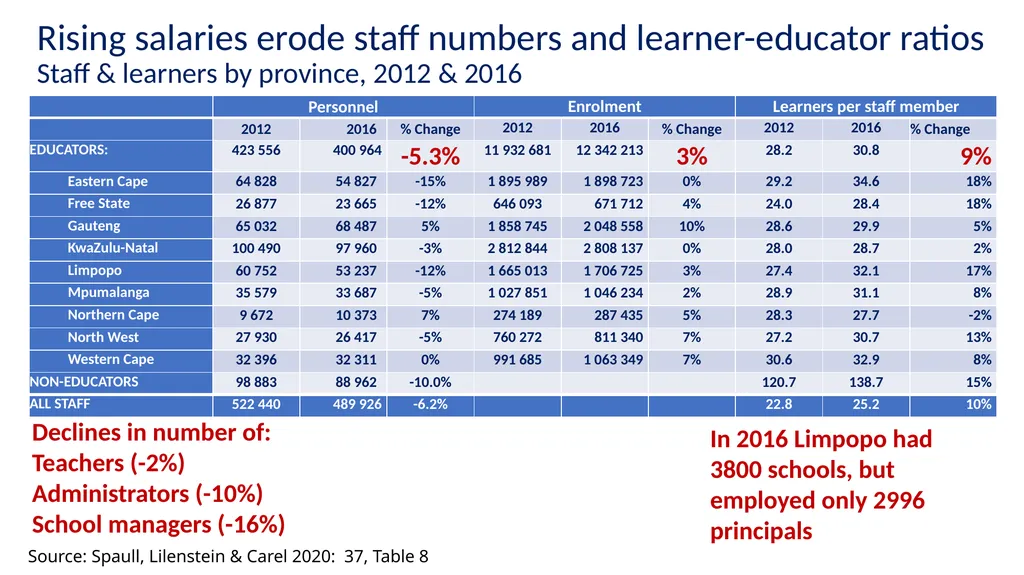
slide7. Rising salaries erode staff numbers and learner-educator ratios Staff & learners by province, 2012 & 2016 Source: Spaull, Lilenstein & Carel 2020: 37, Table 8 Declines in number of:
Teachers (-2%)
Administrators (-10%)
School managers (-16%) In 2016 Limpopo had 3800 schools, but employed only 2996 principals<br>
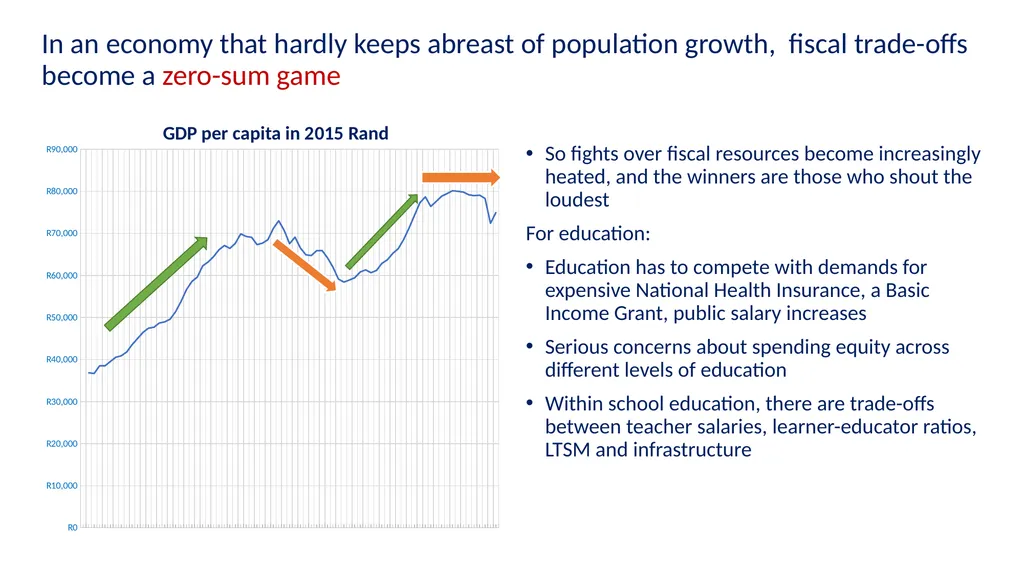
slide8. In an economy that hardly keeps abreast of population growth, fiscal trade-offs become a zero-sum game So fights over fiscal resources become increasingly heated, and the winners are those who shout the loudest
For education:
Education has to compete with demands for expensive National Health Insurance, a Basic Income Grant, public salary increases
Serious concerns about spending equity across different levels of education
Within school education, there are trade-offs between teacher salaries, learner-educator ratios, LTSM and infrastructure<br>
slide9. A new threat (or opportunity?): Teacher shortages
To be discussed tomorrow at 9:10 by Servaas van der Berg<br>
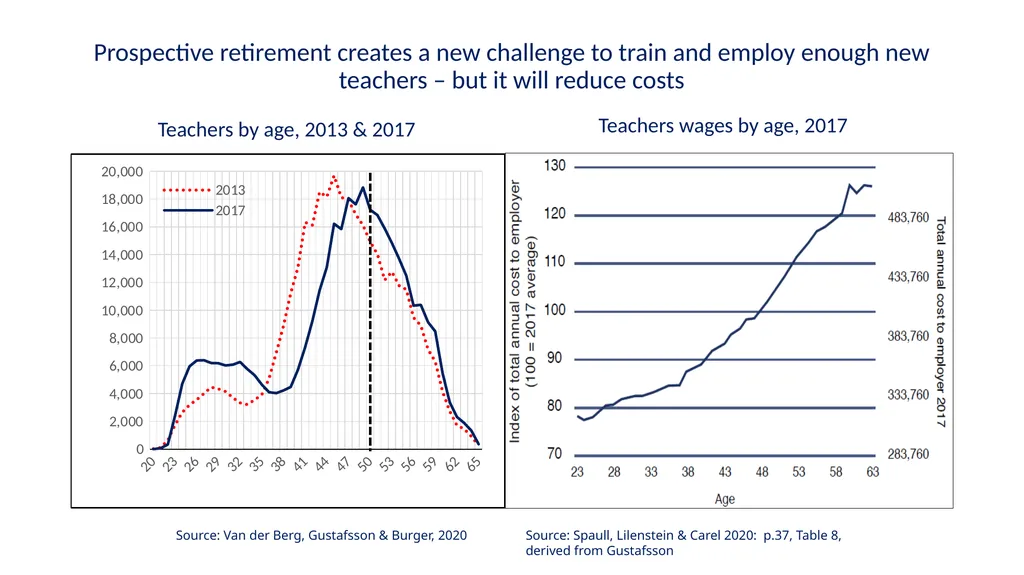
slide10. Prospective retirement creates a new challenge to train and employ enough new teachers – but it will reduce costs Teachers by age, 2013 & 2017 Teachers wages by age, 2017 Source: Van der Berg, Gustafsson & Burger, 2020 Source: Spaull, Lilenstein & Carel 2020: p.37, Table 8,
derived from Gustafsson<br>
slide11. Learning losses
To be discussed today at 11:30 by Nompumelelo Mohohlwane & Ursula Hoadley and also today at 14:40 by Vijay Reddy<br>
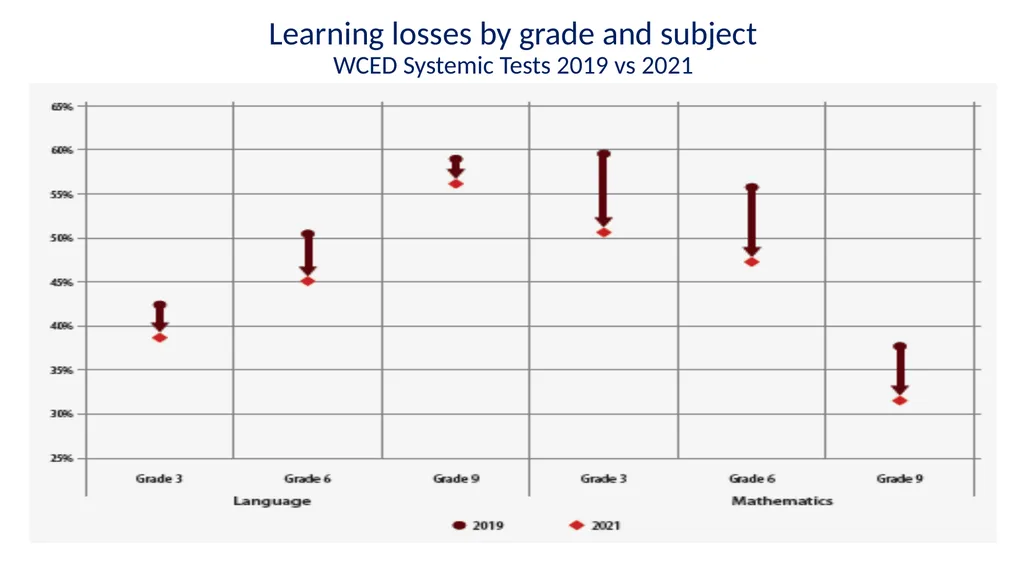
slide12. Learning losses by grade and subject WCED Systemic Tests 2019 vs 2021<br>
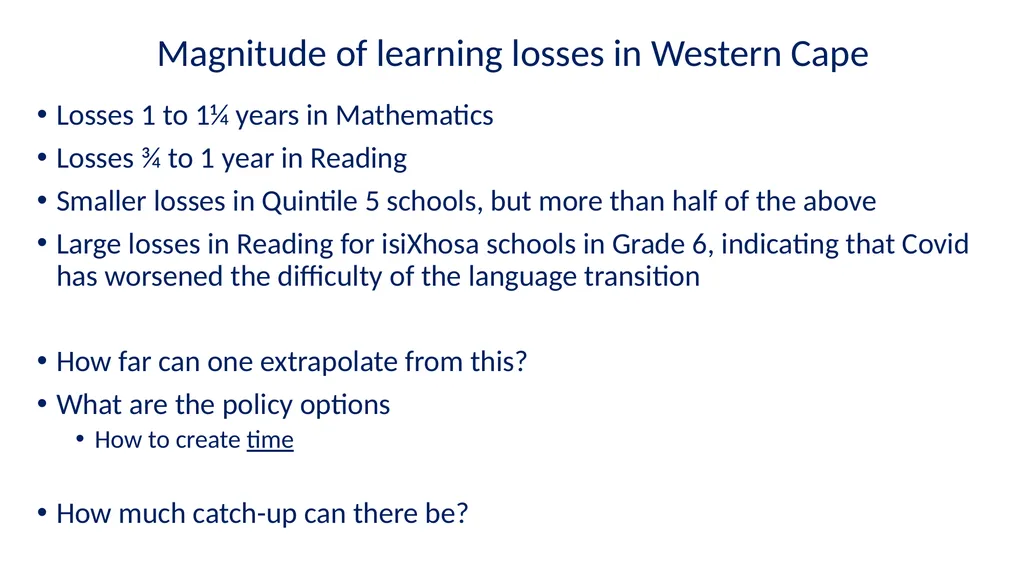
slide13. Magnitude of learning losses in Western Cape Losses 1 to 1¼ years in Mathematics
Losses ¾ to 1 year in Reading
Smaller losses in Quintile 5 schools, but more than half of the above
Large losses in Reading for isiXhosa schools in Grade 6, indicating that Covid has worsened the difficulty of the language transition
How far can one extrapolate from this?
What are the policy options
How to create time
How much catch-up can there be?<br>
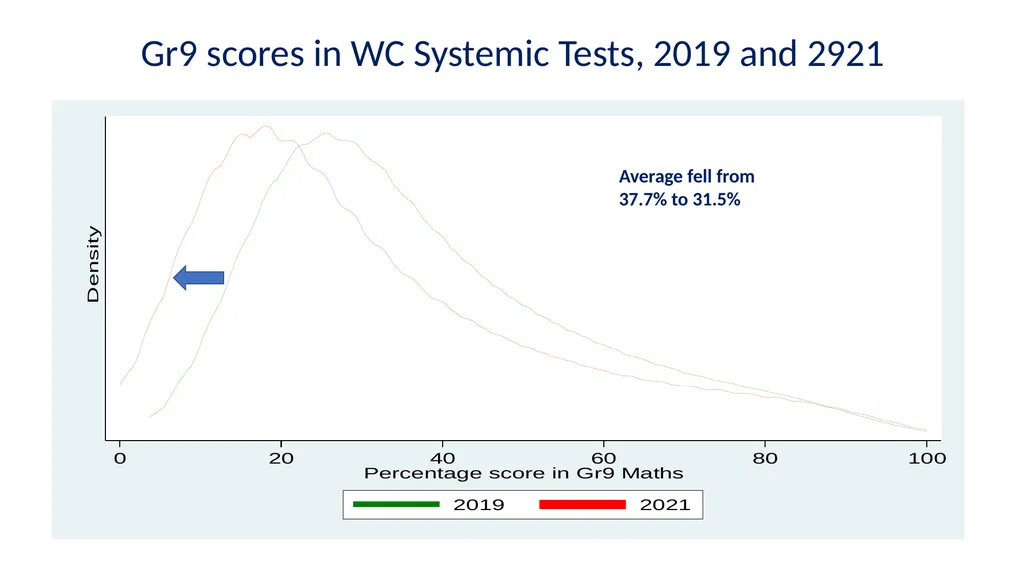
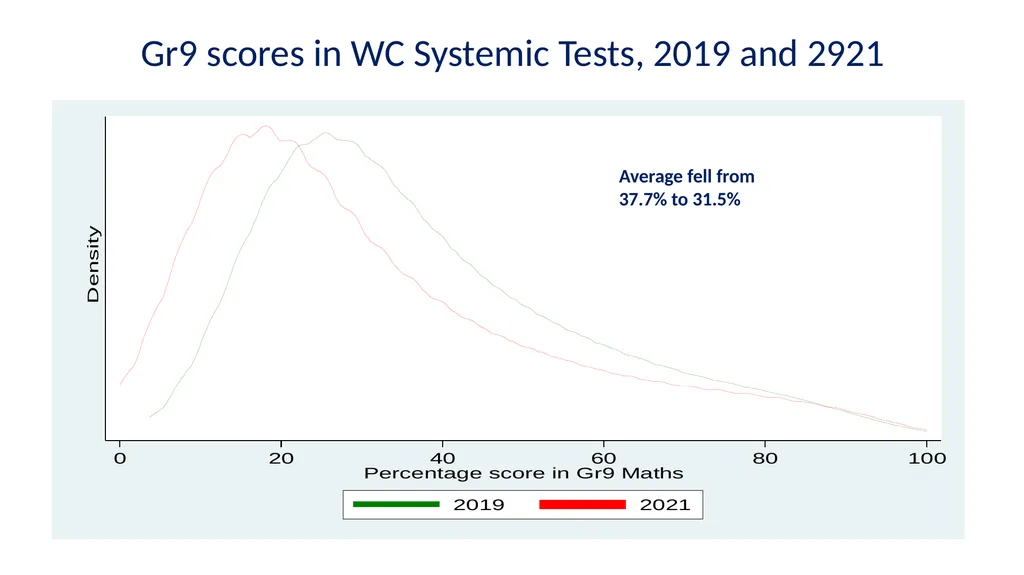
slide14. Gr9 scores in WC Systemic Tests, 2019 and 2921 Average fell from 37.7% to 31.5%<br>
slide15. Repetition, assessment, and maintaining the integrity of the matric examination<br>
slide16. All provinces have similar patterns of repetition across grades (2019) – Limpopo’s are exceptionally high in secondary grades<br>
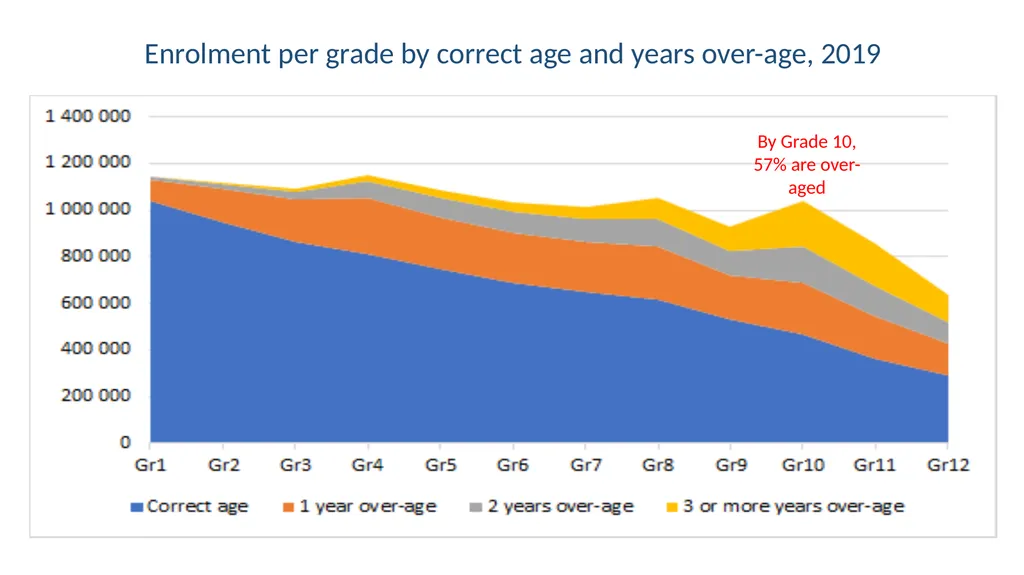
slide17. Enrolment per grade by correct age and years over-age, 2019 By Grade 10, 57% are over-aged<br>
slide18. Covid-19 and repetition rates: a natural experiment?<br>
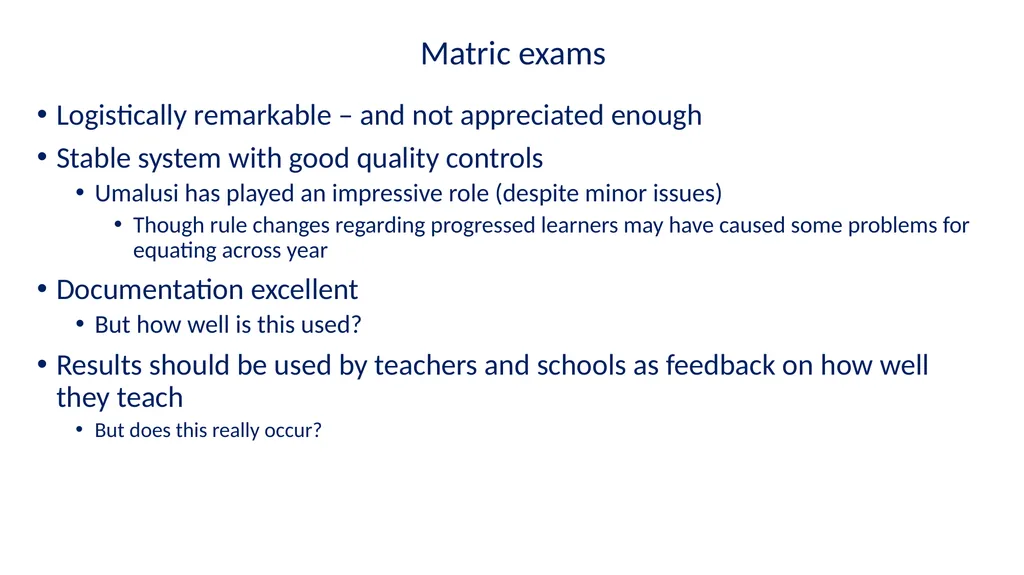
slide19. Matric exams Logistically remarkable – and not appreciated enough
Stable system with good quality controls
Umalusi has played an impressive role (despite minor issues)
Though rule changes regarding progressed learners may have caused some problems for equating across year
Documentation excellent
But how well is this used?
Results should be used by teachers and schools as feedback on how well they teach
But does this really occur?<br>
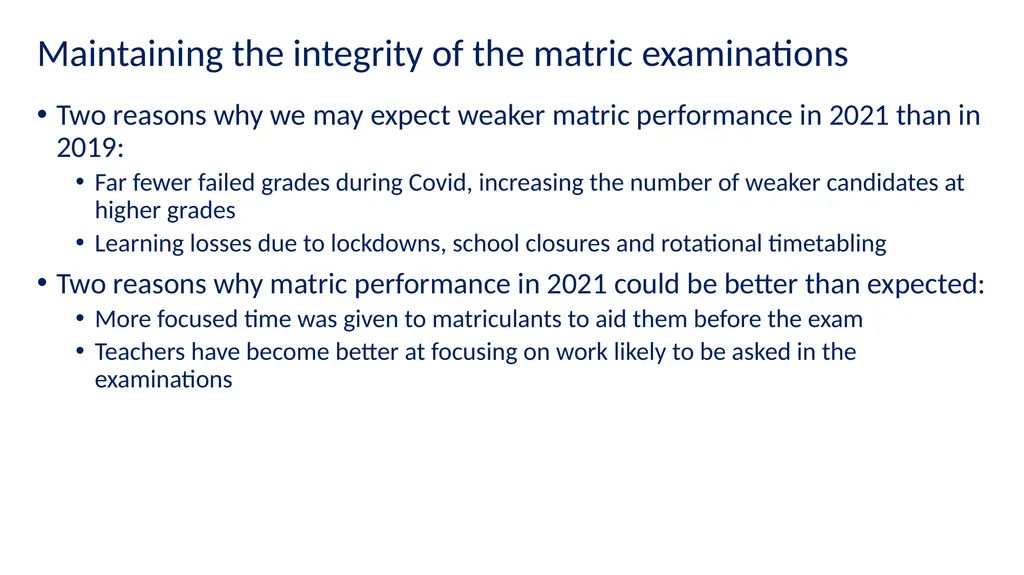
slide20. Maintaining the integrity of the matric examinations Two reasons why we may expect weaker matric performance in 2021 than in 2019:
Far fewer failed grades during Covid, increasing the number of weaker candidates at higher grades
Learning losses due to lockdowns, school closures and rotational timetabling
Two reasons why matric performance in 2021 could be better than expected:
More focused time was given to matriculants to aid them before the exam
Teachers have become better at focusing on work likely to be asked in the examinations<br>
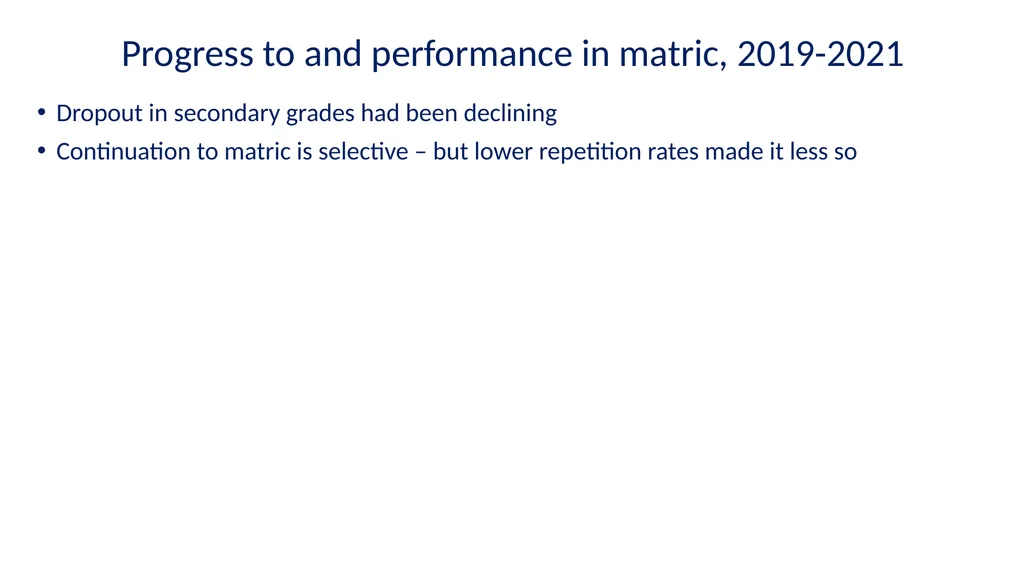
slide21. Progress to and performance in matric, 2019-2021 Dropout in secondary grades had been declining
Continuation to matric is selective – but lower repetition rates made it less so<br>
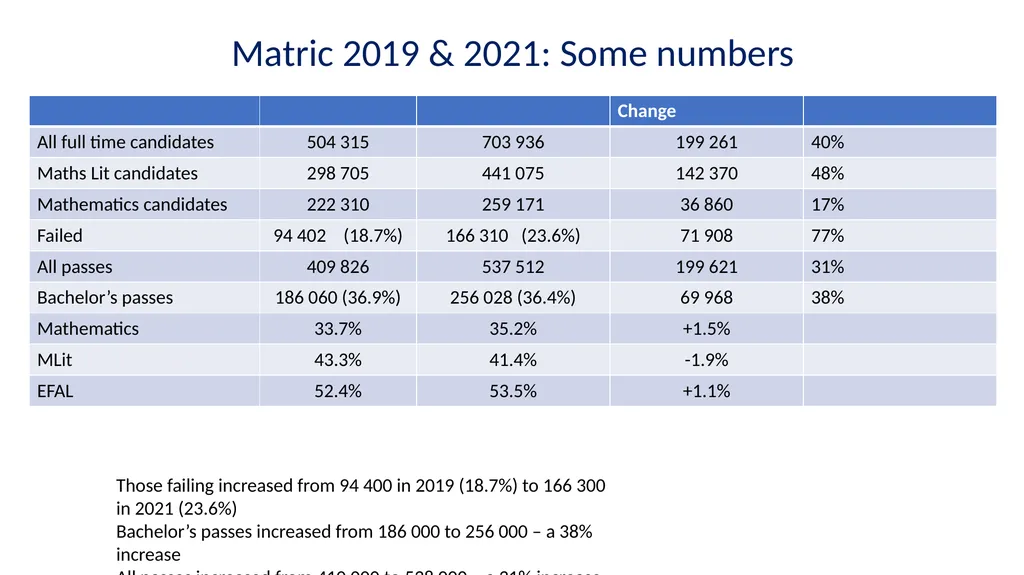
slide22. Matric 2019 & 2021: Some numbers Those failing increased from 94 400 in 2019 (18.7%) to 166 300 in 2021 (23.6%)
Bachelor’s passes increased from 186 000 to 256 000 – a 38% increase
All passes increased from 410 000 to 538 000 – a 31% increase<br>
slide23. Gr9 scores in WC Systemic Tests, 2019 and 2921 Average fell from 37.7% to 31.5%<br>
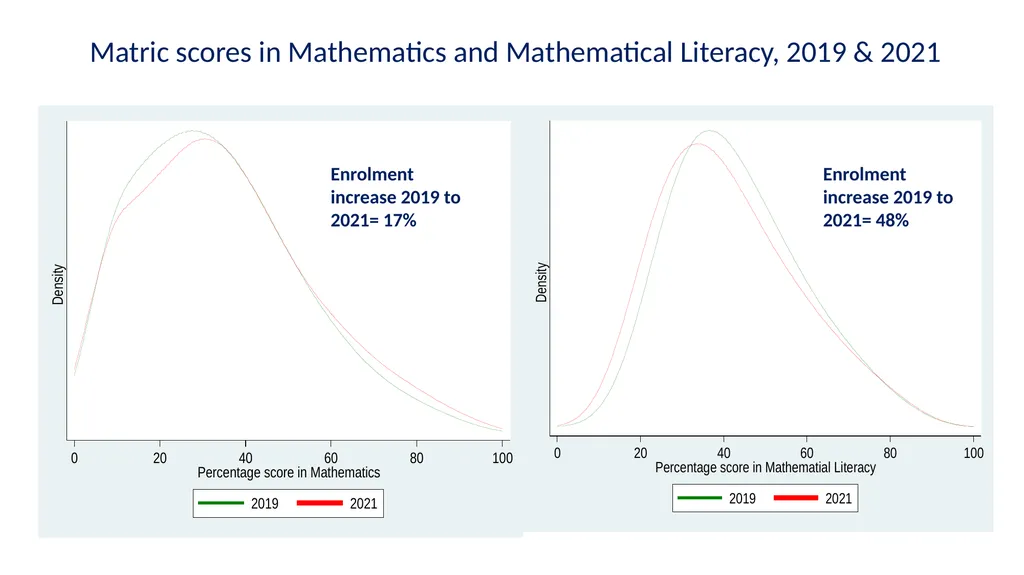
slide24. Matric scores in Mathematics and Mathematical Literacy, 2019 & 2021 Enrolment increase 2019 to 2021= 17% Enrolment increase 2019 to 2021= 48%<br>
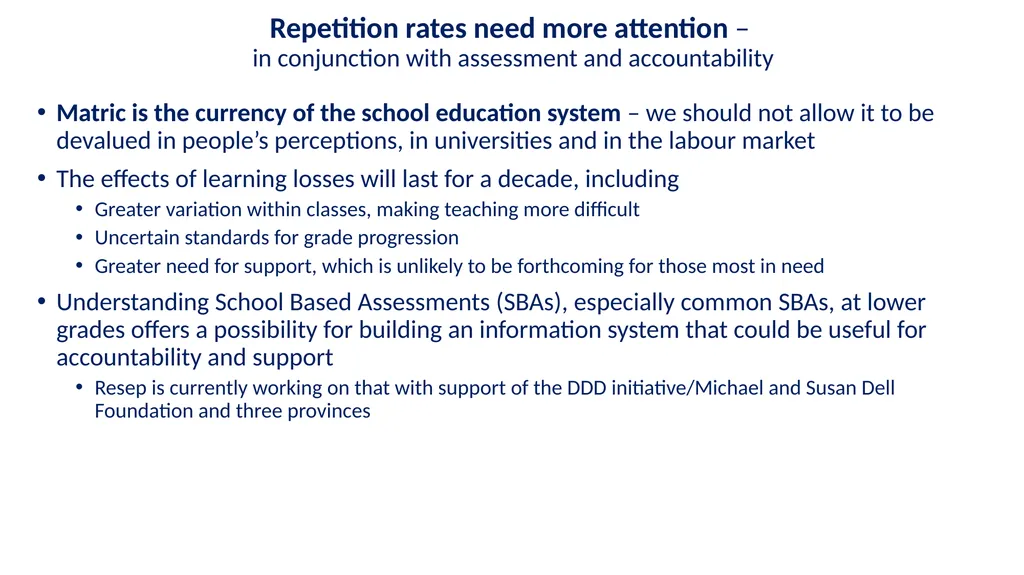
slide25. Repetition rates need more attention – in conjunction with assessment and accountability Matric is the currency of the school education system – we should not allow it to be devalued in people’s perceptions, in universities and in the labour market
The effects of learning losses will last for a decade, including
Greater variation within classes, making teaching more difficult
Uncertain standards for grade progression
Greater need for support, which is unlikely to be forthcoming for those most in need
Understanding School Based Assessments (SBAs), especially common SBAs, at lower grades offers a possibility for building an information system that could be useful for accountability and support
Resep is currently working on that with support of the DDD initiative/Michael and Susan Dell Foundation and three provinces<br>
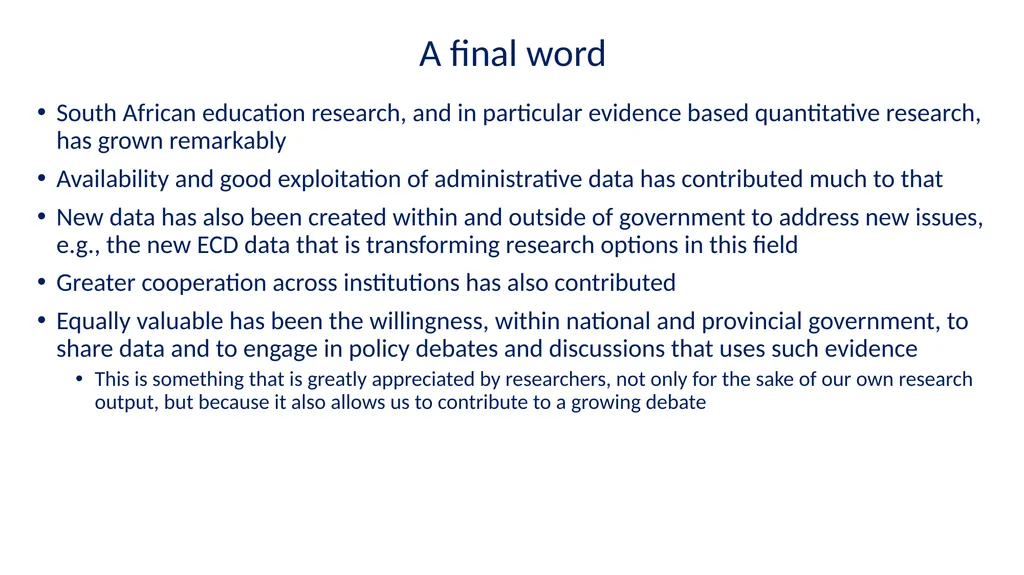
slide26. A final word South African education research, and in particular evidence based quantitative research, has grown remarkably
Availability and good exploitation of administrative data has contributed much to that
New data has also been created within and outside of government to address new issues, e.g., the new ECD data that is transforming research options in this field
Greater cooperation across institutions has also contributed
Equally valuable has been the willingness, within national and provincial government, to share data and to engage in policy debates and discussions that uses such evidence
This is something that is greatly appreciated by researchers, not only for the sake of our own research output, but because it also allows us to contribute to a growing debate<br>
slide2. Five important policy issues in South African education ECD – Also discussed later in the conference
Fiscal constraints – Also discussed later in the conference
Teacher demand and supply – Also discussed later in the conference
Learning losses – Also discussed later in the conference
Assessment, repetition and maintaining the integrity of the matric examination<br>
slide3. ECD
World Bank team’s Public Expenditure and Institutional Review of ECD in SA soon to be released– Discussed tomorrow at 11:00 by Jesal Kika-Mistry & Elizabeth Ninan<br>
slide4. ECD World Bank team’s Public Expenditure and Institutional Review of ECD in SA soon to be released– Discussed tomorrow at 11:00 by Jesal Kika-Mistry & Elizabeth Ninan
Much new data available, thanks to DBE audit and census, Innovation Edge/ELOM, Thrive by Five initiative, etc.
Resep and Ilifa Labantwana partnership on research, Working Papers and webinars
Only around ¾ of children aged 4-5 are in ECD programmes
Demand and supply factors operate:
Supply of ECD facilities is restricted by high hurdles for registration, as well as lack of effective demand
Demand for ECD facilities is restricted by
Inadequate incomes to pay parental contribution
Which is even higher when facilities are not registered and subsidized
Cheaper alternatives for childcare, often unemployed household members
Incidence of ECD subsidies very skew, as poor do not have access to ECD, or only have access to unregistered facilities, or cannot afford the parental contribution
We need mote evidence of cognitive effects of SA’s ECD services, and how these relate to costs, quality of facilities, uality of practitioners:
Cost per ECD practitioner ≃ R31 000, Grade R teacher ≃ R165 000, Grade 1-12 teacher ≃ R410 000 per annum<br>
slide5. Fiscal constraints
To be discussed tomorrow at 12:20 by Spencer Janari, Albert Chanee and Helanya Fourie<br>
slide6. Older teachers are more expensive: Teacher wages by age, 2017 Source: Spaull, Lilenstein & Carel 2020: 37, Table 8, derived from Gustafsson<br>
slide7. Rising salaries erode staff numbers and learner-educator ratios Staff & learners by province, 2012 & 2016 Source: Spaull, Lilenstein & Carel 2020: 37, Table 8 Declines in number of:
Teachers (-2%)
Administrators (-10%)
School managers (-16%) In 2016 Limpopo had 3800 schools, but employed only 2996 principals<br>
slide8. In an economy that hardly keeps abreast of population growth, fiscal trade-offs become a zero-sum game So fights over fiscal resources become increasingly heated, and the winners are those who shout the loudest
For education:
Education has to compete with demands for expensive National Health Insurance, a Basic Income Grant, public salary increases
Serious concerns about spending equity across different levels of education
Within school education, there are trade-offs between teacher salaries, learner-educator ratios, LTSM and infrastructure<br>
slide9. A new threat (or opportunity?): Teacher shortages
To be discussed tomorrow at 9:10 by Servaas van der Berg<br>
slide10. Prospective retirement creates a new challenge to train and employ enough new teachers – but it will reduce costs Teachers by age, 2013 & 2017 Teachers wages by age, 2017 Source: Van der Berg, Gustafsson & Burger, 2020 Source: Spaull, Lilenstein & Carel 2020: p.37, Table 8,
derived from Gustafsson<br>
slide11. Learning losses
To be discussed today at 11:30 by Nompumelelo Mohohlwane & Ursula Hoadley and also today at 14:40 by Vijay Reddy<br>
slide12. Learning losses by grade and subject WCED Systemic Tests 2019 vs 2021<br>
slide13. Magnitude of learning losses in Western Cape Losses 1 to 1¼ years in Mathematics
Losses ¾ to 1 year in Reading
Smaller losses in Quintile 5 schools, but more than half of the above
Large losses in Reading for isiXhosa schools in Grade 6, indicating that Covid has worsened the difficulty of the language transition
How far can one extrapolate from this?
What are the policy options
How to create time
How much catch-up can there be?<br>
slide14. Gr9 scores in WC Systemic Tests, 2019 and 2921 Average fell from 37.7% to 31.5%<br>
slide15. Repetition, assessment, and maintaining the integrity of the matric examination<br>
slide16. All provinces have similar patterns of repetition across grades (2019) – Limpopo’s are exceptionally high in secondary grades<br>
slide17. Enrolment per grade by correct age and years over-age, 2019 By Grade 10, 57% are over-aged<br>
slide18. Covid-19 and repetition rates: a natural experiment?<br>
slide19. Matric exams Logistically remarkable – and not appreciated enough
Stable system with good quality controls
Umalusi has played an impressive role (despite minor issues)
Though rule changes regarding progressed learners may have caused some problems for equating across year
Documentation excellent
But how well is this used?
Results should be used by teachers and schools as feedback on how well they teach
But does this really occur?<br>
slide20. Maintaining the integrity of the matric examinations Two reasons why we may expect weaker matric performance in 2021 than in 2019:
Far fewer failed grades during Covid, increasing the number of weaker candidates at higher grades
Learning losses due to lockdowns, school closures and rotational timetabling
Two reasons why matric performance in 2021 could be better than expected:
More focused time was given to matriculants to aid them before the exam
Teachers have become better at focusing on work likely to be asked in the examinations<br>
slide21. Progress to and performance in matric, 2019-2021 Dropout in secondary grades had been declining
Continuation to matric is selective – but lower repetition rates made it less so<br>
slide22. Matric 2019 & 2021: Some numbers Those failing increased from 94 400 in 2019 (18.7%) to 166 300 in 2021 (23.6%)
Bachelor’s passes increased from 186 000 to 256 000 – a 38% increase
All passes increased from 410 000 to 538 000 – a 31% increase<br>
slide23. Gr9 scores in WC Systemic Tests, 2019 and 2921 Average fell from 37.7% to 31.5%<br>
slide24. Matric scores in Mathematics and Mathematical Literacy, 2019 & 2021 Enrolment increase 2019 to 2021= 17% Enrolment increase 2019 to 2021= 48%<br>
slide25. Repetition rates need more attention – in conjunction with assessment and accountability Matric is the currency of the school education system – we should not allow it to be devalued in people’s perceptions, in universities and in the labour market
The effects of learning losses will last for a decade, including
Greater variation within classes, making teaching more difficult
Uncertain standards for grade progression
Greater need for support, which is unlikely to be forthcoming for those most in need
Understanding School Based Assessments (SBAs), especially common SBAs, at lower grades offers a possibility for building an information system that could be useful for accountability and support
Resep is currently working on that with support of the DDD initiative/Michael and Susan Dell Foundation and three provinces<br>
slide26. A final word South African education research, and in particular evidence based quantitative research, has grown remarkably
Availability and good exploitation of administrative data has contributed much to that
New data has also been created within and outside of government to address new issues, e.g., the new ECD data that is transforming research options in this field
Greater cooperation across institutions has also contributed
Equally valuable has been the willingness, within national and provincial government, to share data and to engage in policy debates and discussions that uses such evidence
This is something that is greatly appreciated by researchers, not only for the sake of our own research output, but because it also allows us to contribute to a growing debate<br>