Sorry! I dont reflect like that Vildan ÇAL, Sabancı University http:www.youtube.comwatch?v9rJoB7y6Ncs http:www.youtube.comwatch?vWzf9B4pPtg Outline of the Session Definition of reflective teaching Types of reflective teaching
"Sorry! I don’t reflect like that Vildan ÇAL," is the property of its rightful owner. Permission is granted to
download and print the materials on this website for personal, non-commercial use only, and to display it
on your personal computer provided you do not modify the materials and that you retain all copyright
notices contained in the materials. By downloading content from our website, you accept the terms of this
agreement.
Presentation Transcript
01
Sorry! I don’t reflect like that Vildan ÇAL, Sabancı University<br>
Outline of the Session Definition of reflective teaching
Types of reflective teaching
Tools for reflection<br>
04
http://www.youtube.com/watch?v=oLV4c-QRKn0<br>
05
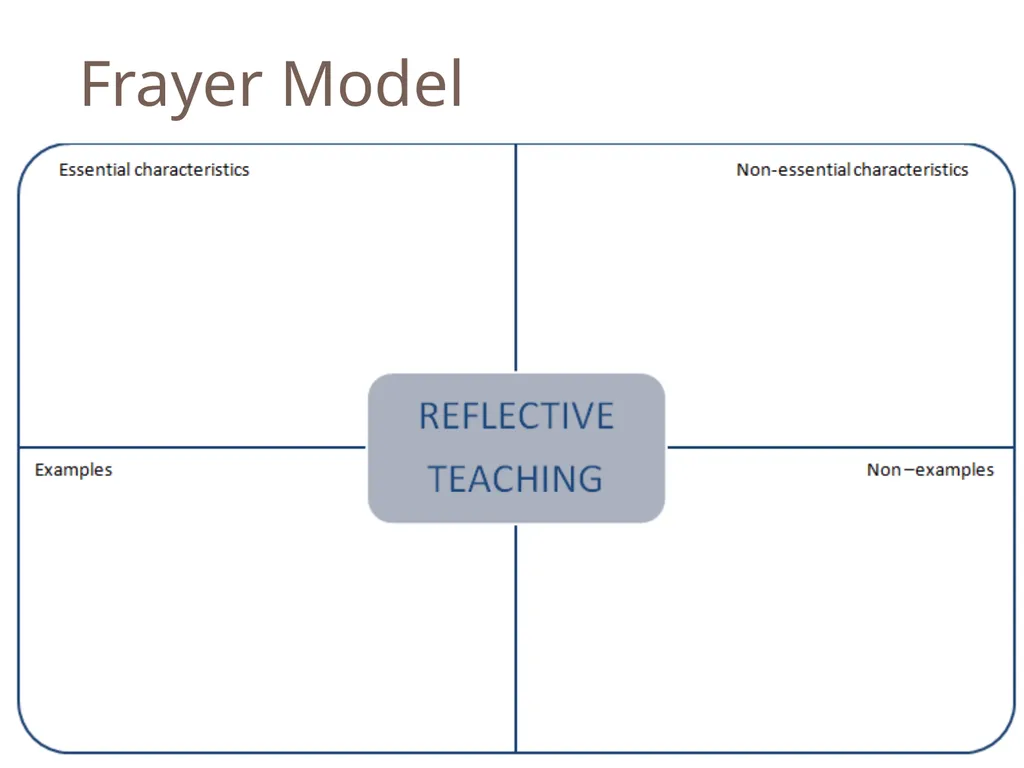
Frayer Model<br>
06
Why individual definition? It is necessary for each teacher to define for themselves the concept of reflective teaching (Farrel, 2007)
The teacher
The students
The parents
The school culture<br>
07
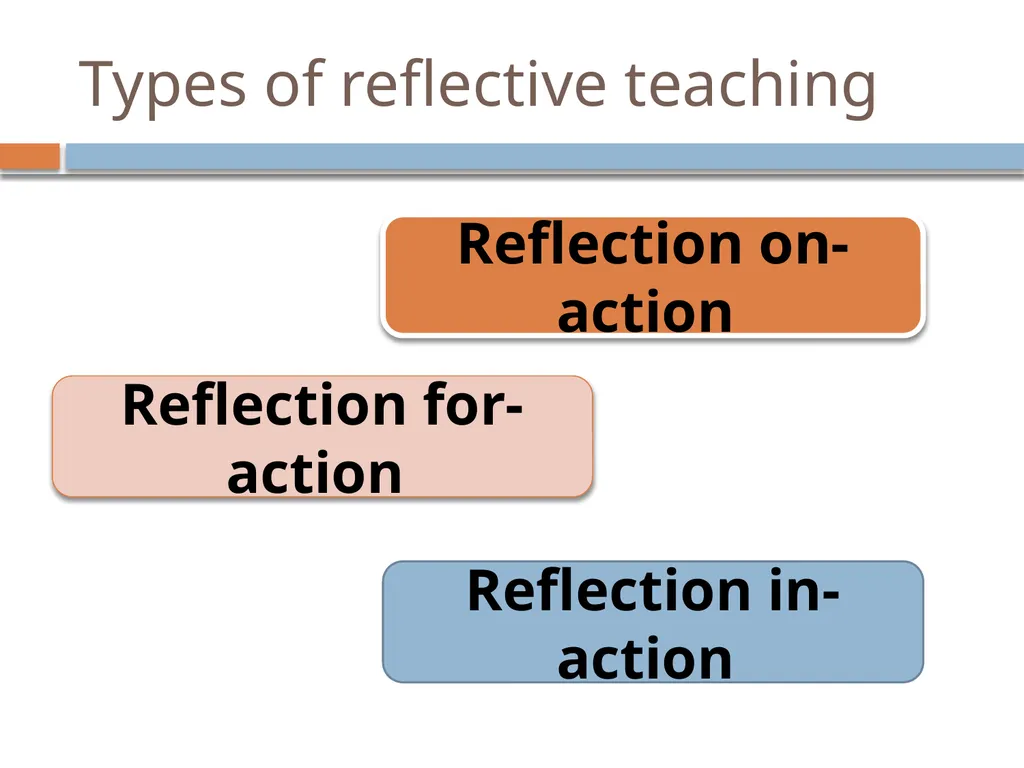
Types of reflective teaching Reflection in-action Reflection on-action Reflection for-action<br>
08
Reflection in-action Teachers take for granted their tacit knowledge
When a new situation/event occur, routines may not work
Teachers use this type of reflection to cope with such situations
They attempt to adjust their instruction to take into account those “unexpected” reactions
Experience teachers can use their repertoire
Novice teachers?<br>
09
Reflection on-action Occurs before a lesson, when teachers plan for or think about their lessons
After the instruction when they consider what occured
Metacognitive action<br>
10
Reflection for action Reflection for action
Proactive in nature
Guide future action
Desired outcome of both reflection in-action and reflection on-action<br>
11
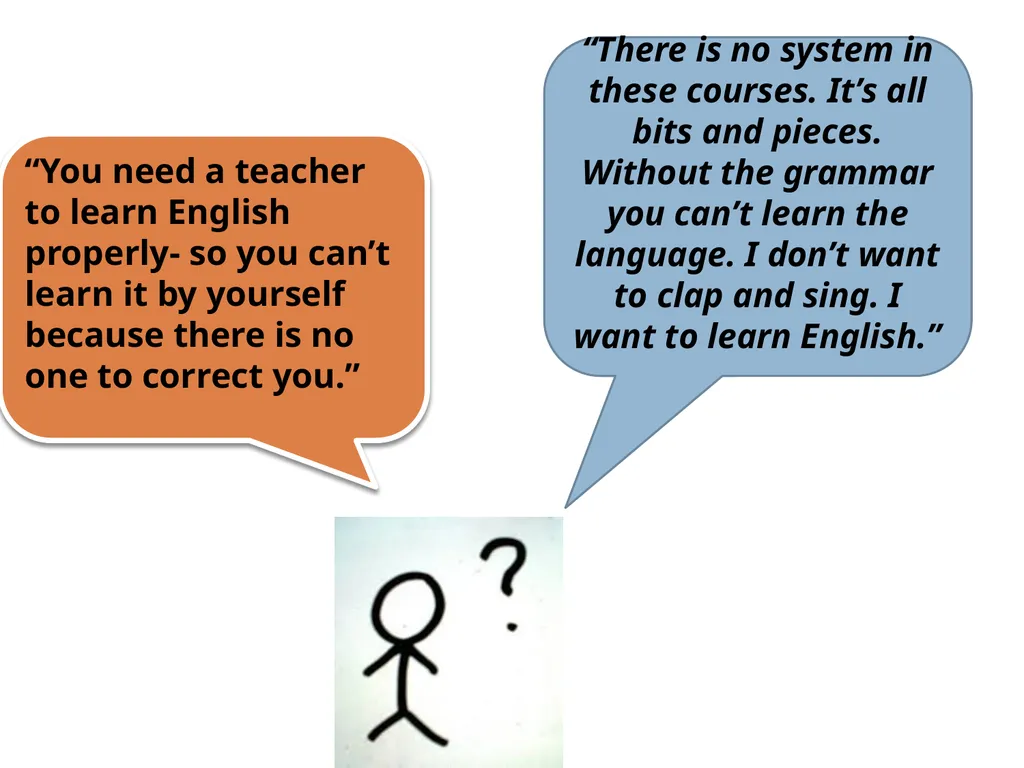
“There is no system in these courses. It’s all bits and pieces. Without the grammar you can’t learn the language. I don’t want to clap and sing. I want to learn English.” “You need a teacher to learn English properly- so you can’t learn it by yourself because there is no one to correct you.”<br>
12
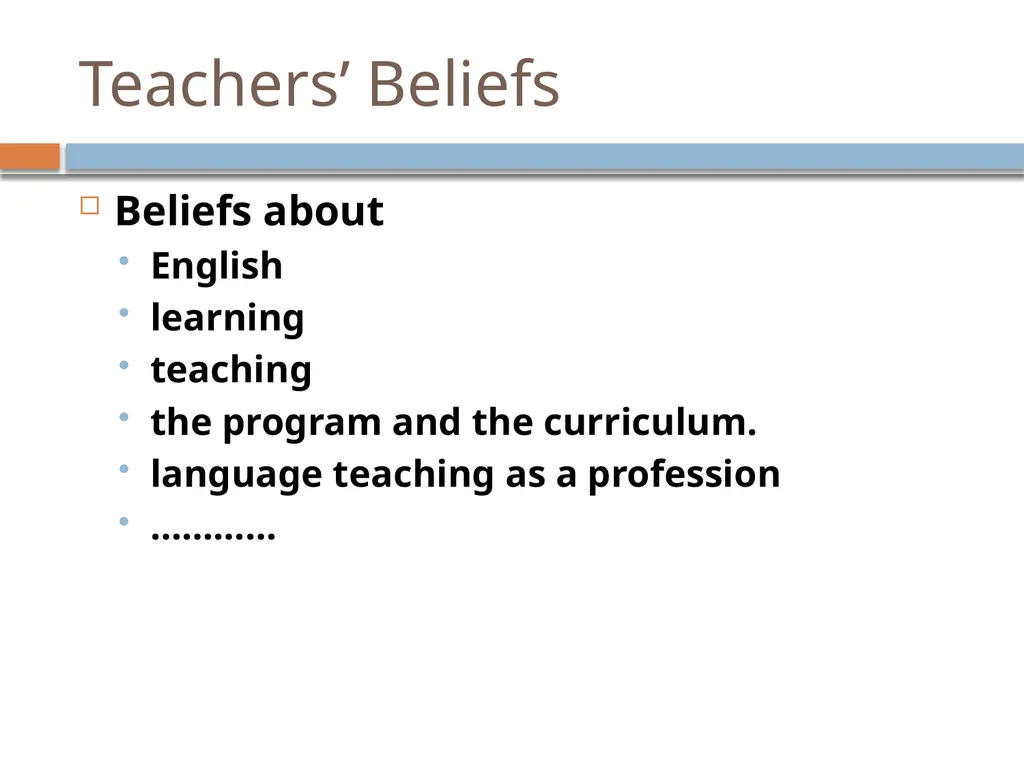
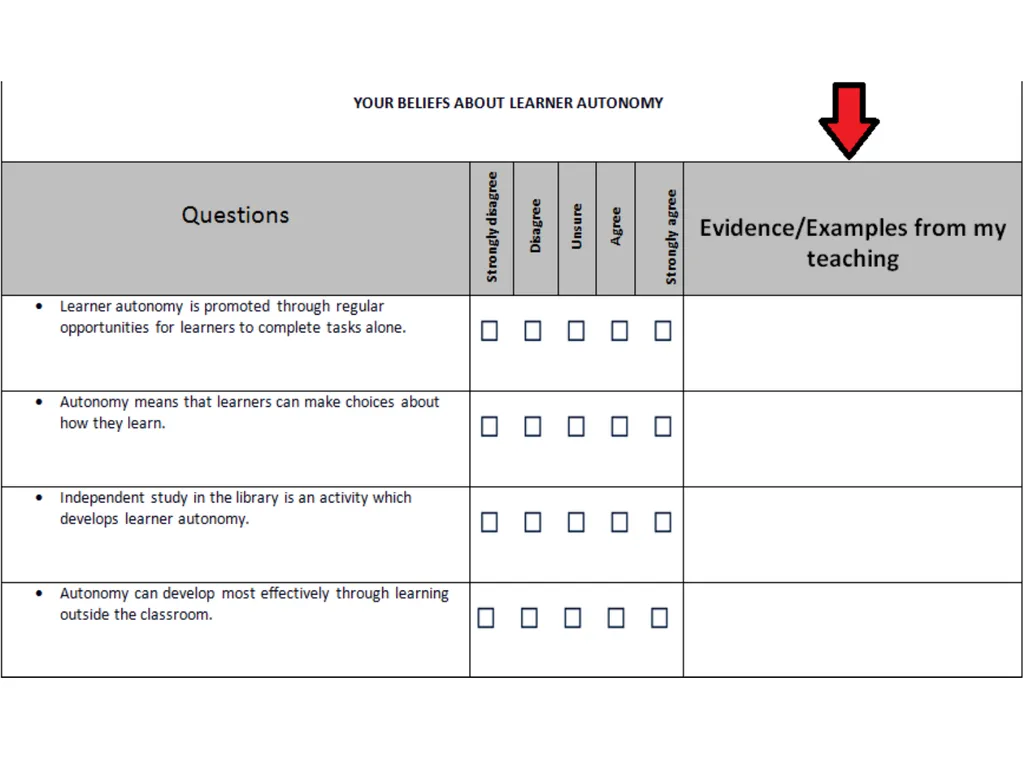
Teachers’ Beliefs Beliefs about
English
learning
teaching
the program and the curriculum.
language teaching as a profession
…………<br>
13
Teachers’ evidence from their teaching talking to students about autonomy and its value (‘I mainly focus on explaining and demonstrating to my students why it is important for them to be autonomous learners’).
getting learners to reflect on their learning (I give them assignments that encourage them to reflect on their goals, needs, progress, weaknesses, values’).
using activities in class which promote autonomy (‘I try to give my students frequent opportunities for independent (student-centred) learning in class, usually in small groups or pairs’).
setting activities out of class which promote autonomy (‘I assign students tasks that require them to use internet sources outside the class time’).
Retrieved from “Learner Autonomy: English Language Teachers’ Beliefs and Practices,” Simon Borg, and Saleh Al-Busaidi, ELT Research Paper, 12-07. British Council, Retrieved with permission.<br>
14
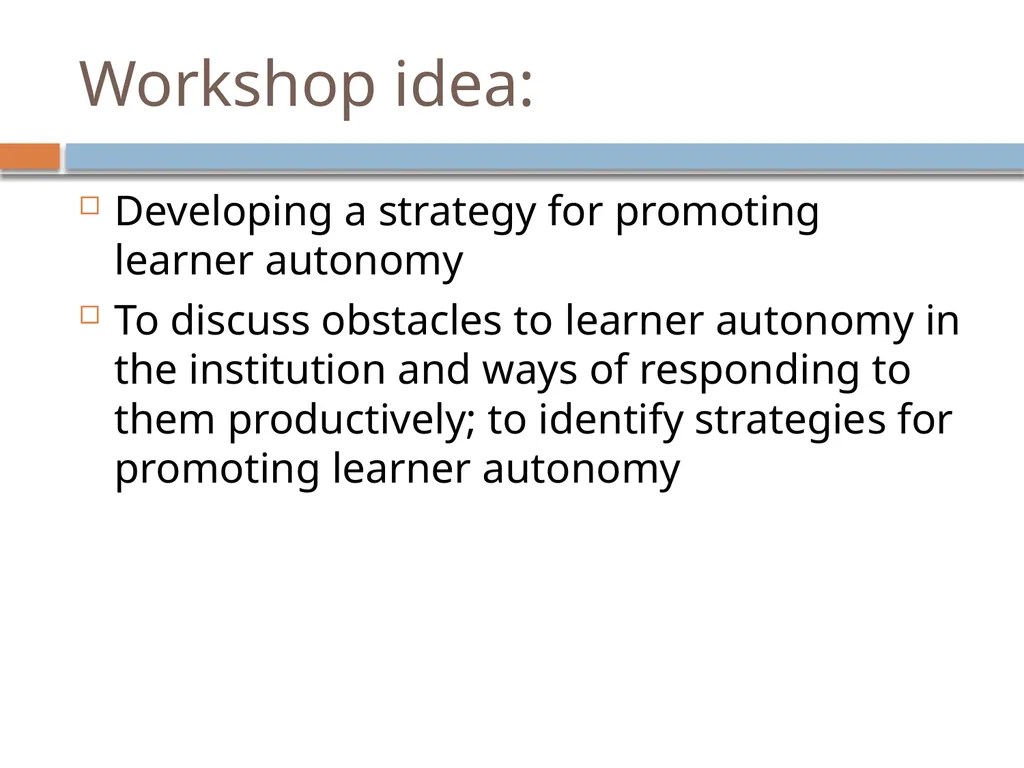
Workshop idea: Developing a strategy for promoting learner autonomy
To discuss obstacles to learner autonomy in the institution and ways of responding to them productively; to identify strategies for promoting learner autonomy<br>
15
METAPHORS WE TEACHY BY<br>
16
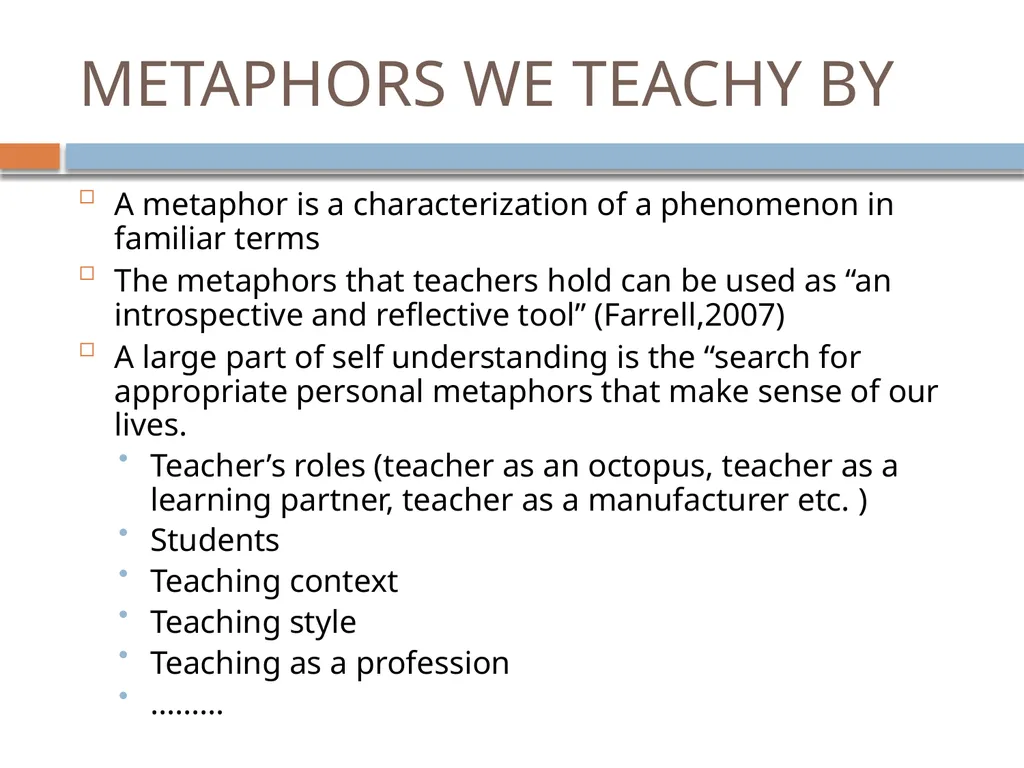
METAPHORS WE TEACHY BY A metaphor is a characterization of a phenomenon in familiar terms
The metaphors that teachers hold can be used as “an introspective and reflective tool” (Farrell,2007)
A large part of self understanding is the “search for appropriate personal metaphors that make sense of our lives.
Teacher’s roles (teacher as an octopus, teacher as a learning partner, teacher as a manufacturer etc. )
Students
Teaching context
Teaching style
Teaching as a profession
………<br>
17
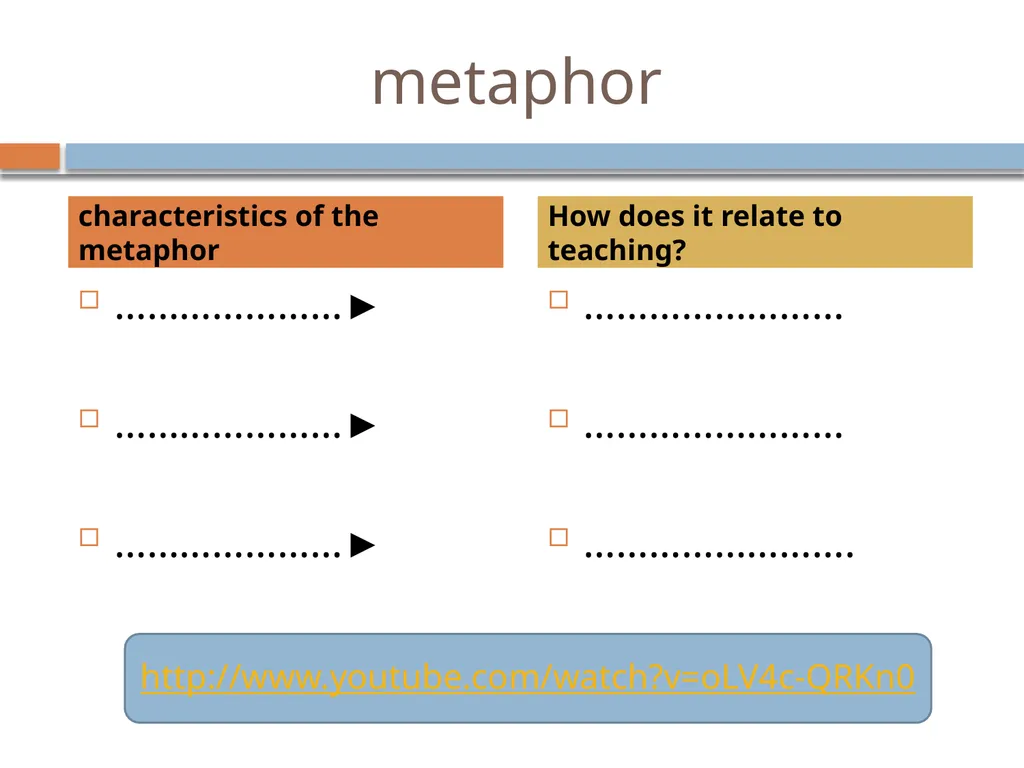
metaphor …………………►
…………………►
…………………► ……………………
……………………
……………………. characteristics of the metaphor How does it relate to teaching? http://www.youtube.com/watch?v=oLV4c-QRKn0<br>
18
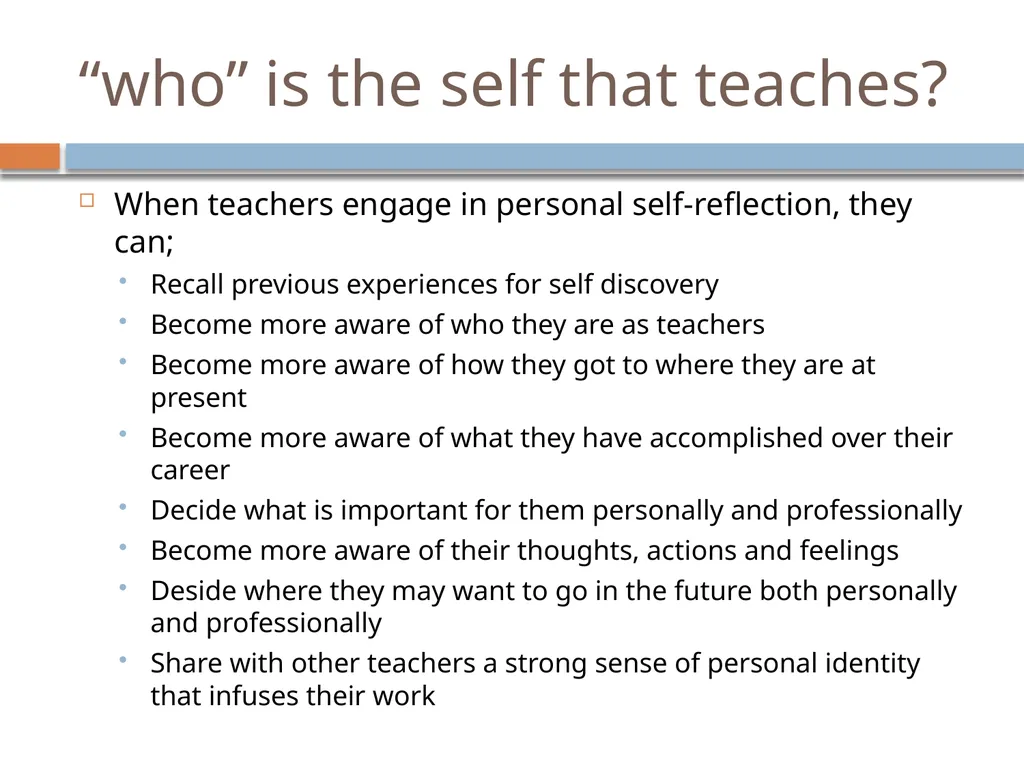
“who” is the self that teaches? When teachers engage in personal self-reflection, they can;
Recall previous experiences for self discovery
Become more aware of who they are as teachers
Become more aware of how they got to where they are at present
Become more aware of what they have accomplished over their career
Decide what is important for them personally and professionally
Become more aware of their thoughts, actions and feelings
Deside where they may want to go in the future both personally and professionally
Share with other teachers a strong sense of personal identity that infuses their work<br>
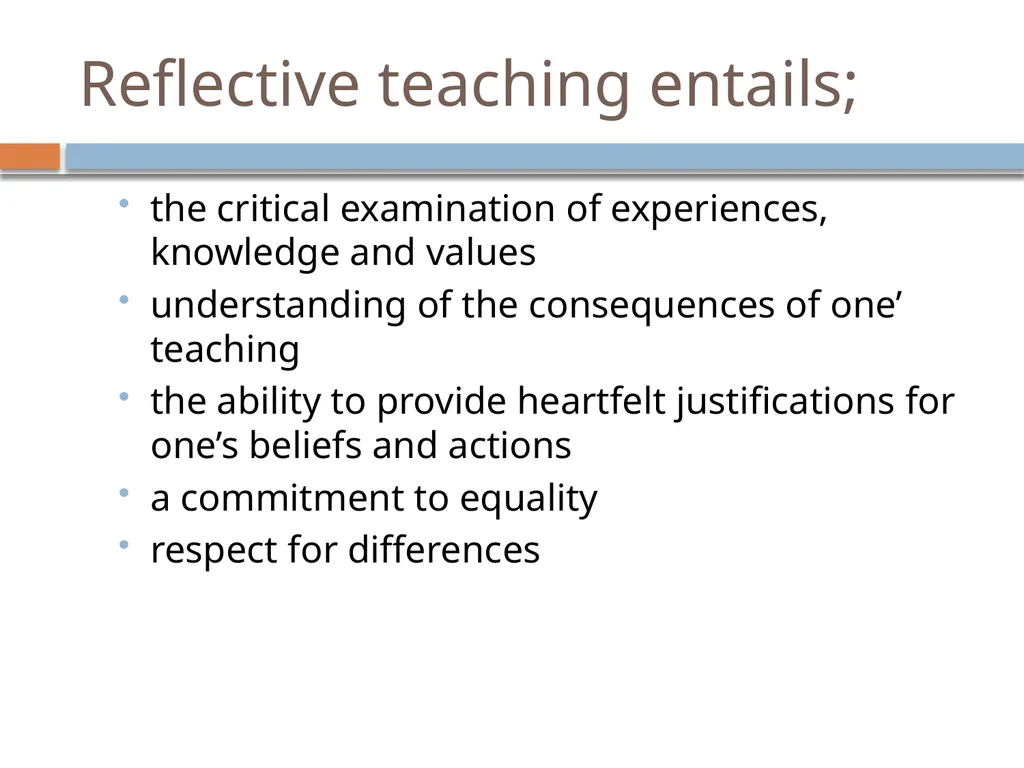
Reflective teaching entails; the critical examination of experiences, knowledge and values
understanding of the consequences of one’ teaching
the ability to provide heartfelt justifications for one’s beliefs and actions
a commitment to equality
respect for differences<br>
21
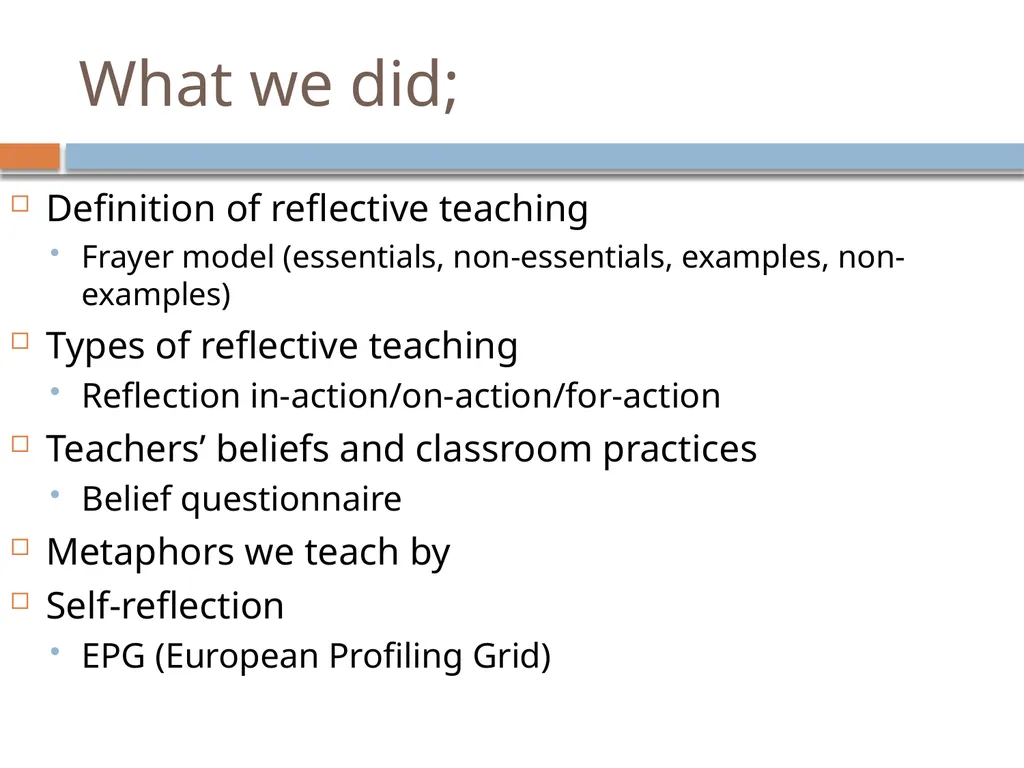
What we did; Definition of reflective teaching
Frayer model (essentials, non-essentials, examples, non-examples)
Types of reflective teaching
Reflection in-action/on-action/for-action
Teachers’ beliefs and classroom practices
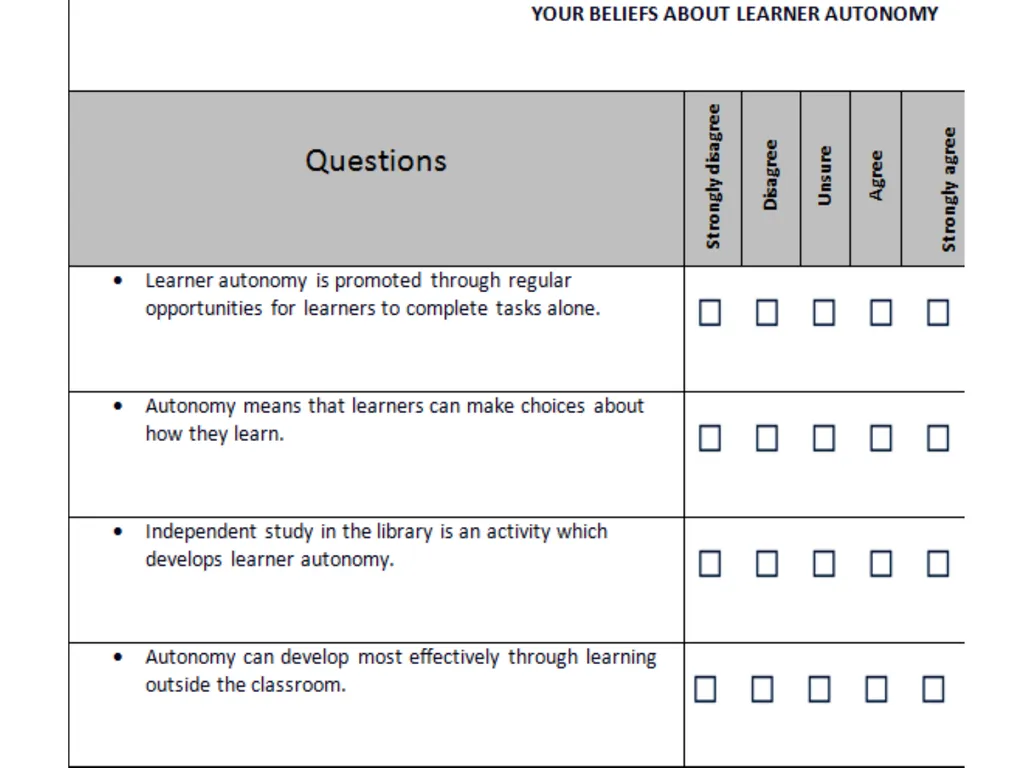
Belief questionnaire
Metaphors we teach by
Self-reflection
EPG (European Profiling Grid)<br>
22
Ticket out the door Thing/s you liked about the workshop
Thing/s you can take home
Thing/s that need/s improvement<br>