Species Distribution Models Characterize the environmental conditions that are suitable for the species Identify where suitable environments are distributed in space Why might species only occupy part of the Fundamental Niche? Utility of
"Species Distribution Models Characterize the" is the property of its rightful owner. Permission is granted to
download and print the materials on this website for personal, non-commercial use only, and to display it
on your personal computer provided you do not modify the materials and that you retain all copyright
notices contained in the materials. By downloading content from our website, you accept the terms of this
agreement.
Presentation Transcript
01
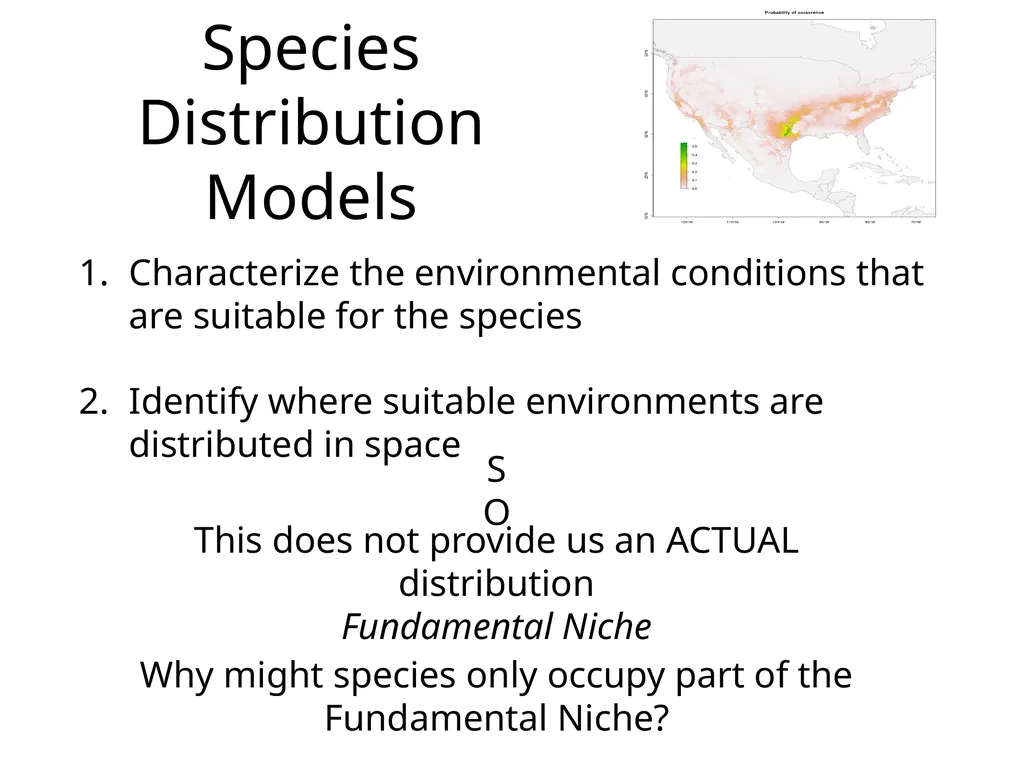
Species Distribution Models Characterize the environmental conditions that are suitable for the species
Identify where suitable environments are distributed in space Why might species only occupy part of the Fundamental Niche?<br>
02
Utility of SDM Identifying potential areas for disease outbreak
Examine niche evolution
Inform taxonomy
Conservation
reintroduction of species
identify priority sites for conservation
projecting spread of invasive species and disease<br>
03
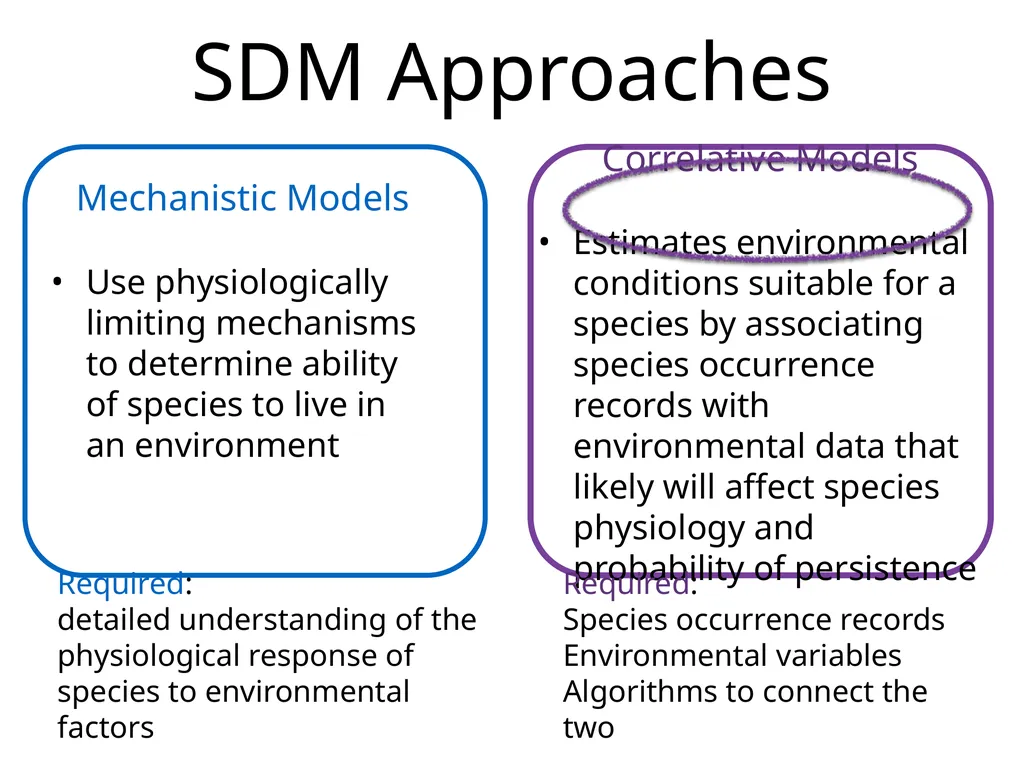
SDM Approaches Mechanistic Models
Use physiologically limiting mechanisms to determine ability of species to live in an environment Correlative Models
Estimates environmental conditions suitable for a species by associating species occurrence records with environmental data that likely will affect species physiology and probability of persistence Required:
detailed understanding of the physiological response of species to environmental factors Required:
Species occurrence records
Environmental variables
Algorithms to connect the two<br>
04
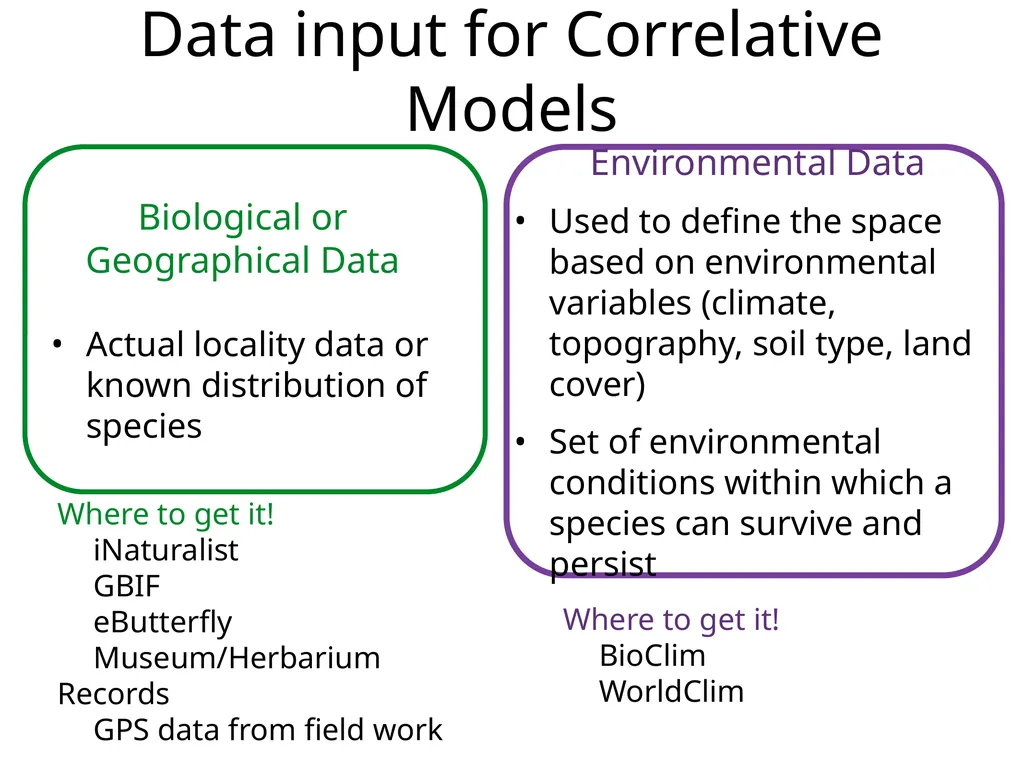
Data input for Correlative Models Biological or Geographical Data
Actual locality data or known distribution of species Environmental Data
Used to define the space based on environmental variables (climate, topography, soil type, land cover)
Set of environmental conditions within which a species can survive and persist Where to get it!
iNaturalist
GBIF
eButterfly
Museum/Herbarium Records
GPS data from field work Where to get it!
BioClim
WorldClim<br>
05
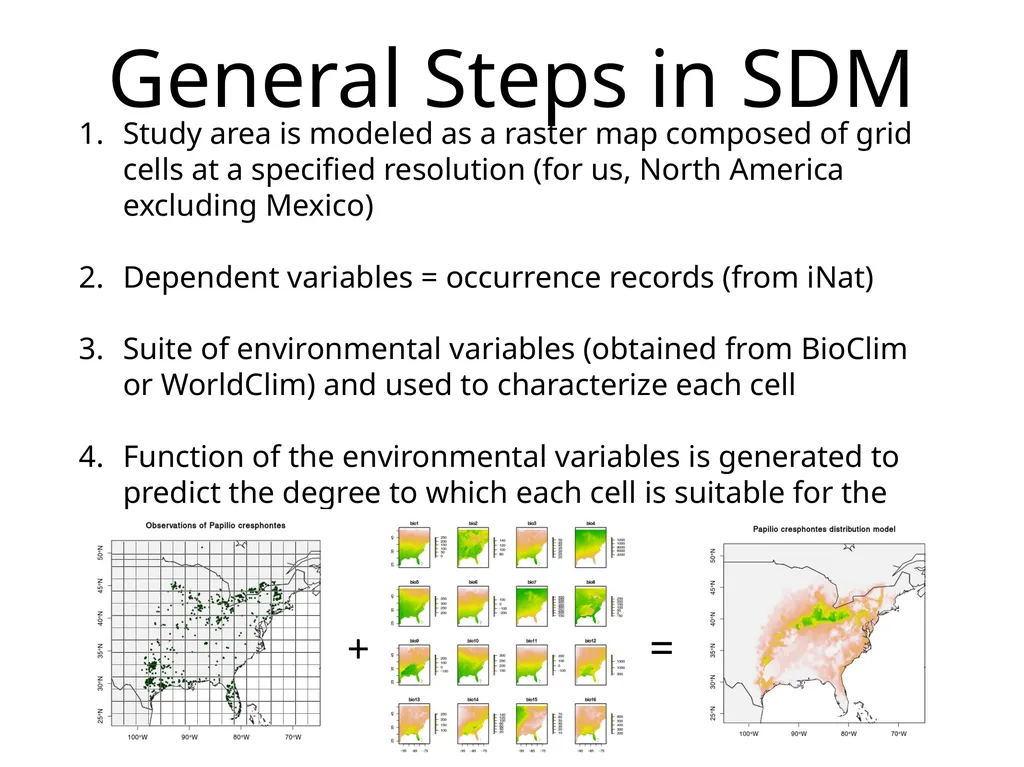
General Steps in SDM Study area is modeled as a raster map composed of grid cells at a specified resolution (for us, North America excluding Mexico)
Dependent variables = occurrence records (from iNat)
Suite of environmental variables (obtained from BioClim or WorldClim) and used to characterize each cell
Function of the environmental variables is generated to predict the degree to which each cell is suitable for the species + =<br>
06
Tips for Success Today No spaces in file names. NoSpacesInFileNames.doc
CaPitALIzatiON matters
Follow the directions carefully!
Keep all members of the group at the same step - help each other when need be!
Only CAN-DO attitudes:)
Patience. Goal: Complete SP-2 Assignment using instructions handed out today<br>