
Sport Analytics Utilization in The Sport Industry:



Description: Sport Analytics Utilization in The Sport Industry: A Structured Literature Review Dr Benjamin Dehe Prof David Bamford Olatunbosun Olaniyan POMS 2017, Seattle, WA 28th Annual Conference Introduction Background To investigate the role of
Related Topics
Download Presentation
"Sport Analytics Utilization in The Sport Industry:" is the property of its rightful owner. Permission is granted to download and print the materials on this website for personal, non-commercial use only, and to display it on your personal computer provided you do not modify the materials and that you retain all copyright notices contained in the materials. By downloading content from our website, you accept the terms of this agreement.
Presentation Transcript
slide1. Sport Analytics Utilization in The Sport Industry: A Structured Literature Review Dr Benjamin Dehe
Prof David Bamford
Olatunbosun Olaniyan POMS 2017, Seattle, WA
28th Annual Conference<br>
slide2. Introduction / Background To investigate the role of data analytics and technology in the sport industry
Using a structured literature review approach, we are able to evidence based the current trends and practices
We aim to shed some light on a recent and underdeveloped area.
The sport industry is often divided into 2 categories :
On-Pitch – Performance monitoring, player evaluation, competition analysis
Off –Pitch – fans engagement, revenue management, CRM
Aggregated is a £20 billion sector supporting, generating over 400,000 jobs in the UK alone (Critchlow, 2015)
It is expected to reach more than $145 billion over the next few years in the USA (PwC, 2011)<br>
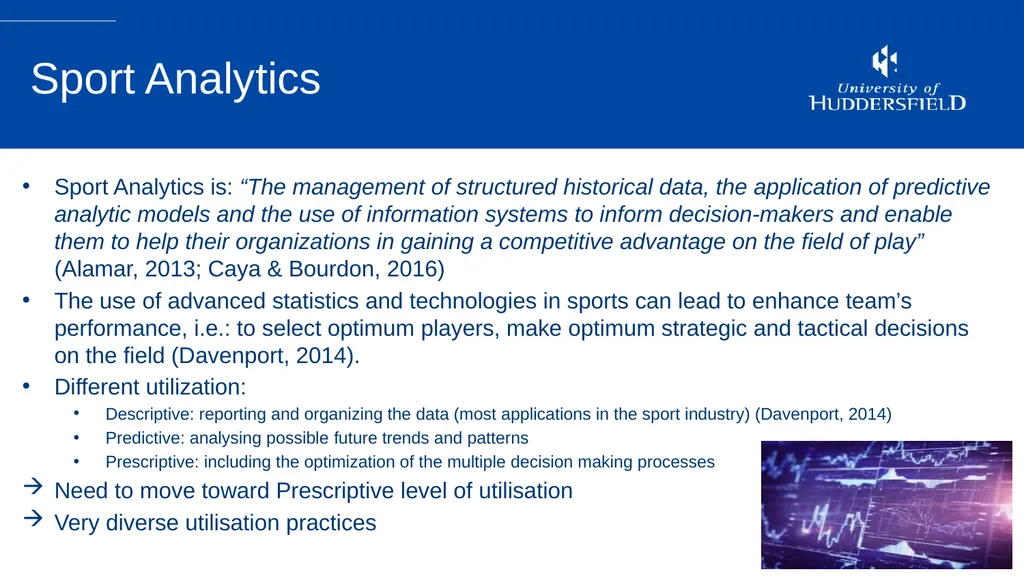
slide3. Sport Analytics Sport Analytics is: “The management of structured historical data, the application of predictive analytic models and the use of information systems to inform decision-makers and enable them to help their organizations in gaining a competitive advantage on the field of play” (Alamar, 2013; Caya & Bourdon, 2016)
The use of advanced statistics and technologies in sports can lead to enhance team’s performance, i.e.: to select optimum players, make optimum strategic and tactical decisions on the field (Davenport, 2014).
Different utilization:
Descriptive: reporting and organizing the data (most applications in the sport industry) (Davenport, 2014)
Predictive: analysing possible future trends and patterns
Prescriptive: including the optimization of the multiple decision making processes
Need to move toward Prescriptive level of utilisation
Very diverse utilisation practices<br>
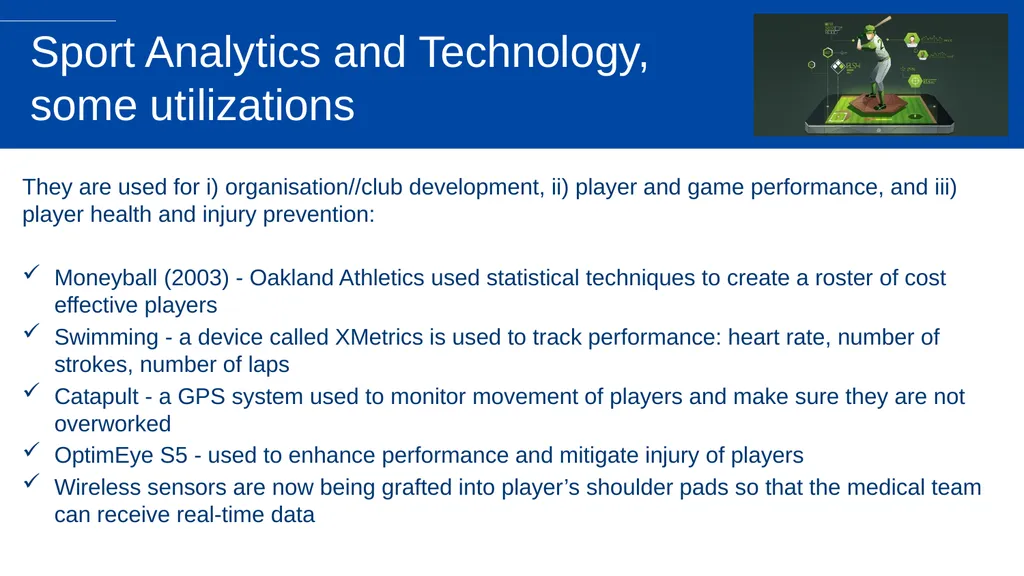
slide4. Sport Analytics and Technology, some utilizations They are used for i) organisation//club development, ii) player and game performance, and iii) player health and injury prevention:
Moneyball (2003) - Oakland Athletics used statistical techniques to create a roster of cost effective players
Swimming - a device called XMetrics is used to track performance: heart rate, number of strokes, number of laps
Catapult - a GPS system used to monitor movement of players and make sure they are not overworked
OptimEye S5 - used to enhance performance and mitigate injury of players
Wireless sensors are now being grafted into player’s shoulder pads so that the medical team can receive real-time data<br>
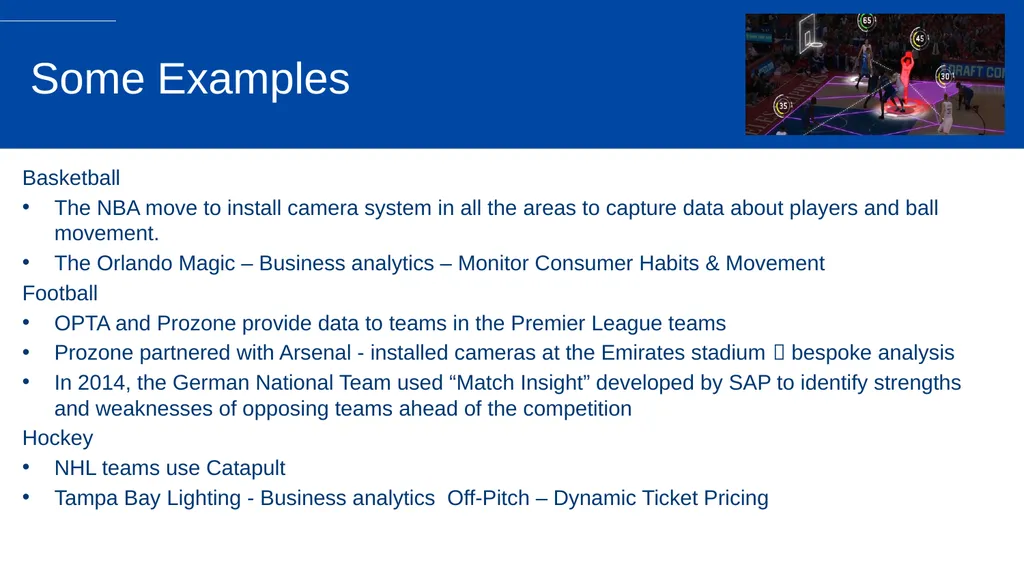
slide5. Some Examples Basketball
The NBA move to install camera system in all the areas to capture data about players and ball movement.
The Orlando Magic – Business analytics – Monitor Consumer Habits & Movement
Football
OPTA and Prozone provide data to teams in the Premier League teams
Prozone partnered with Arsenal - installed cameras at the Emirates stadium bespoke analysis
In 2014, the German National Team used “Match Insight” developed by SAP to identify strengths and weaknesses of opposing teams ahead of the competition
Hockey
NHL teams use Catapult
Tampa Bay Lighting - Business analytics Off-Pitch – Dynamic Ticket Pricing<br>
slide6. Importance of this Study Despite these examples, there hasn’t been a lot of research done and published in this area
Caya & Bourdon (2016) stressed a need for future research in terms of studying the entire process of value creation in sports context
It has been suggested that there is lot of doubt in the world of sports about the real value of business intelligence and analytics tools (Maxcy & Drayer, 2014).
The sport analytics utilisation level and practice is relatively neglected in the academic literature (Mondello & Kamke, 2014).
This structured literature review will test and address these statements and will contribute to the existing academic literature.<br>
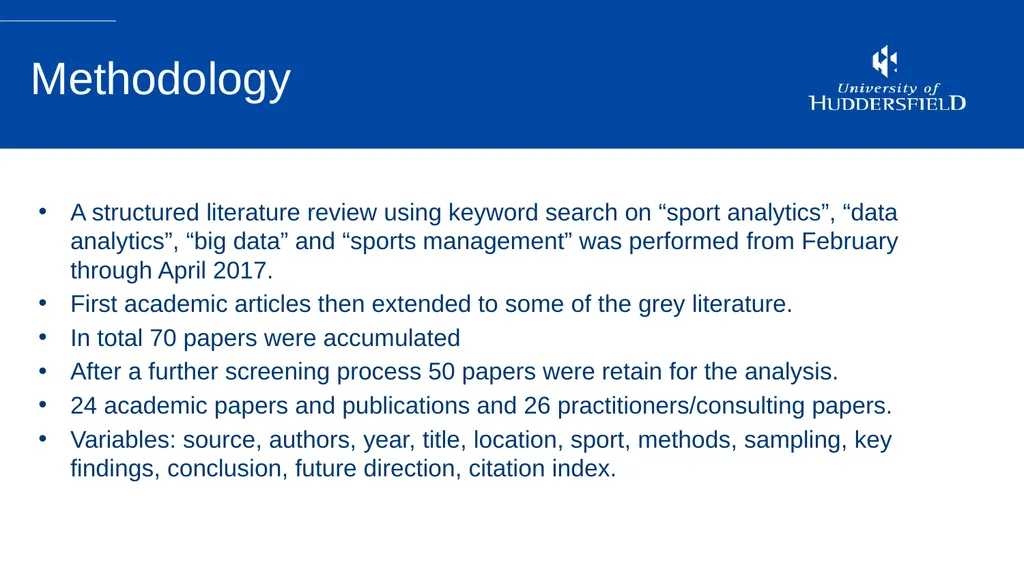
slide7. Methodology A structured literature review using keyword search on “sport analytics”, “data analytics”, “big data” and “sports management” was performed from February through April 2017.
First academic articles then extended to some of the grey literature.
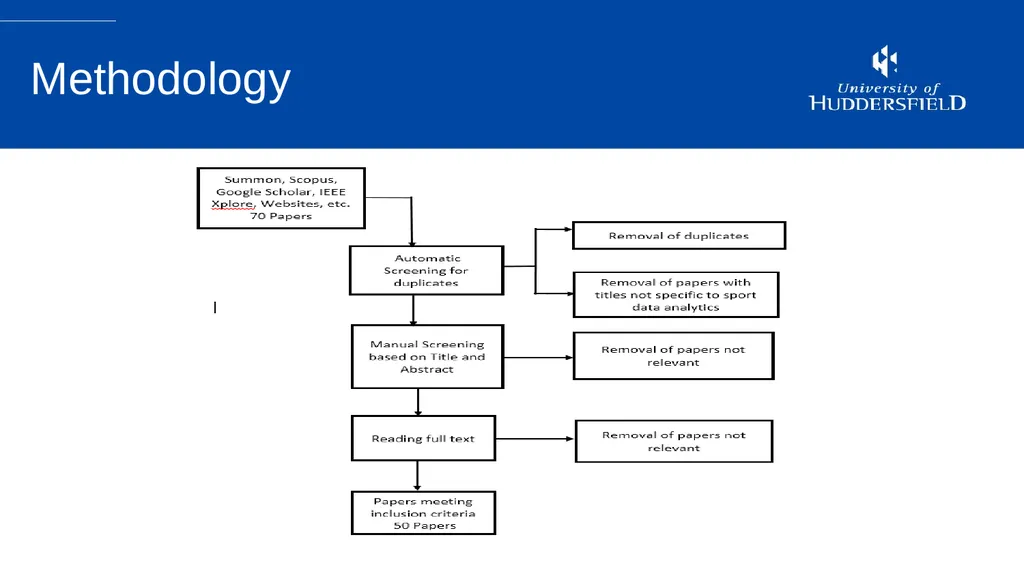
In total 70 papers were accumulated
After a further screening process 50 papers were retain for the analysis.
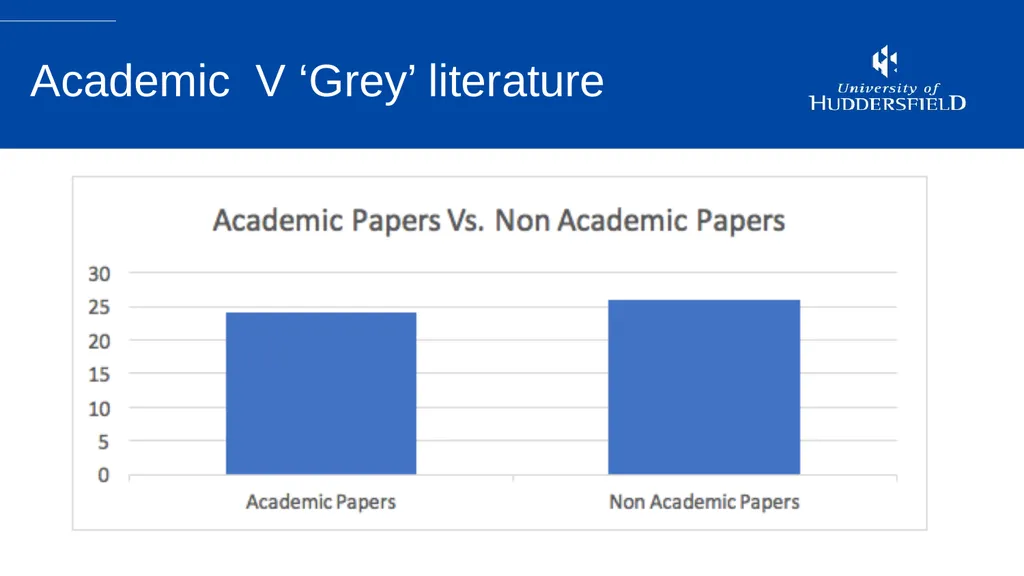
24 academic papers and publications and 26 practitioners/consulting papers.
Variables: source, authors, year, title, location, sport, methods, sampling, key findings, conclusion, future direction, citation index.<br>
slide8. Methodology<br>
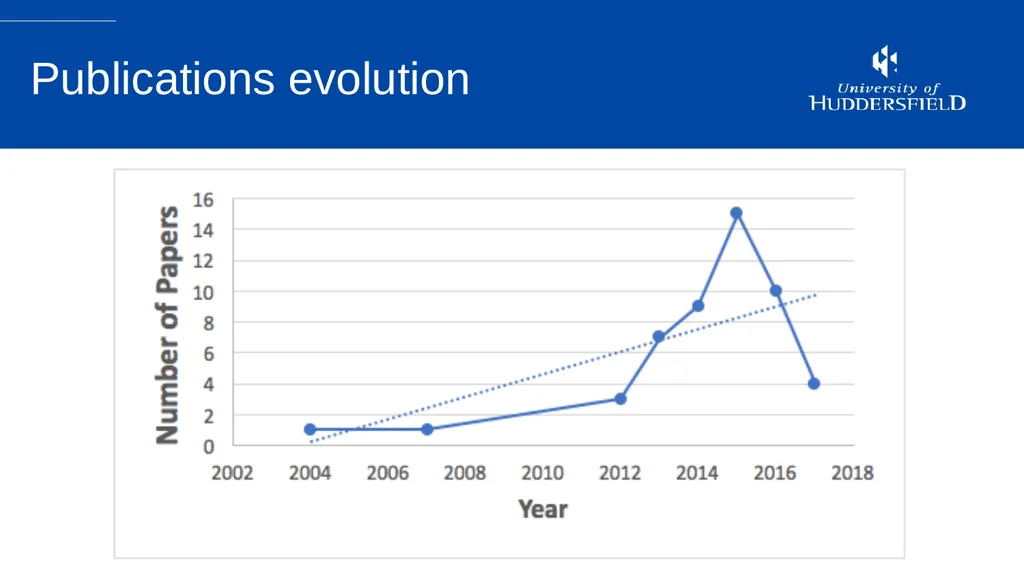
slide9. Publications evolution<br>
slide10. Academic V ‘Grey’ literature<br>
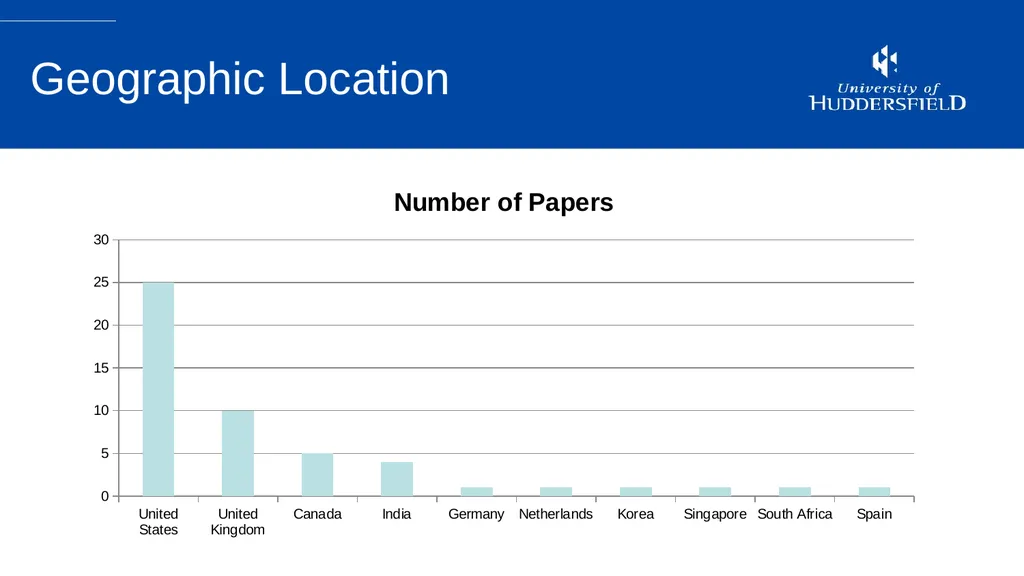
slide11. Geographic Location<br>
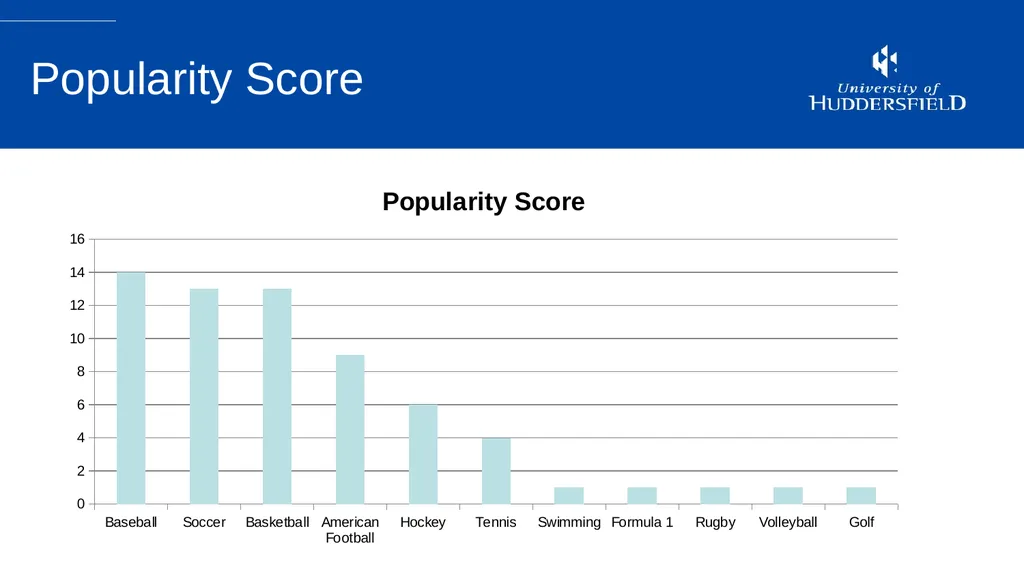
slide12. Popularity Score<br>
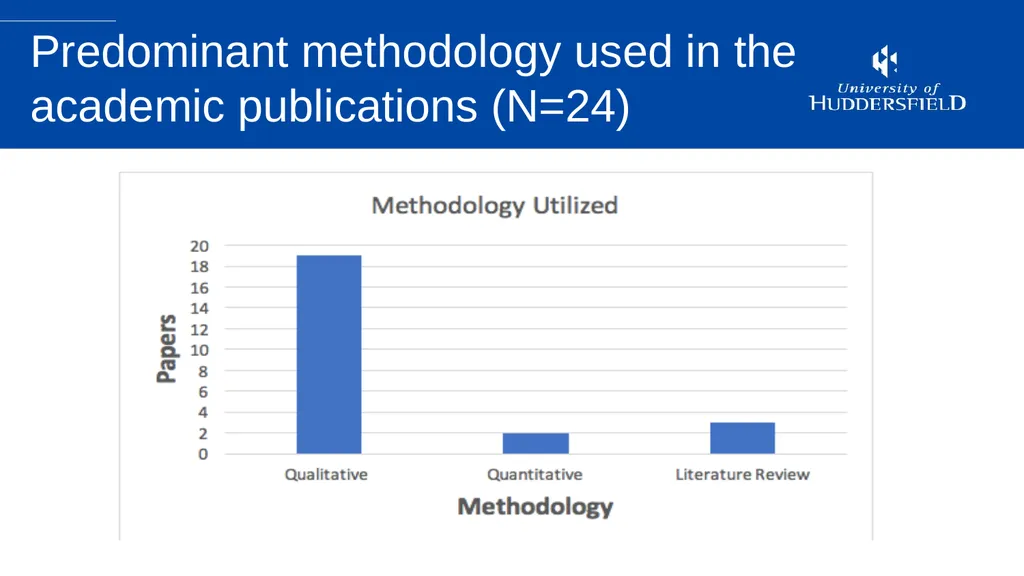
slide13. Predominant methodology used in the academic publications (N=24)<br>
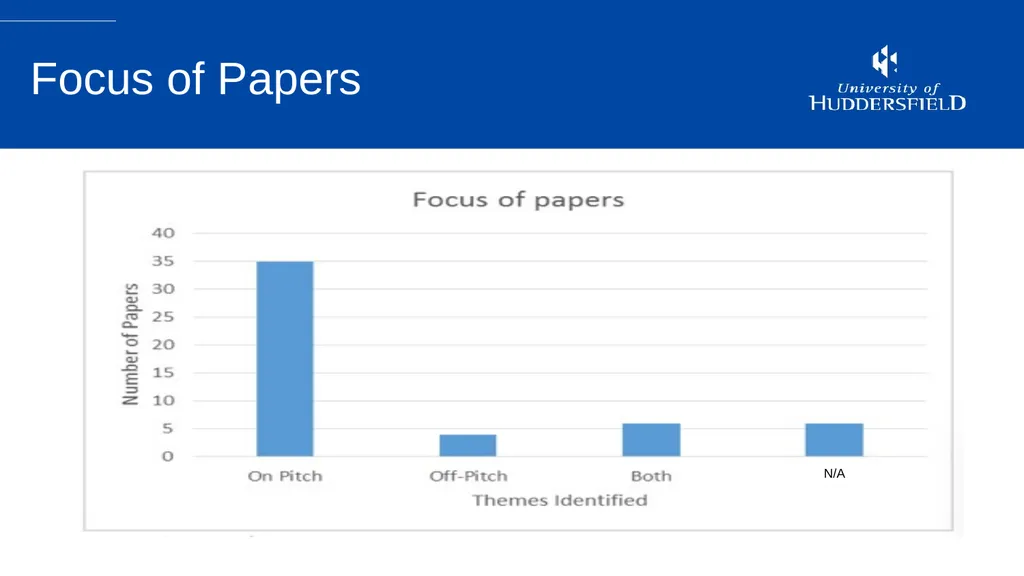
slide14. Focus of Papers N/A<br>
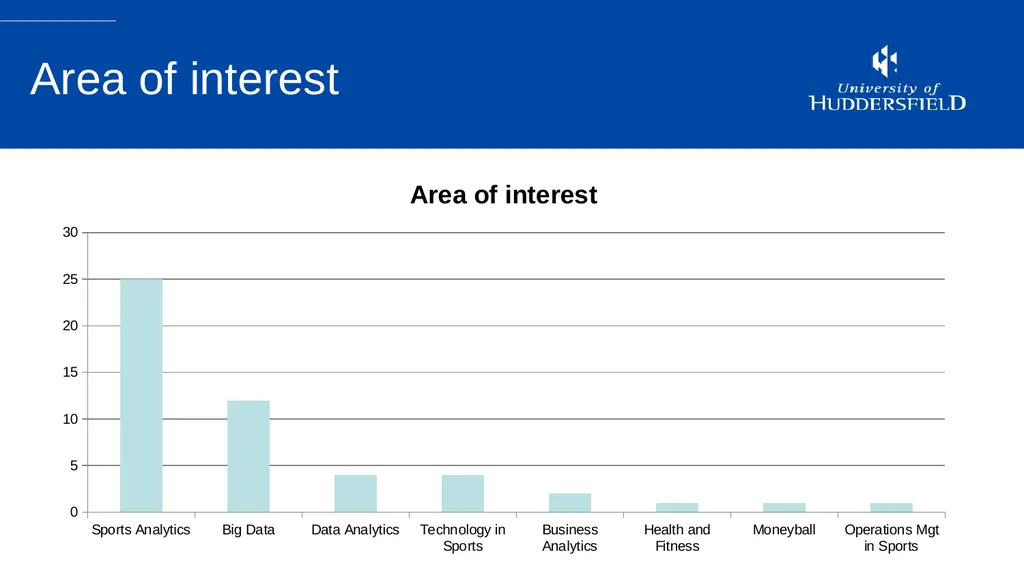
slide15. Area of interest<br>
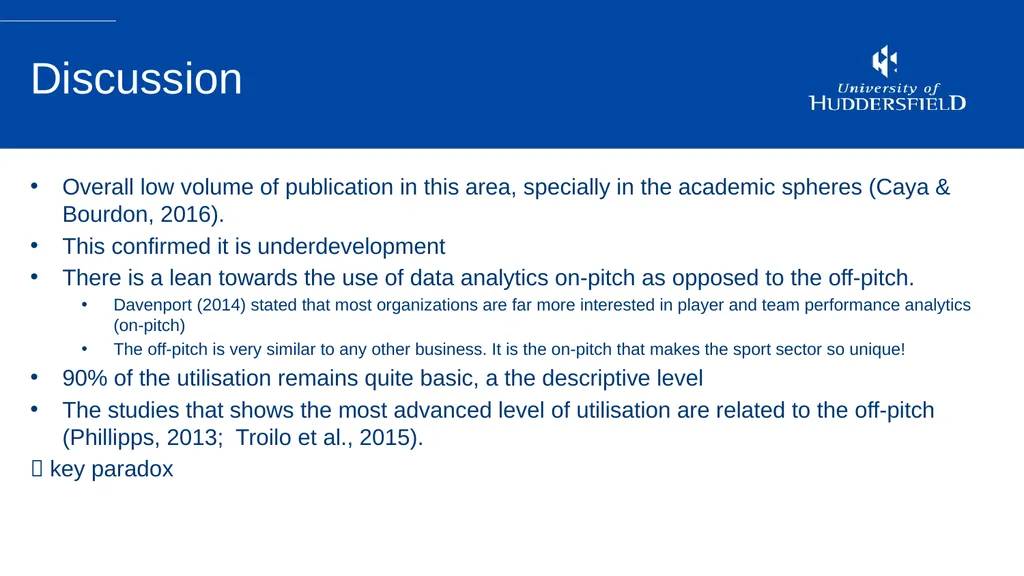
slide16. Discussion Overall low volume of publication in this area, specially in the academic spheres (Caya & Bourdon, 2016).
This confirmed it is underdevelopment
There is a lean towards the use of data analytics on-pitch as opposed to the off-pitch.
Davenport (2014) stated that most organizations are far more interested in player and team performance analytics (on-pitch)
The off-pitch is very similar to any other business. It is the on-pitch that makes the sport sector so unique!
90% of the utilisation remains quite basic, a the descriptive level
The studies that shows the most advanced level of utilisation are related to the off-pitch (Phillipps, 2013; Troilo et al., 2015).
key paradox<br>
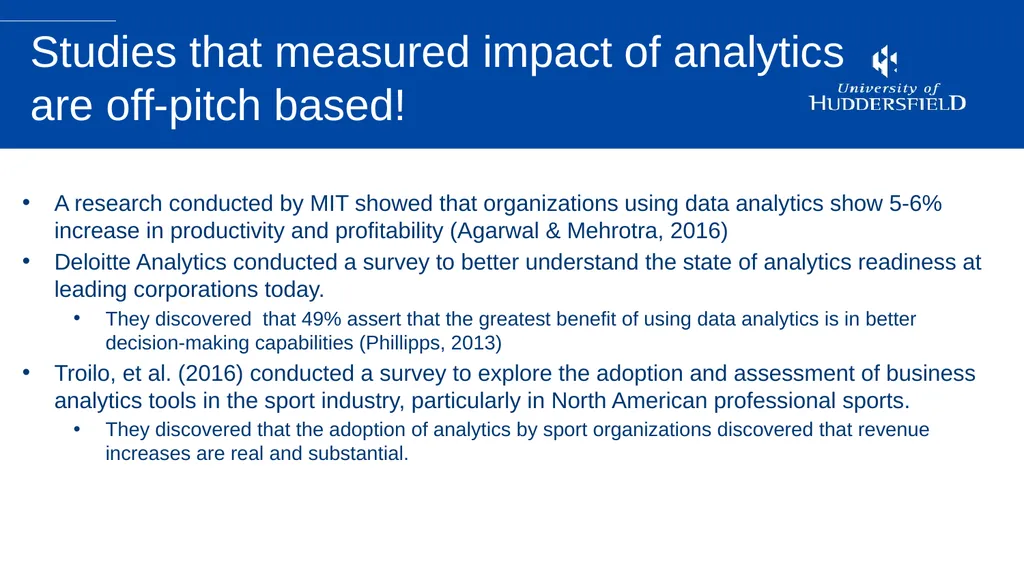
slide17. Studies that measured impact of analytics are off-pitch based! A research conducted by MIT showed that organizations using data analytics show 5-6% increase in productivity and profitability (Agarwal & Mehrotra, 2016)
Deloitte Analytics conducted a survey to better understand the state of analytics readiness at leading corporations today.
They discovered that 49% assert that the greatest benefit of using data analytics is in better decision-making capabilities (Phillipps, 2013)
Troilo, et al. (2016) conducted a survey to explore the adoption and assessment of business analytics tools in the sport industry, particularly in North American professional sports.
They discovered that the adoption of analytics by sport organizations discovered that revenue increases are real and substantial.<br>
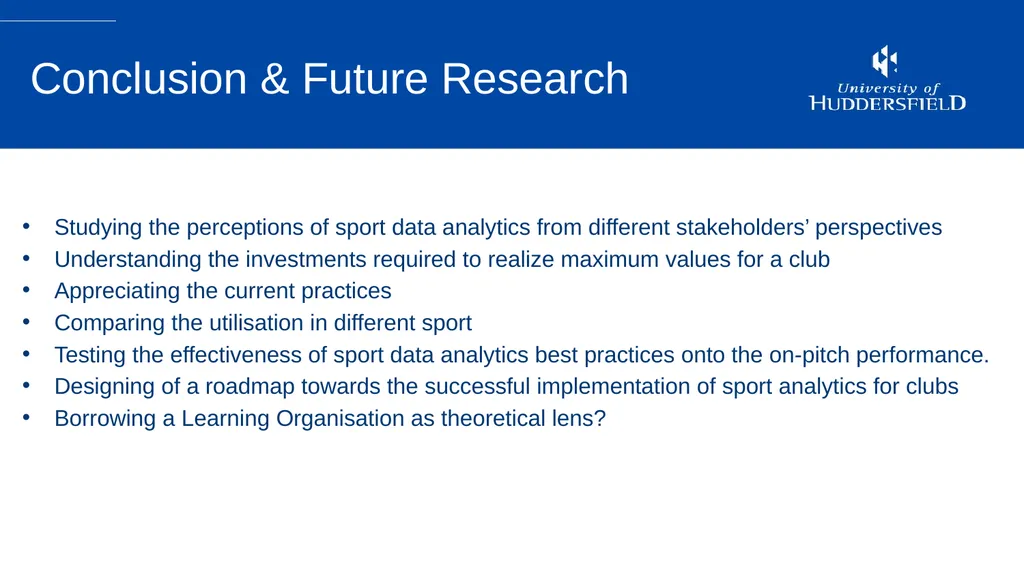
slide18. Conclusion & Future Research Studying the perceptions of sport data analytics from different stakeholders’ perspectives
Understanding the investments required to realize maximum values for a club
Appreciating the current practices
Comparing the utilisation in different sport
Testing the effectiveness of sport data analytics best practices onto the on-pitch performance.
Designing of a roadmap towards the successful implementation of sport analytics for clubs
Borrowing a Learning Organisation as theoretical lens?<br>
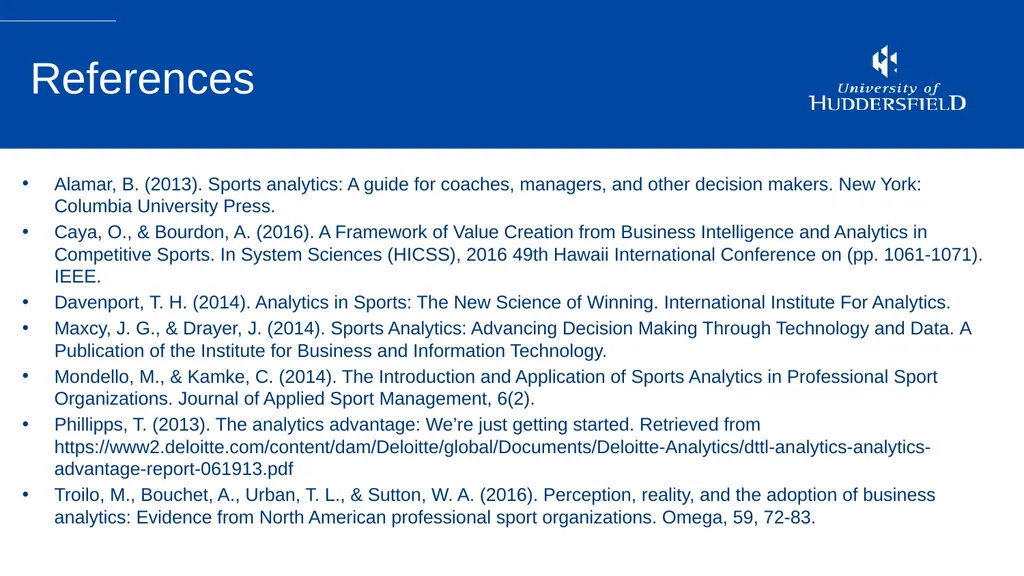
slide19. References Alamar, B. (2013). Sports analytics: A guide for coaches, managers, and other decision makers. New York: Columbia University Press.
Caya, O., & Bourdon, A. (2016). A Framework of Value Creation from Business Intelligence and Analytics in Competitive Sports. In System Sciences (HICSS), 2016 49th Hawaii International Conference on (pp. 1061-1071). IEEE.
Davenport, T. H. (2014). Analytics in Sports: The New Science of Winning. International Institute For Analytics.
Maxcy, J. G., & Drayer, J. (2014). Sports Analytics: Advancing Decision Making Through Technology and Data. A Publication of the Institute for Business and Information Technology.
Mondello, M., & Kamke, C. (2014). The Introduction and Application of Sports Analytics in Professional Sport Organizations. Journal of Applied Sport Management, 6(2).
Phillipps, T. (2013). The analytics advantage: We’re just getting started. Retrieved from https://www2.deloitte.com/content/dam/Deloitte/global/Documents/Deloitte-Analytics/dttl-analytics-analytics-advantage-report-061913.pdf
Troilo, M., Bouchet, A., Urban, T. L., & Sutton, W. A. (2016). Perception, reality, and the adoption of business analytics: Evidence from North American professional sport organizations. Omega, 59, 72-83.<br>
slide20. Thank you Any Questions POMS 2017, Seattle, WA
28th Annual Conference<br>
Prof David Bamford
Olatunbosun Olaniyan POMS 2017, Seattle, WA
28th Annual Conference<br>
slide2. Introduction / Background To investigate the role of data analytics and technology in the sport industry
Using a structured literature review approach, we are able to evidence based the current trends and practices
We aim to shed some light on a recent and underdeveloped area.
The sport industry is often divided into 2 categories :
On-Pitch – Performance monitoring, player evaluation, competition analysis
Off –Pitch – fans engagement, revenue management, CRM
Aggregated is a £20 billion sector supporting, generating over 400,000 jobs in the UK alone (Critchlow, 2015)
It is expected to reach more than $145 billion over the next few years in the USA (PwC, 2011)<br>
slide3. Sport Analytics Sport Analytics is: “The management of structured historical data, the application of predictive analytic models and the use of information systems to inform decision-makers and enable them to help their organizations in gaining a competitive advantage on the field of play” (Alamar, 2013; Caya & Bourdon, 2016)
The use of advanced statistics and technologies in sports can lead to enhance team’s performance, i.e.: to select optimum players, make optimum strategic and tactical decisions on the field (Davenport, 2014).
Different utilization:
Descriptive: reporting and organizing the data (most applications in the sport industry) (Davenport, 2014)
Predictive: analysing possible future trends and patterns
Prescriptive: including the optimization of the multiple decision making processes
Need to move toward Prescriptive level of utilisation
Very diverse utilisation practices<br>
slide4. Sport Analytics and Technology, some utilizations They are used for i) organisation//club development, ii) player and game performance, and iii) player health and injury prevention:
Moneyball (2003) - Oakland Athletics used statistical techniques to create a roster of cost effective players
Swimming - a device called XMetrics is used to track performance: heart rate, number of strokes, number of laps
Catapult - a GPS system used to monitor movement of players and make sure they are not overworked
OptimEye S5 - used to enhance performance and mitigate injury of players
Wireless sensors are now being grafted into player’s shoulder pads so that the medical team can receive real-time data<br>
slide5. Some Examples Basketball
The NBA move to install camera system in all the areas to capture data about players and ball movement.
The Orlando Magic – Business analytics – Monitor Consumer Habits & Movement
Football
OPTA and Prozone provide data to teams in the Premier League teams
Prozone partnered with Arsenal - installed cameras at the Emirates stadium bespoke analysis
In 2014, the German National Team used “Match Insight” developed by SAP to identify strengths and weaknesses of opposing teams ahead of the competition
Hockey
NHL teams use Catapult
Tampa Bay Lighting - Business analytics Off-Pitch – Dynamic Ticket Pricing<br>
slide6. Importance of this Study Despite these examples, there hasn’t been a lot of research done and published in this area
Caya & Bourdon (2016) stressed a need for future research in terms of studying the entire process of value creation in sports context
It has been suggested that there is lot of doubt in the world of sports about the real value of business intelligence and analytics tools (Maxcy & Drayer, 2014).
The sport analytics utilisation level and practice is relatively neglected in the academic literature (Mondello & Kamke, 2014).
This structured literature review will test and address these statements and will contribute to the existing academic literature.<br>
slide7. Methodology A structured literature review using keyword search on “sport analytics”, “data analytics”, “big data” and “sports management” was performed from February through April 2017.
First academic articles then extended to some of the grey literature.
In total 70 papers were accumulated
After a further screening process 50 papers were retain for the analysis.
24 academic papers and publications and 26 practitioners/consulting papers.
Variables: source, authors, year, title, location, sport, methods, sampling, key findings, conclusion, future direction, citation index.<br>
slide8. Methodology<br>
slide9. Publications evolution<br>
slide10. Academic V ‘Grey’ literature<br>
slide11. Geographic Location<br>
slide12. Popularity Score<br>
slide13. Predominant methodology used in the academic publications (N=24)<br>
slide14. Focus of Papers N/A<br>
slide15. Area of interest<br>
slide16. Discussion Overall low volume of publication in this area, specially in the academic spheres (Caya & Bourdon, 2016).
This confirmed it is underdevelopment
There is a lean towards the use of data analytics on-pitch as opposed to the off-pitch.
Davenport (2014) stated that most organizations are far more interested in player and team performance analytics (on-pitch)
The off-pitch is very similar to any other business. It is the on-pitch that makes the sport sector so unique!
90% of the utilisation remains quite basic, a the descriptive level
The studies that shows the most advanced level of utilisation are related to the off-pitch (Phillipps, 2013; Troilo et al., 2015).
key paradox<br>
slide17. Studies that measured impact of analytics are off-pitch based! A research conducted by MIT showed that organizations using data analytics show 5-6% increase in productivity and profitability (Agarwal & Mehrotra, 2016)
Deloitte Analytics conducted a survey to better understand the state of analytics readiness at leading corporations today.
They discovered that 49% assert that the greatest benefit of using data analytics is in better decision-making capabilities (Phillipps, 2013)
Troilo, et al. (2016) conducted a survey to explore the adoption and assessment of business analytics tools in the sport industry, particularly in North American professional sports.
They discovered that the adoption of analytics by sport organizations discovered that revenue increases are real and substantial.<br>
slide18. Conclusion & Future Research Studying the perceptions of sport data analytics from different stakeholders’ perspectives
Understanding the investments required to realize maximum values for a club
Appreciating the current practices
Comparing the utilisation in different sport
Testing the effectiveness of sport data analytics best practices onto the on-pitch performance.
Designing of a roadmap towards the successful implementation of sport analytics for clubs
Borrowing a Learning Organisation as theoretical lens?<br>
slide19. References Alamar, B. (2013). Sports analytics: A guide for coaches, managers, and other decision makers. New York: Columbia University Press.
Caya, O., & Bourdon, A. (2016). A Framework of Value Creation from Business Intelligence and Analytics in Competitive Sports. In System Sciences (HICSS), 2016 49th Hawaii International Conference on (pp. 1061-1071). IEEE.
Davenport, T. H. (2014). Analytics in Sports: The New Science of Winning. International Institute For Analytics.
Maxcy, J. G., & Drayer, J. (2014). Sports Analytics: Advancing Decision Making Through Technology and Data. A Publication of the Institute for Business and Information Technology.
Mondello, M., & Kamke, C. (2014). The Introduction and Application of Sports Analytics in Professional Sport Organizations. Journal of Applied Sport Management, 6(2).
Phillipps, T. (2013). The analytics advantage: We’re just getting started. Retrieved from https://www2.deloitte.com/content/dam/Deloitte/global/Documents/Deloitte-Analytics/dttl-analytics-analytics-advantage-report-061913.pdf
Troilo, M., Bouchet, A., Urban, T. L., & Sutton, W. A. (2016). Perception, reality, and the adoption of business analytics: Evidence from North American professional sport organizations. Omega, 59, 72-83.<br>
slide20. Thank you Any Questions POMS 2017, Seattle, WA
28th Annual Conference<br>