Starter challenge: 5 minute analysis Remember:
Description: Starter challenge: 5 minute analysis Remember: context, audience, meaning, purpose, stylistic features. Intertextuality: exploring Greek myths In ancient Greece, stories about gods and goddesses and heroes and monsters were an important
Related Topics
Download Presentation
"Starter challenge: 5 minute analysis Remember:" is the property of its rightful owner. Permission is granted to download and print the materials on this website for personal, non-commercial use only, and to display it on your personal computer provided you do not modify the materials and that you retain all copyright notices contained in the materials. By downloading content from our website, you accept the terms of this agreement.
Presentation Transcript
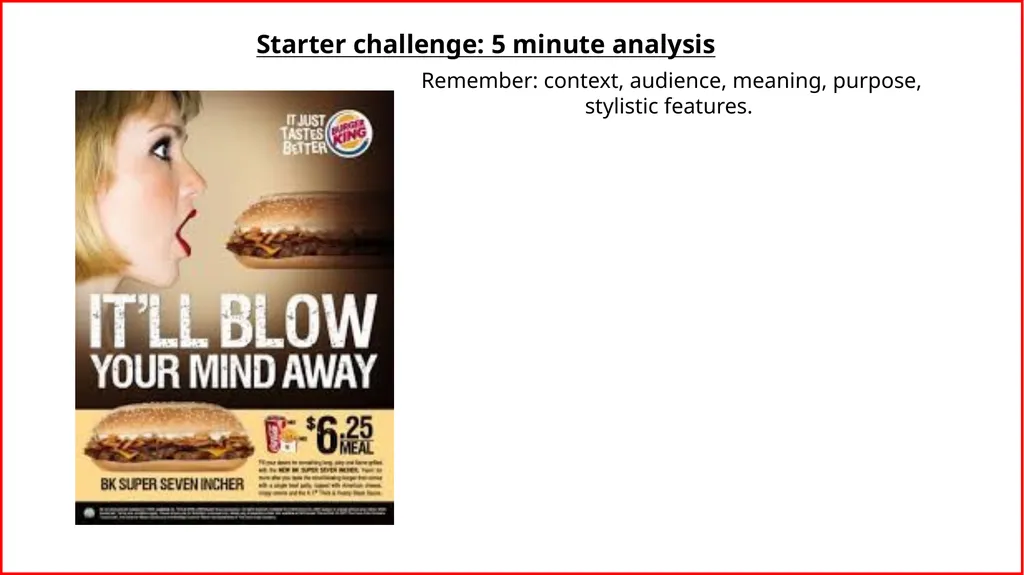
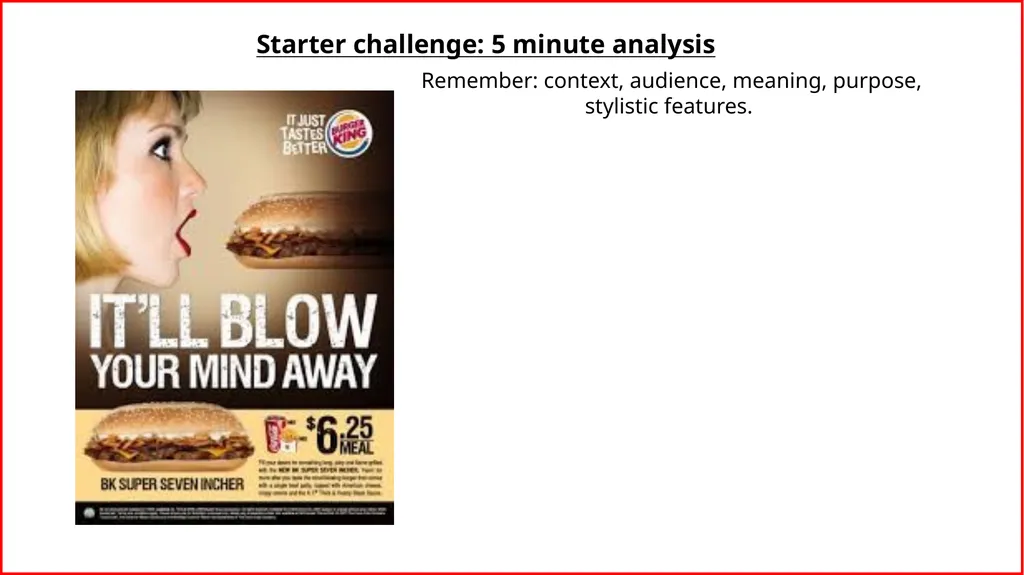
slide1. Starter challenge: 5 minute analysis Remember: context, audience, meaning, purpose, stylistic features.<br>
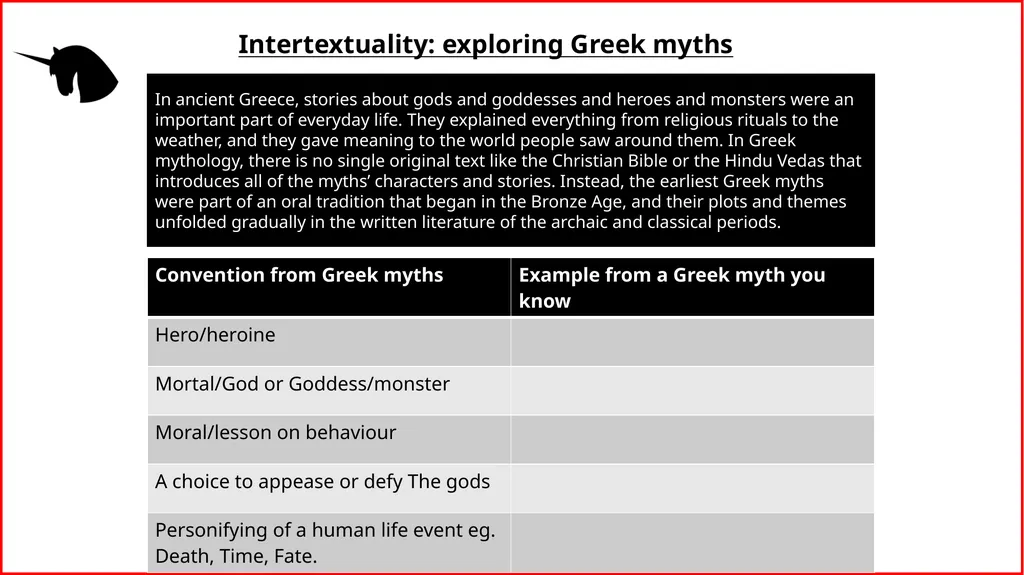
slide2. Intertextuality: exploring Greek myths In ancient Greece, stories about gods and goddesses and heroes and monsters were an important part of everyday life. They explained everything from religious rituals to the weather, and they gave meaning to the world people saw around them. In Greek mythology, there is no single original text like the Christian Bible or the Hindu Vedas that introduces all of the myths’ characters and stories. Instead, the earliest Greek myths were part of an oral tradition that began in the Bronze Age, and their plots and themes unfolded gradually in the written literature of the archaic and classical periods.<br>
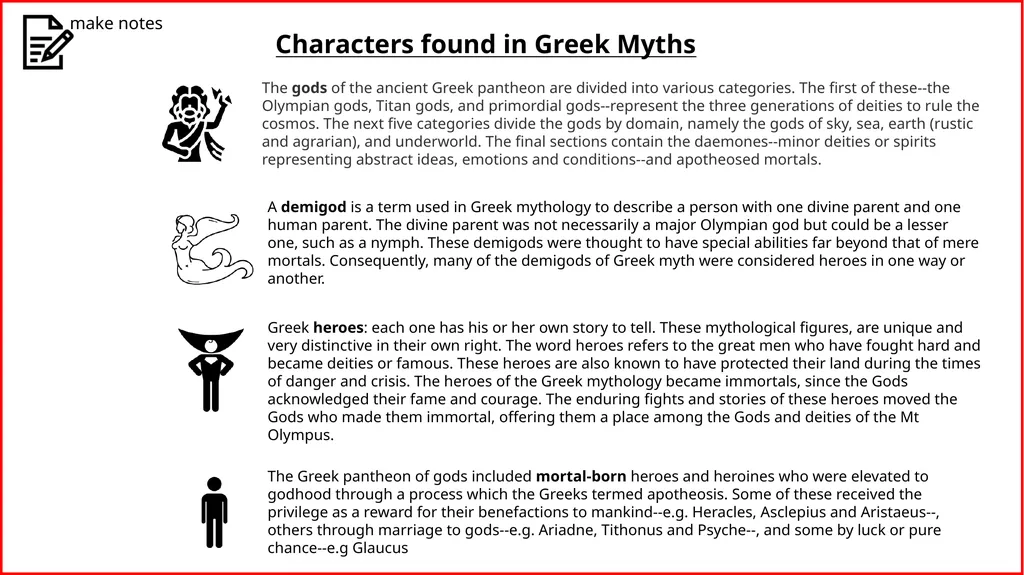
slide3. Characters found in Greek Myths make notes The gods of the ancient Greek pantheon are divided into various categories. The first of these--the Olympian gods, Titan gods, and primordial gods--represent the three generations of deities to rule the cosmos. The next five categories divide the gods by domain, namely the gods of sky, sea, earth (rustic and agrarian), and underworld. The final sections contain the daemones--minor deities or spirits representing abstract ideas, emotions and conditions--and apotheosed mortals. A demigod is a term used in Greek mythology to describe a person with one divine parent and one human parent. The divine parent was not necessarily a major Olympian god but could be a lesser one, such as a nymph. These demigods were thought to have special abilities far beyond that of mere mortals. Consequently, many of the demigods of Greek myth were considered heroes in one way or another. Greek heroes: each one has his or her own story to tell. These mythological figures, are unique and very distinctive in their own right. The word heroes refers to the great men who have fought hard and became deities or famous. These heroes are also known to have protected their land during the times of danger and crisis. The heroes of the Greek mythology became immortals, since the Gods acknowledged their fame and courage. The enduring fights and stories of these heroes moved the Gods who made them immortal, offering them a place among the Gods and deities of the Mt Olympus. The Greek pantheon of gods included mortal-born heroes and heroines who were elevated to godhood through a process which the Greeks termed apotheosis. Some of these received the privilege as a reward for their benefactions to mankind--e.g. Heracles, Asclepius and Aristaeus--, others through marriage to gods--e.g. Ariadne, Tithonus and Psyche--, and some by luck or pure chance--e.g Glaucus<br>
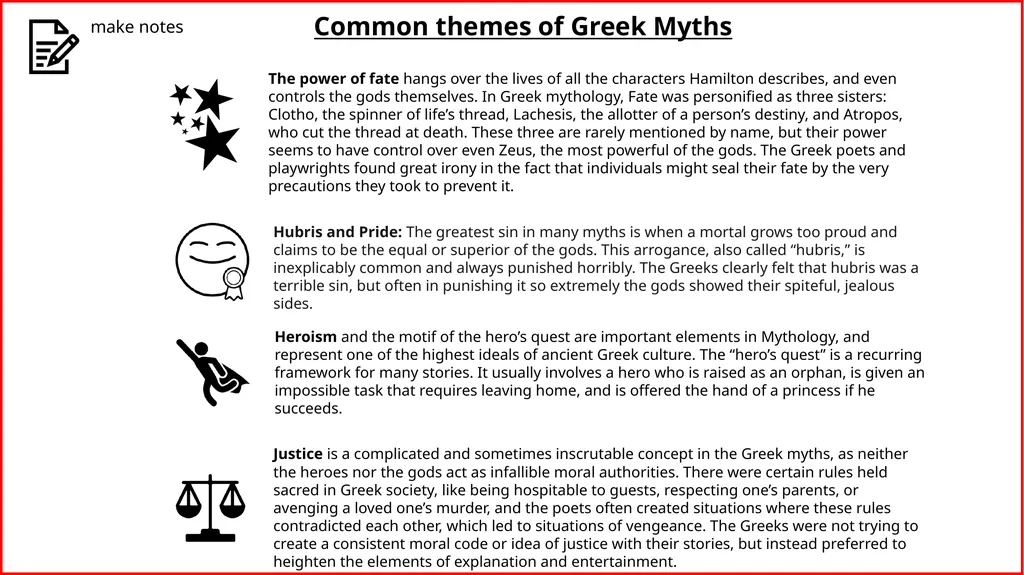
slide4. Common themes of Greek Myths make notes The power of fate hangs over the lives of all the characters Hamilton describes, and even controls the gods themselves. In Greek mythology, Fate was personified as three sisters: Clotho, the spinner of life’s thread, Lachesis, the allotter of a person’s destiny, and Atropos, who cut the thread at death. These three are rarely mentioned by name, but their power seems to have control over even Zeus, the most powerful of the gods. The Greek poets and playwrights found great irony in the fact that individuals might seal their fate by the very precautions they took to prevent it. Hubris and Pride: The greatest sin in many myths is when a mortal grows too proud and claims to be the equal or superior of the gods. This arrogance, also called “hubris,” is inexplicably common and always punished horribly. The Greeks clearly felt that hubris was a terrible sin, but often in punishing it so extremely the gods showed their spiteful, jealous sides. Heroism and the motif of the hero’s quest are important elements in Mythology, and represent one of the highest ideals of ancient Greek culture. The “hero’s quest” is a recurring framework for many stories. It usually involves a hero who is raised as an orphan, is given an impossible task that requires leaving home, and is offered the hand of a princess if he succeeds. Justice is a complicated and sometimes inscrutable concept in the Greek myths, as neither the heroes nor the gods act as infallible moral authorities. There were certain rules held sacred in Greek society, like being hospitable to guests, respecting one’s parents, or avenging a loved one’s murder, and the poets often created situations where these rules contradicted each other, which led to situations of vengeance. The Greeks were not trying to create a consistent moral code or idea of justice with their stories, but instead preferred to heighten the elements of explanation and entertainment.<br>
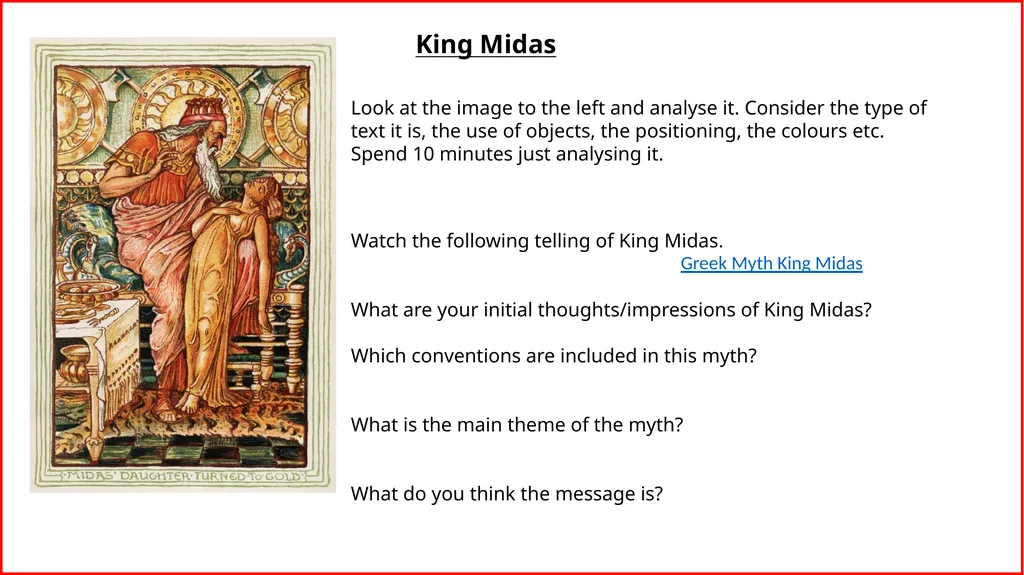
slide5. King Midas Greek Myth King Midas Look at the image to the left and analyse it. Consider the type of text it is, the use of objects, the positioning, the colours etc. Spend 10 minutes just analysing it. Watch the following telling of King Midas.
What are your initial thoughts/impressions of King Midas?
Which conventions are included in this myth?
What is the main theme of the myth?
What do you think the message is?<br>
slide6. Reflect & think Why might a writer use Greek Mythology as a base for their texts?<br>

slide7. Bibliography https://www.history.com/topics/ancient-history/greek-mythology https://www.edu.gov.mb.ca/k12/cur/socstud/foundation_gr8/blms/8-3-2f.pdf https://www.encyclopedia.com/literature-and-arts/classical-literature-mythology-and-folklore/folklore-and-mythology/greek-mythology https://www.theoi.com/greek-mythology/greek-gods.html https://study.com/academy/lesson/greek-demigod-definition-lesson-quiz.html<br>
slide2. Intertextuality: exploring Greek myths In ancient Greece, stories about gods and goddesses and heroes and monsters were an important part of everyday life. They explained everything from religious rituals to the weather, and they gave meaning to the world people saw around them. In Greek mythology, there is no single original text like the Christian Bible or the Hindu Vedas that introduces all of the myths’ characters and stories. Instead, the earliest Greek myths were part of an oral tradition that began in the Bronze Age, and their plots and themes unfolded gradually in the written literature of the archaic and classical periods.<br>
slide3. Characters found in Greek Myths make notes The gods of the ancient Greek pantheon are divided into various categories. The first of these--the Olympian gods, Titan gods, and primordial gods--represent the three generations of deities to rule the cosmos. The next five categories divide the gods by domain, namely the gods of sky, sea, earth (rustic and agrarian), and underworld. The final sections contain the daemones--minor deities or spirits representing abstract ideas, emotions and conditions--and apotheosed mortals. A demigod is a term used in Greek mythology to describe a person with one divine parent and one human parent. The divine parent was not necessarily a major Olympian god but could be a lesser one, such as a nymph. These demigods were thought to have special abilities far beyond that of mere mortals. Consequently, many of the demigods of Greek myth were considered heroes in one way or another. Greek heroes: each one has his or her own story to tell. These mythological figures, are unique and very distinctive in their own right. The word heroes refers to the great men who have fought hard and became deities or famous. These heroes are also known to have protected their land during the times of danger and crisis. The heroes of the Greek mythology became immortals, since the Gods acknowledged their fame and courage. The enduring fights and stories of these heroes moved the Gods who made them immortal, offering them a place among the Gods and deities of the Mt Olympus. The Greek pantheon of gods included mortal-born heroes and heroines who were elevated to godhood through a process which the Greeks termed apotheosis. Some of these received the privilege as a reward for their benefactions to mankind--e.g. Heracles, Asclepius and Aristaeus--, others through marriage to gods--e.g. Ariadne, Tithonus and Psyche--, and some by luck or pure chance--e.g Glaucus<br>
slide4. Common themes of Greek Myths make notes The power of fate hangs over the lives of all the characters Hamilton describes, and even controls the gods themselves. In Greek mythology, Fate was personified as three sisters: Clotho, the spinner of life’s thread, Lachesis, the allotter of a person’s destiny, and Atropos, who cut the thread at death. These three are rarely mentioned by name, but their power seems to have control over even Zeus, the most powerful of the gods. The Greek poets and playwrights found great irony in the fact that individuals might seal their fate by the very precautions they took to prevent it. Hubris and Pride: The greatest sin in many myths is when a mortal grows too proud and claims to be the equal or superior of the gods. This arrogance, also called “hubris,” is inexplicably common and always punished horribly. The Greeks clearly felt that hubris was a terrible sin, but often in punishing it so extremely the gods showed their spiteful, jealous sides. Heroism and the motif of the hero’s quest are important elements in Mythology, and represent one of the highest ideals of ancient Greek culture. The “hero’s quest” is a recurring framework for many stories. It usually involves a hero who is raised as an orphan, is given an impossible task that requires leaving home, and is offered the hand of a princess if he succeeds. Justice is a complicated and sometimes inscrutable concept in the Greek myths, as neither the heroes nor the gods act as infallible moral authorities. There were certain rules held sacred in Greek society, like being hospitable to guests, respecting one’s parents, or avenging a loved one’s murder, and the poets often created situations where these rules contradicted each other, which led to situations of vengeance. The Greeks were not trying to create a consistent moral code or idea of justice with their stories, but instead preferred to heighten the elements of explanation and entertainment.<br>
slide5. King Midas Greek Myth King Midas Look at the image to the left and analyse it. Consider the type of text it is, the use of objects, the positioning, the colours etc. Spend 10 minutes just analysing it. Watch the following telling of King Midas.
What are your initial thoughts/impressions of King Midas?
Which conventions are included in this myth?
What is the main theme of the myth?
What do you think the message is?<br>
slide6. Reflect & think Why might a writer use Greek Mythology as a base for their texts?<br>
slide7. Bibliography https://www.history.com/topics/ancient-history/greek-mythology https://www.edu.gov.mb.ca/k12/cur/socstud/foundation_gr8/blms/8-3-2f.pdf https://www.encyclopedia.com/literature-and-arts/classical-literature-mythology-and-folklore/folklore-and-mythology/greek-mythology https://www.theoi.com/greek-mythology/greek-gods.html https://study.com/academy/lesson/greek-demigod-definition-lesson-quiz.html<br>