
Statewide Substance Use Response Working Group



Description: Statewide Substance Use Response Working Group Meeting June 7, 2022 1. Call to Order and Roll Call to Establish Quorum Chair Ford 2. Public Comment (Discussion Only.) Public Comment Public comment shall be limited to three (3) minutes per
Related Topics
Download Presentation
"Statewide Substance Use Response Working Group" is the property of its rightful owner. Permission is granted to download and print the materials on this website for personal, non-commercial use only, and to display it on your personal computer provided you do not modify the materials and that you retain all copyright notices contained in the materials. By downloading content from our website, you accept the terms of this agreement.
Presentation Transcript
slide1. Statewide Substance Use Response Working Group Meeting
June 7, 2022<br>
slide2. 1. Call to Order and Roll Call to Establish Quorum Chair Ford<br>
slide3. 2. Public Comment (Discussion Only.)<br>
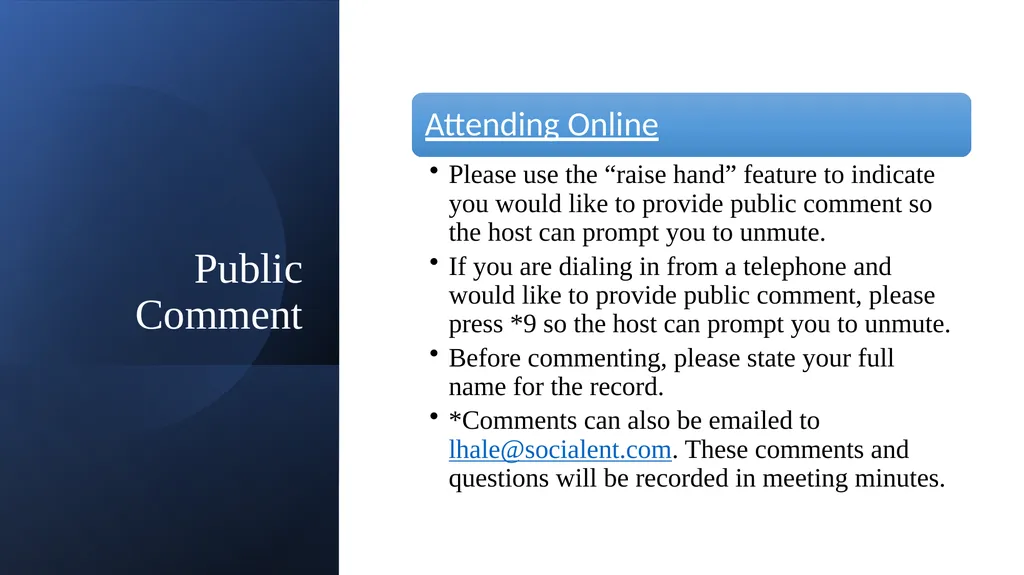
slide4. Public Comment Public comment shall be limited to three (3) minutes per person. We will begin with comments from Las Vegas and then invite comments from Carson City, followed by online participants.
In Person
Please form a line.
Before commenting, please state your full name for the record.<br>
slide5. Public Comment<br>
slide6. 3. Review and Approve Minutes for March 9, 2022 SURG Meeting (For Possible Action.)
Chair Ford<br>
slide7. 4. Update on Opioid Litigation, Settlement Funds, and Distribution. (Information Only.)
Second Assistant Attorney General Mark Krueger, Consumer Counsel for Board of Consumer Protection, Office of the Attorney General<br>
slide8. 5. Review Timeline and Process for SURG Meetings and Recommendations (Information Only.)
Vice Chair Jill Tolles<br>
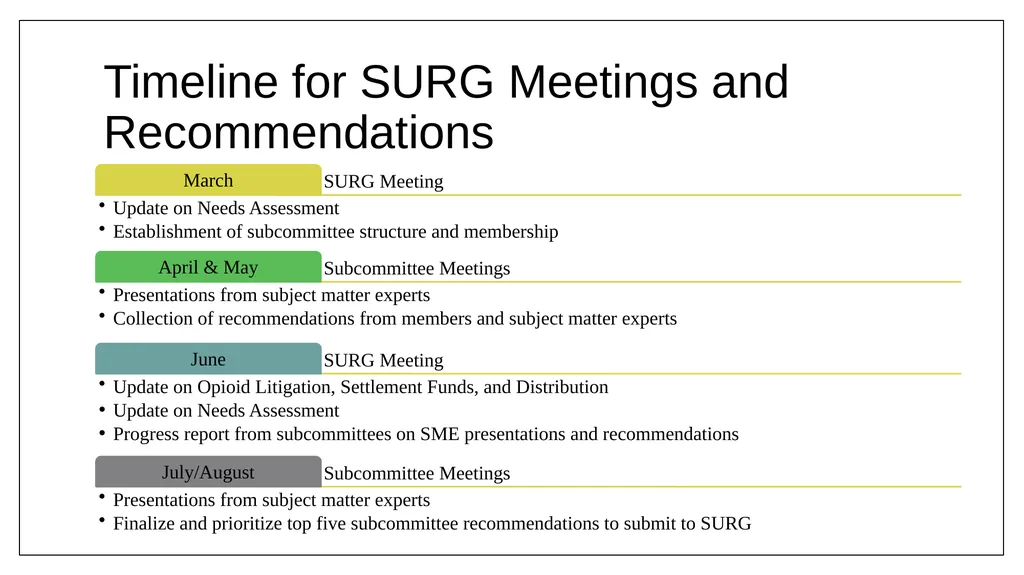
slide9. Timeline for SURG Meetings and Recommendations<br>
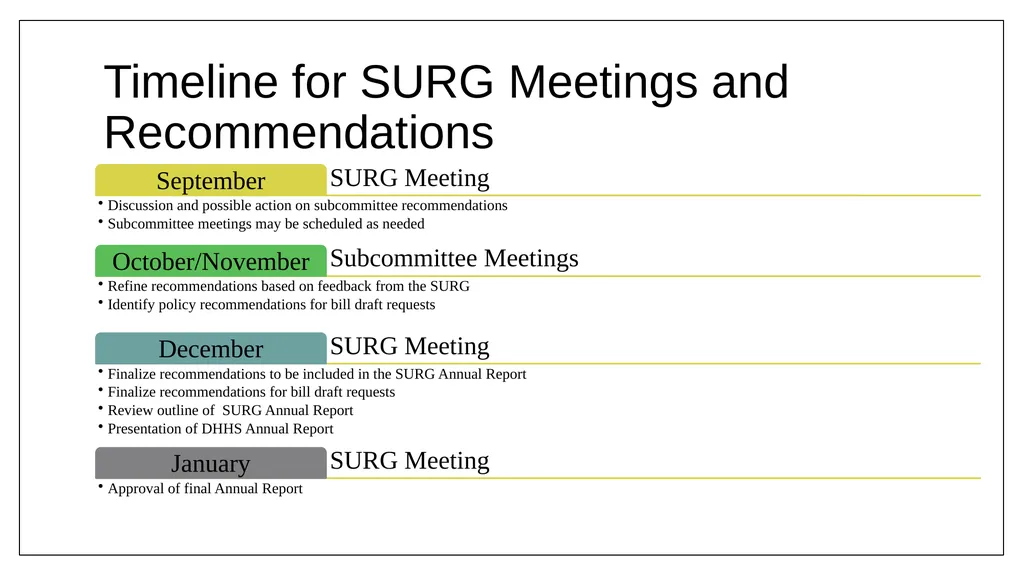
slide10. Timeline for SURG Meetings and Recommendations<br>
slide11. 6. Update from SURG Subcommittees: 1) Prevention; 2) Treatment and Recovery; and 3) Response. (For Possible Action.)
Senator Fabian Doñate, Assemblywoman Claire Thomas, and Vice Chair Jill Tolles<br>
slide12. Prevention Subcommittee Chair Doñate<br>
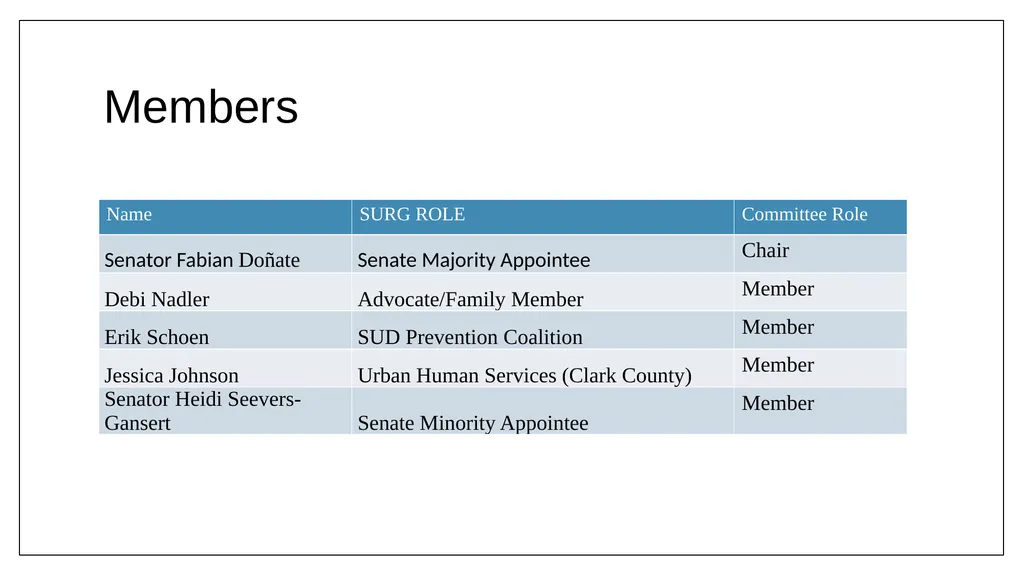
slide13. Members<br>
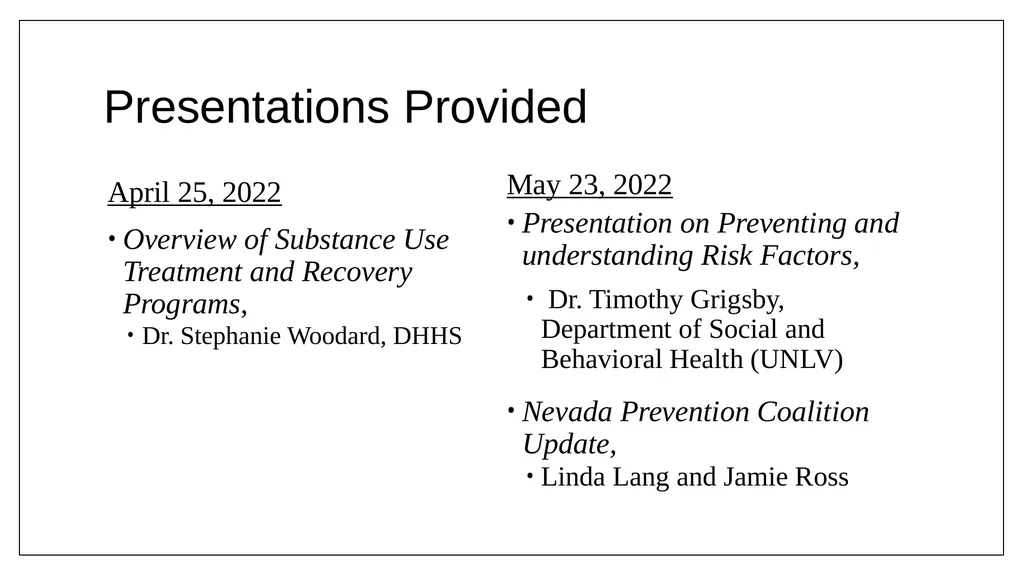
slide14. Presentations Provided April 25, 2022
Overview of Substance Use Treatment and Recovery Programs,
Dr. Stephanie Woodard, DHHS May 23, 2022
Presentation on Preventing and understanding Risk Factors,
Dr. Timothy Grigsby, Department of Social and Behavioral Health (UNLV)
Nevada Prevention Coalition Update,
Linda Lang and Jamie Ross<br>
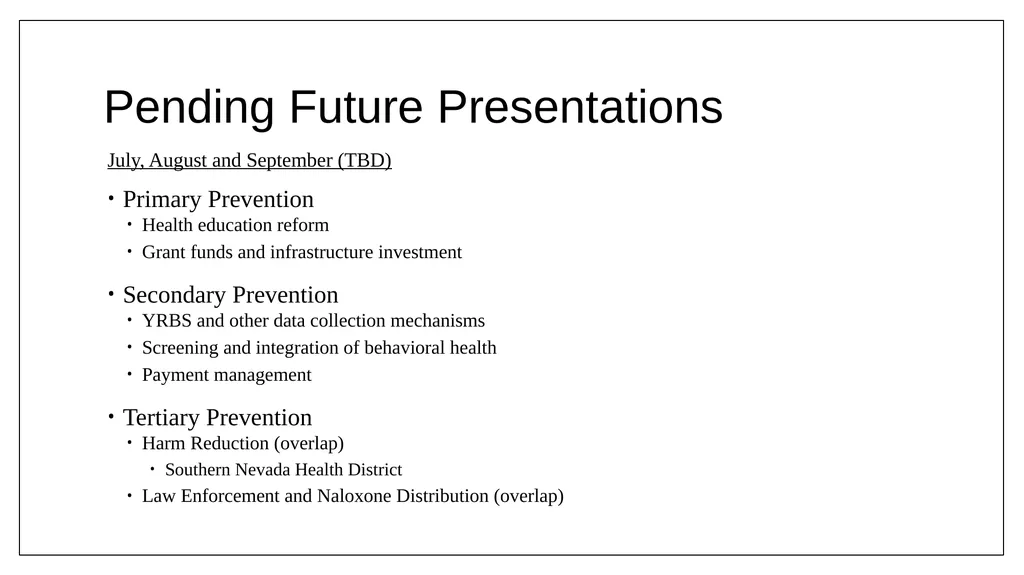
slide15. Pending Future Presentations July, August and September (TBD)
Primary Prevention
Health education reform
Grant funds and infrastructure investment
Secondary Prevention
YRBS and other data collection mechanisms
Screening and integration of behavioral health
Payment management
Tertiary Prevention
Harm Reduction (overlap)
Southern Nevada Health District
Law Enforcement and Naloxone Distribution (overlap)<br>
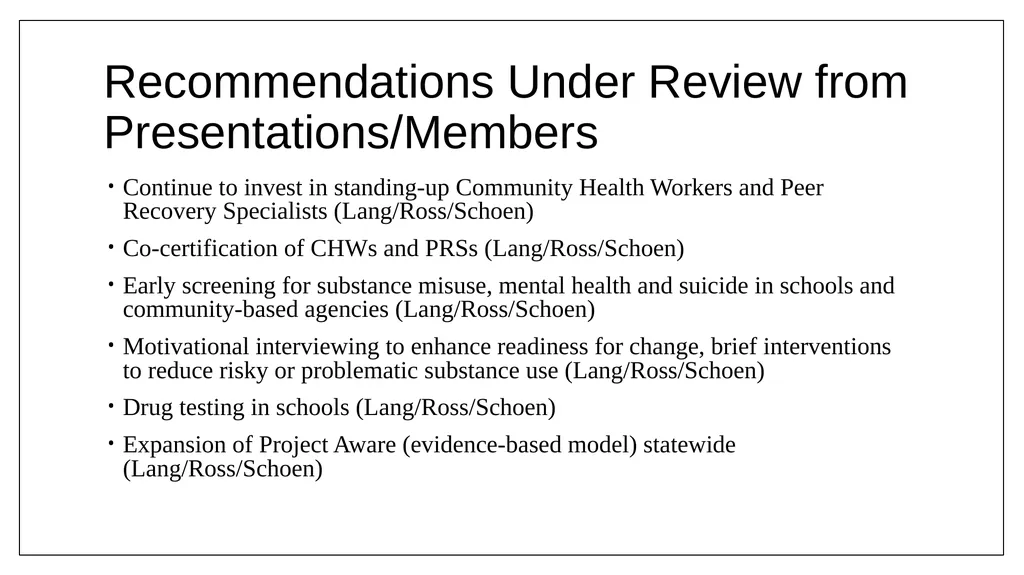
slide16. Recommendations Under Review from Presentations/Members Continue to invest in standing-up Community Health Workers and Peer Recovery Specialists (Lang/Ross/Schoen)
Co-certification of CHWs and PRSs (Lang/Ross/Schoen)
Early screening for substance misuse, mental health and suicide in schools and community-based agencies (Lang/Ross/Schoen)
Motivational interviewing to enhance readiness for change, brief interventions to reduce risky or problematic substance use (Lang/Ross/Schoen)
Drug testing in schools (Lang/Ross/Schoen)
Expansion of Project Aware (evidence-based model) statewide (Lang/Ross/Schoen)<br>
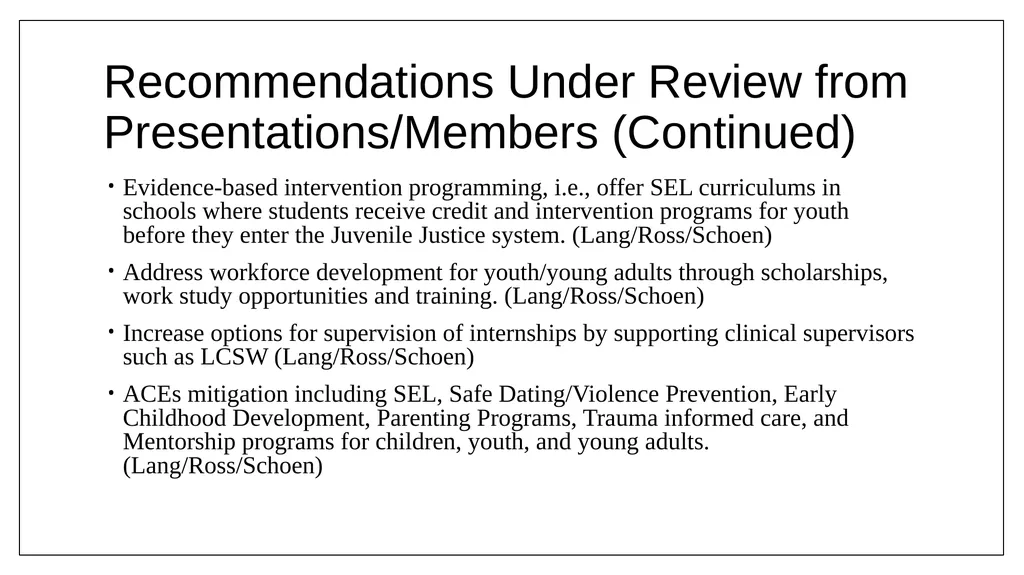
slide17. Recommendations Under Review from Presentations/Members (Continued) Evidence-based intervention programming, i.e., offer SEL curriculums in schools where students receive credit and intervention programs for youth before they enter the Juvenile Justice system. (Lang/Ross/Schoen)
Address workforce development for youth/young adults through scholarships, work study opportunities and training. (Lang/Ross/Schoen)
Increase options for supervision of internships by supporting clinical supervisors such as LCSW (Lang/Ross/Schoen)
ACEs mitigation including SEL, Safe Dating/Violence Prevention, Early Childhood Development, Parenting Programs, Trauma informed care, and Mentorship programs for children, youth, and young adults. (Lang/Ross/Schoen)<br>
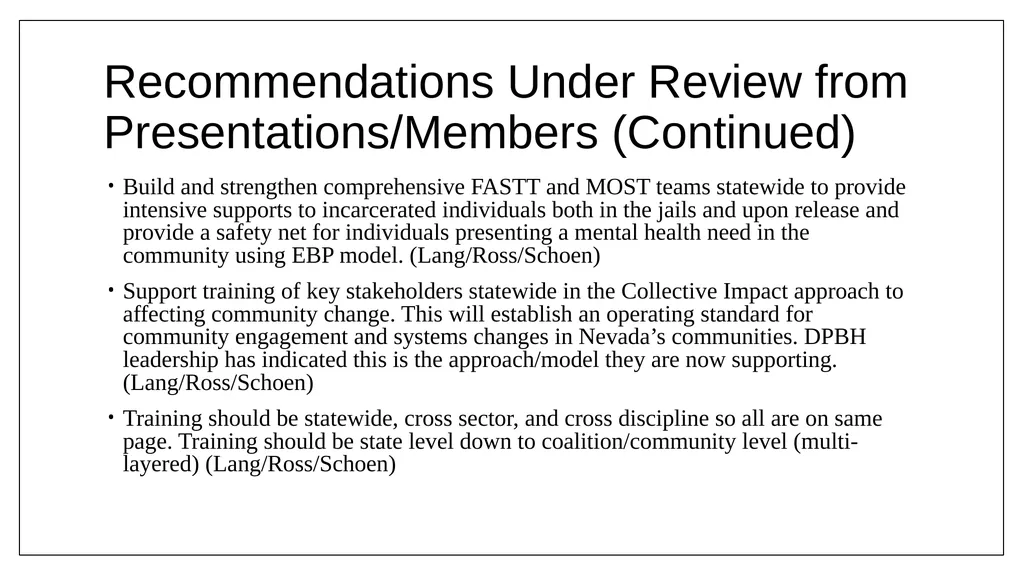
slide18. Recommendations Under Review from Presentations/Members (Continued) Build and strengthen comprehensive FASTT and MOST teams statewide to provide intensive supports to incarcerated individuals both in the jails and upon release and provide a safety net for individuals presenting a mental health need in the community using EBP model. (Lang/Ross/Schoen)
Support training of key stakeholders statewide in the Collective Impact approach to affecting community change. This will establish an operating standard for community engagement and systems changes in Nevada’s communities. DPBH leadership has indicated this is the approach/model they are now supporting. (Lang/Ross/Schoen)
Training should be statewide, cross sector, and cross discipline so all are on same page. Training should be state level down to coalition/community level (multi-layered) (Lang/Ross/Schoen)<br>
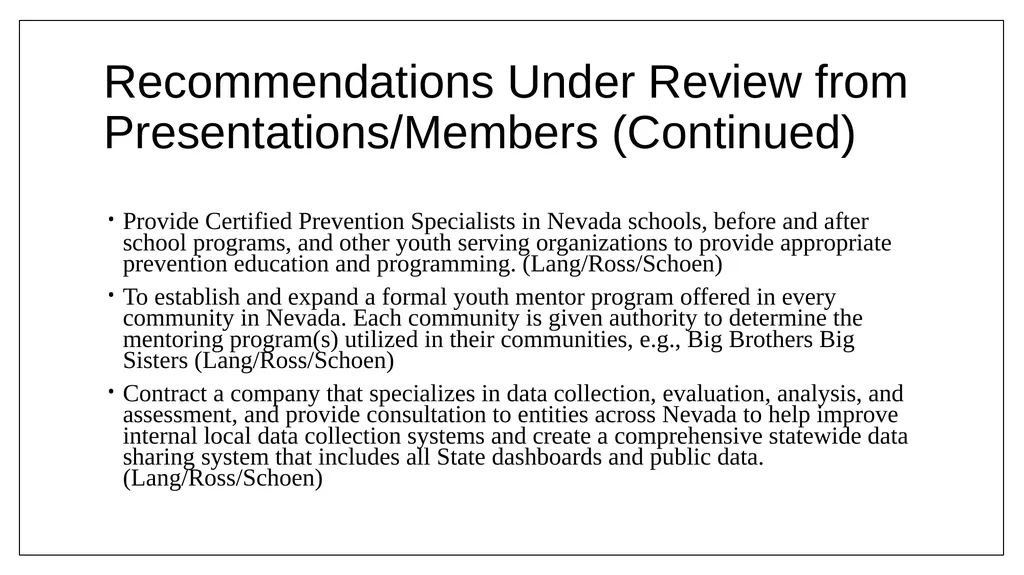
slide19. Recommendations Under Review from Presentations/Members (Continued) Provide Certified Prevention Specialists in Nevada schools, before and after school programs, and other youth serving organizations to provide appropriate prevention education and programming. (Lang/Ross/Schoen)
To establish and expand a formal youth mentor program offered in every community in Nevada. Each community is given authority to determine the mentoring program(s) utilized in their communities, e.g., Big Brothers Big Sisters (Lang/Ross/Schoen)
Contract a company that specializes in data collection, evaluation, analysis, and assessment, and provide consultation to entities across Nevada to help improve internal local data collection systems and create a comprehensive statewide data sharing system that includes all State dashboards and public data. (Lang/Ross/Schoen)<br>
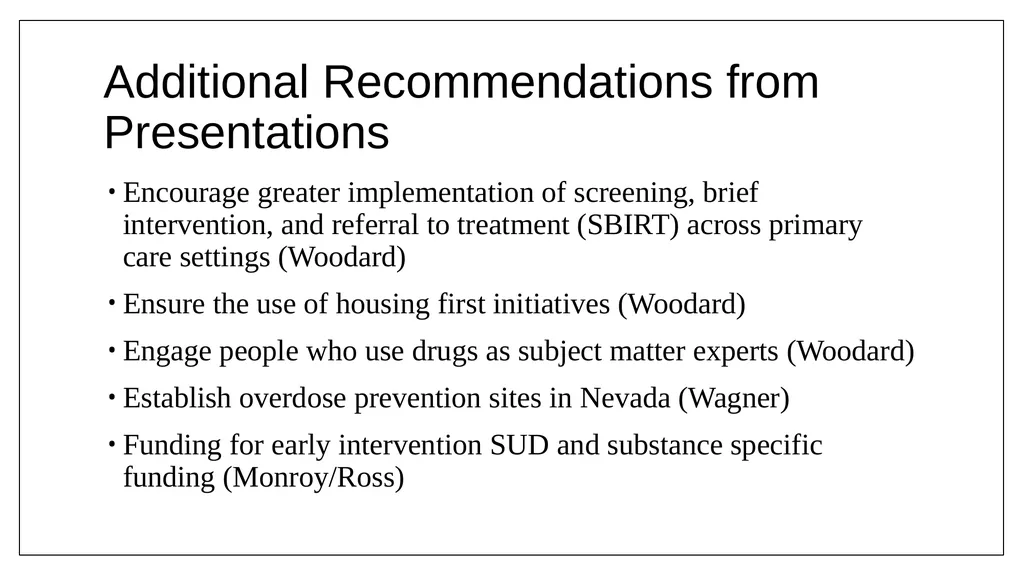
slide20. Additional Recommendations from Presentations Encourage greater implementation of screening, brief intervention, and referral to treatment (SBIRT) across primary care settings (Woodard)
Ensure the use of housing first initiatives (Woodard)
Engage people who use drugs as subject matter experts (Woodard)
Establish overdose prevention sites in Nevada (Wagner)
Funding for early intervention SUD and substance specific funding (Monroy/Ross)<br>
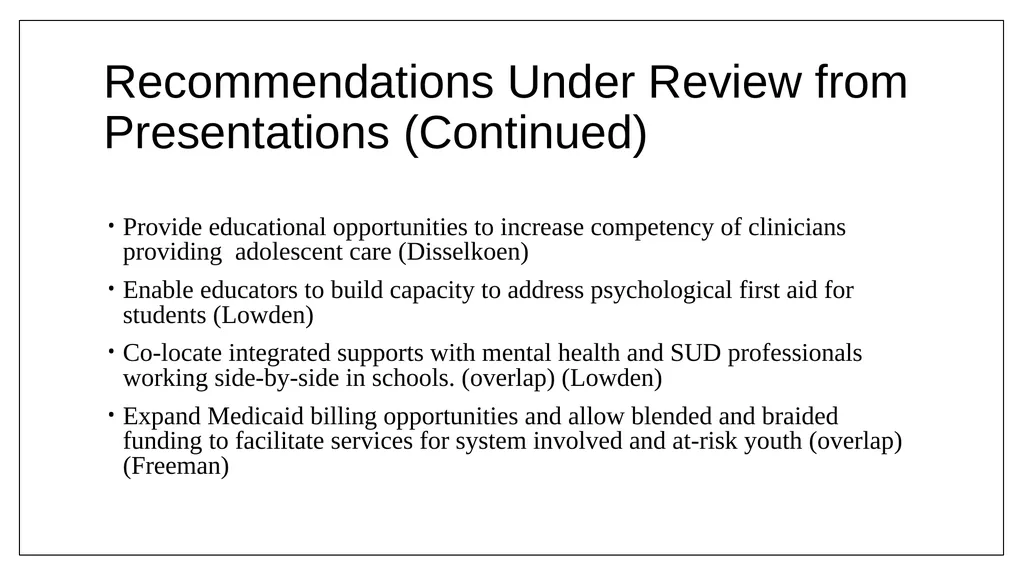
slide21. Recommendations Under Review from Presentations (Continued) Provide educational opportunities to increase competency of clinicians providing adolescent care (Disselkoen)
Enable educators to build capacity to address psychological first aid for students (Lowden)
Co-locate integrated supports with mental health and SUD professionals working side-by-side in schools. (overlap) (Lowden)
Expand Medicaid billing opportunities and allow blended and braided funding to facilitate services for system involved and at-risk youth (overlap) (Freeman)<br>
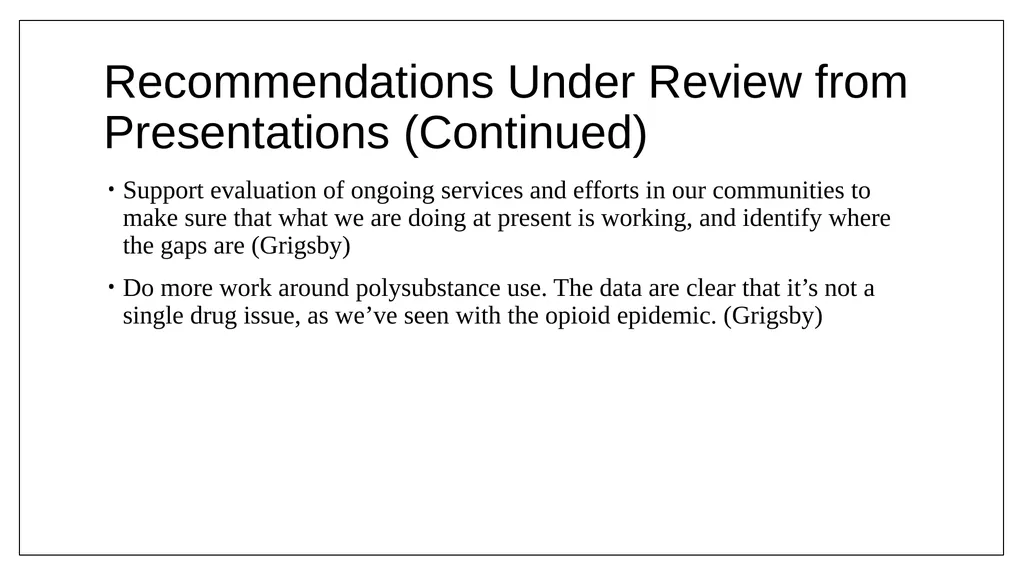
slide22. Recommendations Under Review from Presentations (Continued) Support evaluation of ongoing services and efforts in our communities to make sure that what we are doing at present is working, and identify where the gaps are (Grigsby)
Do more work around polysubstance use. The data are clear that it’s not a single drug issue, as we’ve seen with the opioid epidemic. (Grigsby)<br>
slide23. Treatment and Recovery Subcommittee Chair Thomas<br>
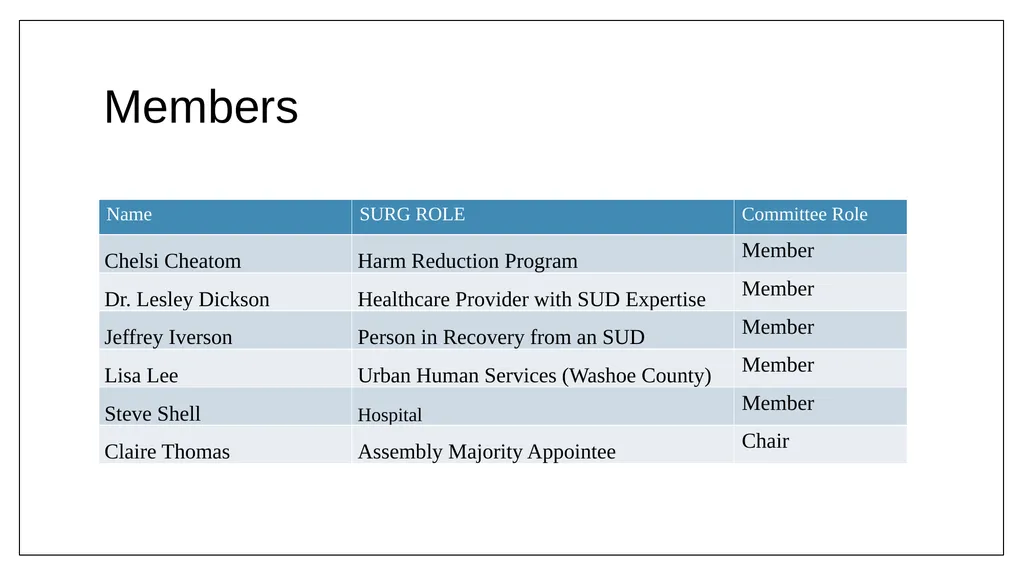
slide24. Members<br>
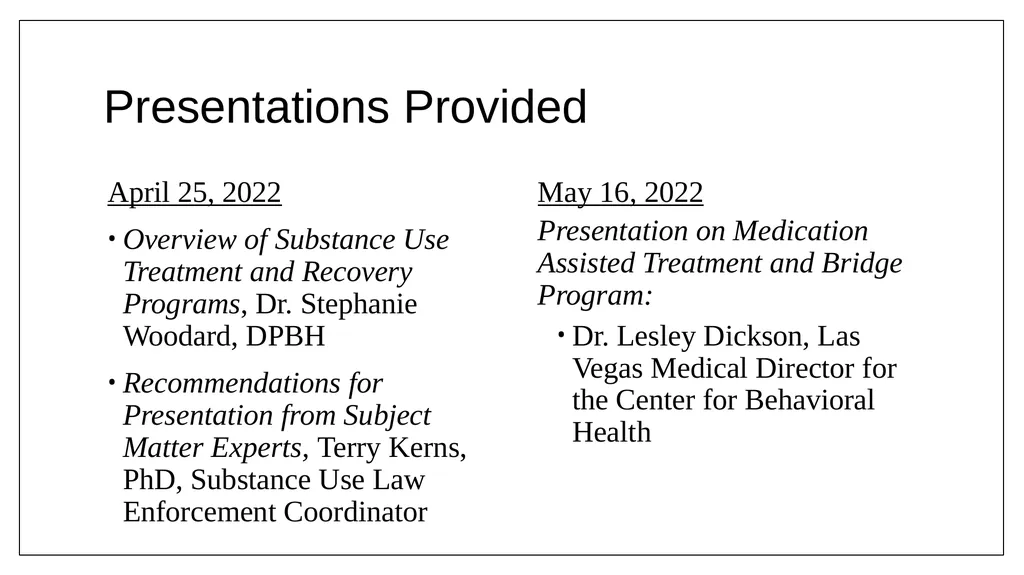
slide25. Presentations Provided April 25, 2022
Overview of Substance Use Treatment and Recovery Programs, Dr. Stephanie Woodard, DPBH
Recommendations for Presentation from Subject Matter Experts, Terry Kerns, PhD, Substance Use Law Enforcement Coordinator May 16, 2022
Presentation on Medication Assisted Treatment and Bridge Program:
Dr. Lesley Dickson, Las Vegas Medical Director for the Center for Behavioral Health<br>
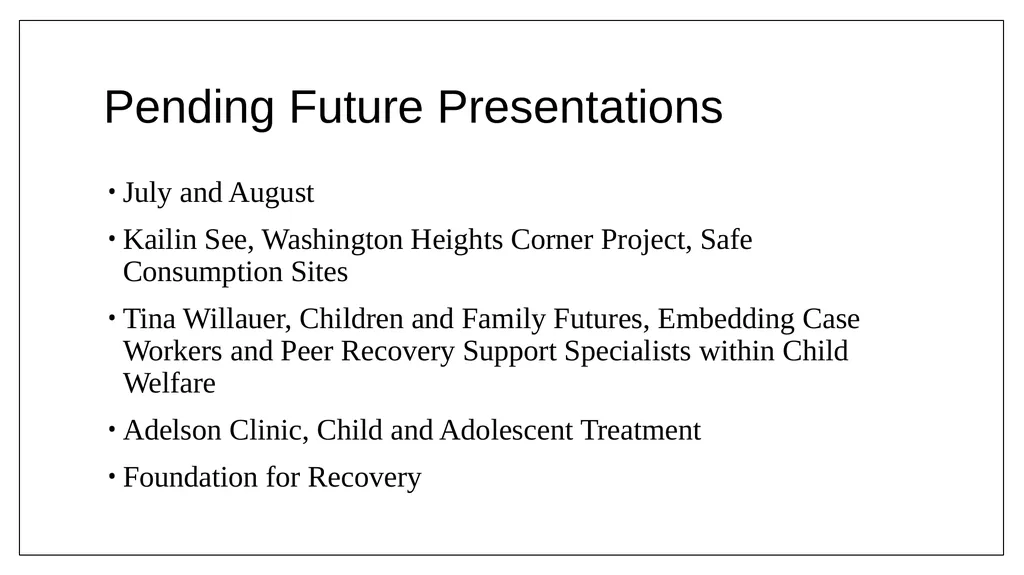
slide26. Pending Future Presentations July and August
Kailin See, Washington Heights Corner Project, Safe Consumption Sites
Tina Willauer, Children and Family Futures, Embedding Case Workers and Peer Recovery Support Specialists within Child Welfare
Adelson Clinic, Child and Adolescent Treatment
Foundation for Recovery<br>
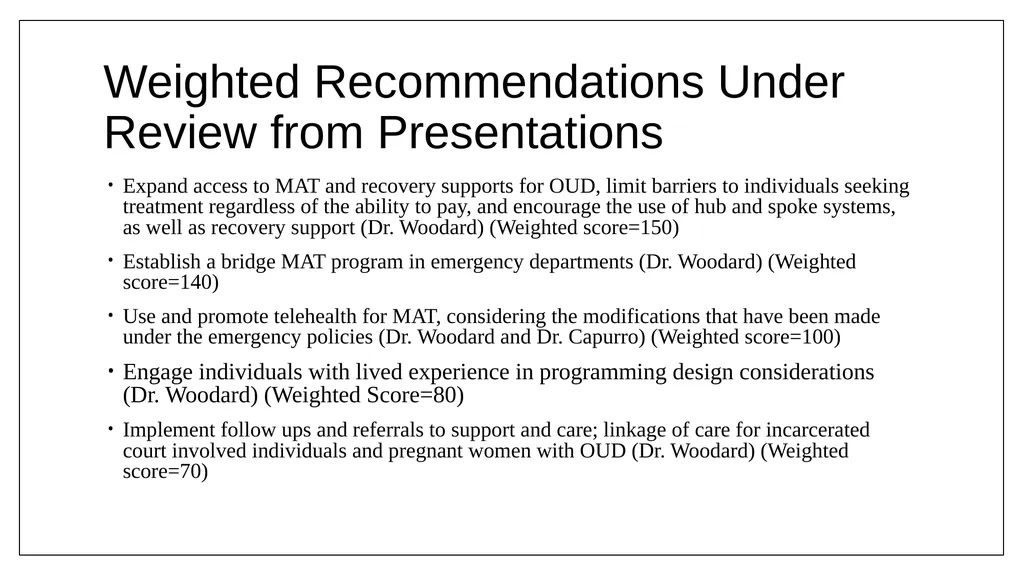
slide27. Weighted Recommendations Under Review from Presentations Expand access to MAT and recovery supports for OUD, limit barriers to individuals seeking treatment regardless of the ability to pay, and encourage the use of hub and spoke systems, as well as recovery support (Dr. Woodard) (Weighted score=150)
Establish a bridge MAT program in emergency departments (Dr. Woodard) (Weighted score=140)
Use and promote telehealth for MAT, considering the modifications that have been made under the emergency policies (Dr. Woodard and Dr. Capurro) (Weighted score=100)
Engage individuals with lived experience in programming design considerations (Dr. Woodard) (Weighted Score=80)
Implement follow ups and referrals to support and care; linkage of care for incarcerated court involved individuals and pregnant women with OUD (Dr. Woodard) (Weighted score=70)<br>
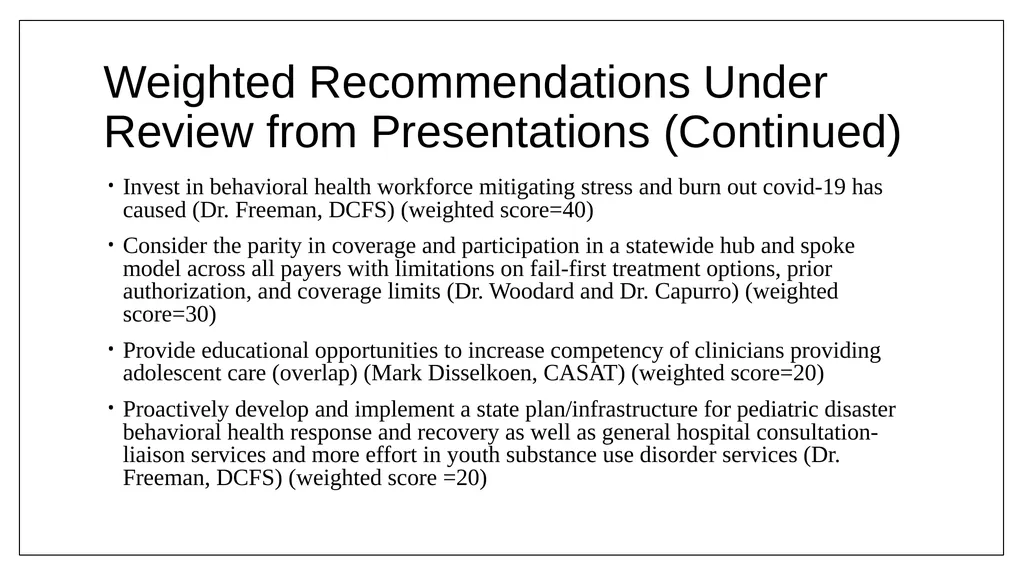
slide28. Weighted Recommendations Under Review from Presentations (Continued) Invest in behavioral health workforce mitigating stress and burn out covid-19 has caused (Dr. Freeman, DCFS) (weighted score=40)
Consider the parity in coverage and participation in a statewide hub and spoke model across all payers with limitations on fail-first treatment options, prior authorization, and coverage limits (Dr. Woodard and Dr. Capurro) (weighted score=30)
Provide educational opportunities to increase competency of clinicians providing adolescent care (overlap) (Mark Disselkoen, CASAT) (weighted score=20)
Proactively develop and implement a state plan/infrastructure for pediatric disaster behavioral health response and recovery as well as general hospital consultation-liaison services and more effort in youth substance use disorder services (Dr. Freeman, DCFS) (weighted score =20)<br>
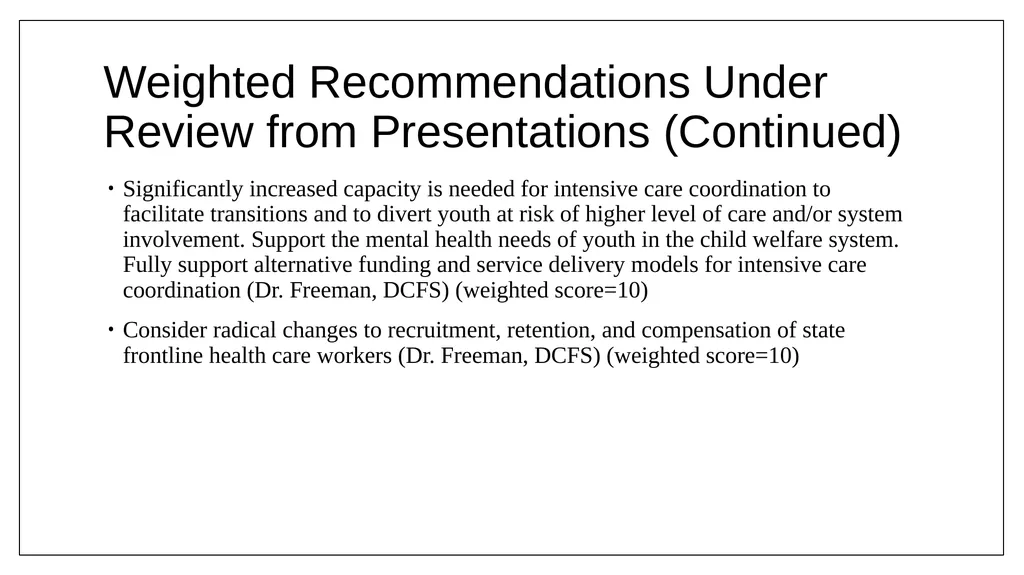
slide29. Weighted Recommendations Under Review from Presentations (Continued) Significantly increased capacity is needed for intensive care coordination to facilitate transitions and to divert youth at risk of higher level of care and/or system involvement. Support the mental health needs of youth in the child welfare system. Fully support alternative funding and service delivery models for intensive care coordination (Dr. Freeman, DCFS) (weighted score=10)
Consider radical changes to recruitment, retention, and compensation of state frontline health care workers (Dr. Freeman, DCFS) (weighted score=10)<br>
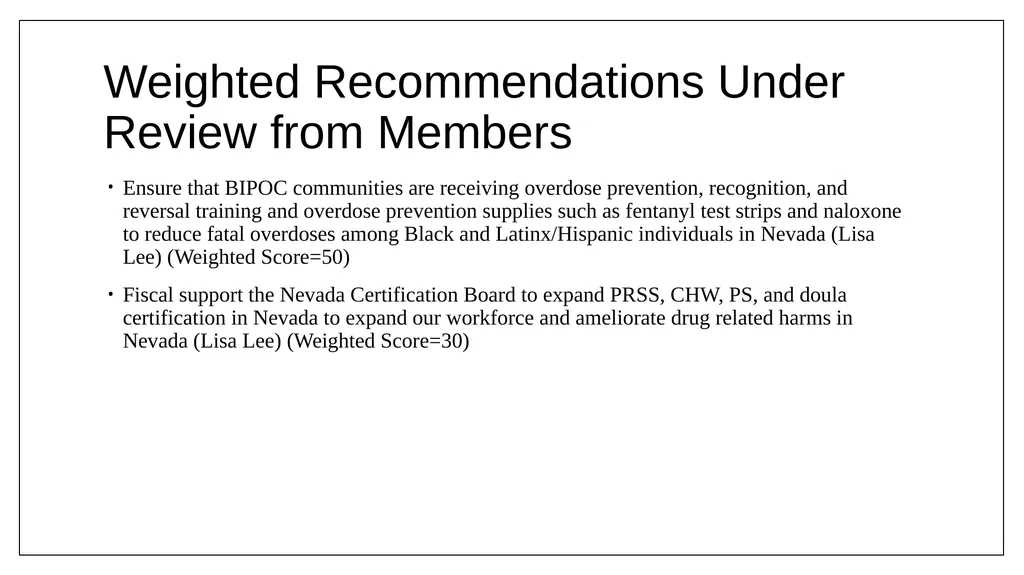
slide30. Weighted Recommendations Under Review from Members Ensure that BIPOC communities are receiving overdose prevention, recognition, and reversal training and overdose prevention supplies such as fentanyl test strips and naloxone to reduce fatal overdoses among Black and Latinx/Hispanic individuals in Nevada (Lisa Lee) (Weighted Score=50)
Fiscal support the Nevada Certification Board to expand PRSS, CHW, PS, and doula certification in Nevada to expand our workforce and ameliorate drug related harms in Nevada (Lisa Lee) (Weighted Score=30)<br>
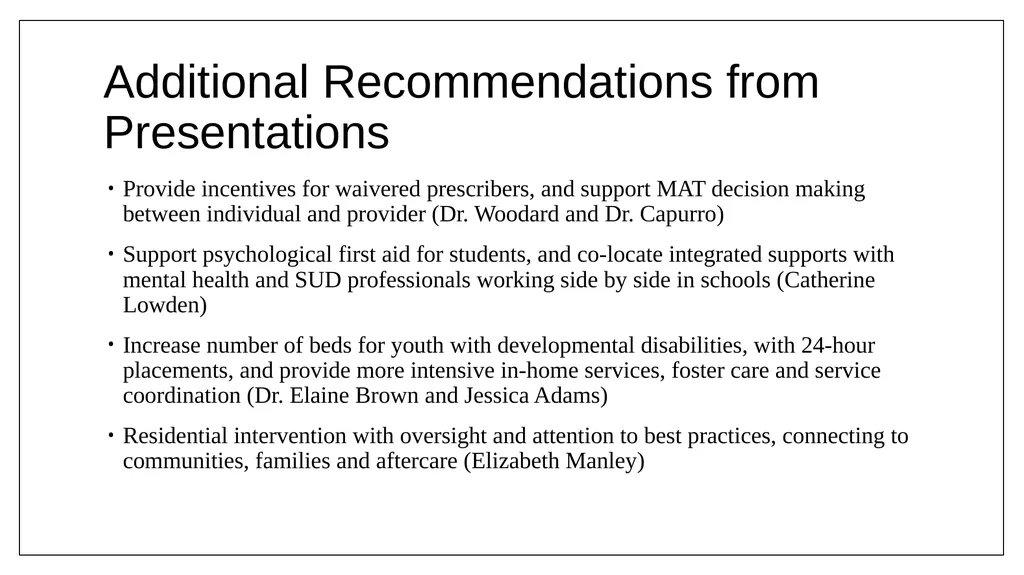
slide31. Additional Recommendations from Presentations Provide incentives for waivered prescribers, and support MAT decision making between individual and provider (Dr. Woodard and Dr. Capurro)
Support psychological first aid for students, and co-locate integrated supports with mental health and SUD professionals working side by side in schools (Catherine Lowden)
Increase number of beds for youth with developmental disabilities, with 24-hour placements, and provide more intensive in-home services, foster care and service coordination (Dr. Elaine Brown and Jessica Adams)
Residential intervention with oversight and attention to best practices, connecting to communities, families and aftercare (Elizabeth Manley)<br>
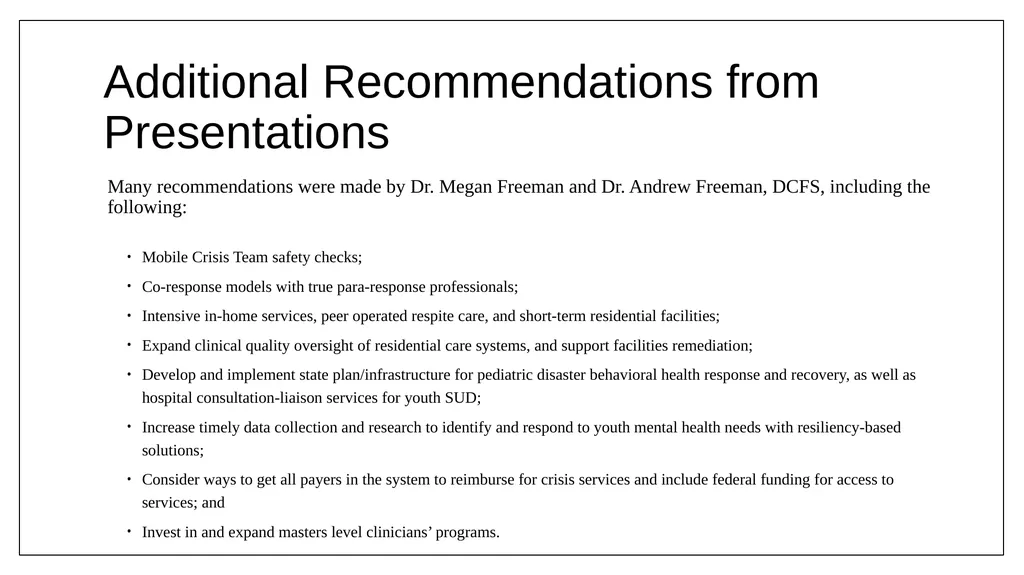
slide32. Additional Recommendations from Presentations Many recommendations were made by Dr. Megan Freeman and Dr. Andrew Freeman, DCFS, including the following:
Mobile Crisis Team safety checks;
Co-response models with true para-response professionals;
Intensive in-home services, peer operated respite care, and short-term residential facilities;
Expand clinical quality oversight of residential care systems, and support facilities remediation;
Develop and implement state plan/infrastructure for pediatric disaster behavioral health response and recovery, as well as hospital consultation-liaison services for youth SUD;
Increase timely data collection and research to identify and respond to youth mental health needs with resiliency-based solutions;
Consider ways to get all payers in the system to reimburse for crisis services and include federal funding for access to services; and
Invest in and expand masters level clinicians’ programs.<br>
slide33. RESPONSE Subcommittee Vice Chair Tolles<br>
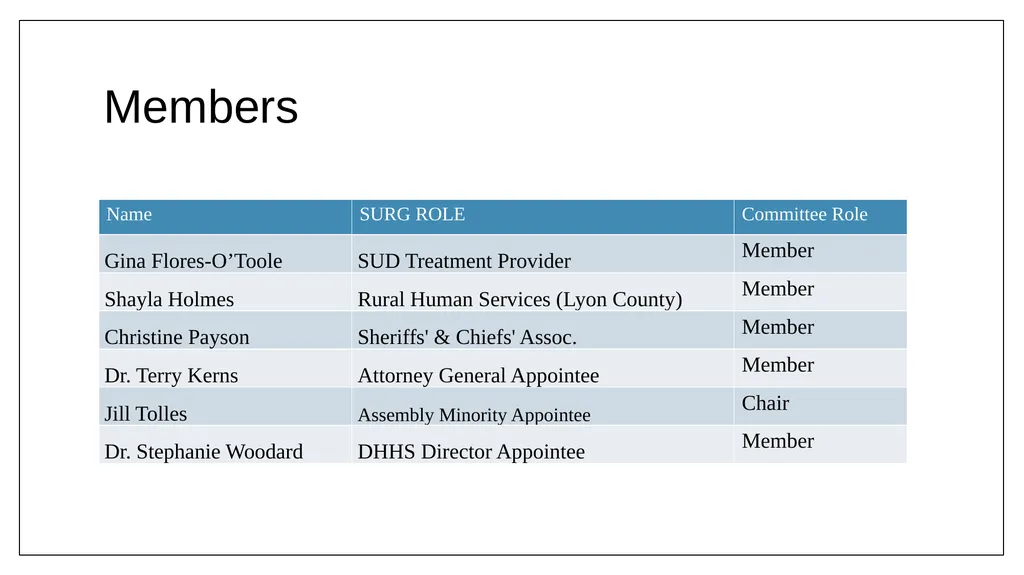
slide34. Members<br>
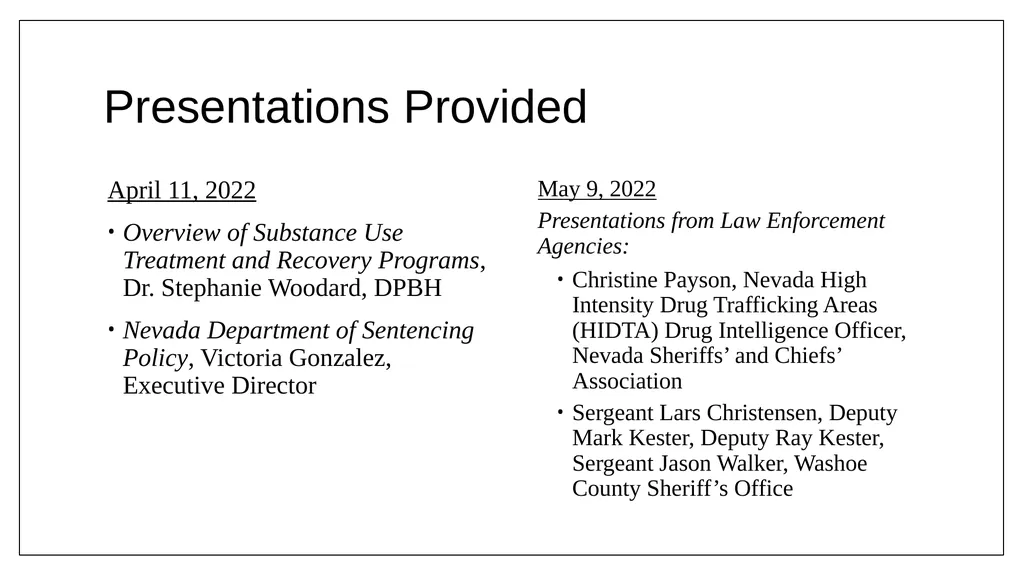
slide35. Presentations Provided April 11, 2022
Overview of Substance Use Treatment and Recovery Programs, Dr. Stephanie Woodard, DPBH
Nevada Department of Sentencing Policy, Victoria Gonzalez, Executive Director May 9, 2022
Presentations from Law Enforcement Agencies:
Christine Payson, Nevada High Intensity Drug Trafficking Areas (HIDTA) Drug Intelligence Officer, Nevada Sheriffs’ and Chiefs’ Association
Sergeant Lars Christensen, Deputy Mark Kester, Deputy Ray Kester, Sergeant Jason Walker, Washoe County Sheriff’s Office<br>
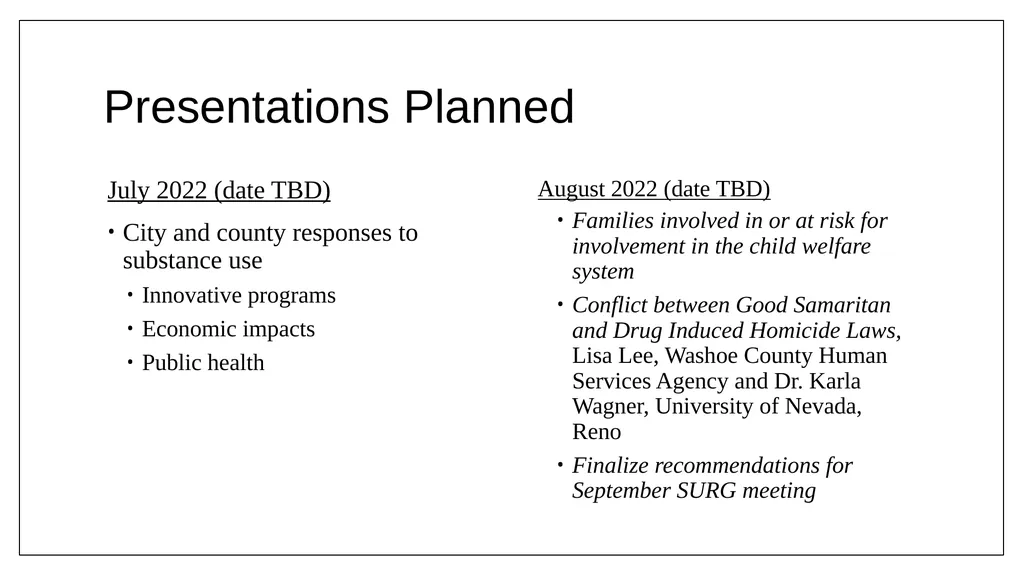
slide36. Presentations Planned July 2022 (date TBD)
City and county responses to substance use
Innovative programs
Economic impacts
Public health August 2022 (date TBD)
Families involved in or at risk for involvement in the child welfare system
Conflict between Good Samaritan and Drug Induced Homicide Laws, Lisa Lee, Washoe County Human Services Agency and Dr. Karla Wagner, University of Nevada, Reno
Finalize recommendations for September SURG meeting<br>
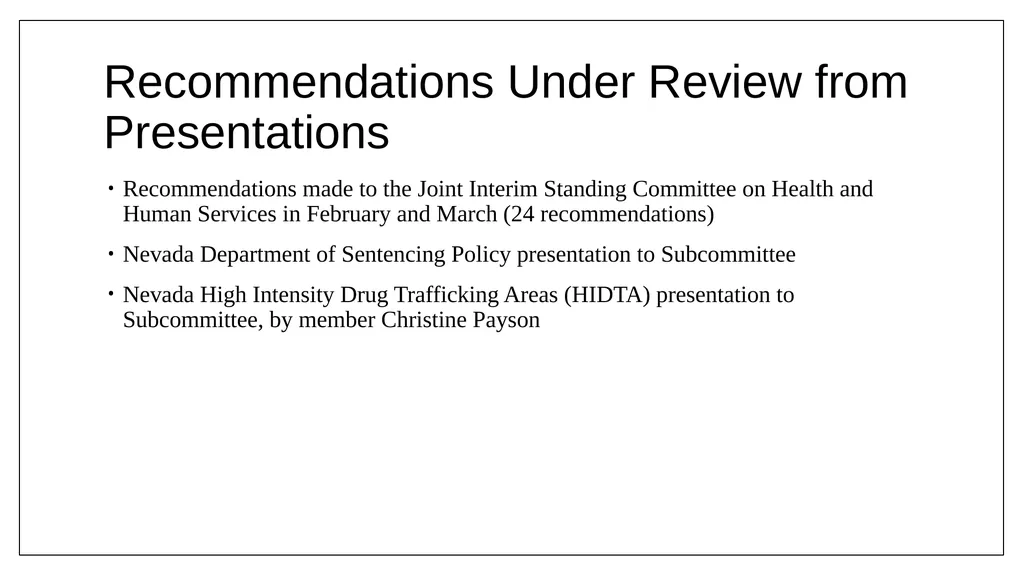
slide37. Recommendations Under Review from Presentations Recommendations made to the Joint Interim Standing Committee on Health and Human Services in February and March (24 recommendations)
Nevada Department of Sentencing Policy presentation to Subcommittee
Nevada High Intensity Drug Trafficking Areas (HIDTA) presentation to Subcommittee, by member Christine Payson<br>
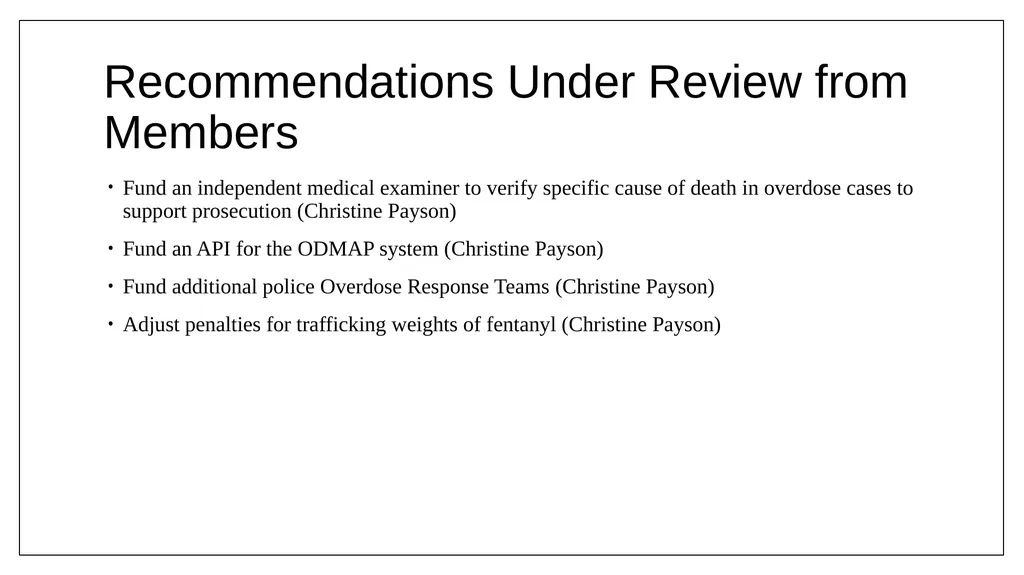
slide38. Recommendations Under Review from Members Fund an independent medical examiner to verify specific cause of death in overdose cases to support prosecution (Christine Payson)
Fund an API for the ODMAP system (Christine Payson)
Fund additional police Overdose Response Teams (Christine Payson)
Adjust penalties for trafficking weights of fentanyl (Christine Payson)<br>
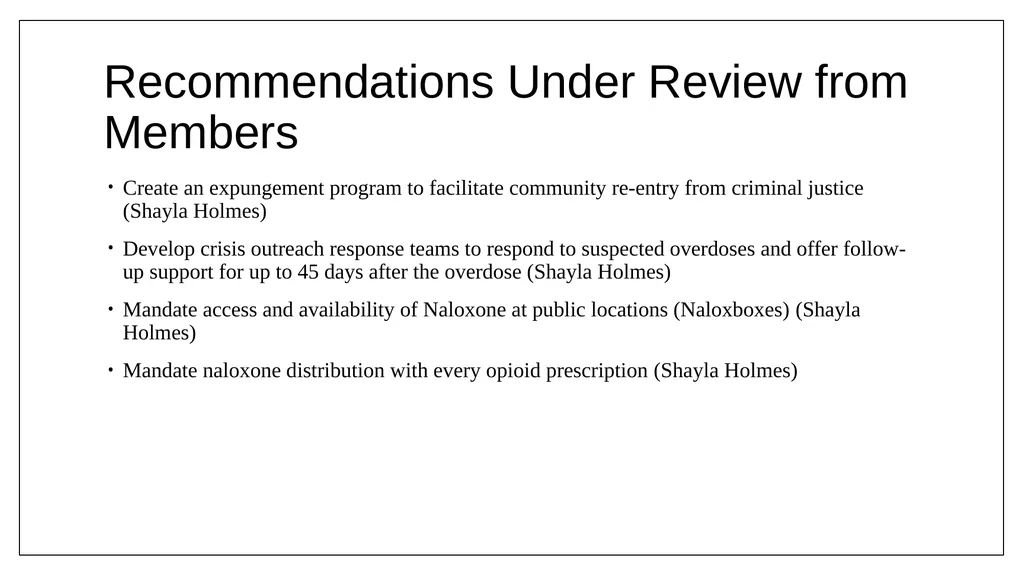
slide39. Recommendations Under Review from Members Create an expungement program to facilitate community re-entry from criminal justice (Shayla Holmes)
Develop crisis outreach response teams to respond to suspected overdoses and offer follow-up support for up to 45 days after the overdose (Shayla Holmes)
Mandate access and availability of Naloxone at public locations (Naloxboxes) (Shayla Holmes)
Mandate naloxone distribution with every opioid prescription (Shayla Holmes)<br>
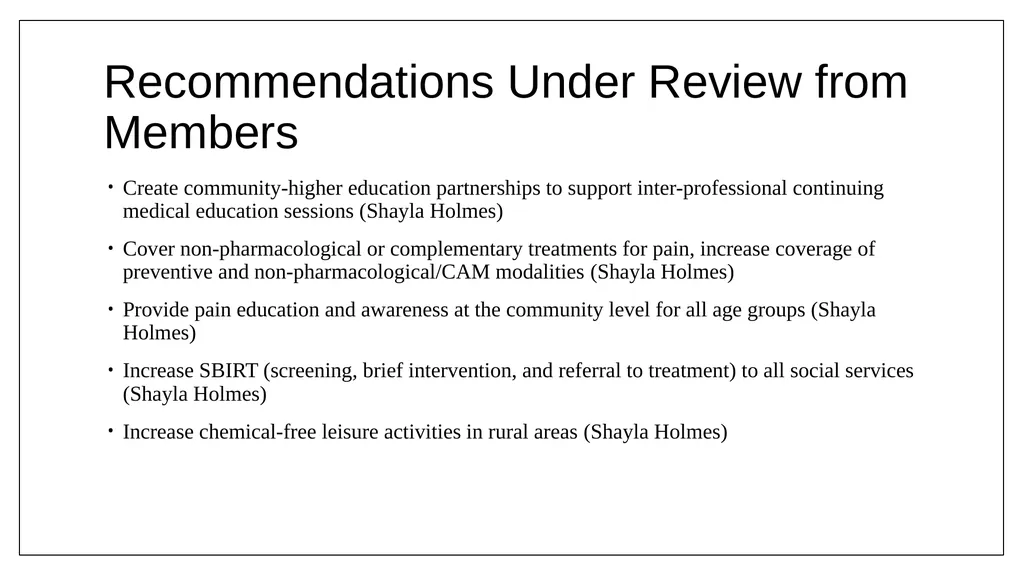
slide40. Recommendations Under Review from Members Create community-higher education partnerships to support inter-professional continuing medical education sessions (Shayla Holmes)
Cover non-pharmacological or complementary treatments for pain, increase coverage of preventive and non-pharmacological/CAM modalities (Shayla Holmes)
Provide pain education and awareness at the community level for all age groups (Shayla Holmes)
Increase SBIRT (screening, brief intervention, and referral to treatment) to all social services (Shayla Holmes)
Increase chemical-free leisure activities in rural areas (Shayla Holmes)<br>
slide41. 7. Review Statewide Needs Assessment for the Advisory Committee for Resilient Nevada. (For Possible Action.)
Courtney Cantrell, PsyD, Mercer<br>
slide42. Fund for a Resilient Nevada Needs Assessment Gaps and Scoring Methodology June 6, 2022
Courtney Cantrell, Senior Government Consultant Placeholder for optional client logo<br>
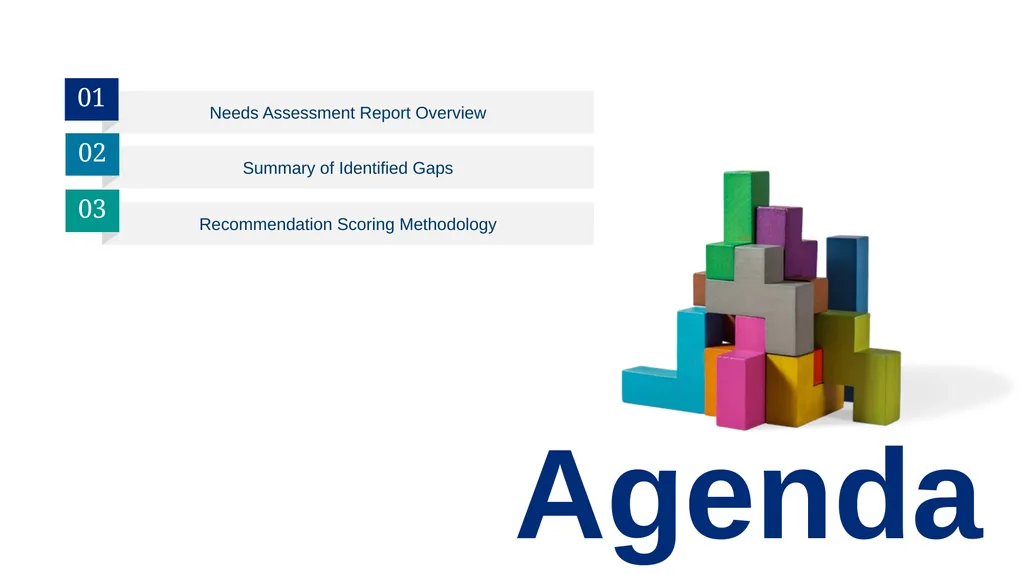
slide43. Agenda Recommendation Scoring Methodology 03<br>
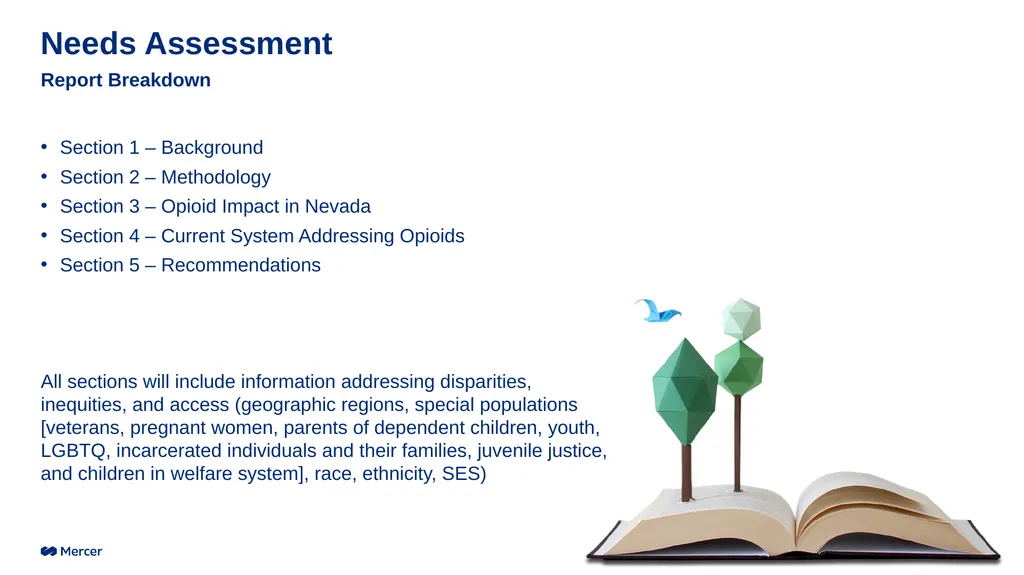
slide44. Needs Assessment Section 1 – Background
Section 2 – Methodology
Section 3 – Opioid Impact in Nevada
Section 4 – Current System Addressing Opioids
Section 5 – Recommendations Report Breakdown All sections will include information addressing disparities, inequities, and access (geographic regions, special populations [veterans, pregnant women, parents of dependent children, youth, LGBTQ, incarcerated individuals and their families, juvenile justice, and children in welfare system], race, ethnicity, SES)<br>
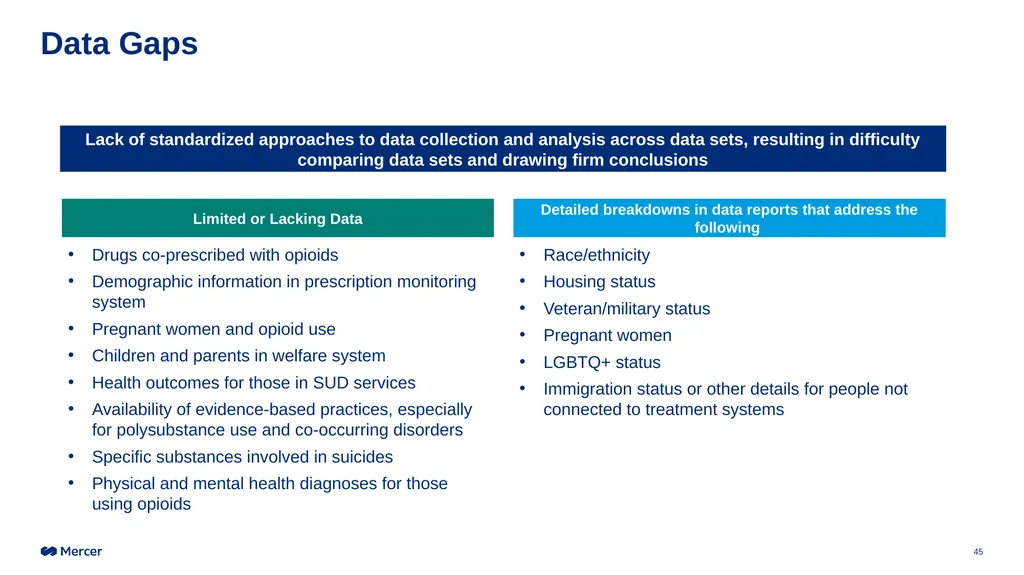
slide45. Data Gaps 45 Detailed breakdowns in data reports that address the following Limited or Lacking Data Drugs co-prescribed with opioids
Demographic information in prescription monitoring system
Pregnant women and opioid use
Children and parents in welfare system
Health outcomes for those in SUD services
Availability of evidence-based practices, especially for polysubstance use and co-occurring disorders
Specific substances involved in suicides
Physical and mental health diagnoses for those using opioids Race/ethnicity
Housing status
Veteran/military status
Pregnant women
LGBTQ+ status
Immigration status or other details for people not connected to treatment systems Lack of standardized approaches to data collection and analysis across data sets, resulting in difficulty comparing data sets and drawing firm conclusions<br>
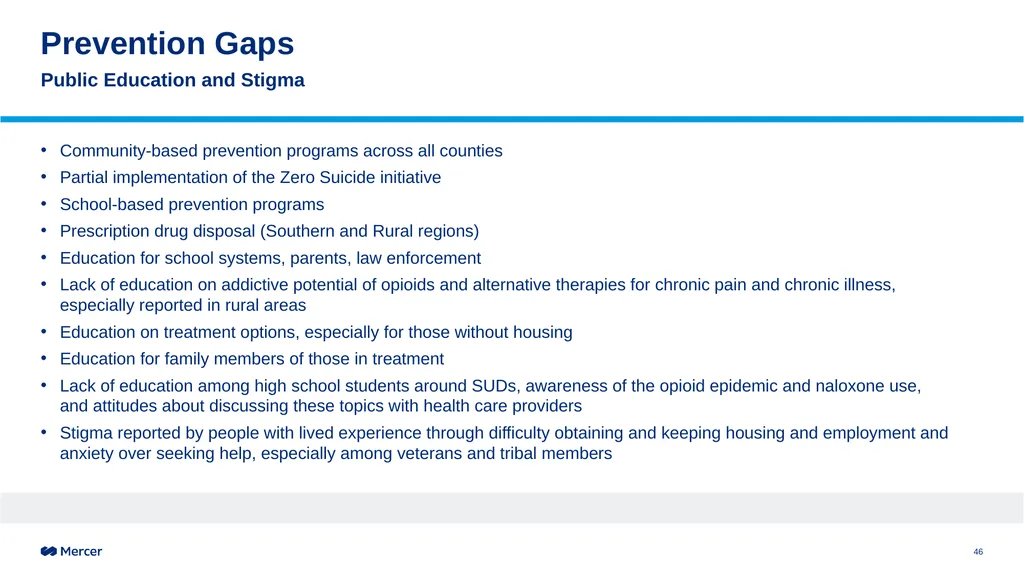
slide46. Prevention Gaps Community-based prevention programs across all counties
Partial implementation of the Zero Suicide initiative
School-based prevention programs
Prescription drug disposal (Southern and Rural regions)
Education for school systems, parents, law enforcement
Lack of education on addictive potential of opioids and alternative therapies for chronic pain and chronic illness, especially reported in rural areas
Education on treatment options, especially for those without housing
Education for family members of those in treatment
Lack of education among high school students around SUDs, awareness of the opioid epidemic and naloxone use, and attitudes about discussing these topics with health care providers
Stigma reported by people with lived experience through difficulty obtaining and keeping housing and employment and anxiety over seeking help, especially among veterans and tribal members 46 Public Education and Stigma<br>
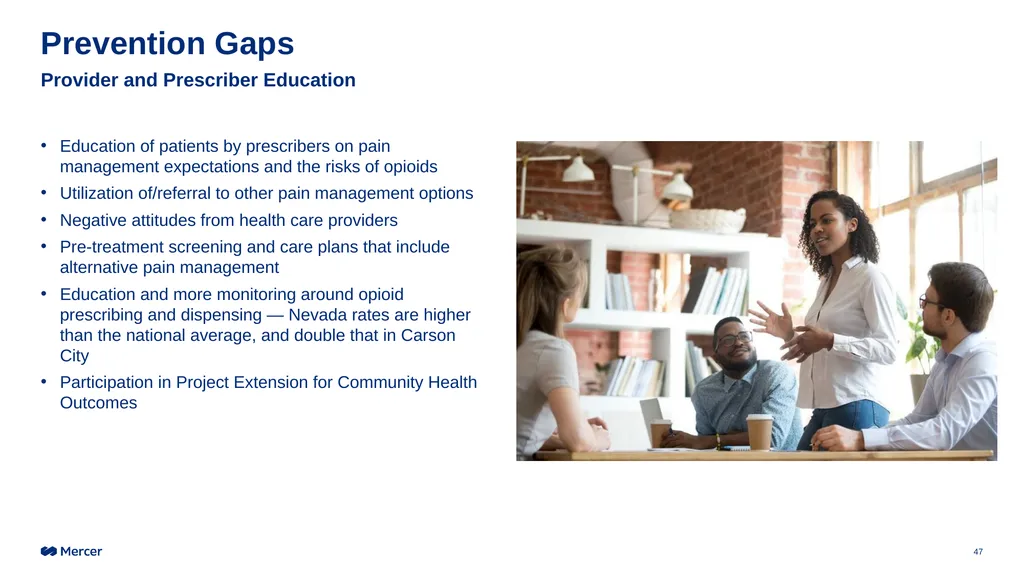
slide47. Prevention Gaps Education of patients by prescribers on pain management expectations and the risks of opioids
Utilization of/referral to other pain management options
Negative attitudes from health care providers
Pre-treatment screening and care plans that include alternative pain management
Education and more monitoring around opioid prescribing and dispensing — Nevada rates are higher than the national average, and double that in Carson City
Participation in Project Extension for Community Health Outcomes 47 Provider and Prescriber Education<br>
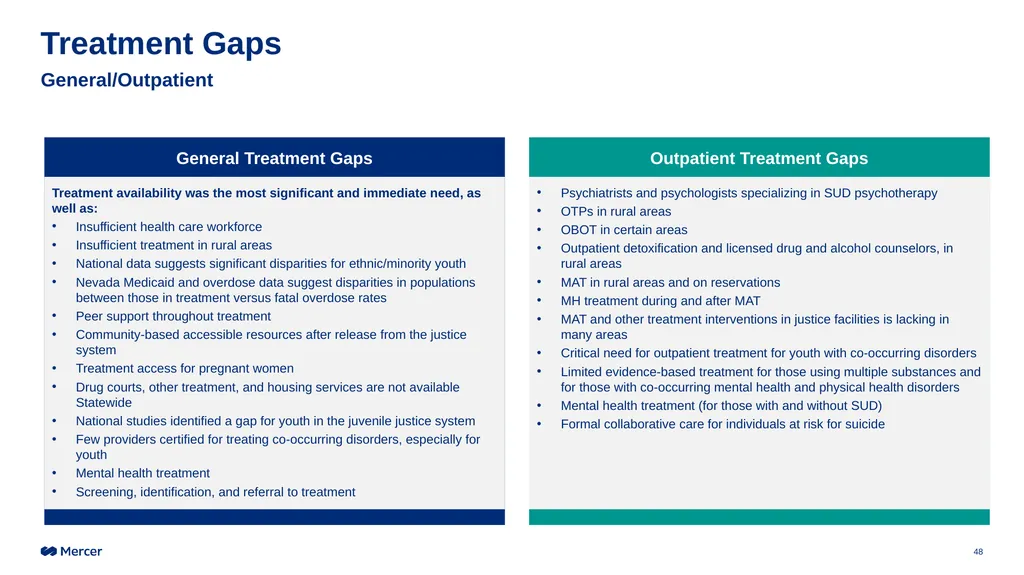
slide48. Treatment Gaps 48 General/Outpatient Outpatient Treatment Gaps Psychiatrists and psychologists specializing in SUD psychotherapy
OTPs in rural areas
OBOT in certain areas
Outpatient detoxification and licensed drug and alcohol counselors, in rural areas
MAT in rural areas and on reservations
MH treatment during and after MAT
MAT and other treatment interventions in justice facilities is lacking in many areas
Critical need for outpatient treatment for youth with co-occurring disorders
Limited evidence-based treatment for those using multiple substances and for those with co-occurring mental health and physical health disorders
Mental health treatment (for those with and without SUD)
Formal collaborative care for individuals at risk for suicide General Treatment Gaps Treatment availability was the most significant and immediate need, as well as:
Insufficient health care workforce
Insufficient treatment in rural areas
National data suggests significant disparities for ethnic/minority youth
Nevada Medicaid and overdose data suggest disparities in populations between those in treatment versus fatal overdose rates
Peer support throughout treatment
Community-based accessible resources after release from the justice system
Treatment access for pregnant women
Drug courts, other treatment, and housing services are not available Statewide
National studies identified a gap for youth in the juvenile justice system
Few providers certified for treating co-occurring disorders, especially for youth
Mental health treatment
Screening, identification, and referral to treatment<br>
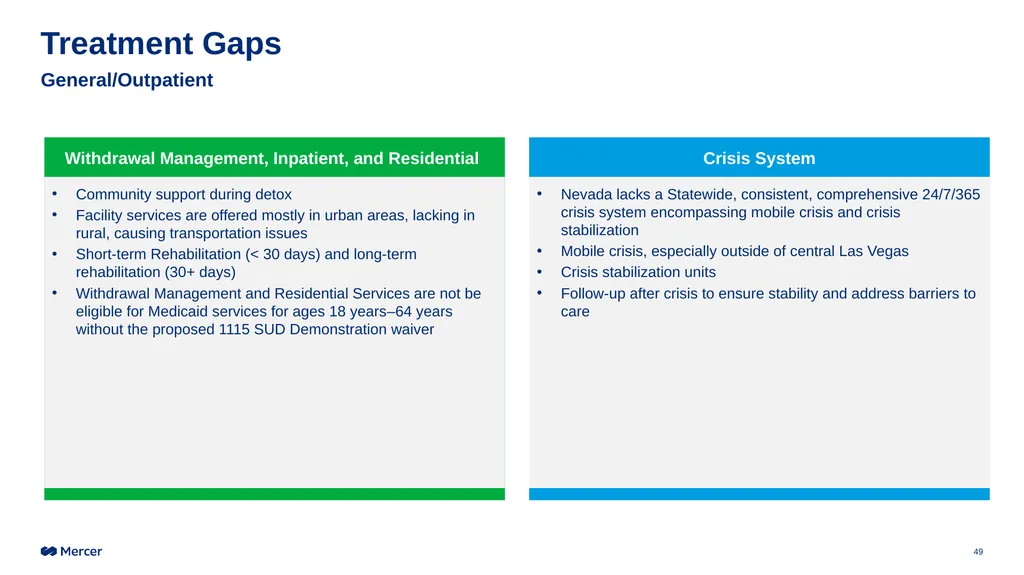
slide49. Treatment Gaps 49 General/Outpatient Crisis System Nevada lacks a Statewide, consistent, comprehensive 24/7/365 crisis system encompassing mobile crisis and crisis stabilization
Mobile crisis, especially outside of central Las Vegas
Crisis stabilization units
Follow-up after crisis to ensure stability and address barriers to care Withdrawal Management, Inpatient, and Residential Community support during detox
Facility services are offered mostly in urban areas, lacking in rural, causing transportation issues
Short-term Rehabilitation (< 30 days) and long-term rehabilitation (30+ days)
Withdrawal Management and Residential Services are not be eligible for Medicaid services for ages 18 years–64 years without the proposed 1115 SUD Demonstration waiver<br>
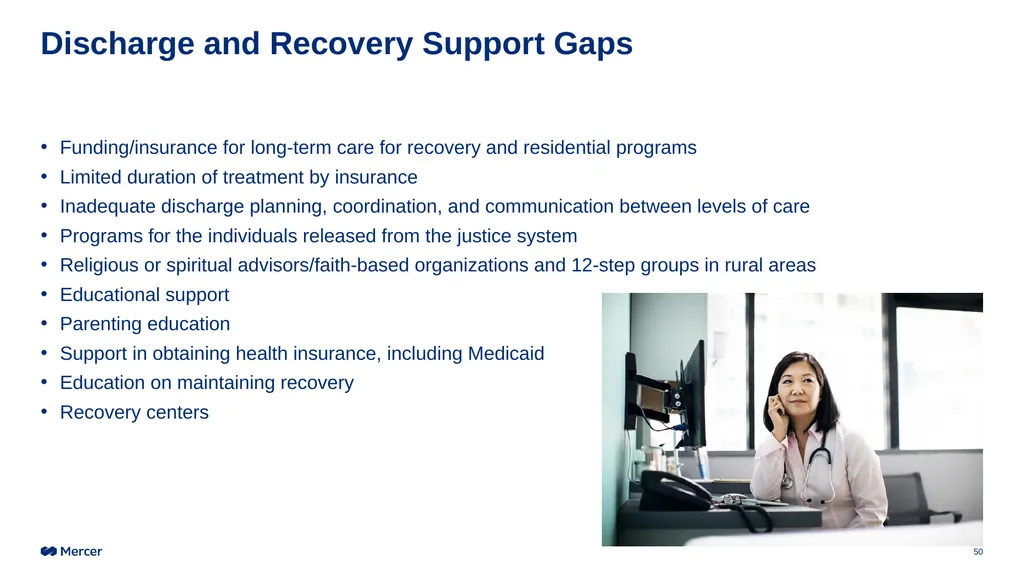
slide50. Discharge and Recovery Support Gaps Funding/insurance for long-term care for recovery and residential programs
Limited duration of treatment by insurance
Inadequate discharge planning, coordination, and communication between levels of care
Programs for the individuals released from the justice system
Religious or spiritual advisors/faith-based organizations and 12-step groups in rural areas
Educational support
Parenting education
Support in obtaining health insurance, including Medicaid
Education on maintaining recovery
Recovery centers 50<br>
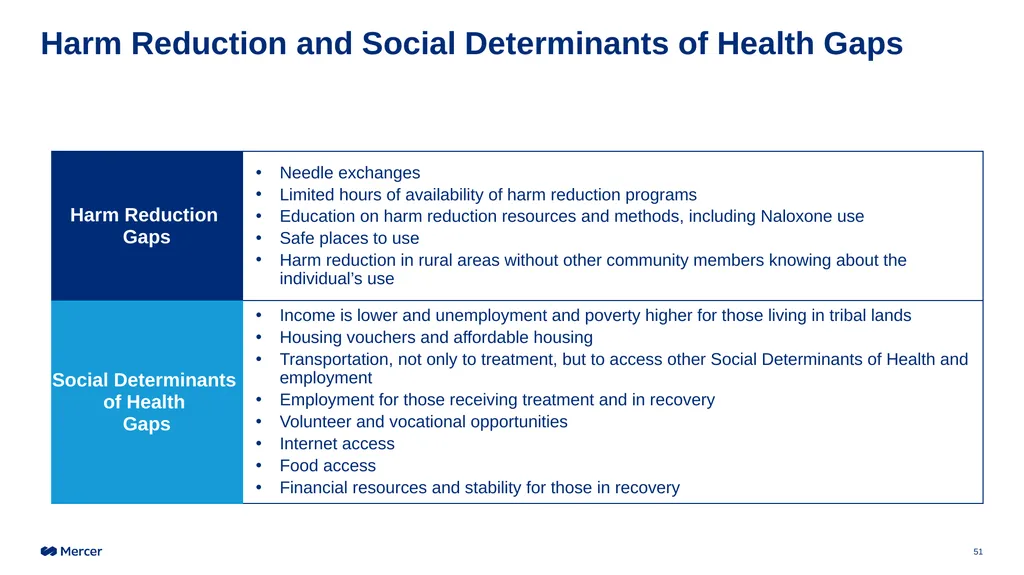
slide51. Harm Reduction and Social Determinants of Health Gaps 51 Needle exchanges
Limited hours of availability of harm reduction programs
Education on harm reduction resources and methods, including Naloxone use
Safe places to use
Harm reduction in rural areas without other community members knowing about the individual’s use Harm Reduction Gaps Income is lower and unemployment and poverty higher for those living in tribal lands
Housing vouchers and affordable housing
Transportation, not only to treatment, but to access other Social Determinants of Health and employment
Employment for those receiving treatment and in recovery
Volunteer and vocational opportunities
Internet access
Food access
Financial resources and stability for those in recovery Social Determinants of Health Gaps<br>
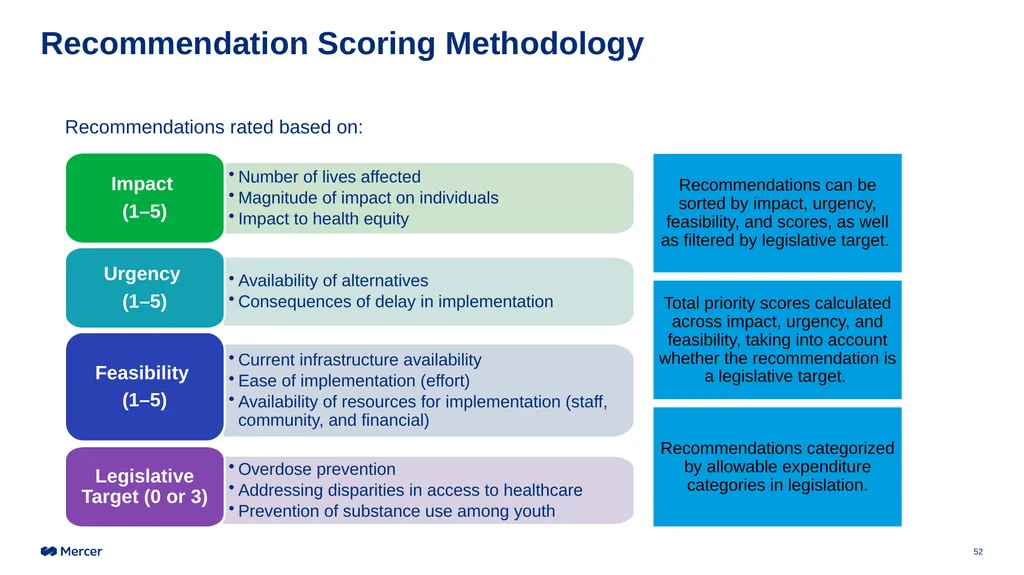
slide52. Recommendation Scoring Methodology Recommendations rated based on: 52<br>
slide53. Services provided by Mercer Health & Benefits LLC.<br>
slide54. 8. Review and Consider Items for September 22, 2022 SURG Meeting (For Possible Action.)
Vice Chair Tolles<br>
slide55. 9. Public Comment. (Discussion Only.)<br>
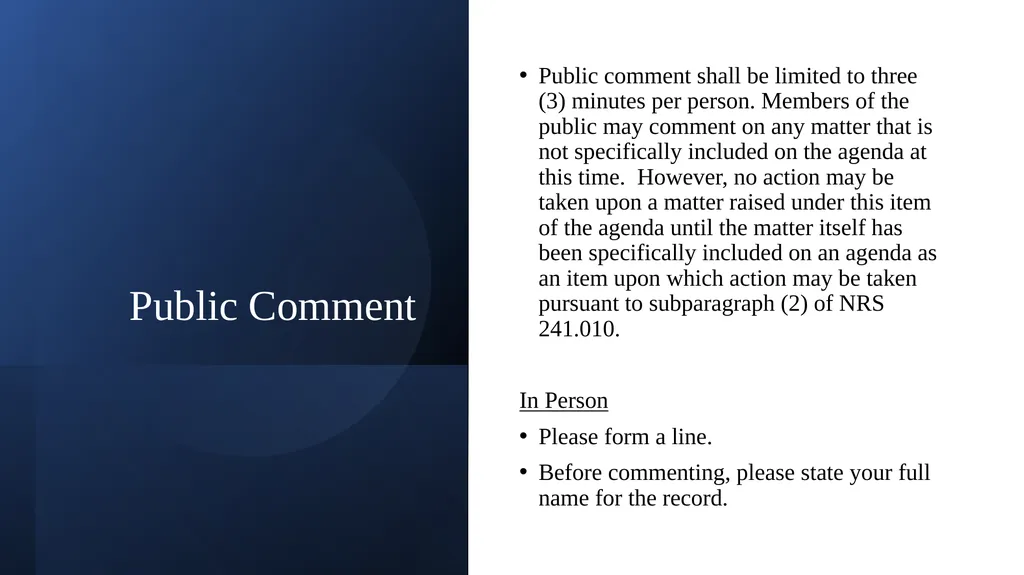
slide56. Public Comment Public comment shall be limited to three (3) minutes per person. Members of the public may comment on any matter that is not specifically included on the agenda at this time. However, no action may be taken upon a matter raised under this item of the agenda until the matter itself has been specifically included on an agenda as an item upon which action may be taken pursuant to subparagraph (2) of NRS 241.010.
In Person
Please form a line.
Before commenting, please state your full name for the record.<br>
slide57. Public Comment<br>
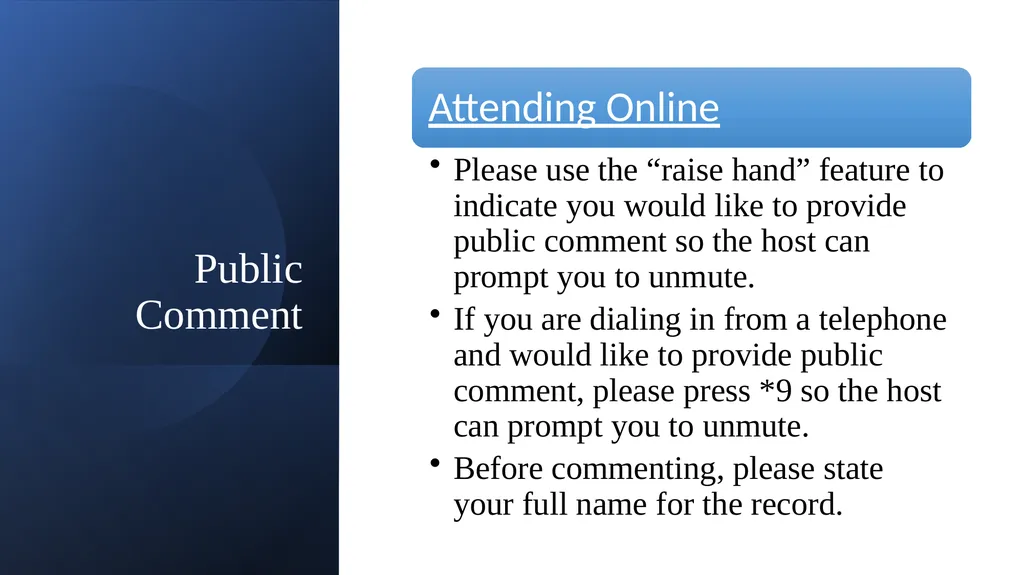
slide58. Public Comment<br>
slide59. 10. Adjournment.<br>
slide60. Additional Information, Resources & Updates Available At: https://ag.nv.gov/About/Administration/Substance_Use_Response_Working_Group_(SURG)/<br>
June 7, 2022<br>
slide2. 1. Call to Order and Roll Call to Establish Quorum Chair Ford<br>
slide3. 2. Public Comment (Discussion Only.)<br>
slide4. Public Comment Public comment shall be limited to three (3) minutes per person. We will begin with comments from Las Vegas and then invite comments from Carson City, followed by online participants.
In Person
Please form a line.
Before commenting, please state your full name for the record.<br>
slide5. Public Comment<br>
slide6. 3. Review and Approve Minutes for March 9, 2022 SURG Meeting (For Possible Action.)
Chair Ford<br>
slide7. 4. Update on Opioid Litigation, Settlement Funds, and Distribution. (Information Only.)
Second Assistant Attorney General Mark Krueger, Consumer Counsel for Board of Consumer Protection, Office of the Attorney General<br>
slide8. 5. Review Timeline and Process for SURG Meetings and Recommendations (Information Only.)
Vice Chair Jill Tolles<br>
slide9. Timeline for SURG Meetings and Recommendations<br>
slide10. Timeline for SURG Meetings and Recommendations<br>
slide11. 6. Update from SURG Subcommittees: 1) Prevention; 2) Treatment and Recovery; and 3) Response. (For Possible Action.)
Senator Fabian Doñate, Assemblywoman Claire Thomas, and Vice Chair Jill Tolles<br>
slide12. Prevention Subcommittee Chair Doñate<br>
slide13. Members<br>
slide14. Presentations Provided April 25, 2022
Overview of Substance Use Treatment and Recovery Programs,
Dr. Stephanie Woodard, DHHS May 23, 2022
Presentation on Preventing and understanding Risk Factors,
Dr. Timothy Grigsby, Department of Social and Behavioral Health (UNLV)
Nevada Prevention Coalition Update,
Linda Lang and Jamie Ross<br>
slide15. Pending Future Presentations July, August and September (TBD)
Primary Prevention
Health education reform
Grant funds and infrastructure investment
Secondary Prevention
YRBS and other data collection mechanisms
Screening and integration of behavioral health
Payment management
Tertiary Prevention
Harm Reduction (overlap)
Southern Nevada Health District
Law Enforcement and Naloxone Distribution (overlap)<br>
slide16. Recommendations Under Review from Presentations/Members Continue to invest in standing-up Community Health Workers and Peer Recovery Specialists (Lang/Ross/Schoen)
Co-certification of CHWs and PRSs (Lang/Ross/Schoen)
Early screening for substance misuse, mental health and suicide in schools and community-based agencies (Lang/Ross/Schoen)
Motivational interviewing to enhance readiness for change, brief interventions to reduce risky or problematic substance use (Lang/Ross/Schoen)
Drug testing in schools (Lang/Ross/Schoen)
Expansion of Project Aware (evidence-based model) statewide (Lang/Ross/Schoen)<br>
slide17. Recommendations Under Review from Presentations/Members (Continued) Evidence-based intervention programming, i.e., offer SEL curriculums in schools where students receive credit and intervention programs for youth before they enter the Juvenile Justice system. (Lang/Ross/Schoen)
Address workforce development for youth/young adults through scholarships, work study opportunities and training. (Lang/Ross/Schoen)
Increase options for supervision of internships by supporting clinical supervisors such as LCSW (Lang/Ross/Schoen)
ACEs mitigation including SEL, Safe Dating/Violence Prevention, Early Childhood Development, Parenting Programs, Trauma informed care, and Mentorship programs for children, youth, and young adults. (Lang/Ross/Schoen)<br>
slide18. Recommendations Under Review from Presentations/Members (Continued) Build and strengthen comprehensive FASTT and MOST teams statewide to provide intensive supports to incarcerated individuals both in the jails and upon release and provide a safety net for individuals presenting a mental health need in the community using EBP model. (Lang/Ross/Schoen)
Support training of key stakeholders statewide in the Collective Impact approach to affecting community change. This will establish an operating standard for community engagement and systems changes in Nevada’s communities. DPBH leadership has indicated this is the approach/model they are now supporting. (Lang/Ross/Schoen)
Training should be statewide, cross sector, and cross discipline so all are on same page. Training should be state level down to coalition/community level (multi-layered) (Lang/Ross/Schoen)<br>
slide19. Recommendations Under Review from Presentations/Members (Continued) Provide Certified Prevention Specialists in Nevada schools, before and after school programs, and other youth serving organizations to provide appropriate prevention education and programming. (Lang/Ross/Schoen)
To establish and expand a formal youth mentor program offered in every community in Nevada. Each community is given authority to determine the mentoring program(s) utilized in their communities, e.g., Big Brothers Big Sisters (Lang/Ross/Schoen)
Contract a company that specializes in data collection, evaluation, analysis, and assessment, and provide consultation to entities across Nevada to help improve internal local data collection systems and create a comprehensive statewide data sharing system that includes all State dashboards and public data. (Lang/Ross/Schoen)<br>
slide20. Additional Recommendations from Presentations Encourage greater implementation of screening, brief intervention, and referral to treatment (SBIRT) across primary care settings (Woodard)
Ensure the use of housing first initiatives (Woodard)
Engage people who use drugs as subject matter experts (Woodard)
Establish overdose prevention sites in Nevada (Wagner)
Funding for early intervention SUD and substance specific funding (Monroy/Ross)<br>
slide21. Recommendations Under Review from Presentations (Continued) Provide educational opportunities to increase competency of clinicians providing adolescent care (Disselkoen)
Enable educators to build capacity to address psychological first aid for students (Lowden)
Co-locate integrated supports with mental health and SUD professionals working side-by-side in schools. (overlap) (Lowden)
Expand Medicaid billing opportunities and allow blended and braided funding to facilitate services for system involved and at-risk youth (overlap) (Freeman)<br>
slide22. Recommendations Under Review from Presentations (Continued) Support evaluation of ongoing services and efforts in our communities to make sure that what we are doing at present is working, and identify where the gaps are (Grigsby)
Do more work around polysubstance use. The data are clear that it’s not a single drug issue, as we’ve seen with the opioid epidemic. (Grigsby)<br>
slide23. Treatment and Recovery Subcommittee Chair Thomas<br>
slide24. Members<br>
slide25. Presentations Provided April 25, 2022
Overview of Substance Use Treatment and Recovery Programs, Dr. Stephanie Woodard, DPBH
Recommendations for Presentation from Subject Matter Experts, Terry Kerns, PhD, Substance Use Law Enforcement Coordinator May 16, 2022
Presentation on Medication Assisted Treatment and Bridge Program:
Dr. Lesley Dickson, Las Vegas Medical Director for the Center for Behavioral Health<br>
slide26. Pending Future Presentations July and August
Kailin See, Washington Heights Corner Project, Safe Consumption Sites
Tina Willauer, Children and Family Futures, Embedding Case Workers and Peer Recovery Support Specialists within Child Welfare
Adelson Clinic, Child and Adolescent Treatment
Foundation for Recovery<br>
slide27. Weighted Recommendations Under Review from Presentations Expand access to MAT and recovery supports for OUD, limit barriers to individuals seeking treatment regardless of the ability to pay, and encourage the use of hub and spoke systems, as well as recovery support (Dr. Woodard) (Weighted score=150)
Establish a bridge MAT program in emergency departments (Dr. Woodard) (Weighted score=140)
Use and promote telehealth for MAT, considering the modifications that have been made under the emergency policies (Dr. Woodard and Dr. Capurro) (Weighted score=100)
Engage individuals with lived experience in programming design considerations (Dr. Woodard) (Weighted Score=80)
Implement follow ups and referrals to support and care; linkage of care for incarcerated court involved individuals and pregnant women with OUD (Dr. Woodard) (Weighted score=70)<br>
slide28. Weighted Recommendations Under Review from Presentations (Continued) Invest in behavioral health workforce mitigating stress and burn out covid-19 has caused (Dr. Freeman, DCFS) (weighted score=40)
Consider the parity in coverage and participation in a statewide hub and spoke model across all payers with limitations on fail-first treatment options, prior authorization, and coverage limits (Dr. Woodard and Dr. Capurro) (weighted score=30)
Provide educational opportunities to increase competency of clinicians providing adolescent care (overlap) (Mark Disselkoen, CASAT) (weighted score=20)
Proactively develop and implement a state plan/infrastructure for pediatric disaster behavioral health response and recovery as well as general hospital consultation-liaison services and more effort in youth substance use disorder services (Dr. Freeman, DCFS) (weighted score =20)<br>
slide29. Weighted Recommendations Under Review from Presentations (Continued) Significantly increased capacity is needed for intensive care coordination to facilitate transitions and to divert youth at risk of higher level of care and/or system involvement. Support the mental health needs of youth in the child welfare system. Fully support alternative funding and service delivery models for intensive care coordination (Dr. Freeman, DCFS) (weighted score=10)
Consider radical changes to recruitment, retention, and compensation of state frontline health care workers (Dr. Freeman, DCFS) (weighted score=10)<br>
slide30. Weighted Recommendations Under Review from Members Ensure that BIPOC communities are receiving overdose prevention, recognition, and reversal training and overdose prevention supplies such as fentanyl test strips and naloxone to reduce fatal overdoses among Black and Latinx/Hispanic individuals in Nevada (Lisa Lee) (Weighted Score=50)
Fiscal support the Nevada Certification Board to expand PRSS, CHW, PS, and doula certification in Nevada to expand our workforce and ameliorate drug related harms in Nevada (Lisa Lee) (Weighted Score=30)<br>
slide31. Additional Recommendations from Presentations Provide incentives for waivered prescribers, and support MAT decision making between individual and provider (Dr. Woodard and Dr. Capurro)
Support psychological first aid for students, and co-locate integrated supports with mental health and SUD professionals working side by side in schools (Catherine Lowden)
Increase number of beds for youth with developmental disabilities, with 24-hour placements, and provide more intensive in-home services, foster care and service coordination (Dr. Elaine Brown and Jessica Adams)
Residential intervention with oversight and attention to best practices, connecting to communities, families and aftercare (Elizabeth Manley)<br>
slide32. Additional Recommendations from Presentations Many recommendations were made by Dr. Megan Freeman and Dr. Andrew Freeman, DCFS, including the following:
Mobile Crisis Team safety checks;
Co-response models with true para-response professionals;
Intensive in-home services, peer operated respite care, and short-term residential facilities;
Expand clinical quality oversight of residential care systems, and support facilities remediation;
Develop and implement state plan/infrastructure for pediatric disaster behavioral health response and recovery, as well as hospital consultation-liaison services for youth SUD;
Increase timely data collection and research to identify and respond to youth mental health needs with resiliency-based solutions;
Consider ways to get all payers in the system to reimburse for crisis services and include federal funding for access to services; and
Invest in and expand masters level clinicians’ programs.<br>
slide33. RESPONSE Subcommittee Vice Chair Tolles<br>
slide34. Members<br>
slide35. Presentations Provided April 11, 2022
Overview of Substance Use Treatment and Recovery Programs, Dr. Stephanie Woodard, DPBH
Nevada Department of Sentencing Policy, Victoria Gonzalez, Executive Director May 9, 2022
Presentations from Law Enforcement Agencies:
Christine Payson, Nevada High Intensity Drug Trafficking Areas (HIDTA) Drug Intelligence Officer, Nevada Sheriffs’ and Chiefs’ Association
Sergeant Lars Christensen, Deputy Mark Kester, Deputy Ray Kester, Sergeant Jason Walker, Washoe County Sheriff’s Office<br>
slide36. Presentations Planned July 2022 (date TBD)
City and county responses to substance use
Innovative programs
Economic impacts
Public health August 2022 (date TBD)
Families involved in or at risk for involvement in the child welfare system
Conflict between Good Samaritan and Drug Induced Homicide Laws, Lisa Lee, Washoe County Human Services Agency and Dr. Karla Wagner, University of Nevada, Reno
Finalize recommendations for September SURG meeting<br>
slide37. Recommendations Under Review from Presentations Recommendations made to the Joint Interim Standing Committee on Health and Human Services in February and March (24 recommendations)
Nevada Department of Sentencing Policy presentation to Subcommittee
Nevada High Intensity Drug Trafficking Areas (HIDTA) presentation to Subcommittee, by member Christine Payson<br>
slide38. Recommendations Under Review from Members Fund an independent medical examiner to verify specific cause of death in overdose cases to support prosecution (Christine Payson)
Fund an API for the ODMAP system (Christine Payson)
Fund additional police Overdose Response Teams (Christine Payson)
Adjust penalties for trafficking weights of fentanyl (Christine Payson)<br>
slide39. Recommendations Under Review from Members Create an expungement program to facilitate community re-entry from criminal justice (Shayla Holmes)
Develop crisis outreach response teams to respond to suspected overdoses and offer follow-up support for up to 45 days after the overdose (Shayla Holmes)
Mandate access and availability of Naloxone at public locations (Naloxboxes) (Shayla Holmes)
Mandate naloxone distribution with every opioid prescription (Shayla Holmes)<br>
slide40. Recommendations Under Review from Members Create community-higher education partnerships to support inter-professional continuing medical education sessions (Shayla Holmes)
Cover non-pharmacological or complementary treatments for pain, increase coverage of preventive and non-pharmacological/CAM modalities (Shayla Holmes)
Provide pain education and awareness at the community level for all age groups (Shayla Holmes)
Increase SBIRT (screening, brief intervention, and referral to treatment) to all social services (Shayla Holmes)
Increase chemical-free leisure activities in rural areas (Shayla Holmes)<br>
slide41. 7. Review Statewide Needs Assessment for the Advisory Committee for Resilient Nevada. (For Possible Action.)
Courtney Cantrell, PsyD, Mercer<br>
slide42. Fund for a Resilient Nevada Needs Assessment Gaps and Scoring Methodology June 6, 2022
Courtney Cantrell, Senior Government Consultant Placeholder for optional client logo<br>
slide43. Agenda Recommendation Scoring Methodology 03<br>
slide44. Needs Assessment Section 1 – Background
Section 2 – Methodology
Section 3 – Opioid Impact in Nevada
Section 4 – Current System Addressing Opioids
Section 5 – Recommendations Report Breakdown All sections will include information addressing disparities, inequities, and access (geographic regions, special populations [veterans, pregnant women, parents of dependent children, youth, LGBTQ, incarcerated individuals and their families, juvenile justice, and children in welfare system], race, ethnicity, SES)<br>
slide45. Data Gaps 45 Detailed breakdowns in data reports that address the following Limited or Lacking Data Drugs co-prescribed with opioids
Demographic information in prescription monitoring system
Pregnant women and opioid use
Children and parents in welfare system
Health outcomes for those in SUD services
Availability of evidence-based practices, especially for polysubstance use and co-occurring disorders
Specific substances involved in suicides
Physical and mental health diagnoses for those using opioids Race/ethnicity
Housing status
Veteran/military status
Pregnant women
LGBTQ+ status
Immigration status or other details for people not connected to treatment systems Lack of standardized approaches to data collection and analysis across data sets, resulting in difficulty comparing data sets and drawing firm conclusions<br>
slide46. Prevention Gaps Community-based prevention programs across all counties
Partial implementation of the Zero Suicide initiative
School-based prevention programs
Prescription drug disposal (Southern and Rural regions)
Education for school systems, parents, law enforcement
Lack of education on addictive potential of opioids and alternative therapies for chronic pain and chronic illness, especially reported in rural areas
Education on treatment options, especially for those without housing
Education for family members of those in treatment
Lack of education among high school students around SUDs, awareness of the opioid epidemic and naloxone use, and attitudes about discussing these topics with health care providers
Stigma reported by people with lived experience through difficulty obtaining and keeping housing and employment and anxiety over seeking help, especially among veterans and tribal members 46 Public Education and Stigma<br>
slide47. Prevention Gaps Education of patients by prescribers on pain management expectations and the risks of opioids
Utilization of/referral to other pain management options
Negative attitudes from health care providers
Pre-treatment screening and care plans that include alternative pain management
Education and more monitoring around opioid prescribing and dispensing — Nevada rates are higher than the national average, and double that in Carson City
Participation in Project Extension for Community Health Outcomes 47 Provider and Prescriber Education<br>
slide48. Treatment Gaps 48 General/Outpatient Outpatient Treatment Gaps Psychiatrists and psychologists specializing in SUD psychotherapy
OTPs in rural areas
OBOT in certain areas
Outpatient detoxification and licensed drug and alcohol counselors, in rural areas
MAT in rural areas and on reservations
MH treatment during and after MAT
MAT and other treatment interventions in justice facilities is lacking in many areas
Critical need for outpatient treatment for youth with co-occurring disorders
Limited evidence-based treatment for those using multiple substances and for those with co-occurring mental health and physical health disorders
Mental health treatment (for those with and without SUD)
Formal collaborative care for individuals at risk for suicide General Treatment Gaps Treatment availability was the most significant and immediate need, as well as:
Insufficient health care workforce
Insufficient treatment in rural areas
National data suggests significant disparities for ethnic/minority youth
Nevada Medicaid and overdose data suggest disparities in populations between those in treatment versus fatal overdose rates
Peer support throughout treatment
Community-based accessible resources after release from the justice system
Treatment access for pregnant women
Drug courts, other treatment, and housing services are not available Statewide
National studies identified a gap for youth in the juvenile justice system
Few providers certified for treating co-occurring disorders, especially for youth
Mental health treatment
Screening, identification, and referral to treatment<br>
slide49. Treatment Gaps 49 General/Outpatient Crisis System Nevada lacks a Statewide, consistent, comprehensive 24/7/365 crisis system encompassing mobile crisis and crisis stabilization
Mobile crisis, especially outside of central Las Vegas
Crisis stabilization units
Follow-up after crisis to ensure stability and address barriers to care Withdrawal Management, Inpatient, and Residential Community support during detox
Facility services are offered mostly in urban areas, lacking in rural, causing transportation issues
Short-term Rehabilitation (< 30 days) and long-term rehabilitation (30+ days)
Withdrawal Management and Residential Services are not be eligible for Medicaid services for ages 18 years–64 years without the proposed 1115 SUD Demonstration waiver<br>
slide50. Discharge and Recovery Support Gaps Funding/insurance for long-term care for recovery and residential programs
Limited duration of treatment by insurance
Inadequate discharge planning, coordination, and communication between levels of care
Programs for the individuals released from the justice system
Religious or spiritual advisors/faith-based organizations and 12-step groups in rural areas
Educational support
Parenting education
Support in obtaining health insurance, including Medicaid
Education on maintaining recovery
Recovery centers 50<br>
slide51. Harm Reduction and Social Determinants of Health Gaps 51 Needle exchanges
Limited hours of availability of harm reduction programs
Education on harm reduction resources and methods, including Naloxone use
Safe places to use
Harm reduction in rural areas without other community members knowing about the individual’s use Harm Reduction Gaps Income is lower and unemployment and poverty higher for those living in tribal lands
Housing vouchers and affordable housing
Transportation, not only to treatment, but to access other Social Determinants of Health and employment
Employment for those receiving treatment and in recovery
Volunteer and vocational opportunities
Internet access
Food access
Financial resources and stability for those in recovery Social Determinants of Health Gaps<br>
slide52. Recommendation Scoring Methodology Recommendations rated based on: 52<br>
slide53. Services provided by Mercer Health & Benefits LLC.<br>
slide54. 8. Review and Consider Items for September 22, 2022 SURG Meeting (For Possible Action.)
Vice Chair Tolles<br>
slide55. 9. Public Comment. (Discussion Only.)<br>
slide56. Public Comment Public comment shall be limited to three (3) minutes per person. Members of the public may comment on any matter that is not specifically included on the agenda at this time. However, no action may be taken upon a matter raised under this item of the agenda until the matter itself has been specifically included on an agenda as an item upon which action may be taken pursuant to subparagraph (2) of NRS 241.010.
In Person
Please form a line.
Before commenting, please state your full name for the record.<br>
slide57. Public Comment<br>
slide58. Public Comment<br>
slide59. 10. Adjournment.<br>
slide60. Additional Information, Resources & Updates Available At: https://ag.nv.gov/About/Administration/Substance_Use_Response_Working_Group_(SURG)/<br>