Stella Antonara, Ph.D., D(ABMM) Nationwide Childrens Hospital OF MICE AND MEN Rat Bite Fever Patient History A 13 year old male presents to the Emergency Department (ED) with a 10-day history of headaches, fever and muscle pain (myalgia).
"Stella Antonara, Ph.D., D(ABMM) Nationwide" is the property of its rightful owner. Permission is granted to
download and print the materials on this website for personal, non-commercial use only, and to display it
on your personal computer provided you do not modify the materials and that you retain all copyright
notices contained in the materials. By downloading content from our website, you accept the terms of this
agreement.
Presentation Transcript
01
Stella Antonara, Ph.D., D(ABMM)
Nationwide Children’s Hospital OF MICE AND MEN
Rat Bite Fever<br>
02
Patient History A 13 year old male presents to the Emergency Department (ED) with a 10-day history of headaches, fever and muscle pain (myalgia).
Six days into the illness, he developed:
Diffused, red and flat rash that did not appear on his palms.
Lower abdominal/suprapubic pain.
The day prior to his presentation, he noticed left shoulder and neck pain without any history of trauma.<br>
Laboratory results Bone scan for osteomyelitis unremarkable.
Multiple routine blood cultures negative on day 5.
Urine culture negative.
Cat Scratch Disease IgG and IgM antibodies negative.
HIV 1/HIV 2 antibody negative.
EBV, CMV and Parvovirus titers indicated past infection.<br>
05
New Results A cardiology consult and a Trans-esophageal Echocardiogram (TEE) revealed:
aortic valve leaflets were diffusely thickened.
right coronary cusp demonstrated extensive tissue damage.
result suggestive of endocarditis or inflammation of the inside lining of the heart chambers and valves.
Blood culture incubation was extended from 5 days to 14 days to detect slow growing bacteria.<br>
06
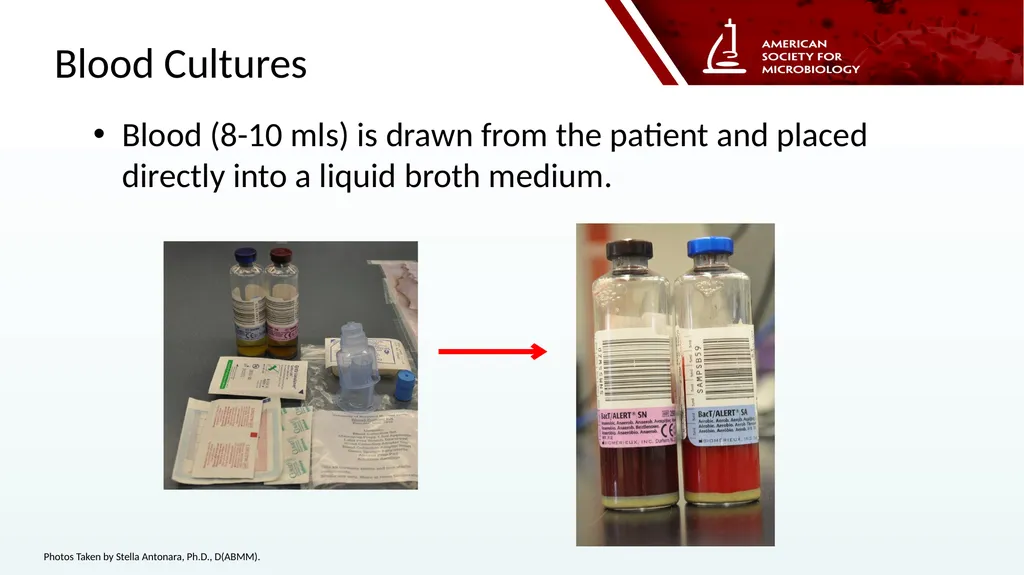
Blood Cultures Blood (8-10 mls) is drawn from the patient and placed directly into a liquid broth medium. Photos Taken by Stella Antonara, Ph.D., D(ABMM).<br>
07
The anaerobic blood culture bottle flagged positive on Day 7.
The clinical microbiologist noticed these structures on Gram stain. Photo Credit: Centers for Disease Control and Prevention Public Health Image Library (PHIL).<br>
08
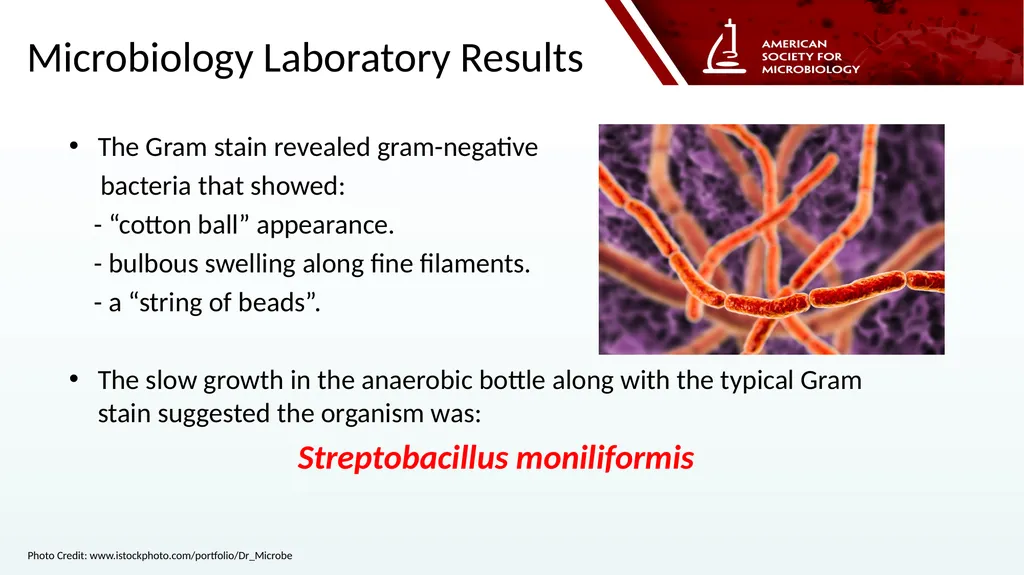
Microbiology Laboratory Results The Gram stain revealed gram-negative
bacteria that showed:
- “cotton ball” appearance.
- bulbous swelling along fine filaments.
- a “string of beads”.
The slow growth in the anaerobic bottle along with the typical Gram stain suggested the organism was:
Streptobacillus moniliformis Photo Credit: www.istockphoto.com/portfolio/Dr_Microbe<br>
09
Streptobacillus moniliformis Infection Causative agent of:
Rat-bite fever.
Haverhill fever (infection is acquired through ingestion of the organism).
Erythema arthriticum epidemicum - a migratory polyarthritis or arthralgia.
Commonly carried in the upper respiratory tract of rodents.
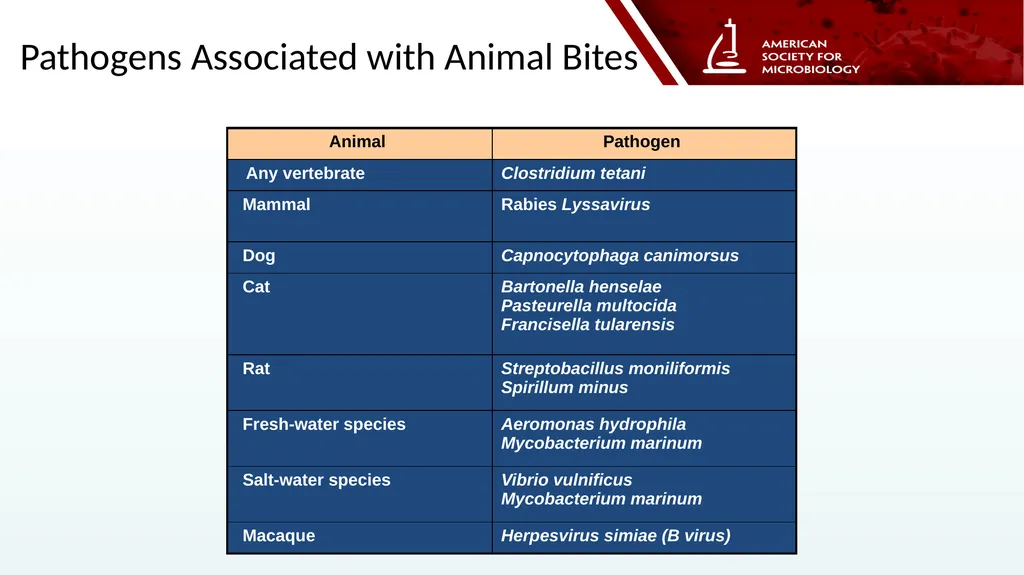
Humans are usually infected through a rat bite or rat contact with a break in the skin.<br>
10
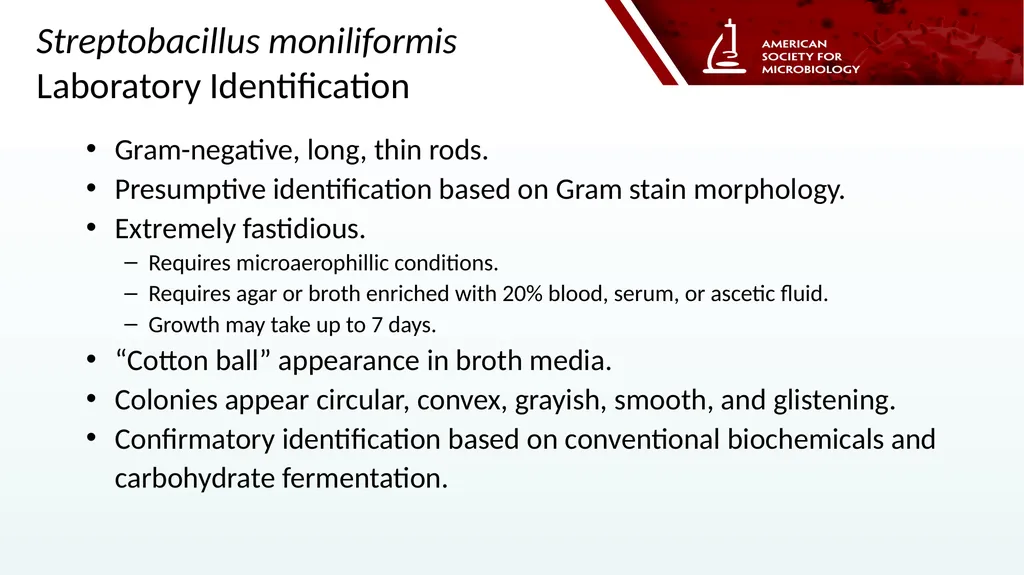
Gram-negative, long, thin rods.
Presumptive identification based on Gram stain morphology.
Extremely fastidious.
Requires microaerophillic conditions.
Requires agar or broth enriched with 20% blood, serum, or ascetic fluid.
Growth may take up to 7 days.
“Cotton ball” appearance in broth media.
Colonies appear circular, convex, grayish, smooth, and glistening.
Confirmatory identification based on conventional biochemicals and carbohydrate fermentation. Streptobacillus moniliformis
Laboratory Identification<br>
11
Most commercial aerobic blood culture bottles contain 0.05% sodium polyanethol sulfonate (SPS) as an anticoagulant.
SPS inhibits the growth of S. moniliformis at a concentration as low as 0.0125%. Streptobacillus moniliformis
Blood cultures<br>
12
Pathogens Associated with Animal Bites<br>
13
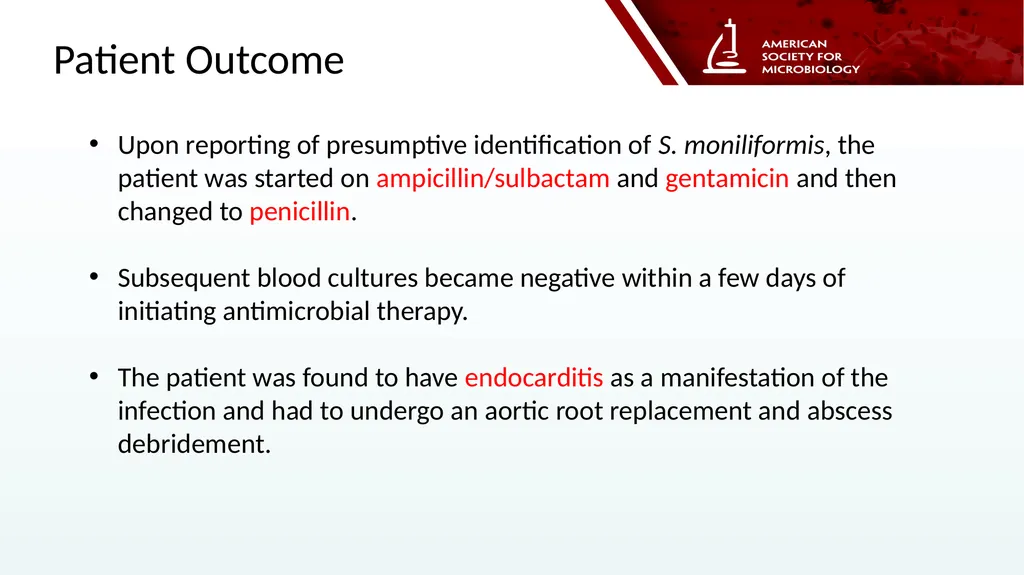
Patient Outcome Upon reporting of presumptive identification of S. moniliformis, the patient was started on ampicillin/sulbactam and gentamicin and then changed to penicillin.
Subsequent blood cultures became negative within a few days of initiating antimicrobial therapy.
The patient was found to have endocarditis as a manifestation of the infection and had to undergo an aortic root replacement and abscess debridement.<br>
14
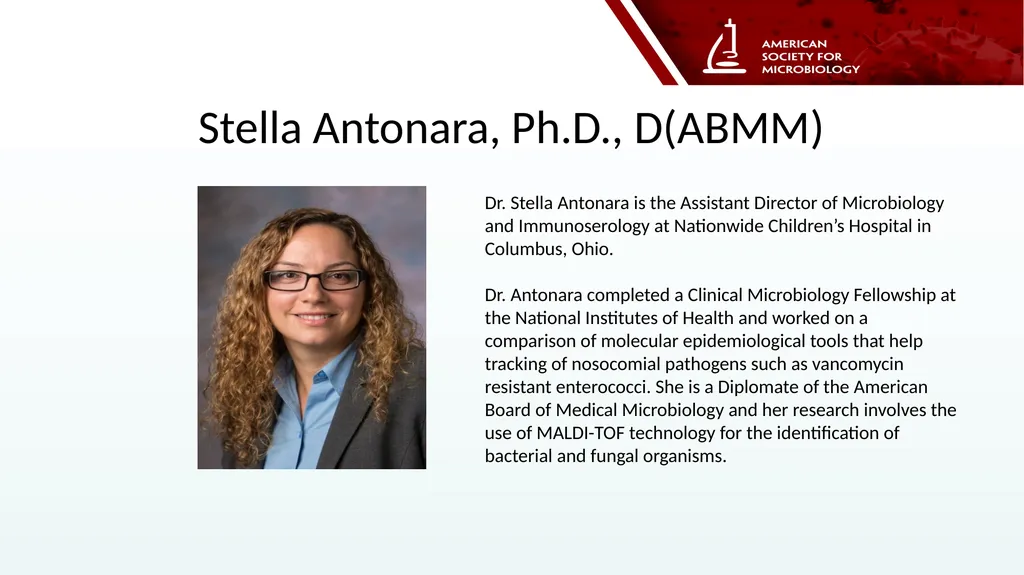
Stella Antonara, Ph.D., D(ABMM) Dr. Stella Antonara is the Assistant Director of Microbiology and Immunoserology at Nationwide Children’s Hospital in Columbus, Ohio.
Dr. Antonara completed a Clinical Microbiology Fellowship at the National Institutes of Health and worked on a comparison of molecular epidemiological tools that help tracking of nosocomial pathogens such as vancomycin resistant enterococci. She is a Diplomate of the American Board of Medical Microbiology and her research involves the use of MALDI-TOF technology for the identification of bacterial and fungal organisms.<br>