STEWARDSHIP AND MISSION Lesson 11 for September 12, 2026 For you know the grace of our Lord Jesus Christ, that though He was rich, yet for your sakes He became poor, that you through His poverty might become rich (2 Corinthians 8:9, NKJV)
"STEWARDSHIP AND MISSION Lesson 11 for September" is the property of its rightful owner. Permission is granted to
download and print the materials on this website for personal, non-commercial use only, and to display it
on your personal computer provided you do not modify the materials and that you retain all copyright
notices contained in the materials. By downloading content from our website, you accept the terms of this
agreement.
Presentation Transcript
01
STEWARDSHIP AND MISSION Lesson 11 for September 12, 2026<br>
02
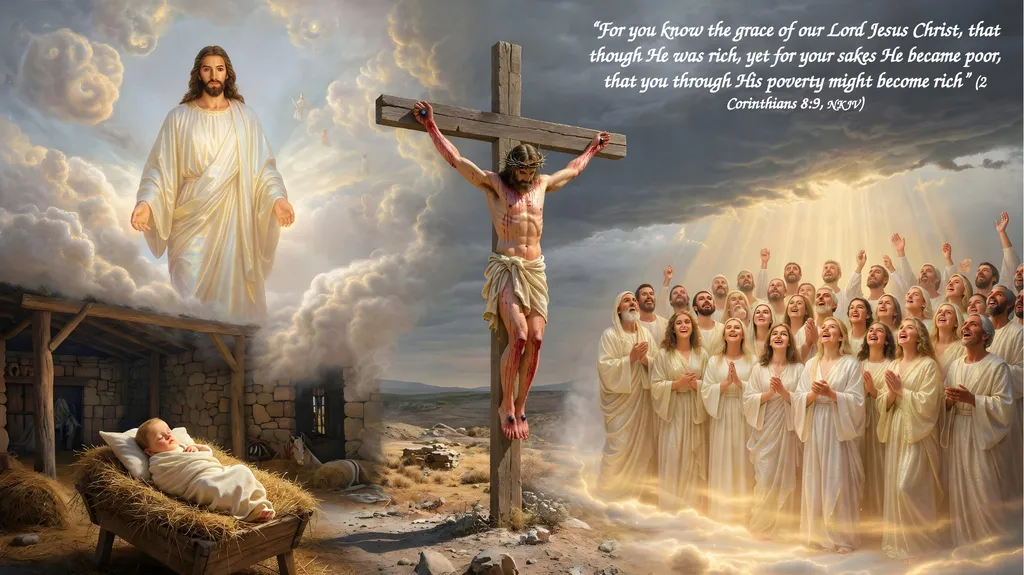
“For you know the grace of our Lord Jesus Christ, that though He was rich, yet for your sakes He became poor, that you through His poverty might become rich” (2 Corinthians 8:9, NKJV)<br>
03
Origin of stewardship:
The example of Jesus
The response to the grace received
How to practice stewardship:
Proper planning
A correct attitude
Stewardship results:
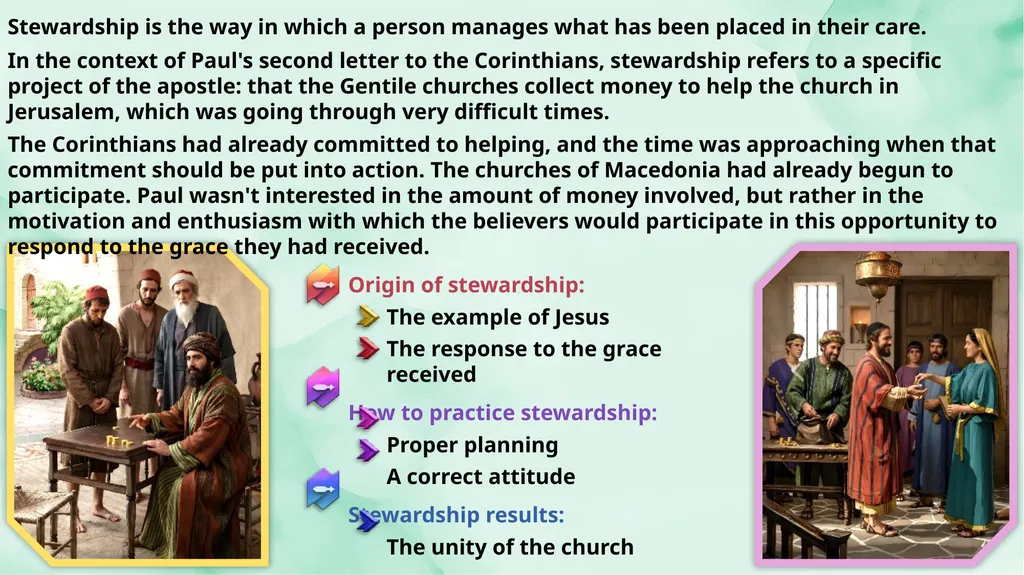
The unity of the church Stewardship is the way in which a person manages what has been placed in their care. The Corinthians had already committed to helping, and the time was approaching when that commitment should be put into action. The churches of Macedonia had already begun to participate. Paul wasn't interested in the amount of money involved, but rather in the motivation and enthusiasm with which the believers would participate in this opportunity to respond to the grace they had received. In the context of Paul's second letter to the Corinthians, stewardship refers to a specific project of the apostle: that the Gentile churches collect money to help the church in Jerusalem, which was going through very difficult times.<br>
04
ORIGIN OF STEWARDSHIP<br>
05
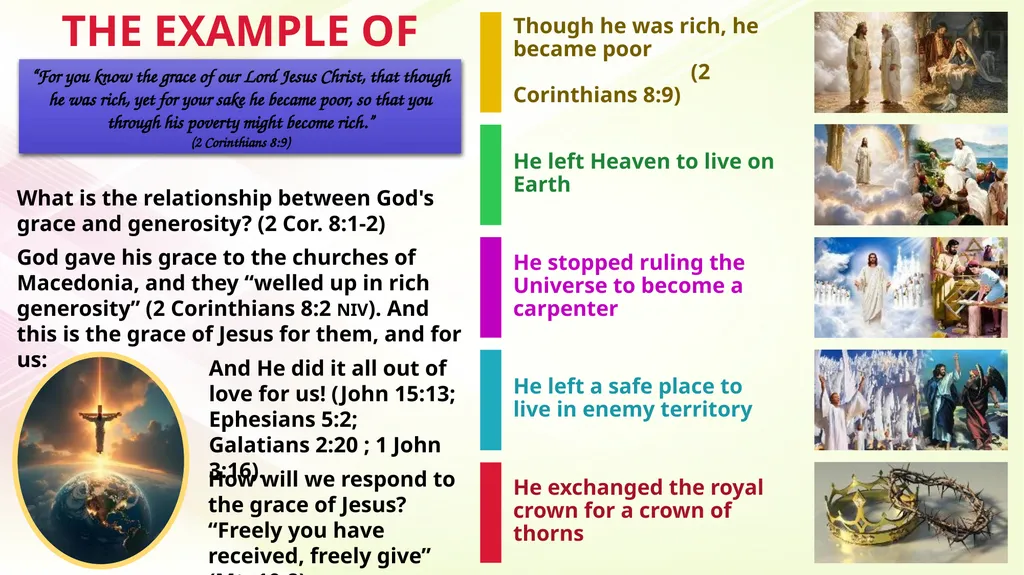
THE EXAMPLE OF JESUS “For you know the grace of our Lord Jesus Christ, that though he was rich, yet for your sake he became poor, so that you through his poverty might become rich.”
(2 Corinthians 8:9) What is the relationship between God's grace and generosity? (2 Cor. 8:1-2) And He did it all out of love for us! (John 15:13; Ephesians 5:2; Galatians 2:20 ; 1 John 3:16). God gave his grace to the churches of Macedonia, and they “welled up in rich generosity” (2 Corinthians 8:2 NIV). And this is the grace of Jesus for them, and for us: How will we respond to the grace of Jesus? “Freely you have received, freely give” (Mt. 10:8).<br>
06
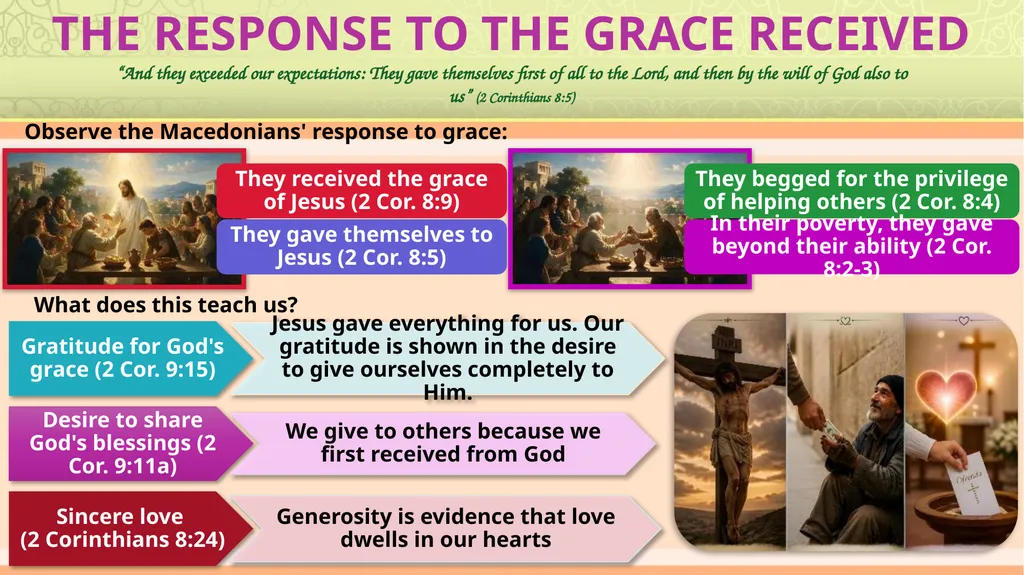
THE RESPONSE TO THE GRACE RECEIVED “And they exceeded our expectations: They gave themselves first of all to the Lord, and then by the will of God also to us” (2 Corinthians 8:5) Observe the Macedonians' response to grace: What does this teach us?<br>
07
HOW TO PRACTICE STEWARDSHIP<br>
08
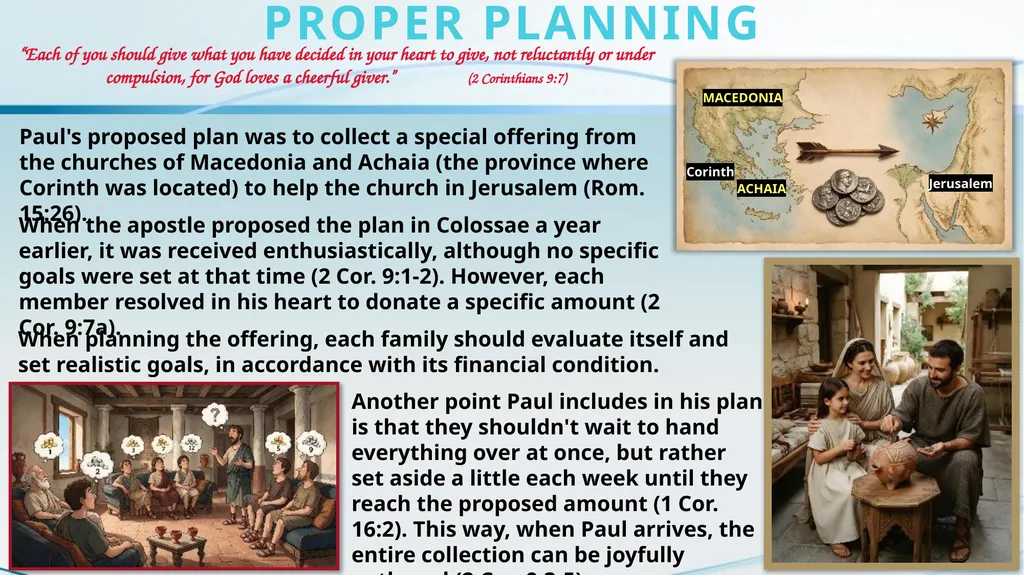
PROPER PLANNING “Each of you should give what you have decided in your heart to give, not reluctantly or under compulsion, for God loves a cheerful giver.” (2 Corinthians 9:7) Paul's proposed plan was to collect a special offering from the churches of Macedonia and Achaia (the province where Corinth was located) to help the church in Jerusalem (Rom. 15:26). Another point Paul includes in his plan is that they shouldn't wait to hand everything over at once, but rather set aside a little each week until they reach the proposed amount (1 Cor. 16:2). This way, when Paul arrives, the entire collection can be joyfully gathered (2 Cor. 9:3-5). When planning the offering, each family should evaluate itself and set realistic goals, in accordance with its financial condition. When the apostle proposed the plan in Colossae a year earlier, it was received enthusiastically, although no specific goals were set at that time (2 Cor. 9:1-2). However, each member resolved in his heart to donate a specific amount (2 Cor. 9:7a).<br>
09
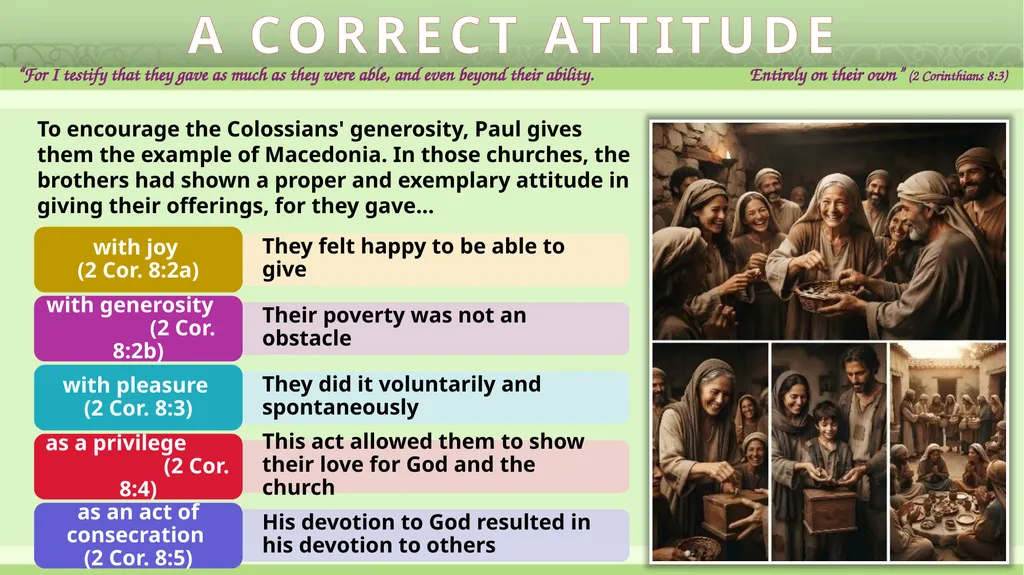
A CORRECT ATTITUDE “For I testify that they gave as much as they were able, and even beyond their ability. Entirely on their own” (2 Corinthians 8:3) To encourage the Colossians' generosity, Paul gives them the example of Macedonia. In those churches, the brothers had shown a proper and exemplary attitude in giving their offerings, for they gave…<br>
10
STEWARDSHIP RESULTS<br>
11
THE UNITY OF THE CHURCH “For the administration of this service not only supplies the needs of the saints, but also is abounding through many thanksgivings to God.”
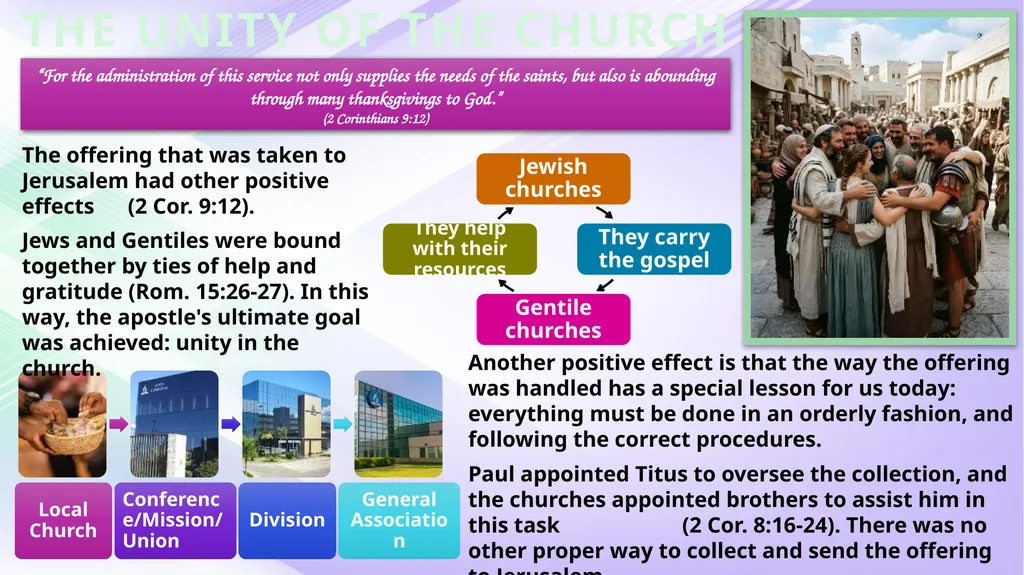
(2 Corinthians 9:12) The offering that was taken to Jerusalem had other positive effects (2 Cor. 9:12). Another positive effect is that the way the offering was handled has a special lesson for us today: everything must be done in an orderly fashion, and following the correct procedures. Jews and Gentiles were bound together by ties of help and gratitude (Rom. 15:26-27). In this way, the apostle's ultimate goal was achieved: unity in the church. Paul appointed Titus to oversee the collection, and the churches appointed brothers to assist him in this task (2 Cor. 8:16-24). There was no other proper way to collect and send the offering to Jerusalem.<br>
12
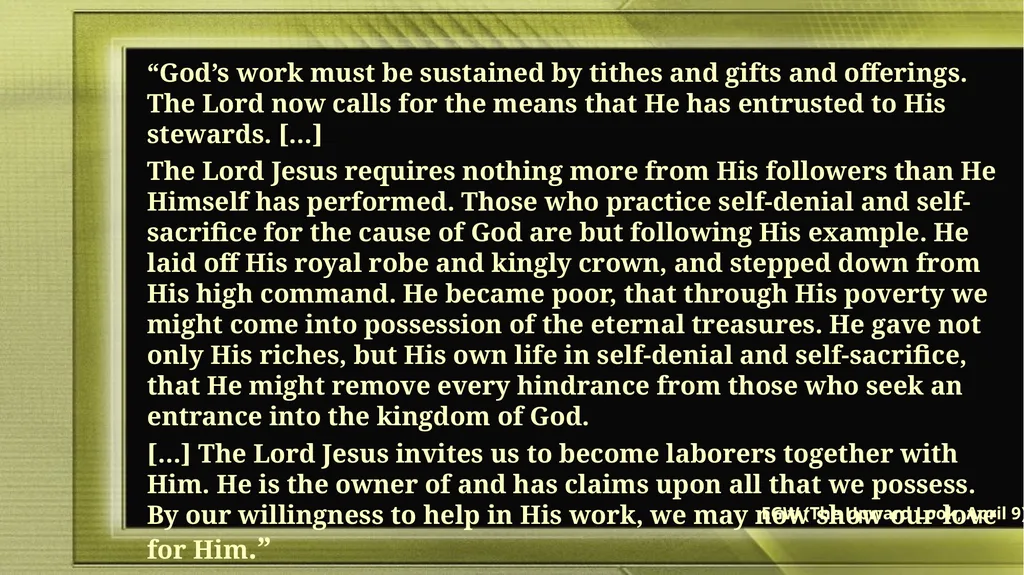
“God’s work must be sustained by tithes and gifts and offerings. The Lord now calls for the means that He has entrusted to His stewards. […]
The Lord Jesus requires nothing more from His followers than He Himself has performed. Those who practice self-denial and self-sacrifice for the cause of God are but following His example. He laid off His royal robe and kingly crown, and stepped down from His high command. He became poor, that through His poverty we might come into possession of the eternal treasures. He gave not only His riches, but His own life in self-denial and self-sacrifice, that He might remove every hindrance from those who seek an entrance into the kingdom of God.
[…] The Lord Jesus invites us to become laborers together with Him. He is the owner of and has claims upon all that we possess. By our willingness to help in His work, we may now show our love for Him.” EGW (The Upward Look, April 9)<br>