
STOP THE SPREAD A STEM challenge tackling a global



Description: STOP THE SPREAD A STEM challenge tackling a global problem the spread of communicable diseases No one wants to get ill Think about the last time you were ill. Was it a cough or a cold ? Something worse like measles? What is the worst
Related Topics
Download Presentation
"STOP THE SPREAD A STEM challenge tackling a global" is the property of its rightful owner. Permission is granted to download and print the materials on this website for personal, non-commercial use only, and to display it on your personal computer provided you do not modify the materials and that you retain all copyright notices contained in the materials. By downloading content from our website, you accept the terms of this agreement.
Presentation Transcript
slide1. STOP THE
SPREAD A STEM challenge tackling a global problem…
the spread of communicable diseases<br>
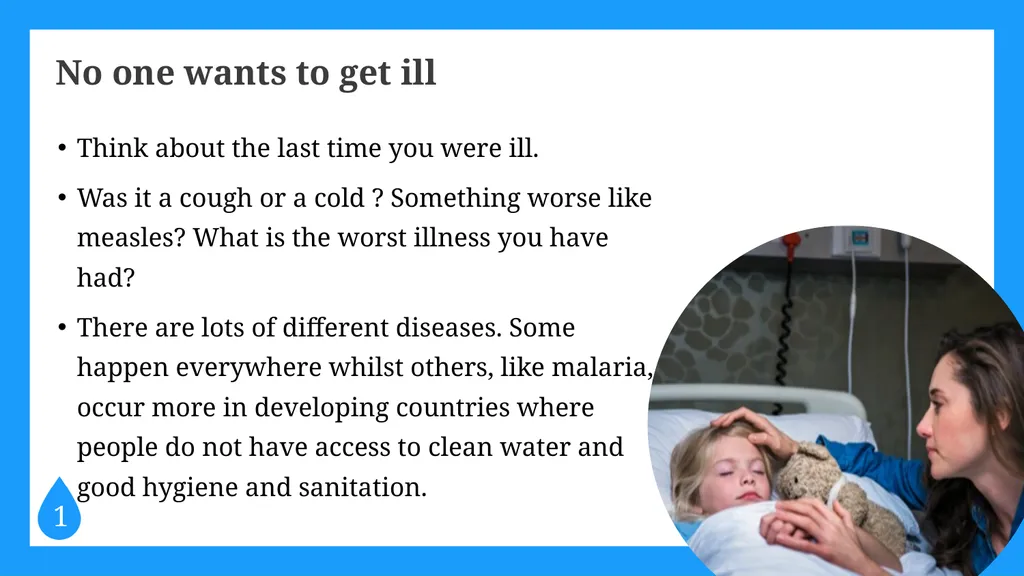
slide2. No one wants to get ill Think about the last time you were ill.
Was it a cough or a cold ? Something worse like measles? What is the worst illness you have had?
There are lots of different diseases. Some happen everywhere whilst others, like malaria, occur more in developing countries where people do not have access to clean water and good hygiene and sanitation. 1<br>
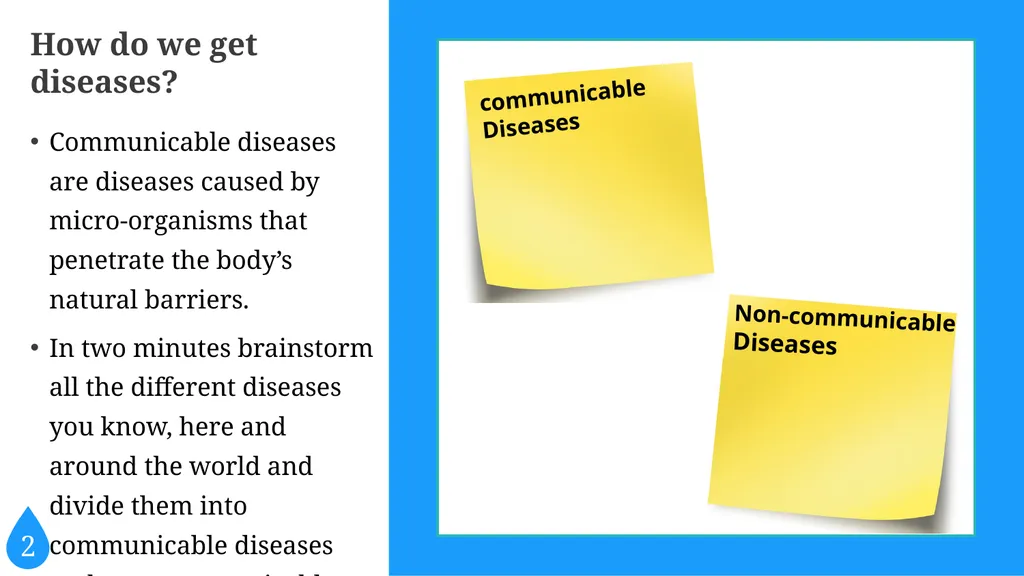
slide3. How do we get diseases? Communicable diseases are diseases caused by micro-organisms that penetrate the body’s natural barriers.
In two minutes brainstorm all the different diseases you know, here and around the world and divide them into communicable diseases and non-communicable diseases. 2<br>
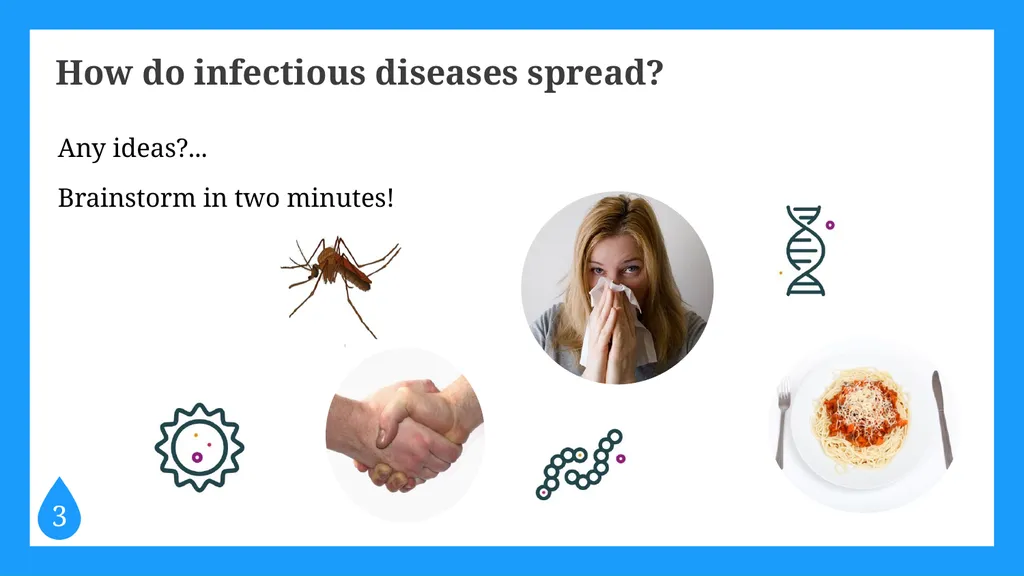
slide4. How do infectious diseases spread? Any ideas?...
Brainstorm in two minutes! 3<br>
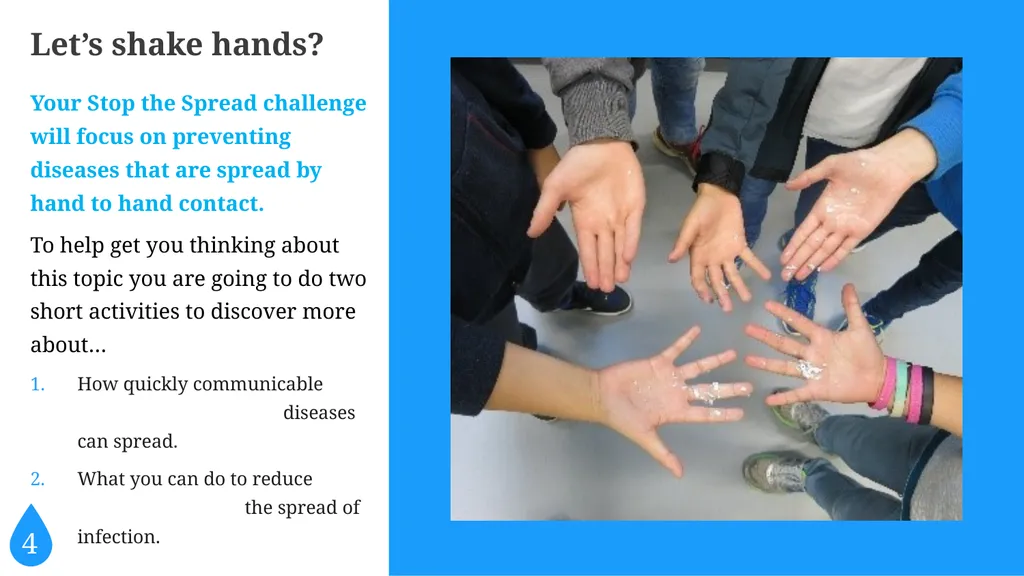
slide5. Let’s shake hands? Your Stop the Spread challenge will focus on preventing diseases that are spread by hand to hand contact.
To help get you thinking about this topic you are going to do two short activities to discover more about…
How quickly communicable diseases can spread.
What you can do to reduce the spread of infection. 4<br>
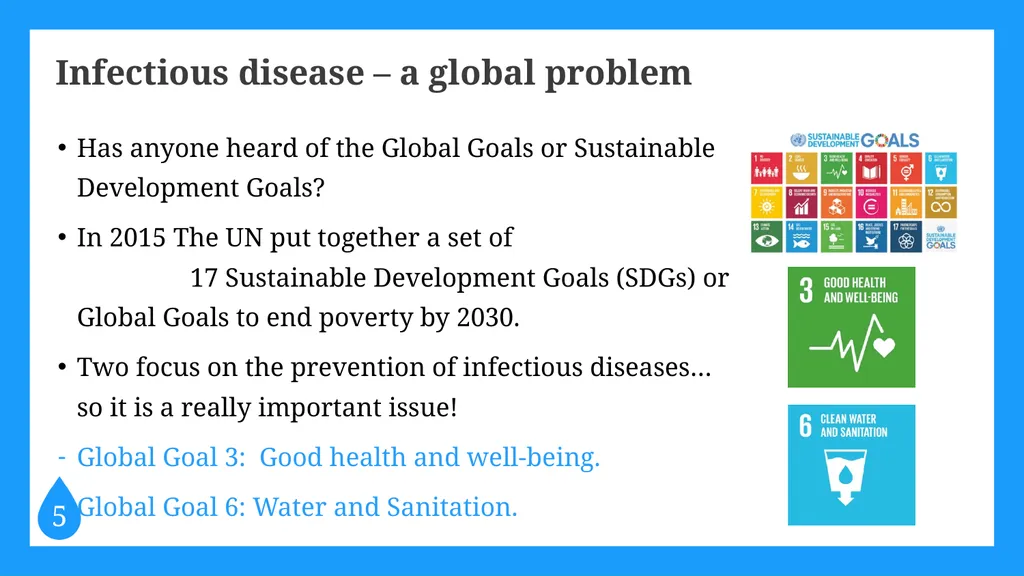
slide6. Infectious disease – a global problem Has anyone heard of the Global Goals or Sustainable Development Goals?
In 2015 The UN put together a set of 17 Sustainable Development Goals (SDGs) or Global Goals to end poverty by 2030.
Two focus on the prevention of infectious diseases… so it is a really important issue!
Global Goal 3: Good health and well-being.
Global Goal 6: Water and Sanitation. 5<br>
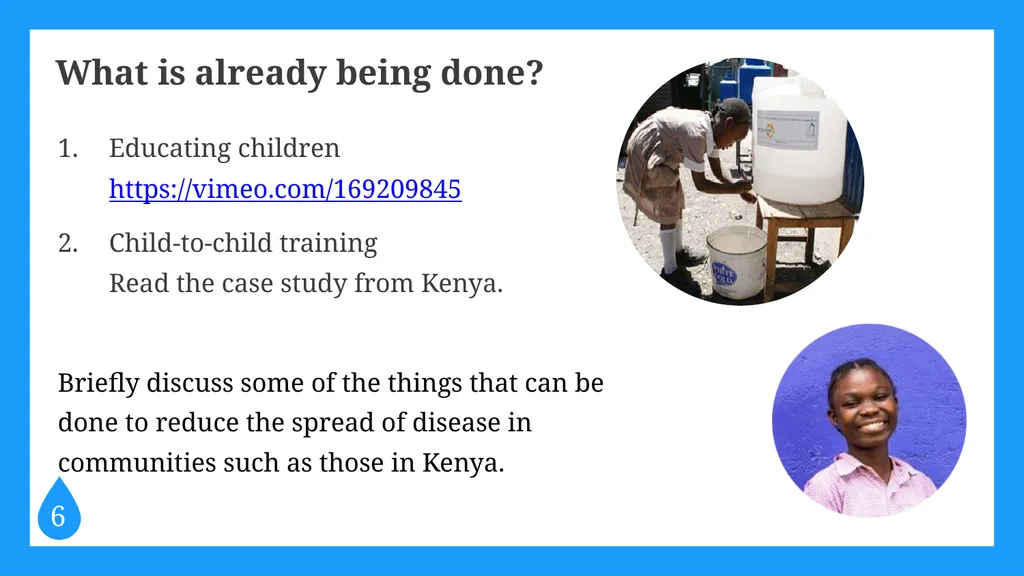
slide7. What is already being done? Educating children https://vimeo.com/169209845
Child-to-child training Read the case study from Kenya.
Briefly discuss some of the things that can be done to reduce the spread of disease in communities such as those in Kenya. 6<br>
slide8. STOP THE SPREAD<br>
slide9. Your Stop the Spread challenge Imagine you work for a charity and have received some funding to help pupils in a school in Kenya reduce the spread of disease in their school.
Your challenge is to:
Build a model of a hand washing device that could go in their playground which will enable them to capture rainwater then use it to wash their hands.
Develop education materials which will help children aged 8-11 understand why hand washing is important. This could be a poster, animation, game, play, leaflet. 8<br>
slide10. How will you be judged? You will be judged on the following:
Teamwork – Did you have different roles and work collaboratively?
Research – How did you use your research to help you in your tasks?
Designing – Did you do good, annotated initial and final designs?
Model – How creative was your model? Did you use sustainable material where possible? Did you stick to the budget? How well did it do in the test?
Education Materials – What and how did you communicate to the pupils? Are your materials engaging for 8-11 year olds? 9<br>
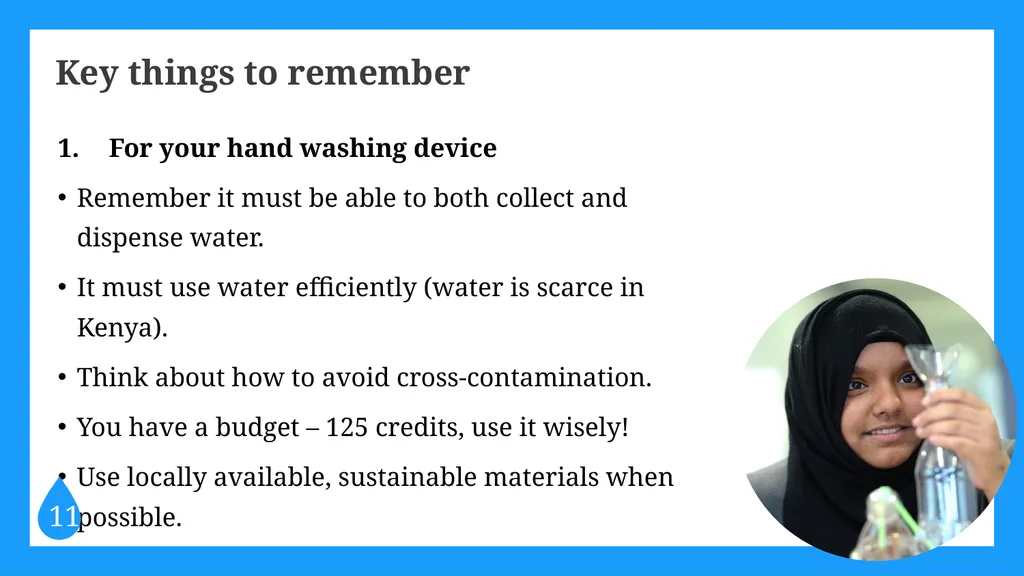
slide11. Key things to remember For your hand washing device
Remember it must be able to both collect and dispense water.
It must use water efficiently (water is scarce in Kenya).
Think about how to avoid cross-contamination.
You have a budget – 125 credits, use it wisely!
Use locally available, sustainable materials when possible. 11<br>
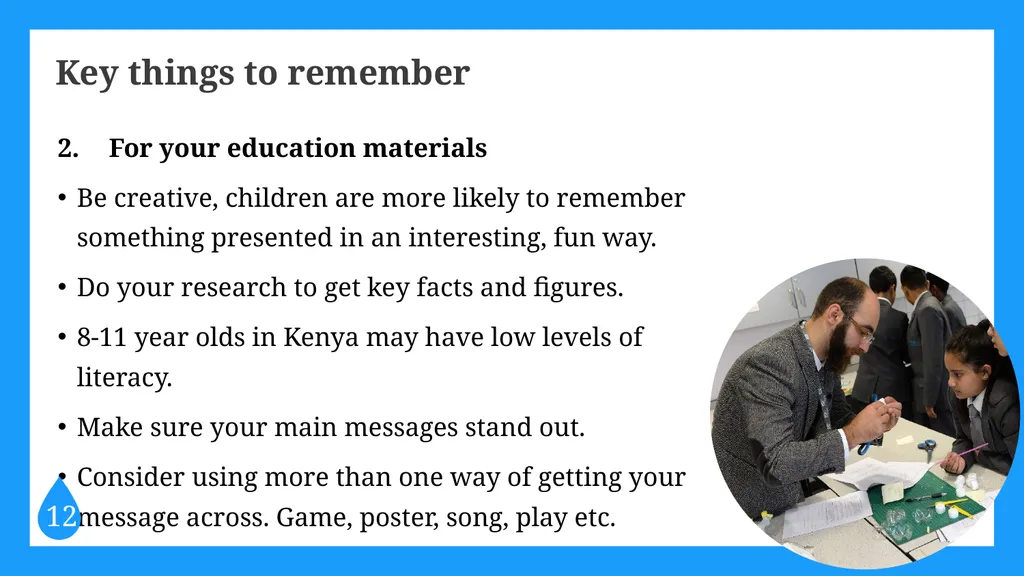
slide12. Key things to remember For your education materials
Be creative, children are more likely to remember something presented in an interesting, fun way.
Do your research to get key facts and figures.
8-11 year olds in Kenya may have low levels of literacy.
Make sure your main messages stand out.
Consider using more than one way of getting your message across. Game, poster, song, play etc. 12<br>
slide13. What do they do in Kenya? Engineers in Kenya have come up with a simple design for a hand washing station which is widely used and looks like this…
It’s called a ‘Tippy Tap’. It only dispenses water, it doesn’t collect it.
How does your model compare to this? Do you think your model is better? 13<br>
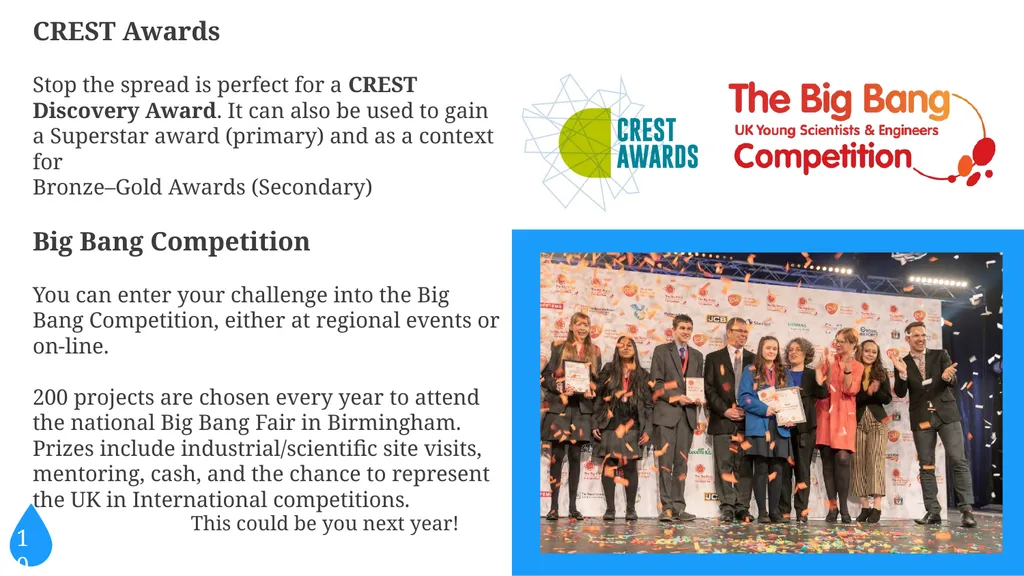
slide14. CREST Awards Stop the spread is perfect for a CREST Discovery Award. It can also be used to gain a Superstar award (primary) and as a context for Bronze–Gold Awards (Secondary) Big Bang Competition You can enter your challenge into the Big Bang Competition, either at regional events or on-line. 200 projects are chosen every year to attend the national Big Bang Fair in Birmingham. Prizes include industrial/scientific site visits, mentoring, cash, and the chance to represent the UK in International competitions. This could be you next year! 10<br>
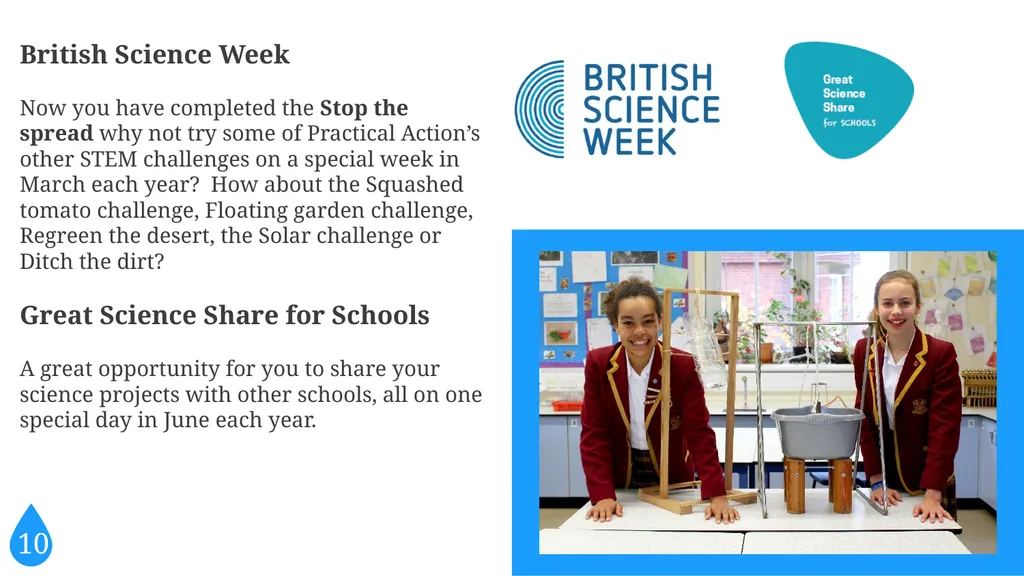
slide15. British Science Week
Now you have completed the Stop the spread why not try some of Practical Action’s other STEM challenges on a special week in March each year? How about the Squashed tomato challenge, Floating garden challenge, Regreen the desert, the Solar challenge or Ditch the dirt?
Great Science Share for Schools
A great opportunity for you to share your science projects with other schools, all on one special day in June each year. 10<br>
slide16. We hope you enjoyed Stop the spread
For more information and resources go to:
practicalaction.org/schools<br>
SPREAD A STEM challenge tackling a global problem…
the spread of communicable diseases<br>
slide2. No one wants to get ill Think about the last time you were ill.
Was it a cough or a cold ? Something worse like measles? What is the worst illness you have had?
There are lots of different diseases. Some happen everywhere whilst others, like malaria, occur more in developing countries where people do not have access to clean water and good hygiene and sanitation. 1<br>
slide3. How do we get diseases? Communicable diseases are diseases caused by micro-organisms that penetrate the body’s natural barriers.
In two minutes brainstorm all the different diseases you know, here and around the world and divide them into communicable diseases and non-communicable diseases. 2<br>
slide4. How do infectious diseases spread? Any ideas?...
Brainstorm in two minutes! 3<br>
slide5. Let’s shake hands? Your Stop the Spread challenge will focus on preventing diseases that are spread by hand to hand contact.
To help get you thinking about this topic you are going to do two short activities to discover more about…
How quickly communicable diseases can spread.
What you can do to reduce the spread of infection. 4<br>
slide6. Infectious disease – a global problem Has anyone heard of the Global Goals or Sustainable Development Goals?
In 2015 The UN put together a set of 17 Sustainable Development Goals (SDGs) or Global Goals to end poverty by 2030.
Two focus on the prevention of infectious diseases… so it is a really important issue!
Global Goal 3: Good health and well-being.
Global Goal 6: Water and Sanitation. 5<br>
slide7. What is already being done? Educating children https://vimeo.com/169209845
Child-to-child training Read the case study from Kenya.
Briefly discuss some of the things that can be done to reduce the spread of disease in communities such as those in Kenya. 6<br>
slide8. STOP THE SPREAD<br>
slide9. Your Stop the Spread challenge Imagine you work for a charity and have received some funding to help pupils in a school in Kenya reduce the spread of disease in their school.
Your challenge is to:
Build a model of a hand washing device that could go in their playground which will enable them to capture rainwater then use it to wash their hands.
Develop education materials which will help children aged 8-11 understand why hand washing is important. This could be a poster, animation, game, play, leaflet. 8<br>
slide10. How will you be judged? You will be judged on the following:
Teamwork – Did you have different roles and work collaboratively?
Research – How did you use your research to help you in your tasks?
Designing – Did you do good, annotated initial and final designs?
Model – How creative was your model? Did you use sustainable material where possible? Did you stick to the budget? How well did it do in the test?
Education Materials – What and how did you communicate to the pupils? Are your materials engaging for 8-11 year olds? 9<br>
slide11. Key things to remember For your hand washing device
Remember it must be able to both collect and dispense water.
It must use water efficiently (water is scarce in Kenya).
Think about how to avoid cross-contamination.
You have a budget – 125 credits, use it wisely!
Use locally available, sustainable materials when possible. 11<br>
slide12. Key things to remember For your education materials
Be creative, children are more likely to remember something presented in an interesting, fun way.
Do your research to get key facts and figures.
8-11 year olds in Kenya may have low levels of literacy.
Make sure your main messages stand out.
Consider using more than one way of getting your message across. Game, poster, song, play etc. 12<br>
slide13. What do they do in Kenya? Engineers in Kenya have come up with a simple design for a hand washing station which is widely used and looks like this…
It’s called a ‘Tippy Tap’. It only dispenses water, it doesn’t collect it.
How does your model compare to this? Do you think your model is better? 13<br>
slide14. CREST Awards Stop the spread is perfect for a CREST Discovery Award. It can also be used to gain a Superstar award (primary) and as a context for Bronze–Gold Awards (Secondary) Big Bang Competition You can enter your challenge into the Big Bang Competition, either at regional events or on-line. 200 projects are chosen every year to attend the national Big Bang Fair in Birmingham. Prizes include industrial/scientific site visits, mentoring, cash, and the chance to represent the UK in International competitions. This could be you next year! 10<br>
slide15. British Science Week
Now you have completed the Stop the spread why not try some of Practical Action’s other STEM challenges on a special week in March each year? How about the Squashed tomato challenge, Floating garden challenge, Regreen the desert, the Solar challenge or Ditch the dirt?
Great Science Share for Schools
A great opportunity for you to share your science projects with other schools, all on one special day in June each year. 10<br>
slide16. We hope you enjoyed Stop the spread
For more information and resources go to:
practicalaction.org/schools<br>