
Stormwater Benjamin Melnick Deputy Director

Description: Stormwater Benjamin Melnick Deputy Director Division of Water Resource Management Sources of Groundwater Contamination Potential Impacts of Unmanaged Stormwater Changes In: Infiltration to ground water Stream hydrology Watershed hydrology
Related Topics
Download Presentation
"Stormwater Benjamin Melnick Deputy Director" is the property of its rightful owner. Permission is granted to download and print the materials on this website for personal, non-commercial use only, and to display it on your personal computer provided you do not modify the materials and that you retain all copyright notices contained in the materials. By downloading content from our website, you accept the terms of this agreement.
Presentation Transcript
slide1. Stormwater Benjamin Melnick
Deputy Director
Division of Water Resource Management<br>
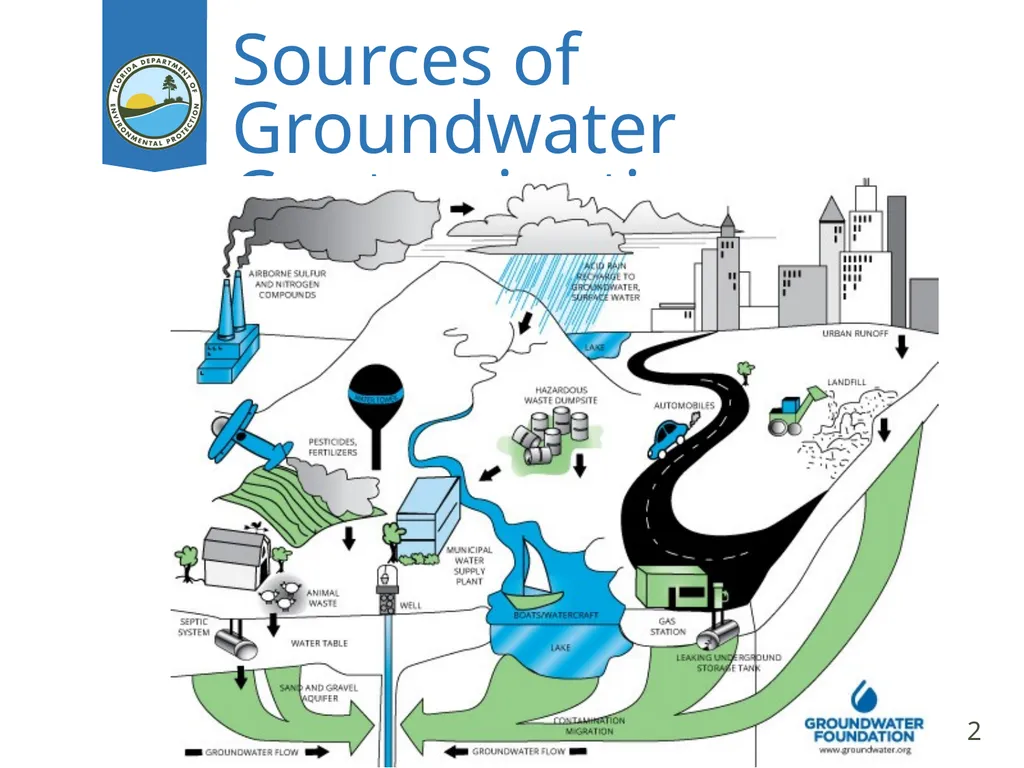
slide2. Sources of Groundwater Contamination<br>
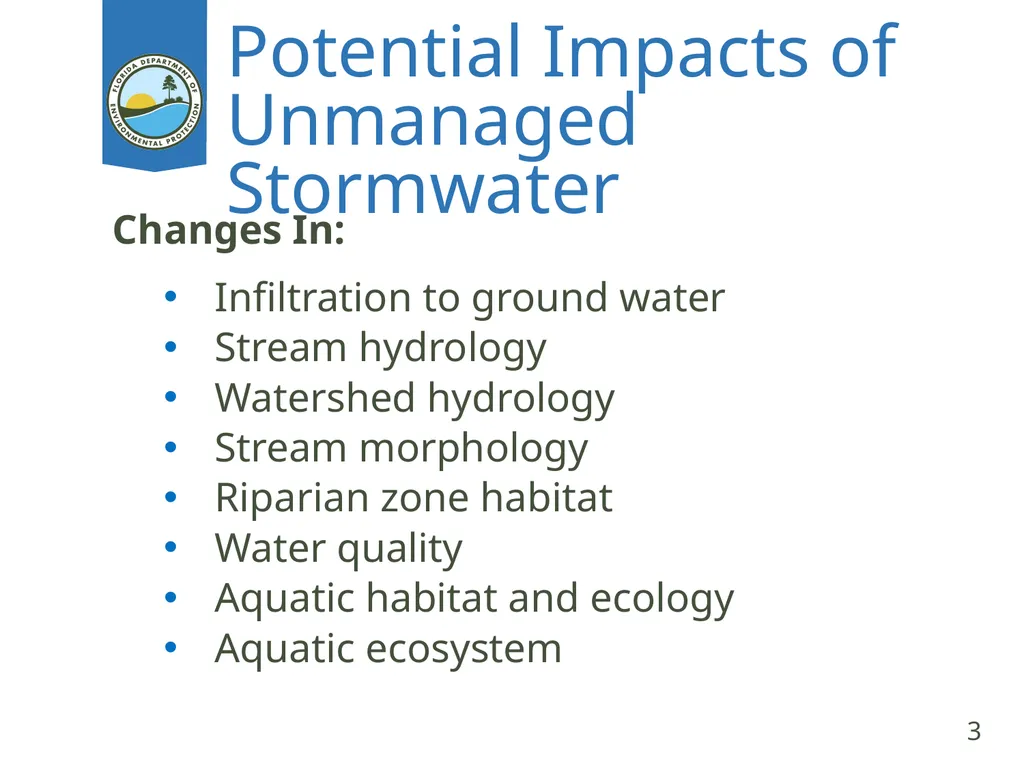
slide3. Potential Impacts of Unmanaged Stormwater Changes In:
Infiltration to ground water
Stream hydrology
Watershed hydrology
Stream morphology
Riparian zone habitat
Water quality
Aquatic habitat and ecology
Aquatic ecosystem<br>
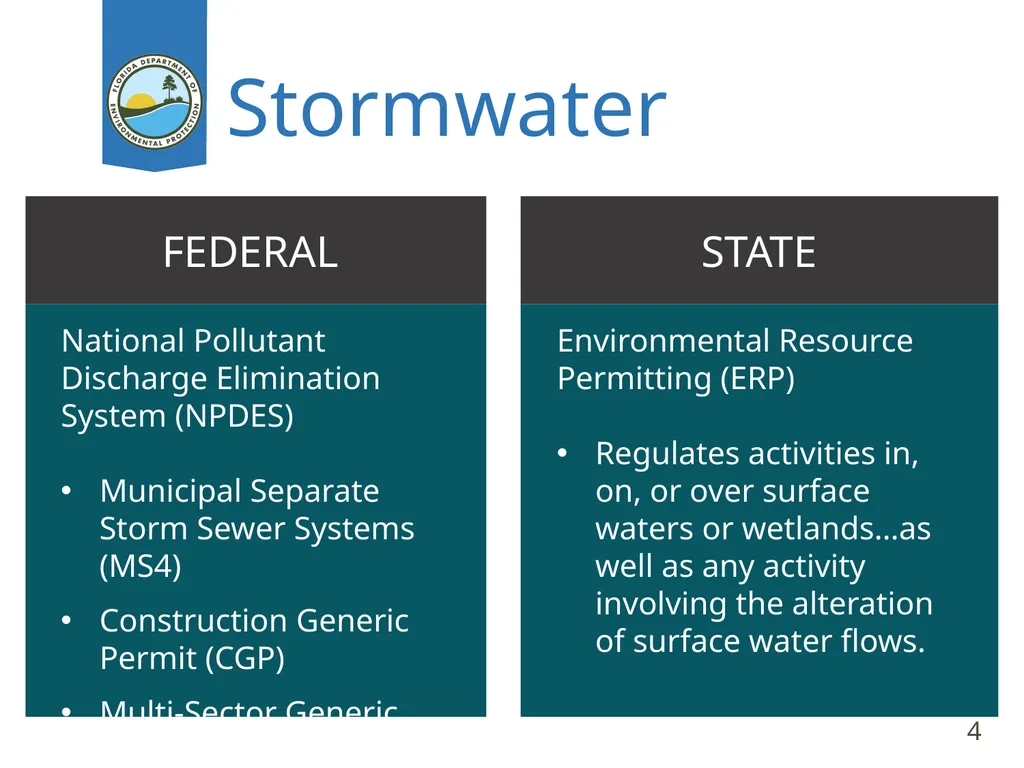
slide4. Stormwater Federal National Pollutant Discharge Elimination System (NPDES)
Municipal Separate Storm Sewer Systems (MS4)
Construction Generic Permit (CGP)
Multi-Sector Generic Permit (MSGP) State Environmental Resource Permitting (ERP)
Regulates activities in, on, or over surface waters or wetlands…as well as any activity involving the alteration of surface water flows.<br>
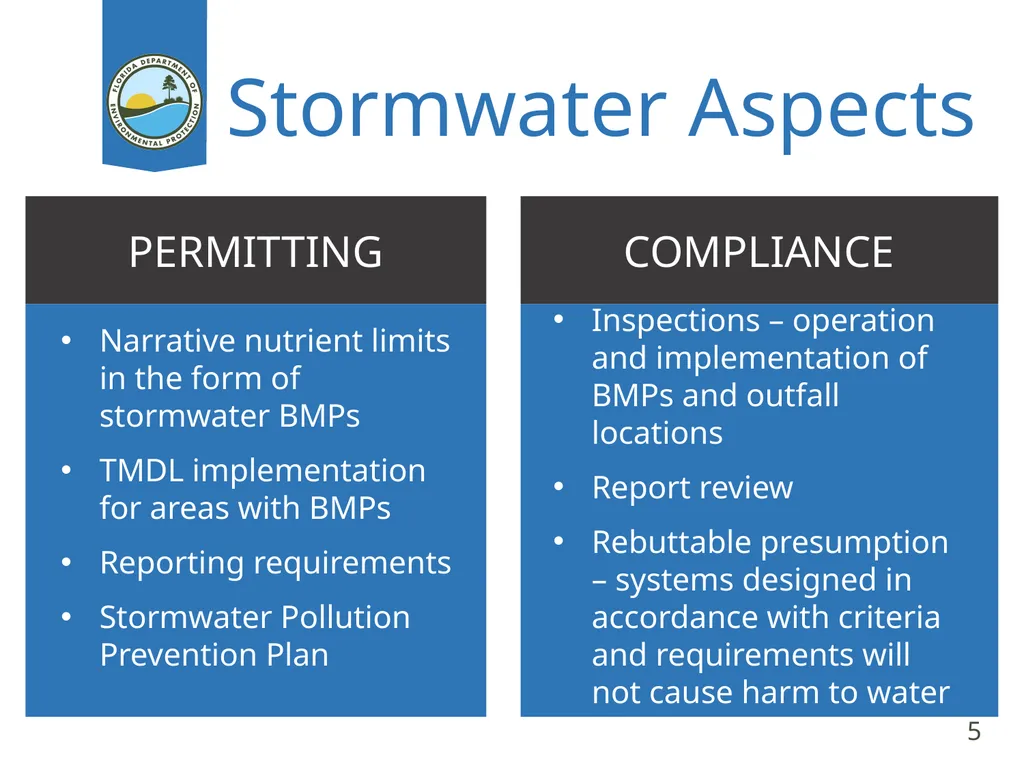
slide5. Stormwater Aspects PERMITTING Narrative nutrient limits in the form of stormwater BMPs
TMDL implementation for areas with BMPs
Reporting requirements
Stormwater Pollution Prevention Plan COMPLIANCE Inspections – operation and implementation of BMPs and outfall locations
Report review
Rebuttable presumption – systems designed in accordance with criteria and requirements will not cause harm to water resources<br>
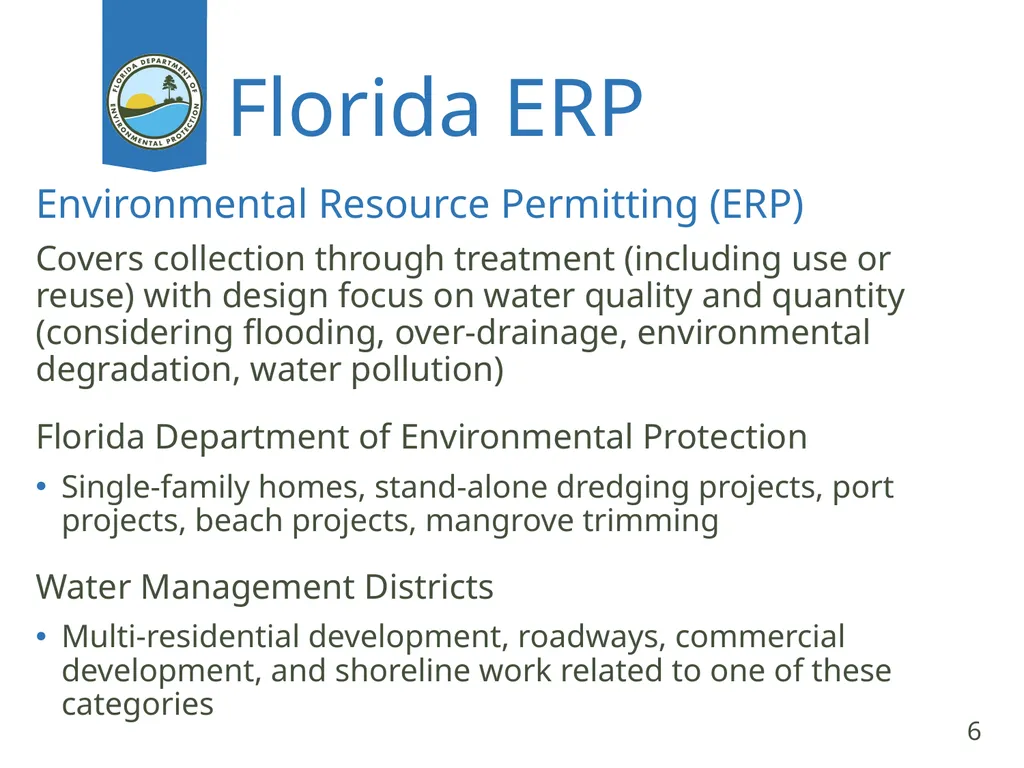
slide6. Florida ERP Environmental Resource Permitting (ERP)
Covers collection through treatment (including use or reuse) with design focus on water quality and quantity (considering flooding, over-drainage, environmental degradation, water pollution)
Florida Department of Environmental Protection
Single-family homes, stand-alone dredging projects, port projects, beach projects, mangrove trimming
Water Management Districts
Multi-residential development, roadways, commercial development, and shoreline work related to one of these categories<br>
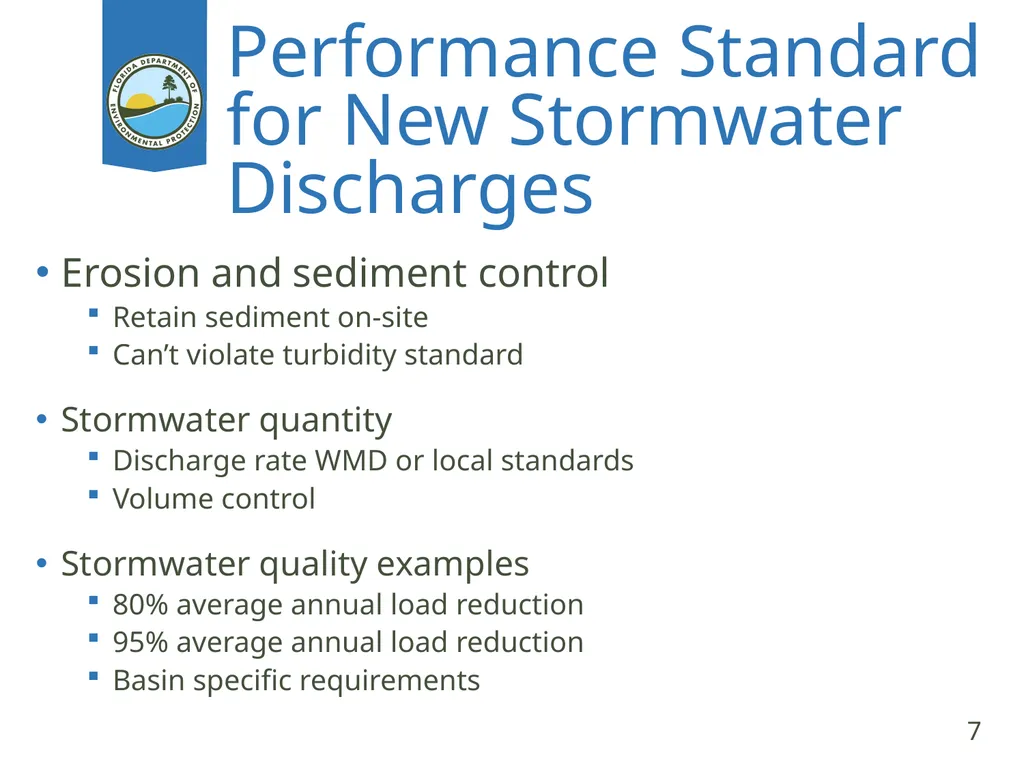
slide7. Performance Standard for New Stormwater Discharges Erosion and sediment control
Retain sediment on-site
Can’t violate turbidity standard
Stormwater quantity
Discharge rate WMD or local standards
Volume control
Stormwater quality examples
80% average annual load reduction
95% average annual load reduction
Basin specific requirements<br>
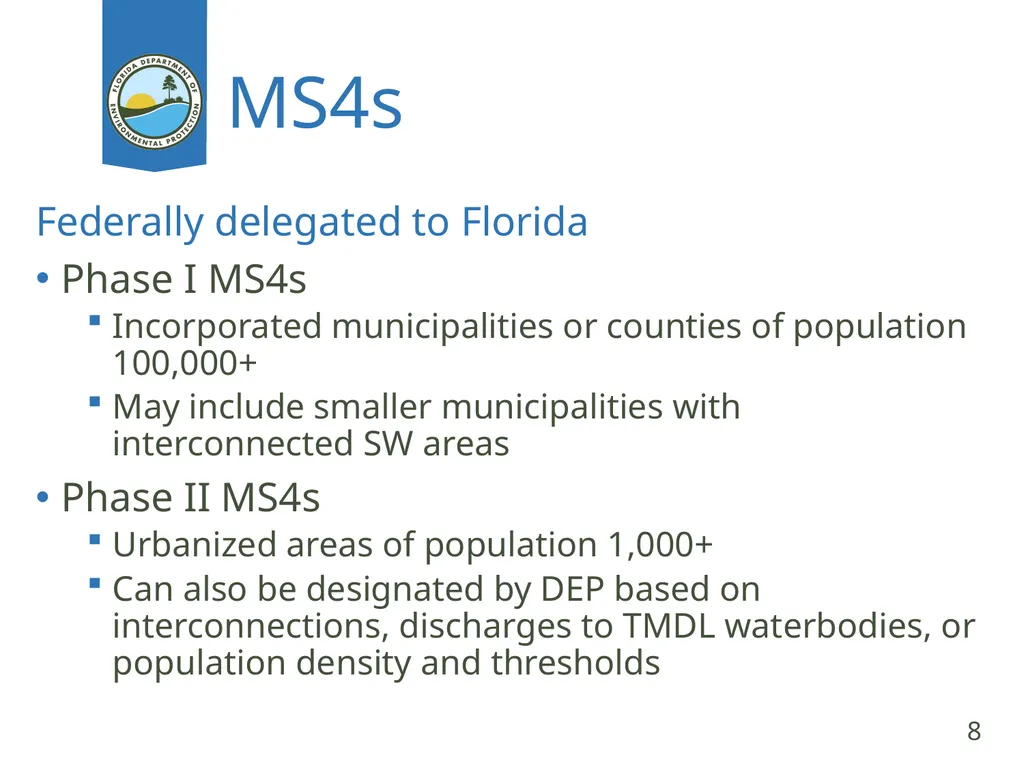
slide8. MS4s Federally delegated to Florida
Phase I MS4s
Incorporated municipalities or counties of population 100,000+
May include smaller municipalities with interconnected SW areas
Phase II MS4s
Urbanized areas of population 1,000+
Can also be designated by DEP based on interconnections, discharges to TMDL waterbodies, or population density and thresholds<br>
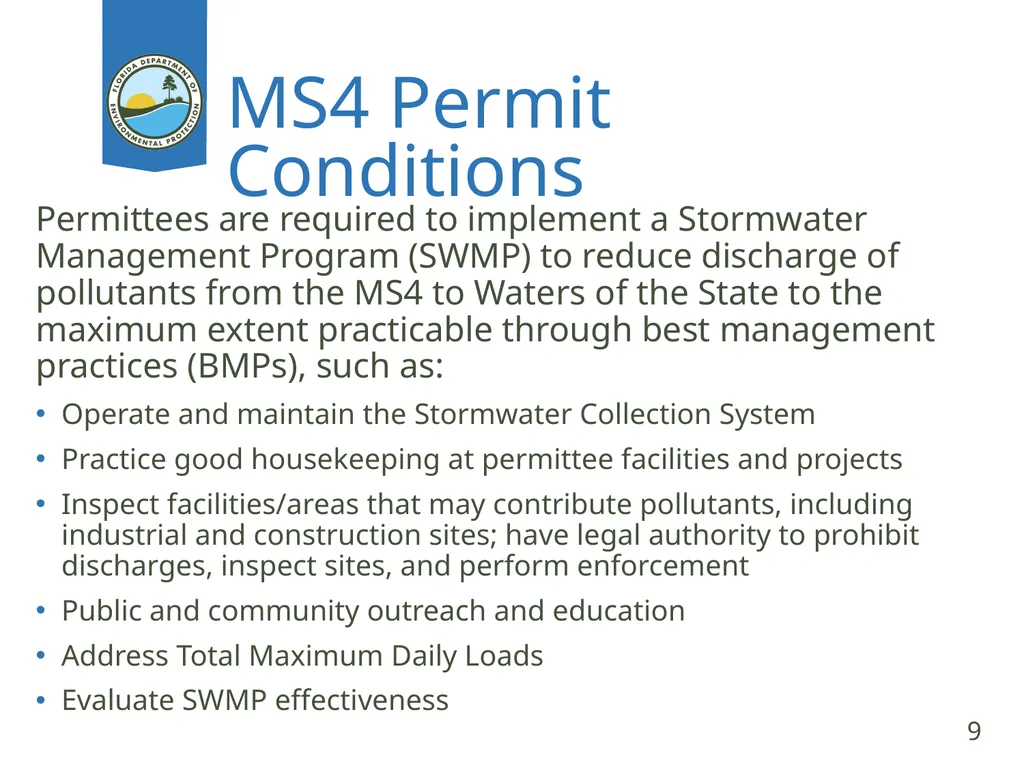
slide9. MS4 Permit Conditions Permittees are required to implement a Stormwater Management Program (SWMP) to reduce discharge of pollutants from the MS4 to Waters of the State to the maximum extent practicable through best management practices (BMPs), such as:
Operate and maintain the Stormwater Collection System
Practice good housekeeping at permittee facilities and projects
Inspect facilities/areas that may contribute pollutants, including industrial and construction sites; have legal authority to prohibit discharges, inspect sites, and perform enforcement
Public and community outreach and education
Address Total Maximum Daily Loads
Evaluate SWMP effectiveness<br>
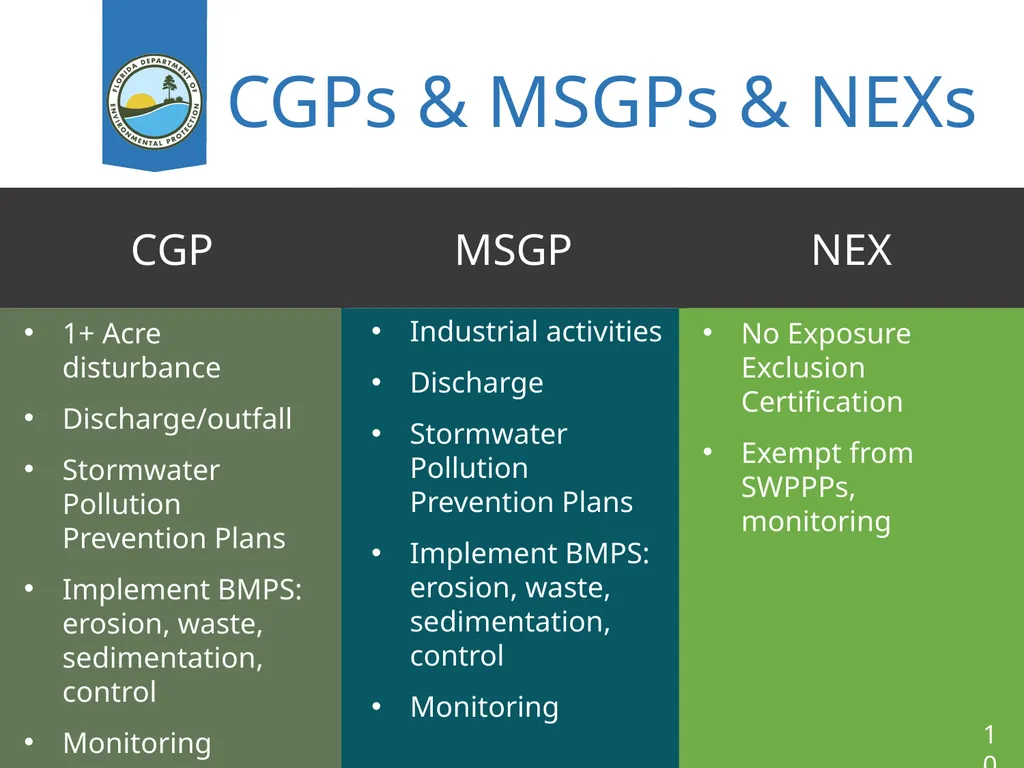
slide10. CGPs & MSGPs & NEXs 10<br>
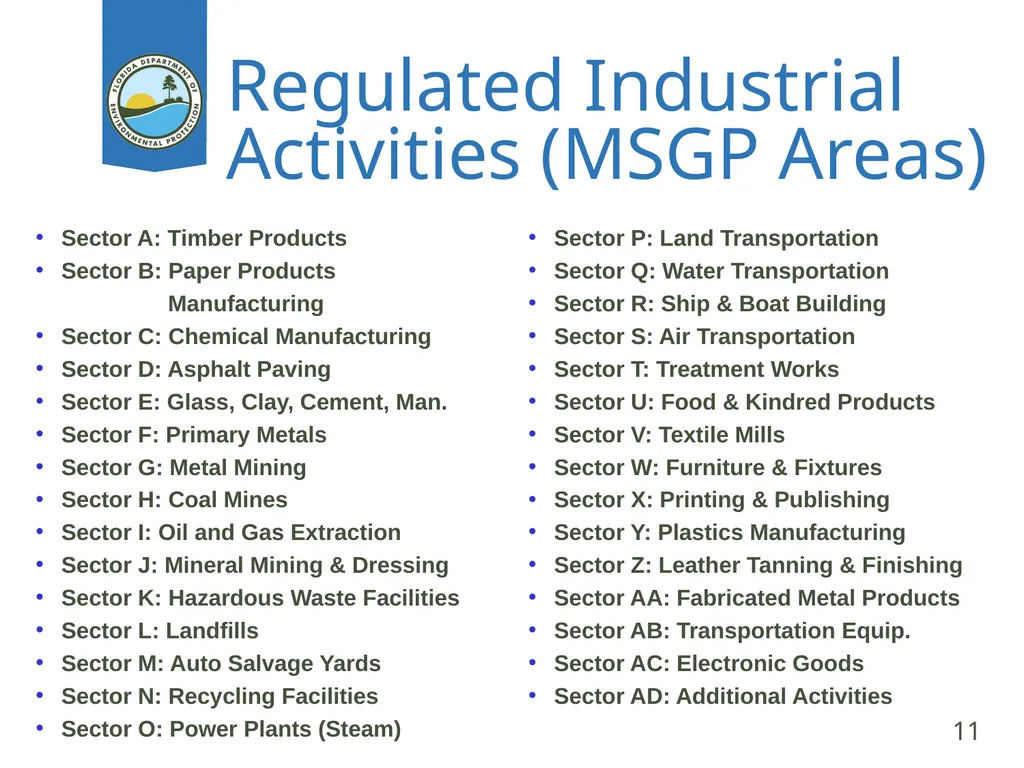
slide11. Sector A: Timber Products
Sector B: Paper Products Manufacturing
Sector C: Chemical Manufacturing
Sector D: Asphalt Paving
Sector E: Glass, Clay, Cement, Man.
Sector F: Primary Metals
Sector G: Metal Mining
Sector H: Coal Mines
Sector I: Oil and Gas Extraction
Sector J: Mineral Mining & Dressing
Sector K: Hazardous Waste Facilities
Sector L: Landfills
Sector M: Auto Salvage Yards
Sector N: Recycling Facilities
Sector O: Power Plants (Steam) Sector P: Land Transportation
Sector Q: Water Transportation
Sector R: Ship & Boat Building
Sector S: Air Transportation
Sector T: Treatment Works
Sector U: Food & Kindred Products
Sector V: Textile Mills
Sector W: Furniture & Fixtures
Sector X: Printing & Publishing
Sector Y: Plastics Manufacturing
Sector Z: Leather Tanning & Finishing
Sector AA: Fabricated Metal Products
Sector AB: Transportation Equip.
Sector AC: Electronic Goods
Sector AD: Additional Activities Regulated Industrial Activities (MSGP Areas)<br>
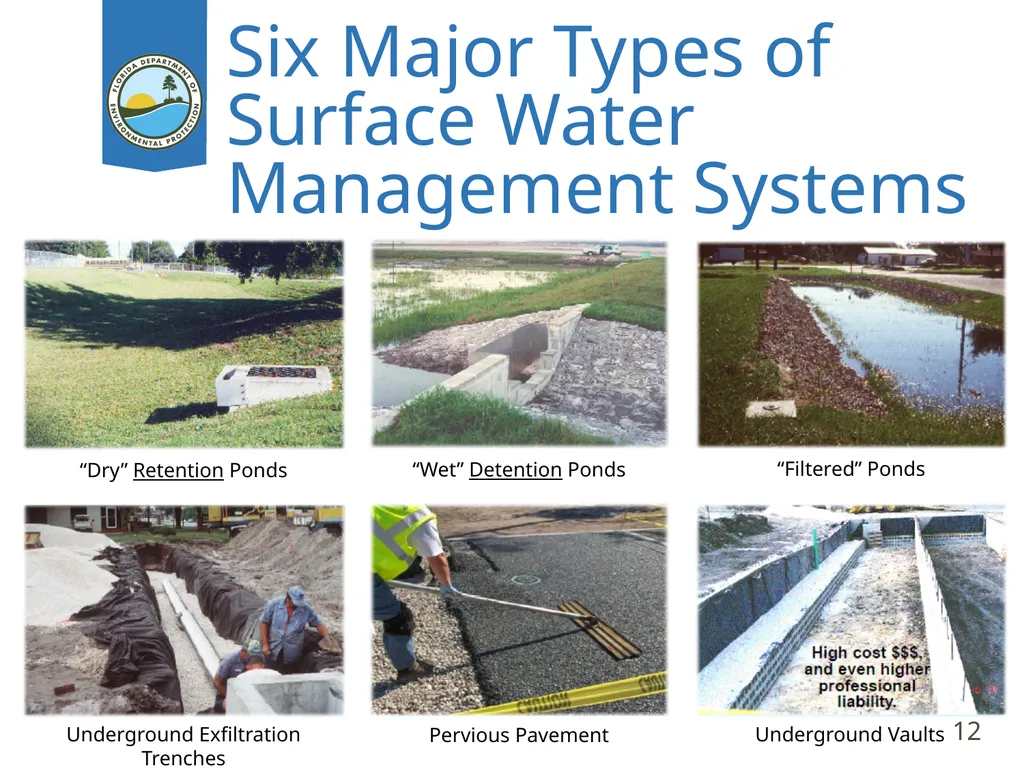
slide12. Six Major Types of Surface Water Management Systems “Dry” Retention Ponds “Wet” Detention Ponds “Filtered” Ponds Underground Exfiltration Trenches Pervious Pavement Underground Vaults<br>
slide13. Contact Information Benjamin Melnick
Deputy Director
Division of Water Resource Management
Benjamin.Melnick@floridadep.gov
850-245-8336<br>
Deputy Director
Division of Water Resource Management<br>
slide2. Sources of Groundwater Contamination<br>
slide3. Potential Impacts of Unmanaged Stormwater Changes In:
Infiltration to ground water
Stream hydrology
Watershed hydrology
Stream morphology
Riparian zone habitat
Water quality
Aquatic habitat and ecology
Aquatic ecosystem<br>
slide4. Stormwater Federal National Pollutant Discharge Elimination System (NPDES)
Municipal Separate Storm Sewer Systems (MS4)
Construction Generic Permit (CGP)
Multi-Sector Generic Permit (MSGP) State Environmental Resource Permitting (ERP)
Regulates activities in, on, or over surface waters or wetlands…as well as any activity involving the alteration of surface water flows.<br>
slide5. Stormwater Aspects PERMITTING Narrative nutrient limits in the form of stormwater BMPs
TMDL implementation for areas with BMPs
Reporting requirements
Stormwater Pollution Prevention Plan COMPLIANCE Inspections – operation and implementation of BMPs and outfall locations
Report review
Rebuttable presumption – systems designed in accordance with criteria and requirements will not cause harm to water resources<br>
slide6. Florida ERP Environmental Resource Permitting (ERP)
Covers collection through treatment (including use or reuse) with design focus on water quality and quantity (considering flooding, over-drainage, environmental degradation, water pollution)
Florida Department of Environmental Protection
Single-family homes, stand-alone dredging projects, port projects, beach projects, mangrove trimming
Water Management Districts
Multi-residential development, roadways, commercial development, and shoreline work related to one of these categories<br>
slide7. Performance Standard for New Stormwater Discharges Erosion and sediment control
Retain sediment on-site
Can’t violate turbidity standard
Stormwater quantity
Discharge rate WMD or local standards
Volume control
Stormwater quality examples
80% average annual load reduction
95% average annual load reduction
Basin specific requirements<br>
slide8. MS4s Federally delegated to Florida
Phase I MS4s
Incorporated municipalities or counties of population 100,000+
May include smaller municipalities with interconnected SW areas
Phase II MS4s
Urbanized areas of population 1,000+
Can also be designated by DEP based on interconnections, discharges to TMDL waterbodies, or population density and thresholds<br>
slide9. MS4 Permit Conditions Permittees are required to implement a Stormwater Management Program (SWMP) to reduce discharge of pollutants from the MS4 to Waters of the State to the maximum extent practicable through best management practices (BMPs), such as:
Operate and maintain the Stormwater Collection System
Practice good housekeeping at permittee facilities and projects
Inspect facilities/areas that may contribute pollutants, including industrial and construction sites; have legal authority to prohibit discharges, inspect sites, and perform enforcement
Public and community outreach and education
Address Total Maximum Daily Loads
Evaluate SWMP effectiveness<br>
slide10. CGPs & MSGPs & NEXs 10<br>
slide11. Sector A: Timber Products
Sector B: Paper Products Manufacturing
Sector C: Chemical Manufacturing
Sector D: Asphalt Paving
Sector E: Glass, Clay, Cement, Man.
Sector F: Primary Metals
Sector G: Metal Mining
Sector H: Coal Mines
Sector I: Oil and Gas Extraction
Sector J: Mineral Mining & Dressing
Sector K: Hazardous Waste Facilities
Sector L: Landfills
Sector M: Auto Salvage Yards
Sector N: Recycling Facilities
Sector O: Power Plants (Steam) Sector P: Land Transportation
Sector Q: Water Transportation
Sector R: Ship & Boat Building
Sector S: Air Transportation
Sector T: Treatment Works
Sector U: Food & Kindred Products
Sector V: Textile Mills
Sector W: Furniture & Fixtures
Sector X: Printing & Publishing
Sector Y: Plastics Manufacturing
Sector Z: Leather Tanning & Finishing
Sector AA: Fabricated Metal Products
Sector AB: Transportation Equip.
Sector AC: Electronic Goods
Sector AD: Additional Activities Regulated Industrial Activities (MSGP Areas)<br>
slide12. Six Major Types of Surface Water Management Systems “Dry” Retention Ponds “Wet” Detention Ponds “Filtered” Ponds Underground Exfiltration Trenches Pervious Pavement Underground Vaults<br>
slide13. Contact Information Benjamin Melnick
Deputy Director
Division of Water Resource Management
Benjamin.Melnick@floridadep.gov
850-245-8336<br>