STRANGLES (Equine distemper, Strep. Throat) A contagious upper respiratory tract infection of horses and other equines caused by a bacterium, Streptococcus equi var equi. Introduction Highly contagious infection of horses and characterized
"STRANGLES (Equine distemper, Strep. Throat) A" is the property of its rightful owner. Permission is granted to
download and print the materials on this website for personal, non-commercial use only, and to display it
on your personal computer provided you do not modify the materials and that you retain all copyright
notices contained in the materials. By downloading content from our website, you accept the terms of this
agreement.
Presentation Transcript
01
STRANGLES (Equine distemper, Strep. Throat)
A contagious upper respiratory tract infection of horses and other equines caused by a bacterium, Streptococcus equi var equi.<br>
02
Introduction Highly contagious infection of horses and characterized by severe inflammation of the mucosa of the head and throat, with extensive swelling and often rupture of the lymph nodes, which produces large amounts of thick, creamy pus.<br>
03
Transmission Transmission is either by direct or indirect contact of susceptible animals with a diseased horse.
Source of infection are nasal discharge or material from the draining abscess contaminates pastures, barns, feed troughs, etc.
Equines of any age may contract the disease, although younger and elderly equines are more susceptible.<br>
04
Signs Depression, inappetence, and fever of 39°C–39.5°C).
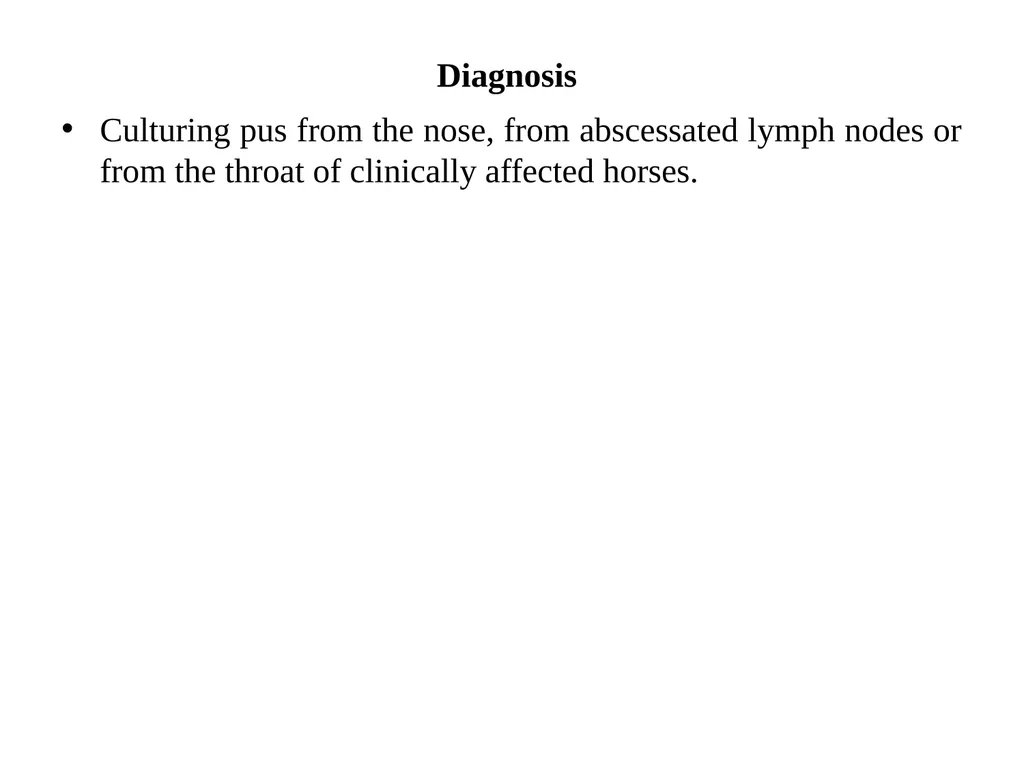
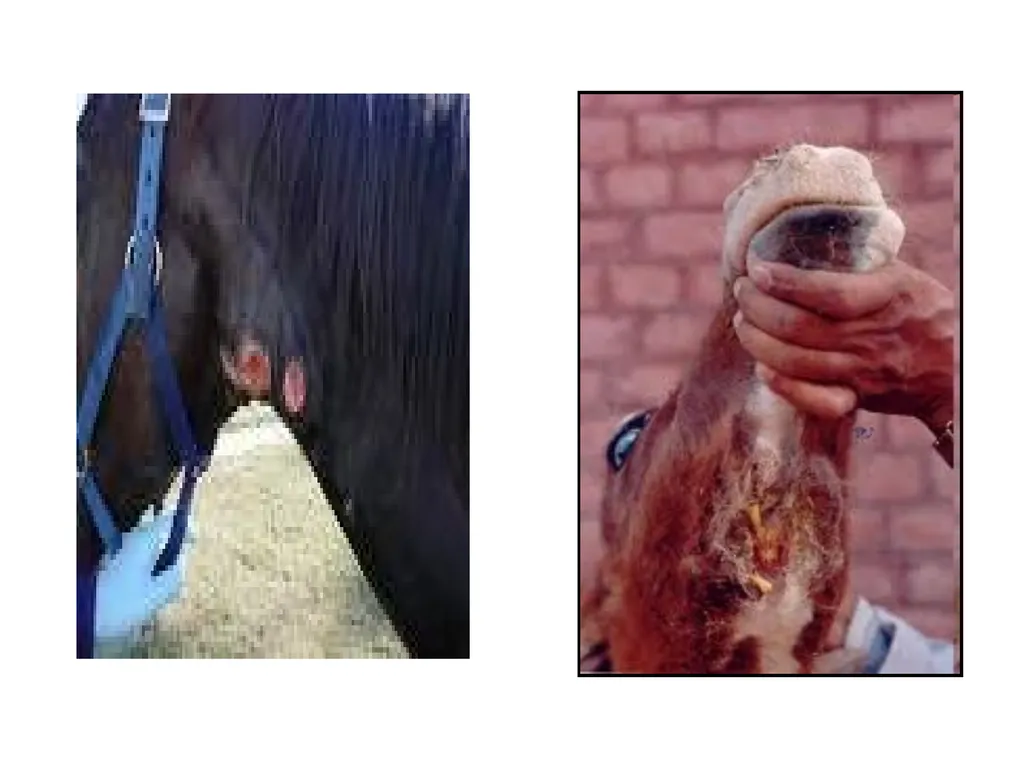
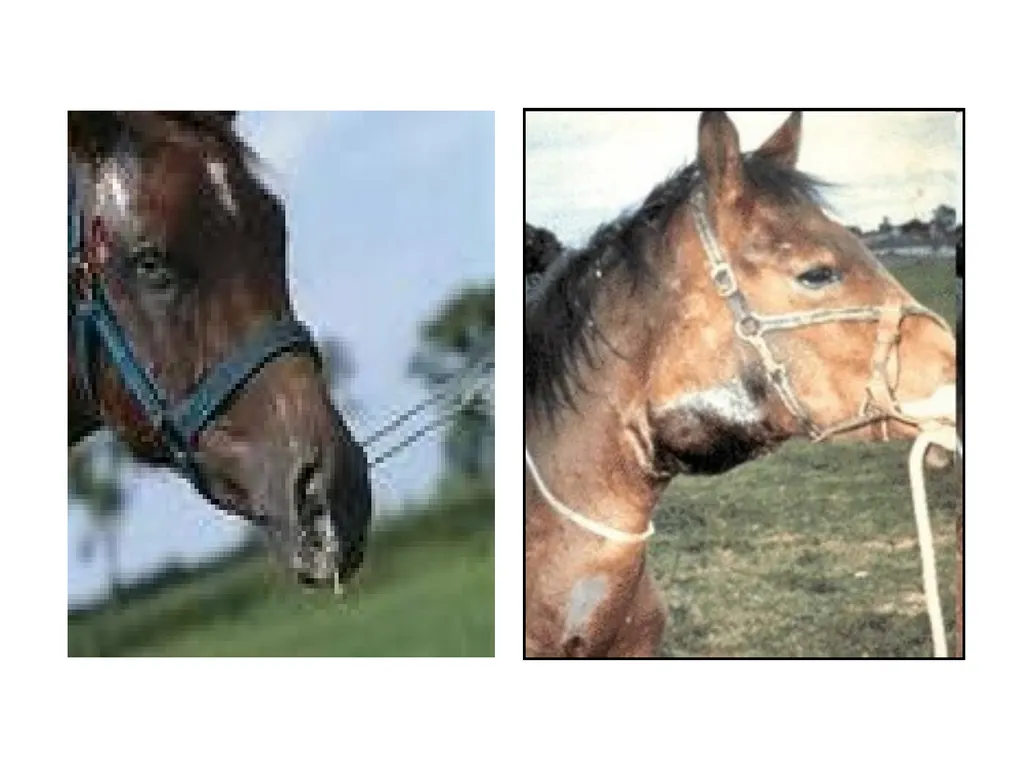
Horses develop a nasal discharge (initially mucoid, rapidly thickening and purulent), a soft cough and slight but painful swelling between the mandibles, with swelling of the submandibular lymph node.
Horses are often seen positioning their heads low and extended, so as to relieve the throat and lymph node pain.<br>
05
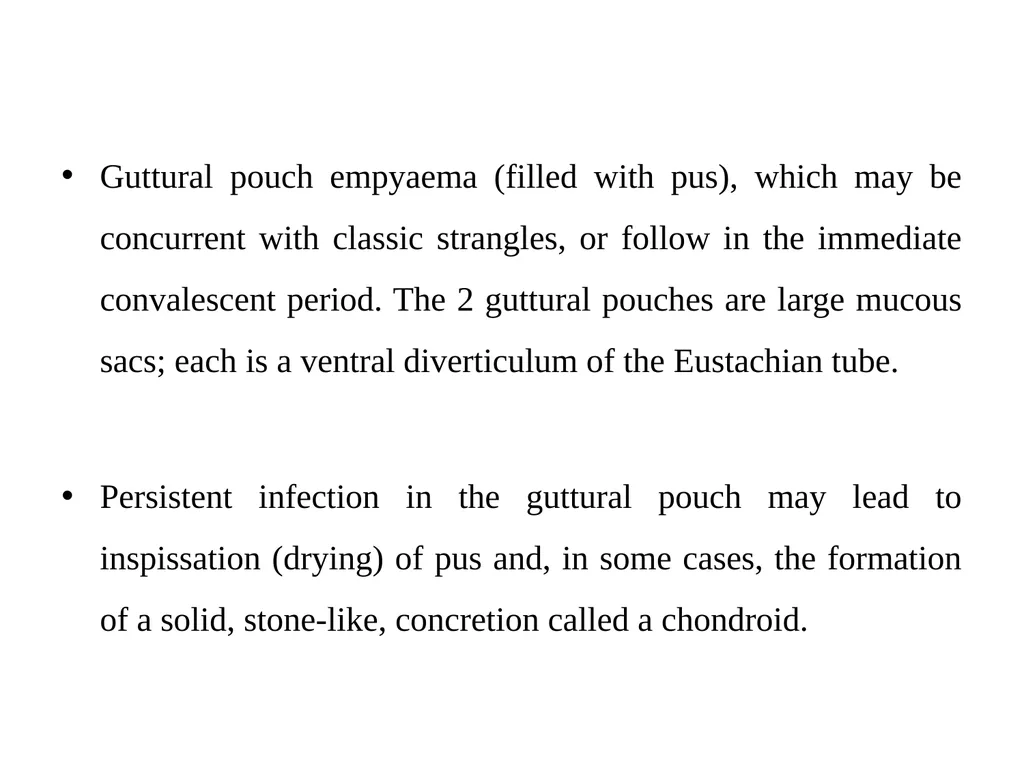
Later, abscesses develop in the submandibular (between the jaw bones) and/or retropharyngeal (at the back of the throat) lymph nodes. The lymph nodes become hard and very painful, and may obstruct breathing ("strangles").
The lymph node abscesses will burst (or can be lanced) in 7–14 days, releasing thick pus heavily contaminated with S. equi.
The horse will usually rapidly recover once abscesses have ruptured.<br>
06
Complications Bastard strangles i. e. dissemination of infection to unusual sites. For example, abdominal or lung lymph nodes may develop abscesses and rupture, a brain abscess or a retropharyngeal lymph node abscess.
Purpura haemorrhagica, an immune-mediated acute inflammation of peripheral blood vessels that occurs within 4 weeks of strangles, while the animal is convalescing. It results from the formation of immune complexes. Visible in the mucous membranes as pinpoint haemorrhages. These haemorrhages lead to a widespread severe edema of the head, limbs, and other parts of the body.<br>
07
Minor, non-fatal complications include:
Post strangles myocarditis
Purulent cellulitis
Laryngeal hemiplegia, which involves paralysis of the throat muscles. It is commonly referred to as "roaring".
Anaemia.<br>
08
Guttural pouch empyaema (filled with pus), which may be concurrent with classic strangles, or follow in the immediate convalescent period. The 2 guttural pouches are large mucous sacs; each is a ventral diverticulum of the Eustachian tube.
Persistent infection in the guttural pouch may lead to inspissation (drying) of pus and, in some cases, the formation of a solid, stone-like, concretion called a chondroid.<br>
09
Diagnosis Culturing pus from the nose, from abscessated lymph nodes or from the throat of clinically affected horses.<br>