
Strategic Marketing Planning Process Marketing
LD
Published · 27 slides · 0 views

1 / 1



Description
Strategic Marketing Planning Process Marketing Plan Marketing Planning Process Essential Content of a Marketing plan Objectives- Organizations mission statement Marketing analysis- PESTEL Porters 5 Forces Internal Audit Situation Analysis:
Related Topics
Share
Embed code
Download this presentation From Below
"Strategic Marketing Planning Process Marketing" is the property of its rightful owner. Permission is granted to download and print the materials on this website for personal, non-commercial use only, and to display it on your personal computer provided you do not modify the materials and that you retain all copyright notices contained in the materials. By downloading content from our website, you accept the terms of this agreement.
Presentation Transcript
01
Strategic Marketing Planning Process<br>
02
Marketing Plan<br>
03
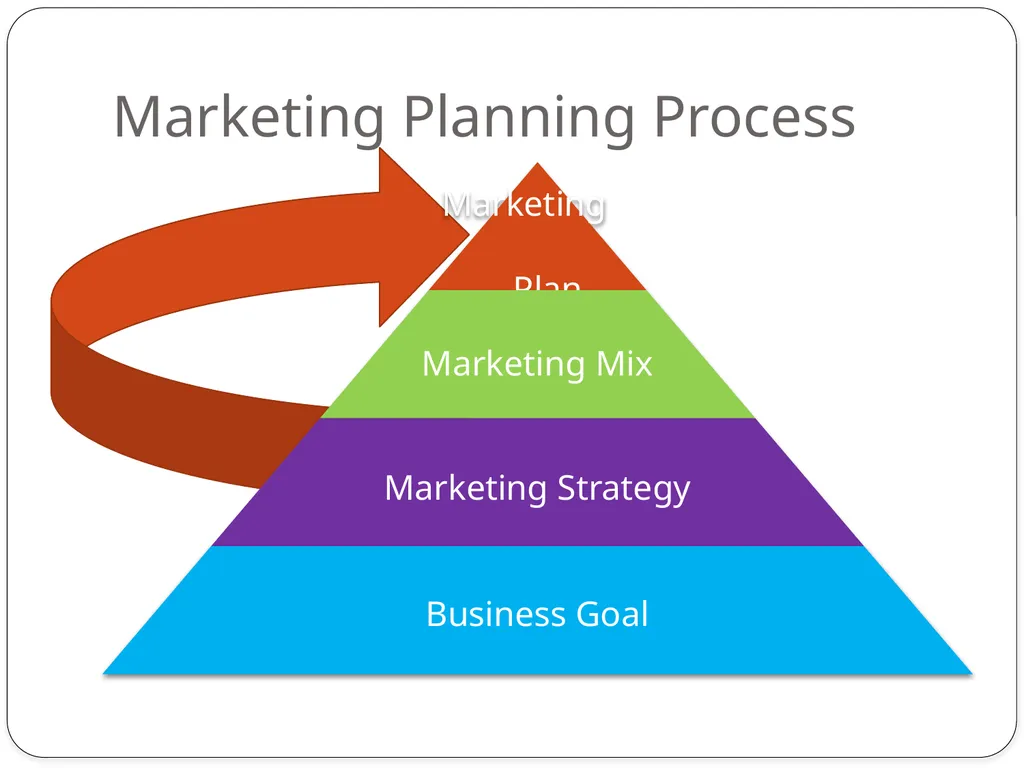
Marketing Planning Process<br>
04
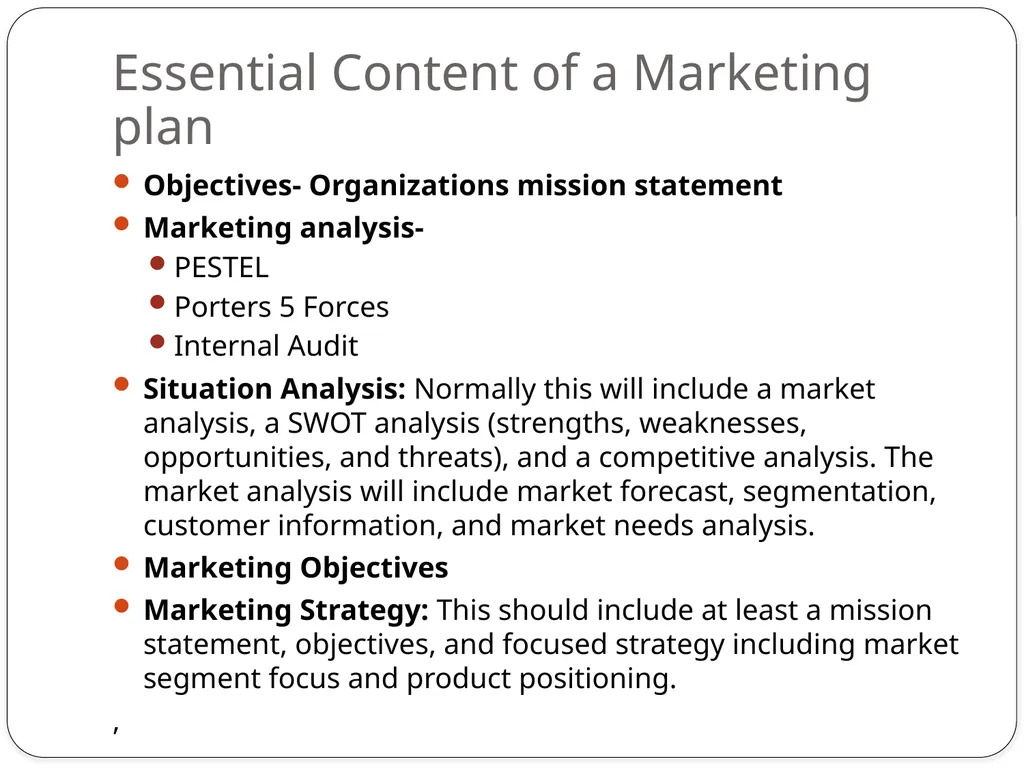
Essential Content of a Marketing plan Objectives- Organizations mission statement
Marketing analysis-
PESTEL
Porters 5 Forces
Internal Audit
Situation Analysis: Normally this will include a market analysis, a SWOT analysis (strengths, weaknesses, opportunities, and threats), and a competitive analysis. The market analysis will include market forecast, segmentation, customer information, and market needs analysis.
Marketing Objectives
Marketing Strategy: This should include at least a mission statement, objectives, and focused strategy including market segment focus and product positioning.
,<br>
Marketing analysis-
PESTEL
Porters 5 Forces
Internal Audit
Situation Analysis: Normally this will include a market analysis, a SWOT analysis (strengths, weaknesses, opportunities, and threats), and a competitive analysis. The market analysis will include market forecast, segmentation, customer information, and market needs analysis.
Marketing Objectives
Marketing Strategy: This should include at least a mission statement, objectives, and focused strategy including market segment focus and product positioning.
,<br>
05
Tactical plan: This would include enough detail to track sales month by month and follow up on plan-vs.-actual analysis. Normally a plan will also include specific sales by product, region, or market segment, by channels, manager responsibilities, and other elements. The forecast alone is a bare minimum.
Control & evaluation
Expense Budget: This ought to include enough detail to track expenses month by month and follow up on plan-vs.-actual analysis. Normally a plan will also include specific sales tactics, programs by management responsibilities, promotion, and other elements. The expense budget is also a bare minimum.
Operational considerations<br>
Control & evaluation
Expense Budget: This ought to include enough detail to track expenses month by month and follow up on plan-vs.-actual analysis. Normally a plan will also include specific sales tactics, programs by management responsibilities, promotion, and other elements. The expense budget is also a bare minimum.
Operational considerations<br>
06
Evaluation and control<br>
07
Annual Plan control Sales Analysis: consists of measuring and evaluating actual sales in relations to goals
Market share analysis: Companies sales in relative to competitors
Marketing expense-to-sales analysis: sales force to sales, advertising to sales, sales promotions to sales, market research to sales, sales admin to sales
Financial analysis: Expense to sales ratio should be analyzed in an overall financial framework
Market-based scorecard analysis:
Customer performance score card
Stakeholder performance score card<br>
Market share analysis: Companies sales in relative to competitors
Marketing expense-to-sales analysis: sales force to sales, advertising to sales, sales promotions to sales, market research to sales, sales admin to sales
Financial analysis: Expense to sales ratio should be analyzed in an overall financial framework
Market-based scorecard analysis:
Customer performance score card
Stakeholder performance score card<br>
08
Profitability control Marketing-Profitability analysis
Identify functional expenses
Assigning functional expenses to marketing entities
Preparing a profit an loss statement for each marketing entity
Determining corrective action
Direct vs Full costing
Direct cost
Traceable common costs
Non traceable common costs<br>
Identify functional expenses
Assigning functional expenses to marketing entities
Preparing a profit an loss statement for each marketing entity
Determining corrective action
Direct vs Full costing
Direct cost
Traceable common costs
Non traceable common costs<br>
09
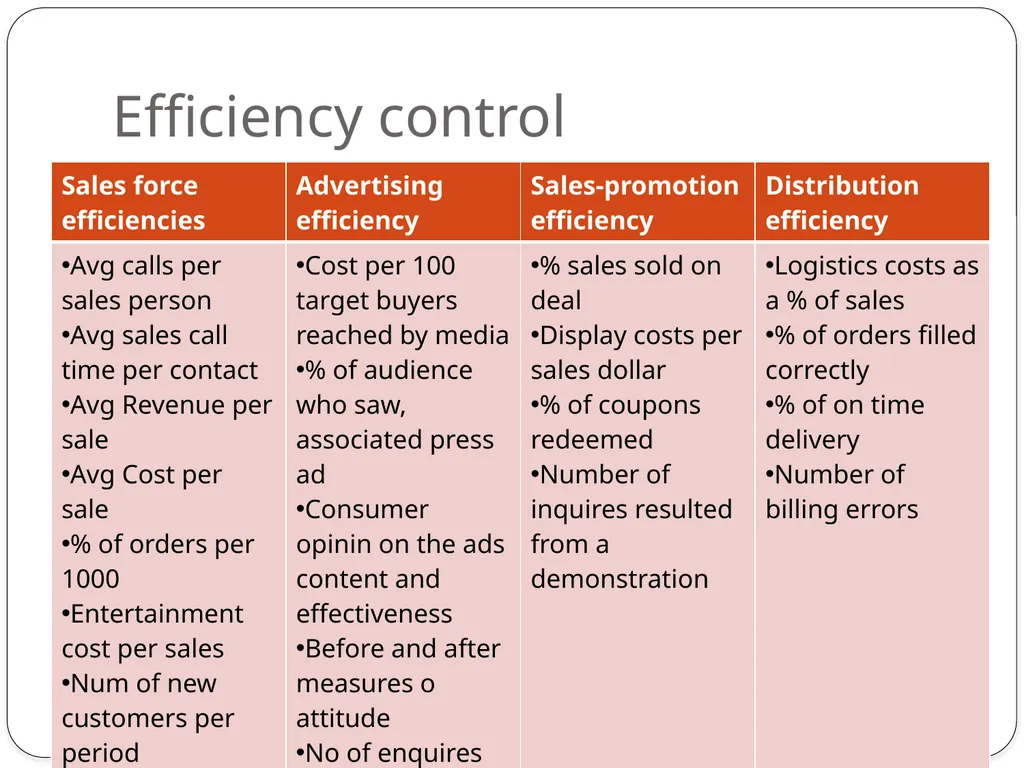
Efficiency control<br>
10
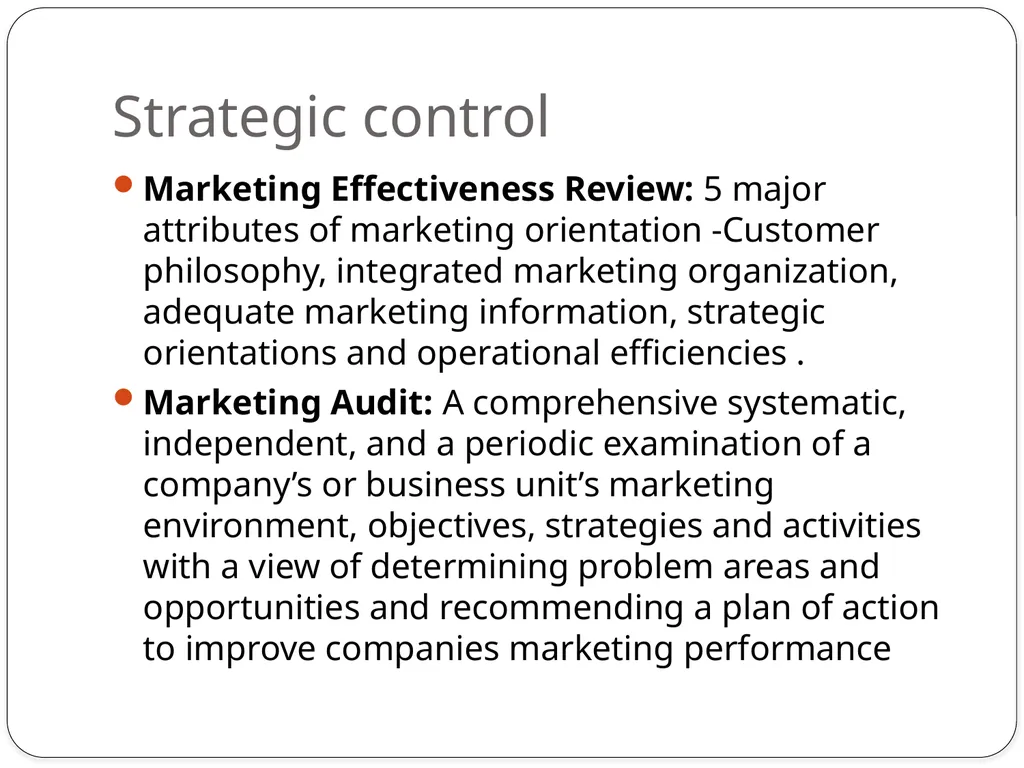
Strategic control Marketing Effectiveness Review: 5 major attributes of marketing orientation -Customer philosophy, integrated marketing organization, adequate marketing information, strategic orientations and operational efficiencies .
Marketing Audit: A comprehensive systematic, independent, and a periodic examination of a company’s or business unit’s marketing environment, objectives, strategies and activities with a view of determining problem areas and opportunities and recommending a plan of action to improve companies marketing performance<br>
Marketing Audit: A comprehensive systematic, independent, and a periodic examination of a company’s or business unit’s marketing environment, objectives, strategies and activities with a view of determining problem areas and opportunities and recommending a plan of action to improve companies marketing performance<br>
11
Developing Strategic Plan for sustainable development<br>
12
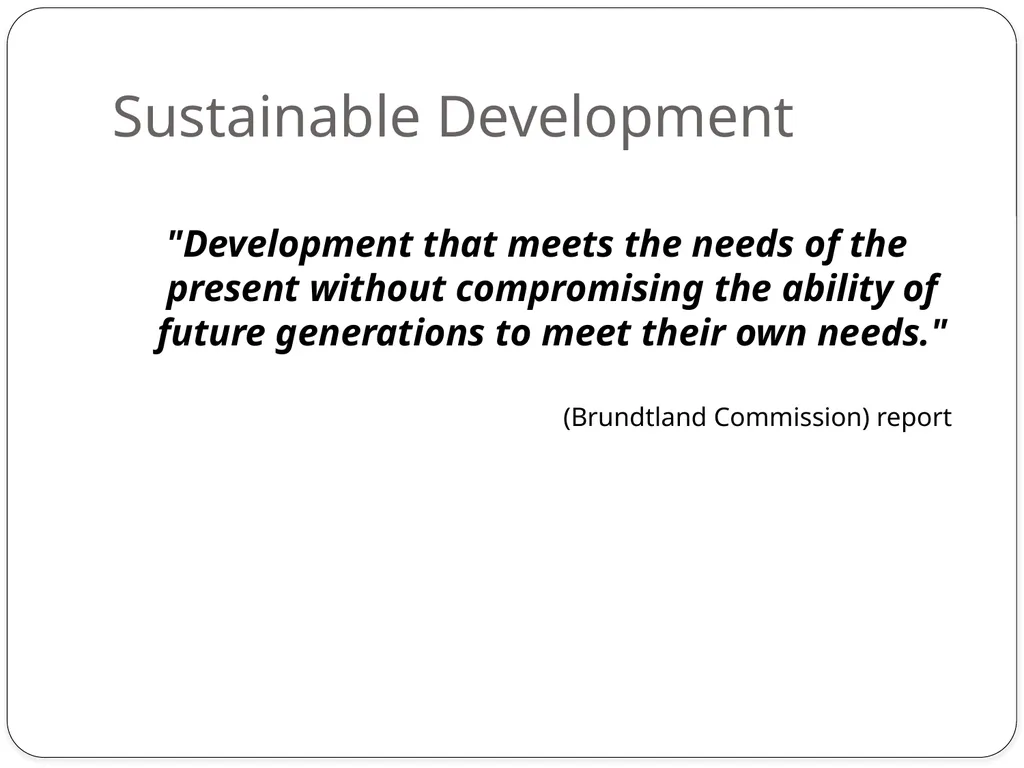
Sustainable Development "Development that meets the needs of the present without compromising the ability of future generations to meet their own needs."
(Brundtland Commission) report<br>
(Brundtland Commission) report<br>
13
Marketing Impact on Society as a whole False wants and too much materialism: marketing is seen to create false wants that benefit industry more than they benefit consumers
Too few social goods: Business has been accused of overselling private goods at the expense of public goods
Cultural Pollution :Constantly assaulted by marketing and advertising. Commercials interrupt serious programmes, press articles,
Too much political power: Business wield to much political power<br>
Too few social goods: Business has been accused of overselling private goods at the expense of public goods
Cultural Pollution :Constantly assaulted by marketing and advertising. Commercials interrupt serious programmes, press articles,
Too much political power: Business wield to much political power<br>
14
Marketing’s Impact on Other-businesses Acquisition of competition: companies expand by acquiring companies than developing their own.eg: Cargills acquiring Kotmale
Marketing Practices that create barriers to entry: bar new companies entering an industry .eg Dialog bared Airtel
Unfair competitive marketing practices: Destroy competition by using unfair practices , price cuts, discourage buyers etc. eg: Supermarket chains in SL been accused of using predatory price cuts to put retailers out of business<br>
Marketing Practices that create barriers to entry: bar new companies entering an industry .eg Dialog bared Airtel
Unfair competitive marketing practices: Destroy competition by using unfair practices , price cuts, discourage buyers etc. eg: Supermarket chains in SL been accused of using predatory price cuts to put retailers out of business<br>
15
Citizen and Public Actions to Regulatory Marketing<br>
16
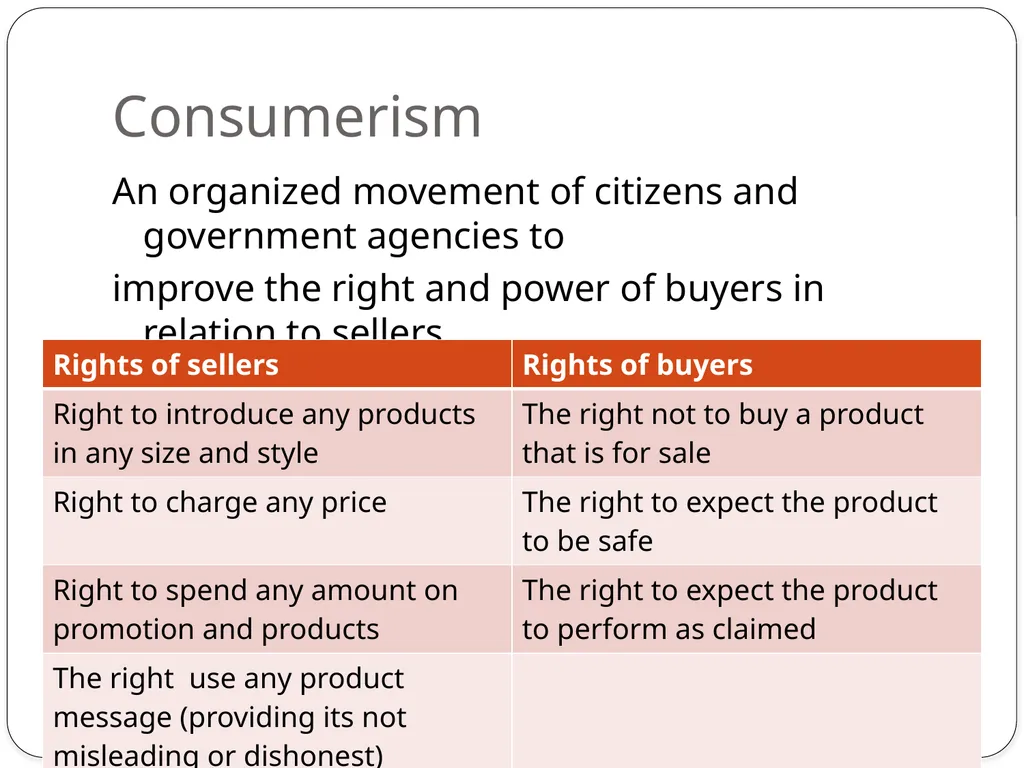
Consumerism An organized movement of citizens and government agencies to
improve the right and power of buyers in relation to sellers<br>
improve the right and power of buyers in relation to sellers<br>
17
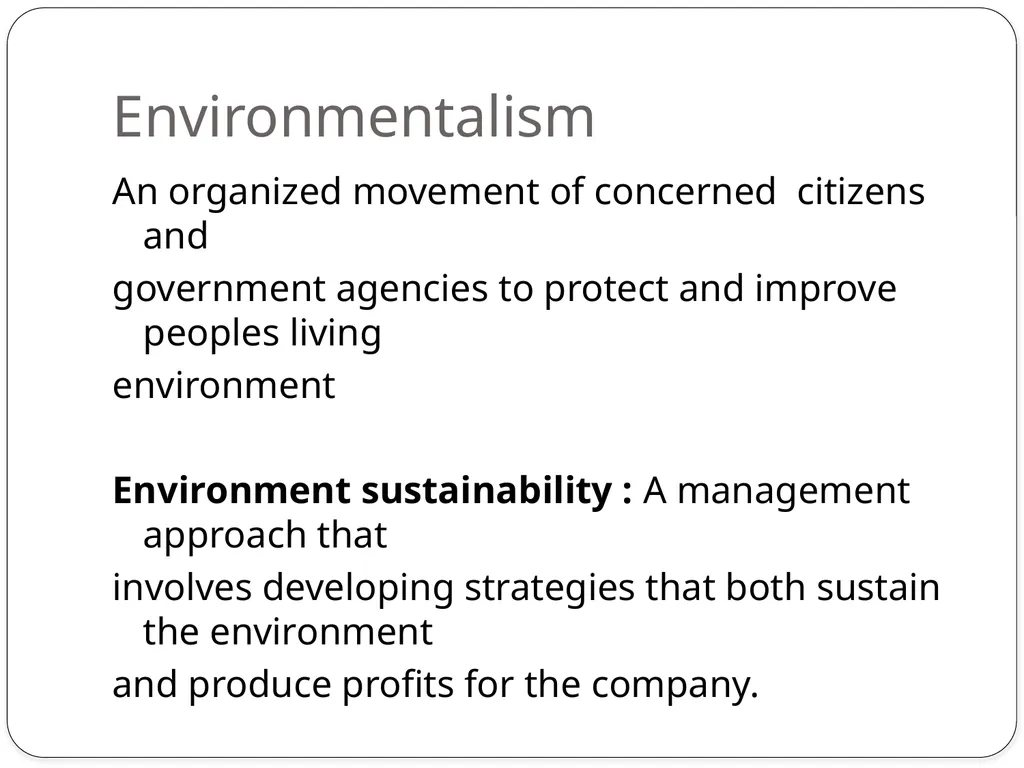
Environmentalism An organized movement of concerned citizens and
government agencies to protect and improve peoples living
environment
Environment sustainability : A management approach that
involves developing strategies that both sustain the environment
and produce profits for the company.<br>
government agencies to protect and improve peoples living
environment
Environment sustainability : A management approach that
involves developing strategies that both sustain the environment
and produce profits for the company.<br>
18
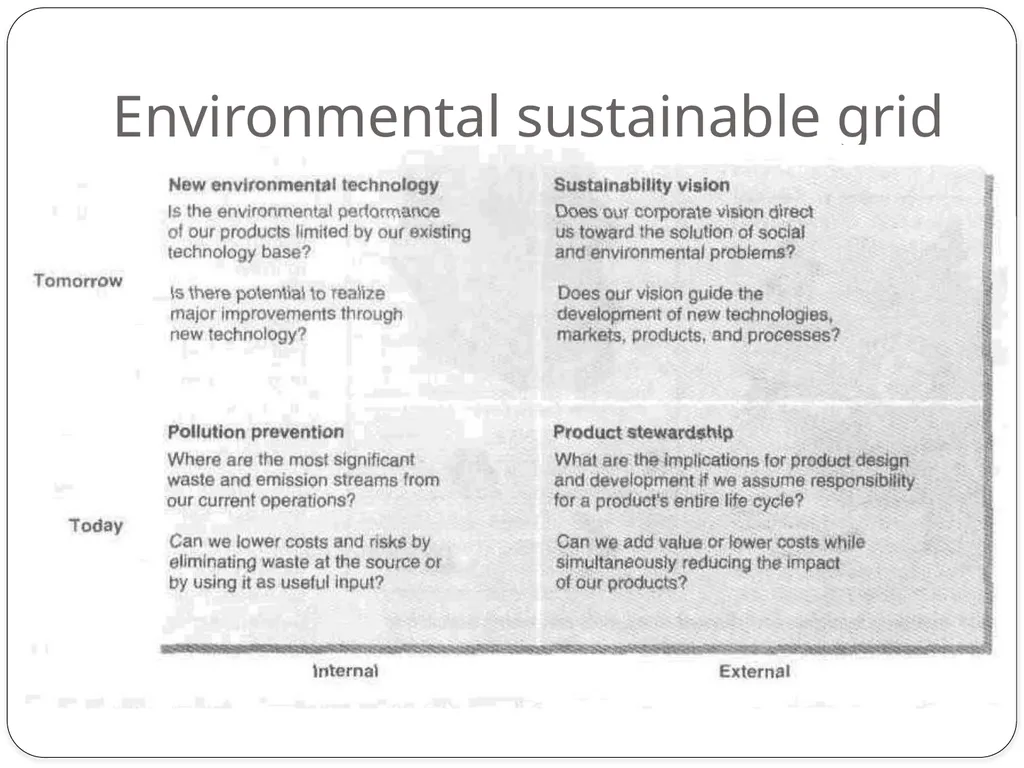
Environmental sustainable grid<br>
19
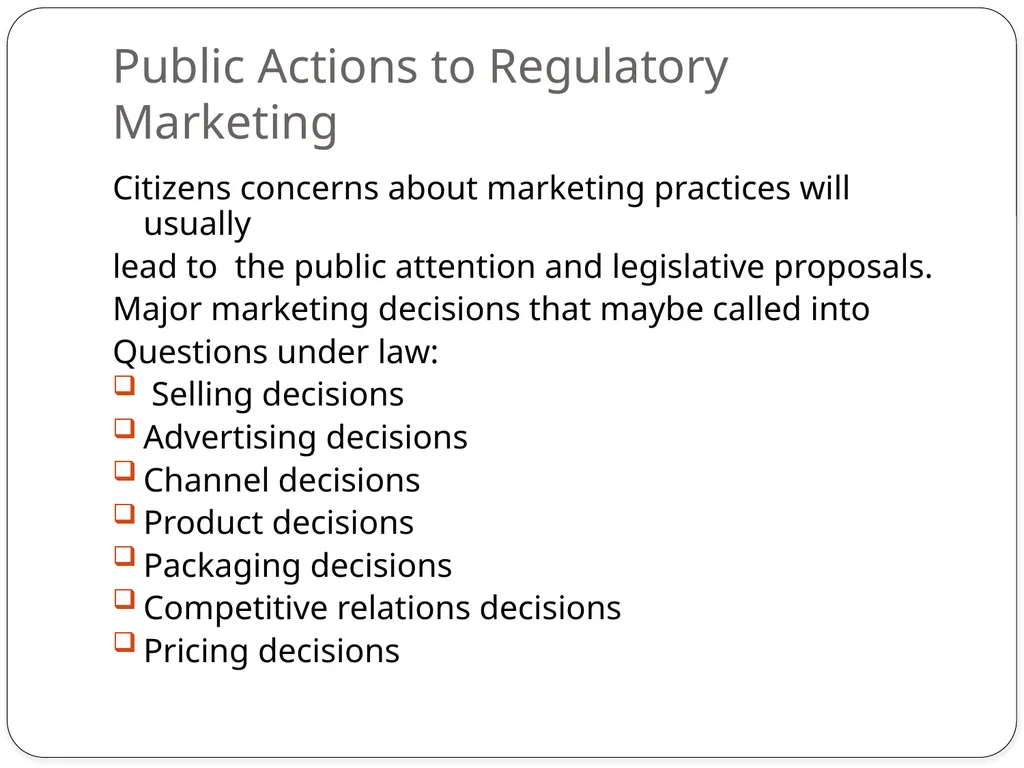
Public Actions to Regulatory Marketing Citizens concerns about marketing practices will usually
lead to the public attention and legislative proposals.
Major marketing decisions that maybe called into
Questions under law:
Selling decisions
Advertising decisions
Channel decisions
Product decisions
Packaging decisions
Competitive relations decisions
Pricing decisions<br>
lead to the public attention and legislative proposals.
Major marketing decisions that maybe called into
Questions under law:
Selling decisions
Advertising decisions
Channel decisions
Product decisions
Packaging decisions
Competitive relations decisions
Pricing decisions<br>
20
Business Actions towards Socially Responsible Marketing<br>
21
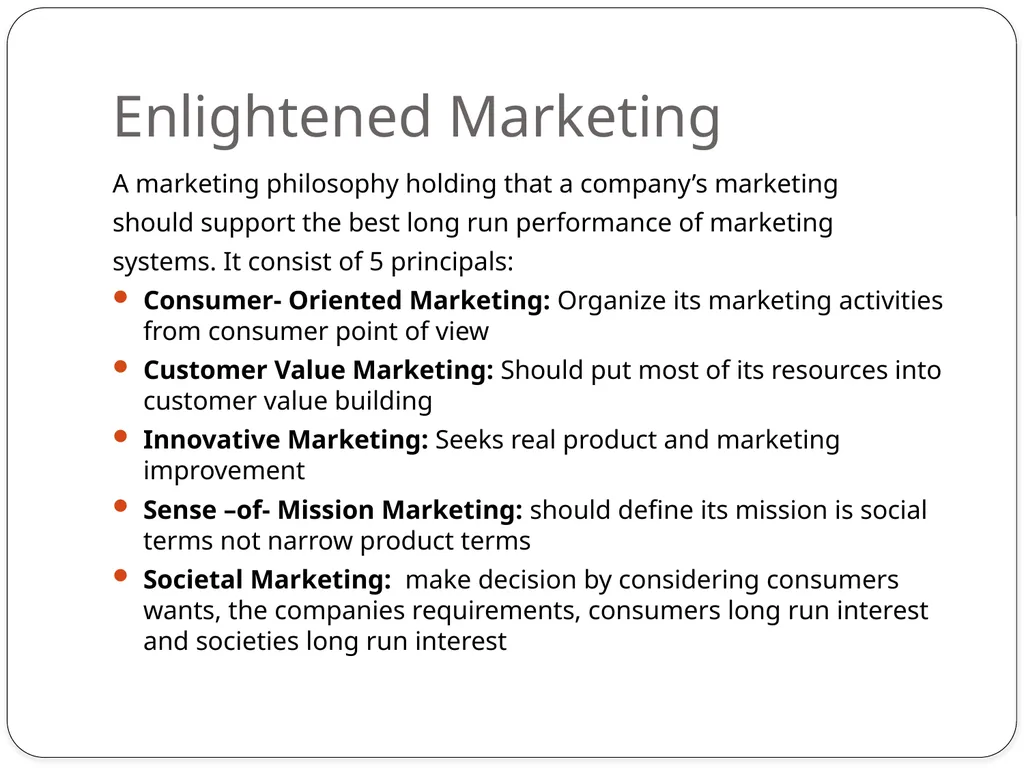
Enlightened Marketing A marketing philosophy holding that a company’s marketing
should support the best long run performance of marketing
systems. It consist of 5 principals:
Consumer- Oriented Marketing: Organize its marketing activities from consumer point of view
Customer Value Marketing: Should put most of its resources into customer value building
Innovative Marketing: Seeks real product and marketing improvement
Sense –of- Mission Marketing: should define its mission is social terms not narrow product terms
Societal Marketing: make decision by considering consumers wants, the companies requirements, consumers long run interest and societies long run interest<br>
should support the best long run performance of marketing
systems. It consist of 5 principals:
Consumer- Oriented Marketing: Organize its marketing activities from consumer point of view
Customer Value Marketing: Should put most of its resources into customer value building
Innovative Marketing: Seeks real product and marketing improvement
Sense –of- Mission Marketing: should define its mission is social terms not narrow product terms
Societal Marketing: make decision by considering consumers wants, the companies requirements, consumers long run interest and societies long run interest<br>
22
Marketing Ethics Corporate marketing ethic policies :broad
guidelines that everyone in the organization must
follow.
These policies should cover:
Distributor relations
Advertising standards
Customer service
Pricing, product development and general ethical standards<br>
guidelines that everyone in the organization must
follow.
These policies should cover:
Distributor relations
Advertising standards
Customer service
Pricing, product development and general ethical standards<br>
23
Ethical business carries valuable advertising appeal and has become content for PR campaigns, sales promotions and advertising
There is also evidence to suggest that organizations suffer commercial losses from boycotts (Nestle boycott is said to have cost the firm $40 million)
Survey results show that an ethics code will;
Strengthen financial performance
Improve brand image, sales & reputation
Employee loyalty
Reduce the vulnerability to pressure groups
Avoidance of fines
Avoid loss of business<br>
There is also evidence to suggest that organizations suffer commercial losses from boycotts (Nestle boycott is said to have cost the firm $40 million)
Survey results show that an ethics code will;
Strengthen financial performance
Improve brand image, sales & reputation
Employee loyalty
Reduce the vulnerability to pressure groups
Avoidance of fines
Avoid loss of business<br>
24
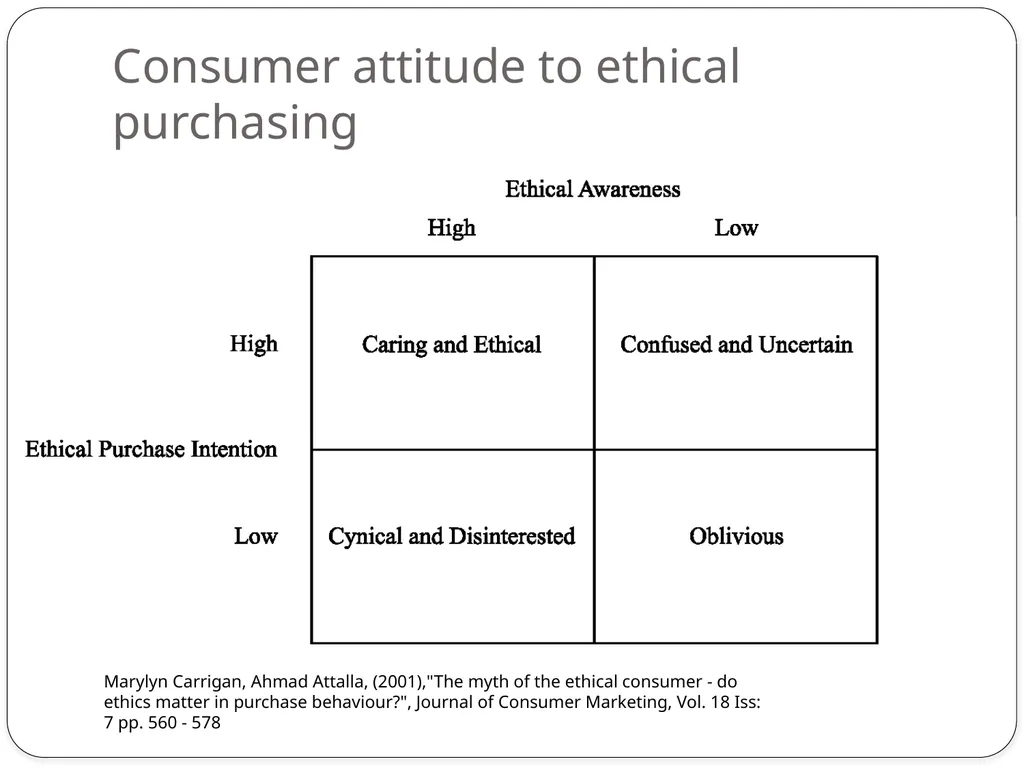
Consumer attitude to ethical purchasing Marylyn Carrigan, Ahmad Attalla, (2001),"The myth of the ethical consumer - do ethics matter in purchase behaviour?", Journal of Consumer Marketing, Vol. 18 Iss: 7 pp. 560 - 578<br>
25
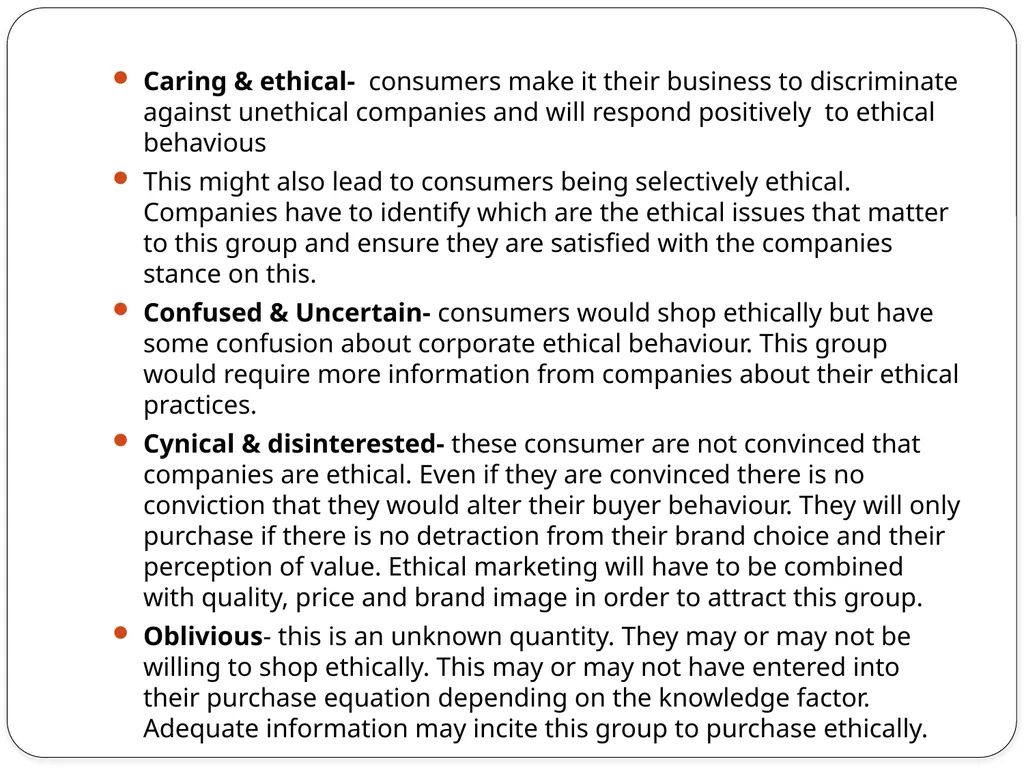
Caring & ethical- consumers make it their business to discriminate against unethical companies and will respond positively to ethical behavious
This might also lead to consumers being selectively ethical. Companies have to identify which are the ethical issues that matter to this group and ensure they are satisfied with the companies stance on this.
Confused & Uncertain- consumers would shop ethically but have some confusion about corporate ethical behaviour. This group would require more information from companies about their ethical practices.
Cynical & disinterested- these consumer are not convinced that companies are ethical. Even if they are convinced there is no conviction that they would alter their buyer behaviour. They will only purchase if there is no detraction from their brand choice and their perception of value. Ethical marketing will have to be combined with quality, price and brand image in order to attract this group.
Oblivious- this is an unknown quantity. They may or may not be willing to shop ethically. This may or may not have entered into their purchase equation depending on the knowledge factor. Adequate information may incite this group to purchase ethically.<br>
This might also lead to consumers being selectively ethical. Companies have to identify which are the ethical issues that matter to this group and ensure they are satisfied with the companies stance on this.
Confused & Uncertain- consumers would shop ethically but have some confusion about corporate ethical behaviour. This group would require more information from companies about their ethical practices.
Cynical & disinterested- these consumer are not convinced that companies are ethical. Even if they are convinced there is no conviction that they would alter their buyer behaviour. They will only purchase if there is no detraction from their brand choice and their perception of value. Ethical marketing will have to be combined with quality, price and brand image in order to attract this group.
Oblivious- this is an unknown quantity. They may or may not be willing to shop ethically. This may or may not have entered into their purchase equation depending on the knowledge factor. Adequate information may incite this group to purchase ethically.<br>
26
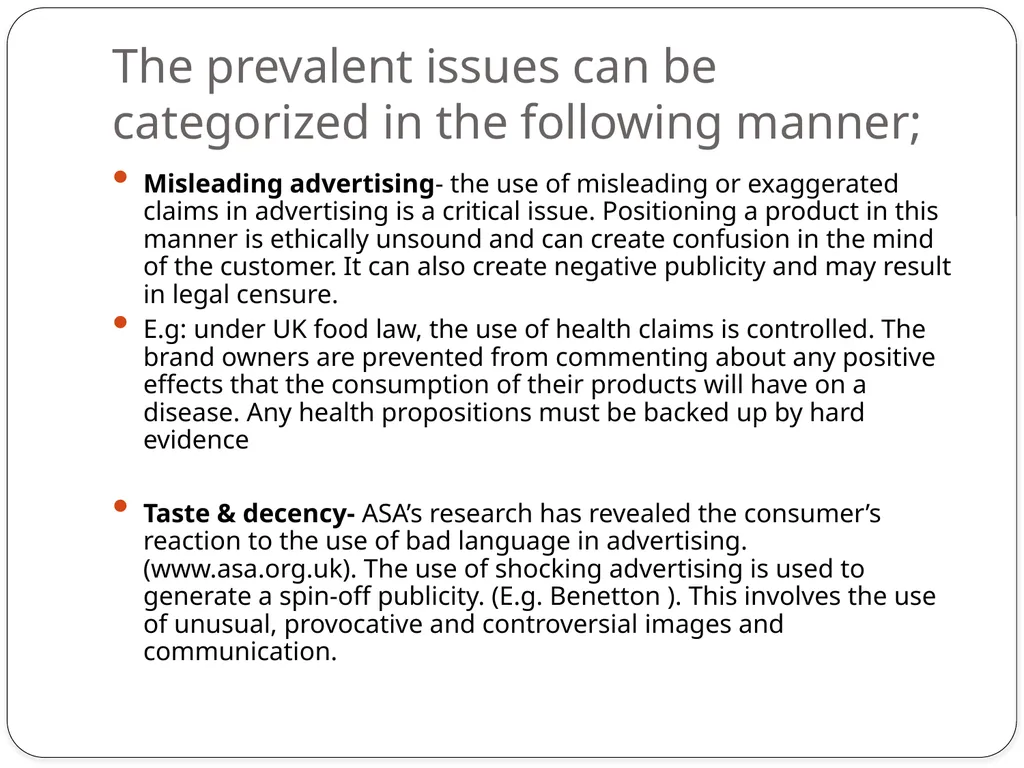
The prevalent issues can be categorized in the following manner; Misleading advertising- the use of misleading or exaggerated claims in advertising is a critical issue. Positioning a product in this manner is ethically unsound and can create confusion in the mind of the customer. It can also create negative publicity and may result in legal censure.
E.g: under UK food law, the use of health claims is controlled. The brand owners are prevented from commenting about any positive effects that the consumption of their products will have on a disease. Any health propositions must be backed up by hard evidence
Taste & decency- ASA’s research has revealed the consumer’s reaction to the use of bad language in advertising. (www.asa.org.uk). The use of shocking advertising is used to generate a spin-off publicity. (E.g. Benetton ). This involves the use of unusual, provocative and controversial images and communication.<br>
E.g: under UK food law, the use of health claims is controlled. The brand owners are prevented from commenting about any positive effects that the consumption of their products will have on a disease. Any health propositions must be backed up by hard evidence
Taste & decency- ASA’s research has revealed the consumer’s reaction to the use of bad language in advertising. (www.asa.org.uk). The use of shocking advertising is used to generate a spin-off publicity. (E.g. Benetton ). This involves the use of unusual, provocative and controversial images and communication.<br>
27
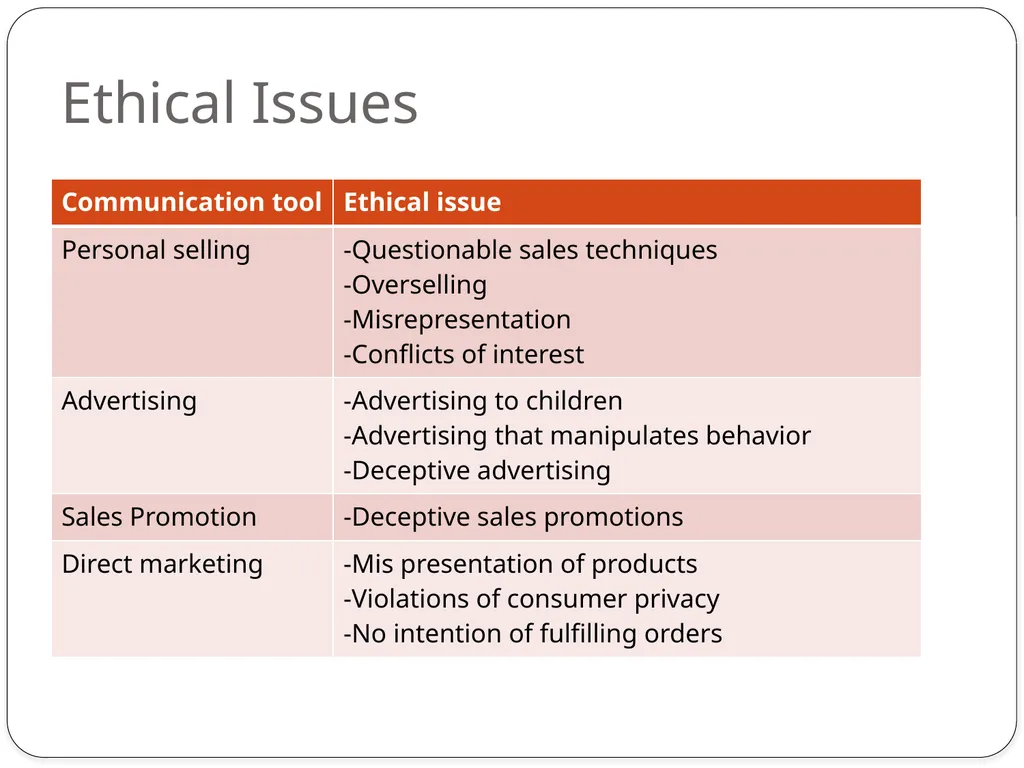
Ethical Issues<br>