Strategies for Developing Partnerships Sean Cavan, Emeritus Fellow SIoE: seancavan1outlook.com Amy Harper, Director Xavier TSH: a.harperxaviercet.org.uk Session outline Context Shared strategic objectives Common challenges for both
"Strategies for Developing Partnerships Sean Cavan," is the property of its rightful owner. Permission is granted to
download and print the materials on this website for personal, non-commercial use only, and to display it
on your personal computer provided you do not modify the materials and that you retain all copyright
notices contained in the materials. By downloading content from our website, you accept the terms of this
agreement.
Presentation Transcript
01
Strategies for Developing Partnerships Sean Cavan, Emeritus Fellow SIoE: seancavan1@outlook.com
Amy Harper, Director Xavier TSH: a.harper@xaviercet.org.uk<br>
02
Session outline Context
Shared strategic objectives
Common challenges for both organisations
Employing simple models to support partnership growth:
Partnership Dynamics
Force Field Analysis
C.I.A. model<br>
03
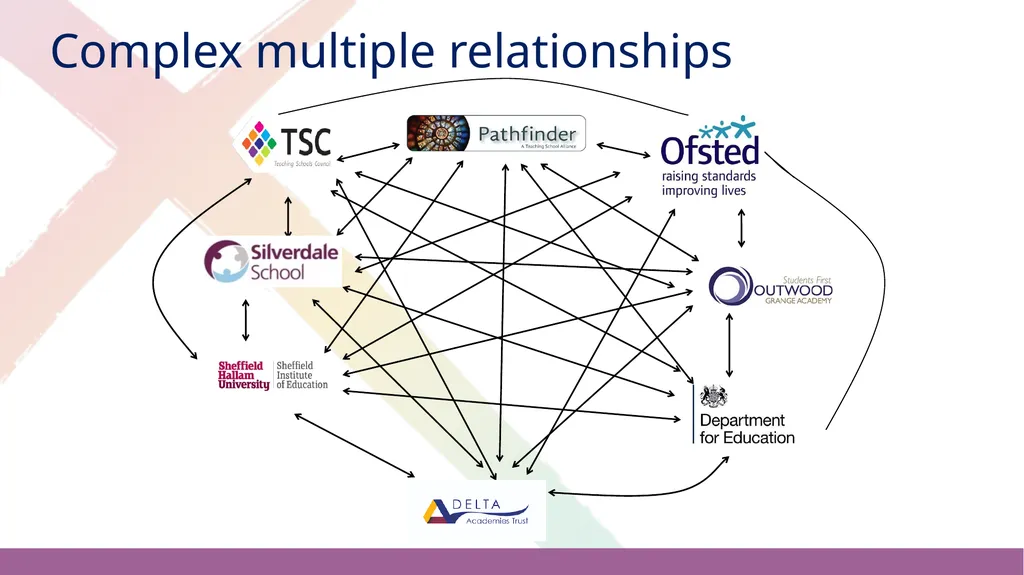
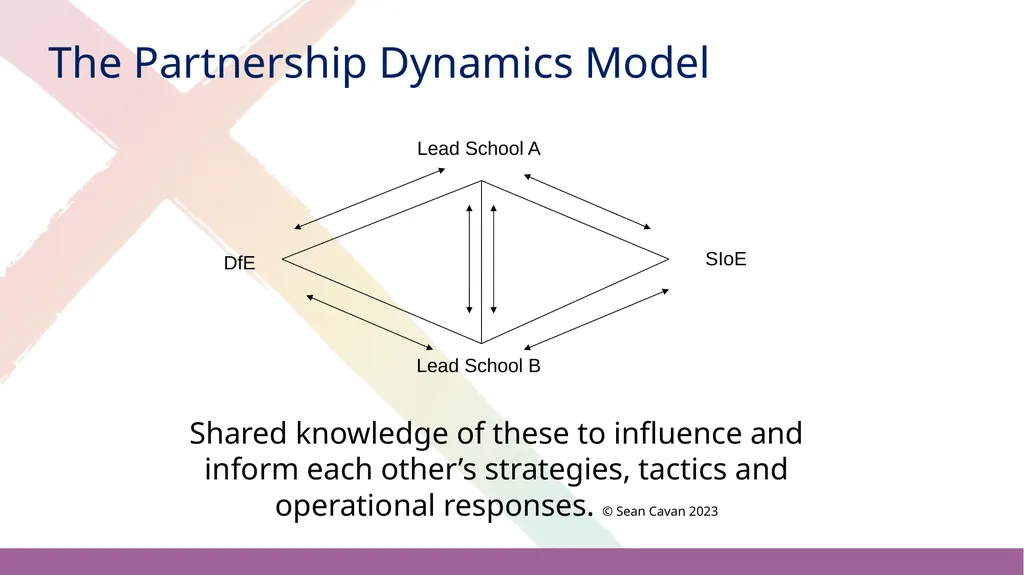
Building Partnerships using the Partnership Dynamics model to understand complex sector environments<br>
04
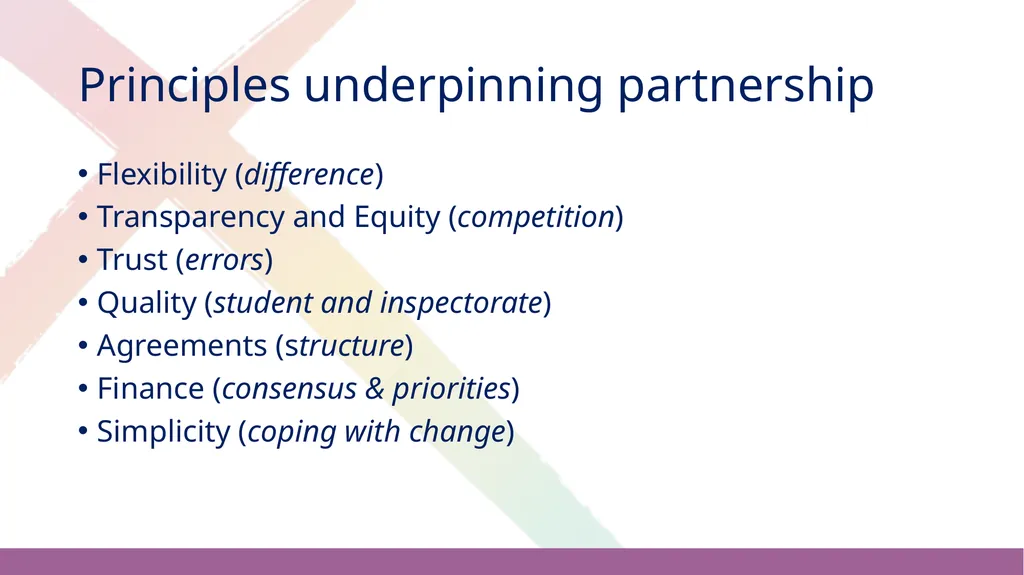
Principles underpinning partnership Flexibility (difference)
Transparency and Equity (competition)
Trust (errors)
Quality (student and inspectorate)
Agreements (structure)
Finance (consensus & priorities)
Simplicity (coping with change)<br>
05
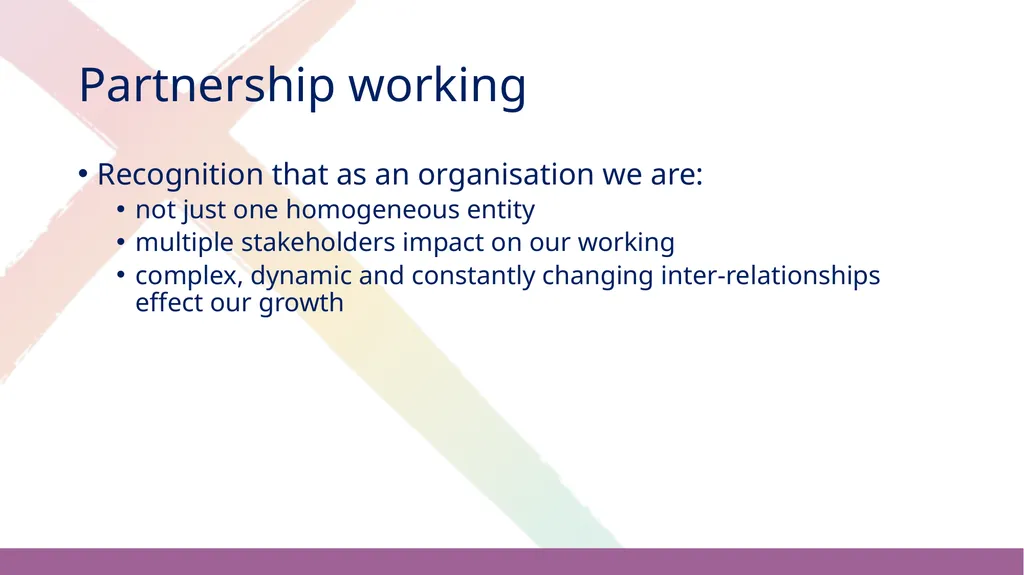
Partnership working Recognition that as an organisation we are:
not just one homogeneous entity
multiple stakeholders impact on our working
complex, dynamic and constantly changing inter-relationships effect our growth<br>
06
Complex multiple relationships<br>
07
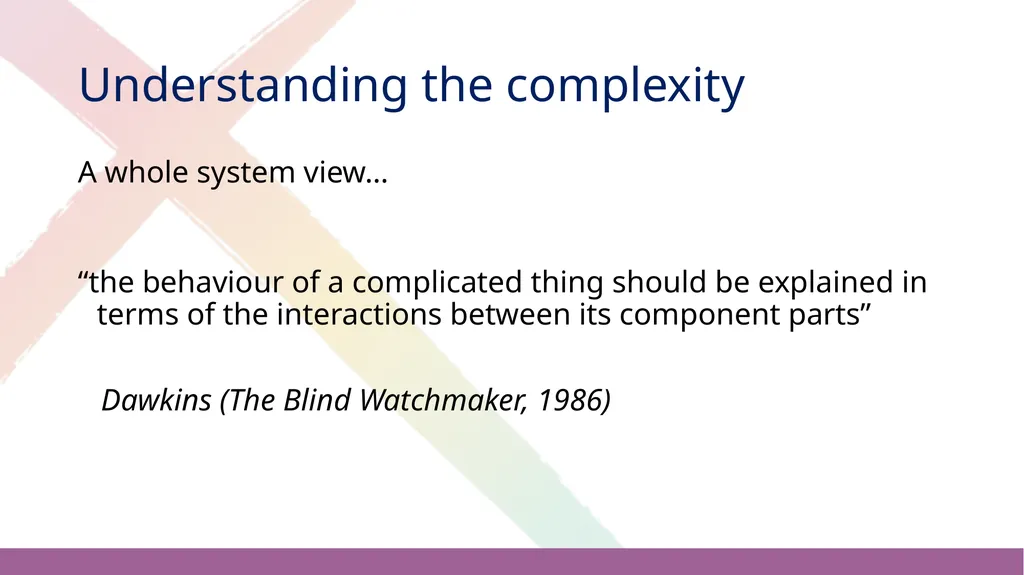
Understanding the complexity A whole system view…
“the behaviour of a complicated thing should be explained in terms of the interactions between its component parts”
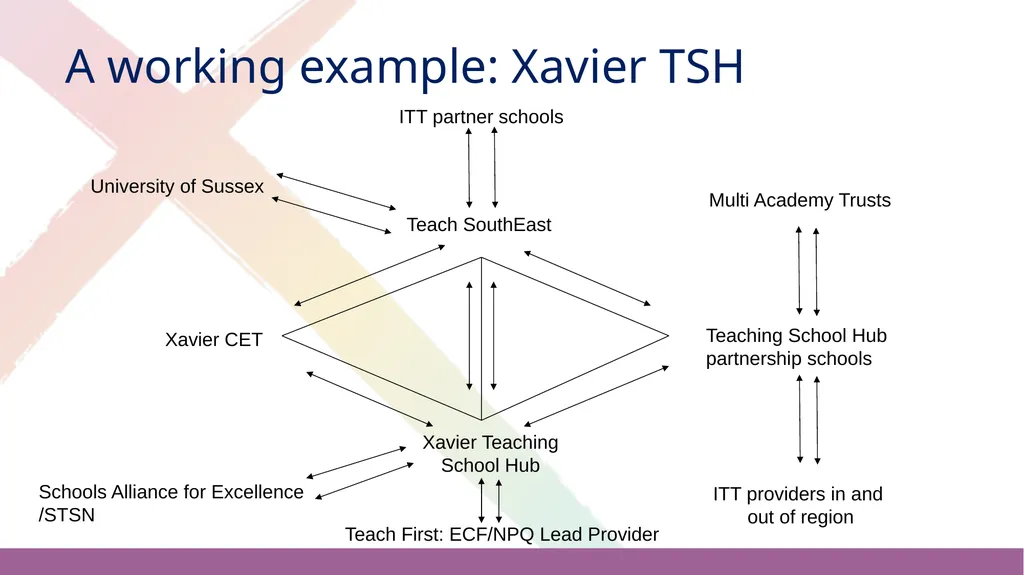
A working example: Xavier TSH Teach SouthEast Xavier Teaching School Hub Teaching School Hub
partnership schools ITT partner schools Multi Academy Trusts ITT providers in and
out of region Schools Alliance for Excellence
/STSN Xavier CET Teach First: ECF/NPQ Lead Provider University of Sussex<br>
10
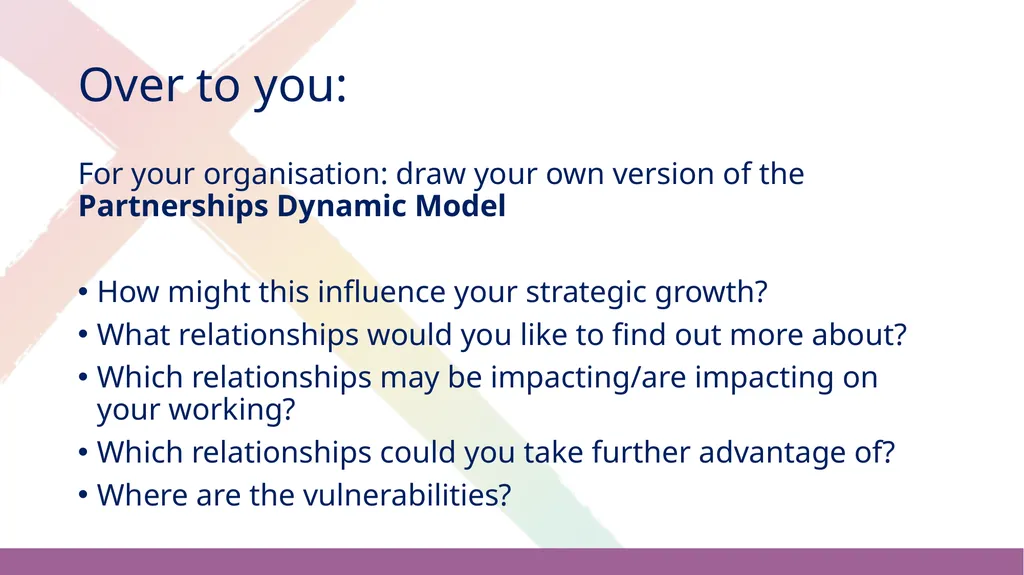
Over to you: For your organisation: draw your own version of the Partnerships Dynamic Model
How might this influence your strategic growth?
What relationships would you like to find out more about?
Which relationships may be impacting/are impacting on your working?
Which relationships could you take further advantage of?
Where are the vulnerabilities?<br>
11
Developing External Partnerships Using the Force Field Analysis and the C.I.A. model to guide partnership growth<br>
12
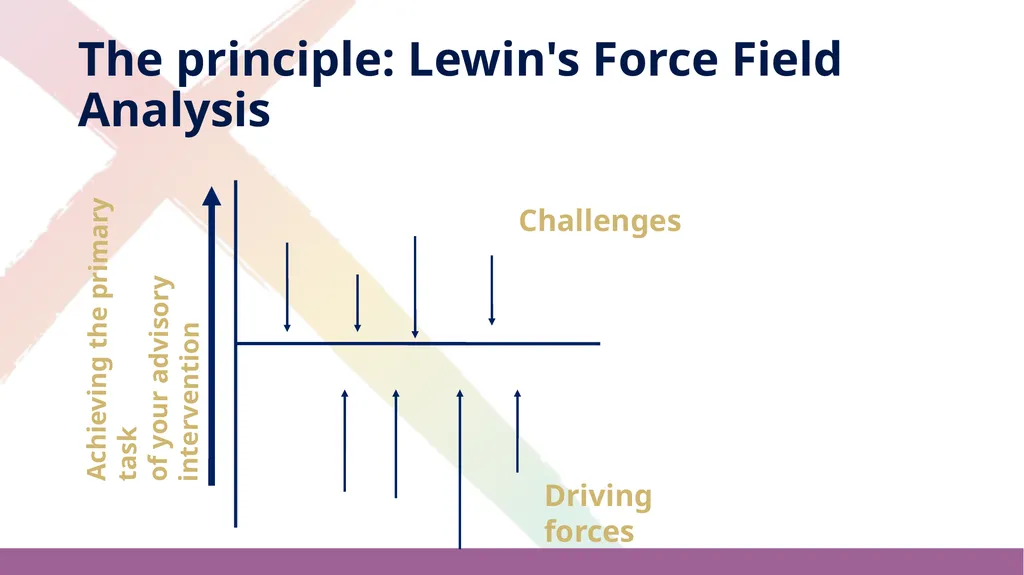
The principle: Lewin's Force Field Analysis<br>
13
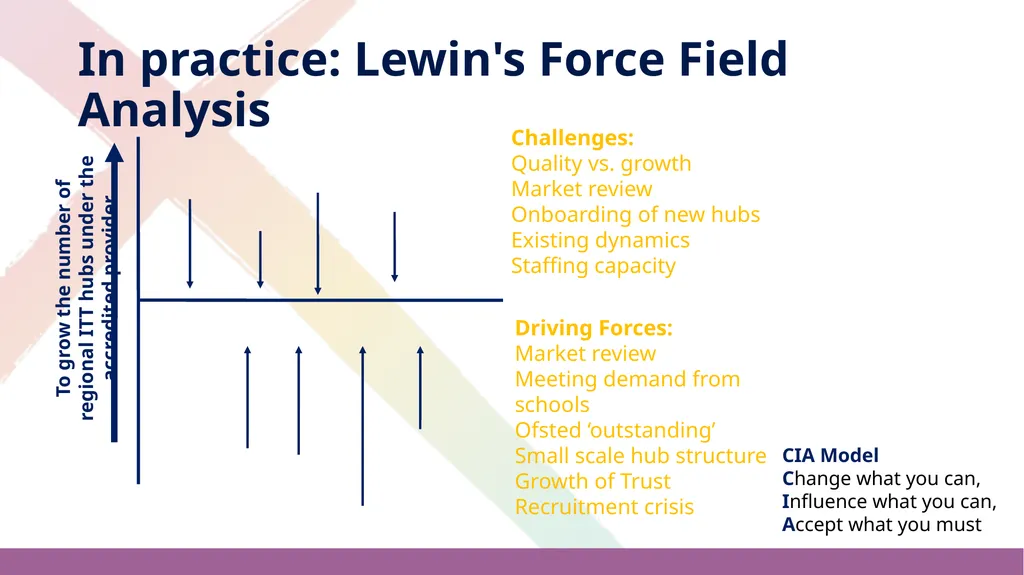
In practice: Lewin's Force Field Analysis CIA Model
Change what you can,
Influence what you can,
Accept what you must To grow the number of regional ITT hubs under the accredited provider<br>
14
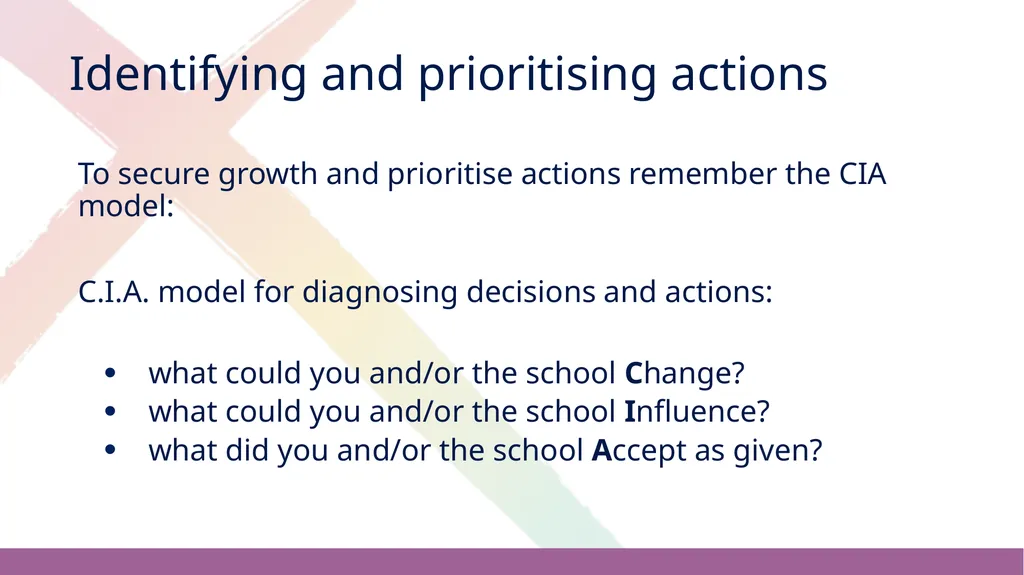
Identifying and prioritising actions To secure growth and prioritise actions remember the CIA model:
C.I.A. model for diagnosing decisions and actions:
what could you and/or the school Change?
what could you and/or the school Influence?
what did you and/or the school Accept as given?<br>
15
Over to you: For your organisation: putting the force field analysis into action
What might be a primary task for your organisation,
What are the main driving forces (internal and/or external),
What are the challenges that you may face,
How can the partnership dynamics model inform your analysis?<br>
16
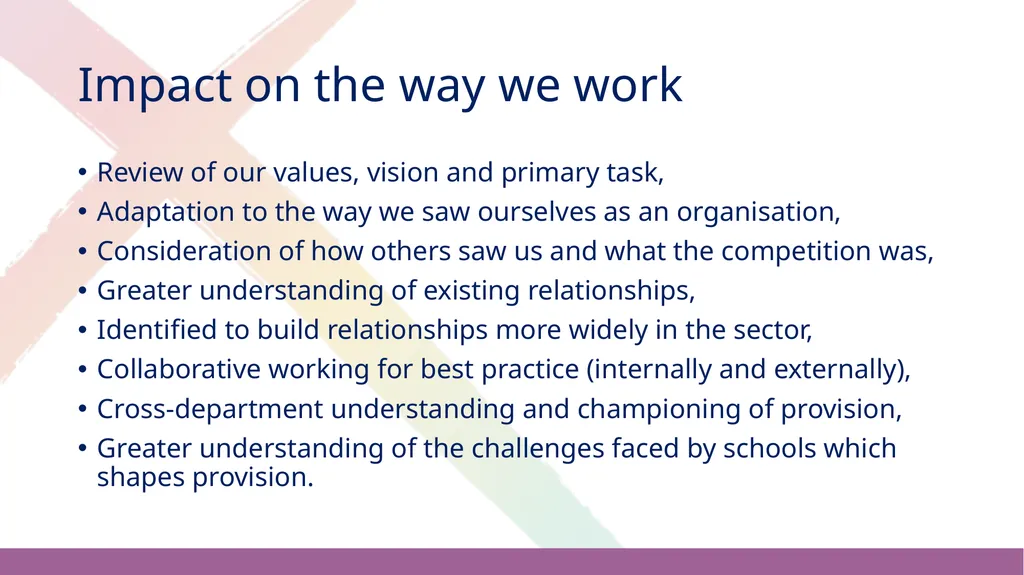
Impact on the way we work Review of our values, vision and primary task,
Adaptation to the way we saw ourselves as an organisation,
Consideration of how others saw us and what the competition was,
Greater understanding of existing relationships,
Identified to build relationships more widely in the sector,
Collaborative working for best practice (internally and externally),
Cross-department understanding and championing of provision,
Greater understanding of the challenges faced by schools which shapes provision.<br>
17
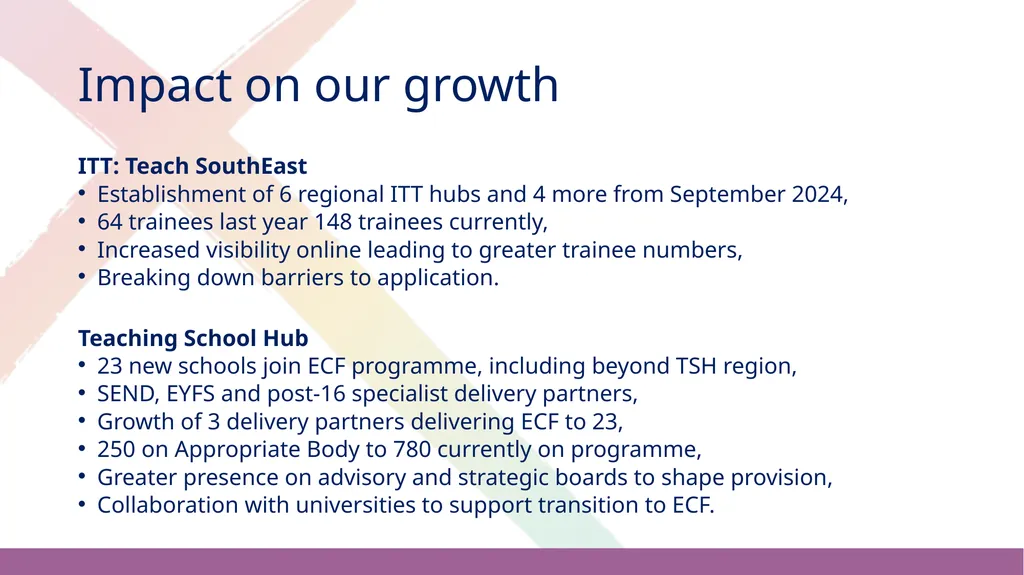
Impact on our growth ITT: Teach SouthEast
Establishment of 6 regional ITT hubs and 4 more from September 2024,
64 trainees last year 148 trainees currently,
Increased visibility online leading to greater trainee numbers,
Breaking down barriers to application.
Teaching School Hub
23 new schools join ECF programme, including beyond TSH region,
SEND, EYFS and post-16 specialist delivery partners,
Growth of 3 delivery partners delivering ECF to 23,
250 on Appropriate Body to 780 currently on programme,
Greater presence on advisory and strategic boards to shape provision,
Collaboration with universities to support transition to ECF.<br>
18
Any Questions ? Please get in touch:
Sean Cavan - seancavan1@outloook.com 07718638327
Amy Harper - a.harper@xaviercet.org.uk 07973332875<br>
19
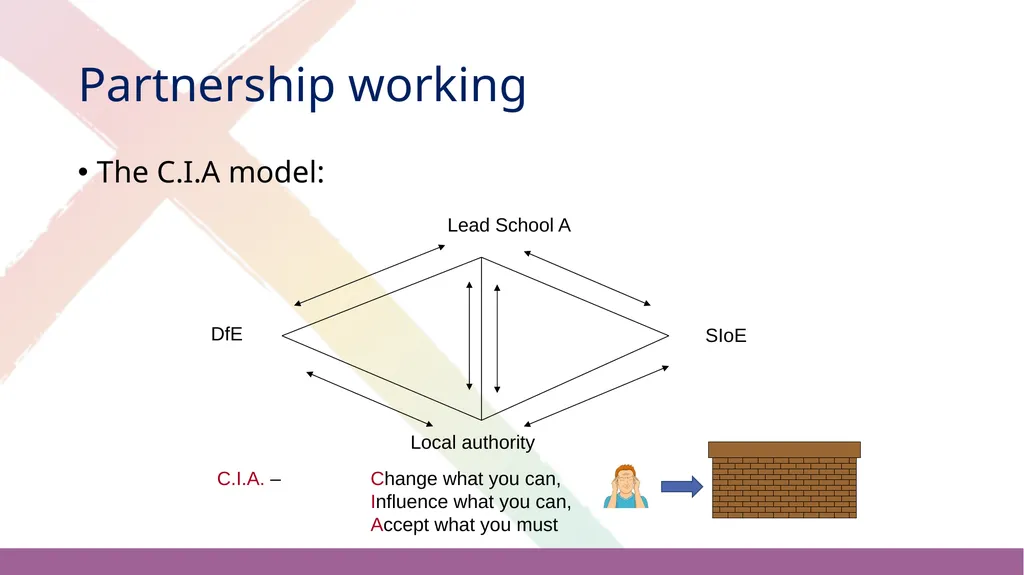
Partnership working The C.I.A model: Lead School A Local authority DfE SIoE C.I.A. – Change what you can,
Influence what you can,
Accept what you must<br>