
Strategies for Section GG ADLs for PDPM Carol
TA
Published · 97 slides · 0 views

1 / 1








Description
Strategies for Section GG ADLs for PDPM Carol Maher, RN-BC, RAC-MTA, RAC-MT, RAC-CTA, RAC-CT, CPC PDPM PDPM payment is based upon clinically verifiable resident characteristics. The 2 most important processes affecting payment will be
Related Topics
Share
Embed code
Download this presentation From Below
"Strategies for Section GG ADLs for PDPM Carol" is the property of its rightful owner. Permission is granted to download and print the materials on this website for personal, non-commercial use only, and to display it on your personal computer provided you do not modify the materials and that you retain all copyright notices contained in the materials. By downloading content from our website, you accept the terms of this agreement.
Presentation Transcript
01
Strategies for Section GG
ADLs for PDPM Carol Maher, RN-BC, RAC-MTA, RAC-MT, RAC-CTA, RAC-CT, CPC<br>
02
PDPM PDPM payment is based upon clinically verifiable resident characteristics.
The 2 most important processes affecting payment will be ICD-10-CM coding and the Section GG functional scores.<br>
The 2 most important processes affecting payment will be ICD-10-CM coding and the Section GG functional scores.<br>
03
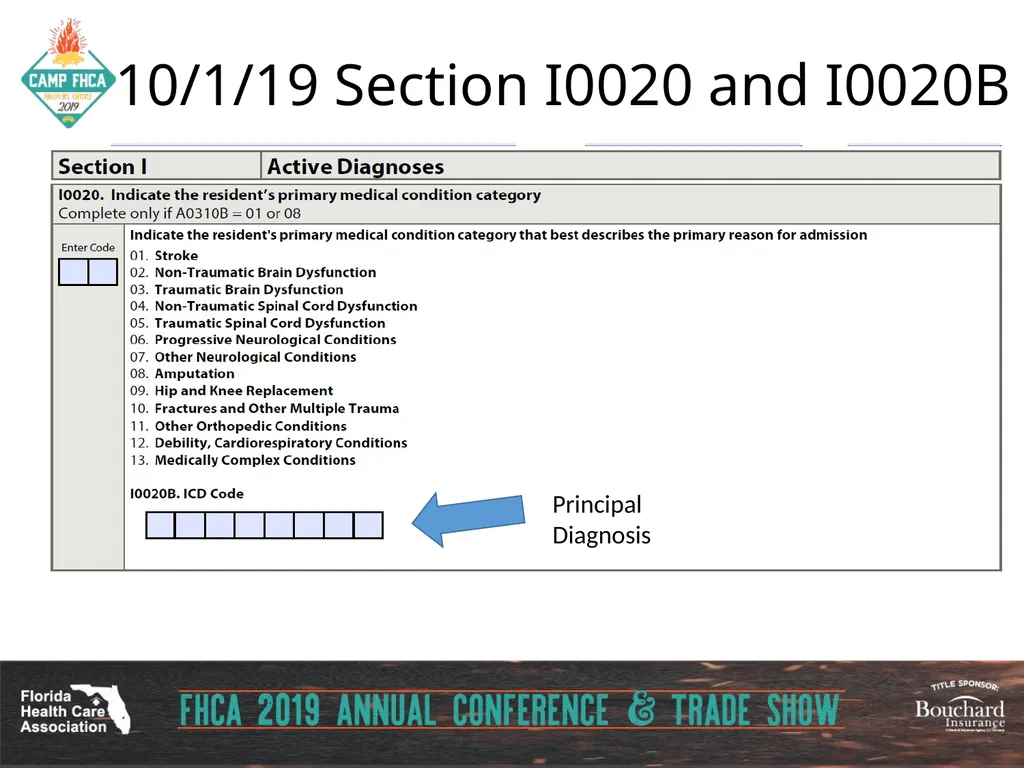
10/1/19 Section I0020 and I0020B Principal Diagnosis<br>
04
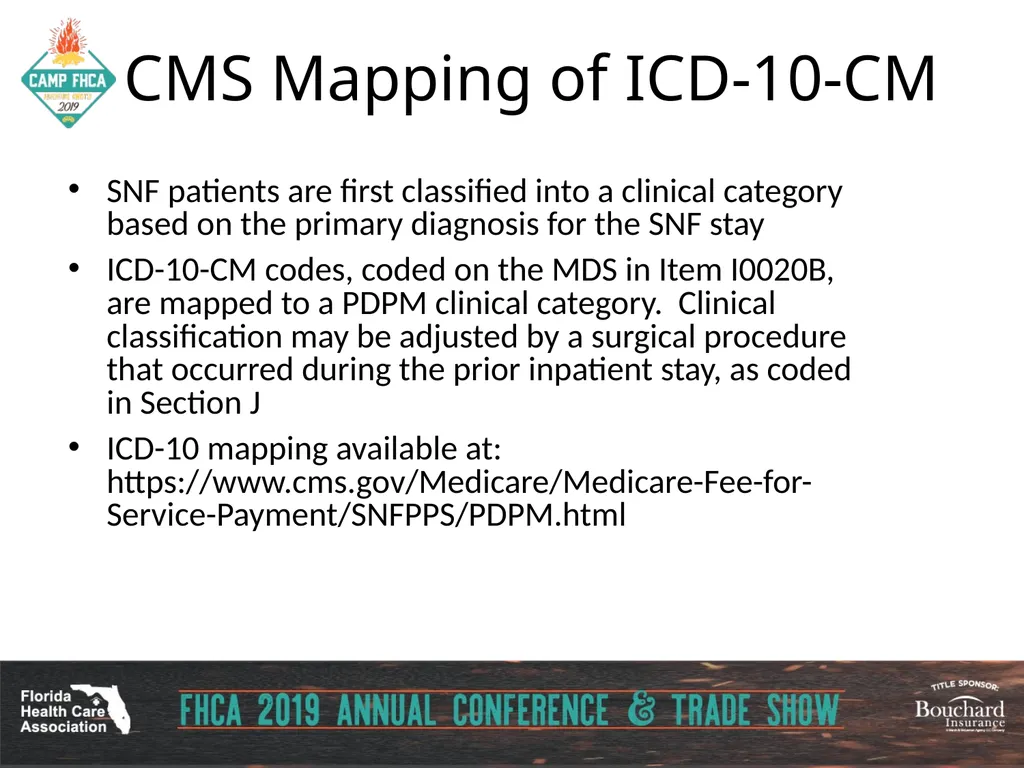
CMS Mapping of ICD-10-CM SNF patients are first classified into a clinical category based on the primary diagnosis for the SNF stay
ICD-10-CM codes, coded on the MDS in Item I0020B, are mapped to a PDPM clinical category. Clinical classification may be adjusted by a surgical procedure that occurred during the prior inpatient stay, as coded in Section J
ICD-10 mapping available at: https://www.cms.gov/Medicare/Medicare-Fee-for-Service-Payment/SNFPPS/PDPM.html<br>
05
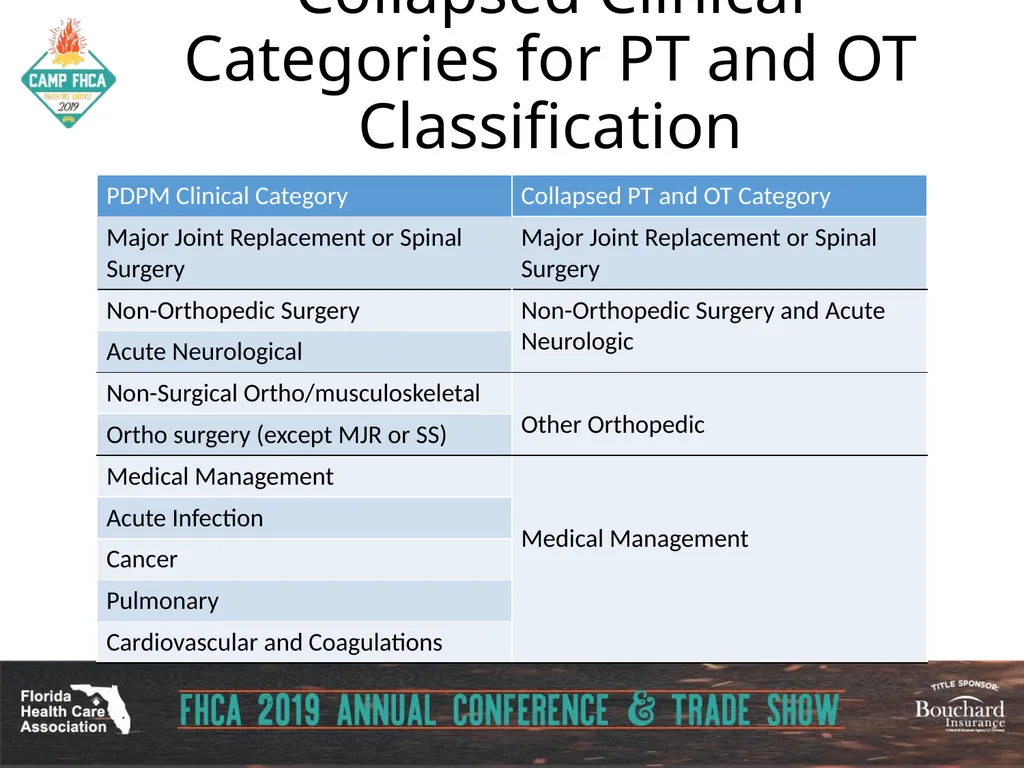
Collapsed Clinical Categories for PT and OT Classification<br>
06
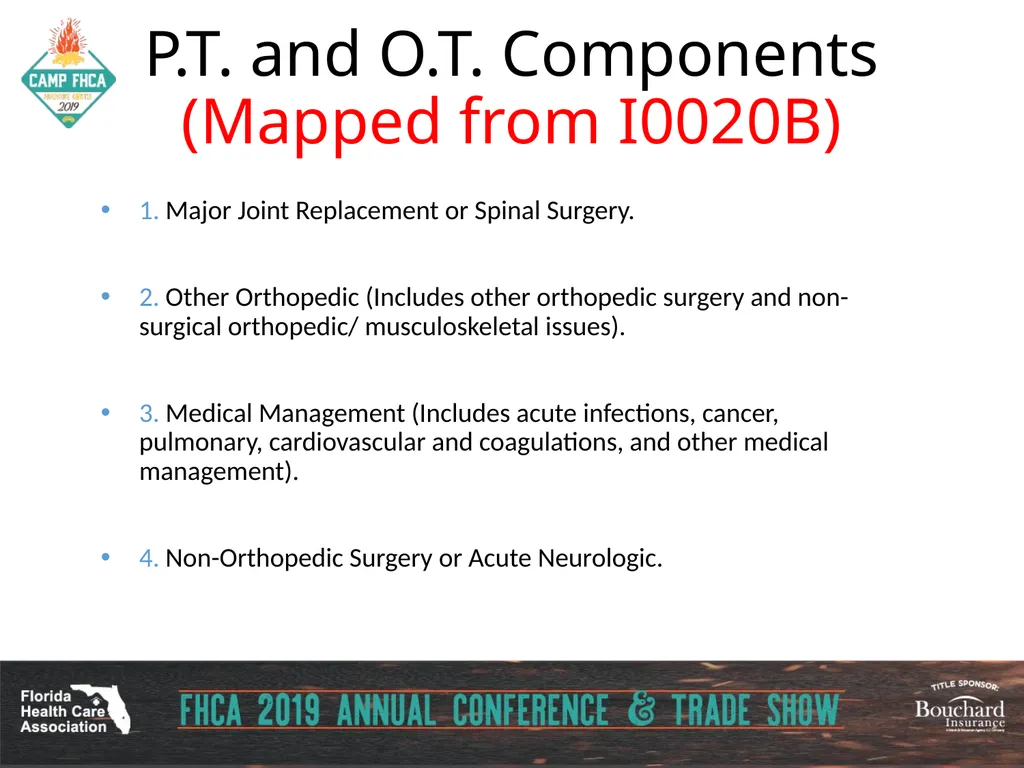
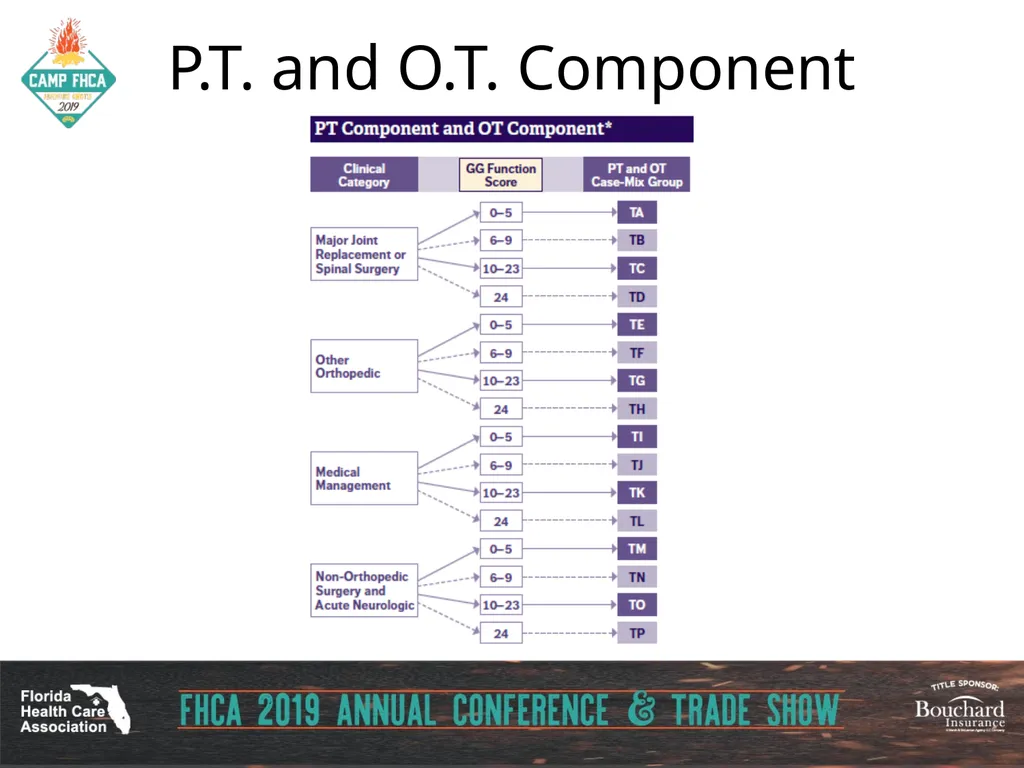
P.T. and O.T. Components
(Mapped from I0020B) 1. Major Joint Replacement or Spinal Surgery.
2. Other Orthopedic (Includes other orthopedic surgery and non-surgical orthopedic/ musculoskeletal issues).
3. Medical Management (Includes acute infections, cancer, pulmonary, cardiovascular and coagulations, and other medical management).
4. Non-Orthopedic Surgery or Acute Neurologic.<br>
2. Other Orthopedic (Includes other orthopedic surgery and non-surgical orthopedic/ musculoskeletal issues).
3. Medical Management (Includes acute infections, cancer, pulmonary, cardiovascular and coagulations, and other medical management).
4. Non-Orthopedic Surgery or Acute Neurologic.<br>
07
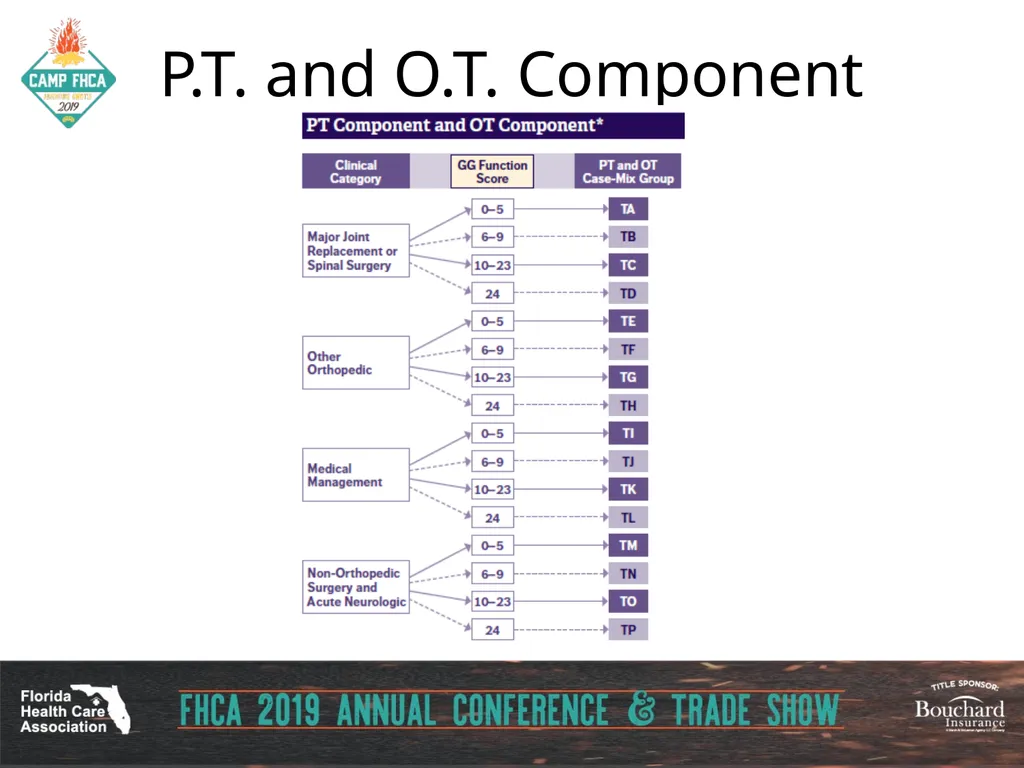
P.T. and O.T. Component<br>
08
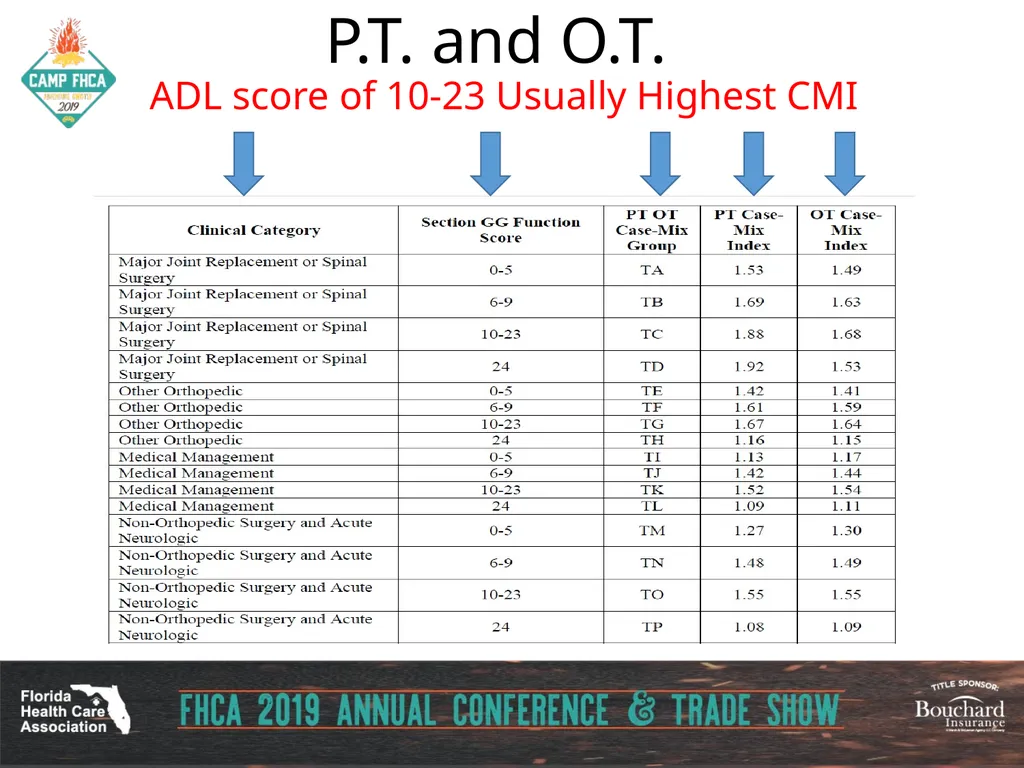
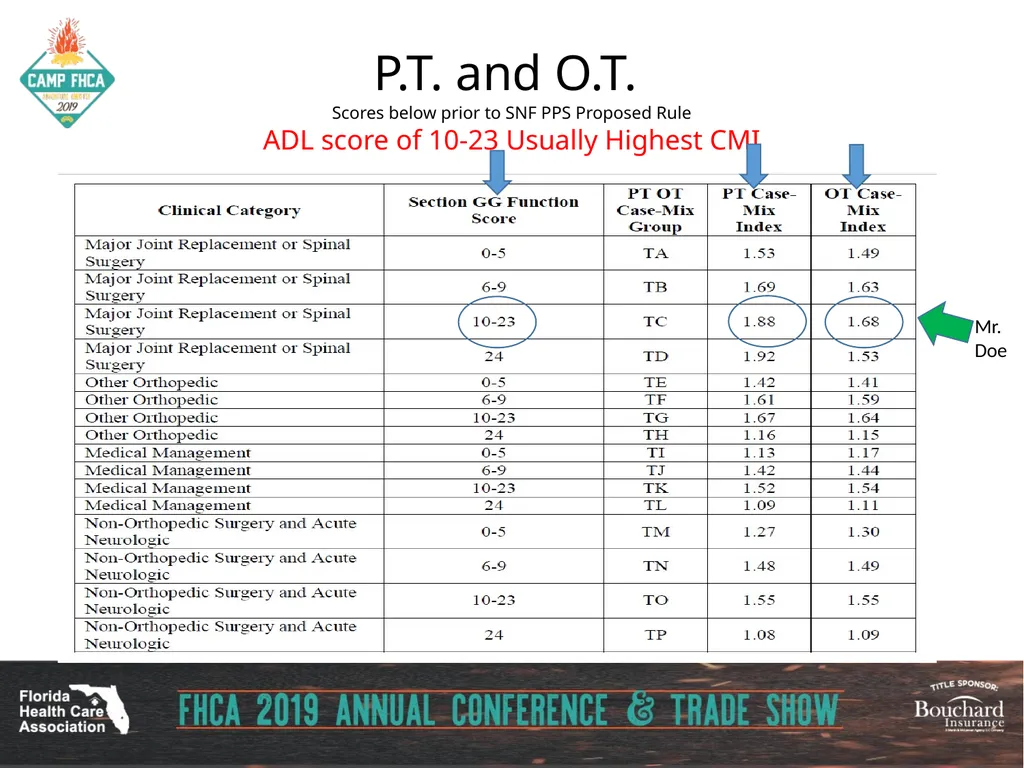
P.T. and O.T.
ADL score of 10-23 Usually Highest CMI<br>
09
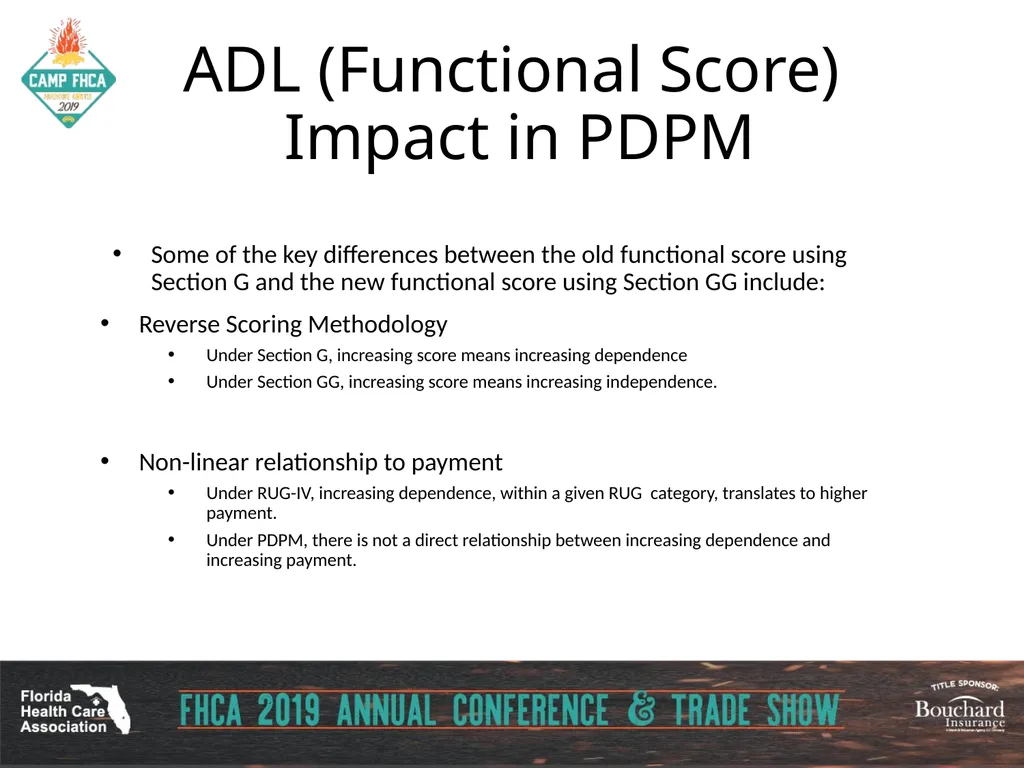
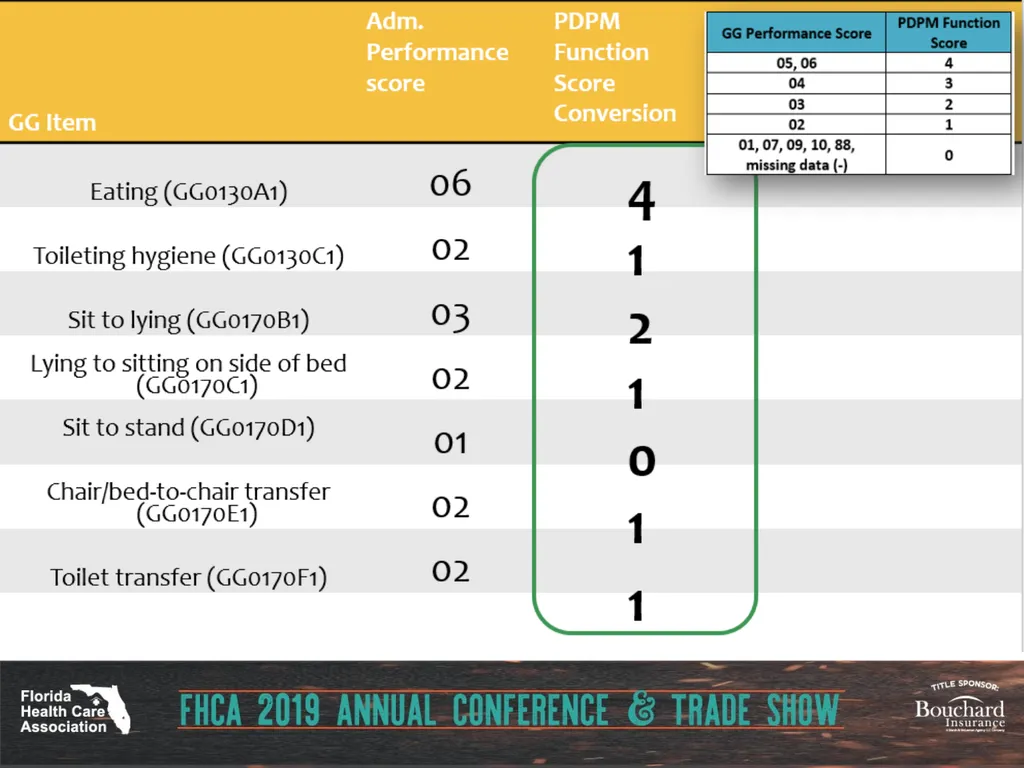
ADL (Functional Score)
Impact in PDPM Some of the key differences between the old functional score using Section G and the new functional score using Section GG include:
Reverse Scoring Methodology
Under Section G, increasing score means increasing dependence
Under Section GG, increasing score means increasing independence.
Non-linear relationship to payment
Under RUG-IV, increasing dependence, within a given RUG category, translates to higher payment.
Under PDPM, there is not a direct relationship between increasing dependence and increasing payment.<br>
10
Section GG Is used to calculate the Functional splits for the P.T, O.T, and Nursing components of PDPM.<br>
11
RAI Manual Instructions
(Focus on Payment Items)<br>
12
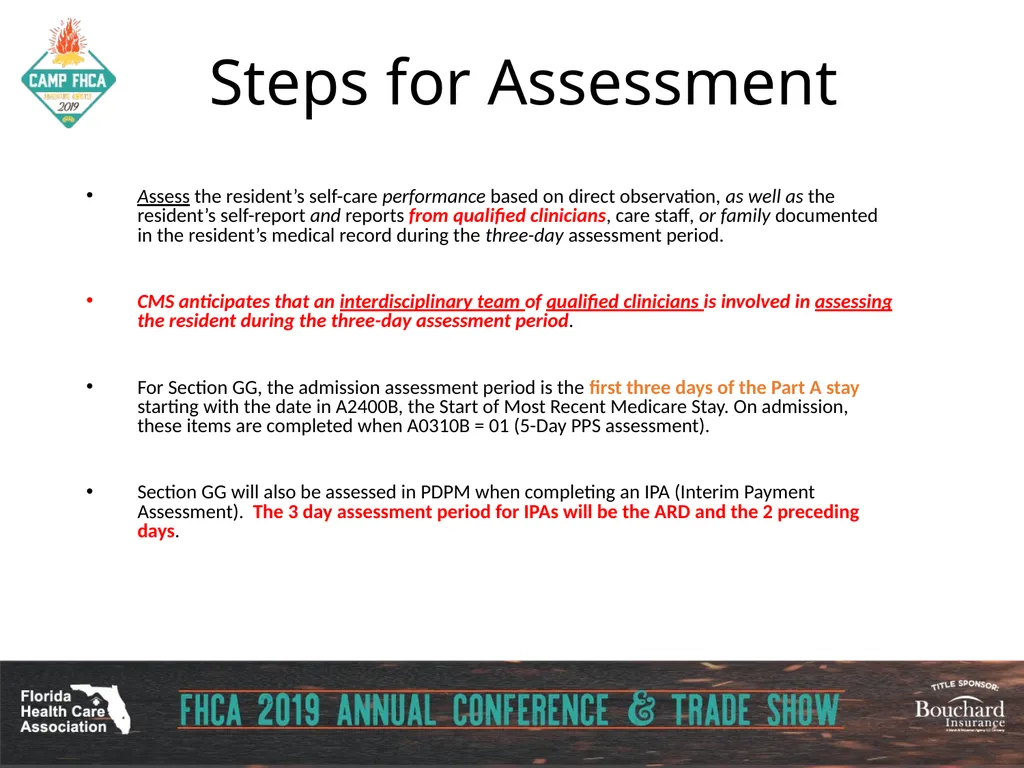
Steps for Assessment Assess the resident’s self-care performance based on direct observation, as well as the resident’s self-report and reports from qualified clinicians, care staff, or family documented in the resident’s medical record during the three-day assessment period.
CMS anticipates that an interdisciplinary team of qualified clinicians is involved in assessing the resident during the three-day assessment period.
For Section GG, the admission assessment period is the first three days of the Part A stay starting with the date in A2400B, the Start of Most Recent Medicare Stay. On admission, these items are completed when A0310B = 01 (5-Day PPS assessment).
Section GG will also be assessed in PDPM when completing an IPA (Interim Payment Assessment). The 3 day assessment period for IPAs will be the ARD and the 2 preceding days.<br>
13
Qualified Clinician QUALIFIED CLINICIAN
Healthcare professionals practicing within their scope of practice and consistent with Federal, State, and local law and regulations.<br>
Healthcare professionals practicing within their scope of practice and consistent with Federal, State, and local law and regulations.<br>
14
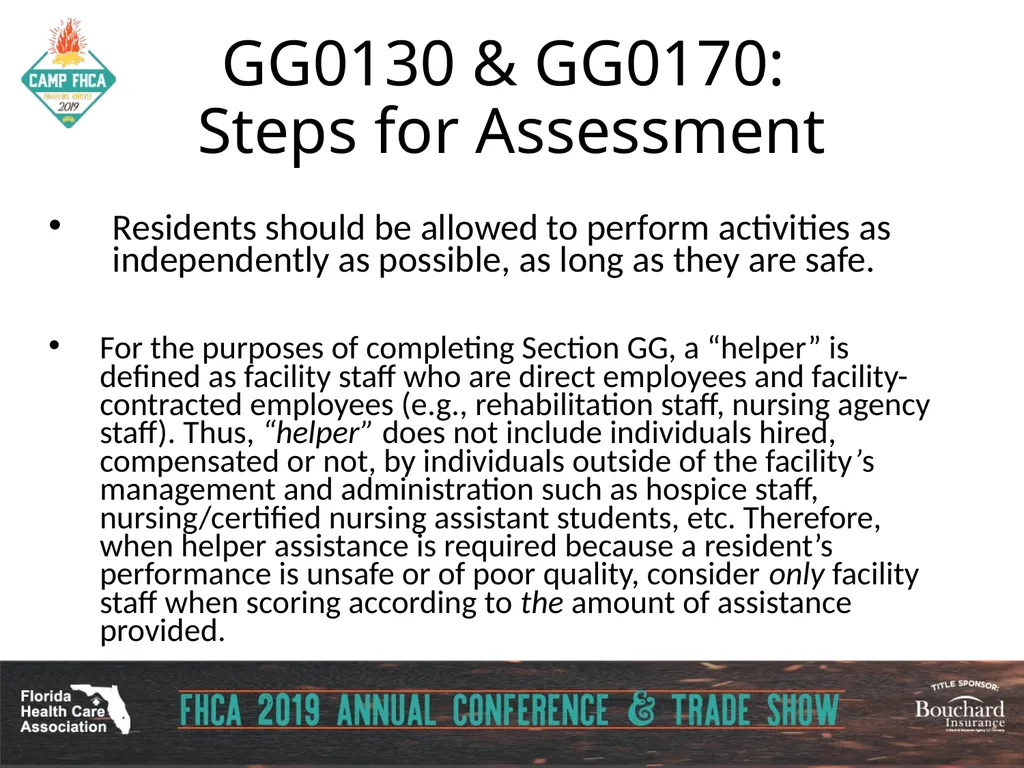
GG0130 & GG0170:
Steps for Assessment Residents should be allowed to perform activities as independently as possible, as long as they are safe.
For the purposes of completing Section GG, a “helper” is defined as facility staff who are direct employees and facility-contracted employees (e.g., rehabilitation staff, nursing agency staff). Thus, “helper” does not include individuals hired, compensated or not, by individuals outside of the facility’s management and administration such as hospice staff, nursing/certified nursing assistant students, etc. Therefore, when helper assistance is required because a resident’s performance is unsafe or of poor quality, consider only facility staff when scoring according to the amount of assistance provided.<br>
15
GG0130 & GG0170:
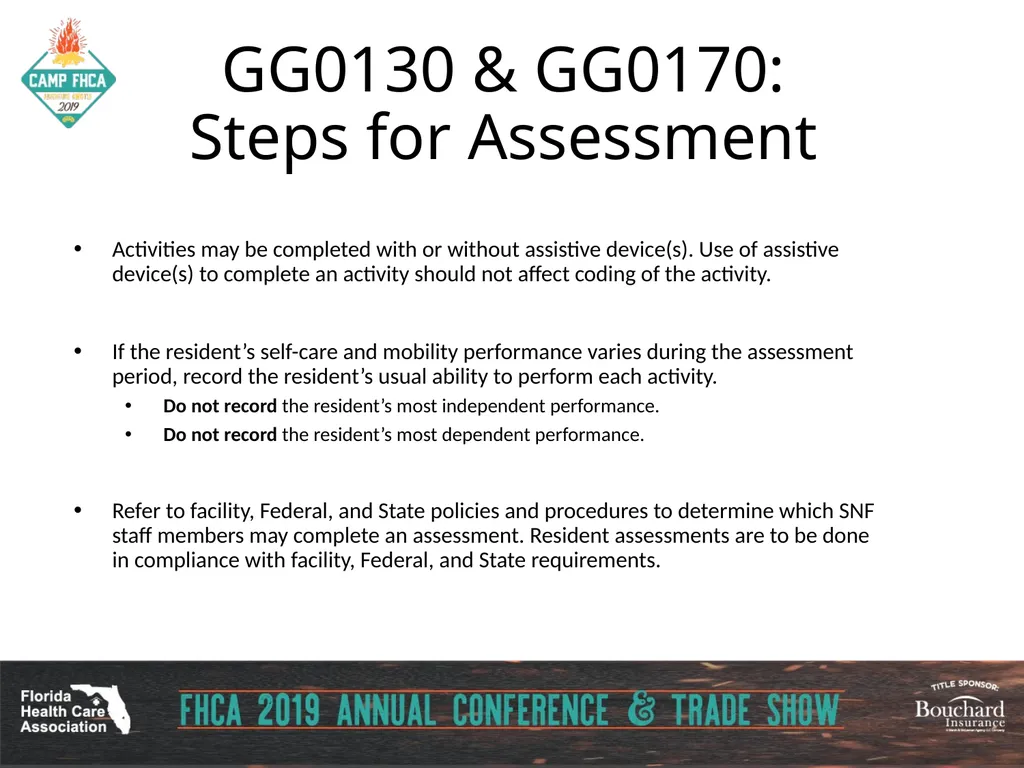
Steps for Assessment Activities may be completed with or without assistive device(s). Use of assistive device(s) to complete an activity should not affect coding of the activity.
If the resident’s self-care and mobility performance varies during the assessment period, record the resident’s usual ability to perform each activity.
Do not record the resident’s most independent performance.
Do not record the resident’s most dependent performance.
Refer to facility, Federal, and State policies and procedures to determine which SNF staff members may complete an assessment. Resident assessments are to be done in compliance with facility, Federal, and State requirements.<br>
16
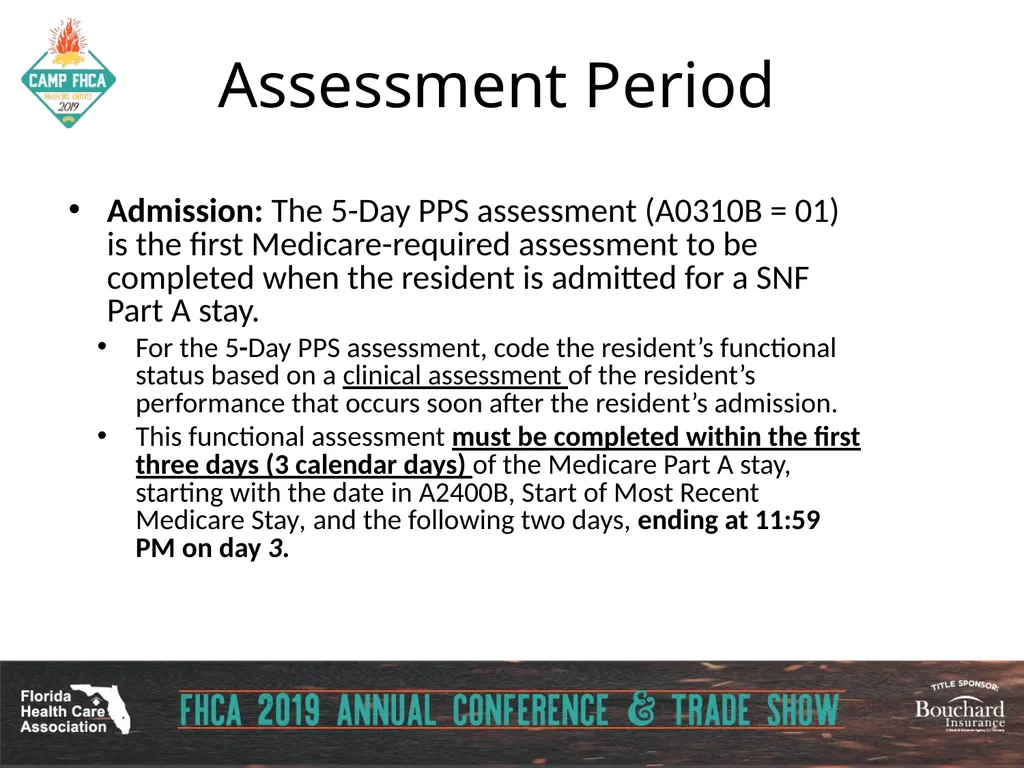
Assessment Period Admission: The 5-Day PPS assessment (A0310B = 01) is the first Medicare-required assessment to be completed when the resident is admitted for a SNF Part A stay.
For the 5-Day PPS assessment, code the resident’s functional status based on a clinical assessment of the resident’s performance that occurs soon after the resident’s admission.
This functional assessment must be completed within the first three days (3 calendar days) of the Medicare Part A stay, starting with the date in A2400B, Start of Most Recent Medicare Stay, and the following two days, ending at 11:59 PM on day 3.<br>
17
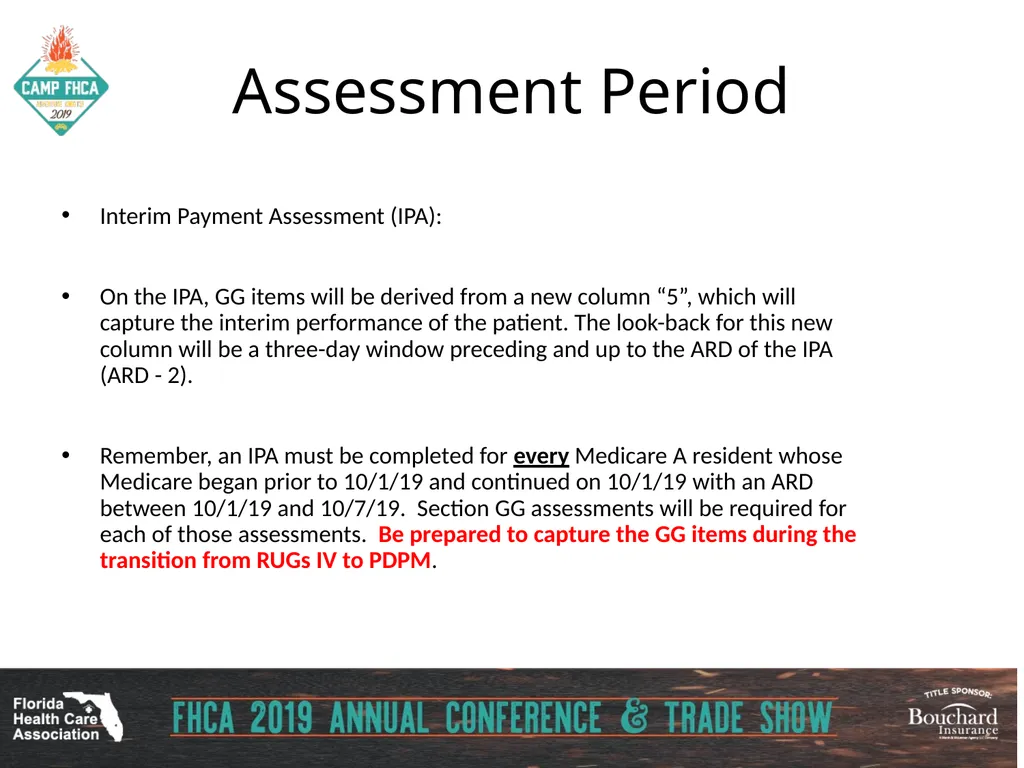
Assessment Period Interim Payment Assessment (IPA):
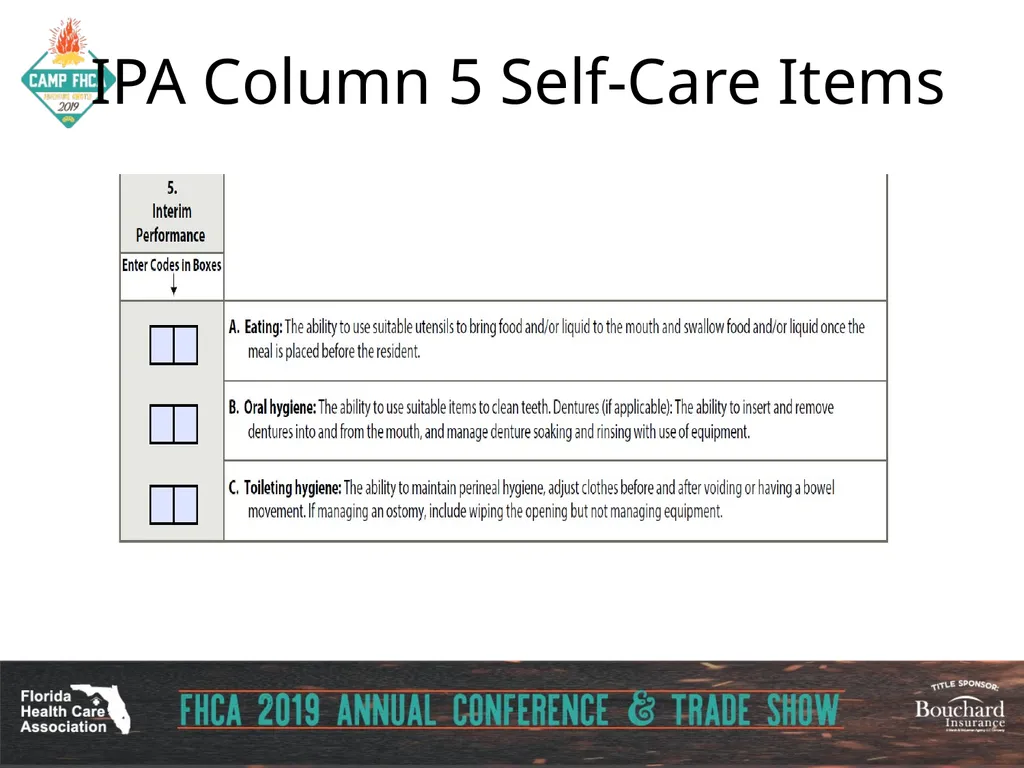
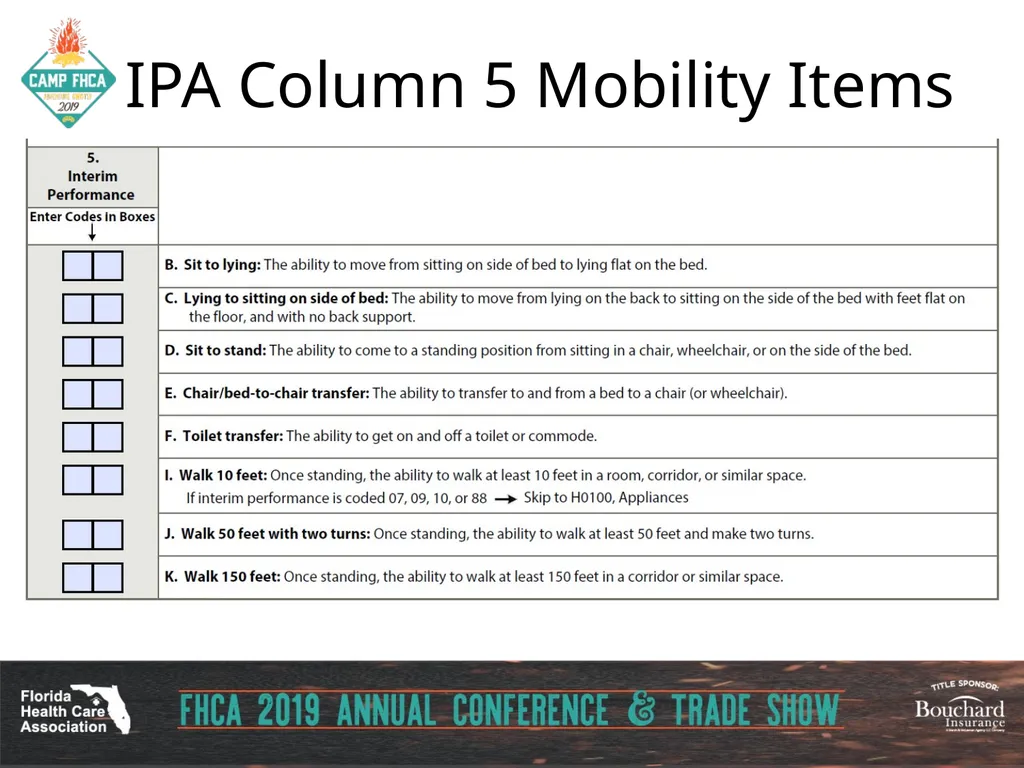
On the IPA, GG items will be derived from a new column “5”, which will capture the interim performance of the patient. The look-back for this new column will be a three-day window preceding and up to the ARD of the IPA (ARD - 2).
Remember, an IPA must be completed for every Medicare A resident whose Medicare began prior to 10/1/19 and continued on 10/1/19 with an ARD between 10/1/19 and 10/7/19. Section GG assessments will be required for each of those assessments. Be prepared to capture the GG items during the transition from RUGs IV to PDPM.<br>
18
IPA Column 5 Self-Care Items<br>
19
IPA Column 5 Mobility Items<br>
20
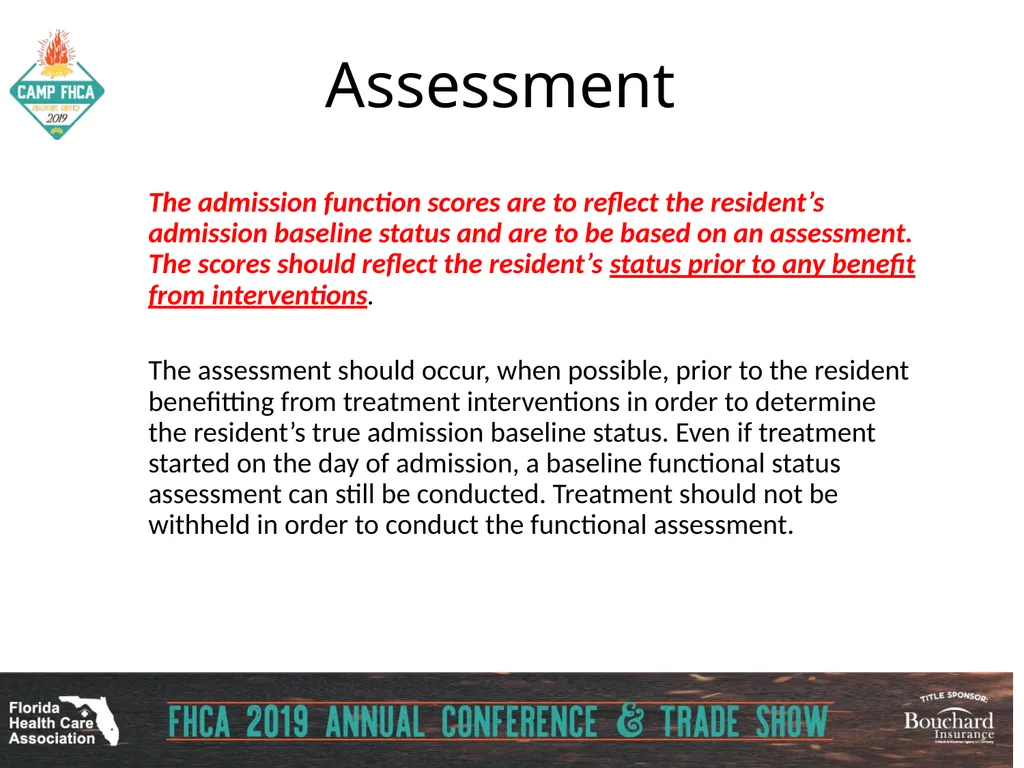
Assessment The admission function scores are to reflect the resident’s admission baseline status and are to be based on an assessment. The scores should reflect the resident’s status prior to any benefit from interventions.
The assessment should occur, when possible, prior to the resident benefitting from treatment interventions in order to determine the resident’s true admission baseline status. Even if treatment started on the day of admission, a baseline functional status assessment can still be conducted. Treatment should not be withheld in order to conduct the functional assessment.<br>
The assessment should occur, when possible, prior to the resident benefitting from treatment interventions in order to determine the resident’s true admission baseline status. Even if treatment started on the day of admission, a baseline functional status assessment can still be conducted. Treatment should not be withheld in order to conduct the functional assessment.<br>
21
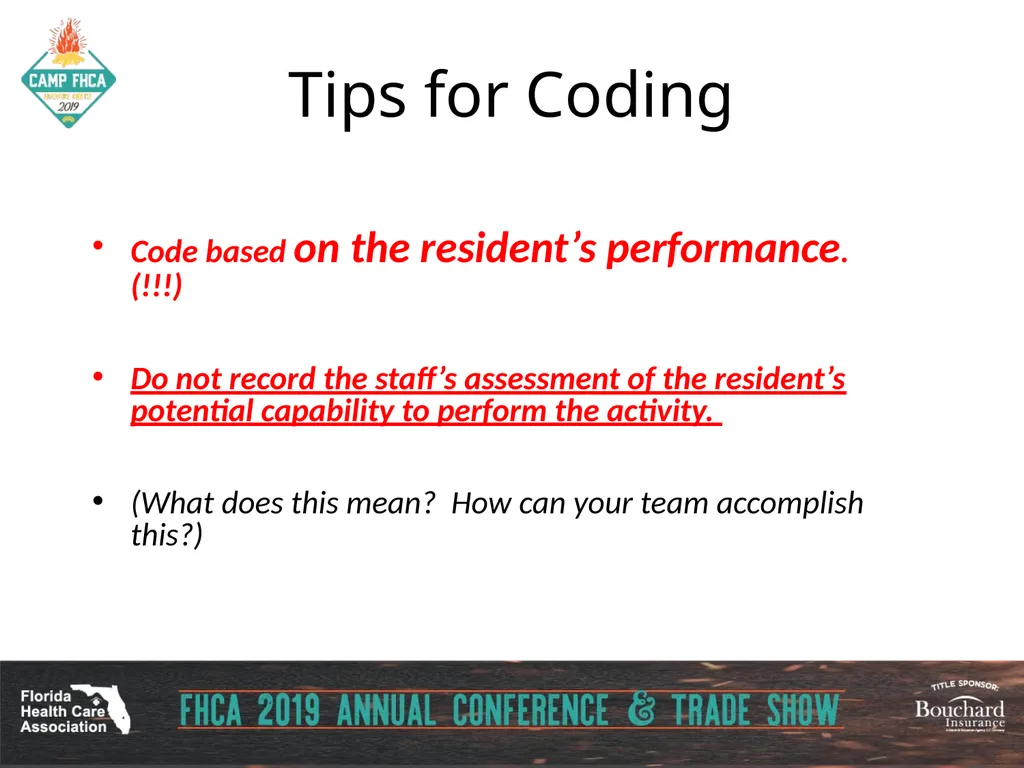
Tips for Coding Code based on the resident’s performance. (!!!)
Do not record the staff’s assessment of the resident’s potential capability to perform the activity.
(What does this mean? How can your team accomplish this?)<br>
Do not record the staff’s assessment of the resident’s potential capability to perform the activity.
(What does this mean? How can your team accomplish this?)<br>
22
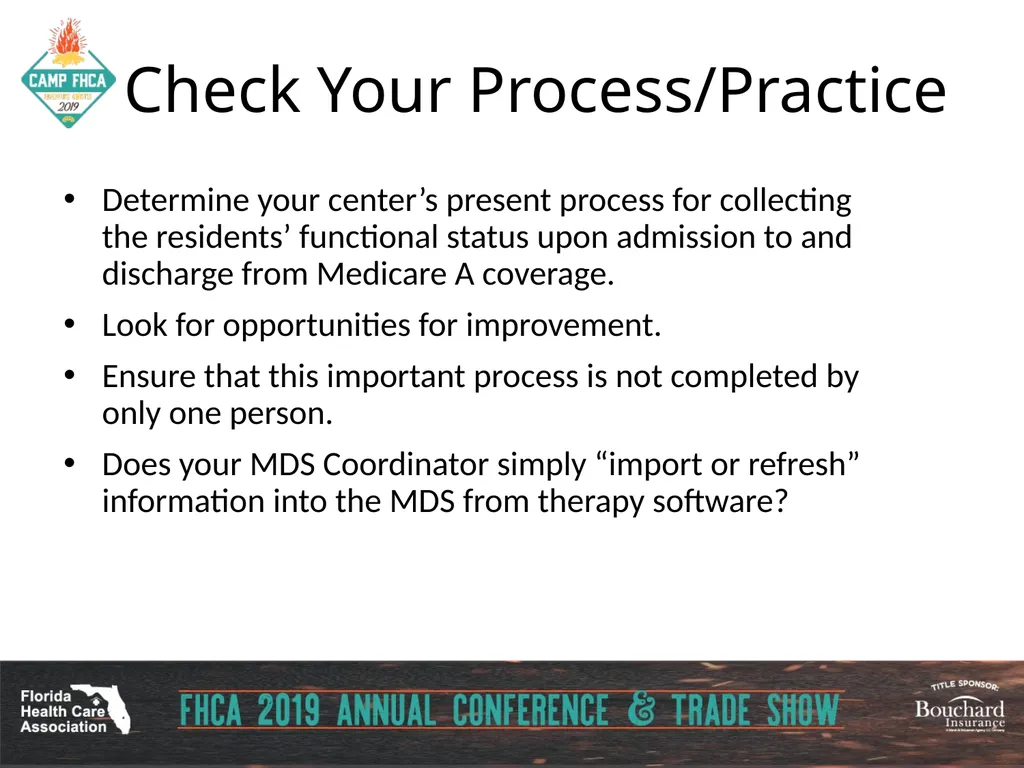
Check Your Process/Practice Determine your center’s present process for collecting the residents’ functional status upon admission to and discharge from Medicare A coverage.
Look for opportunities for improvement.
Ensure that this important process is not completed by only one person.
Does your MDS Coordinator simply “import or refresh” information into the MDS from therapy software?<br>
Look for opportunities for improvement.
Ensure that this important process is not completed by only one person.
Does your MDS Coordinator simply “import or refresh” information into the MDS from therapy software?<br>
23
Next Steps Develop a team approach to collecting GG assessment data.
Therapy software often requires a therapist to enter a code for each GG item so the software can close. Ensure that any data used to code the MDS was actually assessed and documented in the medical record. A number entered into the software most likely will not suffice.<br>
Therapy software often requires a therapist to enter a code for each GG item so the software can close. Ensure that any data used to code the MDS was actually assessed and documented in the medical record. A number entered into the software most likely will not suffice.<br>
24
Section GG Coding<br>
25
General Coding Tips Admission Performance and Discharge Goals are coded on every 5-day PPS Assessment (Start of Part A PPS Stay) regardless of length of stay and planned or unplanned discharge.
If the resident has an incomplete stay:
Complete admission performance and goals.
Discharge self-care and mobility performance items are not required. (Part A PPS Discharge is required even though GG may be skipped.)<br>
If the resident has an incomplete stay:
Complete admission performance and goals.
Discharge self-care and mobility performance items are not required. (Part A PPS Discharge is required even though GG may be skipped.)<br>
26
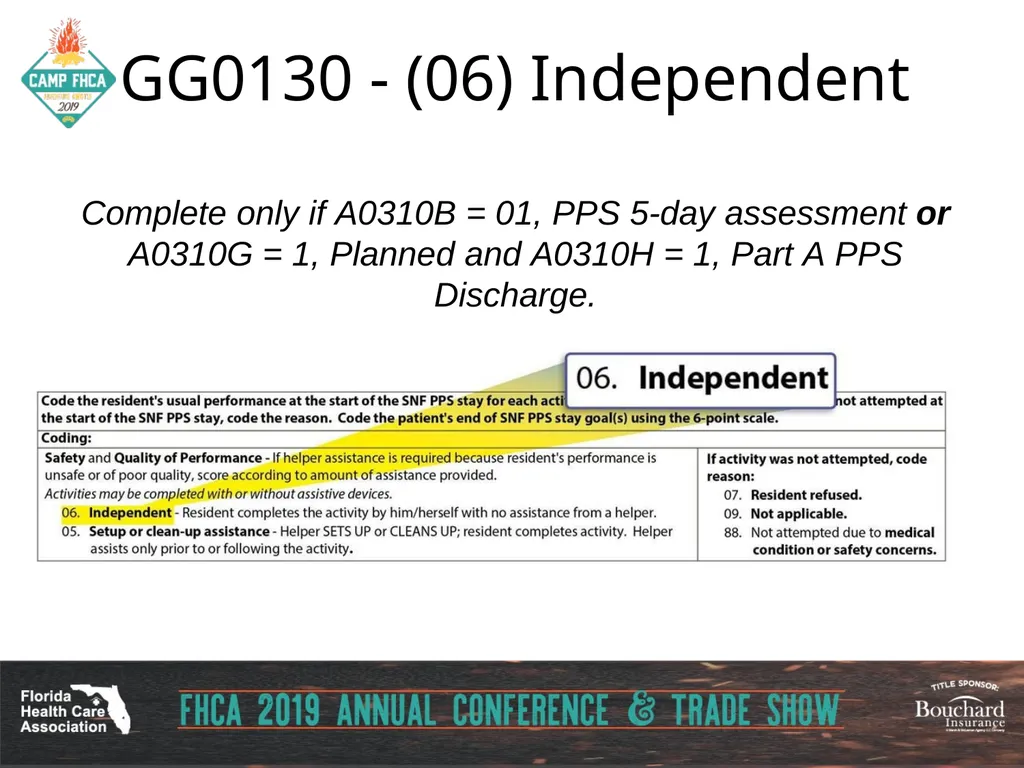
GG0130 - (06) Independent Complete only if A0310B = 01, PPS 5-day assessment or A0310G = 1, Planned and A0310H = 1, Part A PPS Discharge.<br>
27
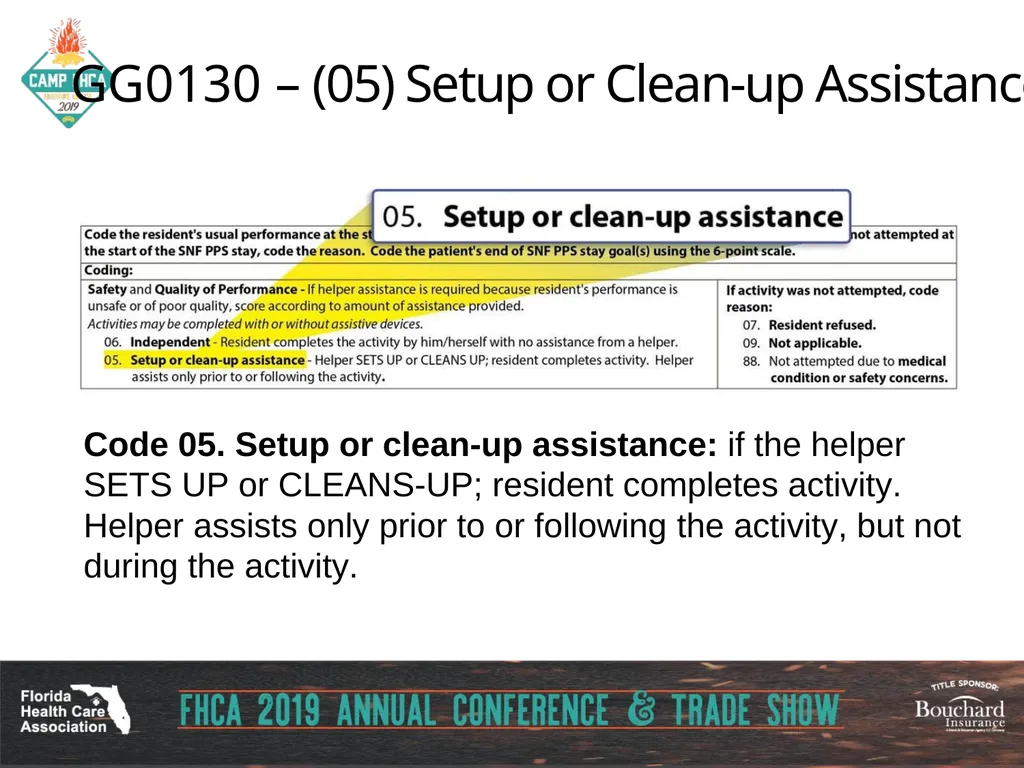
GG0130 – (05) Setup or Clean-up Assistance Code 05. Setup or clean-up assistance: if the helper SETS UP or CLEANS-UP; resident completes activity. Helper assists only prior to or following the activity, but not during the activity.<br>
28
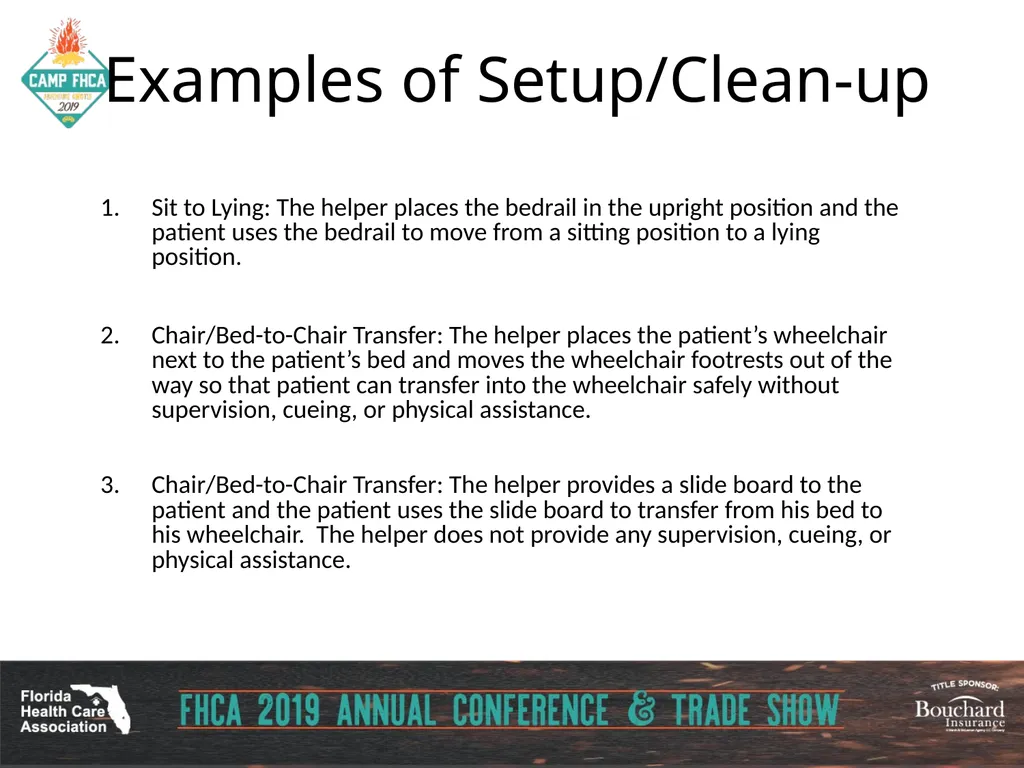
Examples of Setup/Clean-up Sit to Lying: The helper places the bedrail in the upright position and the patient uses the bedrail to move from a sitting position to a lying position.
Chair/Bed-to-Chair Transfer: The helper places the patient’s wheelchair next to the patient’s bed and moves the wheelchair footrests out of the way so that patient can transfer into the wheelchair safely without supervision, cueing, or physical assistance.
Chair/Bed-to-Chair Transfer: The helper provides a slide board to the patient and the patient uses the slide board to transfer from his bed to his wheelchair. The helper does not provide any supervision, cueing, or physical assistance.<br>
29
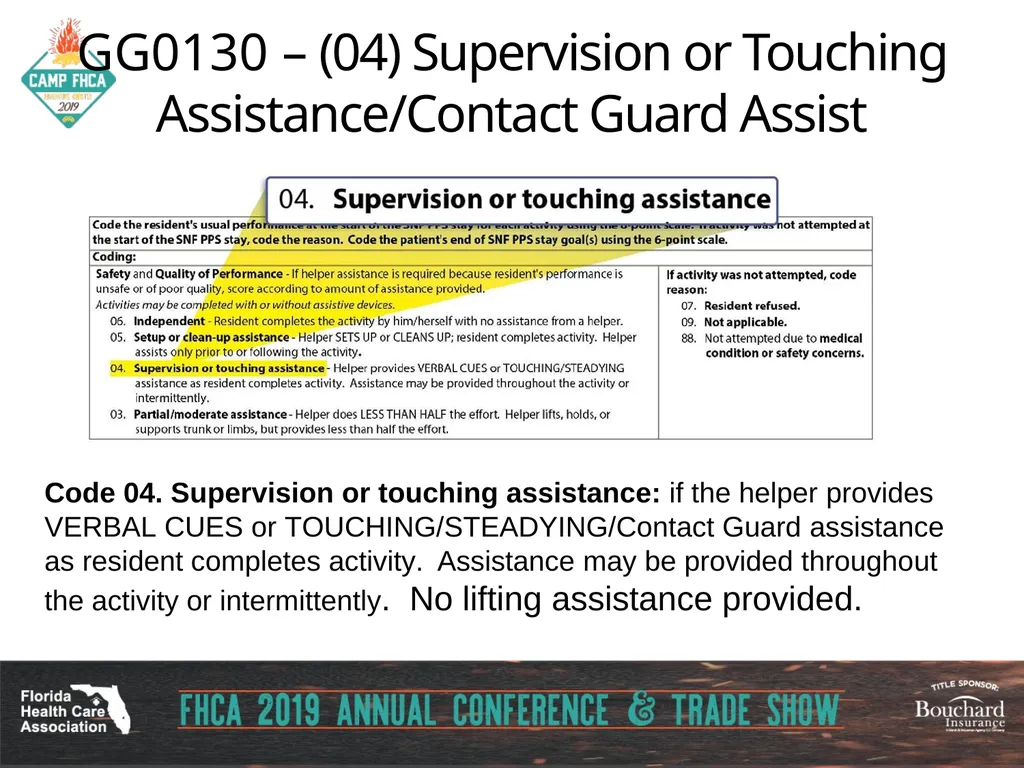
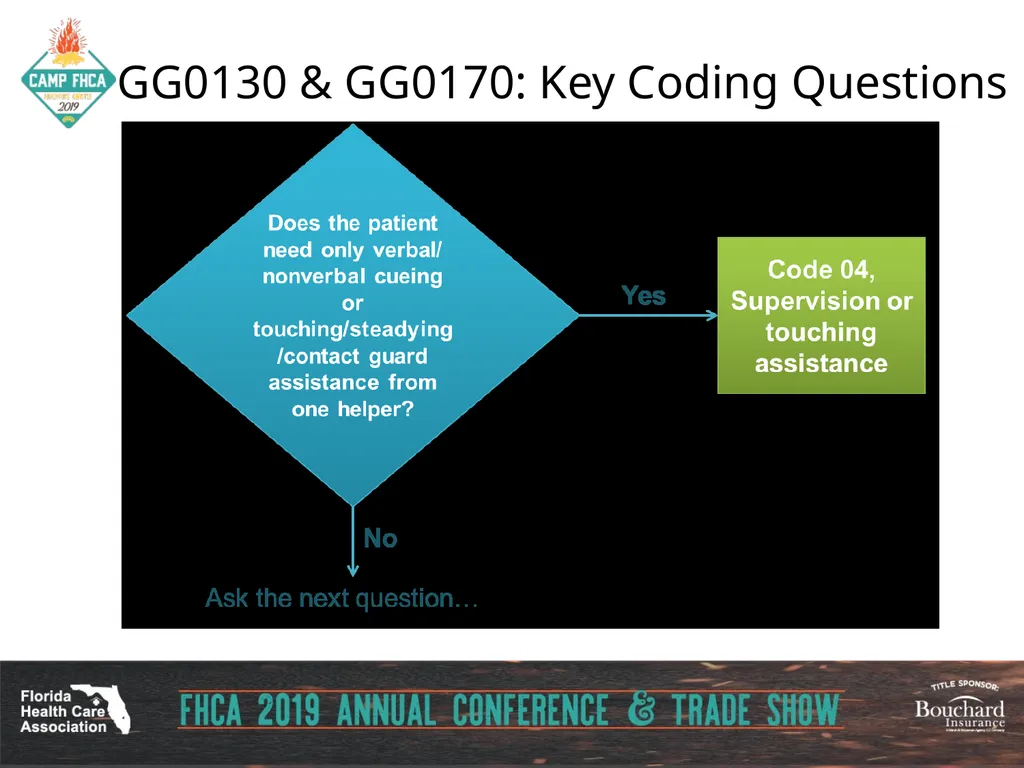
GG0130 – (04) Supervision or Touching Assistance/Contact Guard Assist Code 04. Supervision or touching assistance: if the helper provides VERBAL CUES or TOUCHING/STEADYING/Contact Guard assistance as resident completes activity. Assistance may be provided throughout the activity or intermittently. No lifting assistance provided.<br>
30
GG0130 – (03)
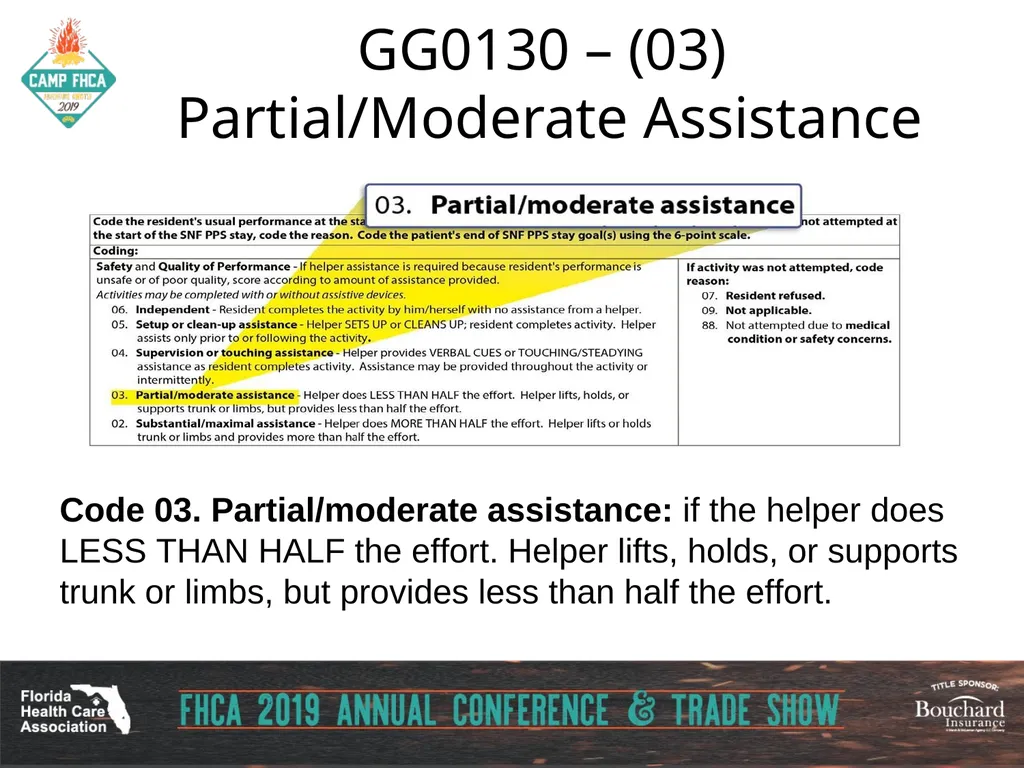
Partial/Moderate Assistance Code 03. Partial/moderate assistance: if the helper does LESS THAN HALF the effort. Helper lifts, holds, or supports trunk or limbs, but provides less than half the effort.<br>
Partial/Moderate Assistance Code 03. Partial/moderate assistance: if the helper does LESS THAN HALF the effort. Helper lifts, holds, or supports trunk or limbs, but provides less than half the effort.<br>
31
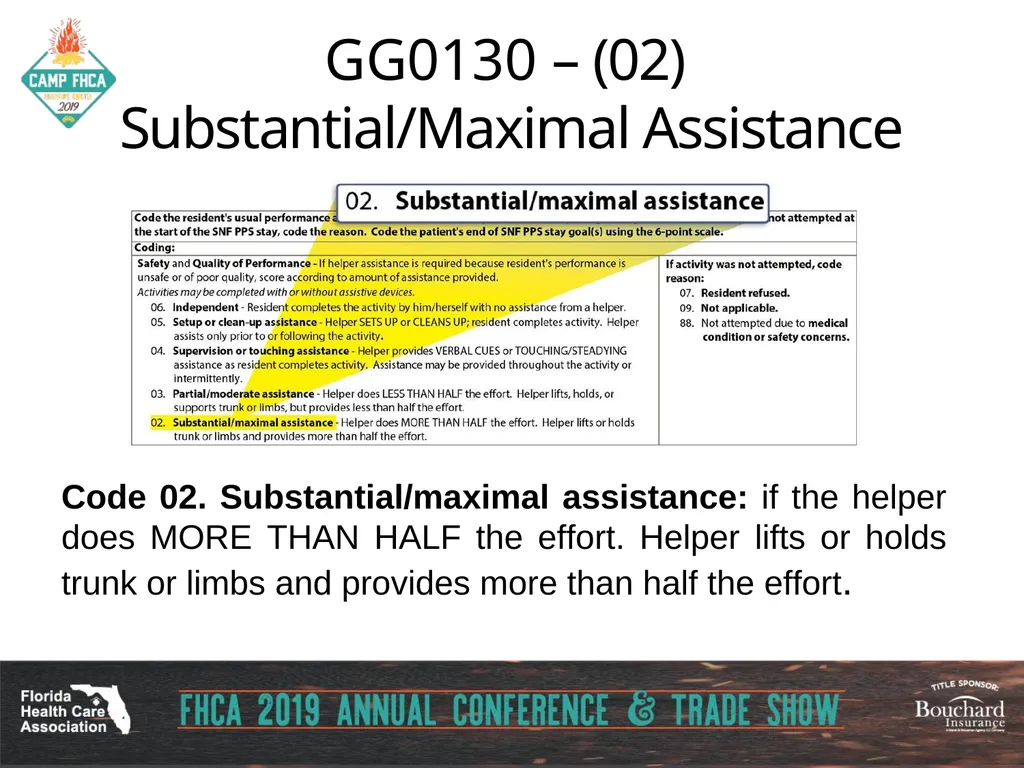
GG0130 – (02)
Substantial/Maximal Assistance Code 02. Substantial/maximal assistance: if the helper does MORE THAN HALF the effort. Helper lifts or holds trunk or limbs and provides more than half the effort.<br>
Substantial/Maximal Assistance Code 02. Substantial/maximal assistance: if the helper does MORE THAN HALF the effort. Helper lifts or holds trunk or limbs and provides more than half the effort.<br>
32
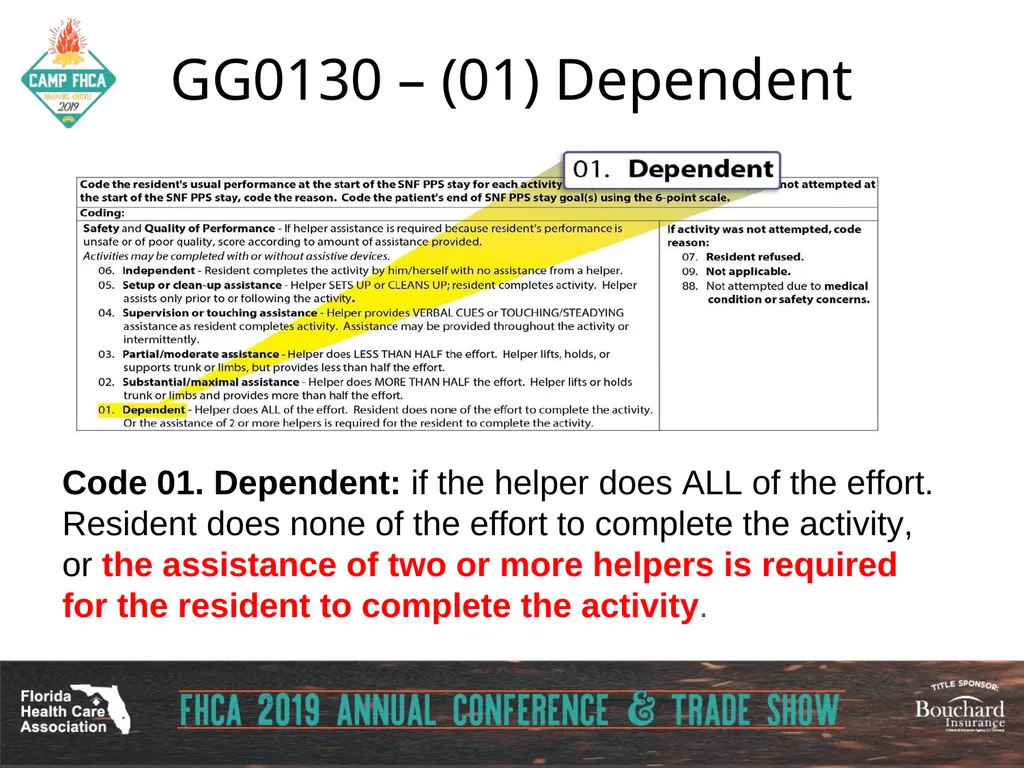
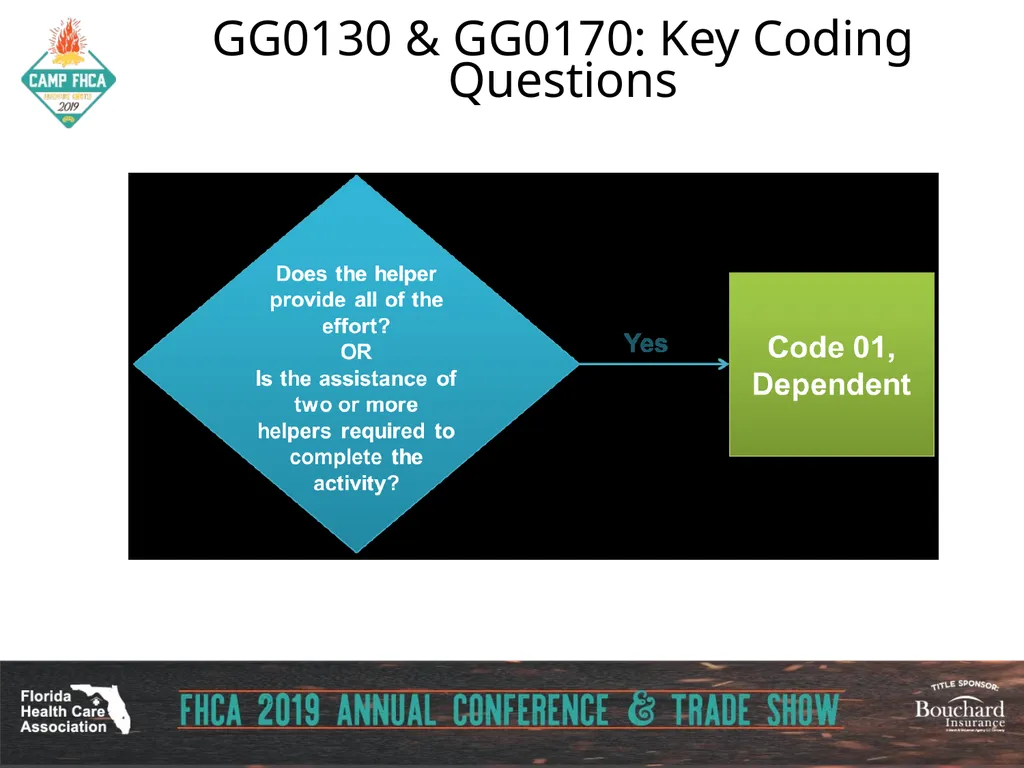
GG0130 – (01) Dependent Code 01. Dependent: if the helper does ALL of the effort. Resident does none of the effort to complete the activity, or the assistance of two or more helpers is required for the resident to complete the activity.<br>
33
If activity was not attempted, code reason:<br>
34
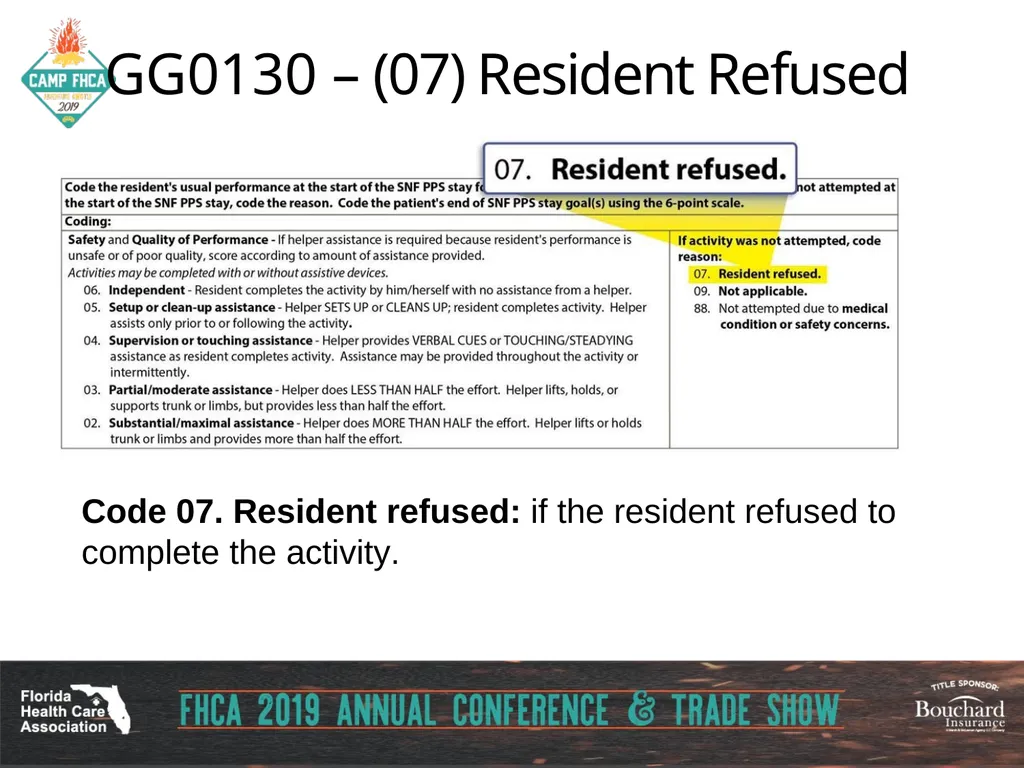
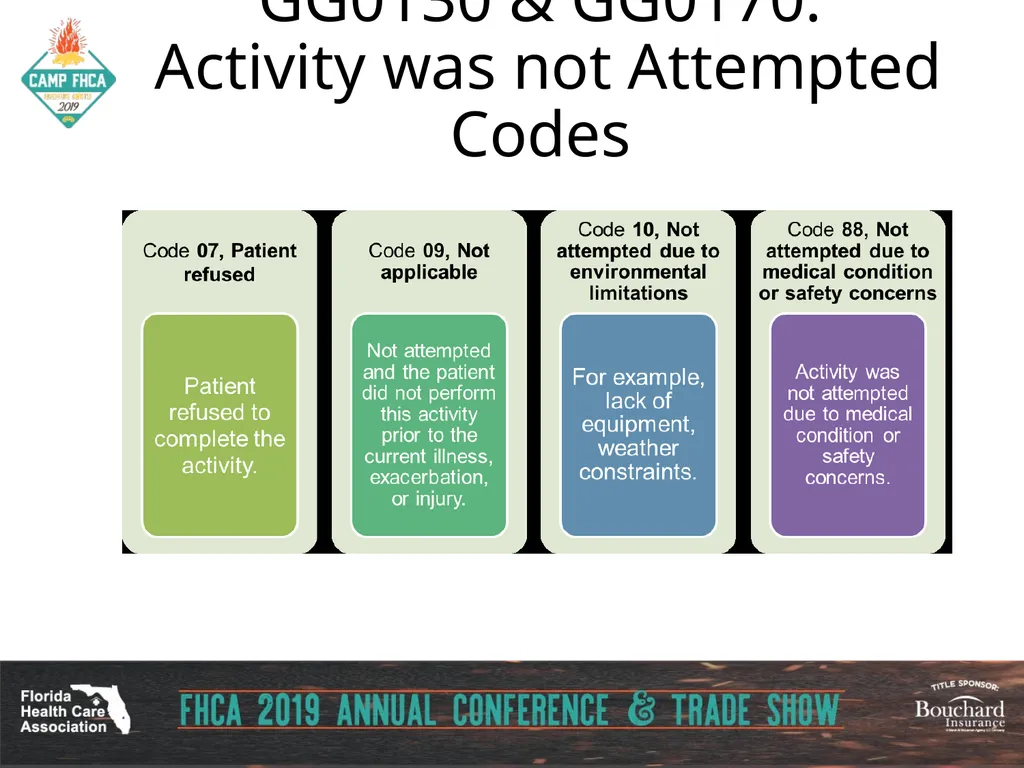
GG0130 – (07) Resident Refused Code 07. Resident refused: if the resident refused to complete the activity.<br>
35
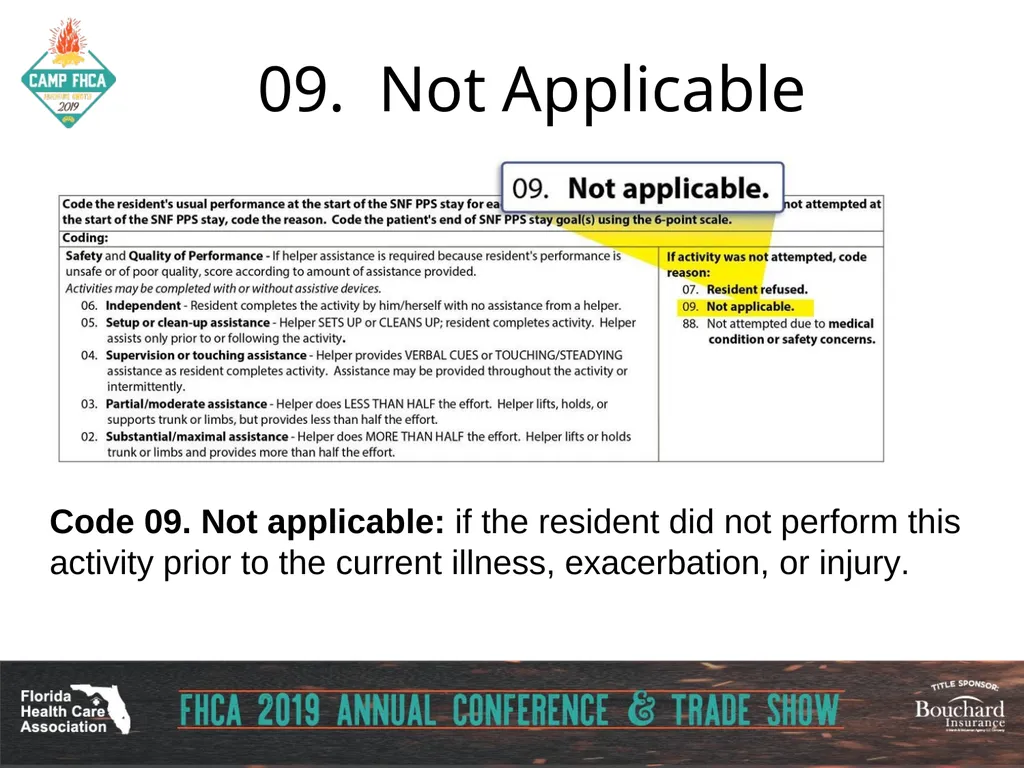
09. Not Applicable Code 09. Not applicable: if the resident did not perform this activity prior to the current illness, exacerbation, or injury.<br>
36
Not Attempted Due to Weather
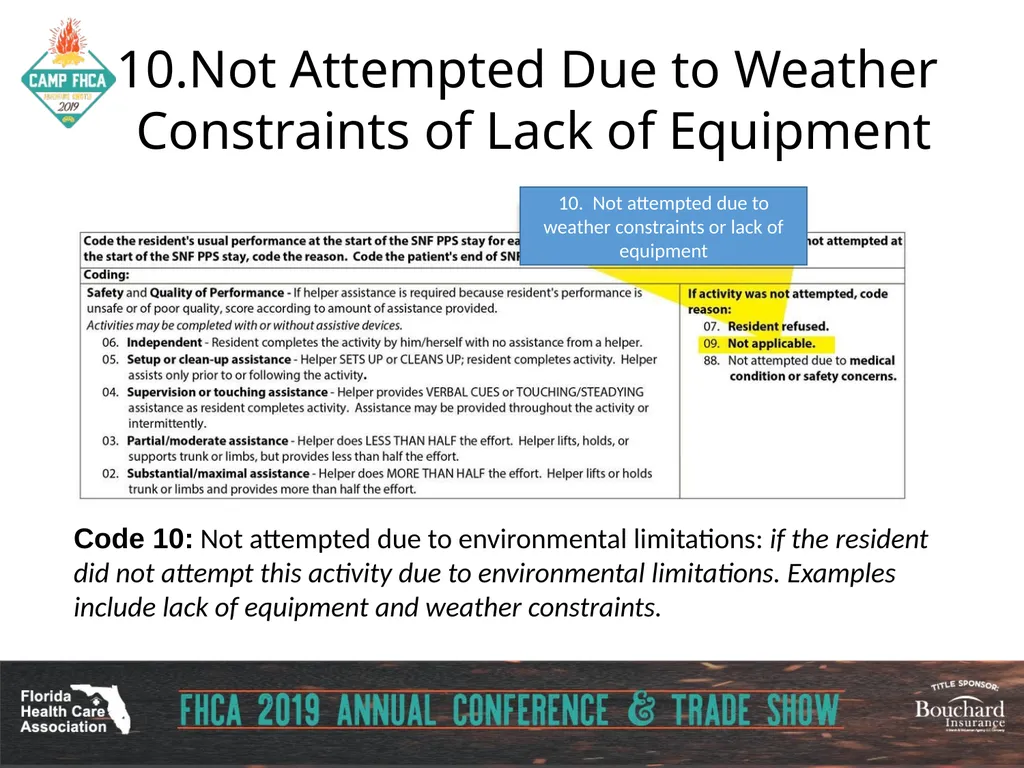
Constraints of Lack of Equipment 10. Not attempted due to weather constraints or lack of equipment Code 10: Not attempted due to environmental limitations: if the resident did not attempt this activity due to environmental limitations. Examples include lack of equipment and weather constraints.<br>
Constraints of Lack of Equipment 10. Not attempted due to weather constraints or lack of equipment Code 10: Not attempted due to environmental limitations: if the resident did not attempt this activity due to environmental limitations. Examples include lack of equipment and weather constraints.<br>
37
GG0130 – (88) Not Attempted Due
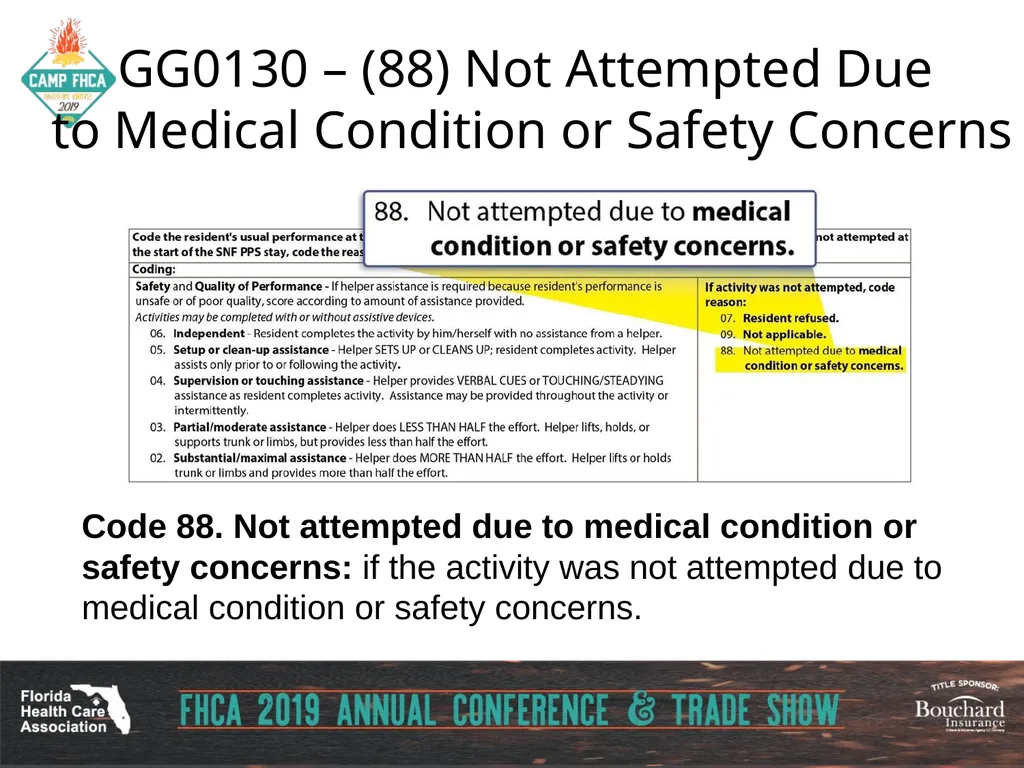
to Medical Condition or Safety Concerns Code 88. Not attempted due to medical condition or safety concerns: if the activity was not attempted due to medical condition or safety concerns.<br>
to Medical Condition or Safety Concerns Code 88. Not attempted due to medical condition or safety concerns: if the activity was not attempted due to medical condition or safety concerns.<br>
38
When Making Coding Decisions Follow
The
Algorithm<br>
The
Algorithm<br>
39
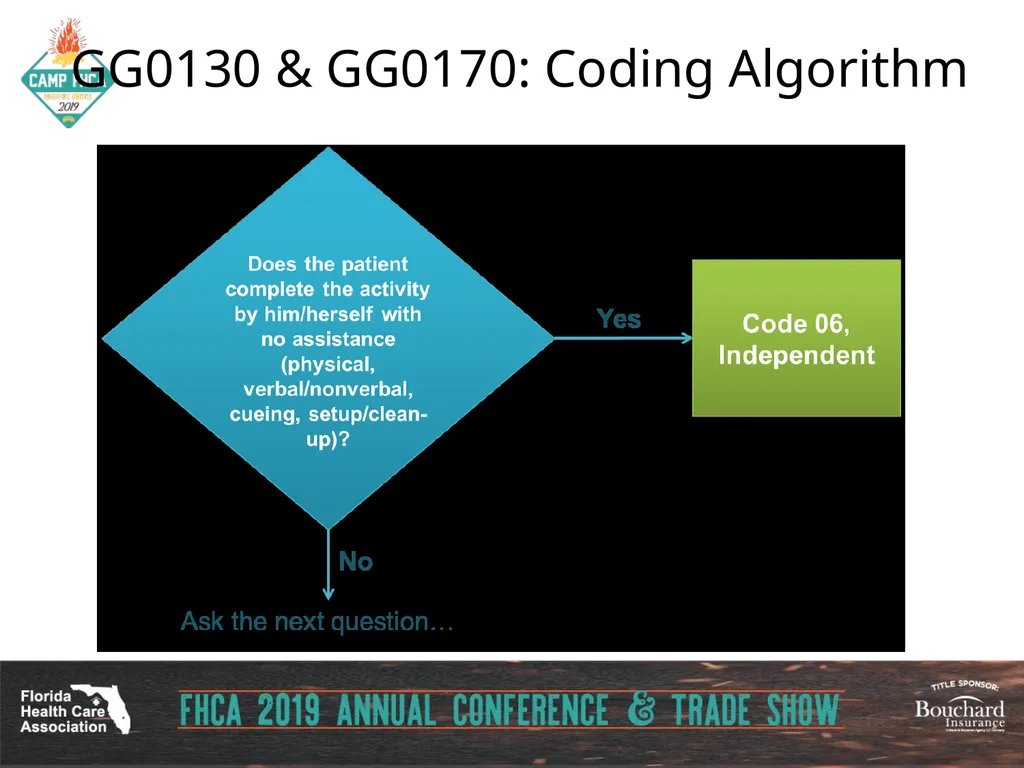
GG0130 & GG0170: Coding Algorithm<br>
40
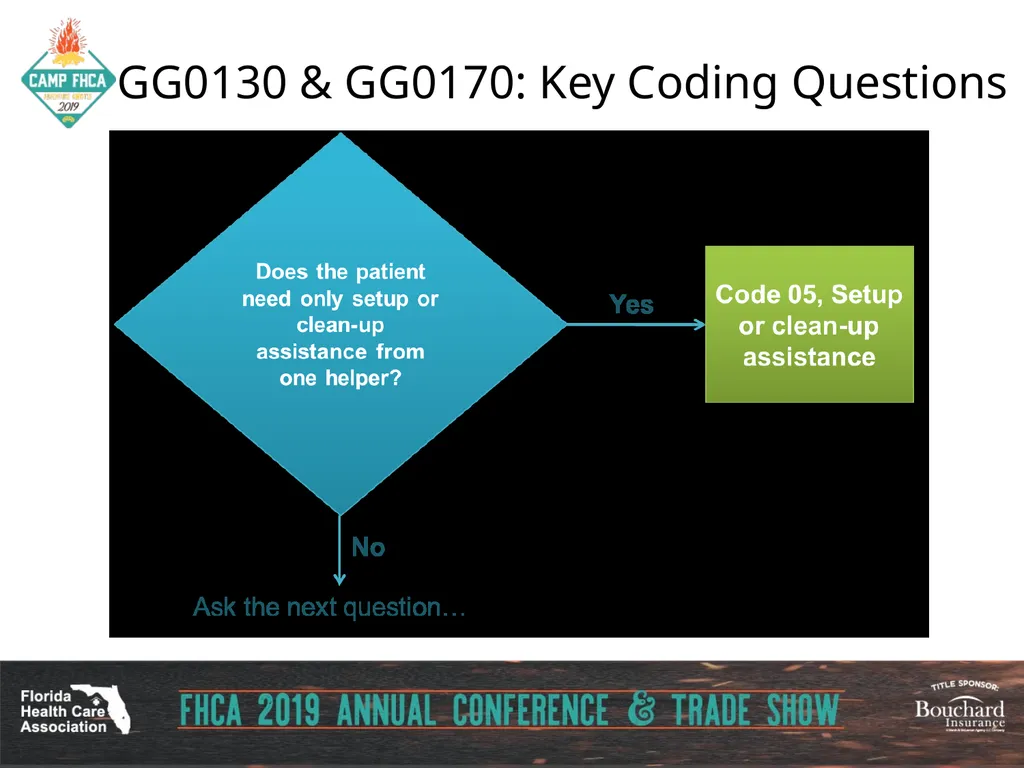
GG0130 & GG0170: Key Coding Questions<br>
41
GG0130 & GG0170: Key Coding Questions<br>
42
GG0130 & GG0170: Key Coding Questions<br>
43
GG0130 & GG0170: Key Coding Questions<br>
44
GG0130 & GG0170: Key Coding Questions<br>
45
GG0130 & GG0170:
Activity was not Attempted Codes<br>
46
Documentation Required Documentation in the medical record is used to support assessment coding of Section GG. Data entered should be consistent with the clinical assessment documentation in the resident’s medical record. This assessment can be conducted by appropriate healthcare personnel as defined by facility policy and in accordance with State and Federal regulations.
Remember, this information will dramatically impact payment. There must be backup documentation seen in the medical record prior to coding the MDS. The assessment(s) must be documented during the 3 day windows.<br>
Remember, this information will dramatically impact payment. There must be backup documentation seen in the medical record prior to coding the MDS. The assessment(s) must be documented during the 3 day windows.<br>
47
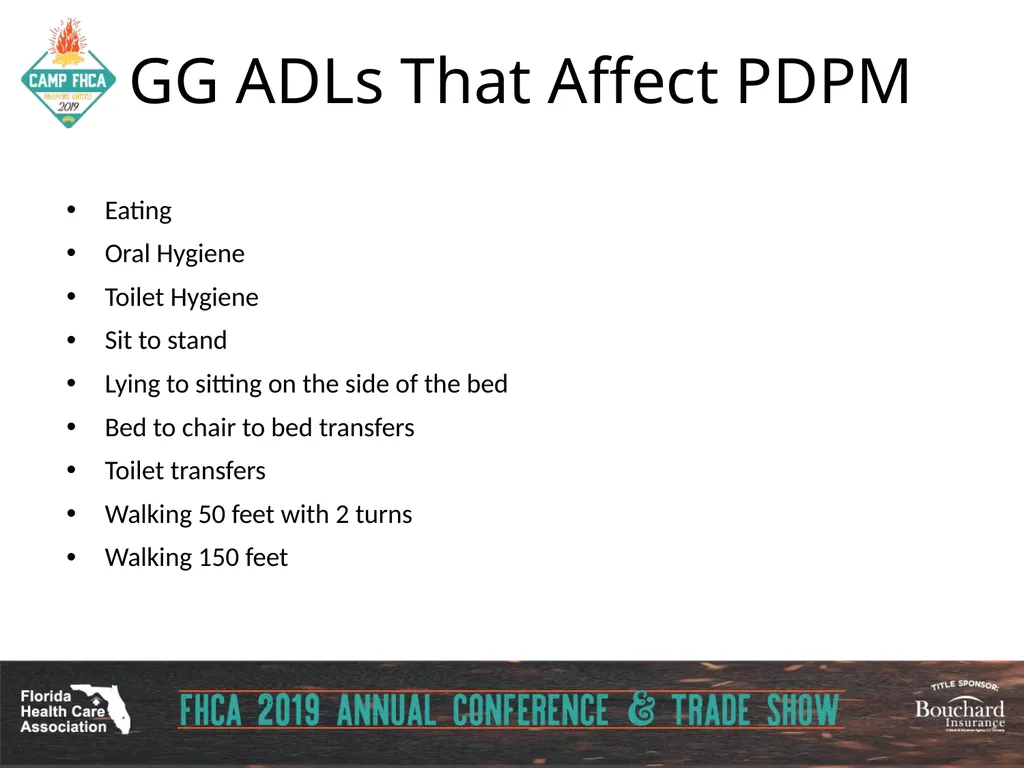
GG ADLs That Affect PDPM Eating
Oral Hygiene
Toilet Hygiene
Sit to stand
Lying to sitting on the side of the bed
Bed to chair to bed transfers
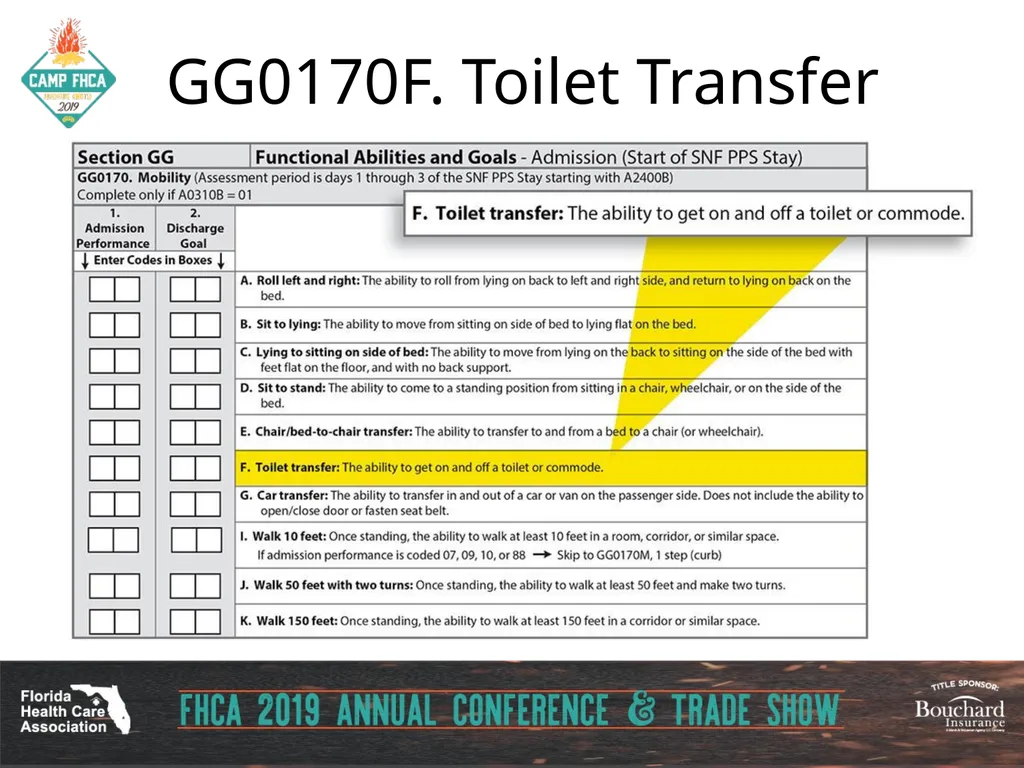
Toilet transfers
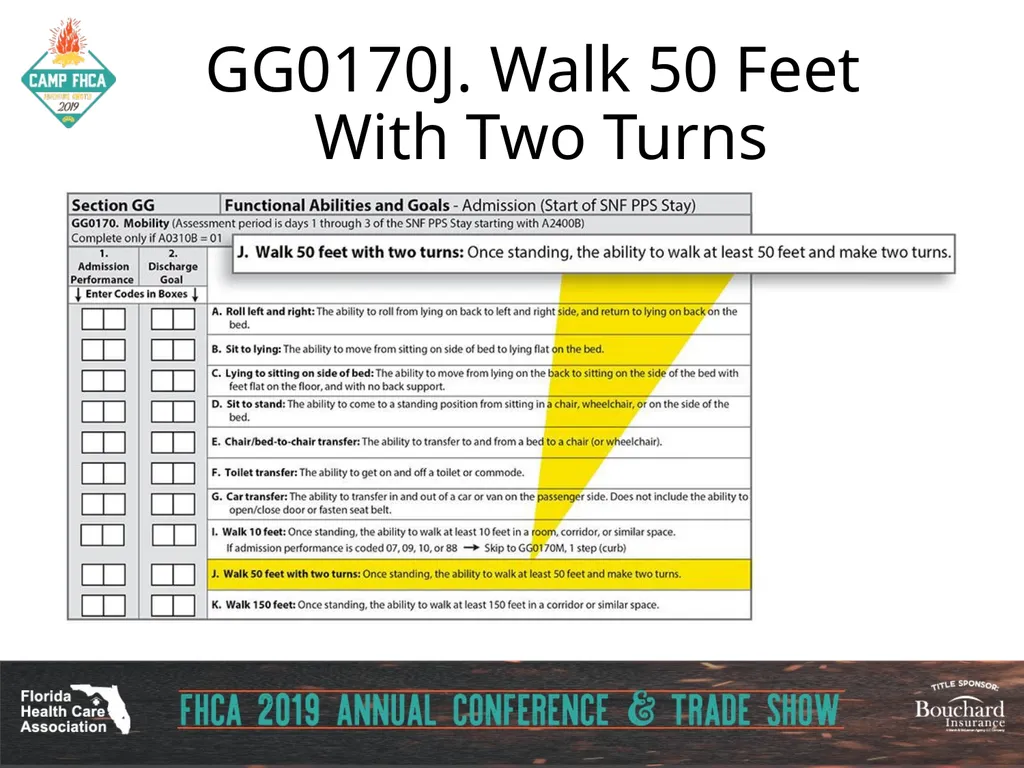
Walking 50 feet with 2 turns
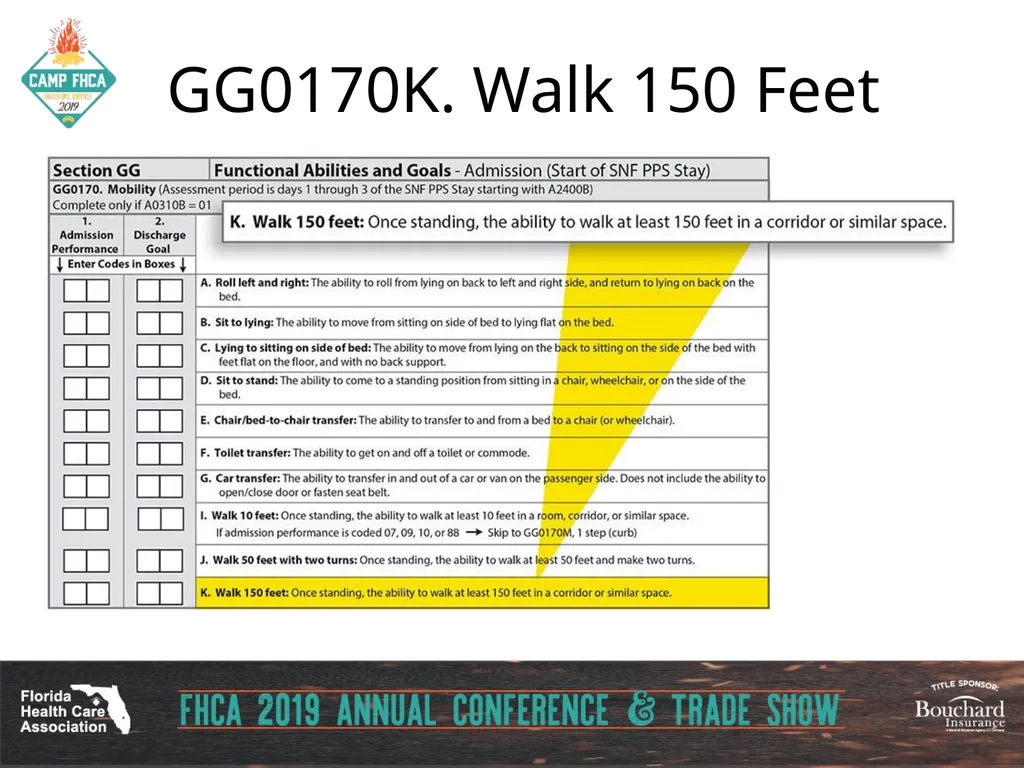
Walking 150 feet<br>
Oral Hygiene
Toilet Hygiene
Sit to stand
Lying to sitting on the side of the bed
Bed to chair to bed transfers
Toilet transfers
Walking 50 feet with 2 turns
Walking 150 feet<br>
48
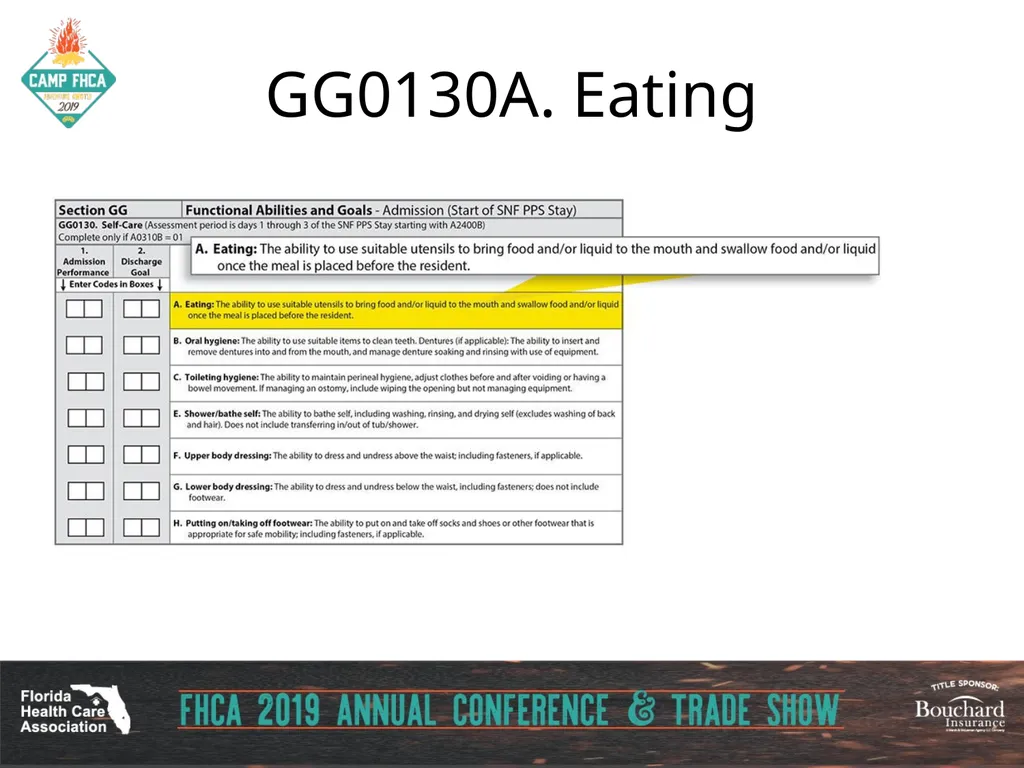
GG0130A. Eating<br>
49
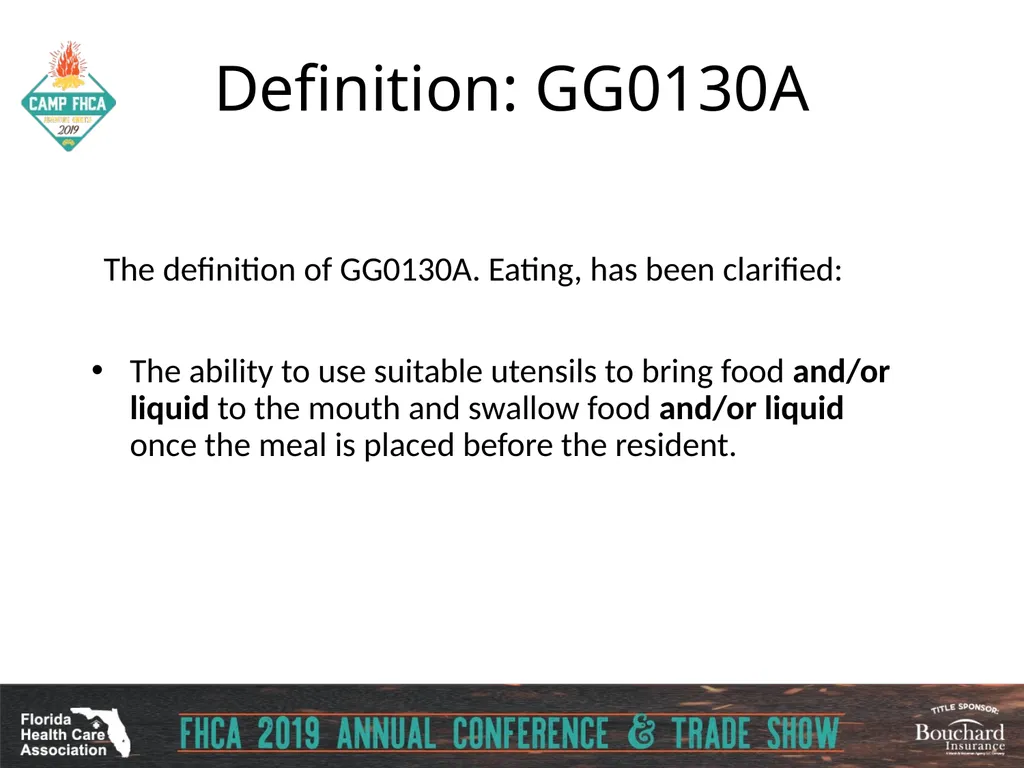
Definition: GG0130A The definition of GG0130A. Eating, has been clarified:
The ability to use suitable utensils to bring food and/or liquid to the mouth and swallow food and/or liquid once the meal is placed before the resident.<br>
The ability to use suitable utensils to bring food and/or liquid to the mouth and swallow food and/or liquid once the meal is placed before the resident.<br>
50
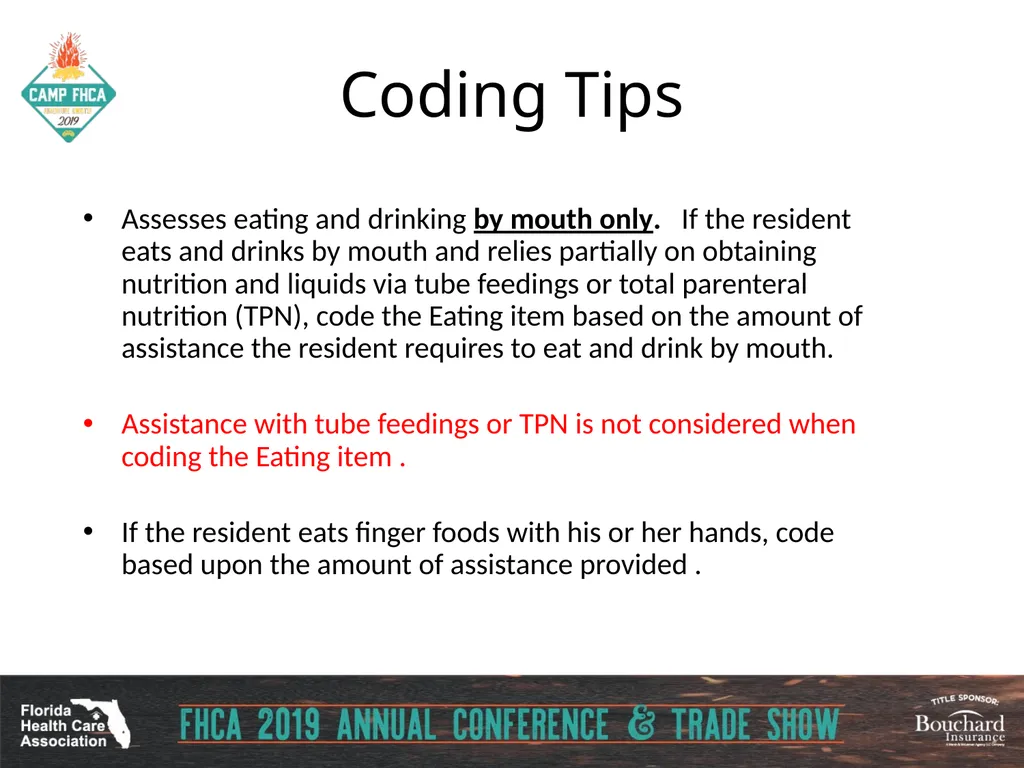
Coding Tips Assesses eating and drinking by mouth only. If the resident eats and drinks by mouth and relies partially on obtaining nutrition and liquids via tube feedings or total parenteral nutrition (TPN), code the Eating item based on the amount of assistance the resident requires to eat and drink by mouth.
Assistance with tube feedings or TPN is not considered when coding the Eating item .
If the resident eats finger foods with his or her hands, code based upon the amount of assistance provided .<br>
Assistance with tube feedings or TPN is not considered when coding the Eating item .
If the resident eats finger foods with his or her hands, code based upon the amount of assistance provided .<br>
51
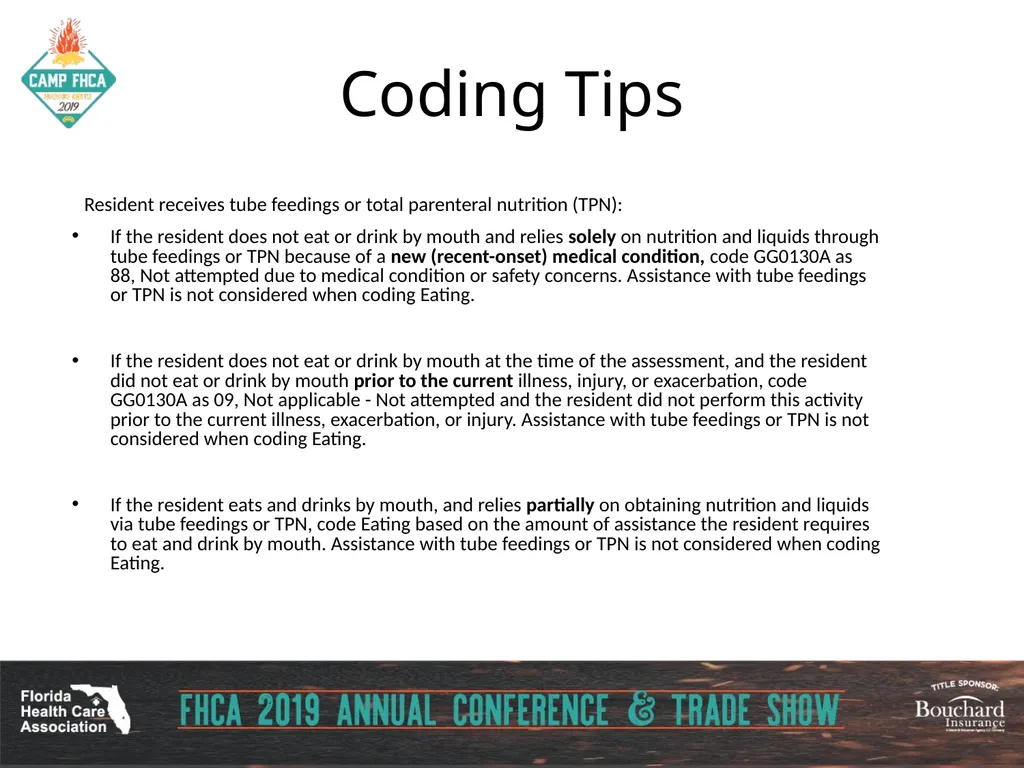
Coding Tips Resident receives tube feedings or total parenteral nutrition (TPN):
If the resident does not eat or drink by mouth and relies solely on nutrition and liquids through tube feedings or TPN because of a new (recent-onset) medical condition, code GG0130A as 88, Not attempted due to medical condition or safety concerns. Assistance with tube feedings or TPN is not considered when coding Eating.
If the resident does not eat or drink by mouth at the time of the assessment, and the resident did not eat or drink by mouth prior to the current illness, injury, or exacerbation, code GG0130A as 09, Not applicable - Not attempted and the resident did not perform this activity prior to the current illness, exacerbation, or injury. Assistance with tube feedings or TPN is not considered when coding Eating.
If the resident eats and drinks by mouth, and relies partially on obtaining nutrition and liquids via tube feedings or TPN, code Eating based on the amount of assistance the resident requires to eat and drink by mouth. Assistance with tube feedings or TPN is not considered when coding Eating.<br>
52
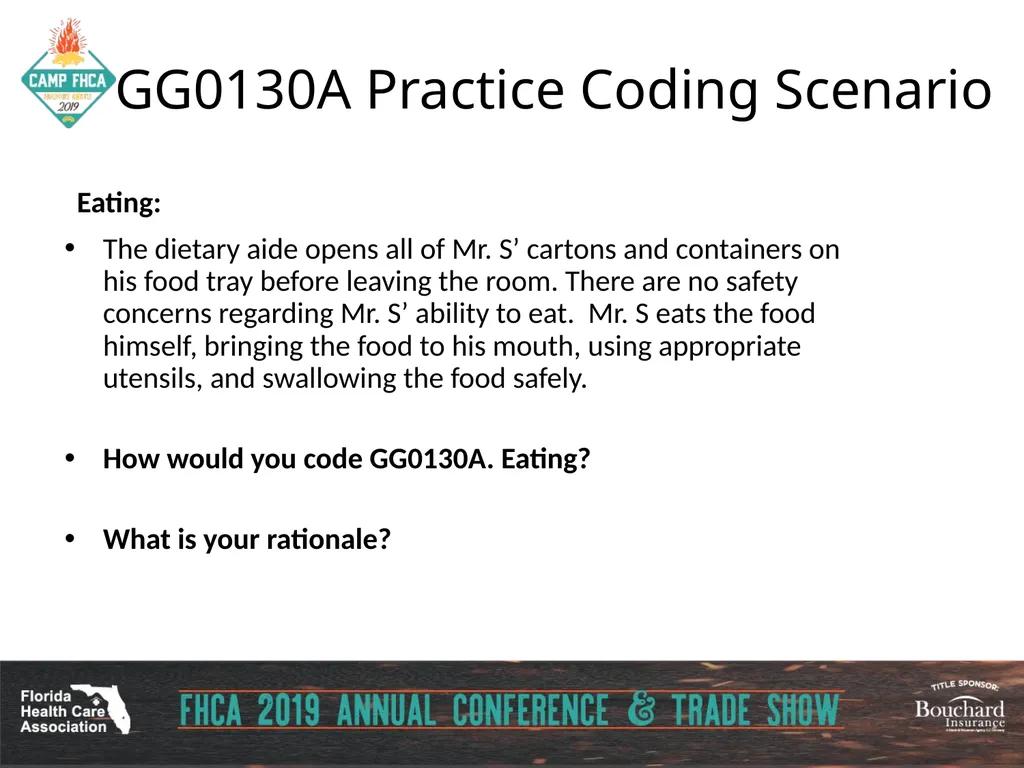
GG0130A Practice Coding Scenario Eating:
The dietary aide opens all of Mr. S’ cartons and containers on his food tray before leaving the room. There are no safety concerns regarding Mr. S’ ability to eat. Mr. S eats the food himself, bringing the food to his mouth, using appropriate utensils, and swallowing the food safely.
How would you code GG0130A. Eating?
What is your rationale?<br>
53
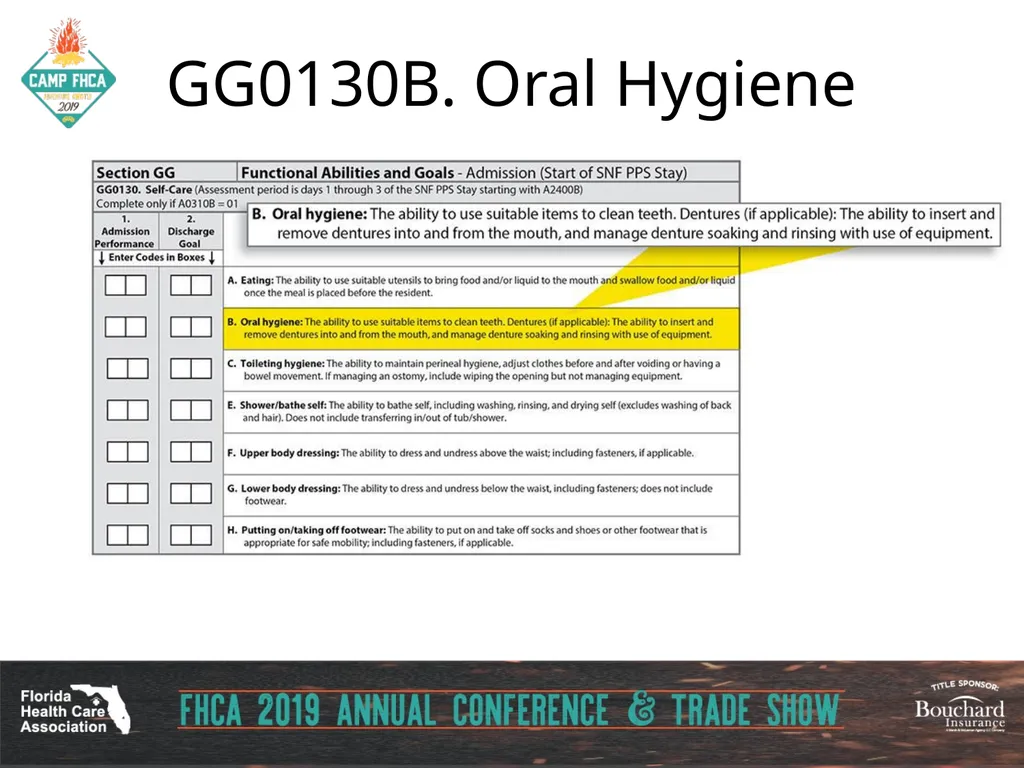
GG0130B. Oral Hygiene<br>
54
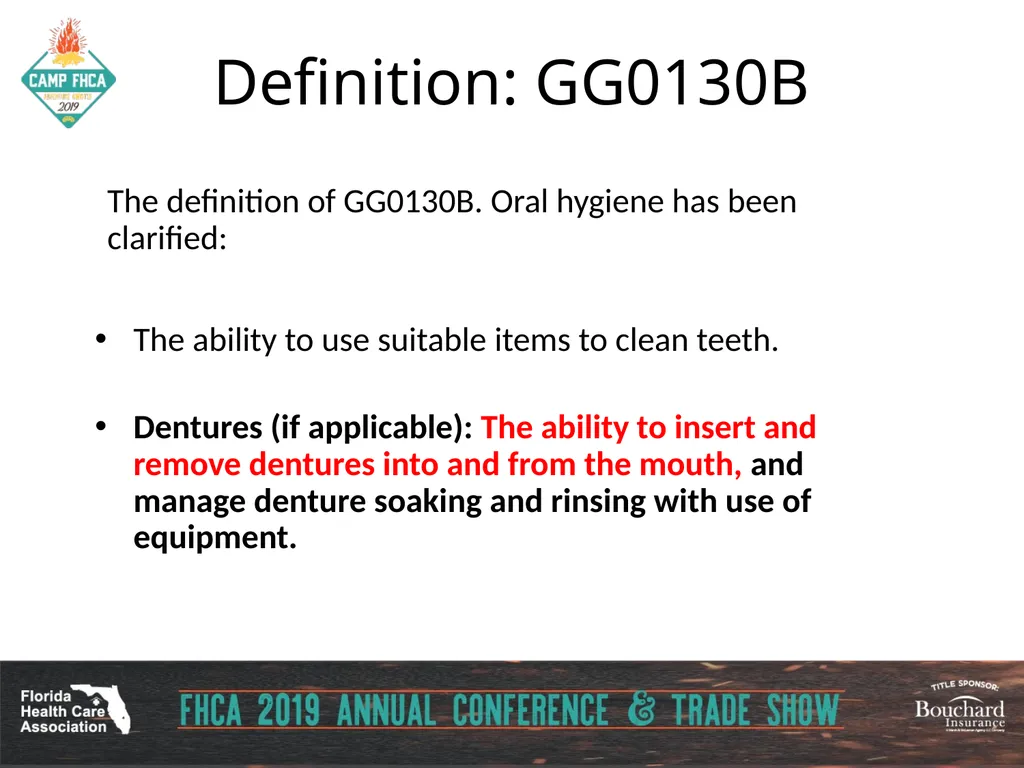
Definition: GG0130B The definition of GG0130B. Oral hygiene has been clarified:
The ability to use suitable items to clean teeth.
Dentures (if applicable): The ability to insert and remove dentures into and from the mouth, and manage denture soaking and rinsing with use of equipment.<br>
The ability to use suitable items to clean teeth.
Dentures (if applicable): The ability to insert and remove dentures into and from the mouth, and manage denture soaking and rinsing with use of equipment.<br>
55
Coding Tip • If a resident does not perform oral hygiene during therapy, determine the resident’s abilities based on performance on the nursing care unit.
What does this tell us?<br>
What does this tell us?<br>
56
Poll Question At noon on day 3 of the part A stay, you asked the O.T. if he had assessed how well the resident could brush her teeth. The therapist stated that he didn’t actually have the resident attempt to brush her teeth, but he was confident that she would be able to brush her own teeth based on her ability to brush her hair and wash her face.<br>
57
Poll Responses What would be the appropriate next step?
A. Code 06 (Independent) for Oral Hygiene
B. Code 88 for Oral Hygiene
C. Dash the Oral Hygiene item
D. Assess the resident on the nursing unit<br>
A. Code 06 (Independent) for Oral Hygiene
B. Code 88 for Oral Hygiene
C. Dash the Oral Hygiene item
D. Assess the resident on the nursing unit<br>
58
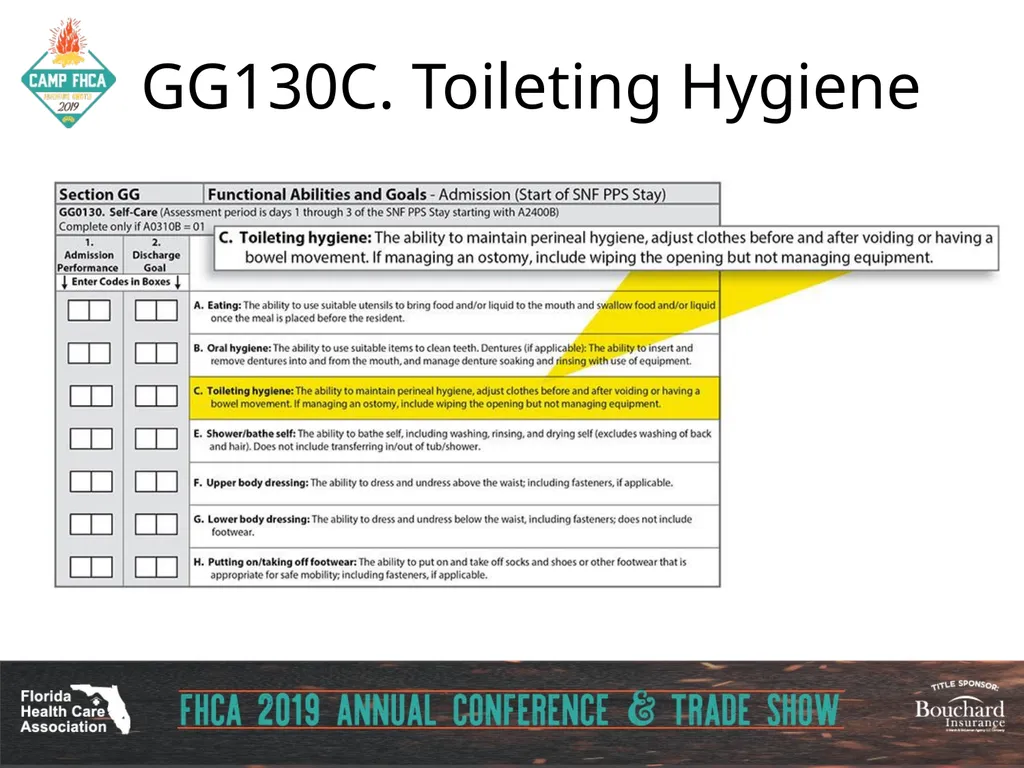
GG130C. Toileting Hygiene<br>
59
Definition: GG0130C The definition of GG0130C. Toileting Hygiene has been clarified:
It is “The ability to maintain perineal hygiene, adjust clothes before and after voiding or having a bowel movement. If managing an ostomy, include wiping the opening but not managing equipment.”<br>
It is “The ability to maintain perineal hygiene, adjust clothes before and after voiding or having a bowel movement. If managing an ostomy, include wiping the opening but not managing equipment.”<br>
60
GG0130C: Coding Tips Toileting Hygiene: Includes the tasks of managing undergarments, clothing, and incontinence products, and performing perineal cleansing before and after voiding or having a bowel movement.
Can take place before and after use of the toilet, commode, bedpan, or urinal.
If the resident does not usually use undergarments, then assess the resident’s need for assistance to manage lower-body clothing and perineal hygiene.
If the resident has an indwelling urinary catheter and has bowel movements, code the toileting hygiene item based on the amount of assistance needed by the resident when moving his or her bowels.<br>
61
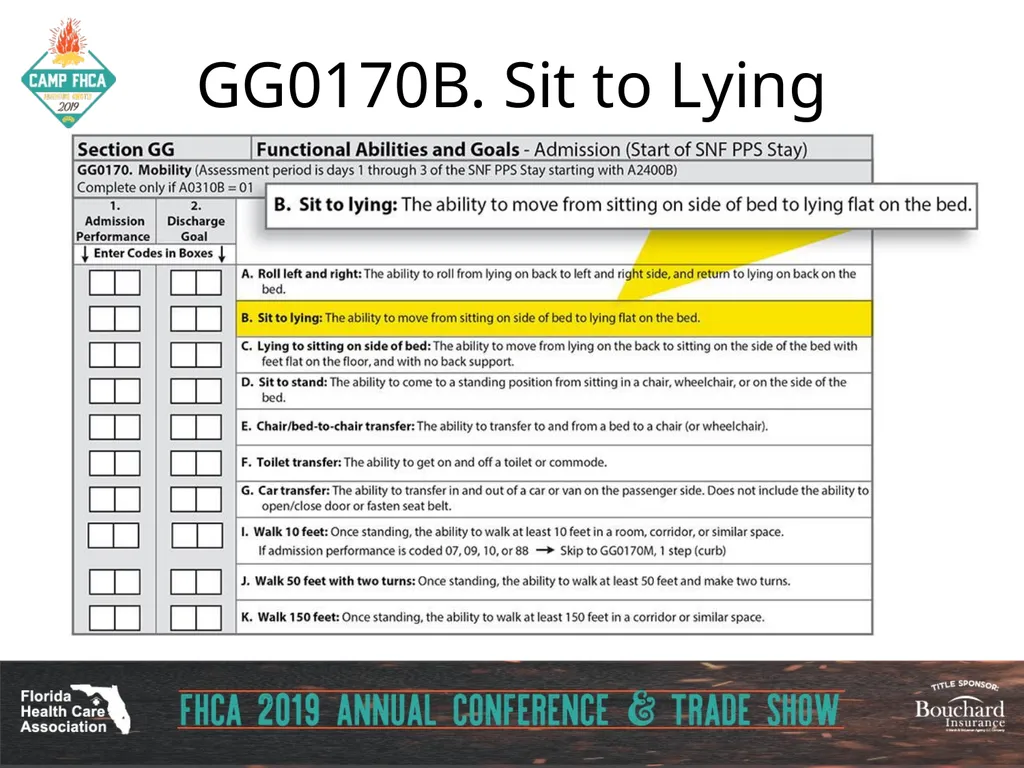
GG0170B. Sit to Lying<br>
62
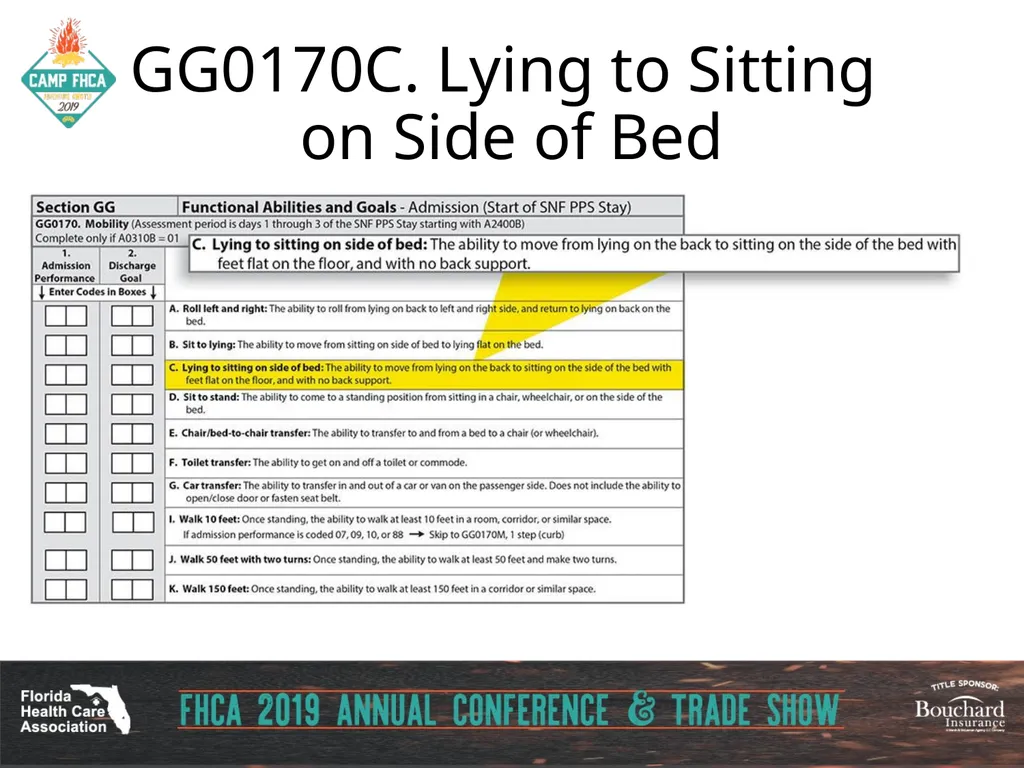
GG0170C. Lying to Sitting
on Side of Bed<br>
on Side of Bed<br>
63
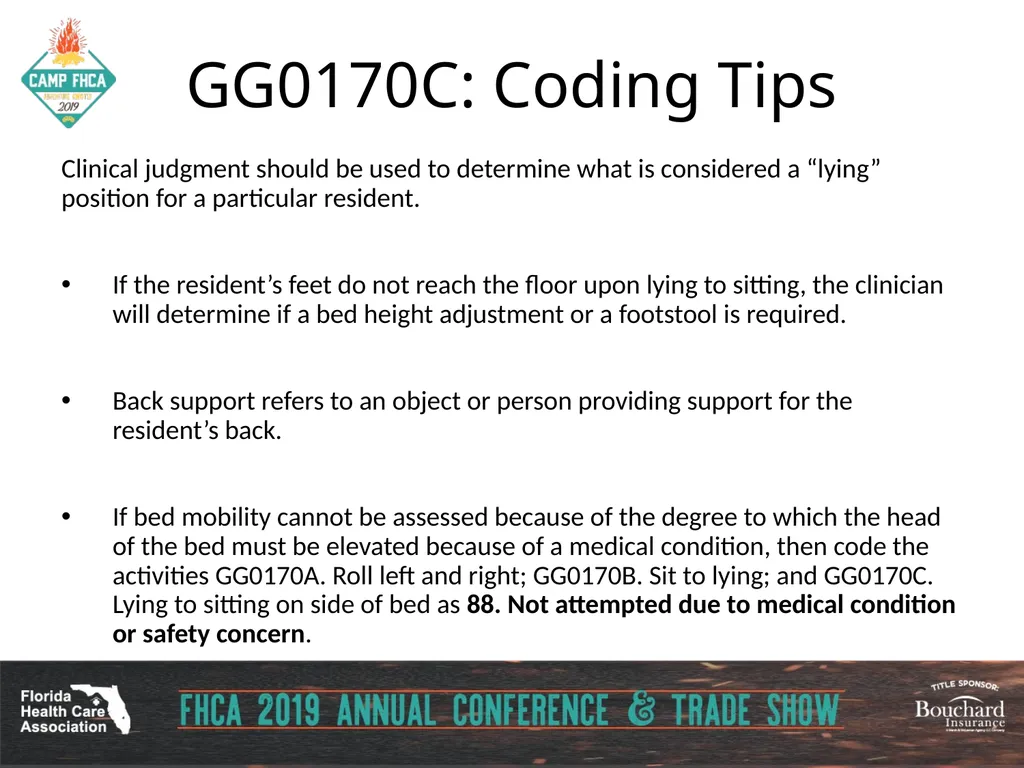
GG0170C: Coding Tips Clinical judgment should be used to determine what is considered a “lying” position for a particular resident.
If the resident’s feet do not reach the floor upon lying to sitting, the clinician will determine if a bed height adjustment or a footstool is required.
Back support refers to an object or person providing support for the resident’s back.
If bed mobility cannot be assessed because of the degree to which the head of the bed must be elevated because of a medical condition, then code the activities GG0170A. Roll left and right; GG0170B. Sit to lying; and GG0170C. Lying to sitting on side of bed as 88. Not attempted due to medical condition or safety concern.<br>
64
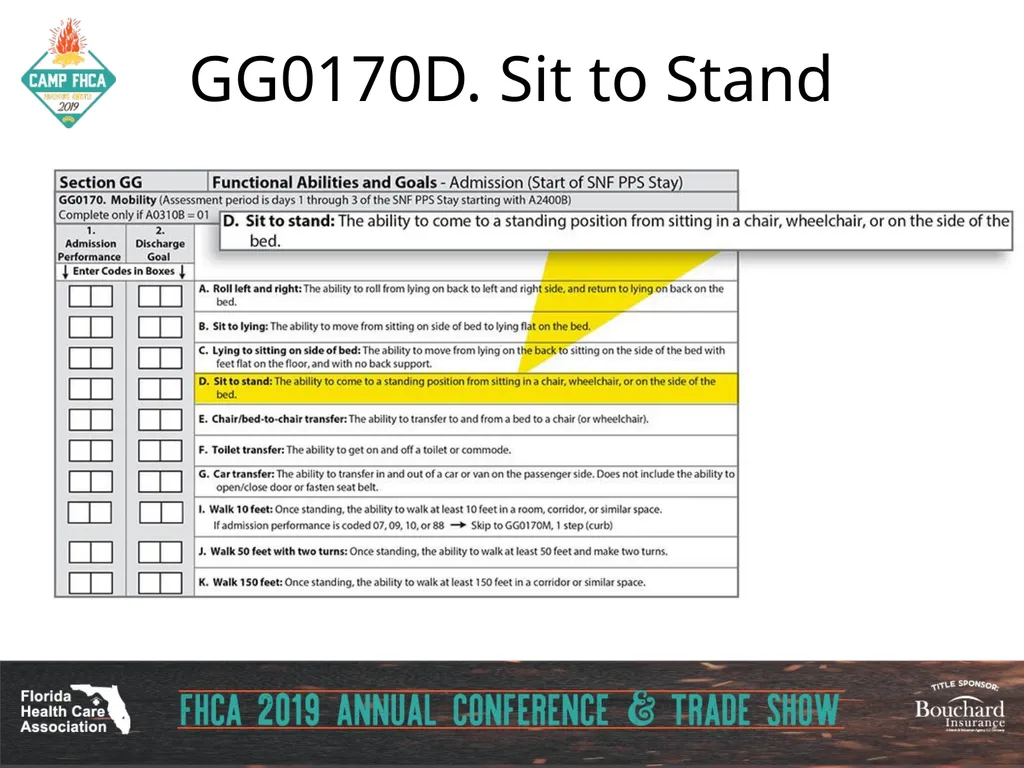
GG0170D. Sit to Stand<br>
65
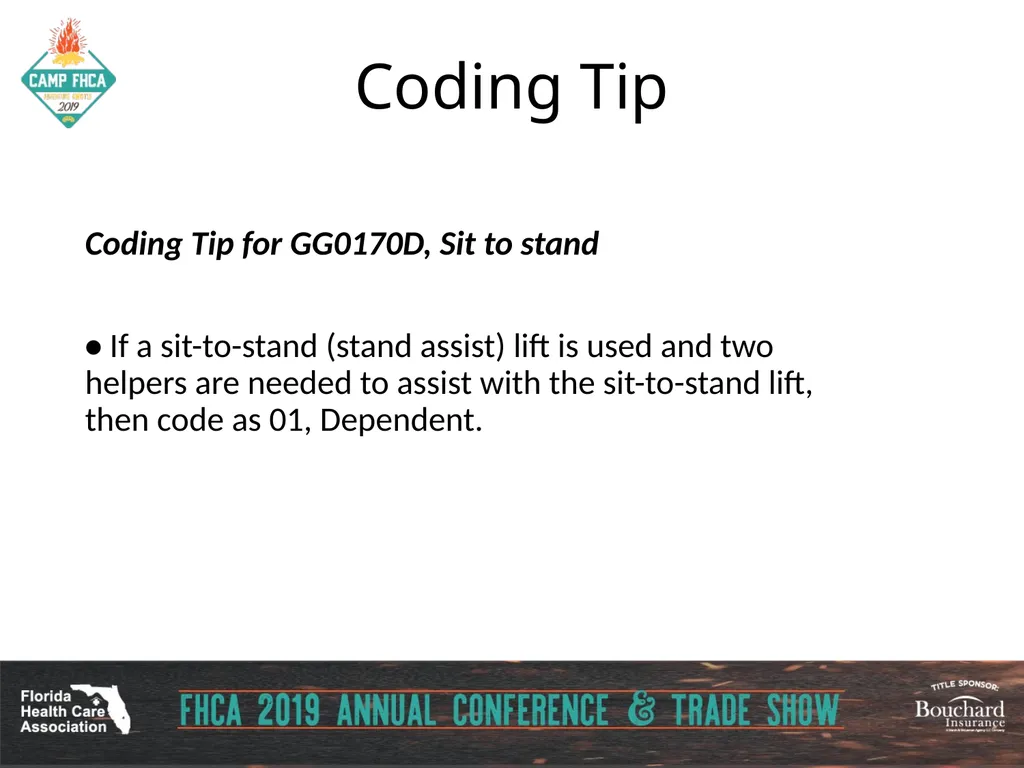
Coding Tip Coding Tip for GG0170D, Sit to stand
• If a sit-to-stand (stand assist) lift is used and two helpers are needed to assist with the sit-to-stand lift, then code as 01, Dependent.<br>
• If a sit-to-stand (stand assist) lift is used and two helpers are needed to assist with the sit-to-stand lift, then code as 01, Dependent.<br>
66
GG0170E. Chair/Bed-to-Chair Transfer<br>
67
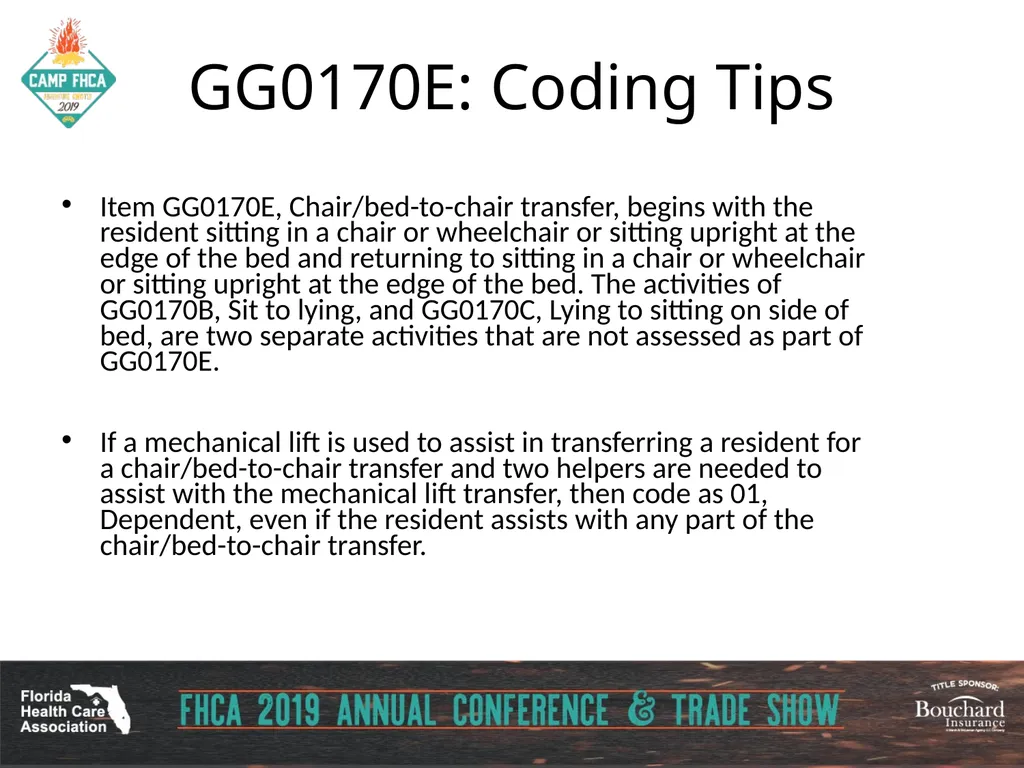
GG0170E: Coding Tips Item GG0170E, Chair/bed-to-chair transfer, begins with the resident sitting in a chair or wheelchair or sitting upright at the edge of the bed and returning to sitting in a chair or wheelchair or sitting upright at the edge of the bed. The activities of GG0170B, Sit to lying, and GG0170C, Lying to sitting on side of bed, are two separate activities that are not assessed as part of GG0170E.
If a mechanical lift is used to assist in transferring a resident for a chair/bed-to-chair transfer and two helpers are needed to assist with the mechanical lift transfer, then code as 01, Dependent, even if the resident assists with any part of the chair/bed-to-chair transfer.<br>
If a mechanical lift is used to assist in transferring a resident for a chair/bed-to-chair transfer and two helpers are needed to assist with the mechanical lift transfer, then code as 01, Dependent, even if the resident assists with any part of the chair/bed-to-chair transfer.<br>
68
GG0170F. Toilet Transfer<br>
69
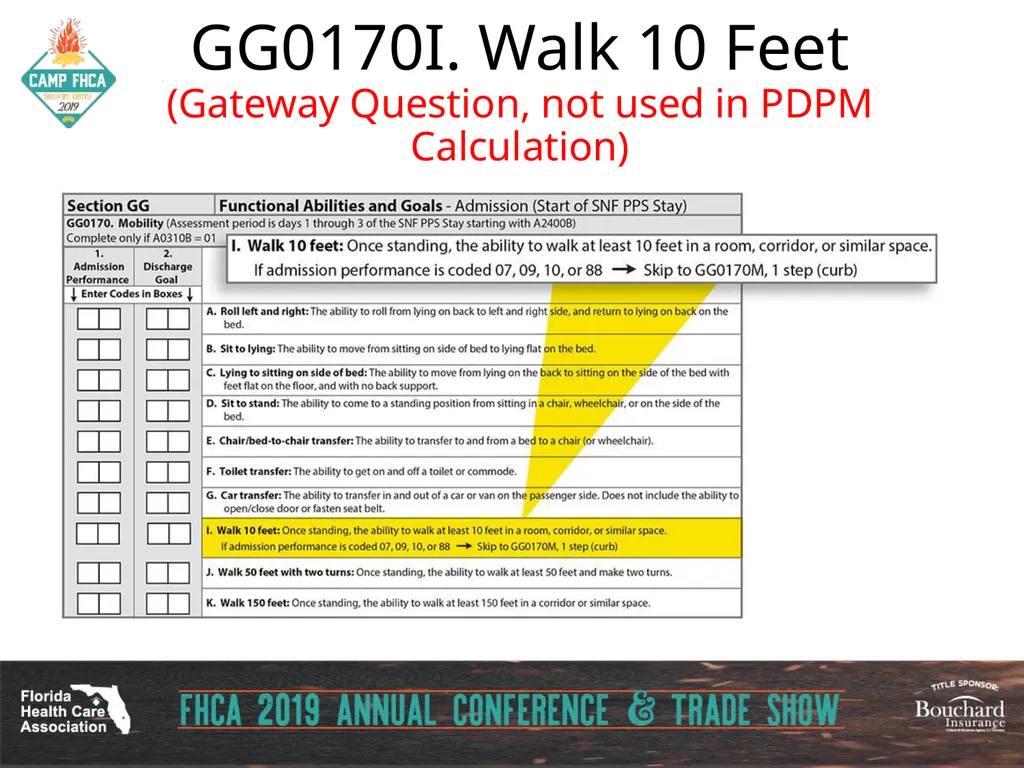
GG0170I. Walk 10 Feet
(Gateway Question, not used in PDPM Calculation)<br>
70
GG0170J. Walk 50 Feet
With Two Turns<br>
With Two Turns<br>
71
GG0170K. Walk 150 Feet<br>
72
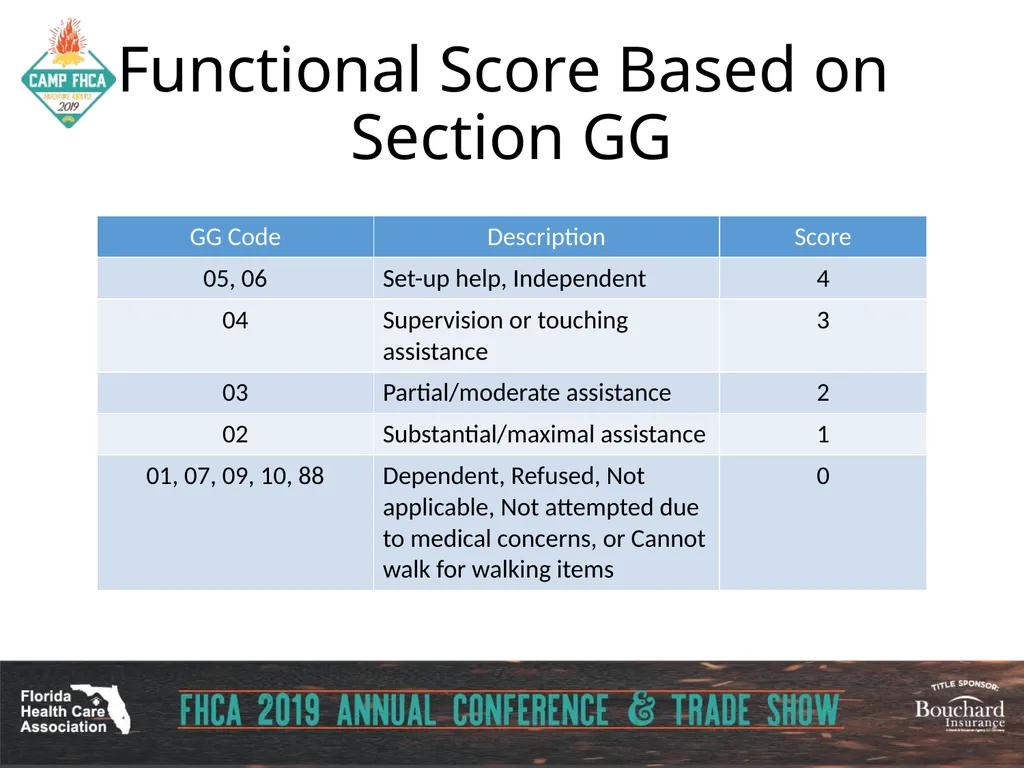
Functional Score Based on
Section GG<br>
Section GG<br>
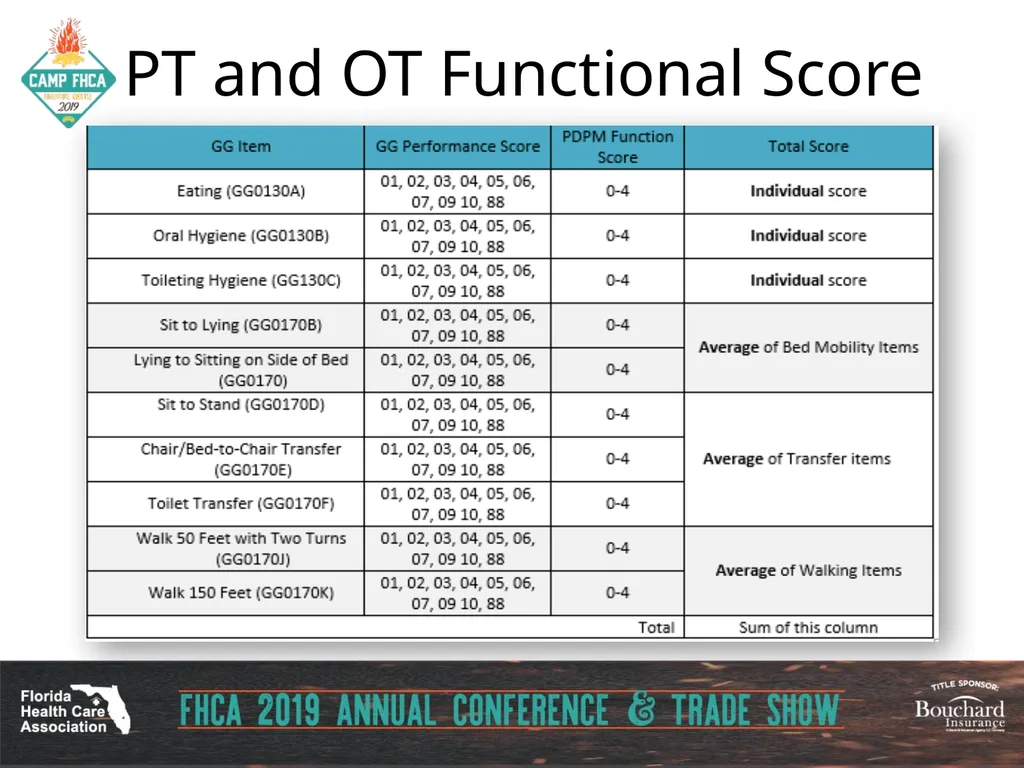
73
PT and OT Functional Score<br>
74
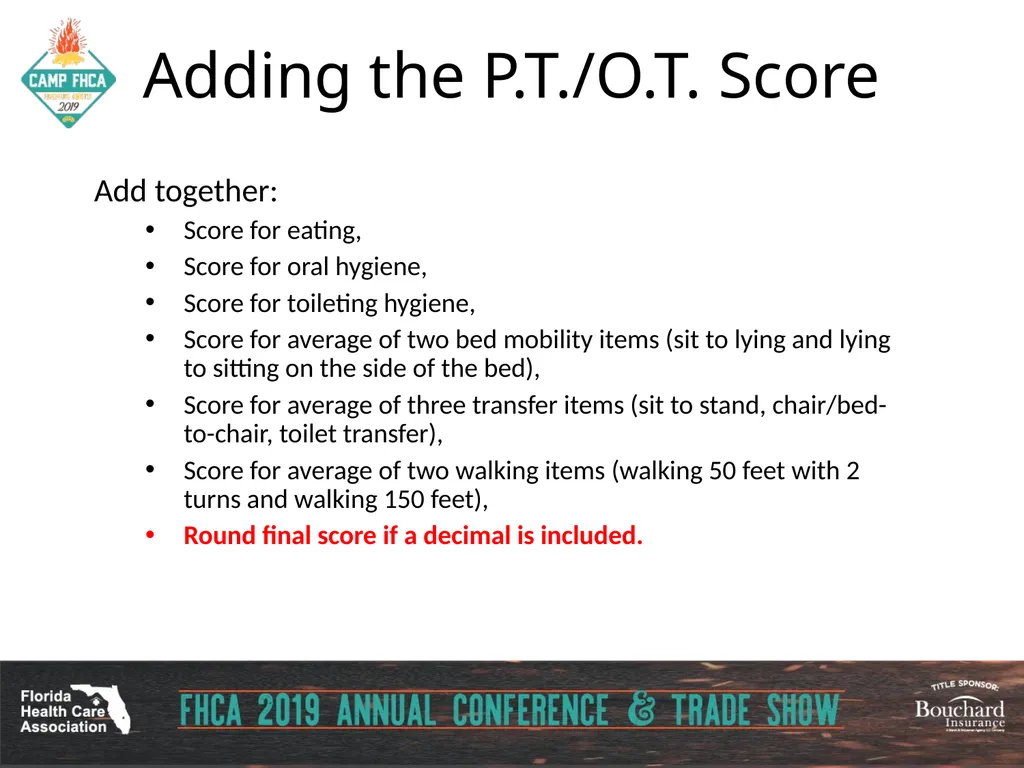
Adding the P.T./O.T. Score Add together:
Score for eating,
Score for oral hygiene,
Score for toileting hygiene,
Score for average of two bed mobility items (sit to lying and lying to sitting on the side of the bed),
Score for average of three transfer items (sit to stand, chair/bed-to-chair, toilet transfer),
Score for average of two walking items (walking 50 feet with 2 turns and walking 150 feet),
Round final score if a decimal is included.<br>
75
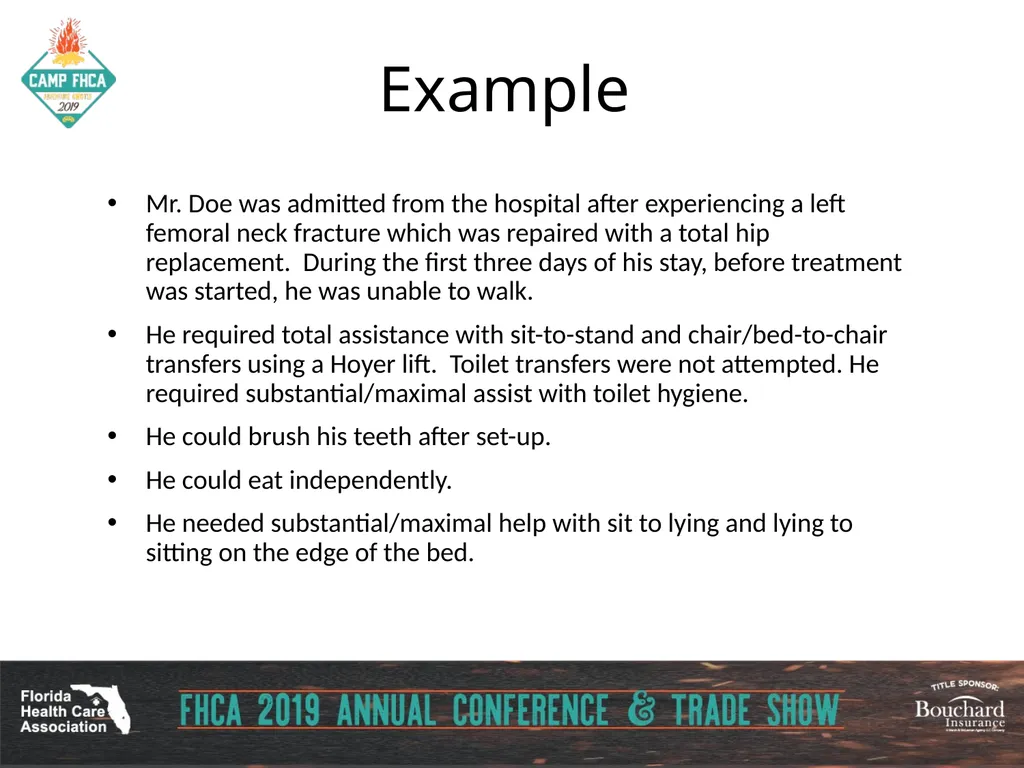
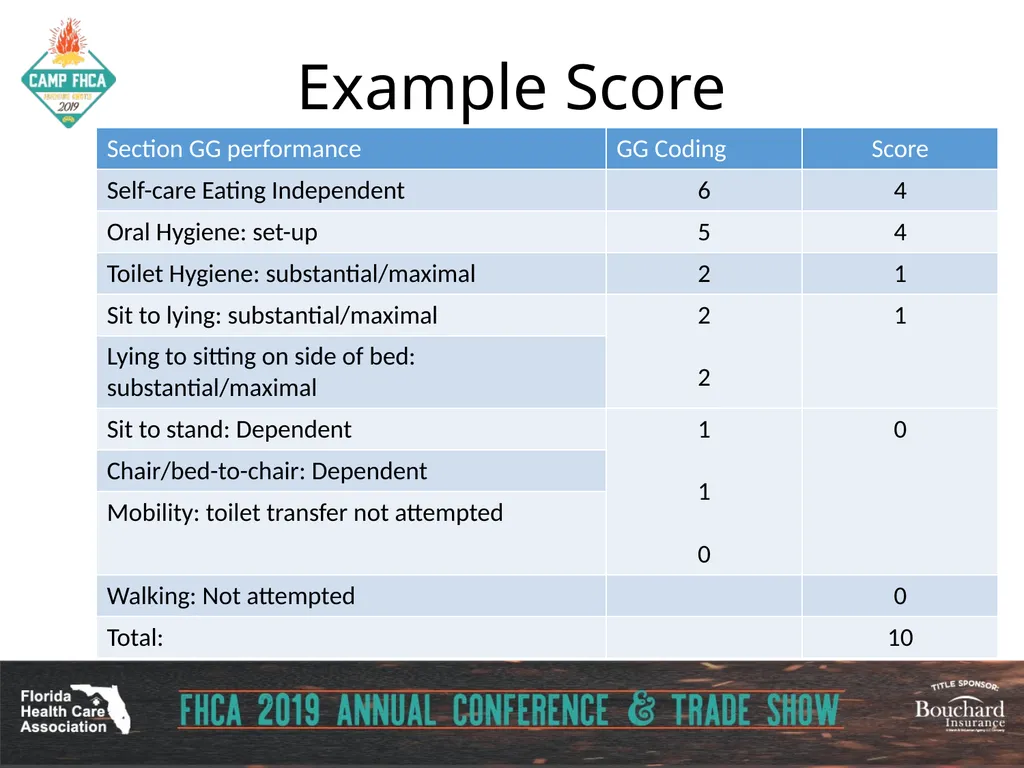
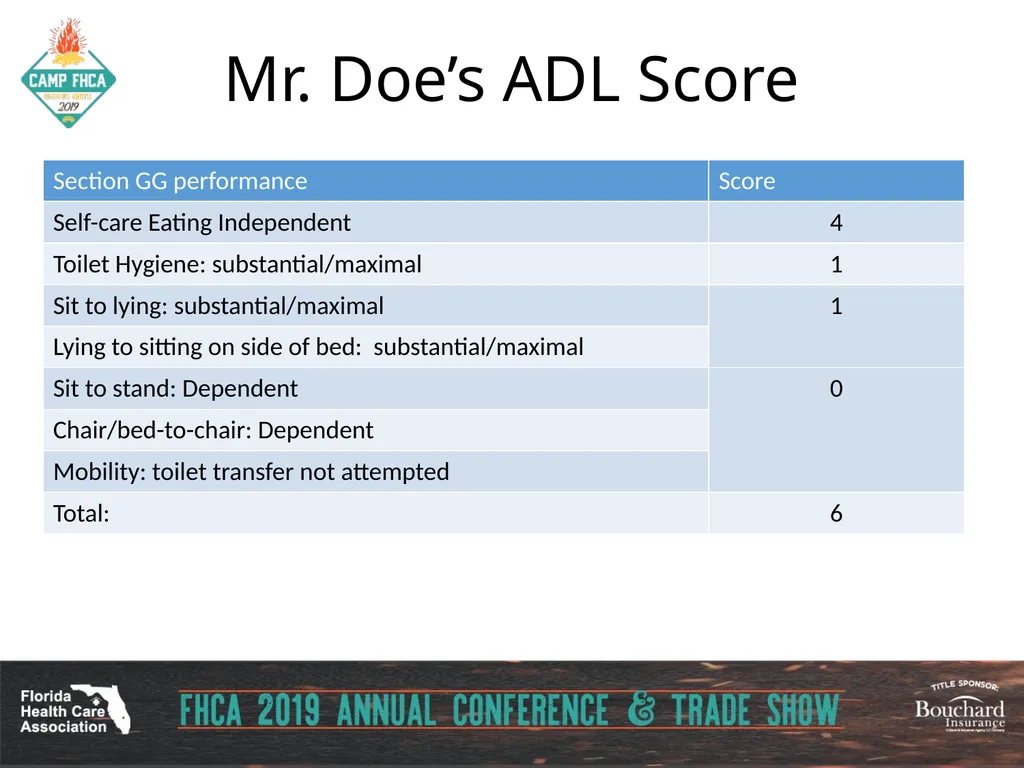
Example Mr. Doe was admitted from the hospital after experiencing a left femoral neck fracture which was repaired with a total hip replacement. During the first three days of his stay, before treatment was started, he was unable to walk.
He required total assistance with sit-to-stand and chair/bed-to-chair transfers using a Hoyer lift. Toilet transfers were not attempted. He required substantial/maximal assist with toilet hygiene.
He could brush his teeth after set-up.
He could eat independently.
He needed substantial/maximal help with sit to lying and lying to sitting on the edge of the bed.<br>
76
Example Score<br>
77
P.T. and O.T. Component<br>
78
P.T. and O.T.
Scores below prior to SNF PPS Proposed Rule
ADL score of 10-23 Usually Highest CMI Mr.
Doe<br>
Doe<br>
79
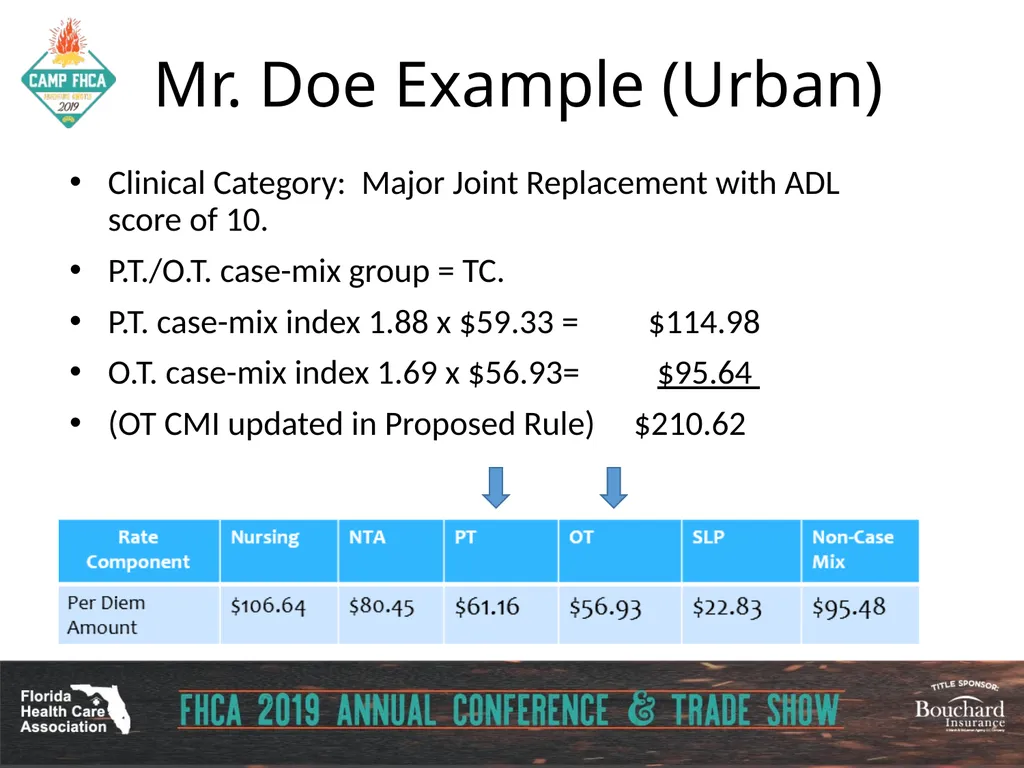
Mr. Doe Example (Urban) Clinical Category: Major Joint Replacement with ADL score of 10.
P.T./O.T. case-mix group = TC.
P.T. case-mix index 1.88 x $59.33 = $114.98
O.T. case-mix index 1.69 x $56.93= $95.64
(OT CMI updated in Proposed Rule) $210.62<br>
P.T./O.T. case-mix group = TC.
P.T. case-mix index 1.88 x $59.33 = $114.98
O.T. case-mix index 1.69 x $56.93= $95.64
(OT CMI updated in Proposed Rule) $210.62<br>
80
Nursing Component<br>
81
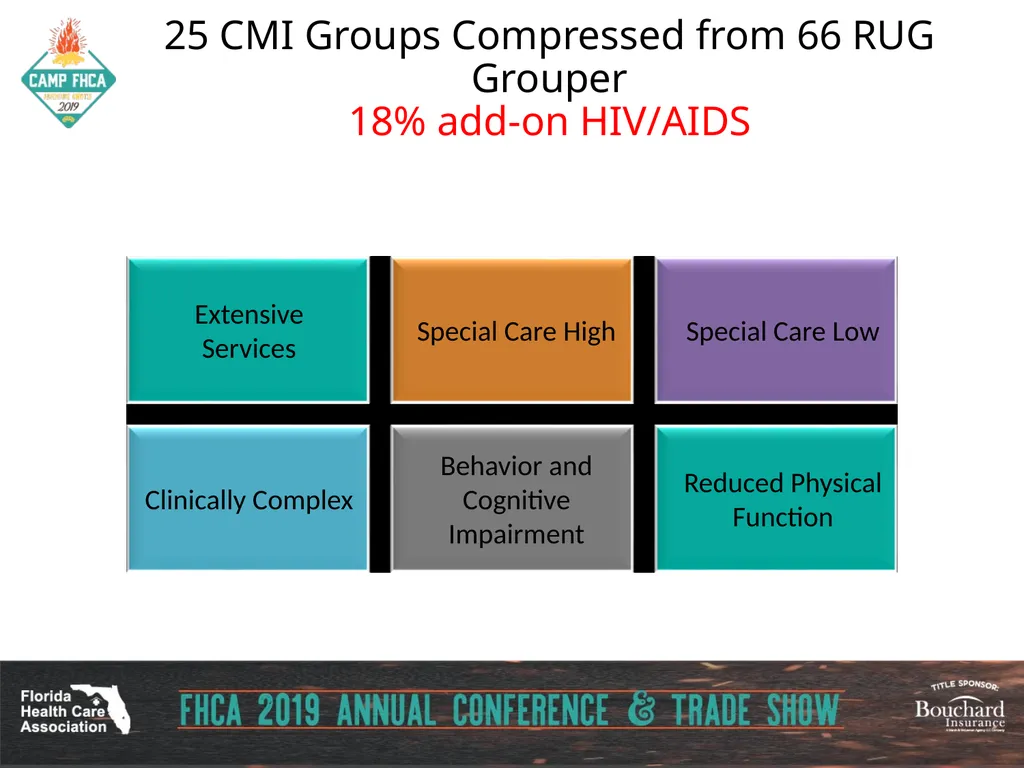
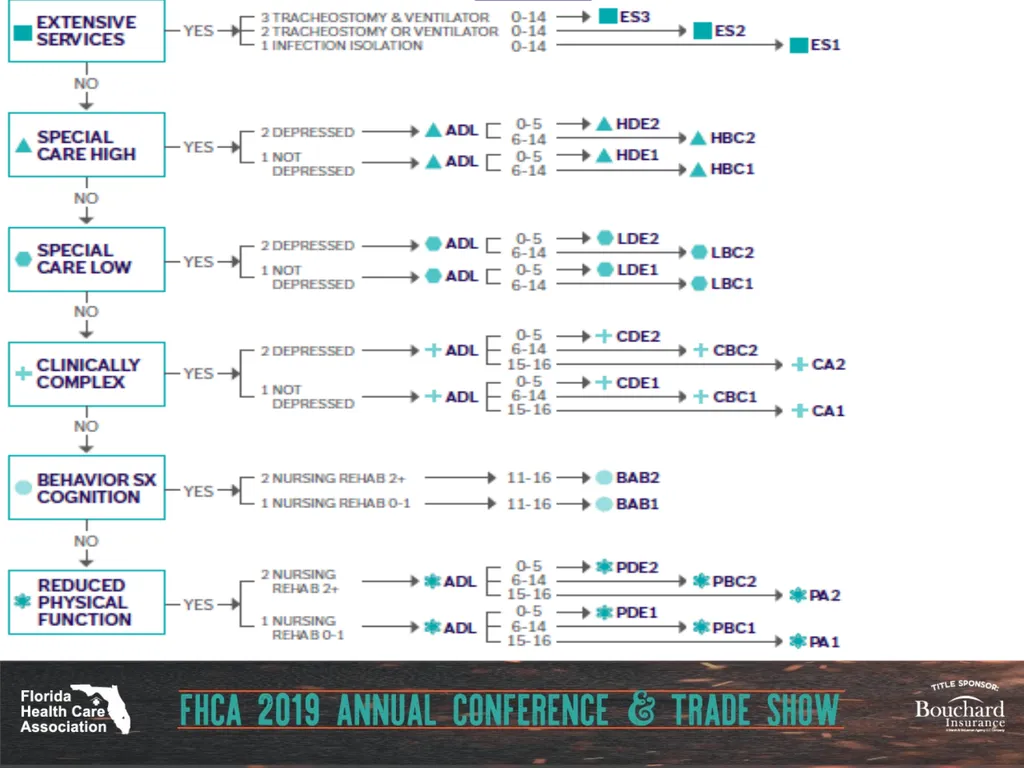
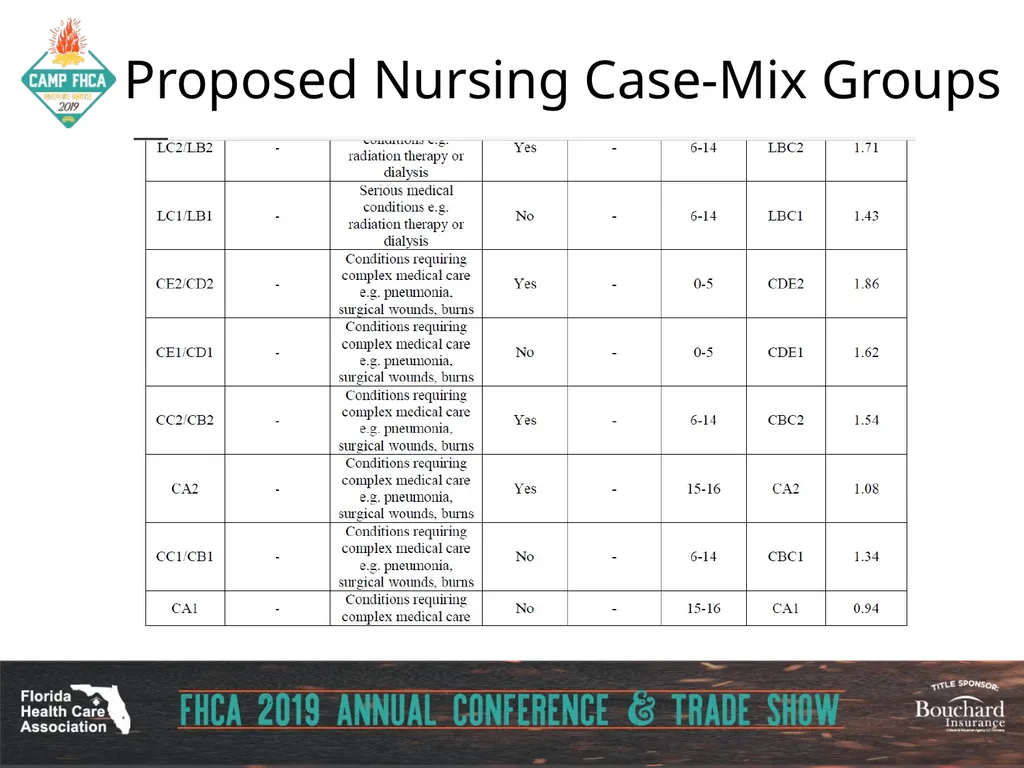
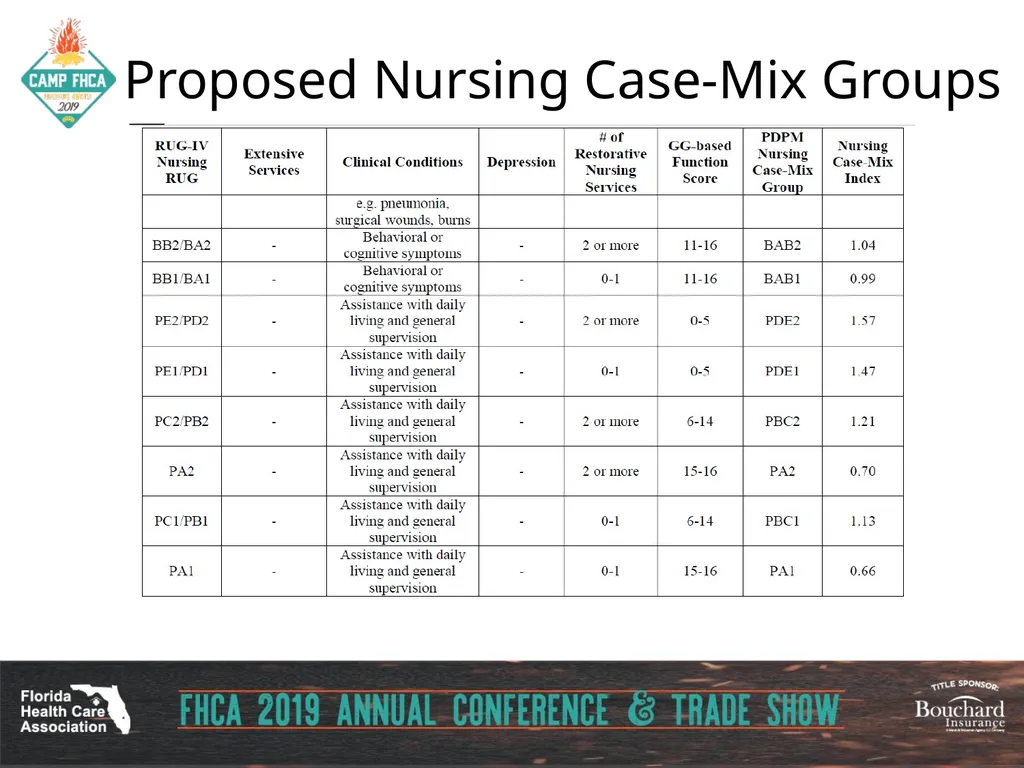
25 CMI Groups Compressed from 66 RUG Grouper
18% add-on HIV/AIDS Extensive Services Special Care High Special Care Low Clinically Complex Behavior and Cognitive Impairment Reduced Physical Function<br>
82
Component Combinations
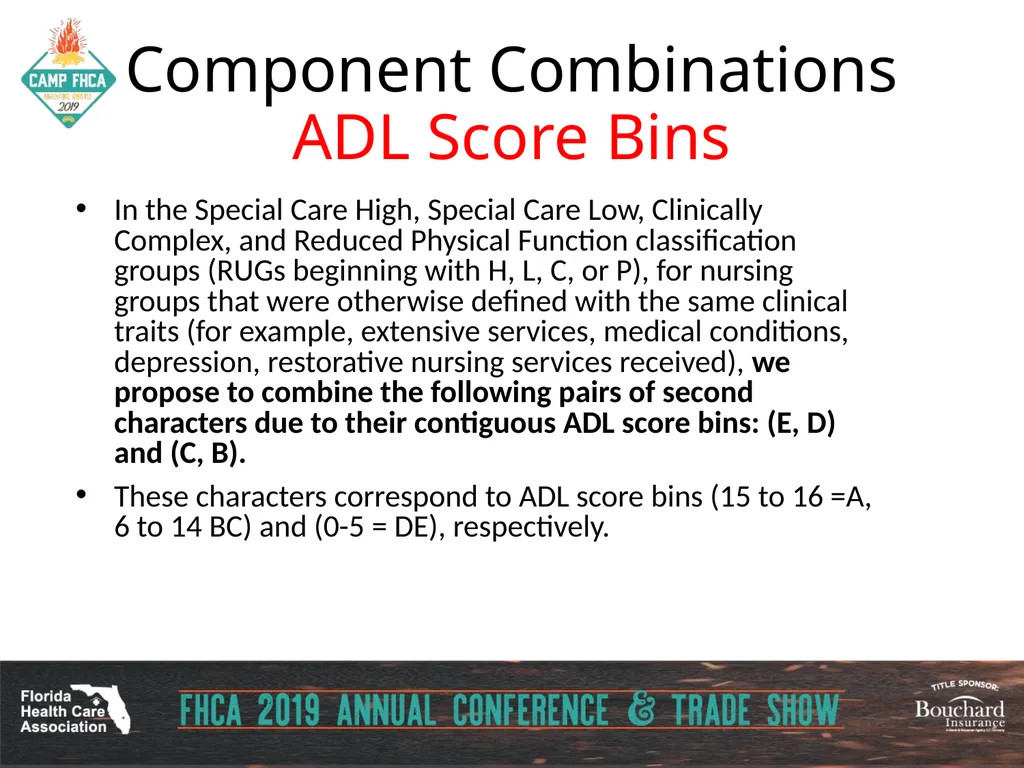
ADL Score Bins In the Special Care High, Special Care Low, Clinically Complex, and Reduced Physical Function classification groups (RUGs beginning with H, L, C, or P), for nursing groups that were otherwise defined with the same clinical traits (for example, extensive services, medical conditions, depression, restorative nursing services received), we propose to combine the following pairs of second characters due to their contiguous ADL score bins: (E, D) and (C, B).
These characters correspond to ADL score bins (15 to 16 =A, 6 to 14 BC) and (0-5 = DE), respectively.<br>
These characters correspond to ADL score bins (15 to 16 =A, 6 to 14 BC) and (0-5 = DE), respectively.<br>
83
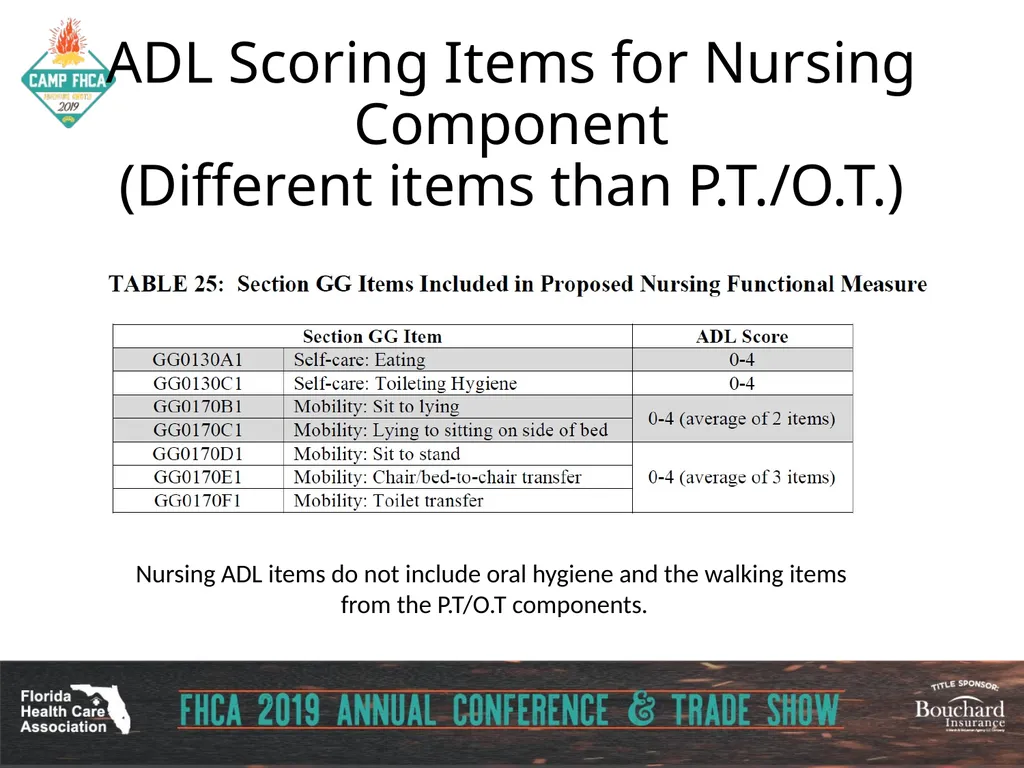
ADL Scoring Items for Nursing Component
(Different items than P.T./O.T.) Nursing ADL items do not include oral hygiene and the walking items
from the P.T/O.T components.<br>
from the P.T/O.T components.<br>
84
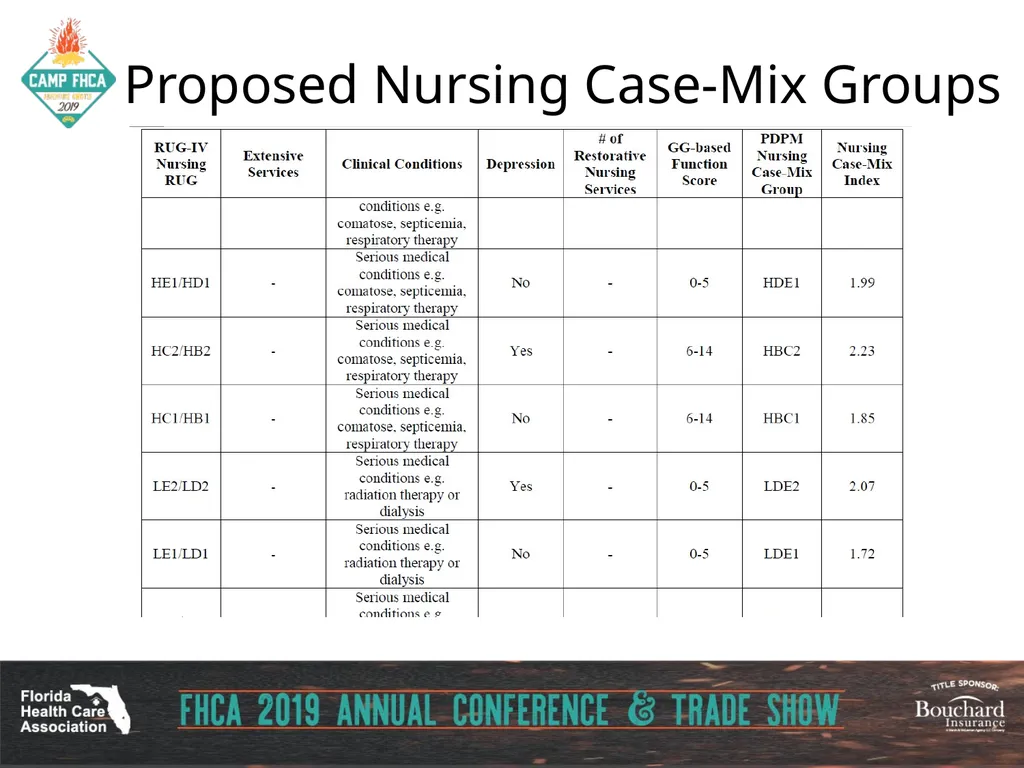
Proposed Nursing Case-Mix Groups<br>
85
Proposed Nursing Case-Mix Groups<br>
86
Proposed Nursing Case-Mix Groups<br>
87
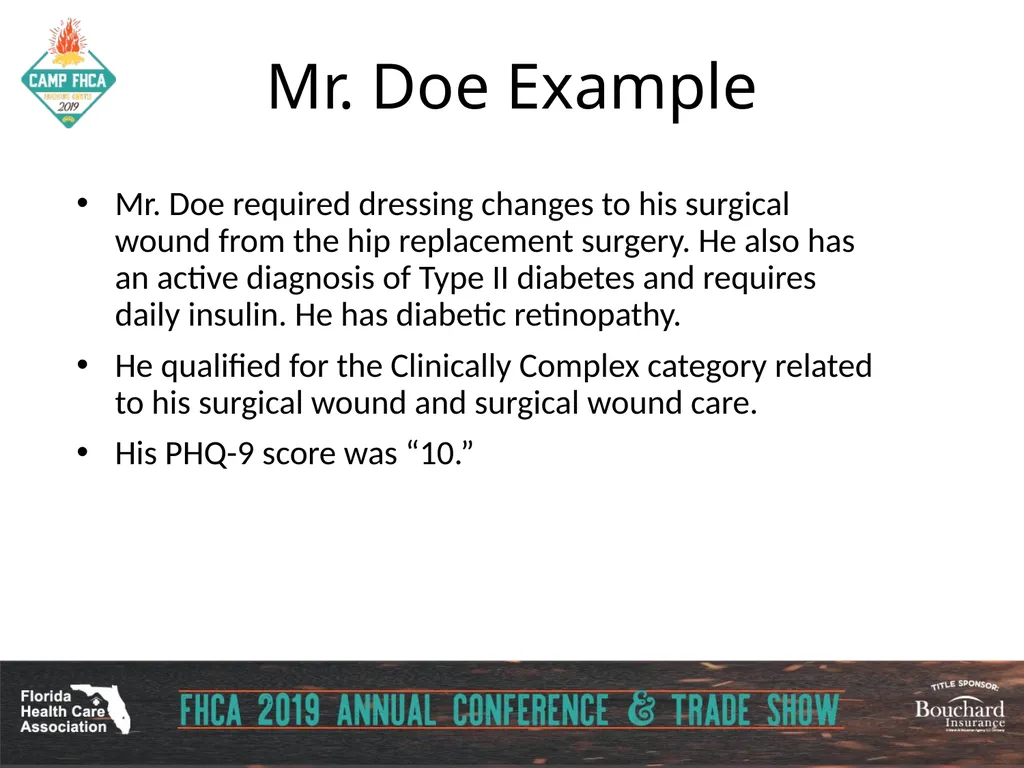
Mr. Doe Example Mr. Doe required dressing changes to his surgical wound from the hip replacement surgery. He also has an active diagnosis of Type II diabetes and requires daily insulin. He has diabetic retinopathy.
He qualified for the Clinically Complex category related to his surgical wound and surgical wound care.
His PHQ-9 score was “10.”<br>
He qualified for the Clinically Complex category related to his surgical wound and surgical wound care.
His PHQ-9 score was “10.”<br>
88
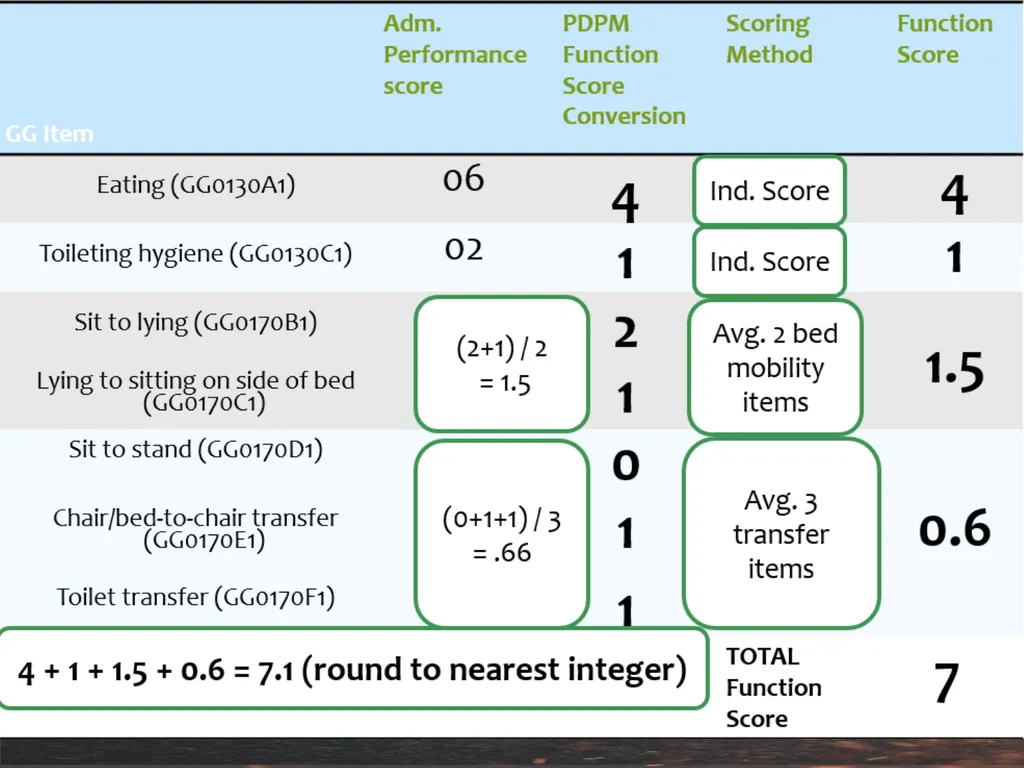
Mr. Doe’s ADL Score<br>
89
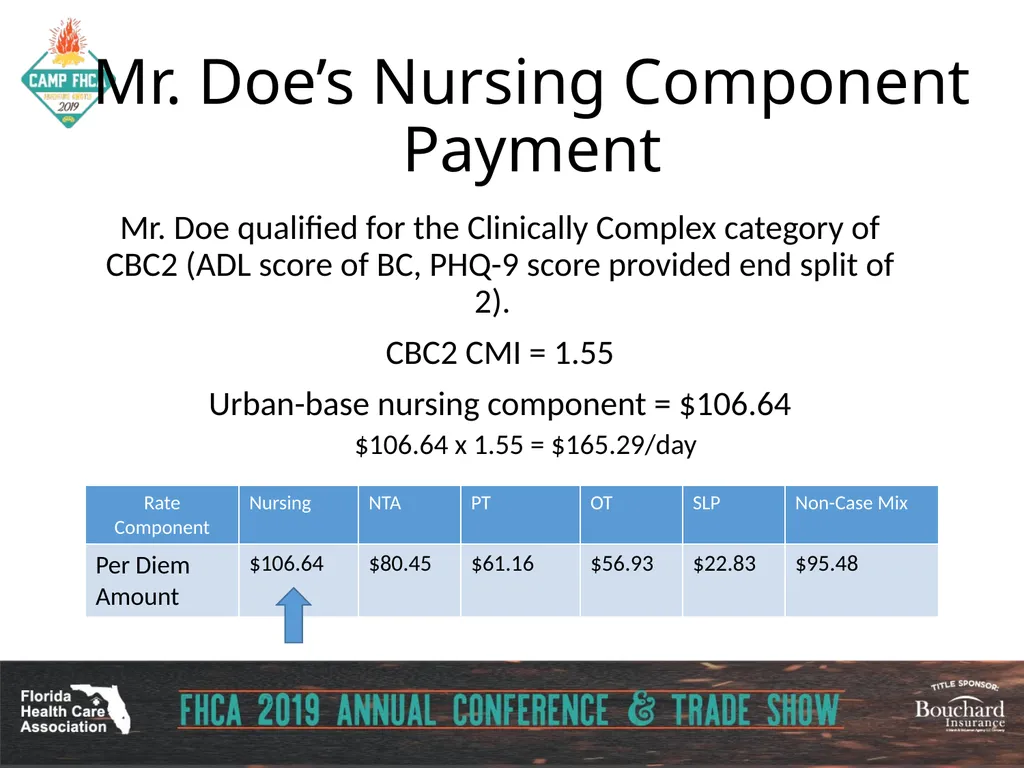
Mr. Doe’s Nursing Component Payment Mr. Doe qualified for the Clinically Complex category of CBC2 (ADL score of BC, PHQ-9 score provided end split of 2).
CBC2 CMI = 1.55
Urban-base nursing component = $106.64
$106.64 x 1.55 = $165.29/day<br>
CBC2 CMI = 1.55
Urban-base nursing component = $106.64
$106.64 x 1.55 = $165.29/day<br>
90
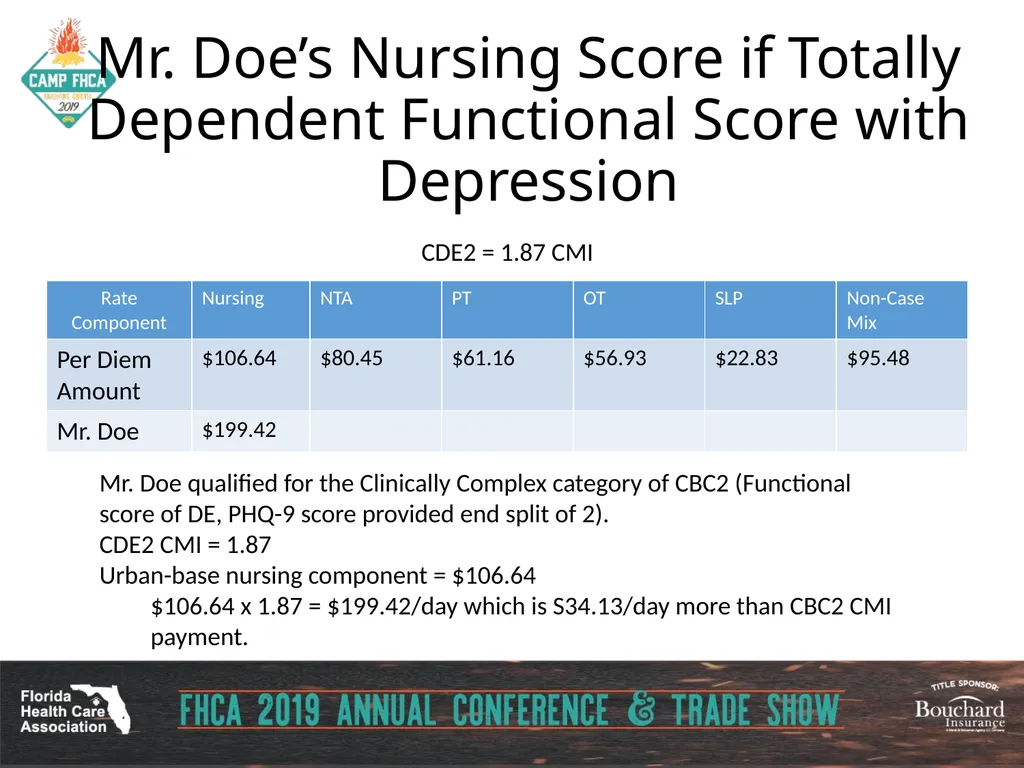
Mr. Doe’s Nursing Score if Totally Dependent Functional Score with Depression CDE2 = 1.87 CMI Mr. Doe qualified for the Clinically Complex category of CBC2 (Functional score of DE, PHQ-9 score provided end split of 2).
CDE2 CMI = 1.87
Urban-base nursing component = $106.64
$106.64 x 1.87 = $199.42/day which is S34.13/day more than CBC2 CMI payment.<br>
CDE2 CMI = 1.87
Urban-base nursing component = $106.64
$106.64 x 1.87 = $199.42/day which is S34.13/day more than CBC2 CMI payment.<br>
91
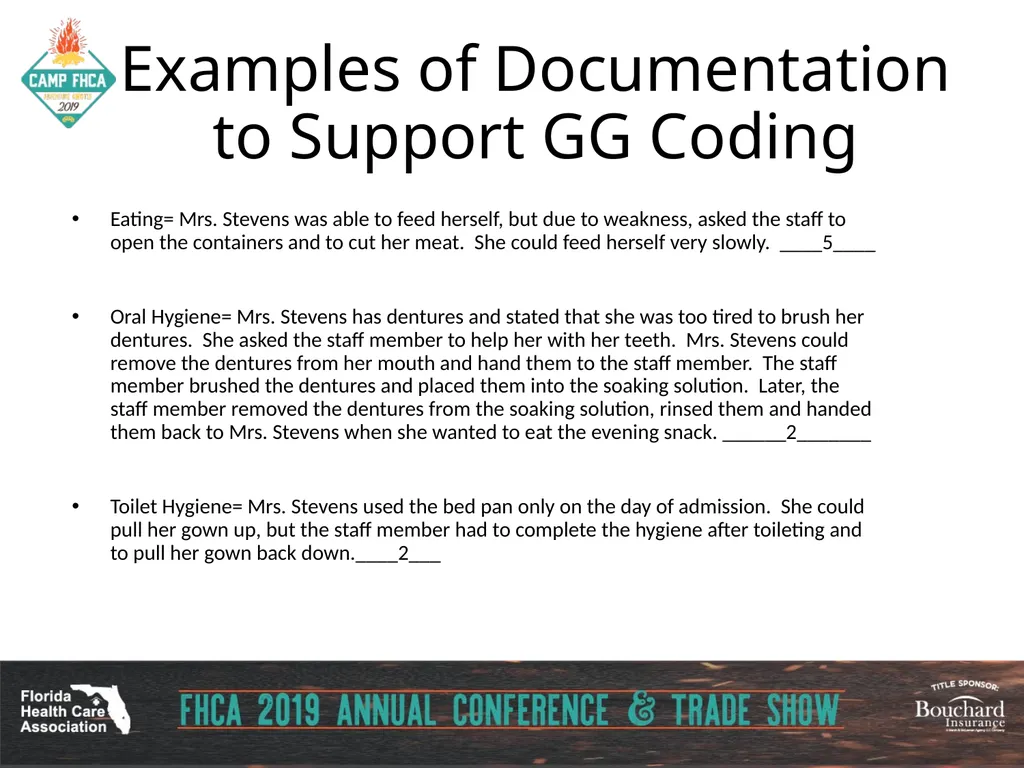
Examples of Documentation to Support GG Coding Eating= Mrs. Stevens was able to feed herself, but due to weakness, asked the staff to open the containers and to cut her meat. She could feed herself very slowly. ____5____
Oral Hygiene= Mrs. Stevens has dentures and stated that she was too tired to brush her dentures. She asked the staff member to help her with her teeth. Mrs. Stevens could remove the dentures from her mouth and hand them to the staff member. The staff member brushed the dentures and placed them into the soaking solution. Later, the staff member removed the dentures from the soaking solution, rinsed them and handed them back to Mrs. Stevens when she wanted to eat the evening snack. ______2_______
Toilet Hygiene= Mrs. Stevens used the bed pan only on the day of admission. She could pull her gown up, but the staff member had to complete the hygiene after toileting and to pull her gown back down.____2___<br>
92
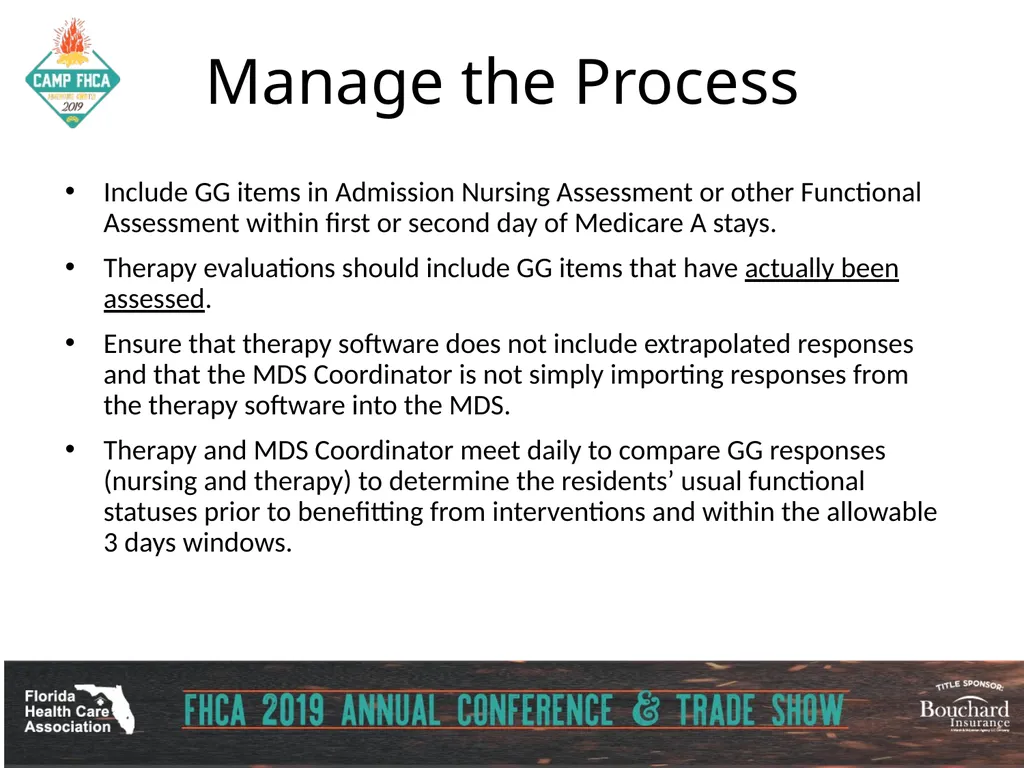
Manage the Process Include GG items in Admission Nursing Assessment or other Functional Assessment within first or second day of Medicare A stays.
Therapy evaluations should include GG items that have actually been assessed.
Ensure that therapy software does not include extrapolated responses and that the MDS Coordinator is not simply importing responses from the therapy software into the MDS.
Therapy and MDS Coordinator meet daily to compare GG responses (nursing and therapy) to determine the residents’ usual functional statuses prior to benefitting from interventions and within the allowable 3 days windows.<br>
93
Manage the Process Audit the assessments and documentation of resident function during the first and last 3 days of Medicare A stays as well as the 3 day IPA assessment window.
Educate admission nurses and all evaluating therapists about the importance of accurate and timely assessment and clear documentation of functional status.
Remember the October 2019 transition period. Prepare your team to complete Section GG Assessments during the look-back for each of those transitional IPA MDS Assessments.<br>
94
Questions?<br>