
Strategy and Management Control system Tasks


Description: Strategy and Management Control system Tasks Involved in Strategic Management MCS Kelley Summer 2009 GM 105 Strategic Management Defining business and stating a mission Setting measurable objectives Crafting a strategy to achieve
Related Topics
Download Presentation
"Strategy and Management Control system Tasks" is the property of its rightful owner. Permission is granted to download and print the materials on this website for personal, non-commercial use only, and to display it on your personal computer provided you do not modify the materials and that you retain all copyright notices contained in the materials. By downloading content from our website, you accept the terms of this agreement.
Presentation Transcript
slide1. Strategy and Management Control system<br>
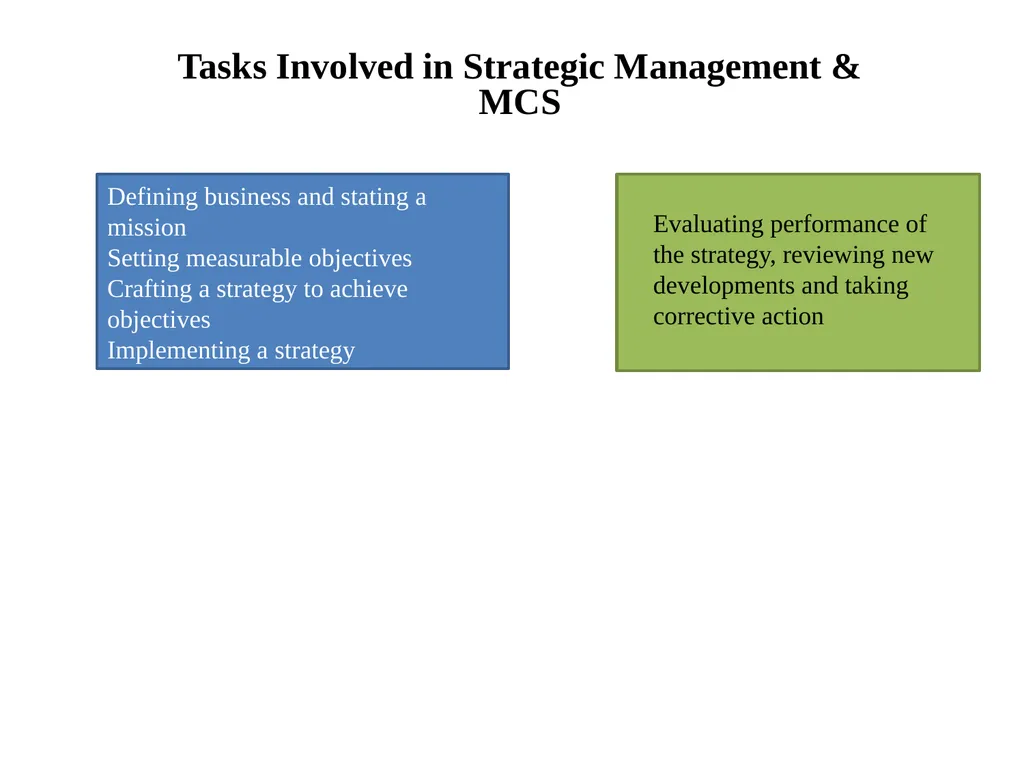
slide2. Tasks Involved in Strategic Management & MCS Kelley Summer 2009 GM 105 Strategic Management Defining business and stating a mission
Setting measurable objectives
Crafting a strategy to achieve objectives
Implementing a strategy Evaluating performance of the strategy, reviewing new developments and taking corrective action<br>
slide3. The essence of strategy of the organization<br>
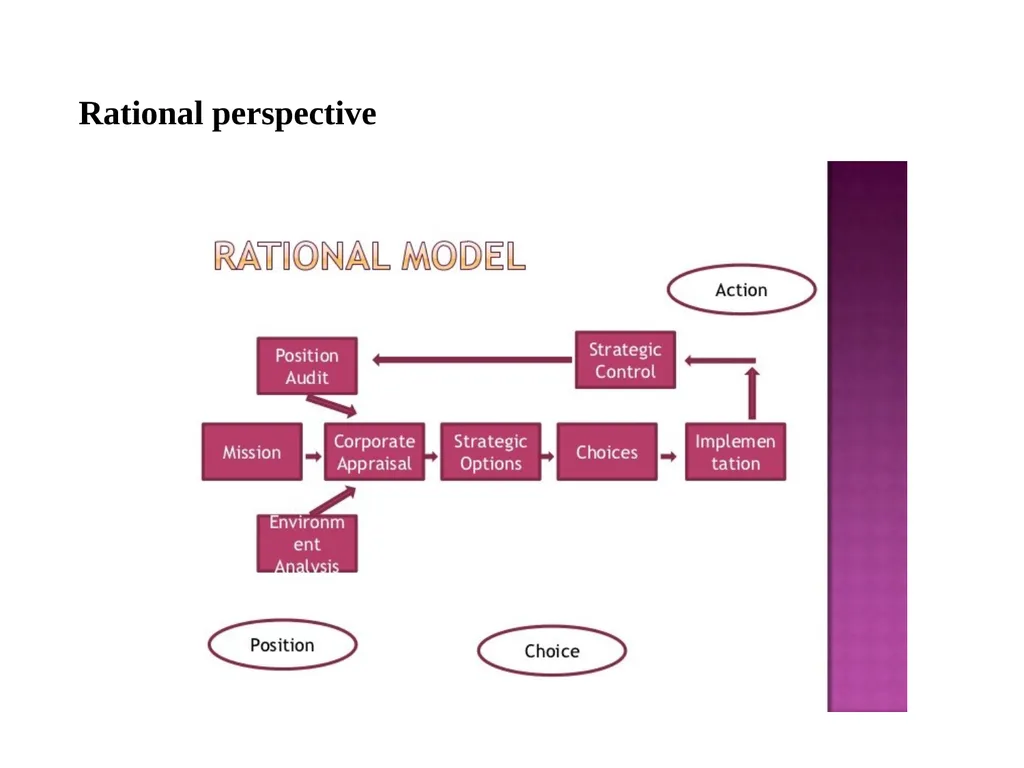
slide4. Rational perspective<br>
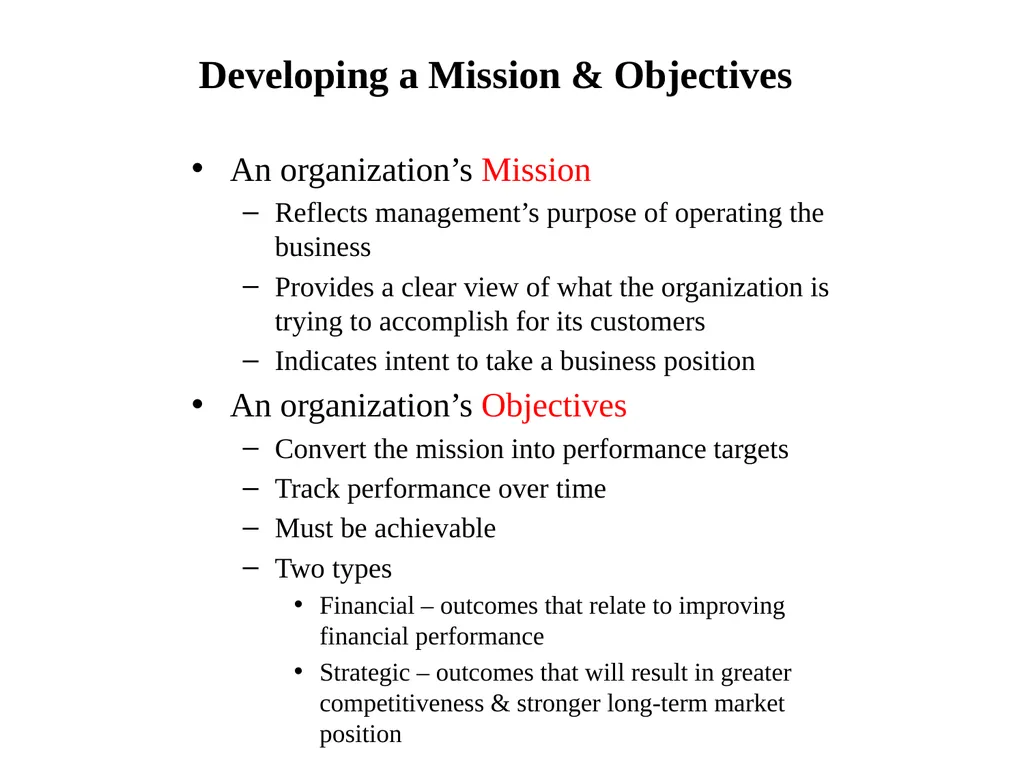
slide5. Developing a Mission & Objectives An organization’s Mission
Reflects management’s purpose of operating the business
Provides a clear view of what the organization is trying to accomplish for its customers
Indicates intent to take a business position
An organization’s Objectives
Convert the mission into performance targets
Track performance over time
Must be achievable
Two types
Financial – outcomes that relate to improving financial performance
Strategic – outcomes that will result in greater competitiveness & stronger long-term market position Kelley Summer 2009 GM 105 Strategic Management<br>
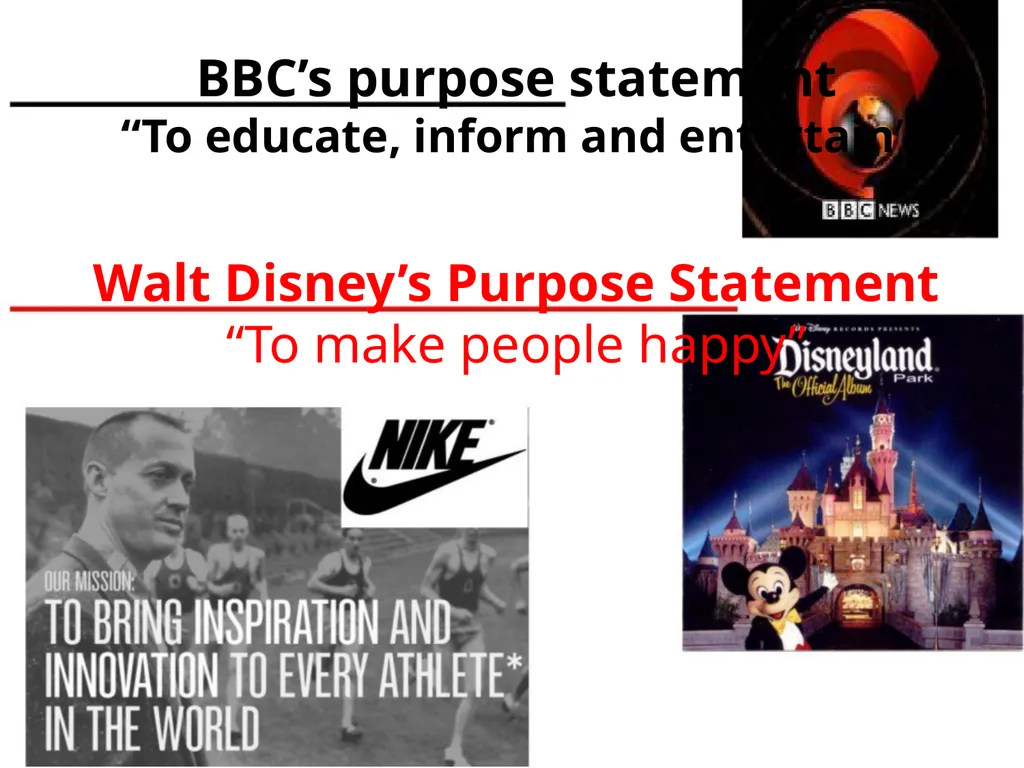
slide6. BBC’s purpose statement “To educate, inform and entertain” Walt Disney’s Purpose Statement “To make people happy”<br>
slide7. Management accounting and strategy • Objectives - Specific statement of what the organisation aims to achieve, often quantified and relating to a specific period of time (SMART) • Strategies - Strategy is the direction and scope of an organisation over the long term which achieves advantage for the organisation through its configuration of resources within a changing environment to fulfil stakeholder expectations.
G. Johnson and K. Scholes Exploring Corporate Strategy 6th edition<br>
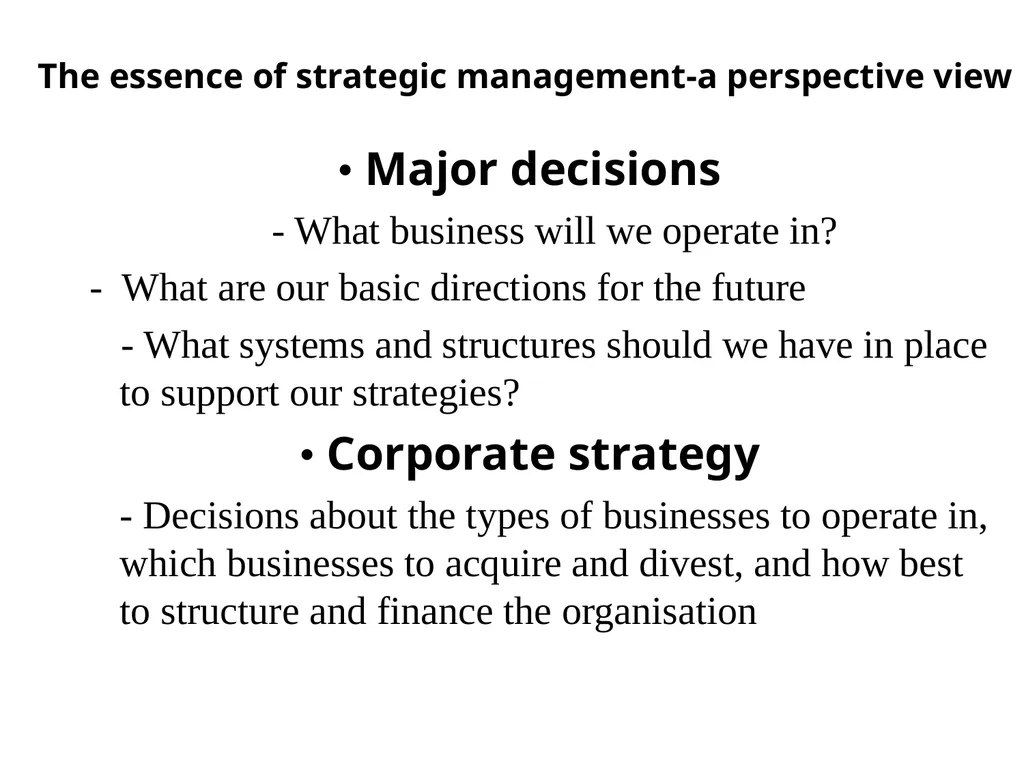
slide8. The essence of strategic management-a perspective view • Major decisions - What business will we operate in? - What are our basic directions for the future - What systems and structures should we have in place to support our strategies? • Corporate strategy - Decisions about the types of businesses to operate in, which businesses to acquire and divest, and how best to structure and finance the organisation<br>
slide9. If DSI confines itself footwear business, can they offer tyres , tubes, schoolbags?<br>
slide10. What business are you in? If you want to travel from London to Manchester, you can choose from the train, coach, car or aeroplane, so what business should Ryanair be in?<br>
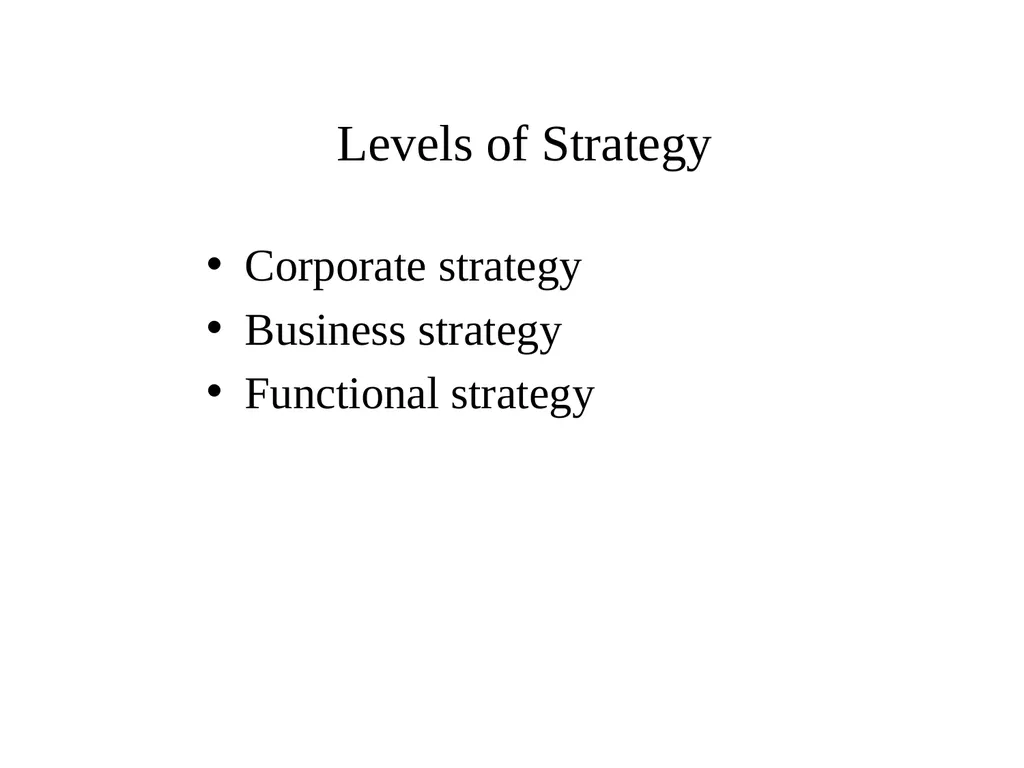
slide11. Levels of Strategy Corporate strategy
Business strategy
Functional strategy<br>
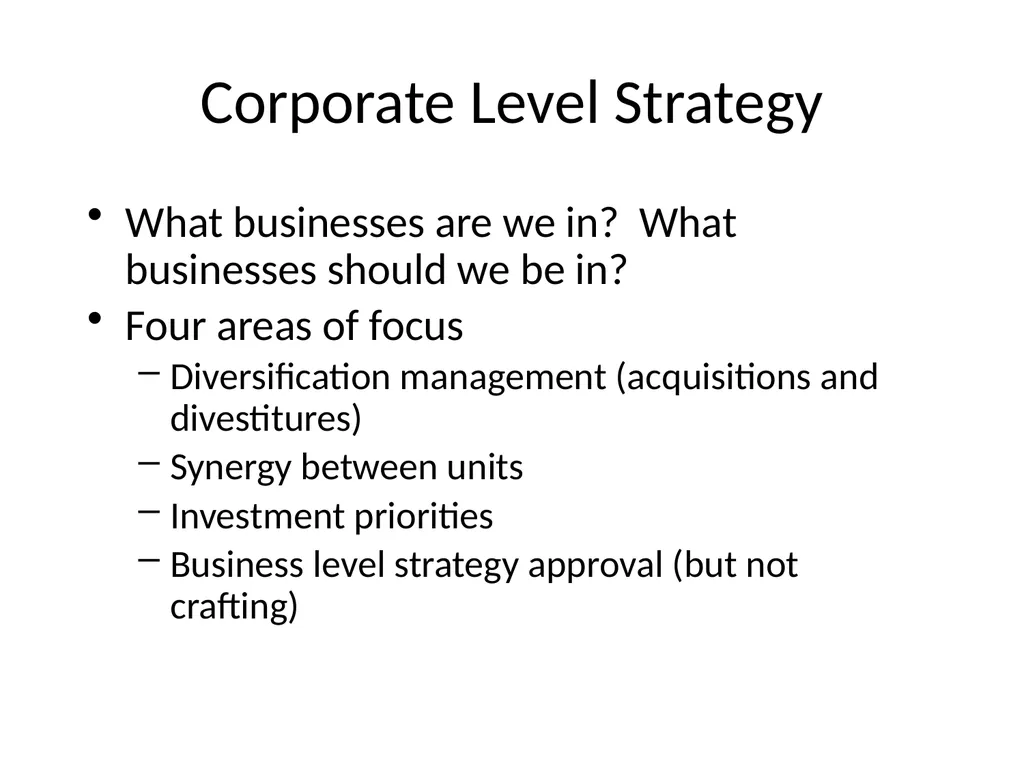
slide12. Corporate Level Strategy What businesses are we in? What businesses should we be in?
Four areas of focus
Diversification management (acquisitions and divestitures)
Synergy between units
Investment priorities
Business level strategy approval (but not crafting)<br>
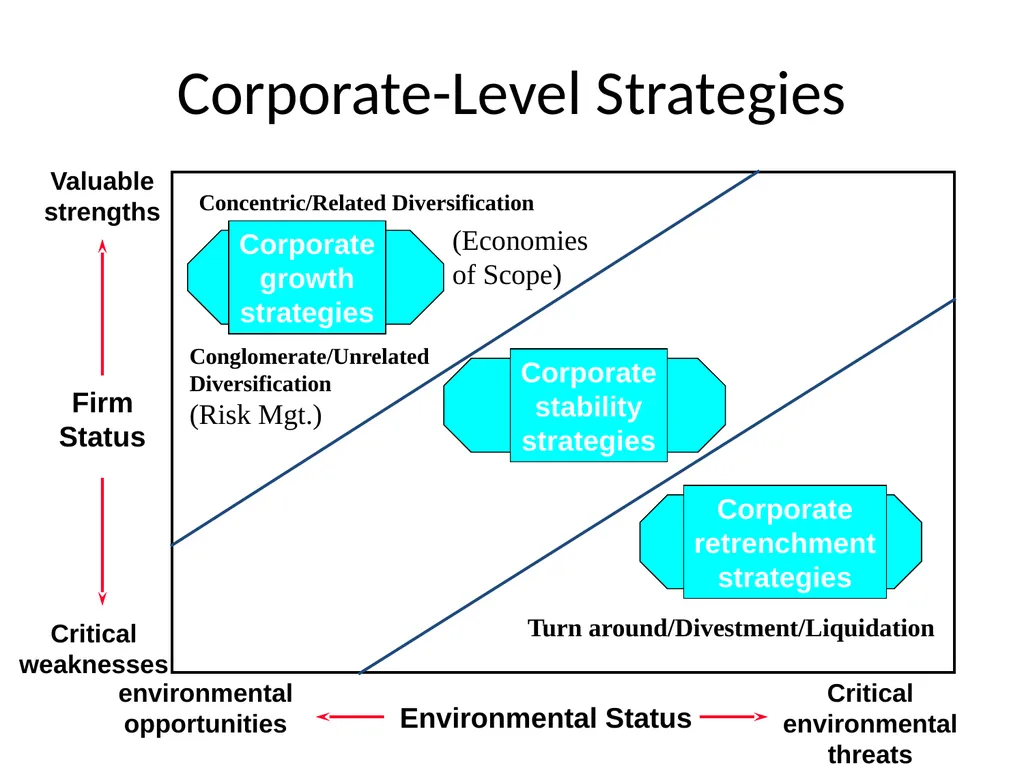
slide13. Corporate-Level Strategies Firm
Status Valuable
strengths Critical
weaknesses Environmental Status environmental
opportunities Critical
environmental
threats Conglomerate/Unrelated
Diversification
(Risk Mgt.) Turn around/Divestment/Liquidation<br>
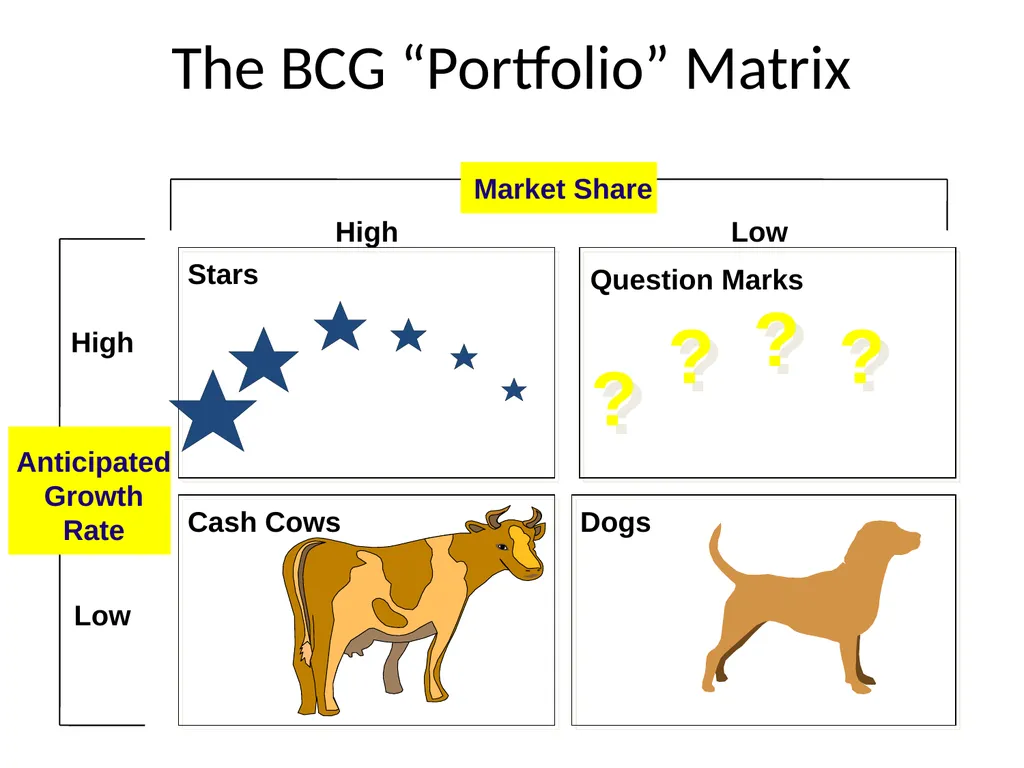
slide14. The BCG “Portfolio” Matrix High Low High Low Market Share Anticipated
Growth
Rate Stars ? ? ? ? Question Marks Cash Cows Dogs<br>
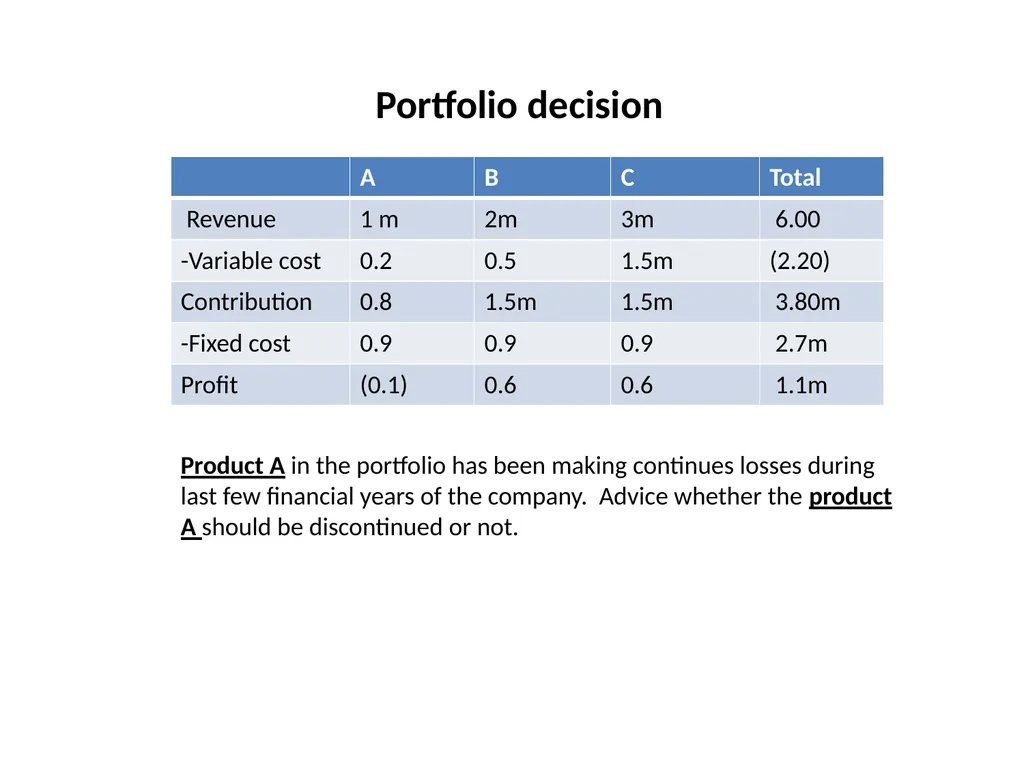
slide15. Portfolio decision Product A in the portfolio has been making continues losses during last few financial years of the company. Advice whether the product A should be discontinued or not.<br>
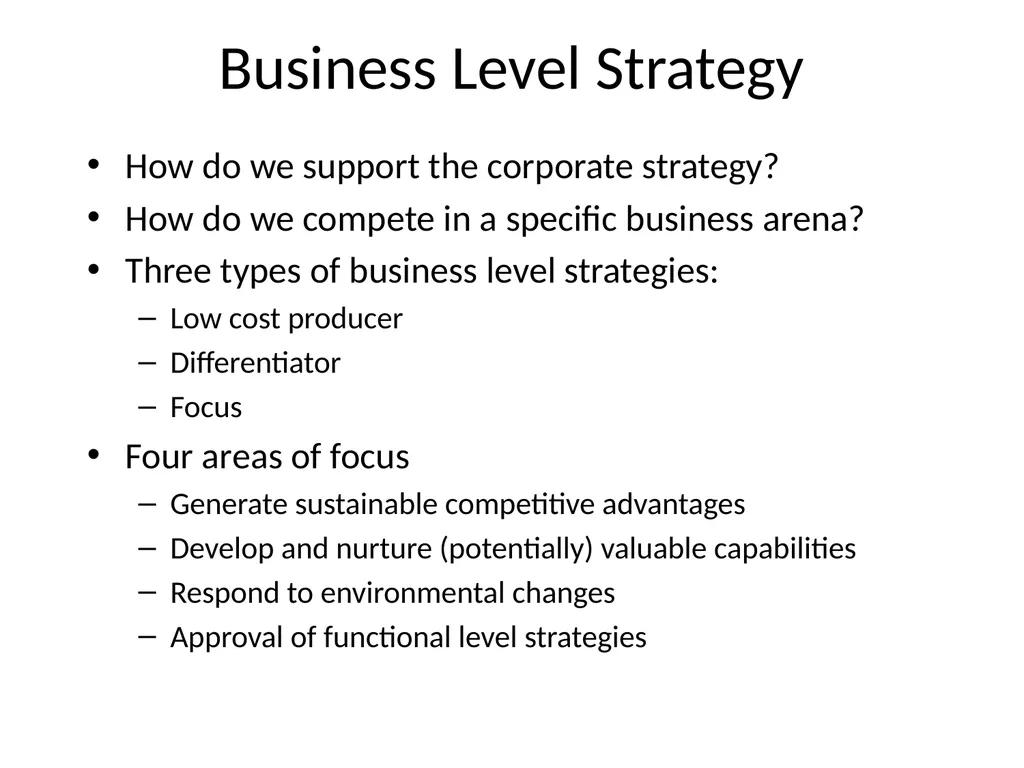
slide16. Business Level Strategy How do we support the corporate strategy?
How do we compete in a specific business arena?
Three types of business level strategies:
Low cost producer
Differentiator
Focus
Four areas of focus
Generate sustainable competitive advantages
Develop and nurture (potentially) valuable capabilities
Respond to environmental changes
Approval of functional level strategies<br>
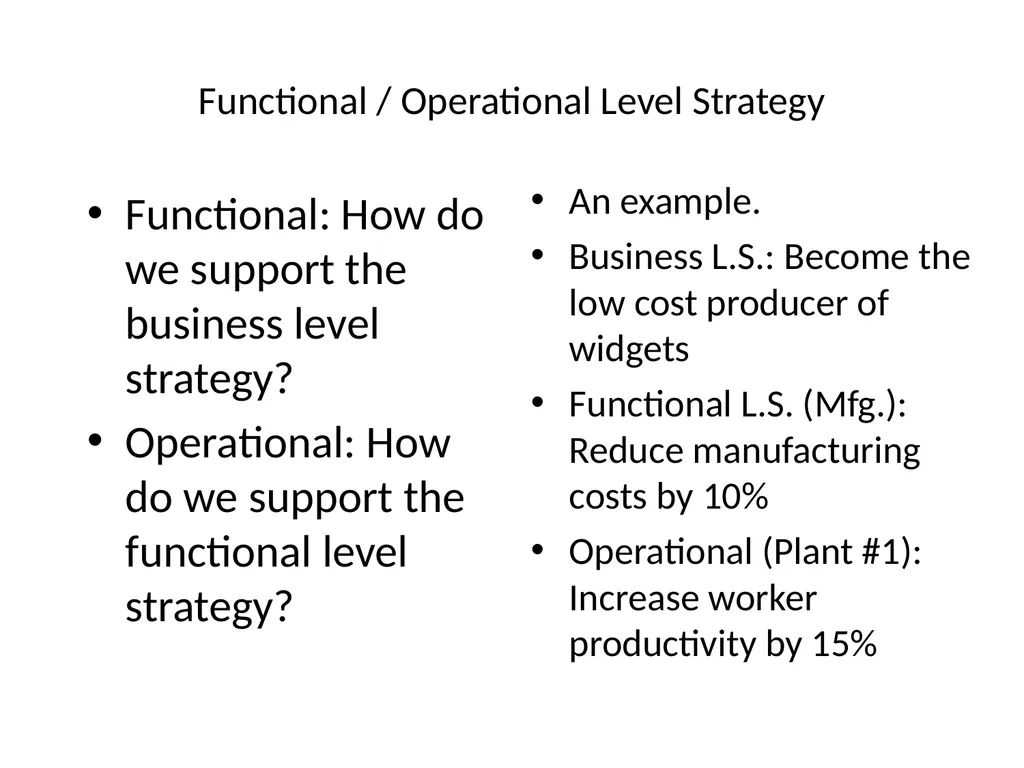
slide17. Functional / Operational Level Strategy Functional: How do we support the business level strategy?
Operational: How do we support the functional level strategy? An example.
Business L.S.: Become the low cost producer of widgets
Functional L.S. (Mfg.): Reduce manufacturing costs by 10%
Operational (Plant #1): Increase worker productivity by 15%<br>
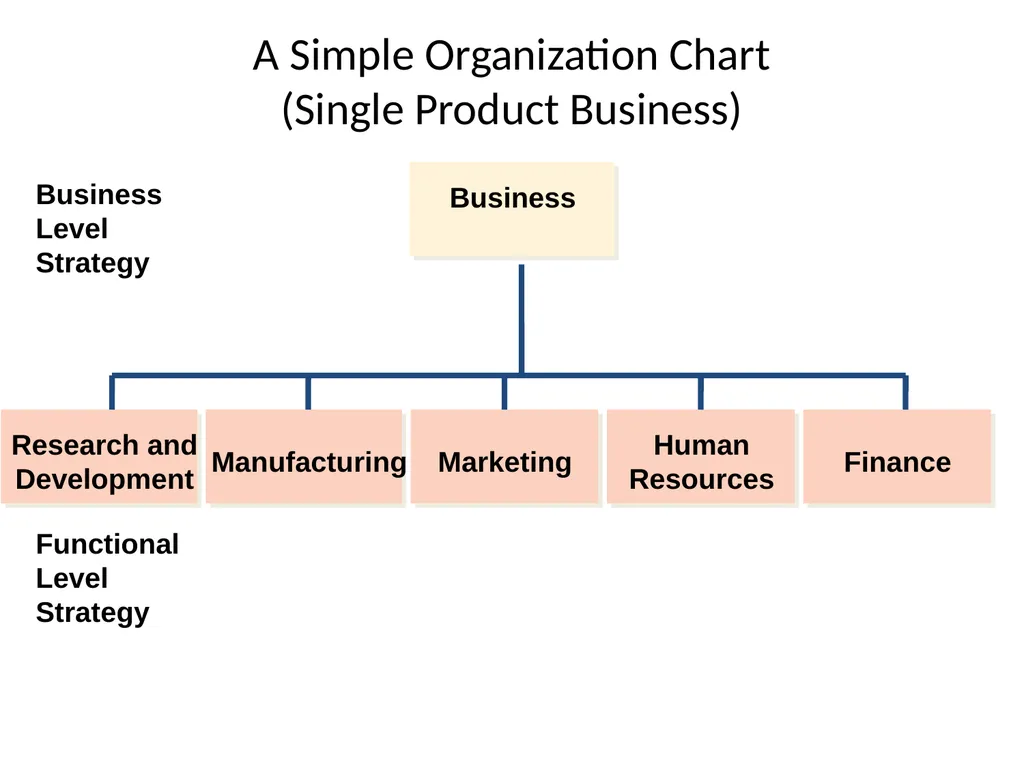
slide18. A Simple Organization Chart (Single Product Business) Business Research and
Development Manufacturing Marketing Human
Resources Finance Functional
Level
Strategy Business
Level
Strategy<br>
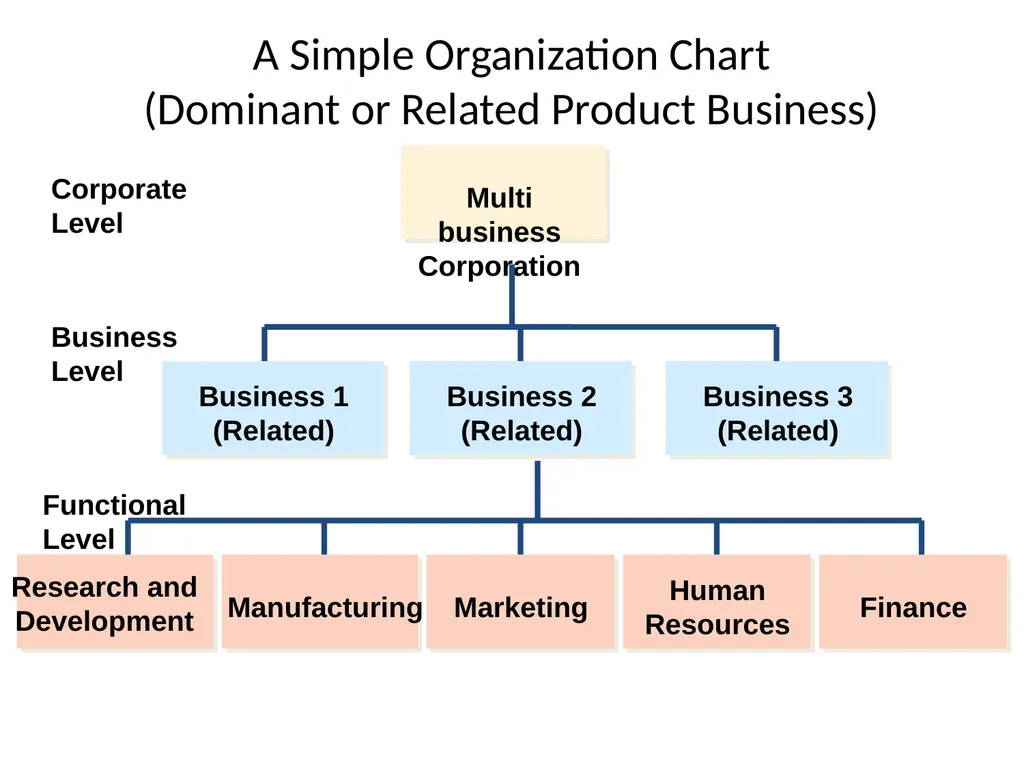
slide19. A Simple Organization Chart (Dominant or Related Product Business) Multi
business
Corporation Corporate
Level<br>
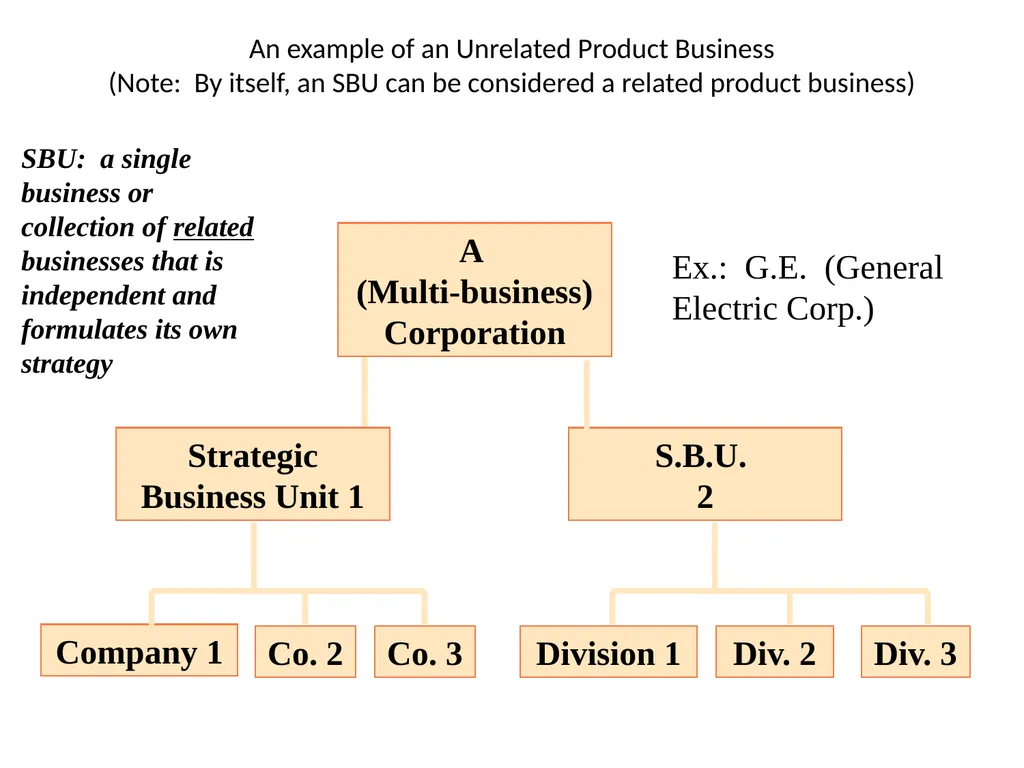
slide20. An example of an Unrelated Product Business (Note: By itself, an SBU can be considered a related product business) A
(Multi-business) Corporation Ex.: G.E. (General
Electric Corp.) Strategic Business Unit 1 S.B.U.
2 SBU: a single business or collection of related businesses that is independent and formulates its own strategy<br>
slide21. What business are you in?<br>
slide22. An emergent view
Emphasize the uncertainty of the future and suggest that setting out identify purpose and a single strategy and then develop a complete strategic plan may be fruitless task<br>
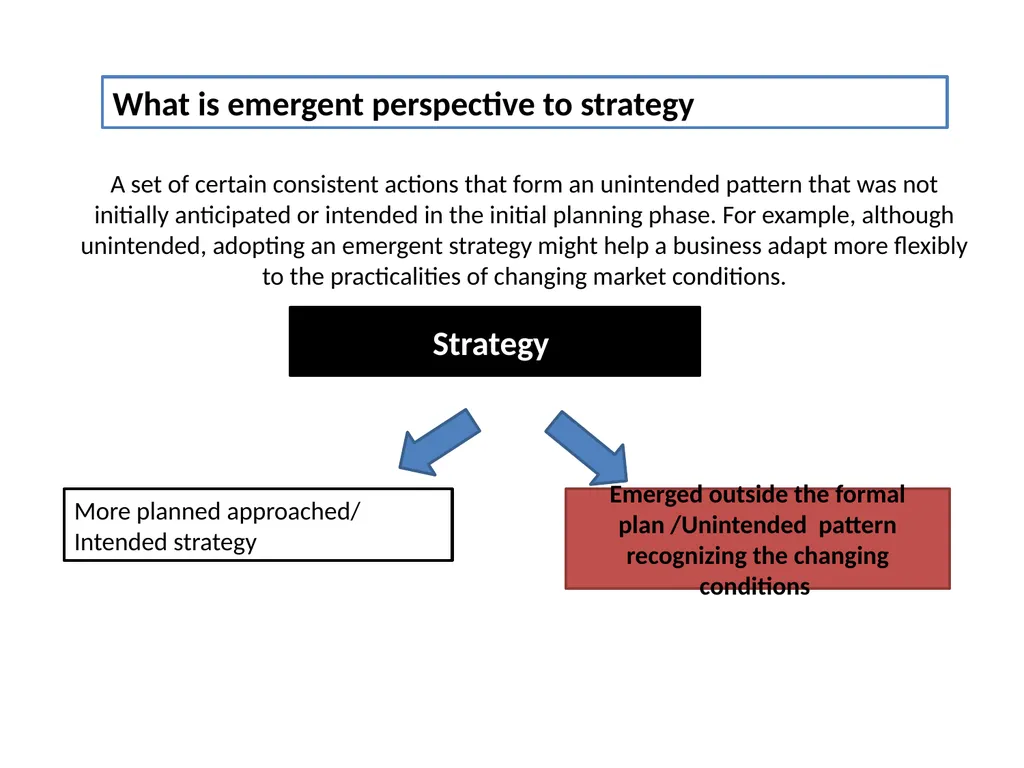
slide23. A set of certain consistent actions that form an unintended pattern that was not initially anticipated or intended in the initial planning phase. For example, although unintended, adopting an emergent strategy might help a business adapt more flexibly to the practicalities of changing market conditions. What is emergent perspective to strategy Strategy More planned approached/ Intended strategy Emerged outside the formal plan /Unintended pattern recognizing the changing conditions<br>
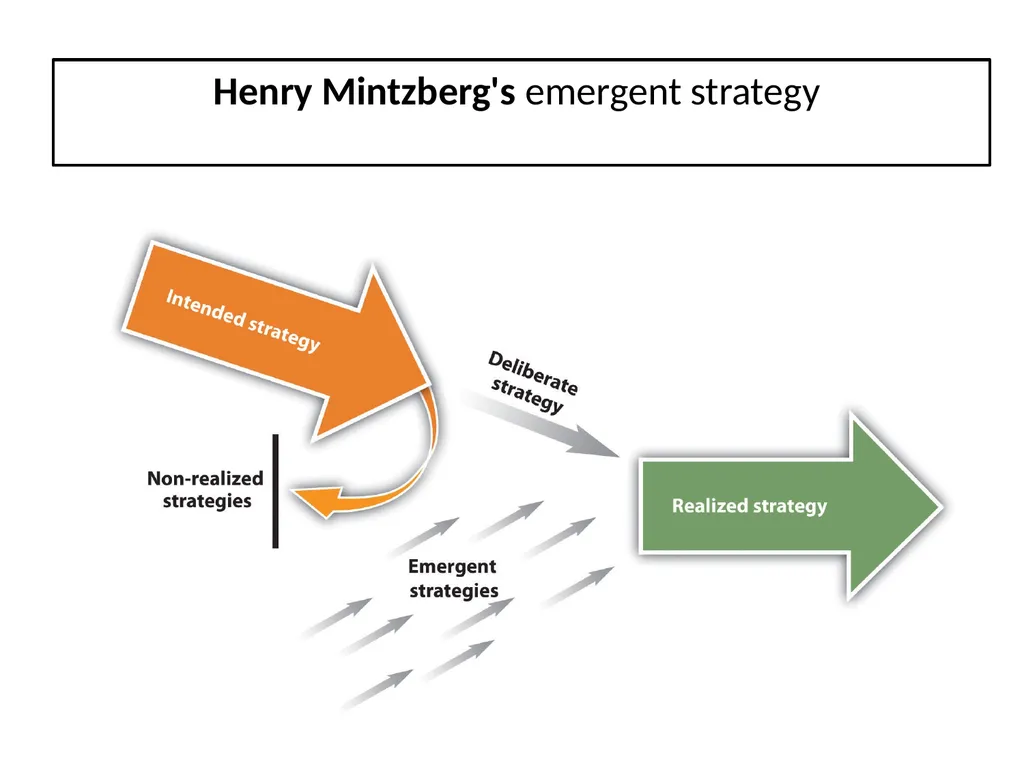
slide24. Henry Mintzberg's emergent strategy<br>
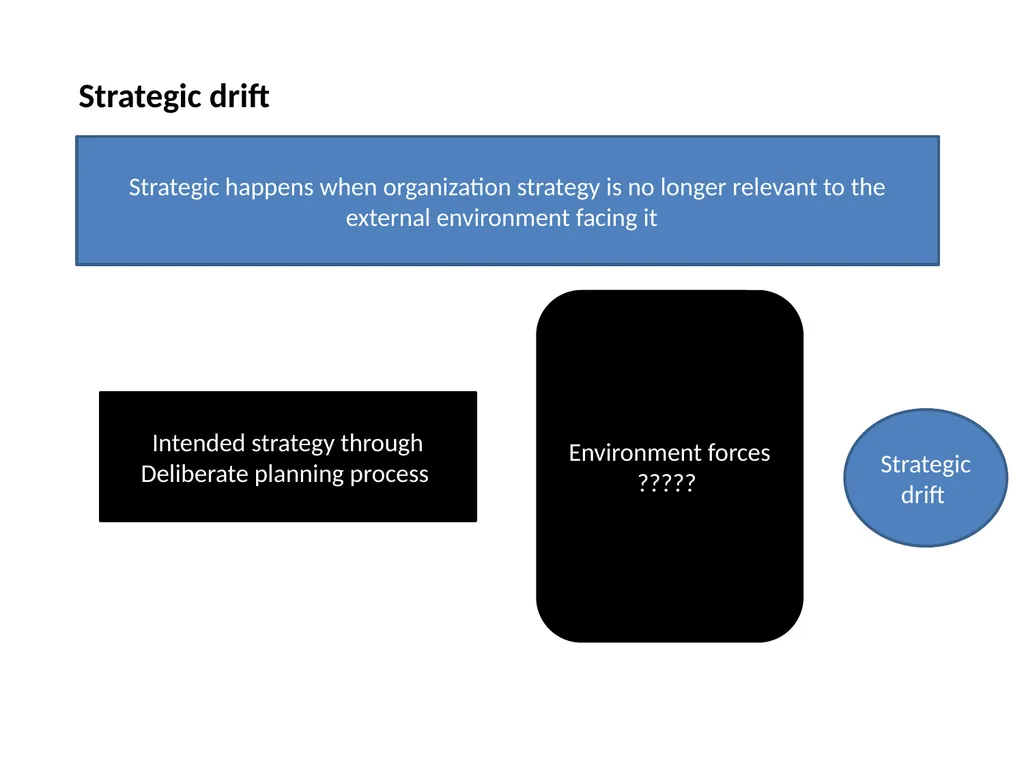
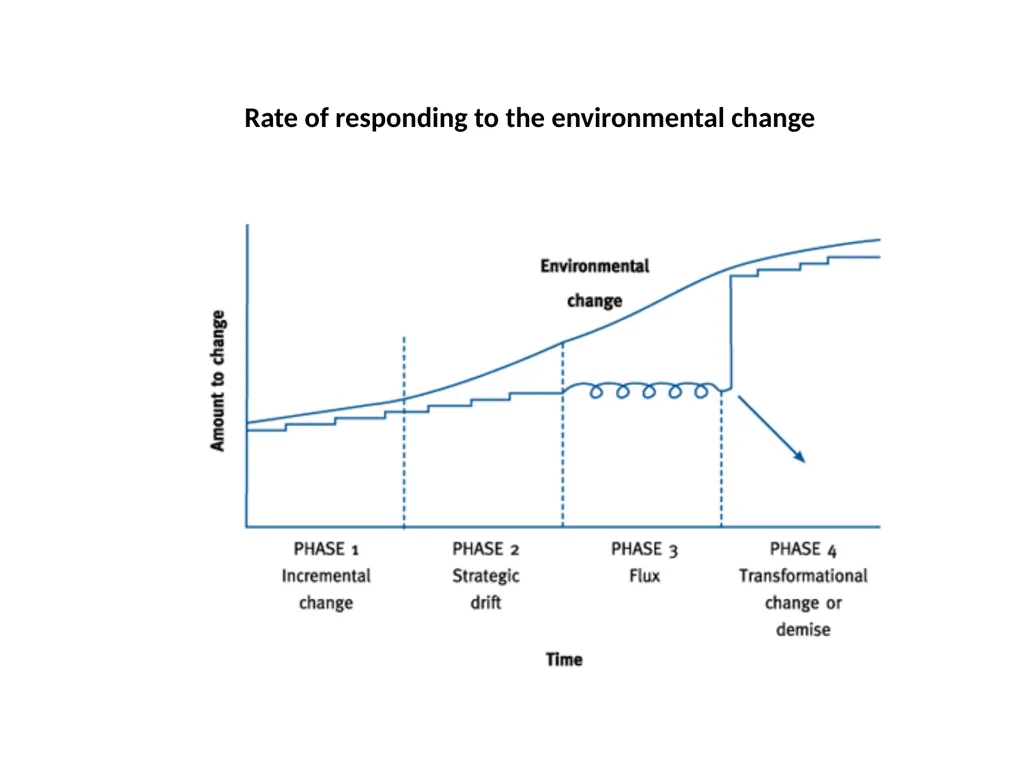
slide25. Strategic drift Strategic happens when organization strategy is no longer relevant to the external environment facing it Intended strategy through Deliberate planning process Environment forces
????? Strategic drift<br>
slide26. Rate of responding to the environmental change<br>
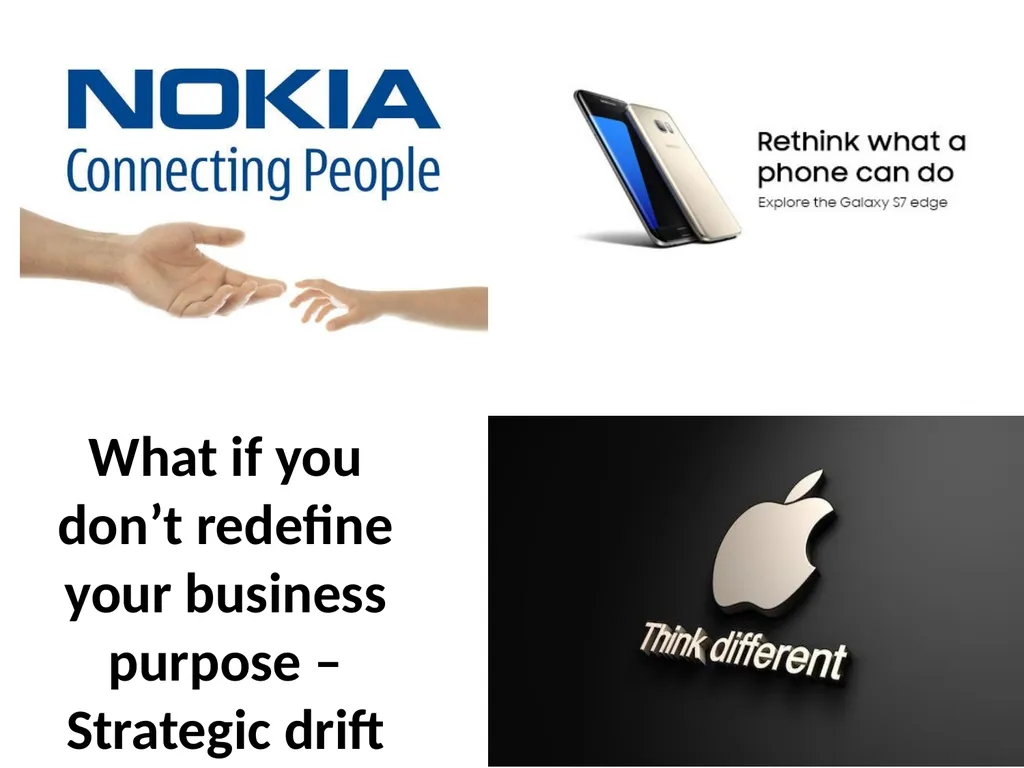
slide27. What if you don’t redefine your business purpose –Strategic drift<br>
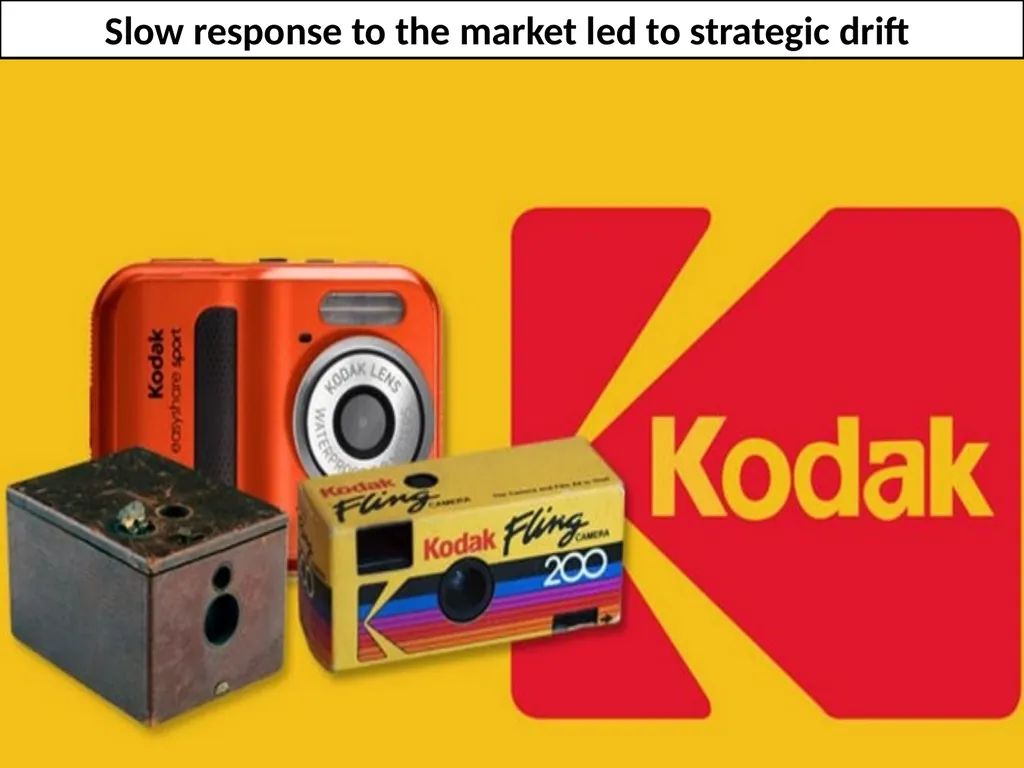
slide28. Slow response to the market led to strategic drift<br>
slide29. How can companies survive a strategic drift Organizational leadership and adaptable culture
Continues assessment of trends, emergence of direct and indirect competitors, technological changes and adjustment in to the current plan. https://www.youtube.com/watch?v=dqwAZKrc6vw<br>
slide2. Tasks Involved in Strategic Management & MCS Kelley Summer 2009 GM 105 Strategic Management Defining business and stating a mission
Setting measurable objectives
Crafting a strategy to achieve objectives
Implementing a strategy Evaluating performance of the strategy, reviewing new developments and taking corrective action<br>
slide3. The essence of strategy of the organization<br>
slide4. Rational perspective<br>
slide5. Developing a Mission & Objectives An organization’s Mission
Reflects management’s purpose of operating the business
Provides a clear view of what the organization is trying to accomplish for its customers
Indicates intent to take a business position
An organization’s Objectives
Convert the mission into performance targets
Track performance over time
Must be achievable
Two types
Financial – outcomes that relate to improving financial performance
Strategic – outcomes that will result in greater competitiveness & stronger long-term market position Kelley Summer 2009 GM 105 Strategic Management<br>
slide6. BBC’s purpose statement “To educate, inform and entertain” Walt Disney’s Purpose Statement “To make people happy”<br>
slide7. Management accounting and strategy • Objectives - Specific statement of what the organisation aims to achieve, often quantified and relating to a specific period of time (SMART) • Strategies - Strategy is the direction and scope of an organisation over the long term which achieves advantage for the organisation through its configuration of resources within a changing environment to fulfil stakeholder expectations.
G. Johnson and K. Scholes Exploring Corporate Strategy 6th edition<br>
slide8. The essence of strategic management-a perspective view • Major decisions - What business will we operate in? - What are our basic directions for the future - What systems and structures should we have in place to support our strategies? • Corporate strategy - Decisions about the types of businesses to operate in, which businesses to acquire and divest, and how best to structure and finance the organisation<br>
slide9. If DSI confines itself footwear business, can they offer tyres , tubes, schoolbags?<br>
slide10. What business are you in? If you want to travel from London to Manchester, you can choose from the train, coach, car or aeroplane, so what business should Ryanair be in?<br>
slide11. Levels of Strategy Corporate strategy
Business strategy
Functional strategy<br>
slide12. Corporate Level Strategy What businesses are we in? What businesses should we be in?
Four areas of focus
Diversification management (acquisitions and divestitures)
Synergy between units
Investment priorities
Business level strategy approval (but not crafting)<br>
slide13. Corporate-Level Strategies Firm
Status Valuable
strengths Critical
weaknesses Environmental Status environmental
opportunities Critical
environmental
threats Conglomerate/Unrelated
Diversification
(Risk Mgt.) Turn around/Divestment/Liquidation<br>
slide14. The BCG “Portfolio” Matrix High Low High Low Market Share Anticipated
Growth
Rate Stars ? ? ? ? Question Marks Cash Cows Dogs<br>
slide15. Portfolio decision Product A in the portfolio has been making continues losses during last few financial years of the company. Advice whether the product A should be discontinued or not.<br>
slide16. Business Level Strategy How do we support the corporate strategy?
How do we compete in a specific business arena?
Three types of business level strategies:
Low cost producer
Differentiator
Focus
Four areas of focus
Generate sustainable competitive advantages
Develop and nurture (potentially) valuable capabilities
Respond to environmental changes
Approval of functional level strategies<br>
slide17. Functional / Operational Level Strategy Functional: How do we support the business level strategy?
Operational: How do we support the functional level strategy? An example.
Business L.S.: Become the low cost producer of widgets
Functional L.S. (Mfg.): Reduce manufacturing costs by 10%
Operational (Plant #1): Increase worker productivity by 15%<br>
slide18. A Simple Organization Chart (Single Product Business) Business Research and
Development Manufacturing Marketing Human
Resources Finance Functional
Level
Strategy Business
Level
Strategy<br>
slide19. A Simple Organization Chart (Dominant or Related Product Business) Multi
business
Corporation Corporate
Level<br>
slide20. An example of an Unrelated Product Business (Note: By itself, an SBU can be considered a related product business) A
(Multi-business) Corporation Ex.: G.E. (General
Electric Corp.) Strategic Business Unit 1 S.B.U.
2 SBU: a single business or collection of related businesses that is independent and formulates its own strategy<br>
slide21. What business are you in?<br>
slide22. An emergent view
Emphasize the uncertainty of the future and suggest that setting out identify purpose and a single strategy and then develop a complete strategic plan may be fruitless task<br>
slide23. A set of certain consistent actions that form an unintended pattern that was not initially anticipated or intended in the initial planning phase. For example, although unintended, adopting an emergent strategy might help a business adapt more flexibly to the practicalities of changing market conditions. What is emergent perspective to strategy Strategy More planned approached/ Intended strategy Emerged outside the formal plan /Unintended pattern recognizing the changing conditions<br>
slide24. Henry Mintzberg's emergent strategy<br>
slide25. Strategic drift Strategic happens when organization strategy is no longer relevant to the external environment facing it Intended strategy through Deliberate planning process Environment forces
????? Strategic drift<br>
slide26. Rate of responding to the environmental change<br>
slide27. What if you don’t redefine your business purpose –Strategic drift<br>
slide28. Slow response to the market led to strategic drift<br>
slide29. How can companies survive a strategic drift Organizational leadership and adaptable culture
Continues assessment of trends, emergence of direct and indirect competitors, technological changes and adjustment in to the current plan. https://www.youtube.com/watch?v=dqwAZKrc6vw<br>