Strategy Implementation and Management control system Build Execution Its often : Our strategy was great but failed to execute 60 of the company budgets are not linked to the strategy 30 staff incentives are not linked to strategy Only
"Strategy Implementation and Management control" is the property of its rightful owner. Permission is granted to
download and print the materials on this website for personal, non-commercial use only, and to display it
on your personal computer provided you do not modify the materials and that you retain all copyright
notices contained in the materials. By downloading content from our website, you accept the terms of this
agreement.
Presentation Transcript
01
Strategy Implementation and Management control system<br>
02
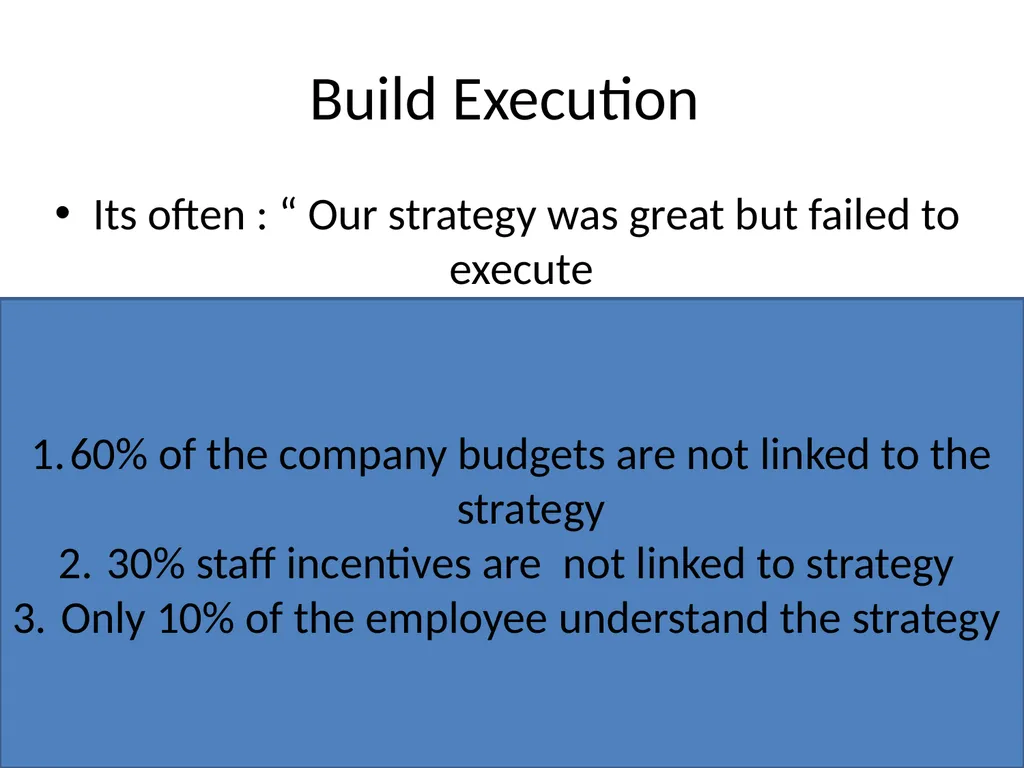
Build Execution Its often : “ Our strategy was great but failed to execute 60% of the company budgets are not linked to the strategy
30% staff incentives are not linked to strategy
Only 10% of the employee understand the strategy<br>
03
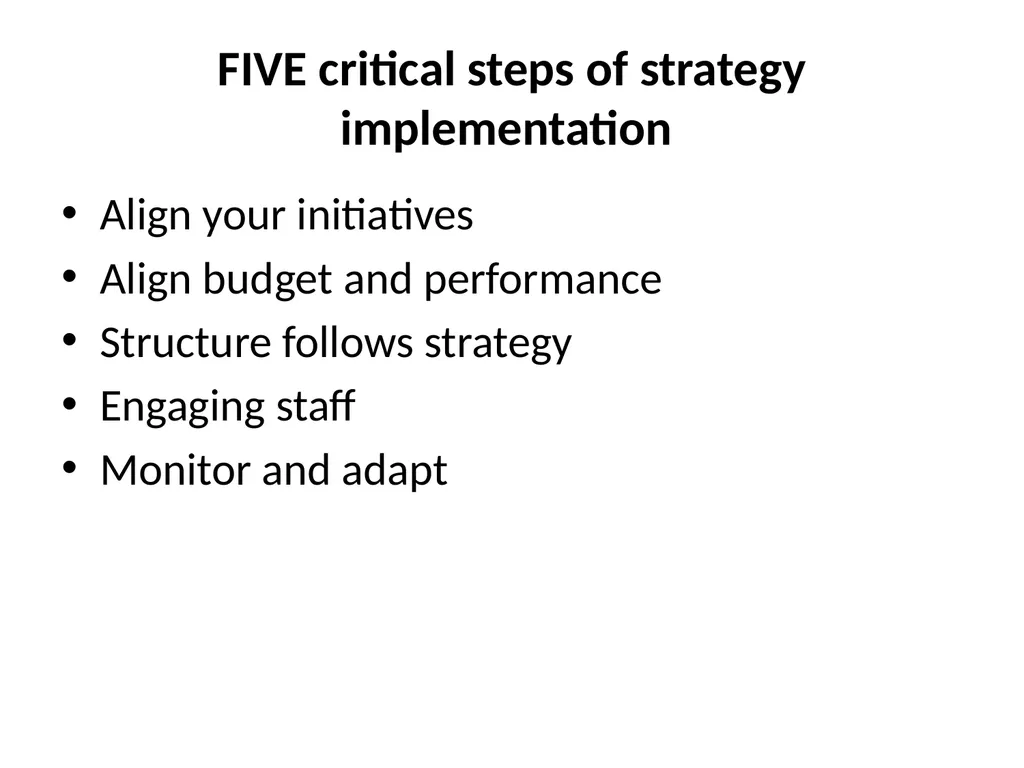
FIVE critical steps of strategy implementation Align your initiatives
Align budget and performance
Structure follows strategy
Engaging staff
Monitor and adapt<br>
04
Managing Strategic Change during strategy implementation<br>
05
Change Changes takes place continuously within the organization to manage the operations. Japanizes believes small changes within the organization bring much more bigger results in the future (Kaizan).
The pace of change can be represented by two extremes.
Slow organizational change
Fast organizational change<br>
06
What is strategic change Strategic change is proactive management of change in organization to achieve clearly identified objective.
Proactive means that company takes initiatives to manage new strategies to overcome a strategic issue or strategic opportunity( Consumer habit changes) and managing its impact on organizational employees.<br>
07
Pressure points of strategic change Strategic change is primarily with people and tasks they perform in the organization.
Understanding the pressure points for influencing such a change is important if the change is to be effective.
Its undertaken through formal and informal structure of the organization<br>
08
Tychy's FOUR main causes of strategic change Environment
Business relationships
Technology
People<br>
09
Managing strategic change Perspective approach to managing strategic change
Emergent approach to managing strategic change<br>
10
Managing challenges of perspective change Kert Lewin (1950) three step model
Unfreezing current attitude
Moving to a new level
Refreezing attitude at the new level<br>
11
Management Control System A management control system is a logical integration of management accounting tools to gather and report data and to evaluate performance.<br>
12
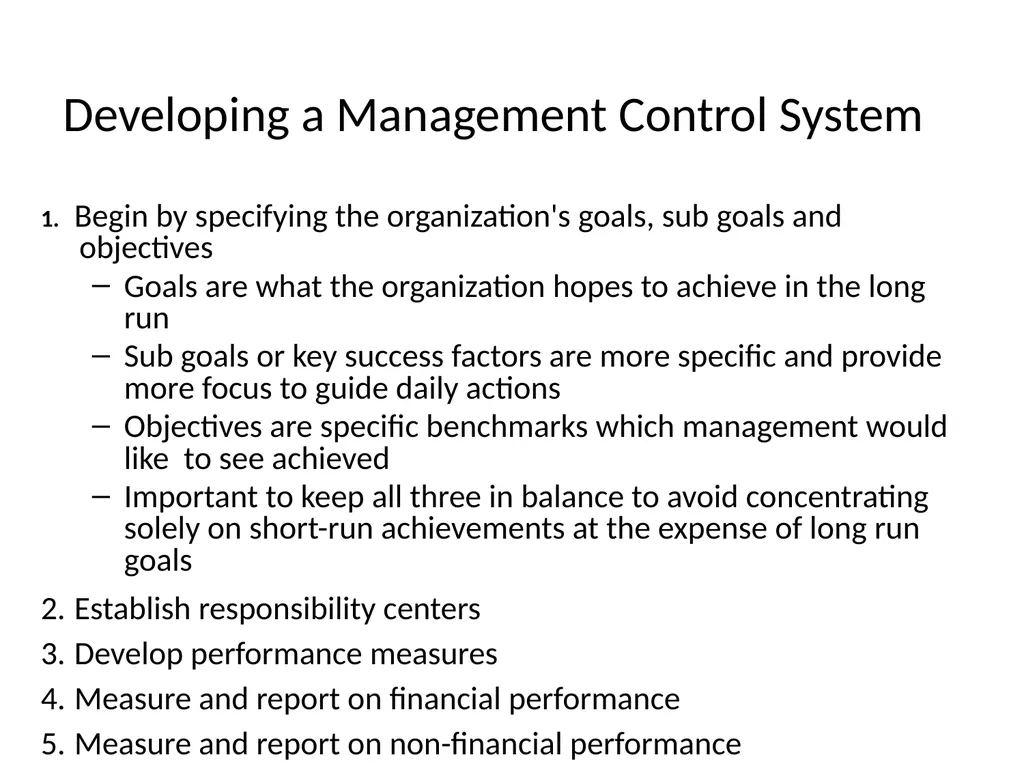
Developing a Management Control System 1. Begin by specifying the organization's goals, sub goals and objectives
Goals are what the organization hopes to achieve in the long run
Sub goals or key success factors are more specific and provide more focus to guide daily actions
Objectives are specific benchmarks which management would like to see achieved
Important to keep all three in balance to avoid concentrating solely on short-run achievements at the expense of long run goals
2. Establish responsibility centers
3. Develop performance measures
4. Measure and report on financial performance
5. Measure and report on non-financial performance<br>
13
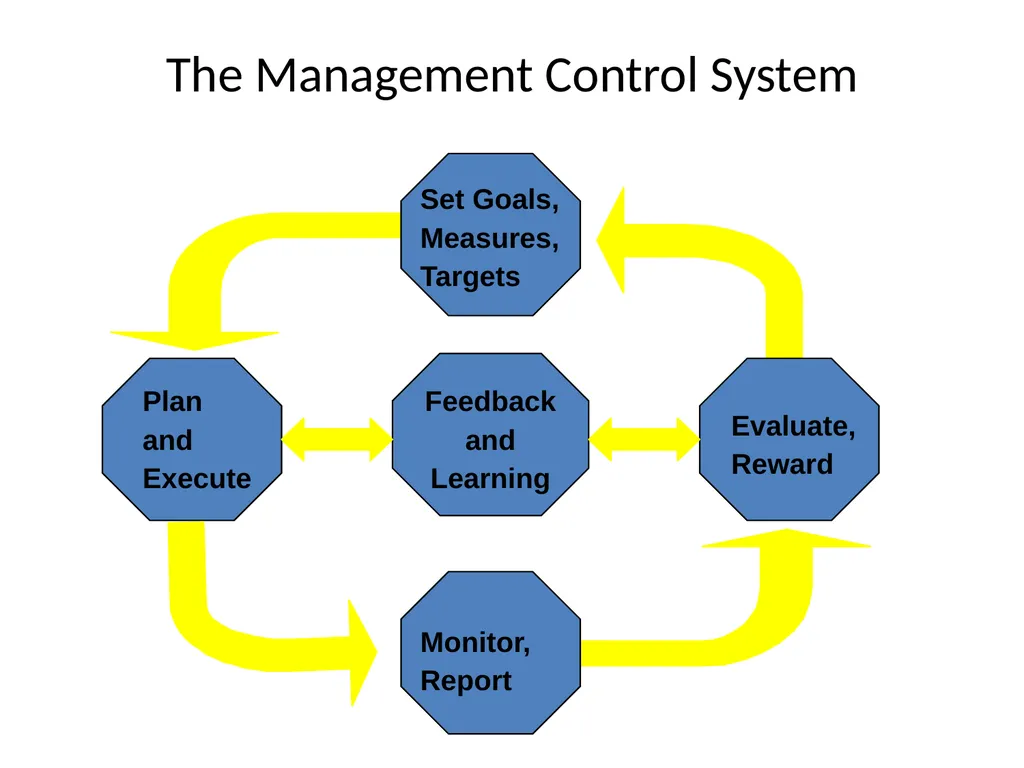
The Management Control System Set Goals,
Measures,
Targets Feedback
and
Learning Monitor,
Report Plan
and
Execute Evaluate,
Reward<br>
14
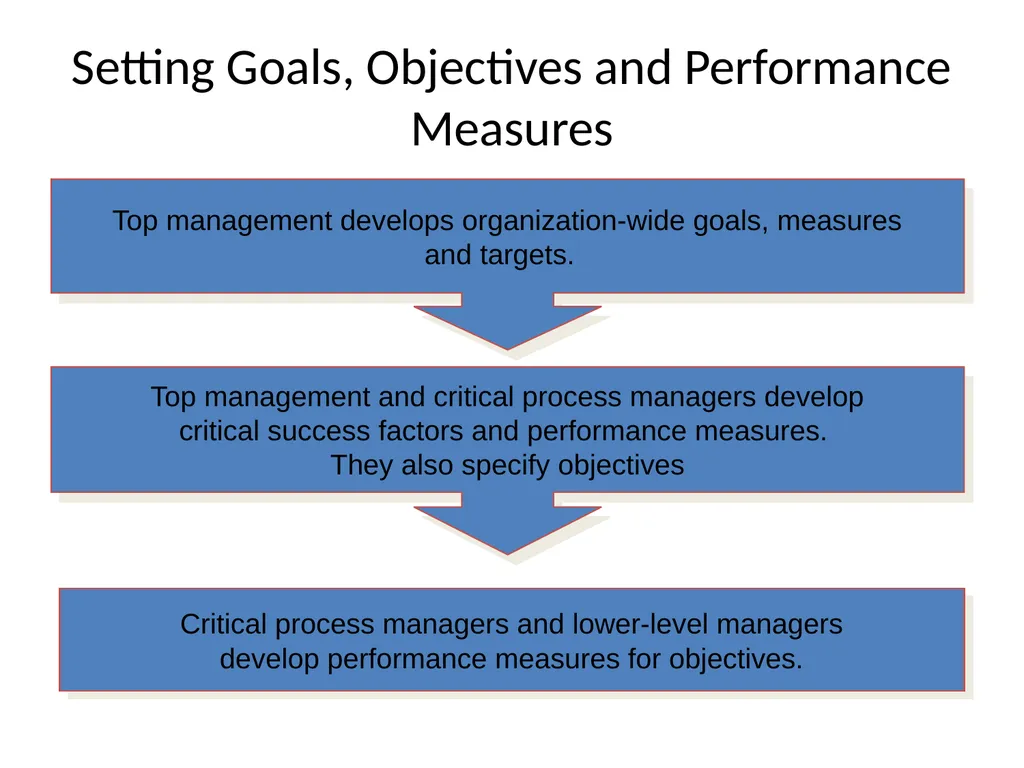
Setting Goals, Objectives and Performance Measures Top management develops organization-wide goals, measures
and targets. Top management and critical process managers develop
critical success factors and performance measures.
They also specify objectives Critical process managers and lower-level managers
develop performance measures for objectives.<br>
15
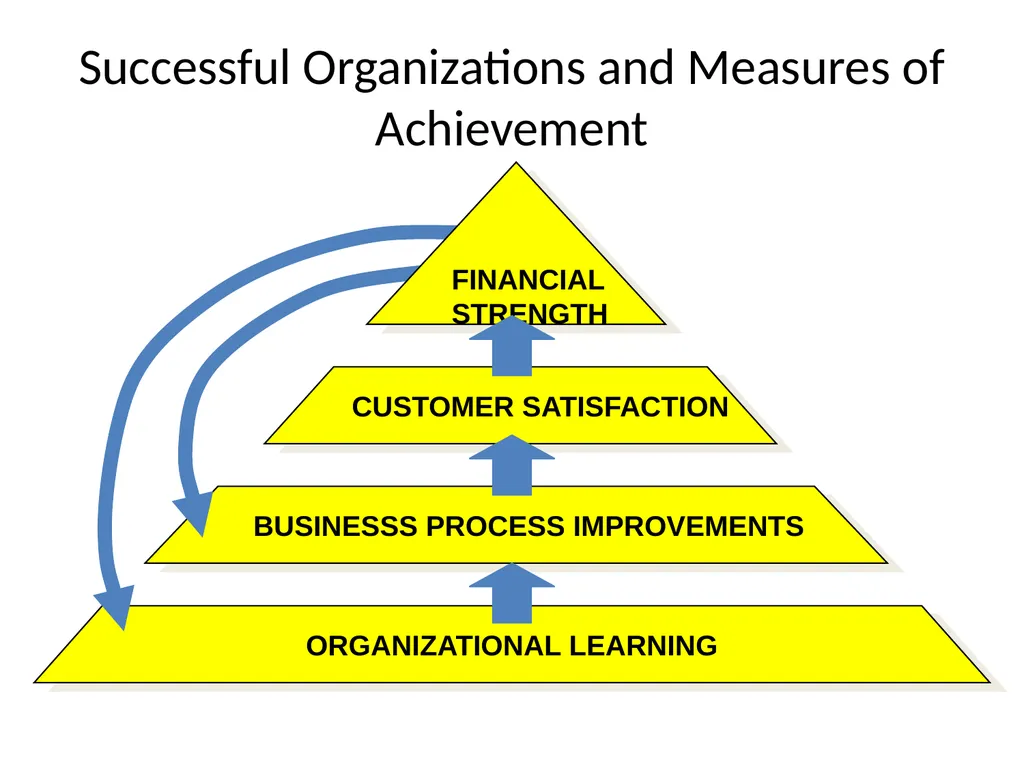
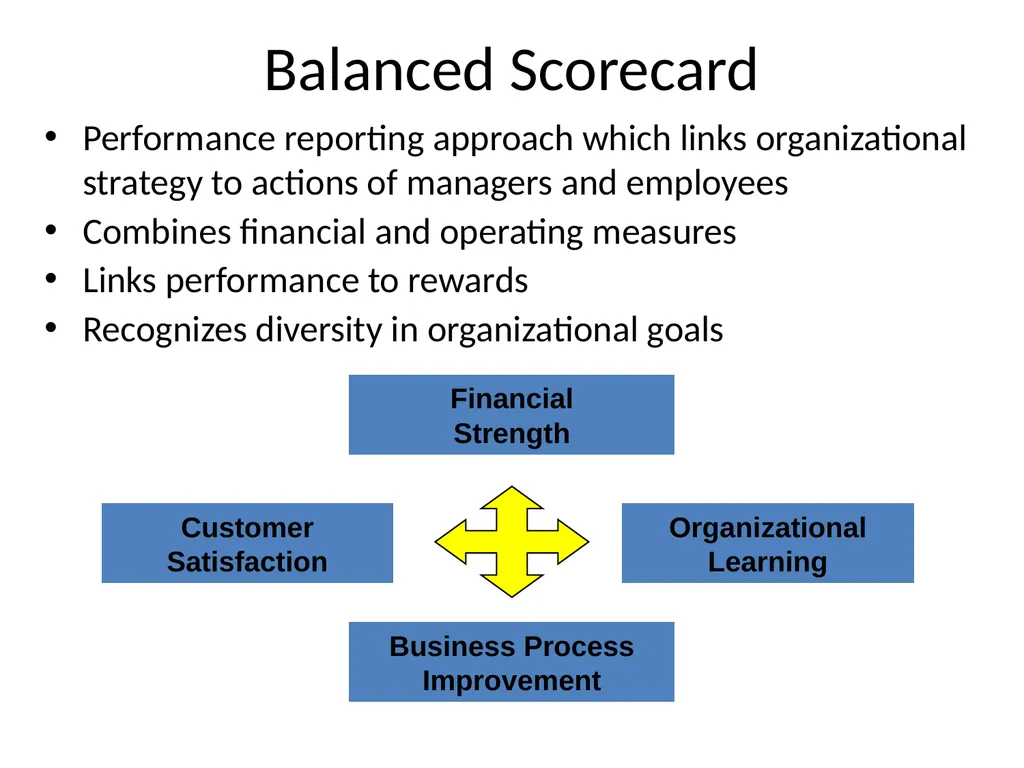
Successful Organizations and Measures of Achievement CUSTOMER SATISFACTION BUSINESSS PROCESS IMPROVEMENTS ORGANIZATIONAL LEARNING FINANCIAL
STRENGTH<br>
16
Balanced Scorecard Performance reporting approach which links organizational strategy to actions of managers and employees
Combines financial and operating measures
Links performance to rewards
Recognizes diversity in organizational goals Financial
Strength Customer
Satisfaction Business Process
Improvement Organizational
Learning<br>