Strengthening the message in a campaign text by using imperative sentences LEAD Principles Look at this text for 5 seconds then close your eyes. What do you most remember, and why? Authentic text Discussion What is this text persuading the
"Strengthening the message in a campaign text by" is the property of its rightful owner. Permission is granted to
download and print the materials on this website for personal, non-commercial use only, and to display it
on your personal computer provided you do not modify the materials and that you retain all copyright
notices contained in the materials. By downloading content from our website, you accept the terms of this
agreement.
Presentation Transcript
01
Strengthening the message in a campaign text by using imperative sentences<br>
02
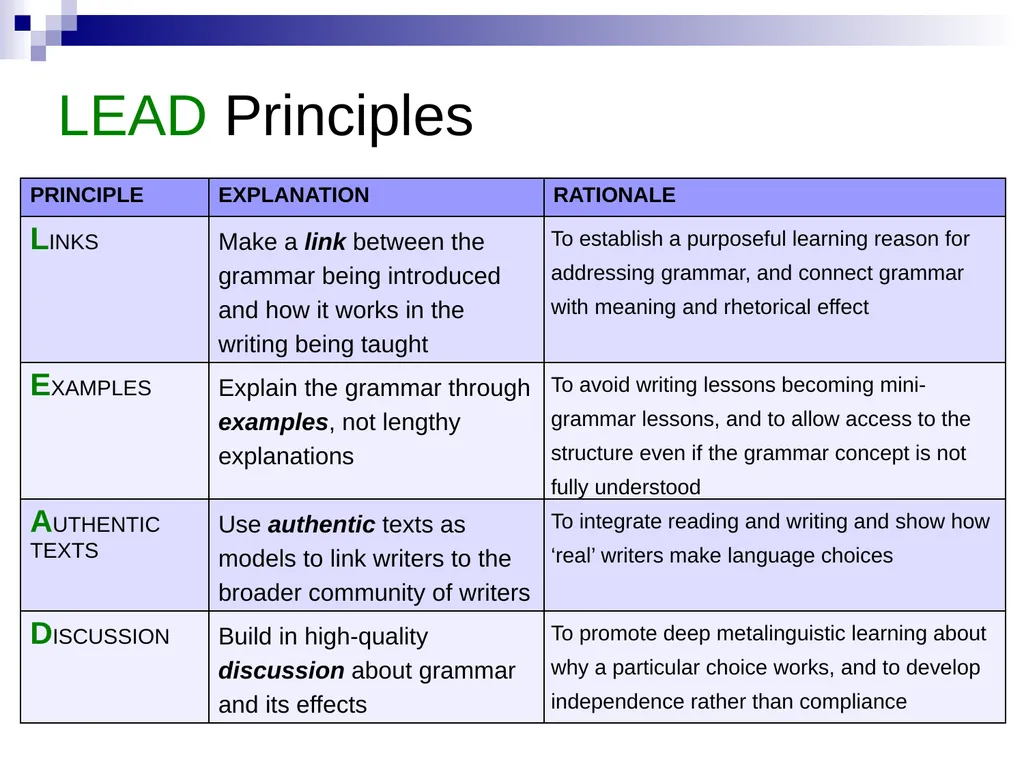
LEAD Principles<br>
03
Look at this text for 5 seconds then close your eyes. What do you most remember, and why? Authentic text Discussion<br>
04
What is this text persuading the reader to think, feel or do?
How is language used for persuasion here? Authentic text Discussion<br>
05
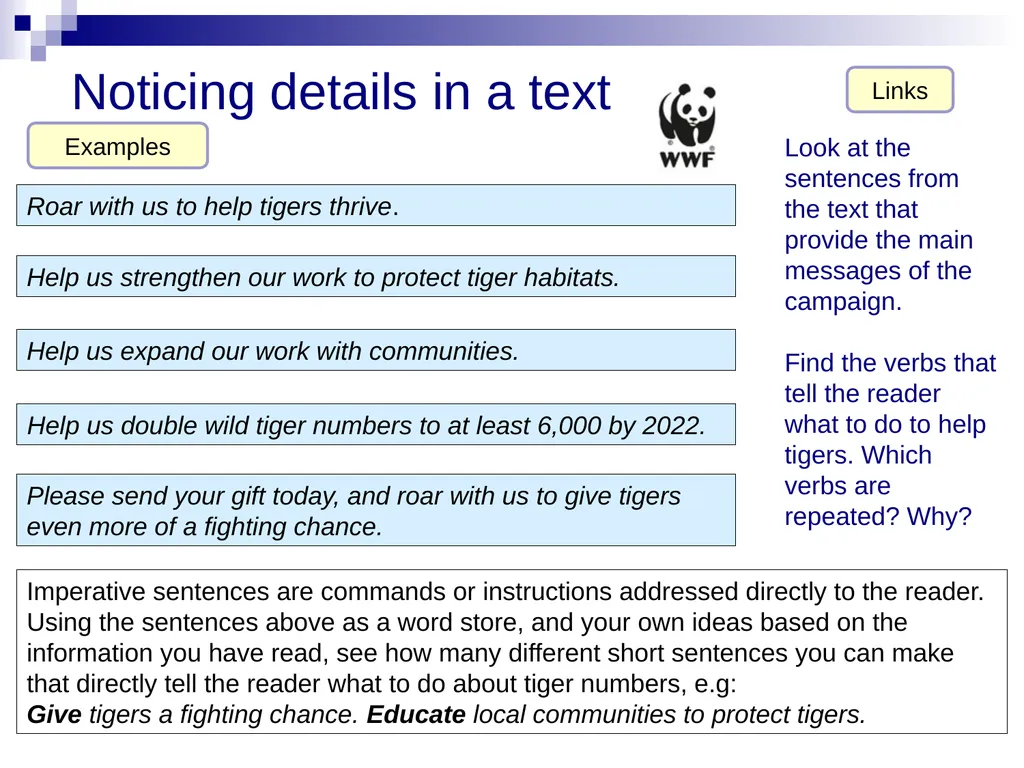
Imperative sentences are commands or instructions addressed directly to the reader.
Using the sentences above as a word store, and your own ideas based on the information you have read, see how many different short sentences you can make that directly tell the reader what to do about tiger numbers, e.g:
Give tigers a fighting chance. Educate local communities to protect tigers. Noticing details in a text Roar with us to help tigers thrive. Look at the sentences from the text that provide the main messages of the campaign.
Find the verbs that tell the reader what to do to help tigers. Which verbs are repeated? Why? Help us strengthen our work to protect tiger habitats. Help us expand our work with communities. Help us double wild tiger numbers to at least 6,000 by 2022. Links Examples Please send your gift today, and roar with us to give tigers even more of a fighting chance.<br>
06
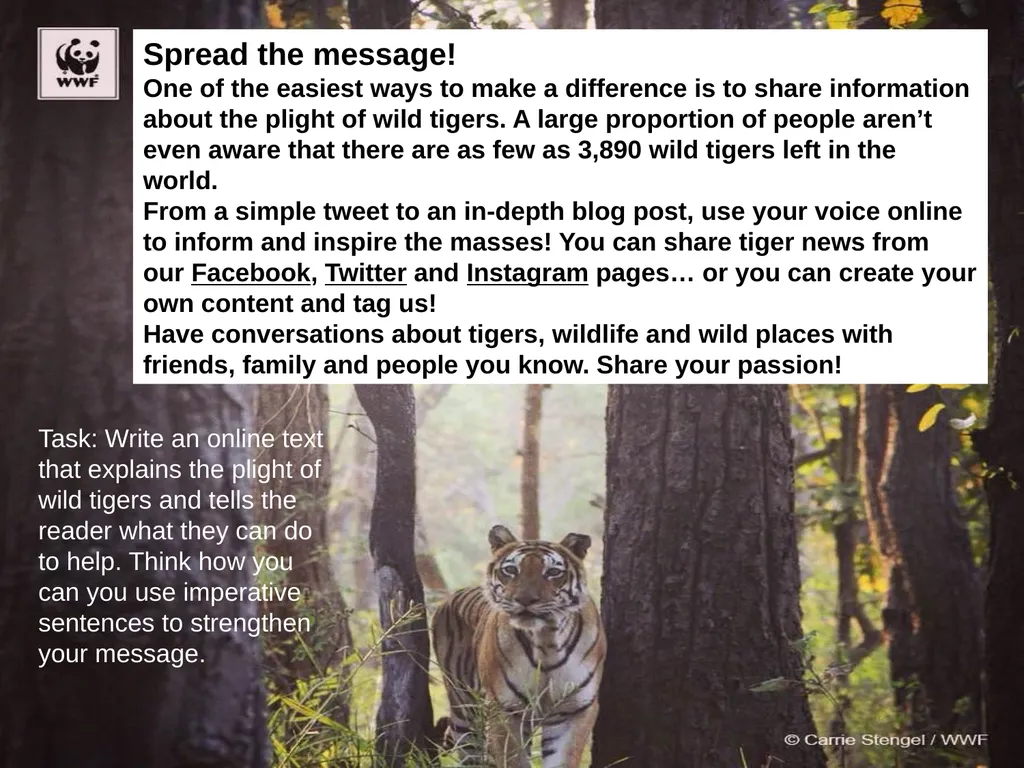
Spread the message!
One of the easiest ways to make a difference is to share information about the plight of wild tigers. A large proportion of people aren’t even aware that there are as few as 3,890 wild tigers left in the world.
From a simple tweet to an in-depth blog post, use your voice online to inform and inspire the masses! You can share tiger news from our Facebook, Twitter and Instagram pages… or you can create your own content and tag us!
Have conversations about tigers, wildlife and wild places with friends, family and people you know. Share your passion! Task: Write an online text that explains the plight of wild tigers and tells the reader what they can do to help. Think how you can you use imperative sentences to strengthen your message.<br>
07
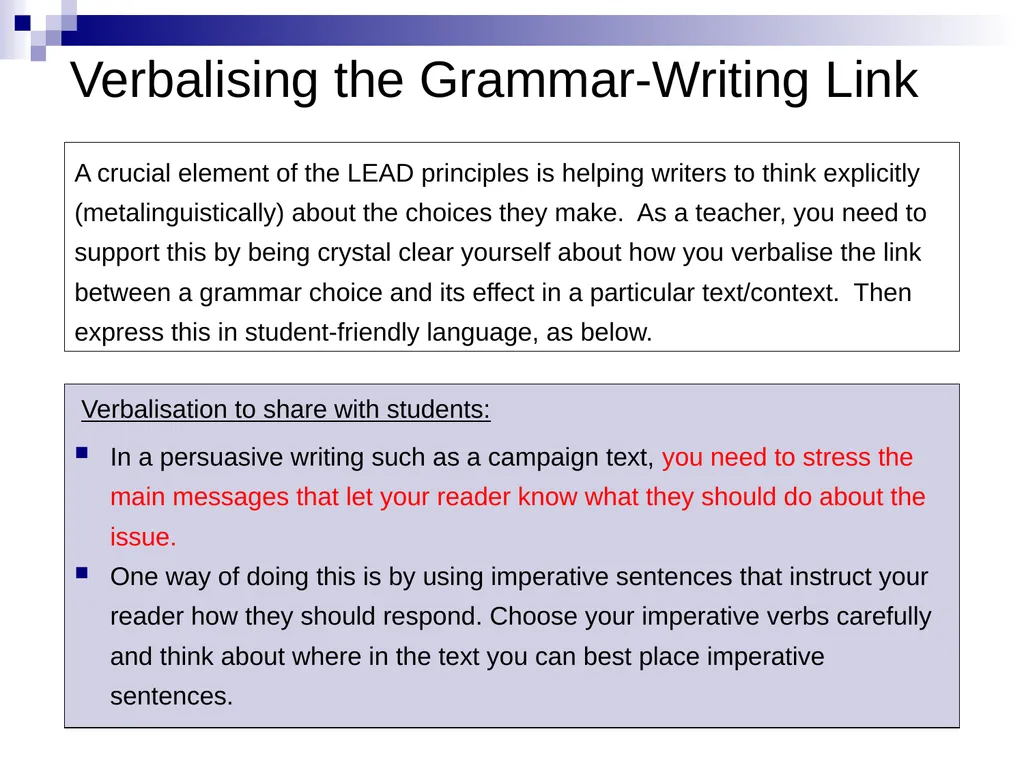
Verbalising the Grammar-Writing Link Verbalisation to share with students:
In a persuasive writing such as a campaign text, you need to stress the main messages that let your reader know what they should do about the issue.
One way of doing this is by using imperative sentences that instruct your reader how they should respond. Choose your imperative verbs carefully and think about where in the text you can best place imperative sentences. A crucial element of the LEAD principles is helping writers to think explicitly (metalinguistically) about the choices they make. As a teacher, you need to support this by being crystal clear yourself about how you verbalise the link between a grammar choice and its effect in a particular text/context. Then express this in student-friendly language, as below.<br>