StudyMafia.Org Submitted To: Submitted By:
Description: StudyMafia.Org Submitted To: Submitted By: Studymafia.org Studymafia.org Pollution Table Contents Definition Introduction Air pollution Water Pollution Soil Pollution Noise Pollution Prevention of Pollution Conclusion 2 Definition
Related Topics
Download Presentation
"StudyMafia.Org Submitted To: Submitted By:" is the property of its rightful owner. Permission is granted to download and print the materials on this website for personal, non-commercial use only, and to display it on your personal computer provided you do not modify the materials and that you retain all copyright notices contained in the materials. By downloading content from our website, you accept the terms of this agreement.
Presentation Transcript
slide1. StudyMafia.Org Submitted To: Submitted By:
Studymafia.org Studymafia.org Pollution<br>
slide2. Table Contents Definition
Introduction
Air pollution
Water Pollution
Soil Pollution
Noise Pollution
Prevention of Pollution
Conclusion 2<br>
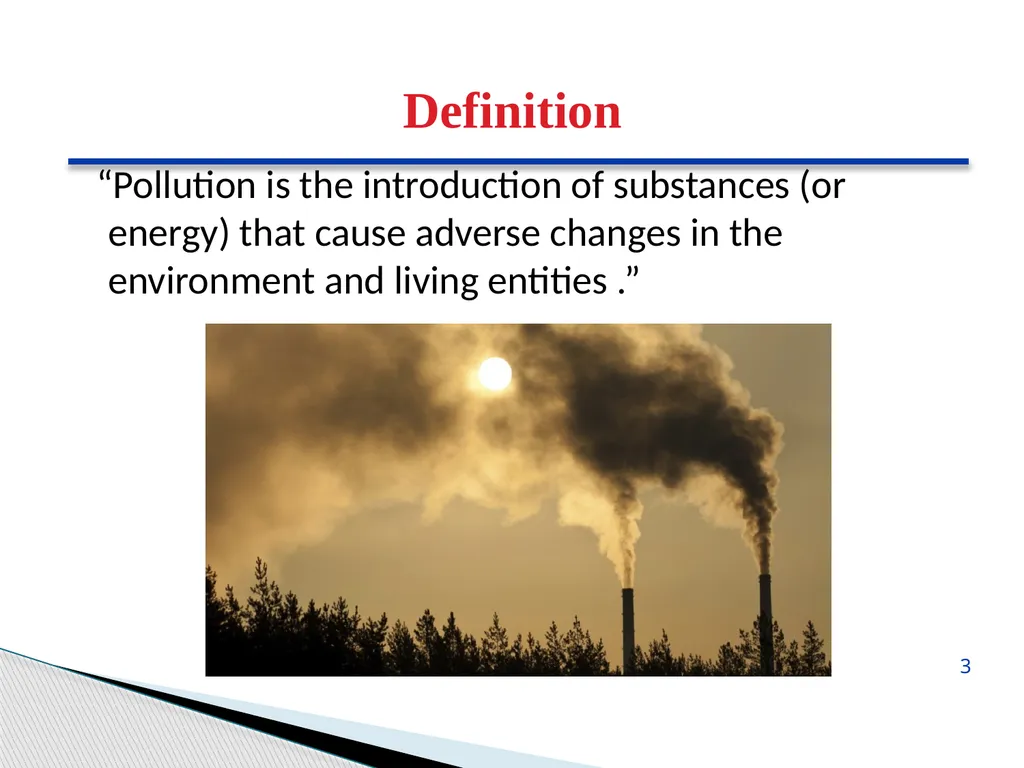
slide3. Definition “Pollution is the introduction of substances (or energy) that cause adverse changes in the environment and living entities .” 3<br>
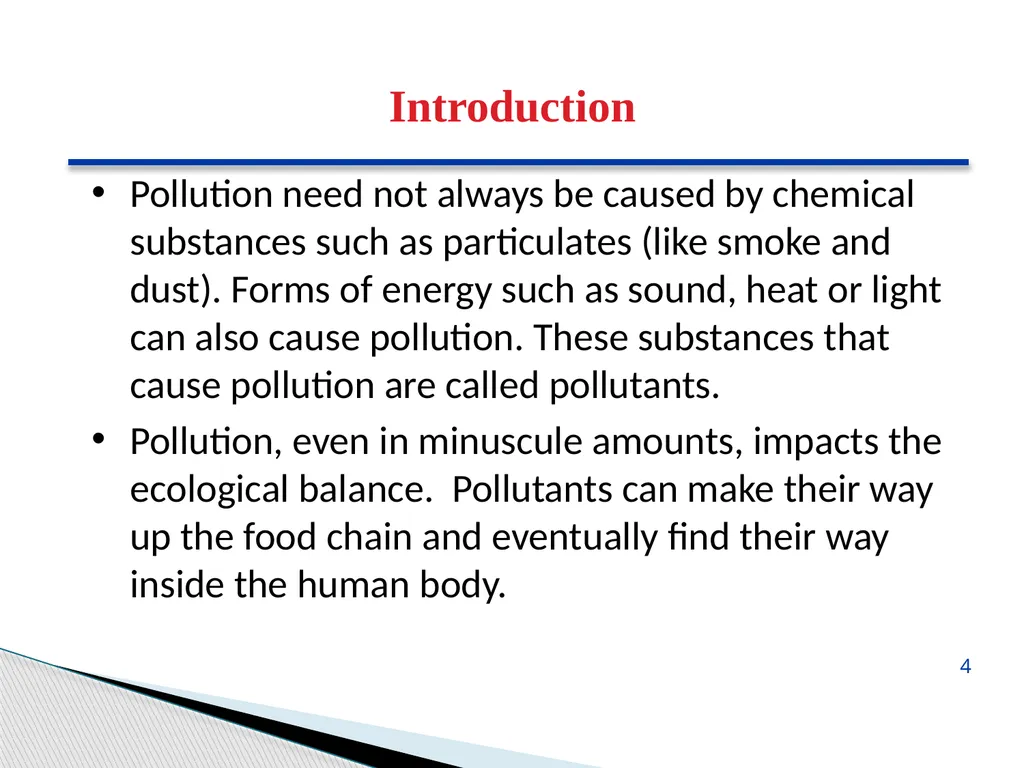
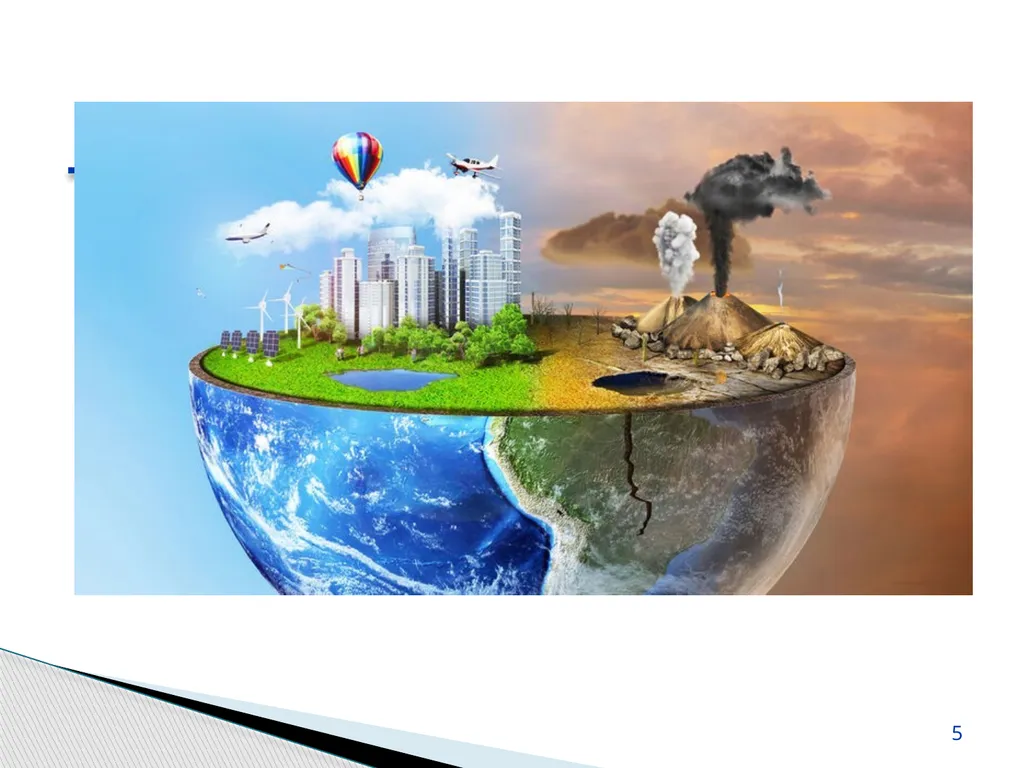
slide4. Introduction Pollution need not always be caused by chemical substances such as particulates (like smoke and dust). Forms of energy such as sound, heat or light can also cause pollution. These substances that cause pollution are called pollutants.
Pollution, even in minuscule amounts, impacts the ecological balance. Pollutants can make their way up the food chain and eventually find their way inside the human body. 4<br>
slide5. 5<br>
slide6. Air Pollution Air pollution refers to the release of harmful contaminants (chemicals, toxic gases, particulates, biological molecules, etc.) into the earth’s atmosphere. These contaminants are quite detrimental and in some cases, pose serious health issues. Some causes that contribute to air pollution are:
Burning fossil fuels
Mining operations
Exhaust gases from industries and factories ●●●
6<br>
slide7. Air Pollution The effects of air pollution vary based on the kind of pollutant. But generally, the impact of air pollution ranges from:
Increased risk of respiratory illness and cardiovascular problems
Increased risk of skin diseases
May increase the risk of cancer
Global warming
Acid rain
Ozone depletion ●●●
7<br>
slide8. Air Pollution Among the other types of pollution, air pollution is theorized to have a planet-wide implication.
Scientists have even speculated an apocalypse-like scenario where air pollution if left unchecked, can bring about an extreme form of global warming called the runaway greenhouse effect.
Though this is purely speculative, it is a phenomenon that has already occurred on Venus. 8<br>
slide9. Water Pollution Water pollution is said to occur when toxic pollutants and particulate matter are introduced into water bodies such as lakes, rivers and seas.
These contaminants are generally introduced by human activities like improper sewage treatment and oil spills. However, even natural processes such as eutrophication can cause water pollution. ●●●
9<br>
slide10. Water Pollution Other significant causes of water pollution include:
Dumping solid wastes in water bodies
Disposing untreated industrial sewage into water bodies
Human and animal wastes
Agricultural runoff containing pesticides and fertilisers ●●●
10<br>
slide11. Water Pollution The effects of water pollution are very pronounced in our environment. Furthermore, toxic chemicals can bioaccumulate in living beings, and these chemicals can travel their way up the food chain, ultimately reaching humans.
Among the other types of pollution, water pollution has severe consequences on humans. ●●●
11<br>
slide12. Water Pollution Other consequences of water pollution include:
Disruption of the ecosystem
Threats to marine life
Increased risk of water-borne diseases
Increases toxic chemicals (such as mercury) in water bodies
Eutrophication 12<br>
slide13. Soil Pollution Soil pollution, also called soil contamination, refers to the degradation of land due to the presence of chemicals or other man-made substances in the soil.
The xenobiotic substances alter the natural composition of soil and affect it negatively. These can drastically impact life directly or indirectly. ●●●
13<br>
slide14. Soil Pollution For instance, any toxic chemicals present in the soil will get absorbed by the plants. Since plants are producers in an environment, it gets passed up through the food chain.
Compared to the other types of pollution, the effects of soil pollution are a little more obscured, but their implications are very noticeable. ●●●
14<br>
slide15. Soil Pollution Some of the common causes of soil pollution are:
Improper industrial waste disposal
Oil Spills
Acid rain which is caused by air pollution
Mining activities
Intensive farming and agrochemicals (like fertilisers and pesticides)
Industrial accidents ●●●
15<br>
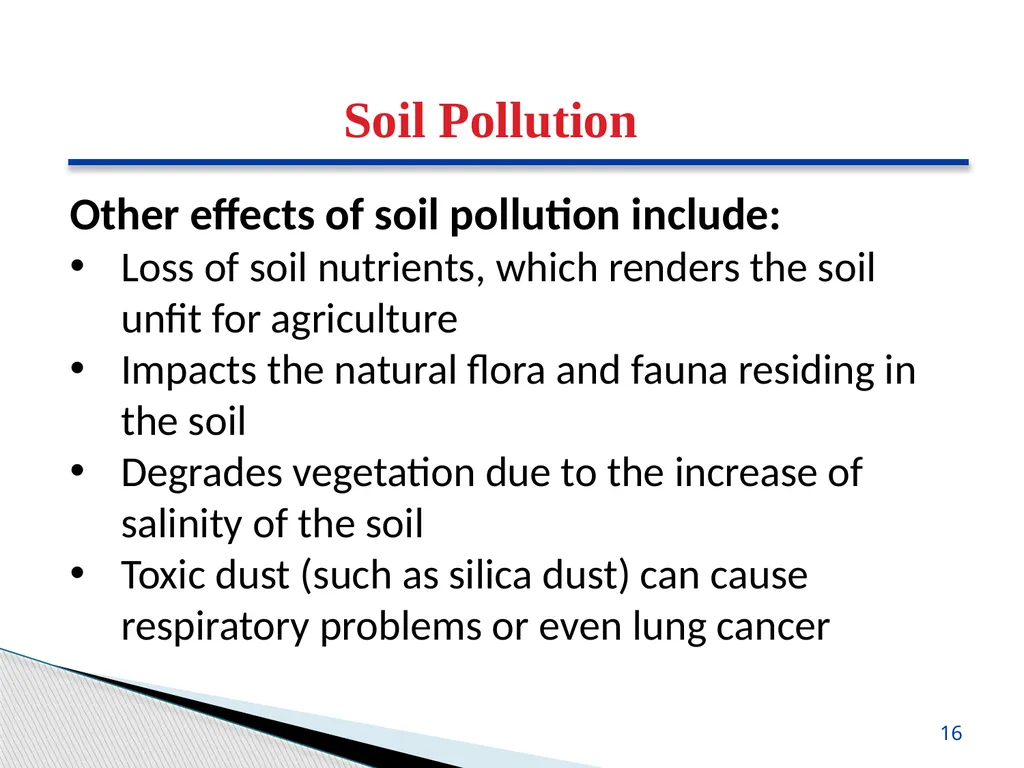
slide16. Soil Pollution Other effects of soil pollution include:
Loss of soil nutrients, which renders the soil unfit for agriculture
Impacts the natural flora and fauna residing in the soil
Degrades vegetation due to the increase of salinity of the soil
Toxic dust (such as silica dust) can cause respiratory problems or even lung cancer 16<br>
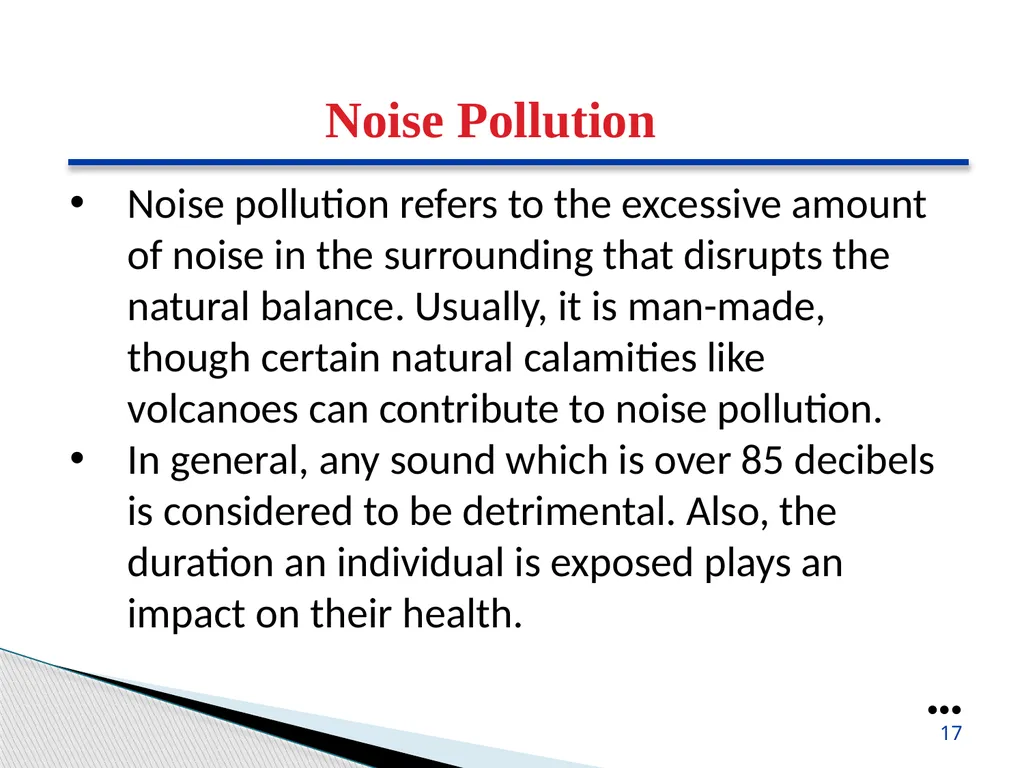
slide17. Noise Pollution Noise pollution refers to the excessive amount of noise in the surrounding that disrupts the natural balance. Usually, it is man-made, though certain natural calamities like volcanoes can contribute to noise pollution.
In general, any sound which is over 85 decibels is considered to be detrimental. Also, the duration an individual is exposed plays an impact on their health. ●●●
17<br>
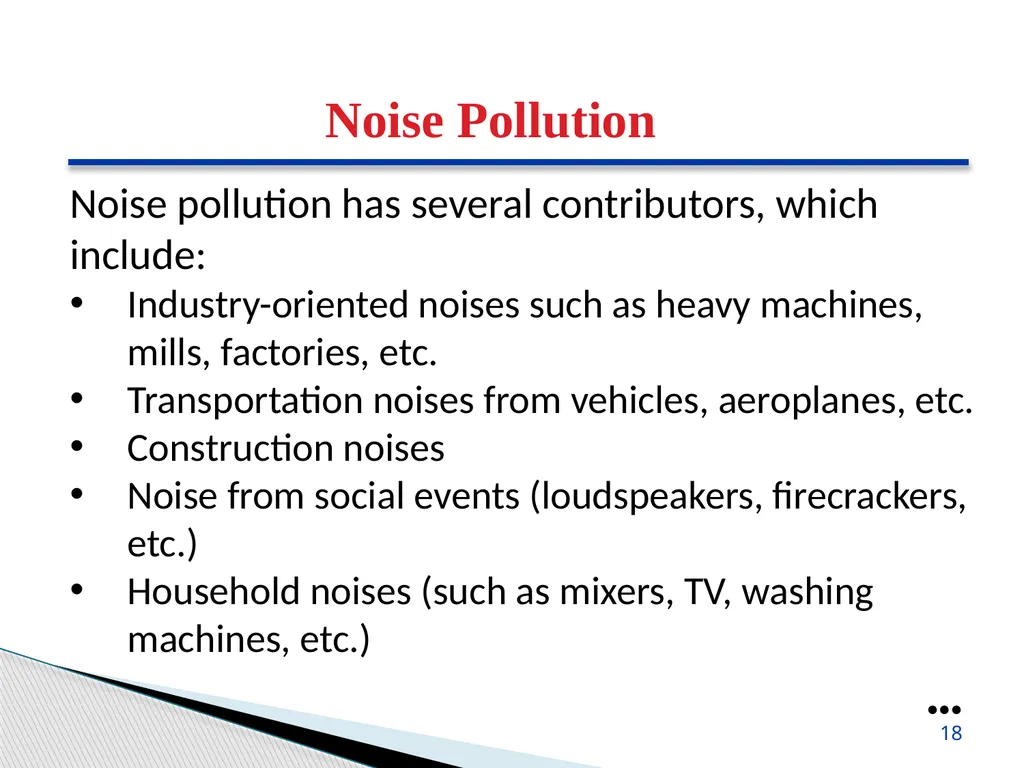
slide18. Noise Pollution Noise pollution has several contributors, which include:
Industry-oriented noises such as heavy machines, mills, factories, etc.
Transportation noises from vehicles, aeroplanes, etc.
Construction noises
Noise from social events (loudspeakers, firecrackers, etc.)
Household noises (such as mixers, TV, washing machines, etc.) ●●●
18<br>
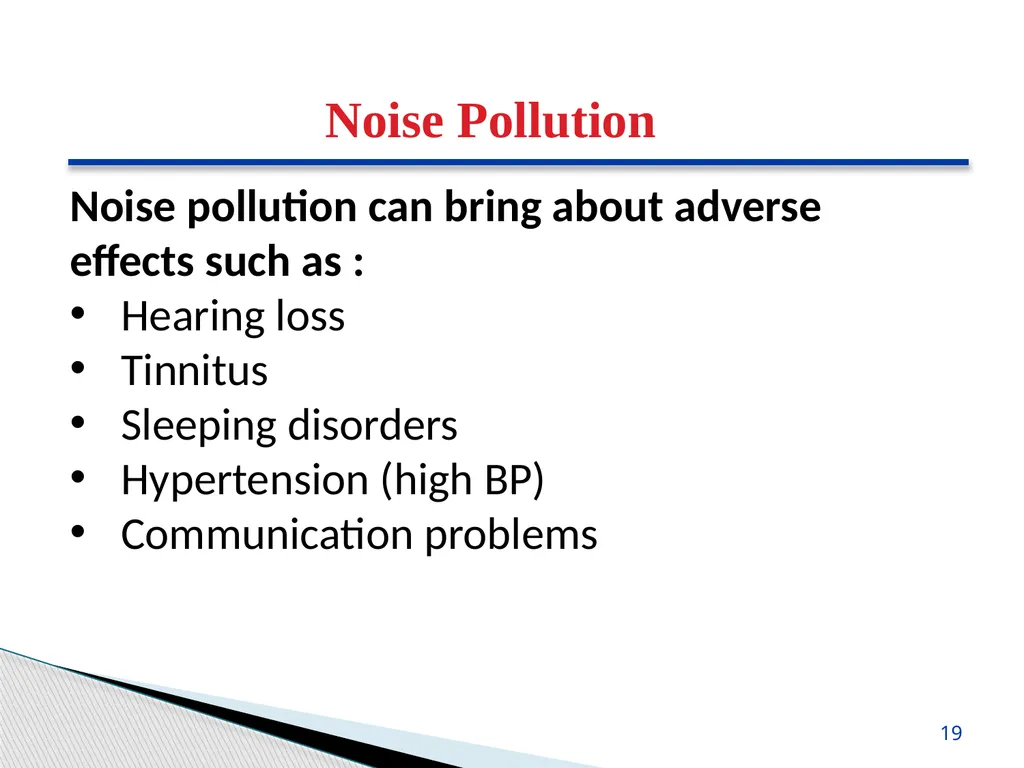
slide19. Noise Pollution Noise pollution can bring about adverse effects such as :
Hearing loss
Tinnitus
Sleeping disorders
Hypertension (high BP)
Communication problems 19<br>
slide20. Prevention of Pollution Ventilate well the space you live in - ensure good air ventilation (with outside air) of your home and your office space, especially in the areas (rooms) where you spend more time.
Store your household chemicals (including cleaning products, paints, fuel canisters, etc.) as far away as possible from the living space and, if possible, in metal cabinets. ●●●
20<br>
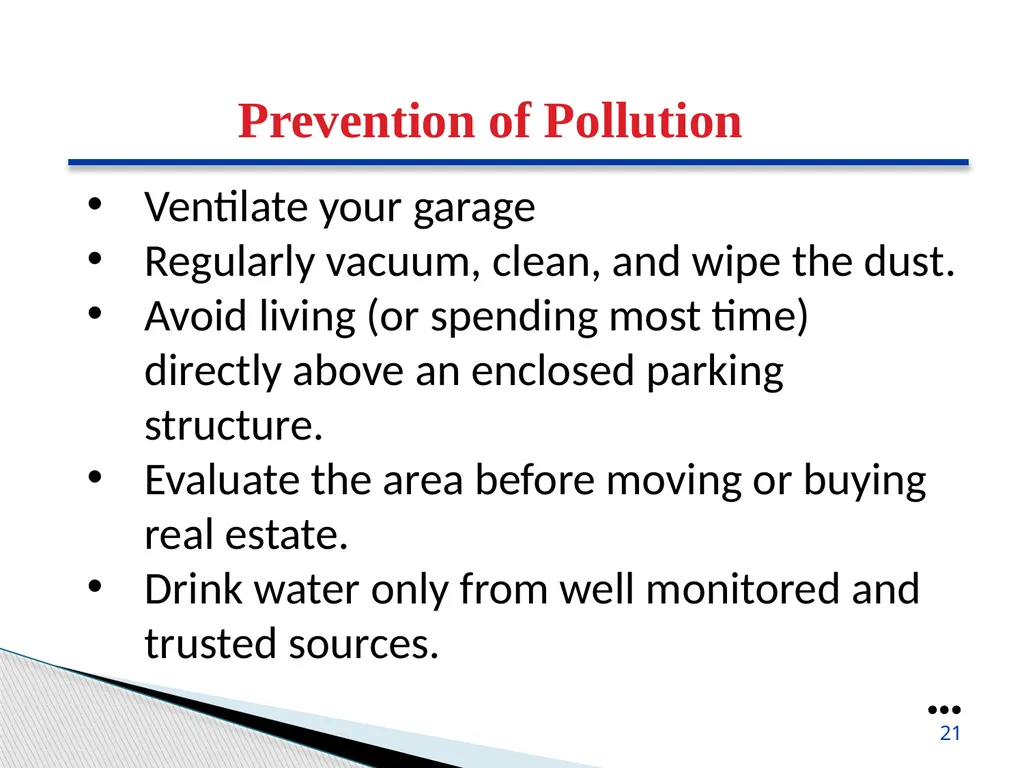
slide21. Prevention of Pollution Ventilate your garage
Regularly vacuum, clean, and wipe the dust.
Avoid living (or spending most time) directly above an enclosed parking structure.
Evaluate the area before moving or buying real estate.
Drink water only from well monitored and trusted sources. ●●●
21<br>
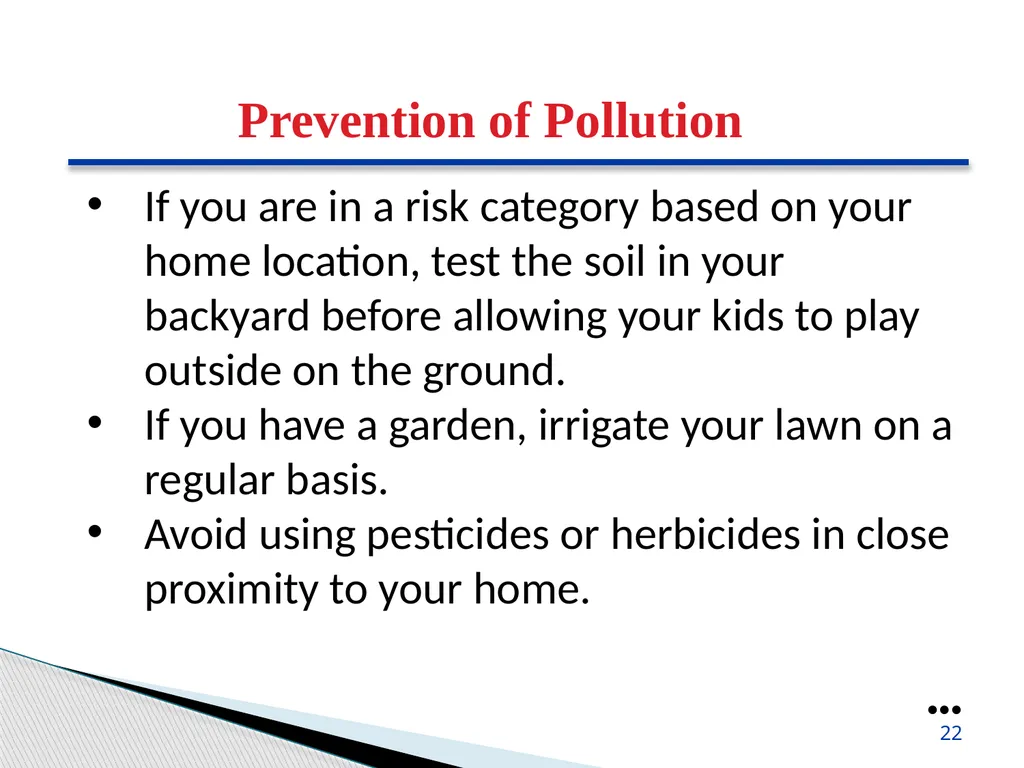
slide22. Prevention of Pollution If you are in a risk category based on your home location, test the soil in your backyard before allowing your kids to play outside on the ground.
If you have a garden, irrigate your lawn on a regular basis.
Avoid using pesticides or herbicides in close proximity to your home. ●●●
22<br>
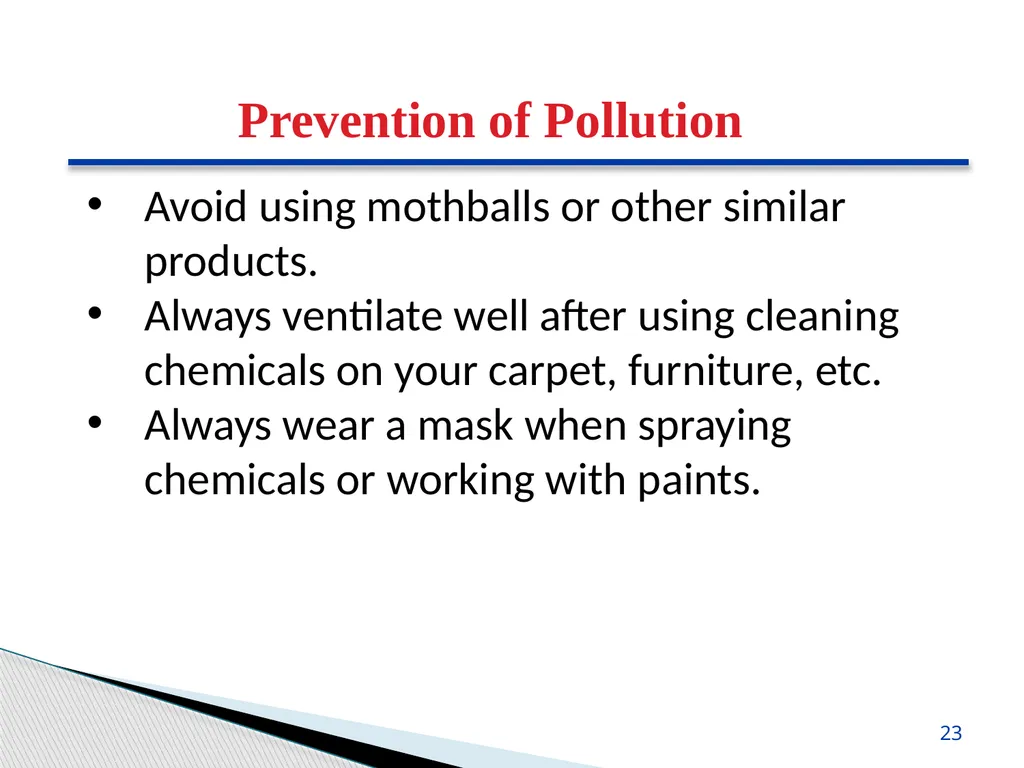
slide23. Prevention of Pollution Avoid using mothballs or other similar products.
Always ventilate well after using cleaning chemicals on your carpet, furniture, etc.
Always wear a mask when spraying chemicals or working with paints. 23<br>
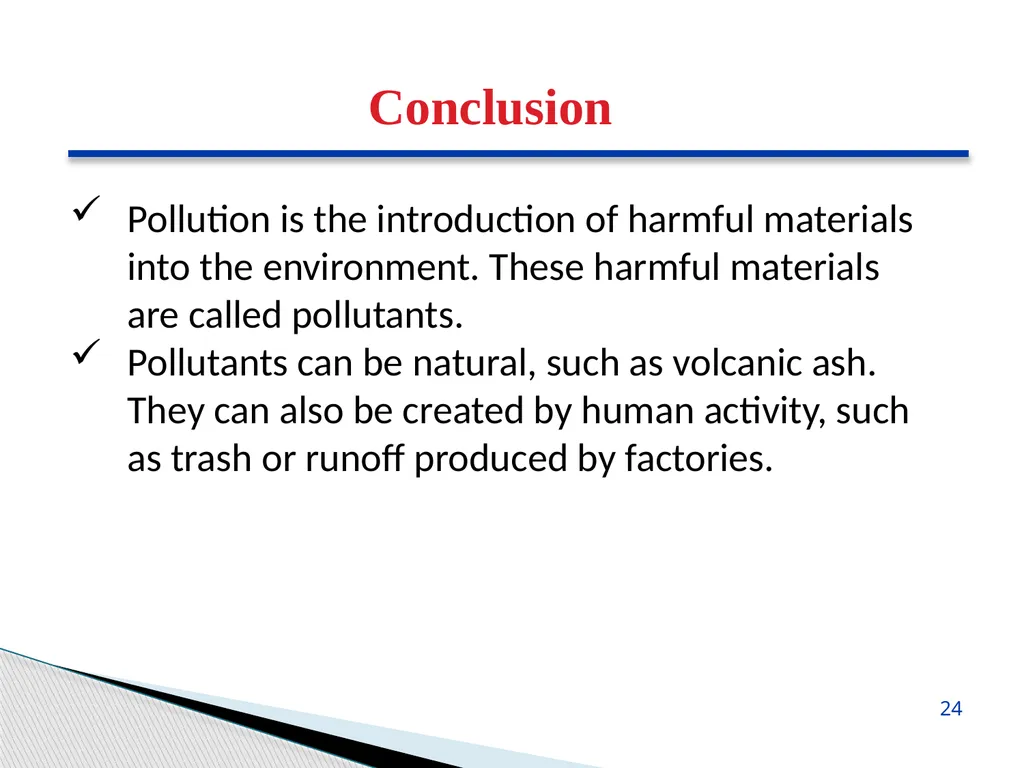
slide24. Conclusion Pollution is the introduction of harmful materials into the environment. These harmful materials are called pollutants.
Pollutants can be natural, such as volcanic ash. They can also be created by human activity, such as trash or runoff produced by factories. 24<br>
slide25. ThanksTo StudyMafia.org<br>
Studymafia.org Studymafia.org Pollution<br>
slide2. Table Contents Definition
Introduction
Air pollution
Water Pollution
Soil Pollution
Noise Pollution
Prevention of Pollution
Conclusion 2<br>
slide3. Definition “Pollution is the introduction of substances (or energy) that cause adverse changes in the environment and living entities .” 3<br>
slide4. Introduction Pollution need not always be caused by chemical substances such as particulates (like smoke and dust). Forms of energy such as sound, heat or light can also cause pollution. These substances that cause pollution are called pollutants.
Pollution, even in minuscule amounts, impacts the ecological balance. Pollutants can make their way up the food chain and eventually find their way inside the human body. 4<br>
slide5. 5<br>
slide6. Air Pollution Air pollution refers to the release of harmful contaminants (chemicals, toxic gases, particulates, biological molecules, etc.) into the earth’s atmosphere. These contaminants are quite detrimental and in some cases, pose serious health issues. Some causes that contribute to air pollution are:
Burning fossil fuels
Mining operations
Exhaust gases from industries and factories ●●●
6<br>
slide7. Air Pollution The effects of air pollution vary based on the kind of pollutant. But generally, the impact of air pollution ranges from:
Increased risk of respiratory illness and cardiovascular problems
Increased risk of skin diseases
May increase the risk of cancer
Global warming
Acid rain
Ozone depletion ●●●
7<br>
slide8. Air Pollution Among the other types of pollution, air pollution is theorized to have a planet-wide implication.
Scientists have even speculated an apocalypse-like scenario where air pollution if left unchecked, can bring about an extreme form of global warming called the runaway greenhouse effect.
Though this is purely speculative, it is a phenomenon that has already occurred on Venus. 8<br>
slide9. Water Pollution Water pollution is said to occur when toxic pollutants and particulate matter are introduced into water bodies such as lakes, rivers and seas.
These contaminants are generally introduced by human activities like improper sewage treatment and oil spills. However, even natural processes such as eutrophication can cause water pollution. ●●●
9<br>
slide10. Water Pollution Other significant causes of water pollution include:
Dumping solid wastes in water bodies
Disposing untreated industrial sewage into water bodies
Human and animal wastes
Agricultural runoff containing pesticides and fertilisers ●●●
10<br>
slide11. Water Pollution The effects of water pollution are very pronounced in our environment. Furthermore, toxic chemicals can bioaccumulate in living beings, and these chemicals can travel their way up the food chain, ultimately reaching humans.
Among the other types of pollution, water pollution has severe consequences on humans. ●●●
11<br>
slide12. Water Pollution Other consequences of water pollution include:
Disruption of the ecosystem
Threats to marine life
Increased risk of water-borne diseases
Increases toxic chemicals (such as mercury) in water bodies
Eutrophication 12<br>
slide13. Soil Pollution Soil pollution, also called soil contamination, refers to the degradation of land due to the presence of chemicals or other man-made substances in the soil.
The xenobiotic substances alter the natural composition of soil and affect it negatively. These can drastically impact life directly or indirectly. ●●●
13<br>
slide14. Soil Pollution For instance, any toxic chemicals present in the soil will get absorbed by the plants. Since plants are producers in an environment, it gets passed up through the food chain.
Compared to the other types of pollution, the effects of soil pollution are a little more obscured, but their implications are very noticeable. ●●●
14<br>
slide15. Soil Pollution Some of the common causes of soil pollution are:
Improper industrial waste disposal
Oil Spills
Acid rain which is caused by air pollution
Mining activities
Intensive farming and agrochemicals (like fertilisers and pesticides)
Industrial accidents ●●●
15<br>
slide16. Soil Pollution Other effects of soil pollution include:
Loss of soil nutrients, which renders the soil unfit for agriculture
Impacts the natural flora and fauna residing in the soil
Degrades vegetation due to the increase of salinity of the soil
Toxic dust (such as silica dust) can cause respiratory problems or even lung cancer 16<br>
slide17. Noise Pollution Noise pollution refers to the excessive amount of noise in the surrounding that disrupts the natural balance. Usually, it is man-made, though certain natural calamities like volcanoes can contribute to noise pollution.
In general, any sound which is over 85 decibels is considered to be detrimental. Also, the duration an individual is exposed plays an impact on their health. ●●●
17<br>
slide18. Noise Pollution Noise pollution has several contributors, which include:
Industry-oriented noises such as heavy machines, mills, factories, etc.
Transportation noises from vehicles, aeroplanes, etc.
Construction noises
Noise from social events (loudspeakers, firecrackers, etc.)
Household noises (such as mixers, TV, washing machines, etc.) ●●●
18<br>
slide19. Noise Pollution Noise pollution can bring about adverse effects such as :
Hearing loss
Tinnitus
Sleeping disorders
Hypertension (high BP)
Communication problems 19<br>
slide20. Prevention of Pollution Ventilate well the space you live in - ensure good air ventilation (with outside air) of your home and your office space, especially in the areas (rooms) where you spend more time.
Store your household chemicals (including cleaning products, paints, fuel canisters, etc.) as far away as possible from the living space and, if possible, in metal cabinets. ●●●
20<br>
slide21. Prevention of Pollution Ventilate your garage
Regularly vacuum, clean, and wipe the dust.
Avoid living (or spending most time) directly above an enclosed parking structure.
Evaluate the area before moving or buying real estate.
Drink water only from well monitored and trusted sources. ●●●
21<br>
slide22. Prevention of Pollution If you are in a risk category based on your home location, test the soil in your backyard before allowing your kids to play outside on the ground.
If you have a garden, irrigate your lawn on a regular basis.
Avoid using pesticides or herbicides in close proximity to your home. ●●●
22<br>
slide23. Prevention of Pollution Avoid using mothballs or other similar products.
Always ventilate well after using cleaning chemicals on your carpet, furniture, etc.
Always wear a mask when spraying chemicals or working with paints. 23<br>
slide24. Conclusion Pollution is the introduction of harmful materials into the environment. These harmful materials are called pollutants.
Pollutants can be natural, such as volcanic ash. They can also be created by human activity, such as trash or runoff produced by factories. 24<br>
slide25. ThanksTo StudyMafia.org<br>