
StudyMafia.Org Submitted To: Submitted By:





Description: StudyMafia.Org Submitted To: Submitted By: Studymafia.org Studymafia.org Nitrogen Cycle Table Contents Definition Introduction Stages of Nitrogen Cycle Importance of Nitrogen Cycle Conclusion 2 Definition Nitrogen Cycle is a biogeochemical
Related Topics
Download Presentation
"StudyMafia.Org Submitted To: Submitted By:" is the property of its rightful owner. Permission is granted to download and print the materials on this website for personal, non-commercial use only, and to display it on your personal computer provided you do not modify the materials and that you retain all copyright notices contained in the materials. By downloading content from our website, you accept the terms of this agreement.
Presentation Transcript
slide1. StudyMafia.Org Submitted To: Submitted By:
Studymafia.org Studymafia.org Nitrogen Cycle<br>
slide2. Table Contents Definition
Introduction
Stages of Nitrogen Cycle
Importance of Nitrogen Cycle
Conclusion 2<br>
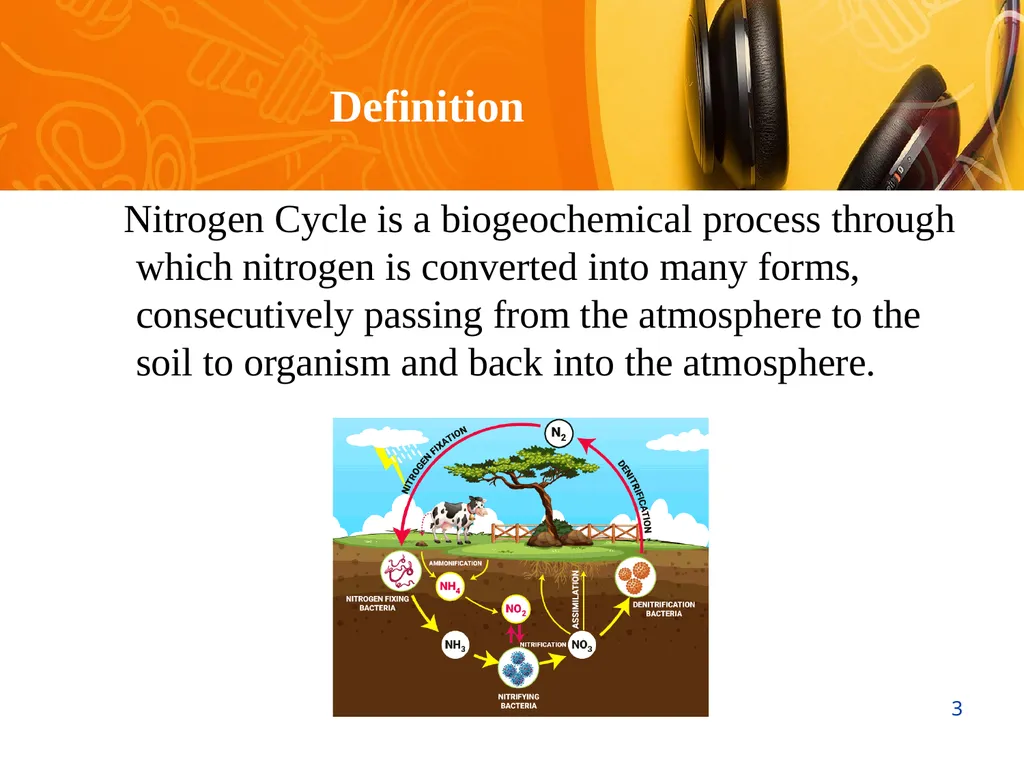
slide3. Definition Nitrogen Cycle is a biogeochemical process through which nitrogen is converted into many forms, consecutively passing from the atmosphere to the soil to organism and back into the atmosphere. 3<br>
slide4. Introduction Nitrogen gas exists in both organic and inorganic forms. Organic nitrogen exists in living organisms, and they get passed through the food chain by the consumption of other living organisms.
Inorganic forms of nitrogen are found in abundance in the atmosphere. This nitrogen is made available to plants by symbiotic bacteria which can convert the inert nitrogen into a usable form – such as nitrites and nitrates. 4<br>
slide5. Nitrogen Fixation Process
It is the initial step of the nitrogen cycle. Here, Atmospheric nitrogen (N2) which is primarily available in an inert form, is converted into the usable form -ammonia (NH3).
During the process of Nitrogen fixation, the inert form of nitrogen gas is deposited into soils from the atmosphere and surface waters, mainly through precipitation. ●●●
5 Stages of
Nitrogen Cycle<br>
slide6. Types of Nitrogen Fixation
Atmospheric fixation: A natural phenomenon where the energy of lightning breaks the nitrogen into nitrogen oxides, which are then used by plants.
Industrial nitrogen fixation: It is a man-made alternative that aids in nitrogen fixation by the use of ammonia.
Biological nitrogen fixation: We already know that nitrogen is not used directly from the air by plants and animals ●●●
6 Stages of
Nitrogen Cycle<br>
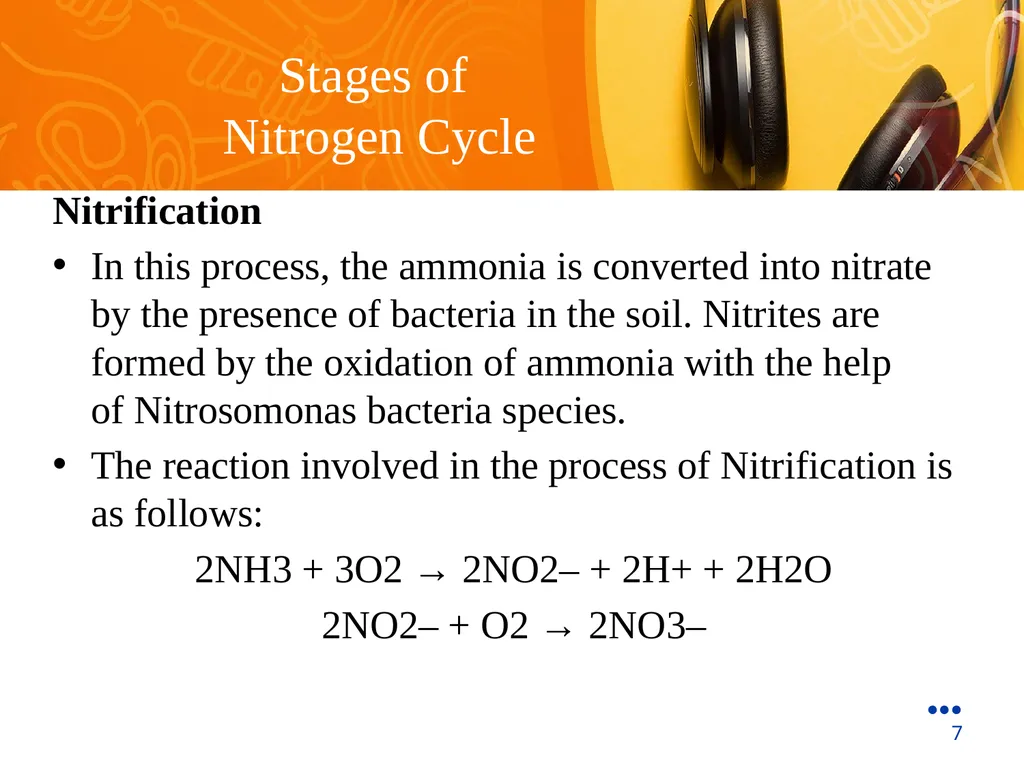
slide7. Nitrification
In this process, the ammonia is converted into nitrate by the presence of bacteria in the soil. Nitrites are formed by the oxidation of ammonia with the help of Nitrosomonas bacteria species.
The reaction involved in the process of Nitrification is as follows:
2NH3 + 3O2 → 2NO2– + 2H+ + 2H2O
2NO2– + O2 → 2NO3– ●●●
7 Stages of
Nitrogen Cycle<br>
slide8. Assimilation
Primary producers – plants take in the nitrogen compounds from the soil with the help of their roots, which are available in the form of ammonia, nitrite ions, nitrate ions or ammonium ions and are used in the formation of the plant and animal proteins.
This way, it enters the food web when the primary consumers eat the plants. ●●●
8 Stages of
Nitrogen Cycle<br>
slide9. Ammonification
When plants or animals die, the nitrogen present in the organic matter is released back into the soil. The decomposers, namely bacteria or fungi present in the soil, convert the organic matter back into ammonium.
This process of decomposition produces ammonia, which is further used for other biological processes. 9 Stages of
Nitrogen Cycle<br>
slide10. Helps plants to synthesise chlorophyll from the nitrogen compounds.
Helps in converting inert nitrogen gas into a usable form for the plants through the biochemical process.
In the process of ammonification, the bacteria help in decomposing the animal and plant matter, which indirectly helps to clean up the environment.
Nitrates and nitrites are released into the soil, which helps in enriching the soil with the necessary nutrients required for cultivation. ●●●
10 Importance of
Nitrogen Cycle<br>
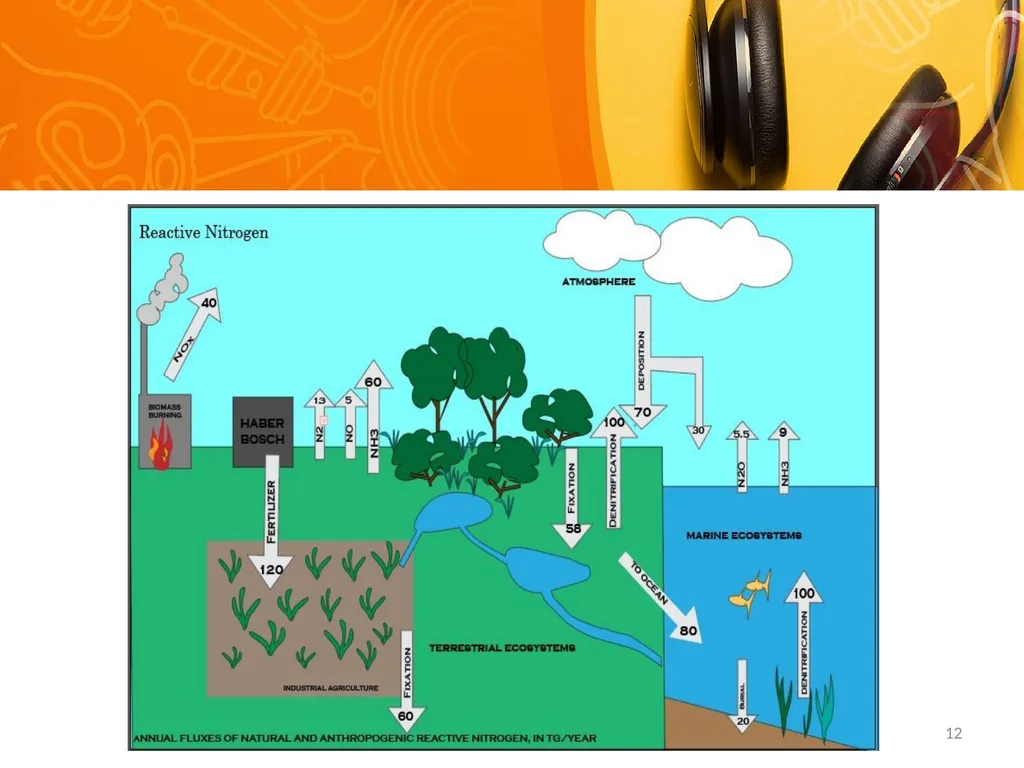
slide11. Nitrogen is an integral component of the cell and it forms many crucial compounds and important biomolecules.
Nitrogen is also cycled by human activities such as the combustion of fuels and the use of nitrogen fertilisers. These processes increase the levels of nitrogen-containing compounds in the atmosphere.
The fertilisers containing nitrogen are washed away in lakes, rivers and result in eutrophication. 11 Importance of
Nitrogen Cycle<br>
slide12. 12<br>
slide13. Conclusion Nitrogen is abundant in the atmosphere, but it is unusable to plants or animals unless it is converted into nitrogen compounds.
Nitrogen-fixing bacteria play a crucial role in fixing atmospheric nitrogen into nitrogen compounds that can be used by plants.
The plants absorb the usable nitrogen compounds from the soil through their roots. Then, these nitrogen compounds are used for the production of proteins and other compounds in the plant cell. 13<br>
slide14. References Google.com
Wikipedia.org
Studymafia.org
Slidespanda.com<br>
slide15. Thanks To StudyMafia.org<br>
Studymafia.org Studymafia.org Nitrogen Cycle<br>
slide2. Table Contents Definition
Introduction
Stages of Nitrogen Cycle
Importance of Nitrogen Cycle
Conclusion 2<br>
slide3. Definition Nitrogen Cycle is a biogeochemical process through which nitrogen is converted into many forms, consecutively passing from the atmosphere to the soil to organism and back into the atmosphere. 3<br>
slide4. Introduction Nitrogen gas exists in both organic and inorganic forms. Organic nitrogen exists in living organisms, and they get passed through the food chain by the consumption of other living organisms.
Inorganic forms of nitrogen are found in abundance in the atmosphere. This nitrogen is made available to plants by symbiotic bacteria which can convert the inert nitrogen into a usable form – such as nitrites and nitrates. 4<br>
slide5. Nitrogen Fixation Process
It is the initial step of the nitrogen cycle. Here, Atmospheric nitrogen (N2) which is primarily available in an inert form, is converted into the usable form -ammonia (NH3).
During the process of Nitrogen fixation, the inert form of nitrogen gas is deposited into soils from the atmosphere and surface waters, mainly through precipitation. ●●●
5 Stages of
Nitrogen Cycle<br>
slide6. Types of Nitrogen Fixation
Atmospheric fixation: A natural phenomenon where the energy of lightning breaks the nitrogen into nitrogen oxides, which are then used by plants.
Industrial nitrogen fixation: It is a man-made alternative that aids in nitrogen fixation by the use of ammonia.
Biological nitrogen fixation: We already know that nitrogen is not used directly from the air by plants and animals ●●●
6 Stages of
Nitrogen Cycle<br>
slide7. Nitrification
In this process, the ammonia is converted into nitrate by the presence of bacteria in the soil. Nitrites are formed by the oxidation of ammonia with the help of Nitrosomonas bacteria species.
The reaction involved in the process of Nitrification is as follows:
2NH3 + 3O2 → 2NO2– + 2H+ + 2H2O
2NO2– + O2 → 2NO3– ●●●
7 Stages of
Nitrogen Cycle<br>
slide8. Assimilation
Primary producers – plants take in the nitrogen compounds from the soil with the help of their roots, which are available in the form of ammonia, nitrite ions, nitrate ions or ammonium ions and are used in the formation of the plant and animal proteins.
This way, it enters the food web when the primary consumers eat the plants. ●●●
8 Stages of
Nitrogen Cycle<br>
slide9. Ammonification
When plants or animals die, the nitrogen present in the organic matter is released back into the soil. The decomposers, namely bacteria or fungi present in the soil, convert the organic matter back into ammonium.
This process of decomposition produces ammonia, which is further used for other biological processes. 9 Stages of
Nitrogen Cycle<br>
slide10. Helps plants to synthesise chlorophyll from the nitrogen compounds.
Helps in converting inert nitrogen gas into a usable form for the plants through the biochemical process.
In the process of ammonification, the bacteria help in decomposing the animal and plant matter, which indirectly helps to clean up the environment.
Nitrates and nitrites are released into the soil, which helps in enriching the soil with the necessary nutrients required for cultivation. ●●●
10 Importance of
Nitrogen Cycle<br>
slide11. Nitrogen is an integral component of the cell and it forms many crucial compounds and important biomolecules.
Nitrogen is also cycled by human activities such as the combustion of fuels and the use of nitrogen fertilisers. These processes increase the levels of nitrogen-containing compounds in the atmosphere.
The fertilisers containing nitrogen are washed away in lakes, rivers and result in eutrophication. 11 Importance of
Nitrogen Cycle<br>
slide12. 12<br>
slide13. Conclusion Nitrogen is abundant in the atmosphere, but it is unusable to plants or animals unless it is converted into nitrogen compounds.
Nitrogen-fixing bacteria play a crucial role in fixing atmospheric nitrogen into nitrogen compounds that can be used by plants.
The plants absorb the usable nitrogen compounds from the soil through their roots. Then, these nitrogen compounds are used for the production of proteins and other compounds in the plant cell. 13<br>
slide14. References Google.com
Wikipedia.org
Studymafia.org
Slidespanda.com<br>
slide15. Thanks To StudyMafia.org<br>