01
Subject: Performing Arts: Dance
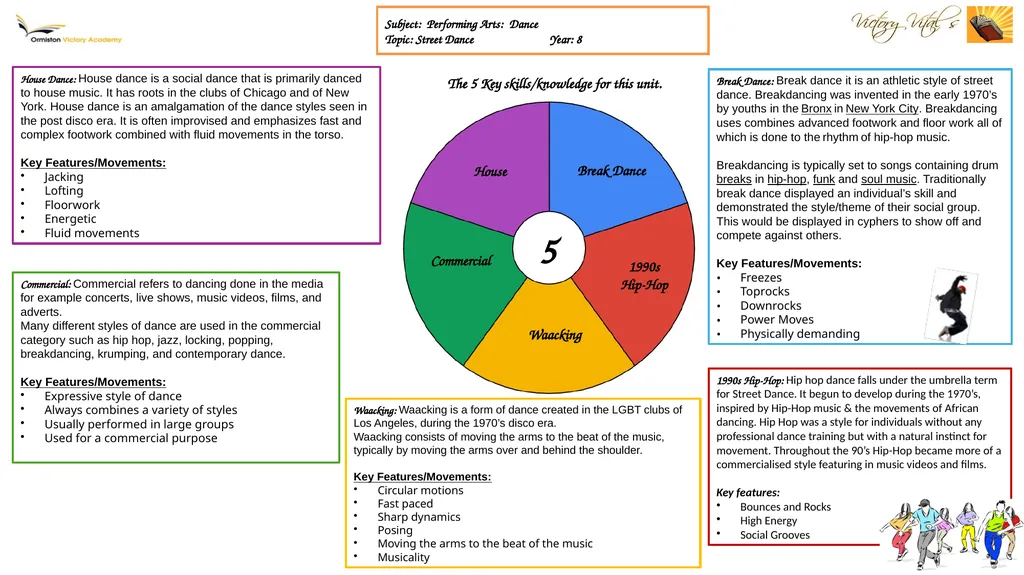
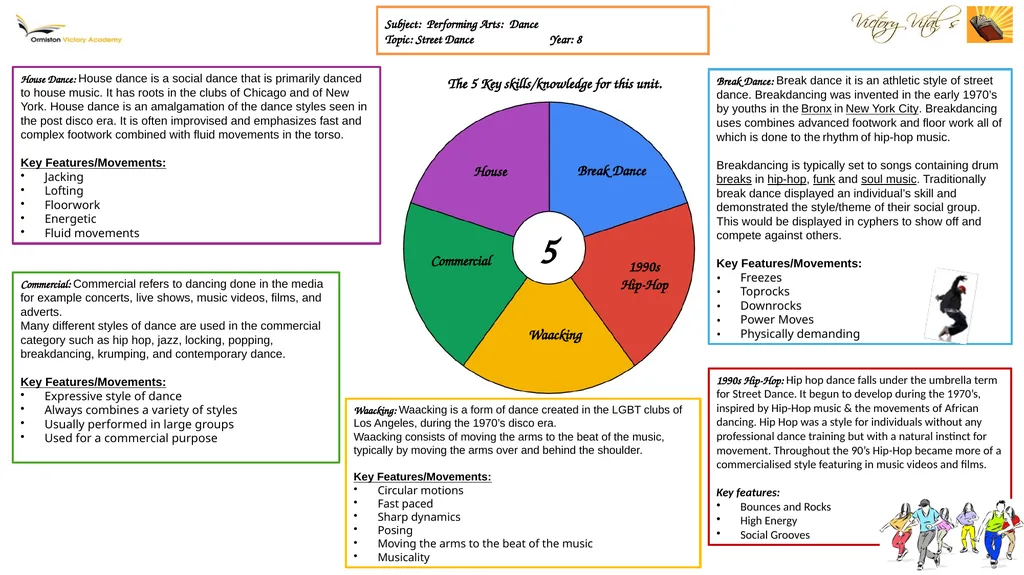
Topic: Street Dance Year: 8 House Dance: House dance is a social dance that is primarily danced to house music. It has roots in the clubs of Chicago and of New York. House dance is an amalgamation of the dance styles seen in the post disco era. It is often improvised and emphasizes fast and complex footwork combined with fluid movements in the torso.
Key Features/Movements:
Jacking
Lofting
Floorwork
Energetic
Fluid movements Break Dance: Break dance it is an athletic style of street dance. Breakdancing was invented in the early 1970’s by youths in the Bronx in New York City. Breakdancing uses combines advanced footwork and floor work all of which is done to the rhythm of hip-hop music. �
Breakdancing is typically set to songs containing drum breaks in hip-hop, funk and soul music. Traditionally break dance displayed an individual’s skill and demonstrated the style/theme of their social group. This would be displayed in cyphers to show off and compete against others.
Key Features/Movements:
Freezes
Toprocks
Downrocks
Power Moves
Physically demanding 1990s Hip-Hop: Hip hop dance falls under the umbrella term for Street Dance. It begun to develop during the 1970’s, inspired by Hip-Hop music & the movements of African dancing. Hip Hop was a style for individuals without any professional dance training but with a natural instinct for movement. Throughout the 90’s Hip-Hop became more of a commercialised style featuring in music videos and films.
Key features:
Bounces and Rocks
High Energy
Social Grooves Waacking: Waacking is a form of dance created in the LGBT clubs of Los Angeles, during the 1970’s disco era. �Waacking consists of moving the arms to the beat of the music, typically by moving the arms over and behind the shoulder.
Key Features/Movements:
Circular motions
Fast paced
Sharp dynamics
Posing
Moving the arms to the beat of the music
Musicality Commercial: Commercial refers to dancing done in the media for example concerts, live shows, music videos, films, and adverts. �Many different styles of dance are used in the commercial category such as hip hop, jazz, locking, popping, breakdancing, krumping, and contemporary dance. �
Key Features/Movements:
Expressive style of dance
Always combines a variety of styles
Usually performed in large groups
Used for a commercial purpose The 5 Key skills/knowledge for this unit.<br>
02
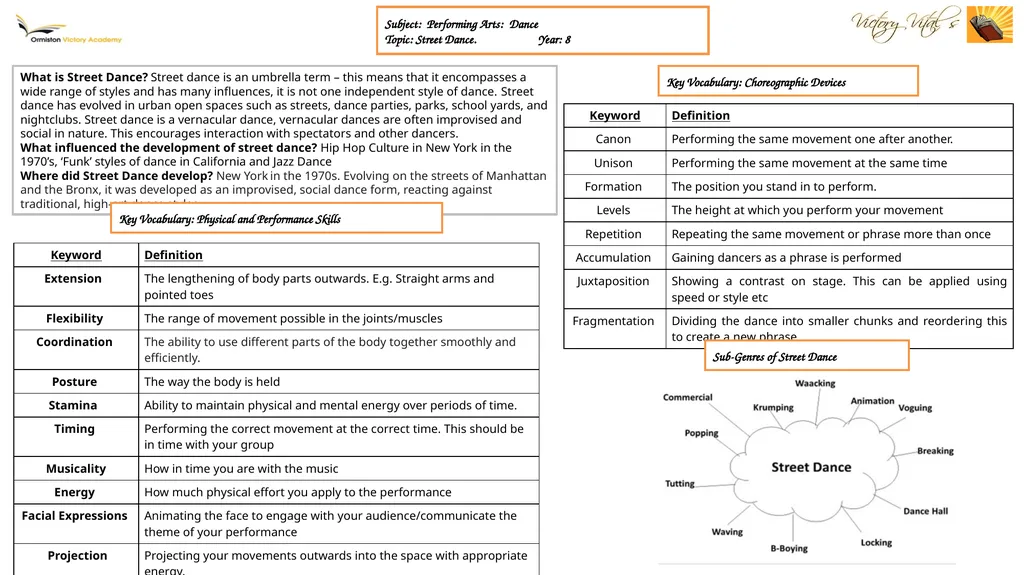
Key Vocabulary: Choreographic Devices What is Street Dance? Street dance is an umbrella term – this means that it encompasses a wide range of styles and has many influences, it is not one independent style of dance. Street dance has evolved in urban open spaces such as streets, dance parties, parks, school yards, and nightclubs. Street dance is a vernacular dance, vernacular dances are often improvised and social in nature. This encourages interaction with spectators and other dancers.
What influenced the development of street dance? Hip Hop Culture in New York in the 1970’s, ‘Funk’ styles of dance in California and Jazz Dance
Where did Street Dance develop? New York in the 1970s. Evolving on the streets of Manhattan and the Bronx, it was developed as an improvised, social dance form, reacting against traditional, high-art dance styles. Subject: Performing Arts: Dance
Topic: Street Dance. Year: 8 Key Vocabulary: Physical and Performance Skills Sub-Genres of Street Dance<br>