
Supernova bound on new scalars from resonant (and

Description: Supernova bound on new scalars from resonant (and soft) emission Henry Stubbs University of Oxford 2410.17347, Edward Hardy, Anton Sokolov, HS BSM at low scales? Renormalizable portals Beyond the Standard Model... Dark matter Neutrino
Related Topics
Download Presentation
"Supernova bound on new scalars from resonant (and" is the property of its rightful owner. Permission is granted to download and print the materials on this website for personal, non-commercial use only, and to display it on your personal computer provided you do not modify the materials and that you retain all copyright notices contained in the materials. By downloading content from our website, you accept the terms of this agreement.
Presentation Transcript
slide1. Supernova bound on new scalars from resonant (and soft) emission Henry Stubbs
University of Oxford 2410.17347, Edward Hardy, Anton Sokolov, HS<br>
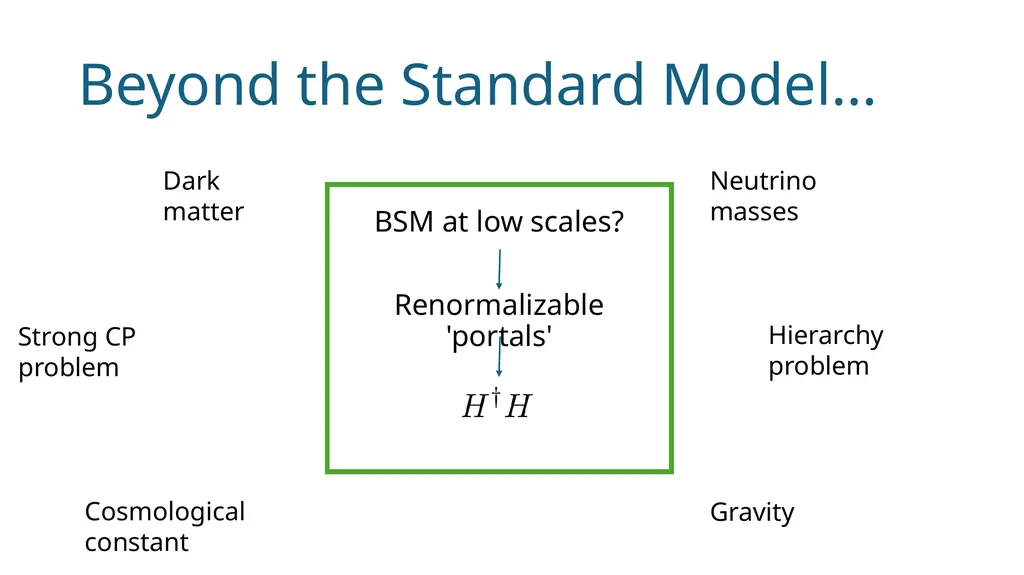
slide2. BSM at low scales?
Renormalizable 'portals' Beyond the Standard Model... Dark matter Neutrino masses Gravity Strong CP problem Cosmological constant Hierarchy problem<br>
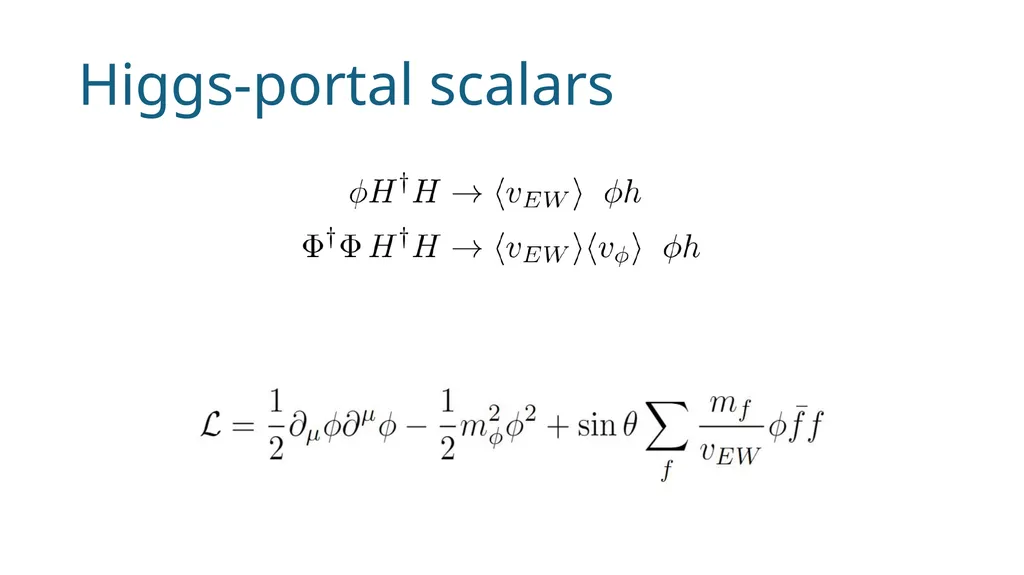
slide3. Higgs-portal scalars<br>
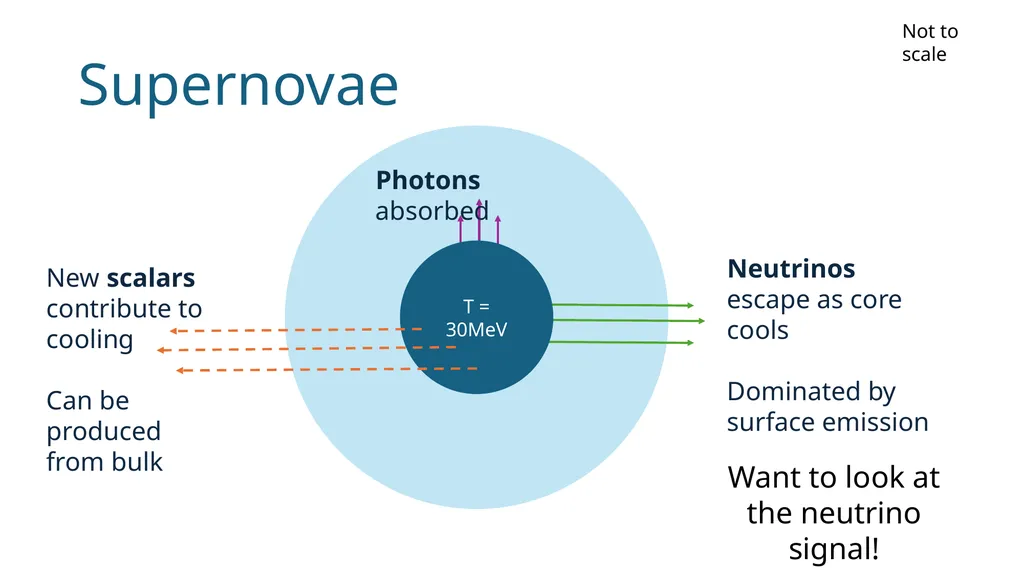
slide4. Supernovae Photons absorbed Want to look at the neutrino signal! T = 30MeV New scalars contribute to cooling
Can be produced from bulk Neutrinos escape as core cools
Dominated by surface emission Not to scale<br>
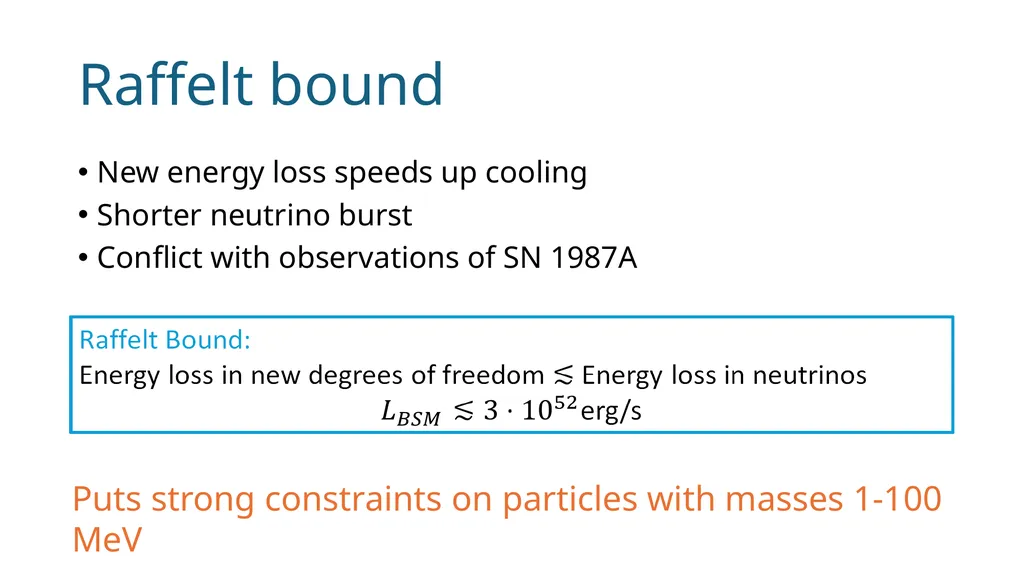
slide5. Raffelt bound New energy loss speeds up cooling
Shorter neutrino burst
Conflict with observations of SN 1987A Puts strong constraints on particles with masses 1-100 MeV<br>
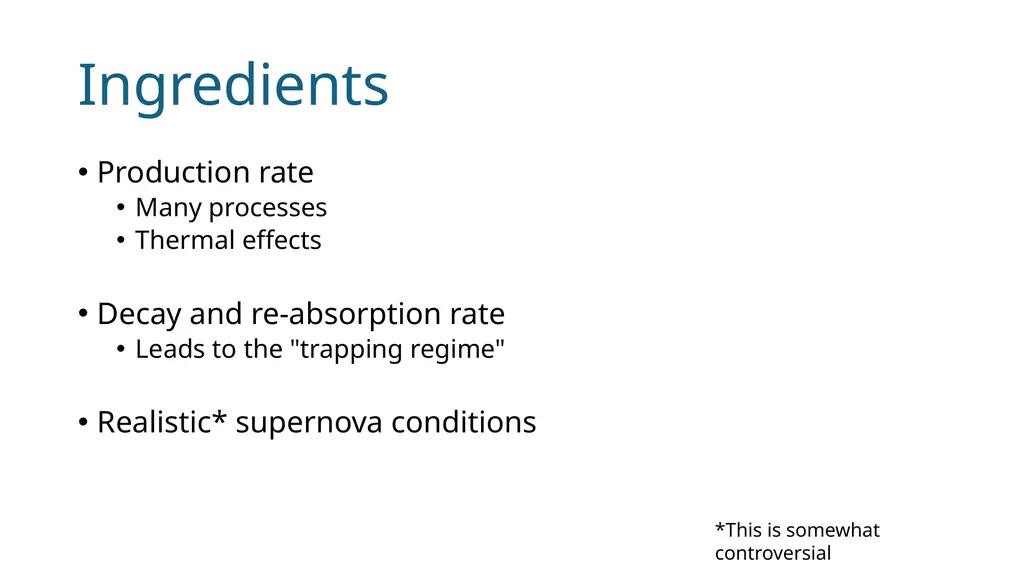
slide6. Ingredients Production rate
Many processes
Thermal effects
Decay and re-absorption rate
Leads to the "trapping regime"
Realistic* supernova conditions *This is somewhat controversial<br>
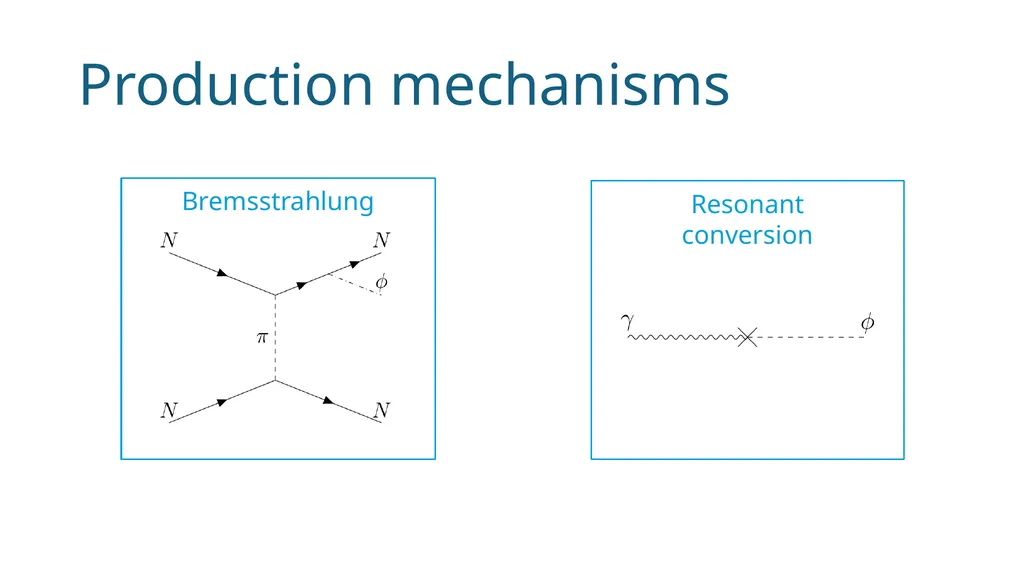
slide7. Production mechanisms Bremsstrahlung Resonant conversion<br>
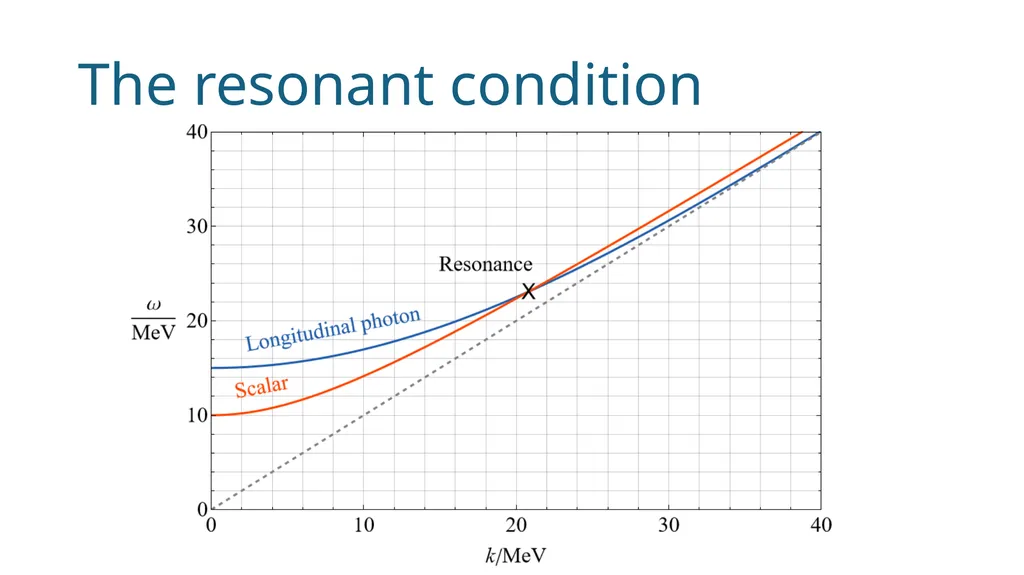
slide8. The resonant condition<br>
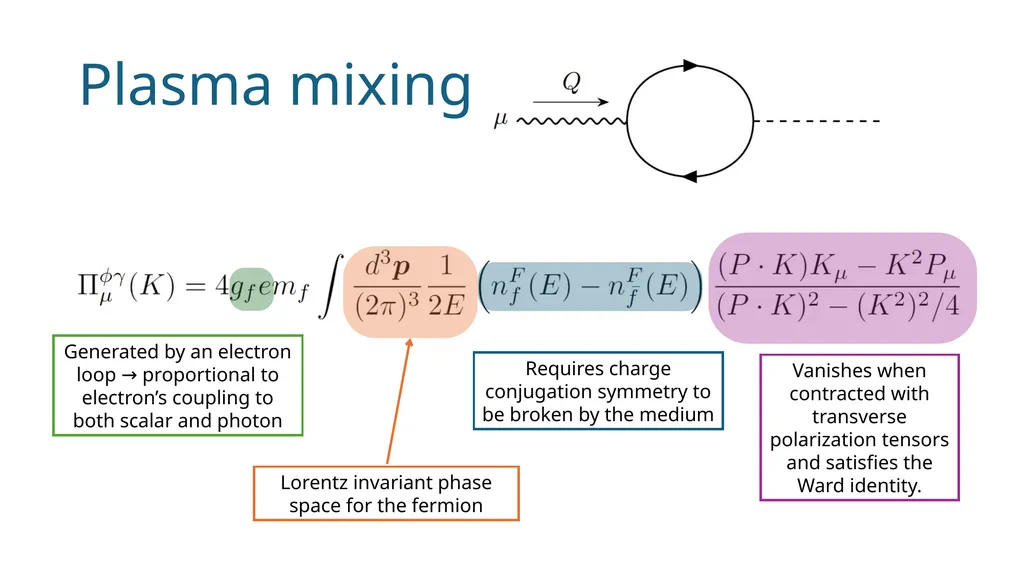
slide9. Plasma mixing Requires charge conjugation symmetry to be broken by the medium Generated by an electron loop → proportional to electron’s coupling to both scalar and photon Vanishes when contracted with transverse polarization tensors and satisfies the Ward identity. Lorentz invariant phase space for the fermion<br>
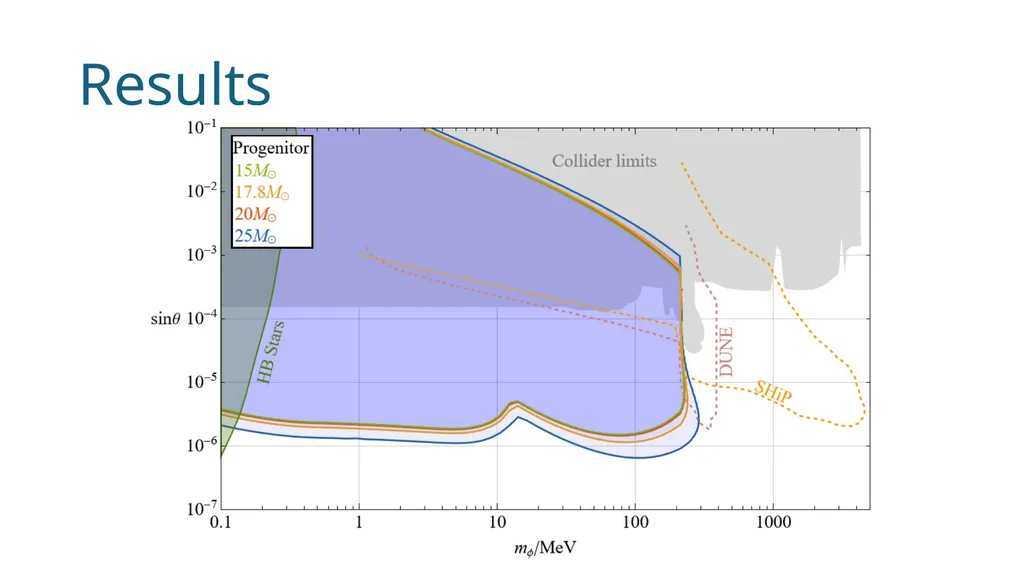
slide10. Results<br>
slide11. Future directions Other BSM signatures in supernovae?
Spin-2 particles?
Cosmology? Thank you<br>
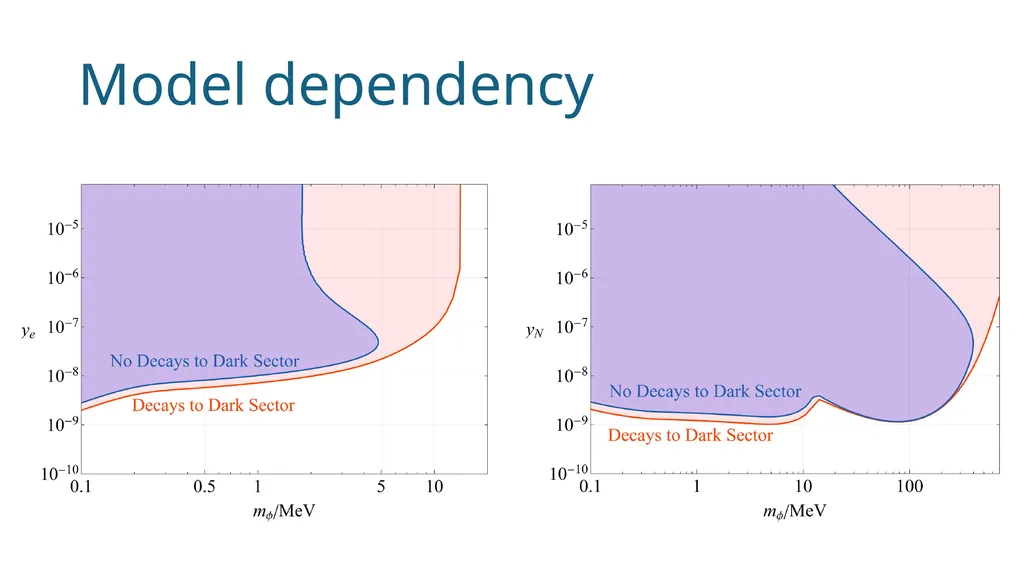
slide12. Model dependency<br>
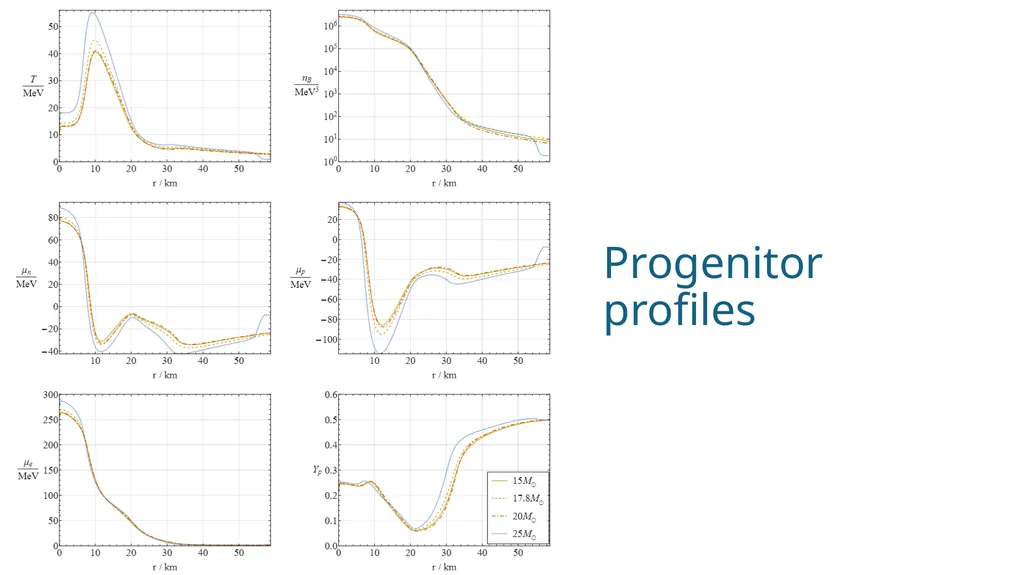
slide13. Progenitor profiles<br>
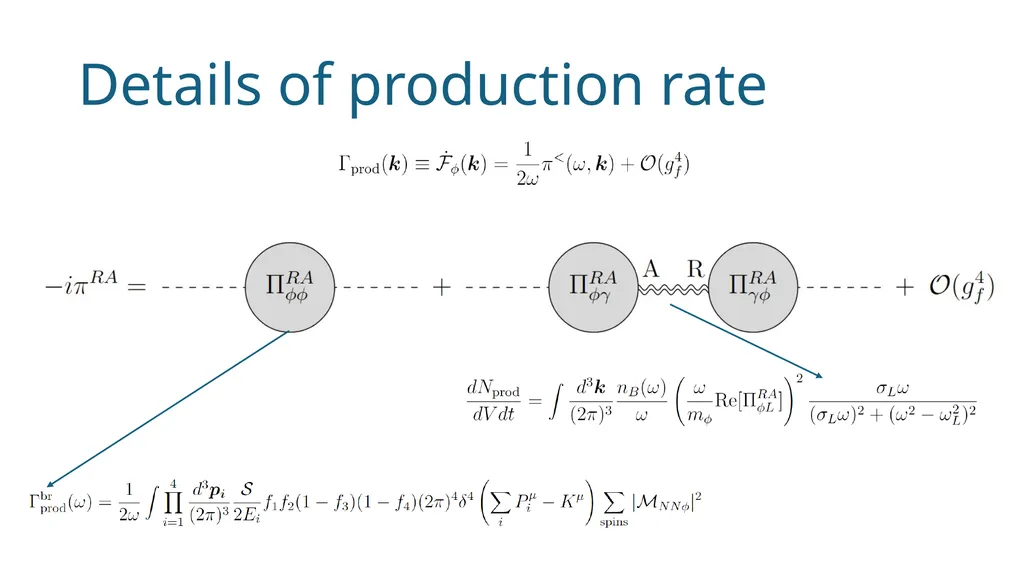
slide14. Details of production rate<br>
University of Oxford 2410.17347, Edward Hardy, Anton Sokolov, HS<br>
slide2. BSM at low scales?
Renormalizable 'portals' Beyond the Standard Model... Dark matter Neutrino masses Gravity Strong CP problem Cosmological constant Hierarchy problem<br>
slide3. Higgs-portal scalars<br>
slide4. Supernovae Photons absorbed Want to look at the neutrino signal! T = 30MeV New scalars contribute to cooling
Can be produced from bulk Neutrinos escape as core cools
Dominated by surface emission Not to scale<br>
slide5. Raffelt bound New energy loss speeds up cooling
Shorter neutrino burst
Conflict with observations of SN 1987A Puts strong constraints on particles with masses 1-100 MeV<br>
slide6. Ingredients Production rate
Many processes
Thermal effects
Decay and re-absorption rate
Leads to the "trapping regime"
Realistic* supernova conditions *This is somewhat controversial<br>
slide7. Production mechanisms Bremsstrahlung Resonant conversion<br>
slide8. The resonant condition<br>
slide9. Plasma mixing Requires charge conjugation symmetry to be broken by the medium Generated by an electron loop → proportional to electron’s coupling to both scalar and photon Vanishes when contracted with transverse polarization tensors and satisfies the Ward identity. Lorentz invariant phase space for the fermion<br>
slide10. Results<br>
slide11. Future directions Other BSM signatures in supernovae?
Spin-2 particles?
Cosmology? Thank you<br>
slide12. Model dependency<br>
slide13. Progenitor profiles<br>
slide14. Details of production rate<br>