"SYDE 575: Image Processing Introduction Read" is the property of its rightful owner. Permission is granted to
download and print the materials on this website for personal, non-commercial use only, and to display it
on your personal computer provided you do not modify the materials and that you retain all copyright
notices contained in the materials. By downloading content from our website, you accept the terms of this
agreement.
Presentation Transcript
01
SYDE 575: Image Processing Introduction
Read Textbook Chapters 1 & 2<br>
02
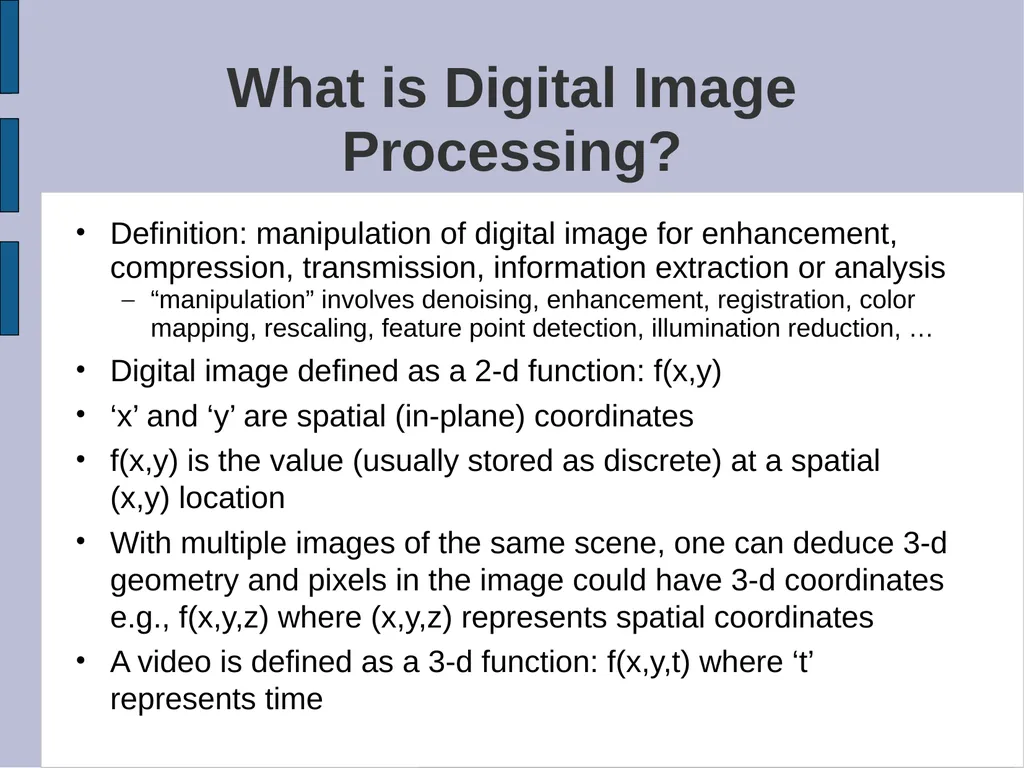
Definition: manipulation of digital image for enhancement, compression, transmission, information extraction or analysis
“manipulation” involves denoising, enhancement, registration, color mapping, rescaling, feature point detection, illumination reduction, …
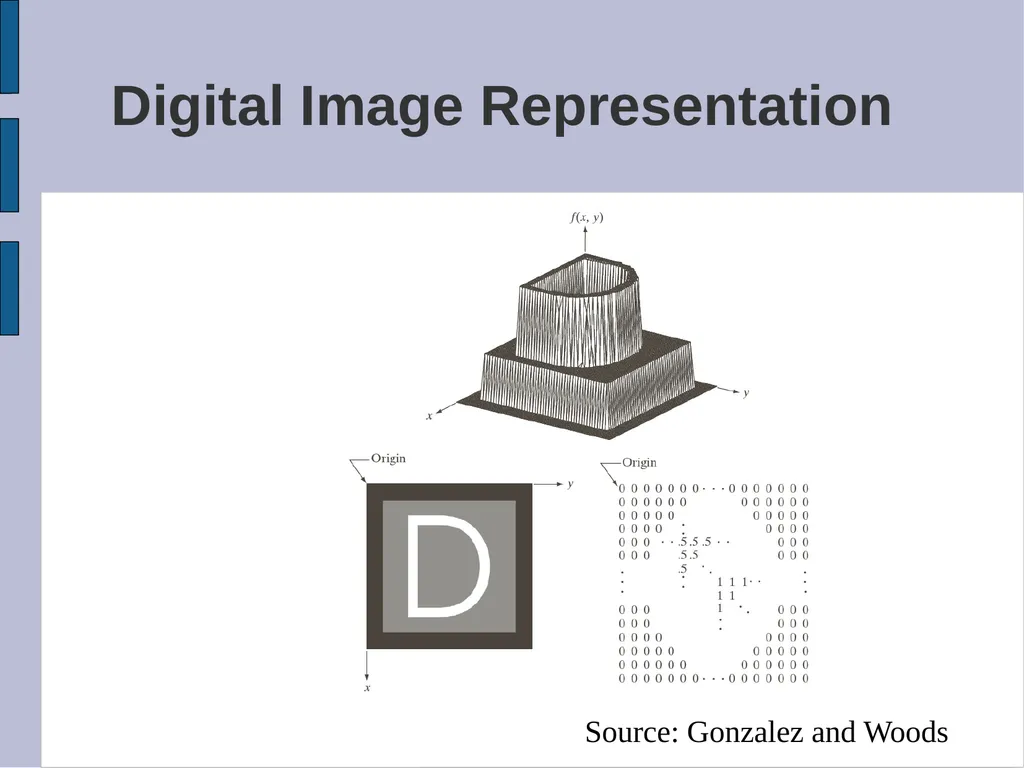
Digital image defined as a 2-d function: f(x,y)
‘x’ and ‘y’ are spatial (in-plane) coordinates
f(x,y) is the value (usually stored as discrete) at a spatial (x,y) location
With multiple images of the same scene, one can deduce 3-d geometry and pixels in the image could have 3-d coordinates e.g., f(x,y,z) where (x,y,z) represents spatial coordinates
A video is defined as a 3-d function: f(x,y,t) where ‘t’ represents time What is Digital Image Processing?<br>
03
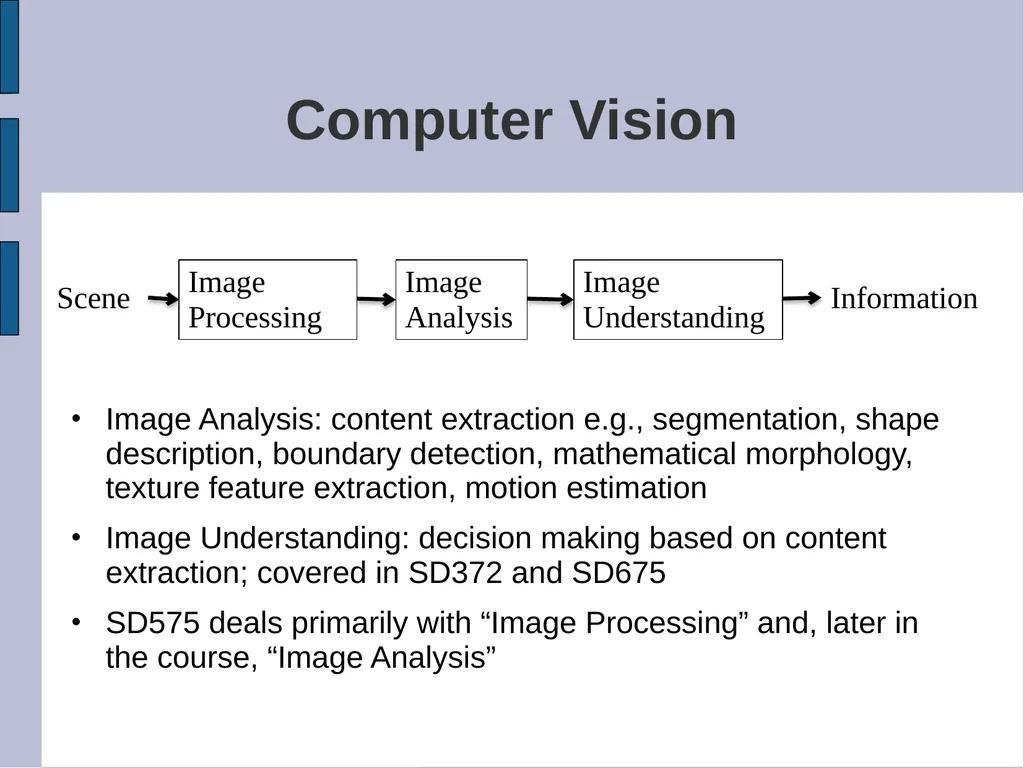
Computer Vision Image Analysis: content extraction e.g., segmentation, shape description, boundary detection, mathematical morphology, texture feature extraction, motion estimation
Image Understanding: decision making based on content extraction; covered in SD372 and SD675
SD575 deals primarily with “Image Processing” and, later in the course, “Image Analysis” Scene Image Processing Image Analysis Image Understanding Information<br>
04
Why is image processing difficult? Mapping from a 3-d world to a 2-d plane
Measured intensity is a function of many factors
Interpreting groups of pixels as interesting objects is easy for the human, but not for the computer
Loads of data to process!
Local windows versus global interpretation<br>
05
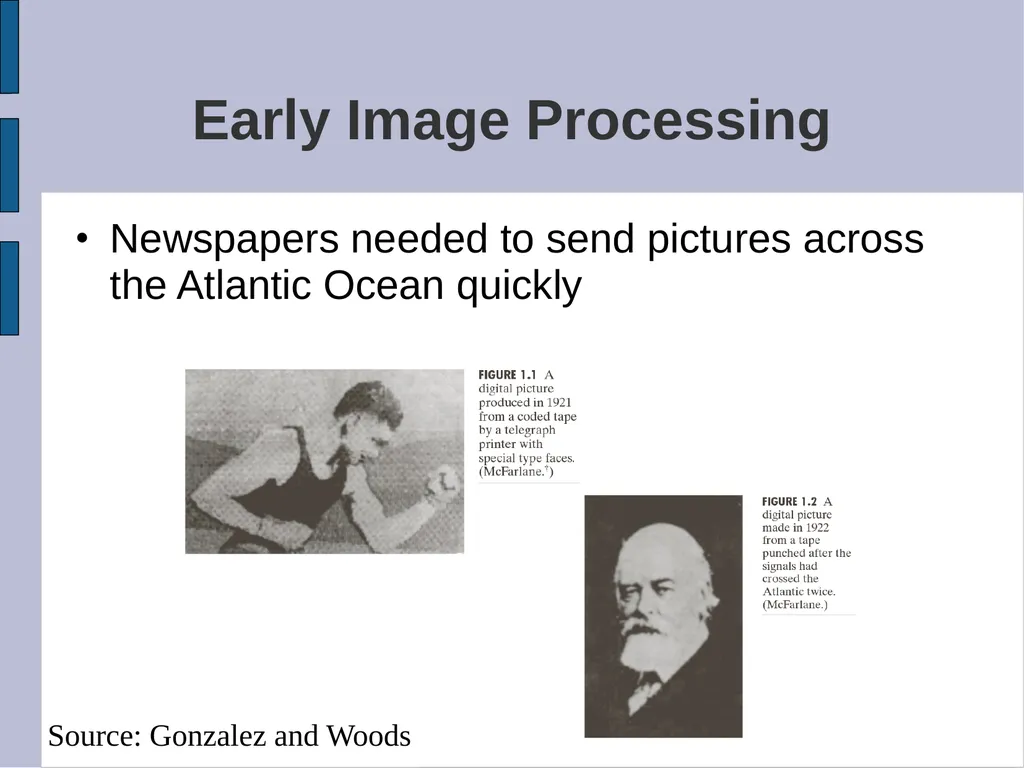
Early Image Processing Newspapers needed to send pictures across the Atlantic Ocean quickly Source: Gonzalez and Woods<br>
06
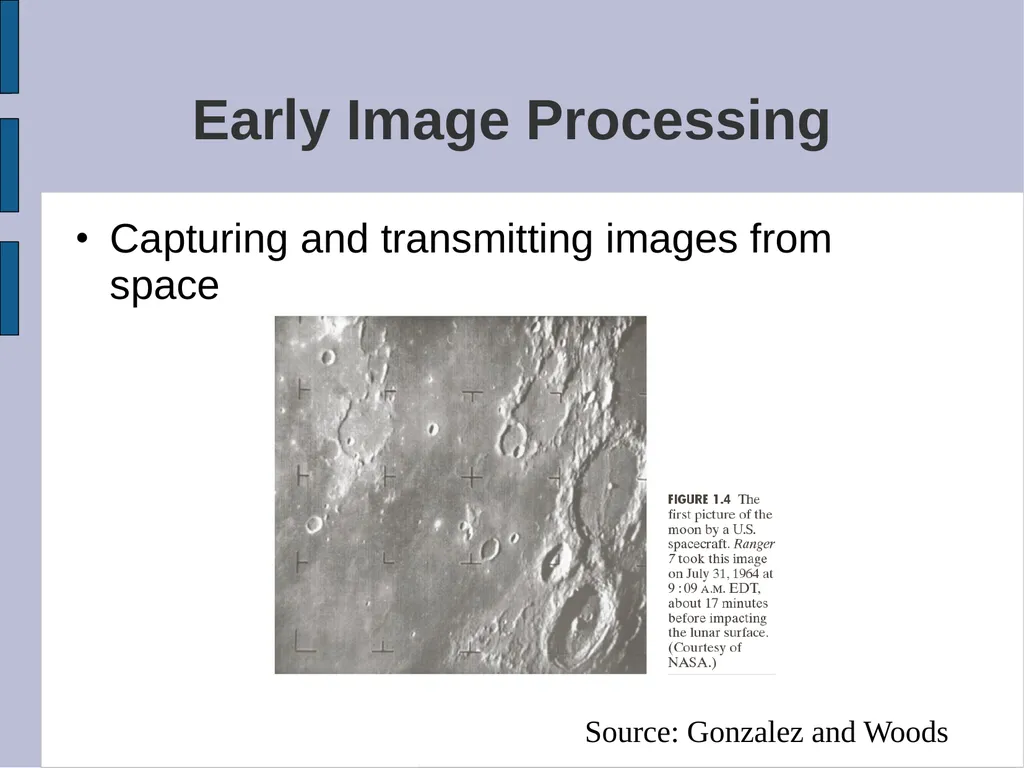
Early Image Processing Capturing and transmitting images from space Source: Gonzalez and Woods<br>
07
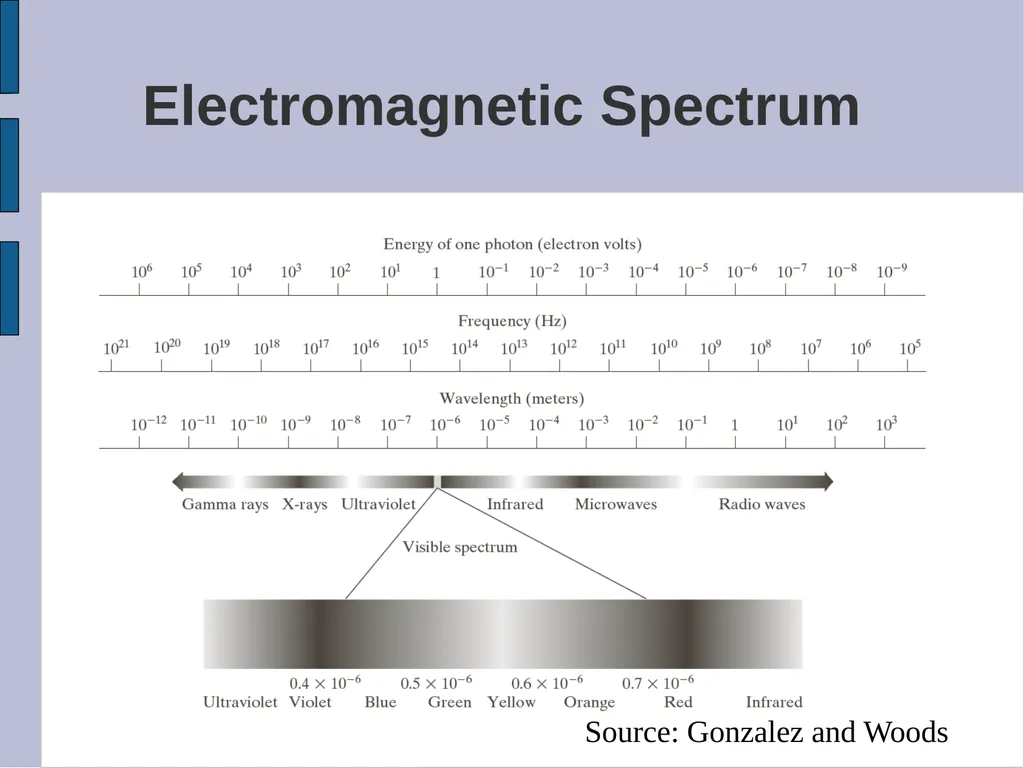
Electromagnetic Spectrum Source: Gonzalez and Woods<br>
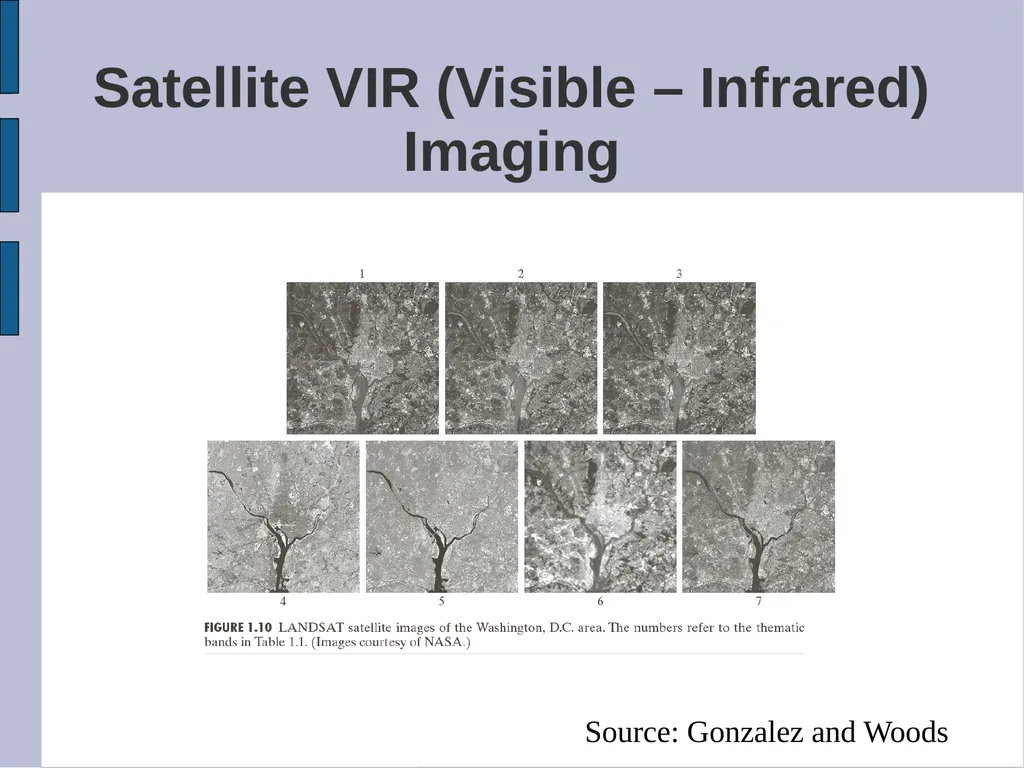
Satellite VIR (Visible – Infrared) Imaging Source: Gonzalez and Woods<br>
11
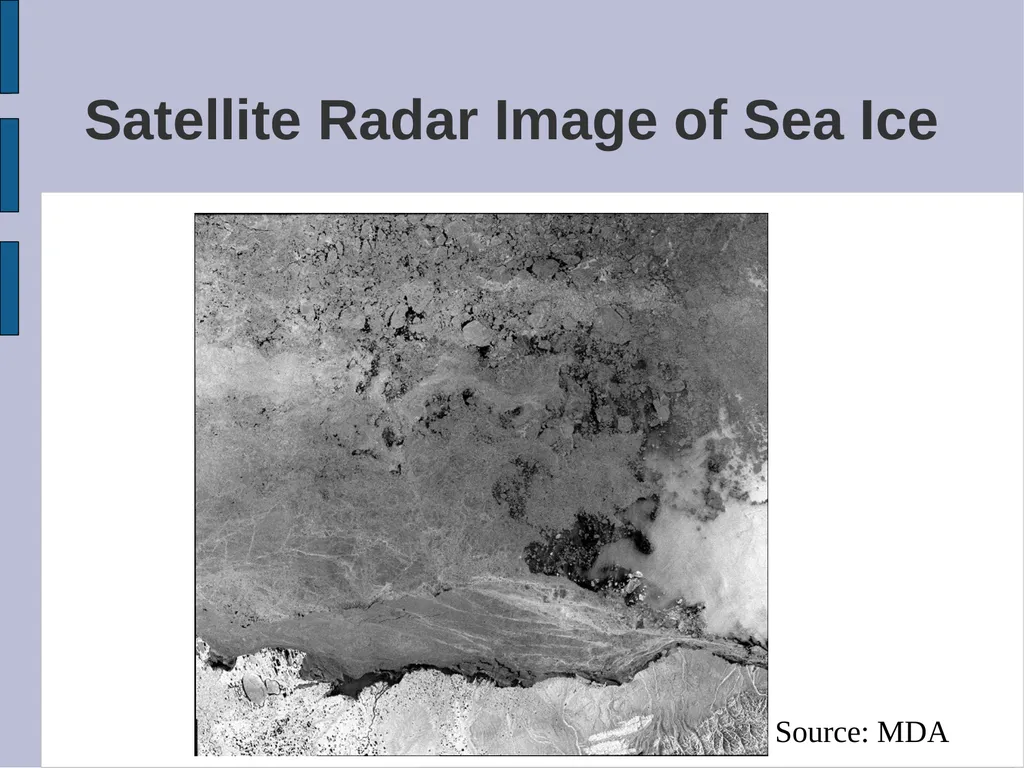
Satellite Radar Image of Sea Ice Source: MDA<br>
12
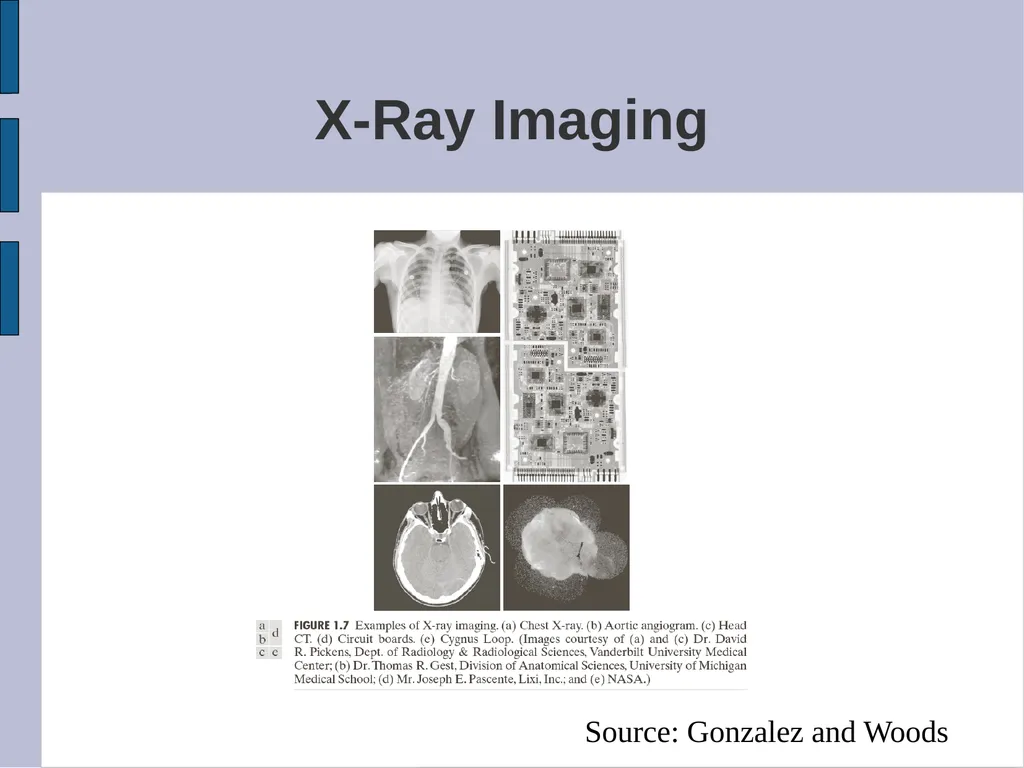
X-Ray Imaging Source: Gonzalez and Woods<br>
13
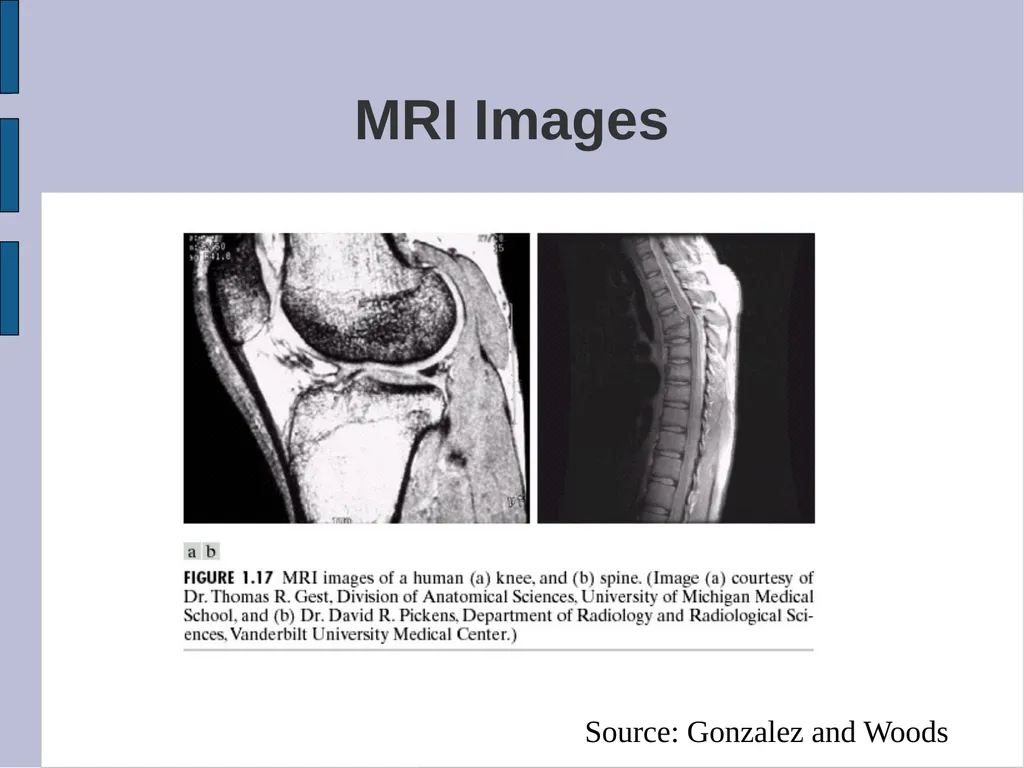
MRI Images Source: Gonzalez and Woods<br>
14
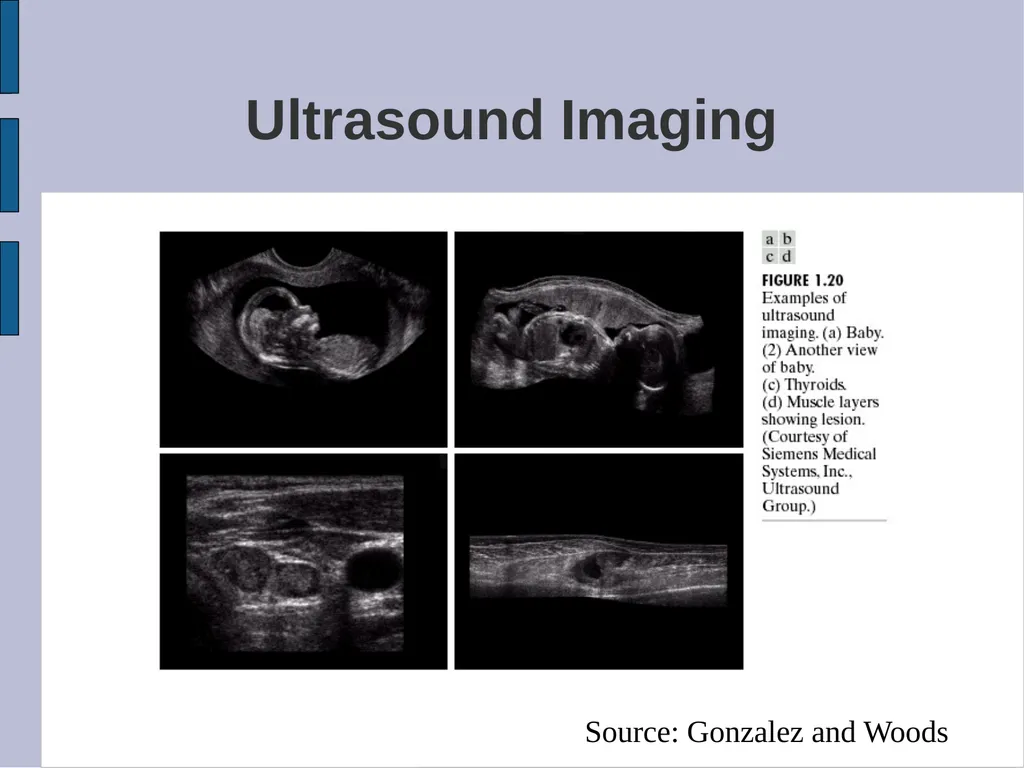
Ultrasound Imaging Source: Gonzalez and Woods<br>
15
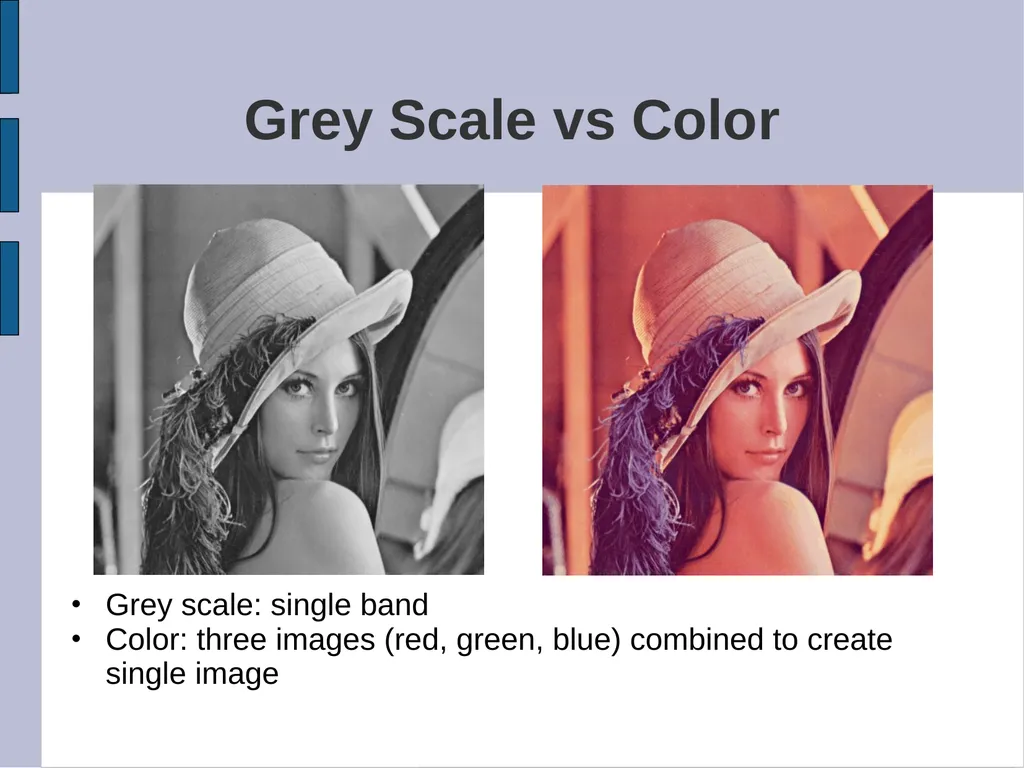
Grey Scale vs Color Grey scale: single band
Color: three images (red, green, blue) combined to create single image<br>
16
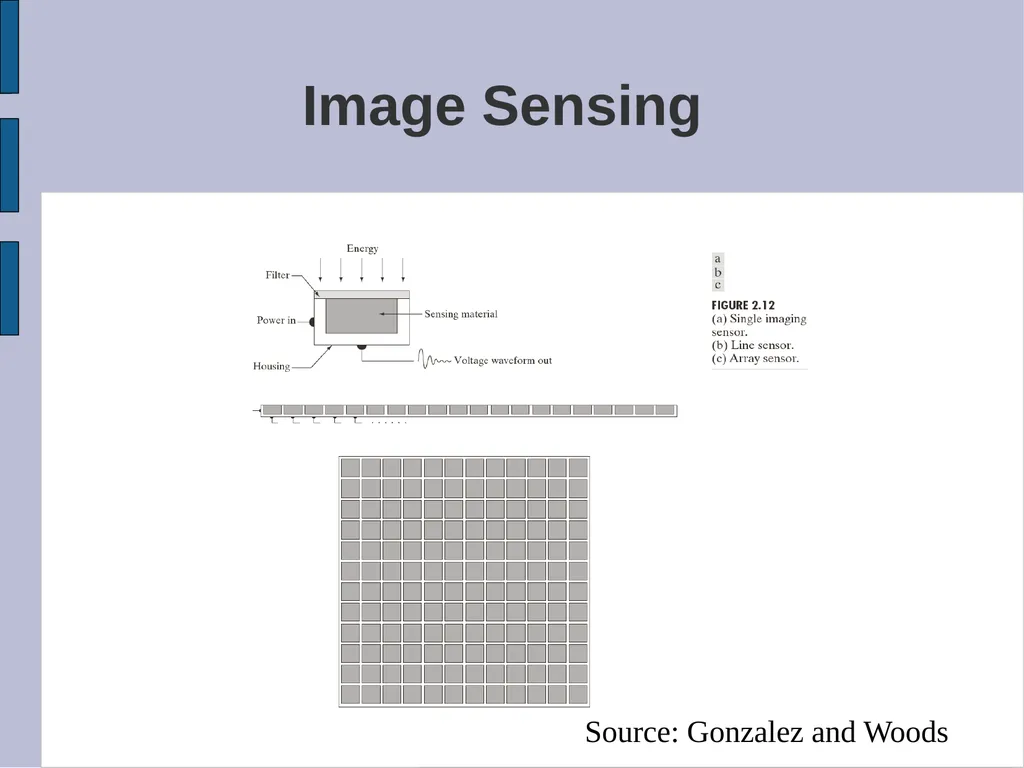
Image Sensing Source: Gonzalez and Woods<br>
17
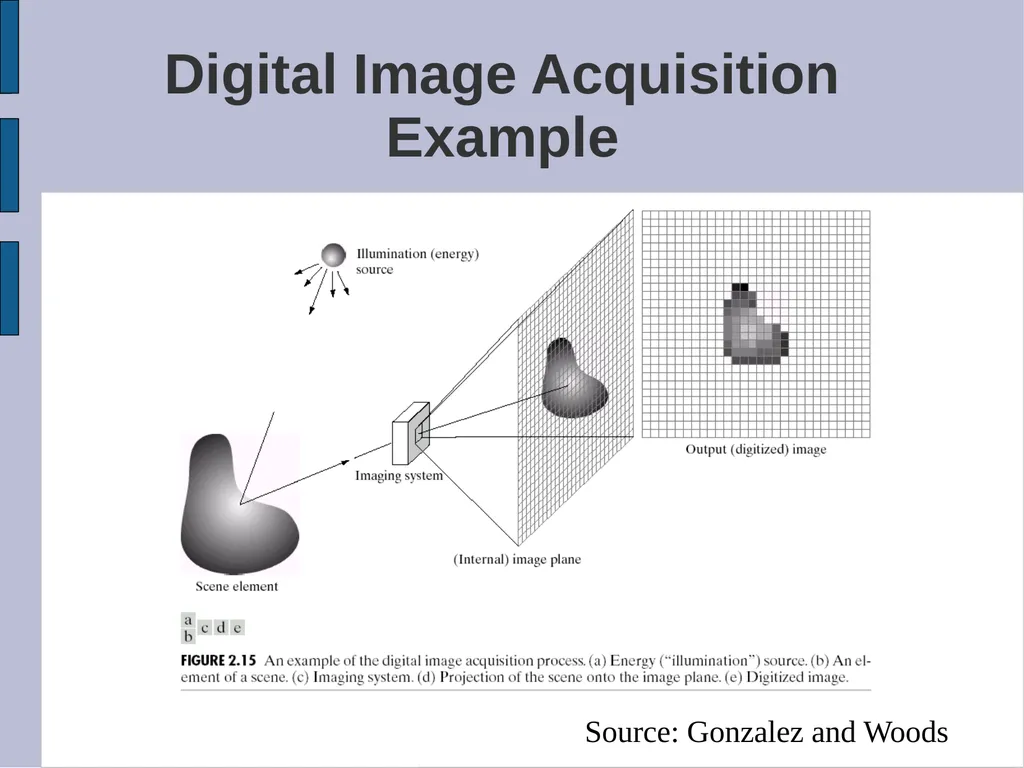
Digital Image Acquisition Example Source: Gonzalez and Woods<br>
18
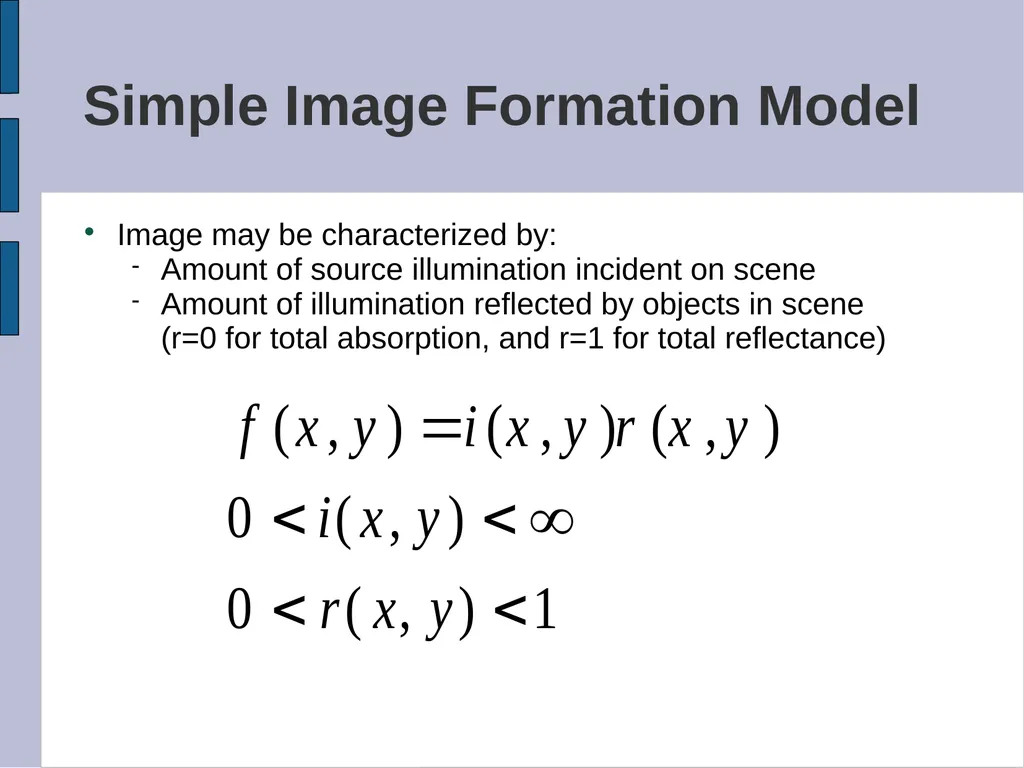
Simple Image Formation Model Image may be characterized by:
Amount of source illumination incident on scene
Amount of illumination reflected by objects in scene (r=0 for total absorption, and r=1 for total reflectance)<br>
19
Digital Image Representation Source: Gonzalez and Woods<br>
20
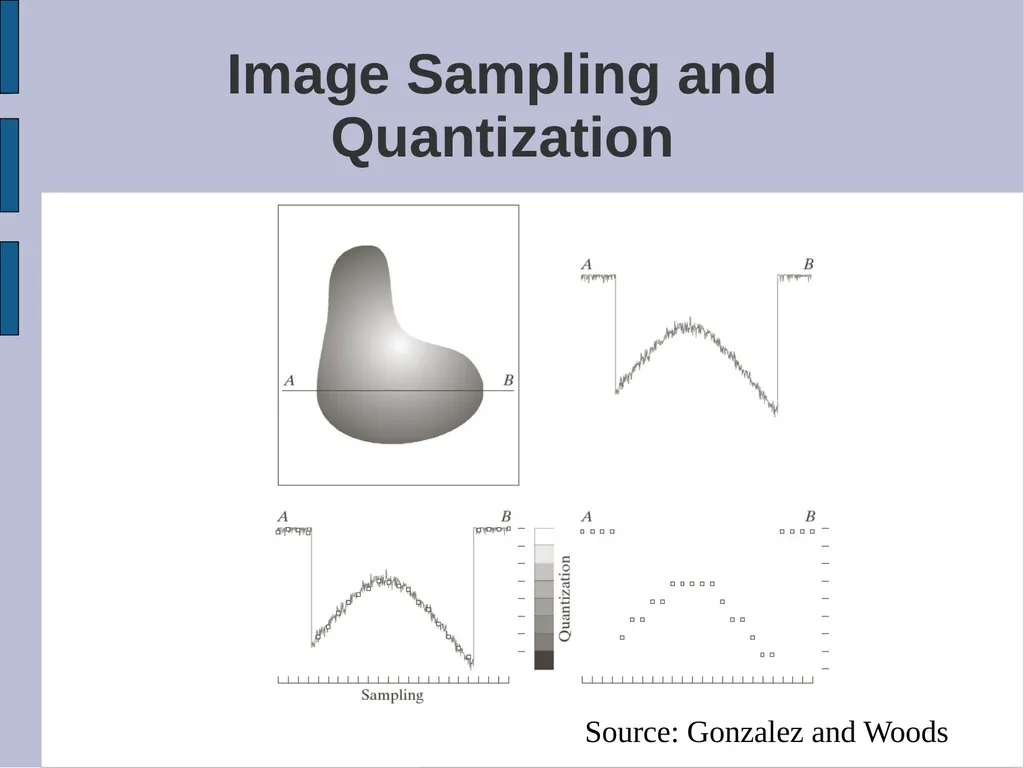
Image Sampling and Quantization Source: Gonzalez and Woods<br>
21
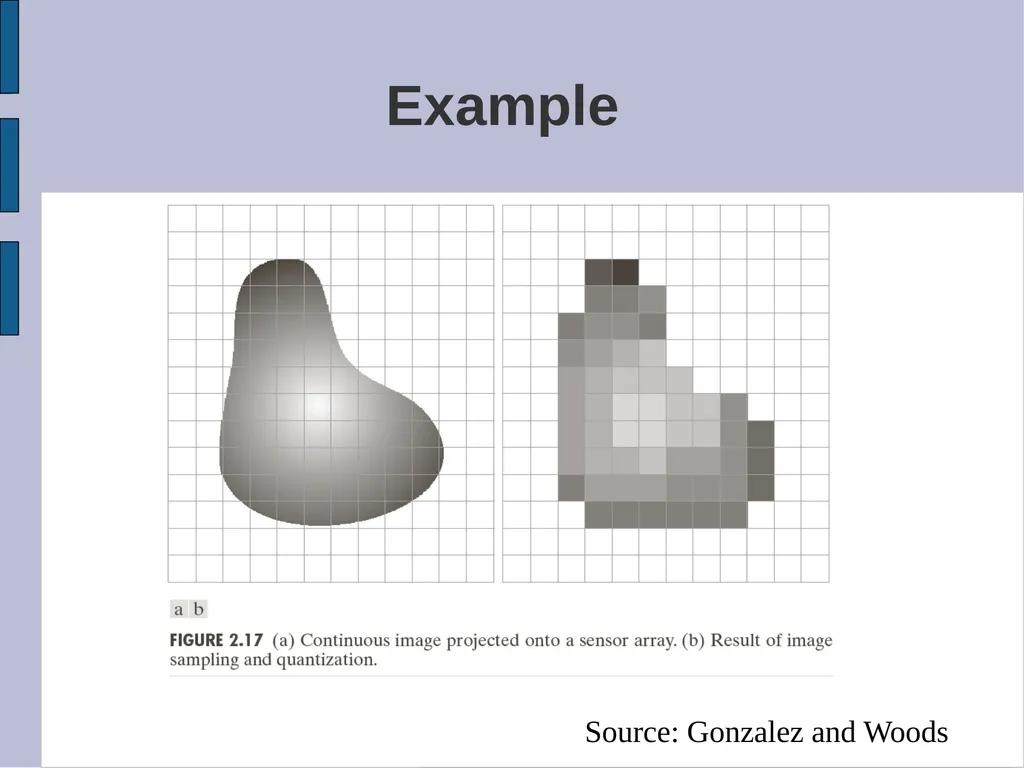
Example Source: Gonzalez and Woods<br>
22
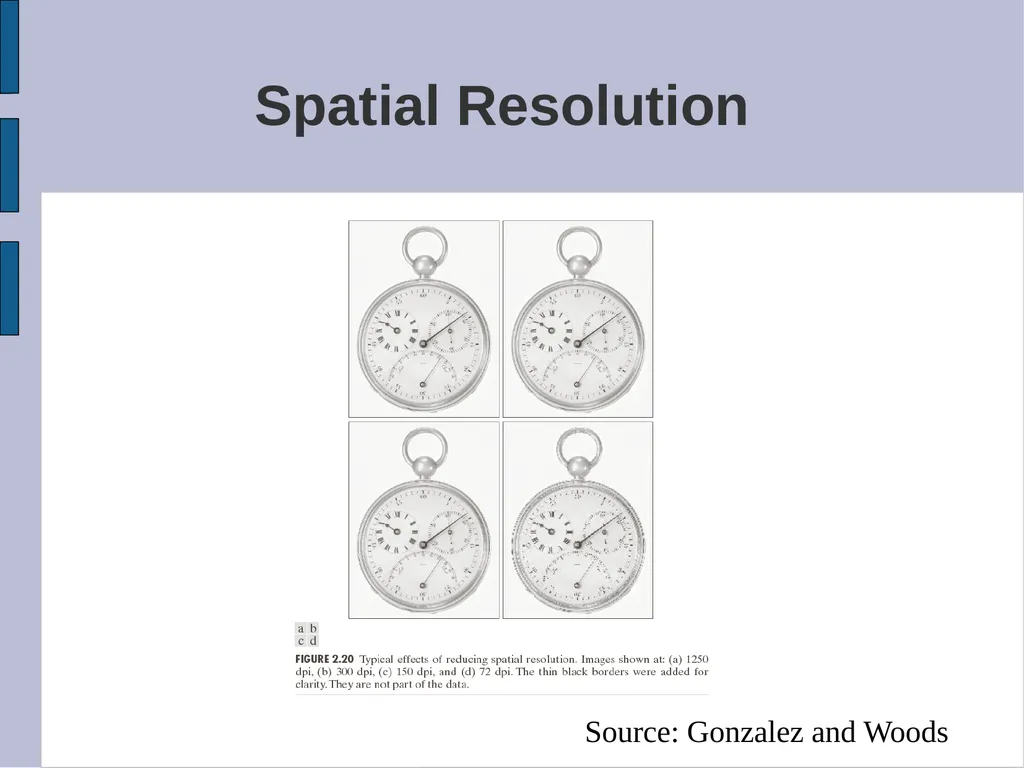
Spatial Resolution Source: Gonzalez and Woods<br>
23
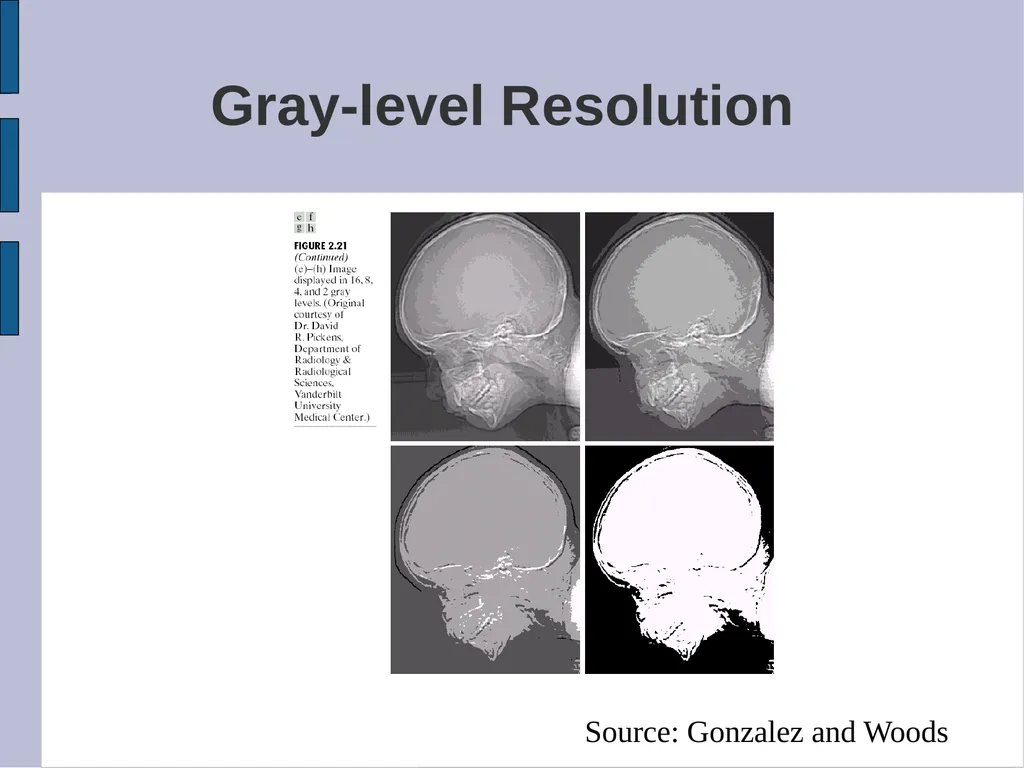
Gray-level Resolution Source: Gonzalez and Woods<br>
24
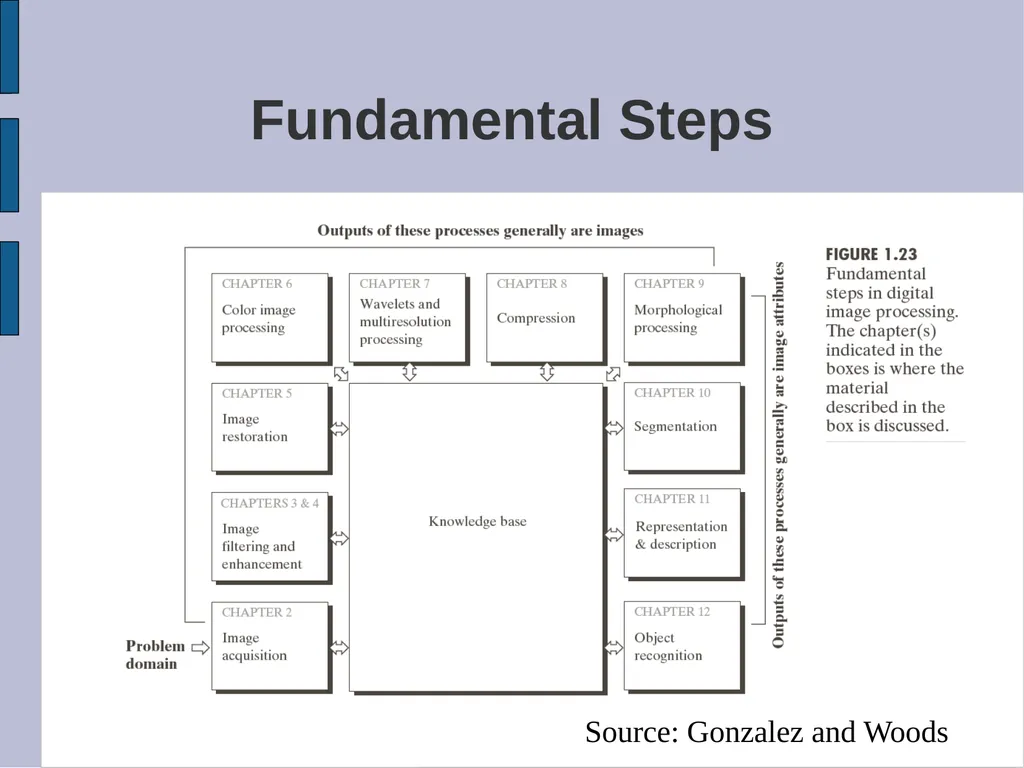
Fundamental Steps Source: Gonzalez and Woods<br>
25
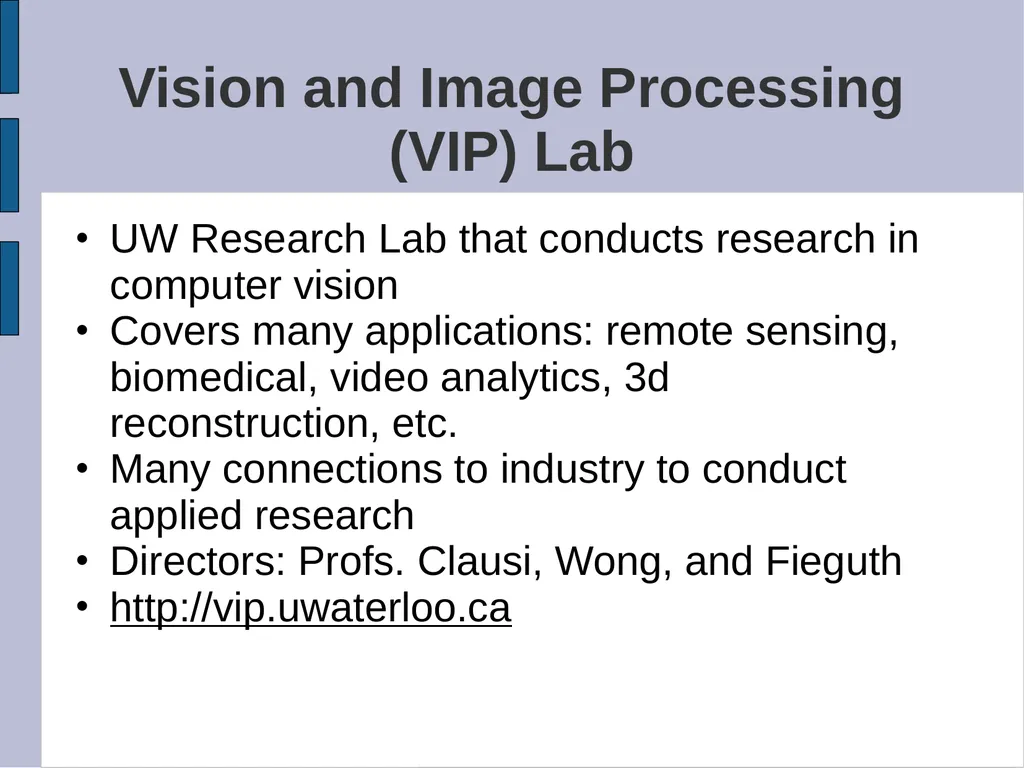
Vision and Image Processing (VIP) Lab UW Research Lab that conducts research in computer vision
Covers many applications: remote sensing, biomedical, video analytics, 3d reconstruction, etc.
Many connections to industry to conduct applied research
Directors: Profs. Clausi, Wong, and Fieguth
http://vip.uwaterloo.ca<br>
26
Graduate Studies If you are interested in graduate studies, chat with faculty members in your field of interest
Make sure that you apply for scholarships
NSERC/OGS applications due typically in October
We are always looking for a few new graduate students to conduct research in the VIP lab (start Spring or Fall terms)<br>