
SYLLABUS B.A. Honours in English under CBCS


Description: SYLLABUS B.A. Honours in English under CBCS GAUHATI UNIVERSITY DEPARTMENT OF ENGLISH DR. B.K.B. COLLEGE, PURANIGUDAM SCHEME FOR CHOICE BASED CREDIT SYSTEM B.A. Honours (English) Detailed Syllabus B. A. Honours English under CBCS Semester I
Related Topics
Download Presentation
"SYLLABUS B.A. Honours in English under CBCS" is the property of its rightful owner. Permission is granted to download and print the materials on this website for personal, non-commercial use only, and to display it on your personal computer provided you do not modify the materials and that you retain all copyright notices contained in the materials. By downloading content from our website, you accept the terms of this agreement.
Presentation Transcript
slide1. SYLLABUS
B.A. Honours in English under CBCS
GAUHATI UNIVERSITY DEPARTMENT OF ENGLISH
DR. B.K.B. COLLEGE, PURANIGUDAM<br>
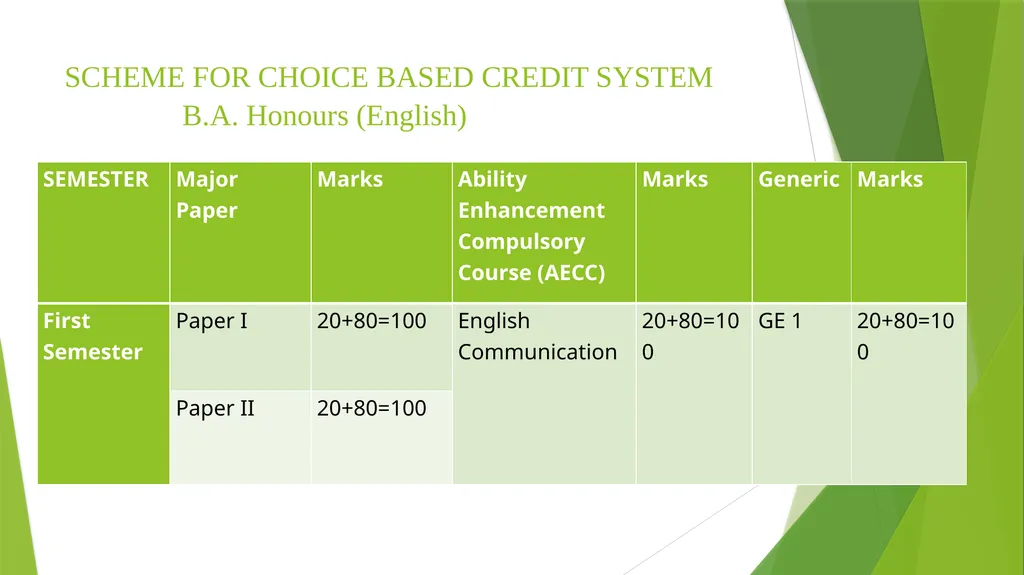
slide2. SCHEME FOR CHOICE BASED CREDIT SYSTEM B.A. Honours (English)<br>
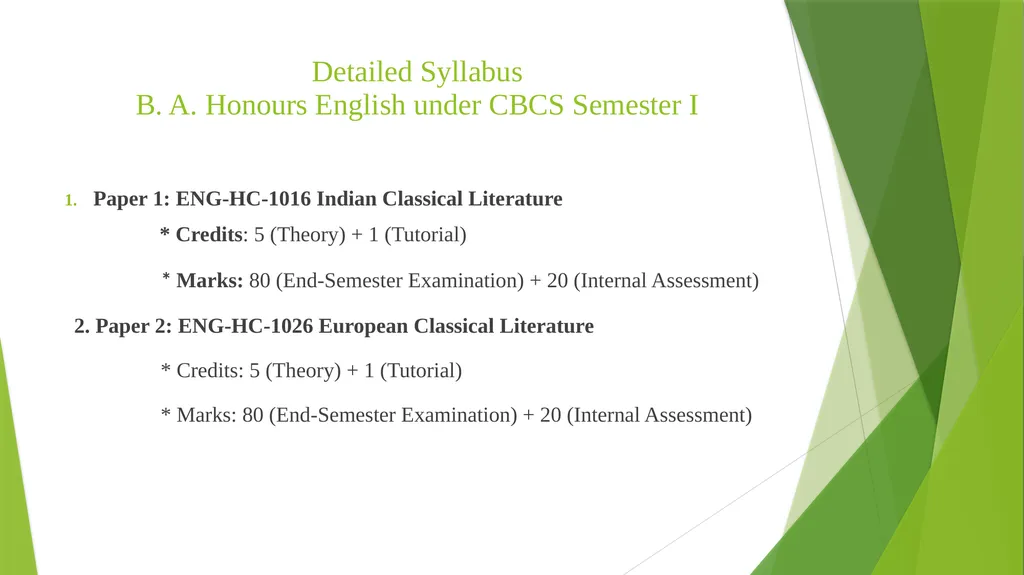
slide3. Detailed Syllabus B. A. Honours English under CBCS Semester I Paper 1: ENG-HC-1016 Indian Classical Literature
* Credits: 5 (Theory) + 1 (Tutorial)
* Marks: 80 (End-Semester Examination) + 20 (Internal Assessment)
2. Paper 2: ENG-HC-1026 European Classical Literature
* Credits: 5 (Theory) + 1 (Tutorial)
* Marks: 80 (End-Semester Examination) + 20 (Internal Assessment)<br>
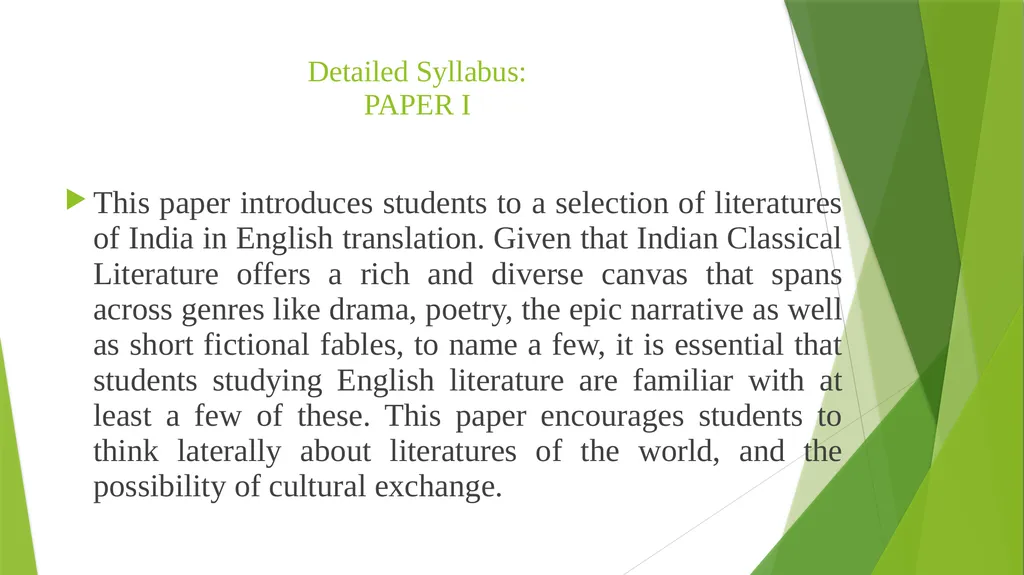
slide4. Detailed Syllabus: PAPER I This paper introduces students to a selection of literatures of India in English translation. Given that Indian Classical Literature offers a rich and diverse canvas that spans across genres like drama, poetry, the epic narrative as well as short fictional fables, to name a few, it is essential that students studying English literature are familiar with at least a few of these. This paper encourages students to think laterally about literatures of the world, and the possibility of cultural exchange.<br>
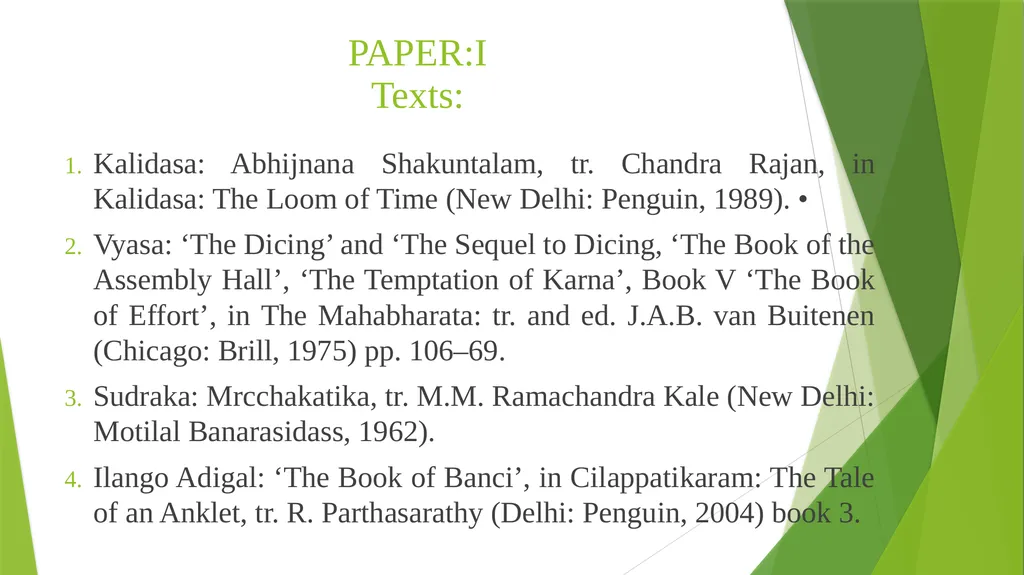
slide5. PAPER:I Texts: Kalidasa: Abhijnana Shakuntalam, tr. Chandra Rajan, in Kalidasa: The Loom of Time (New Delhi: Penguin, 1989). •
Vyasa: ‘The Dicing’ and ‘The Sequel to Dicing, ‘The Book of the Assembly Hall’, ‘The Temptation of Karna’, Book V ‘The Book of Effort’, in The Mahabharata: tr. and ed. J.A.B. van Buitenen (Chicago: Brill, 1975) pp. 106–69.
Sudraka: Mrcchakatika, tr. M.M. Ramachandra Kale (New Delhi: Motilal Banarasidass, 1962).
Ilango Adigal: ‘The Book of Banci’, in Cilappatikaram: The Tale of an Anklet, tr. R. Parthasarathy (Delhi: Penguin, 2004) book 3.<br>
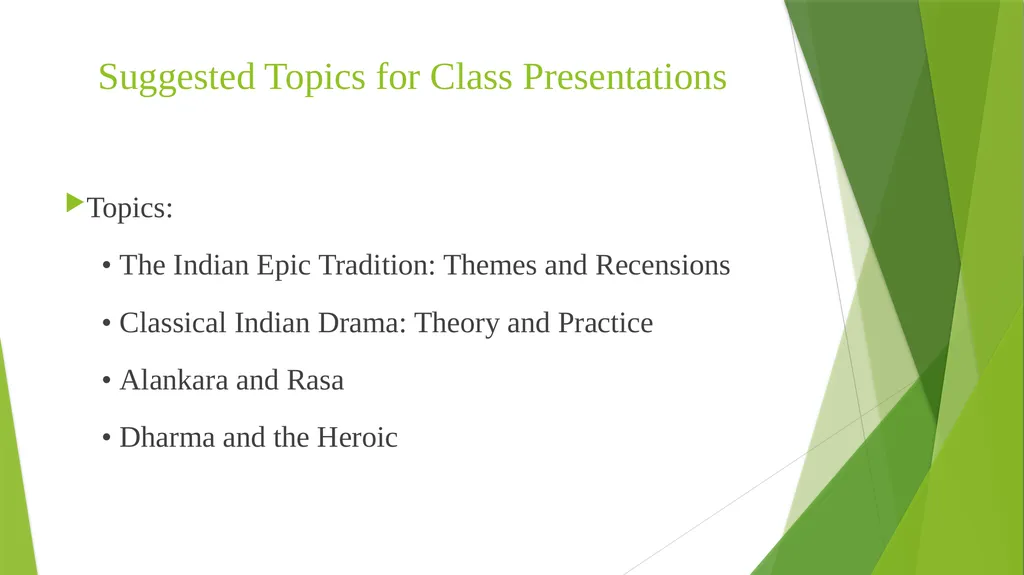
slide6. Suggested Topics for Class Presentations Topics:
• The Indian Epic Tradition: Themes and Recensions
• Classical Indian Drama: Theory and Practice
• Alankara and Rasa
• Dharma and the Heroic<br>
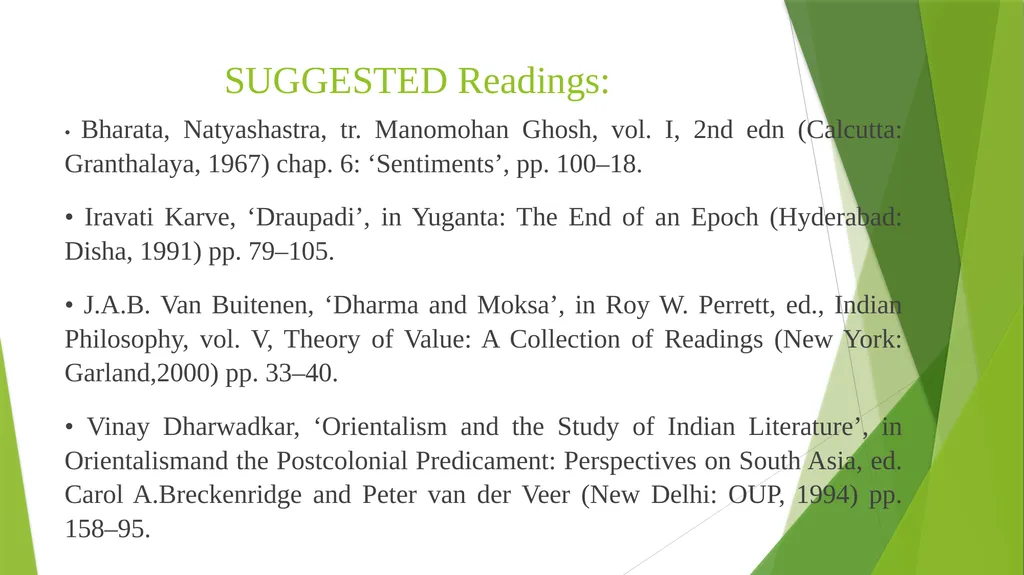
slide7. SUGGESTED Readings: • Bharata, Natyashastra, tr. Manomohan Ghosh, vol. I, 2nd edn (Calcutta: Granthalaya, 1967) chap. 6: ‘Sentiments’, pp. 100–18.
• Iravati Karve, ‘Draupadi’, in Yuganta: The End of an Epoch (Hyderabad: Disha, 1991) pp. 79–105.
• J.A.B. Van Buitenen, ‘Dharma and Moksa’, in Roy W. Perrett, ed., Indian Philosophy, vol. V, Theory of Value: A Collection of Readings (New York: Garland,2000) pp. 33–40.
• Vinay Dharwadkar, ‘Orientalism and the Study of Indian Literature’, in Orientalismand the Postcolonial Predicament: Perspectives on South Asia, ed. Carol A.Breckenridge and Peter van der Veer (New Delhi: OUP, 1994) pp. 158–95.<br>
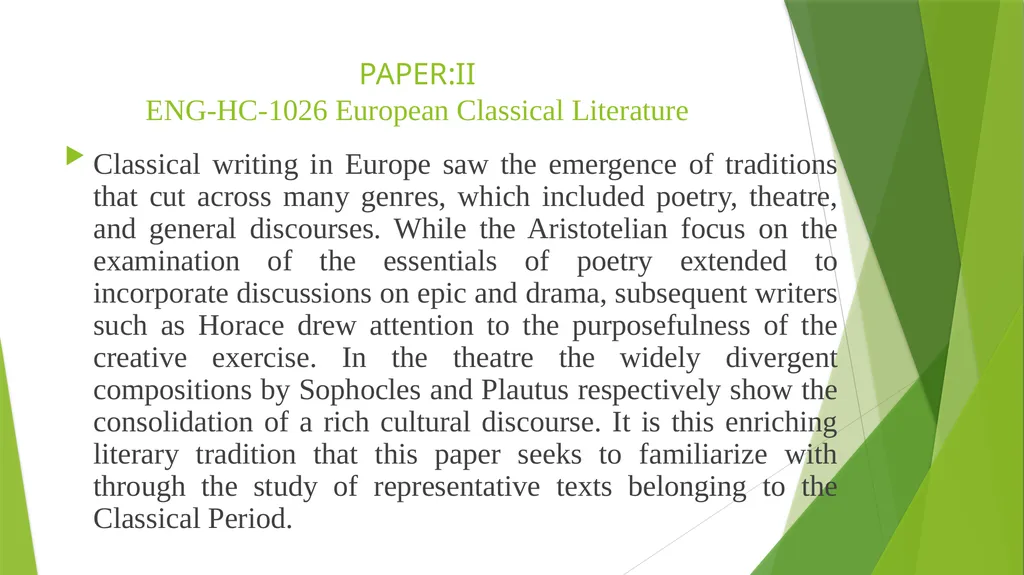
slide8. PAPER:II ENG-HC-1026 European Classical Literature Classical writing in Europe saw the emergence of traditions that cut across many genres, which included poetry, theatre, and general discourses. While the Aristotelian focus on the examination of the essentials of poetry extended to incorporate discussions on epic and drama, subsequent writers such as Horace drew attention to the purposefulness of the creative exercise. In the theatre the widely divergent compositions by Sophocles and Plautus respectively show the consolidation of a rich cultural discourse. It is this enriching literary tradition that this paper seeks to familiarize with through the study of representative texts belonging to the Classical Period.<br>
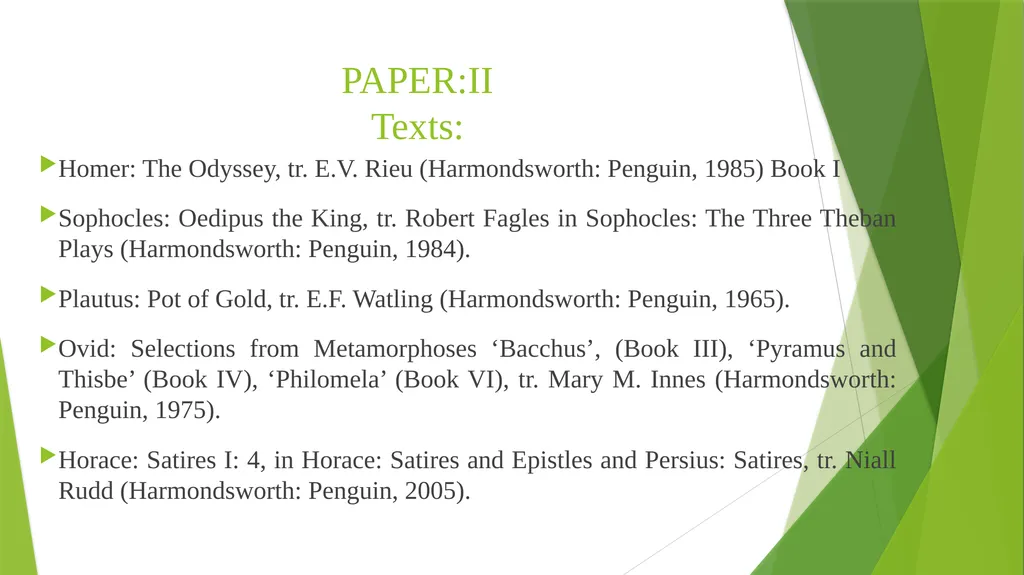
slide9. PAPER:II Texts: Homer: The Odyssey, tr. E.V. Rieu (Harmondsworth: Penguin, 1985) Book I
Sophocles: Oedipus the King, tr. Robert Fagles in Sophocles: The Three Theban Plays (Harmondsworth: Penguin, 1984).
Plautus: Pot of Gold, tr. E.F. Watling (Harmondsworth: Penguin, 1965).
Ovid: Selections from Metamorphoses ‘Bacchus’, (Book III), ‘Pyramus and Thisbe’ (Book IV), ‘Philomela’ (Book VI), tr. Mary M. Innes (Harmondsworth: Penguin, 1975).
Horace: Satires I: 4, in Horace: Satires and Epistles and Persius: Satires, tr. Niall Rudd (Harmondsworth: Penguin, 2005).<br>
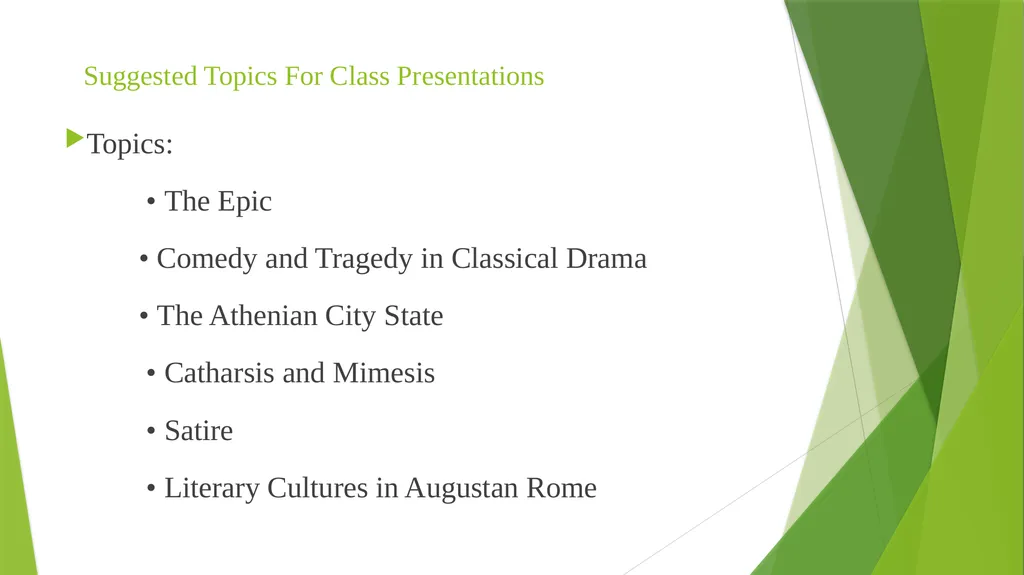
slide10. Suggested Topics For Class Presentations Topics:
• The Epic
• Comedy and Tragedy in Classical Drama
• The Athenian City State
• Catharsis and Mimesis
• Satire
• Literary Cultures in Augustan Rome<br>
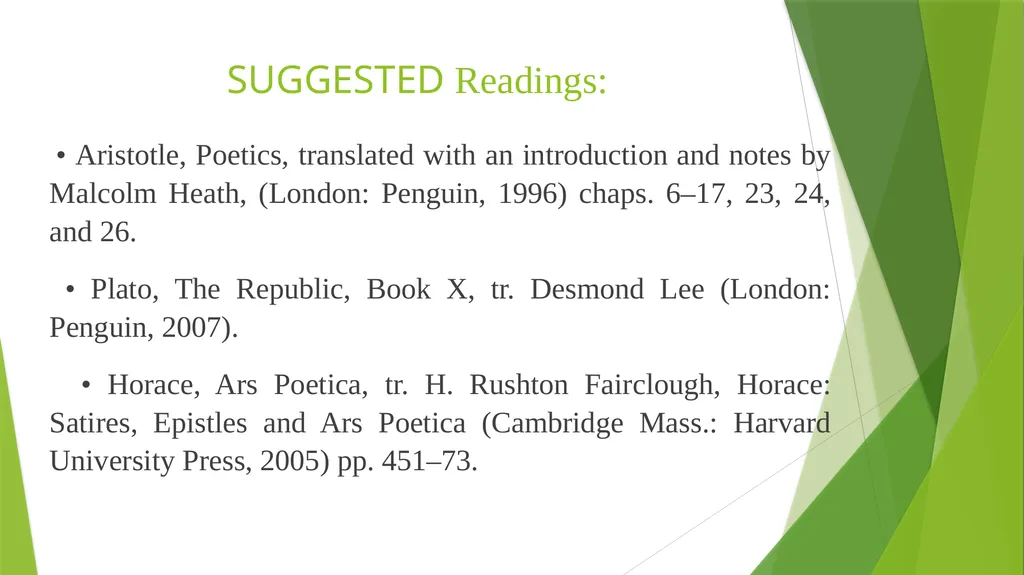
slide11. SUGGESTED Readings: • Aristotle, Poetics, translated with an introduction and notes by Malcolm Heath, (London: Penguin, 1996) chaps. 6–17, 23, 24, and 26.
• Plato, The Republic, Book X, tr. Desmond Lee (London: Penguin, 2007).
• Horace, Ars Poetica, tr. H. Rushton Fairclough, Horace: Satires, Epistles and Ars Poetica (Cambridge Mass.: Harvard University Press, 2005) pp. 451–73.<br>
slide12. THANK YOU<br>
DR. B.K.B. COLLEGE, PURANIGUDAM<br>
slide2. SCHEME FOR CHOICE BASED CREDIT SYSTEM B.A. Honours (English)<br>
slide3. Detailed Syllabus B. A. Honours English under CBCS Semester I Paper 1: ENG-HC-1016 Indian Classical Literature
* Credits: 5 (Theory) + 1 (Tutorial)
* Marks: 80 (End-Semester Examination) + 20 (Internal Assessment)
2. Paper 2: ENG-HC-1026 European Classical Literature
* Credits: 5 (Theory) + 1 (Tutorial)
* Marks: 80 (End-Semester Examination) + 20 (Internal Assessment)<br>
slide4. Detailed Syllabus: PAPER I This paper introduces students to a selection of literatures of India in English translation. Given that Indian Classical Literature offers a rich and diverse canvas that spans across genres like drama, poetry, the epic narrative as well as short fictional fables, to name a few, it is essential that students studying English literature are familiar with at least a few of these. This paper encourages students to think laterally about literatures of the world, and the possibility of cultural exchange.<br>
slide5. PAPER:I Texts: Kalidasa: Abhijnana Shakuntalam, tr. Chandra Rajan, in Kalidasa: The Loom of Time (New Delhi: Penguin, 1989). •
Vyasa: ‘The Dicing’ and ‘The Sequel to Dicing, ‘The Book of the Assembly Hall’, ‘The Temptation of Karna’, Book V ‘The Book of Effort’, in The Mahabharata: tr. and ed. J.A.B. van Buitenen (Chicago: Brill, 1975) pp. 106–69.
Sudraka: Mrcchakatika, tr. M.M. Ramachandra Kale (New Delhi: Motilal Banarasidass, 1962).
Ilango Adigal: ‘The Book of Banci’, in Cilappatikaram: The Tale of an Anklet, tr. R. Parthasarathy (Delhi: Penguin, 2004) book 3.<br>
slide6. Suggested Topics for Class Presentations Topics:
• The Indian Epic Tradition: Themes and Recensions
• Classical Indian Drama: Theory and Practice
• Alankara and Rasa
• Dharma and the Heroic<br>
slide7. SUGGESTED Readings: • Bharata, Natyashastra, tr. Manomohan Ghosh, vol. I, 2nd edn (Calcutta: Granthalaya, 1967) chap. 6: ‘Sentiments’, pp. 100–18.
• Iravati Karve, ‘Draupadi’, in Yuganta: The End of an Epoch (Hyderabad: Disha, 1991) pp. 79–105.
• J.A.B. Van Buitenen, ‘Dharma and Moksa’, in Roy W. Perrett, ed., Indian Philosophy, vol. V, Theory of Value: A Collection of Readings (New York: Garland,2000) pp. 33–40.
• Vinay Dharwadkar, ‘Orientalism and the Study of Indian Literature’, in Orientalismand the Postcolonial Predicament: Perspectives on South Asia, ed. Carol A.Breckenridge and Peter van der Veer (New Delhi: OUP, 1994) pp. 158–95.<br>
slide8. PAPER:II ENG-HC-1026 European Classical Literature Classical writing in Europe saw the emergence of traditions that cut across many genres, which included poetry, theatre, and general discourses. While the Aristotelian focus on the examination of the essentials of poetry extended to incorporate discussions on epic and drama, subsequent writers such as Horace drew attention to the purposefulness of the creative exercise. In the theatre the widely divergent compositions by Sophocles and Plautus respectively show the consolidation of a rich cultural discourse. It is this enriching literary tradition that this paper seeks to familiarize with through the study of representative texts belonging to the Classical Period.<br>
slide9. PAPER:II Texts: Homer: The Odyssey, tr. E.V. Rieu (Harmondsworth: Penguin, 1985) Book I
Sophocles: Oedipus the King, tr. Robert Fagles in Sophocles: The Three Theban Plays (Harmondsworth: Penguin, 1984).
Plautus: Pot of Gold, tr. E.F. Watling (Harmondsworth: Penguin, 1965).
Ovid: Selections from Metamorphoses ‘Bacchus’, (Book III), ‘Pyramus and Thisbe’ (Book IV), ‘Philomela’ (Book VI), tr. Mary M. Innes (Harmondsworth: Penguin, 1975).
Horace: Satires I: 4, in Horace: Satires and Epistles and Persius: Satires, tr. Niall Rudd (Harmondsworth: Penguin, 2005).<br>
slide10. Suggested Topics For Class Presentations Topics:
• The Epic
• Comedy and Tragedy in Classical Drama
• The Athenian City State
• Catharsis and Mimesis
• Satire
• Literary Cultures in Augustan Rome<br>
slide11. SUGGESTED Readings: • Aristotle, Poetics, translated with an introduction and notes by Malcolm Heath, (London: Penguin, 1996) chaps. 6–17, 23, 24, and 26.
• Plato, The Republic, Book X, tr. Desmond Lee (London: Penguin, 2007).
• Horace, Ars Poetica, tr. H. Rushton Fairclough, Horace: Satires, Epistles and Ars Poetica (Cambridge Mass.: Harvard University Press, 2005) pp. 451–73.<br>
slide12. THANK YOU<br>