01
Systems Engineering Processes and Methods: AIAA SCITECH 2025 Tracing NASA Contributions Toward Aviation Safety Stakeholder Guidance Darisha Vidrine, MS, Samantha Infeld, PhD, Doug Agyemang, Michael Vincent, Kyle Ellis, PhD, Summer Brandt, PhD, Wendy Okolo, PhD National Aeronautics and Space Administration<br>
04
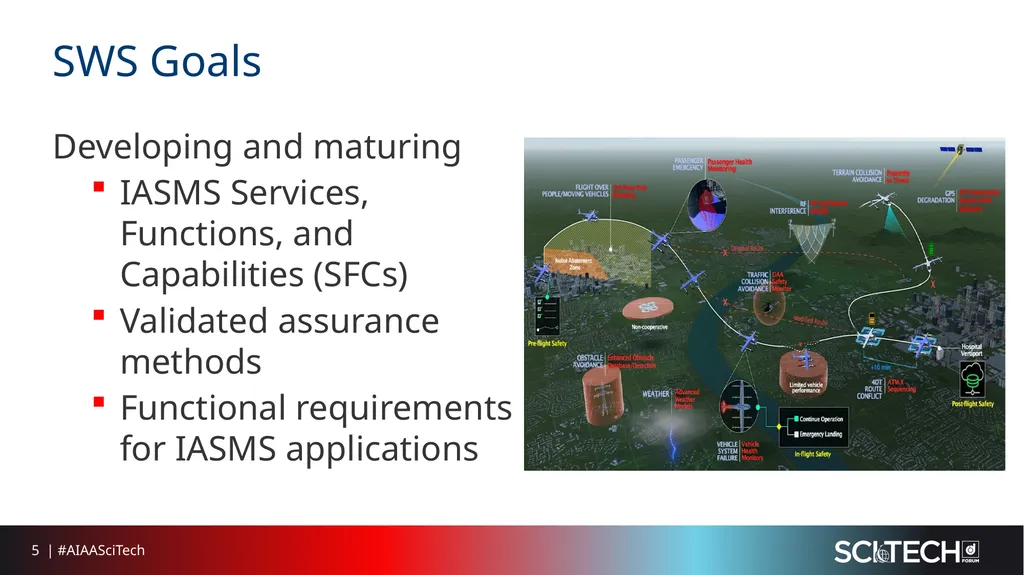
SWS Goals Developing and maturing
IASMS Services, Functions, and Capabilities (SFCs)
Validated assurance methods
Functional requirements for IASMS applications<br>
05
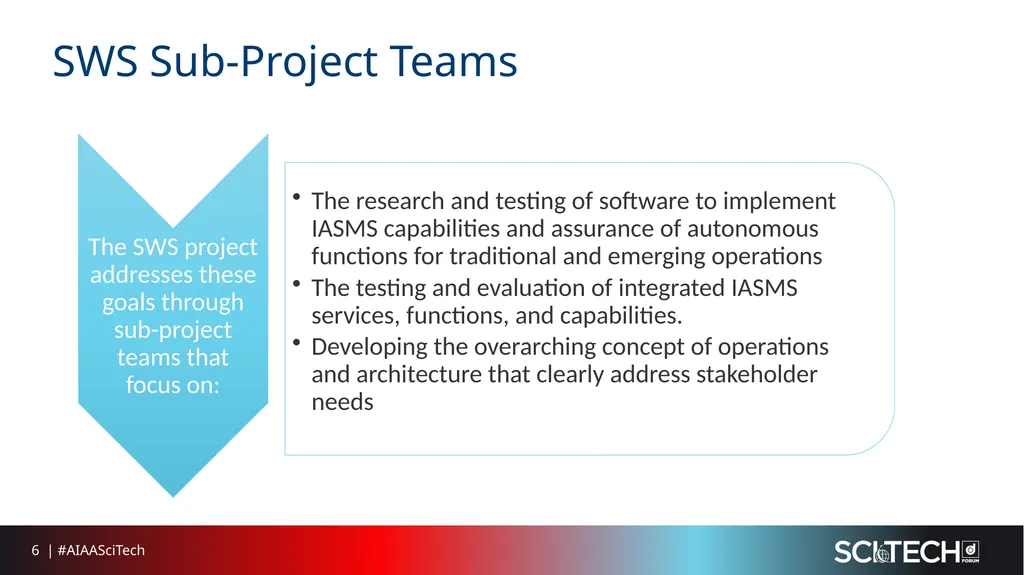
SWS Sub-Project Teams<br>
06
System Design Process<br>
07
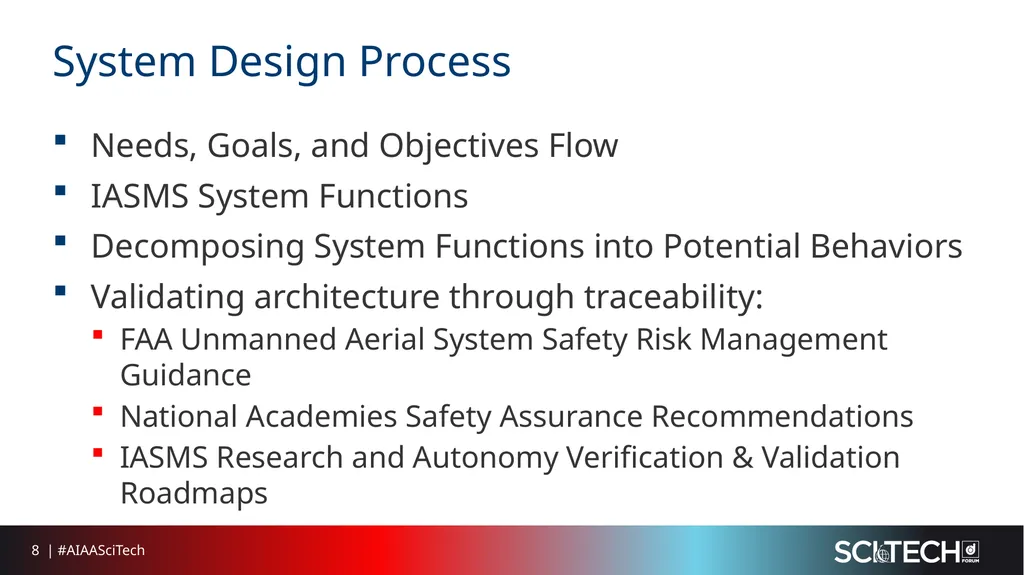
Needs, Goals, and Objectives Flow
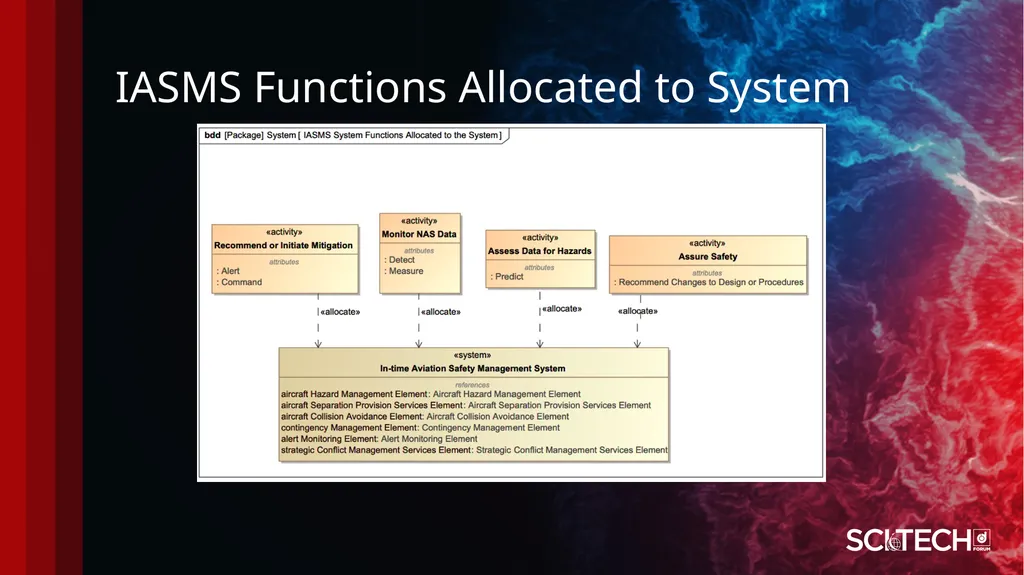
IASMS System Functions
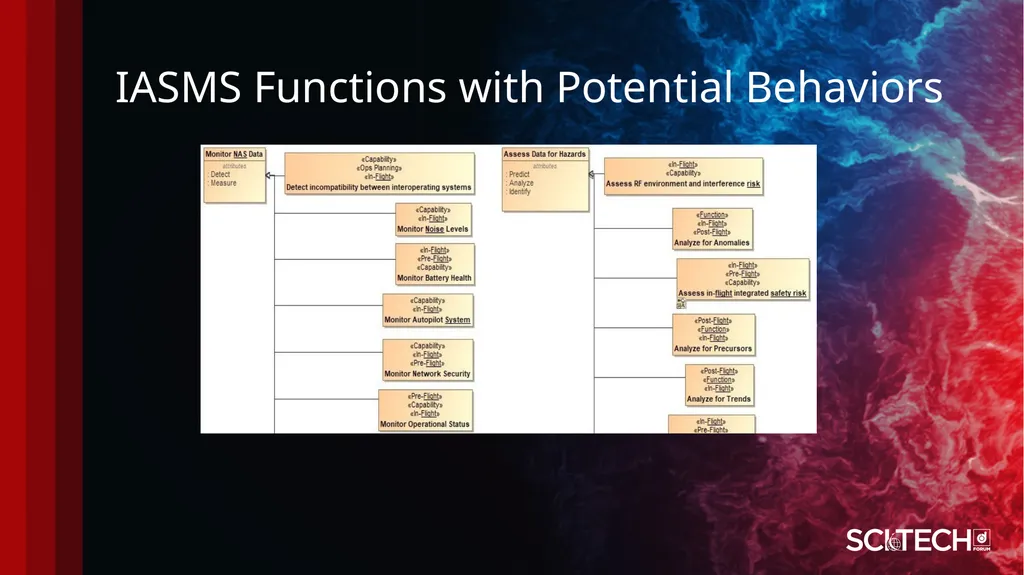
Decomposing System Functions into Potential Behaviors
Validating architecture through traceability:
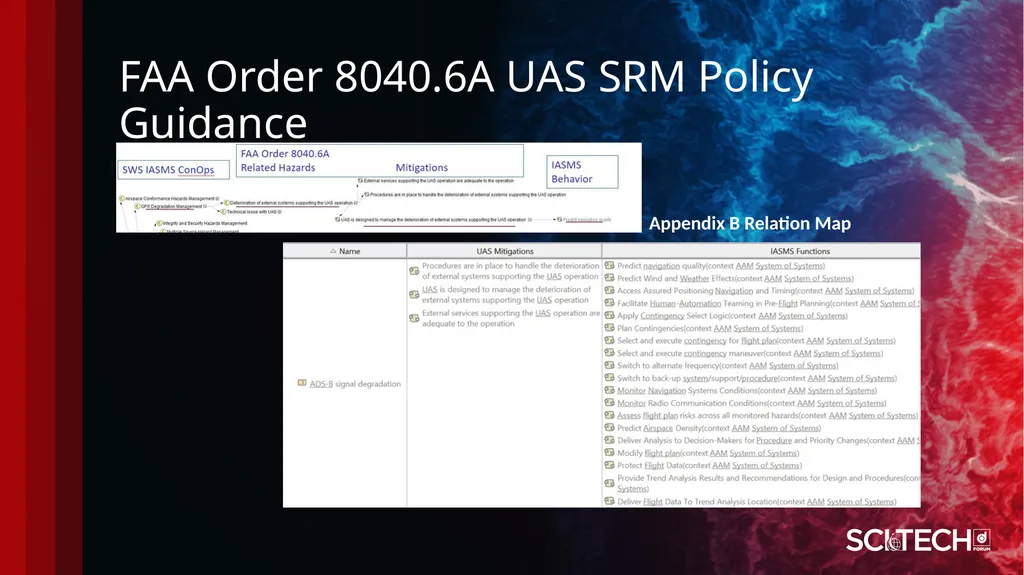
FAA Unmanned Aerial System Safety Risk Management Guidance
National Academies Safety Assurance Recommendations
IASMS Research and Autonomy Verification & Validation Roadmaps System Design Process<br>
08
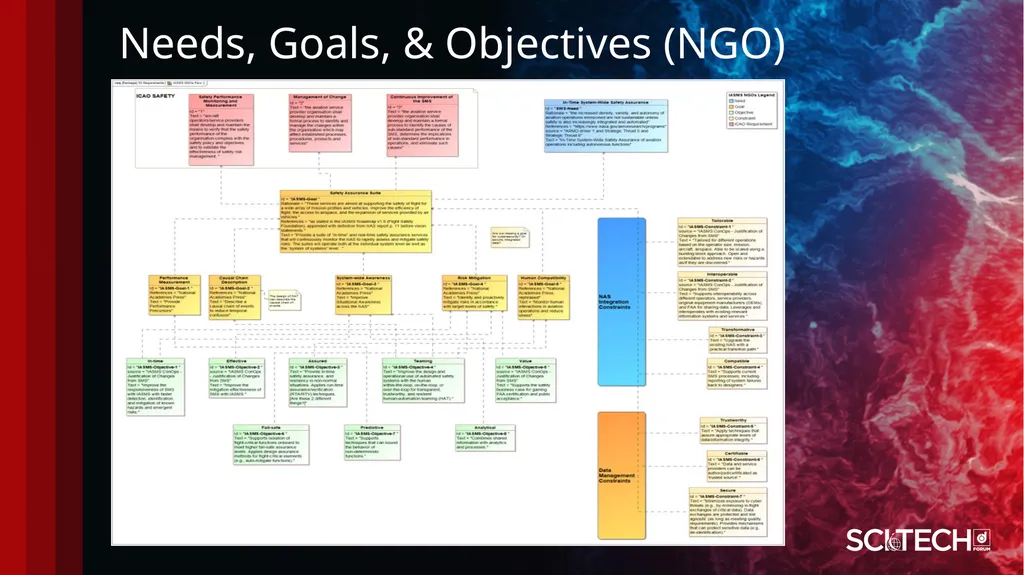
Needs, Goals, & Objectives (NGO)<br>
09
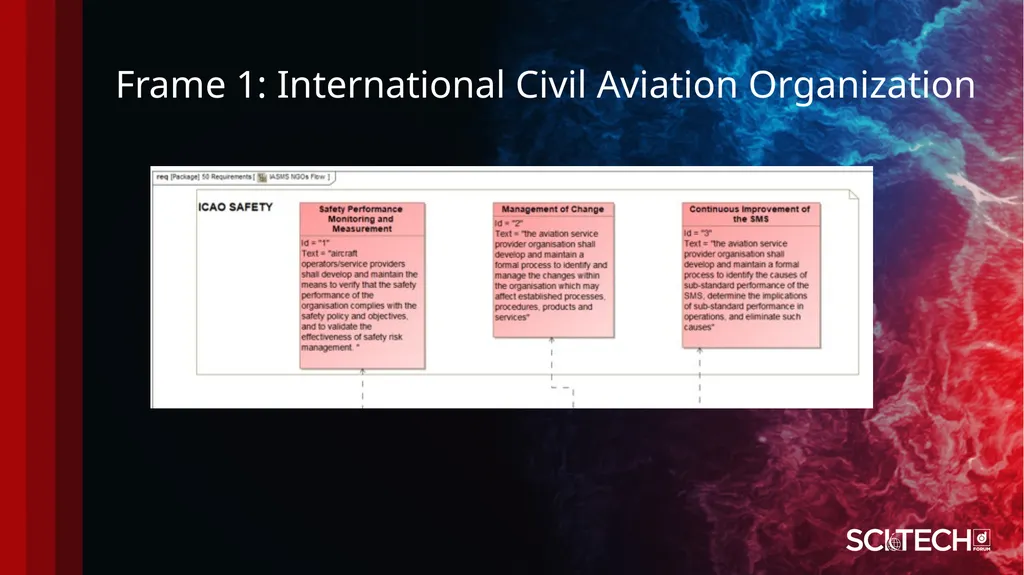
Frame 1: International Civil Aviation Organization<br>
10
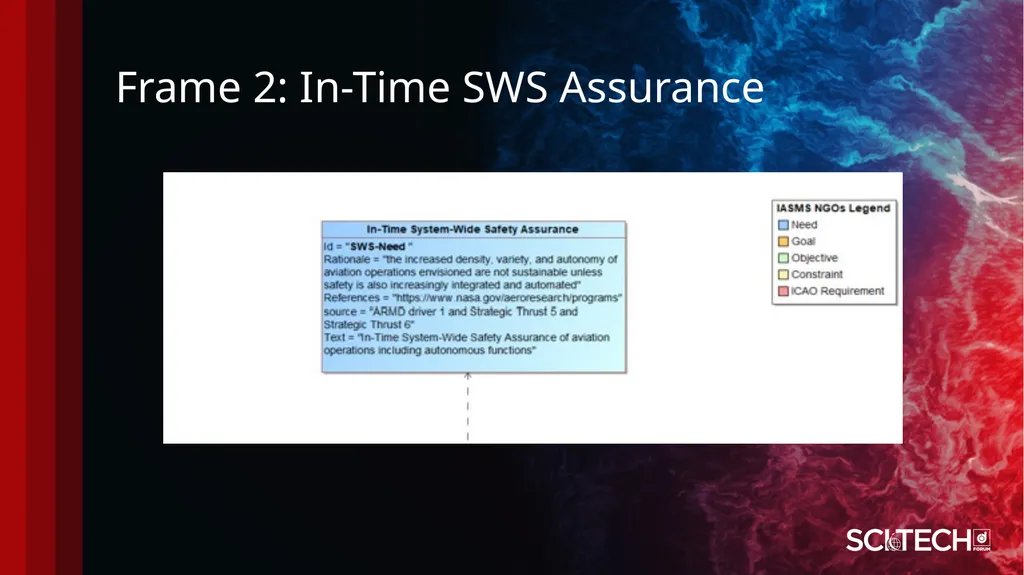
Frame 2: In-Time SWS Assurance<br>
11
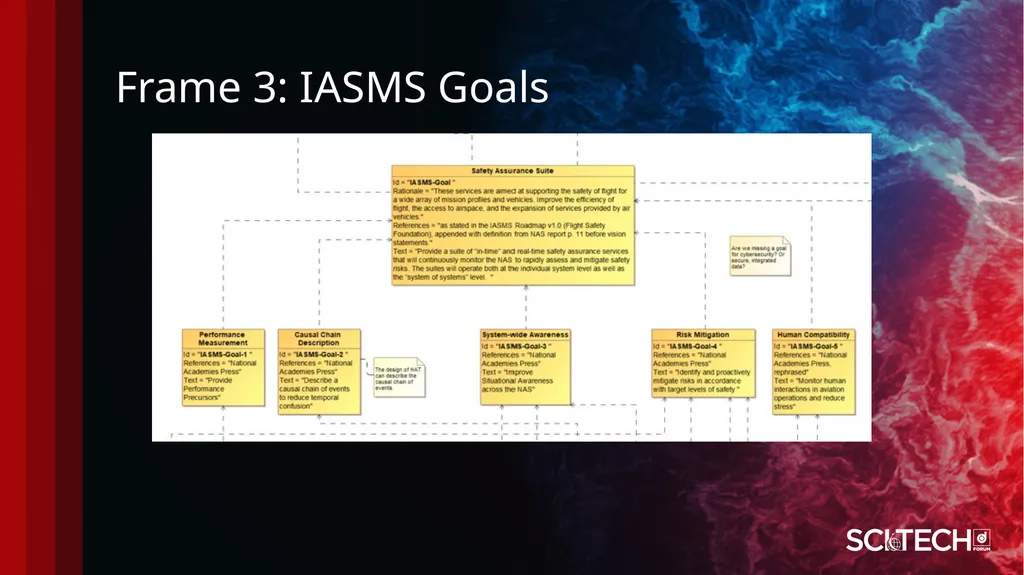
Frame 3: IASMS Goals<br>
12
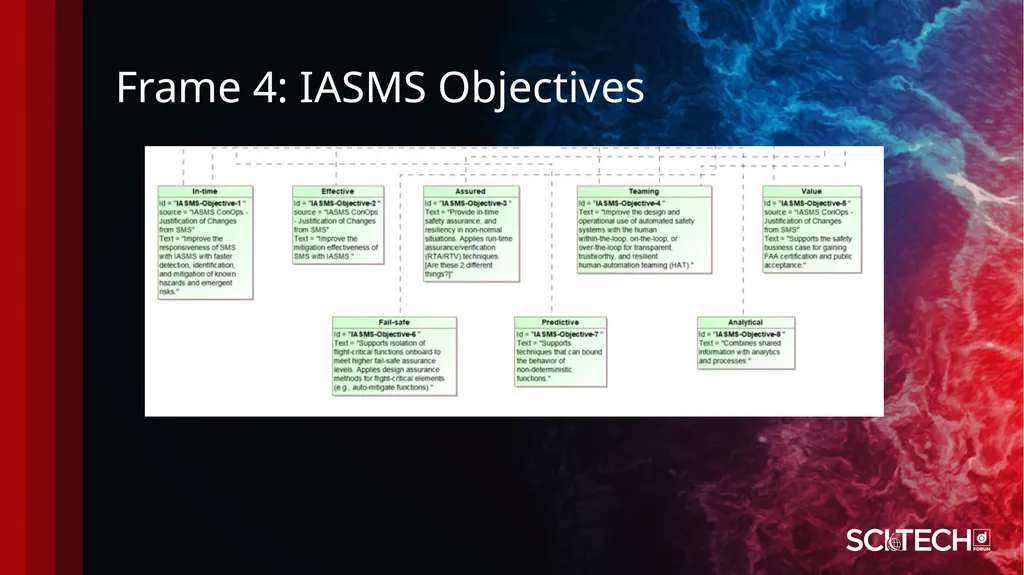
Frame 4: IASMS Objectives<br>
13
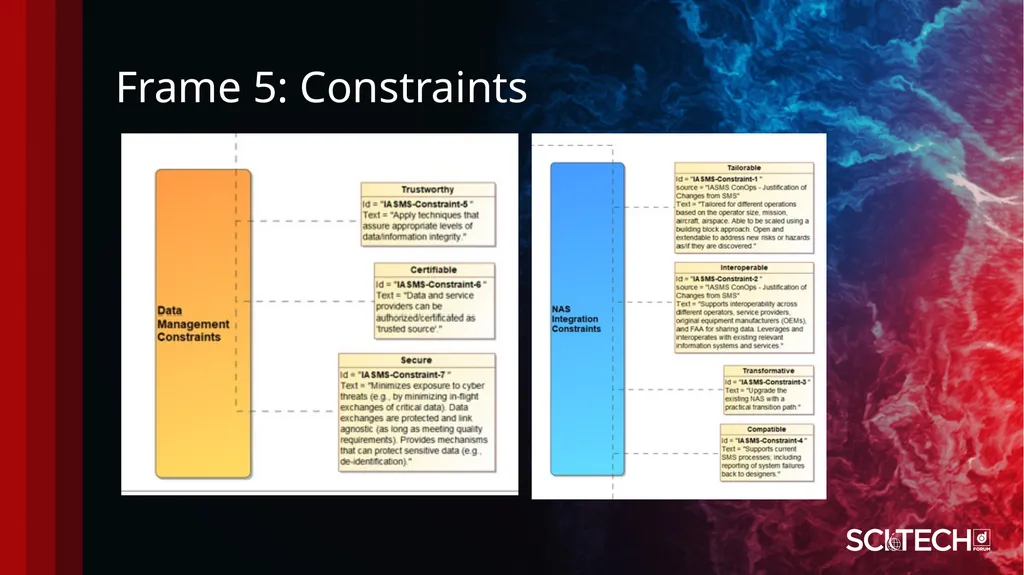
Frame 5: Constraints<br>
14
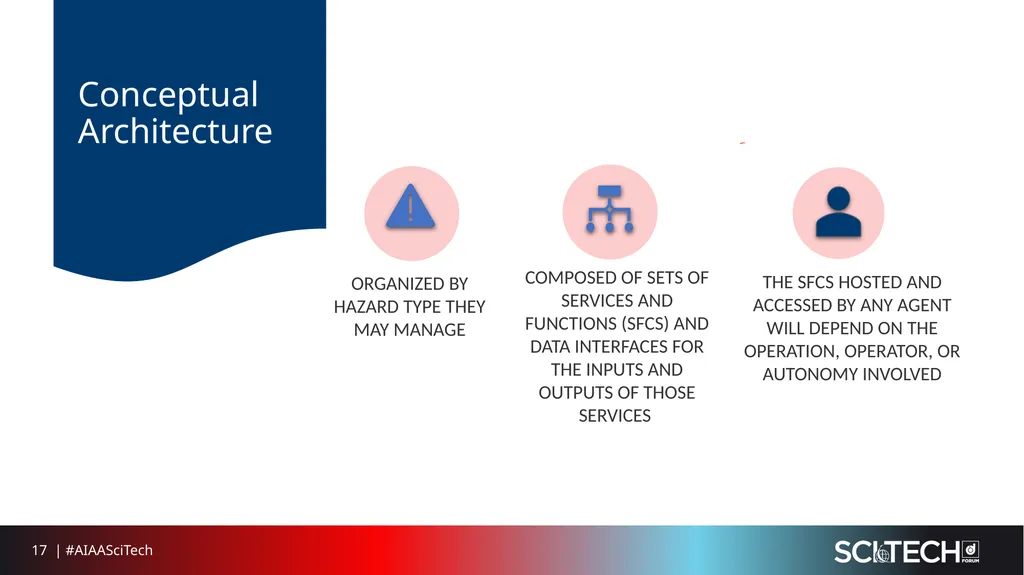
Conceptual Architecture<br>
15
IASMS Functions Allocated to System<br>
16
Conceptual Architecture<br>
17
IASMS Functions with Potential Behaviors<br>
18
Descriptive Modeling of Roadmaps and Agency Guidance<br>
19
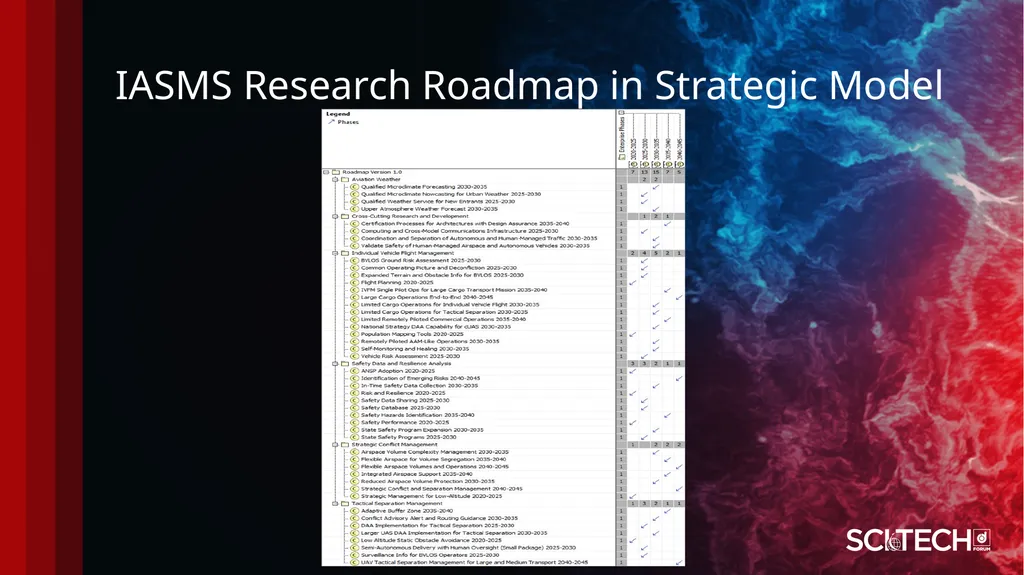
IASMS Research Roadmap in Strategic Model<br>
20
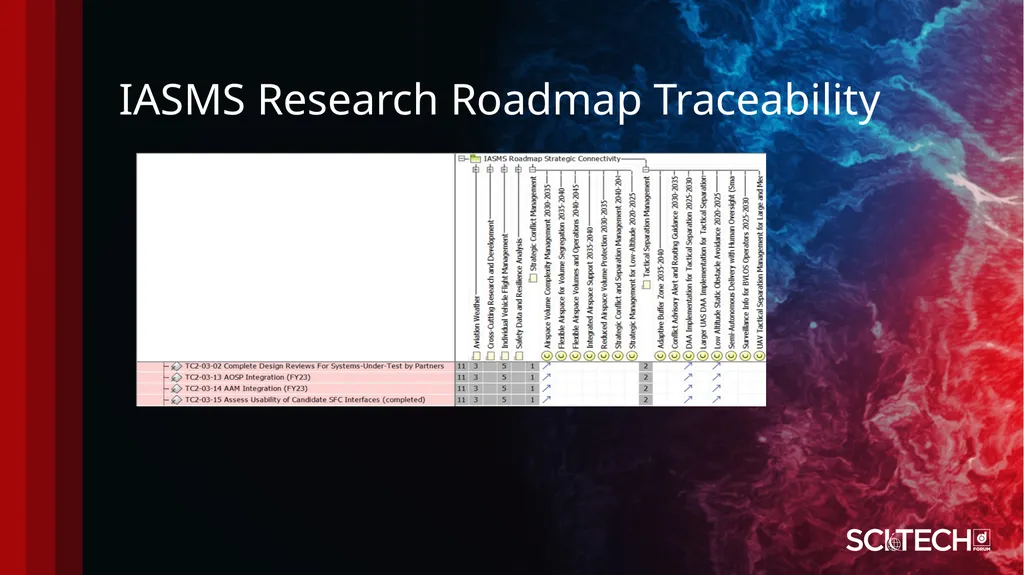
IASMS Research Roadmap Traceability<br>
21
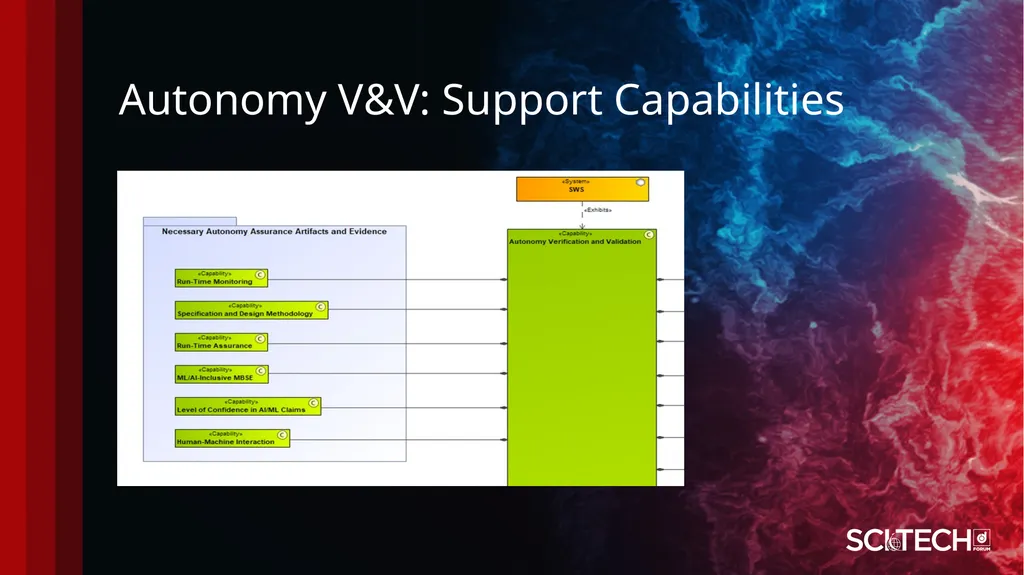
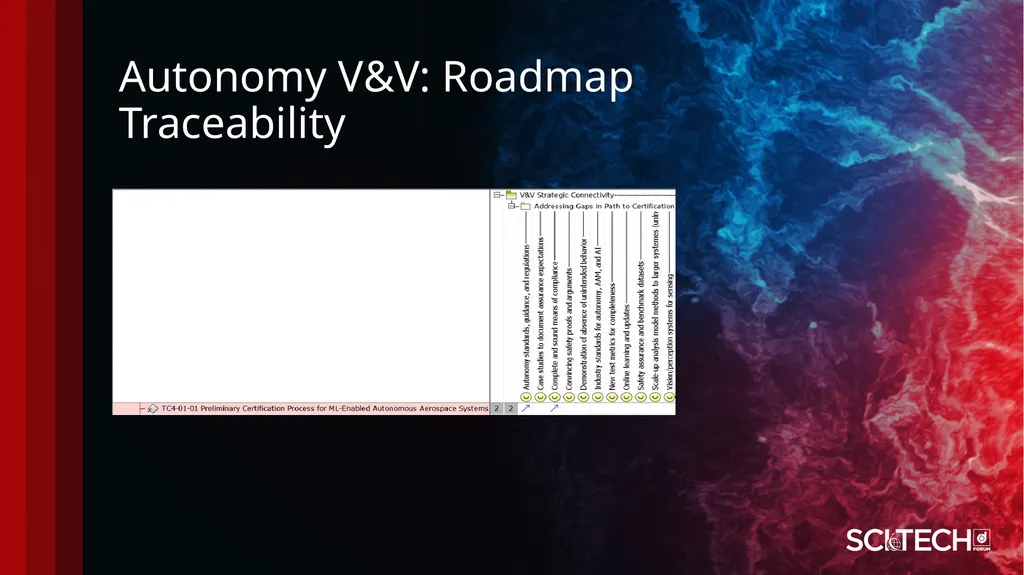
Autonomy V&V: Support Capabilities<br>
22
Autonomy V&V: Roadmap Traceability<br>
23
FAA Order 8040.6A UAS SRM Policy Guidance Appendix B Relation Map<br>
24
NASA-FAA Advanced Air Mobility Research Transition Team<br>
25
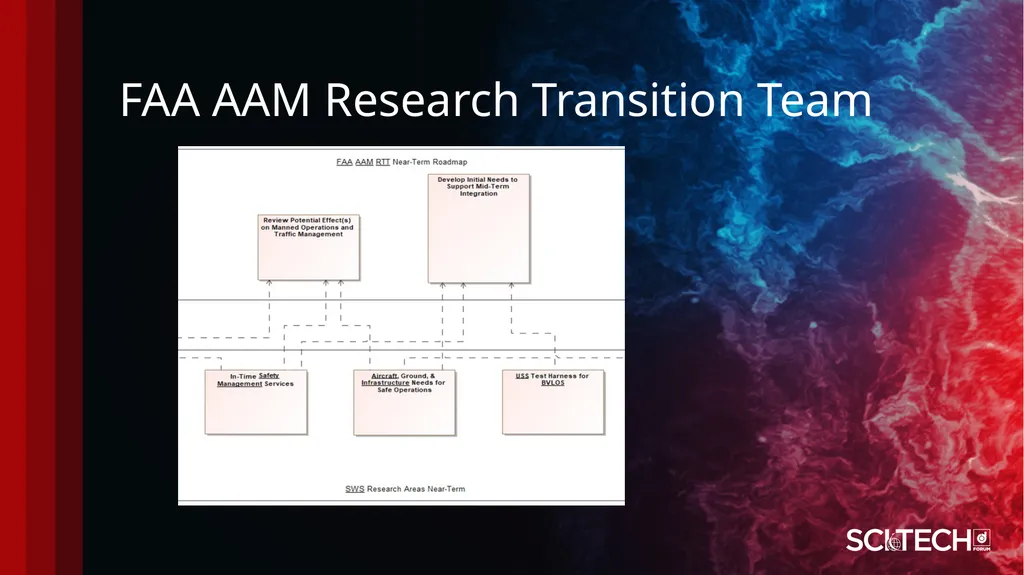
FAA AAM Research Transition Team<br>
28
Acknowledgements The SWS ConOps team developed the vision for the IASMS concept of operations, including the statements used as IASMS objectives. This includes especially Kyle Ellis, Lance Prinzel, Paul Krois, Jim Ackerson, Michael Vincent, Misty Davies, Nikunj Oza, Robert Mah, Chad Stephens, Wendy Okolo, and Joe Coughlan.
The main authors of the IASMS Roadmap developed in coordination with the System-Wide Safety project at NASA, include Flight Safety Foundation Contributors Deborah Kirkman, Jan de Regt, Kaleb Gould, Debra Moch-Mooney, and Jessie Mooberry.
The authors of the Autonomy Verification and Validation Roadmap include SWS team member Guillaume Brat, who assisted in developing the framework of autonomy V&V capabilities and areas relevant to use for SWS research and IASMS architecture validation.
SFCs developed and tested by NASA are described in multiple publications by the research group under SWS team member Steve Young, including most recently a Technical Memo describing the software and test results. Steve contributed to the functional architecture with his foundational knowledge of the IASMS concept, consulting on generalizations of SWS software to capabilities terms, and approving additions to the needed IASMS behaviors identified by the systems engineering team.<br>
29
References [1] National Academies of Sciences, Engineering, and Medicine. 2018. In-time Aviation Safety Management: Challenges and Research for an Evolving Aviation System. Washington, DC: The National Academies Press. https://doi.org/10.17226/24962
[2] Ellis, K., Krois, P., Koelling, J., Prinzel, L., Davies, M., Mah, R., and Infeld, S. 2021. Defining Services, Functions, and Capabilities for an Advanced Air Mobility (AAM) In-time Aviation Safety Management System (IASMS). 2021 AIAA Aviation. https://doi.org/10.2514/6.2021-2396
[3] Section 2.2 An Overview of the SE Engine by Project Phase, NASA Systems Engineering Handbook, February 6, 2019. https://www.nasa.gov/reference/systems-engineering-handbook/
[4] International Civil Aviation Organization, “Safety Management Manual,” ICAO Doc 9859, Fourth Edition, 2018. https://www.icao.int/safety/safetymanagement/pages/guidancematerial.aspx
[5] National Aeronautics and Space Administration, “NASA Aeronautics Strategic Implementation Plan,” 2023. https://www.nasa.gov/directorates/armd/armd-strategic-implementation-plan/
[6] Flight Safety Foundation, “IASMS Research Roadmap Version 1 2025-2045”. 2023. Under NASA Grant 80NSSC21M0187.
[7]Section 4.1 Stakeholder Expectations Definition, NASA Systems Engineering Handbook, February 6, 2019. https://www.nasa.gov/reference/systems-engineering-handbook/<br>
30
References [8] Ellis, K., Krois, P., Koelling, J., Prinzel, L., Davies, M., & Mah, R. 2021. A Concept of Operations and Design Considerations for an In-time Aviation Safety Management System (IASMS) for Advanced Air Mobility (AAM). 2021 AIAA Sci Tech Virtual Event. Reston, VA: AIAA.
[9] International Council on Systems Engineering (INCOSE). 2023. Model-based systems engineering (MBSE). Guide to the Systems Engineering Body of Knowledge (SEBoK). https://sebokwiki.org/wiki/Model-Based_Systems_Engineering_(MBSE)
[10] The Object Management Group (OMG). 2023. Unified Architecture Framework. Object Management Group. https://www.omg.org/uaf/index.htm
[11] Brat, G., Yu, H., Atkins, E., Sharma, P., Cofer, D., Durling, M., Meng, B., Alexander, C., Borgyos, S., Fan, C., Garg, K., Topcu, U., and Bakirtzis, G., “Autonomy Verification & Validation Roadmap and Vision 2045,” NASA/TM-20230003734, 2023. https://ntrs.nasa.gov/citations/20230003734.
[12] Federal Aviation Administration Order 8040.6A, “Unmanned Aircraft Systems Safety Risk Management Policy”, 2023. https://www.faa.gov/regulations_policies/orders_notices/index.cfm/go/document.information/documentID/1042092<br>
31
Copyright © [Darisha Vidrine/National Aeronautics and Space Administration]. Published by the American Institute of Aeronautics and Astronautics, Inc. with permission. Tracing NASA Contributions Toward Aviation Safety Stakeholder Guidance<br>