Systems thinking and research assessment how might we work with wicked problems? Lou Woodley Director Center for Scientific Collaboration and Community Engagement louwoodleycscce.org LouWoodley Why is change so hard? Culture change
"Systems thinking and research assessment – how" is the property of its rightful owner. Permission is granted to
download and print the materials on this website for personal, non-commercial use only, and to display it
on your personal computer provided you do not modify the materials and that you retain all copyright
notices contained in the materials. By downloading content from our website, you accept the terms of this
agreement.
Presentation Transcript
01
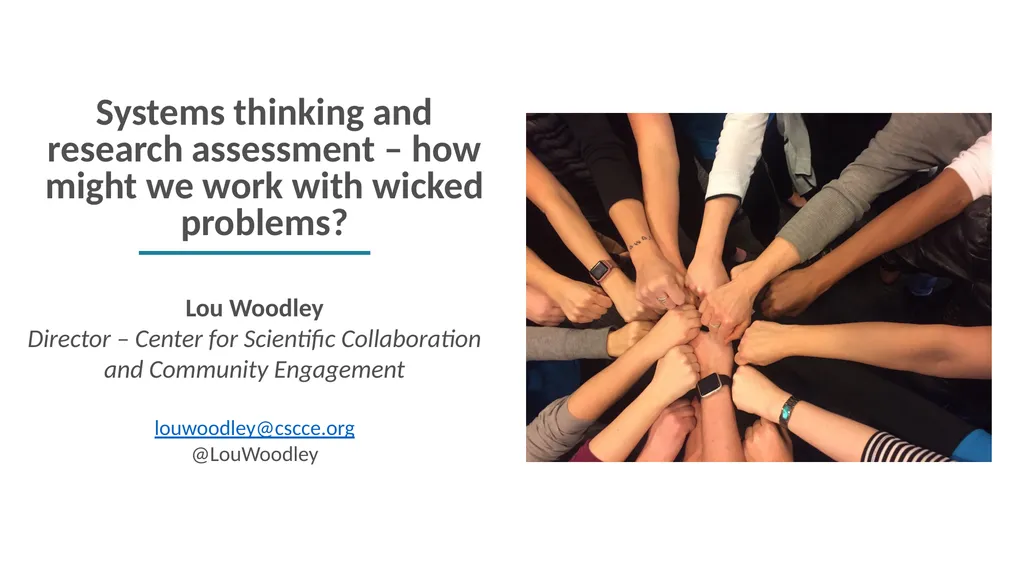
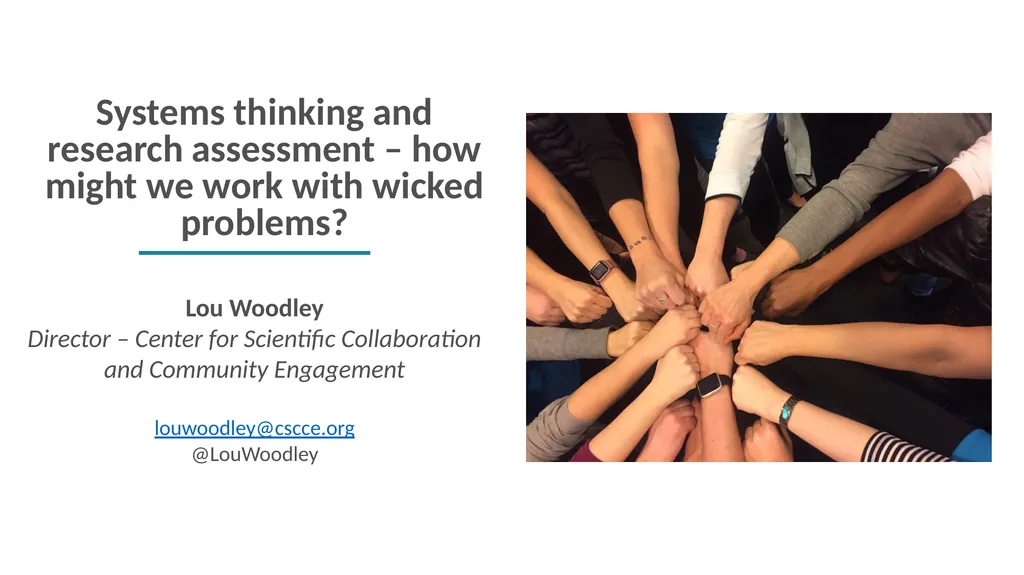
Systems thinking and research assessment – how might we work with wicked problems? Lou Woodley
Director – Center for Scientific Collaboration and Community Engagement
louwoodley@cscce.org
@LouWoodley<br>
02
Why is change so hard? Culture change
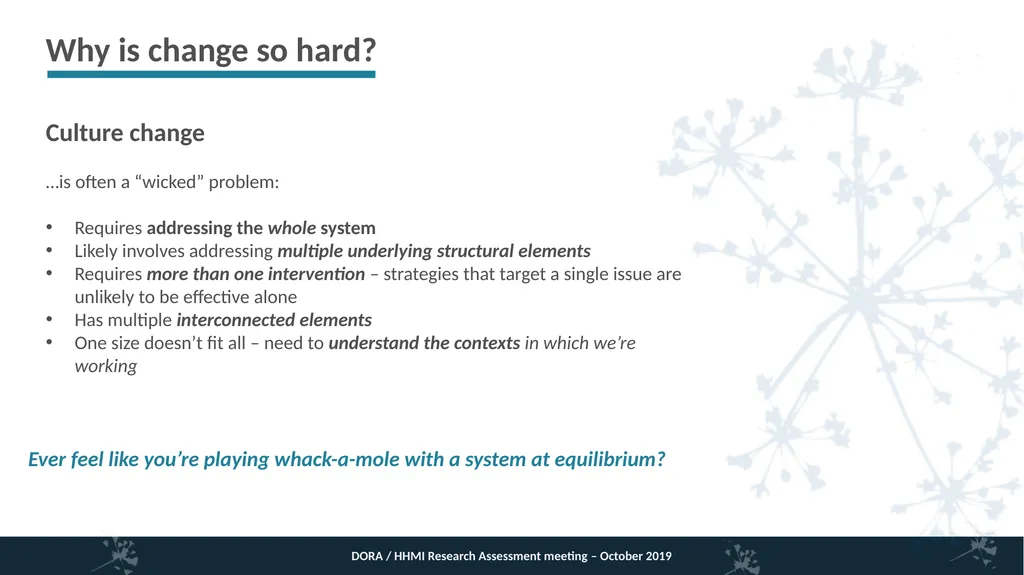
…is often a “wicked” problem:
Requires addressing the whole system
Likely involves addressing multiple underlying structural elements
Requires more than one intervention – strategies that target a single issue are unlikely to be effective alone
Has multiple interconnected elements
One size doesn’t fit all – need to understand the contexts in which we’re working Ever feel like you’re playing whack-a-mole with a system at equilibrium?<br>
03
Where does systems thinking come in? Systems Thinking
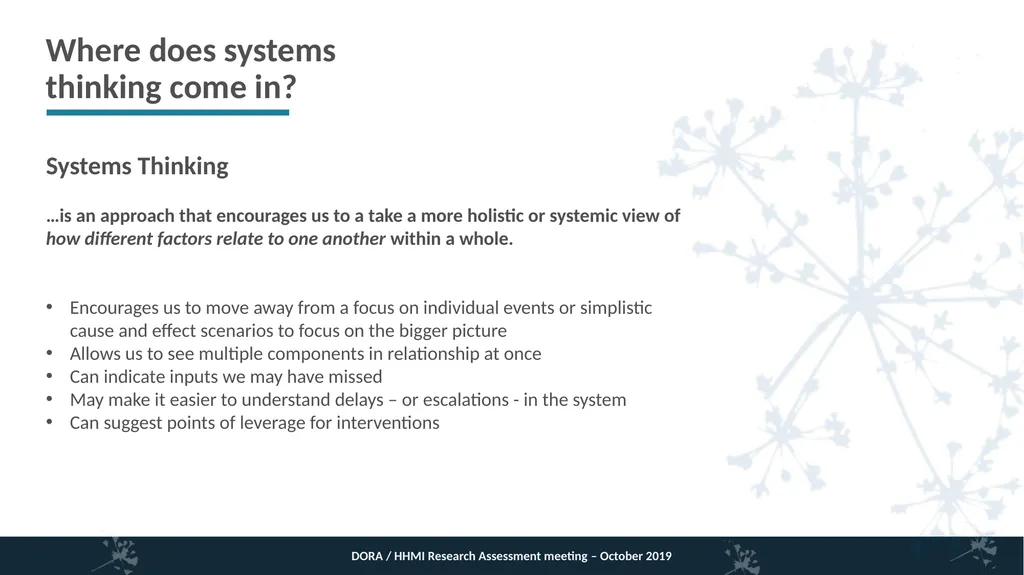
…is an approach that encourages us to a take a more holistic or systemic view of how different factors relate to one another within a whole.
Encourages us to move away from a focus on individual events or simplistic cause and effect scenarios to focus on the bigger picture
Allows us to see multiple components in relationship at once
Can indicate inputs we may have missed
May make it easier to understand delays – or escalations - in the system
Can suggest points of leverage for interventions<br>
04
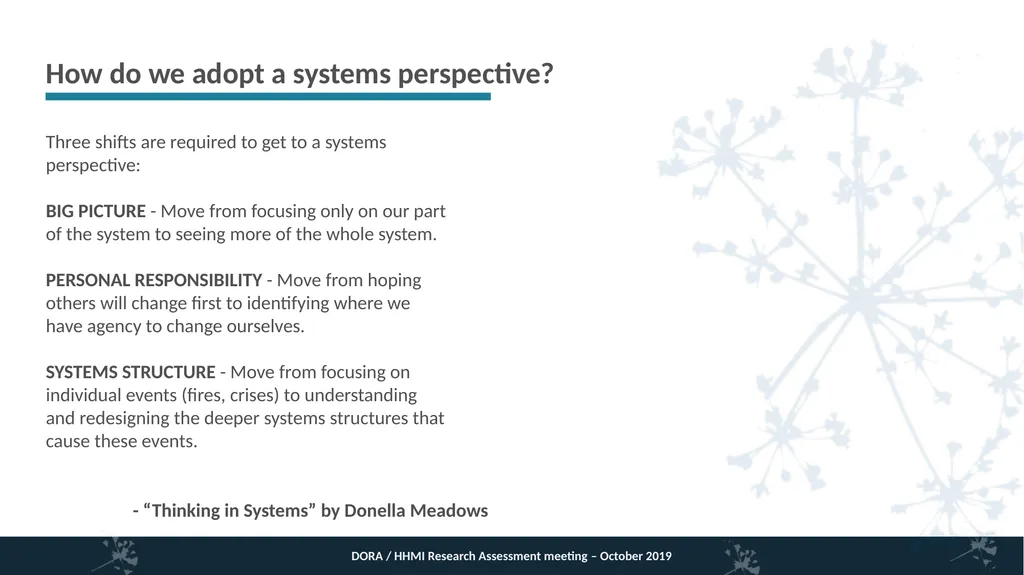
How do we adopt a systems perspective? Three shifts are required to get to a systems perspective:
BIG PICTURE - Move from focusing only on our part of the system to seeing more of the whole system.
PERSONAL RESPONSIBILITY - Move from hoping others will change first to identifying where we have agency to change ourselves.
SYSTEMS STRUCTURE - Move from focusing on individual events (fires, crises) to understanding and redesigning the deeper systems structures that cause these events. - “Thinking in Systems” by Donella Meadows<br>
05
Two ways to start working with systems thinking
1. Systems archetypes<br>
06
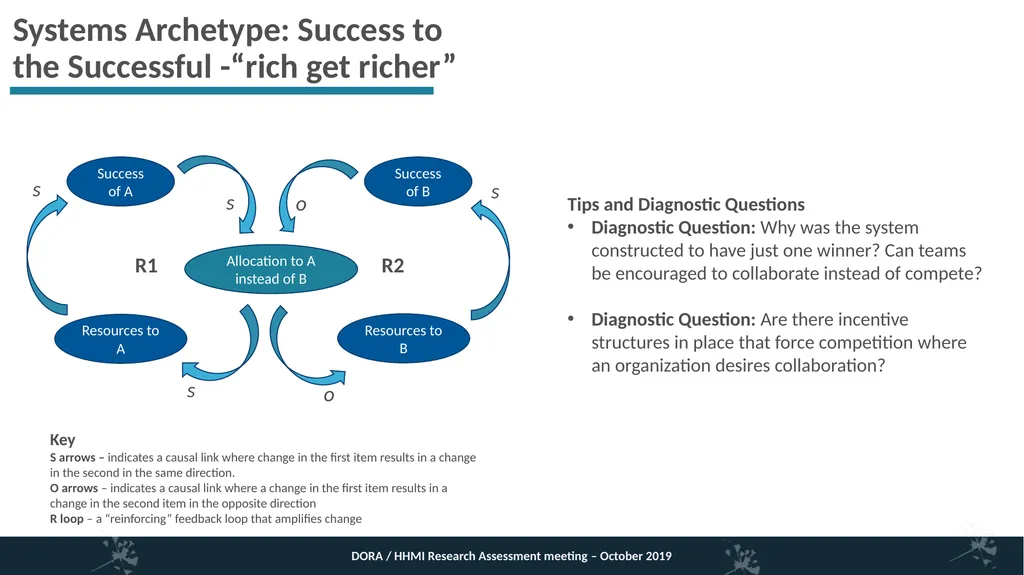
Systems Archetype: Success to the Successful -“rich get richer” Tips and Diagnostic Questions
Diagnostic Question: Why was the system constructed to have just one winner? Can teams be encouraged to collaborate instead of compete?
Diagnostic Question: Are there incentive structures in place that force competition where an organization desires collaboration? Key
S arrows – indicates a causal link where change in the first item results in a change in the second in the same direction.
O arrows – indicates a causal link where a change in the first item results in a change in the second item in the opposite direction
R loop – a “reinforcing” feedback loop that amplifies change<br>
07
Two ways to start working with systems thinking
2. The iceberg model<br>
08
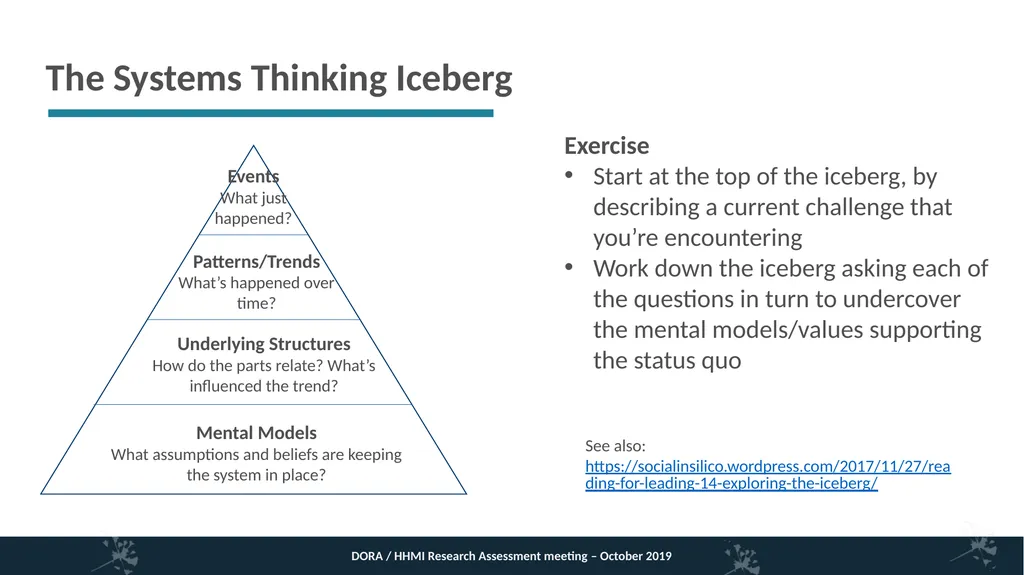
The Systems Thinking Iceberg Exercise
Start at the top of the iceberg, by describing a current challenge that you’re encountering
Work down the iceberg asking each of the questions in turn to undercover the mental models/values supporting the status quo See also:
https://socialinsilico.wordpress.com/2017/11/27/reading-for-leading-14-exploring-the-iceberg/ Events
What just happened? Patterns/Trends
What’s happened over time? Underlying Structures
How do the parts relate? What’s influenced the trend? Mental Models
What assumptions and beliefs are keeping the system in place?<br>
09
Further reading Thinking in Systems – Donella Meadows
The Fifth Discipline – Peter Senge
Systems Thinking for Social Change – Peter Stroh
The Systems Thinker website: https://thesystemsthinker.com<br>