
TANTRAYUKTI And ITS APPLICATION IN THE
GB
Published · 105 slides · 0 views

1 / 1









Description
TANTRAYUKTI And ITS APPLICATION IN THE UNDERSTANDING OF SAMHITA W.S.R TO ARTHAPATTI VIPARYAYA TANTRAYUKTI Dr Sivajothy S Associate Professor Rohilkhand Ayurvedic medical college and Hospital, Bareilly,U.P To construct, compile and comment
Related Topics
Share
Embed code
Download this presentation From Below
"TANTRAYUKTI And ITS APPLICATION IN THE" is the property of its rightful owner. Permission is granted to download and print the materials on this website for personal, non-commercial use only, and to display it on your personal computer provided you do not modify the materials and that you retain all copyright notices contained in the materials. By downloading content from our website, you accept the terms of this agreement.
Presentation Transcript
01
TANTRAYUKTI And ITS APPLICATION IN THE UNDERSTANDING OF SAMHITA W.S.R TO ARTHAPATTI & VIPARYAYA TANTRAYUKTI Dr Sivajothy S
Associate Professor
Rohilkhand Ayurvedic medical college
and Hospital, Bareilly,U.P<br>
Associate Professor
Rohilkhand Ayurvedic medical college
and Hospital, Bareilly,U.P<br>
02
To construct, compile and comment a text book- many techniques are used
Alankaras, Chandas etc in literature
Tantra Yukti, Arthasraya, Kalpana, Tachhilya, etc in scientific literatures like Ayurveda
Tantra Yukti- Methodology and Technique to compose and interpret the scientific treasures
Tantrayukti is a methodology or device which is widely used to understand and compose Sastra Granthas during a particular time period.
Tantrayukti is applied and Shlokas are interpreted.<br>
Alankaras, Chandas etc in literature
Tantra Yukti, Arthasraya, Kalpana, Tachhilya, etc in scientific literatures like Ayurveda
Tantra Yukti- Methodology and Technique to compose and interpret the scientific treasures
Tantrayukti is a methodology or device which is widely used to understand and compose Sastra Granthas during a particular time period.
Tantrayukti is applied and Shlokas are interpreted.<br>
03
The word “Tantrayukti “is composed of two words viz. “Tantra” and “Yukti”.
Tantra -“Tan”Dhatu with suffix “Stran”
Tan means capacity to get elaborate, extend, stretch, and compose
Stran means an instrument or tool.
Yukti - “Yuj”, which means join, employ and combine with the suffix “Ktin”.
Thus, Tantrayukti is the tool or methodology to conjoin or aggregate the subject while composing a text in a logical way.<br>
Tantra -“Tan”Dhatu with suffix “Stran”
Tan means capacity to get elaborate, extend, stretch, and compose
Stran means an instrument or tool.
Yukti - “Yuj”, which means join, employ and combine with the suffix “Ktin”.
Thus, Tantrayukti is the tool or methodology to conjoin or aggregate the subject while composing a text in a logical way.<br>
04
Tantrayukti Prayojana
Two examples
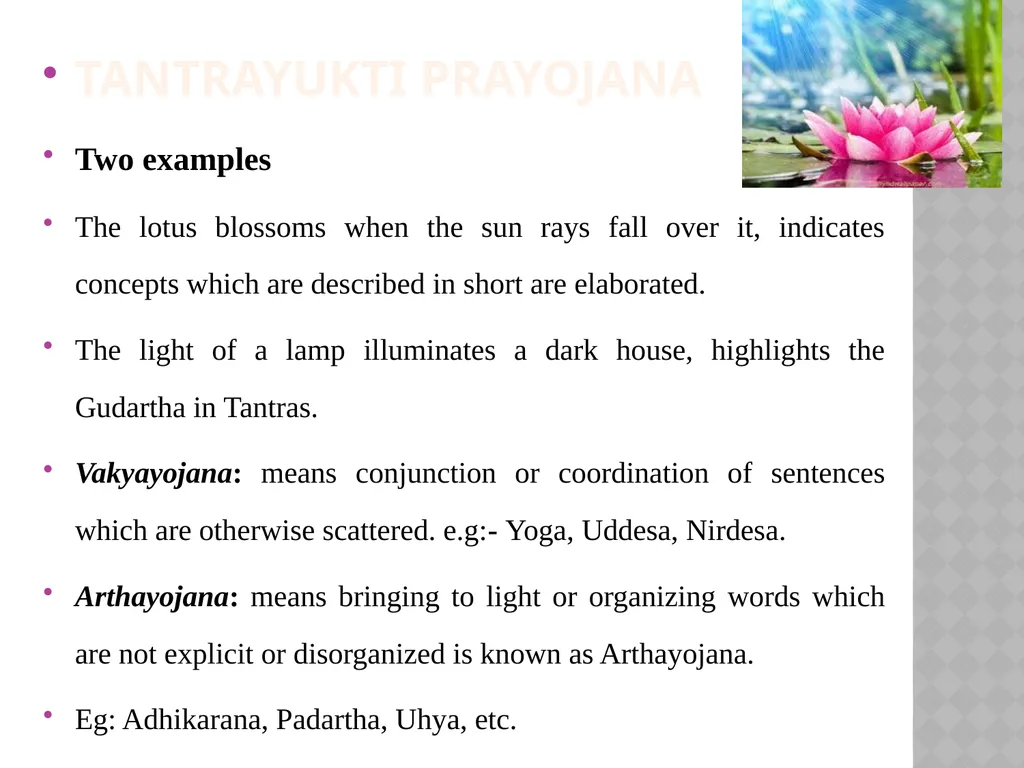
The lotus blossoms when the sun rays fall over it, indicates concepts which are described in short are elaborated.
The light of a lamp illuminates a dark house, highlights the Gudartha in Tantras.
Vakyayojana: means conjunction or coordination of sentences which are otherwise scattered. e.g:- Yoga, Uddesa, Nirdesa.
Arthayojana: means bringing to light or organizing words which are not explicit or disorganized is known as Arthayojana.
Eg: Adhikarana, Padartha, Uhya, etc.<br>
Two examples
The lotus blossoms when the sun rays fall over it, indicates concepts which are described in short are elaborated.
The light of a lamp illuminates a dark house, highlights the Gudartha in Tantras.
Vakyayojana: means conjunction or coordination of sentences which are otherwise scattered. e.g:- Yoga, Uddesa, Nirdesa.
Arthayojana: means bringing to light or organizing words which are not explicit or disorganized is known as Arthayojana.
Eg: Adhikarana, Padartha, Uhya, etc.<br>
05
AxɲÉÌSmÉërÉÑ£üÉlÉÉÇ uÉÉYrÉÉlÉÉÇ mÉëÌiÉwÉåkÉlÉqÉç |
xuÉuÉÉYrÉÍxÉήUÌmÉ cÉ Ì¢ürÉiÉå iÉl§ÉrÉÑÌ£üiÉ: ||
urÉ£üÉ lÉÉå£üÉxiÉÑ rÉå ½jÉÉï sÉÏlÉÉ cÉÉmrÉÌlÉqÉïsÉÉ: |
sÉåzÉÉå£üÉ rÉå cÉ MåüÍcÉixrÉÑxiÉåwÉÉÇ cÉÉÌmÉ mÉëxÉÉkÉlÉqÉç ||
(xÉÑ E 65/ 5 - 6)<br>
xuÉuÉÉYrÉÍxÉήUÌmÉ cÉ Ì¢ürÉiÉå iÉl§ÉrÉÑÌ£üiÉ: ||
urÉ£üÉ lÉÉå£üÉxiÉÑ rÉå ½jÉÉï sÉÏlÉÉ cÉÉmrÉÌlÉqÉïsÉÉ: |
sÉåzÉÉå£üÉ rÉå cÉ MåüÍcÉixrÉÑxiÉåwÉÉÇ cÉÉÌmÉ mÉëxÉÉkÉlÉqÉç ||
(xÉÑ E 65/ 5 - 6)<br>
06
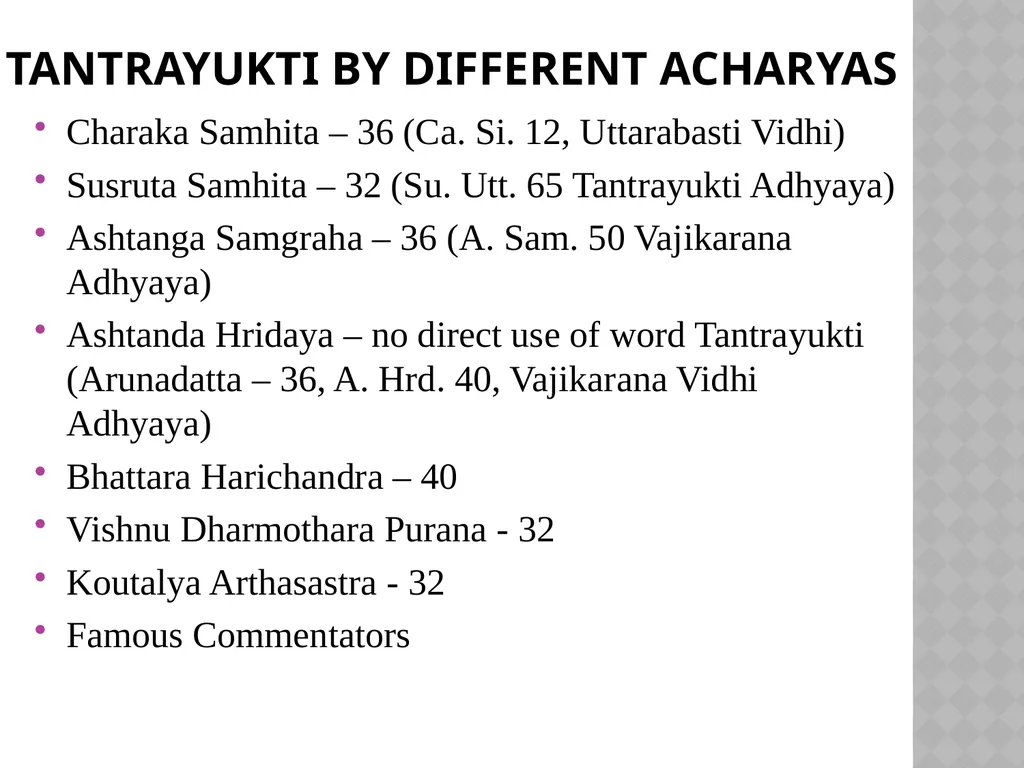
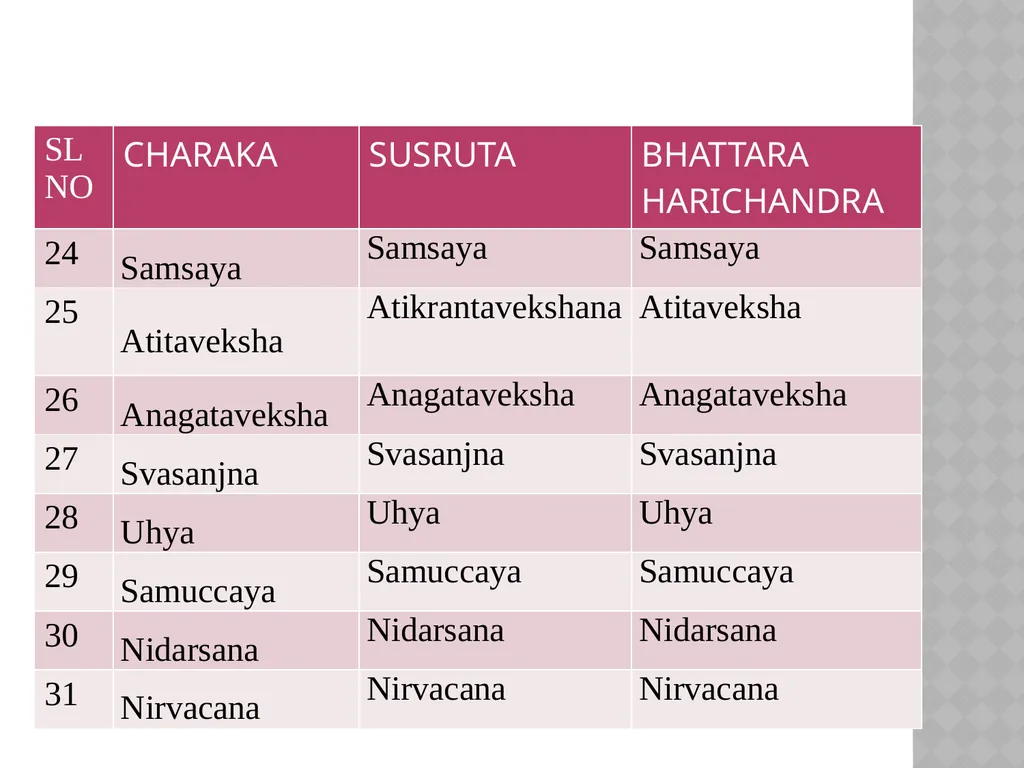
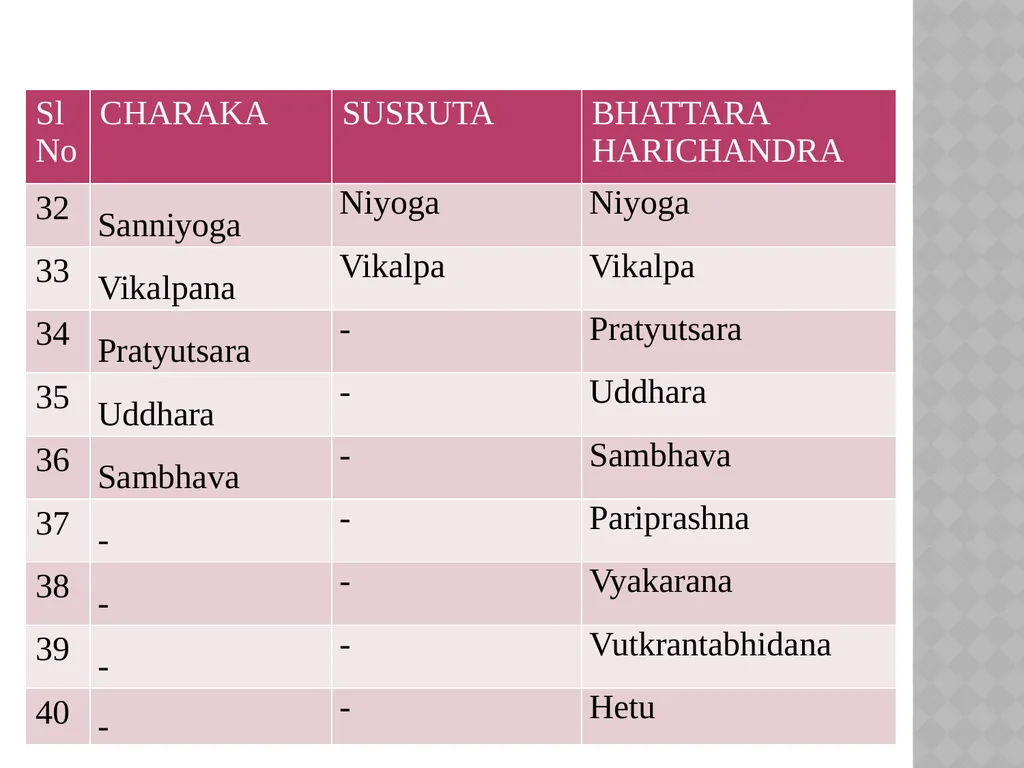
Tantrayukti by different acharyas Charaka Samhita – 36 (Ca. Si. 12, Uttarabasti Vidhi)
Susruta Samhita – 32 (Su. Utt. 65 Tantrayukti Adhyaya)
Ashtanga Samgraha – 36 (A. Sam. 50 Vajikarana Adhyaya)
Ashtanda Hridaya – no direct use of word Tantrayukti (Arunadatta – 36, A. Hrd. 40, Vajikarana Vidhi Adhyaya)
Bhattara Harichandra – 40
Vishnu Dharmothara Purana - 32
Koutalya Arthasastra - 32
Famous Commentators<br>
Susruta Samhita – 32 (Su. Utt. 65 Tantrayukti Adhyaya)
Ashtanga Samgraha – 36 (A. Sam. 50 Vajikarana Adhyaya)
Ashtanda Hridaya – no direct use of word Tantrayukti (Arunadatta – 36, A. Hrd. 40, Vajikarana Vidhi Adhyaya)
Bhattara Harichandra – 40
Vishnu Dharmothara Purana - 32
Koutalya Arthasastra - 32
Famous Commentators<br>
07
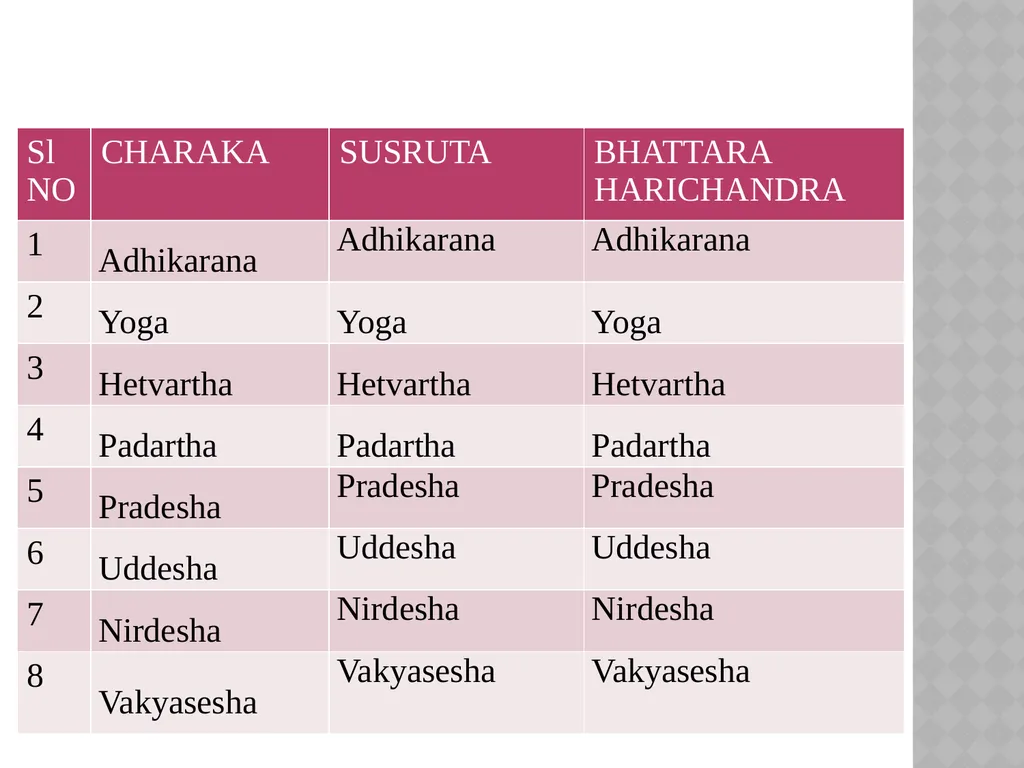
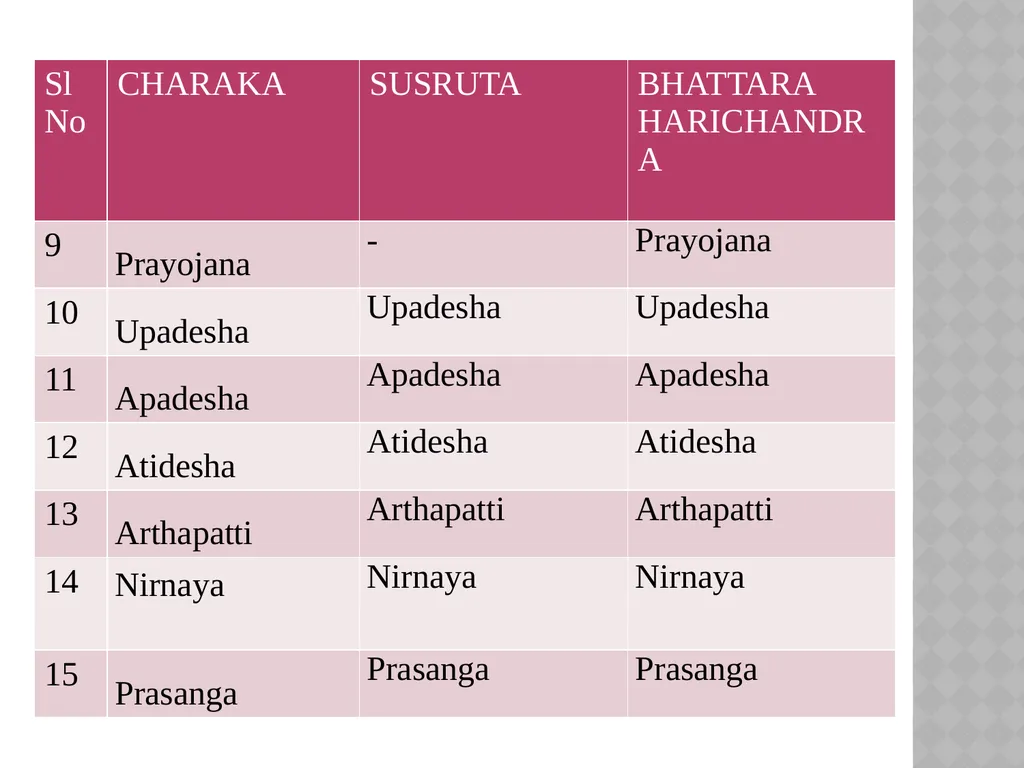
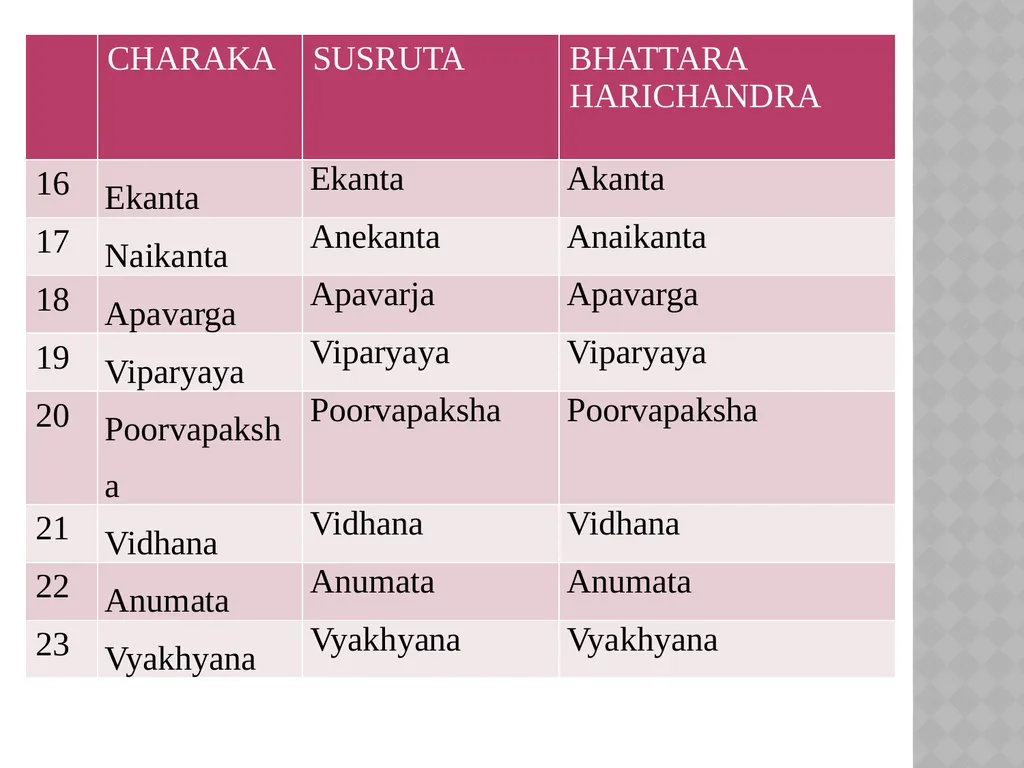
The number and names in Charaka Samhita, Ashtanga Samgraha and Arunadatta commentary on Ashtanga Hridaya are same.
Susruta Acharya not mentioned Pratyutsara, Udhara, Sambhava and Prayojana
The additional Tantrayukti mentioned by Bhattara Harichandra are Pariprashna, Vyakarana, Vyutkrantabhidana and Hetu
According to Chakrapani this can be included in the ones already stated.<br>
Susruta Acharya not mentioned Pratyutsara, Udhara, Sambhava and Prayojana
The additional Tantrayukti mentioned by Bhattara Harichandra are Pariprashna, Vyakarana, Vyutkrantabhidana and Hetu
According to Chakrapani this can be included in the ones already stated.<br>
08
iÉ§É mÉËUmÉëzlÉ E¬åzÉÉåÅliÉpÉïuÉÌiÉ | (cÉ¢ümÉÉÍhÉ)
Chakrapani includes Pariprasna under Uddesha
urÉÉMüUhÉÇ iÉÑ urÉÉZrÉÉlÉå | (cÉ¢ümÉÉÍhÉ)
Vyakarana under Vyakhyana.
urÉÑi¢üÉliÉÉÍpÉkÉÉlÉÇ ÌlÉSåïzÉmÉëpÉåS | (cÉ¢ümÉÉÍhÉ)
Vyutkrantabhidana under Nirdesa.
WåûiÉÑzÉoSålÉ rÉÉÌlÉ mÉëirɤÉÉSÏÌlÉ mÉëqÉÉhÉÉlrÉÑ£üÉÌlÉ iÉÉÌlÉ WåûiÉÉuÉliÉpÉïuÉÎliÉ | (cÉ¢ümÉÉÍhÉ)
Hetu under Pratyakshadi Pramana<br>
Chakrapani includes Pariprasna under Uddesha
urÉÉMüUhÉÇ iÉÑ urÉÉZrÉÉlÉå | (cÉ¢ümÉÉÍhÉ)
Vyakarana under Vyakhyana.
urÉÑi¢üÉliÉÉÍpÉkÉÉlÉÇ ÌlÉSåïzÉmÉëpÉåS | (cÉ¢ümÉÉÍhÉ)
Vyutkrantabhidana under Nirdesa.
WåûiÉÑzÉoSålÉ rÉÉÌlÉ mÉëirɤÉÉSÏÌlÉ mÉëqÉÉhÉÉlrÉÑ£üÉÌlÉ iÉÉÌlÉ WåûiÉÉuÉliÉpÉïuÉÎliÉ | (cÉ¢ümÉÉÍhÉ)
Hetu under Pratyakshadi Pramana<br>
09
AÍkÉMüUhÉÇ lÉÉqÉ rÉqÉjÉïqÉÍkÉM×üirÉ mÉëuÉiÉïiÉå MüiÉÉï, rÉjÉÉ ÌuÉblÉpÉÔiÉÉ rÉSÉ UÉåaÉÉ CirÉÉÌS | A§É UÉåaÉÉÌSMüqÉÍkÉM×üirÉÉrÉÑuÉåïSÉå qÉWûÌwÉïÍpÉ: M×üiÉ CÌiÉ UÉåaÉÉ; CirÉÍkÉMüUhÉqÉç |
(cÉ¢ü cÉ ÍxÉ 12/44)
Adhikarana is the subject or motive towards which the author is acting upon.
It is the central theme in respect of which the statements are made.
Eg: In Ayurveda the Rshis have the motive to explain about Roga which is an obstacle in attaining Purushartha and thus the Adhikarana of Ayurveda is Roga.
Viruddhahara – Adhikarana is Ahara (Anna Pana Vidhi)
Meaning of words are dependent – Harsha, Vega ADHIKARANA TANTRAYUKTI<br>
(cÉ¢ü cÉ ÍxÉ 12/44)
Adhikarana is the subject or motive towards which the author is acting upon.
It is the central theme in respect of which the statements are made.
Eg: In Ayurveda the Rshis have the motive to explain about Roga which is an obstacle in attaining Purushartha and thus the Adhikarana of Ayurveda is Roga.
Viruddhahara – Adhikarana is Ahara (Anna Pana Vidhi)
Meaning of words are dependent – Harsha, Vega ADHIKARANA TANTRAYUKTI<br>
10
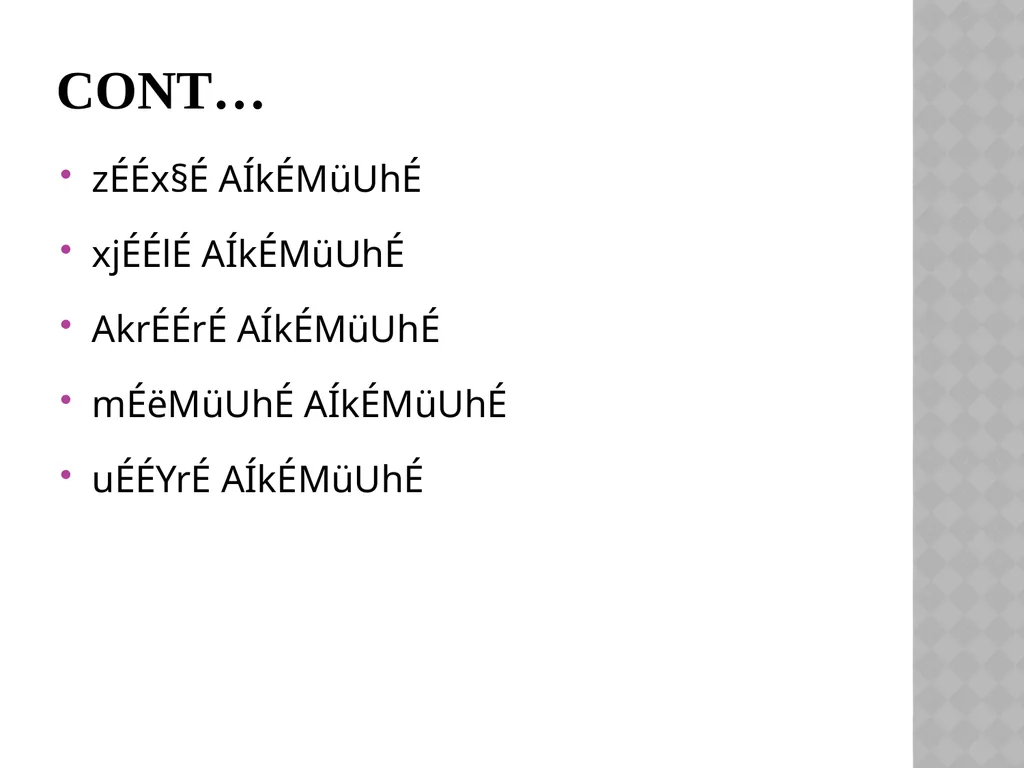
Cont… zÉÉx§É AÍkÉMüUhÉ
xjÉÉlÉ AÍkÉMüUhÉ
AkrÉÉrÉ AÍkÉMüUhÉ
mÉëMüUhÉ AÍkÉMüUhÉ
uÉÉYrÉ AÍkÉMüUhÉ<br>
xjÉÉlÉ AÍkÉMüUhÉ
AkrÉÉrÉ AÍkÉMüUhÉ
mÉëMüUhÉ AÍkÉMüUhÉ
uÉÉYrÉ AÍkÉMüUhÉ<br>
11
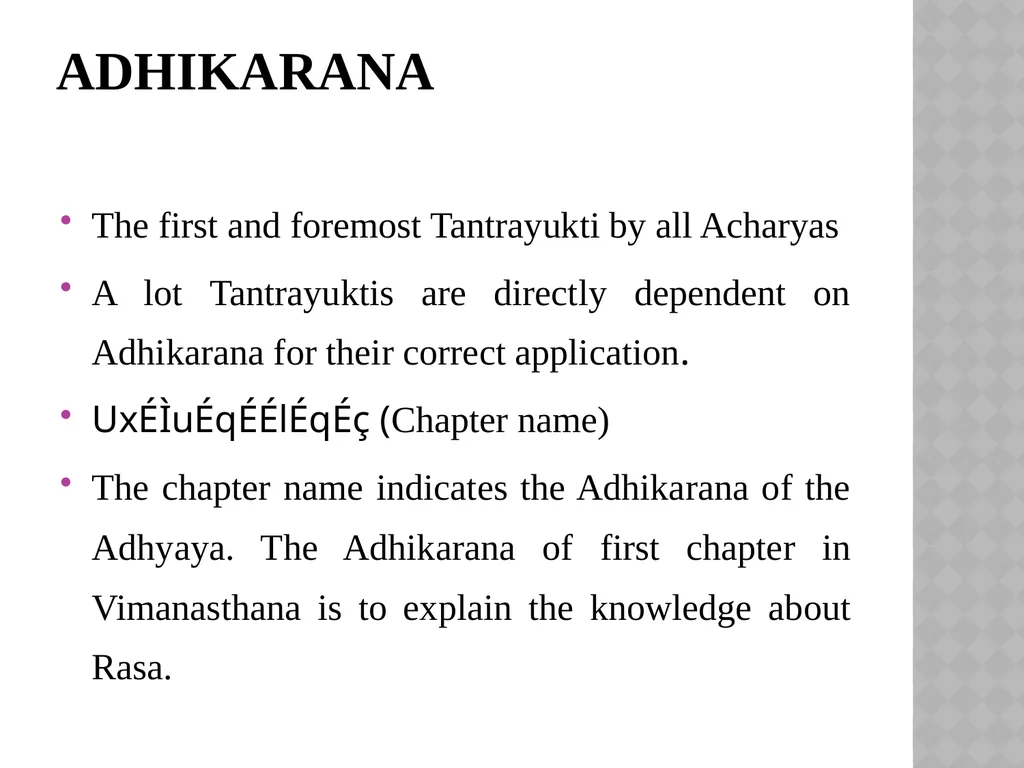
The first and foremost Tantrayukti by all Acharyas
A lot Tantrayuktis are directly dependent on Adhikarana for their correct application.
UxÉÌuÉqÉÉlÉqÉç (Chapter name)
The chapter name indicates the Adhikarana of the Adhyaya. The Adhikarana of first chapter in Vimanasthana is to explain the knowledge about Rasa. ADHIKARANA<br>
A lot Tantrayuktis are directly dependent on Adhikarana for their correct application.
UxÉÌuÉqÉÉlÉqÉç (Chapter name)
The chapter name indicates the Adhikarana of the Adhyaya. The Adhikarana of first chapter in Vimanasthana is to explain the knowledge about Rasa. ADHIKARANA<br>
12
CWûZÉsÉÑ ....SÉåwÉpÉåwÉeÉSåzÉMüÉsÉzÉUÏUxÉÉUÉWûÉUxÉÉiqrÉxɨuÉmM×üÌiÉuÉrÉxÉÉÇqÉÉlÉqÉÌuÉÌWûiÉqÉlÉxÉÉ . . .| (C.V.1/3)
This is the Adhikarana of the whole Vimanasthana wherein, Dosha, Beshaja, Desha, Kala, Sharira, Sara, Ahara, Satmya, Satva, Prakriti and Vaya have been explained in order in the eight chapters. Cont…<br>
This is the Adhikarana of the whole Vimanasthana wherein, Dosha, Beshaja, Desha, Kala, Sharira, Sara, Ahara, Satmya, Satva, Prakriti and Vaya have been explained in order in the eight chapters. Cont…<br>
13
rÉÉåaÉÉå lÉÉqÉ rÉÉåeÉlÉÉ, urÉxiÉÉlÉÉÇ mÉSÉlÉÉÇ LMüÐMüUhÉqÉç |
ESÉWûUhÉÇ iÉÉuɱjÉÉ mÉëÌiÉ¥ÉÉ WåûiÉÑ ESÉWûUhÉ EmÉlÉrÉ ÌlÉaÉqÉlÉÉÌlÉ ||
iÉ§É mÉëÌiÉ¥ÉÉ - qÉÉiÉ×eÉɶÉÉrÉÇ aÉpÉï:, WåûiÉÑ - qÉÉiÉUqÉliÉUålÉ aÉpÉÉïlÉÑmɨÉå:, SعÉliÉ - MÔüPûÉaÉÉU:, EmÉlÉrÉ: - rÉjÉÉ lÉÉlÉÉSìurÉxÉqÉÑSÉrÉÉiÉç MÔüOûÉaÉÉUxiÉjÉÉ aÉpÉïÌlÉuÉïiÉïlÉÇ, iÉxqÉÉiÉç qÉÉiÉ×eɶÉÉrÉÍqÉirÉåwÉÉÇ mÉëÌiÉ¥ÉÉrÉÉåaÉ:; LuÉqÉlrÉåÅÌmÉ rÉÉåaÉÉjÉÉï urÉÉZrÉårÉÉ: | (cÉ¢ümÉÉÍhÉ)
Chakrapani opines that Yoga is arrangement of words in a sentences.
The extended application of yoga is of Panchavayava Vakhya.
The extended application is more suited in places needs to be elaborated.
Applicable in every Shloka YOGA TANTRAYUKTI<br>
ESÉWûUhÉÇ iÉÉuɱjÉÉ mÉëÌiÉ¥ÉÉ WåûiÉÑ ESÉWûUhÉ EmÉlÉrÉ ÌlÉaÉqÉlÉÉÌlÉ ||
iÉ§É mÉëÌiÉ¥ÉÉ - qÉÉiÉ×eÉɶÉÉrÉÇ aÉpÉï:, WåûiÉÑ - qÉÉiÉUqÉliÉUålÉ aÉpÉÉïlÉÑmɨÉå:, SعÉliÉ - MÔüPûÉaÉÉU:, EmÉlÉrÉ: - rÉjÉÉ lÉÉlÉÉSìurÉxÉqÉÑSÉrÉÉiÉç MÔüOûÉaÉÉUxiÉjÉÉ aÉpÉïÌlÉuÉïiÉïlÉÇ, iÉxqÉÉiÉç qÉÉiÉ×eɶÉÉrÉÍqÉirÉåwÉÉÇ mÉëÌiÉ¥ÉÉrÉÉåaÉ:; LuÉqÉlrÉåÅÌmÉ rÉÉåaÉÉjÉÉï urÉÉZrÉårÉÉ: | (cÉ¢ümÉÉÍhÉ)
Chakrapani opines that Yoga is arrangement of words in a sentences.
The extended application of yoga is of Panchavayava Vakhya.
The extended application is more suited in places needs to be elaborated.
Applicable in every Shloka YOGA TANTRAYUKTI<br>
14
Eg: C. Sa.3/14, where factors responsible for the formation of fetus.
mÉëÌiÉ¥ÉÉ - fetus is formed out of various procreative factors
WåûiÉÑ - because it is having Matrujati Bhavas
ESÉWûUhÉç - like Kutagara (round shaped cottage used for hot fomentation)
EmÉlÉrÉ - Kutagara constructed out of various materials likewise fetus has got many things such as Matrujadi Shat Bhavas
ÌlÉaÉqÉlÉ - thus fetus is formed out of various procreative factors Cont…<br>
mÉëÌiÉ¥ÉÉ - fetus is formed out of various procreative factors
WåûiÉÑ - because it is having Matrujati Bhavas
ESÉWûUhÉç - like Kutagara (round shaped cottage used for hot fomentation)
EmÉlÉrÉ - Kutagara constructed out of various materials likewise fetus has got many things such as Matrujadi Shat Bhavas
ÌlÉaÉqÉlÉ - thus fetus is formed out of various procreative factors Cont…<br>
15
lÉÌWûÌuÉM×üÌiÉÌuÉwÉqÉxÉqÉuÉåiÉÉlÉÉÇ . . | (C.V.1/10)
Here to bring completeness in the meaning some words are added to the statement. Like lÉÌWûÌuÉM×üÌiÉÌuÉwÉqÉxÉqÉuÉåiÉÉlÉÉÇSìurÉÉhÉÉÇ cÉ ÌuÉMüÉUÉlÉÉÇlÉÉlÉÉiqÉMüÉlÉÉÇWåûiÉÔlÉÉÇmÉUxmÉUålÉcÉÉåmÉWûiÉÉlÉÉÇUxÉÉlÉÉÇ cÉ SÉåwÉÉlÉÉÇAlrÉæ¶ÉÌuÉMüsmÉlÉæÌuÉMüÎsmÉiÉÉlÉÉÇSìurÉÉhÉÉÇcÉÌuÉMüÉUÉlÉÉÇAuÉrÉrÉmÉëpÉÉuÉÉlÉÑqÉÉlÉålÉæuÉ . . . .zÉYrÉqÉç | YOGA<br>
Here to bring completeness in the meaning some words are added to the statement. Like lÉÌWûÌuÉM×üÌiÉÌuÉwÉqÉxÉqÉuÉåiÉÉlÉÉÇSìurÉÉhÉÉÇ cÉ ÌuÉMüÉUÉlÉÉÇlÉÉlÉÉiqÉMüÉlÉÉÇWåûiÉÔlÉÉÇmÉUxmÉUålÉcÉÉåmÉWûiÉÉlÉÉÇUxÉÉlÉÉÇ cÉ SÉåwÉÉlÉÉÇAlrÉæ¶ÉÌuÉMüsmÉlÉæÌuÉMüÎsmÉiÉÉlÉÉÇSìurÉÉhÉÉÇcÉÌuÉMüÉUÉlÉÉÇAuÉrÉrÉmÉëpÉÉuÉÉlÉÑqÉÉlÉålÉæuÉ . . . .zÉYrÉqÉç | YOGA<br>
16
By supplementing these words the statement becomes complete. Like, not in case of Dravya and Diseases which follow Vikriti Vishama Samaveta,
Due to multiplicity in combination of causes (Panchamahabhuta and Dosha) in the formation of the Dravya and Vikara
Due to suppression of one another (Rasa and Dosha) in the Dravya and Vikara
Due to different Vikalpa in the Dravya used or the combination of Dosha with the Dhatu in a disease Cont…<br>
Due to multiplicity in combination of causes (Panchamahabhuta and Dosha) in the formation of the Dravya and Vikara
Due to suppression of one another (Rasa and Dosha) in the Dravya and Vikara
Due to different Vikalpa in the Dravya used or the combination of Dosha with the Dhatu in a disease Cont…<br>
17
WåûiuÉjÉÉåï lÉÉqÉ rÉSlrɧÉÉÍpÉÌWûiÉqÉlrɧÉÉåmÉmɱiÉå; rÉjÉÉ - “xÉqÉÉlÉaÉÑhÉÉprÉÉxÉÉå kÉÉiÉÔlÉÉÇ uÉ×ή MüÉUhÉÇ” CÌiÉ uÉÉiÉqÉÍkÉÌMüirÉÉå£Çü, iÉ§É uÉÉiÉxrÉåÌiÉ uÉ£üurÉå rÉSrÉÇ xÉqÉÉlÉzÉoSÇ kÉÉiÉÔlÉÉÍqÉÌiÉ MüUÉåÌiÉ, iÉålÉ rÉjÉÉ uÉÉrÉÉåxiÉjÉÉ UxÉÉSÏlÉÉqÉÌmÉ xÉqÉÉlÉaÉÑhÉÉprÉÉxÉÉå uÉ×ή MüÉUhÉÍqÉÌiÉ aÉqrÉiÉå | (cÉ¢ümÉÉÍhÉ)
When a statement is made in a particular context that is applicable to other substance as well.
Eg: Here the term Dhatu indicates Dosha as well HETWARTHA<br>
When a statement is made in a particular context that is applicable to other substance as well.
Eg: Here the term Dhatu indicates Dosha as well HETWARTHA<br>
18
व्यजनैः पाणिसंस्पर्शैश्चन्दनोदकशीतलैः| सेव्यमानो भजेदास्यां मुक्तामणिविभूषितः||
काननानि च शीतानि जलानि कुसुमानि च| ग्रीष्मकाले निषेवेत मैथुनाद्विरतो नरः|| (C.V.6/31)
The Greeshma Ritucharya explained in तस्याधशतीयमर्धयायं like one should enjoy the coolness of gardens, cold water and flowers etc (C.Su.6/17)
It can be applied in pittopakrama in Roganikam Vimanam and Sweda Atiyoga HETWARTHA<br>
काननानि च शीतानि जलानि कुसुमानि च| ग्रीष्मकाले निषेवेत मैथुनाद्विरतो नरः|| (C.V.6/31)
The Greeshma Ritucharya explained in तस्याधशतीयमर्धयायं like one should enjoy the coolness of gardens, cold water and flowers etc (C.Su.6/17)
It can be applied in pittopakrama in Roganikam Vimanam and Sweda Atiyoga HETWARTHA<br>
19
mÉSÉjÉÉåï lÉÉqÉ mÉSxrÉ mÉSrÉÉå: mÉSÉlÉÉÇ uÉÉÅjÉï: mÉSÉjÉï: | iÉ§É SìurÉÍqÉÌiÉmÉSålÉ ZÉÉSrɶÉåiÉlÉÉwÉ¸É EcrÉliÉå; mÉSrÉÉåUjÉÉåï lÉÉqÉ rÉjÉÉ - ‘AÉrÉÑwÉÉå uÉåS’ CÌiÉ mÉSrÉÉåUÉrÉÑUçoÉÉåkÉMÇü iÉl§ÉÍqÉirÉjÉï:; LuÉÇ mÉSÉlÉÉqÉmrÉjÉï: ESÉWûÉrÉï: | (cÉ¢ümÉÉÍhÉ)
One or two or many words individually or jointly may carry specific meaning.
Eg The word Dravya means Panchamahabhuta + Chetana and Padayorartha is Ayoshoveda (Ayu + Veda) is Ayurveda. PADARTHA<br>
One or two or many words individually or jointly may carry specific meaning.
Eg The word Dravya means Panchamahabhuta + Chetana and Padayorartha is Ayoshoveda (Ayu + Veda) is Ayurveda. PADARTHA<br>
20
इह खलु व्याधीनां निमित्तपूर्वरूपरूपोपशयसङ्ख्याप्राधान्यविधिविकल्प बलकालविशेषाननुप्रविश्यानन्तरं दोषभेषजदेशकालबलशरीरसाराहारसात्म्यसत्त्वप्रकृतिवयसां मानमवहितमनसा यथावज्ज्ञेयं भवति भिषजा, दोषादिमानज्ञानायत्तत्वात् क्रियायाः| (C.V.1/3)
CWûZÉsÉÑ . . . .qÉÉlÉqÉÌuÉÌWûiÉqÉlÉxÉÉ. . . Ì¢ürÉÉrÉÉ: |
Mana in general indicates measurement. Here in this Adhikarana Mana is indicative of Prabhava. Similarly Kriya in general indicates any action here it is indicative of Chikitsa.
It is dependent on Adhikarana Tantrayukti PADARTHA<br>
CWûZÉsÉÑ . . . .qÉÉlÉqÉÌuÉÌWûiÉqÉlÉxÉÉ. . . Ì¢ürÉÉrÉÉ: |
Mana in general indicates measurement. Here in this Adhikarana Mana is indicative of Prabhava. Similarly Kriya in general indicates any action here it is indicative of Chikitsa.
It is dependent on Adhikarana Tantrayukti PADARTHA<br>
21
mÉëSåzÉÉå lÉÉqÉ rɯWÒûiuÉÉSjÉïxrÉ MüÉixrÉåïlÉÉÍpÉkÉÉiÉÑqÉzÉYrÉqÉåMüSåzÉlÉÉÍpÉkÉÏrÉiÉ: rÉjÉÉ - “AlÉÑmÉÉlÉæMüSåzÉÉåÅrÉqÉÑ£ü: mÉëÉrÉÉåmÉrÉÉåÌaÉMü: (xÉÔ A 27) CirÉÉÌS | (cÉ¢ümÉÉÍhÉ)
Partial statement of the topic which cant be wholly exposed because of the extensiveness
Eg Anupana PRADESA<br>
Partial statement of the topic which cant be wholly exposed because of the extensiveness
Eg Anupana PRADESA<br>
22
ऐन्द्र्यृषभ्यतिरसर्ष्यप्रोक्तापयस्याश्वगन्धास्थिरारोहिणीबलातिबला इति दशेमानि बल्यानि भवन्ति (C.Su 4/7)
चन्दनतुङ्गपद्मकोशीरमधुकमञ्जिष्ठासारिवापयस्यासितालता इति दशेमानि वर्ण्यानि भवन्ति (C.Su 4/8)
Dashemani are the aggregation of ten sample drug acting in same way. But it does not mean there are no other such dravyas that have same action. PRADESA<br>
चन्दनतुङ्गपद्मकोशीरमधुकमञ्जिष्ठासारिवापयस्यासितालता इति दशेमानि वर्ण्यानि भवन्ति (C.Su 4/8)
Dashemani are the aggregation of ten sample drug acting in same way. But it does not mean there are no other such dravyas that have same action. PRADESA<br>
23
E¬åzÉÉå lÉÉqÉ xÉXç¤ÉåmÉÉÍpÉkÉÉlÉÇ; rÉjÉÉ - WåûiÉÑÍsÉ…¡ûÉæwÉkÉ¥ÉÉlÉÇ (xÉÔ A 1), AlÉålÉ xÉuÉÉïrÉÑuÉåïSÉÍpÉSårÉÉå¬åzÉ | (cÉ¢ümÉÉÍhÉ)
Mentioning something in brief
Eg The whole Ayurveda is made concise into one statement ie., Hetu, Linga and Aushadha UDDESHA<br>
Mentioning something in brief
Eg The whole Ayurveda is made concise into one statement ie., Hetu, Linga and Aushadha UDDESHA<br>
24
AjÉZÉsÉÑ. . . . . iɱjÉÉ - ÌmÉmmÉÍsÉ, ¤ÉÉU:, sÉuÉhÉÍqÉÌiÉ | (1/15)
The three Ahara Dravya that should not be used in excess are enumerated in brief.
iÉ§É ZÉÎsuÉqÉÉlrɹÉWûÉUÌuÉÍkÉÌuÉzÉåwÉÉrÉiÉlÉÉÌlÉ pÉuÉÎliÉ; iɱjÉÉ - mÉëM×üÌiÉMüUhÉxÉÇrÉÉåaÉUÉÍzÉSåzÉMüÉsÉÉåmÉrÉÉåaÉxÉÇxjÉÉåmÉrÉÉåY§É¹qÉÉÌlÉ (pÉuÉÎliÉ) | (1/21)
The names of eight rules for intake of Ahara are enumerated in brief. Only their names are mentioned in this Sutra not the detailed explanation. UDDESHA<br>
The three Ahara Dravya that should not be used in excess are enumerated in brief.
iÉ§É ZÉÎsuÉqÉÉlrɹÉWûÉUÌuÉÍkÉÌuÉzÉåwÉÉrÉiÉlÉÉÌlÉ pÉuÉÎliÉ; iɱjÉÉ - mÉëM×üÌiÉMüUhÉxÉÇrÉÉåaÉUÉÍzÉSåzÉMüÉsÉÉåmÉrÉÉåaÉxÉÇxjÉÉåmÉrÉÉåY§É¹qÉÉÌlÉ (pÉuÉÎliÉ) | (1/21)
The names of eight rules for intake of Ahara are enumerated in brief. Only their names are mentioned in this Sutra not the detailed explanation. UDDESHA<br>
25
ÌlÉSåïzÉÉå lÉÉqÉ xÉXçZrÉårÉÉåå£üxrÉ ÌuÉuÉUhÉqÉç; rÉjÉÉ - WåûiÉÑÍsÉ…¡ûÉæwÉkÉxrÉ mÉÑlÉ:mÉëmÉgcÉlÉÇ “xÉuÉïSÉ xÉuÉïpÉÉuÉÉlÉÉÇ” CirÉÉÌSlÉÉ “CirÉÑ£Çü MüÉUhÉÇ” (xÉÔ A ) CirÉliÉålÉ MüÉUhÉmÉëmÉgcÉlÉÍqÉirÉÉÌS | (cÉ¢ümÉÉÍhÉ)
Explaining the things which are mentioned in brief
Eg Detailed explanation of hetu linga and Aushadha is the whole Charaka samhita NIRDESA<br>
Explaining the things which are mentioned in brief
Eg Detailed explanation of hetu linga and Aushadha is the whole Charaka samhita NIRDESA<br>
26
iɧÉmÉëM×üÌiÉÂcrÉiÉå. . . . . rÉSÉrɨÉqÉÉåMüxÉÉiqrÉqÉç | (C.V.1/22.1-8)
The uddesha
“iÉ§É ZÉÎsuÉqÉÉlrɹÉWûÉUÌuÉÍkÉÌuÉzÉåwÉÉrÉiÉlÉÉÌlÉ pÉuÉÎliÉ; iɱjÉÉ - mÉëM×üÌiÉMüUhÉxÉÇrÉÉåaÉUÉÍzÉSåzÉMüÉsÉÉåmÉrÉÉåaÉxÉÇxjÉÉåmÉrÉÉåY§É¹qÉÉÌlÉ (pÉuÉÎliÉ) | (C.V.1/21)” has been elaborated through these Sutra NIRDESA<br>
The uddesha
“iÉ§É ZÉÎsuÉqÉÉlrɹÉWûÉUÌuÉÍkÉÌuÉzÉåwÉÉrÉiÉlÉÉÌlÉ pÉuÉÎliÉ; iɱjÉÉ - mÉëM×üÌiÉMüUhÉxÉÇrÉÉåaÉUÉÍzÉSåzÉMüÉsÉÉåmÉrÉÉåaÉxÉÇxjÉÉåmÉrÉÉåY§É¹qÉÉÌlÉ (pÉuÉÎliÉ) | (C.V.1/21)” has been elaborated through these Sutra NIRDESA<br>
27
uÉÉYrÉzÉåwÉÉå lÉÉqÉ rÉssÉÉbÉuÉÉjÉïqÉÉcÉÉrÉåïhÉ uÉÉYrÉåwÉÑ mÉSqÉM×üiÉÇ aÉqrÉqÉÉlÉiÉrÉÉ mÉÔrÉïiÉå; rÉjÉÉ -“mÉëuÉ×̨ÉWåïûiÉÑpÉÉuÉÉlÉÉÇ” (xÉÔ A 16) CirÉ§É AÎxiÉ CÌiÉ mÉSqÉç mÉÔrÉïiÉå, iÉjÉÉ “eÉÉ…¡ûsÉæ: UxÉæ:” CirÉ§É qÉÉÇxÉ zÉoS: mÉÔrÉïiÉå | (cÉ¢ümÉÉÍhÉ)
Filling the words of short sentences which are not mentioned so as to concise the Sastra.
Eg in the sloka -प्रवृत्तिहेतुर्भावानां न निरोधेऽस्ति कारणम्| (C.Su.16/28)
“mÉëuÉ×̨ÉWåïûiÉÑpÉÉuÉÉlÉÉÇ” the word AÎxiÉ is omitted but the sentence should be completed by adding the AÎxiÉ VAKYASESHA<br>
Filling the words of short sentences which are not mentioned so as to concise the Sastra.
Eg in the sloka -प्रवृत्तिहेतुर्भावानां न निरोधेऽस्ति कारणम्| (C.Su.16/28)
“mÉëuÉ×̨ÉWåïûiÉÑpÉÉuÉÉlÉÉÇ” the word AÎxiÉ is omitted but the sentence should be completed by adding the AÎxiÉ VAKYASESHA<br>
28
xÉÉiqrÉÇlÉÉqÉ . . . . iɧÉxÉuÉïUxÉÇmÉëuÉUqÉç, AuÉUqÉåMüUxÉqÉç, qÉkrÉÇiÉÑmÉëuÉUÉuÉUqÉkrÉxjÉqÉç | (C.V.1/20)
Here in this Sutra “Satmyam” word is to be added between Sarvarasam (Satmyam) Pravaram, Avaram Ekarasa (satmyam) and Madhyama (Satmyam) to get the complete meaning. VAKYASESHA<br>
Here in this Sutra “Satmyam” word is to be added between Sarvarasam (Satmyam) Pravaram, Avaram Ekarasa (satmyam) and Madhyama (Satmyam) to get the complete meaning. VAKYASESHA<br>
29
mÉërÉÉåeÉlÉÇ lÉÉqÉ rÉSjÉïÇ MüÉqÉrÉqÉÉlÉ: mÉëuÉiÉïiÉå, rÉjÉÉ – kÉÉiÉÑxÉÉqrÉÌ¢ürÉcÉÉå£üÉ iÉl§ÉxrÉÉxrÉ mÉërÉÉåeÉlÉqÉç | (cÉ¢ümÉÉÍhÉ)
The Artha or Prayojana for which one proceed to do some work
Eg kÉÉiÉÑxÉÉqrÉÌ¢ürÉ is the Prayojana of Tantra PRAYOJANA<br>
The Artha or Prayojana for which one proceed to do some work
Eg kÉÉiÉÑxÉÉqrÉÌ¢ürÉ is the Prayojana of Tantra PRAYOJANA<br>
30
lÉ ½qÉÉlÉ¥ÉÉå. . . ÌuÉqÉÉlÉxjÉÉlÉqÉÑmÉSå¤rÉÉqÉÉåÅÎalÉuÉåzÉ || (1/3)
The Prayojana of knowing the Prabhava of Dosha, Beshaja, etc explained in Vimanasthana for a physician is, he will become capable of alleviating diseases. PRAYOJANA<br>
The Prayojana of knowing the Prabhava of Dosha, Beshaja, etc explained in Vimanasthana for a physician is, he will become capable of alleviating diseases. PRAYOJANA<br>
31
EmÉSåzÉÉå lÉÉqÉ AÉmiÉÉlÉÑzÉÉxÉlÉqÉç | rÉjÉÉ - “xlÉåWûqÉaÉëå mÉërÉÑgeÉÏiÉ iÉiÉ: xuÉåSqÉlÉliÉUqÉç” (xÉÔ A 13) CirÉÉÌS | (cÉ¢ümÉÉÍhÉ)
Advise given by Apta
Eg. Sneha should be applied before Swedana UPADESA<br>
Advise given by Apta
Eg. Sneha should be applied before Swedana UPADESA<br>
32
AjÉZÉsÉÑ §ÉÏÍhÉSìurÉÉÍhÉlÉÉirÉÑmÉrÉÑgeÉÏiÉÉÍkÉMüqÉlrÉåprÉÉåSìurÉåprÉ:; iɱjÉÉ - ÌmÉmmÉÍsÉ, ¤ÉÉU:, sÉuÉhÉÍqÉÌiÉ | (1/15)
Here in this Sutra the author advises the reader not to involve too much in these three Dravya UPADESA<br>
Here in this Sutra the author advises the reader not to involve too much in these three Dravya UPADESA<br>
33
AmÉSåzÉÉå lÉÉqÉ rÉimÉëÌiÉ¥ÉÉiÉÉjÉïxÉÉkÉlÉÉrÉ WåûiÉÑuÉcÉlÉÇ | rÉjÉÉ – uÉÉiÉÉ‹sÉÇ eÉsÉɬåzÉÇ SåzÉÉiÉç MüÉsÉÇ xuÉpÉÉuÉiÉ: ÌuɱÉSÒwmÉËUWûÉUiuÉÉiÉç (ÌuÉ A 3) CirÉÉÌS, iÉ§É mÉëÌiÉ¥ÉÉiÉÉjÉïxrÉ WåûiÉÑuÉcÉlÉÇ SÒwmÉËUWûÉrÉïiuÉÉÌSÌiÉ | (cÉ¢ümÉÉÍhÉ)
The statement (mÉëÌiÉ¥É) is substantiated with reason (WåûiÉ)
E.g. Among the pollutants of vayu, jala, desa and kala, the latter ones are more serious than the former ones because the latter ones are more unavoidable APADESA<br>
The statement (mÉëÌiÉ¥É) is substantiated with reason (WåûiÉ)
E.g. Among the pollutants of vayu, jala, desa and kala, the latter ones are more serious than the former ones because the latter ones are more unavoidable APADESA<br>
34
. . . . iÉxqÉÉiÉçÌmÉmÉsÉÏlÉÉïirÉÑmÉrÉÑgeÉÏiÉ | (1/16)
The proposition is that Pippali should not be used in excess. To support the proposition the author has given the reasons that it will increase Kapha because of its Prakledi nature, increases Pitta by its Ushna Guna and won’t reduce Vata as it not that Snigdha to reduce Vata. Thus it leads to increase of all the Dosha. APADESA<br>
The proposition is that Pippali should not be used in excess. To support the proposition the author has given the reasons that it will increase Kapha because of its Prakledi nature, increases Pitta by its Ushna Guna and won’t reduce Vata as it not that Snigdha to reduce Vata. Thus it leads to increase of all the Dosha. APADESA<br>
35
AÌiÉSåzÉÉå lÉÉqÉ rÉÎiMüÎgcÉSåuÉ mÉëMüÉzrÉÉjÉïqÉlÉÑ£üÉjÉïxÉÉkÉlÉÉrÉæuÉ LuÉqÉlrÉSÌmÉ mÉëirÉåiÉurÉÍqÉÌiÉ mÉËUpÉÉwrÉiÉå ; rÉjÉÉ - rÉŠÉlrÉSÌmÉ ÌMüÎgcÉiÉç xrÉÉSlÉÑ£üÍqÉWû mÉÔÎeÉiÉqÉç |uÉ×iÉÇ iÉSÌmÉ cÉɧÉårÉ: xÉSæuÉÉprÉlÉÑqÉlrÉiÉå (xÉÔ A 8) CÌiÉ | (cÉ¢ümÉÉÍhÉ)
Extended application. Though it is not described by the author but if useful, it can be incorporated from elsewhere in this science.
Eg In the conclusion of code of conduct, it is said what is honourable conduct though not mentioned here would be taken approved ATIDESHA<br>
Extended application. Though it is not described by the author but if useful, it can be incorporated from elsewhere in this science.
Eg In the conclusion of code of conduct, it is said what is honourable conduct though not mentioned here would be taken approved ATIDESHA<br>
36
AjÉZÉsÉÑ §ÉÏÍhÉSìurÉÉÍhÉlÉÉirÉÑmÉrÉÑgeÉÏiÉÉÍkÉMüqÉlrÉåprÉÉåSìurÉåprÉ:; iɱjÉÉ - ÌmÉmmÉÍsÉ, ¤ÉÉU:, sÉuÉhÉÍqÉÌiÉ | (C.V.1/15)
Apart from Pippali, Kshara and Lavana other Dravya similar to these should also be avoided. This includes Chitraka, Bhallataka, etc.
AlrÉ¶É rÉÈ MüζÉÍSWûÉÎxiÉ qÉÉaÉÉåï ÍWûiÉÉåmÉrÉÉåaÉåwÉÑ pÉeÉåiÉ iÉÇ cÉ| (C.V. 2/14)
After explaining the detailed treatment protocol for Ama Pradoshaja Vikara, the author mentions that other treatment methods explained in other chapters can also be used.
Chakrapani mentions that “Anya” refers to Atisara, Chardi, Grahani, etc Chikitsa which are applicable. ATIDESA<br>
Apart from Pippali, Kshara and Lavana other Dravya similar to these should also be avoided. This includes Chitraka, Bhallataka, etc.
AlrÉ¶É rÉÈ MüζÉÍSWûÉÎxiÉ qÉÉaÉÉåï ÍWûiÉÉåmÉrÉÉåaÉåwÉÑ pÉeÉåiÉ iÉÇ cÉ| (C.V. 2/14)
After explaining the detailed treatment protocol for Ama Pradoshaja Vikara, the author mentions that other treatment methods explained in other chapters can also be used.
Chakrapani mentions that “Anya” refers to Atisara, Chardi, Grahani, etc Chikitsa which are applicable. ATIDESA<br>
37
AjÉïmĘ́ÉlÉÉïqÉ rÉSMüÐÌiÉïiÉqÉjÉÉïSÉmɱiÉå xÉÉÅjÉÉïmĘ́É:; rÉjÉÉ - lÉ£Çü SÍkÉpÉÉåeÉlÉÌlÉwÉåkÉ:,AjÉÉï̬uÉÉ pÉÑleÉÏiÉåirÉÉmɱiÉå | (cÉ¢ümÉÉÍhÉ)
Implication of unmentioned from mentioned
Eg Dadhi should not be taken at night means can be taken in daytime. ARTHAPATTI<br>
Implication of unmentioned from mentioned
Eg Dadhi should not be taken at night means can be taken in daytime. ARTHAPATTI<br>
38
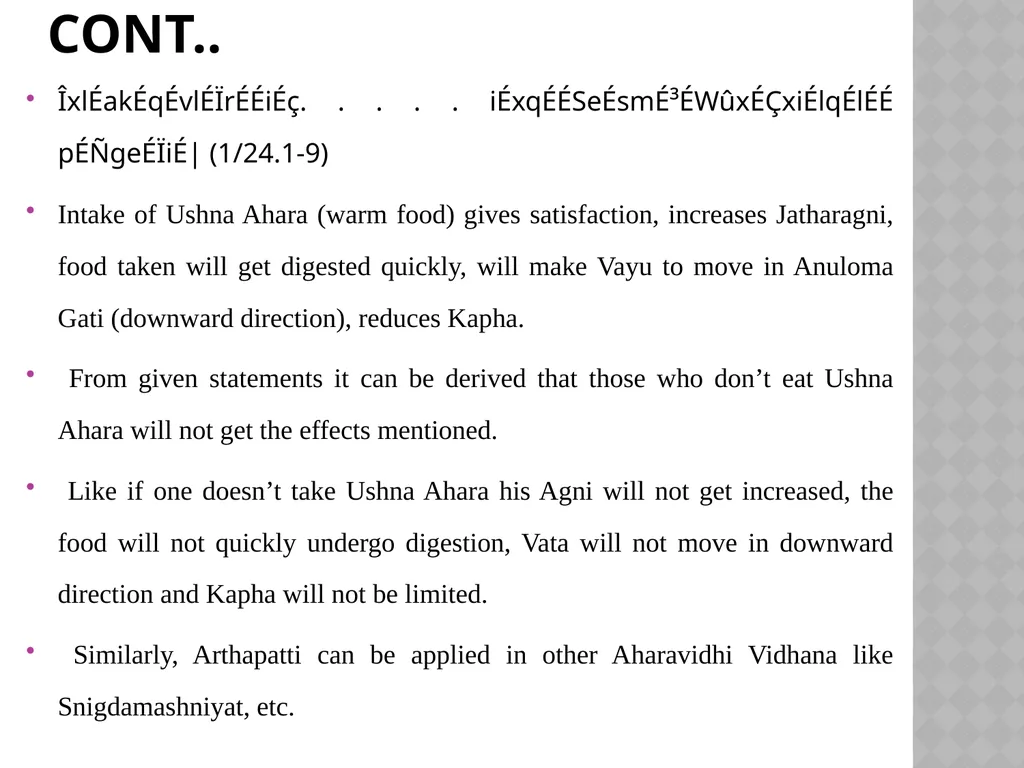
ÎxlÉakÉqÉvlÉÏrÉÉiÉç. . . . . iÉxqÉÉSeÉsmɳÉWûxÉÇxiÉlqÉlÉÉ pÉÑgeÉÏiÉ| (1/24.1-9)
From the meaning of the given statements it can be derived that those who didn’t follow the rule the effect mentioned will not be gained by the eater.
Like if one doesn’t take Ushna Ahara his Agni will not get increased, the food will not quickly undergo digestion, Vata will not move in downward direction and Kapha will not be limited. Similary, Arthapatti can be applied in others like Snigdamashniyat, etc. ARTHAPATTI<br>
From the meaning of the given statements it can be derived that those who didn’t follow the rule the effect mentioned will not be gained by the eater.
Like if one doesn’t take Ushna Ahara his Agni will not get increased, the food will not quickly undergo digestion, Vata will not move in downward direction and Kapha will not be limited. Similary, Arthapatti can be applied in others like Snigdamashniyat, etc. ARTHAPATTI<br>
39
ÌlÉhÉïrÉÉå lÉÉqÉ ÌuÉcÉÉËUiÉxrÉÉjÉïxrÉ urÉuÉxjÉÉmÉlÉÇ: rÉjÉÉ - cÉiÉÑwmÉSpÉåwÉeÉiuÉÉÌS ÌuÉcÉÉUÇ M×üiuÉÉÅÍpÉSÏrÉiÉå “rÉSÒ£Çü wÉÉåQûzÉMüsÉÇ mÉÔuÉÉïkrÉÉrÉå pÉåwÉeÉÇ iɱÑÌ£ürÉÑ£üqÉsÉqÉÉUÉåarÉÉrÉ” (xÉÔ A 10) CÌiÉ | (cÉ¢ümÉÉÍhÉ)
The conclusive statement about the discussed fact
Eg After discussion about Chikitsa Catushpada, it is concluded that the presence of all the Chatushpada and applied properly will lead to preservation of health NIRNAYA<br>
The conclusive statement about the discussed fact
Eg After discussion about Chikitsa Catushpada, it is concluded that the presence of all the Chatushpada and applied properly will lead to preservation of health NIRNAYA<br>
40
iÉqÉÑuÉÉcÉ pÉaÉuÉÉlÉɧÉårÉÈ- LuÉqÉxÉÉqÉÉlrÉÉuÉiÉÉqÉmrÉåÍpÉUÎalÉuÉåvÉ! mÉëM×üirÉÉÍSÍpÉpÉÉïuÉæqÉïlÉÑwrÉÉhÉÉÇ rÉåÅlrÉå pÉÉuÉÉÈ xÉÉqÉÉlrÉÉxiɲæaÉÑhrÉÉiÉç xÉqÉÉlÉMüÉsÉÉÈ xÉqÉÉlÉÍsÉ…¡ûÉ¶É urÉÉkÉrÉÉåÅÍpÉÍlÉuÉïiÉïqÉÉlÉÉ eÉlÉmÉSqÉÑ®çuÉÇxÉrÉÎliÉ| iÉå iÉÑ ZÉÎsuÉqÉå pÉÉuÉÉÈ xÉÉqÉÉlrÉÉ eÉlÉmÉSåwÉÑ pÉuÉÎliÉ; iɱjÉÉ- uÉÉrÉÑÈ, ESMÇü, SåvÉÈ,MüÉsÉ CÍiÉ | (2/6)
Agnivesa asked “what are the reasons that bring disease with similar Lakshana in individuals who are different in themselves by various factors”.
Atreya replied that the vitiation of factors like air, water, land and time that are common for a society are the reason for Janapadodwamsa.
Conclusive statement after discussion. NIRNAYA<br>
Agnivesa asked “what are the reasons that bring disease with similar Lakshana in individuals who are different in themselves by various factors”.
Atreya replied that the vitiation of factors like air, water, land and time that are common for a society are the reason for Janapadodwamsa.
Conclusive statement after discussion. NIRNAYA<br>
41
mÉëxÉ…¡ûÉå lÉÉqÉ mÉÔuÉÉïÍpÉÌWûiÉxrÉÉjÉïxrÉ mÉëMüUhÉÉaÉiÉiuÉÉÌSlÉÉ mÉÑlÉUÍpÉkÉÉlÉÇ; rÉjÉÉ iɧÉÉÌiÉmÉëpÉÉuÉiÉÉÇ SØzrÉÉlÉÉÌiÉqÉɧÉSzÉïlÉqÉÌiÉrÉÉåaÉ:” (xÉÔ A 11) LuÉqÉɱÍpÉSÉrÉ, mÉÑlÉ: “AirÉÑaÉëzÉoS´ÉuÉhÉÉcNíûuÉhÉÉiÉç xÉuÉïzÉÉå lÉ cÉ” (zÉÉ A 1) CirÉÉÌSlÉÉ mÉÔuÉÉåï£ü LuÉÉjÉÉåïÅÍpÉSÏrÉiÉå | (cÉ¢ümÉÉÍhÉ)
Mentioning of some fact once again when it is related to the context
Eg In Caraka Samhita sutra sthana adhyaya 11, it is told that excessive exposure to atiprabha Dr̥isya is atiyoga. Again this is repeated in sarira sthana adhyaya PRASANGA<br>
Mentioning of some fact once again when it is related to the context
Eg In Caraka Samhita sutra sthana adhyaya 11, it is told that excessive exposure to atiprabha Dr̥isya is atiyoga. Again this is repeated in sarira sthana adhyaya PRASANGA<br>
42
UxÉÉxiÉÉuÉiÉçwÉOèû - qÉkÉÑUÉqsÉsÉuÉhÉMüOÒûÌiÉ£üMüwÉÉrÉÉ: | (C.V 1/4)
This is already explained in Sutrasthana first Adhyaya (Su 1/65), however due to the relevance in the given context it is once again mentioned here.
iɱjÉÉ - MüOÒûÌiÉ£üMüwÉÉrÉÇuÉÉiÉÇeÉlÉrÉÎliÉ . . . . zÉqÉrÉÎliÉ | (C.V 1/6)
The relation between Rasa and Dosha is already explained in Sutrasthana first chapter (C.Su 1/ 66). Because of its relevance to the present context it is mentioned once again. PRASANGA<br>
This is already explained in Sutrasthana first Adhyaya (Su 1/65), however due to the relevance in the given context it is once again mentioned here.
iɱjÉÉ - MüOÒûÌiÉ£üMüwÉÉrÉÇuÉÉiÉÇeÉlÉrÉÎliÉ . . . . zÉqÉrÉÎliÉ | (C.V 1/6)
The relation between Rasa and Dosha is already explained in Sutrasthana first chapter (C.Su 1/ 66). Because of its relevance to the present context it is mentioned once again. PRASANGA<br>
43
LMüÉliÉÉå lÉÉqÉ rÉSuÉkÉÉUlÉålÉÉåcrÉiÉå: rÉjÉÉ - ÌlÉeÉ: zÉUÏUSÉåwÉÉåijÉ; iÉ×uÉ×̲LcÉrÉiÉÏirÉÉÌS | (cÉ¢ümÉÉÍhÉ)
Statement of fact without any alternative or a categorical statement.
Nija Vyadhi is produced by Saririka Dosha. EKANTA<br>
Statement of fact without any alternative or a categorical statement.
Nija Vyadhi is produced by Saririka Dosha. EKANTA<br>
44
iÉqÉÑuÉÉcÉ pÉaÉuÉÉlÉɧÉårÉ: - xÉuÉåïwÉÉqÉmrÉÎalÉuÉåzÉ! uÉÉruÉÉSÏlÉÉÇ . . . . . iÉrÉÉårÉÉåïÌlÉ: mÉë¥ÉÉmÉUÉkÉ LuÉ | (C.V 3/20)
While explaining the reason for vitiation of air, water, land and time Prajnanaparadha is considered as the sole root for Adharma or even Purvajanmakrta Papa Karma.
xÉuÉïÇ SìurÉÇ mÉÉgcÉpÉÉæÌiÉMüqÉÎxqÉlÉjÉåï | (C.Su 26/10)
All Dravyas are constituted of five Mahabhutas, which is not contradicted anywhere.
Only if there is Arogya one can attain the Four Purusarthas (C.Su 1/15) EKANTA<br>
While explaining the reason for vitiation of air, water, land and time Prajnanaparadha is considered as the sole root for Adharma or even Purvajanmakrta Papa Karma.
xÉuÉïÇ SìurÉÇ mÉÉgcÉpÉÉæÌiÉMüqÉÎxqÉlÉjÉåï | (C.Su 26/10)
All Dravyas are constituted of five Mahabhutas, which is not contradicted anywhere.
Only if there is Arogya one can attain the Four Purusarthas (C.Su 1/15) EKANTA<br>
45
AlÉæMüÉliÉÉå lÉÉqÉ AlrÉiÉUmɤÉÉlÉuÉkÉÉUhÉÇ, rÉjÉÉ -“rÉå ½ÉiÉÑUÉ: MåüuÉsÉɯåwÉeÉÉSØiÉå ÍqÉërÉliÉå, lÉ cÉ iÉå xÉuÉï LuÉ pÉåwÉeÉÉåmÉmɳÉÉ: xÉqÉÑ̨ÉwÉPåûUlÉç” (xÉÔ A 10) CirÉÉÌS | (cÉ¢ümÉÉÍhÉ)
Anekanta is opposite to Ekanta,
Such statements that are not absolute or conclusive.
Eg: Shodasha Kala Beshaja if applied properly will do Arokyarakshana, but not in those patients whose diseases are of Asadhya (incurable) variety. NAIKANTA/ ANAIKANTA<br>
Anekanta is opposite to Ekanta,
Such statements that are not absolute or conclusive.
Eg: Shodasha Kala Beshaja if applied properly will do Arokyarakshana, but not in those patients whose diseases are of Asadhya (incurable) variety. NAIKANTA/ ANAIKANTA<br>
46
कालःपुनःसंवत्सरश्चातुरावस्थाच| तत्रसंवत्सरोद्विधात्रिधाषोढाद्वादशधाभूयश्चाप्यतःप्रविभज्यतेतत्तत्कार्यमभिसमीक्ष्य|C.V 8/125
Kala has been considered of two types year aspect and status of the patient. The year has been divided into two, three, six, twelve or even more parts according to nature of action.
iÉxqÉÉSÒpÉrÉSعiuÉÉSåMüÉliÉaÉëWûhÉqÉxÉÉkÉÑ | ÌlÉSzÉïlÉqÉÌmÉ . . . . . . . . AiÉÉå ÌuÉmÉrÉïrÉÉlqÉ×irÉÑ: | (C.V.3/36)
Both Daiva and Purushakara are responsible in deciding the lifespan of a person. It is not possible to ascertain any one of them to be the deciding factor for the same. The emphasis is given to Purushakara as only it can be controlled by the person. ANAIKANTA<br>
Kala has been considered of two types year aspect and status of the patient. The year has been divided into two, three, six, twelve or even more parts according to nature of action.
iÉxqÉÉSÒpÉrÉSعiuÉÉSåMüÉliÉaÉëWûhÉqÉxÉÉkÉÑ | ÌlÉSzÉïlÉqÉÌmÉ . . . . . . . . AiÉÉå ÌuÉmÉrÉïrÉÉlqÉ×irÉÑ: | (C.V.3/36)
Both Daiva and Purushakara are responsible in deciding the lifespan of a person. It is not possible to ascertain any one of them to be the deciding factor for the same. The emphasis is given to Purushakara as only it can be controlled by the person. ANAIKANTA<br>
47
AmÉuÉaÉÉåï lÉÉqÉ xÉÉMüsrÉålÉÉå̬¸åxrÉæMüSåzÉÉmÉMüwÉïhÉÇ, rÉjÉÉ- mÉrÉÑïÌwÉiÉɳÉqÉÉSSÏiÉÉlrÉ§É qÉÉÇxÉWûËUiÉzÉÑwMüzÉÉMüTüsÉpɤrÉåprÉ:” (xÉÔ A 8) CÌiÉ| A§É ÌWû xÉÉqÉÉlrÉålÉ mÉrÉÑïÌwÉiÉpɤÉhÉÌlÉwÉåkÉÇ M×üiuÉÉ qÉÉÇxÉÉSå: mÉrÉÑïÌwÉiÉxrÉÉÌmÉ pɤÉhÉqÉmÉM×üwrÉ ÌuÉkÉÏrÉiÉå | (cÉ¢ümÉÉÍhÉ)
Excluding one thing from group of things.
In general Paryushita Anna (food) is contra indicated except Mamsa, Sushka Shakha and Phala. APAVARGA<br>
Excluding one thing from group of things.
In general Paryushita Anna (food) is contra indicated except Mamsa, Sushka Shakha and Phala. APAVARGA<br>
48
lÉiuÉåuÉÇZÉsÉÑxÉuÉï§É | (1/10)
Here not all the Dravya and all the Vikara follow Prakriti Sama Samaveta. This statement indicate those Dravya that are exceptions to the general rule
Utsarga Apavarga Nyaya, Chatrino Gachanti Nayaya APAVARGA<br>
Here not all the Dravya and all the Vikara follow Prakriti Sama Samaveta. This statement indicate those Dravya that are exceptions to the general rule
Utsarga Apavarga Nyaya, Chatrino Gachanti Nayaya APAVARGA<br>
49
ÌuÉmÉrÉïrÉÉå lÉÉqÉ AmÉM×ü¸ÉiÉç mÉëiÉÏmÉÉåSÉWûUhÉÇ: rÉjÉÉ -“ ÌlÉSÉlÉÉå£üÉlrÉxrÉ lÉÉåmÉzÉåUiÉå ÌuÉmÉUÏiÉÉÌlÉ cÉ EmÉzÉåUiÉå” (ÌlÉ A 3) CÌiÉ | (cÉ¢ümÉÉÍhÉ)
It is the statement of Contradiction
Eg Nidanokta Karanas are not Upasaya that means the opposite of Nidana are Upasaya VIPARYAYA<br>
It is the statement of Contradiction
Eg Nidanokta Karanas are not Upasaya that means the opposite of Nidana are Upasaya VIPARYAYA<br>
50
UxÉSÉåwÉ xÉͳÉmÉÉiÉå . . . ÌuÉmÉUÏiÉaÉÑhÉÉÌuÉmÉUÏiÉaÉÑhÉpÉÔrÉѸÉuÉÉ . .| (1/7)
In this statement, increase and decrease of Dosha an alternative that Samana Guna Bhuyishta and Viparita Guna Bhuyishta will also lead to increase and decrease of Dosha.
Here Viparita indicates the opposite to that of Dosha Guna .The reader should assume whether the Guna in the particular Dravya is how far opposite to the given Dosha. VIPARYAYA<br>
In this statement, increase and decrease of Dosha an alternative that Samana Guna Bhuyishta and Viparita Guna Bhuyishta will also lead to increase and decrease of Dosha.
Here Viparita indicates the opposite to that of Dosha Guna .The reader should assume whether the Guna in the particular Dravya is how far opposite to the given Dosha. VIPARYAYA<br>
51
mÉÔuÉïm¤ÉÉå lÉÉqÉ mÉëÌiÉ¥ÉÉiÉÉjÉïxÉlSÕwÉMÇü uÉÉYrÉÇ: rÉjÉÉ -“qÉixrÉÉ³É mÉrÉxÉÉprÉuÉWûUåiÉç” CÌiÉ mÉëÌiÉ¥ÉÉiÉxrÉÉjÉïxrÉ “xÉuÉÉïlÉæuÉ qÉixrÉÉ³É mÉrÉxÉÉÅprÉuÉWûUåSlrÉ§É ÍcÉÍsÉÍcÉqÉÉiÉç” (xÉÔ A 26) CÌiÉ | (cÉ¢ümÉÉÍhÉ)
Vitiation of Pratijna with an objection.
All fishes should not be taken with milk, the other objects that no this is not so, chilichima can be taken. PORVAPAKSHA<br>
Vitiation of Pratijna with an objection.
All fishes should not be taken with milk, the other objects that no this is not so, chilichima can be taken. PORVAPAKSHA<br>
52
एवंवादिनं भगवन्तमात्रेयमग्निवेश उवाच- कथमिह भगवन्!
हिताहितानामाहारजातानां लक्षणमनपवादमभिजानीमहे; हितसमाख्यातानामाहारजातानामहितसमाख्यातानां च मात्राकालक्रियाभूमिदेहदोषपुरुषावस्थान्तरेषुविपरीतकारित्वमुपलभामह इति||३२|| (C.S 25/32).
Lord Atreya states that Hita Ahara Upayoga causes Purusha Vrddhi and Ahita Ahara causes Vyadhi.
Then Agnivesa raised a doubt that in actual practice we find that the so called wholesome and unwholesome food articles bring about opposite effects depending upon variations in dose, time, kriya, bhumi, deha, avastha etc.
Vitiation of Pratijna with an objection
Mithya Chintayati Maitreya (Add) PORVAPAKSHA<br>
हिताहितानामाहारजातानां लक्षणमनपवादमभिजानीमहे; हितसमाख्यातानामाहारजातानामहितसमाख्यातानां च मात्राकालक्रियाभूमिदेहदोषपुरुषावस्थान्तरेषुविपरीतकारित्वमुपलभामह इति||३२|| (C.S 25/32).
Lord Atreya states that Hita Ahara Upayoga causes Purusha Vrddhi and Ahita Ahara causes Vyadhi.
Then Agnivesa raised a doubt that in actual practice we find that the so called wholesome and unwholesome food articles bring about opposite effects depending upon variations in dose, time, kriya, bhumi, deha, avastha etc.
Vitiation of Pratijna with an objection
Mithya Chintayati Maitreya (Add) PORVAPAKSHA<br>
53
ÌuÉkÉÉlÉÇ lÉÉqÉ xÉÔ§ÉMüÉU¶É ÌuÉkÉÉrÉ uÉhÉïrÉÌiÉ; rÉjÉÉ -“qÉsÉÉrÉlÉÉÌlÉ oÉÉkrÉliÉå SÒ¸æqÉɧÉÉÌSMæüqÉïsÉæ:” CirÉ§É SÒ̸zÉoSålÉ qÉsÉÉlÉÉÇ WûÏlÉiuÉqÉÍkÉMüiuÉqÉÉcÉÉrÉïaÉ×WûÏiÉqÉÉcÉÉrÉÉåï uÉhÉïrÉÌiÉ – qÉsÉuÉ×먂 aÉÑÂiÉrÉÉ sÉÉbÉuÉÉlqÉsÉxÉXç¤ÉrÉqÉç | qÉsÉÉrÉlÉÉlÉÉÇ oÉÑkrÉåiÉ xÉÇaÉÉåixÉaÉÉïSiÉÏuÉ cÉ” (xÉÔ A 7) CÌiÉ | MåüÍcɨÉÑ mÉëMüUhÉÉlÉÑmÉÔurÉÉïÅjÉÉïÍpÉkÉÉlÉÇ ÌuÉkÉÉlÉqÉÉWÒû: rÉjÉÉ UxÉÂÍkÉUqÉÉÇxÉqÉåSÉåÎxjÉqÉ‹zÉÑ¢üÉhÉÉqÉÑimÉÉS¢üqÉÉlÉÑUÉåkÉlÉÉÍpÉkÉÉlÉqÉç| (cÉ¢ümÉÉÍhÉ)
Vidhana means explaining the method followed by Sutrakartha. VIDHANA<br>
Vidhana means explaining the method followed by Sutrakartha. VIDHANA<br>
54
Eg While explaining Malayana, it is told that when mala becomes vitiated and gets increased in Matra and does Baddha to Malamarga, Malavriddhi is understood by Gourav and Sanga whereas Malakshaya is predicted by Laghava and Atiutsarga using the mentioned Lakshana.
Otherwise Vidhana is the order of explanation Cont..<br>
Otherwise Vidhana is the order of explanation Cont..<br>
55
iÉæsÉxÉÌmÉïqÉïkÉÔÌlÉuÉÉiÉÌmÉiÉzsÉåwqÉmÉëzÉqÉlÉÉiÉÉïÌlÉSìurÉÉÌlÉpÉuÉÎliÉ | (1/13)
By the order of explanation the reader can understand that Taila will relieve Vata, Sarpi will relieve Pitta and Madhu will relieve Kapha.
Order of explanation of Ashtavidha Ahara Viseshaayatana and Ahara Vidhi Vidhana
प्राणोदकान्नवाहानां दुष्टानां श्वासिकी क्रिया| कार्या तृष्णोपशमनी तथैवामप्रदोषिकी||२६||
The treatment of vitiated pranavaha, Udakavaha and Annavaha Srotas are the same as those described for treating Shwasa, Trishna and Amapradosha. VIDHANA<br>
By the order of explanation the reader can understand that Taila will relieve Vata, Sarpi will relieve Pitta and Madhu will relieve Kapha.
Order of explanation of Ashtavidha Ahara Viseshaayatana and Ahara Vidhi Vidhana
प्राणोदकान्नवाहानां दुष्टानां श्वासिकी क्रिया| कार्या तृष्णोपशमनी तथैवामप्रदोषिकी||२६||
The treatment of vitiated pranavaha, Udakavaha and Annavaha Srotas are the same as those described for treating Shwasa, Trishna and Amapradosha. VIDHANA<br>
56
AlÉÑqÉiÉÇ lÉÉqÉ LMüÐrÉqÉiÉxrÉÉÌlÉuÉÉUhÉålÉÉlÉÑqÉlÉlÉÇ; rÉjÉÉ -“aÉpÉïzÉsrÉxrÉ eÉUÉrÉÑ:mÉëmÉÉiÉlÉÇ MüqÉï xÉÇzÉqÉlÉÍqÉirÉåMåü” (zÉÉ A 8) CirÉɱåMüÐrÉqÉiÉÇ mÉëÌiÉmÉɱÉmÉëÌiÉwÉåkÉÉSlÉÑqÉlrÉiÉå | (cÉ¢ümÉÉÍhÉ)
Accepting others opinion as it is
. Ex: Removal of placenta itself is a palliating treatment in the treatment as per some. By mentioning this he is clarifying his view that he accepts this view though this view is not his own. ANUMATA<br>
Accepting others opinion as it is
. Ex: Removal of placenta itself is a palliating treatment in the treatment as per some. By mentioning this he is clarifying his view that he accepts this view though this view is not his own. ANUMATA<br>
57
AÌiÉoÉWÒûiuÉÉiÉç ZÉsÉÑ MåüÍcÉSmÉËUxÉXçZrÉårÉÉlrÉÉcɤÉiÉå xÉëÉåiÉÉÇÍxÉ, mÉËUxÉXçZrÉårÉÉÌlÉ mÉÑlÉUlrÉå | (C.V.5/5)
In this Sutra the author has stated the opinion of others that some consider Srotas are innumerable because they are too many, and some consider hat they are numerable. The author had not directly refuted other opinion indicating that he agrees to others opinion. ANUMATA<br>
In this Sutra the author has stated the opinion of others that some consider Srotas are innumerable because they are too many, and some consider hat they are numerable. The author had not directly refuted other opinion indicating that he agrees to others opinion. ANUMATA<br>
58
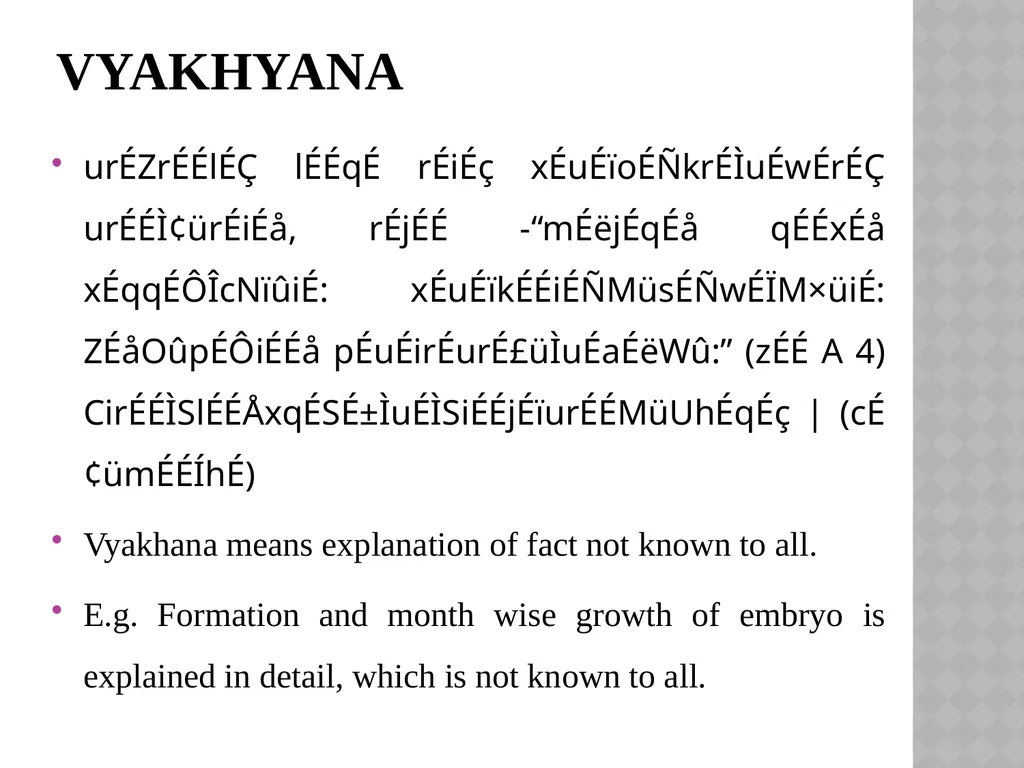
urÉZrÉÉlÉÇ lÉÉqÉ rÉiÉç xÉuÉïoÉÑkrÉÌuÉwÉrÉÇ urÉÉÌ¢ürÉiÉå, rÉjÉÉ -“mÉëjÉqÉå qÉÉxÉå xÉqqÉÔÎcNïûiÉ: xÉuÉïkÉÉiÉÑMüsÉÑwÉÏM×üiÉ: ZÉåOûpÉÔiÉÉå pÉuÉirÉurÉ£üÌuÉaÉëWû:” (zÉÉ A 4) CirÉÉÌSlÉÉÅxqÉSɱÌuÉÌSiÉÉjÉïurÉÉMüUhÉqÉç | (cÉ¢ümÉÉÍhÉ)
Vyakhana means explanation of fact not known to all.
E.g. Formation and month wise growth of embryo is explained in detail, which is not known to all. VYAKHYANA<br>
Vyakhana means explanation of fact not known to all.
E.g. Formation and month wise growth of embryo is explained in detail, which is not known to all. VYAKHYANA<br>
59
रसवीर्यविपाकानां सामान्यं यत्र लक्ष्यते| विशेषः कर्मणां चैव प्रभावस्तस्य स स्मृतः||
कटुकः कटुकः पाके वीर्योष्णश्चित्रको मतः| तद्वद्दन्ती प्रभावात्तु विरेचयति मानवम् || (C.Su 26/67-68)
In Atreyabhadrakapyiyam Adhyaya Acarya defines Prabhava
Both Citraka and Danti are pungent in taste and Vipaka. They both have Uṣṇa Virya. But in spite of this similarity, Danti acts as a purgative while Citraka does not. The purgative effect of Danti therefore can be explained only by its Prabhava or specific action. VYAKHYANA<br>
कटुकः कटुकः पाके वीर्योष्णश्चित्रको मतः| तद्वद्दन्ती प्रभावात्तु विरेचयति मानवम् || (C.Su 26/67-68)
In Atreyabhadrakapyiyam Adhyaya Acarya defines Prabhava
Both Citraka and Danti are pungent in taste and Vipaka. They both have Uṣṇa Virya. But in spite of this similarity, Danti acts as a purgative while Citraka does not. The purgative effect of Danti therefore can be explained only by its Prabhava or specific action. VYAKHYANA<br>
60
xÉÇzÉrÉÉå lÉÉqÉ ÌuÉzÉåwÉÉMüÉXèû¤ÉÌlÉkÉÉïËUiÉÉåpÉrÉÌuÉwÉrÉ¥ÉÉlÉÇ, rÉjÉÉ -“qÉÉiÉUÇ ÌmÉiÉUÇ cÉæMåü qÉlrÉliÉå eÉlqÉMüÉUhÉqÉç | xuÉpÉÉuÉÇ mÉUÌlÉqÉÉïhÉÇ rÉSØcNûÉÇ cÉÉmÉUå eÉlÉÉ: ||” (xÉÔ A 11) CirÉÉÌSlÉÉå£ü: xÉÇzÉrÉ: | (cÉ¢ümÉÉÍhÉ)
Samshaya is that statement which create doubt and there is inability to decide on the two alternatives.
Eg some say Sareera formed by parents some say by Swabhava some say it is due to Yadr̥ccha, some say it is due to some other cause. SAMSAYA<br>
Samshaya is that statement which create doubt and there is inability to decide on the two alternatives.
Eg some say Sareera formed by parents some say by Swabhava some say it is due to Yadr̥ccha, some say it is due to some other cause. SAMSAYA<br>
61
CÌiÉ ´ÉÑiuÉÉ eÉlÉmÉSÉåSèkuÉÇxÉlÉå . . . . . MÑüiÉÉåqÉÔsÉqÉåwÉÉÇ uÉÉruÉÉSÏlÉÉÇ uÉæaÉÑlrÉqÉÑimɱiÉå? rÉålÉÉåmÉmɳÉÉ eÉlÉmÉSÉåSèkuÉÇxÉrÉliÉÏÌiÉ | (C.V.3/11)
After hearing from Atreya that Vayu, Jala, Desha and Kala are the reasons for Janapadodwamsa with the features of their vitiation, Agnivesha wanted to know that, what causes their vitiation and how the vitiation of these factors have led to diseases killing people. SAMSAYA<br>
After hearing from Atreya that Vayu, Jala, Desha and Kala are the reasons for Janapadodwamsa with the features of their vitiation, Agnivesha wanted to know that, what causes their vitiation and how the vitiation of these factors have led to diseases killing people. SAMSAYA<br>
62
AiÉÏiÉÉuÉå¤ÉhÉÇ lÉÉqÉ rÉSiÉÏuÉqÉåuÉÉåcrÉiÉå; rÉjÉÉ - xÉÉ MÑüOûÏ iŠ zÉrÉlÉÇ euÉUÇ xÉÇzÉqÉrÉrÉÌmÉ |” (ÍcÉ A 3) CirÉ§É xuÉåSɱÉrÉÌuÉÌWûiÉMÑüšÉÌSMüqÉiÉÏiÉqÉuÉå¤ÉiÉå | (cÉ¢ümÉÉÍhÉ)
Statement made in reference to the past.
Eg Kuti and Sayana mentioned in Jwara Chikitsa refers to Sweda Adhyaya in Sutrasthana. ATITAVEKSHA<br>
Statement made in reference to the past.
Eg Kuti and Sayana mentioned in Jwara Chikitsa refers to Sweda Adhyaya in Sutrasthana. ATITAVEKSHA<br>
63
iɧÉmÉëM×üÌiÉÂcrÉiÉå. . . . . iɱjÉÉ - qÉÉwÉqÉѪrÉÉå:, zÉÔMüUåhÉrÉÉå¶É | (1/22.1)
The words Masha, Mudga, Shukara, Ena indicates to Sutrasthana chapter Annapanavidhi Adhyayam (C.Su.27) wherein their properties are enumerated.
MüÉsÉÉåÌWû . . . . . . . . . . . . .GiÉÑxÉÉiqrÉÉmÉå¤É: | (22.6)
The word Rtusatmya by applying Atitaveksha Tantrayukti refers to Tasyashitiyam Adhyaym in Sutrasthana where in the diet and regimen to be adopted seasonwise has been explained ATITAVEKSA<br>
The words Masha, Mudga, Shukara, Ena indicates to Sutrasthana chapter Annapanavidhi Adhyayam (C.Su.27) wherein their properties are enumerated.
MüÉsÉÉåÌWû . . . . . . . . . . . . .GiÉÑxÉÉiqrÉÉmÉå¤É: | (22.6)
The word Rtusatmya by applying Atitaveksha Tantrayukti refers to Tasyashitiyam Adhyaym in Sutrasthana where in the diet and regimen to be adopted seasonwise has been explained ATITAVEKSA<br>
64
AlÉÉaÉiÉÉuÉå¤ÉlÉÇ lÉÉqÉ rÉSlÉÉaÉiÉÇ ÌuÉÍkÉÇ mÉëqÉÉhÉÏM×üirÉÉjÉïxÉÉkÉÉlÉÇ; rÉjÉÉ - “AjÉuÉÉ ÌiÉ£üxÉÌmÉïwÉ: CirÉlÉÉaÉiÉÉuÉå¤ÉhÉålÉÉåcrÉiÉå | (cÉ¢ümÉÉÍhÉ)
Mentioning a thing which has to be described in future.
Eg Tikta Ghrita mentioned in the treatment of Jwara is explained later in the Kushta Chikitsa Adhyaya ANAGATAVEKSHA<br>
Mentioning a thing which has to be described in future.
Eg Tikta Ghrita mentioned in the treatment of Jwara is explained later in the Kushta Chikitsa Adhyaya ANAGATAVEKSHA<br>
65
C·åSåvÉåC·xÉuÉÉåïmÉMüUhÉÇ. . . . . . . .lÉÉÍlÉ·SåvÉeÉæqÉïlÉÉåÍuÉbÉÉiÉMüUæpÉÉïuÉæqÉïlÉÉåÍuÉbÉÉiÉÇ. . .cÉÉvlÉÏrÉÉiÉç | (1/24.6)
Here Manovighata refers to Kama, Krodha, Lobha, Moha, etc mentioned in the next chapter Trividhakukshiyam Vimanam Adhyaym (Vi 2/8) ANAGATAVEKSA<br>
Here Manovighata refers to Kama, Krodha, Lobha, Moha, etc mentioned in the next chapter Trividhakukshiyam Vimanam Adhyaym (Vi 2/8) ANAGATAVEKSA<br>
66
xuÉxÉÇ¥ÉÉ lÉÉqÉ rÉÉ iÉl§ÉMüÉUæurÉïuÉWûÉUÉjÉïÇ xÉÇ¥ÉÉ Ì¢ürÉiÉå; rÉjÉÉ- eÉåliÉÉMüWûÉåsÉÉMüÉÌSMüÉ xÉÇ¥ÉÉ | (cÉ¢ümÉÉÍhÉ)
Technical terms used in particular Tantra
Eg Jentaka, Holaka, etc terms referring to methods of Svedana SVASANJNA<br>
Technical terms used in particular Tantra
Eg Jentaka, Holaka, etc terms referring to methods of Svedana SVASANJNA<br>
67
UÉÍzÉxiÉÑxÉuÉïaÉëWûmÉËUaÉëWûÉæ . . . . . .mÉËUaÉëWû EcrÉiÉå| (C.V.1/22.4)
The words “Sarvagraha” and “Parigraha” are technical terms in Caraka Samhita indicating the quantity of whole of the meal eaten and the quantity of separate portions of the meal. SWASAJNA<br>
The words “Sarvagraha” and “Parigraha” are technical terms in Caraka Samhita indicating the quantity of whole of the meal eaten and the quantity of separate portions of the meal. SWASAJNA<br>
68
F½Ç lÉÉqÉ rÉSÌlÉoÉ®Ç aÉëljÉå mÉë¥ÉrÉÉ iÉYrÉïiuÉålÉÉåmÉÌSzrÉiÉå; rÉjÉÉ -“mÉËUxÉXçrÉÉiÉmÉqÉÌmÉ rɱSè SìurÉqrÉÉæÌaÉMÇü qÉlrÉåiÉ iɨÉSmÉMüwÉïrÉåiÉç | (cÉ¢ümÉÉÍhÉ)
It is the statement that which is not mentioned in the text should be deducted with own intelect.
Eg .The drugs which are told in Shadskanda if not useful in particular disease then they should be removed and new useful ones should be adopted. UHYA<br>
It is the statement that which is not mentioned in the text should be deducted with own intelect.
Eg .The drugs which are told in Shadskanda if not useful in particular disease then they should be removed and new useful ones should be adopted. UHYA<br>
69
ΧÉÍuÉkÉÇ MѤÉÉæ xjÉÉmÉrÉåSuÉMüÉvÉÉÇvÉqÉÉWûÉUxrÉÉWûÉUqÉÑmÉrÉÑgeÉÉlÉÈ; iɱjÉÉ- LMüqÉuÉMüÉvÉÉÇvÉÇ qÉÔiÉÉïlÉÉqÉÉWûÉUÍuÉMüÉUÉhÉÉqÉç, LMÇü SìuÉÉhÉÉqÉç, LMÇü mÉÑlÉuÉÉïiÉÍmɨÉvsÉåwqÉhÉÉqÉç; LiÉÉuÉiÉÏÇ ½ÉWûÉUqÉɧÉÉqÉÑmÉrÉÑgeÉÉlÉÉå lÉÉqÉɧÉÉWûÉUeÉÇ ÍMüÎgcÉSvÉÑpÉÇ mÉëÉmlÉÉåÍiÉ | (C.V.2/3)
In this Sutra only two types of Ahara are explained – Moorta Ahara and Drava Ahara.
The reader should understand by his own intellect that Moortahara refers to Ashita and Khadita, whereas Drava Ahara refers to Peeta and Lehya. UHYA<br>
In this Sutra only two types of Ahara are explained – Moorta Ahara and Drava Ahara.
The reader should understand by his own intellect that Moortahara refers to Ashita and Khadita, whereas Drava Ahara refers to Peeta and Lehya. UHYA<br>
70
xÉqÉÑŠrÉÉå lÉÉqÉ rÉÌSSÇ cÉåSÇ cÉåÌiÉ M×üiuÉÉ ÌuÉkÉÏrÉiÉå; rÉjÉÉ -‘uÉhÉï¶É xuÉU¶É’ (C A 3) CirÉÉÌS | (cÉ¢ümÉÉÍhÉ)
Group of facts collected together by using the conjunction ‘ca’.
Eg Prakrita and Vikrata Svara, Varna are grouped in Indriyasthana of Caraka Samhita SAMUCHAYA<br>
Group of facts collected together by using the conjunction ‘ca’.
Eg Prakrita and Vikrata Svara, Varna are grouped in Indriyasthana of Caraka Samhita SAMUCHAYA<br>
71
हस्तिदन्ती हैमवती श्यामा त्रिवृदधोगुडा|
सप्तला श्वेतनामा च प्रत्यक्श्रेणी गवाक्ष्यपि||७७
ज्योतिष्मती च बिम्बी च शणपुष्पी विषाणिका|
अजगन्धा द्रवन्ती च क्षीरिणी चात्र षोडशी|| C.V.1/77-78)
In Dirghanjivitiyamadhyayam sixteen drugs having useful roots are grouped together.
न वेगान् धारयेद्धीमाञ्जातान् मूत्रपुरीषयोः| न रेतसो न वातस्य न छर्द्याः क्षवथोर्न च||३||
नोद्गारस्य न जृम्भाया न वेगान् क्षुत्पिपासयोः| न बाष्पस्य न निद्राया निःश्वासस्य श्रमेण च||४||
In Navegandharaṇiyam Adhyayam all the thirteen Adharaneeya Vegas are grouped together. SAMUCHAYA<br>
सप्तला श्वेतनामा च प्रत्यक्श्रेणी गवाक्ष्यपि||७७
ज्योतिष्मती च बिम्बी च शणपुष्पी विषाणिका|
अजगन्धा द्रवन्ती च क्षीरिणी चात्र षोडशी|| C.V.1/77-78)
In Dirghanjivitiyamadhyayam sixteen drugs having useful roots are grouped together.
न वेगान् धारयेद्धीमाञ्जातान् मूत्रपुरीषयोः| न रेतसो न वातस्य न छर्द्याः क्षवथोर्न च||३||
नोद्गारस्य न जृम्भाया न वेगान् क्षुत्पिपासयोः| न बाष्पस्य न निद्राया निःश्वासस्य श्रमेण च||४||
In Navegandharaṇiyam Adhyayam all the thirteen Adharaneeya Vegas are grouped together. SAMUCHAYA<br>
72
ÌlÉSzÉïlÉÇ lÉÉqÉ qÉÔZÉïÌuÉSÒwÉÉÇ oÉÑήxÉÉqrÉÌuÉwÉrÉÉå SعÉliÉ:: rÉjÉÉ -“ÌuÉ¥ÉÉiÉqÉqÉ×iÉÇ rÉjÉÉ” (xÉÔ A 1) CirÉÉÌS | (cÉ¢ümÉÉÍhÉ)
Explaining a subject matter with an example .
So that it helps to understand a subject both by a subject expert or an illiterate.
Eg: Avijnata Aushada is like Visha or Vajra of Indra, whereas, Vijnanata Aushadha is like Amrita. NIDARSANA<br>
Explaining a subject matter with an example .
So that it helps to understand a subject both by a subject expert or an illiterate.
Eg: Avijnata Aushada is like Visha or Vajra of Indra, whereas, Vijnanata Aushadha is like Amrita. NIDARSANA<br>
73
¤ÉÉU: . . .iɱjÉÉ - mÉëÉcrɶÉÏlÉÉ¶É . . . | (C.V.1/17)
sÉuÉhÉÇ . . . .iɱjÉÉ - oÉ¿ûÏMüxÉÉæUηíMüxÉælSuÉxÉÉæuÉÏUMüÉ:;. . .| (1/18)
Prachya, Cheena, Bahlika, Sourashtrika and Souviraka are the Desha which are known popularly using Kshara, Lavana in excess. NIDARSANA<br>
sÉuÉhÉÇ . . . .iɱjÉÉ - oÉ¿ûÏMüxÉÉæUηíMüxÉælSuÉxÉÉæuÉÏUMüÉ:;. . .| (1/18)
Prachya, Cheena, Bahlika, Sourashtrika and Souviraka are the Desha which are known popularly using Kshara, Lavana in excess. NIDARSANA<br>
74
ÌlÉuÉïcÉlÉÇ lÉÉqÉ mÉÎhQûiÉoÉÑήaÉqrÉÉå SعÉliÉ:; rÉjÉÉ – “¥ÉÉrÉiÉå ÌlÉirÉaÉxrÉåuÉ MüÉsÉxrÉÉirÉrÉMüÉUhÉqÉç” (xÉÔ A 16) CÌiÉ | (cÉ¢ümÉÉÍhÉ)
Statement or illustration that can be understood only by learned.
Eg : Just as Kala(time) is everchanging without help from any other thing so also all the materials in the universe undergo change by themselves(Cha.su.16/32). NIRVACANA<br>
Statement or illustration that can be understood only by learned.
Eg : Just as Kala(time) is everchanging without help from any other thing so also all the materials in the universe undergo change by themselves(Cha.su.16/32). NIRVACANA<br>
75
xÉuÉïxrÉÌWûaÉëWû: xÉuÉïaÉëWû:,xÉuÉïiɶÉaÉëWû: mÉËUaÉëWûEcrÉiÉå | (1/21.4)
Here the author has explained the etymological derivations of Sarvagraha and Parigraha. The quantity of the whole meal taken together is Sarvagraha and the quantity of each portion of the meal s parigraha. NIRVACANA<br>
Here the author has explained the etymological derivations of Sarvagraha and Parigraha. The quantity of the whole meal taken together is Sarvagraha and the quantity of each portion of the meal s parigraha. NIRVACANA<br>
76
ÌlÉrÉÉåaÉÉå lÉÉqÉ AuÉwrÉÉlÉѸårÉiÉrÉÉ ÌuÉkÉÉlÉÇ: rÉjÉÉ - “lÉ iuÉrÉÉ xuÉåSqÉÔcNûÉïmÉUÏiÉålÉÉÌmÉ ÌmÉÎhQûMæüwÉÉ ÌuÉqÉÉå£üurÉÉ” (xÉÔ A 14) CirÉÉÌS |
The strict instruction of the author on what has to be done is Niyoga.
These have to be followed without any deviation.
Eg -You should not leave the Kuti even you become fainted. This is a strict instruction given to a patient who is about to undergo Kuti Sveda. SANNIYOGA/ NIYOGA<br>
The strict instruction of the author on what has to be done is Niyoga.
These have to be followed without any deviation.
Eg -You should not leave the Kuti even you become fainted. This is a strict instruction given to a patient who is about to undergo Kuti Sveda. SANNIYOGA/ NIYOGA<br>
77
LwÉÉÇÌuÉzÉåwÉÉ: . . . . . cÉÌWûiÉåmxÉÑUåuÉ . . . ÌMÇüÍcÉiÉç | (1/23)
Through these statements the author had strictly directed the reader to eat only Hita Ahara NIYOGA<br>
Through these statements the author had strictly directed the reader to eat only Hita Ahara NIYOGA<br>
78
ÌuÉMüsmÉ: mÉÉͤÉMüÉÍpÉkÉÉlÉÇ; rÉjÉÉ “xÉÉUÉåSMÇü uÉÉÅjÉ MÑüzÉÉåSMÇü uÉÉ” (ÍcÉ A 6) CirÉÉÌS | (cÉ¢ümÉÉÍhÉ)
Vikalpa is the statement with alternatives or options.
Eg In Prameha the use of Sarodaka or Kushodaka. VIKALPANA<br>
Vikalpa is the statement with alternatives or options.
Eg In Prameha the use of Sarodaka or Kushodaka. VIKALPANA<br>
79
UxÉSÉåwÉxÉͳÉmÉÉiÉå . . . .xÉqÉÉlÉaÉÑhÉÉxÉqÉÉlÉaÉÑhÉpÉÔÌrÉ¸É uÉÉ. . .ÌuÉmÉUÏiÉaÉÑhÉÉÌuÉmÉUÏiÉaÉÑhÉpÉÔÌrÉ¸É uÉÉ. .....| (1/7)
There are options provided in this statement either exactly similar Dravya or Dravya having near similarity Guna, opposite Dravya or Dravya having near opposite Guna. Here ‘Va’ indicates Vikalpa or option VIKALPA<br>
There are options provided in this statement either exactly similar Dravya or Dravya having near similarity Guna, opposite Dravya or Dravya having near opposite Guna. Here ‘Va’ indicates Vikalpa or option VIKALPA<br>
80
mÉëirÉÑixÉÉUÉå lÉÉqÉ EmÉmɨÉrÉÉ mÉqÉiÉÌlÉuÉÉUhÉÇ; rÉjÉÉ uÉÉrÉÉåÌuÉïS: mÉëÉWû – UxÉeÉÉÌlÉ cÉ pÉÔiÉÉÌlÉ UeÉxÉÉ urÉÉkÉrÉ: xqÉ×iÉÉ:” (xÉÔ A 25) CirÉÉÌS, ÌWûUhrÉɤÉÉå ÌlÉwÉåkÉrÉÌiÉ - “lÉ ½ÉiqÉÉ UeÉxÉ: xqÉ×iÉ:” CirÉÉÌS | (cÉ¢ümÉÉÍhÉ)
Refuting others views with some reasoning
Eg -vayorvida says Sarira is formed by rasa because Vyadhi are Rasaja. Then Hiranyakṣa objects arguing that Puruṣa is not Rasaja but he is Shaddhatuja and Vyadhi are also produced by ṣhaddhatu. PRATYUTSARA<br>
Refuting others views with some reasoning
Eg -vayorvida says Sarira is formed by rasa because Vyadhi are Rasaja. Then Hiranyakṣa objects arguing that Puruṣa is not Rasaja but he is Shaddhatuja and Vyadhi are also produced by ṣhaddhatu. PRATYUTSARA<br>
81
द्वौ रसाविति शाकुन्तेयो ब्राह्मणः, छेदनीय उपशमनीयश्चेति| त्रयो रसा इति पूर्णाक्षो मौद्गल्यः, छेदनीयोपशमनीयसाधारणा इति| चत्वारो रसा इति हिरण्याक्षः कौशिकः, स्वादुर्हितश्च स्वादुरहितश्चास्वादुर्हितश्चास्वादुरहितश्चेति| पञ्च रसा इति कुमारशिरा भरद्वाजः… (C.S.26/8)
The sages like Bhadrakapya, Śākunteya etc had discussion about rasa, where Bhadrakapya, says rasa is only one because rasa is artha of rasanendriya and it is not different from jala mahabhuta. Then sage Shakunteya refutes Bhadrakapya’s view of eka rasa and put forward his view that rasa is of two- chedaniya and upasamaniya. Thus the discussion goes on by refuting each other’s view. PRATYUTSARA<br>
The sages like Bhadrakapya, Śākunteya etc had discussion about rasa, where Bhadrakapya, says rasa is only one because rasa is artha of rasanendriya and it is not different from jala mahabhuta. Then sage Shakunteya refutes Bhadrakapya’s view of eka rasa and put forward his view that rasa is of two- chedaniya and upasamaniya. Thus the discussion goes on by refuting each other’s view. PRATYUTSARA<br>
82
E®ÉUÉå lÉÉqÉ mÉUmɤÉSÕwÉhÉçÇ M×üiuÉÉ xuÉmɤÉÉå®UhÉÇ; rÉjÉÉ -“rÉåwÉÉqÉåuÉ ÌWû pÉÉuÉÉlÉÉÇ xÉqmÉiÉç xÉgeÉlÉrÉå³ÉUqÉç | iÉåwÉÉqÉåuÉ ÌWû pÉÉuÉÉlÉÉÇ ÌuÉmÉSèurÉÉkÉÏlÉÑkÉÏUrÉåiÉç” (xÉÔ A 25) CirÉÉÌSlÉÉ xuÉmɤÉÉå®UhÉqÉç | (cÉ¢ümÉÉÍhÉ)
Confirmation statement is made after refuting other’s opinion with a reason or logic.
In the discussion of Utpatti of Purusha and Vyadhi, Atreya after hearing all the views refuted them and upheld his views that Sampat of the Bhava leads to Utpatti of Purusha and Vipatti of the same Bhava causes Vyadhi with logical reasoning for refutal and for upholding his views UDDHARA<br>
Confirmation statement is made after refuting other’s opinion with a reason or logic.
In the discussion of Utpatti of Purusha and Vyadhi, Atreya after hearing all the views refuted them and upheld his views that Sampat of the Bhava leads to Utpatti of Purusha and Vipatti of the same Bhava causes Vyadhi with logical reasoning for refutal and for upholding his views UDDHARA<br>
83
षडेव रसा इत्युवाच भगवानात्रेयः पुनर्वसुः, मधुराम्ललवणकटुतिक्तकषायाः| (C.S.26/9)
The sages like Bhadrakapya, Shakunteya etc had discussed about Rasa, where the sages put forward their own view by refuting others. Finally Lord Atreya concluded that rasas are only six by establishing his logic.
AÍmÉ cÉæMåü xÉëÉååiÉxÉÉqÉåuÉ xÉqÉÑSrÉÇmÉÑÂwÉÍqÉcNûÎliÉ, xÉuÉïaÉiÉiuÉÉiÉç xÉuÉïxÉUiuÉÉŠ SÉåwÉmÉëMüÉåmÉhÉmÉëvÉqÉlÉÉlÉÉqÉç| lÉ iuÉåiÉSåuÉÇ, rÉxrÉ ÍWû xÉëÉåiÉÉÇÍxÉ, rÉŠ uÉWûÎliÉ, rÉŠÉuÉWûÎliÉ, rÉ§É cÉÉuÉÎxjÉiÉÉÍlÉ, xÉuÉïÇ iÉSlrɨÉåprÉÈ | (C.V.5/4)
Other’s opinion: Sharira is nothing but the conglomeration of Srotas. Everything flows through them which can either aggravate or pacify the Dosha.
Author’s rebuttal: This is view is not correct. (the conglomeration of Srotas only is not Purusha)
Reason for Rebuttal: the channels, the contents that flow through the channels, the Dhatu which they nourish and the place of the Dhatu are different from each other. UDDHARA<br>
The sages like Bhadrakapya, Shakunteya etc had discussed about Rasa, where the sages put forward their own view by refuting others. Finally Lord Atreya concluded that rasas are only six by establishing his logic.
AÍmÉ cÉæMåü xÉëÉååiÉxÉÉqÉåuÉ xÉqÉÑSrÉÇmÉÑÂwÉÍqÉcNûÎliÉ, xÉuÉïaÉiÉiuÉÉiÉç xÉuÉïxÉUiuÉÉŠ SÉåwÉmÉëMüÉåmÉhÉmÉëvÉqÉlÉÉlÉÉqÉç| lÉ iuÉåiÉSåuÉÇ, rÉxrÉ ÍWû xÉëÉåiÉÉÇÍxÉ, rÉŠ uÉWûÎliÉ, rÉŠÉuÉWûÎliÉ, rÉ§É cÉÉuÉÎxjÉiÉÉÍlÉ, xÉuÉïÇ iÉSlrɨÉåprÉÈ | (C.V.5/4)
Other’s opinion: Sharira is nothing but the conglomeration of Srotas. Everything flows through them which can either aggravate or pacify the Dosha.
Author’s rebuttal: This is view is not correct. (the conglomeration of Srotas only is not Purusha)
Reason for Rebuttal: the channels, the contents that flow through the channels, the Dhatu which they nourish and the place of the Dhatu are different from each other. UDDHARA<br>
84
xÉqpÉuÉÉå lÉÉqÉ rɱÎxqÉlÉÑmÉmɱiÉå xÉ iÉxrÉ xÉqpÉuÉ: rÉjÉÉ – qÉÑZÉå ÌmÉmsÉÑurÉXûlÉÏÍsÉMüÉSrÉ: xÉqpÉuÉiÉÏirÉÉÌS | (cÉ¢ümÉÉÍhÉ)
Sambhava is the statement of source or origin
Eg: Piplu, Vyanga and Neelika happen over face. Though somewhere face is not directly mentioned in Piplu, Vyanga and Neelika the reader should understand the place or site of happening is face. SAMBHAVA<br>
Sambhava is the statement of source or origin
Eg: Piplu, Vyanga and Neelika happen over face. Though somewhere face is not directly mentioned in Piplu, Vyanga and Neelika the reader should understand the place or site of happening is face. SAMBHAVA<br>
85
SåzÉ: mÉÑlÉ: xjÉÉlÉÇ . . . . . . . . . . . . . .cÉÉcɹå | (1/22.5)
Here Desha indicates a place or area from where the Dravya is grown and to where the person who is taking Ahara belong to.
By this the Guna of the Dravya and Satmya of the person can be inferred. SAMBHAVA<br>
Here Desha indicates a place or area from where the Dravya is grown and to where the person who is taking Ahara belong to.
By this the Guna of the Dravya and Satmya of the person can be inferred. SAMBHAVA<br>
86
Tantrayukti explanation ÌuÉmÉrÉïrÉ
ÌuÉ + mÉËU + C + AcÉç = ÌuÉmÉrÉïrÉ
ÌuÉ, mÉËU - EmÉxÉaÉï, C - kÉÉiÉÑ, AcÉç - mÉëirÉrÉ
Nirukti: urÉÌiÉ¢üqÉ (zÉoSMüsmÉSìÓqÉ)
Meaning: reversed, contrary, inversed, transposition
तस्य प्रतिलोम्यम् विपर्यय: । (VDP)
उक्तार्थवैपरीत्येन लक्षणं स्य़ाद् विपर्यय:। (TYV)
प्रतिलोमेन साधनं विपर्यय – विपरीतमतृष्टस्य इति । (KTA)<br>
ÌuÉ + mÉËU + C + AcÉç = ÌuÉmÉrÉïrÉ
ÌuÉ, mÉËU - EmÉxÉaÉï, C - kÉÉiÉÑ, AcÉç - mÉëirÉrÉ
Nirukti: urÉÌiÉ¢üqÉ (zÉoSMüsmÉSìÓqÉ)
Meaning: reversed, contrary, inversed, transposition
तस्य प्रतिलोम्यम् विपर्यय: । (VDP)
उक्तार्थवैपरीत्येन लक्षणं स्य़ाद् विपर्यय:। (TYV)
प्रतिलोमेन साधनं विपर्यय – विपरीतमतृष्टस्य इति । (KTA)<br>
87
Cont.. ÌuÉmÉrÉïrÉÉå lÉÉqÉ AmÉM×ü¸ÉiÉç mÉëiÉÏmÉÉåSÉWûUhÉÇ: rÉjÉÉ -“ ÌlÉSÉlÉÉå£üÉlrÉxrÉ lÉÉåmÉzÉåUiÉå ÌuÉmÉUÏiÉÉÌlÉ cÉ EmÉzÉåUiÉå” (ÌlÉ A 3) CÌiÉ | (cÉ¢ümÉÉÍhÉ)
It is the statement of contradictory.
Eg : Nidanokta Karana are not Upashaya while the opposite ones act as Upashaya
rɱ§ÉÉÍpÉÌWûiÉÇ iÉxrÉ mÉëÉÌiÉsÉÉåqrÉÇ ÌuÉmÉrÉïrÉ: | (xÉÑ´ÉÑiÉç)
Understanding the contrary idea along with what has been stated.
ÌuÉmÉrÉïrÉÉå lÉÉqÉ E£üxrÉÉlrÉjÉÉpÉÉuÉÉå ÌuÉmÉrÉïrÉ: | (ClSÒ)
Viparyaya means contrary or reverse to the said thing.
ÌuÉmÉrÉïrÉÉå lÉÉqÉ, - rÉjÉÉåmÉÌS¸ÌuÉmÉrÉïrÉåhÉ sɤÉhÉÉÌSMüUhÉqÉç | (AÂhÉS¨É)
Indicating the opposite Lakshana along with the one which are mentioned.<br>
It is the statement of contradictory.
Eg : Nidanokta Karana are not Upashaya while the opposite ones act as Upashaya
rɱ§ÉÉÍpÉÌWûiÉÇ iÉxrÉ mÉëÉÌiÉsÉÉåqrÉÇ ÌuÉmÉrÉïrÉ: | (xÉÑ´ÉÑiÉç)
Understanding the contrary idea along with what has been stated.
ÌuÉmÉrÉïrÉÉå lÉÉqÉ E£üxrÉÉlrÉjÉÉpÉÉuÉÉå ÌuÉmÉrÉïrÉ: | (ClSÒ)
Viparyaya means contrary or reverse to the said thing.
ÌuÉmÉrÉïrÉÉå lÉÉqÉ, - rÉjÉÉåmÉÌS¸ÌuÉmÉrÉïrÉåhÉ sɤÉhÉÉÌSMüUhÉqÉç | (AÂhÉS¨É)
Indicating the opposite Lakshana along with the one which are mentioned.<br>
88
Interpretation CqÉÉlÉåuÉÇSÉåwÉrÉÑ£üÉǶÉiÉÑUÉå pÉÉuÉÉgeÉlÉmÉSÉåSèkuÉÇMüUÉlÉç uÉSÎliÉ MÑüzÉsÉÉ:; AiÉÉåÅlrÉjÉÉpÉÔiÉÉÇxiÉÑ ÌWûiÉÉlÉÉcɤÉiÉå | (cÉ ÌuÉ 3/7)
Lakshana of Dushita Vayu, Jala, Bhumi and Kala ,Karana for Janapadodwamsa Vyadhi explained in Janapadodwamsaniyam Adhyayam
After that it is mentioned ,Lakshana opposite to that of the above mentioned Lakshana will be conducive for health.
Opposite for each of the Dushita Lakshana should be understood here.
Like, opposite to that of Atistimita (too much calm) Vayu is Anatistimita (not too much calm), opposite of Aticala (too much moving) is Anaticala (not too much moving).<br>
Lakshana of Dushita Vayu, Jala, Bhumi and Kala ,Karana for Janapadodwamsa Vyadhi explained in Janapadodwamsaniyam Adhyayam
After that it is mentioned ,Lakshana opposite to that of the above mentioned Lakshana will be conducive for health.
Opposite for each of the Dushita Lakshana should be understood here.
Like, opposite to that of Atistimita (too much calm) Vayu is Anatistimita (not too much calm), opposite of Aticala (too much moving) is Anaticala (not too much moving).<br>
89
Cont.. iÉrÉÉårÉÑïSÉUrÉÉårÉÑïÌ£üSÏïbÉïxrÉ . . . . cÉ| ÌlÉrÉiÉxrÉÉrÉÑwÉÉå WåûiÉÑÌuÉïmÉUÏUxrÉ cÉåiÉUÉ || (3/32)
In Janapadodwamsa Adhyaya- the best of Daiva and Purushakara come together it will lead to long life and happiness.
Also mentioned - opposite of the same will lead to opposite life span and Dukha.
Applying Viparyaya Tantayukti - understood that when Heena Daiva and Heena Purushakara come together then the person will have Heena Ayu and Dukha.<br>
In Janapadodwamsa Adhyaya- the best of Daiva and Purushakara come together it will lead to long life and happiness.
Also mentioned - opposite of the same will lead to opposite life span and Dukha.
Applying Viparyaya Tantayukti - understood that when Heena Daiva and Heena Purushakara come together then the person will have Heena Ayu and Dukha.<br>
90
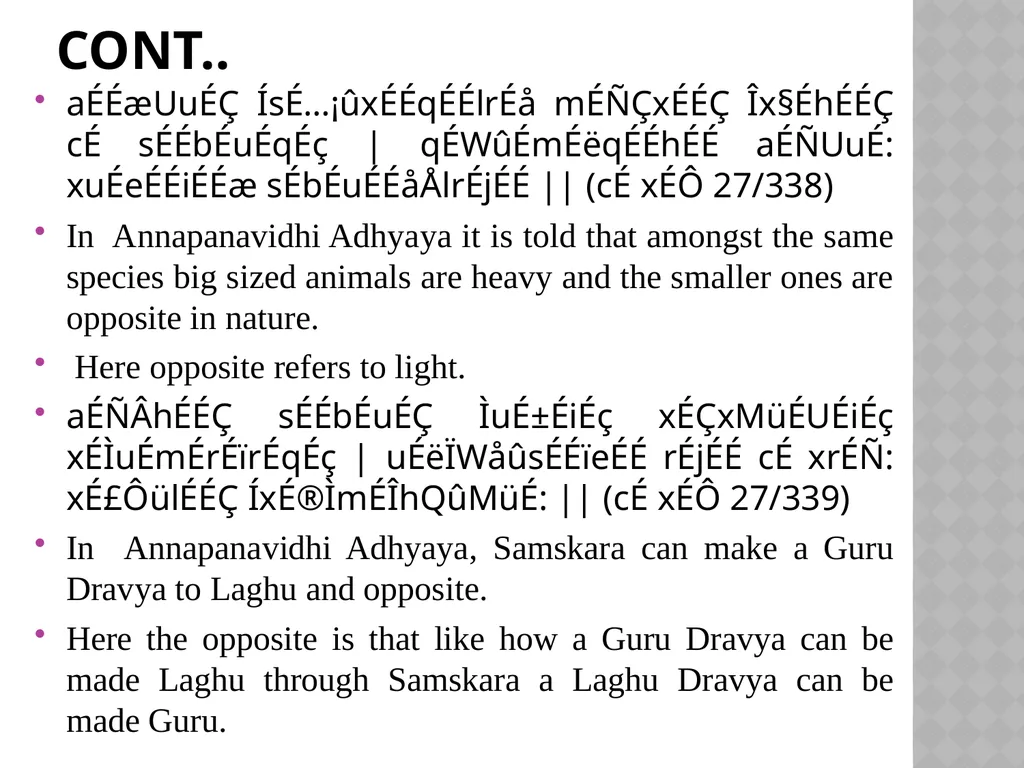
Cont.. aÉÉæUuÉÇ ÍsÉ…¡ûxÉÉqÉÉlrÉå mÉÑÇxÉÉÇ Îx§ÉhÉÉÇ cÉ sÉÉbÉuÉqÉç | qÉWûÉmÉëqÉÉhÉÉ aÉÑUuÉ: xuÉeÉÉiÉÉæ sÉbÉuÉÉåÅlrÉjÉÉ || (cÉ xÉÔ 27/338)
In Annapanavidhi Adhyaya it is told that amongst the same species big sized animals are heavy and the smaller ones are opposite in nature.
Here opposite refers to light.
aÉÑÂhÉÉÇ sÉÉbÉuÉÇ ÌuɱÉiÉç xÉÇxMüÉUÉiÉç xÉÌuÉmÉrÉïrÉqÉç | uÉëÏWåûsÉÉïeÉÉ rÉjÉÉ cÉ xrÉÑ: xÉ£ÔülÉÉÇ ÍxÉ®ÌmÉÎhQûMüÉ: || (cÉ xÉÔ 27/339)
In Annapanavidhi Adhyaya, Samskara can make a Guru Dravya to Laghu and opposite.
Here the opposite is that like how a Guru Dravya can be made Laghu through Samskara a Laghu Dravya can be made Guru.<br>
In Annapanavidhi Adhyaya it is told that amongst the same species big sized animals are heavy and the smaller ones are opposite in nature.
Here opposite refers to light.
aÉÑÂhÉÉÇ sÉÉbÉuÉÇ ÌuɱÉiÉç xÉÇxMüÉUÉiÉç xÉÌuÉmÉrÉïrÉqÉç | uÉëÏWåûsÉÉïeÉÉ rÉjÉÉ cÉ xrÉÑ: xÉ£ÔülÉÉÇ ÍxÉ®ÌmÉÎhQûMüÉ: || (cÉ xÉÔ 27/339)
In Annapanavidhi Adhyaya, Samskara can make a Guru Dravya to Laghu and opposite.
Here the opposite is that like how a Guru Dravya can be made Laghu through Samskara a Laghu Dravya can be made Guru.<br>
91
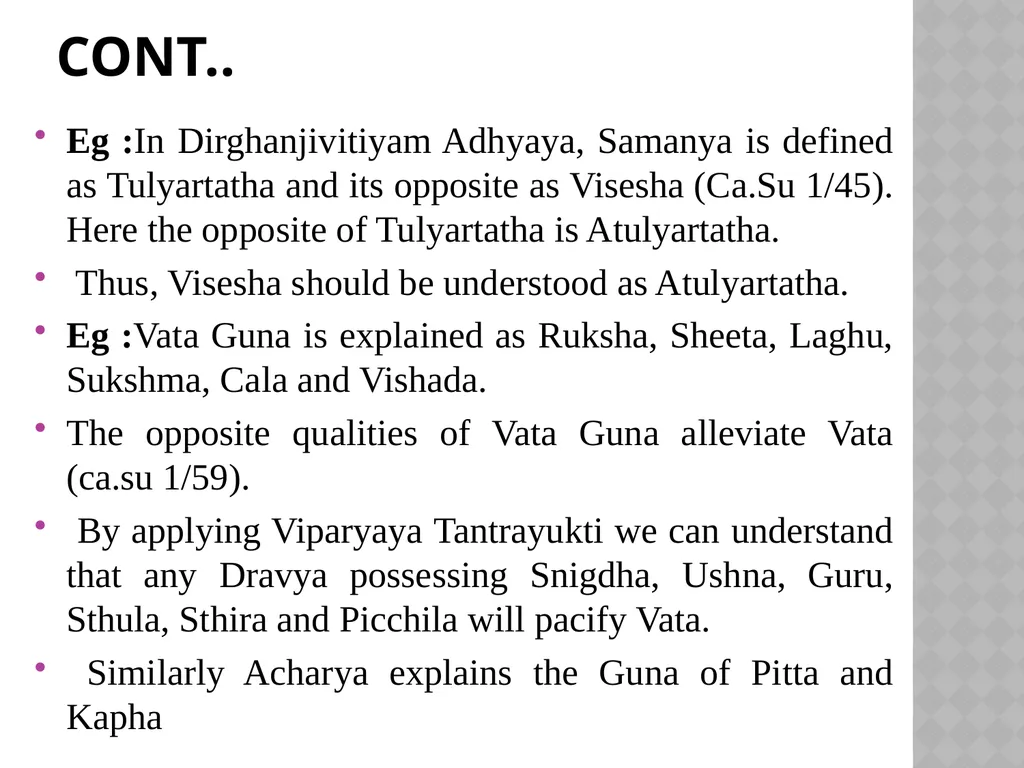
Cont.. Eg :In Dirghanjivitiyam Adhyaya, Samanya is defined as Tulyartatha and its opposite as Visesha (Ca.Su 1/45). Here the opposite of Tulyartatha is Atulyartatha.
Thus, Visesha should be understood as Atulyartatha.
Eg :Vata Guna is explained as Ruksha, Sheeta, Laghu, Sukshma, Cala and Vishada.
The opposite qualities of Vata Guna alleviate Vata (ca.su 1/59).
By applying Viparyaya Tantrayukti we can understand that any Dravya possessing Snigdha, Ushna, Guru, Sthula, Sthira and Picchila will pacify Vata.
Similarly Acharya explains the Guna of Pitta and Kapha<br>
Thus, Visesha should be understood as Atulyartatha.
Eg :Vata Guna is explained as Ruksha, Sheeta, Laghu, Sukshma, Cala and Vishada.
The opposite qualities of Vata Guna alleviate Vata (ca.su 1/59).
By applying Viparyaya Tantrayukti we can understand that any Dravya possessing Snigdha, Ushna, Guru, Sthula, Sthira and Picchila will pacify Vata.
Similarly Acharya explains the Guna of Pitta and Kapha<br>
92
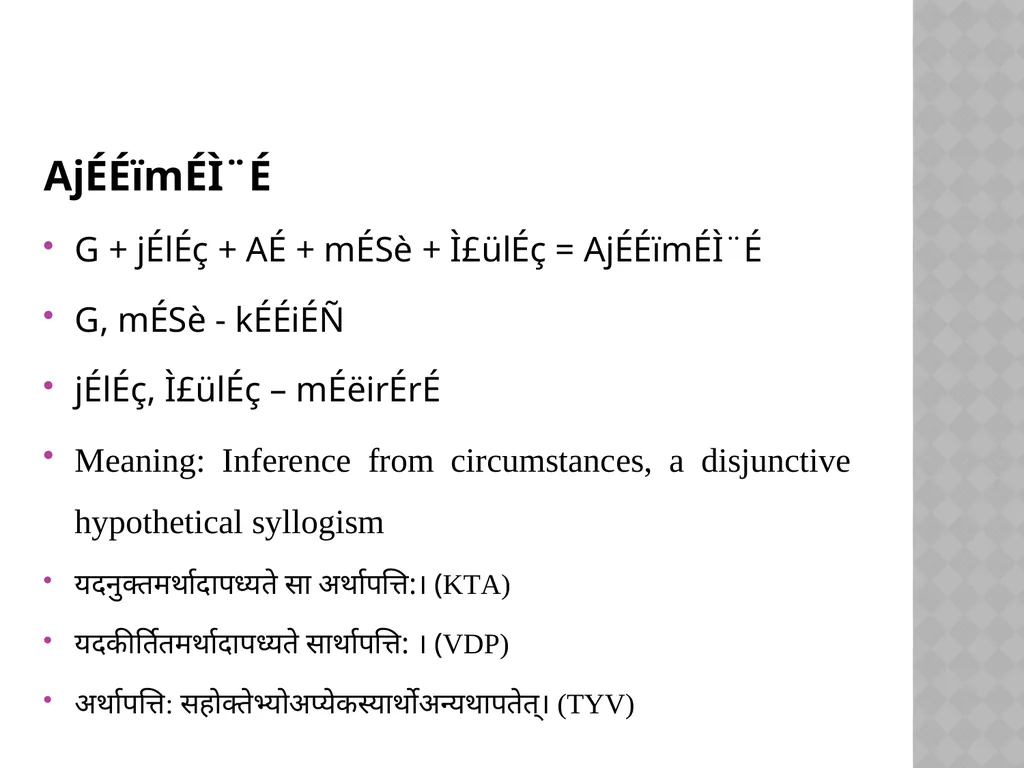
AjÉÉïmĘ́É
G + jÉlÉç + AÉ + mÉSè + Ì£ülÉç = AjÉÉïmĘ́É
G, mÉSè - kÉÉiÉÑ
jÉlÉç, Ì£ülÉç – mÉëirÉrÉ
Meaning: Inference from circumstances, a disjunctive hypothetical syllogism
यदनुक्तमर्थादापध्यते सा अर्थापत्ति:। (KTA)
यदकीर्तितमर्थादापध्यते सार्थापत्ति: । (VDP)
अर्थापत्ति: सहोक्तेभ्योअप्येकस्यार्थोअन्यथापतेत्। (TYV)<br>
G + jÉlÉç + AÉ + mÉSè + Ì£ülÉç = AjÉÉïmĘ́É
G, mÉSè - kÉÉiÉÑ
jÉlÉç, Ì£ülÉç – mÉëirÉrÉ
Meaning: Inference from circumstances, a disjunctive hypothetical syllogism
यदनुक्तमर्थादापध्यते सा अर्थापत्ति:। (KTA)
यदकीर्तितमर्थादापध्यते सार्थापत्ति: । (VDP)
अर्थापत्ति: सहोक्तेभ्योअप्येकस्यार्थोअन्यथापतेत्। (TYV)<br>
93
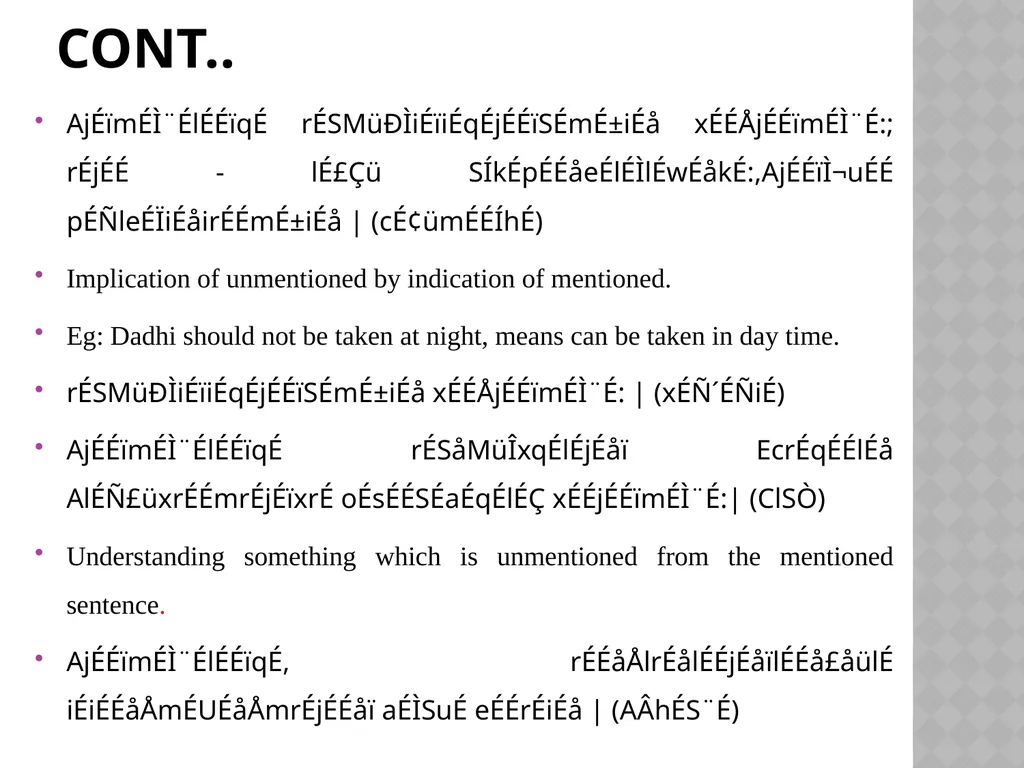
Cont.. AjÉïmĘ́ÉlÉÉïqÉ rÉSMüÐÌiÉïiÉqÉjÉÉïSÉmɱiÉå xÉÉÅjÉÉïmĘ́É:; rÉjÉÉ - lÉ£Çü SÍkÉpÉÉåeÉlÉÌlÉwÉåkÉ:,AjÉÉï̬uÉÉ pÉÑleÉÏiÉåirÉÉmɱiÉå | (cÉ¢ümÉÉÍhÉ)
Implication of unmentioned by indication of mentioned.
Eg: Dadhi should not be taken at night, means can be taken in day time.
rÉSMüÐÌiÉïiÉqÉjÉÉïSÉmɱiÉå xÉÉÅjÉÉïmĘ́É: | (xÉÑ´ÉÑiÉ)
AjÉÉïmĘ́ÉlÉÉïqÉ rÉSåMüÎxqÉlÉjÉåï EcrÉqÉÉlÉå AlÉÑ£üxrÉÉmrÉjÉïxrÉ oÉsÉÉSÉaÉqÉlÉÇ xÉÉjÉÉïmĘ́É:| (ClSÒ)
Understanding something which is unmentioned from the mentioned sentence.
AjÉÉïmĘ́ÉlÉÉïqÉ, rÉÉåÅlrÉålÉÉjÉåïlÉÉå£åülÉ iÉiÉÉåÅmÉUÉåÅmrÉjÉÉåï aÉÌSuÉ eÉÉrÉiÉå | (AÂhÉS¨É)<br>
Implication of unmentioned by indication of mentioned.
Eg: Dadhi should not be taken at night, means can be taken in day time.
rÉSMüÐÌiÉïiÉqÉjÉÉïSÉmɱiÉå xÉÉÅjÉÉïmĘ́É: | (xÉÑ´ÉÑiÉ)
AjÉÉïmĘ́ÉlÉÉïqÉ rÉSåMüÎxqÉlÉjÉåï EcrÉqÉÉlÉå AlÉÑ£üxrÉÉmrÉjÉïxrÉ oÉsÉÉSÉaÉqÉlÉÇ xÉÉjÉÉïmĘ́É:| (ClSÒ)
Understanding something which is unmentioned from the mentioned sentence.
AjÉÉïmĘ́ÉlÉÉïqÉ, rÉÉåÅlrÉålÉÉjÉåïlÉÉå£åülÉ iÉiÉÉåÅmÉUÉåÅmrÉjÉÉåï aÉÌSuÉ eÉÉrÉiÉå | (AÂhÉS¨É)<br>
94
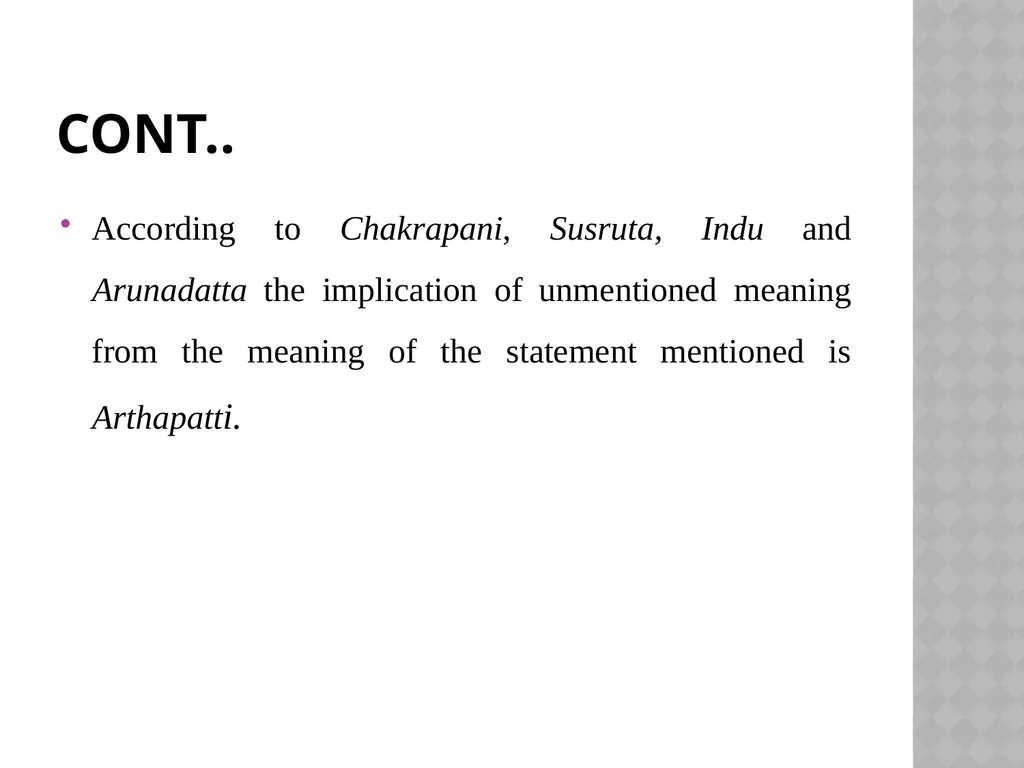
Cont.. According to Chakrapani, Susruta, Indu and Arunadatta the implication of unmentioned meaning from the meaning of the statement mentioned is Arthapatti.<br>
95
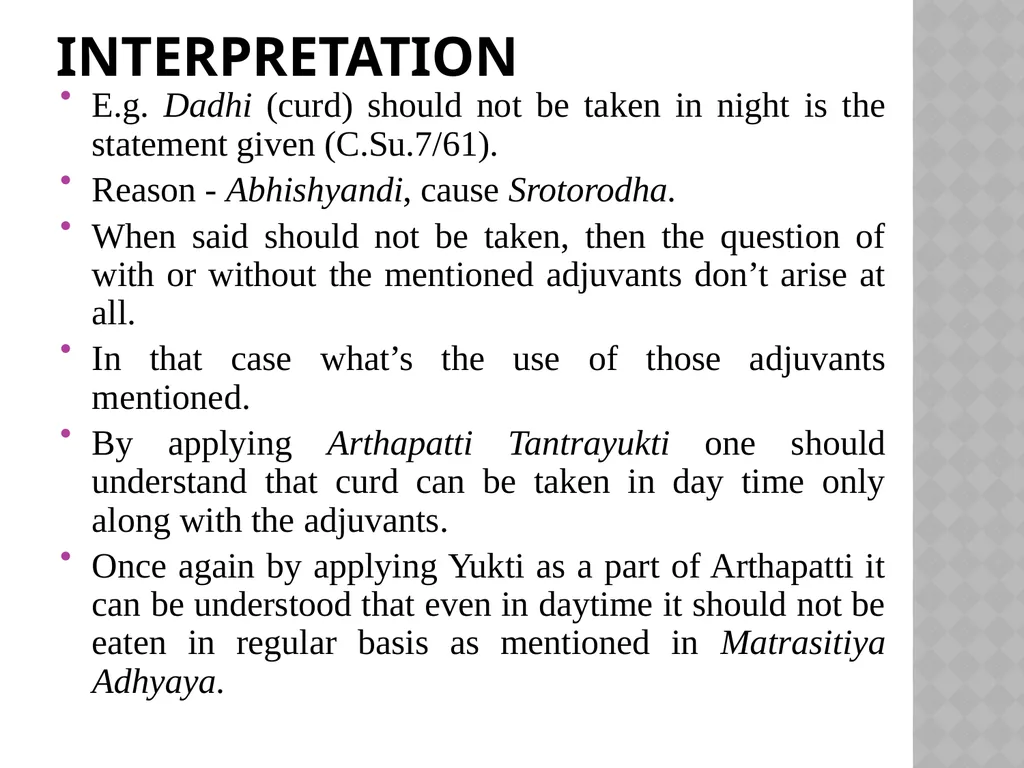
Interpretation E.g. Dadhi (curd) should not be taken in night is the statement given (C.Su.7/61).
Reason - Abhishyandi, cause Srotorodha.
When said should not be taken, then the question of with or without the mentioned adjuvants don’t arise at all.
In that case what’s the use of those adjuvants mentioned.
By applying Arthapatti Tantrayukti one should understand that curd can be taken in day time only along with the adjuvants.
Once again by applying Yukti as a part of Arthapatti it can be understood that even in daytime it should not be eaten in regular basis as mentioned in Matrasitiya Adhyaya.<br>
Reason - Abhishyandi, cause Srotorodha.
When said should not be taken, then the question of with or without the mentioned adjuvants don’t arise at all.
In that case what’s the use of those adjuvants mentioned.
By applying Arthapatti Tantrayukti one should understand that curd can be taken in day time only along with the adjuvants.
Once again by applying Yukti as a part of Arthapatti it can be understood that even in daytime it should not be eaten in regular basis as mentioned in Matrasitiya Adhyaya.<br>
96
Cont.. Eg: During winter season one who take habitually the preparation of Gorasa (dairy products), Ikshu Vikara (cane juice preparations), Vasa (fat), Taila (oil), Navodana (newly harvested rice) and hot water during the winter, his span of life is never decreased (CaSu.6/13)
By applying Arthapatti Tantrayukti, the one who is not habituating the above mentioned preparations in winter his life span will be decreased.
Arthapatti involves Yukti.
The fact that, during winter - Agni will be intense
Heavy and oily foods are not eaten, the intense Agni will digest the Dhatu leading to diseases and there by reduction of Ayu.
Similarly, it can be understood that these food preparations should not be accustomed in other seasons apart from winter<br>
By applying Arthapatti Tantrayukti, the one who is not habituating the above mentioned preparations in winter his life span will be decreased.
Arthapatti involves Yukti.
The fact that, during winter - Agni will be intense
Heavy and oily foods are not eaten, the intense Agni will digest the Dhatu leading to diseases and there by reduction of Ayu.
Similarly, it can be understood that these food preparations should not be accustomed in other seasons apart from winter<br>
97
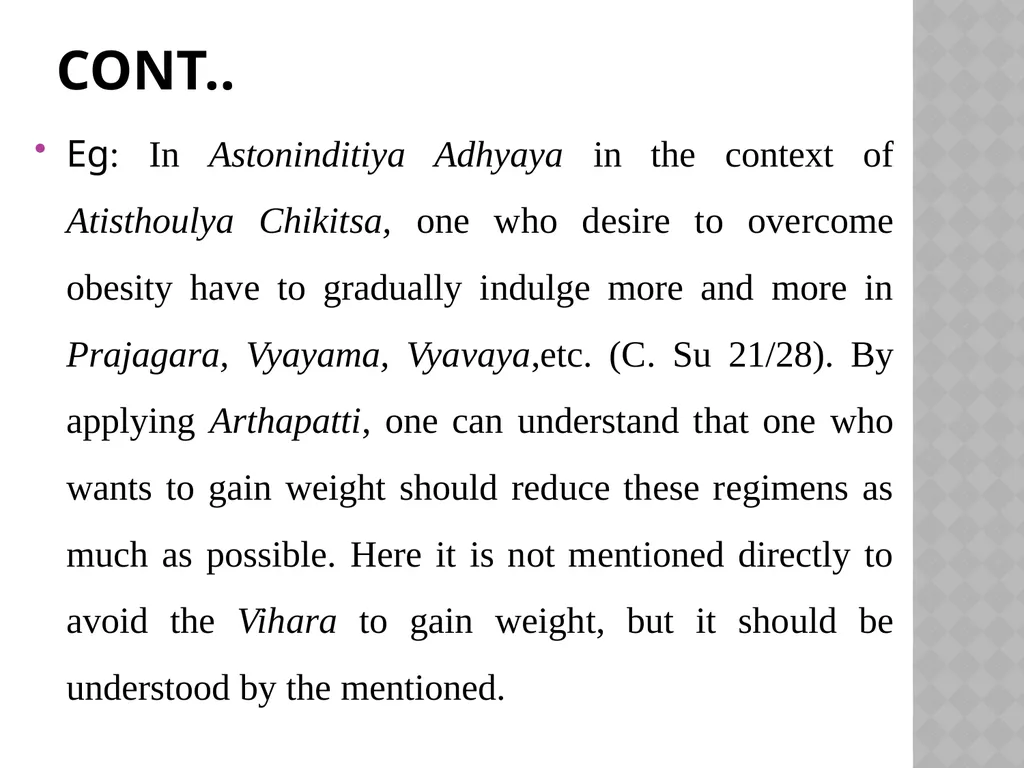
Cont.. Eg: In Astoninditiya Adhyaya in the context of Atisthoulya Chikitsa, one who desire to overcome obesity have to gradually indulge more and more in Prajagara, Vyayama, Vyavaya,etc. (C. Su 21/28). By applying Arthapatti, one can understand that one who wants to gain weight should reduce these regimens as much as possible. Here it is not mentioned directly to avoid the Vihara to gain weight, but it should be understood by the mentioned.<br>
98
Cont.. ÎxlÉakÉqÉvlÉÏrÉÉiÉç. . . . . iÉxqÉÉSeÉsmɳÉWûxÉÇxiÉlqÉlÉÉ pÉÑgeÉÏiÉ| (1/24.1-9)
Intake of Ushna Ahara (warm food) gives satisfaction, increases Jatharagni, food taken will get digested quickly, will make Vayu to move in Anuloma Gati (downward direction), reduces Kapha.
From given statements it can be derived that those who don’t eat Ushna Ahara will not get the effects mentioned.
Like if one doesn’t take Ushna Ahara his Agni will not get increased, the food will not quickly undergo digestion, Vata will not move in downward direction and Kapha will not be limited.
Similarly, Arthapatti can be applied in other Aharavidhi Vidhana like Snigdamashniyat, etc.<br>
Intake of Ushna Ahara (warm food) gives satisfaction, increases Jatharagni, food taken will get digested quickly, will make Vayu to move in Anuloma Gati (downward direction), reduces Kapha.
From given statements it can be derived that those who don’t eat Ushna Ahara will not get the effects mentioned.
Like if one doesn’t take Ushna Ahara his Agni will not get increased, the food will not quickly undergo digestion, Vata will not move in downward direction and Kapha will not be limited.
Similarly, Arthapatti can be applied in other Aharavidhi Vidhana like Snigdamashniyat, etc.<br>
99
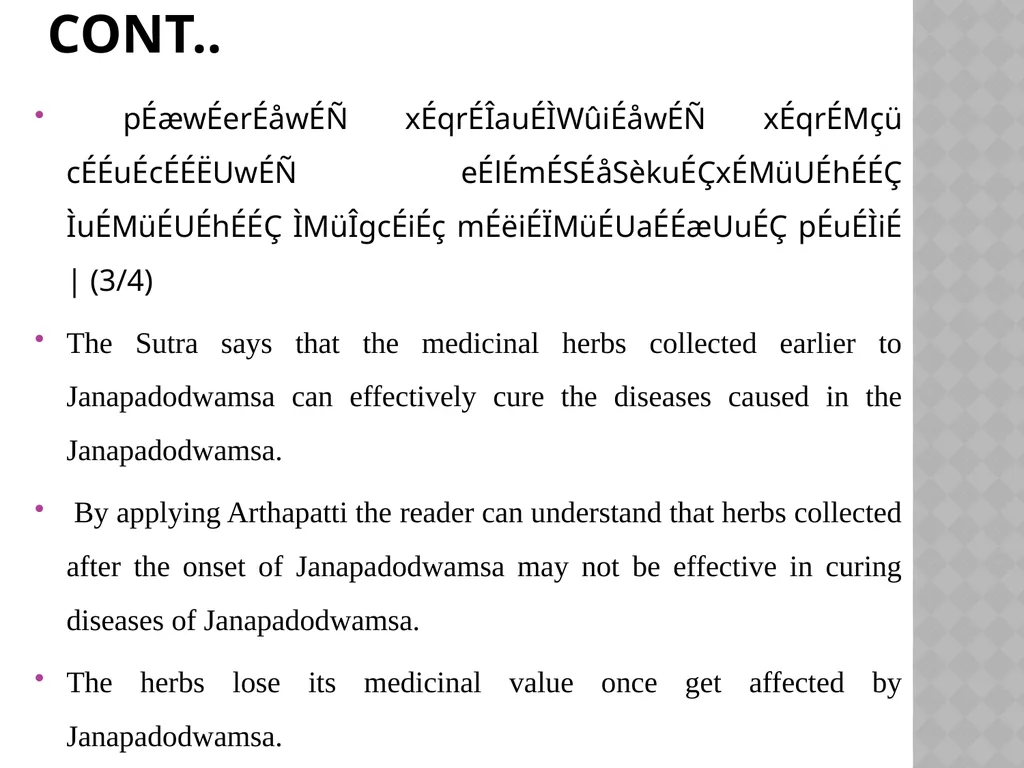
Cont.. pÉæwÉerÉåwÉÑ xÉqrÉÎauÉÌWûiÉåwÉÑ xÉqrÉMçü cÉÉuÉcÉÉËUwÉÑ eÉlÉmÉSÉåSèkuÉÇxÉMüUÉhÉÉÇ ÌuÉMüÉUÉhÉÉÇ ÌMüÎgcÉiÉç mÉëiÉÏMüÉUaÉÉæUuÉÇ pÉuÉÌiÉ | (3/4)
The Sutra says that the medicinal herbs collected earlier to Janapadodwamsa can effectively cure the diseases caused in the Janapadodwamsa.
By applying Arthapatti the reader can understand that herbs collected after the onset of Janapadodwamsa may not be effective in curing diseases of Janapadodwamsa.
The herbs lose its medicinal value once get affected by Janapadodwamsa.<br>
The Sutra says that the medicinal herbs collected earlier to Janapadodwamsa can effectively cure the diseases caused in the Janapadodwamsa.
By applying Arthapatti the reader can understand that herbs collected after the onset of Janapadodwamsa may not be effective in curing diseases of Janapadodwamsa.
The herbs lose its medicinal value once get affected by Janapadodwamsa.<br>
100
Discussion Arthapathi and Viparyaya are two Tantrayukti which are confused among each other in applying and understanding the Samhita.
If the definition and examples of cited by different authors are keenly observed, there is a stark difference between the two.
In Arthapathi a new meaning is derived from the given statement or it may be opposite to that of the given statement or partially opposite or giving wholly a new meaning.
In Viparyaya there is mentioning of what has to be understood in opposite.
In Arthapathi there is a intensive use of Logic ( Yukti)
Where in Viparyaya, the quantum of logic used is less or nil.<br>
If the definition and examples of cited by different authors are keenly observed, there is a stark difference between the two.
In Arthapathi a new meaning is derived from the given statement or it may be opposite to that of the given statement or partially opposite or giving wholly a new meaning.
In Viparyaya there is mentioning of what has to be understood in opposite.
In Arthapathi there is a intensive use of Logic ( Yukti)
Where in Viparyaya, the quantum of logic used is less or nil.<br>
101
Cont.. In application of Viparyaya a word to word opposite details have to be taken, whereas, in Arthapatti derivation of a new meaning based on the complete statement in the given circumstance is to be taken.
In the example one cited above under Arthapatti, if Viparyaya is applied then it evolves that Curd can be taken at day time without any further conditions applied to it.
In that case the Shastraartha can go wrong leading to not solving the purpose of the Shastra.<br>
In the example one cited above under Arthapatti, if Viparyaya is applied then it evolves that Curd can be taken at day time without any further conditions applied to it.
In that case the Shastraartha can go wrong leading to not solving the purpose of the Shastra.<br>
102
Tantrayukti is a very important tool in Vakyayojana and Arthayojana
It helps to understand the Gudarthas.
There is difference in opinion regarding the number and name of Tantrayukti but they are nearly same.
Tantrayukti preserves the originality of the science and thus keeps science alive by being applicable in all point of time.
Interpretation of Shlokas using Tantrayukti helps to gain in depth knowledge of the literature and thereby increase in success rate of treatments. CONCLUSION<br>
It helps to understand the Gudarthas.
There is difference in opinion regarding the number and name of Tantrayukti but they are nearly same.
Tantrayukti preserves the originality of the science and thus keeps science alive by being applicable in all point of time.
Interpretation of Shlokas using Tantrayukti helps to gain in depth knowledge of the literature and thereby increase in success rate of treatments. CONCLUSION<br>
103
Understanding of a Tantra using Tantrayukti makes the reader to get a comprehensive knowledge and the connection between different Sthana, Adhyaya, Prakarana and Shloka. Cont..<br>
104
THANK YOU<br>