
Teacher notes – B2.2.2 Students should know the
Description: Teacher notes B2.2.2 Students should know the structure and functioning of the human heart and lungs, including how lungs are adapted for gaseous exchange. Knowledge of the lungs is restricted to the trachea, bronchi, alveoli and the
Related Topics
Download Presentation
"Teacher notes – B2.2.2 Students should know the" is the property of its rightful owner. Permission is granted to download and print the materials on this website for personal, non-commercial use only, and to display it on your personal computer provided you do not modify the materials and that you retain all copyright notices contained in the materials. By downloading content from our website, you accept the terms of this agreement.
Presentation Transcript
slide1. Teacher notes – B2.2.2 Students should know the structure and functioning of the human heart and lungs, including how lungs are adapted for gaseous exchange.
Knowledge of the lungs is restricted to the trachea, bronchi, alveoli and the capillary network surrounding the alveoli.<br>
slide2. Define key scientific terms Specification reference – B2.2.2 Respiratory System Structure Describe the structure of the respiratory system Describe how the lungs are adapted to their function<br>
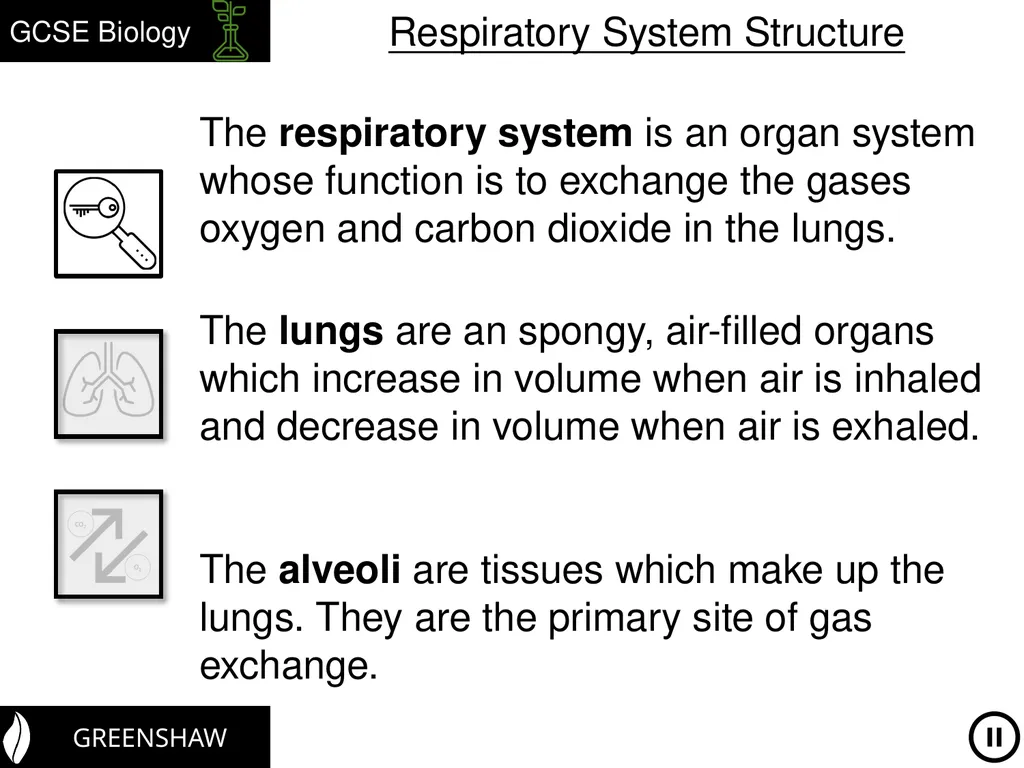
slide3. The respiratory system is an organ system whose function is to exchange the gases oxygen and carbon dioxide in the lungs. Respiratory System Structure The lungs are an spongy, air-filled organs which increase in volume when air is inhaled and decrease in volume when air is exhaled. The alveoli are tissues which make up the lungs. They are the primary site of gas exchange.<br>
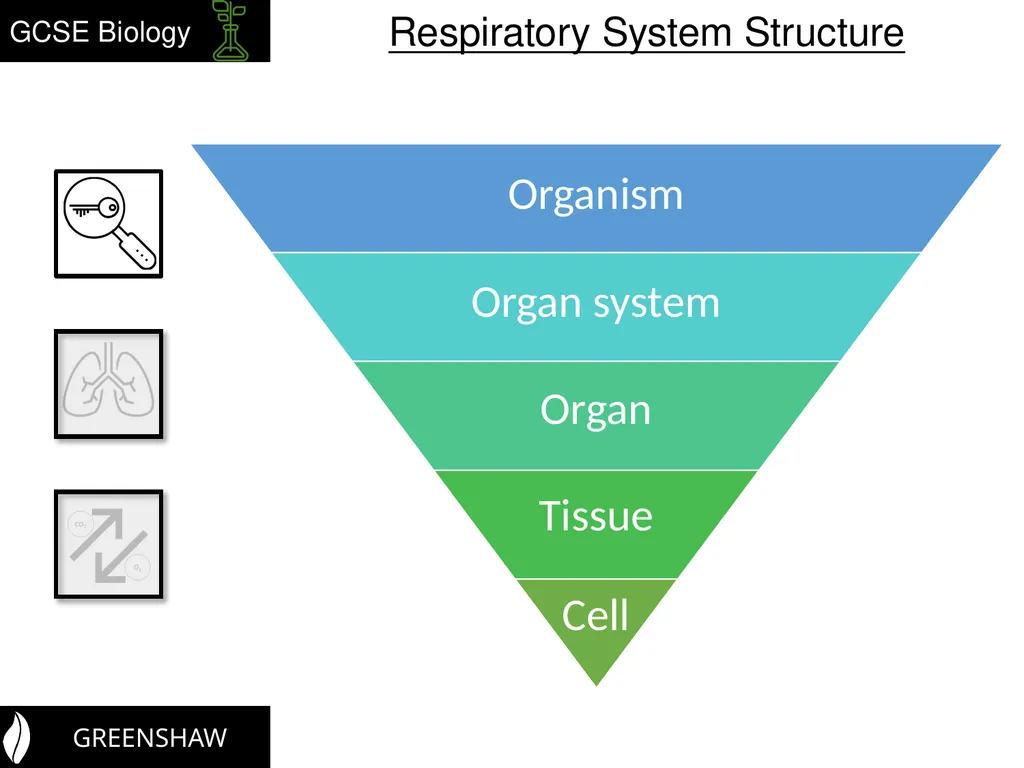
slide4. Respiratory System Structure Place the following in order from smallest to largest:
organ, cell, organ system, organism, tissue<br>
slide5. Respiratory System Structure<br>
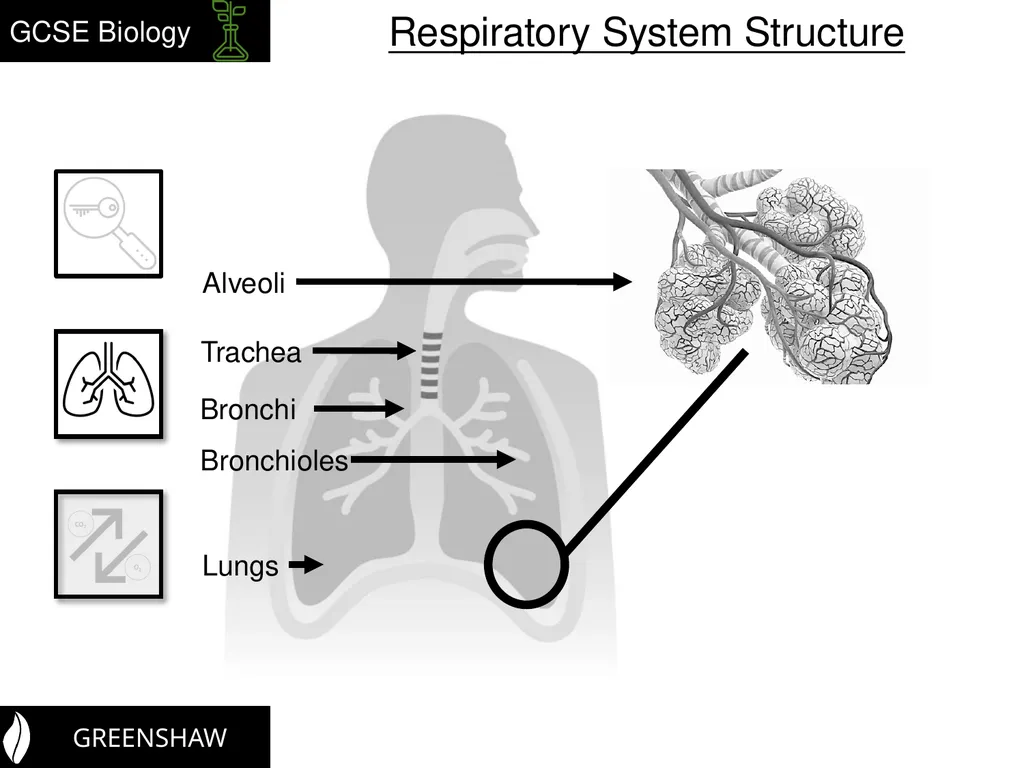
slide6. Respiratory System Structure Trachea Bronchi Bronchioles Lungs Alveoli<br>
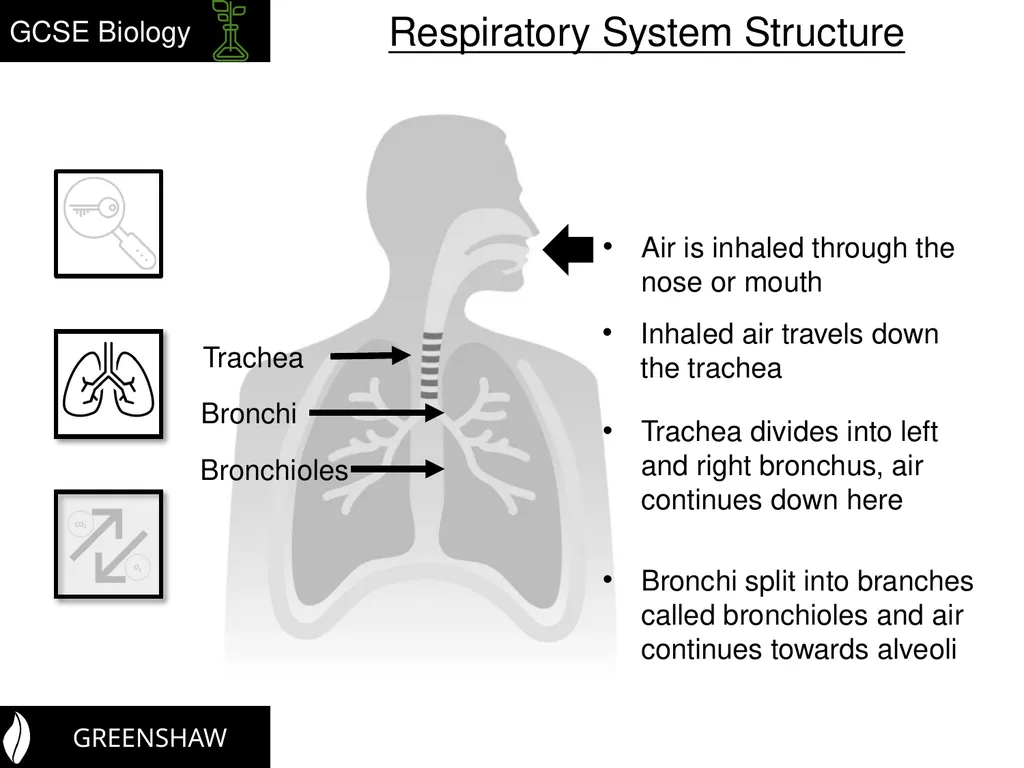
slide7. Respiratory System Structure Trachea Trachea divides into left and right bronchus, air continues down here Bronchi Inhaled air travels down the trachea Bronchioles Bronchi split into branches called bronchioles and air continues towards alveoli Air is inhaled through the nose or mouth<br>
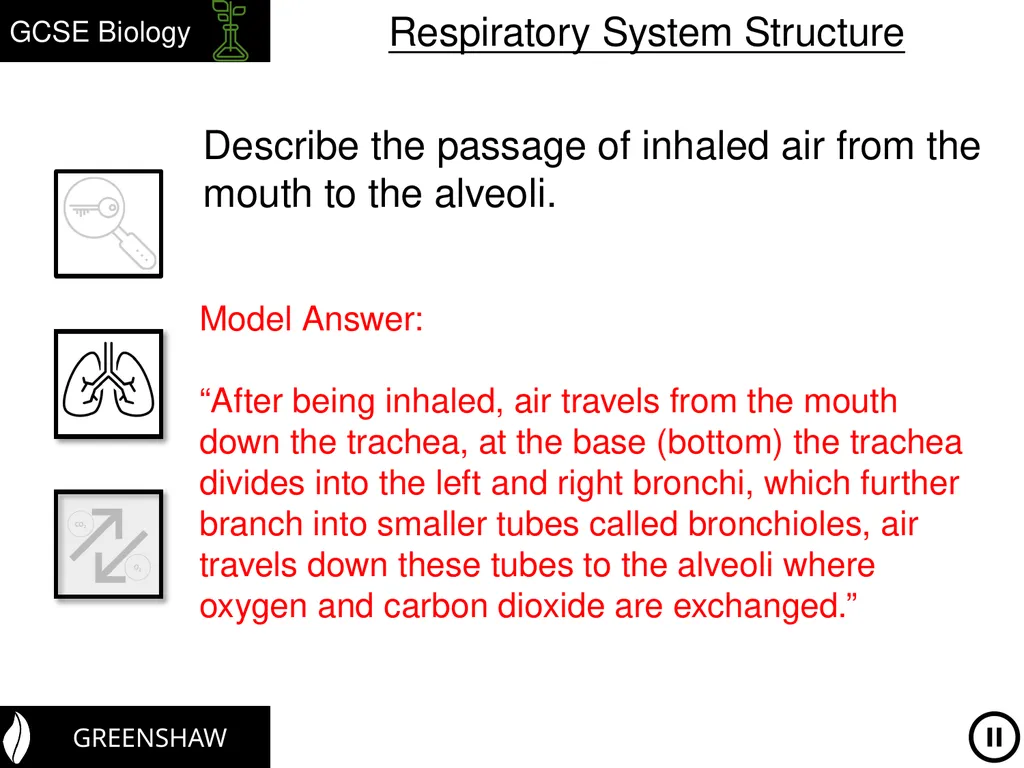
slide8. Respiratory System Structure Describe the passage of inhaled air from the mouth to the alveoli. Describe questions require you to recall some facts, events or process in an accurate way.<br>
slide9. Respiratory System Structure Describe the passage of inhaled air from the mouth to the alveoli. Model Answer:
“After being inhaled, air travels from the mouth down the trachea, at the base (bottom) the trachea divides into the left and right bronchi, which further branch into smaller tubes called bronchioles, air travels down these tubes to the alveoli where oxygen and carbon dioxide are exchanged.”<br>
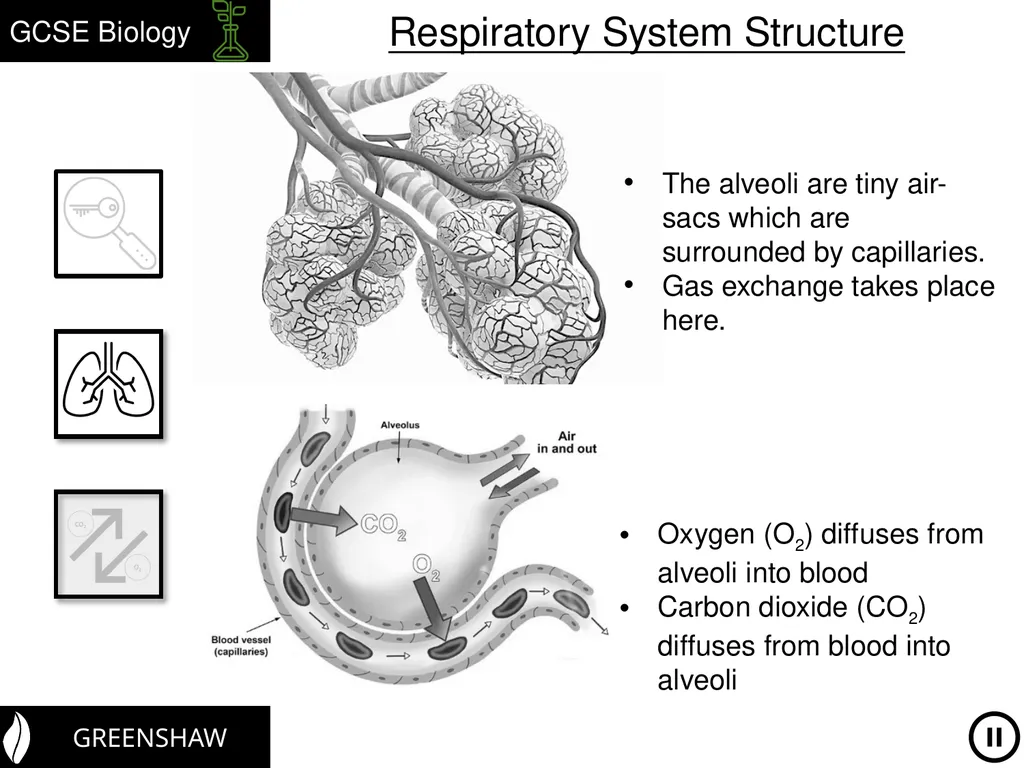
slide10. Respiratory System Structure The alveoli are tiny air-sacs which are surrounded by capillaries.
Gas exchange takes place here. Oxygen (O2) diffuses from alveoli into blood
Carbon dioxide (CO2) diffuses from blood into alveoli<br>
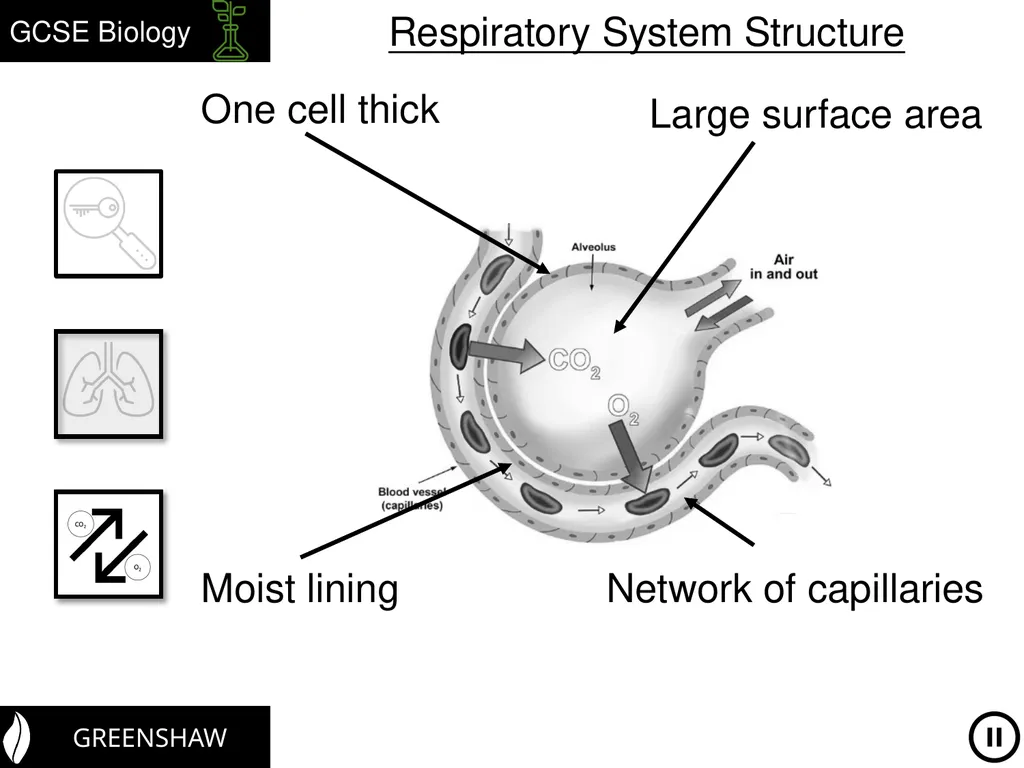
slide11. Respiratory System Structure Moist lining One cell thick Network of capillaries Large surface area<br>
slide12. Respiratory System Structure Give three adaptations of the alveoli and explain how they allow large amounts of oxygen to enter the blood. Explain questions require you to make something clear, or state the reasons for something happening.<br>
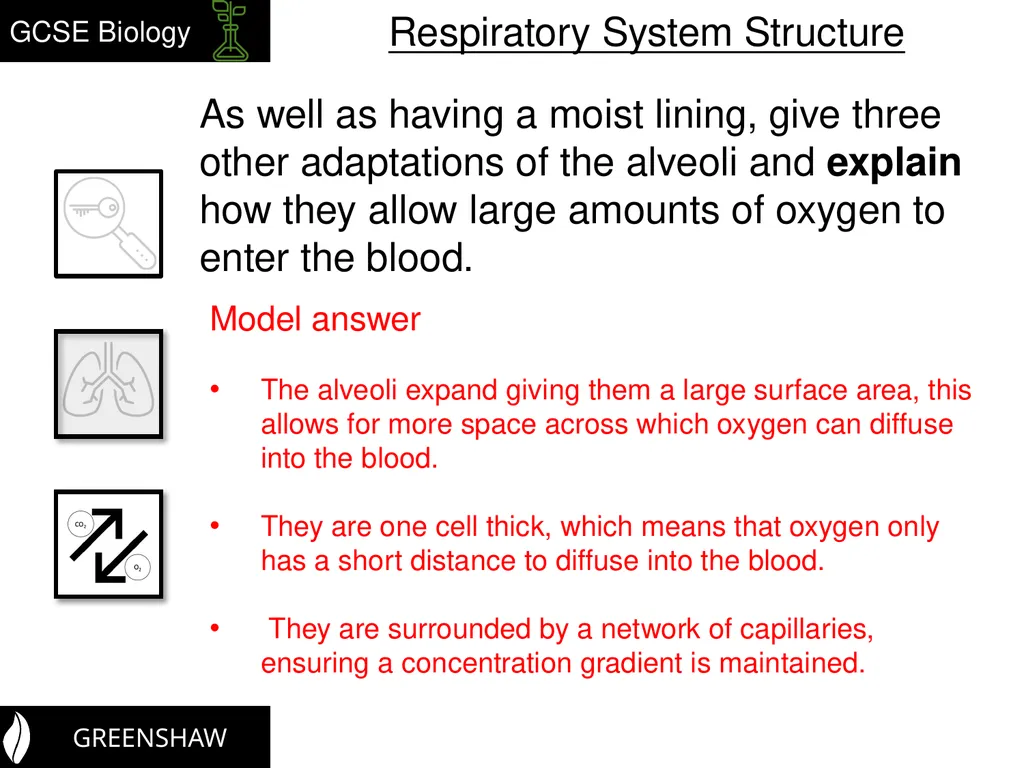
slide13. Respiratory System Structure As well as having a moist lining, give three other adaptations of the alveoli and explain how they allow large amounts of oxygen to enter the blood. Model answer
The alveoli expand giving them a large surface area, this allows for more space across which oxygen can diffuse into the blood.
They are one cell thick, which means that oxygen only has a short distance to diffuse into the blood.
They are surrounded by a network of capillaries, ensuring a concentration gradient is maintained.<br>
slide14. Define key scientific terms Specification reference – B2.2.2 Respiratory System Structure Describe the structure of the respiratory system Describe how the lungs are adapted to their function<br>
Knowledge of the lungs is restricted to the trachea, bronchi, alveoli and the capillary network surrounding the alveoli.<br>
slide2. Define key scientific terms Specification reference – B2.2.2 Respiratory System Structure Describe the structure of the respiratory system Describe how the lungs are adapted to their function<br>
slide3. The respiratory system is an organ system whose function is to exchange the gases oxygen and carbon dioxide in the lungs. Respiratory System Structure The lungs are an spongy, air-filled organs which increase in volume when air is inhaled and decrease in volume when air is exhaled. The alveoli are tissues which make up the lungs. They are the primary site of gas exchange.<br>
slide4. Respiratory System Structure Place the following in order from smallest to largest:
organ, cell, organ system, organism, tissue<br>
slide5. Respiratory System Structure<br>
slide6. Respiratory System Structure Trachea Bronchi Bronchioles Lungs Alveoli<br>
slide7. Respiratory System Structure Trachea Trachea divides into left and right bronchus, air continues down here Bronchi Inhaled air travels down the trachea Bronchioles Bronchi split into branches called bronchioles and air continues towards alveoli Air is inhaled through the nose or mouth<br>
slide8. Respiratory System Structure Describe the passage of inhaled air from the mouth to the alveoli. Describe questions require you to recall some facts, events or process in an accurate way.<br>
slide9. Respiratory System Structure Describe the passage of inhaled air from the mouth to the alveoli. Model Answer:
“After being inhaled, air travels from the mouth down the trachea, at the base (bottom) the trachea divides into the left and right bronchi, which further branch into smaller tubes called bronchioles, air travels down these tubes to the alveoli where oxygen and carbon dioxide are exchanged.”<br>
slide10. Respiratory System Structure The alveoli are tiny air-sacs which are surrounded by capillaries.
Gas exchange takes place here. Oxygen (O2) diffuses from alveoli into blood
Carbon dioxide (CO2) diffuses from blood into alveoli<br>
slide11. Respiratory System Structure Moist lining One cell thick Network of capillaries Large surface area<br>
slide12. Respiratory System Structure Give three adaptations of the alveoli and explain how they allow large amounts of oxygen to enter the blood. Explain questions require you to make something clear, or state the reasons for something happening.<br>
slide13. Respiratory System Structure As well as having a moist lining, give three other adaptations of the alveoli and explain how they allow large amounts of oxygen to enter the blood. Model answer
The alveoli expand giving them a large surface area, this allows for more space across which oxygen can diffuse into the blood.
They are one cell thick, which means that oxygen only has a short distance to diffuse into the blood.
They are surrounded by a network of capillaries, ensuring a concentration gradient is maintained.<br>
slide14. Define key scientific terms Specification reference – B2.2.2 Respiratory System Structure Describe the structure of the respiratory system Describe how the lungs are adapted to their function<br>