Teaching Activity Using frequencies in tree diagrams to calculate probabilities Using frequencies to find probabilities Use frequencies with tree diagrams and other forms of representation to calculate or estimate probabilities, including
"Teaching Activity Using frequencies in tree" is the property of its rightful owner. Permission is granted to
download and print the materials on this website for personal, non-commercial use only, and to display it
on your personal computer provided you do not modify the materials and that you retain all copyright
notices contained in the materials. By downloading content from our website, you accept the terms of this
agreement.
Presentation Transcript
01
Teaching Activity
Using frequencies in tree diagrams to calculate probabilities<br>
02
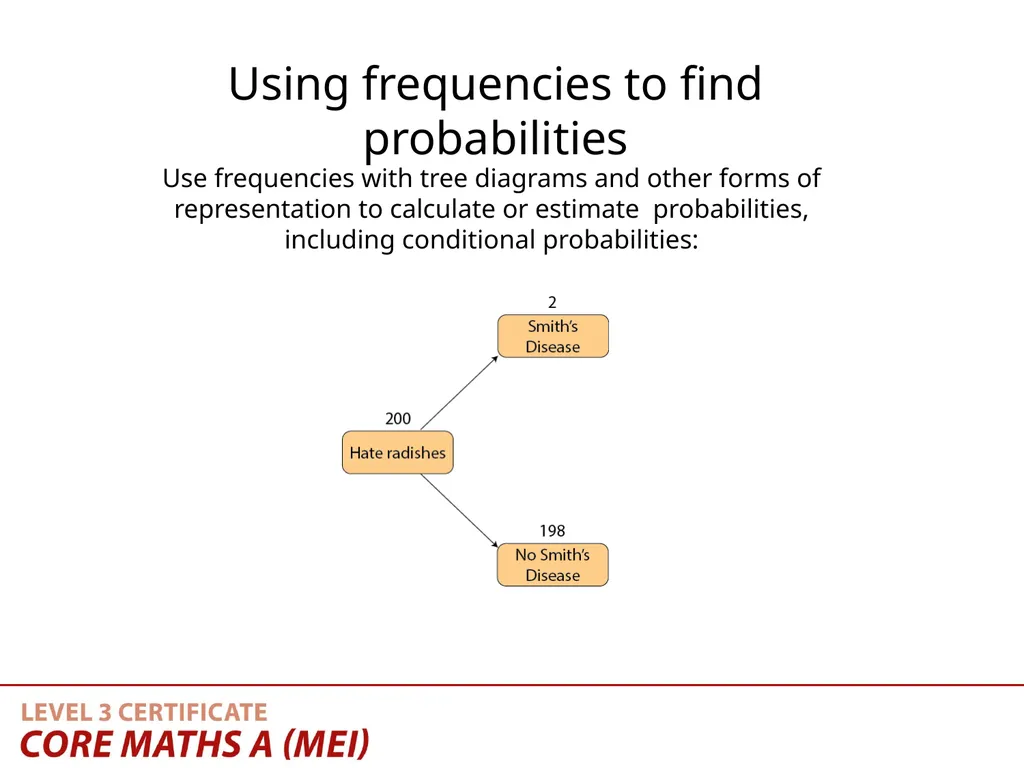
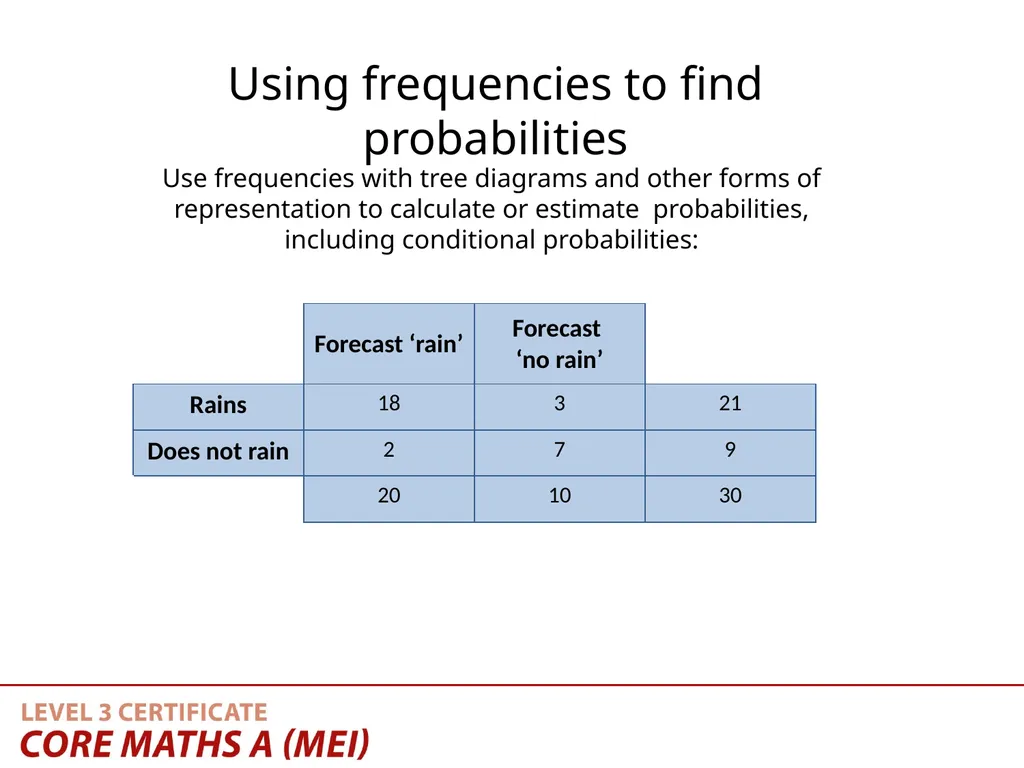
Using frequencies to find probabilities Use frequencies with tree diagrams and other forms of representation to calculate or estimate probabilities, including conditional probabilities:<br>
03
Using frequencies to find probabilities Use frequencies with tree diagrams and other forms of representation to calculate or estimate probabilities, including conditional probabilities:<br>
04
Using frequencies to find probabilities Use frequencies with tree diagrams and other forms of representation to calculate or estimate probabilities, including conditional probabilities:<br>
05
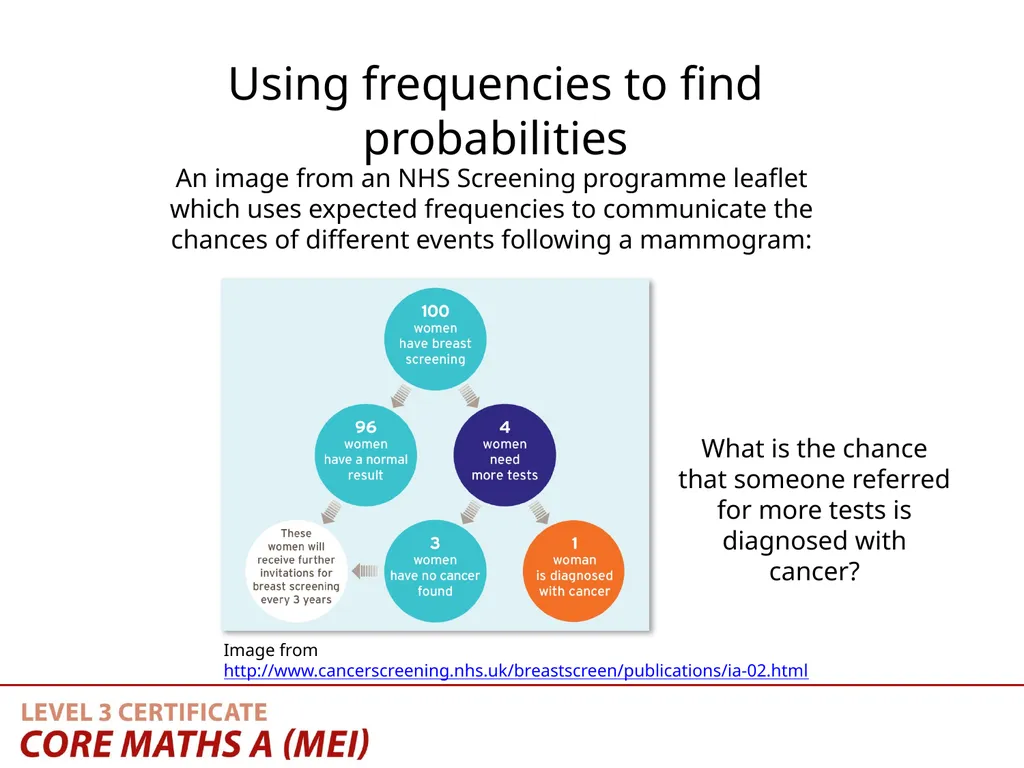
Using frequencies to find probabilities An image from an NHS Screening programme leaflet which uses expected frequencies to communicate the chances of different events following a mammogram: What is the chance that someone referred for more tests is diagnosed with cancer? Image from http://www.cancerscreening.nhs.uk/breastscreen/publications/ia-02.html<br>
06
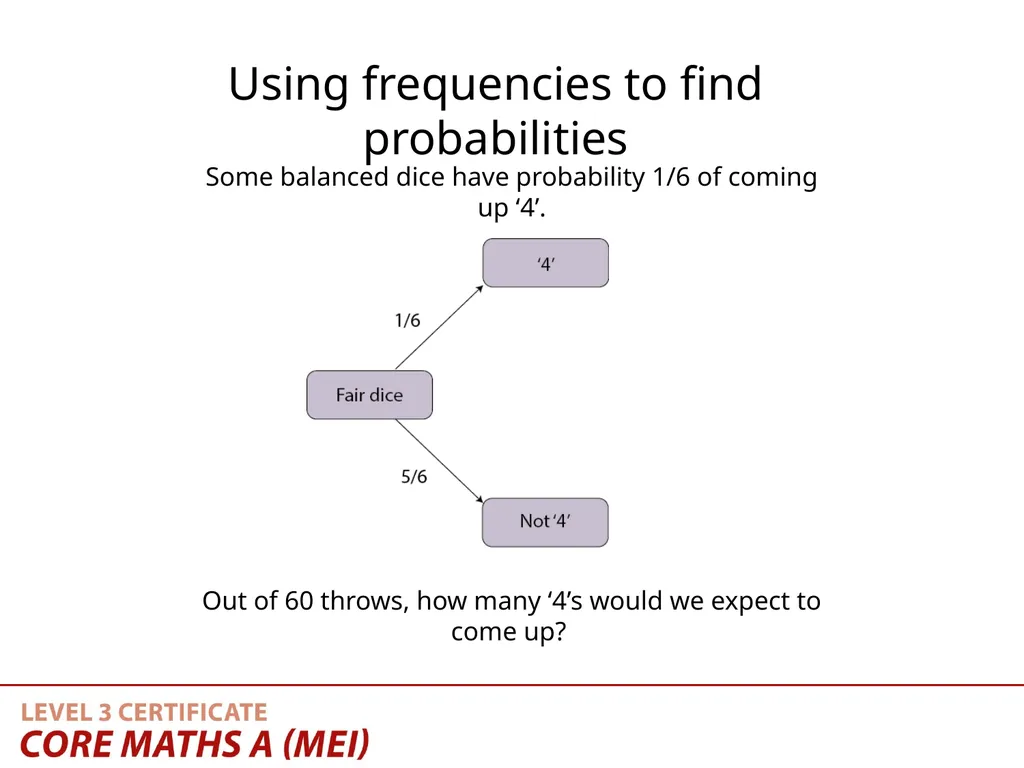
Using frequencies to find probabilities Some balanced dice have probability 1/6 of coming up ‘4’. Out of 60 throws, how many ‘4’s would we expect to come up?<br>
07
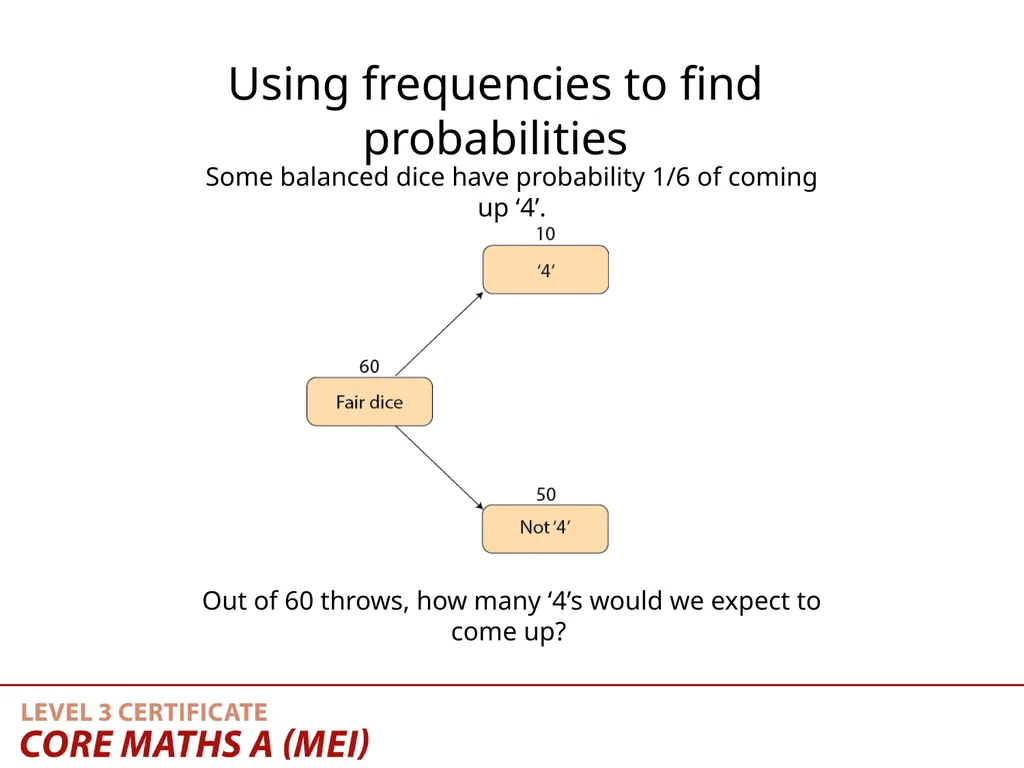
Using frequencies to find probabilities Some balanced dice have probability 1/6 of coming up ‘4’. Out of 60 throws, how many ‘4’s would we expect to come up?<br>
08
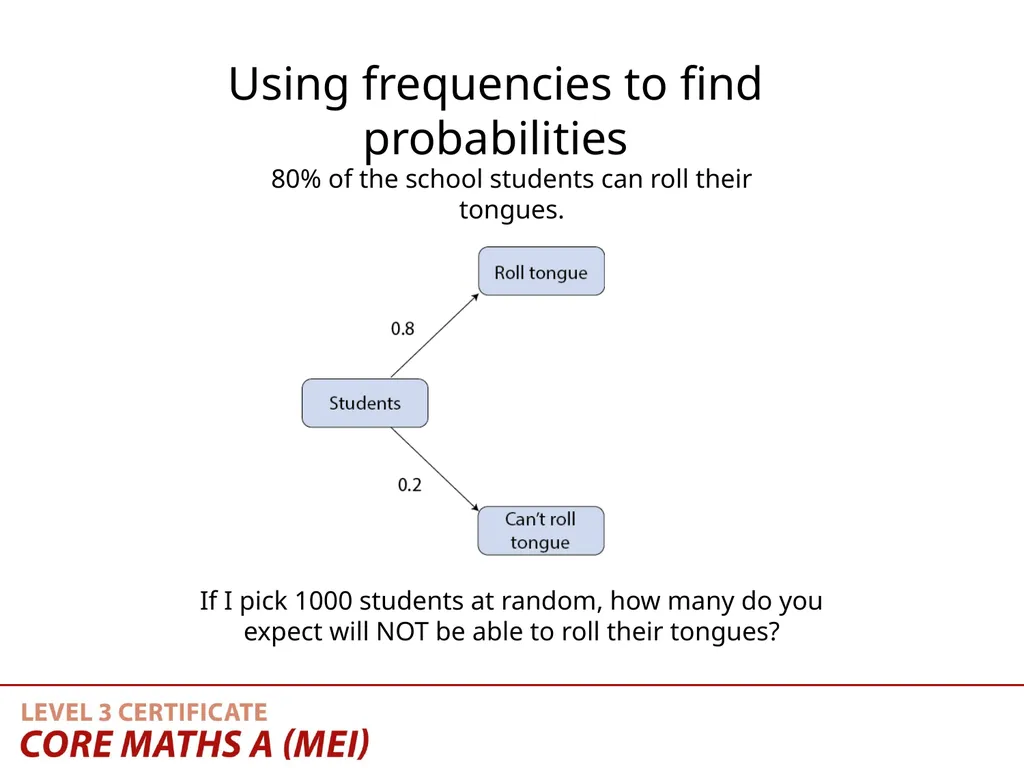
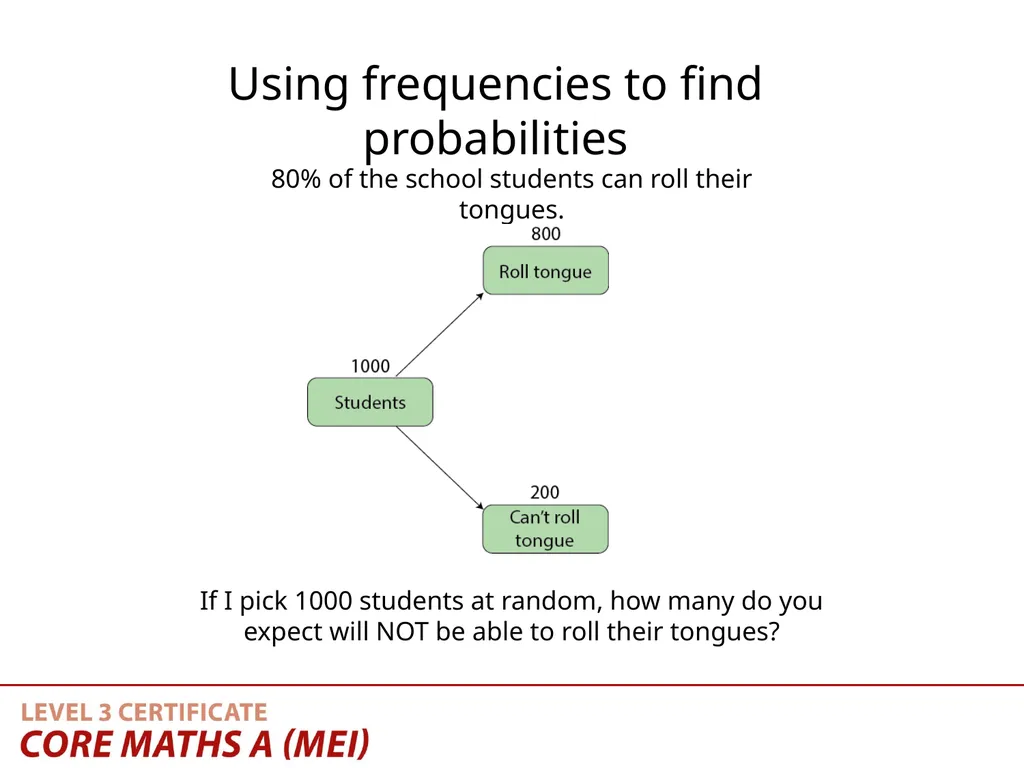
Using frequencies to find probabilities 80% of the school students can roll their tongues. If I pick 1000 students at random, how many do you expect will NOT be able to roll their tongues?<br>
09
Using frequencies to find probabilities 80% of the school students can roll their tongues. If I pick 1000 students at random, how many do you expect will NOT be able to roll their tongues?<br>
10
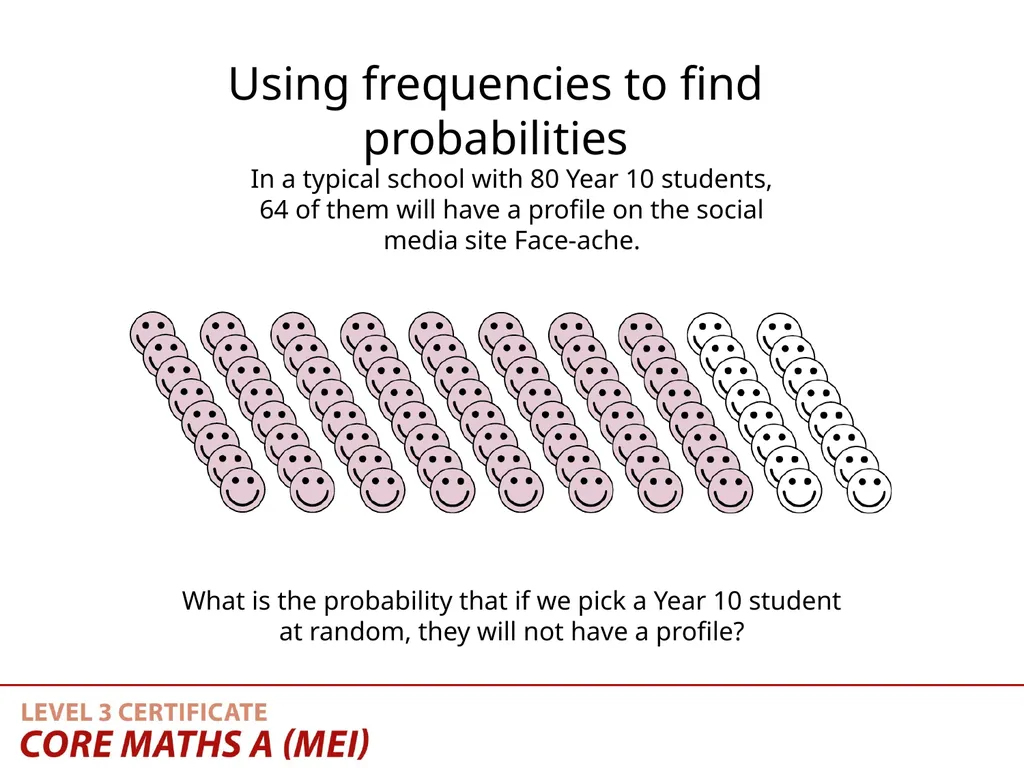
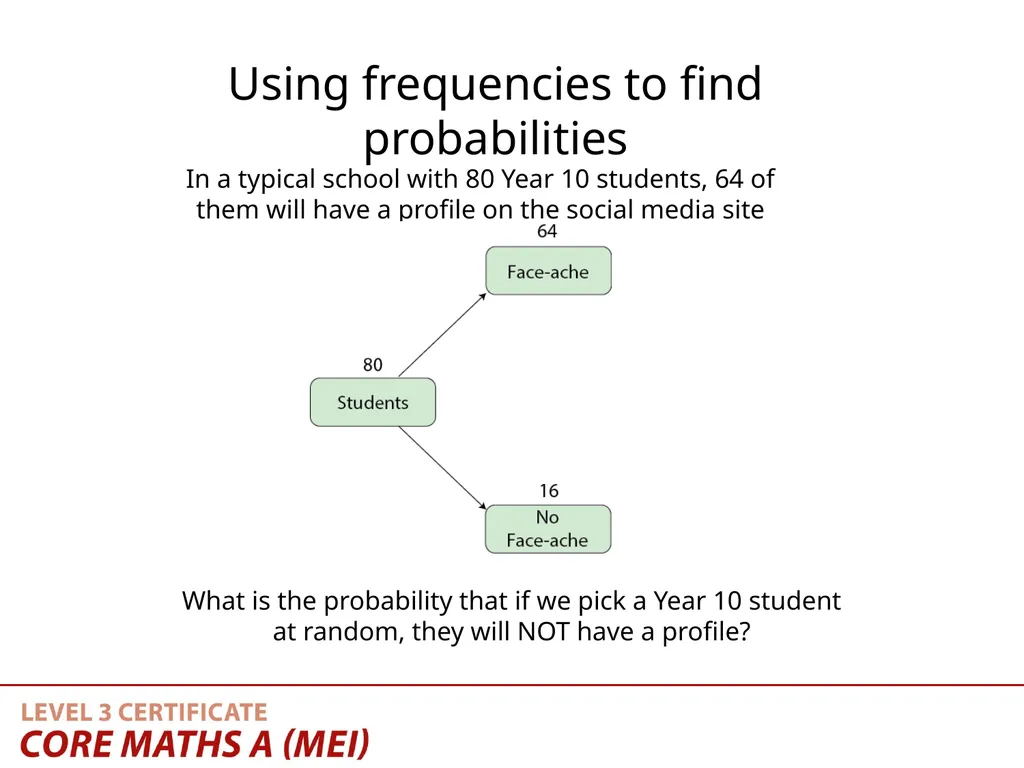
Using frequencies to find probabilities In a typical school with 80 Year 10 students, 64 of them will have a profile on the social media site Face-ache. What is the probability that if we pick a Year 10 student at random, they will not have a profile?<br>
11
Using frequencies to find probabilities In a typical school with 80 Year 10 students, 64 of them will have a profile on the social media site Face-ache. What is the probability that if we pick a Year 10 student at random, they will NOT have a profile?<br>
12
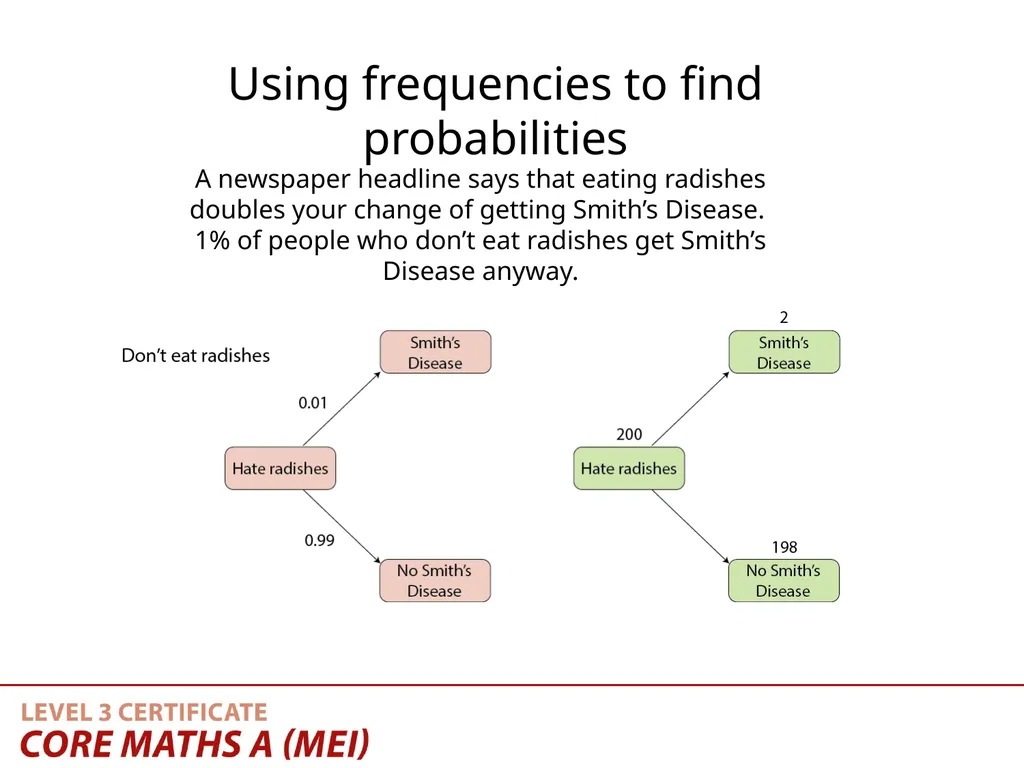
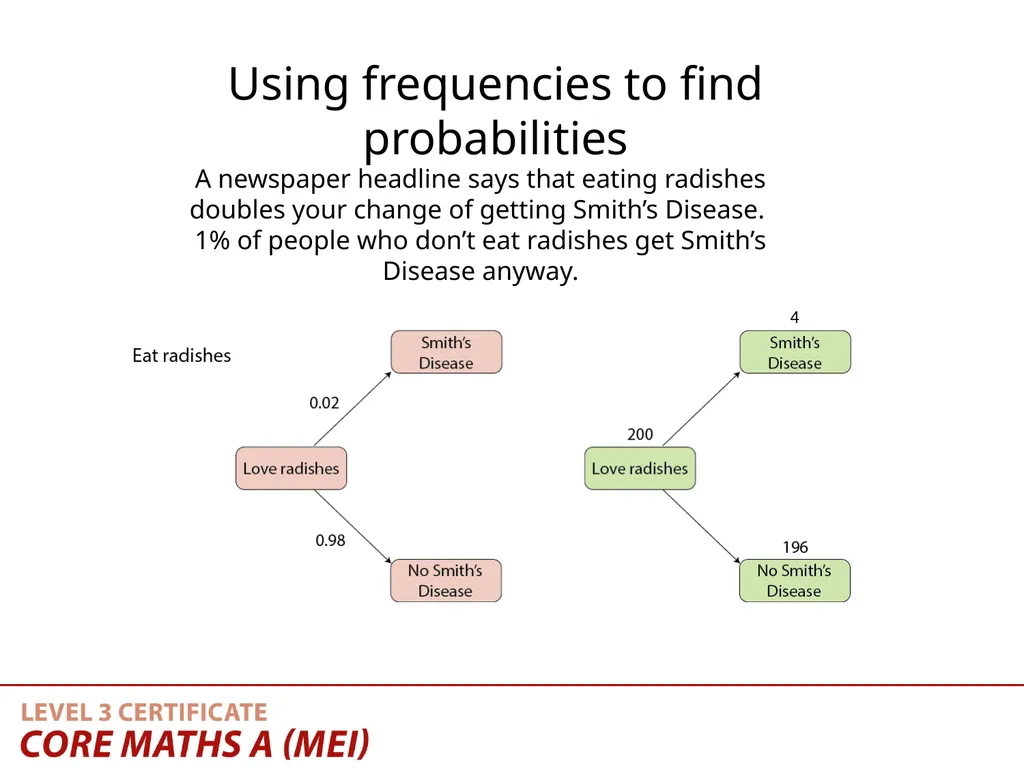
Using frequencies to find probabilities A newspaper headline says that eating radishes doubles your change of getting Smith’s Disease. 1% of people who don’t eat radishes get Smith’s Disease anyway.<br>
13
Using frequencies to find probabilities A newspaper headline says that eating radishes doubles your change of getting Smith’s Disease. 1% of people who don’t eat radishes get Smith’s Disease anyway.<br>
14
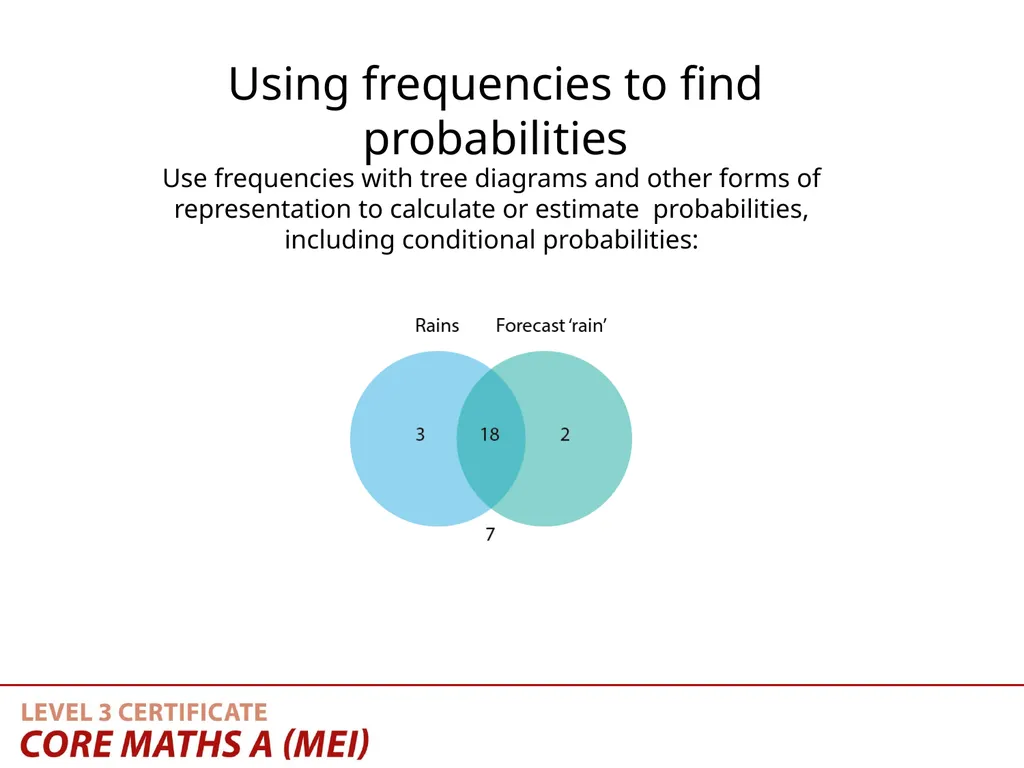
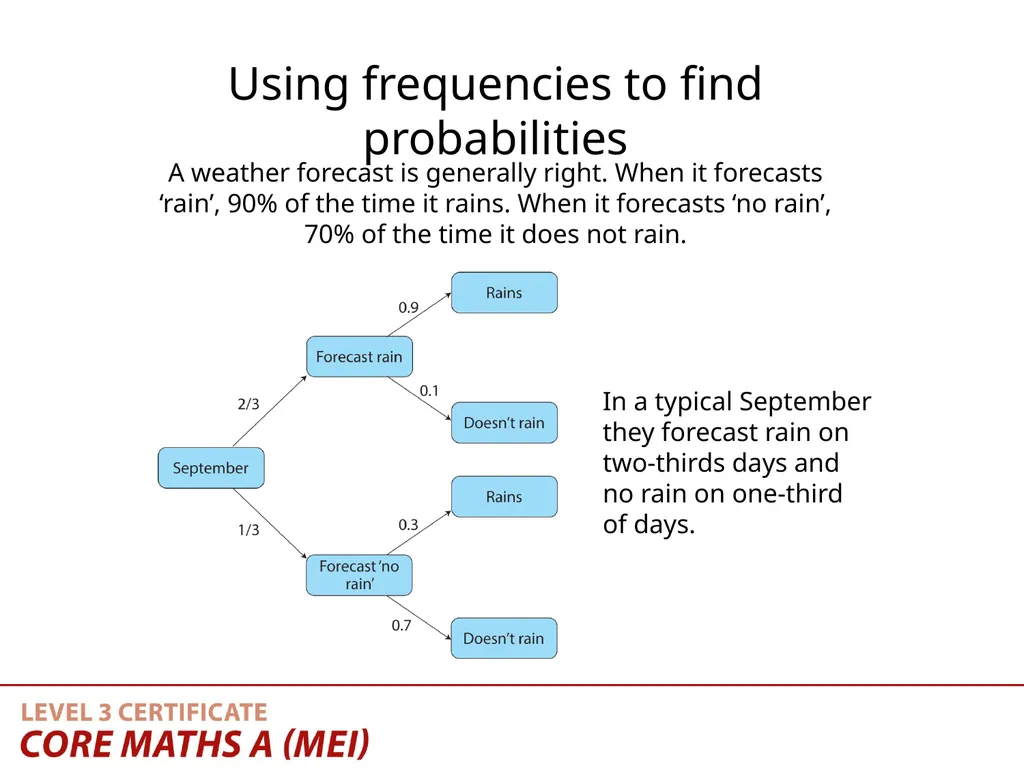
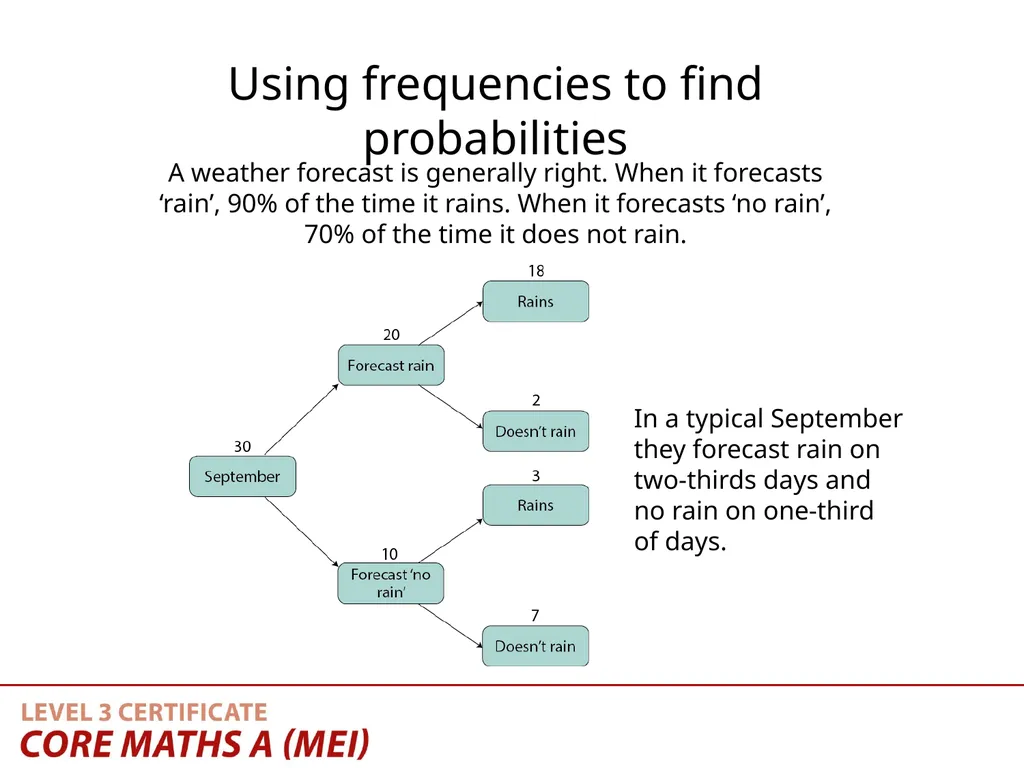
Using frequencies to find probabilities A weather forecast is generally right. When it forecasts ‘rain’, 90% of the time it rains. When it forecasts ‘no rain’, 70% of the time it does not rain. In a typical September they forecast rain on two-thirds days and no rain on one-third of days.<br>
15
Using frequencies to find probabilities A weather forecast is generally right. When it forecasts ‘rain’, 90% of the time it rains. When it forecasts ‘no rain’, 70% of the time it does not rain. In a typical September they forecast rain on two-thirds days and no rain on one-third of days.<br>