
Teaching Grit Retention and Persistence in Online
MY
Published · 23 slides · 0 views

1 / 1


Description
Teaching Grit Retention and Persistence in Online BSW Programs Twyla Lee, LCSW Robert Jesiolowski, LCSW Jessie Pablo, MSW Learning Objectives 1. Identify research findings regarding student retention in online BSW programs. 2. Explore
Related Topics
Share
Embed code
Download this presentation From Below
"Teaching Grit Retention and Persistence in Online" is the property of its rightful owner. Permission is granted to download and print the materials on this website for personal, non-commercial use only, and to display it on your personal computer provided you do not modify the materials and that you retain all copyright notices contained in the materials. By downloading content from our website, you accept the terms of this agreement.
Presentation Transcript
01
Teaching Grit Retention and Persistence in Online BSW Programs
Twyla Lee, LCSW
Robert Jesiolowski, LCSW
Jessie Pablo, MSW<br>
Twyla Lee, LCSW
Robert Jesiolowski, LCSW
Jessie Pablo, MSW<br>
02
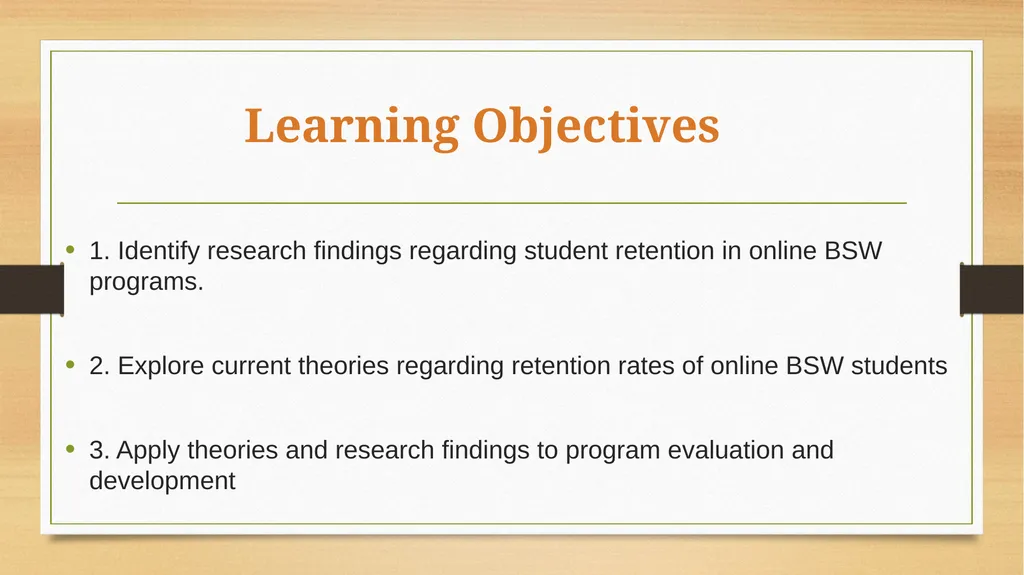
Learning Objectives 1. Identify research findings regarding student retention in online BSW programs.
2. Explore current theories regarding retention rates of online BSW students
3. Apply theories and research findings to program evaluation and development<br>
2. Explore current theories regarding retention rates of online BSW students
3. Apply theories and research findings to program evaluation and development<br>
03
Why are we talking about this? Introduction
Tale of 2 students
Field Notes<br>
Tale of 2 students
Field Notes<br>
04
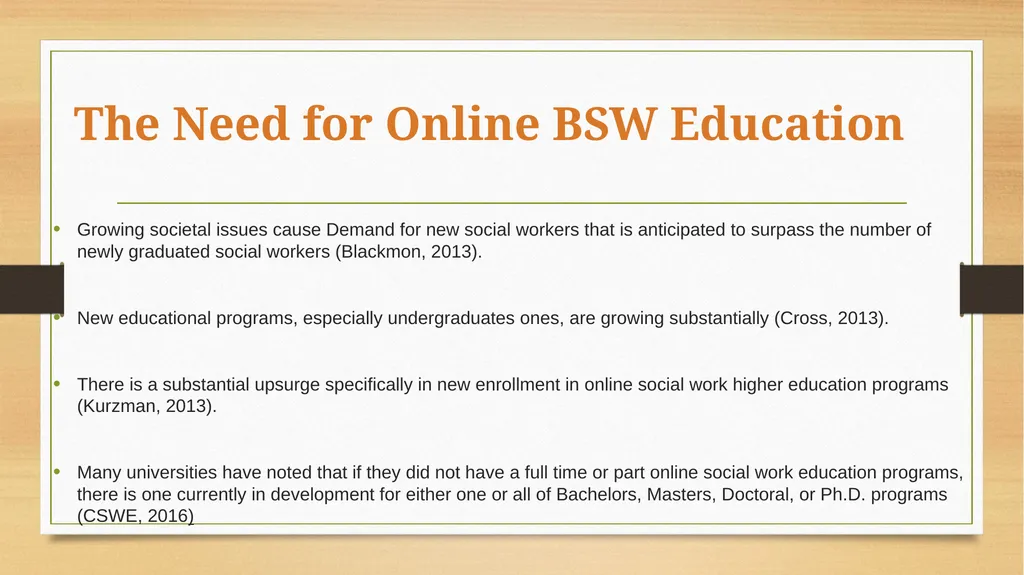
The Need for Online BSW Education Growing societal issues cause Demand for new social workers that is anticipated to surpass the number of newly graduated social workers (Blackmon, 2013).
New educational programs, especially undergraduates ones, are growing substantially (Cross, 2013).
There is a substantial upsurge specifically in new enrollment in online social work higher education programs (Kurzman, 2013).
Many universities have noted that if they did not have a full time or part online social work education programs, there is one currently in development for either one or all of Bachelors, Masters, Doctoral, or Ph.D. programs (CSWE, 2016)<br>
New educational programs, especially undergraduates ones, are growing substantially (Cross, 2013).
There is a substantial upsurge specifically in new enrollment in online social work higher education programs (Kurzman, 2013).
Many universities have noted that if they did not have a full time or part online social work education programs, there is one currently in development for either one or all of Bachelors, Masters, Doctoral, or Ph.D. programs (CSWE, 2016)<br>
05
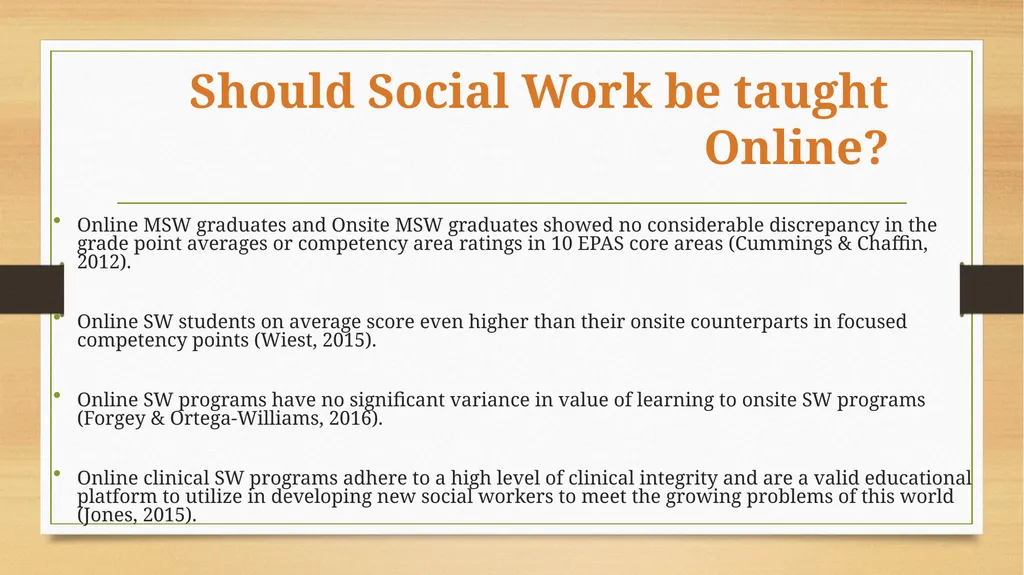
Should Social Work be taught Online? Online MSW graduates and Onsite MSW graduates showed no considerable discrepancy in the grade point averages or competency area ratings in 10 EPAS core areas (Cummings & Chaffin, 2012).
Online SW students on average score even higher than their onsite counterparts in focused competency points (Wiest, 2015).
Online SW programs have no significant variance in value of learning to onsite SW programs (Forgey & Ortega-Williams, 2016).
Online clinical SW programs adhere to a high level of clinical integrity and are a valid educational platform to utilize in developing new social workers to meet the growing problems of this world (Jones, 2015).<br>
Online SW students on average score even higher than their onsite counterparts in focused competency points (Wiest, 2015).
Online SW programs have no significant variance in value of learning to onsite SW programs (Forgey & Ortega-Williams, 2016).
Online clinical SW programs adhere to a high level of clinical integrity and are a valid educational platform to utilize in developing new social workers to meet the growing problems of this world (Jones, 2015).<br>
06
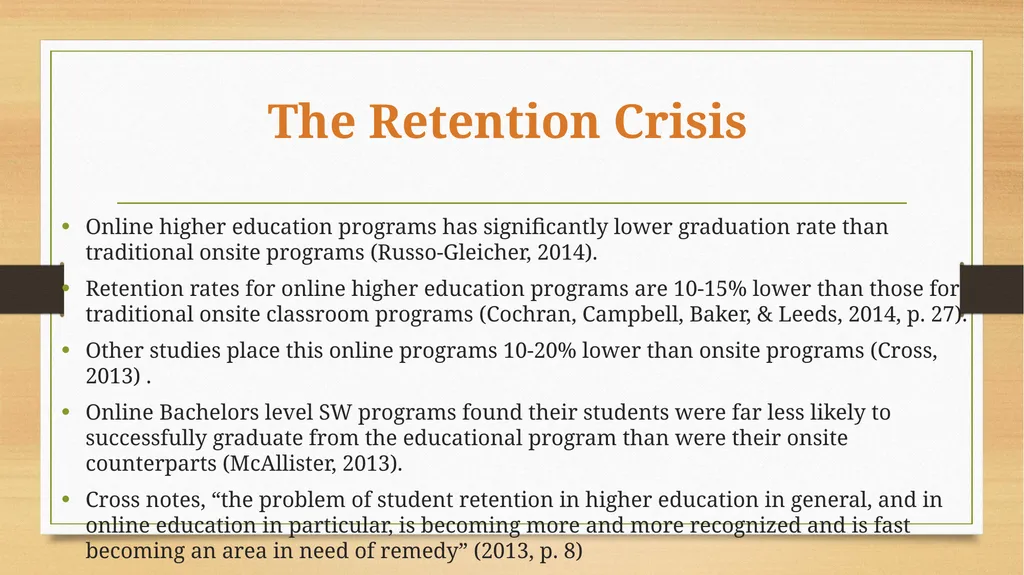
The Retention Crisis Online higher education programs has significantly lower graduation rate than traditional onsite programs (Russo-Gleicher, 2014).
Retention rates for online higher education programs are 10-15% lower than those for traditional onsite classroom programs (Cochran, Campbell, Baker, & Leeds, 2014, p. 27).
Other studies place this online programs 10-20% lower than onsite programs (Cross, 2013) .
Online Bachelors level SW programs found their students were far less likely to successfully graduate from the educational program than were their onsite counterparts (McAllister, 2013).
Cross notes, “the problem of student retention in higher education in general, and in online education in particular, is becoming more and more recognized and is fast becoming an area in need of remedy” (2013, p. 8)<br>
Retention rates for online higher education programs are 10-15% lower than those for traditional onsite classroom programs (Cochran, Campbell, Baker, & Leeds, 2014, p. 27).
Other studies place this online programs 10-20% lower than onsite programs (Cross, 2013) .
Online Bachelors level SW programs found their students were far less likely to successfully graduate from the educational program than were their onsite counterparts (McAllister, 2013).
Cross notes, “the problem of student retention in higher education in general, and in online education in particular, is becoming more and more recognized and is fast becoming an area in need of remedy” (2013, p. 8)<br>
07
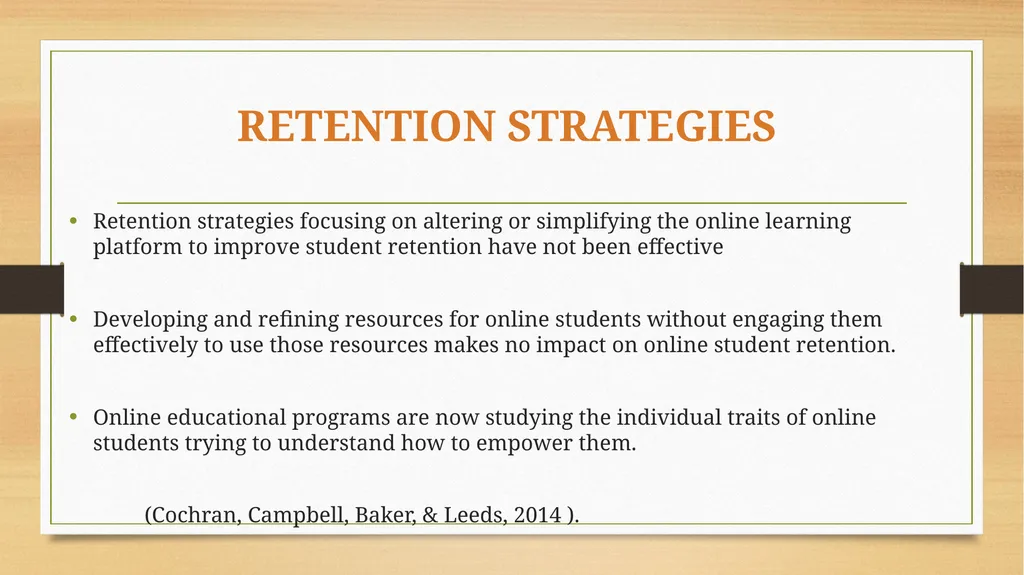
RETENTION STRATEGIES Retention strategies focusing on altering or simplifying the online learning platform to improve student retention have not been effective
Developing and refining resources for online students without engaging them effectively to use those resources makes no impact on online student retention.
Online educational programs are now studying the individual traits of online students trying to understand how to empower them.
(Cochran, Campbell, Baker, & Leeds, 2014 ).<br>
Developing and refining resources for online students without engaging them effectively to use those resources makes no impact on online student retention.
Online educational programs are now studying the individual traits of online students trying to understand how to empower them.
(Cochran, Campbell, Baker, & Leeds, 2014 ).<br>
08
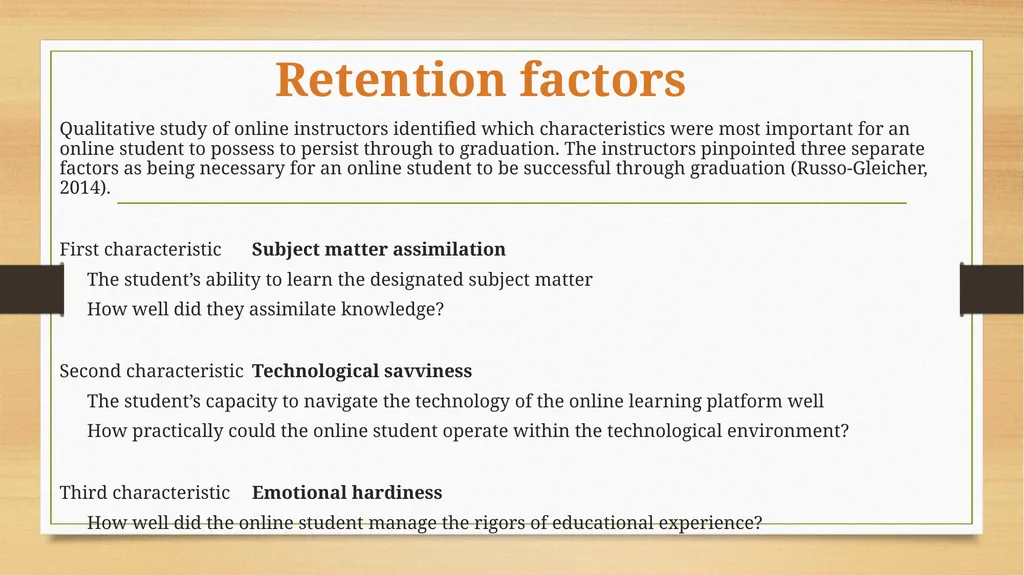
Retention factors Qualitative study of online instructors identified which characteristics were most important for an online student to possess to persist through to graduation. The instructors pinpointed three separate factors as being necessary for an online student to be successful through graduation (Russo-Gleicher, 2014).
First characteristic Subject matter assimilation
The student’s ability to learn the designated subject matter
How well did they assimilate knowledge?
Second characteristic Technological savviness
The student’s capacity to navigate the technology of the online learning platform well
How practically could the online student operate within the technological environment?
Third characteristic Emotional hardiness
How well did the online student manage the rigors of educational experience?<br>
First characteristic Subject matter assimilation
The student’s ability to learn the designated subject matter
How well did they assimilate knowledge?
Second characteristic Technological savviness
The student’s capacity to navigate the technology of the online learning platform well
How practically could the online student operate within the technological environment?
Third characteristic Emotional hardiness
How well did the online student manage the rigors of educational experience?<br>
09
Competency vs. Confidence Competency issue
Subject Matter Assimilation and Technological savviness
Better handled through straightforward tutoring and mentoring programs
Remedied through coaching exercises and online learning experiential modules.
Confidence issue
Emotional hardiness
Has not been closely studied (Russo-Gleicher, 2014).<br>
Subject Matter Assimilation and Technological savviness
Better handled through straightforward tutoring and mentoring programs
Remedied through coaching exercises and online learning experiential modules.
Confidence issue
Emotional hardiness
Has not been closely studied (Russo-Gleicher, 2014).<br>
10
Stories from the Field<br>
11
Emotional Hardiness Online curriculums with their intense schedules, multiple assignments, regular deadlines, and interactive discussion boards are stressful on students (Russo-Gleicher, 2014).
Secondary stressors also exist when one considers juggling school with personal and familial commitments (Cross, 2013).
All of these factors together add up to an intensely stressful experience (Cross, 2013).
Emotional Hardiness is the ability to cope with the stressors of an online educational program and directly impacts on the student’s academic performance and educational experience (Forgey & Ortega-Williams, 2016).<br>
Secondary stressors also exist when one considers juggling school with personal and familial commitments (Cross, 2013).
All of these factors together add up to an intensely stressful experience (Cross, 2013).
Emotional Hardiness is the ability to cope with the stressors of an online educational program and directly impacts on the student’s academic performance and educational experience (Forgey & Ortega-Williams, 2016).<br>
12
Relational Success Online students indicate that the factors most important to emotional hardiness
personal support networks,
connection to peers,
faculty care (Cross, 2013).
How well an online student deals with the anxiety of the educational experience impacts significantly how they will actually learn and retain from the course material (Rapp & Anyikwa, 2016).
How can online social work student manages their reaction to educational stressors is important towards improving their academic performance and program retention.<br>
personal support networks,
connection to peers,
faculty care (Cross, 2013).
How well an online student deals with the anxiety of the educational experience impacts significantly how they will actually learn and retain from the course material (Rapp & Anyikwa, 2016).
How can online social work student manages their reaction to educational stressors is important towards improving their academic performance and program retention.<br>
13
Persistence Persistence is considered the trait in some online students to push on in educational programs despite obstacles and issues (Lehman, et al, 2014).
A recent quantitative quasi-experimental research study of online students found that Persistence was an important trait for online students to possess (Franko, 2015).
Persistence is often measured by the number of classes the online student actually completed successfully. This is also referred to as longevity in the educational program (Cross, 2013).
Leaders in the field stress the importance of student persistence in increasing retention through graduation in online programs.<br>
A recent quantitative quasi-experimental research study of online students found that Persistence was an important trait for online students to possess (Franko, 2015).
Persistence is often measured by the number of classes the online student actually completed successfully. This is also referred to as longevity in the educational program (Cross, 2013).
Leaders in the field stress the importance of student persistence in increasing retention through graduation in online programs.<br>
14
A Sense of Belonging to a program is a defining characteristic of higher retention (Thomas, Herbert, & Teras, 2014).
Universities that nurtured a strong sense of belonging in the students of their online programs, found that faculty reported about their students, “they feel like there’s more online sense of community, we’re finding less anxiety, we’re finding more retention, less attrition.” (Thomas, Herbert, & Teras, 2014).
Sense of belonging is a powerful motivator for persistence.<br>
Universities that nurtured a strong sense of belonging in the students of their online programs, found that faculty reported about their students, “they feel like there’s more online sense of community, we’re finding less anxiety, we’re finding more retention, less attrition.” (Thomas, Herbert, & Teras, 2014).
Sense of belonging is a powerful motivator for persistence.<br>
15
GRIT is Passion (or Calling) + Perseverance (Persistence + Resilience)
Grit is a drive for a long term goal that plays out as tenacity in the short term experiences (Cross, 2013).
While an online social work student may show persistence in overcoming situational obstacles and setbacks of their educational program ultimately passing each class and graduating, it is their passion to be a social worker that drives them on towards graduation (Duckworth, 2016)<br>
Grit is a drive for a long term goal that plays out as tenacity in the short term experiences (Cross, 2013).
While an online social work student may show persistence in overcoming situational obstacles and setbacks of their educational program ultimately passing each class and graduating, it is their passion to be a social worker that drives them on towards graduation (Duckworth, 2016)<br>
16
GRIT Video https://www.youtube.com/watch?v=m7M5_cu1Erc<br>
17
Calling as Motivation Grit is PASSION + Perseverance
How does a Christian calling in pact the Passion aspect of Grit?
(Laine-Scales & Kelly, 2016).<br>
How does a Christian calling in pact the Passion aspect of Grit?
(Laine-Scales & Kelly, 2016).<br>
18
Growth Mindset Fixed Mindset says
There are some things we will never be able to achieve no matter how hard we try
Our mistakes are signposts that we should give up
We should stick with what we are good at
Growth mindset says
We can learn from our failures
We continue to try despite setbacks
Anything is possible as long as we work hard enough (Duckworth, 2016)<br>
There are some things we will never be able to achieve no matter how hard we try
Our mistakes are signposts that we should give up
We should stick with what we are good at
Growth mindset says
We can learn from our failures
We continue to try despite setbacks
Anything is possible as long as we work hard enough (Duckworth, 2016)<br>
19
Positive Psychology Leaders in the online education field are exploring how positive psychology can be utilized to impact on student retention rates.
Positive psychology is the study of how to live life well.
It centers on the idea that positive character traits can be learned and strengthened given time and effort.
Characteristics such as Grit can be taught to online students helping them be successful in their programs (Cross, 2013).<br>
Positive psychology is the study of how to live life well.
It centers on the idea that positive character traits can be learned and strengthened given time and effort.
Characteristics such as Grit can be taught to online students helping them be successful in their programs (Cross, 2013).<br>
20
Mindfulness can assist online students in developing the discipline of raising their awareness of the self in the moment experienced without judgment (Brendel & Bennett, 2016).
Mindfulness leadership used by an instructor endorses to the online social work student how one can manage stress of the educational program by embracing a larger life world perspective and challenging how one perceives the world in general (Brendel & Bennett, 2016).
Mindfulness is key to good self-care principles and correlates highly with Positive Psychology and is a necessary practice for online instructors to role model for their students.<br>
Mindfulness leadership used by an instructor endorses to the online social work student how one can manage stress of the educational program by embracing a larger life world perspective and challenging how one perceives the world in general (Brendel & Bennett, 2016).
Mindfulness is key to good self-care principles and correlates highly with Positive Psychology and is a necessary practice for online instructors to role model for their students.<br>
21
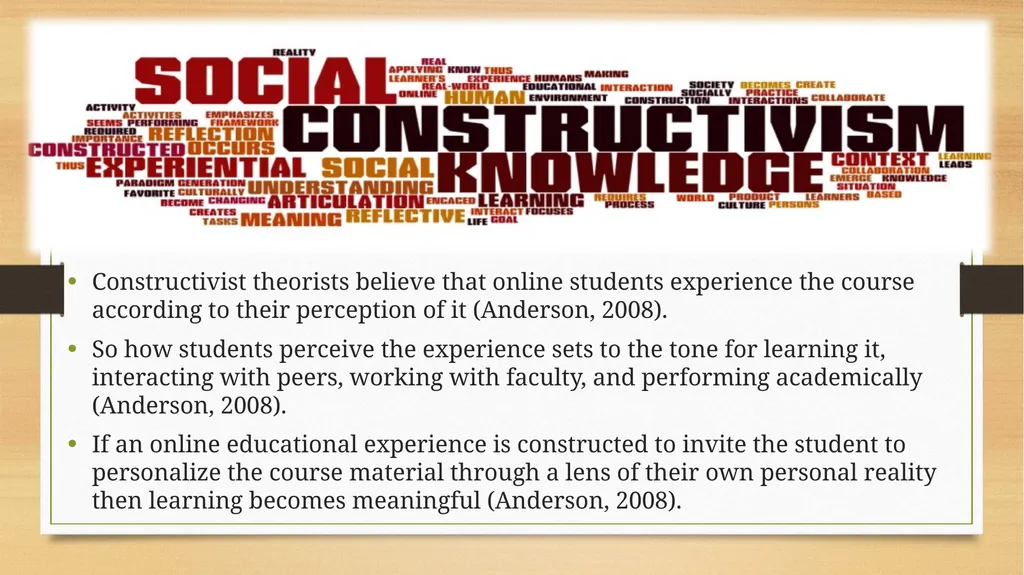
Constructivist theorists believe that online students experience the course according to their perception of it (Anderson, 2008).
So how students perceive the experience sets to the tone for learning it, interacting with peers, working with faculty, and performing academically (Anderson, 2008).
If an online educational experience is constructed to invite the student to personalize the course material through a lens of their own personal reality then learning becomes meaningful (Anderson, 2008).<br>
So how students perceive the experience sets to the tone for learning it, interacting with peers, working with faculty, and performing academically (Anderson, 2008).
If an online educational experience is constructed to invite the student to personalize the course material through a lens of their own personal reality then learning becomes meaningful (Anderson, 2008).<br>
22
Future Research Using a standardized Grit Assessment in the Application process
Charting how the students GRIT scores may or may not impact their program success.
Input?<br>
Charting how the students GRIT scores may or may not impact their program success.
Input?<br>
23
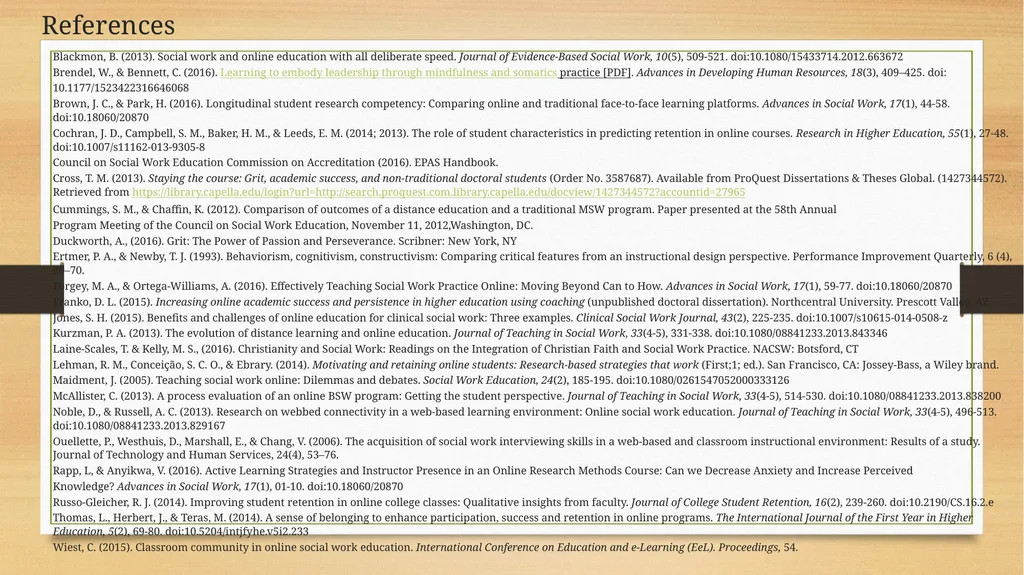
References Blackmon, B. (2013). Social work and online education with all deliberate speed. Journal of Evidence-Based Social Work, 10(5), 509-521. doi:10.1080/15433714.2012.663672
Brendel, W., & Bennett, C. (2016). Learning to embody leadership through mindfulness and somatics practice [PDF]. Advances in Developing Human Resources, 18(3), 409–425. doi: 10.1177/1523422316646068
Brown, J. C., & Park, H. (2016). Longitudinal student research competency: Comparing online and traditional face-to-face learning platforms. Advances in Social Work, 17(1), 44-58. doi:10.18060/20870
Cochran, J. D., Campbell, S. M., Baker, H. M., & Leeds, E. M. (2014; 2013). The role of student characteristics in predicting retention in online courses. Research in Higher Education, 55(1), 27-48. doi:10.1007/s11162-013-9305-8
Council on Social Work Education Commission on Accreditation (2016). EPAS Handbook.
Cross, T. M. (2013). Staying the course: Grit, academic success, and non-traditional doctoral students (Order No. 3587687). Available from ProQuest Dissertations & Theses Global. (1427344572). Retrieved from https://library.capella.edu/login?url=http://search.proquest.com.library.capella.edu/docview/1427344572?accountid=27965
Cummings, S. M., & Chaffin, K. (2012). Comparison of outcomes of a distance education and a traditional MSW program. Paper presented at the 58th Annual
Program Meeting of the Council on Social Work Education, November 11, 2012,Washington, DC.
Duckworth, A., (2016). Grit: The Power of Passion and Perseverance. Scribner: New York, NY
Ertmer, P. A., & Newby, T. J. (1993). Behaviorism, cognitivism, constructivism: Comparing critical features from an instructional design perspective. Performance Improvement Quarterly, 6 (4), 50–70.
Forgey, M. A., & Ortega-Williams, A. (2016). Effectively Teaching Social Work Practice Online: Moving Beyond Can to How. Advances in Social Work, 17(1), 59-77. doi:10.18060/20870
Franko, D. L. (2015). Increasing online academic success and persistence in higher education using coaching (unpublished doctoral dissertation). Northcentral University. Prescott Valley, AZ.
Jones, S. H. (2015). Benefits and challenges of online education for clinical social work: Three examples. Clinical Social Work Journal, 43(2), 225-235. doi:10.1007/s10615-014-0508-z
Kurzman, P. A. (2013). The evolution of distance learning and online education. Journal of Teaching in Social Work, 33(4-5), 331-338. doi:10.1080/08841233.2013.843346
Laine-Scales, T. & Kelly, M. S., (2016). Christianity and Social Work: Readings on the Integration of Christian Faith and Social Work Practice. NACSW: Botsford, CT
Lehman, R. M., Conceição, S. C. O., & Ebrary. (2014). Motivating and retaining online students: Research-based strategies that work (First;1; ed.). San Francisco, CA: Jossey-Bass, a Wiley brand.
Maidment, J. (2005). Teaching social work online: Dilemmas and debates. Social Work Education, 24(2), 185-195. doi:10.1080/0261547052000333126
McAllister, C. (2013). A process evaluation of an online BSW program: Getting the student perspective. Journal of Teaching in Social Work, 33(4-5), 514-530. doi:10.1080/08841233.2013.838200
Noble, D., & Russell, A. C. (2013). Research on webbed connectivity in a web-based learning environment: Online social work education. Journal of Teaching in Social Work, 33(4-5), 496-513. doi:10.1080/08841233.2013.829167
Ouellette, P., Westhuis, D., Marshall, E., & Chang, V. (2006). The acquisition of social work interviewing skills in a web-based and classroom instructional environment: Results of a study. Journal of Technology and Human Services, 24(4), 53–76.
Rapp, L, & Anyikwa, V. (2016). Active Learning Strategies and Instructor Presence in an Online Research Methods Course: Can we Decrease Anxiety and Increase Perceived
Knowledge? Advances in Social Work, 17(1), 01-10. doi:10.18060/20870
Russo-Gleicher, R. J. (2014). Improving student retention in online college classes: Qualitative insights from faculty. Journal of College Student Retention, 16(2), 239-260. doi:10.2190/CS.16.2.e
Thomas, L., Herbert, J., & Teras, M. (2014). A sense of belonging to enhance participation, success and retention in online programs. The International Journal of the First Year in Higher Education, 5(2), 69-80. doi:10.5204/intjfyhe.v5i2.233
Wiest, C. (2015). Classroom community in online social work education. International Conference on Education and e-Learning (EeL). Proceedings, 54.<br>
Brendel, W., & Bennett, C. (2016). Learning to embody leadership through mindfulness and somatics practice [PDF]. Advances in Developing Human Resources, 18(3), 409–425. doi: 10.1177/1523422316646068
Brown, J. C., & Park, H. (2016). Longitudinal student research competency: Comparing online and traditional face-to-face learning platforms. Advances in Social Work, 17(1), 44-58. doi:10.18060/20870
Cochran, J. D., Campbell, S. M., Baker, H. M., & Leeds, E. M. (2014; 2013). The role of student characteristics in predicting retention in online courses. Research in Higher Education, 55(1), 27-48. doi:10.1007/s11162-013-9305-8
Council on Social Work Education Commission on Accreditation (2016). EPAS Handbook.
Cross, T. M. (2013). Staying the course: Grit, academic success, and non-traditional doctoral students (Order No. 3587687). Available from ProQuest Dissertations & Theses Global. (1427344572). Retrieved from https://library.capella.edu/login?url=http://search.proquest.com.library.capella.edu/docview/1427344572?accountid=27965
Cummings, S. M., & Chaffin, K. (2012). Comparison of outcomes of a distance education and a traditional MSW program. Paper presented at the 58th Annual
Program Meeting of the Council on Social Work Education, November 11, 2012,Washington, DC.
Duckworth, A., (2016). Grit: The Power of Passion and Perseverance. Scribner: New York, NY
Ertmer, P. A., & Newby, T. J. (1993). Behaviorism, cognitivism, constructivism: Comparing critical features from an instructional design perspective. Performance Improvement Quarterly, 6 (4), 50–70.
Forgey, M. A., & Ortega-Williams, A. (2016). Effectively Teaching Social Work Practice Online: Moving Beyond Can to How. Advances in Social Work, 17(1), 59-77. doi:10.18060/20870
Franko, D. L. (2015). Increasing online academic success and persistence in higher education using coaching (unpublished doctoral dissertation). Northcentral University. Prescott Valley, AZ.
Jones, S. H. (2015). Benefits and challenges of online education for clinical social work: Three examples. Clinical Social Work Journal, 43(2), 225-235. doi:10.1007/s10615-014-0508-z
Kurzman, P. A. (2013). The evolution of distance learning and online education. Journal of Teaching in Social Work, 33(4-5), 331-338. doi:10.1080/08841233.2013.843346
Laine-Scales, T. & Kelly, M. S., (2016). Christianity and Social Work: Readings on the Integration of Christian Faith and Social Work Practice. NACSW: Botsford, CT
Lehman, R. M., Conceição, S. C. O., & Ebrary. (2014). Motivating and retaining online students: Research-based strategies that work (First;1; ed.). San Francisco, CA: Jossey-Bass, a Wiley brand.
Maidment, J. (2005). Teaching social work online: Dilemmas and debates. Social Work Education, 24(2), 185-195. doi:10.1080/0261547052000333126
McAllister, C. (2013). A process evaluation of an online BSW program: Getting the student perspective. Journal of Teaching in Social Work, 33(4-5), 514-530. doi:10.1080/08841233.2013.838200
Noble, D., & Russell, A. C. (2013). Research on webbed connectivity in a web-based learning environment: Online social work education. Journal of Teaching in Social Work, 33(4-5), 496-513. doi:10.1080/08841233.2013.829167
Ouellette, P., Westhuis, D., Marshall, E., & Chang, V. (2006). The acquisition of social work interviewing skills in a web-based and classroom instructional environment: Results of a study. Journal of Technology and Human Services, 24(4), 53–76.
Rapp, L, & Anyikwa, V. (2016). Active Learning Strategies and Instructor Presence in an Online Research Methods Course: Can we Decrease Anxiety and Increase Perceived
Knowledge? Advances in Social Work, 17(1), 01-10. doi:10.18060/20870
Russo-Gleicher, R. J. (2014). Improving student retention in online college classes: Qualitative insights from faculty. Journal of College Student Retention, 16(2), 239-260. doi:10.2190/CS.16.2.e
Thomas, L., Herbert, J., & Teras, M. (2014). A sense of belonging to enhance participation, success and retention in online programs. The International Journal of the First Year in Higher Education, 5(2), 69-80. doi:10.5204/intjfyhe.v5i2.233
Wiest, C. (2015). Classroom community in online social work education. International Conference on Education and e-Learning (EeL). Proceedings, 54.<br>