Teaching Notes for Respect by Rachel Brian The perfect introduction to consent for kids and families everywhere. Consent can be a difficult topic to explain, but it doesnt need to be confusing. From setting boundaries, to reflecting on
"Teaching Notes for Respect by Rachel Brian The" is the property of its rightful owner. Permission is granted to
download and print the materials on this website for personal, non-commercial use only, and to display it
on your personal computer provided you do not modify the materials and that you retain all copyright
notices contained in the materials. By downloading content from our website, you accept the terms of this
agreement.
Presentation Transcript
01
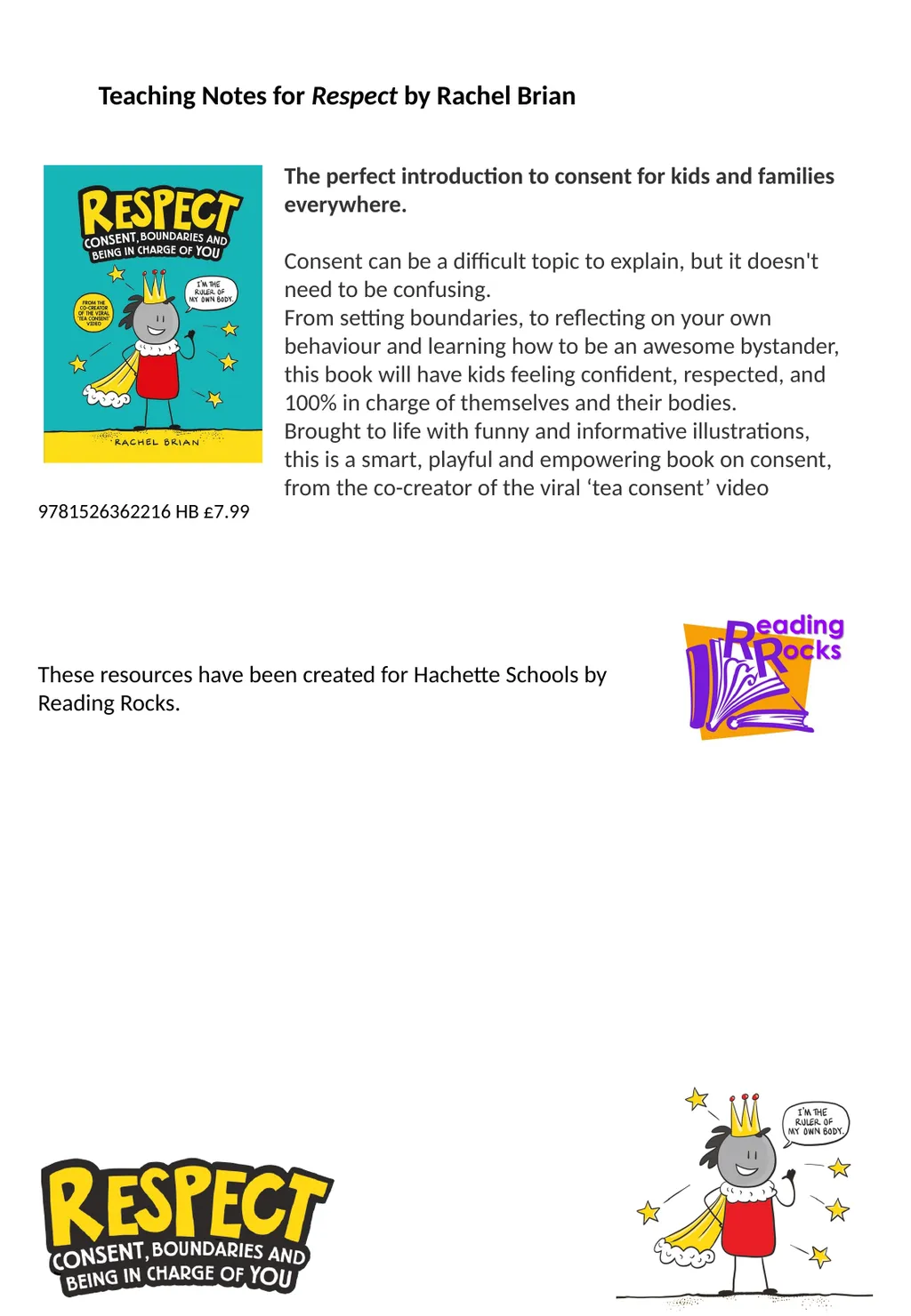
Teaching Notes for Respect by Rachel Brian The perfect introduction to consent for kids and families everywhere.
Consent can be a difficult topic to explain, but it doesn't need to be confusing.
From setting boundaries, to reflecting on your own behaviour and learning how to be an awesome bystander, this book will have kids feeling confident, respected, and 100% in charge of themselves and their bodies.
Brought to life with funny and informative illustrations, this is a smart, playful and empowering book on consent, from the co-creator of the viral ‘tea consent’ video 9781526362216 HB £7.99 These resources have been created for Hachette Schools by Reading Rocks.<br>
02
Read together pages 3-7
Discuss what children think a boundary is. You may wish to make links with other uses of the word, such as the boundary of a garden or country
Share pages 8-9 together
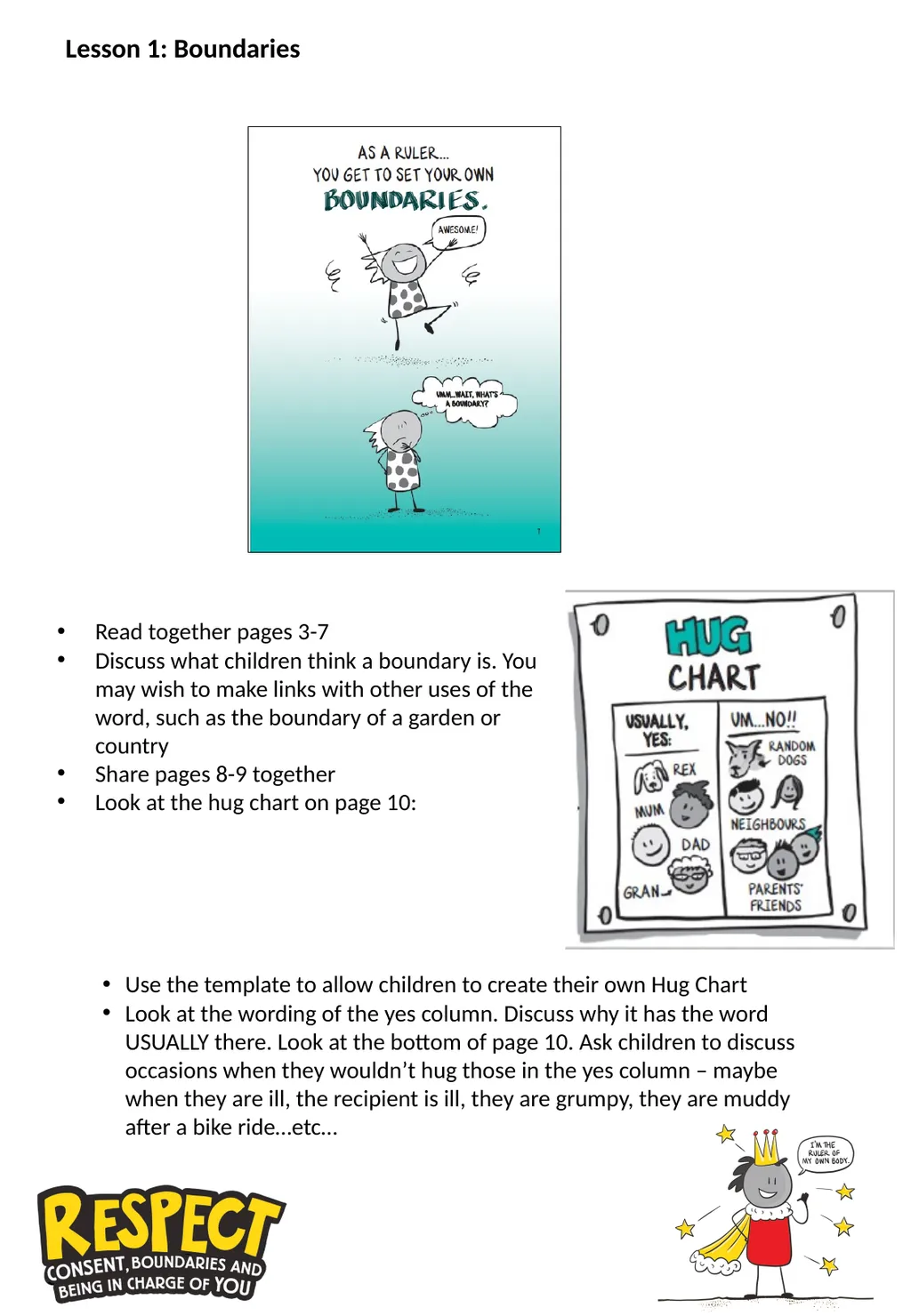
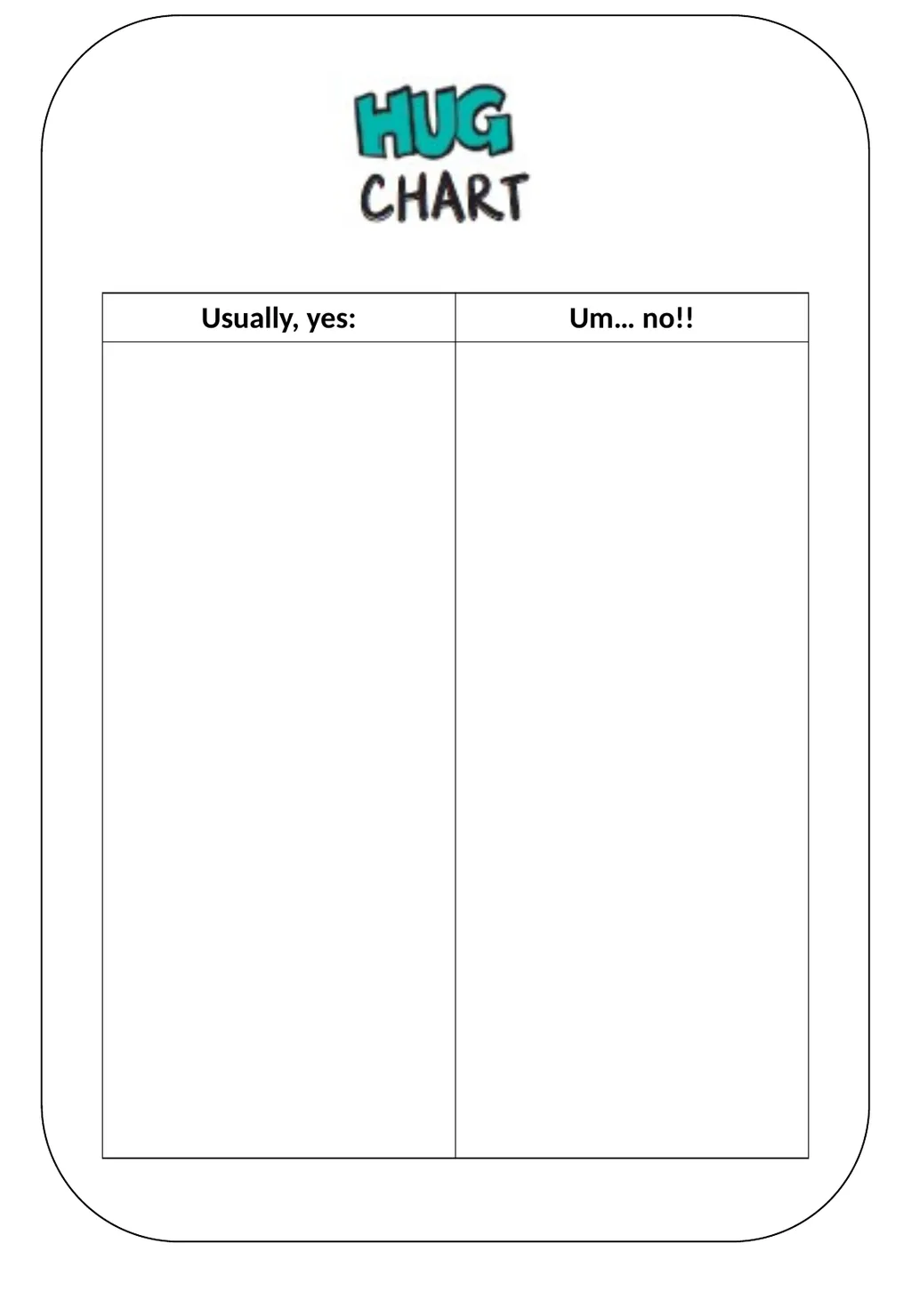
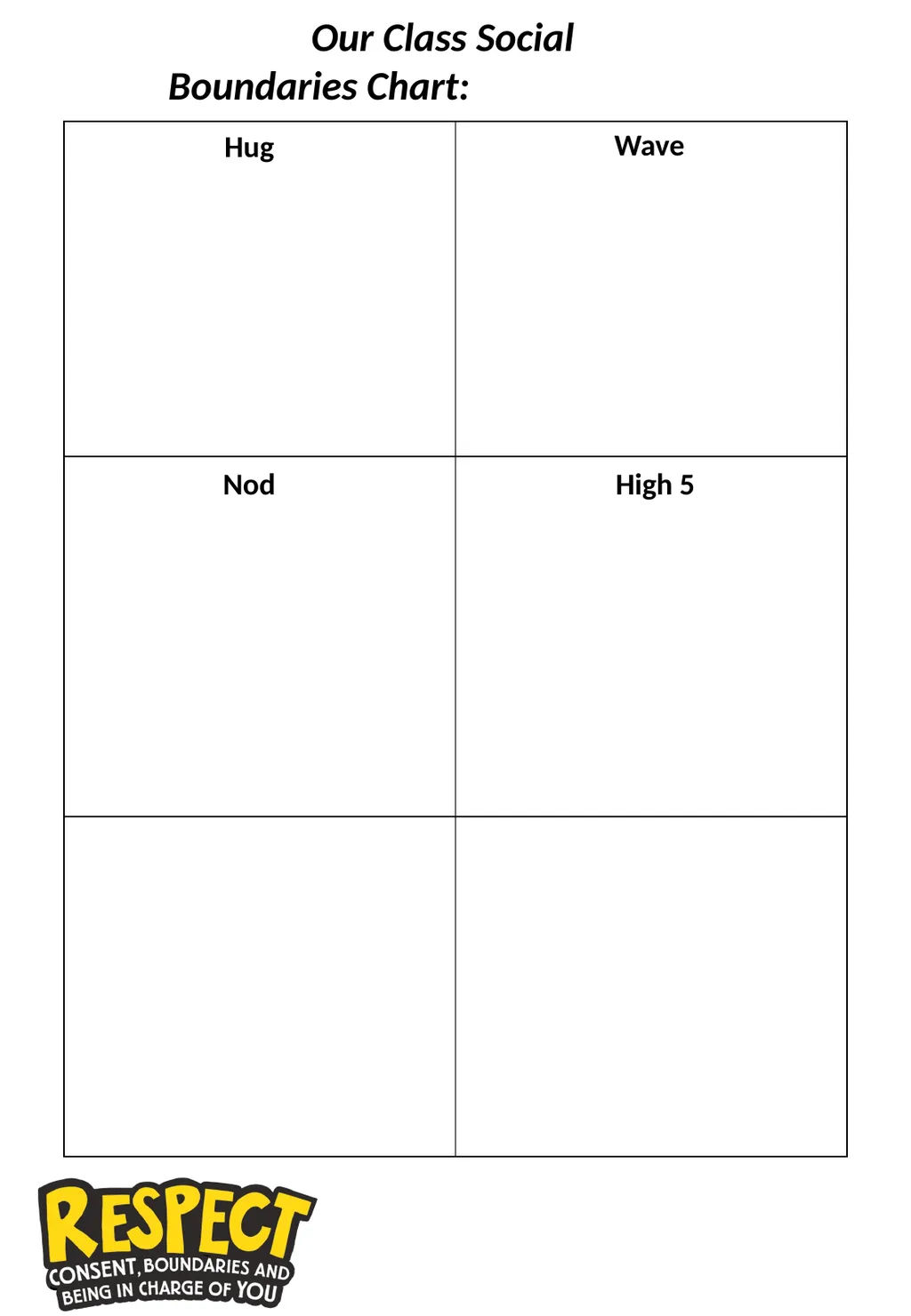
Look at the hug chart on page 10: Use the template to allow children to create their own Hug Chart
Look at the wording of the yes column. Discuss why it has the word USUALLY there. Look at the bottom of page 10. Ask children to discuss occasions when they wouldn’t hug those in the yes column – maybe when they are ill, the recipient is ill, they are grumpy, they are muddy after a bike ride…etc… Lesson 1: Boundaries<br>
03
Look now at page 11 and 12 together
Focus on the message that it’s okay to have different boundaries to others
Give each child a post-it note to add their name to. This can then be placed on the class chart. Children should choose a social greeting they feel comfortable receiving from their teacher that day. You may wish to use this chart each day to greet your class. Stick it up near the door for children to tap or move their post it note
Note with children that what you’re comfortable with one day can be different the next day and this is ok<br>
04
Our Class Social Boundaries Chart: Hug Wave Nod High 5<br>
05
Share pages 13 and 14 together. Is this situation familiar to any children?
Allow children chance to share in pairs or small groups
You may wish to discuss a situation from your own childhood of an aunty who always wanted to kiss you. Discuss ways to deal with a situation you are uncomfortable in
Note useful phrases in speech bubbles to support this
Give children a chance to role play these scenarios, such as Aunt Gladys wanting a kiss, but the children says…’How about…’ ‘Let’s’ try…’ ‘I don’t like it when ….’ Share page 15 together
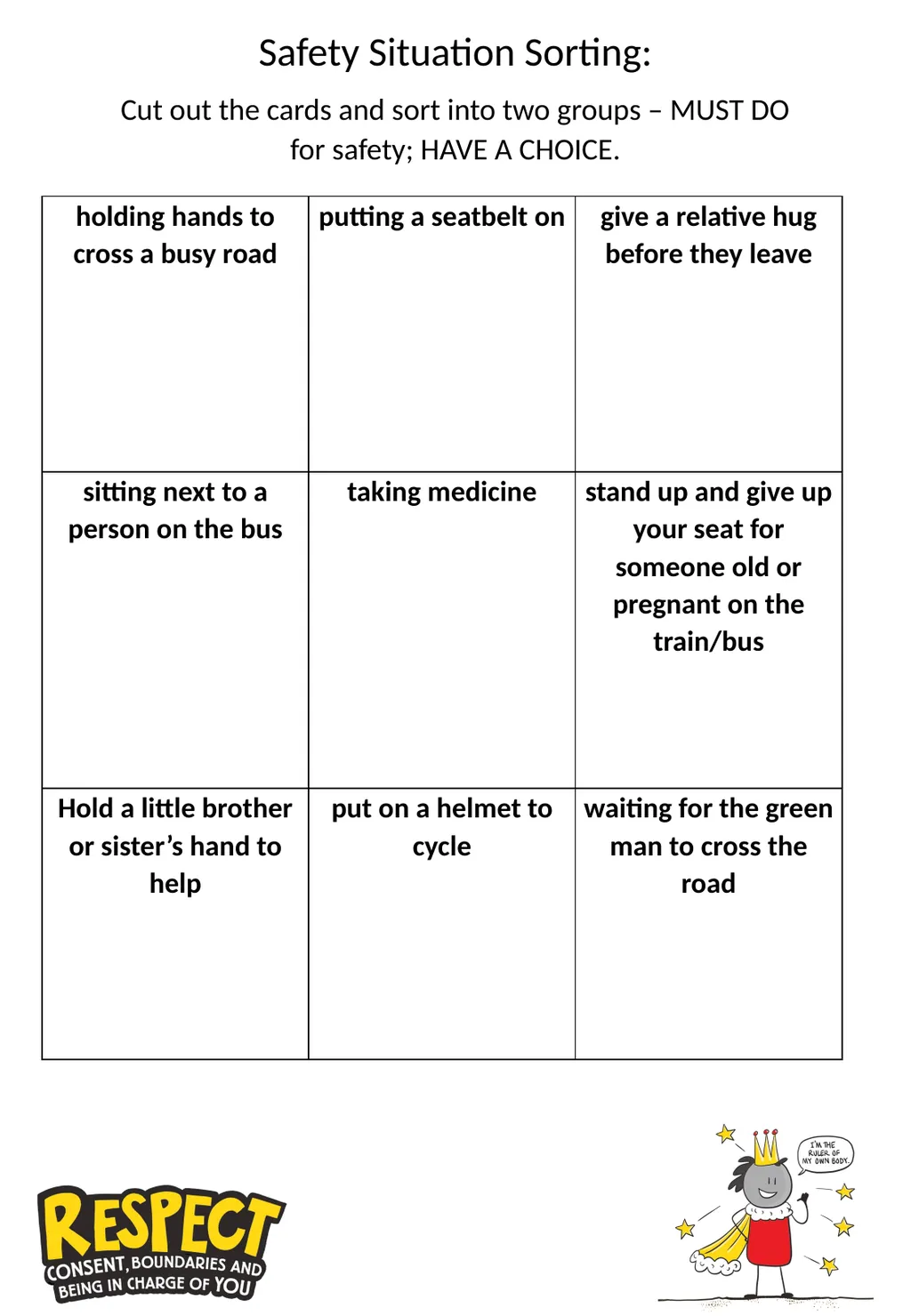
Try out the sorting activity. Children should discuss with a group or partner whether the situation is one when we must have bodily contact for safety or not
Share different groups’ sorting. Do they all agree?
How can we tell if it is a safety situation?<br>
06
Safety Situation Sorting:
Cut out the cards and sort into two groups – MUST DO for safety; HAVE A CHOICE.<br>
07
Read page 16 together
Look back at the sorting activity. Ask children to discuss ways they can have their say in the situations under MUST DO for safety Lesson 2: Gut Feelings
Discuss the expression ‘gut feeling’. What do children understand this to mean? This discussion may encourage children to discuss when they get a ‘gut feeling’
Share page 17 together
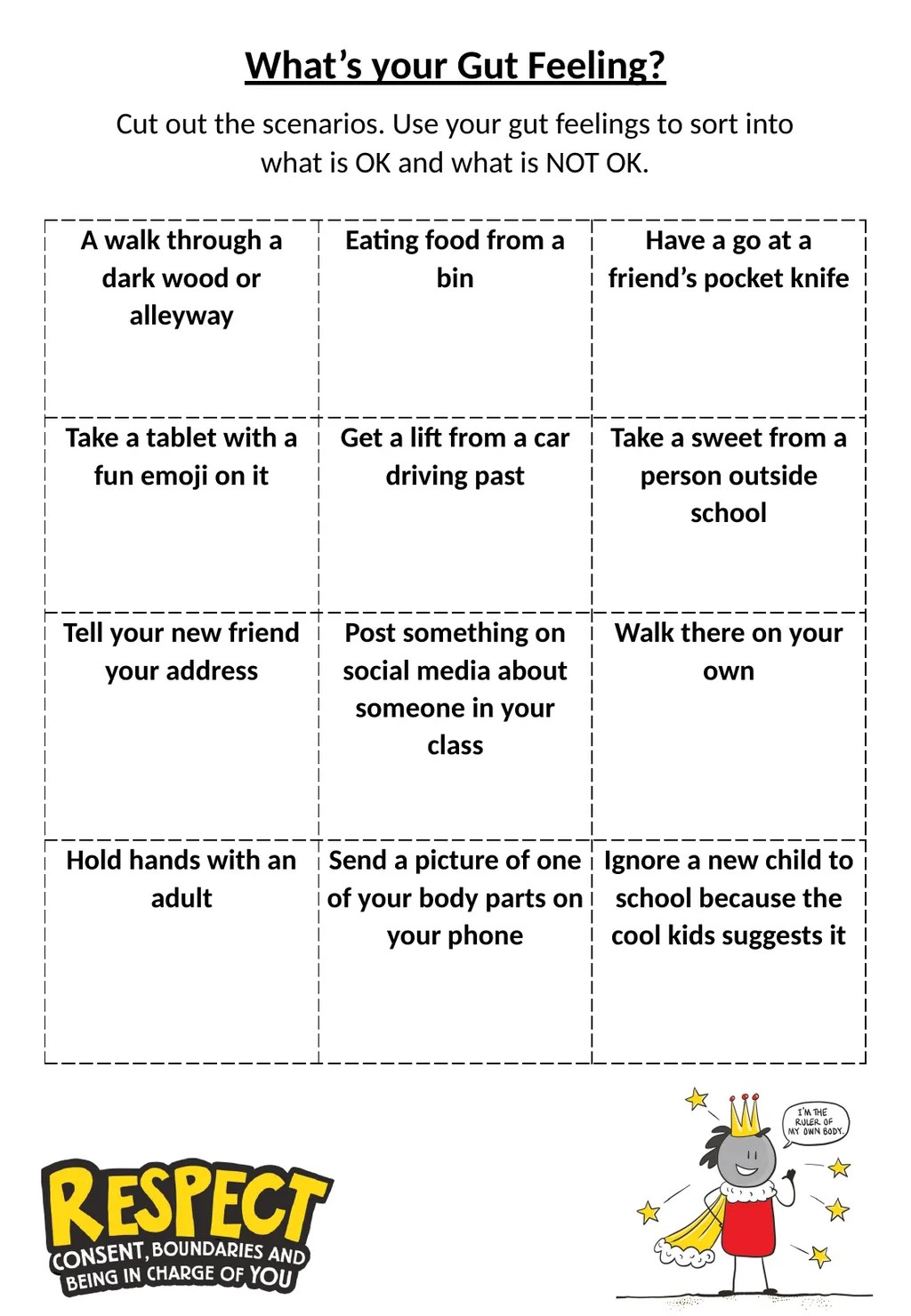
Ask children to discuss and sort the scenarios in small groups. Do they think the situation/activity is ok or not ok? They may wish to have a ‘not sure’ group, too
The situations are deliberately not too specific to encourage discussion. For example, holding and adult’s hand could be okay if it were a teacher or trusted adult, but not okay if it were a stranger
After sorting, discuss how children have grouped them<br>
08
What’s your Gut Feeling?
Cut out the scenarios. Use your gut feelings to sort into what is OK and what is NOT OK.<br>
09
Share pages 18 to 19 together, then pose the question ‘who could you tell about it?’
Lead the discussion by asking what makes these people a good choice
Share page 20. Focus on the terms trusted friend an d helpful adult. Help children identify specific people this would be in school
Show children the HELP! Section at the back of the book
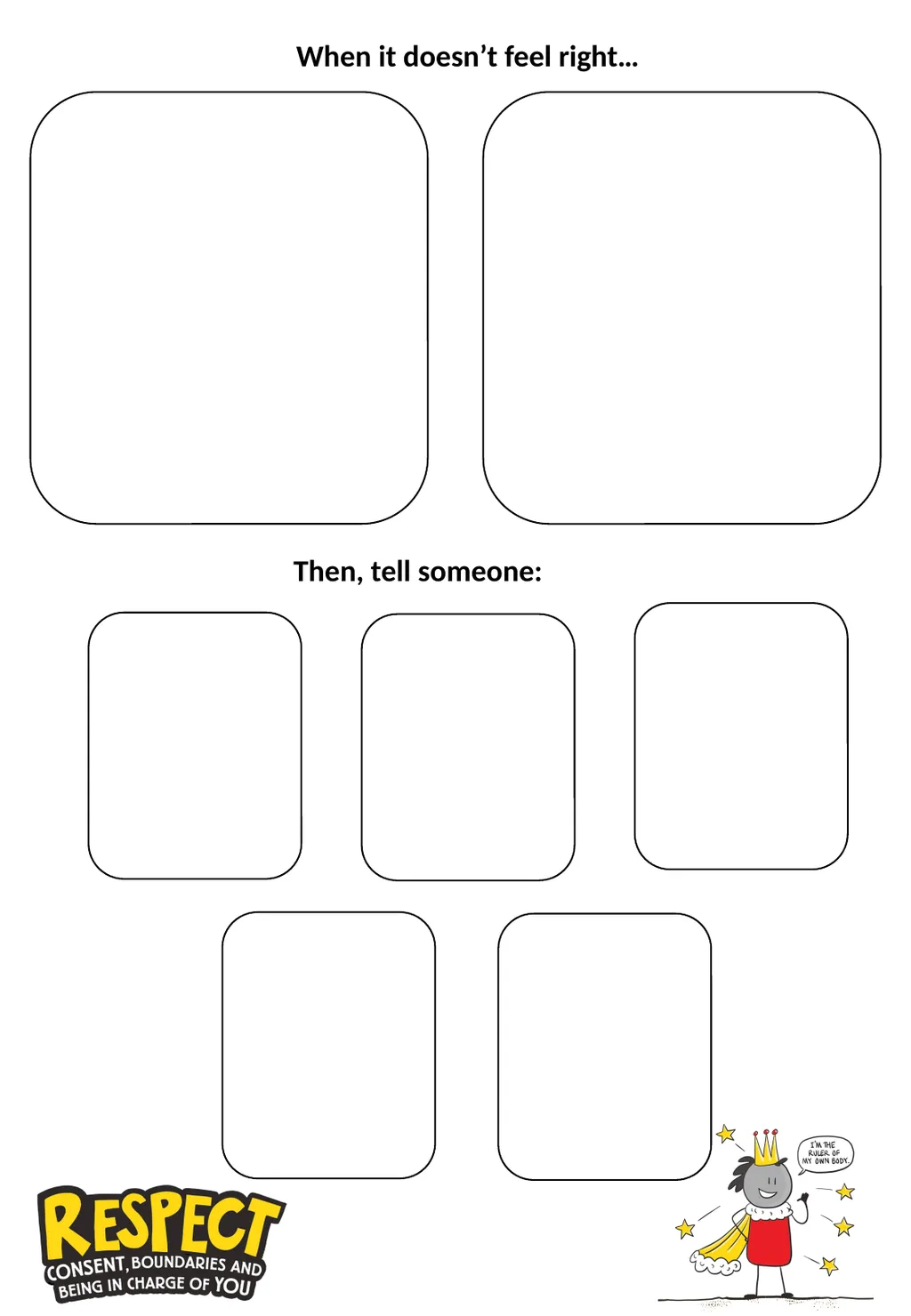
Using the situations from the sorting task, children can create a poster to show when they need to tell a trusted friend or helpful adult wand who they may be. Tope two boxes children can sketch a ‘not ok’ scenario. Boxes on the bottom are for people they can trust to tell and be helpful<br>
10
When it doesn’t feel right… Then, tell someone:<br>
11
Lesson 3: Consent
Start by sharing the word CONSENT. Do children know what it means?
Read page 21 together
Discuss what it means to agree to something and the opposite to disagree.
Read on to page 28
Drama activity –
children work in pairs as ASKER and CONSENTER
the ASKER chooses a scenario where they need consent, e.g. to hold their hand, to get a hug, to borrow a cap, to take a photograph, to post a photograph on social media
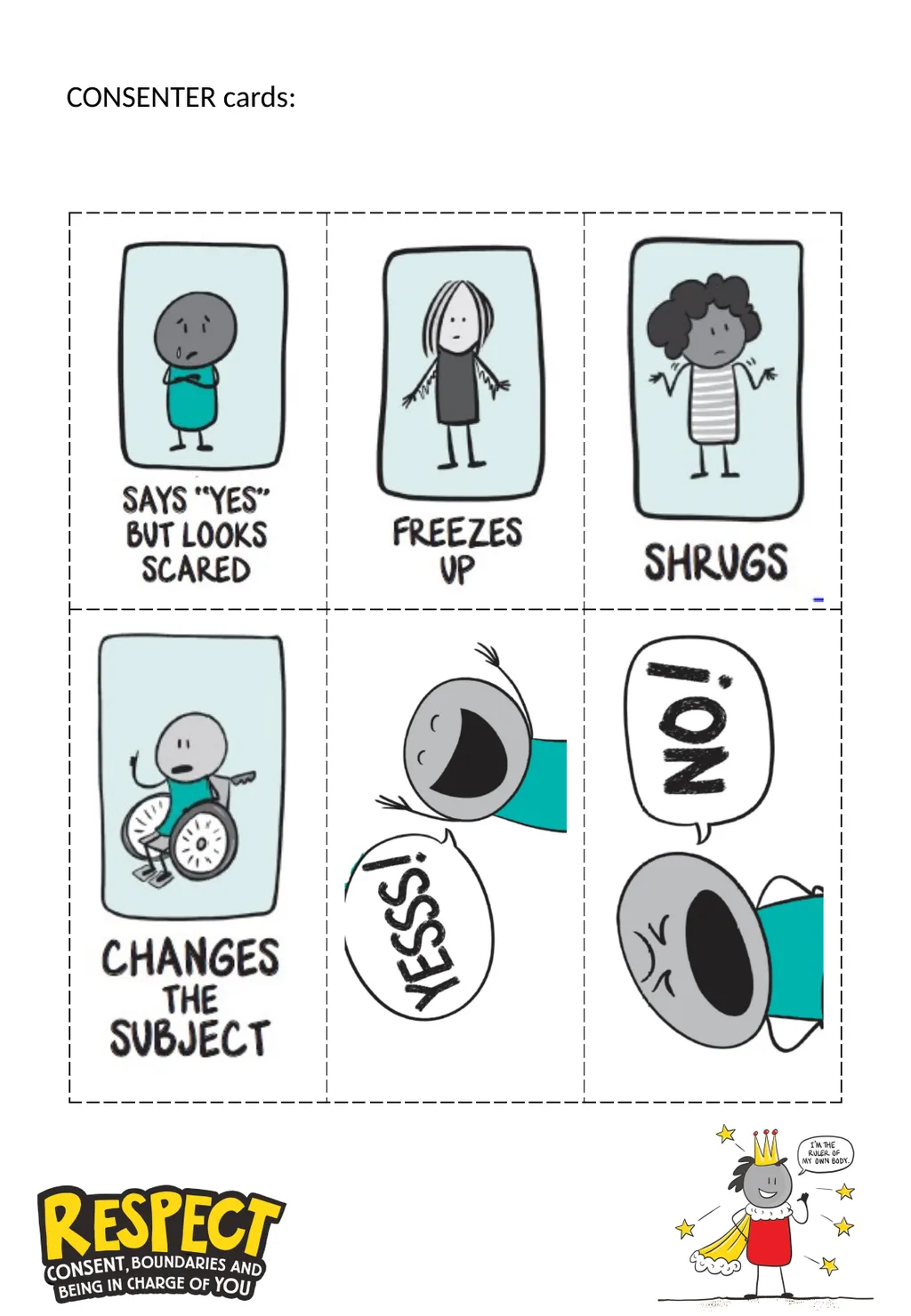
the CONSENTER chooses a response card. They act this response
the rest of the group observing now have to say if they have received consent or not<br>
12
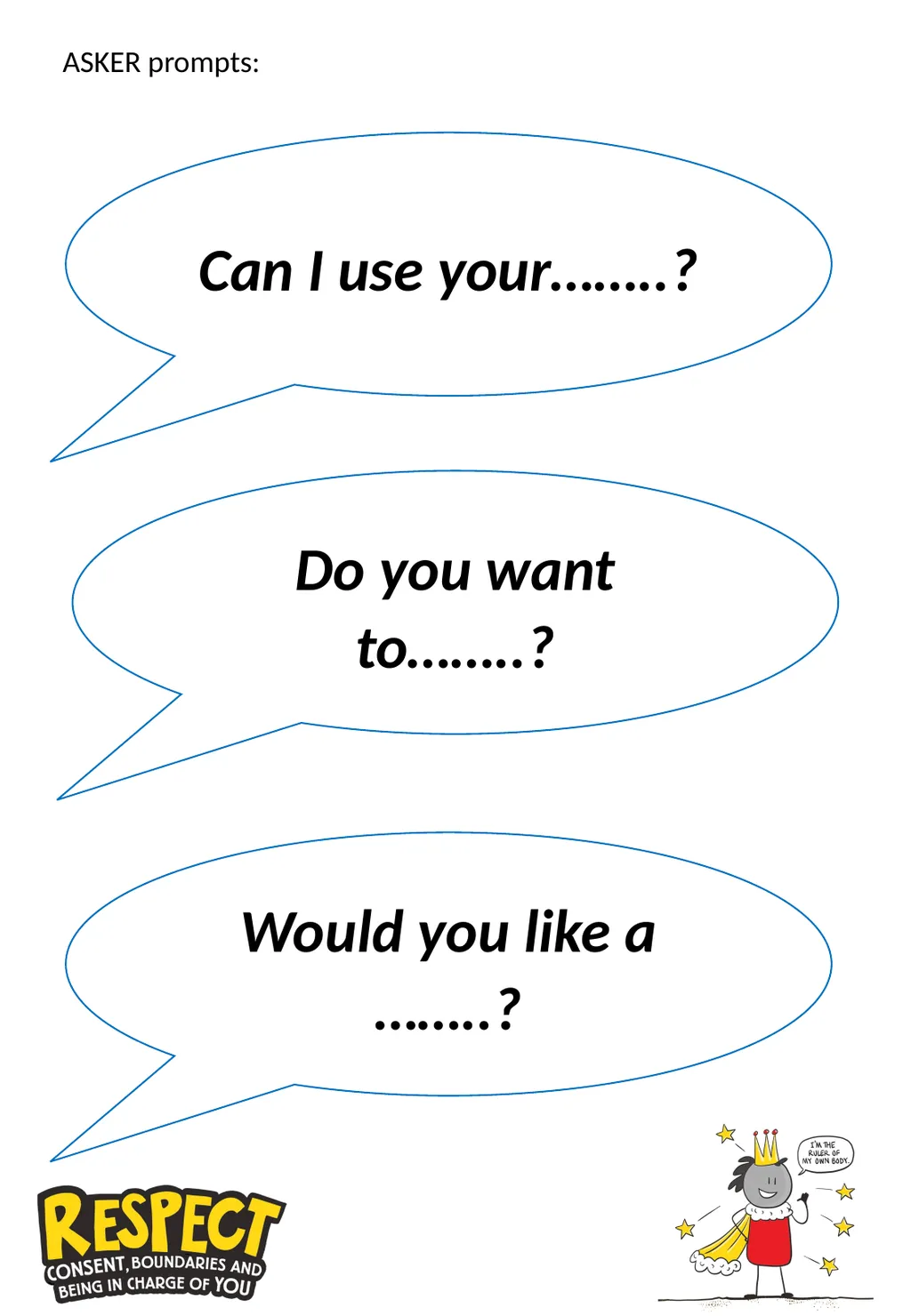
Can I use your……..? Do you want to……..? Would you like a ……..? ASKER prompts:<br>
13
CONSENTER cards:<br>
14
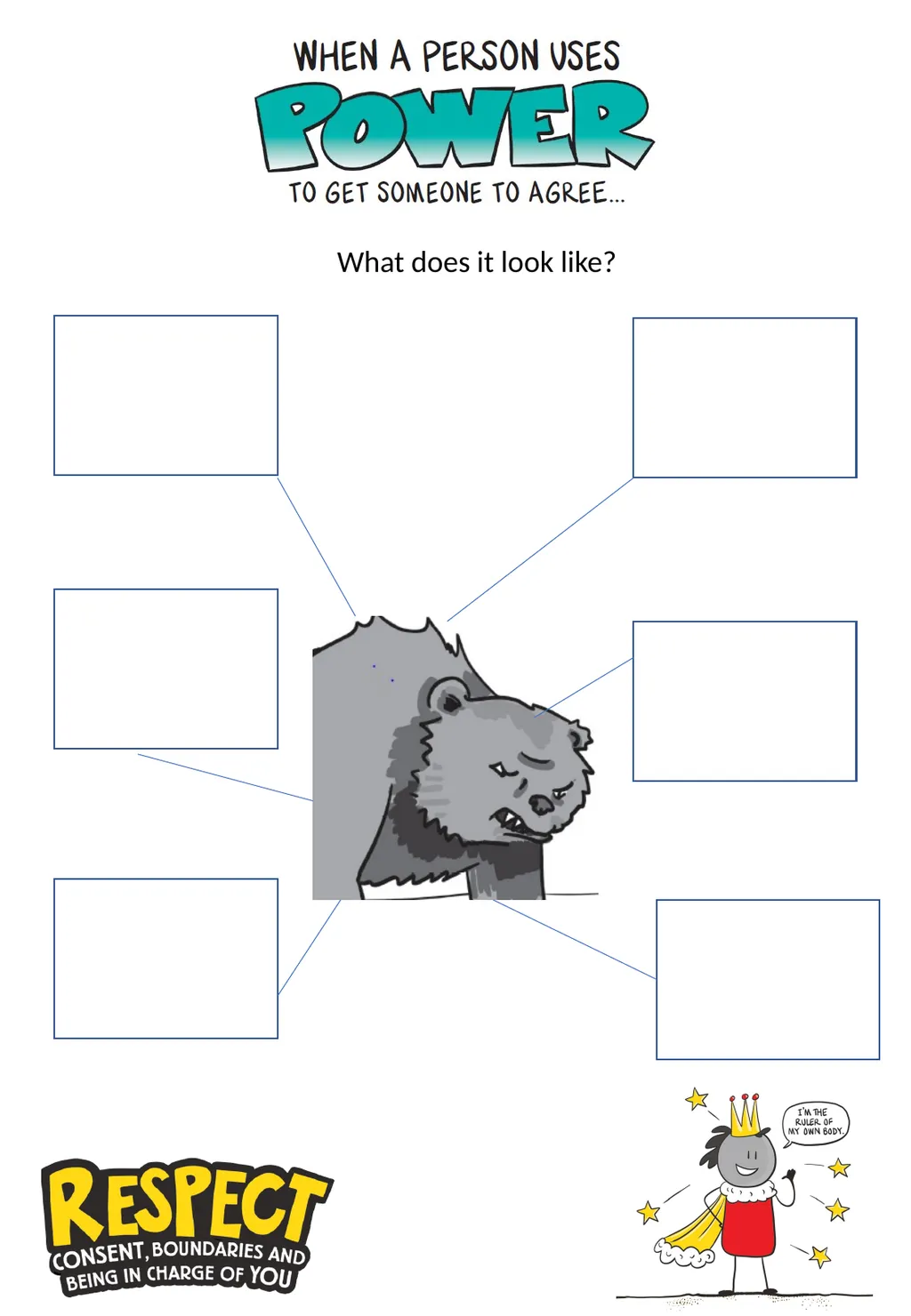
Read pages 29 to 30 together
Ask children what using power looks like
Either use the poster to jot down the class discussion, or ask children to complete in pairs and then to bring to a group/class sharing discussion
Note with children that using power can be physical, like a push or a shove, or it can be verbal such as threats and blackmail<br>
15
What does it look like?<br>
16
Share together pages 31 to 33
Use images of outfits (or use real items you have curated) to discuss what their outfits make us think they want to do
Discuss what children think they outfit may suggest. Then ask if it gives consent?
Swimwear:
Does it mean we have consent to: push them in the pool? Throw water bombs at them? Take a photograph of them?
Outdoor clothing:
Does it mean we have consent to: get them muddy? Push them in a puddle? Make them walk up a mountain?
Mini skirt:
Does it mean we have consent to: take a photograph of them? Post a photo on social media of them? Touch their legs?
Football kit:
Does it mean we have consent to: make them play football? Post a photograph on social media of them? Touch their legs?<br>
17
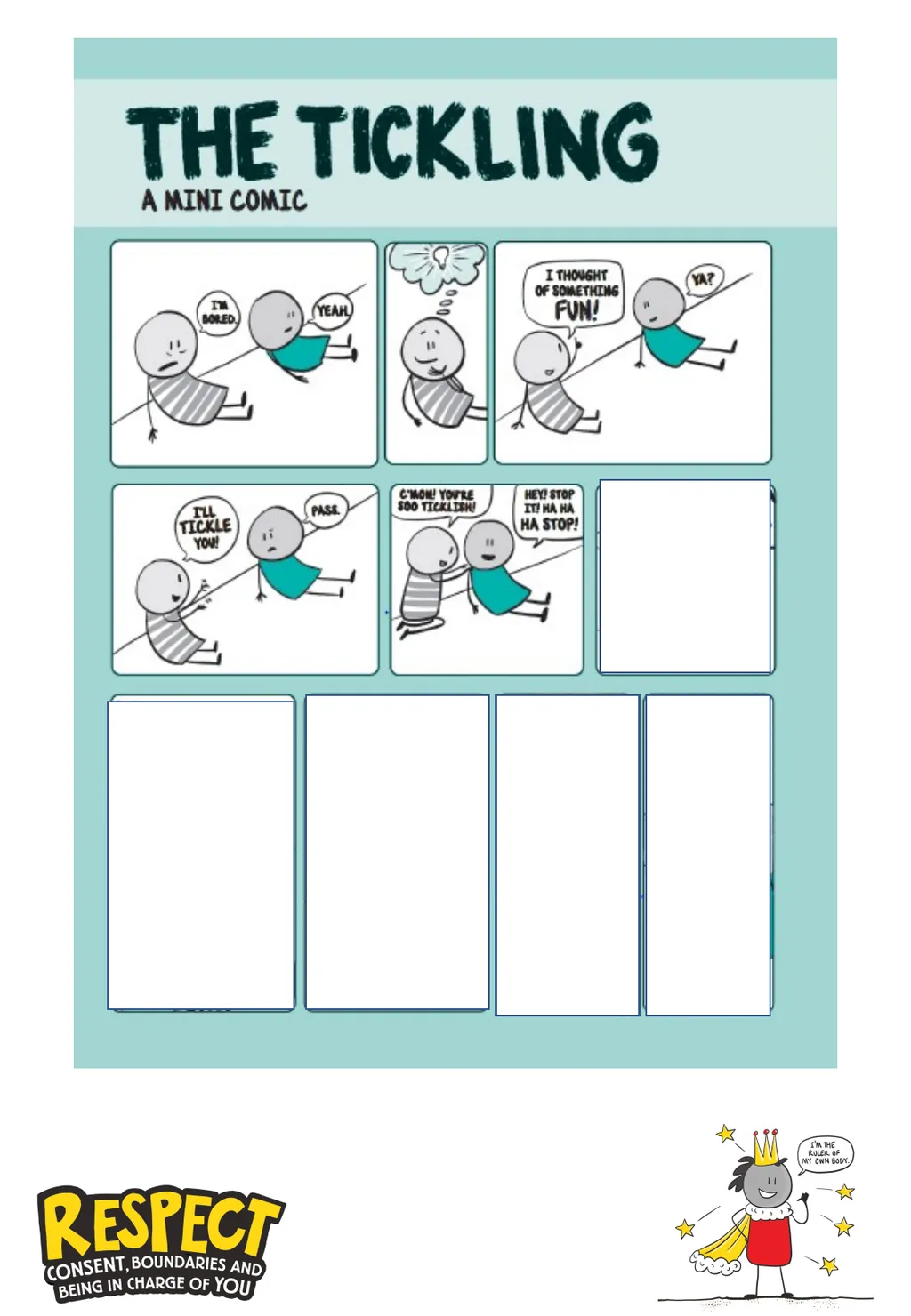
Share page 34 together, but don’t let children see page 35
Look at The Tickling comic and ask children to complete from box 6 to 10
Compare children’s responses to the book on page 35
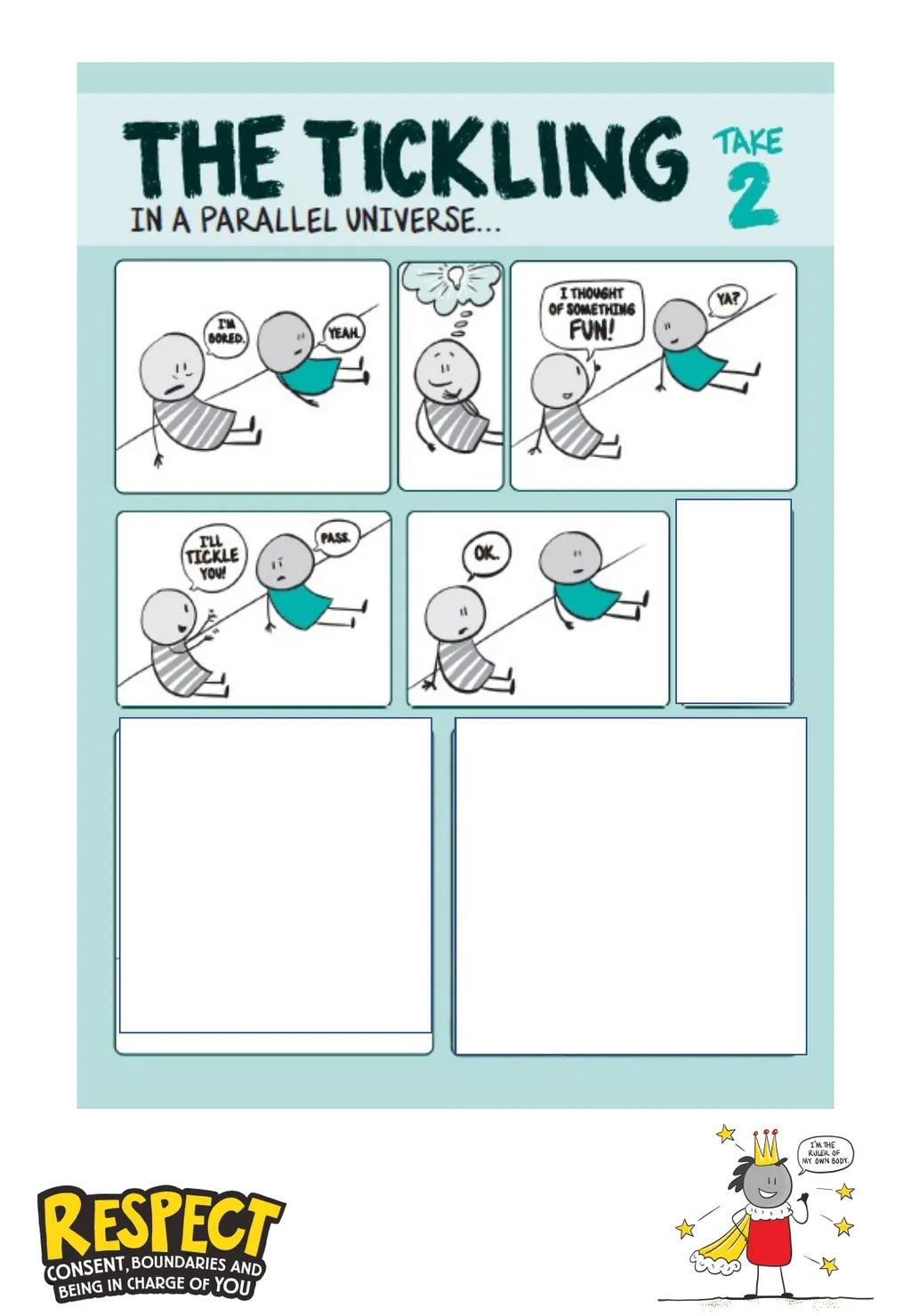
Look at The Tickling comic take 2 and ask children to complete from box 6 to 8
Compare children’s responses to the book on page 36
Children van use the blank comic strip to create their own stories of crossed boundaries<br>
18
Lesson 4: relationships
What is a relationship? Clarify what this means to children. Describe it as those we have a regular connection with.
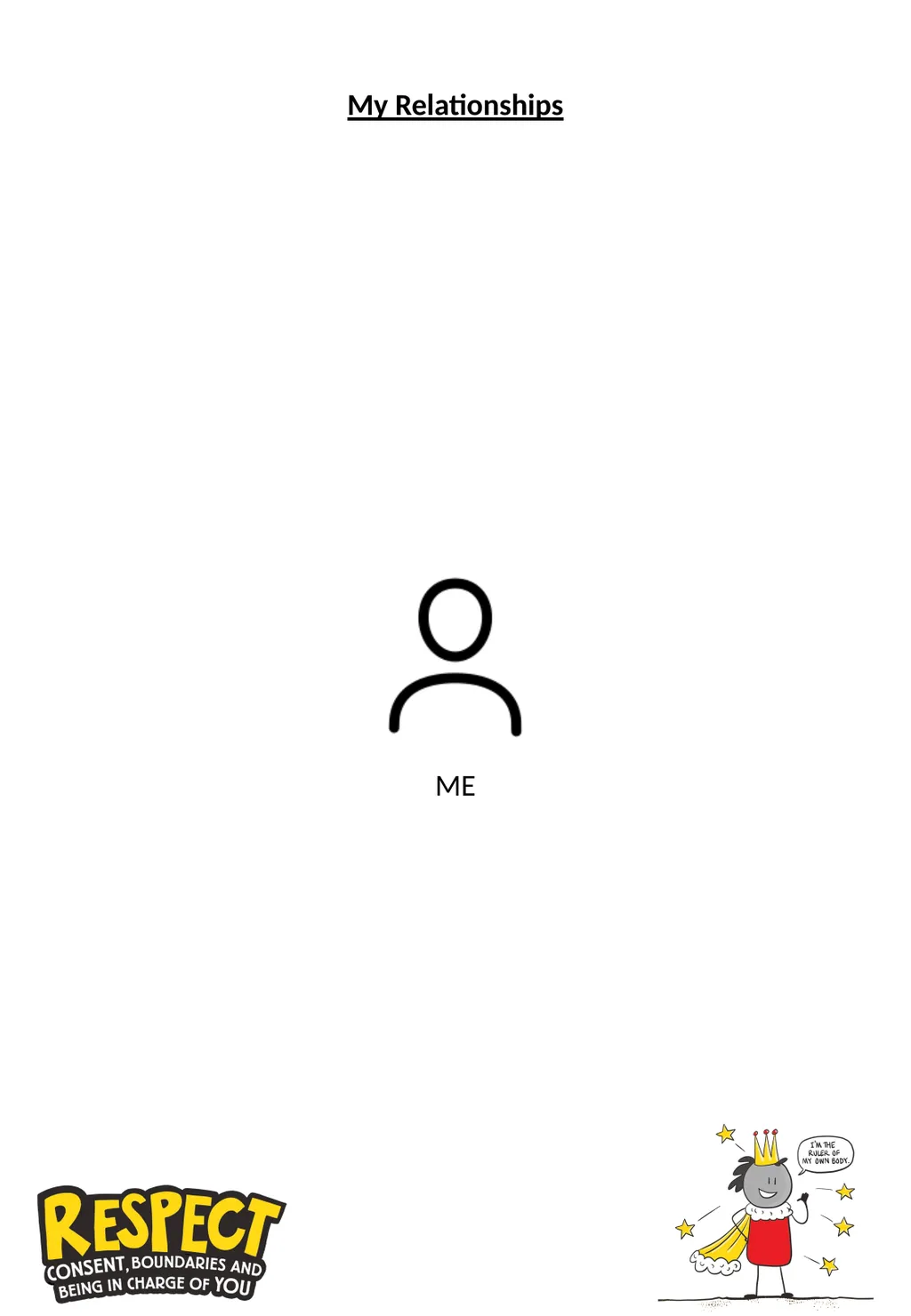
Begin by asking children to jot down all the people they can think of that they have a relationship with on the My Relationships sheet. Then ask them to circle those that are really special to them. Why did they choose those?
Compare those listed with page 43.
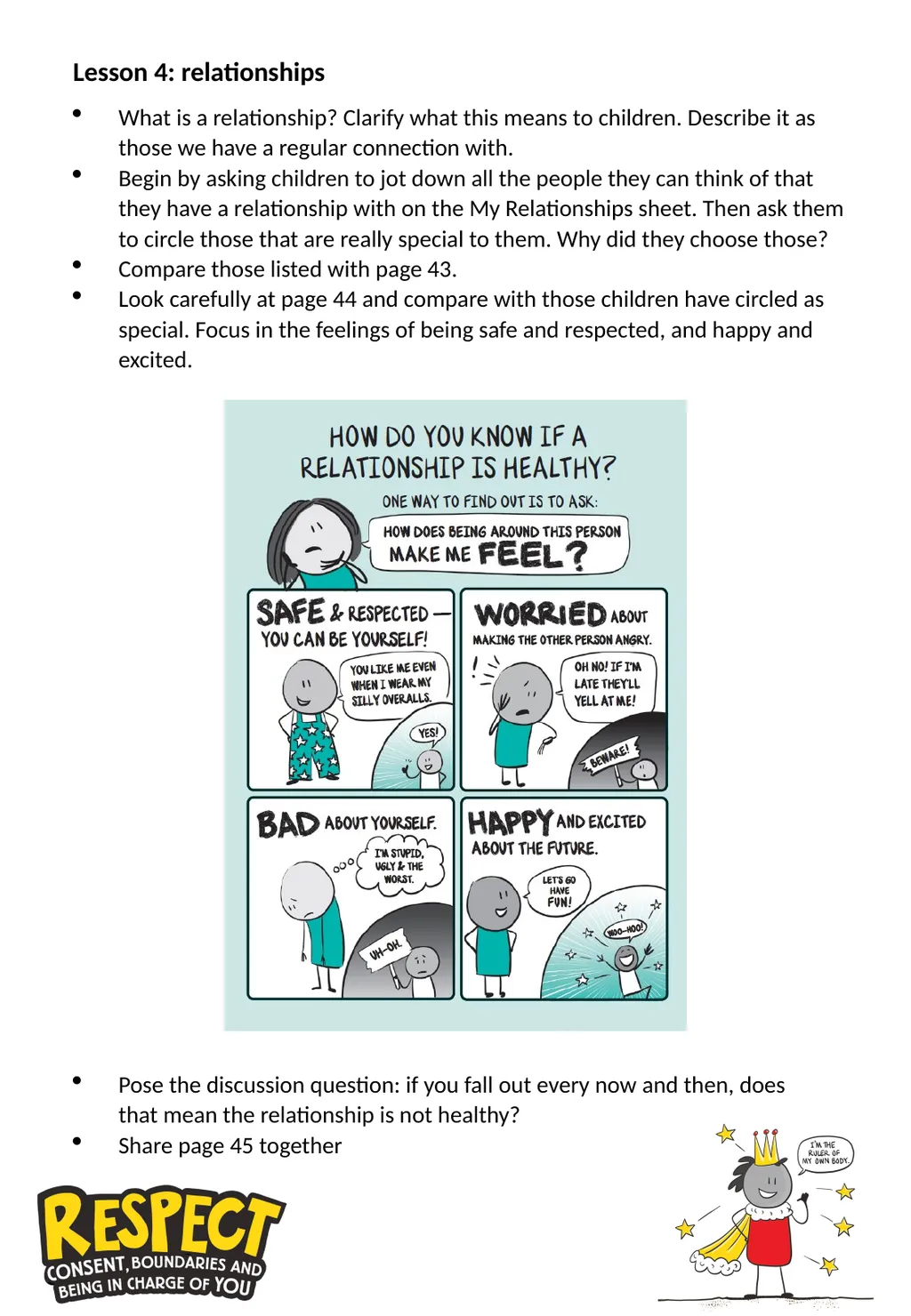
Look carefully at page 44 and compare with those children have circled as special. Focus in the feelings of being safe and respected, and happy and excited. Pose the discussion question: if you fall out every now and then, does that mean the relationship is not healthy?
Share page 45 together<br>